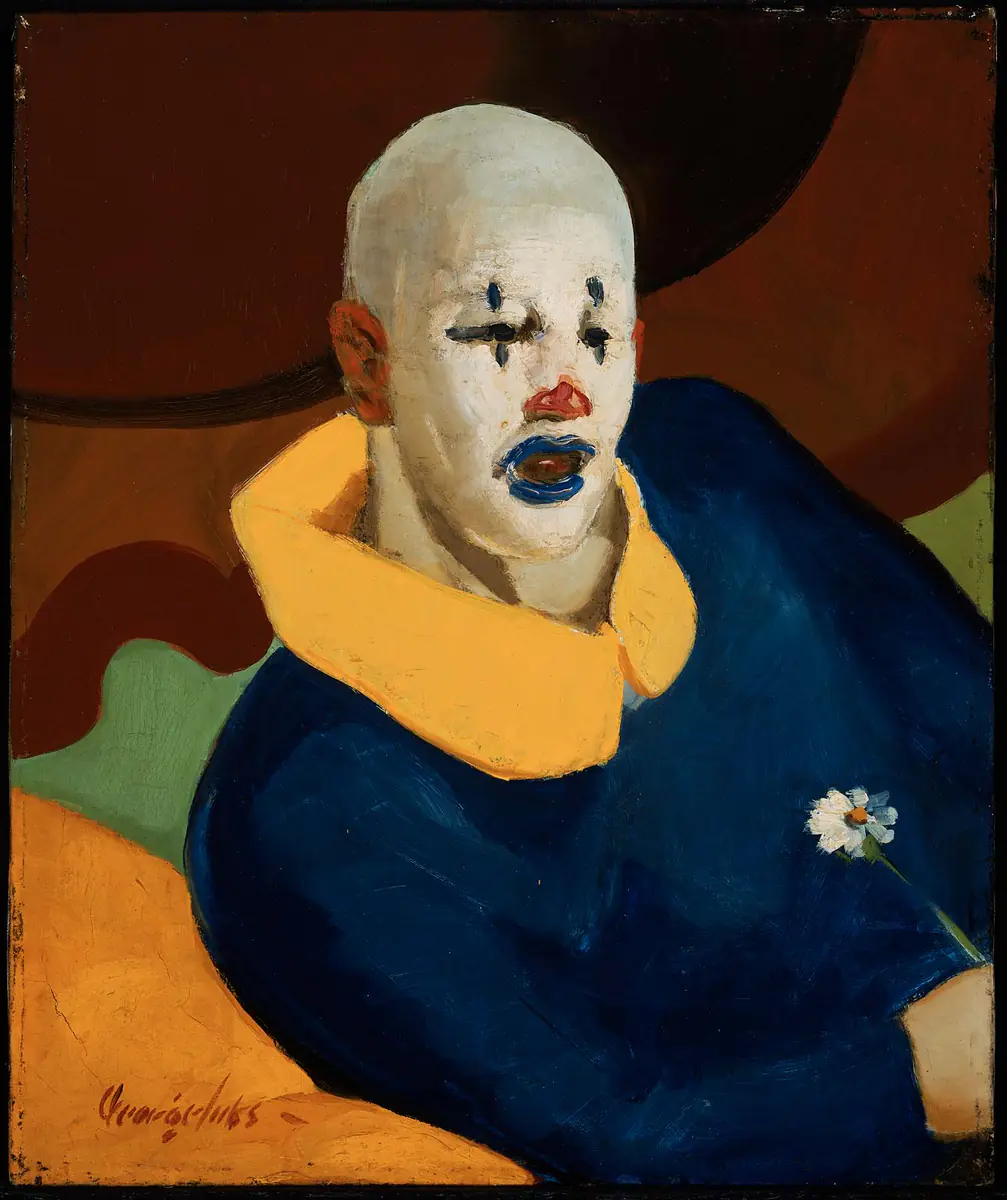
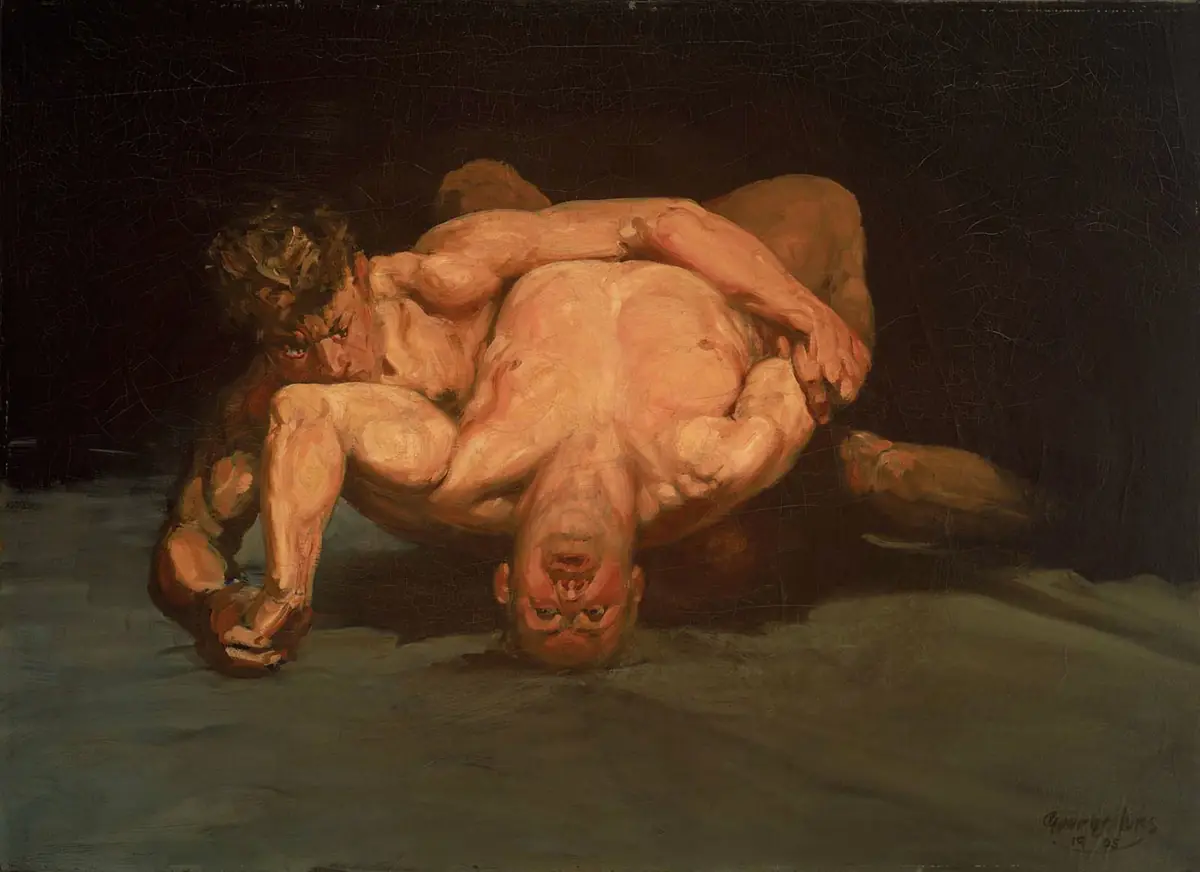
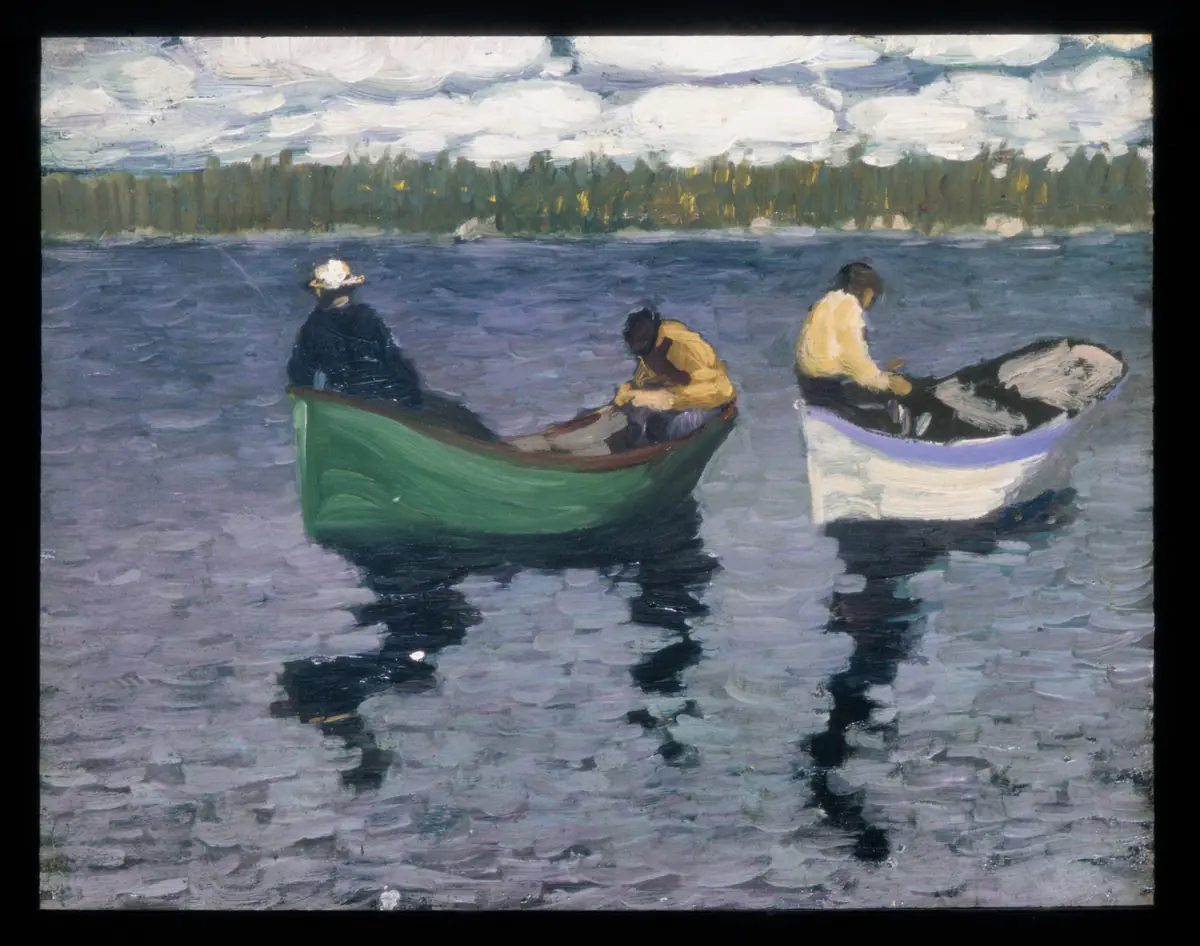
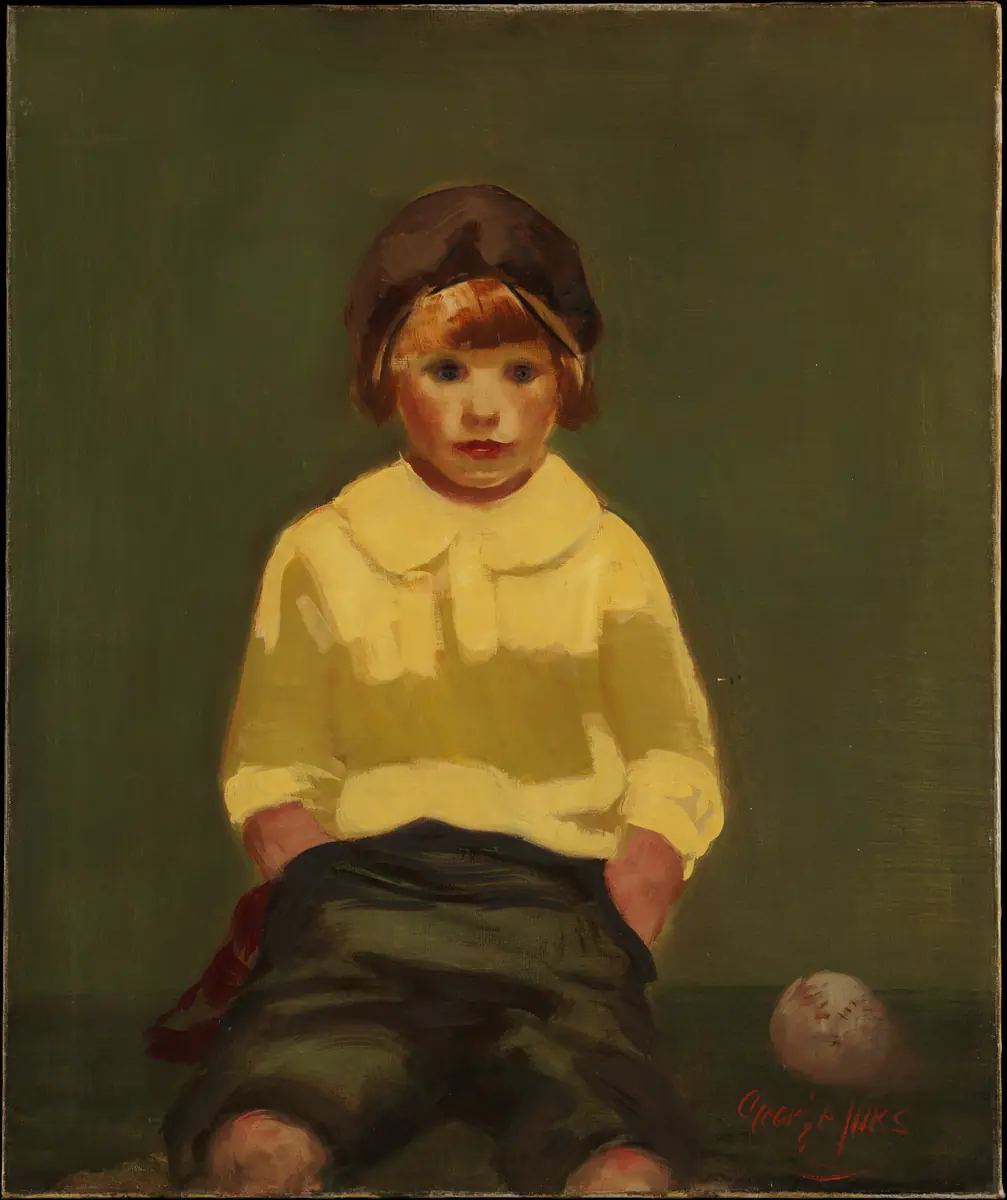
George Benjamin Luks was born in 1867 in Williamsport, Pennsylvania, into a family of immigrant origin committed to the working-class community. As a teenager, he went through vaudeville before studying briefly at the Pennsylvania Academy of the Fine Arts. He then traveled to Europe, frequented Düsseldorf, Paris and London, and particularly admired Frans Hals, Velazquez, Manet and masters capable of giving an immediate presence with a visible touch. Back in Philadelphia, Luks worked as a press illustrator. With William Glackens, Everett Shinn and John Sloan, he shared the influence of Robert Henri, who encouraged his students to paint contemporary life without idealizing it. HAS New York, Luks drew for the New York World and for a time took up the characters from the comic strip Hogan's Alley. The street also becomes his great pictorial workshop. It represents sellers, children, wrestlers, beggars, crowds, markets and figures of the Lower East Side with thick material, dark or earthy colors and a powerful gesture. The Spielers and The Wrestlers, painted in 1905, give popular bodies a monumental energy that official salons still consider too brutal. In 1908, Luks participated in the exhibition of The Eight at the Macbeth Gallery, a decisive event in the contestation of academic juries. In 1908, Luks participated in the exhibition of The Eight at the Macbeth Gallery, a decisive event in the contestation of academic juries. The name Ashcan School would later designate this pay attention to the ordinary city and its poor neighborhoods. However, Luks is not limited to a dark palette: his late watercolors and certain landscapes display much more frank colors. He taught at the Art Students League then opened his own school. A theatrical personality, willingly provocative and surrounded by sometimes exaggerated stories, he died in New York in 1933. A theatrical personality, willingly provocative and surrounded by sometimes exaggerated stories, he died in New York in 1933. The "George Luks" selection offers its own journey on this subject. His reading favors drawing.
Luks does not look at the street from a distance: his thick touch enters the crowd, gives weight to bodies and transforms the ordinary into a pictorial event.