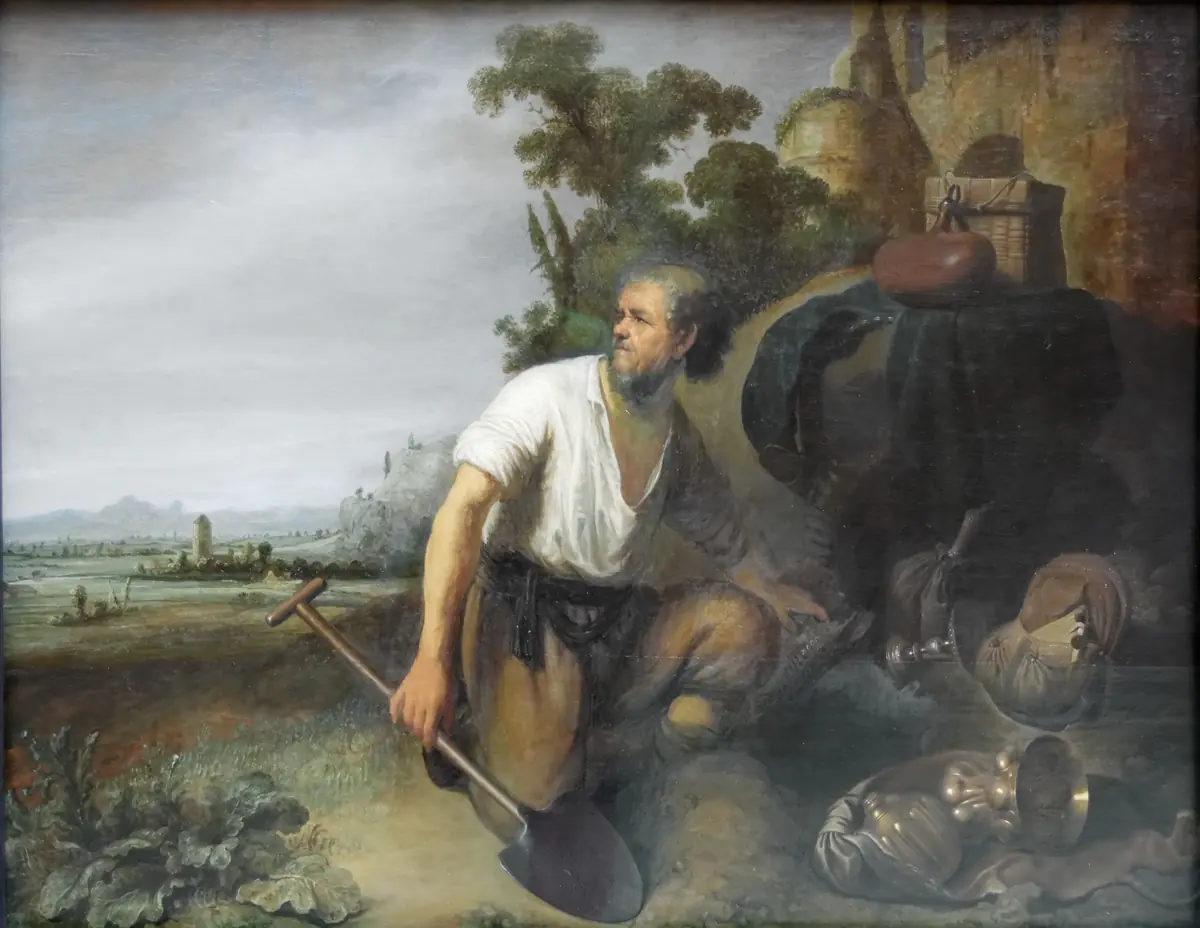
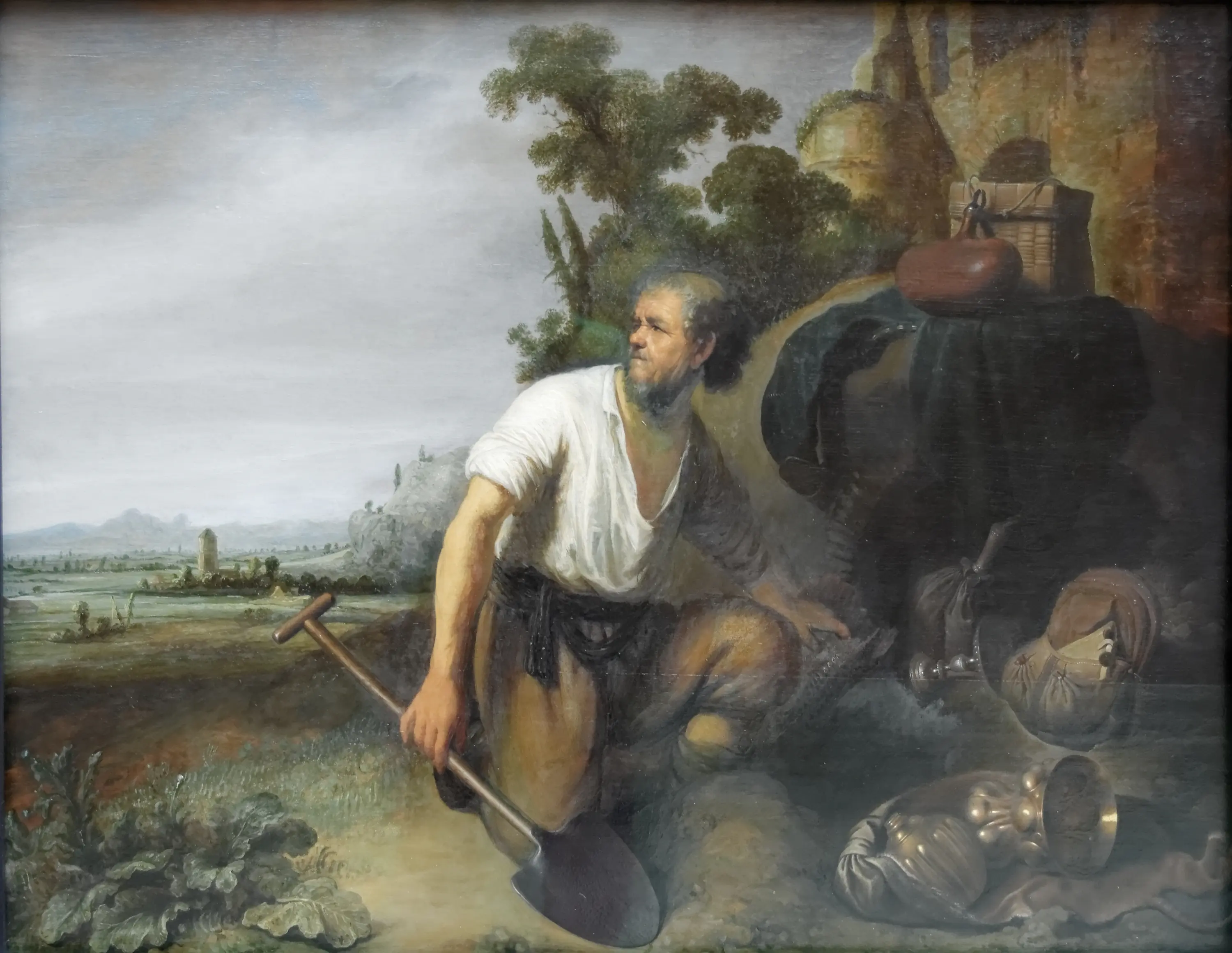
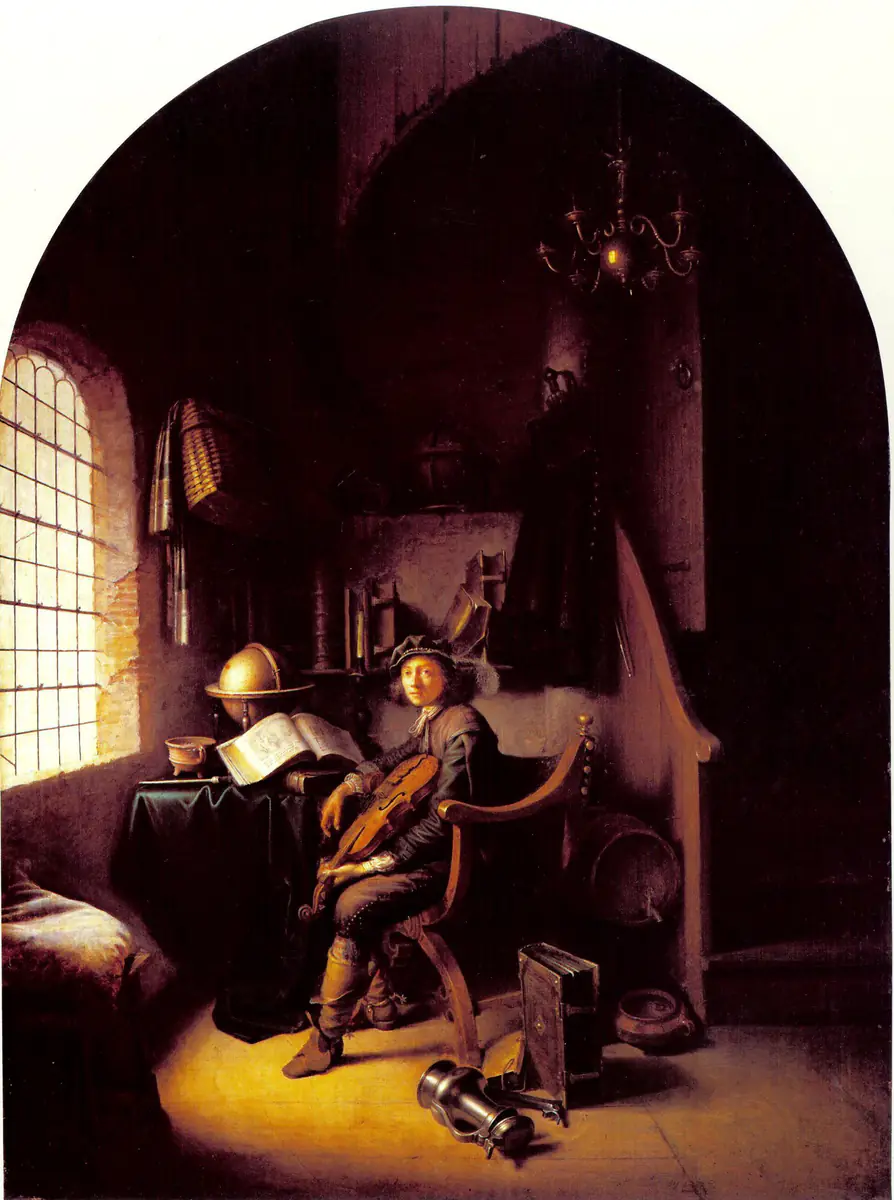
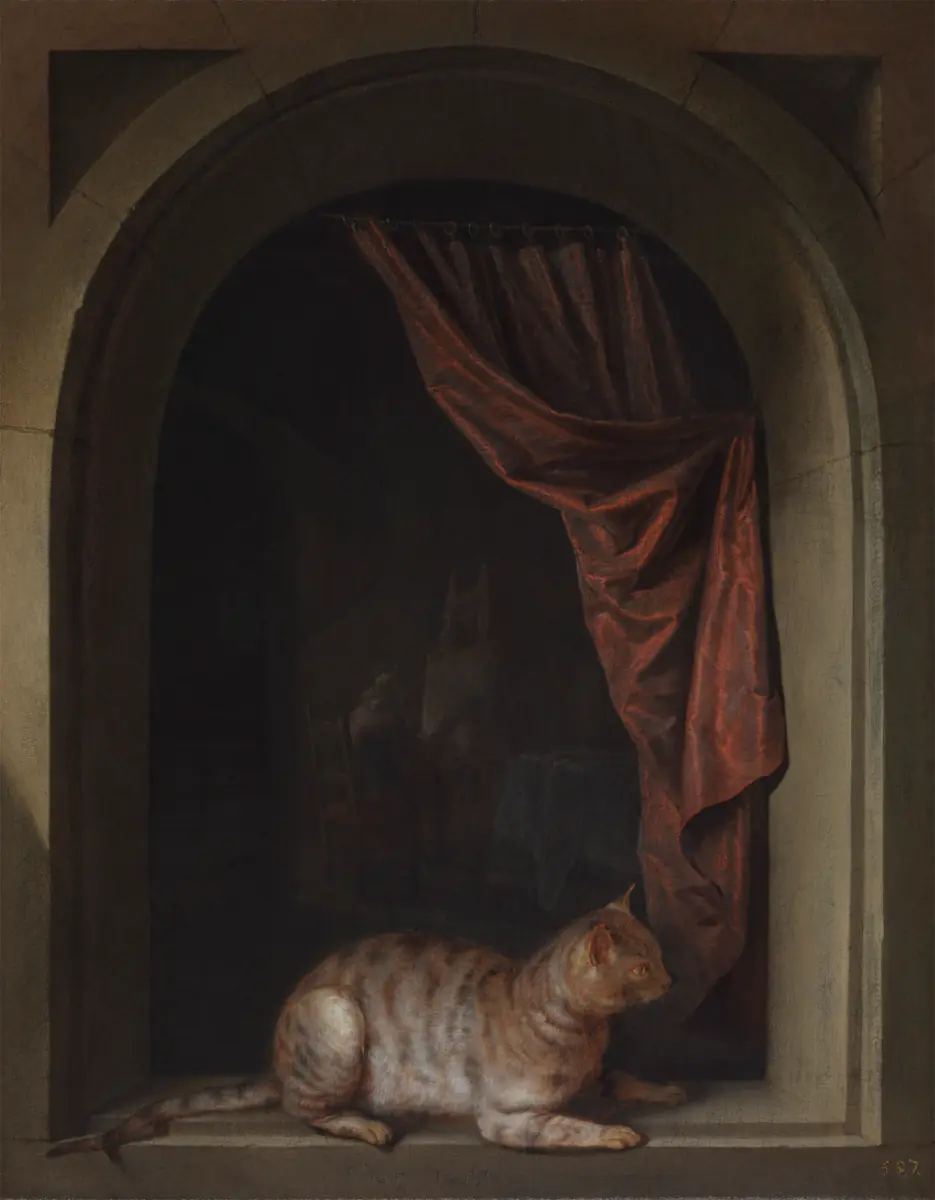
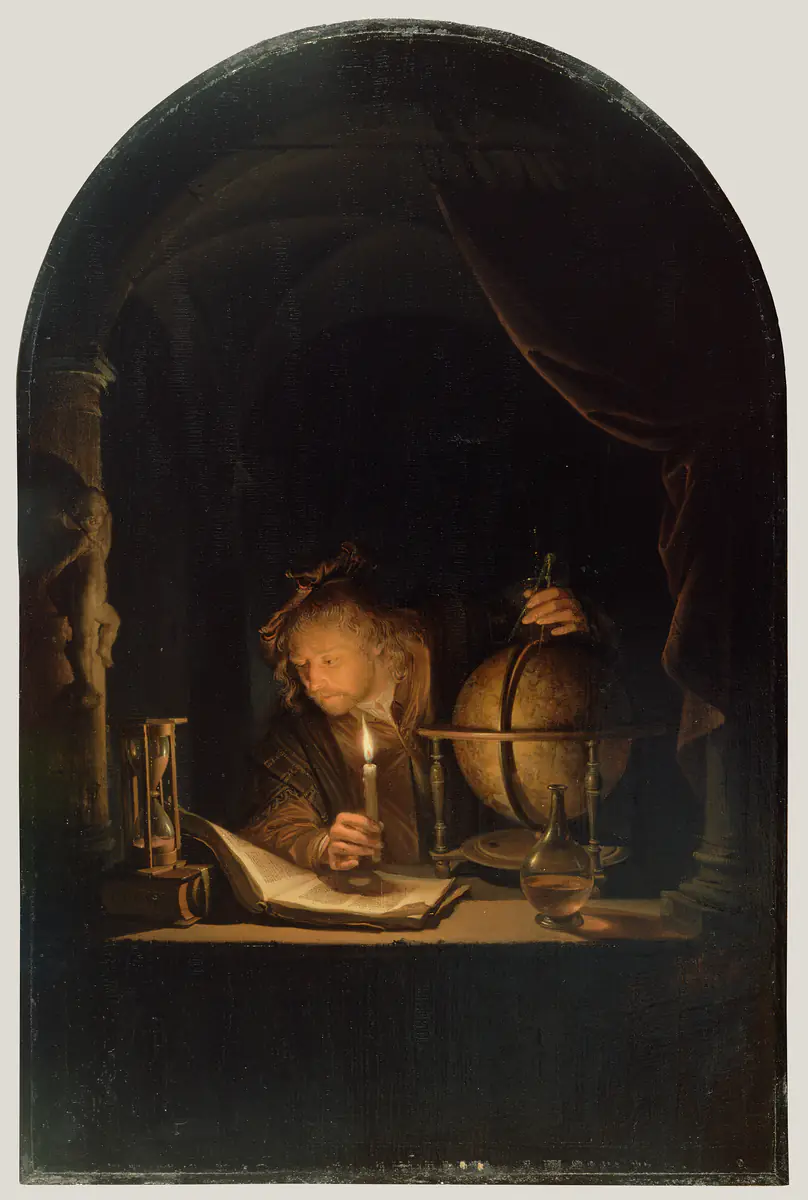
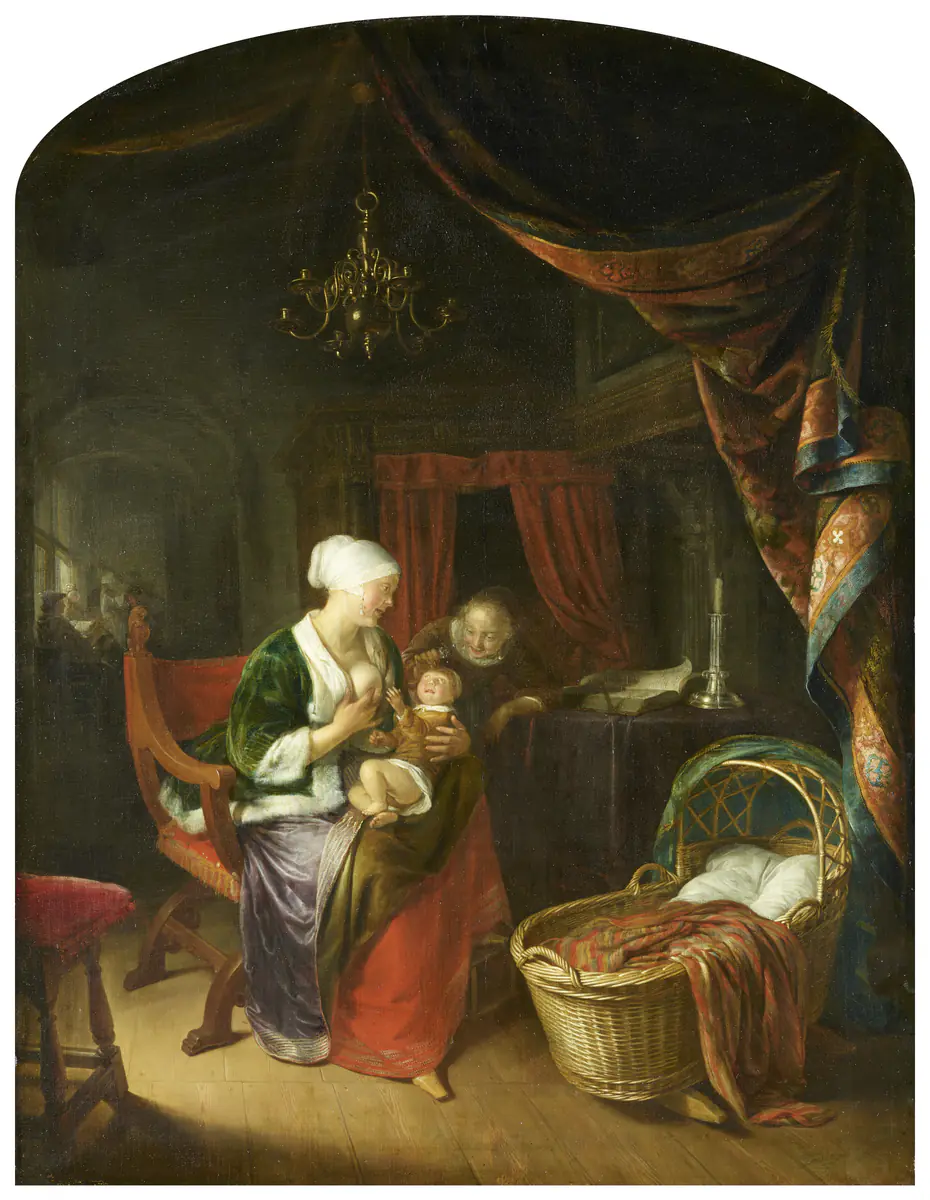
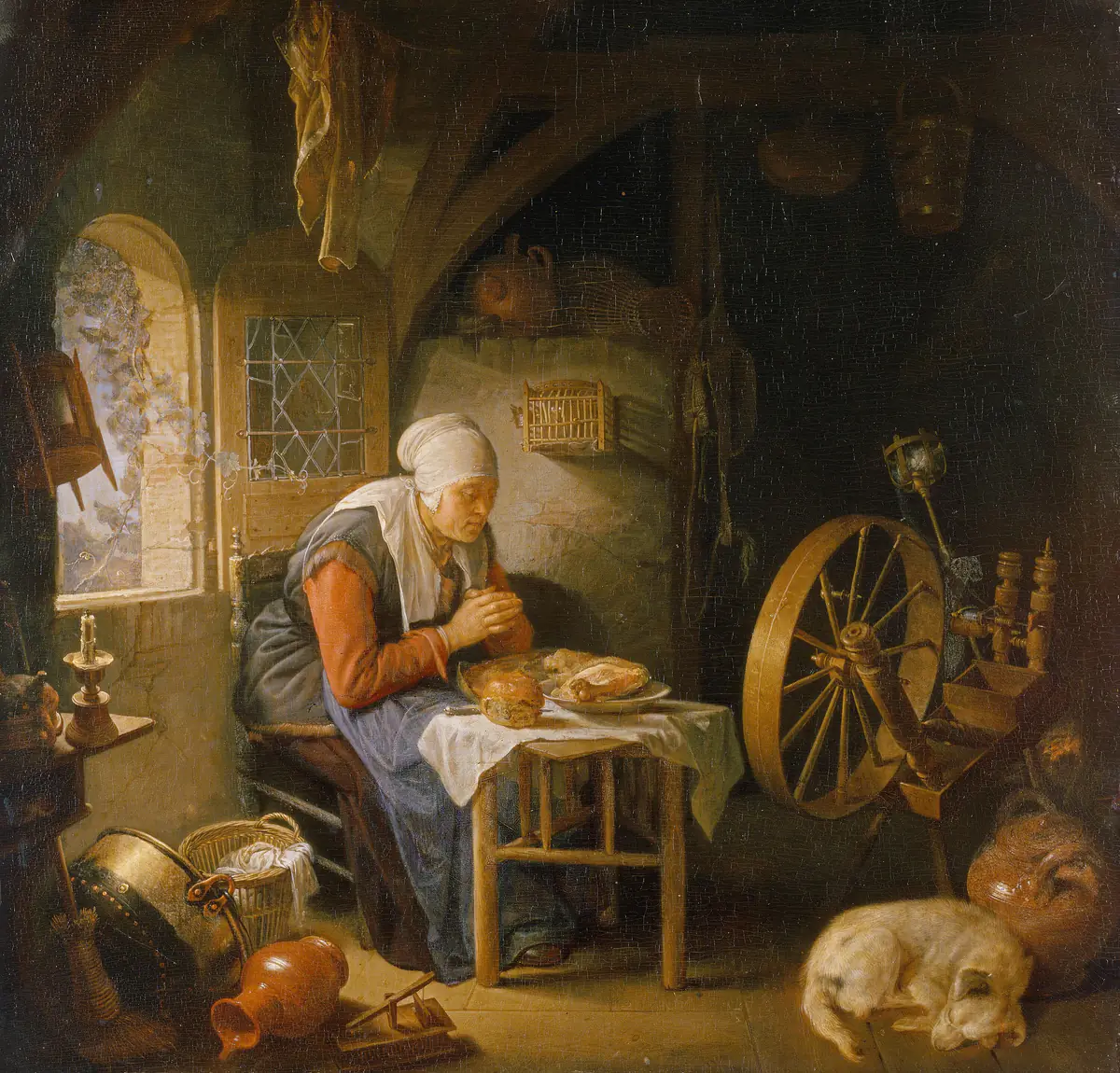
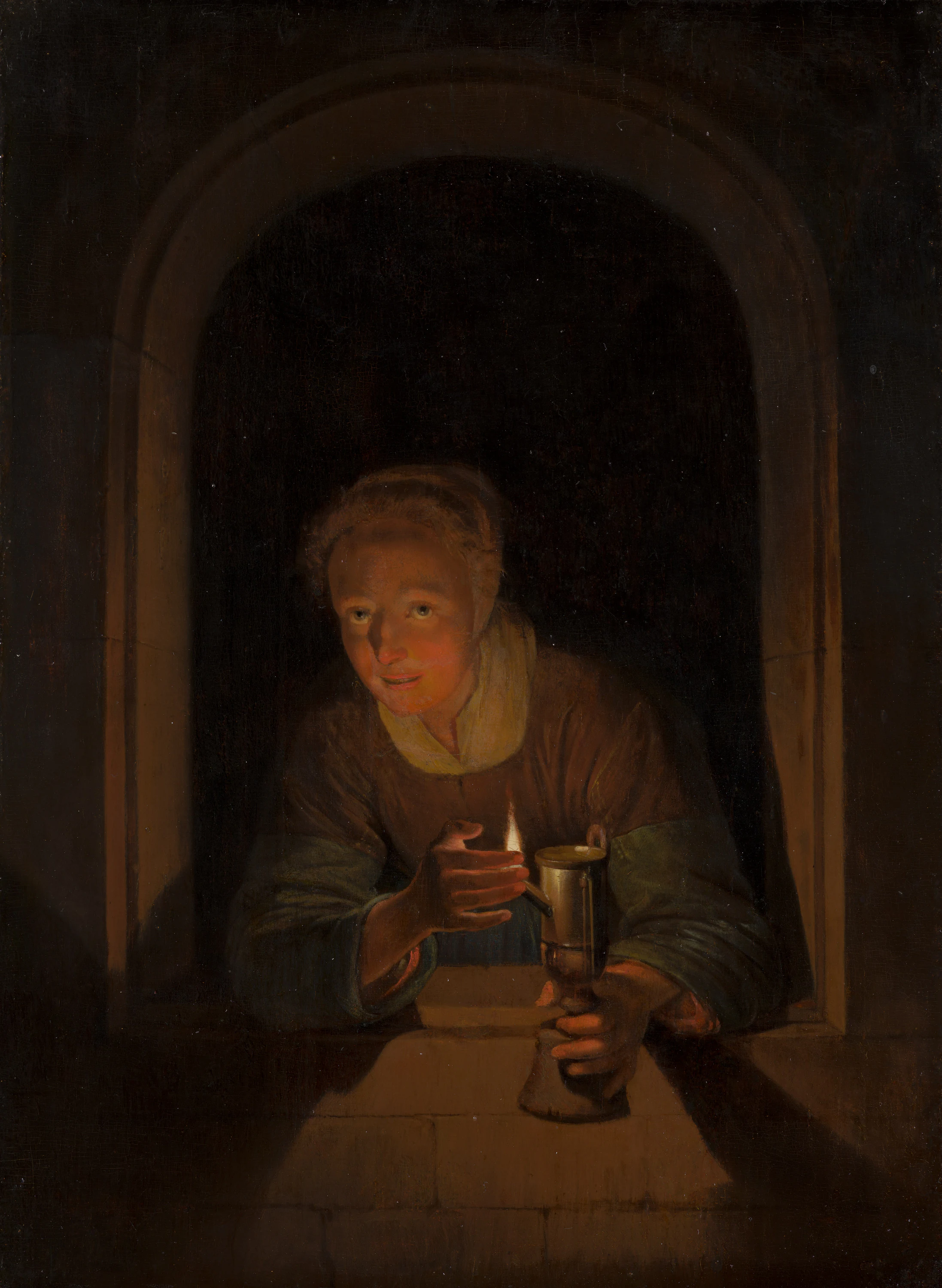
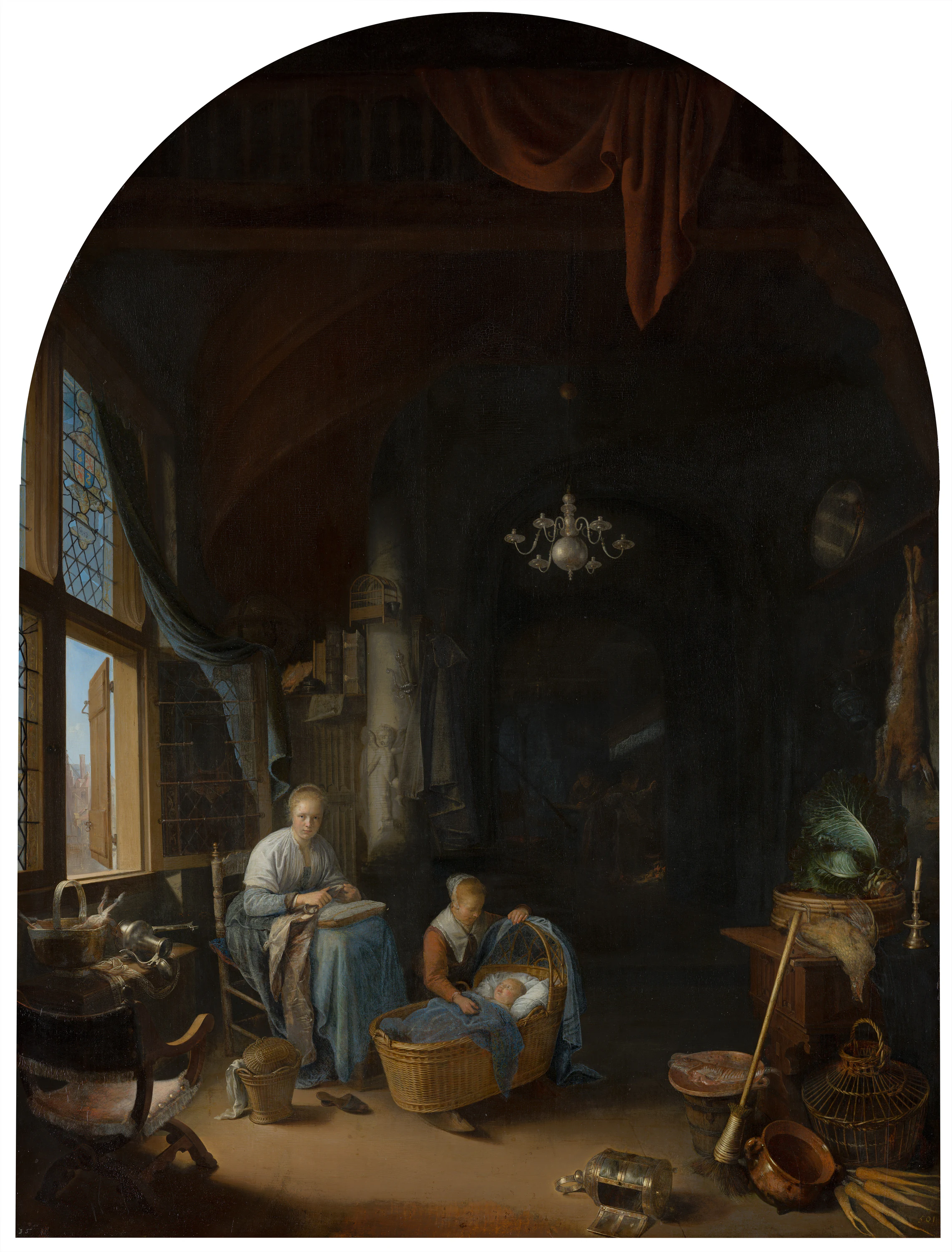
Gerard Dou, also called Gerrit Dou, was born in Leiden in 1613. The son of a glass painter, he first learned drawing, engraving and the precise work required by stained glass windows. In 1628, he entered Rembrandt's studio, of which he was one of the first students. Dou's first paintings took up the chiaroscuro, study heads and aged figures of the young master, but he quickly moved towards smoother and slower painting. Using small brushes and carefully prepared panels, he rendered the young master's wrinkled skin, feather, glass, metal, fur and wood with a precision sought by European collectors. Dou became the leader of the fijnschilders, the " fine painters" by Leiden. His scenes often appear behind a stone window, an arch or a trompe-l'oeil balustrade. The Silver Ewer thus combines shiny object, niche and light in order to demonstrate the ability of painting to imitate the world. The Golden Scarer, the Village Grocer and doctors or artisans place daily work in dense spaces where each accessory can carry moral value. In The Hydropic Woman, the seriousness of the diagnosis, the light and the family circle transform daily work into dense spaces where each accessory can carry moral value. In The Hydropic Woman, the seriousness of the diagnosis, the light and the family circle transform daily work into dense spaces where each accessory can carry moral value. In The Hydropic Woman, the seriousness of the diagnosis, the light and the family circle transform daily work into dense spaces where each accessory can carry moral value. In The Hydropic Woman, the gravity of the diagnosis, the light and the family circle transform daily work into dense spaces where each accessory can carry moral value. In The Hydropic Woman, the gravity of the diagnosis, the light and the family circle transform daily work into dense spaces where each accessory can carry moral value. In The Hydropic Woman, the gravity of the diagnosis, the light and the family circle transform daily work into dense spaces where each accessory can carry moral value. In The Hydrop translation of several light sources onto a tiny surface. Dou's success is exceptional. His patron Johan de Bye exhibited twenty-nine of his paintings in Leiden in 1665, as a collection accessible to the public. Dou notably trained Frans van Mieris and influenced the fijnschilders until the 18th century. Died in Leiden in 1675, he left an art where slow execution became a spectacle of precision. Died in Leiden in 1675, he left behind an art where slow execution became a spectacle of precision. The "Gerard Dou" selection notably compares Hermit Reading and The Hydropic Woman. His reading favors light.
In Dou, smallness is never a limit: an ewer, a wrinkle or a reflection is enough to transform the painting into a complete world.