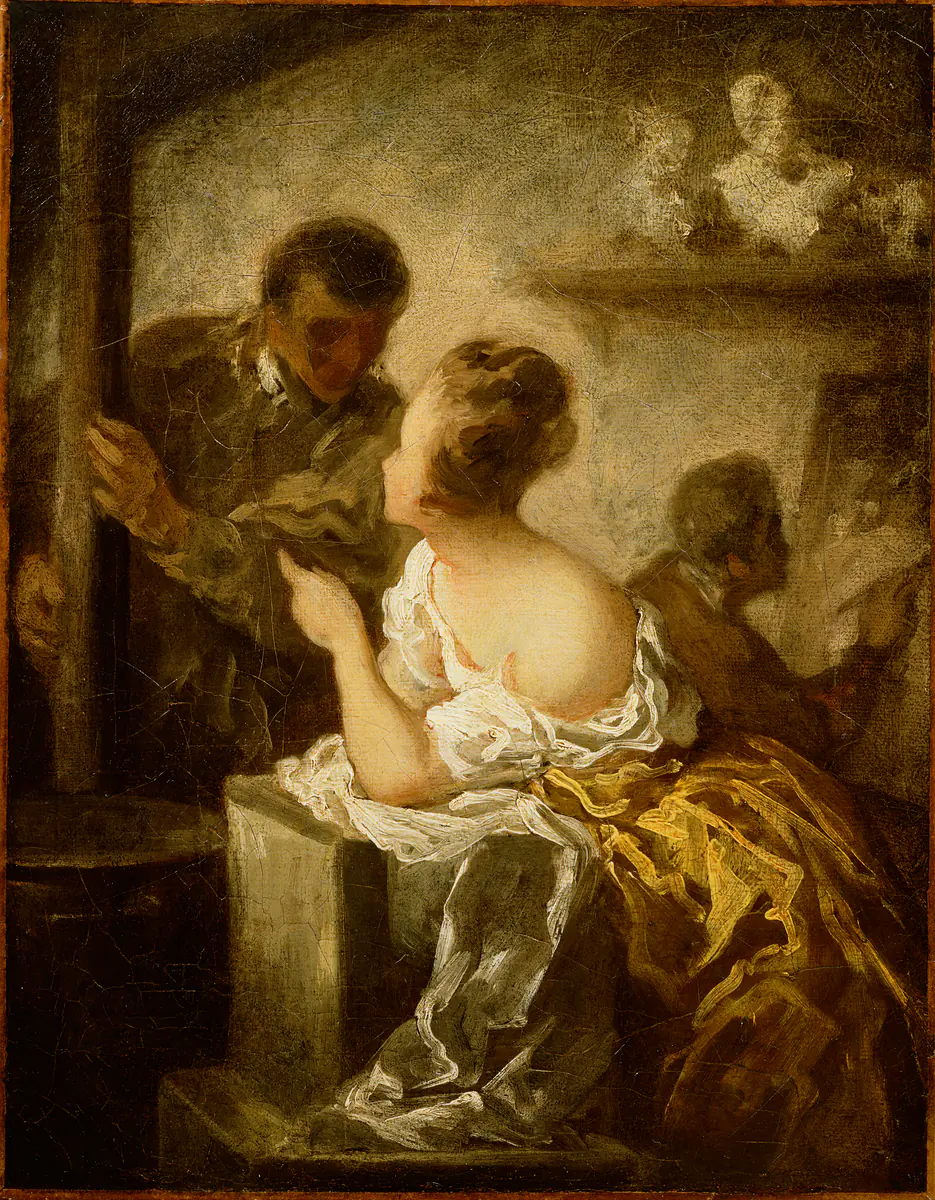
Honoré Daumier was born in Marseille in 1808 into a modest family who moved to Paris as a child. After various jobs, he learned drawing, attended the Swiss Academy and trained in lithography, an ideal medium for current events. His meeting with the publisher Charles Philipon introduced him to La Caricature then to Charivari. Daumier observed deputies, magistrates, bourgeois, artists and political events there with an exceptional ability to condense a character into a silhouette. In 1832, his lithograph Gargantua, artists and political events with an exceptional ability to condense a character into a silhouette. In 1832, his lithograph Gargantua, which assimilated Louis-Philippe to a giant nourished by the contributions of the people, earned him a prison sentence. The censorship of political caricature in 1835 directs it towards the satire of morals. Lawyers, tenants, art lovers, travelers and theater people become the actors of an urban comedy where ridicule is born from the body as much as from the text. Daumier produced thousands of lithographs and drawings for the press, but at the same time continued a long-less known work of painter and sculptor. His busts-charges of parliamentarians translate the volume with the same energy as the printed line. In The Third Class Wagon, a popular family faces the fatigue of modern transport with the same energy as the printed line. In The Third Class Wagon, a popular family faces the fatigue of modern transport; mass of bodies, hands and gazes give poverty dignity without idealization. The Laundress climbs the quays with her child and its heavy package, transforming daily work into monumental effort. The Lawyers summarize judicial rhetoric with profiles, gestures and black dresses. Don Quixote, a recurring subject of maturity, allows the painter to oppose the obstinate ideal to the immensity of the landscape. Matter becomes freer, figures more synthetic and color more muted. Almost blind and poor at the end of his life, Daumier was supported by Corot and his friends. Died in Valmondois in 1879, he left one of the largest visual chronicles of the 19th century. Almost blind and poor at the end of his life, Daumier was supported by Corot and his friends. Almost blind and poor at the end of his life, Daumier was supported by Corot and his friends. Died in Valmondois in 1879, he left one of the largest visual chronicles of the 19th century. Died in Valmondois in 1879, he left one of the largest visual chronicles of the 19th century. Died in Valmondois in 1879, he left one of the largest visual chronicles of the 19th century. Died in Valmondois in 18
Daumier magnifies a gesture to better reveal a truth: the ridicule of power, the fatigue of work or the obstinacy of Don Quixote immediately become legible in the body.