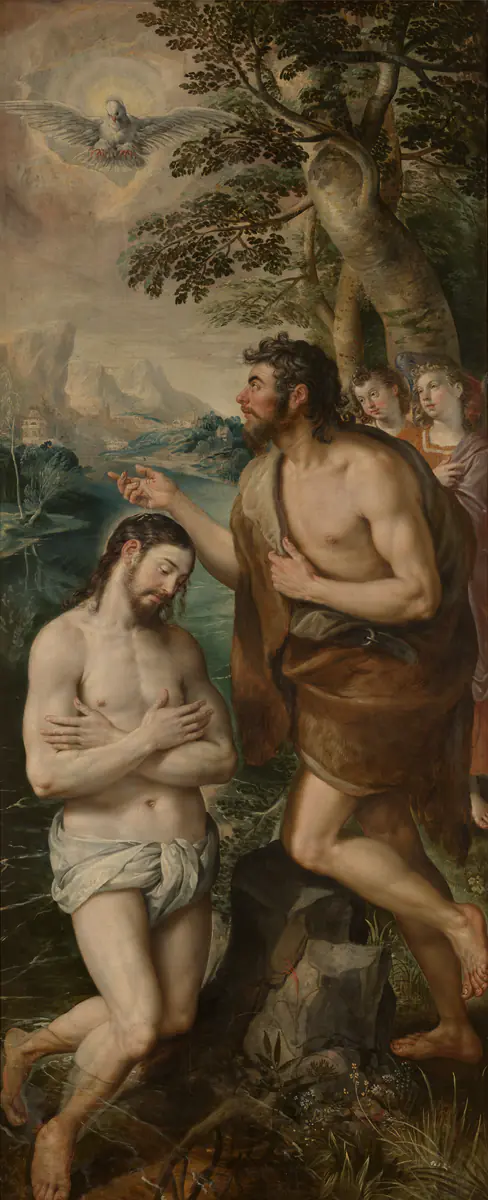
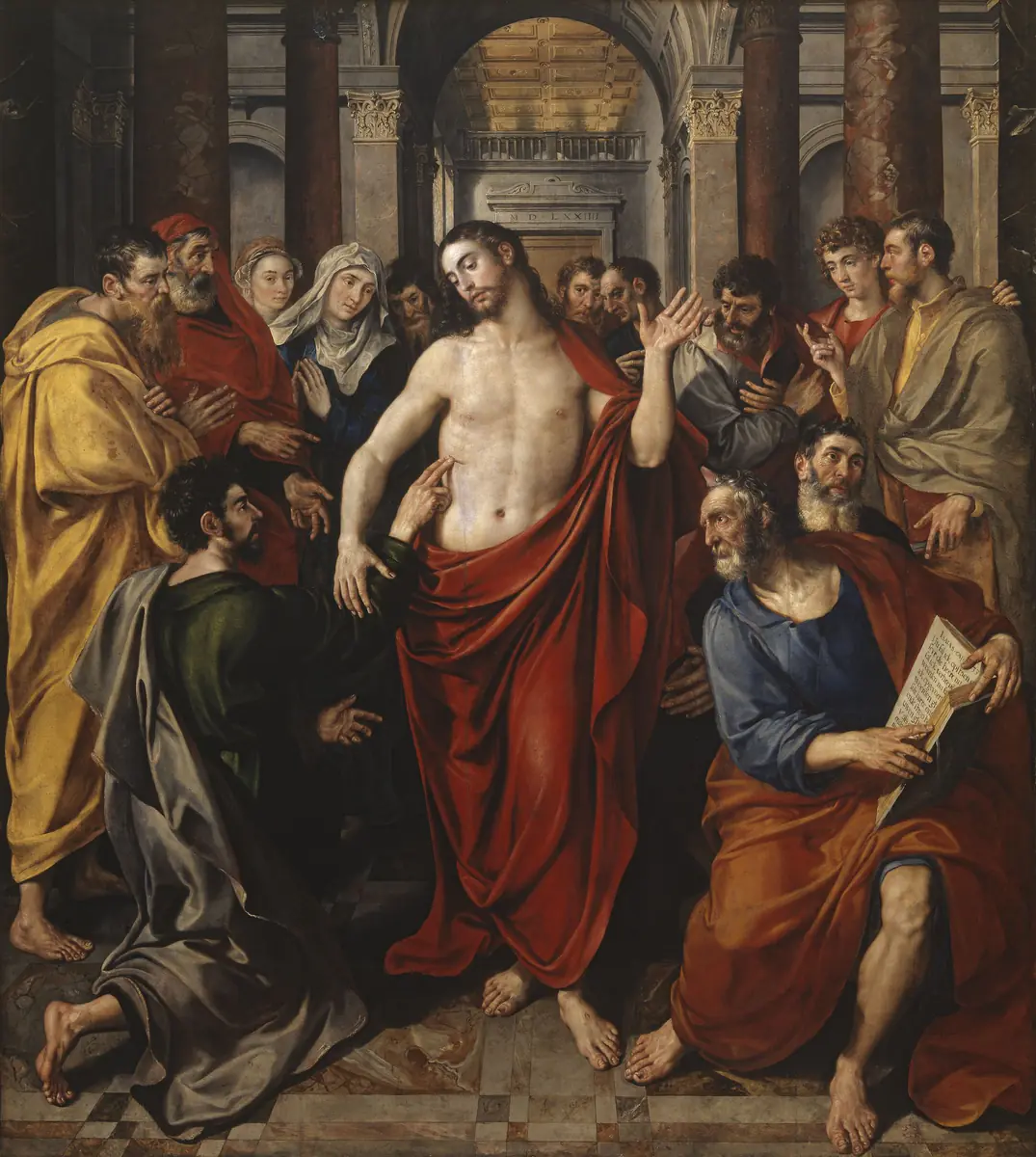
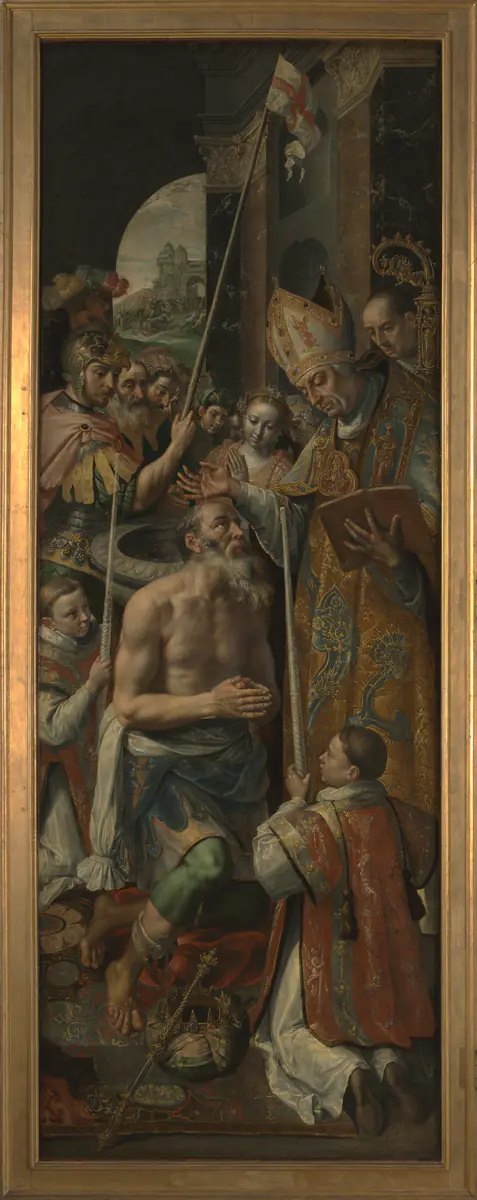
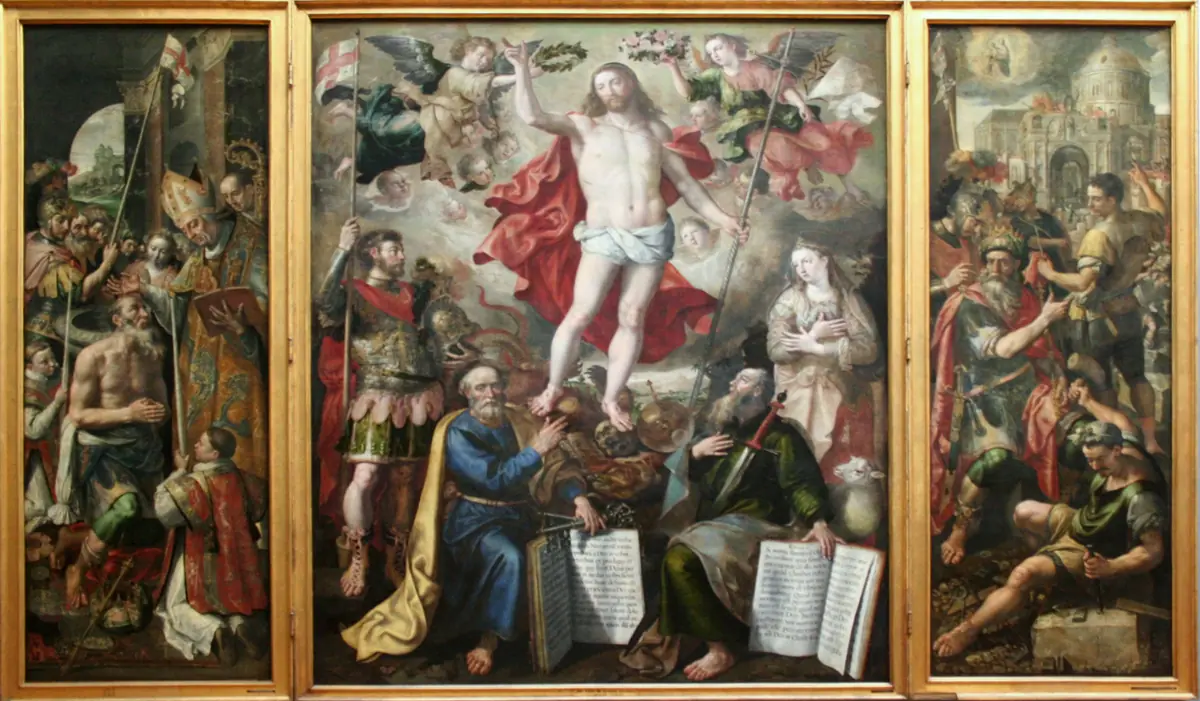
Born and died in Antwerp, Maarten - or Martin - de Vos trained with the Romanist Frans Floris before traveling to Italy between 1552 and 1558. He stayed in Rome, Florence and Venice, where he worked in the Tintoretto entourage. Back in Antwerp, he combined Flemish Mannerist drawing, monumental figures learned in Italy and extraordinary attention to the details of the visible world. After the iconoclastic destruction, from 1574 he received important orders for altarpieces for the churches of his city. After the iconoclastic destruction, from 1574 he received important orders for altarpieces for the churches of his city. After the iconoclastic destruction, from 1574 he received important orders for altarpieces for the churches of his city. After the iconoclastic destruction, from 1574 he received important orders for altarpieces for the churches of his city. After the iconoclastic destruction, from 1574 he received important orders for altarpieces for the churches of his city. From 1574, he received important orders for altarpieces for the churches of his city. From 1574, he received important orders for altarpieces for the churches of his city. After the iconoclastic destruction, from 1574 he Elements, documented in the collections of the Buen Retiro Palace from the beginning of the 18th century. In L'Air, Aeolus holds a chameleon while children blowing personify the winds. Around them there is a real aviary: peacock, eagle, owl, kingfisher, heron, spatula and exotic birds are described with the precision of a natural science illustrator. In The Earth, Ceres - sometimes identified with Pomona in ancient inventories - is surrounded by flowers, fruits, cereals and vegetables. In The Earth, Ceres - sometimes identified with Pomona in ancient inventories - is surrounded by flowers, fruits, cereals and vegetables. In The Earth, Ceres - sometimes identified with Pomona in ancient inventories - is surrounded by flowers, fruits, cereals and vegetables. In The Earth, Ceres - sometimes identified with Pomona in ancient inventories - is surrounded by flowers, fruits, cereals and vegetables. The intellectual source comes in particular from the Iconology of Cesare Ripa; the richness of the species, however, transforms the allegory into an observation experience. Both compositions of almost identical dimensions function like pendants: aerial movement responds to terrestrial weight, fertility and abundance. De Vos thus brings mythological bodies, naturalistic knowledge and decorative pleasure into dialogue. The "Maarten de Vos" selection notably compares Air and Earth. Its reading favors color.
Maarten de Vos gives body to the elements, then surrounds them with a world so precisely observed that the allegory almost becomes a painted encyclopedia.