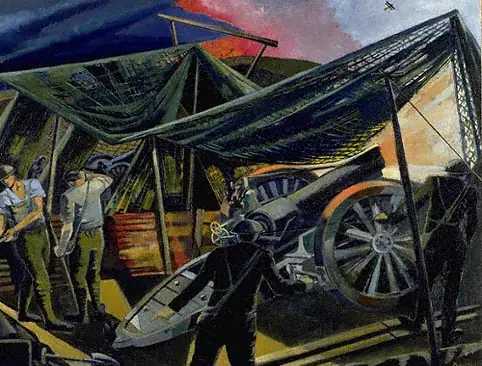
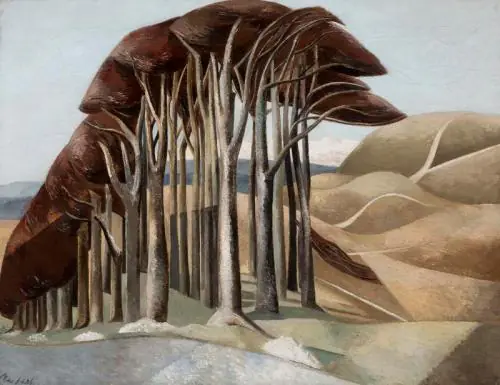
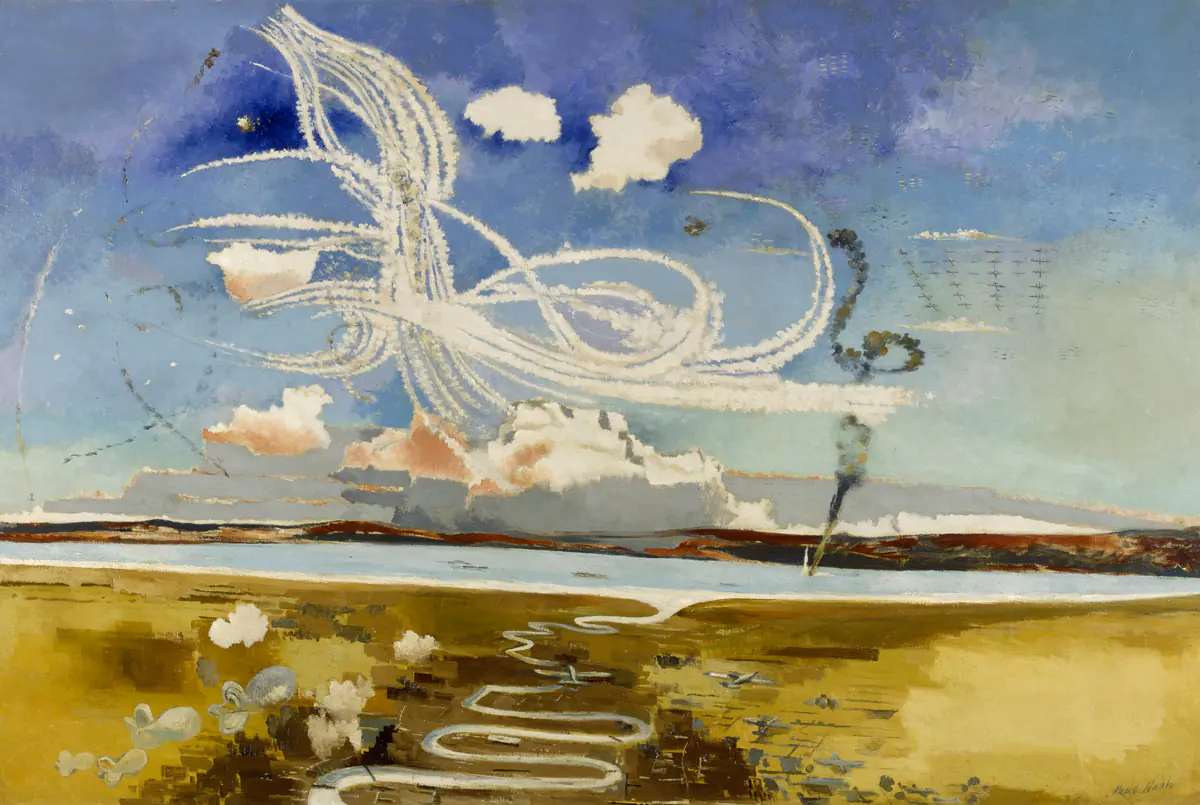
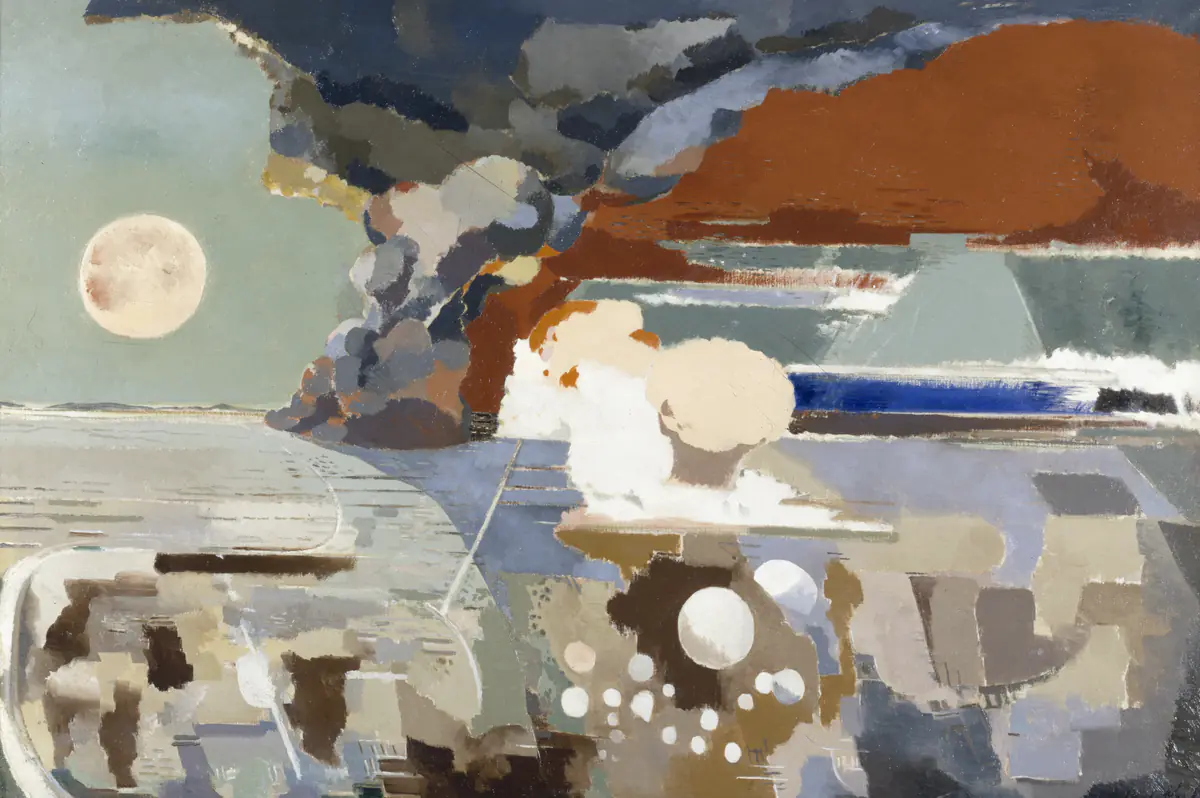
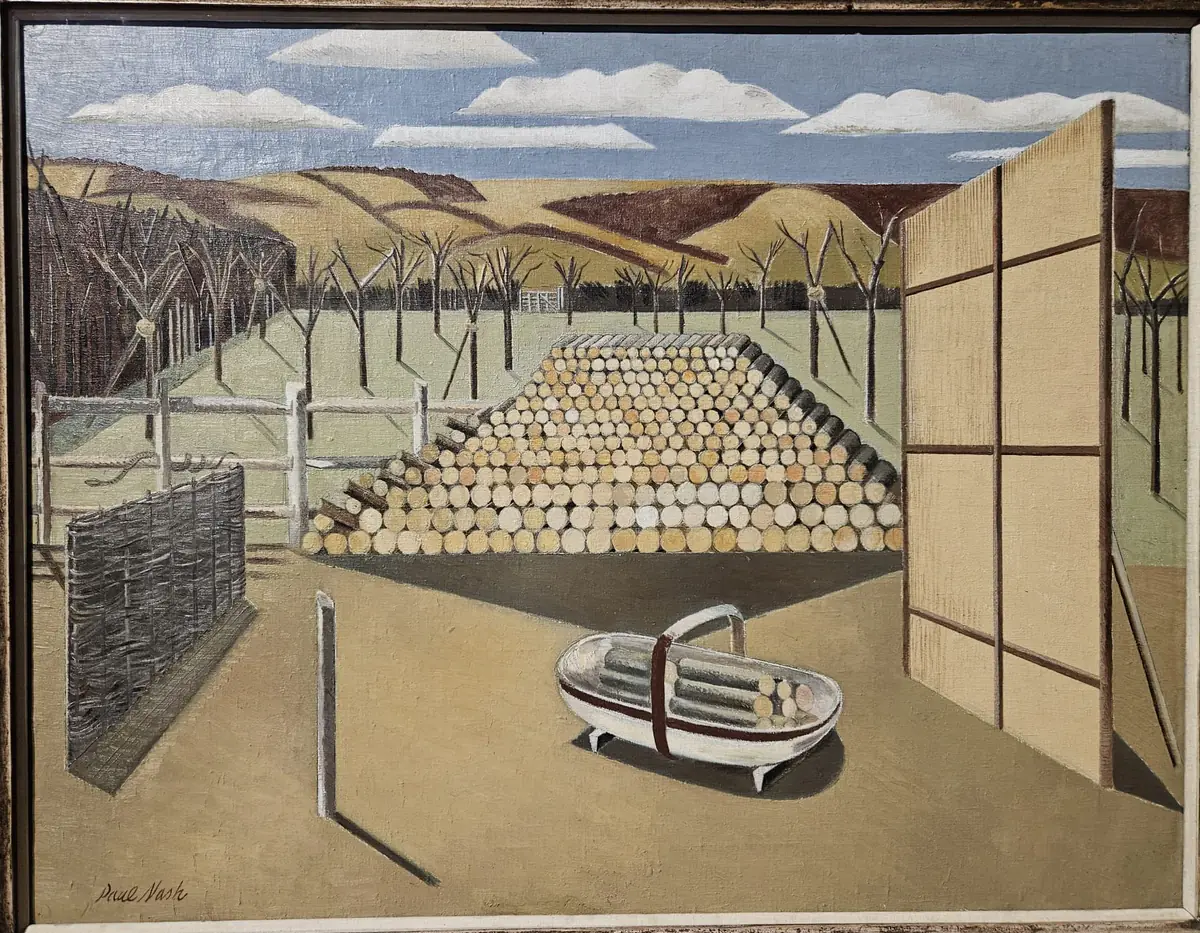
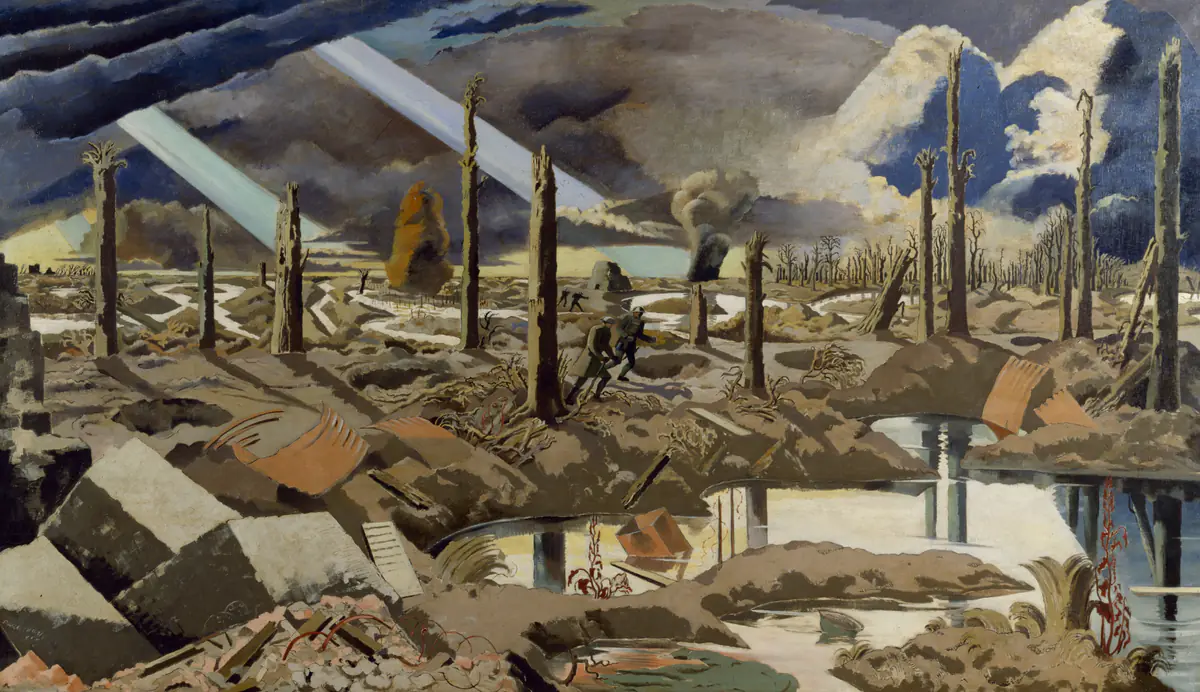
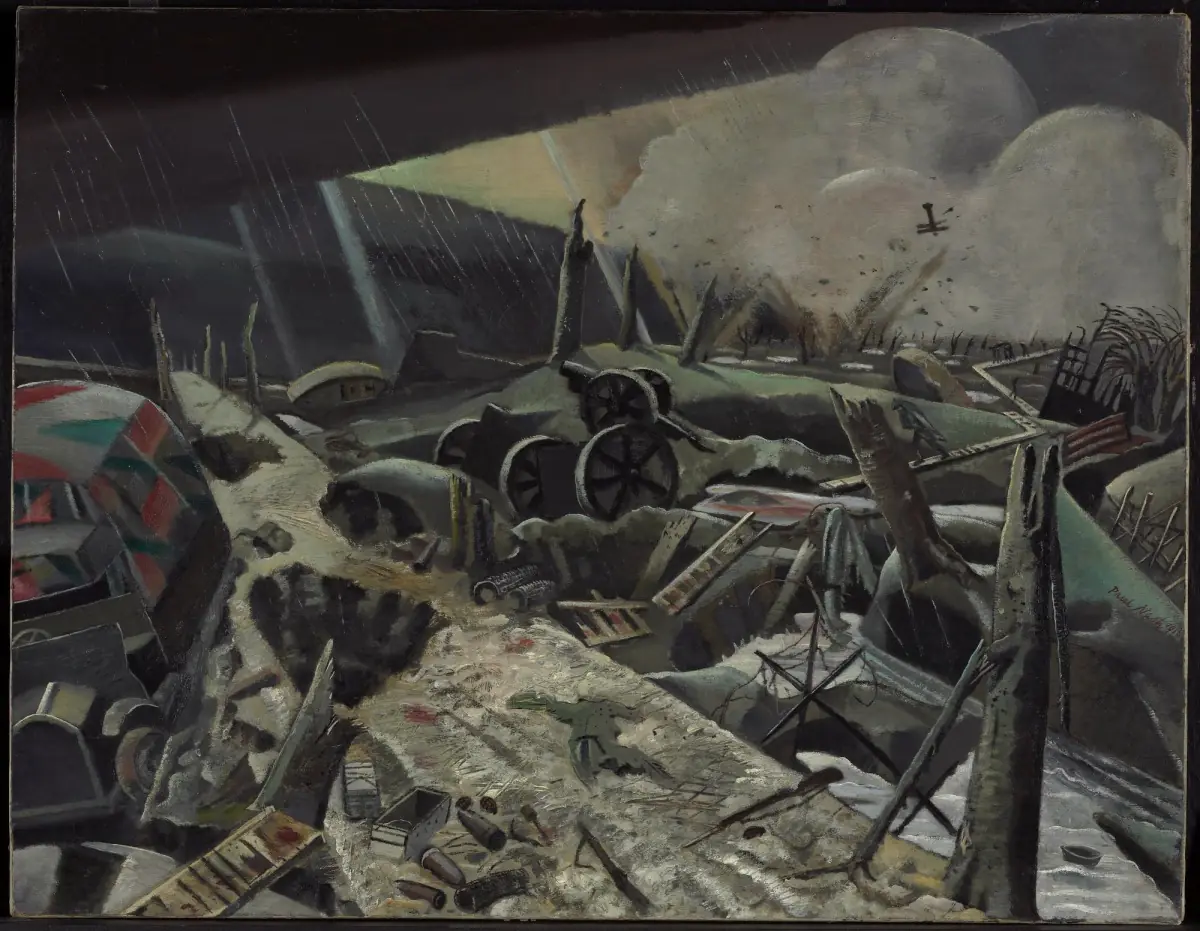
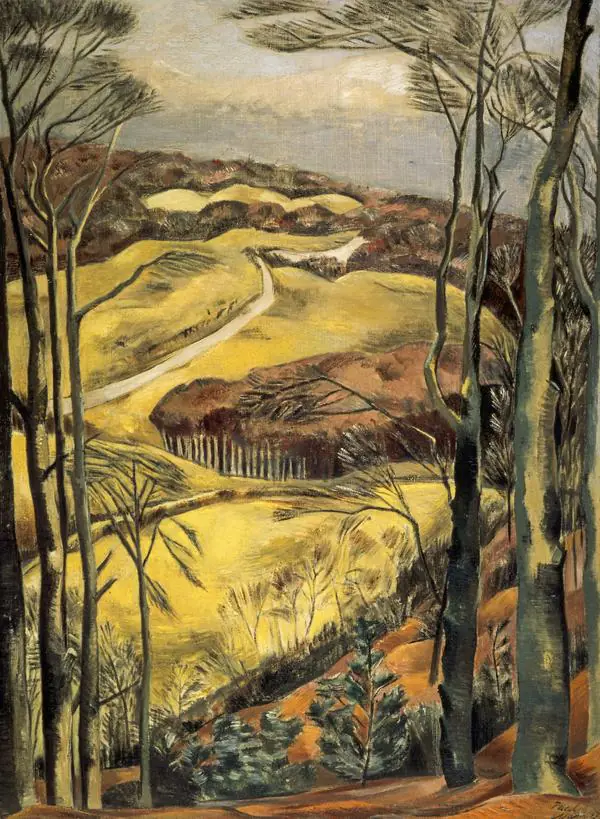
Paul Nash was born in London in 1889 and grew up in Buckinghamshire, in contact with woods and gardens which would nourish all his work. After brief training at the Slade School of Fine Art in 1910 -1911, he affirmed a very personal vision of the landscape. Engaged in the Artists Rifles during the First World War, he discovered the Ypres Front. Appointed official war artist, he transformed trenches, jagged trees and grounds drowned in visual accusations. We Are Making a New World, painted in 1918, he transformed trenches, jagged trees and grounds drowned in visual accusations. We Are Making a New World, painted in 1918, he transformed trenches, jagged trees and grounds drowned in visual accusations. We Are Making a New World, painted in 1918, he transformed trenches, jagged trees and grounds drowned in visual accusations. We Are Making a New World, painted in 1918, he transformed trenches, jagged trees and grounds drowned in visual accusations. We Are Making a New World, painted in 1918, he transformed trenches, jagged trees and grounds drowned in visual accusations. We Are Making a New World, painted in 1918, he transformed trenches, j from Avebury and found objects. He does not copy these places; he reveals the secret correspondences between stone, tree, sea and architecture. In 1933, he founded Unit One with other British artists in order to bring abstraction and surrealism together. Once again an official artist during the Second World War, he painted Totes Meer in 1940 -1941. The carcasses of German planes from an Oxford depot became a metallic sea, as calm as it was funereal. A designer, engraver, photographer and set designer, Nash thus constructed a British modernity deeply attached to the ground. The "Paul Nash" selection notably compares Totes Meer and We Are Making a New World. His reading favor the material.
For Nash, the landscape never serves as a setting: it preserves the wounds of history and opens, in the same movement, a passage towards the invisible.