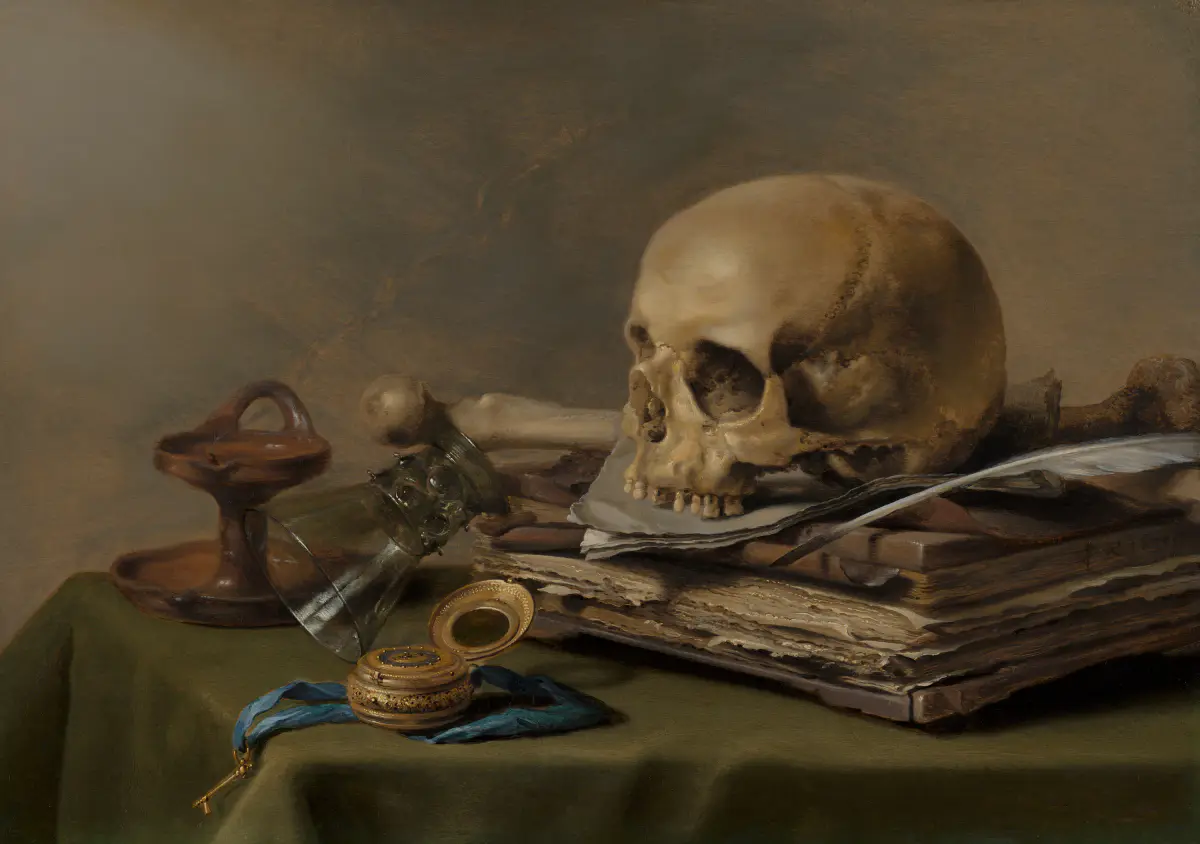
Pieter Claesz was born in Berchem, near Antwerp, in 1596 or 1597 and died in Haarlem at the end of 1660. Perhaps received at the Antwerp guild in 1620, he settled in Haarlem from 1620 -1621, where his son Nicolaes Berchem. Claesz devotes himself almost exclusively to still life. His first meals and tables set up retained the descriptive richness of Flemish painters, then his palette became more restricted in the 1630s: silver gray, brown, olive green and pale yellow unified the objects in the same atmosphere. Herring, bread, lemon, crab, glass, knife or tin dish seem abandoned after a recent gesture. Herring, bread, lemon, crab, glass, knife or tin dish seem abandoned after a recent gesture. Herring, bread, lemon, crab, glass, knife or tin dish seem abandoned after a recent gesture. Herring, bread, lemon, crab, glass, knife or tin dish seem abandoned after a recent gesture. Herring, bread, lemon, crab, glass, knife or tin dish seem abandoned after a recent gesture. Herring, bread, lemon, crab, glass, knife or tin dish seem abandoned after a recent gesture. Herring, bread, lemon, crab, glass, knife or tin dish seem abandoned after a recent gesture. Herring, bread, lemon, crab, glass, knife or tin dish seem abandoned after a recent gesture. Herring, bread, lemon, crab, glass organizes astonishing depth with few means. Still life with herring transforms a modest meal into a study of matter and light. Still life with crab, fruit and glass reintroduces more color and abundance. In vanities, musical instruments, skull, feather, watch and book remind us that pleasure, knowledge and reputation are subject to time. Virtuosity therefore does not contradict meditation: it makes fragility visible. Claesz constantly renews a limited repertoire of objects and profoundly influences Willem Claesz Heda as well as several generations of banquet and lunch painters. The "Pieter Claesz" selection notably compares Nature dead with herring and Still life with crab, fruit and glass. Its reading favors details.
Claesz makes silence a matter: a glass holds the window, tin absorbs the day and the interrupted meal transforms ordinary time into meditation.