

Top 50 · Canadian painting
From the Group of Seven to Riopelle, fifty painters to tell the story of Canada
Nordic landscapes, Quebec modernities, abstraction, figuration and indigenous sovereignties.
Canadian painting is neither a wild landscape nor a single school. The Group of Seven built a powerful image of the territory in the 1920s, but Emily Carr, Montreal artists, Beaver Hall painters, Automatists, Visual Artists and Indigenous artists constantly shifted this vision. Toronto, Montreal, Quebec, Vancouver, Winnipeg and communities across the country are becoming distinct centers. This classification combines historical influence, plastic invention, importance of works, educational role, representation of different scenes and international influence.

Territory, color, memory, criticism and sovereignty.
The landscape as manifesto
Tom Thomson and the Group of Seven invent a modern image of the territory
Thomson died before the founding of the Group, but his sketches of Algonquin became the model of energy and direct contact with the motif. Harris, Jackson, MacDonald, Lismer, Varley, Carmichael, Casson, Holgate and FitzGerald then developed very different responses: mountain reduced to the essential, village, forest in motion, portrait, watercolor or Prairie space. Their influence is considerable, but the classification avoids making them the only story of Canadian art.
Montreal and Quebec
From Leduc and Borduas to Automatists and Plastic Artists
In Saint-Hilaire, Ozias Leduc transmitted to Borduas a discipline of the subject before he broke with the motif and signed the Global Refusal. Riopelle internationalizes automatism; Pellan opens other surrealist paths; Molinari, Tousignant and Letendre then make color, series and speed the real subjects of the painting. Lemieux, Fortin, Gagnon and Dallaire then prove at the same time that Quebec figuration remains just as inventive.
Plural stories
Indigenous women painters and artists shift the center of the narrative
Emily Carr, Prudence Heward, Helen McNicoll, Laura Muntz Lyall, Joyce Wieland, Betty Goodwin and Mary Pratt renew landscape, portrait, abstraction and everyday life despite long unequal institutions. Morrisseau and Odjig impose autonomous Anishinaabe modernities; Monkman turns great history painting against his colonial narratives. These works do not complete a history already written: they modify its structure.
The essential figures
Top 10 - From Riopelle to the Group of Seven
Lyrical abstraction, Pacific coast and large northern landscapes open the ranking. Riopelle, Carr, Thomson and the most famous members of the Group impose immediately recognizable languages.
#1
Jean Paul Riopelle
Riopelle transforms the pictorial material into networks of touches, signs and colors which seem to grow on the canvas. From Montreal automatism to Paris, then to the great geese of maturity, he gave Canadian art an international reach.
Read the Wikipedia entry by Jean-Paul Riopelle #2
#2
Emily Carr
Carr paints the forests and villages of the Northwest Coast with powerful rhythms and moving material. His work must be admired for its formal invention while being placed in the colonial history of its indigenous representations.
See the Emily Carr collection #3
#3
Lawren Harris
Harris simplifies lakes, mountains and icebergs to an almost spiritual presence. Driving force of the Group of Seven, it gradually moves from the Canadian landscape to a geometric and luminous abstraction.
Read the Wikipedia entry for Lawren Harris #4
#4
Tom Thomson
Thomson paints Algonquin Park in small, rapid sketches where wind, water and sky become pure color. Died before the founding of the Group of Seven, he nevertheless embodies its most direct and mythical momentum.
See the Tom Thomson collection #5
#5
AY Jackson
Jackson traveled across Canada painting villages, roads, hills and northern spaces to the rhythm of the seasons. His ample touch and sense of the terrain make him one of the great travelers of the Group of Seven.
Read the AY Jackson Wikipedia entry #6
#6
JEH MacDonald
MacDonald organizes Algoma's landscapes with large masses of color and a decorative rhythm inherited from his profession as a graphic designer. His views give the Group of Seven a visual structure that is both robust and lyrical.
See the JEH MacDonald collection #7
#7
Arthur Lismer
Lismer animates forests, rocks and ports with swirling lines and a very constructed drawing. An influential war painter and teacher, he also made artistic education an essential extension of his work.
Read the Wikipedia entry by Arthur Lismer #8
#8
Frederick Varley
Varley brings a singular psychological intensity to the Group of Seven, particularly in his portraits and war paintings. His landscapes retain this tension thanks to acidic greens, nervous shapes and unstable light.
Read Frederick Varley's Wikipedia entry #9
#9
Franklin Carmichael
Carmichael favors the heights, lakes and great skies of northern Ontario. His clear watercolor and airy compositions offer a calmer, but no less constructed, voice within the Group.
See the Franklin Carmichael collection #10
#10
AJ Casson
Casson paints the small towns, homes and landscapes of southern Ontario with clear geometry. The last member admitted to the Group, he extends his language in a very coherent work, attentive to vernacular architecture.
Read the Wikipedia entry by AJ CassonGroups and ruptures
Ranks 11 to 20 - From the last members of the Group to modern figuration
Holgate and FitzGerald complete the history of the Group of Seven. Borduas, Pellan, Lemieux, Colville and Kurelek then move the painting towards automatism, surrealism and psychological narratives.
 #11
#11
Edwin Holgate
Holgate connects portrait, woodcut and landscape in a firm painting where the human figure retains a central presence. His entry into the Group broadened the movement to the Montreal artistic community.
Read Edwin Holgate's Wikipedia entry #12
#12
Lionel lemoine fitzgerald
FitzGerald observes Winnipeg's gardens, trees and spaces with almost meditative patience. Its fine lines and calm surfaces give the Prairies an organic modernity very different from the Group's rocky panoramas.
See the Lionel LeMoine FitzGerald collection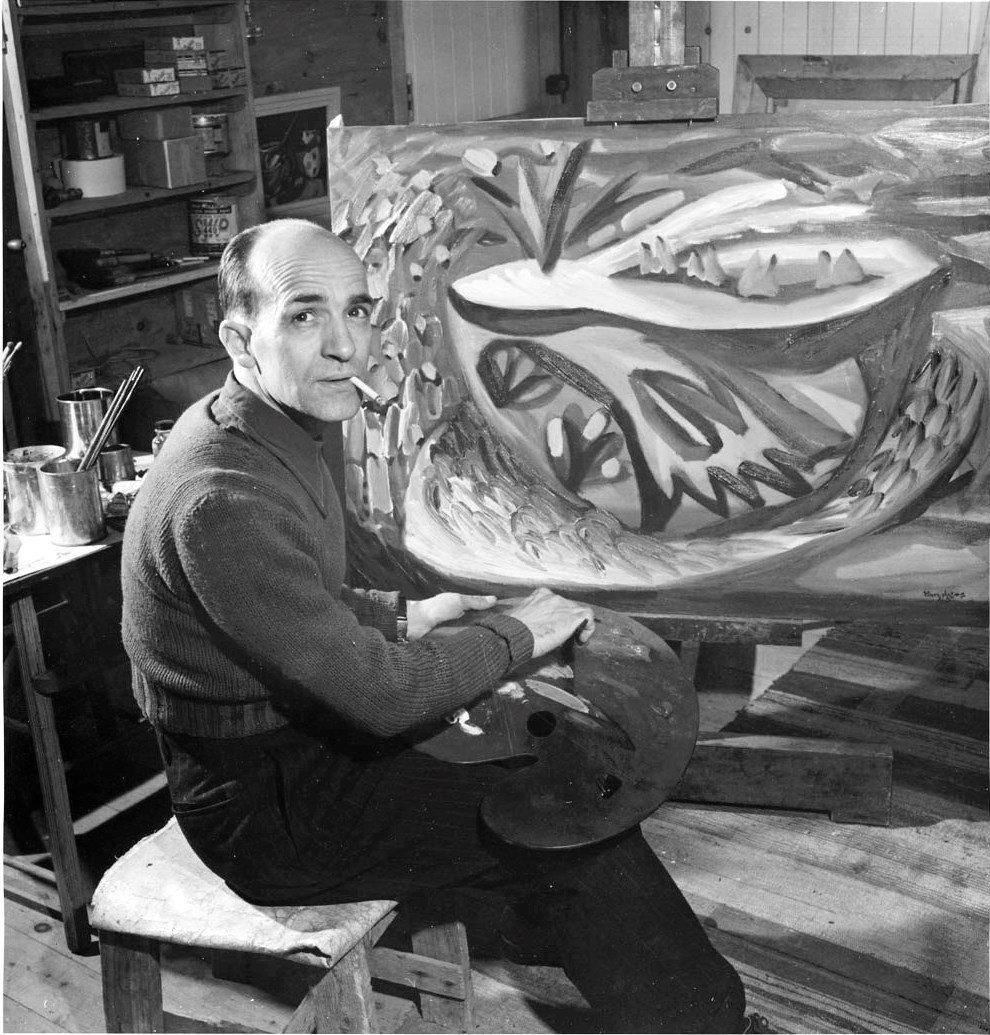 #13
#13
Paul-Emile Borduas
Borduas frees the painting from the motif with black signs, white flashes and suspended colored masses. Author of Refus global, he unites artistic rupture, individual freedom and cultural transformation of Quebec.
Read the Wikipedia entry by Paul-Émile Borduas #14
#14
Jean Paul Lemieux
Lemieux installs solitary figures in horizontal spaces where time seems suspended. Its restrained palette and its large voids transform the Quebec winter into meditation on memory, waiting and distance.
Read the Wikipedia entry by Jean Paul Lemieux #15
#15
Marcus Aurelius Fortin
Fortin gives Quebec trees, villages and clouds an instantly recognizable decorative scale. Its deep greens, swollen skies and views of Sainte-Rose combine local observation and colorful imagination.
Read the Wikipedia entry by Marc-Aurèle Fortin #16
#16
Clarence Gagnon
Gagnon paints Charlevoix as a world of snow, mountains and villages crossed by daily life. His Parisian training and his practice of engraving give his scenes a precise elegance without erasing their Quebec roots.
See the Clarence Gagnon collection #17
#17
Cornelius Krieghoff
Krieghoff fixes the winters, roads and sociability of 19th-century Canada in very popular narrative scenes. Its historical importance is accompanied by a necessary critical look at the colonial stereotypes present in certain works.
See the Cornelius Krieghoff collection #18
#18
Alfred Pellan
Pellan composes a universe teeming with masks, animals, signs and saturated colors. His return from Paris accelerated the opening of Quebec painting to surrealism and the international avant-gardes.
Read the Wikipedia entry by Alfred Pellan #19
#19
Alex Colville
Colville constructs daily scenes of almost mathematical precision where one detail is enough to create worry. Figures, animals, roads and shores become the elements of a silent realism, tense by waiting.
Read the Wikipedia entry by Alex Colville #20
#20
William kurelek
Kurelek paints prairie childhood, Ukrainian immigration, faith and modern fears in painstakingly narrative images. Behind their readability, its spaces often contain a moral or psychological threat.
Read the Wikipedia entry by William KurelekTerritories of modernity
Ranks 21 to 30 - Quebec, Ontario and chromatic abstraction
From Morrice's cosmopolitan modernism to Tousignant's targets, this chapter follows the transformation of the landscape, the rural scene and pure color between Montreal, Toronto and Paris.
 #21
#21
David Milne
Milne reduces house, tree and still life to a few nerve lines, reserves and spots of color. Its radical economy gives the Canadian landscape an intimate intensity that is as distinct from the Group of Seven as from Impressionism.
See the David Milne collection #22
#22
James Wilson Morrice
Morrice condenses Paris, Venice, Tangier and Quebec in small compositions of great chromatic density. His art early linked Canadian painting to the international networks of modernity.
See the James Wilson Morrice collection #23
#23
Ozias Leduc
Leduc unites church decorations, portraits and still lifes with slow light and silent material. His workshop in Saint-Hilaire transmits to Borduas a formal requirement which will paradoxically prepare for the automatic rupture.
See the Ozias Leduc collection #24
#24
Maurice Cullen
Cullen adapts impressionism to the snowy streets, frozen rivers and twilights of Quebec. Its colorful reflections prove that winter is not an absence of color, but a field of light variations.
See the Maurice Cullen collection #25
#25
Homer Watson
Watson gives Ontario's valleys, mills and forests monumental gravity. Its dark material and robust compositions make the rural landscape a collective memory rather than just a picturesque view.
See the Homer Watson collection #26
#26
Horatio Walker
Walker paints agricultural work, teams and shore scenes on Île d'Orléans with ample volumes. Its golden light and powerful silhouettes idealize the peasant world while giving it monumental dignity.
See the Horatio Walker collection #27
#27
Jack Bush
Bush releases bands, loops and areas of color on bright backgrounds with a deep breath. Associated with the Eleven Painters, he found international recognition by developing a direct, supple and joyful abstraction.
Read Jack Bush's Wikipedia entry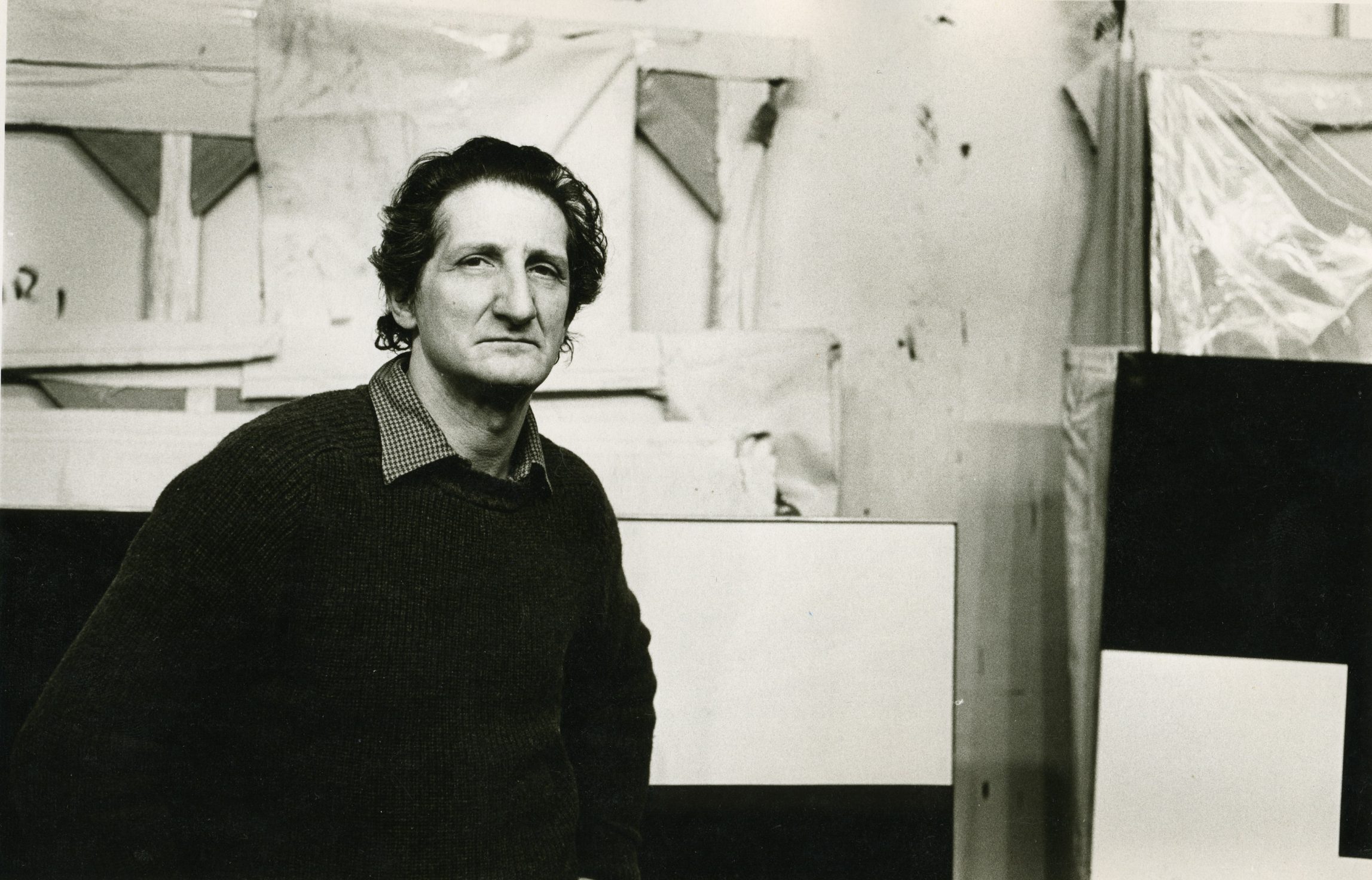 #28
#28
Guido Molinari
Molinari organizes the canvas into vertical bands whose colored relationships actively modify perception. Its serial abstraction rejects traditional depth and makes the viewer's gaze part of the work.
Read the Wikipedia entry by Guido Molinari #29
#29
Claude Tousignant
Tousignant uses circles, targets and monochromes to make color a physical experience. Its sharp shapes eliminate narrative and invite the eye to measure vibration, expansion and rhythm.
Read the Wikipedia entry by Claude Tousignant #30
#30
Rita Letendre
Letendre projects color into arrows, beams and diagonals that seem to cross the canvas. Of Abenaki ancestry, she built an independent career where light and speed became pictorial forces.
Read the Wikipedia entry by Rita LetendreMatter, narrative and sovereignty
Ranks 31 to 40 - From Dallaire to Prudence Heward
Fantastic representation, feminist practices, engraved surfaces and Atlantic realism prepare the meeting with Morrisseau, Odjig and Monkman, who overturn colonial stories.
 #31
#31
Jean Dallaire
Dallaire populates his paintings with hybrid beings, birds, masks and falsely naive scenes. His inventive drawing combines humor, concern and popular culture in a figuration impossible to reduce to a school.
Read the Wikipedia entry by Jean Dallaire #32
#32
Fernand Leduc
Leduc moves from gestural automatism to increasingly luminous and refined colored fields. His long research makes color a space of contemplation where the structure remains rigorous without becoming cold.
Read the Wikipedia entry by Fernand Leduc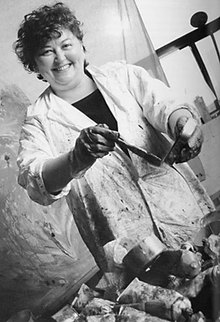 #33
#33
Joyce Wieland
Wieland combines painting, cinema, textiles, humor and national symbols to question gender, ecology and Canadian identity. His works deliberately shift the boundary between fine arts and domestic practices.
Read Joyce Wieland's Wikipedia entry #34
#34
Betty Goodwin
Goodwin brings out clothing, floating bodies and human traces from fragile, rubbed or incised surfaces. His art transforms absence into material presence and gives memory a form that is both intimate and universal.
Read Betty Goodwin's Wikipedia entry #35
#35
Paterson Ewen
Ewen attacks the plywood with a router before writing rain, moon, lightning and celestial phenomena. Its material landscapes bring together scientific observation, physical gestures and almost childish signs.
Read Paterson Ewen's Wikipedia entry #36
#36
Mary Pratt
Pratt transforms jelly, fish, foil and household objects into intense light shows. Its precision reveals the sensuality and tension hidden in everyday tasks and spaces.
Read Mary Pratt's Wikipedia entry #37
#37
Christopher Pratt
Pratt paints Newfoundland's roads, buildings, rooms and shores in still light. Its clean geometries and empty spaces give the familiar a calm, almost cinematic strangeness.
Read Christopher Pratt's Wikipedia entry #38
#38
Norval Morrisseau
Morrisseau founded a visual language where black contours, bold colors and lines of force made visible the relationships between beings. His Anishinaabe work lastingly transformed art history in Canada and affirmed narrative sovereignty.
Read Norval Morrisseau's Wikipedia entry #39
#39
Daphne Odjig
Odjig combines flowing curves, flat colored areas and Anishinaabe stories to talk about family, spirituality and colonial history. Co-founder of Professional Native Indian Artists Inc., she opens essential spaces for Indigenous artists.
Read the Wikipedia entry by Daphne Odjig #40
#40
Kent Monkman
Monkman diverts great history painting to confront colonialism, museums, violence and indigenous resilience. Her figure of Miss Chief overturns points of view and imposes a Cree, queer and sovereign narration.
Read Kent Monkman's Wikipedia entryFoundations and transmissions
Ranks 41 to 50 - Beaver Hall, impressionism and pioneers
Women painters, war artists and professors place modernity in a long history. These trajectories show how academies, travel and local networks prepared the ruptures of the 20th century.
 #41
#41
Caution Heward
Heward constructs portraits of women with tense poses, sculptural volumes and bold colors. Far from worldly gentleness, his models occupy space with autonomy and psychological complexity.
See the Prudence Heward collection #42
#42
Anne Savage
Savage simplifies Quebec hills, trees and villages in a painting sensitive to the seasons and rhythm. Member of the Beaver Hall Group and teacher, she defends independent modernity for women artists.
Read the Wikipedia entry by Anne Savage #43
#43
Frances anne hopkins
Hopkins painted canoes, portages and fur trade expeditions from direct travel experience. His compositions are major documents, also to be read in the context of the British colonial gaze.
See the Frances Anne Hopkins collection #44
#44
Paul Peel
Peel masters nude, portrait and childhood scene in a clear light acquired during his Parisian training. His brief career introduced a fully international naturalist virtuosity to Canada.
See the Paul Peel collection #45
#45
Helen McNicoll
McNicoll paints beaches, fields and childhood scenes in vibrant light, with an open touch and a clear palette. His deafness limits neither his travels nor an international career interrupted too soon.
See the Helen McNicoll collection #46
#46
Laura Muntz Lyall
Muntz Lyall gives children and young women an attentive presence, without excessive sentimentalism. Its supple touch and warm tones connect Victorian portraiture, impressionism and professional affirmation.
See the Laura Muntz Lyall collection #47
#47
Molly Lamb Bobak
Bobak observes ceremonies, crowds, interiors and landscapes with a quick touch that favors collective movement. Canada's first official female war artist, she links military experience and everyday painting.
Read the Wikipedia entry for Molly Lamb Bobak #48
#48
Michael Snow
Snow crosses painting, sculpture, photography, music and cinema without hierarchy between mediums. Her Walking Woman and her experimental films question framework, duration, perception and repetition.
Read Michael Snow's Wikipedia entry #49
#49
William brymner
Brymner practices portraiture, landscape and genre scenes while opening his teaching to European trends. In Montreal, he trained several artists who would transform 20th century Canadian painting.
See the William Brymner collection #50
#50
Frederick arthur verner
Verner paints meadows, bison and camps in meticulous compositions inspired by his travels and by Paul Kane. His works are important to the visual history of the West, but require a critical reading of their colonial imagination.
See the Frederick Arthur Verner collectionSources and extensions
Compare works in Canadian public collections
The dates, movements and landmarks were cross-checked with the resources of the country's main institutions. The National Gallery of Canada preserves major ensembles of the Group of Seven, Carr and Canadian modernities; the McMichael Collection delves deeper into the historical landscape; the National Museum of Fine Arts of Quebec and the Montreal Museum of Fine Arts document Quebec scenes; the National Museum of Fine Arts of Quebec and the Montreal Museum of Fine Arts document Quebec scenes; the Canadian Art Institute publishes accessible and rigorous monographs.
Canadian painting becomes more accurate when viewed in the plural
The Group of Seven remains essential because it transforms the landscape into modern language. Yet Carr follows a distinct path on the Pacific coast; Borduas and Riopelle make Montreal a center of abstraction; Colville, Pratt and Kurelek reveal the tension of everyday life; Wieland, Goodwin and Heward shift the hierarchies of subject and medium.
Morrisseau, Odjig and Monkman finally make impossible the ancient story of an empty territory offered to the colonial gaze. Their works affirm stories, relationships and sovereignties already present. This Top 50 therefore offers a comparative journey: not a single identity, but images that respond to each other, contest each other and enlarge the field of Canadian art.
0 comments