

Top 50 · Latin American modernities
Top 50 Latin American women painters
From Frida Kahlo, Tarsila do Amaral and Remedios Varo to Lygia Clark, Carmen Herrera, Débora Arango and Zilia Sanchez.
Latin American painting forms neither a single school nor an isolated chronology. It is born from back and forth between Mexico, Sao Paulo, Rio, Havana, Bogota, Buenos Aires, Santiago, Lima, Paris and New York; it dialogues with popular arts, indigenous and Afro-descendant cultures, European avant-gardes, revolutions, dictatorships and exiles. The women in this ranking do not constitute a homogeneous margin: some have worked at the heart of institutions, others against them; some recognized themselves in feminism, others not. Some recognized themselves in feminism, others did not. The ranking combines historical influence, formal invention, political significance, professional autonomy, role in artistic networks, museum presence and the work's ability to shift our gaze. It includes artists born in Latin America as well as creators who have built most of their work there, such as Varo, Carrington, Schendel or Rahon.

Painting, engraving, muralism, abstraction, graffiti and expanded practices.
Define without locking up
"Latin American" describes circulations, not a style
The term brings together very different national, linguistic and cultural histories. The Brazilian modernism of Tarsila do Amaral is not to be confused with Mexican muralism, Uruguayan planning, Peruvian indigenism or Cuban abstraction. Migration further complicates borders: Tomie Ohtake, Mira Schendel and Anna Maria Maiolino become central to Brazil after exile; Remedios Varo, Leonora Carrington and Alice Rahon reinvent their practice in Mexico; Carmen Herrera and Olga Albizu work from New York. Reading these trajectories together allows us to see how artists translate, absorb or challenge several traditions at once.
Modernisms in the plural
Anthropophagy, neoconcretism, surrealism and popular image
In the 1920s, Brazilian modernists claimed an active transformation of European models: Tarsila's cultural anthropophagy proposed devouring influences to make them local. In Cuba, Amelia Peláez combines cubism, stained glass and domestic architecture; in Mexico, Kahlo and Izquierdo put experience, popular objects and material culture at the forefront. After 1945, the geometric abstraction of Herrera, Gilbert and Lauand rubbed shoulders with the sensitive abstraction of Ohtake, Ostrower and Albizu. The neoconcretism of Clark and Pape finally goes beyond the painting to engage the spectator's body.
Gender, race and power
Painting from the body, exile and political memory
Being a female artist does not automatically produce a common aesthetic, but transforms the conditions of access to the workshop, exhibition and recognition. Débora Arango attacks the taboos of a conservative society; Beatriz Gonzalez and Gracia Barrios give shape to political violence; Ana Mercedes Hoyos makes Afro-Colombian legacies visible; Zilia Sanchez and Lygia Clark make the body an active space rather than a passive motif. Others, like Lady Pink or Cybèle Varela, invest in popular and urban languages. Others, like Lady Pink or Cybèle Varela, invest in popular and urban languages. Others, like Lady Pink or Cybèle Varela, invest in popular and urban languages. Others, like Lady Pink or Cybèle Varela, invest in popular and urban languages. Others, like Lady Pink or Cybèle Varela, invest in popular and urban languages. Others, like Lady Pink or Cybèle Varela, invest in popular and urban languages. Others, like Lady Pink or Cybèle Varela, invest in popular and urban languages. Others, like Lady Pink or Cybèle Varela, invest in popular and urban languages. Others, like Lady Pink
The Top 10
Ten icons that moved the boundaries of painting
Frida Kahlo, Tarsila do Amaral, Remedios Varo, Leonora Carrington, Anita Malfatti, Amelia Peláez, Maria Izquierdo, Tomie Ohtake, Carmen Herrera and Lygia Clark summarize the breadth of a continent: identity, exile, modernism, surrealism and abstraction.
#1
Frida Kahlo
In her self-portraits, Frida Kahlo uses the wounded body, tehuana clothing and Mexican flora in a language of relentless precision. His work transforms intimate experience into reflection on gender, pain and cultural belonging.
See Frida Kahlo's collection #2
#2
Tarsila do Amaral
Tarsila do Amaral gives Brazilian modernism its rounded silhouettes, its tropical colors and its cannibalistic imagination. Abaporu sums up his ambition: to absorb the European avant-gardes to invent a profoundly Brazilian painting.
Read the biography of Tarsila do Amaral on Wikipedia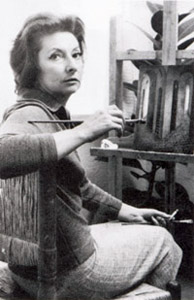 #3
#3
Remedios Varo
Exiled in Mexico, Remedios Varo builds laboratories, towers and machines inhabited by figures in search of knowledge. His almost medieval meticulousness unites alchemy, science and emancipation in visual stories of perfect dream logic.
Read Remedios Varo's biography on Wikipedia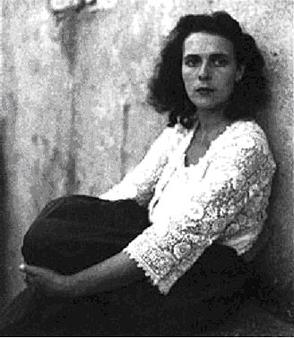 #4
#4
Leonora Carrington
Leonora Carrington populates her paintings with horses, ritual banquets and metamorphic creatures. In Mexico, she reinvents surrealism from Celtic myths, magic and a feminine imagination freed from imposed roles.
Read Leonora Carrington's biography on Wikipedia #5
#5
Anita Malfatti
Anita Malfatti's dissonantly colored portraits caused a shock in Sao Paulo before Modern Art Week of 1922. Her freedom of distortion opened a decisive breach in Brazilian academicism.
Read Anita Malfatti's biography on Wikipedia #6
#6
Amelia Pelaez
Amelia Peláez embeds fruits, vases, balconies and stained glass windows in powerful black contours. Its interiors condense Cuban colonial architecture and the lessons of Cubism into bright, tight compositions.
Read Amelia Pelaez's biography on Wikipedia #7
#7
Maria Izquierdo
Maria Izquierdo paints domestic altars, circuses, horses and still lifes with a singular poetic gravity. The first Mexican to exhibit alone in New York, she asserts an independent path in the face of the male monopoly of muralism.
See the collection of Maria Izquierdo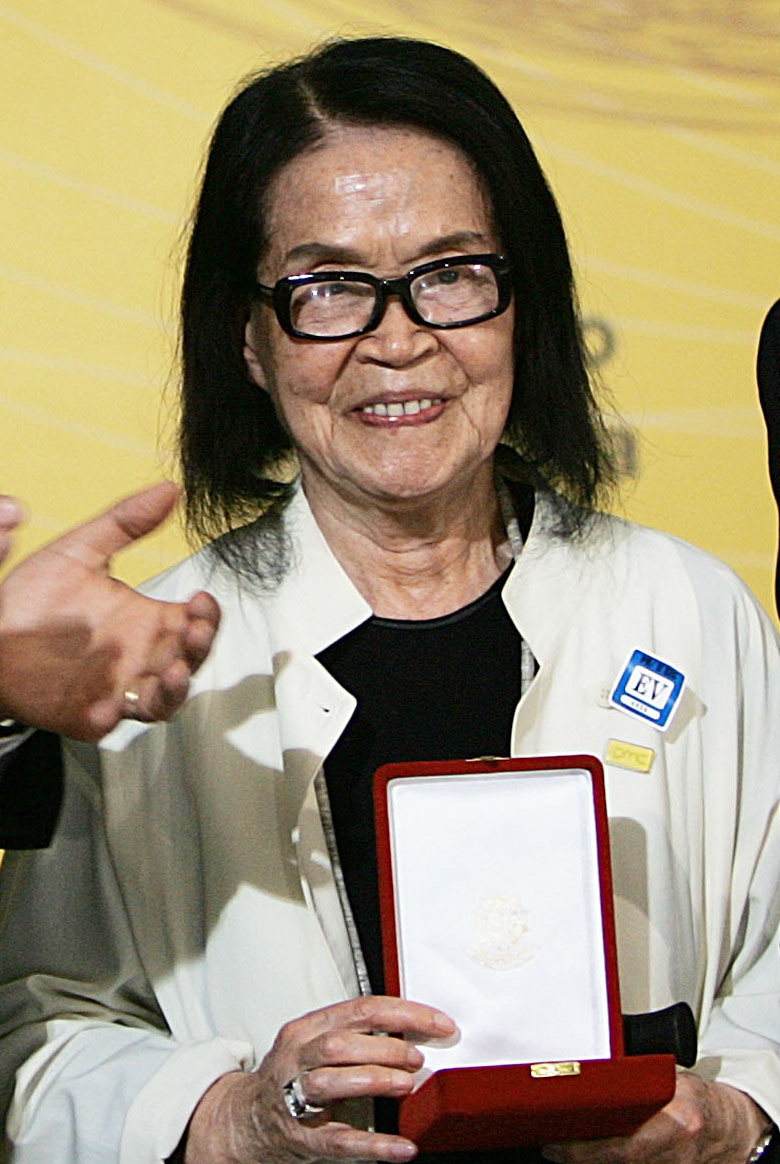 #8
#8
Tomie Ohtake
Tomie Ohtake creates large colorful fields, supple curves and veils of material from a restrained gesture. His Japanese-Brazilian journey gives local abstraction a very personal meditative amplitude.
Read Tomie Ohtake's biography on Wikipedia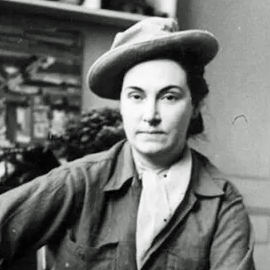 #9
#9
Carmen Herrera
Carmen Herrera reduces painting to sharp diagonals, sharp flat areas and chromatic ratios of great tension. Long ignored, this Cuban from New York appears today as an essential pioneer of minimalism.
Read Carmen Herrera's biography on Wikipedia #10
#10
Lygia Clark
Lygia Clark starts from the geometric surface to fold it, articulate it and then put it back in the hands of the public. His Bichos move painting towards bodily experience without losing the rigor of neoconcretism.
Read Lygia Clark's biography on WikipediaChapter I · Ranks 11 to 20
Neoconcretism, abstraction and social criticism
From Lygia Pape to Henriette Petit, this chapter connects the Brazilian avant-gardes to Colombian and Chilean voices that transformed geometry, color, press image and representation of the body.
 #11
#11
Lygia Pope
Lygia Pape connects color, space, artist's book, film and participation with rare experimental intelligence. From Tecelares to Ttéia, she transforms geometry into a collective and luminous sensation.
Read Lygia Pape's biography on Wikipedia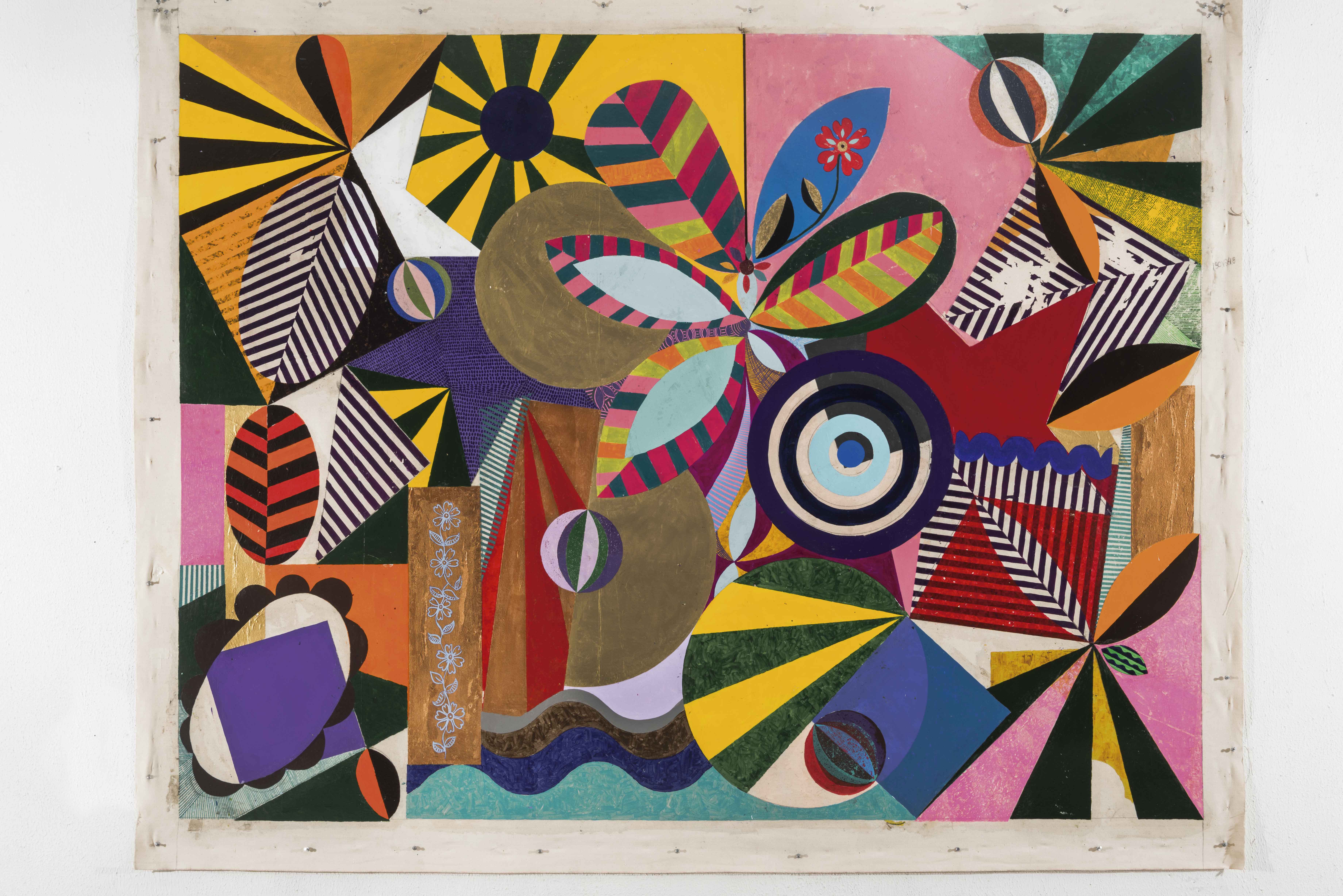 #12
#12
Beatriz Milhazes
Beatriz Milhazes superimposes arabesques, rosettes and decorative fragments like successive skins of color. Baroque, carnival, modernism and printed culture meet there in a painting as jubilant as it is skillfully constructed.
Read Beatriz Milhazes' biography on Wikipedia #13
#13
Adriana Varejao
Adriana Varejao cracks azulejos and colonial history to reveal carnal matter beneath the surface. His paintings question crossbreeding, violence, commerce and circulation of images between Portugal, Brazil and Asia.
Read Adriana Varejao's biography on Wikipedia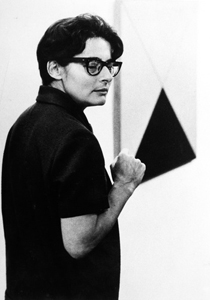 #14
#14
Mira Schendel
In Mira Schendel, letters, transparencies and fragile lines seem suspended between appearance and erasure. His rice papers transform language into visual, silent and philosophical matter.
Read Mira Schendel's biography on Wikipedia #15
#15
Anna Bella Geiger
Anna Bella Geiger diverts maps, boundaries and systems of representation to question who has the power to name the world. His practice links painting, engraving, video and criticism of colonial stories.
Read Anna Bella Geiger's biography on Wikipedia #16
#16
Judith Lauand
The only woman in the Ruptura group, Judith Lauand organizes lines, modules and colors according to rhythms that resist simple regularity. Its geometry introduces vibration, imbalance and humor into Brazilian concrete art.
Read Judith Lauand's biography on Wikipedia #17
#17
Debora Arango
Débora Arango dares to paint naked women, workers, prostitutes and political violence in conservative Colombia. His biting expressionism makes color an instrument of social denunciation.
Read Débora Arango's biography on Wikipedia #18
#18
Beatriz Gonzalez
Beatriz Gonzalez transposes press images and popular icons onto furniture, curtains or colored surfaces. Beneath an apparent pop irony, she constructs an acute memory of Colombian violence and mourning.
Read Beatriz Gonzalez's biography on Wikipedia #19
#19
Ana Mercedes Hoyos
Ana Mercedes Hoyos moves from stripped-down architecture to the Palenqueras of Cartagena, whose fabrics and fruit baskets she celebrates. Its monumental color makes visible Afro-Colombian legacies that have been marginalized for too long.
Read the biography of Ana Mercedes Hoyos on Wikipedia #20
#20
Henriette Petit
Henriette Petit brings to Grupo Montparnasse a dense, nervous painting free of academic finish. His portraits and interiors bear witness to the direct dialogue between Santiago and the Parisian avant-gardes.
Read Henriette Petit's biography on WikipediaChapter II · Ranks 21 to 30
Southern Cone, Andes and transatlantic circulations
Raquel Forner, Norah Borges, Sarah Grilo, Julia Codesido and Araceli Gilbert show that Buenos Aires, Lima, Quito, Paris and New York form a network of modernities rather than a periphery.
 #21
#21
Raquel Forner
Raquel Forner responds to wars and exiles with dramatic figures, then invents cosmonauts to think about humanity on the scale of the future. His painting combines historical catastrophe and cosmic imagination.
Read Raquel Forner's biography on Wikipedia #22
#22
Norah Borges
Norah Borges paints women, children and interiors where the simplicity of the lines creates a very constructed softness. Far from the shadow of her brother Jorge Luis Borges, she develops an intimate and recognizable modernism.
Read Norah Borges' biography on Wikipedia #23
#23
Sarah Grilo
Sarah Grilo circulates letters, numbers, graffiti and drips in open pictorial fields. After Buenos Aires, Paris and New York, she forged an urban abstraction where the sign preserves the energy of the street.
Read Sarah Grilo's biography on Wikipedia #24
#24
Meli Valdes Sozzani
Meli Valdés Sozzani places her characters in luminous spaces where time seems suspended. Its symbolic representation borrows from dreams without renouncing a readable and emotional narration.
Read the biography of Meli Valdés Sozzani on Wikipedia #25
#25
Maria Luisa Pacheco
Maria Luisa Pacheco transforms the Altiplano into vertical strata, dark reliefs and mineral bursts. Based in New York, it preserves the tactile memory of the Bolivian Andes in abstraction.
Read the biography of Maria Luisa Pacheco on Wikipedia #26
#26
Julia Codesido
Julia Codesido gives Peruvian indigenism an autonomous voice, attentive to Andean faces and pre-Columbian forms. His stylized portraits avoid the picturesque to assert dignity and modernity.
Read Julia Codesido's biography on Wikipedia #27
#27
Helba Huara
Dancer, model and painter, Helba Huara makes movement a link between Andean heritage and the international scene. His journey from Cusco to Broadway then Paris embodies a transatlantic modernity outside the usual categories.
Read Helba Huara's biography on Wikipedia #28
#28
Lady Pink
In the 1980s, Lady Pink conquered New York trains and walls with explosive colors and female figures. Her work affirms the place of women in a graffiti culture long dominated by men.
Read Lady Pink's biography on Wikipedia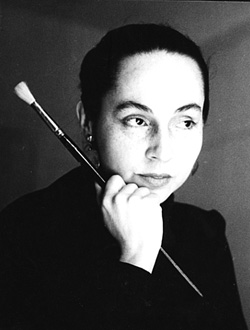 #29
#29
Araceli Gilbert
Araceli Gilbert articulates colorful, diagonal planes and precise balances in an abstraction nourished by Paris and South American constructivism. She is one of the great pioneers of Ecuadorian non-figurative art.
Read the biography of Araceli Gilbert on Wikipedia #30
#30
Judith Gutierrez
Judith Gutiérrez brings together women, animals, moons and popular signs in scenes close to myth. Between Ecuador and Mexico, she invents an iconography of the feminine, exile and memory.
Read the biography of Judith Gutiérrez on WikipediaChapter III · Ranks 31 to 40
Memory, matter and abstraction embodied
From Fayga Ostrower to Olga Albizu, engraving, planing, Chilean crowds, relief canvas and Caribbean expressionism give a form sensitive to exile, the body and political history.
 #31
#31
Fayga Ostrower
Fayga Ostrower makes engraving a breathing field where colored and white masses of paper respond to each other. His teaching of creativity was as important as his role in post-war Brazilian abstraction.
Read Fayga Ostrower's biography on Wikipedia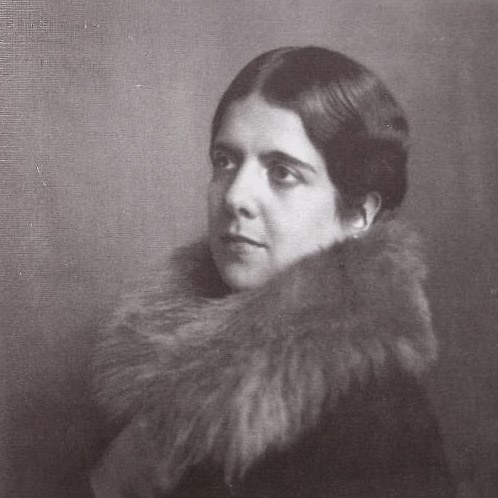 #32
#32
Petrona Viera
Petrona Viera observes children's games, readings and domestic scenes with sharp contours and warm flat areas. The first professional woman painter in Uruguay, she gave planning a unique intimate territory.
Read Petrona Viera's biography on Wikipedia #33
#33
Georgina of Albuquerque
Georgina de Albuquerque renews history painting by placing women at the center of political decision-making. Sessao do Conselho de Estado combines civic ambition, modern light and feminist perspective avant la lettre.
Read Georgina de Albuquerque's biography on Wikipedia #34
#34
Gracia Barrios
Gracia Barrios covers her canvases with crowds, faces and dark lands marked by Chilean history. His extensive gesture unites collective commitment, memory of exile and the power of matter.
Read Gracia Barrios' biography on Wikipedia #35
#35
Roser Bru
Roser Bru works on portraits, objects and bodies as vulnerable archives. Refugee in Chile after the Spanish Civil War, she brings together European memory, Latin American violence and erasure.
Read Roser Bru's biography on Wikipedia #36
#36
Angelina Agostini
Angelina Agostini constructs portraits with a calm presence, attentive to the fabrics and psychology of the model. Her travel prize to Europe signals the difficult breakthrough of women in Brazilian artistic institutions.
Read Angelina Agostini's biography on Wikipedia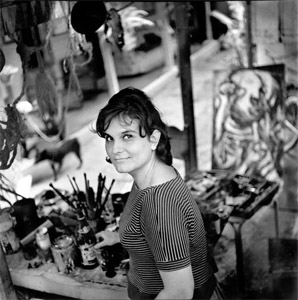 #37
#37
Antonia Eiriz
Antonia Eiriz twists bodies and faces to the point of making anguish, grotesque and political pressure heard. His painting rejects official heroism in favor of a vulnerable and disturbing humanity.
Read Antonia Eiriz's biography on Wikipedia #38
#38
Zilia Sanchez
Zilia Sanchez stretches the canvas on curved volumes that evoke breasts, torsos, moons and landscapes. Its white or blue reliefs invent an erotic, feminist and resolutely tactile abstraction.
Read Zilia Sanchez's biography on Wikipedia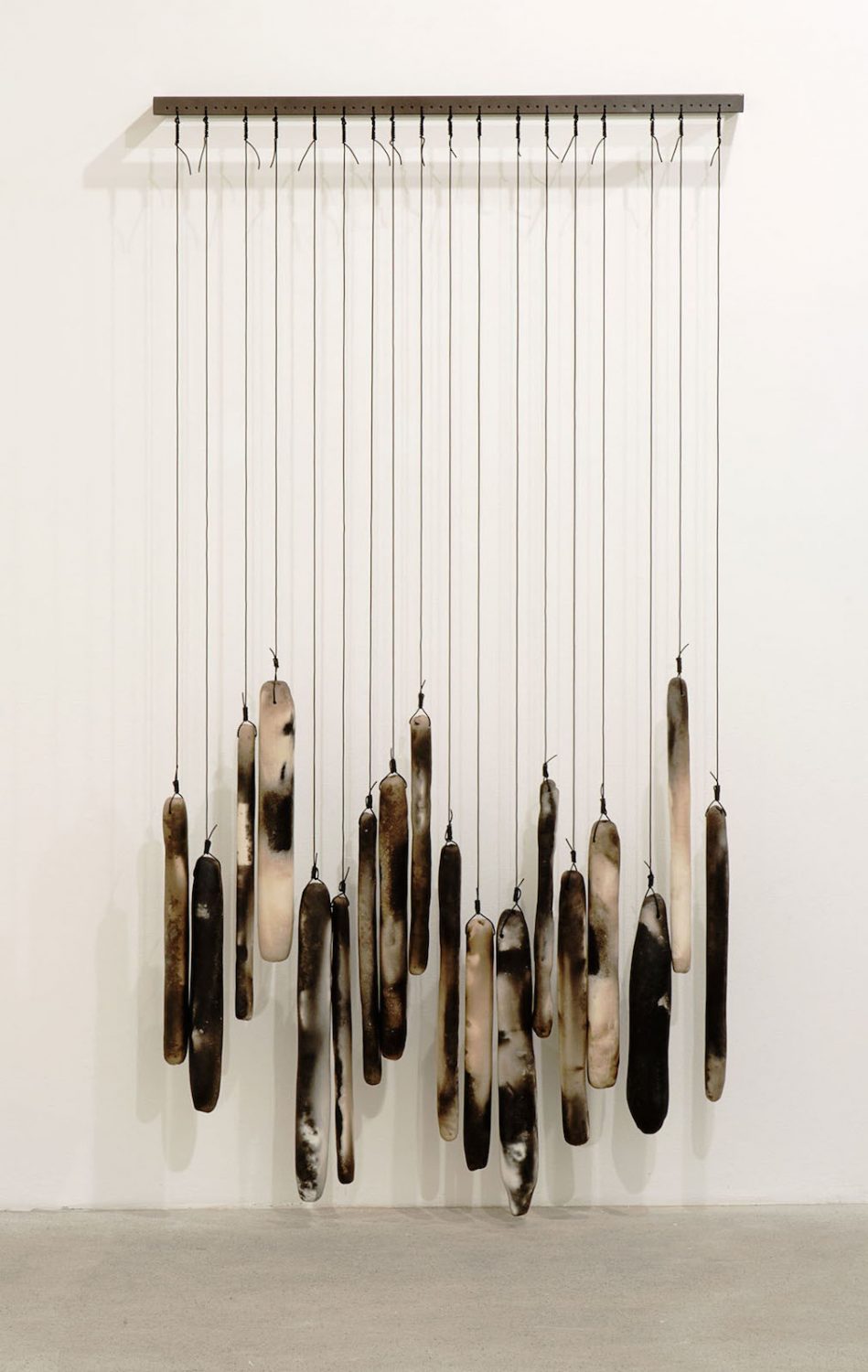 #39
#39
Anna Maria Maiolino
Anna Maria Maiolino explores mouth, food, domestic gesture and repetition in a work that moves freely from drawing to performance. His experience of immigration irrigates a sensitive reflection on language and belonging.
Read the biography of Anna Maria Maiolino on Wikipedia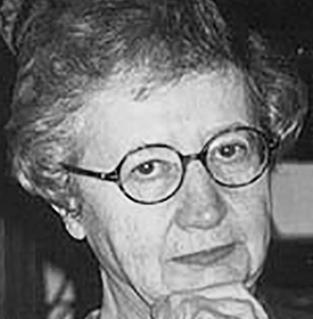 #40
#40
Olga Albizu
Olga Albizu condenses abstract expressionism into compact colored surfaces, crossed by luminous accents. Between San Juan, Paris and New York, she imposes a lyrical painting distinct from the dominant stories of the American school.
Read Olga Albizu's biography on WikipediaChapter IV · Ranks 41 to 50
Critical figures, muralism and Caribbean voices
Wanda Pimentel, Cybèle Varela, Rina Lazo, Alice Rahon, Nahui Olin, Louisiana Saint Fleurant and Gina Pellon extend the story to graffiti, diasporas and popular mythologies.
 #41
#41
Wanda Pimentel
Wanda Pimentel fragments modern interiors into legs, furniture, wires and industrial objects. His Envolvimento series converts domestic space into a silent critique of consumption and confinement.
Read Wanda Pimentel's biography on Wikipedia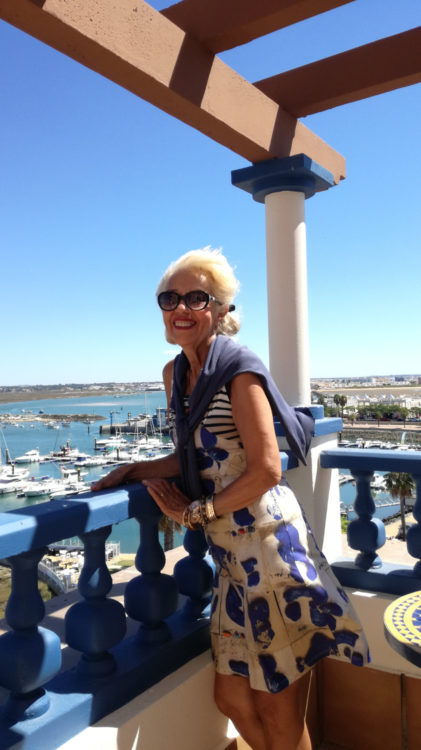 #42
#42
Cybele Varela
Cybèle Varela borrows her frank colors and apparently light scenes from advertising to better undo its promises. Exiled in Europe, she developed a critical, mobile and irreverent representation.
Read Cybèle Varela's biography on Wikipedia #43
#43
Rina Lazo
Rina Lazo extends Mexican muralism by including archeology, the Mayan world and social struggles. Collaborator of Diego Rivera, she also builds her own work where Guatemalan history becomes monumental.
Read Rina Lazo's biography on Wikipedia #44
#44
Alice Brill
Alice Brill travels through Sao Paulo with the eye of a photographer then translates streets, neighborhoods and residents into a structured painting. His exile gaze reveals the Brazilian metropolis without folklore.
Read Alice Brill's biography on Wikipedia #45
#45
Ana maria pacheco
Ana Maria Pacheco depicts human groups, rites, domination and desire with theatrical intensity. Polychrome painting, engraving and sculptures draw on Brazilian Baroque and power stories.
Read the biography of Ana Maria Pacheco on Wikipedia #46
#46
Alice Rahon
Alice Rahon leaves poetry for a painting of signs, sand, constellations and totemic animals. In Mexico, it gives surrealism an archaeological texture and light from the landscape.
Read Alice Rahon's biography on Wikipedia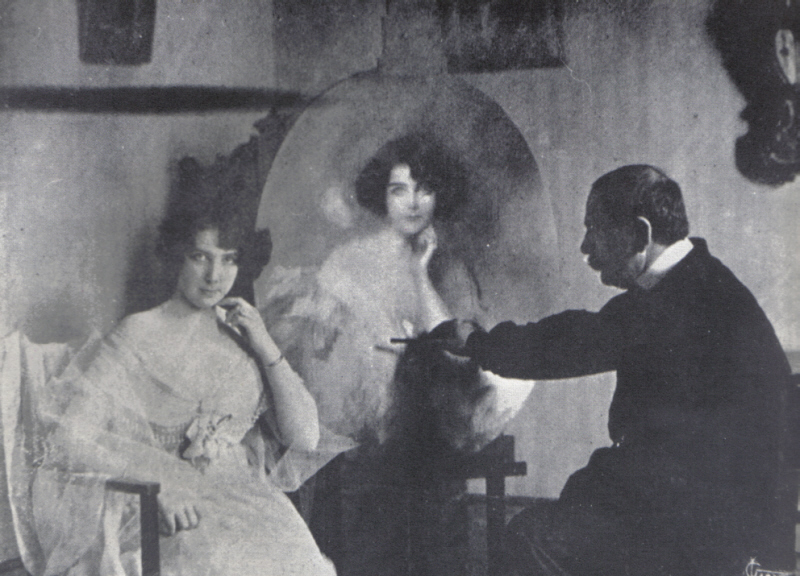 #47
#47
Nair de Tefe
Under the pseudonym Rian, Nair de Tefé uses caricature to observe fashions, elites and public life with rare freedom. First lady of Brazil, she also defends popular culture against official conventions.
Read the biography of Nair de Tefé on Wikipedia #48
#48
Nahui Olin
Nahui Olin paints self-portraits and landscapes with huge eyes, flat colors and a voluntary frontality. Poet and model as much as painter, she makes her image an act of independence in the heart of modern Mexico.
Read Nahui Olin's biography on Wikipedia #49
#49
Louisiana Saint Fleurant
Louisiana Saint Fleurant began painting late and became the sole founding woman of the Five Suns. Mothers, children, birds and voodoo spirits fill its surfaces with bright colors and protective energy.
Read the biography of Louisiana Saint Fleurant on Wikipedia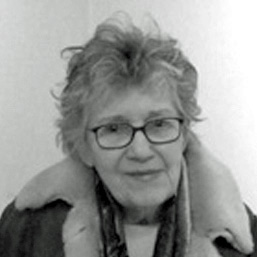 #50
#50
Gina Pellon
Gina Pellón brings out large female faces of swirls of material and color. Based in Paris, she retains a chromatic intensity from Cuba that she combines with the gestural freedom of lyrical figuration.
Read Gina Pellon's biography on WikipediaSources and routes
Deepen Latin American modernities
Explore Alpha Reproduction
Museum references
- Hammer Museum - Radical Women: Latin American Art, 1960 -1985
- MALBA - Tarsila do Amaral, Abaporu
- Museo Frida Kahlo - Casa Azul and collections
- MoMA - Lygia Clark
- Whitney Museum - Carmen Herrera
- Metropolitan Museum of Art - Surrealism in Mexico
- MoMA - Making Space: Women Artists and Postwar Abstraction
These fifty artists do not form an appendix: they change the map of modern art
Looking at Latin American painting through their works forces us to abandon the idea of a center that invents and peripheries that imitate. Tarsila transforms cubism from Brazil; Peláez recomposes Cuban space; Herrera radicalizes the geometry between Havana, Paris and New York; Clark and Pape move the work towards the body; Varo, Carrington and Rahon make Mexico an international center of surrealism. Circulations do not dilute identities: they make them more complex, more active and sometimes more political.
To browse this Top 50, compare ways to build a body, a house, a crowd or a territory. Then observe what the material tells: the cracked azulejos of Varejao, the reliefs of Sanchez, the signs of Grilo, the fragile papers of Schendel or the domestic solids of Pimentel. Finally, keep recognition and forgetfulness together. Several of these artists worked all their lives before entering the great museums late. Their rediscovery not only corrects a list of names; it reveals how the canon, institutions and artistic value are made.
0 comments