

100 works - Georgia O'Keeffe
Georgia O'Keeffe's 100 Essential Paintings
One hundred paintings, one hundred distinct images and one hundred links to the museums holding more than sixty years of creation.
From musical abstractions to enlarged flowers, from the towers of New York to the hills of Abiquiú, O'Keeffe constructs a work where looking becomes a way of feeling space.
Modernity at the height of sensation
Georgia O'Keeffe: making visible what habit no longer looks at
O'Keeffe does not choose between abstraction and observation. It simplifies a flower, a bone, a door or a road until the tension that connects its shapes appears.
Important information: Alpha Reproduction does not offer any reproduction of the paintings presented here. The images are displayed for documentary purposes only and each click redirects to the official website of the holding museum.
Changing the scale does not erase reality: it allows us to experience its presence differently.Enter the paintings
The 100 paintings in pictures
Abstractions, music, plains and first great motifs: twenty-five works where O'Keeffe imposes a personal syntax.
#1
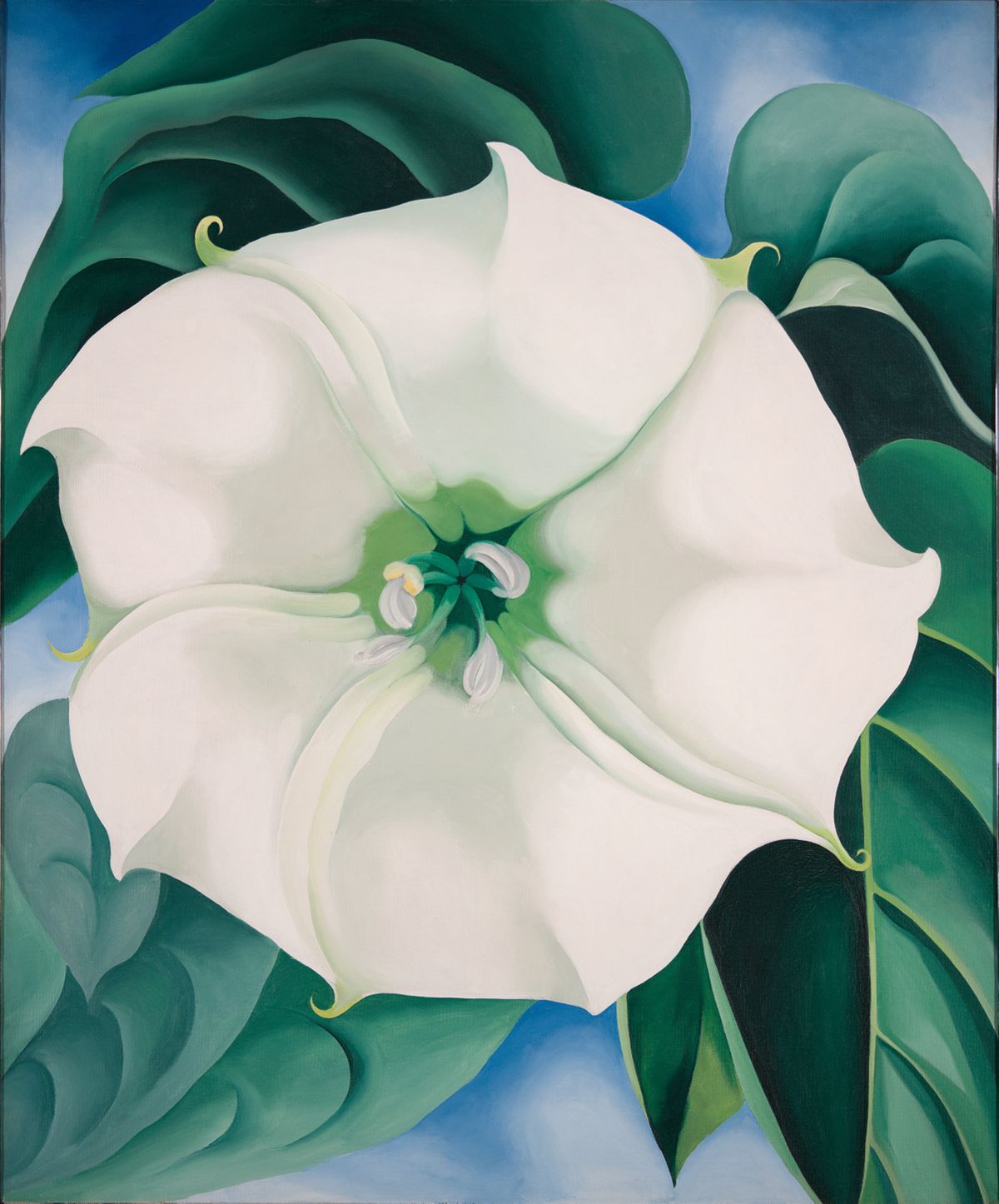
Jimson Weed
With "Jimson Weed", Georgia O'Keeffe transforms a precise pattern into an experience of duration, scale and color. Close framing does not transform the flower into a simple symbol: it forces us to look at its folds, its tensions and its passages of color as an autonomous landscape. After his first stays in New Mexico, his vocabulary expanded to the hills, bones and flowers of the desert, assembled without losing their physical precision. After his first stays in New Mexico, his vocabulary expanded to the hills, bones and flowers of the desert, assembled without losing their physical precision. After his first stays in New Mexico, his vocabulary expanded to the hills, bones and flowers of the desert, assembled without losing their physical precision. Dated 1932, this painting today belongs to Crystal Bridges Museum of American Art. The Georgia O'Keeffe Museum file, in the Access O'Keeffe catalog raisonné, allows you to check the title, dating, catalog number and the holding institution. The image is only used to identify and comment on the work: Alpha Reproduction does not offer any reproduction of this painting. A click leads to the official website of the holding museum, which defines its own conditions of access and use. The work thus remains concrete without becoming anecdotal: it requires less recognition of an object than testing the way in which it occupies the visual field.
Image: Georgia O'Keeffe Museum - Access O'Keeffe · Documentary consultation only; no reproduction offered by Alpha Reproduction.
See the museum website →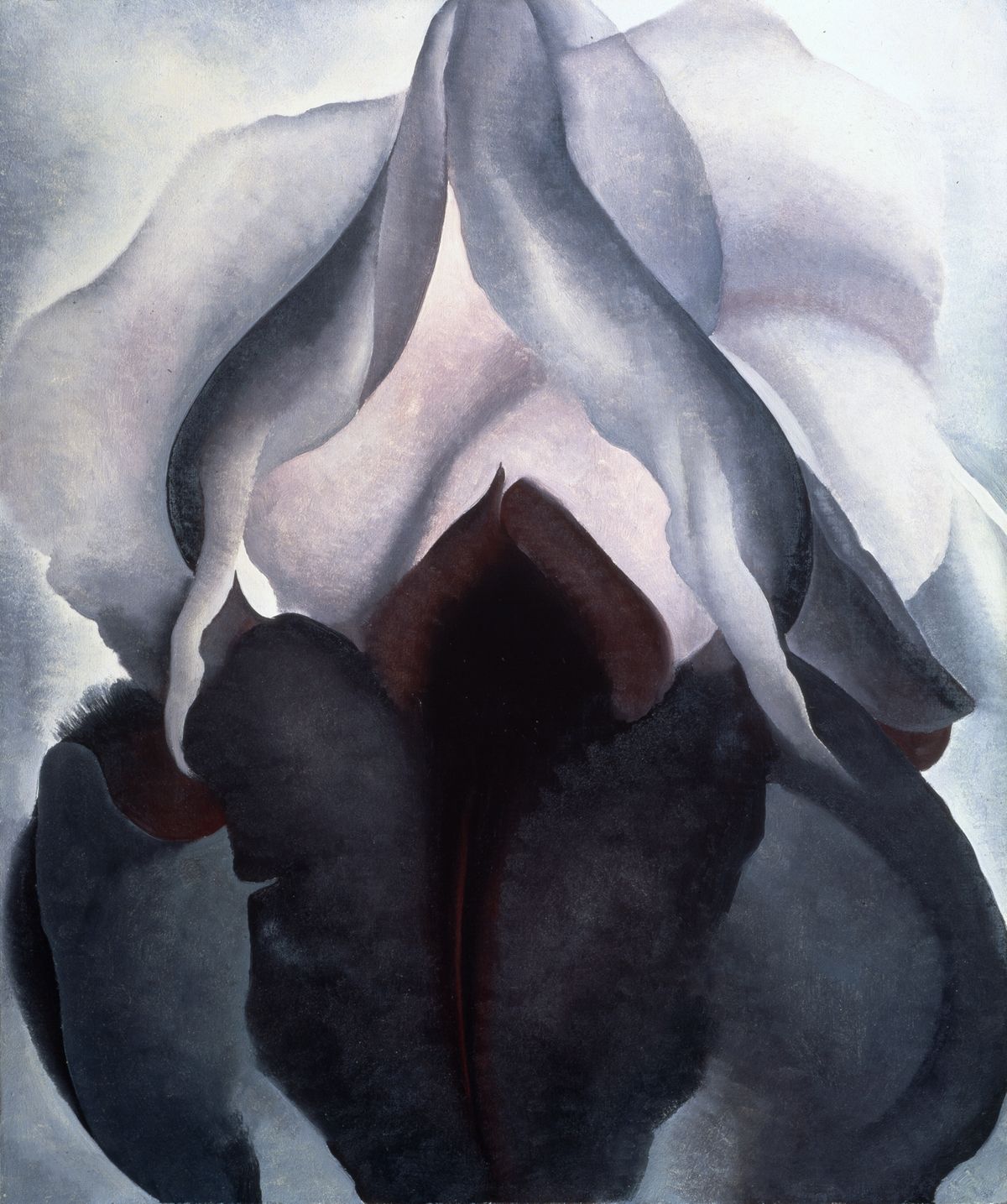 #2
#2
Black Iris
"Black Iris" shows how Georgia O'Keeffe knows how to condense a sensation into an immediately readable composition. Close framing does not transform the flower into a simple symbol: it forces us to look at its folds, its tensions and its passages of color as an autonomous landscape. During the 1920s, it alternated floral enlargements, views of Lake George and New York verticals, affirming that an intimate motif can have the monumental power of architecture. Dated 1926, this painting today belongs to Metropolitan Museum of Art (The Met). The Georgia O'Keeffe Museum file, in the Access O'Keeffe catalog raisonné, allows us to verify the title, the dating, the catalog number and the holding institution. The image is only used to identify and comment on the work: Alpha Reproduction does not offer any reproduction of this painting. A click leads to the official website of the holding museum, which defines its own conditions of access and use. This tension explains its lasting presence: the image seems simple, but each outline modifies the relationship between what is close, what is distant and what goes beyond the frame.
Image: Georgia O'Keeffe Museum - Access O'Keeffe · Documentary consultation only; no reproduction offered by Alpha Reproduction.
See the museum website →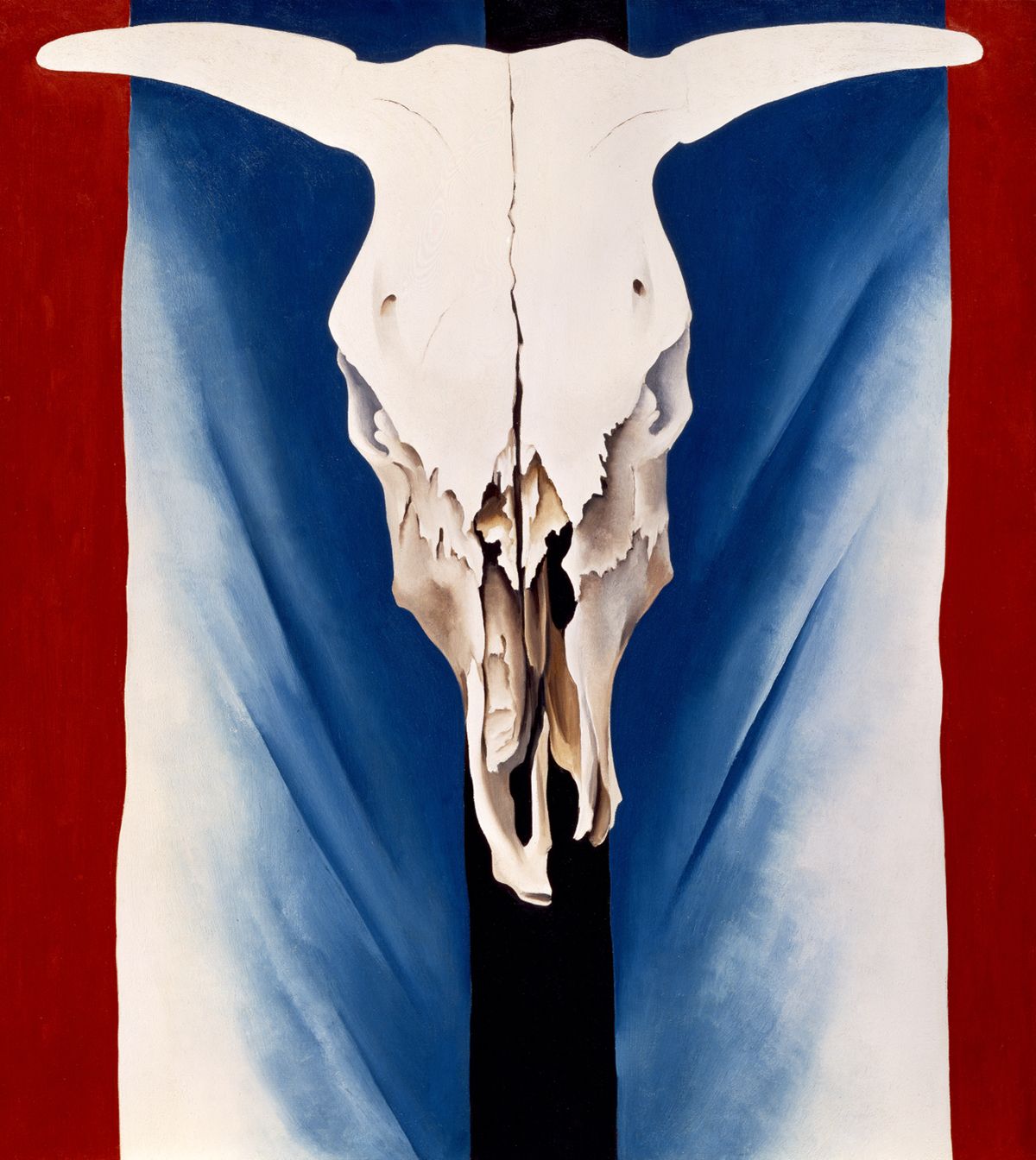 #3
#3
Cow's Skull, Red, White and Blue
In "Cow's Skull, Red, White and Blue", the gaze advances slowly between the contours, the flat areas and the intervals left open. The bone is treated like open architecture: its voids frame the sky or the earth, while its mineral whiteness dialogues with the colors of the desert. After his first stays in New Mexico, his vocabulary expanded to the hills, bones and flowers of the desert, assembled without losing their physical precision. After his first stays in New Mexico, his vocabulary expanded to the hills, bones and flowers of the desert, assembled without losing their physical precision. After his first stays in New Mexico, his vocabulary expanded to the hills, bones and flowers of the desert, assembled without losing their physical precision. After his first stays in New Mexico, his vocabulary expanded to the hills, bones and flowers of the desert, assembled without losing their physical precision. Dated 1931, this painting now belongs to the Metropolitan Museum of Art (The Met). The Georgia O'Keeffe Museum file, in the Access O'Keeffe catalog raisonné, allows you to check the title, dating, number of catalog and the holding institution. The image is only used to identify and comment on the work: Alpha Reproduction does not offer any reproduction of this painting. A click leads to the official website of the holding museum, which defines its own conditions of access and use. O'Keeffe does not deliver a fixed emblem; it constructs an experience of the gaze where the motif gains intensity as it is stripped of the accessory.
Image: Georgia O'Keeffe Museum - Access O'Keeffe · Documentary consultation only; no reproduction offered by Alpha Reproduction.
See the museum website →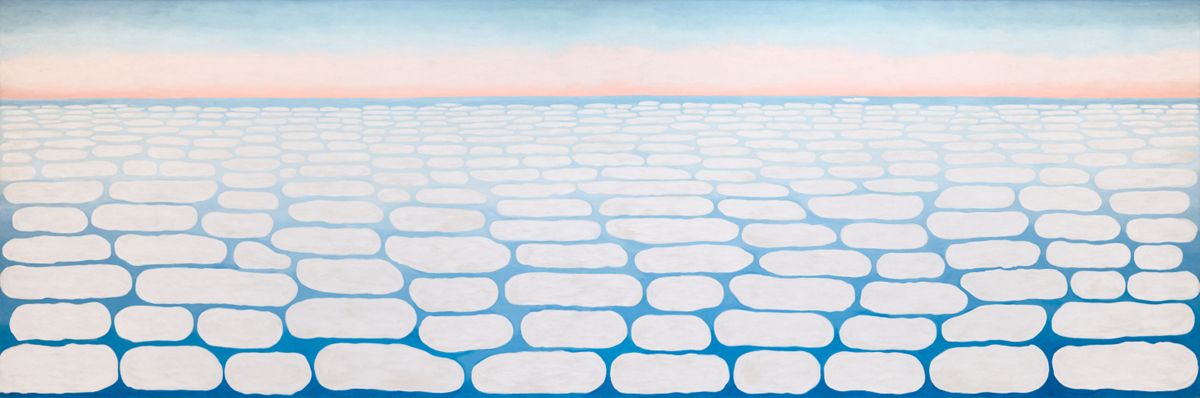 #4
#4
Sky Above Clouds IV
The strength of "Sky Above Clouds IV" comes from a balance between careful observation and voluntary simplification. The landscape is reduced to a few decisive relationships - horizon, curve, flat and distance - which preserve the sensation of a place without copying all the details. The late works extend the gaze towards the roads seen from an airplane, the clouds and the immense horizons, with an economy of means which makes the space almost meditative. Dated 1965, this painting today belongs to the Art Institute of Chicago. Dated 1965, this painting belongs to the Art Institute of Chicago. Dated 1965, this painting belongs to Art Institute of Chicago today. Dated 1965, this painting belongs to Art Institute of Chicago. Dated 1965, this painting belongs to Art Institute of Chicago. Dated 1965, this painting belongs to Art Institute of Chicago. Dated 1965, this painting belongs to Art Institute of Chicago. Dated 1965, this painting belongs to Art Institute of Chicago. Dated 1965, this painting belongs to Art Institute of Chicago. Dated 1965, this painting belongs to Art Institute of Chicago. Dated 1965, this painting belongs to Art Institute of Chicago. Dated 1965, this painting belongs to Art holder. The image is only used to identify and comment on the work: Alpha Reproduction does not offer any reproduction of this painting. A click leads to the official website of the holding museum, which defines its own conditions of access and use. The painting therefore invites you to slow down: its clarity does not abolish the mystery, on the contrary it allows you to perceive the finest variations in shape and color.
Image: Georgia O'Keeffe Museum - Access O'Keeffe · Documentary consultation only; no reproduction offered by Alpha Reproduction.
See the museum website →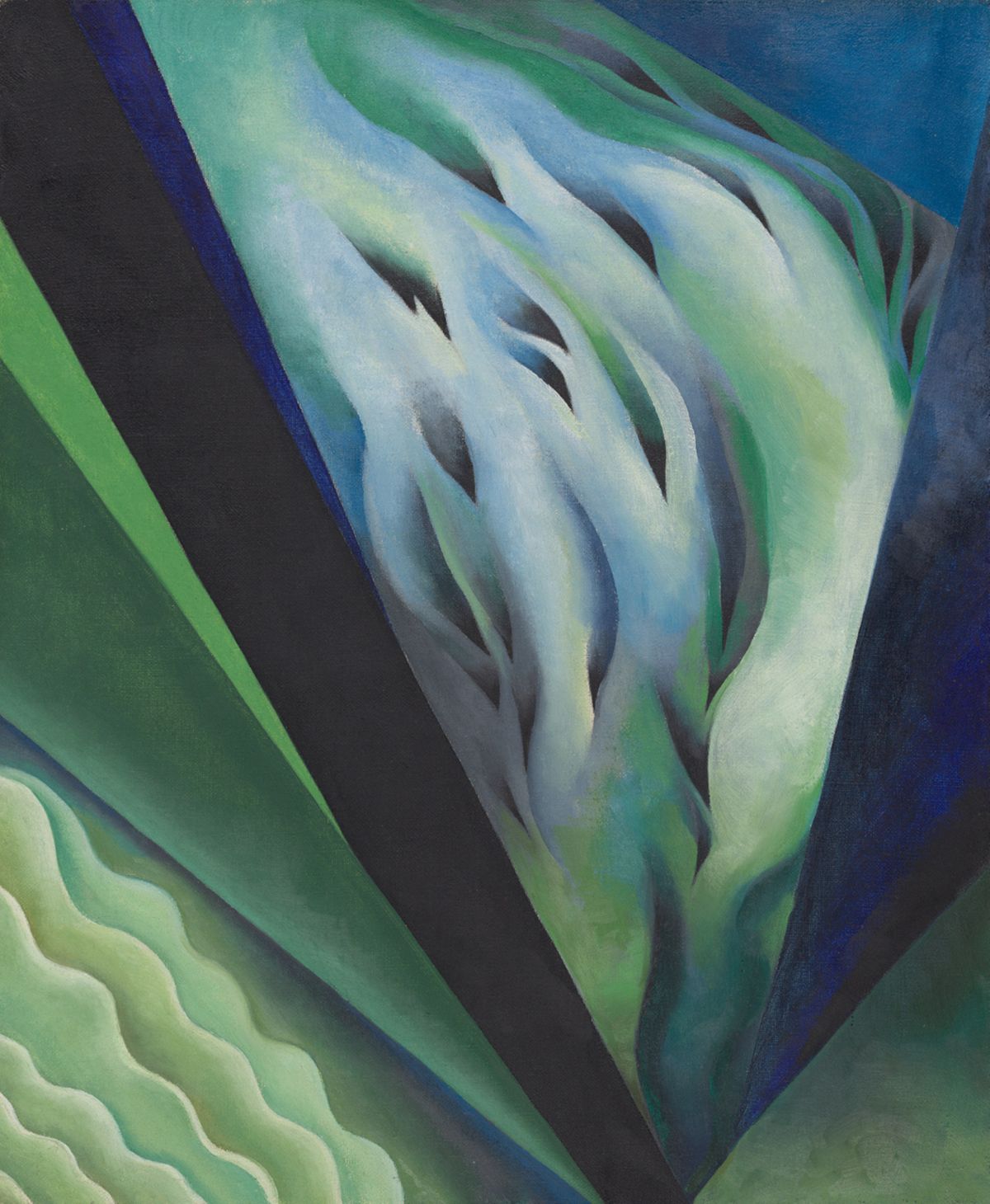 #5
#5
Blue and Green Music
Beneath its apparent evidence, "Blue and Green Music" constructs a very calculated relationship between proximity, distance and rhythm. The composition is based on a circulation of shapes and colors which reflects a sensation experienced without enclosing it in a literal description. In these founding years, she used abstraction to give a visible form to music, light and the forces of landscape, before these subjects were fully recognized by American modernism. Dated 1919 -1921, this painting today belonged to the Art Institute of Chicago. Dated 1919 -1921, this painting belongs today to the Art Institute of Chicago. Dated 1919 -1921, this painting belongs today to the Art Institute of Chicago. Dated 1919 -1921, this painting belongs today to the Art Institute of Chicago. Dated 1919 -1921, this painting belongs today to the Art Institute of Chicago. The Georgia O'Keeffe Museum file, in the Access O'Keeffe catalog raisonné, allows you to verify the title, the dating, the catalog number and the holding institution. The image is only used to identify and comment on the work: Alpha Reproduction does not offer any reproduction of this painting. A click leads to the official website of the holding museum, which defines its own conditions of access and use. The work thus remains concrete without becoming anecdotal: it requires less recognition of an object than testing the way in which it occupies the visual field.
Image: Georgia O'Keeffe Museum - Access O'Keeffe · Documentary consultation only; no reproduction offered by Alpha Reproduction.
See the museum website →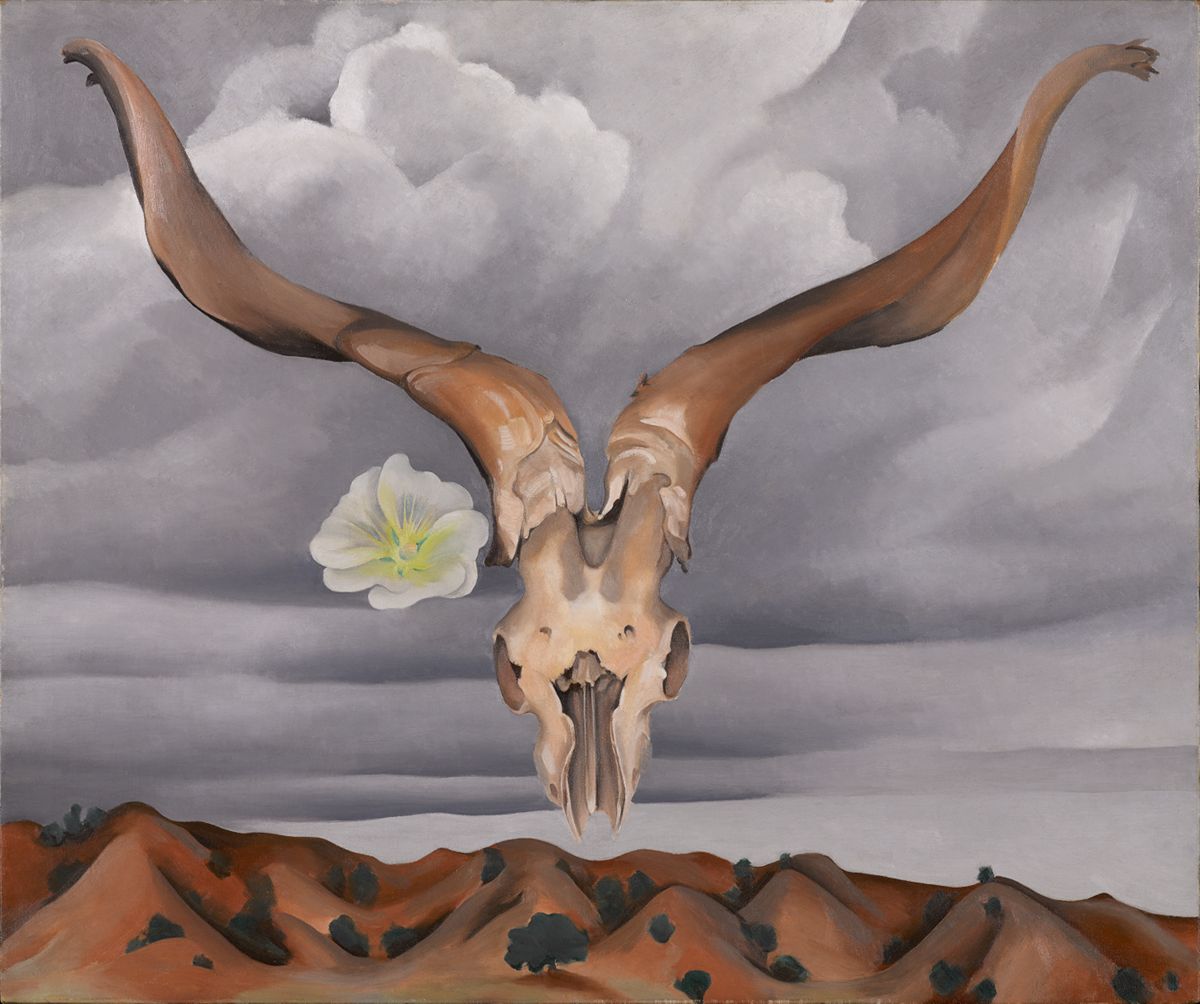 #6
#6
Ram's Head, White Hollyhock - Hills
With "Ram's Head, White Hollyhock - Hills", Georgia O'Keeffe transforms a precise pattern into an experience of duration, scale and color. Close framing does not transform the flower into a simple symbol: it forces us to look at its folds, its tensions and its passages of color as an autonomous landscape. After his first stays in New Mexico, his vocabulary expanded to the hills, bones and flowers of the desert, assembled without losing their physical precision. After his first stays in New Mexico, his vocabulary expanded to the hills, bones and flowers of the desert, assembled without losing their physical precision. After his first stays in New Mexico, his vocabulary expanded to the hills, bones and flowers of the desert, assembled without losing their physical precision. After his first stays in New Mexico, his vocabulary expanded to the hills, bones and flowers of the desert, assembled without losing their physical precision. Dated 1935, this painting today belongs to the Brooklyn Museum of Art. The Georgia O'Keeffe Museum file, in the Access O'Keeffe catalog raisonné, allows you to check the title, dating, catalog number and the holding institution. The image is only used to identify and comment on the work: Alpha Reproduction does not offer any reproduction of this painting. A click leads to the official website of the holding museum, which defines its own conditions of access and use. This tension explains its lasting presence: the image seems simple, but each outline modifies the relationship between what is close, what is distant and what goes beyond the frame.
Image: Georgia O'Keeffe Museum - Access O'Keeffe · Documentary consultation only; no reproduction offered by Alpha Reproduction.
See the museum website →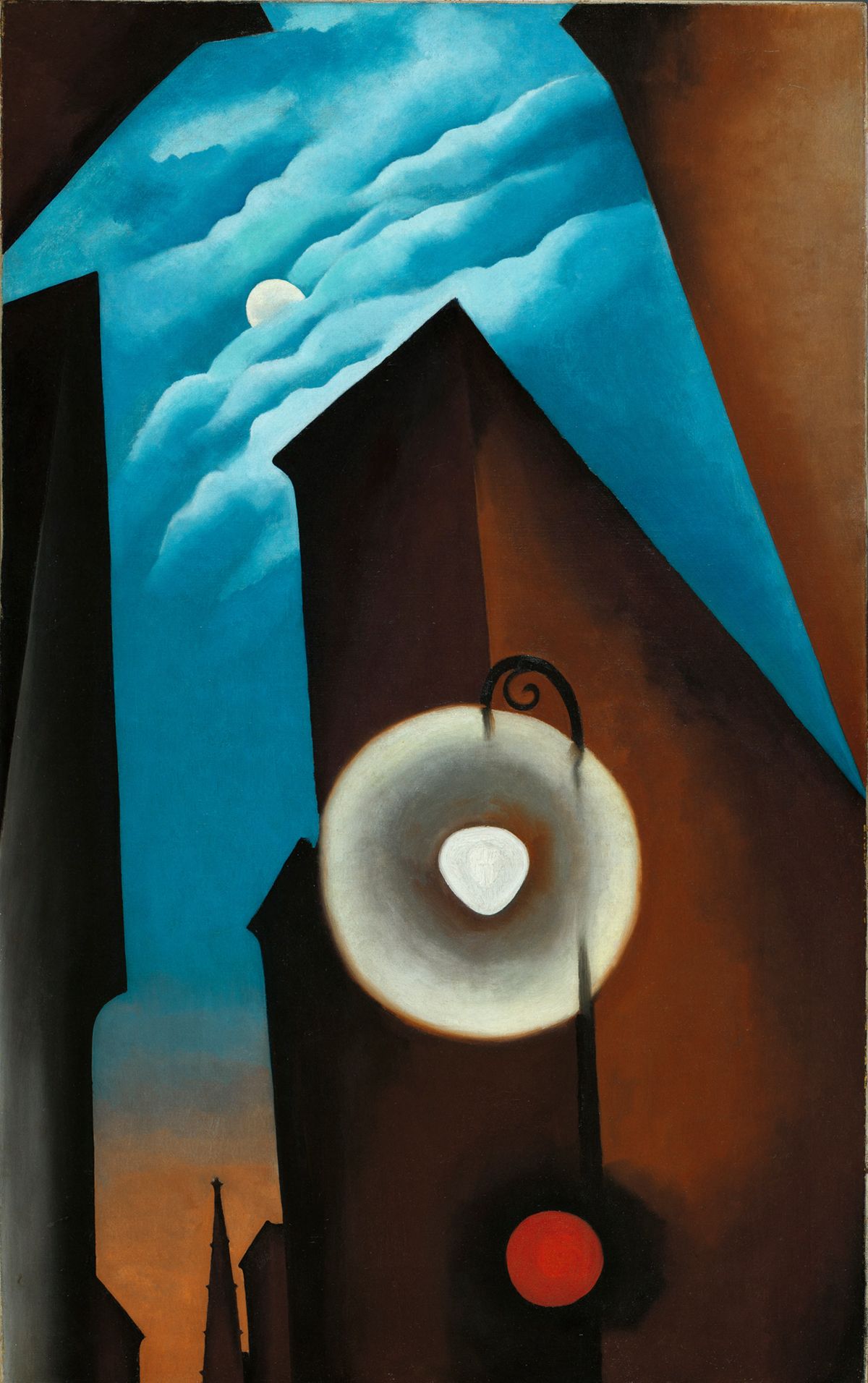 #7
#7
New York Street with Moon
"New York Street with Moon" shows how Georgia O'Keeffe knows how to condense a sensation into an immediately readable composition. O'Keeffe simplifies architecture to the point of making facades, streets and built masses a vertical rhythm where light measures modern space. During the 1920s, she alternated floral enlargements, views of Lake George and New York verticals, asserting that an intimate motif can have the monumental power of architecture. Dated 1925, this painting today belongs to Museo Nacional Thyssen-Bornemisza. The file for the Georgia O'Keeffe Museum, in the Access O'Keeffe catalog raisonné, allows us to verify the title, the dating, the catalog number and the holding institution. The image is only used to identify and comment on the work: Alpha Reproduction does not offer any reproduction of this painting. A click leads to the official website of the holding museum, which defines its own conditions of access and use. O'Keeffe does not deliver a fixed emblem; it constructs an experience of the gaze where the motif gains intensity as it is stripped of the accessory.
Image: Georgia O'Keeffe Museum - Access O'Keeffe · Documentary consultation only; no reproduction offered by Alpha Reproduction.
See the museum website →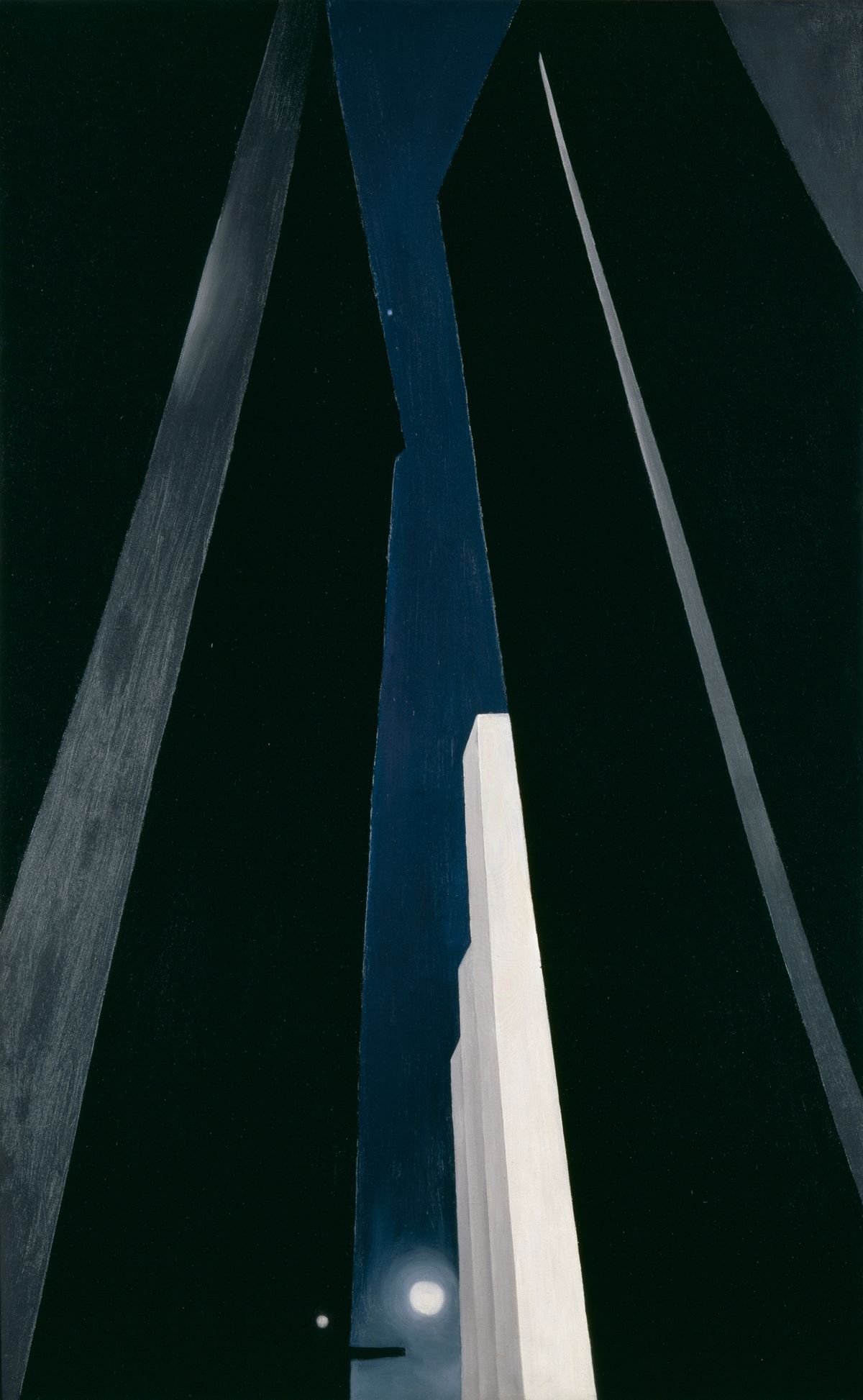 #8
#8
City Night
In "City Night", the gaze advances slowly between the contours, the flat areas and the intervals left open. O'Keeffe simplifies architecture to the point of making facades, streets and built masses a vertical rhythm where light measures modern space. During the 1920s, she alternated floral enlargements, views of Lake George and New York verticals, asserting that an intimate motif can have the monumental power of architecture. Dated 1926, this painting today belongs to the Minneapolis Institute of Arts. The Georgia O'Keeffe Museum's file, in the Access O'Keeffe catalog raisonné, allows you to verify the title, dating, catalog number and the holding institution. The image is only used to identify and comment on the work: Alpha Reproduction does not offer any reproduction of this painting. A click leads to the official website of the holding museum, which defines its own conditions of access and use. The painting therefore invites you to slow down: its clarity does not abolish the mystery, on the contrary it allows you to perceive the finest variations in shape and color.
Image: Georgia O'Keeffe Museum - Access O'Keeffe · Documentary consultation only; no reproduction offered by Alpha Reproduction.
See the museum website →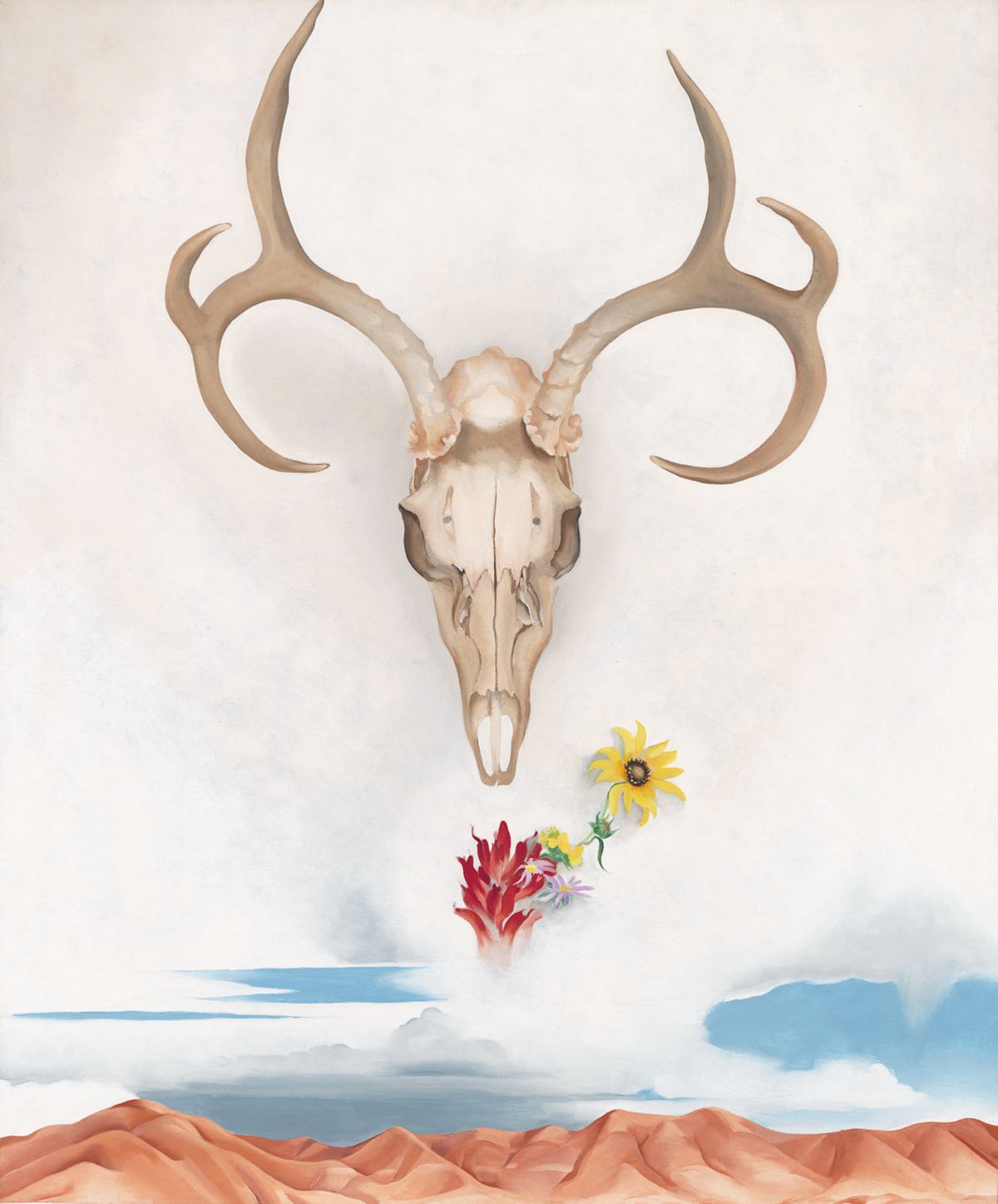 #9
#9
Summer Days
The strength of "Summer Days" comes from a balance between careful observation and voluntary simplification. The composition is based on a circulation of shapes and colors which reflects a sensation experienced without enclosing it in a literal description. After his first stays in New Mexico, his vocabulary expanded to the hills, bones and flowers of the desert, assembled without losing their physical precision. Dated 1936, this painting today belongs to the Whitney Museum of American Art. Dated 1936, this painting now belongs to the Whitney Museum of American Art. The Georgia O'Keeffe Museum file, in the Access O'Keeffe catalog raisonné, allows you to verify the title, dating, catalog number and the institution holding it. The image serves only to identify and comment on the work: Alpha Reproduction does not offer any reproduction of this painting. A click leads to the official website of the holding museum, which defines its own conditions of access and use. The work thus remains concrete without becoming anecdotal: it requires less recognition of an object than testing the way in which it occupies the visual field.
Image: Georgia O'Keeffe Museum - Access O'Keeffe · Documentary consultation only; no reproduction offered by Alpha Reproduction.
See the museum website →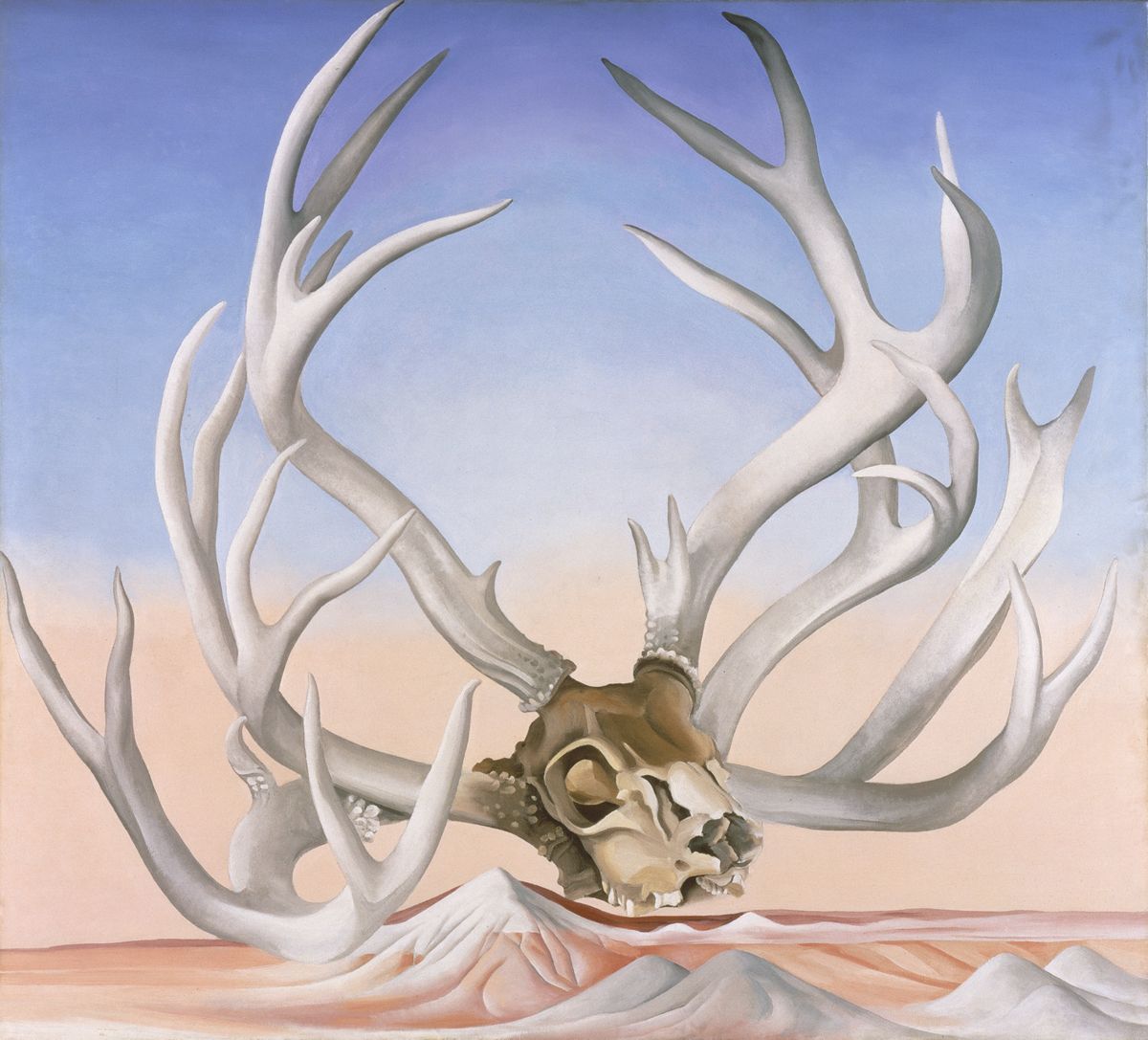 #10
#10
From the Faraway Nearby (Deer's Horns, Near Cameron)
Beneath its apparent evidence, "From the Faraway Nearby (Deer's Horns, Near Cameron)" constructs a very calculated relationship between proximity, distance and rhythm. The bone is treated like open architecture: its voids frame the sky or the earth, while its mineral whiteness dialogues with the colors of the desert. After his first stays in New Mexico, his vocabulary expanded to the hills, bones and flowers of the desert, assembled without losing their physical precision. After his first stays in New Mexico, his vocabulary expanded to the hills, bones and flowers of the desert, assembled without losing their physical precision. After his first stays in New Mexico, his vocabulary expanded to the hills, bones and flowers of the desert, assembled without losing their physical precision. After his first stays in New Mexico, his vocabulary expanded to the hills, bones and flowers of the desert, assembled without losing their physical precision. After his first stays in New Mexico, his vocabulary expanded to the hills, bones and flowers of the desert, assembled without losing their physical precision. Dated 1937, this painting now belongs to the Metropolitan Museum of Art (The Met). The Georgia O'Keeffe Museum file, in the Access O'Keeffe catalog raisonné, allows us to verify the title, the dating, catalog number and holding institution. The image is only used to identify and comment on the work: Alpha Reproduction does not offer any reproduction of this painting. A click leads to the official website of the holding museum, which defines its own conditions of access and use. This tension explains its lasting presence: the image seems simple, but each outline modifies the relationship between what is close, what is distant and what goes beyond the frame.
Image: Georgia O'Keeffe Museum - Access O'Keeffe · Documentary consultation only; no reproduction offered by Alpha Reproduction.
See the museum website →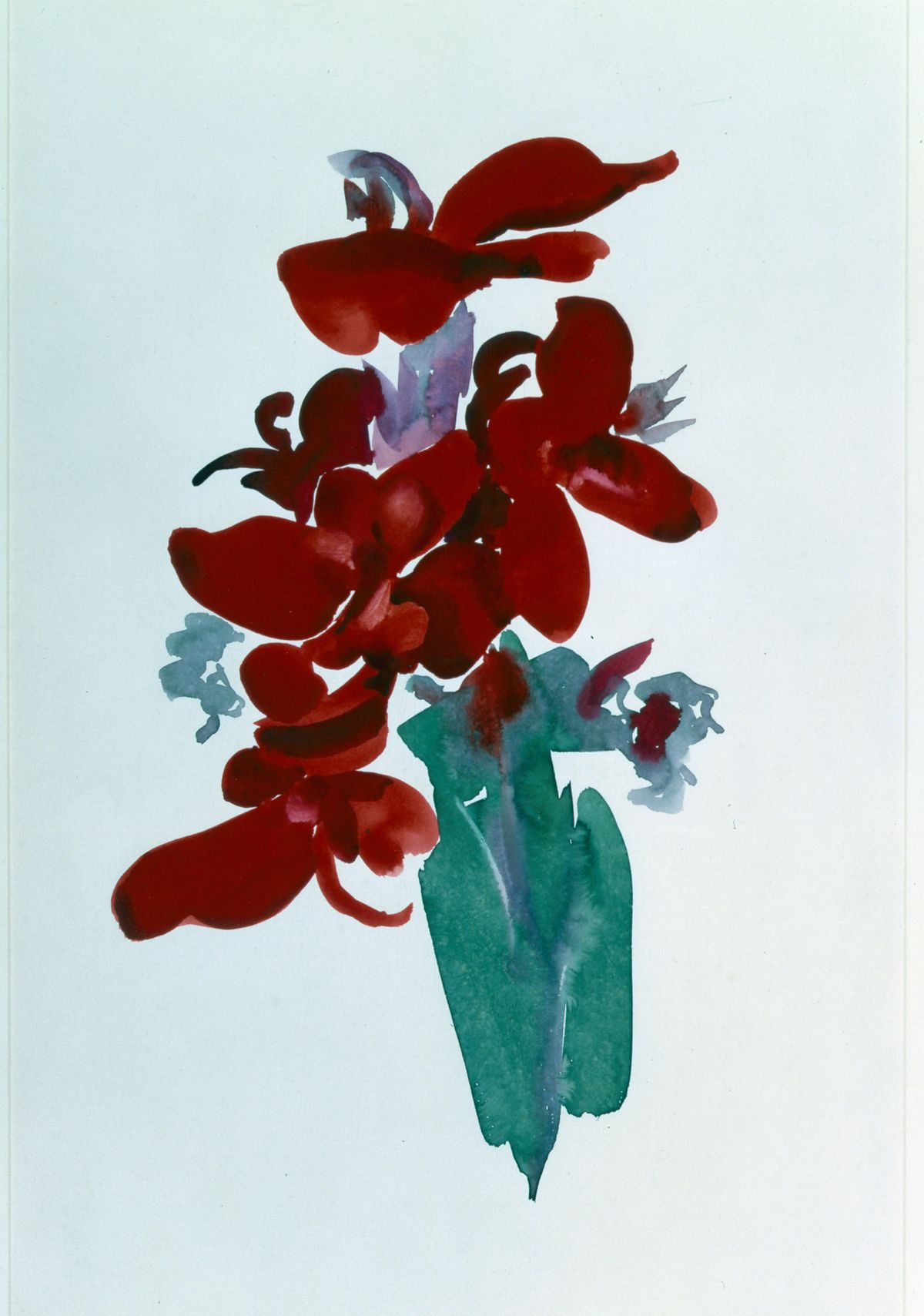 #11
#11
Red Canna
With "Red Canna", Georgia O'Keeffe transforms a precise pattern into an experience of duration, scale and color. Close framing does not transform the flower into a simple symbol: it forces us to look at its folds, tensions and color passages as an autonomous landscape. In these founding years, she used abstraction to give a visible form to the music, light and forces of the landscape, before these subjects were fully recognized by American modernism. Dated 1918 -1920, this painting today belonged to Yale University Art Gallery. The Georgia O'Keeffe Museum file, in the Access O'Keeffe catalog raisonné, allows us to verify the title, the dating, catalog number and holding institution. The image is only used to identify and comment on the work: Alpha Reproduction does not offer any reproduction of this painting. A click leads to the official website of the holding museum, which defines its own conditions of access and use. O'Keeffe does not deliver a fixed emblem; it constructs an experience of the gaze where the motif gains intensity as it is.
Image: Georgia O'Keeffe Museum - Access O'Keeffe · Documentary consultation only; no reproduction offered by Alpha Reproduction.
See the museum website →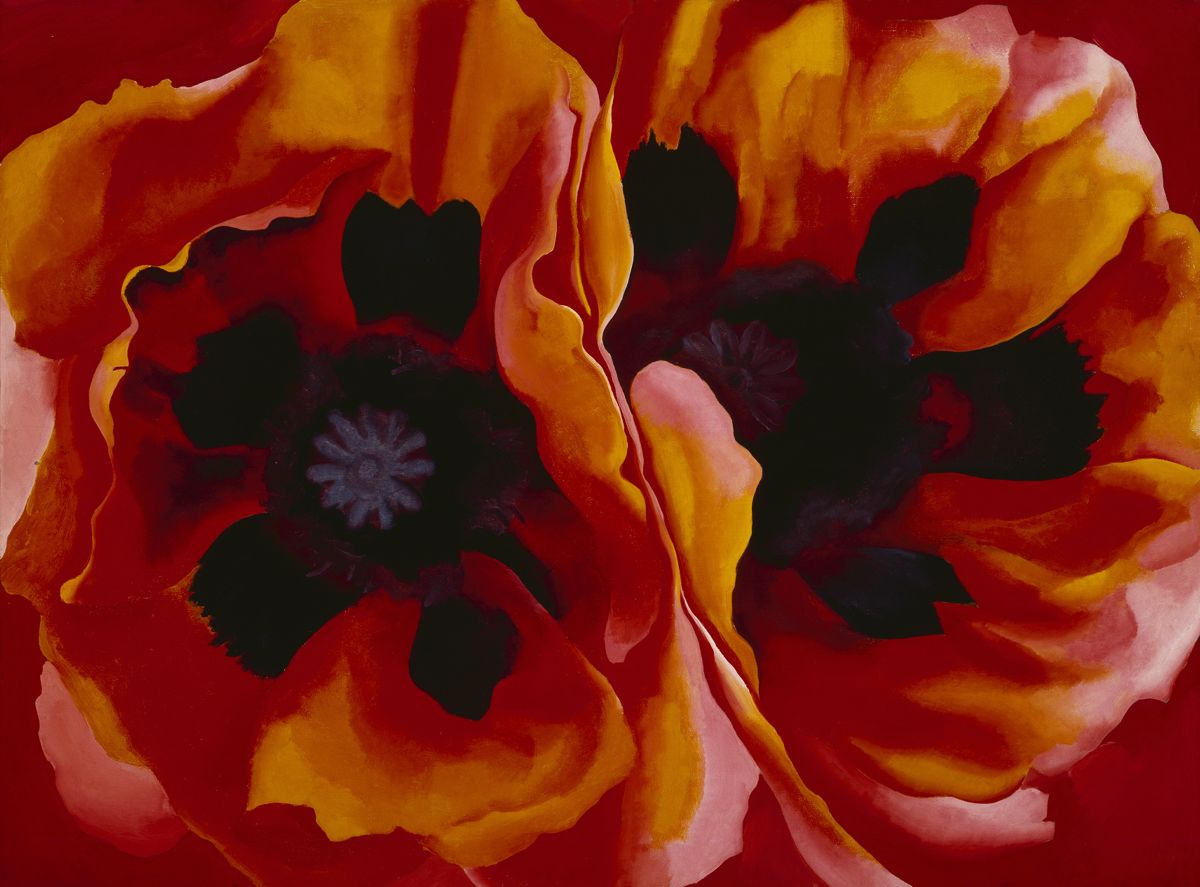 #12
#12
Oriental Poppies
"Oriental Poppies" shows how Georgia O'Keeffe knows how to condense a sensation into an immediately readable composition. Close framing does not transform the flower into a simple symbol: it forces us to look at its folds, its tensions and its passages of color as an autonomous landscape. During the 1920s, it alternated floral enlargements, views of Lake George and New York verticals, affirming that an intimate motif can have the monumental power of architecture. Dated 1927, this painting today belongs to Frederick R. Weisman Art Museum. The Georgia O'Keeffe Museum file, in the Access O'Keeffe catalog raisonné, allows us to verify the title, the dating, the catalog number and the holding institution. The image is only used to identify and comment on the work: Alpha Reproduction does not offer any reproduction of this painting. A click leads to the official website of the holding museum, which defines its own conditions of access and use. The painting therefore invites you to slow down: its clarity does not abolish the mystery, on the contrary it allows you to perceive the finest variations in shape and color.
Image: Georgia O'Keeffe Museum - Access O'Keeffe · Documentary consultation only; no reproduction offered by Alpha Reproduction.
See the museum website →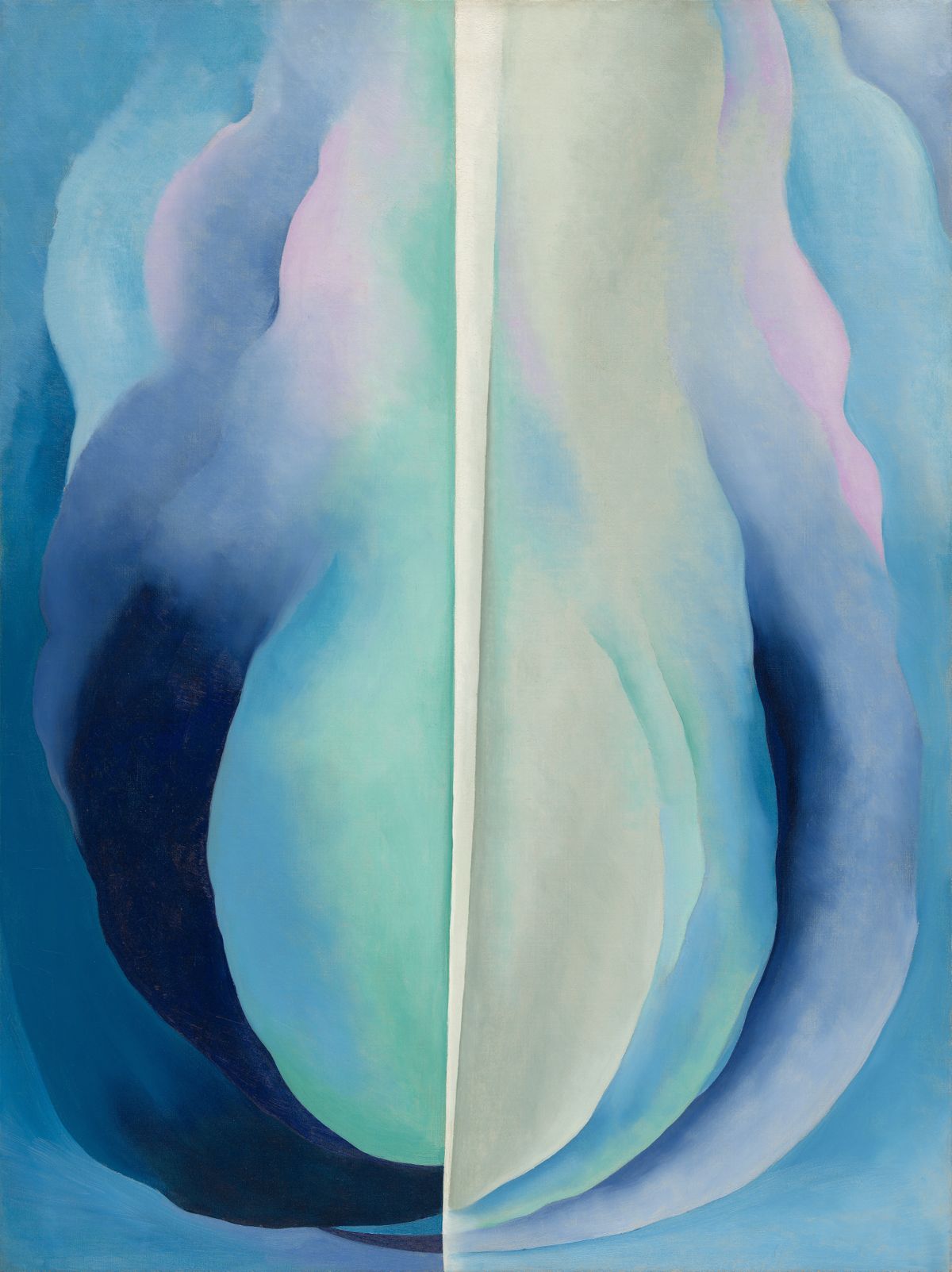 #13
#13
Blue Abstraction
In "Abstraction Blue", the gaze advances slowly between the contours, the flat areas and the intervals left open. The composition is based on a circulation of shapes and colors which reflects a sensation experienced without enclosing it in a literal description. During the 1920s, it alternated floral enlargements, views of Lake George and New York verticals, affirming that an intimate motif can have the monumental power of architecture. Dated 1927, this painting today belongs to Museum of Modern Art (MoMA). The Georgia O'Keeffe Museum file, in the Access O'Keeffe catalog raisonné, allows you to verify the title, dating, catalog number and the holding institution. The image is only used to identify and comment on the work: Alpha Reproduction does not offer any reproduction of this painting. A click leads to the official website of the holding museum, which defines its own conditions of access and use. The work thus remains concrete without becoming anecdotal: it requires less recognition of an object than testing the way in which it occupies the visual field.
Image: Georgia O'Keeffe Museum - Access O'Keeffe · Documentary consultation only; no reproduction offered by Alpha Reproduction.
See the museum website →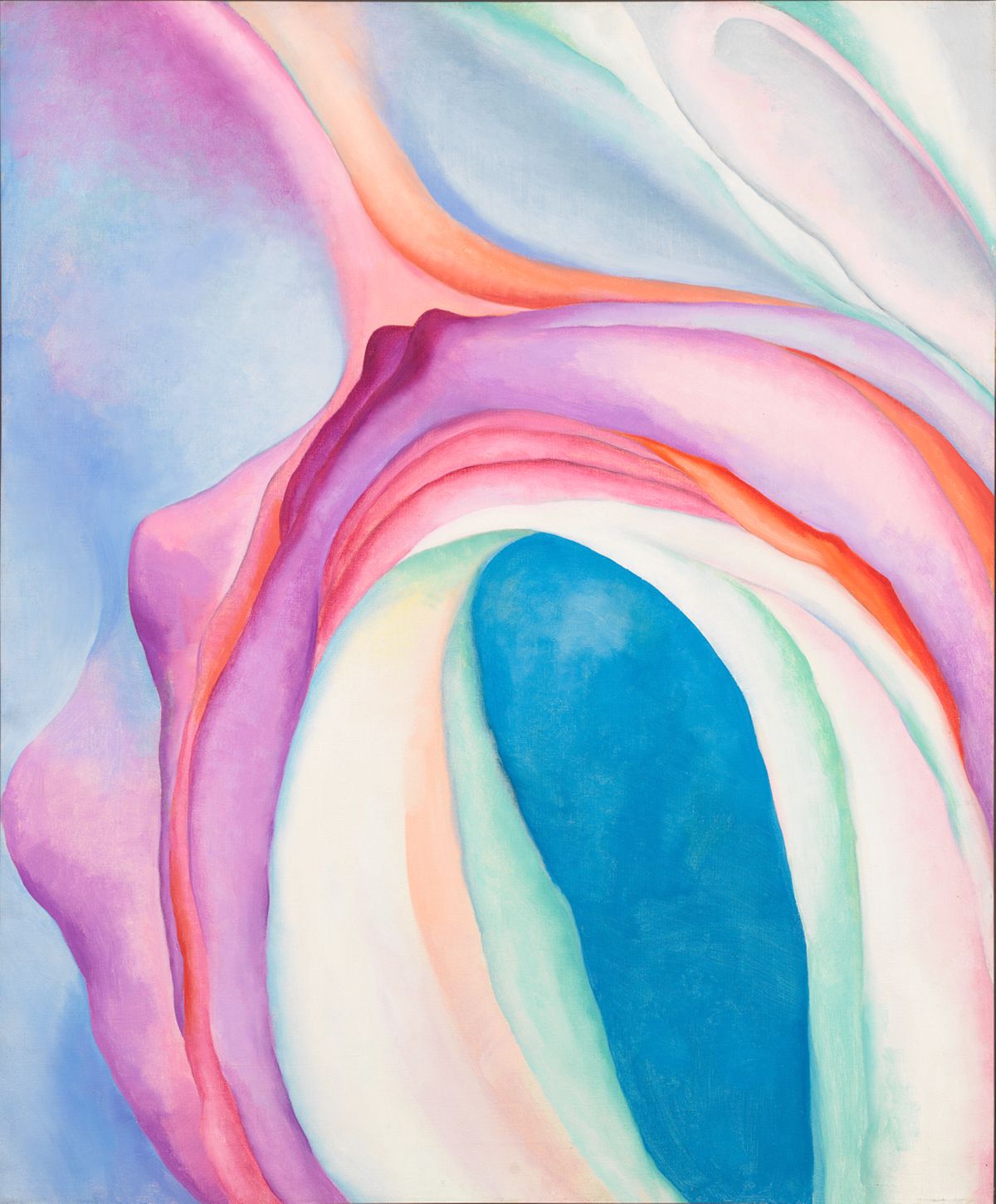 #14
#14
Music, Pink and Blue No. 2
The strength of "Music, Pink and Blue No. 2" comes from a balance between careful observation and voluntary simplification. The composition is based on a circulation of shapes and colors which reflects a sensation experienced without enclosing it in a literal description. In these founding years, she used abstraction to give a visible form to music, light and the forces of landscape, before these subjects were fully recognized by American modernism. Dated 1918, this painting today belonged to Whitney Museum of American Art. The file for the Georgia O'Keeffe Museum, in the Access O'Keeffe catalog raisonné, allows us to verify the title, the dating, the catalog number and the holding institution. The image is only used to identify and comment on the work: Alpha Reproduction does not offer any reproduction of this painting. A click leads to the official website of the holding museum, which defines its own conditions of access and use. This tension explains its lasting presence: the image seems simple, but each outline modifies the relationship between what is close, what is distant and what goes beyond the frame.
Image: Georgia O'Keeffe Museum - Access O'Keeffe · Documentary consultation only; no reproduction offered by Alpha Reproduction.
See the museum website →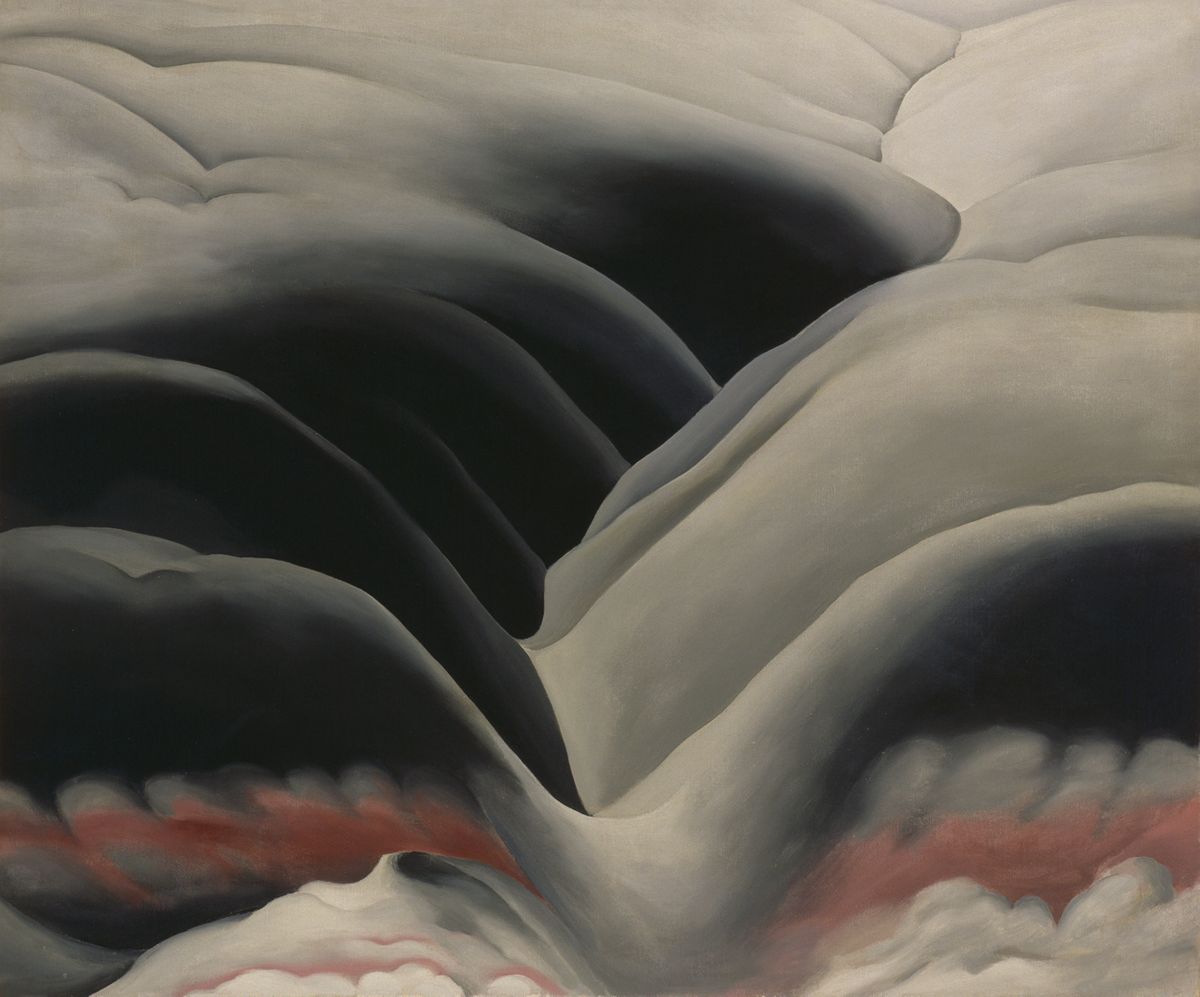 #15
#15
Black Place I
Beneath its apparent evidence, "Black Place I" constructs a very calculated relationship between proximity, distance and rhythm. The landscape is reduced to a few decisive relationships - horizon, curve, flat areas and distance - which preserve the sensation of a place without copying all the details. In the 1940s, the spaces of Ghost Ranch and Abiquiú became a laboratory of series: the same place changes scale, light and tension depending on the framing. Dated 1945, this painting today belonged to the Minneapolis Institute of Arts. The Georgia O'Keeffe Museum file, in the Access O'Keeffe catalog raisonné, allows you to check the title, dating, catalog number and the holding institution. The image is only used to identify and comment on the work: Alpha Reproduction does not offer any reproduction of this painting. A click leads to the official website of the holding museum, which defines its own conditions of access and use. O'Keeffe does not deliver a fixed emblem; it constructs an experience of the gaze where the motif gains intensity as it is stripped of the accessory.
Image: Georgia O'Keeffe Museum - Access O'Keeffe · Documentary consultation only; no reproduction offered by Alpha Reproduction.
See the museum website →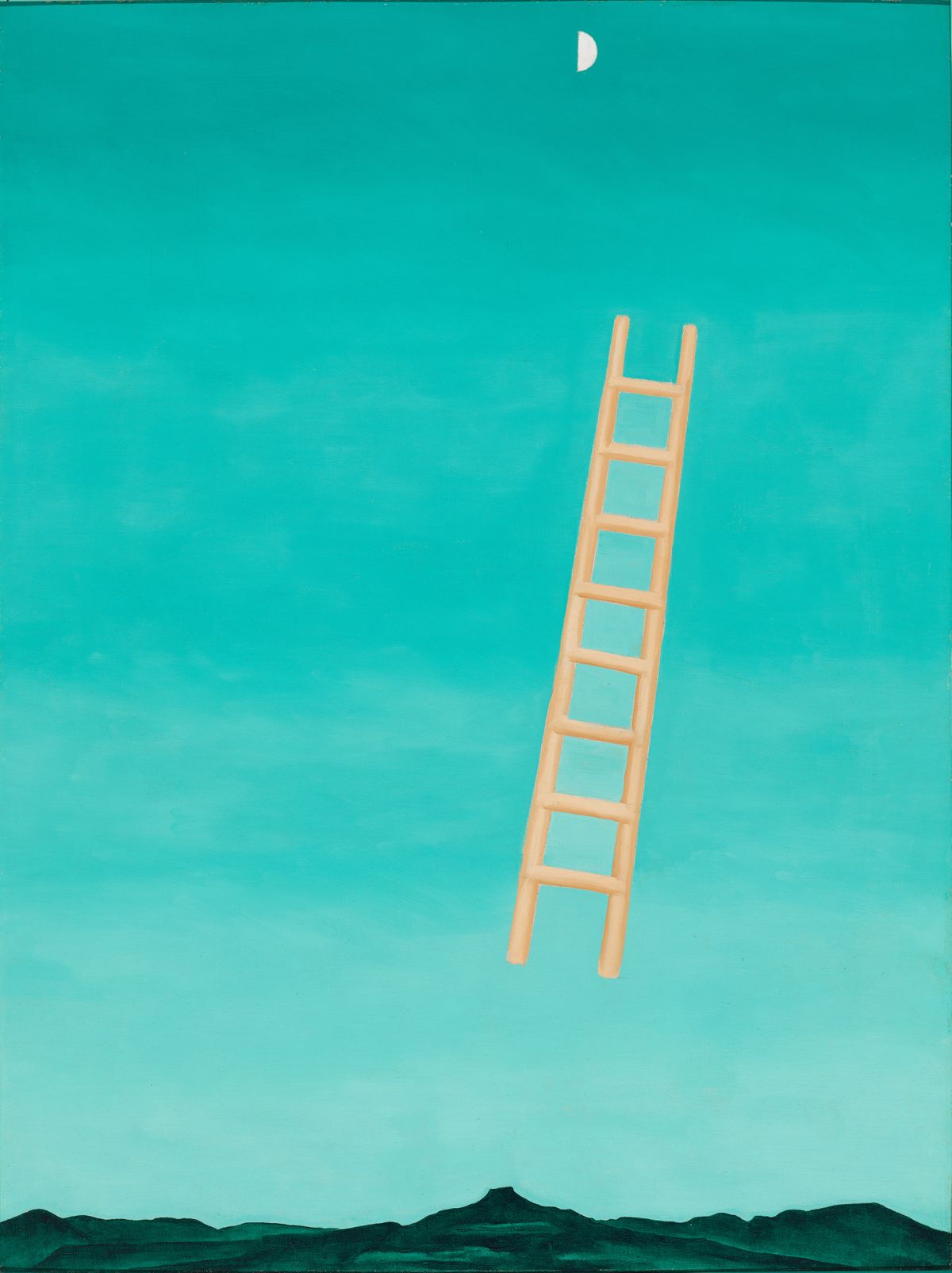 #16
#16
Ladder to the Moon
With "Ladder to the Moon", Georgia O'Keeffe transforms a precise pattern into an experience of duration, scale and color. The composition is based on a circulation of shapes and colors which reflects a sensation experienced without enclosing it in a literal description. The doors, patios and roads of the 1950s further tighten the composition; a few colored plans are now enough to make you feel the depth, silence and warmth. Dated 1958, this painting now belongs to Whitney Museum of American Art. Dated 1958, this painting now belongs to Whitney Museum of American Art. A few colored plans are now enough to make you feel the depth, silence and warmth. Dated 1958, this painting now belongs to Whitney Museum of American Art. The Georgia O'Keeffe Museum file, in the Access O'Keeffe catalog raisonné, allows you to check the title, dating, catalog number and institution holder. The image is only used to identify and comment on the work: Alpha Reproduction does not offer any reproduction of this painting. A click leads to the official website of the holding museum, which defines its own conditions of access and use. The painting therefore invites you to slow down: its clarity does not abolish the mystery, on the contrary it allows you to perceive the finest variations in shape and color.
Image: Georgia O'Keeffe Museum - Access O'Keeffe · Documentary consultation only; no reproduction offered by Alpha Reproduction.
See the museum website →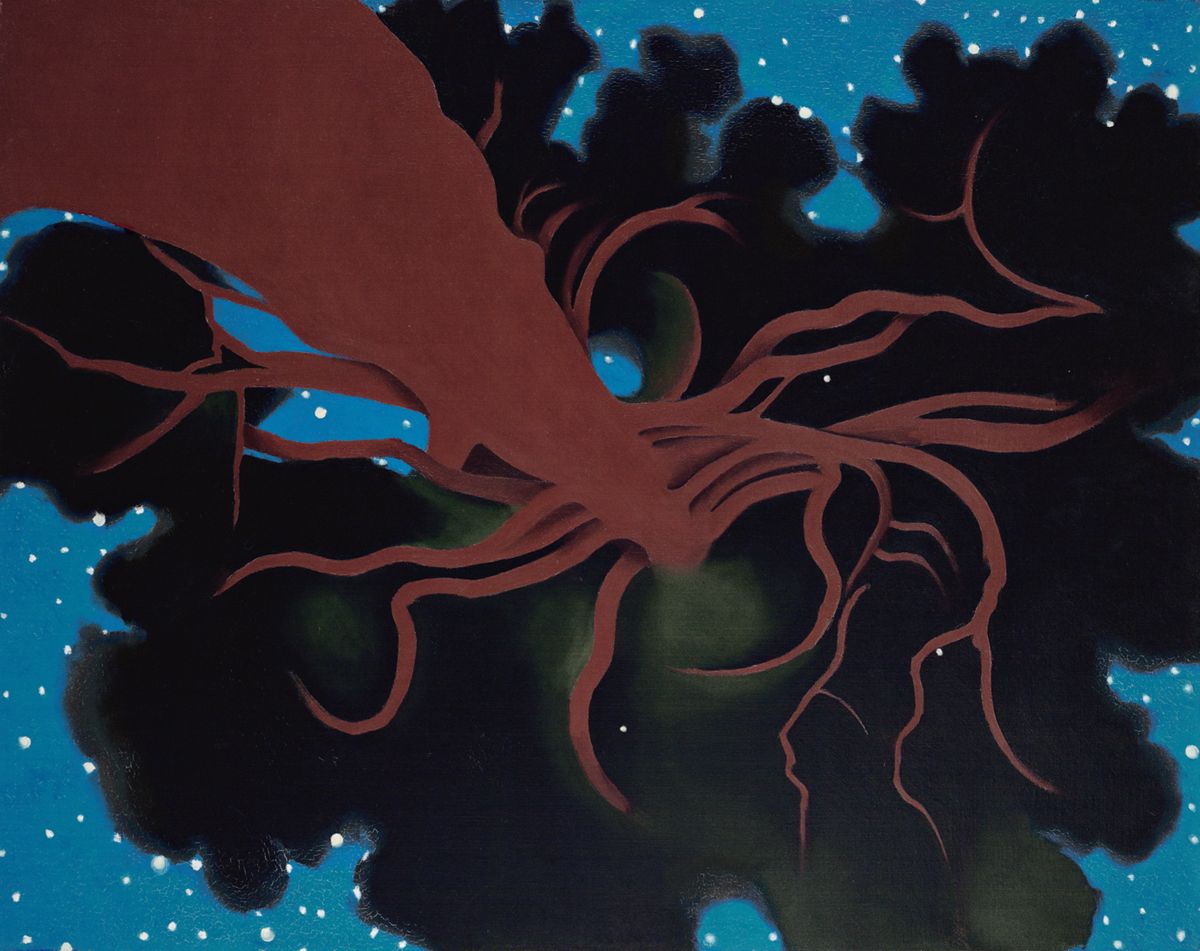 #17
#17
DH Lawrence Pine Tree
"DH Lawrence Pine Tree" shows how Georgia O'Keeffe knows how to condense a sensation into an immediately readable composition. The composition is based on a circulation of shapes and colors which reflects a sensation experienced without enclosing it in a literal description. During the 1920s, it alternated floral enlargements, views of Lake George and New York verticals, affirming that an intimate motif can have the monumental power of architecture. Dated 1929, this painting today belongs to The Wadsworth. The Georgia O'Keeffe Museum's file, in the Access O'Keeffe catalog raisonné, allows you to verify the title, dating, catalog number and the holding institution. The image is only used to identify and comment on the work: Alpha Reproduction does not offer any reproduction of this painting. A click leads to the official website of the holding museum, which defines its own conditions of access and use. The work thus remains concrete without becoming anecdotal: it requires less recognition of an object than testing the way in which it occupies the visual field.
Image: Georgia O'Keeffe Museum - Access O'Keeffe · Documentary consultation only; no reproduction offered by Alpha Reproduction.
See the museum website →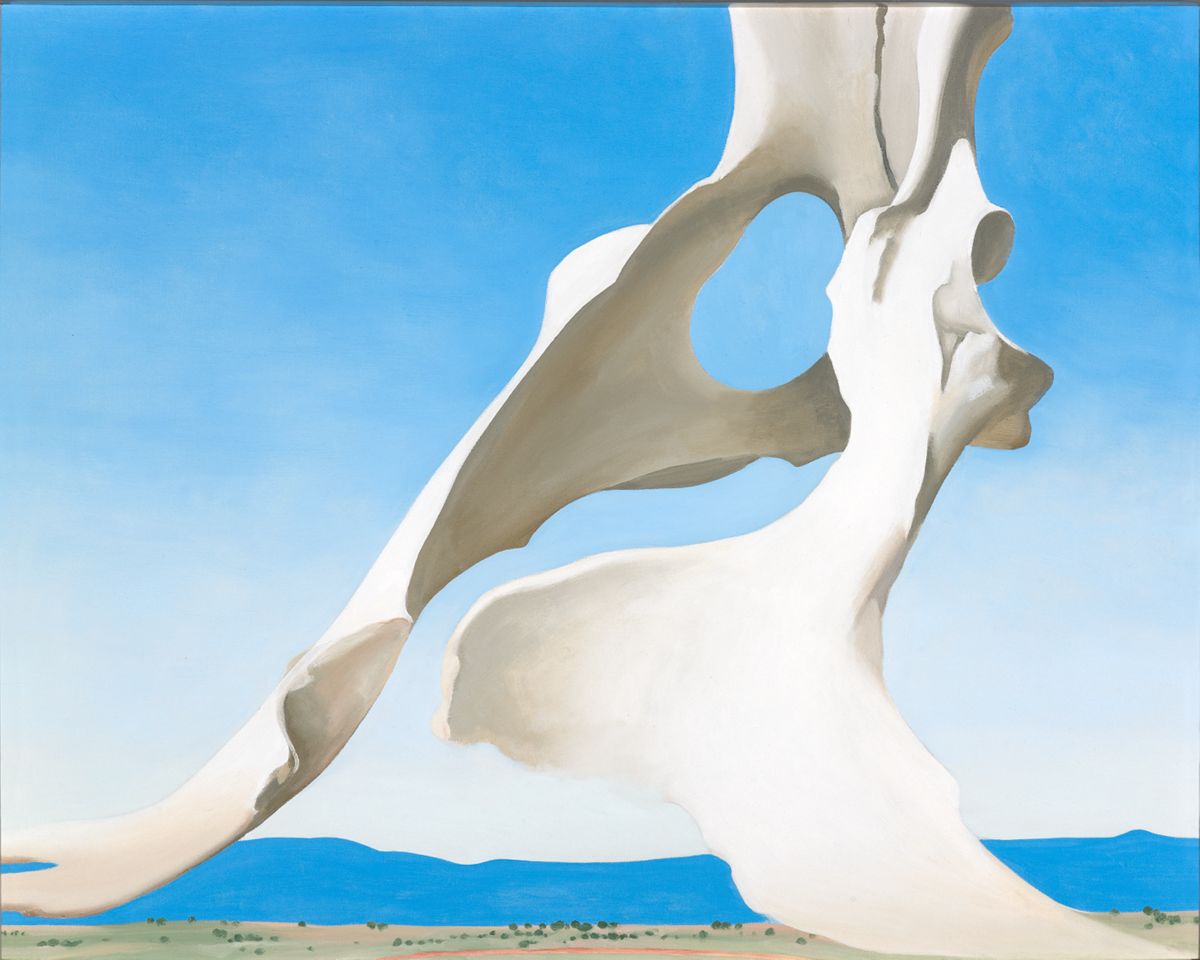 #18
#18
Pelvis with Distance
In "Pelvis with Distance", the gaze advances slowly between the contours, the flat areas and the intervals left open. The bone is treated like open architecture: its voids frame the sky or the earth, while its mineral whiteness dialogues with the colors of the desert. In the 1940s, the spaces of Ghost Ranch and Abiquiú became a laboratory of series: the same place changes scale, light and tension depending on the framing. Dated 1943, this painting today belonged to the Indianapolis Museum of Art. The Georgia O'Keeffe Museum file, in the Access O'Keeffe catalog raisonné, allows you to check the title, dating, catalog number and the holding institution. The image is only used to identify and comment on the work: Alpha Reproduction does not offer any reproduction of this painting. A click leads to the official website of the holding museum, which defines its own conditions of access and use. This tension explains its lasting presence: the image seems simple, but each outline modifies the relationship between what is close, what is distant and what goes beyond the frame.
Image: Georgia O'Keeffe Museum - Access O'Keeffe · Documentary consultation only; no reproduction offered by Alpha Reproduction.
See the museum website →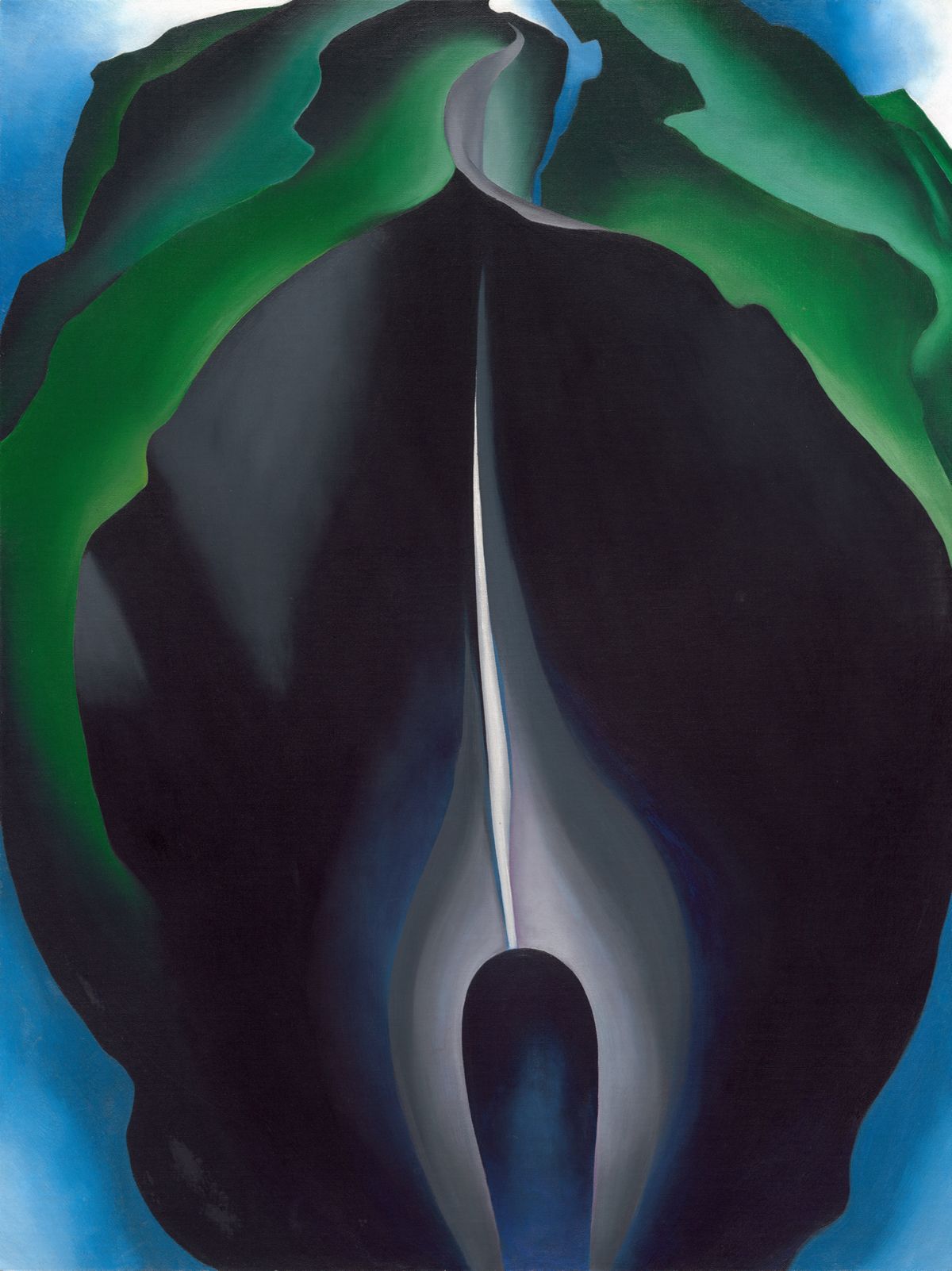 #19
#19
Jack-in-the-Pulpit No. IV
The strength of "Jack-in-the-Pulpit No. IV" comes from a balance between careful observation and voluntary simplification. The composition is based on a circulation of shapes and colors which reflects a sensation experienced without enclosing it in a literal description. After his first stays in New Mexico, his vocabulary expanded to the hills, bones and flowers of the desert, assembled without losing their physical precision. Dated 1930, this painting today belongs to the National Gallery of Art (NGA). The Georgia O'Keeffe Museum file, in the Access O'Keeffe catalog raisonné, allows you to verify the title, dating, catalog number and holding institution. The image is only used to identify and comment on the work: Alpha Reproduction does not offer any reproduction of this painting. A click leads to the official website of the holding museum, which defines its own conditions of access and use. O'Keeffe does not deliver a fixed emblem; it constructs an experience of the gaze where the motif gains intensity as it is stripped of the accessory.
Image: Georgia O'Keeffe Museum - Access O'Keeffe · Documentary consultation only; no reproduction offered by Alpha Reproduction.
See the museum website →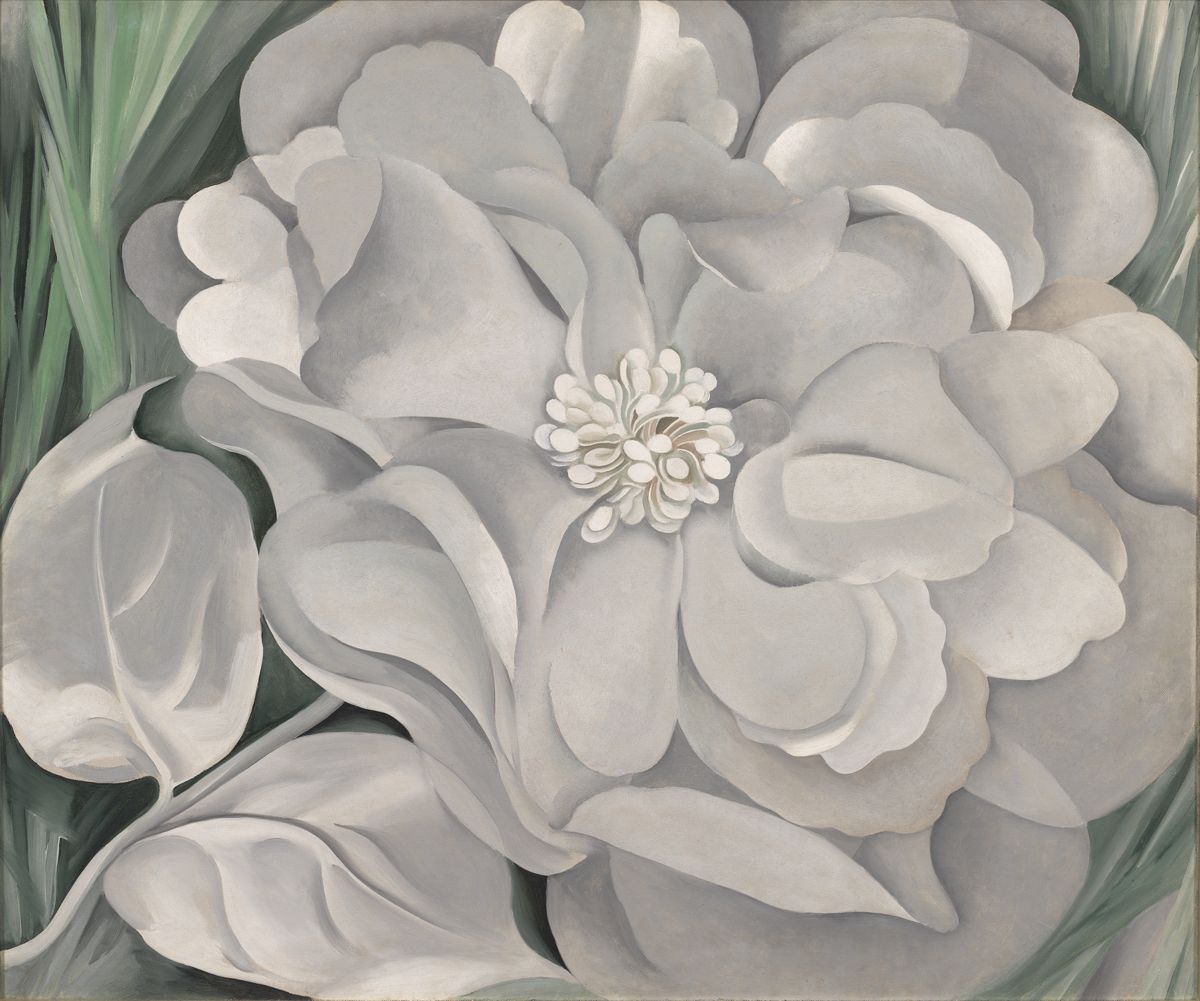 #20
#20
White Calico Flower
Beneath its apparent evidence, "White Calico Flower" constructs a very calculated relationship between proximity, distance and rhythm. The close framing does not transform the flower into a simple symbol: it forces us to look at its folds, its tensions and its passages of color as an autonomous landscape. After his first stays in New Mexico, his vocabulary expanded to the hills, bones and flowers of the desert, assembled without losing their physical precision. After his first stays in New Mexico, his vocabulary expanded to the hills, bones and flowers of the desert, assembled without losing their physical precision. After his first stays in New Mexico, his vocabulary expanded to include hills, bones and desert flowers, assembled without losing their physical precision. Dated 1931, this painting today belongs to the Whitney Museum of American Art. After his first stays in New Mexico, his vocabulary expanded to include hills, bones and desert flowers, assembled without losing their physical precision. Dated 1931, this painting now belongs to the Whitney Museum of American Art. After his first stays in New Mexico, his vocabulary expanded to include hills, bones and desert flowers, assembled without losing their physical precision. Dated 1931, this painting now belongs to the Whitney Museum of American Art. The Georgia O'Keeffe Museum file, in the Access O'Keeffe catalog ra the holding institution. The image is only used to identify and comment on the work: Alpha Reproduction does not offer any reproduction of this painting. A click leads to the official website of the holding museum, which defines its own conditions of access and use. The painting therefore invites you to slow down: its clarity does not abolish the mystery, on the contrary it allows you to perceive the finest variations in shape and color.
Image: Georgia O'Keeffe Museum - Access O'Keeffe · Documentary consultation only; no reproduction offered by Alpha Reproduction.
See the museum website →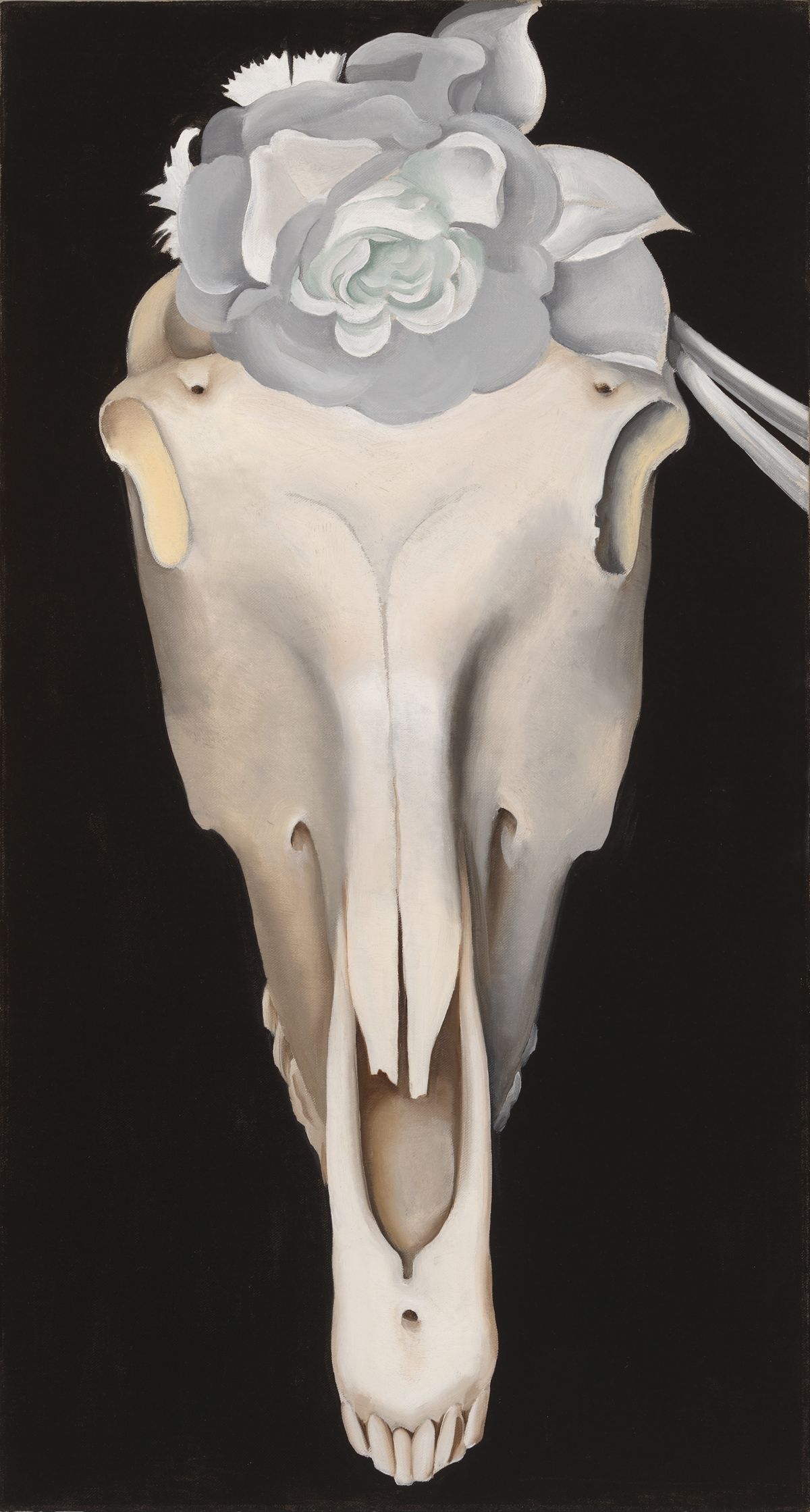 #21
#21
Horse's Skull with White Rose
With "Horse's Skull with White Rose", Georgia O'Keeffe transforms a precise pattern into an experience of duration, scale and color. The bone is treated like open architecture: its voids frame the sky or the earth, while its mineral whiteness dialogues with the colors of the desert. After his first stays in New Mexico, his vocabulary expanded to the hills, bones and flowers of the desert, assembled without losing their physical precision. After his first stays in New Mexico, his vocabulary expanded to the hills, bones and flowers of the desert, assembled without losing their physical precision. After his first stays in New Mexico, his vocabulary expanded to the hills, bones and flowers of the desert, assembled without losing their physical precision. After his first stays in New Mexico, his vocabulary expanded to the hills, bones and flowers of the desert, assembled without losing their physical precision. Dated 1931, this painting today belongs to Georgia O'Keeffe Museum. The Georgia O'Keeffe Museum file, in the Access O'Keeffe catalog raisonné, allows you to check the title, dating, catalog number and the holding institution. The image is only used to identify and comment on the work: Alpha Reproduction does not offer any reproduction of this painting. A click leads to the official website of the holding museum, which defines its own conditions of access and use. The work thus remains concrete without becoming anecdotal: it requires less recognition of an object than testing the way in which it occupies the visual field.
Image: Georgia O'Keeffe Museum - Access O'Keeffe · Documentary consultation only; no reproduction offered by Alpha Reproduction.
See the museum website →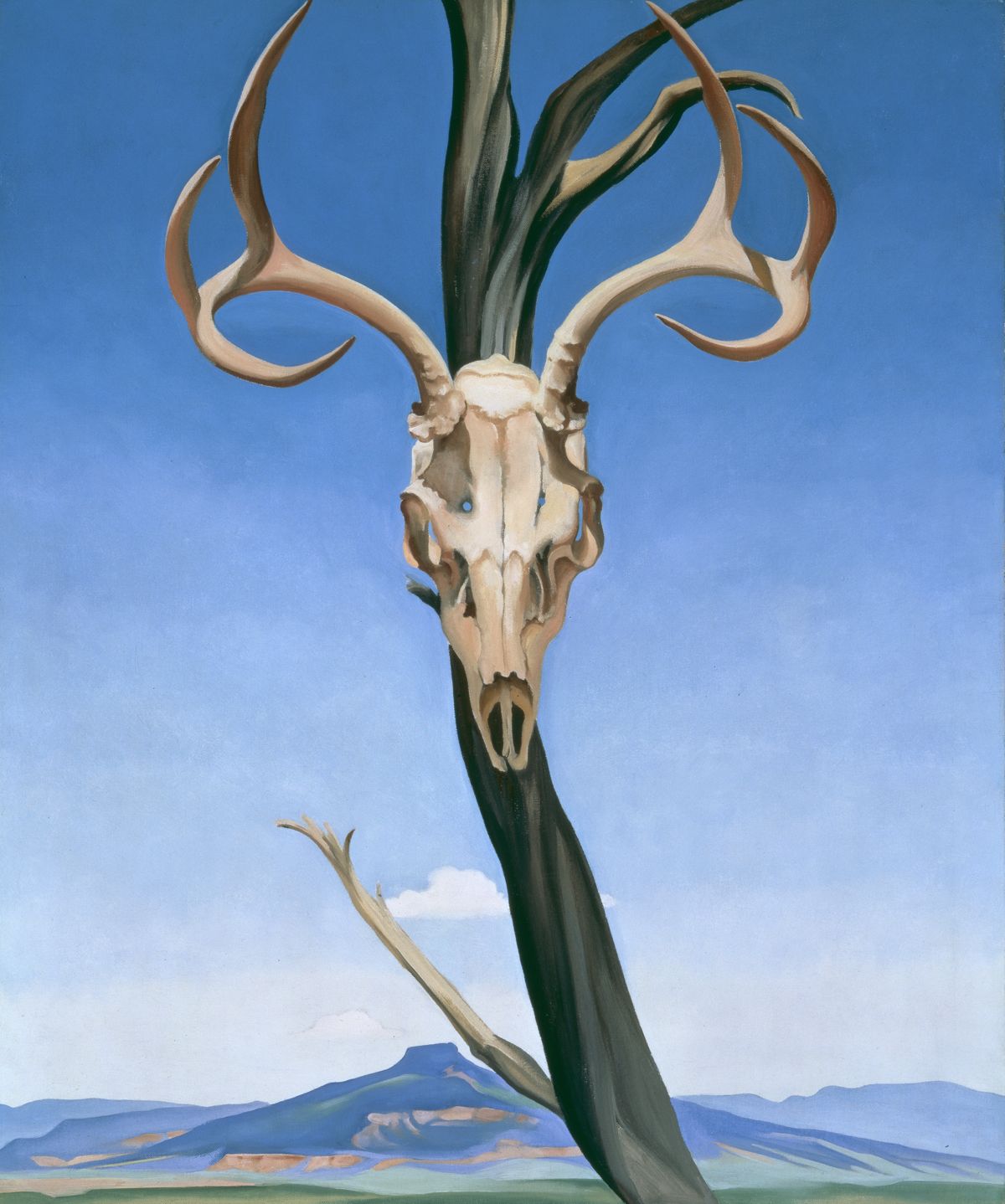 #22
#22
Deer's Skull with Pedernal
"Deer's Skull with Pedernal" shows how Georgia O'Keeffe knows how to condense a sensation into an immediately readable composition. The bone is treated like open architecture: its voids frame the sky or the earth, while its mineral whiteness dialogues with the colors of the desert. After his first stays in New Mexico, his vocabulary expanded to the hills, bones and flowers of the desert, assembled without losing their physical precision. After his first stays in New Mexico, his vocabulary expanded to the hills, bones and flowers of the desert, assembled without losing their physical precision. After his first stays in New Mexico, his vocabulary expanded to the hills, bones and flowers of the desert, assembled without losing their physical precision. After his first stays in New Mexico, his vocabulary expanded to the hills, bones and flowers of the desert, assembled without losing their physical precision. Dated 1936, this painting now belongs to the Museum of Fine Arts (MFA Boston). The Georgia O'Keeffe Museum file, in the Access O'Keeffe catalog raisonné, allows you to check the title, dating, number of catalog and the holding institution. The image is only used to identify and comment on the work: Alpha Reproduction does not offer any reproduction of this painting. A click leads to the official website of the holding museum, which defines its own conditions of access and use. This tension explains its lasting presence: the image seems simple, but each outline modifies the relationship between what is close, what is distant and what goes beyond the frame.
Image: Georgia O'Keeffe Museum - Access O'Keeffe · Documentary consultation only; no reproduction offered by Alpha Reproduction.
See the museum website →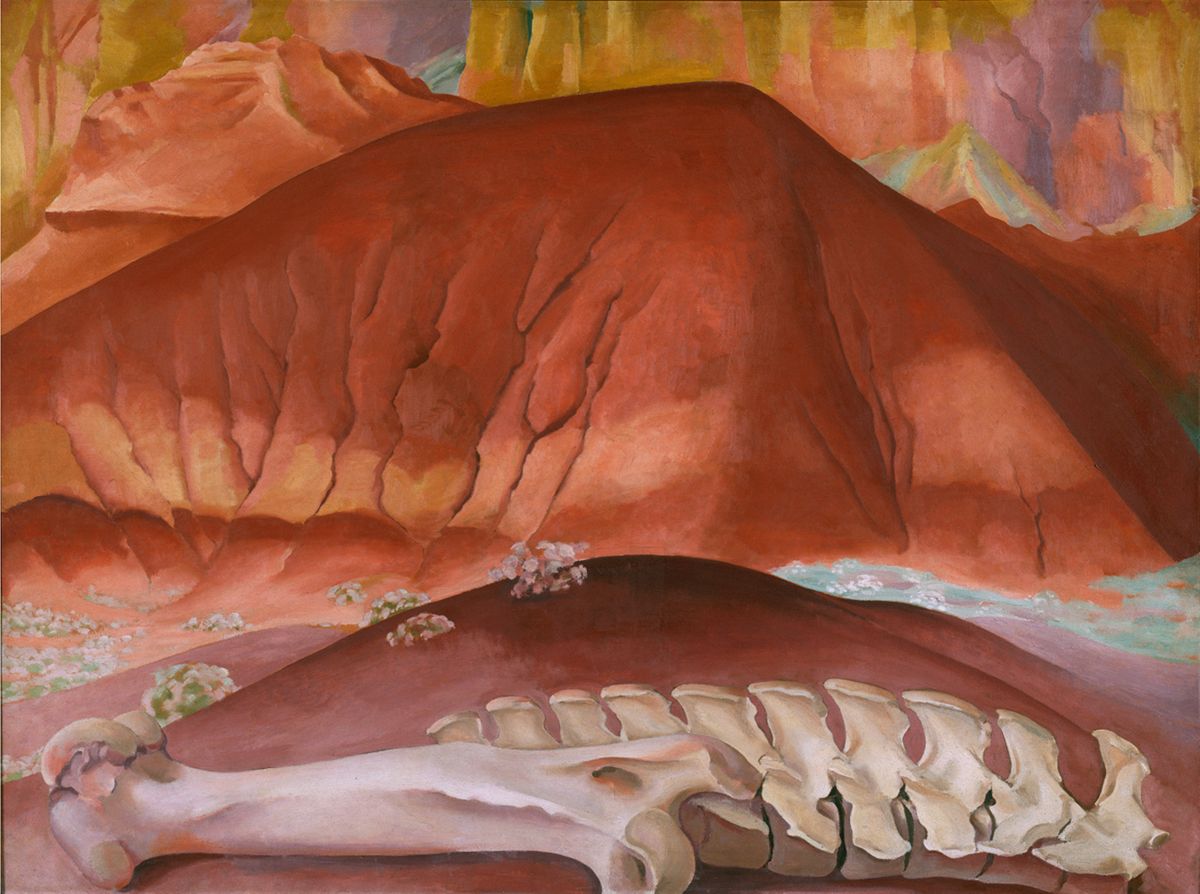 #23
#23
Red Hills and Bones
In "Red Hills and Bones", the gaze advances slowly between the contours, the flat areas and the intervals left open. The bone is treated like open architecture: its voids frame the sky or the earth, while its mineral whiteness dialogues with the colors of the desert. In the 1940s, the spaces of Ghost Ranch and Abiquiú became a laboratory of series: the same place changes scale, light and tension depending on the framing. Dated 1941, this painting today belonged to Philadelphia Museum of Art. The Georgia O'Keeffe Museum file, in the Access O'Keeffe catalog raisonné, allows you to check the title, dating, catalog number and the holding institution. The image is only used to identify and comment on the work: Alpha Reproduction does not offer any reproduction of this painting. A click leads to the official website of the holding museum, which defines its own conditions of access and use. O'Keeffe does not deliver a fixed emblem; it constructs an experience of the gaze where the motif gains intensity as it is stripped of the accessory.
Image: Georgia O'Keeffe Museum - Access O'Keeffe · Documentary consultation only; no reproduction offered by Alpha Reproduction.
See the museum website →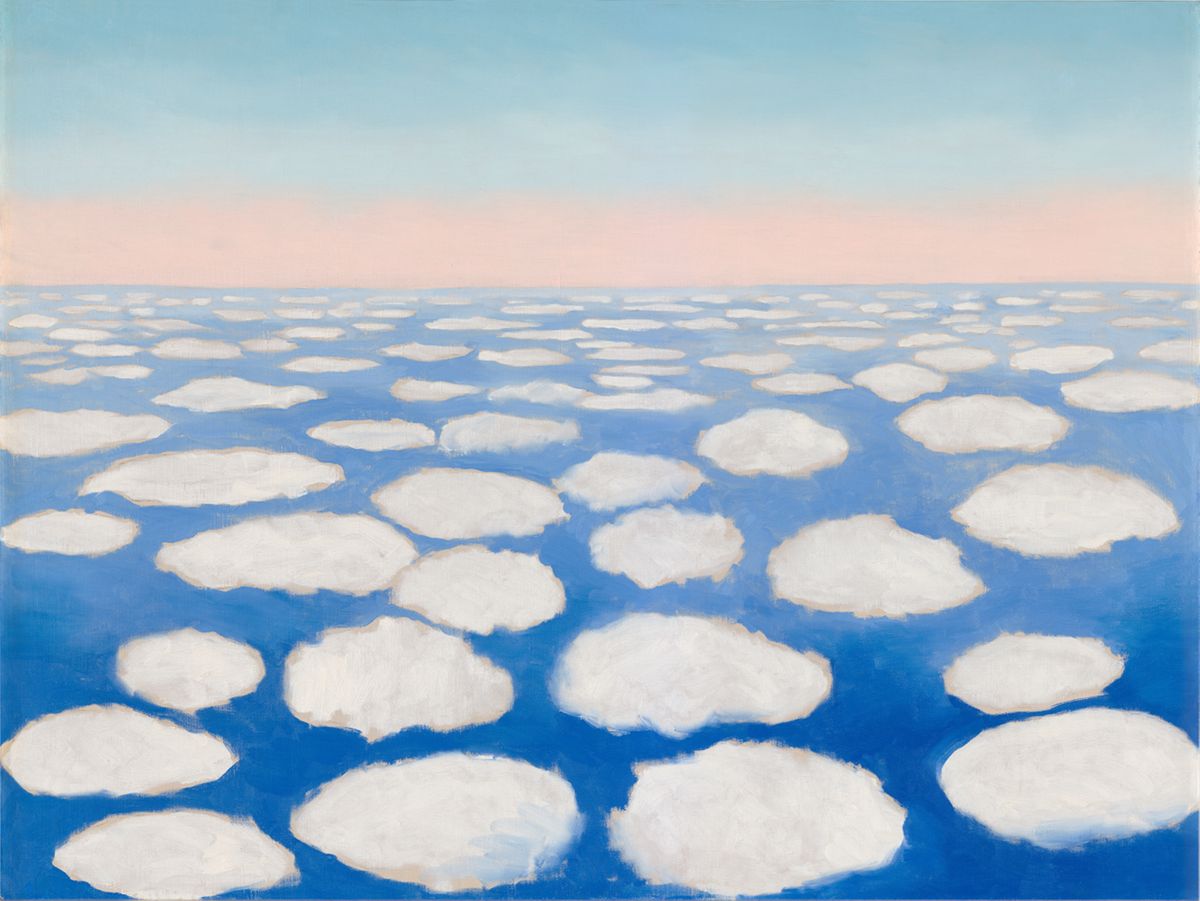 #24
#24
Above the Clouds I
The strength of "Above the Clouds I" comes from a balance between careful observation and voluntary simplification. The landscape is reduced to a few decisive relationships - horizon, curve, flat and distance - which preserve the sensation of a place without copying all the details. The late works extend the gaze towards the roads seen from an airplane, the clouds and the immense horizons, with an economy of means which makes the space almost meditative. Dated 1962 -1963, this painting today belongs to Georgia O'Keeffe Museum. The Georgia O'Keeffe Museum file, in the Access O'Keeffe catalog raisonné, allows you to check the title, dating, catalog number and institution holder. The image is only used to identify and comment on the work: Alpha Reproduction does not offer any reproduction of this painting. A click leads to the official website of the holding museum, which defines its own conditions of access and use. The painting therefore invites you to slow down: its clarity does not abolish the mystery, on the contrary it allows you to perceive the finest variations in shape and color.
Image: Georgia O'Keeffe Museum - Access O'Keeffe · Documentary consultation only; no reproduction offered by Alpha Reproduction.
See the museum website →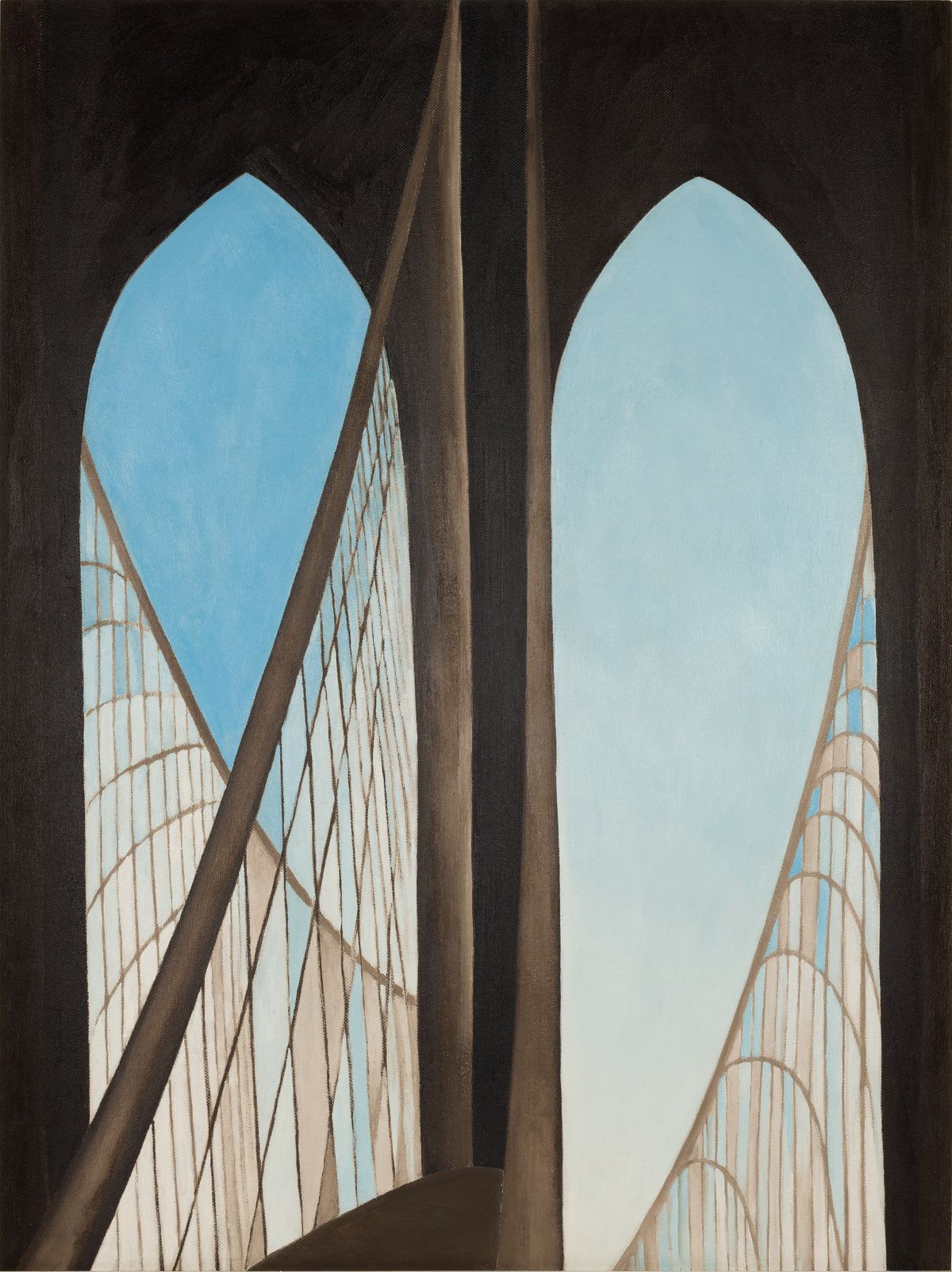 #25
#25
Brooklyn Bridge
Beneath its apparent evidence, "Brooklyn Bridge" constructs a very calculated relationship between proximity, distance and rhythm. O'Keeffe simplifies architecture to the point of making facades, streets and built masses a vertical rhythm where light measures modern space. In the 1940s, the spaces of Ghost Ranch and Abiquiú became a laboratory of series: the same place changes scale, light and tension depending on the framing. Dated 1949, this painting today belonged to Brooklyn Museum of Art. The Georgia O'Keeffe Museum file, in the Access O'Keeffe catalog raisonné, allows you to verify the title, dating, catalog number and holding institution. The image is only used to identify and comment on the work: Alpha Reproduction does not offer any reproduction of this painting. A click leads to the official website of the holding museum, which defines its own conditions of access and use. The work thus remains concrete without becoming anecdotal: it requires less recognition of an object than testing the way in which it occupies the visual field.
Image: Georgia O'Keeffe Museum - Access O'Keeffe · Documentary consultation only; no reproduction offered by Alpha Reproduction.
See the museum website →Flowers, trees, Lake George and New York show how framing transforms the loved one into a monumental experience.
 #26
#26
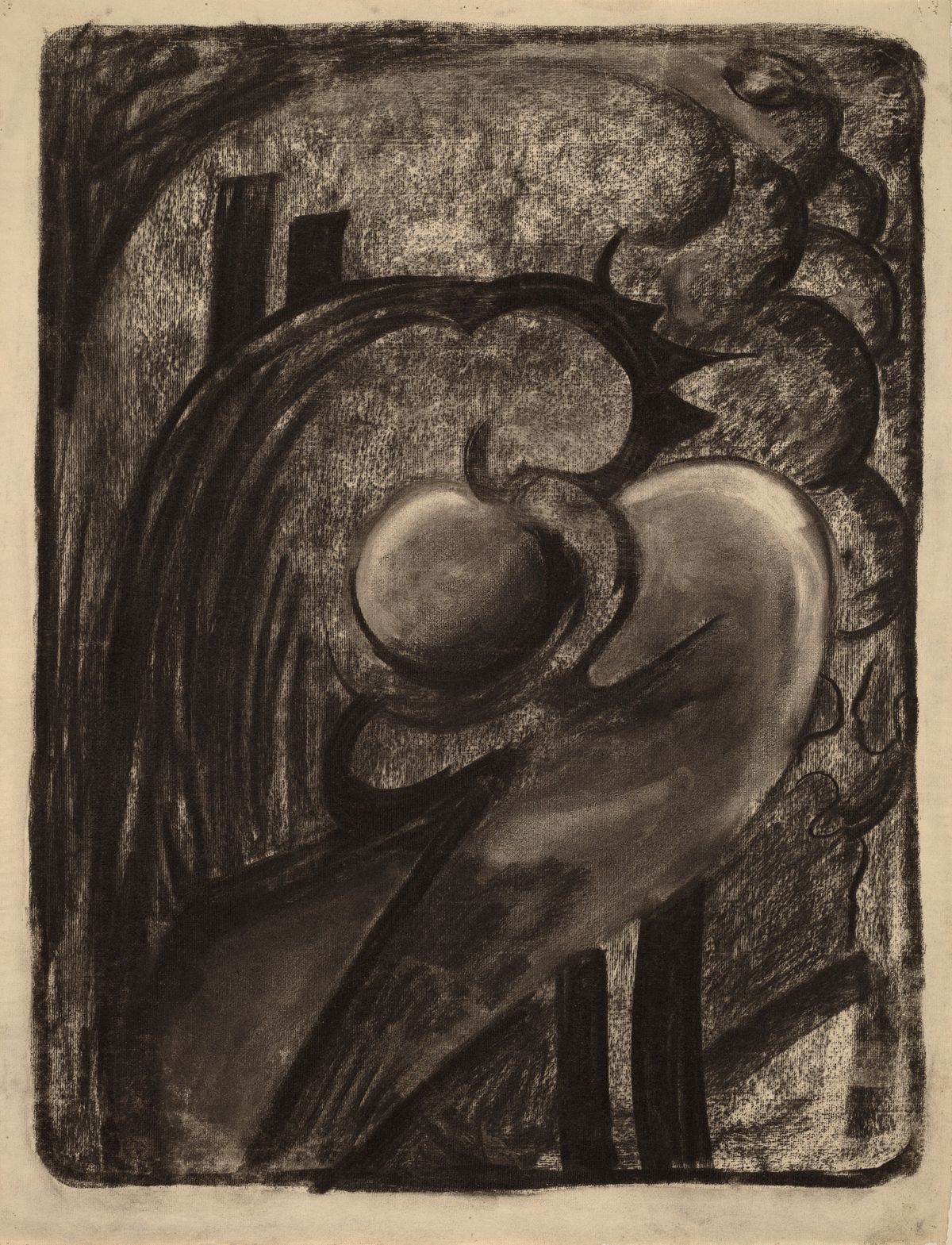
No. 12 - Special
With "No. 12 - Special", Georgia O'Keeffe transforms a precise pattern into an experience of duration, scale and color. The composition is based on a circulation of shapes and colors which reflects a sensation experienced without enclosing it in a literal description. In these founding years, she used abstraction to give a visible form to music, light and the forces of landscape, before these subjects were fully recognized by American modernism. Dated 1915, this painting today belonged to the National Gallery of Art (NGA). The Georgia O'Keeffe Museum file, in the Access O'Keeffe catalog raisonné, allows you to verify the title, dating, and number catalog and the holding institution. The image is only used to identify and comment on the work: Alpha Reproduction does not offer any reproduction of this painting. A click leads to the official website of the holding museum, which defines its own conditions of access and use. This tension explains its lasting presence: the image seems simple, but each outline modifies the relationship between what is close, what is distant and what.
Image: Georgia O'Keeffe Museum - Access O'Keeffe · Documentary consultation only; no reproduction offered by Alpha Reproduction.
See the museum website →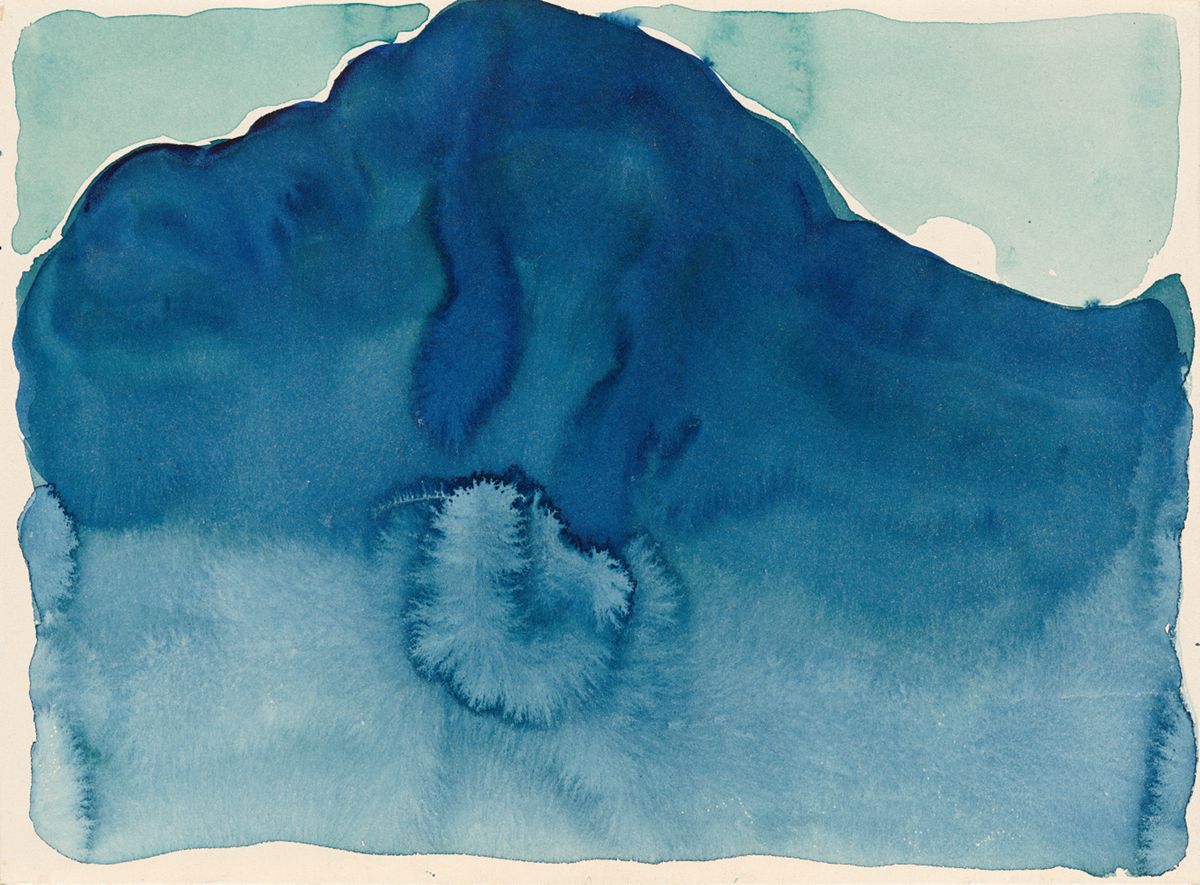 #27
#27
Blue Hill No. 1
"Blue Hill No. 1" shows how Georgia O'Keeffe knows how to condense a sensation into an immediately readable composition. The landscape is reduced to a few decisive relationships - horizon, curve, flat and distance - which preserve the sensation of a place without copying all the details. In these founding years, she used abstraction to give a visible form to the music, light and forces of the landscape, before these subjects were fully recognized by American modernism. Dated 1916, she used abstraction to give a visible form to the music, light and forces of the landscape, before these subjects were fully recognized by American modernism. Dated 1916, this painting today belonged to the National Gallery of Art (NGA). The Georgia O'Keeffe Museum file, in the Access O'Keeffe catalog raisonné, allows us to verify the title, the dating, catalog number and holding institution. The image is only used to identify and comment on the work: Alpha Reproduction does not offer any reproduction of this painting. A click leads to the official website of the holding museum, which defines its own conditions of access and use. O'Keeffe does not deliver a fixed emblem; it constructs an experience of the gaze where the motif gains intensity as it is stripped of the accessory.
Image: Georgia O'Keeffe Museum - Access O'Keeffe · Documentary consultation only; no reproduction offered by Alpha Reproduction.
See the museum website →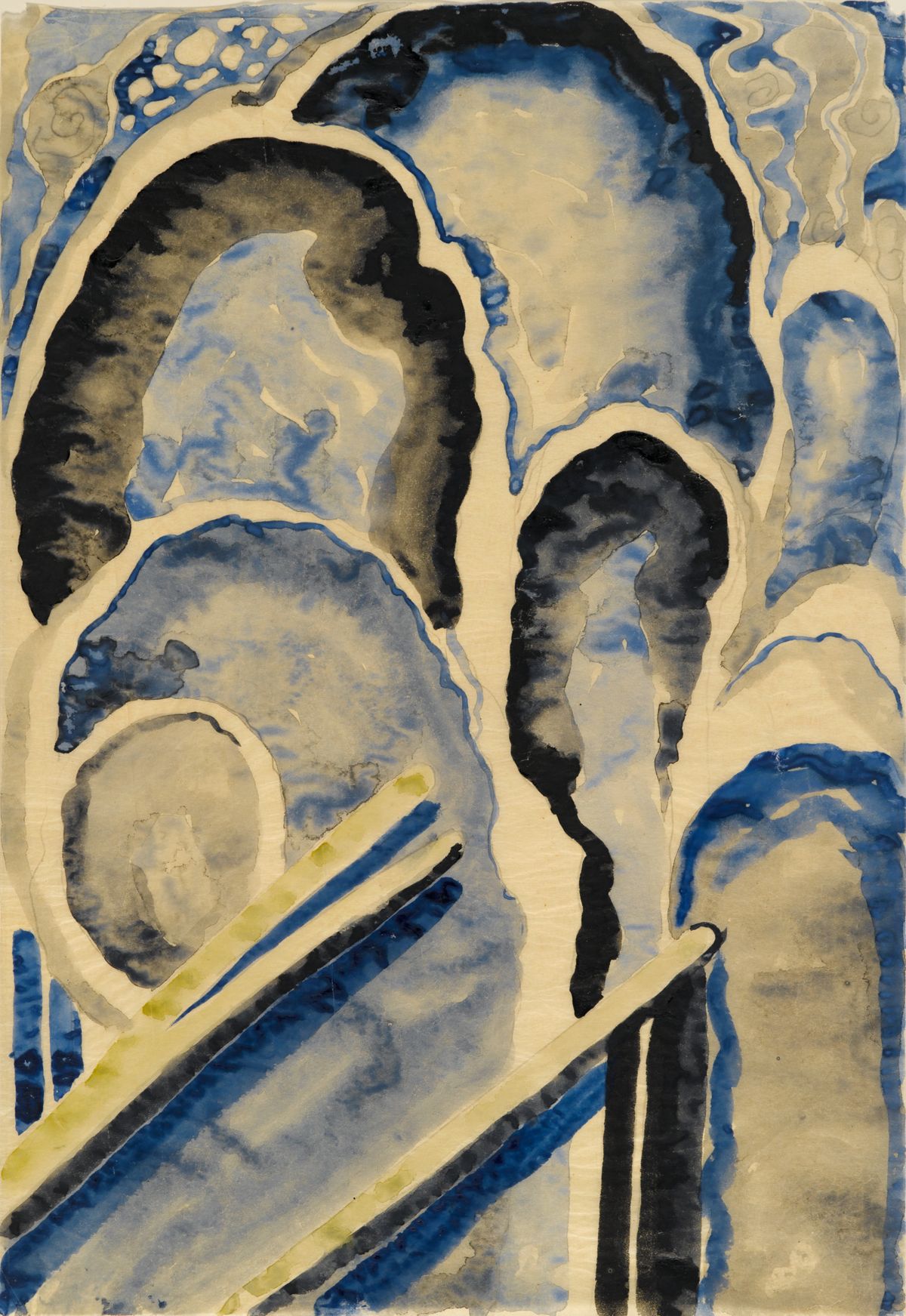 #28
#28
Blue No. I
In "Blue No. I", the gaze advances slowly between the contours, the flat areas and the intervals left open. The composition is based on a circulation of shapes and colors which reflects a sensation experienced without enclosing it in a literal description. In these founding years, she used abstraction to give a visible form to music, light and the forces of landscape, before these subjects were fully recognized by American modernism. Dated 1916, this painting today belonged to Brooklyn Museum of Art. The Georgia O'Keeffe Museum file, in the Access O'Keeffe catalog raisonné, allows you to verify the title, dating, catalog number and the holding institution. The image is only used to identify and comment on the work: Alpha Reproduction does not offer any reproduction of this painting. A click leads to the official website of the holding museum, which defines its own conditions of access and use. The painting therefore invites you to slow down: its clarity does not abolish the mystery, on the contrary it allows you to perceive the finest variations in shape and color.
Image: Georgia O'Keeffe Museum - Access O'Keeffe · Documentary consultation only; no reproduction offered by Alpha Reproduction.
See the museum website →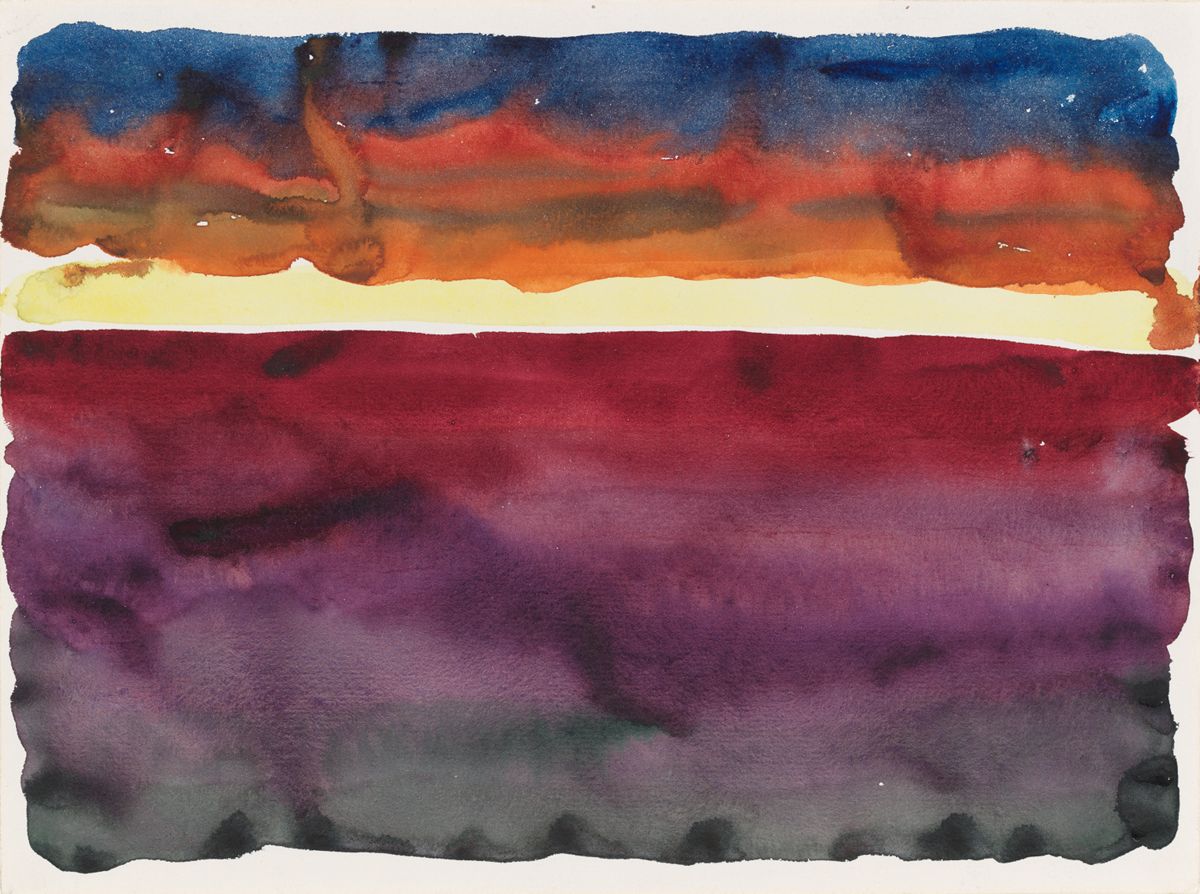 #29
#29
Morning Sky
The strength of "Morning Sky" comes from a balance between careful observation and voluntary simplification. The landscape is reduced to a few decisive relationships - horizon, curve, flat and distance - which preserve the sensation of a place without copying all the details. In these founding years, she used abstraction to give a visible form to the music, light and forces of the landscape, before these subjects were fully recognized by American modernism. Dated 1916, this painting today belonged to Whitney Museum of American Art. Dated 1916, this painting belongs today to Whitney Museum of American Art. The Georgia O'Keeffe Museum file, in the Access O'Keeffe catalog raisonné, allows you to verify the title, the dating, the catalog number and the holding institution. The image is only used to identify and comment on the work: Alpha Reproduction does not offer any reproduction of this painting. A click leads to the official website of the holding museum, which defines its own conditions of access and use. The work thus remains concrete without becoming anecdotal: it requires less recognition of an object than testing the way in which it occupies the visual field.
Image: Georgia O'Keeffe Museum - Access O'Keeffe · Documentary consultation only; no reproduction offered by Alpha Reproduction.
See the museum website →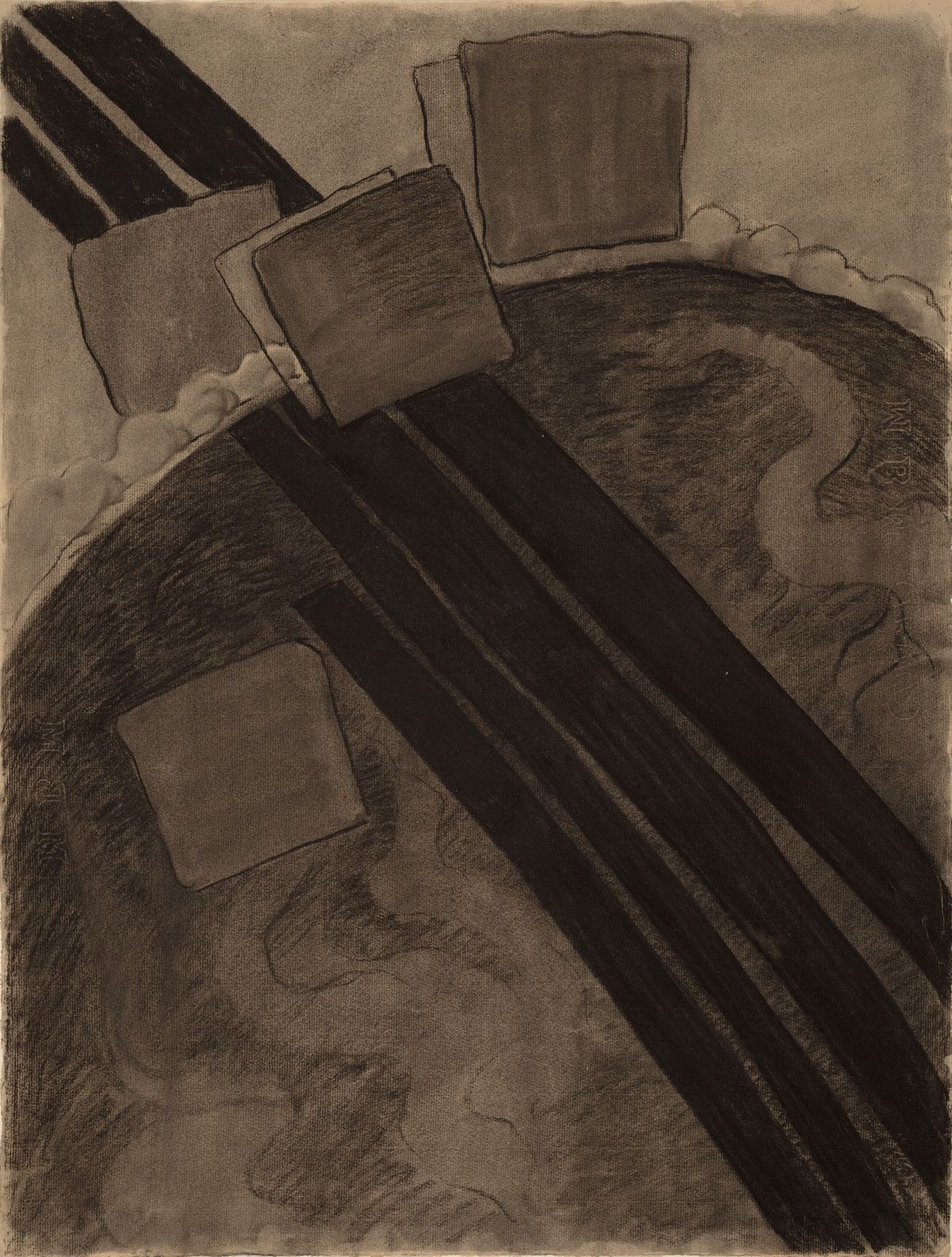 #30
#30
No. 14 Special
Beneath its apparent evidence, "No. 14 Special" constructs a very calculated relationship between proximity, distance and rhythm. The composition is based on a circulation of shapes and colors which reflects a sensation experienced without enclosing it in a literal description. In these founding years, she used abstraction to give a visible form to music, light and the forces of landscape, before these subjects were fully recognized by American modernism. Dated 1916, this painting today belonged to the National Gallery of Art (NGA). The Georgia O'Keeffe Museum file, in the Access O'Keeffe catalog raisonné, allows you to verify the title, dating, and number catalog and the holding institution. The image is only used to identify and comment on the work: Alpha Reproduction does not offer any reproduction of this painting. A click leads to the official website of the holding museum, which defines its own conditions of access and use. This tension explains its lasting presence: the image seems simple, but each outline modifies the relationship between what is close, what is distant and what goes beyond the frame.
Image: Georgia O'Keeffe Museum - Access O'Keeffe · Documentary consultation only; no reproduction offered by Alpha Reproduction.
See the museum website →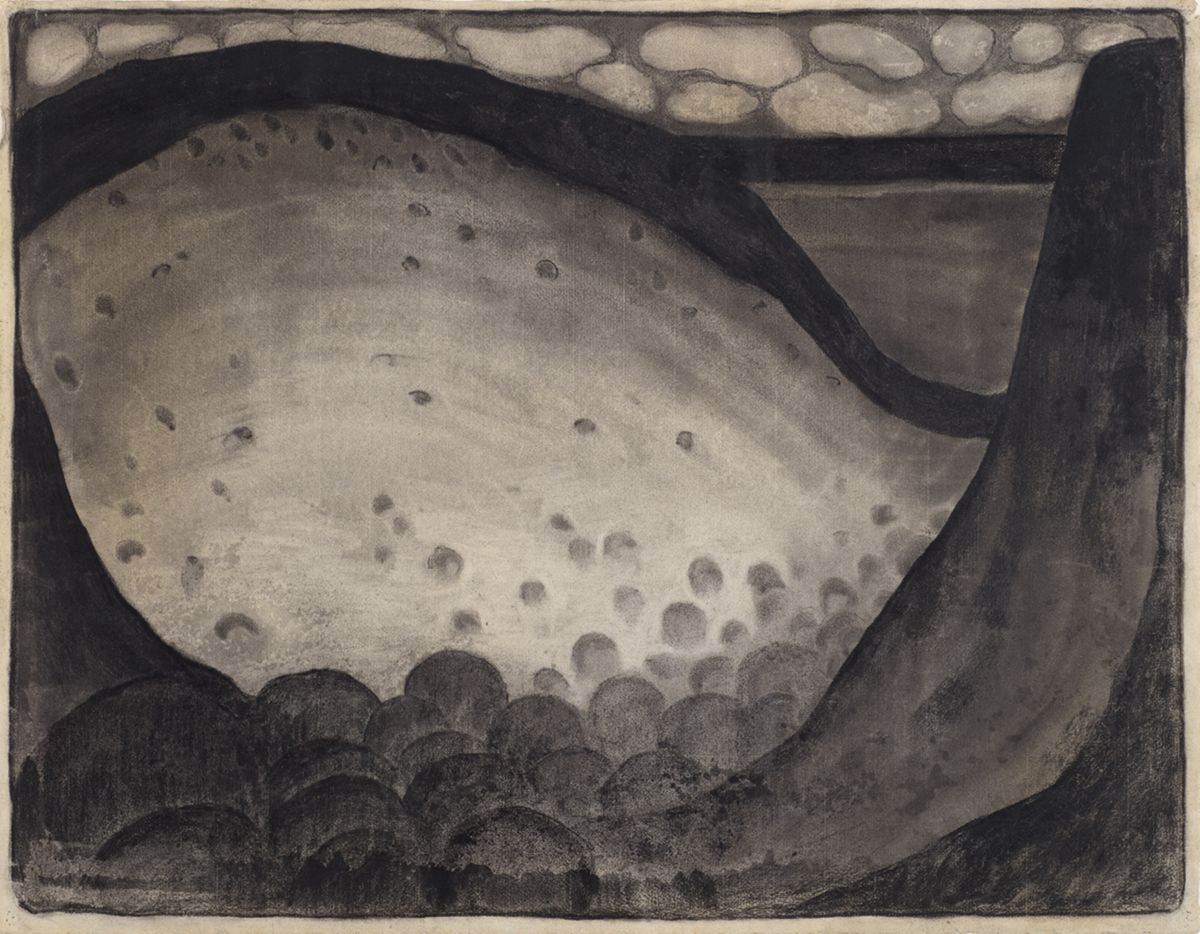 #31
#31
No. 15 Special
With "No. 15 Special", Georgia O'Keeffe transforms a precise pattern into an experience of duration, scale and color. The composition is based on a circulation of shapes and colors which reflects a sensation experienced without enclosing it in a literal description. In these founding years, she used abstraction to give a visible form to music, light and the forces of landscape, before these subjects were fully recognized by American modernism. Dated 1916 -1917, this painting today belonged to Philadelphia Museum of Art. The Georgia O'Keeffe Museum file, in the Access O'Keeffe catalog raisonné, allows you to verify the title, dating, and number catalog and the holding institution. The image is only used to identify and comment on the work: Alpha Reproduction does not offer any reproduction of this painting. A click leads to the official website of the holding museum, which defines its own conditions of access and use. O'Keeffe does not deliver a fixed emblem; it constructs an experience of the gaze where the motif gains intensity as it is stripped of the accessory.
Image: Georgia O'Keeffe Museum - Access O'Keeffe · Documentary consultation only; no reproduction offered by Alpha Reproduction.
See the museum website →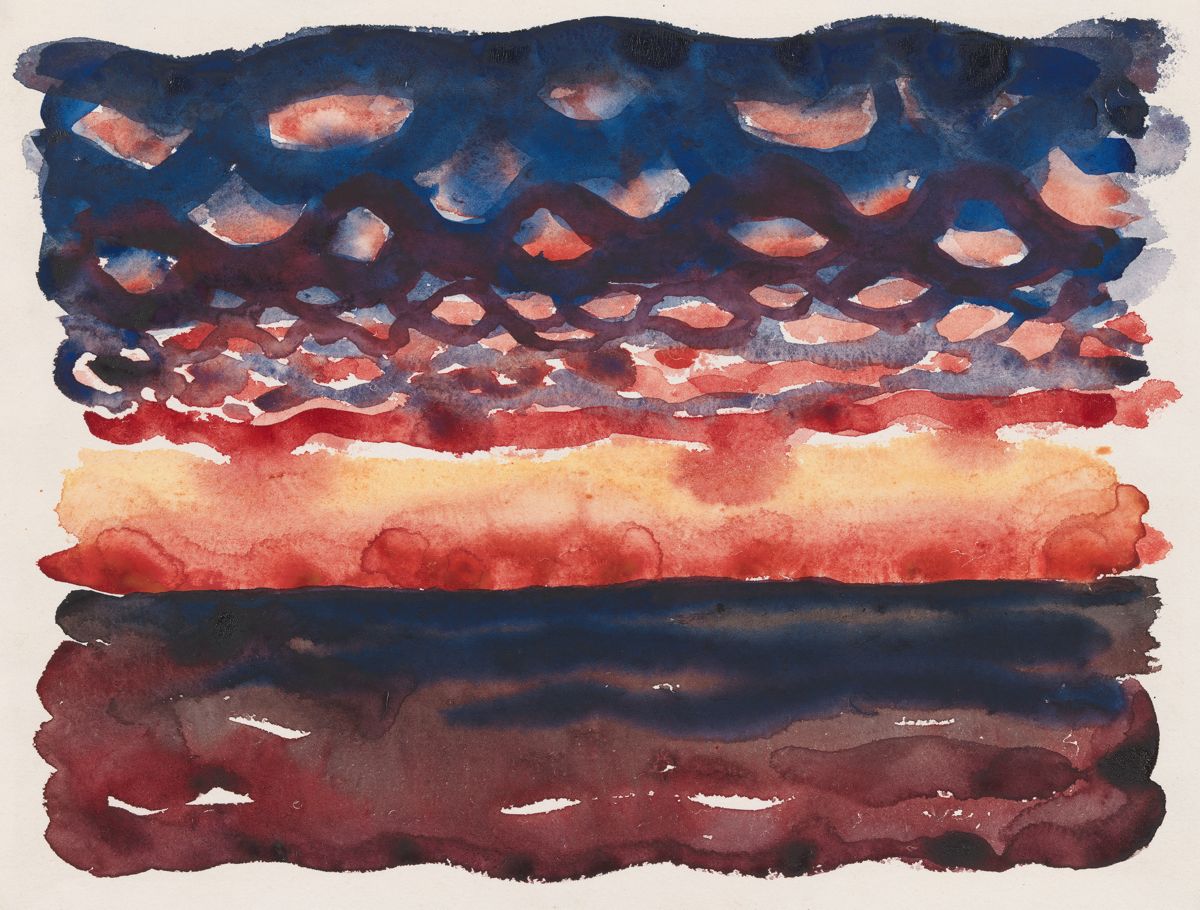 #32
#32
Sunrise and Little Clouds No. II
"Sunrise and Little Clouds No. II" shows how Georgia O'Keeffe knows how to condense a sensation into an immediately readable composition. The landscape is reduced to a few decisive relationships - horizon, curve, flat and distance - which preserve the sensation of a place without copying all the details. In these founding years, she used abstraction to give a visible form to the music, light and forces of the landscape, before these subjects were fully recognized by American modernism. Dated 1916, she used abstraction to give a visible form to the music, light and forces of the landscape, before these subjects were fully recognized by American modernism. Dated 1916, she used abstraction to give visible form to the music, light and forces of the landscape, before these subjects were fully recognized by American modernism. Dated 1916, this painting today belonged to Georgia O'Keeffe Museum. The Georgia O'Keeffe Museum file, in the Access O'Keeffe catalog raisonné, allows us to verify the title, dating, catalog number and holding institution. The image is only used to identify and comment on the work: Alpha Reproduction does not offer any reproduction of this painting. A click leads to the official website of the holding museum, which defines its own conditions of access and use. The painting therefore invites you to slow down: its clarity does not abolish the mystery, on the contrary it allows you to perceive the finest variations of.
Image: Georgia O'Keeffe Museum - Access O'Keeffe · Documentary consultation only; no reproduction offered by Alpha Reproduction.
See the museum website →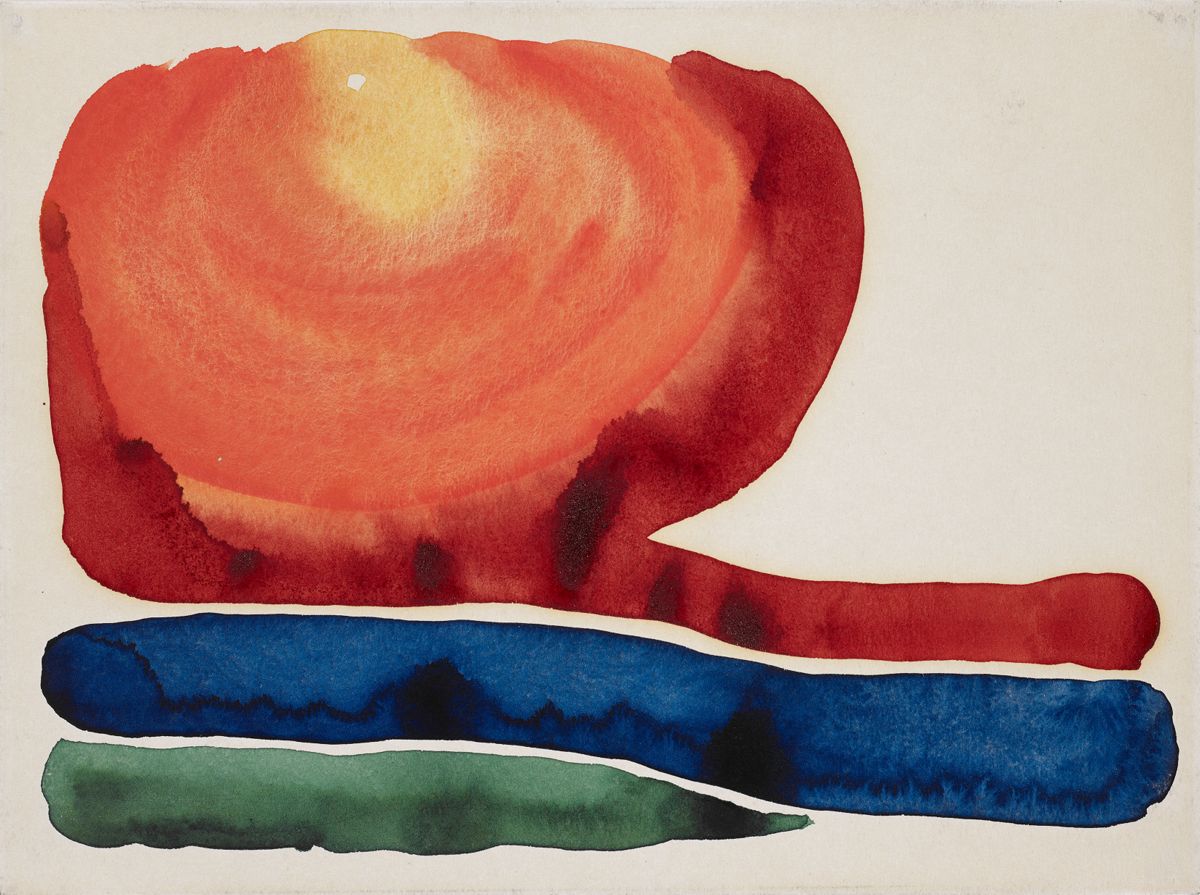 #33
#33
Evening Star No. II
In "Evening Star No. II", the gaze advances slowly between the contours, the flat areas and the intervals left open. The composition is based on a circulation of shapes and colors which reflects a sensation experienced without enclosing it in a literal description. In these founding years, she used abstraction to give a visible form to music, light and the forces of landscape, before these subjects were fully recognized by American modernism. Dated 1917, this painting today belonged to Crystal Bridges Museum of American Art. The file for the Georgia O'Keeffe Museum, in the Access O'Keeffe catalog raisonné, allows us to verify the title, the dating, catalog number and holding institution. The image is only used to identify and comment on the work: Alpha Reproduction does not offer any reproduction of this painting. A click leads to the official website of the holding museum, which defines its own conditions of access and use. The work thus remains concrete without becoming anecdotal: it requires less recognition of an object than testing the way in which it occupies the visual field.
Image: Georgia O'Keeffe Museum - Access O'Keeffe · Documentary consultation only; no reproduction offered by Alpha Reproduction.
See the museum website →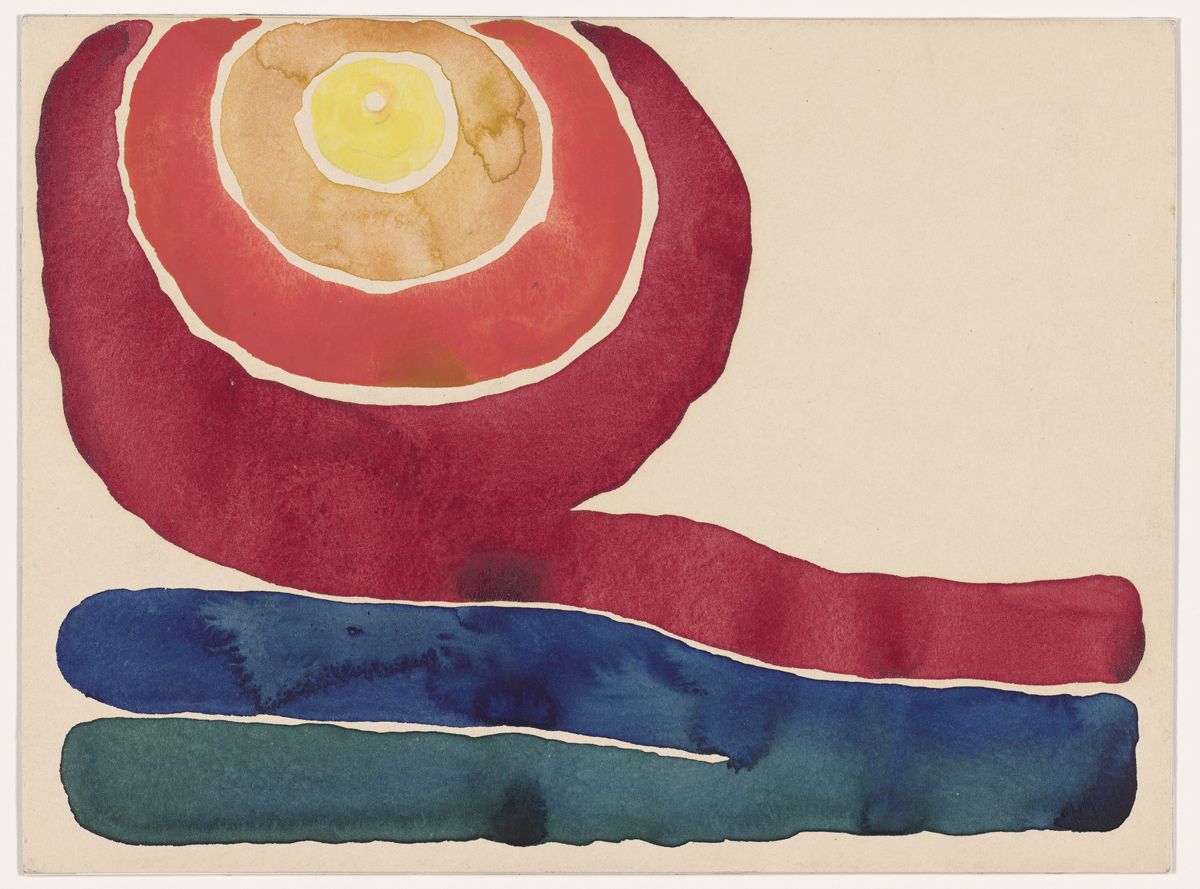 #34
#34
Evening Star No. III
The strength of "Evening Star No. III" comes from a balance between careful observation and voluntary simplification. The composition is based on a circulation of shapes and colors which reflects a sensation experienced without enclosing it in a literal description. In these founding years, she used abstraction to give a visible form to music, light and the forces of landscape, before these subjects were fully recognized by American modernism. Dated 1917, this painting today belonged to Museum of Modern Art (MoMA). The Georgia O'Keeffe Museum file, in the Access O'Keeffe catalog raisonné, allows you to verify the title, dating, and number of catalog and the holding institution. The image is only used to identify and comment on the work: Alpha Reproduction does not offer any reproduction of this painting. A click leads to the official website of the holding museum, which defines its own conditions of access and use. This tension explains its lasting presence: the image seems simple, but each outline modifies the relationship between what is close, what is distant and what goes beyond the frame.
Image: Georgia O'Keeffe Museum - Access O'Keeffe · Documentary consultation only; no reproduction offered by Alpha Reproduction.
See the museum website →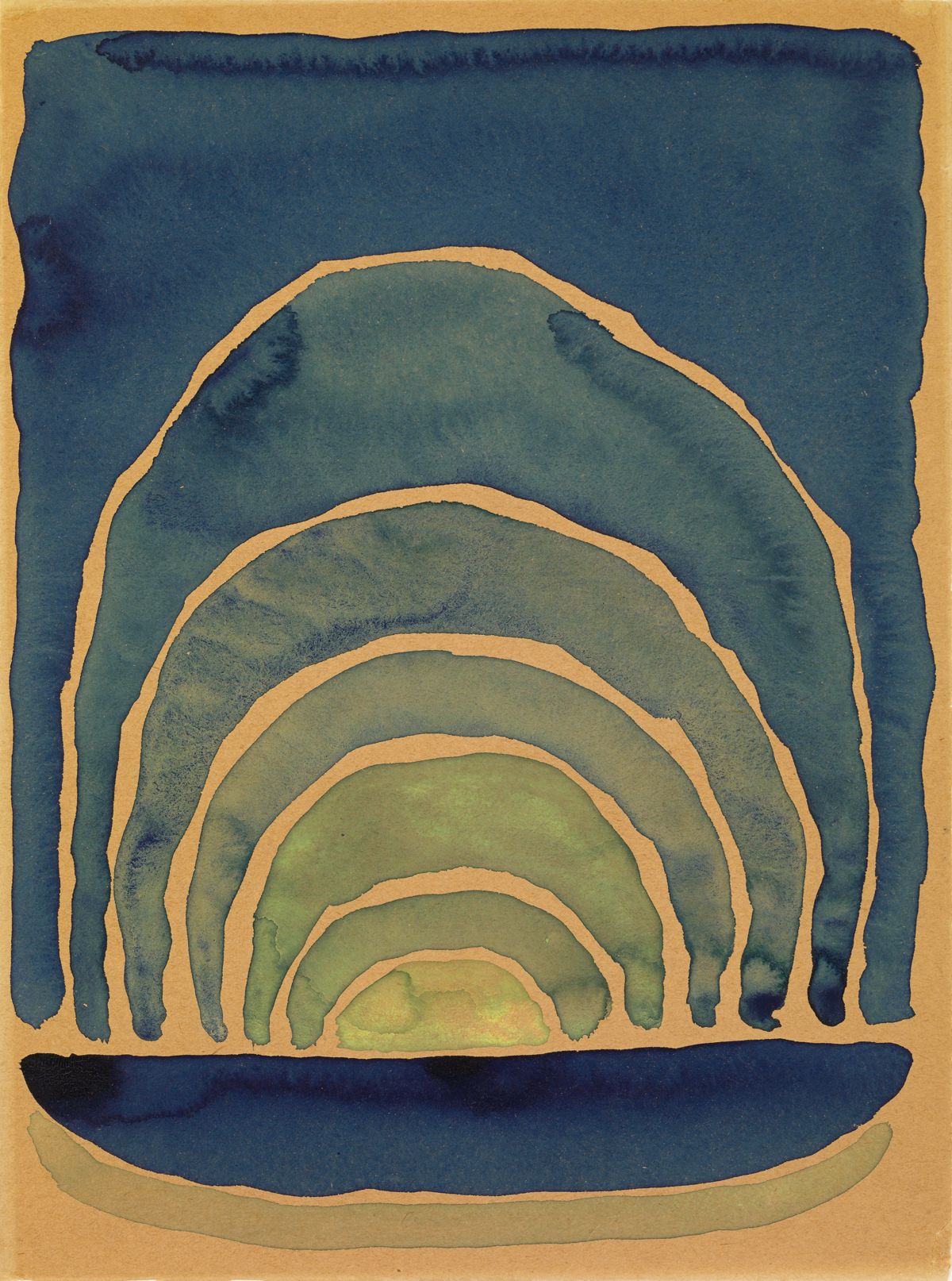 #35
#35
Light Coming on the Plains No. I
Beneath its apparent evidence, "Light Coming on the Plains No. I" constructs a very calculated relationship between proximity, distance and rhythm. The composition is based on a circulation of shapes and colors which reflects a sensation experienced without enclosing it in a literal description. In these founding years, she used abstraction to give a visible form to music, light and the forces of landscape, before these subjects were fully recognized by American modernism. Dated 1917, this painting today belonged to Amon Carter Museum of American Art. The Georgia O'Keeffe Museum file, in the Access O'Keeffe catalog raisonné, allows us to verify the title, the dating, catalog number and holding institution. The image is only used to identify and comment on the work: Alpha Reproduction does not offer any reproduction of this painting. A click leads to the official website of the holding museum, which defines its own conditions of access and use. O'Keeffe does not deliver a fixed emblem; it constructs an experience of the gaze where the motif gains intensity as it is stripped of the accessory.
Image: Georgia O'Keeffe Museum - Access O'Keeffe · Documentary consultation only; no reproduction offered by Alpha Reproduction.
See the museum website →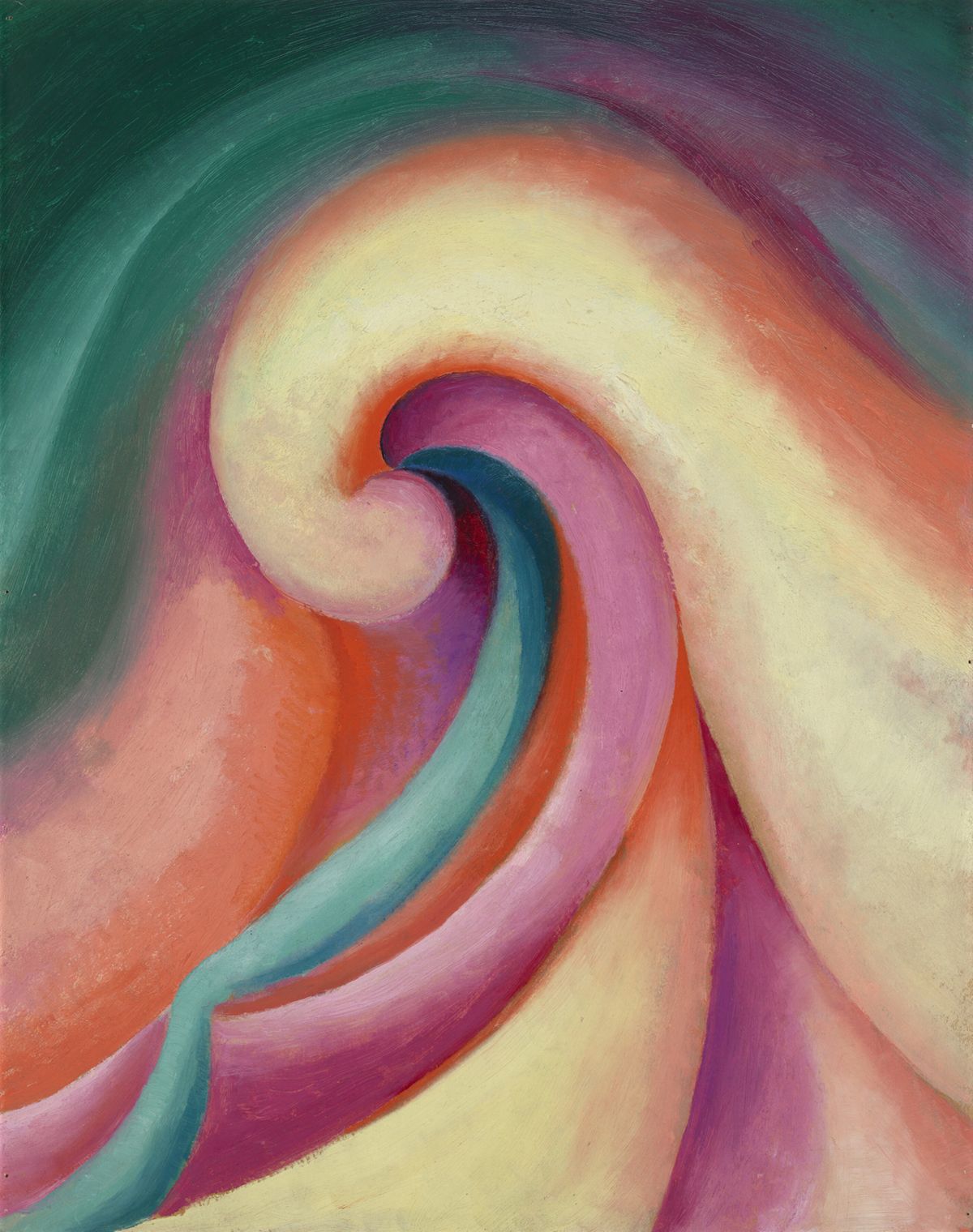 #36
#36
Series I - No. 3
With "Series I - No. 3", Georgia O'Keeffe transforms a precise pattern into an experience of duration, scale and color. The composition is based on a circulation of shapes and colors which reflects a sensation experienced without enclosing it in a literal description. In these founding years, she used abstraction to give a visible form to music, light and the forces of landscape, before these subjects were fully recognized by American modernism. Dated 1918, this painting today belonged to Milwaukee Art Museum. The Georgia O'Keeffe Museum file, in the Access O'Keeffe catalog raisonné, allows you to verify the title, dating, and number of catalog and the holding institution. The image is only used to identify and comment on the work: Alpha Reproduction does not offer any reproduction of this painting. A click leads to the official website of the holding museum, which defines its own conditions of access and use. The painting therefore invites you to slow down: its clarity does not abolish the mystery, on the contrary it allows you to perceive the finest variations in shape and color.
Image: Georgia O'Keeffe Museum - Access O'Keeffe · Documentary consultation only; no reproduction offered by Alpha Reproduction.
See the museum website →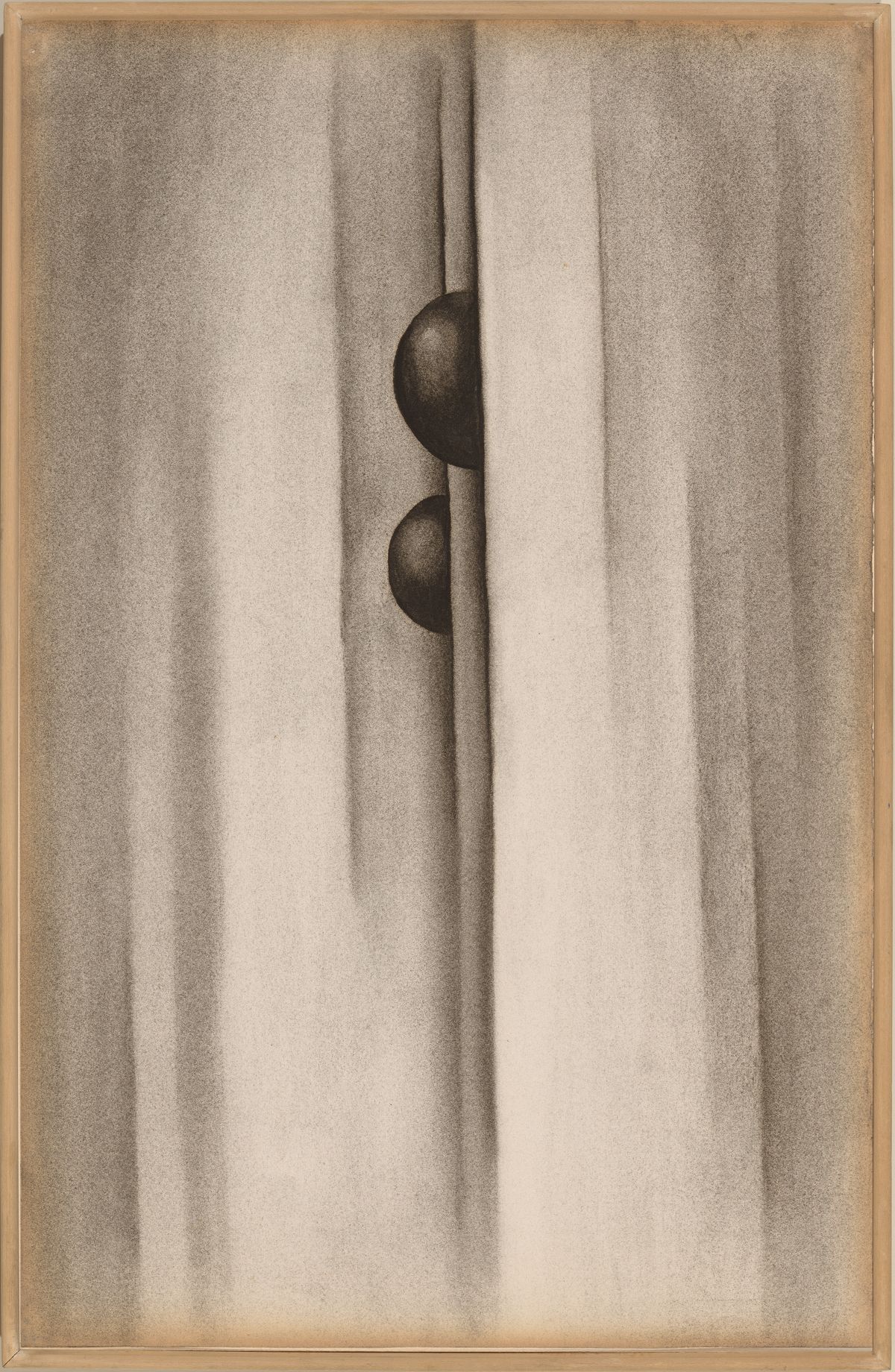 #37
#37
No. 17 - Special
"No. 17 - Special" shows how Georgia O'Keeffe knows how to condense a sensation into an immediately readable composition. The composition is based on a circulation of shapes and colors which reflects a sensation experienced without enclosing it in a literal description. In these founding years, she used abstraction to give a visible form to music, light and the forces of landscape, before these subjects were fully recognized by American modernism. Dated 1919, this painting today belonged to Georgia O'Keeffe Museum. The Georgia O'Keeffe Museum file, in the Access O'Keeffe catalog raisonné, allows you to verify the title, dating, number catalog and the holding institution. The image is only used to identify and comment on the work: Alpha Reproduction does not offer any reproduction of this painting. A click leads to the official website of the holding museum, which defines its own conditions of access and use. The work thus remains concrete without becoming anecdotal: it requires less recognition of an object than testing the way in which it occupies the visual field.
Image: Georgia O'Keeffe Museum - Access O'Keeffe · Documentary consultation only; no reproduction offered by Alpha Reproduction.
See the museum website →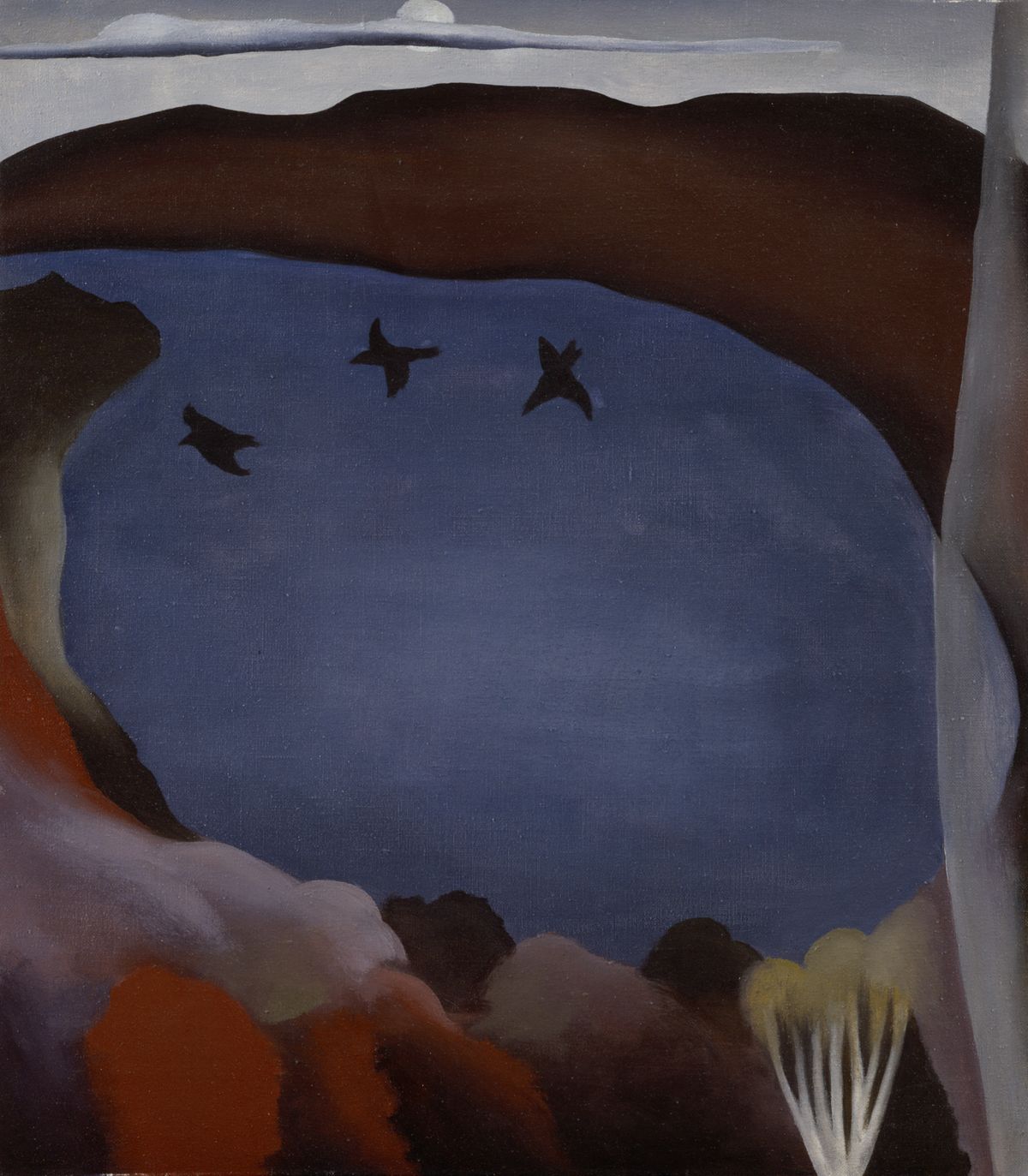 #38
#38
Lake George with Crows
In "Lake George with Crows", the gaze advances slowly between the contours, the flat areas and the intervals left open. The landscape is reduced to a few decisive relationships - horizon, curve, flat areas and distance - which preserve the sensation of a place without copying all the details. During the 1920s, it alternated floral enlargements, views of Lake George and New York verticals, affirming that an intimate motif can have the monumental power of architecture. Dated 1921, this painting today belongs to the National Gallery of Canada. The Georgia O'Keeffe Museum file, in the Access O'Keeffe catalog raisonné, allows you to verify the title, the dating, the catalog number and the holding institution. The image is only used to identify and comment on the work: Alpha Reproduction does not offer any reproduction of this painting. A click leads to the official website of the holding museum, which defines its own conditions of access and use. This tension explains its lasting presence: the image seems simple, but each outline modifies the relationship between what is close, what is distant and what goes beyond the frame.
Image: Georgia O'Keeffe Museum - Access O'Keeffe · Documentary consultation only; no reproduction offered by Alpha Reproduction.
See the museum website →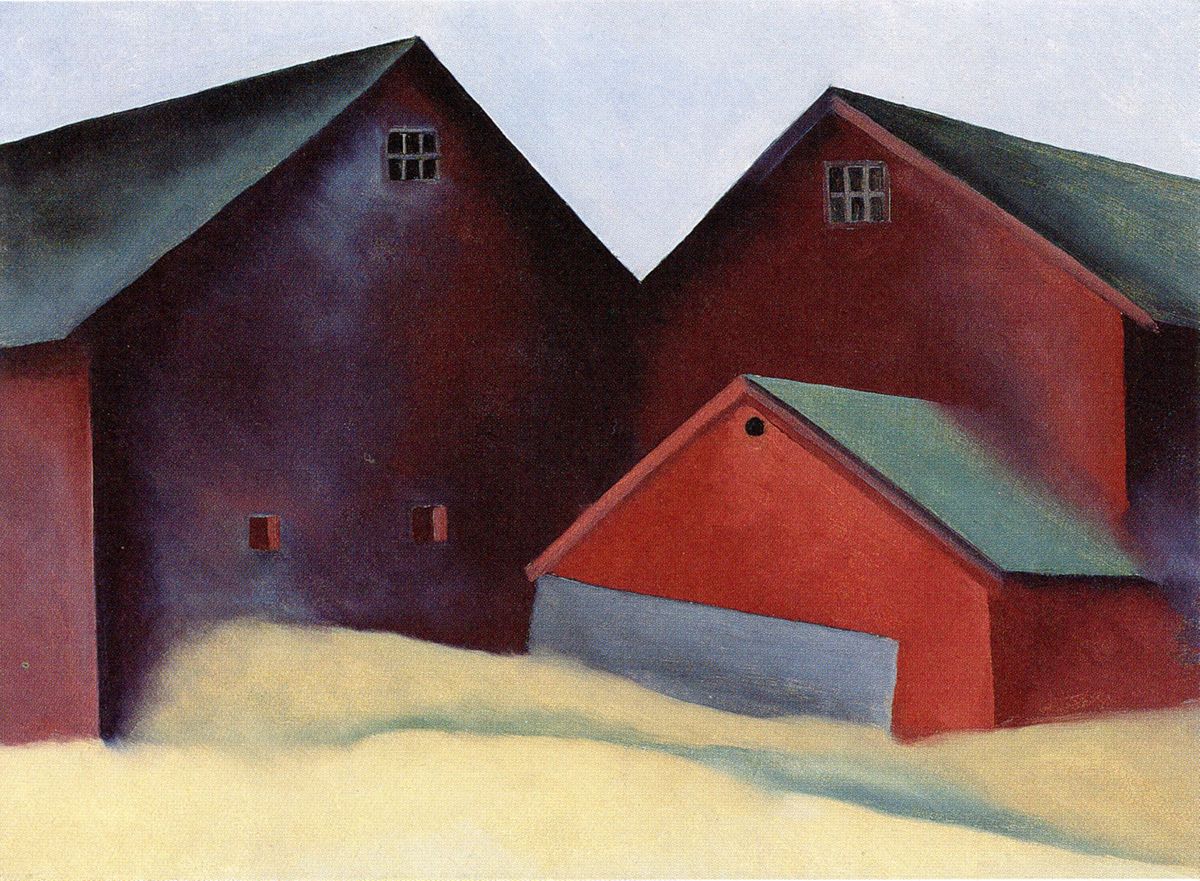 #39
#39
Ends of Barns
The strength of "Ends of Barns" comes from a balance between careful observation and voluntary simplification. O'Keeffe simplifies architecture to the point of making facades, streets and built masses a vertical rhythm where light measures modern space. During the 1920s, she alternated floral enlargements, views of Lake George and New York verticals, asserting that an intimate motif can have the monumental power of architecture. Dated 1922 -1924, this painting today belongs to Museum of Fine Arts (MFA Boston). The Georgia O'Keeffe Museum file, in the Access O'Keeffe catalog raisonné, allows you to verify the title, dating, catalog number and the holding institution. The image is only used to identify and comment on the work: Alpha Reproduction does not offer any reproduction of this painting. A click leads to the official website of the holding museum, which defines its own conditions of access and use. O'Keeffe does not deliver a fixed emblem; it constructs an experience of the gaze where the motif gains intensity as it is stripped of the accessory.
Image: Georgia O'Keeffe Museum - Access O'Keeffe · Documentary consultation only; no reproduction offered by Alpha Reproduction.
See the museum website →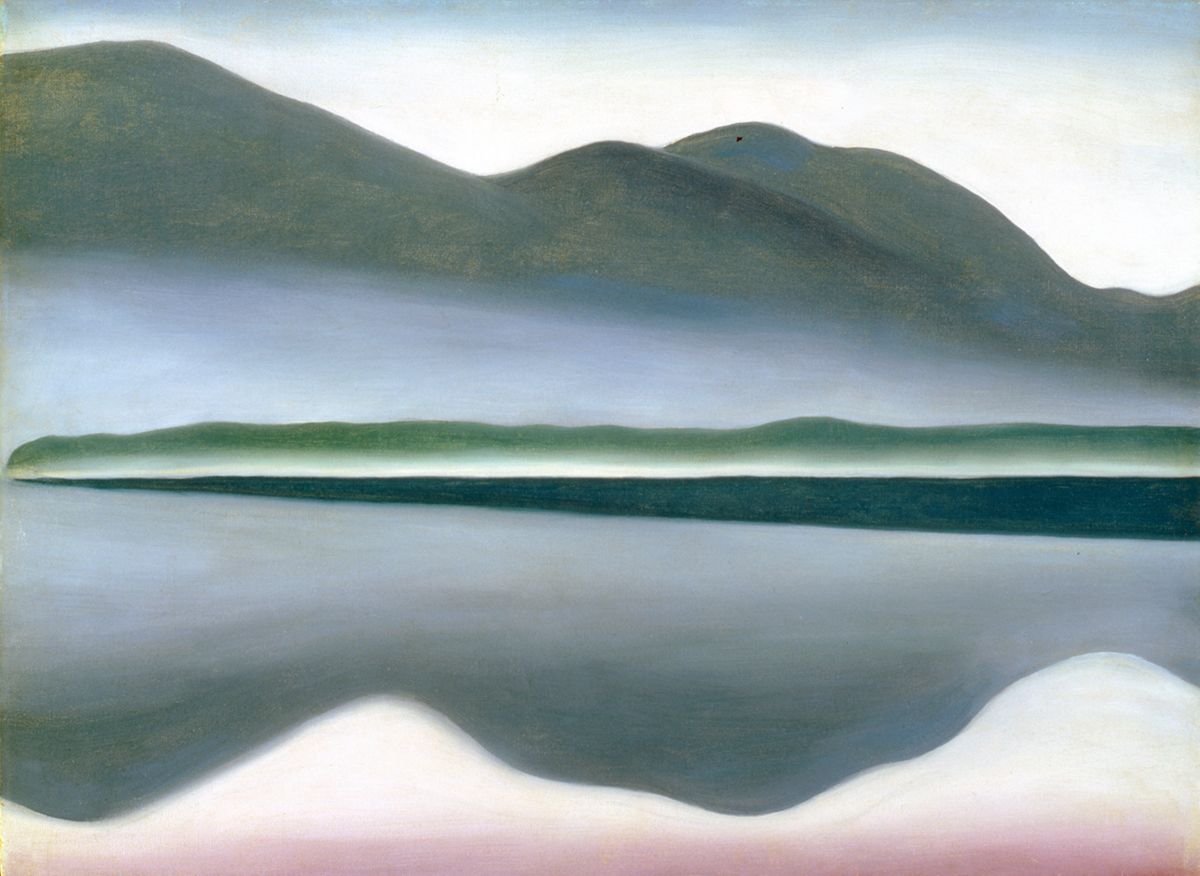 #40
#40
Lake george
Beneath its apparent evidence, "Lake George" constructs a very calculated relationship between proximity, distance and rhythm. The landscape is reduced to a few decisive relationships - horizon, curve, flat and distance - which preserve the sensation of a place without copying all the details. During the 1920s, it alternated floral enlargements, views of Lake George and New York verticals, affirming that an intimate motif can have the monumental power of architecture. Dated 1922, this painting today belongs to the San Francisco Museum of Modern Art (SFMOMA). The Georgia O'Keeffe Museum file, in the Access O'Keeffe catalog raisonné, allows you to verify the title, the dating, the catalog number and the holding institution. The image is only used to identify and comment on the work: Alpha Reproduction does not offer any reproduction of this painting. A click leads to the official website of the holding museum, which defines its own conditions of access and use. The painting therefore invites you to slow down: its clarity does not abolish the mystery, on the contrary it allows you to perceive the finest variations in shape and color.
Image: Georgia O'Keeffe Museum - Access O'Keeffe · Documentary consultation only; no reproduction offered by Alpha Reproduction.
See the museum website →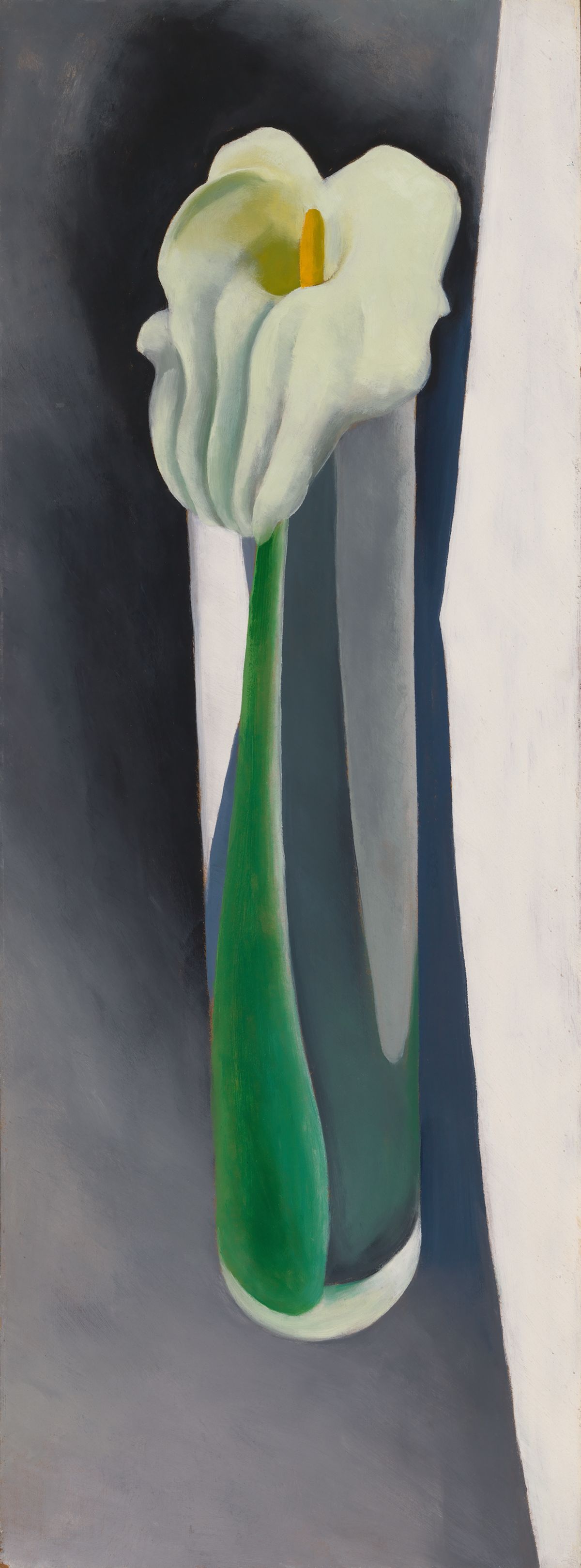 #41
#41
Calla Lily in Tall Glass - No. 2
With "Calla Lily in Tall Glass - No. 2", Georgia O'Keeffe transforms a precise pattern into an experience of duration, scale and color. Close framing does not transform the flower into a simple symbol: it forces us to look at its folds, its tensions and its passages of color as an autonomous landscape. During the 1920s, it alternated floral enlargements, views of Lake George and New York verticals, affirming that an intimate motif can have the monumental power of architecture. Dated 1923, this painting today belongs to Georgia O'Keeffe Museum. The Georgia O'Keeffe Museum file, in the Access O'Keeffe catalog raisonné, allows us to verify the title, the dating, the catalog number and the holding institution. The image is only used to identify and comment on the work: Alpha Reproduction does not offer any reproduction of this painting. A click leads to the official website of the holding museum, which defines its own conditions of access and use. The work thus remains concrete without becoming anecdotal: it requires less recognition of an object than testing the way in which it occupies the visual field.
Image: Georgia O'Keeffe Museum - Access O'Keeffe · Documentary consultation only; no reproduction offered by Alpha Reproduction.
See the museum website →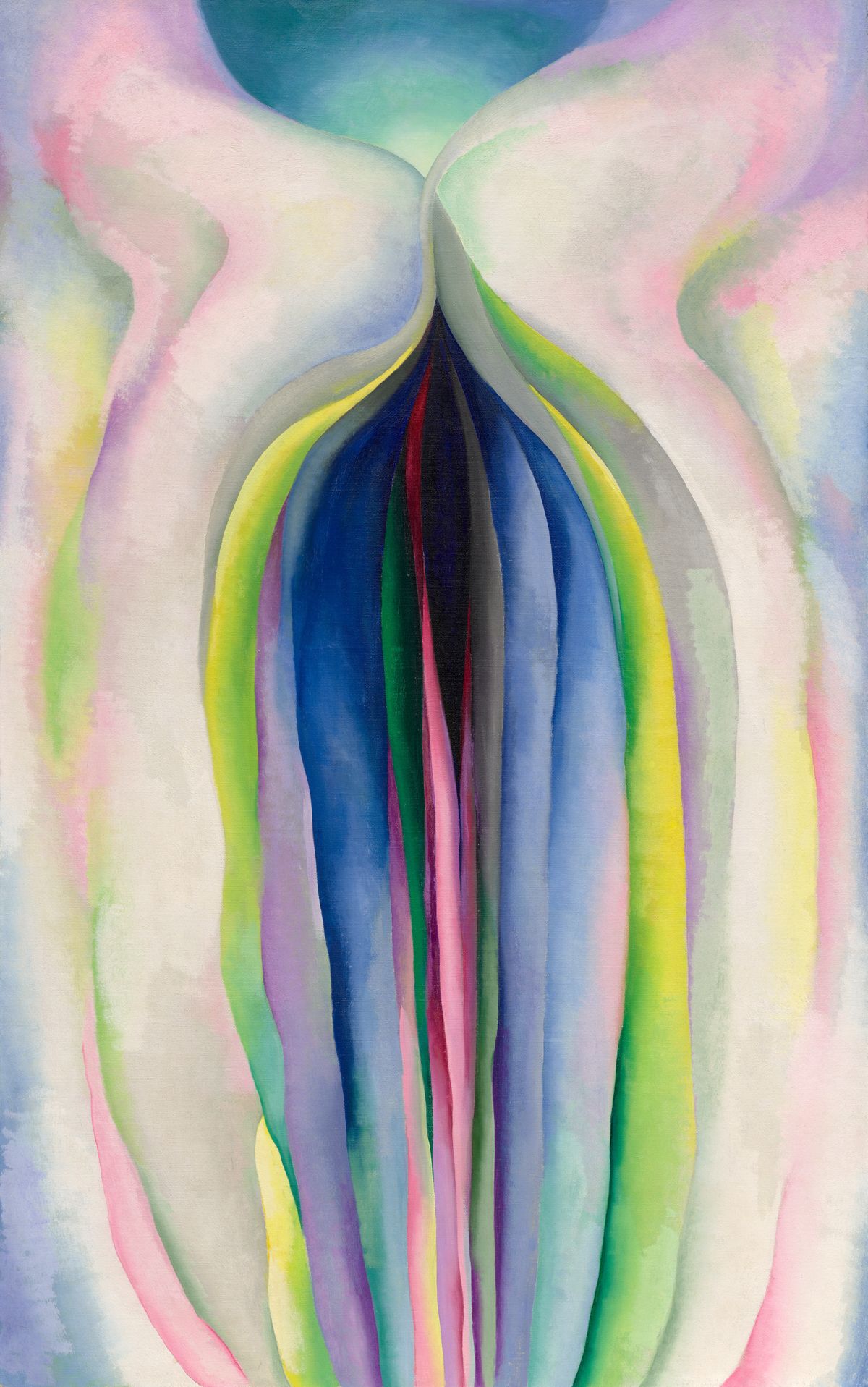 #42
#42
Gray Lines with Black, Blue and Yellow
"Grey Lines with Black, Blue and Yellow" shows how Georgia O'Keeffe knows how to condense a sensation into an immediately readable composition. The composition is based on a circulation of shapes and colors which reflects a sensation experienced without enclosing it in a literal description. During the 1920s, it alternated floral enlargements, views of Lake George and New York verticals, affirming that an intimate motif can have the monumental power of architecture. Dated 1923 -1925, this painting today belongs to The Museum of Fine Arts, Houston (MFA H). The Georgia O'Keeffe Museum file, in the Access O'Keeffe catalog raisonné, allows you to verify the title, dating, catalog number and holding institution. The image is only used to identify and comment on the work: Alpha Reproduction does not offer any reproduction of this painting. A click leads to the official website of the holding museum, which defines its own conditions of access and use. This tension explains its lasting presence: the image seems simple, but each outline modifies the relationship between what is close, what is distant and what goes beyond the frame.
Image: Georgia O'Keeffe Museum - Access O'Keeffe · Documentary consultation only; no reproduction offered by Alpha Reproduction.
See the museum website →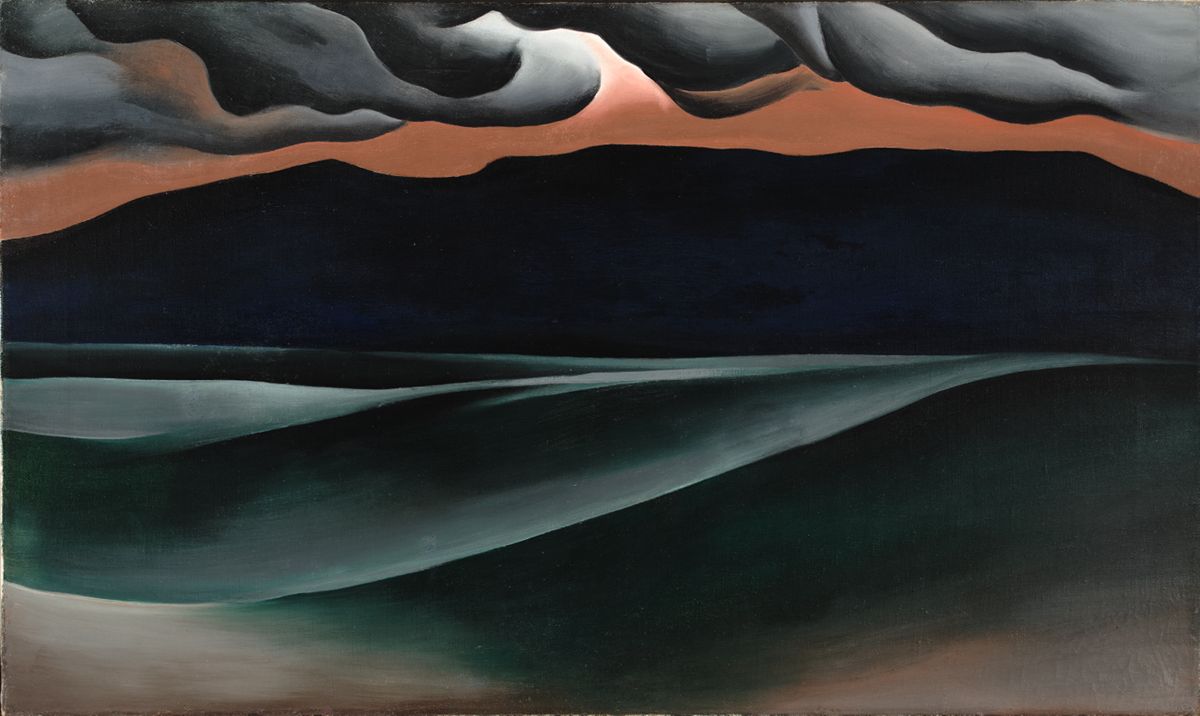 #43
#43
Storm Cloud, Lake George
In "Storm Cloud, Lake George", the gaze advances slowly between the contours, the flat areas and the intervals left open. The landscape is reduced to a few decisive relationships - horizon, curve, flat areas and distance - which preserve the sensation of a place without copying all the details. During the 1920s, it alternated floral enlargements, views of Lake George and New York verticals, affirming that an intimate motif can have the monumental power of architecture. Dated 1923, this painting today belongs to Georgia O'Keeffe Museum. The file for the Georgia O'Keeffe Museum, in the Access O'Keeffe catalog raisonné, allows you to verify the title, the dating, the number catalog and the holding institution. The image is only used to identify and comment on the work: Alpha Reproduction does not offer any reproduction of this painting. A click leads to the official website of the holding museum, which defines its own conditions of access and use. O'Keeffe does not deliver a fixed emblem; it constructs an experience of the gaze where the motif gains intensity as it is stripped of the accessory.
Image: Georgia O'Keeffe Museum - Access O'Keeffe · Documentary consultation only; no reproduction offered by Alpha Reproduction.
See the museum website →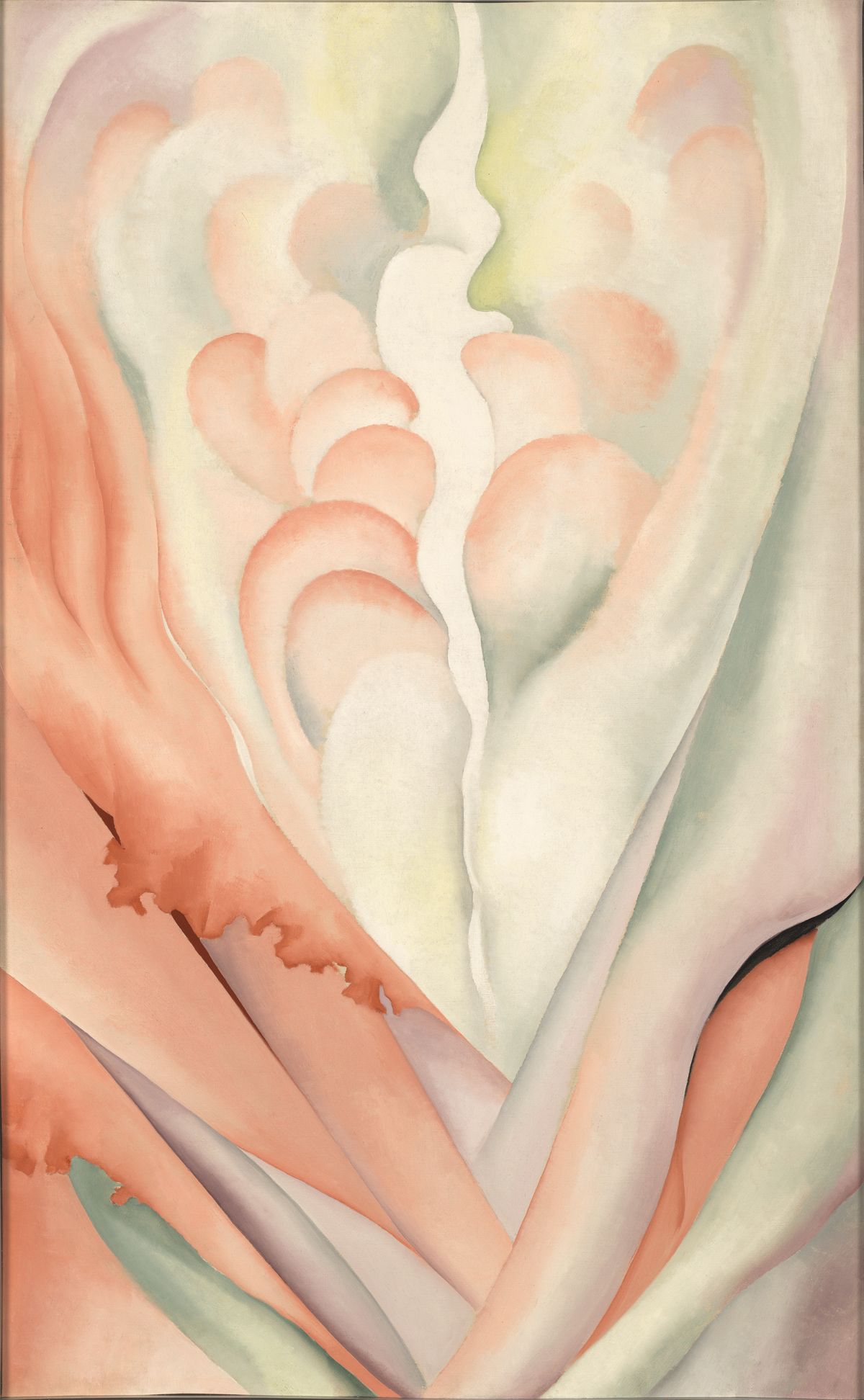 #44
#44
Flower Abstraction
The strength of "Flower Abstraction" comes from a balance between careful observation and voluntary simplification. Close framing does not transform the flower into a simple symbol: it forces us to look at its folds, its tensions and its passages of color as an autonomous landscape. During the 1920s, it alternated floral enlargements, views of Lake George and New York verticals, affirming that an intimate motif can have the monumental power of architecture. Dated 1924, this painting today belongs to Whitney Museum of American Art. The Georgia O'Keeffe Museum file, in the Access O'Keeffe catalog raisonné, allows you to verify the title, dating, number of catalog and the holding institution. The image is only used to identify and comment on the work: Alpha Reproduction does not offer any reproduction of this painting. A click leads to the official website of the holding museum, which defines its own conditions of access and use. The painting therefore invites you to slow down: its clarity does not abolish the mystery, on the contrary it allows you to perceive the finest variations in shape and color.
Image: Georgia O'Keeffe Museum - Access O'Keeffe · Documentary consultation only; no reproduction offered by Alpha Reproduction.
See the museum website →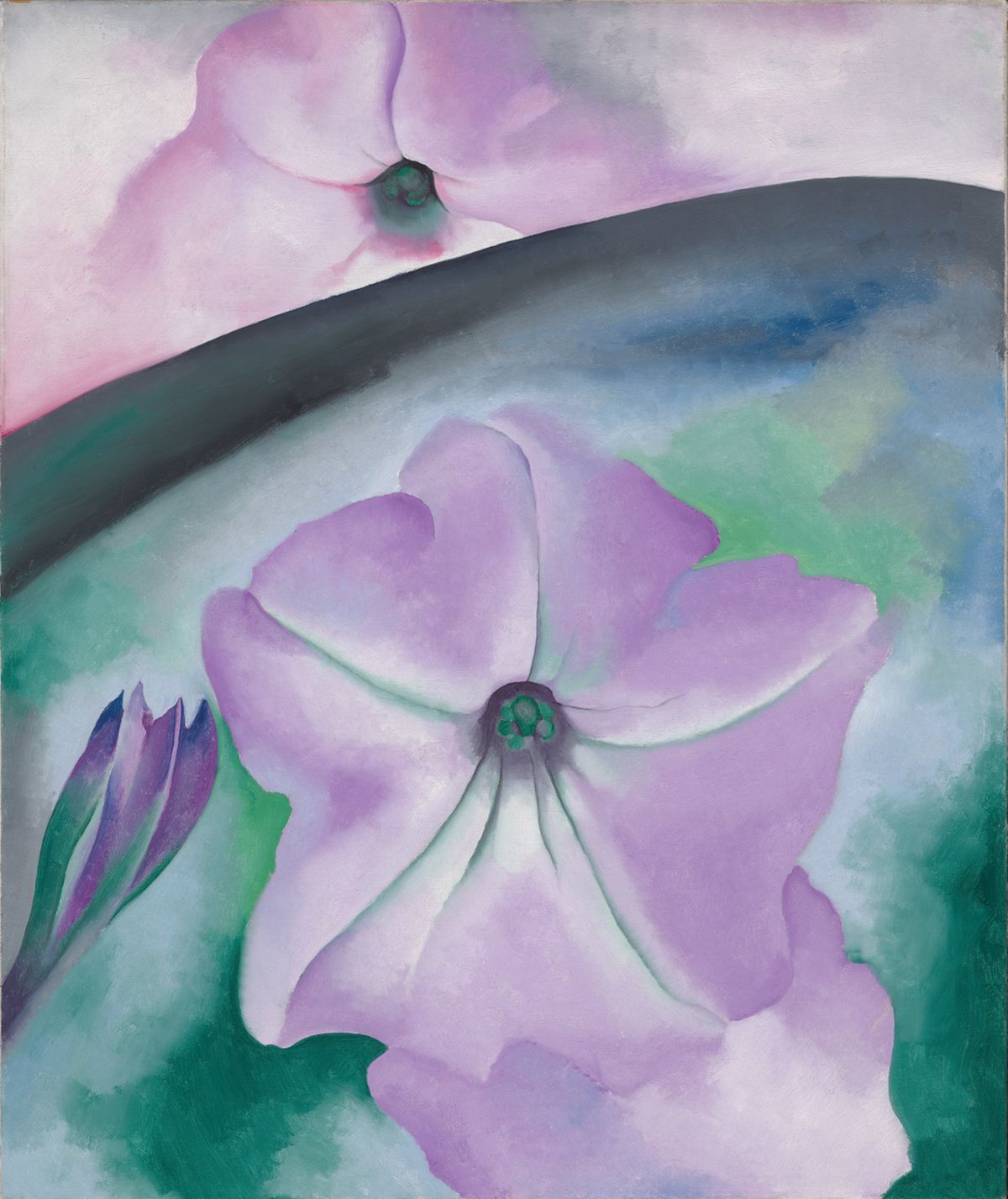 #45
#45
Petunia No. 2
Beneath its apparent evidence, "Petunia No. 2" constructs a very calculated relationship between proximity, distance and rhythm. The close framing does not transform the flower into a simple symbol: it forces us to look at its folds, its tensions and its passages of color as an autonomous landscape. During the 1920s, it alternated floral enlargements, views of Lake George and New York verticals, affirming that an intimate motif can have the monumental power of architecture. Dated 1924, this painting today belongs to Georgia O'Keeffe Museum. The file for the Georgia O'Keeffe Museum, in the Access O'Keeffe catalog raisonné, allows us to verify the title, dating, number of catalog and the holding institution. The image is only used to identify and comment on the work: Alpha Reproduction does not offer any reproduction of this painting. A click leads to the official website of the holding museum, which defines its own conditions of access and use. The work thus remains concrete without becoming anecdotal: it requires less recognition of an object than testing the way in which it occupies the visual field.
Image: Georgia O'Keeffe Museum - Access O'Keeffe · Documentary consultation only; no reproduction offered by Alpha Reproduction.
See the museum website →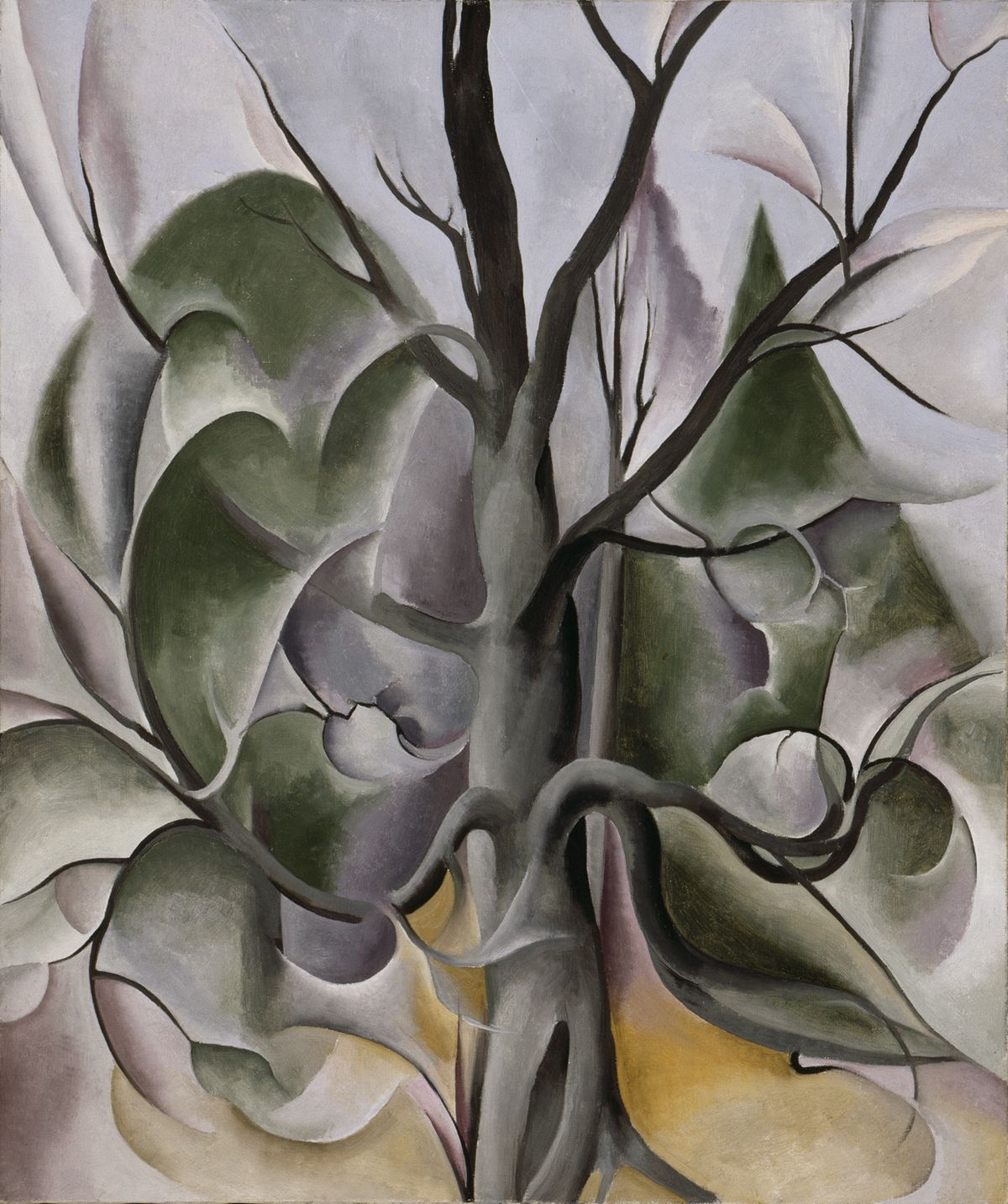 #46
#46
Gray Tree, Lake George
With "Grey Tree, Lake George", Georgia O'Keeffe transforms a precise pattern into an experience of duration, scale and color. The landscape is reduced to a few decisive relationships - horizon, curve, flat and distance - which preserve the sensation of a place without copying all the details. During the 1920s, she alternated floral enlargements, views of Lake George and New York verticals, affirming that an intimate motif can have the monumental power of architecture. Dated 1925, this painting today belongs to Metropolitan Museum of Art (The Met). The Georgia O'Keeffe Museum's file, in the Access O'Keeffe catalog raisonné, allows you to verify the title, the dating, and the catalog number and the holding institution. The image is only used to identify and comment on the work: Alpha Reproduction does not offer any reproduction of this painting. A click leads to the official website of the holding museum, which defines its own conditions of access and use. This tension explains its lasting presence: the image seems simple, but each outline modifies the relationship between what is close, what is distant and what goes beyond the frame.
Image: Georgia O'Keeffe Museum - Access O'Keeffe · Documentary consultation only; no reproduction offered by Alpha Reproduction.
See the museum website →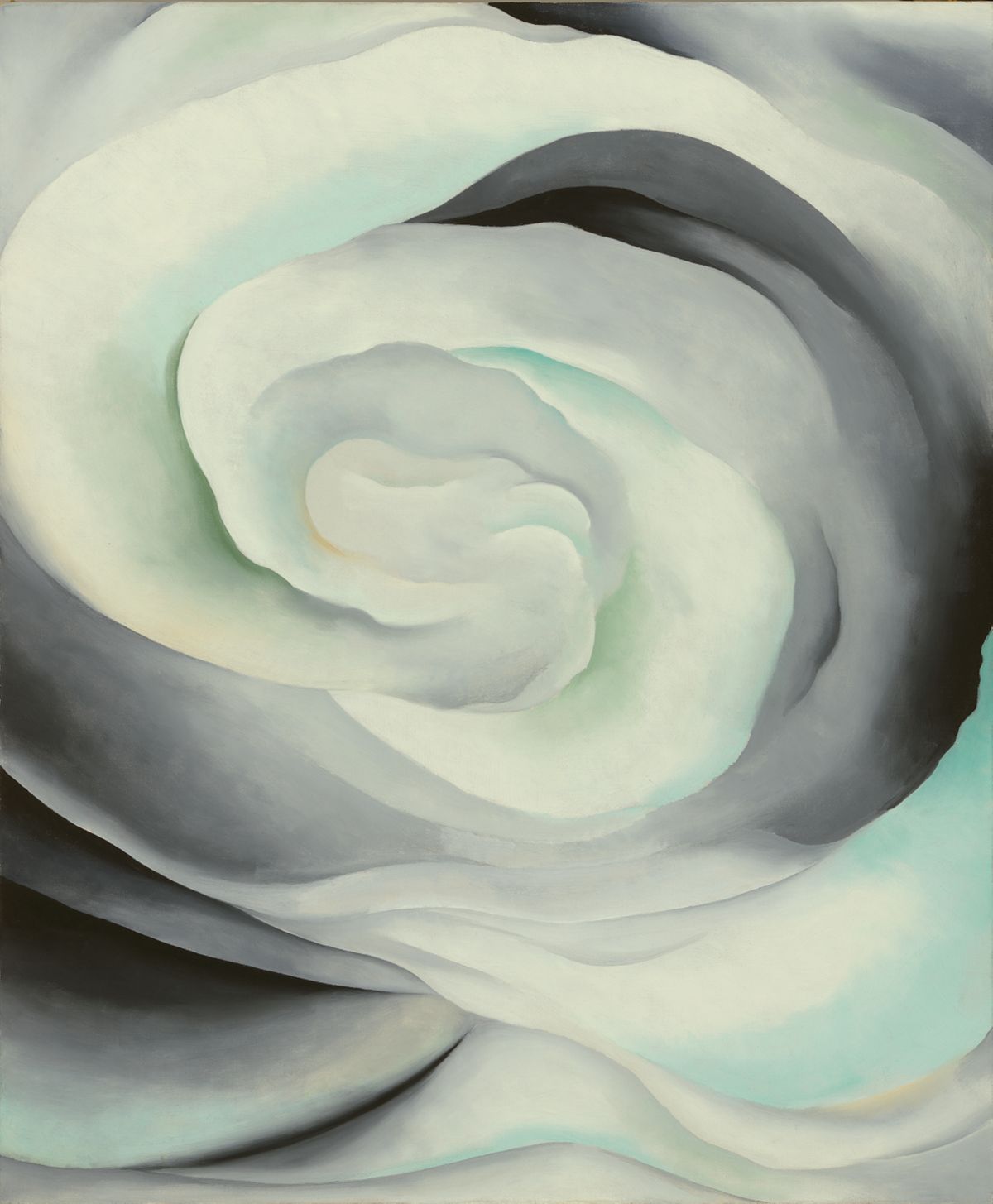 #47
#47
White Rose Abstraction
"Abstraction White Rose" shows how Georgia O'Keeffe knows how to condense a sensation into an immediately readable composition. The composition is based on a circulation of shapes and colors which reflects a sensation experienced without enclosing it in a literal description. During the 1920s, it alternated floral enlargements, views of Lake George and New York verticals, affirming that an intimate motif can have the monumental power of architecture. Dated 1927, this painting today belongs to Georgia O'Keeffe Museum. The Georgia O'Keeffe Museum file, in the Access O'Keeffe catalog raisonné, allows you to verify the title, dating and catalog number and the holding institution. The image is only used to identify and comment on the work: Alpha Reproduction does not offer any reproduction of this painting. A click leads to the official website of the holding museum, which defines its own conditions of access and use. O'Keeffe does not deliver a fixed emblem; it constructs an experience of the gaze where the motif gains intensity as it is stripped of the accessory.
Image: Georgia O'Keeffe Museum - Access O'Keeffe · Documentary consultation only; no reproduction offered by Alpha Reproduction.
See the museum website →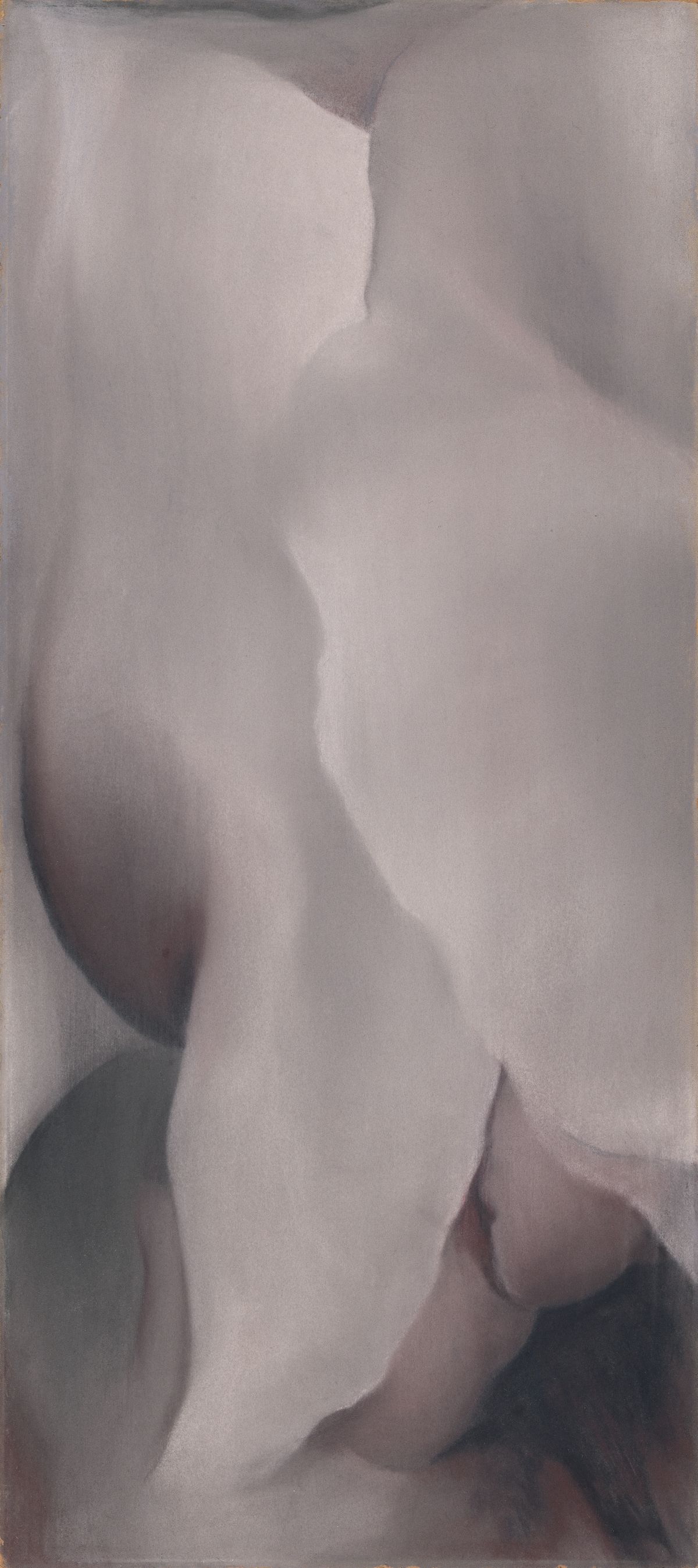 #48
#48
Dark Iris No. III
In "Dark Iris No. III", the gaze advances slowly between the contours, the flat areas and the intervals left open. The close framing does not transform the flower into a simple symbol: it forces us to look at its folds, its tensions and its passages of color like an autonomous landscape. During the 1920s, it alternated floral enlargements, views of Lake George and New York verticals, affirming that an intimate motif can have the monumental power of architecture. Dated 1927, this painting today belongs to Georgia O'Keeffe Museum. The file for the Georgia O'Keeffe Museum, in the Access O'Keeffe catalog raisonné, allows us to verify the title, the dating, the number of catalog and the holding institution. The image is only used to identify and comment on the work: Alpha Reproduction does not offer any reproduction of this painting. A click leads to the official website of the holding museum, which defines its own conditions of access and use. The painting therefore invites you to slow down: its clarity does not abolish the mystery, on the contrary it allows you to perceive the finest variations in shape and color.
Image: Georgia O'Keeffe Museum - Access O'Keeffe · Documentary consultation only; no reproduction offered by Alpha Reproduction.
See the museum website →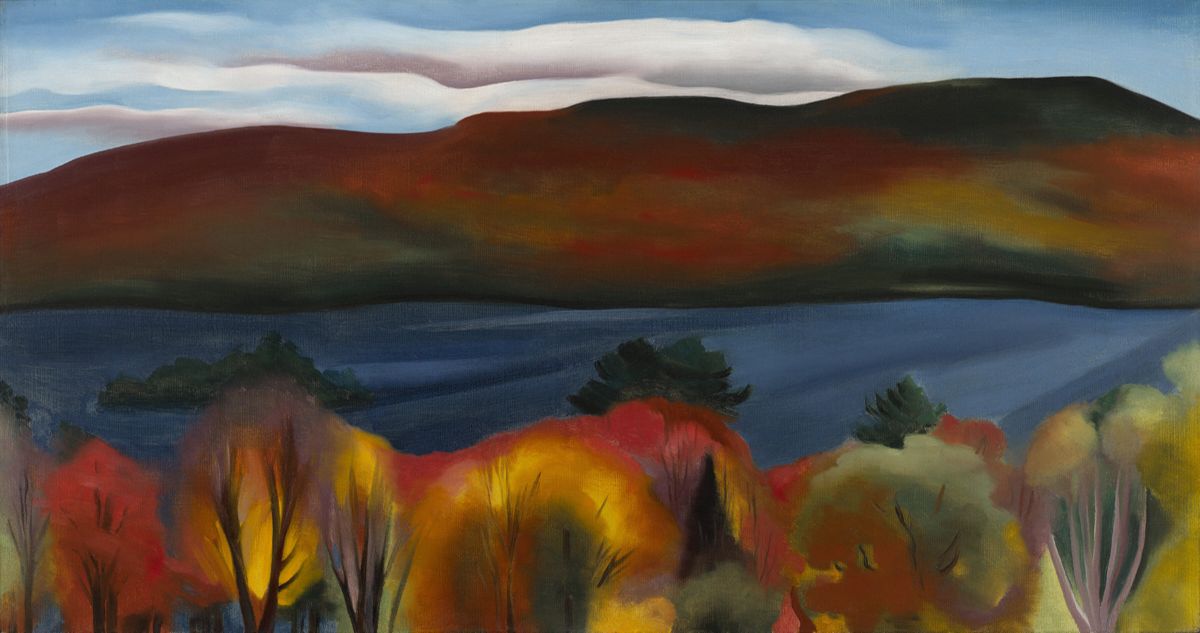 #49
#49
Lake george autumn
The strength of "Lake George Autumn" comes from a balance between careful observation and voluntary simplification. The landscape is reduced to a few decisive relationships - horizon, curve, flat areas and distance - which preserve the sensation of a place without copying all the details. During the 1920s, it alternated floral enlargements, views of Lake George and New York verticals, affirming that an intimate motif can have the monumental power of architecture. Dated 1927, this painting today belongs to Milwaukee Art Museum. The Georgia O'Keeffe Museum file, in the Access O'Keeffe catalog raisonné, allows you to verify the title, dating, catalog number and the holding institution. The image is only used to identify and comment on the work: Alpha Reproduction does not offer any reproduction of this painting. A click leads to the official website of the holding museum, which defines its own conditions of access and use. The work thus remains concrete without becoming anecdotal: it requires less recognition of an object than testing the way in which it occupies the visual field.
Image: Georgia O'Keeffe Museum - Access O'Keeffe · Documentary consultation only; no reproduction offered by Alpha Reproduction.
See the museum website →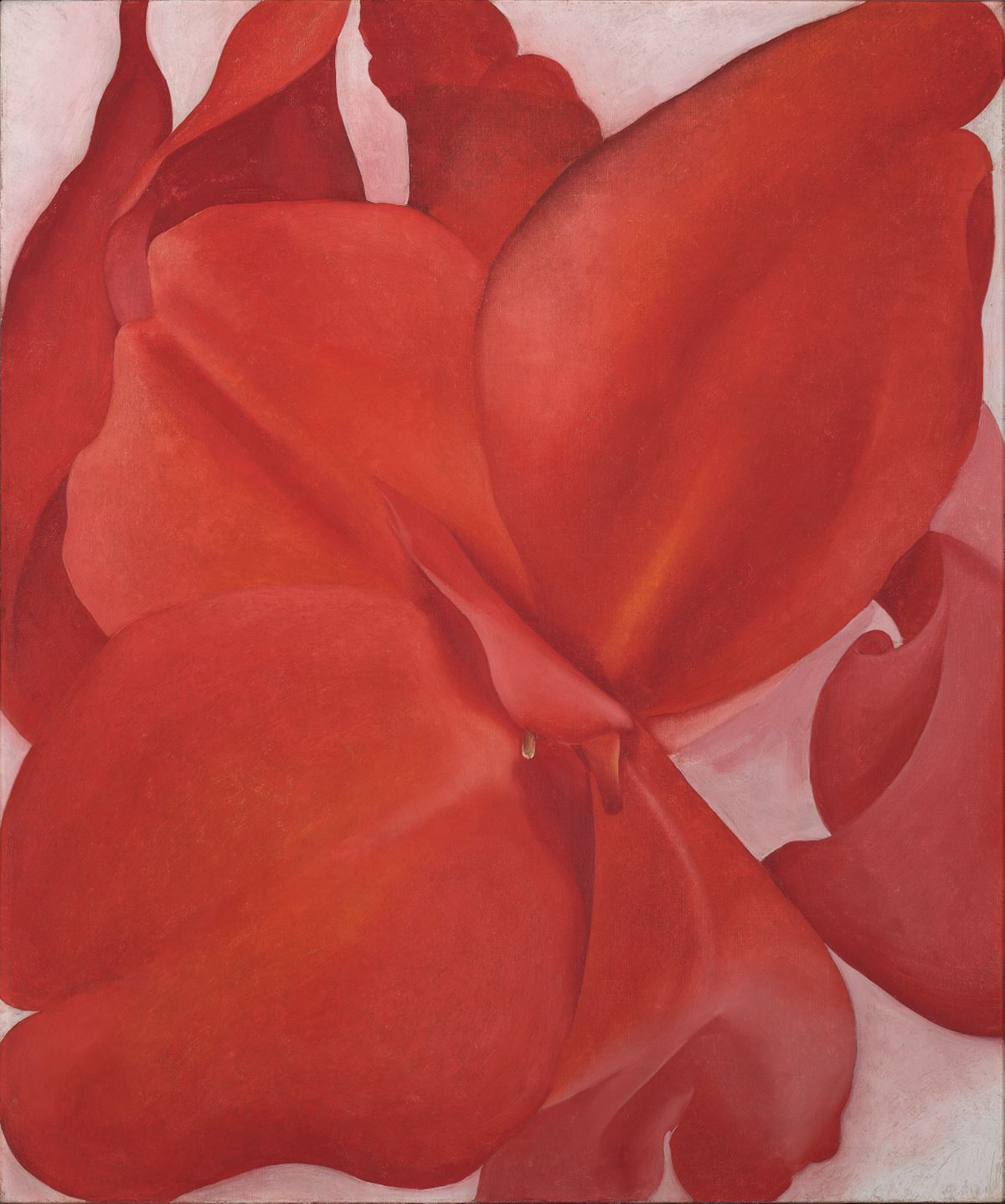 #50
#50
Red Cannas
Beneath its apparent evidence, "Red Cannas" constructs a very calculated relationship between proximity, distance and rhythm. The close framing does not transform the flower into a simple symbol: it forces us to look at its folds, its tensions and its passages of color as an autonomous landscape. During the 1920s, it alternated floral enlargements, views of Lake George and New York verticals, affirming that an intimate motif can have the monumental power of architecture. Dated 1927, this painting today belongs to Amon Carter Museum of American Art. The Georgia O'Keeffe Museum file, in the Access O'Keeffe catalog raisonné, allows us to verify the title, the dating, the catalog number and the holding institution. The image is only used to identify and comment on the work: Alpha Reproduction does not offer any reproduction of this painting. A click leads to the official website of the holding museum, which defines its own conditions of access and use. This tension explains its lasting presence: the image seems simple, but each outline modifies the relationship between what is close, what is distant and what goes beyond the frame.
Image: Georgia O'Keeffe Museum - Access O'Keeffe · Documentary consultation only; no reproduction offered by Alpha Reproduction.
See the museum website →Bones, Red Hills, Pedernal and New Mexico locations become ever-changing series.
 #51
#51
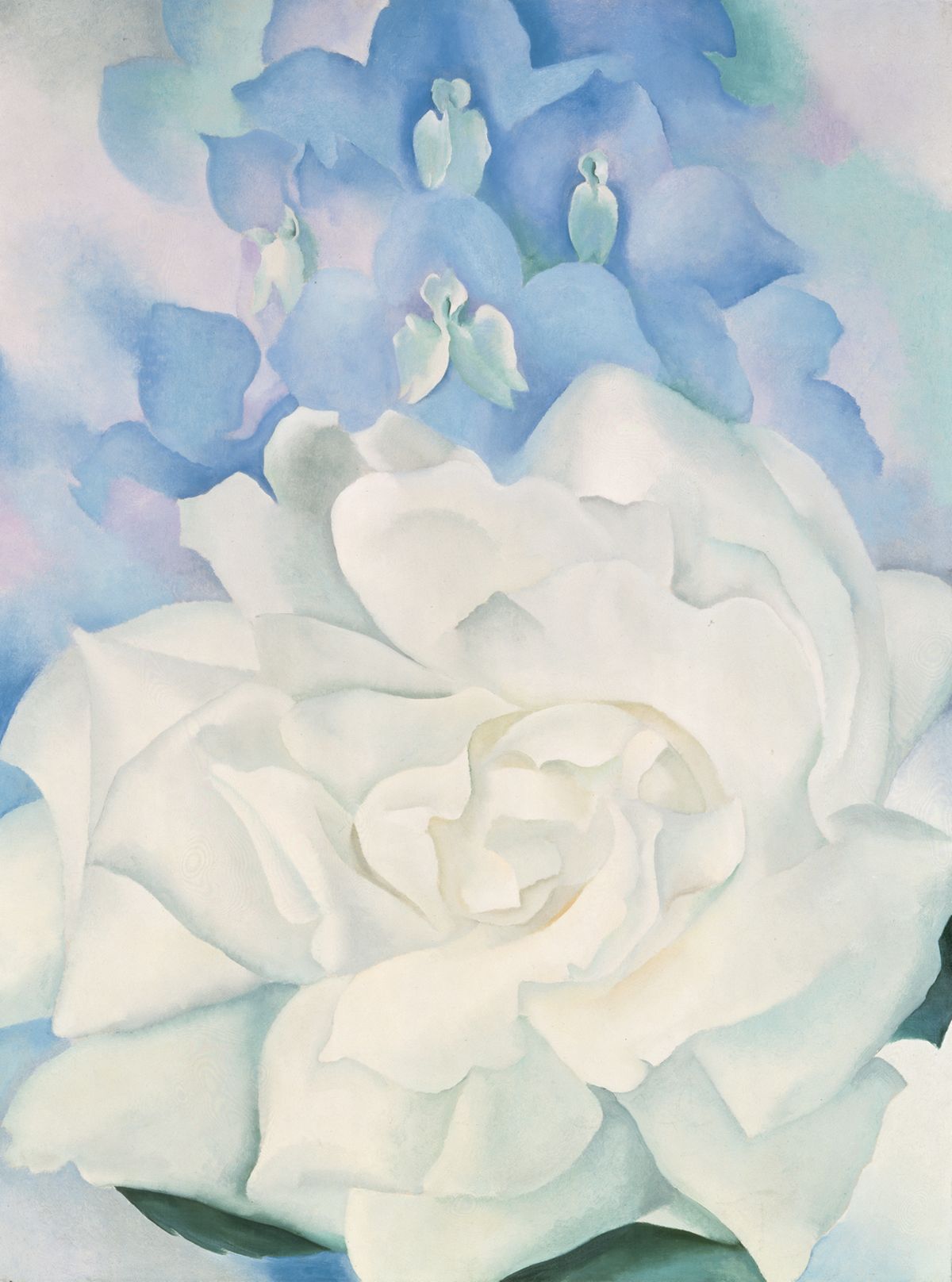
White Rose with Larkspur No. II
With "White Rose with Larkspur No. II", Georgia O'Keeffe transforms a precise pattern into an experience of duration, scale and color. The composition is based on a circulation of shapes and colors which reflects a sensation experienced without enclosing it in a literal description. During the 1920s, it alternated floral enlargements, views of Lake George and New York verticals, affirming that an intimate motif can have the monumental power of architecture. Dated 1927, this painting today belongs to the Museum of Fine Arts (MFA Boston). The Georgia O'Keeffe Museum file, in the Access O'Keeffe catalog raisonné, allows you to verify the title, the dating, the number catalog and the holding institution. The image is only used to identify and comment on the work: Alpha Reproduction does not offer any reproduction of this painting. A click leads to the official website of the holding museum, which defines its own conditions of access and use. O'Keeffe does not deliver a fixed emblem; it constructs an experience of the gaze where the motif gains intensity as it is stripped of the accessory.
Image: Georgia O'Keeffe Museum - Access O'Keeffe · Documentary consultation only; no reproduction offered by Alpha Reproduction.
See the museum website →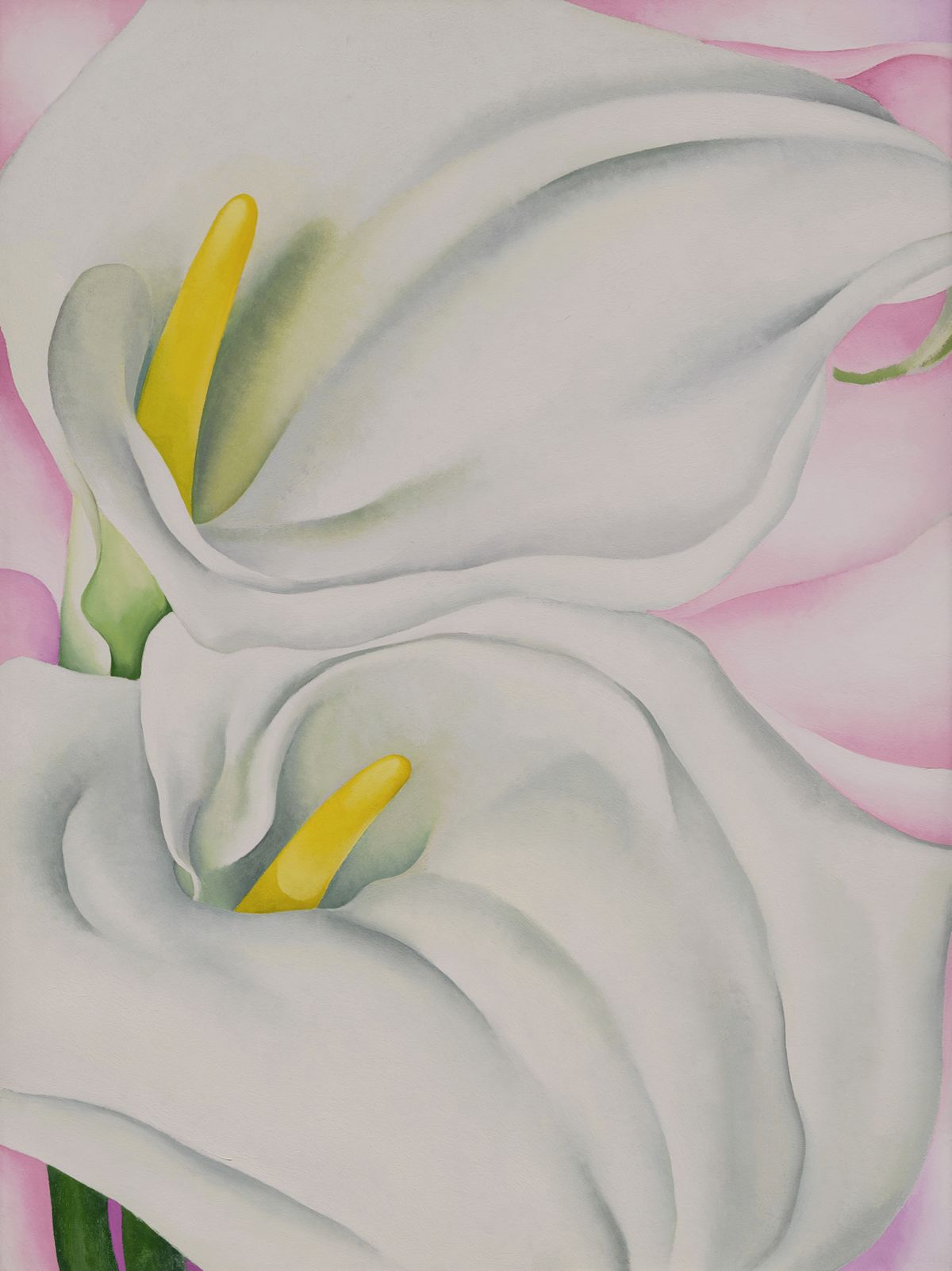 #52
#52
2 Calla Lilies on Pink
"2 Calla Lilies on Pink" shows how Georgia O'Keeffe knows how to condense a sensation into an immediately readable composition. Close framing does not transform the flower into a simple symbol: it forces us to look at its folds, its tensions and its passages of color as an autonomous landscape. During the 1920s, it alternated floral enlargements, views of Lake George and New York verticals, affirming that an intimate motif can have the monumental power of architecture. Dated 1928, this painting today belongs to Philadelphia Museum of Art. The Georgia O'Keeffe Museum file, in the Access O'Keeffe catalog raisonné, allows us to verify the title, the dating, the catalog number and the holding institution. The image is only used to identify and comment on the work: Alpha Reproduction does not offer any reproduction of this painting. A click leads to the official website of the holding museum, which defines its own conditions of access and use. The painting therefore invites you to slow down: its clarity does not abolish the mystery, on the contrary it allows you to perceive the finest variations in shape and color.
Image: Georgia O'Keeffe Museum - Access O'Keeffe · Documentary consultation only; no reproduction offered by Alpha Reproduction.
See the museum website →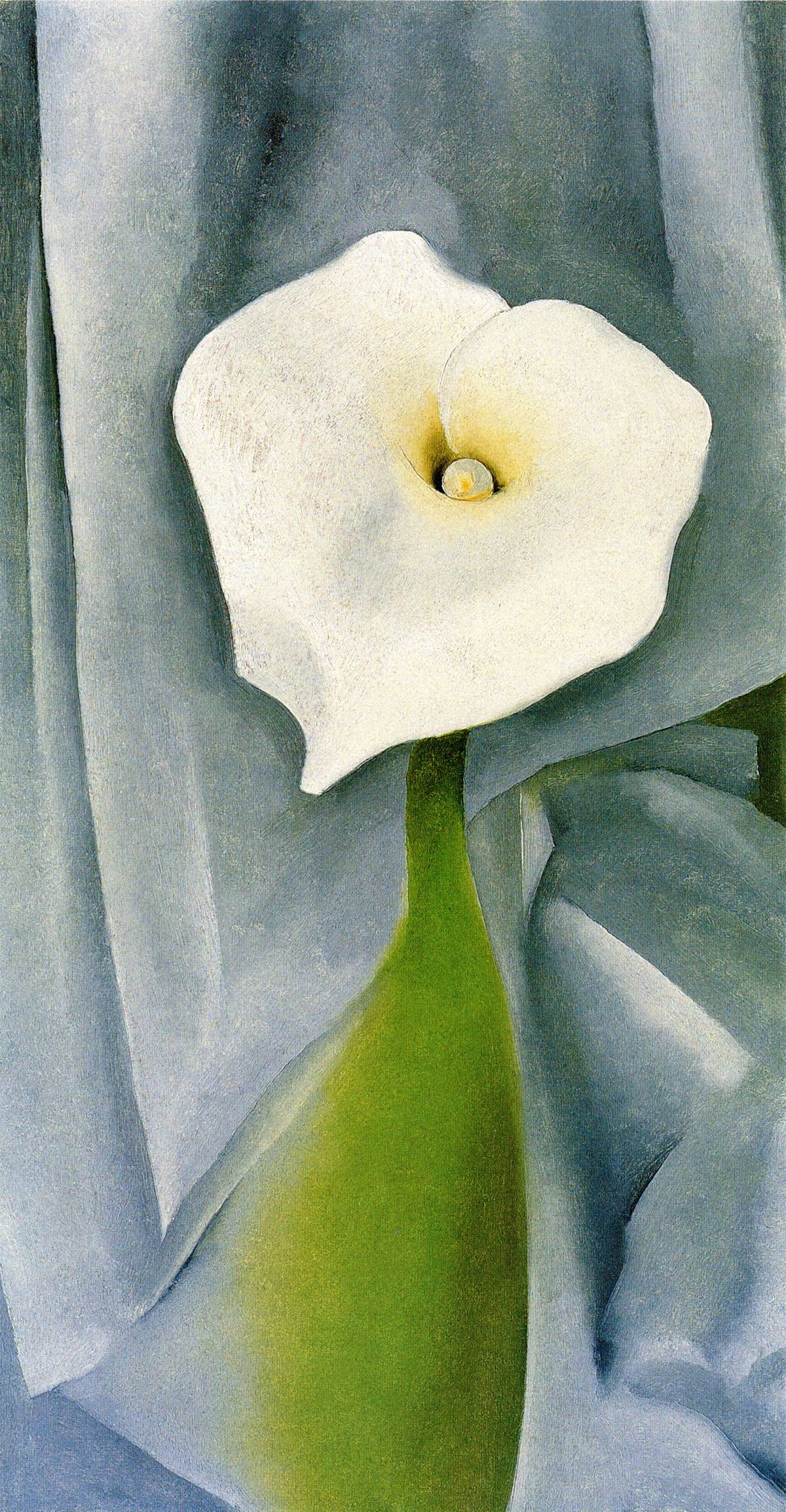 #53
#53
Calla Lily on Grey
In "Calla Lily on Grey", the gaze advances slowly between the contours, the flat areas and the intervals left open. The close framing does not transform the flower into a simple symbol: it forces us to look at its folds, its tensions and its passages of color like an autonomous landscape. During the 1920s, it alternated floral enlargements, views of Lake George and New York verticals, affirming that an intimate motif can have the monumental power of architecture. Dated 1928, this painting today belongs to the Museum of Fine Arts (MFA Boston). The Georgia O'Keeffe Museum file, in the Access O'Keeffe catalog raisonné, allows us to verify the title, the dating, the catalog number and the holding institution. The image is only used to identify and comment on the work: Alpha Reproduction does not offer any reproduction of this painting. A click leads to the official website of the holding museum, which defines its own conditions of access and use. The work thus remains concrete without becoming anecdotal: it requires less recognition of an object than testing the way in which it occupies the visual field.
Image: Georgia O'Keeffe Museum - Access O'Keeffe · Documentary consultation only; no reproduction offered by Alpha Reproduction.
See the museum website →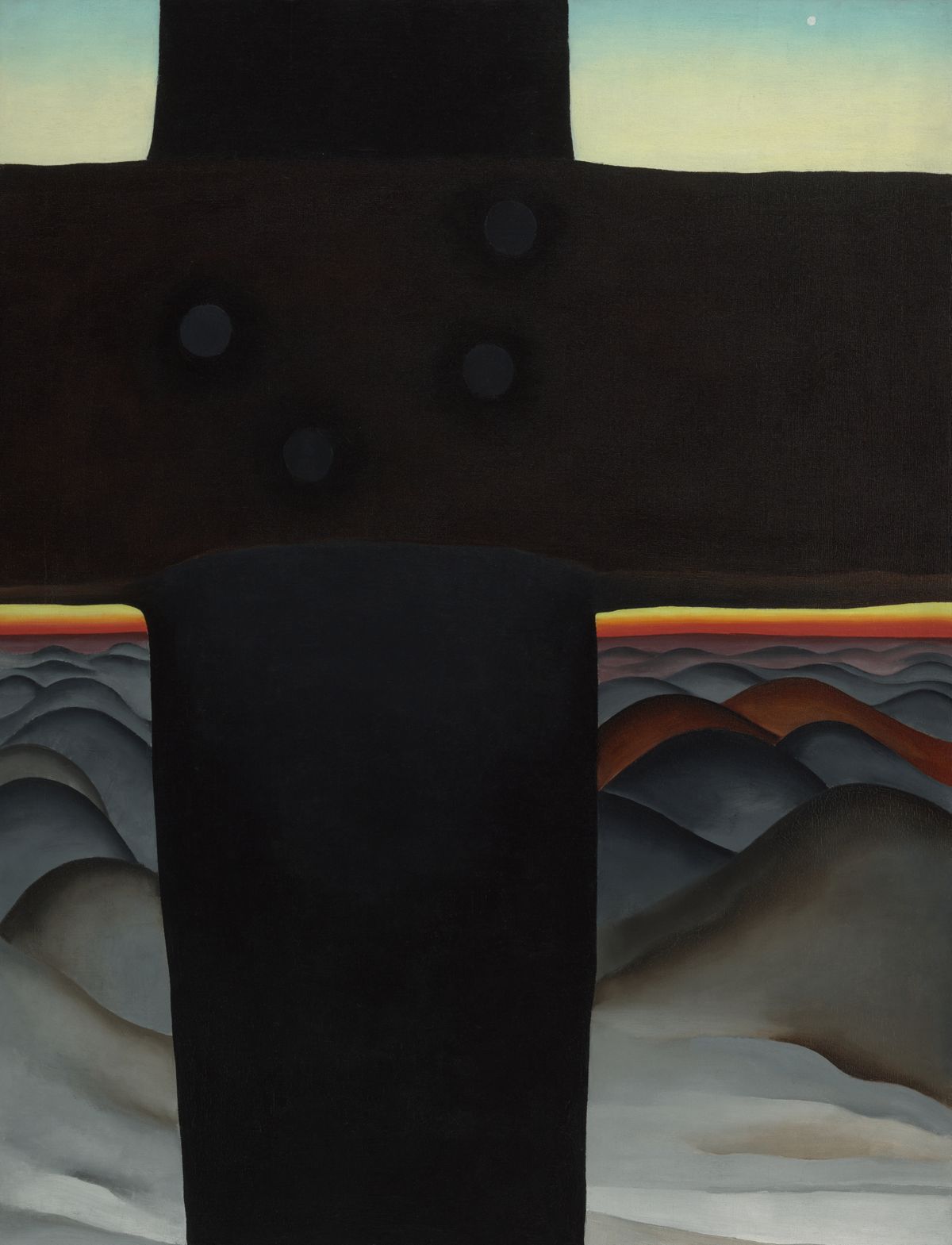 #54
#54
Black Cross
The strength of "Black Cross" comes from a balance between careful observation and voluntary simplification. The landscape is reduced to a few decisive relationships - horizon, curve, flat areas and distance - which preserve the sensation of a place without copying all the details. During the 1920s, it alternated floral enlargements, views of Lake George and New York verticals, affirming that an intimate motif can have the monumental power of architecture. Dated 1929, this painting today belongs to the Art Institute of Chicago. Dated 1929, this painting belongs to the art Institute of Chicago today. The Georgia O'Keeffe Museum file, in the Access O'Keeffe catalog raisonné, allows you to verify the title, dating, catalog number and the holding institution. The image is only used to identify and comment on the work: Alpha Reproduction does not offer any reproduction of this painting. A click leads to the official website of the holding museum, which defines its own conditions of access and use. This tension explains its lasting presence: the image seems simple, but each outline modifies the relationship between what is close, what is distant and what goes beyond the frame.
Image: Georgia O'Keeffe Museum - Access O'Keeffe · Documentary consultation only; no reproduction offered by Alpha Reproduction.
See the museum website →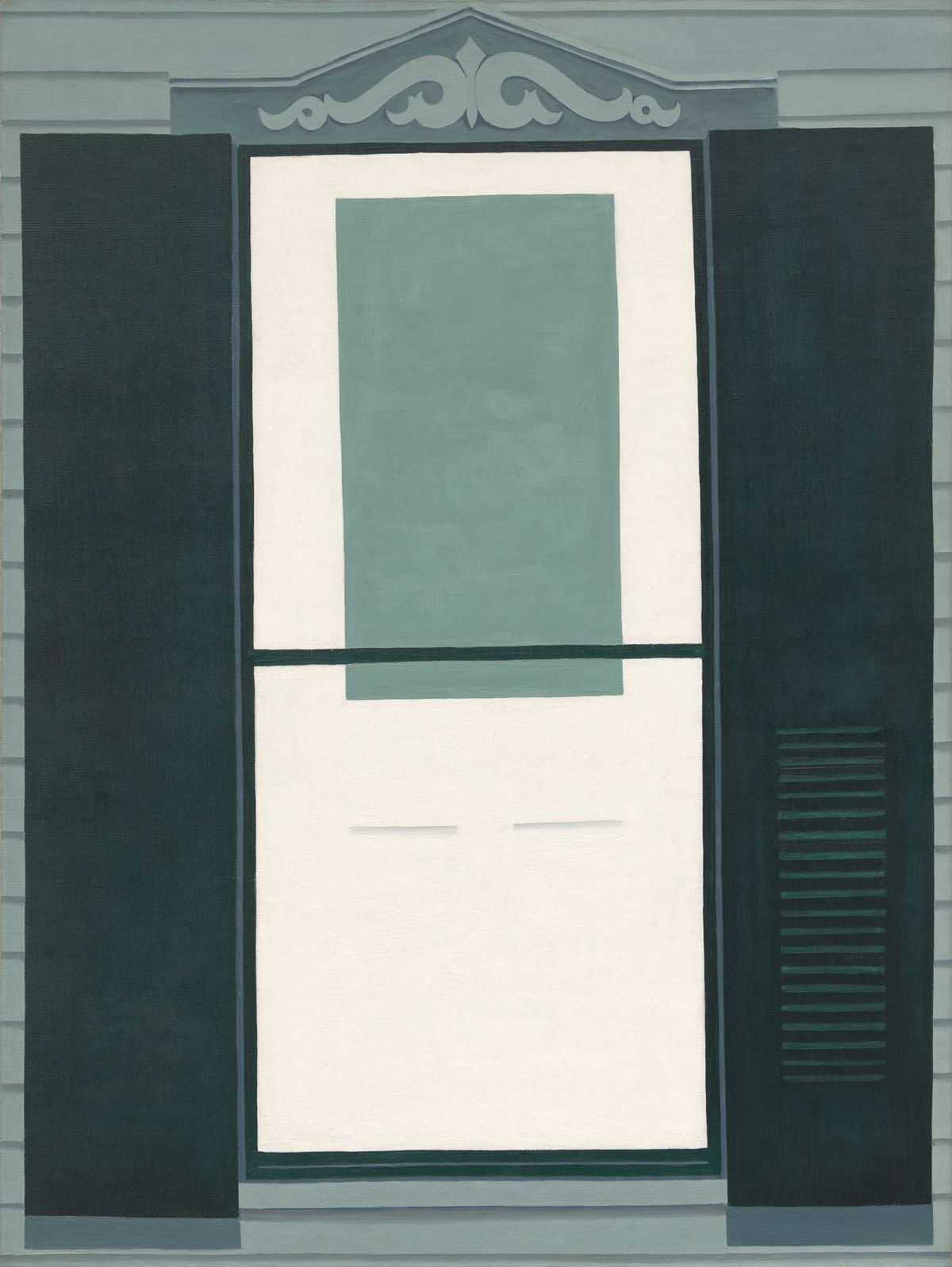 #55
#55
Farmhouse Window and Door
Beneath its apparent evidence, "Farmhouse Window and Door" constructs a very calculated relationship between proximity, distance and rhythm. O'Keeffe simplifies architecture to the point of making facades, streets and built masses a vertical rhythm where light measures modern space. During the 1920s, she alternated floral enlargements, views of Lake George and New York verticals, asserting that an intimate motif can have the monumental power of architecture. Dated 1929, this painting today belongs to the Museum of Modern Art (MoMA). The Georgia O'Keeffe Museum file, in the Access O'Keeffe catalog raisonné, allows you to verify the title, dating, and number of catalog and the holding institution. The image is only used to identify and comment on the work: Alpha Reproduction does not offer any reproduction of this painting. A click leads to the official website of the holding museum, which defines its own conditions of access and use. O'Keeffe does not deliver a fixed emblem; it constructs an experience of the gaze where the motif gains intensity as it is stripped of the accessory.
Image: Georgia O'Keeffe Museum - Access O'Keeffe · Documentary consultation only; no reproduction offered by Alpha Reproduction.
See the museum website →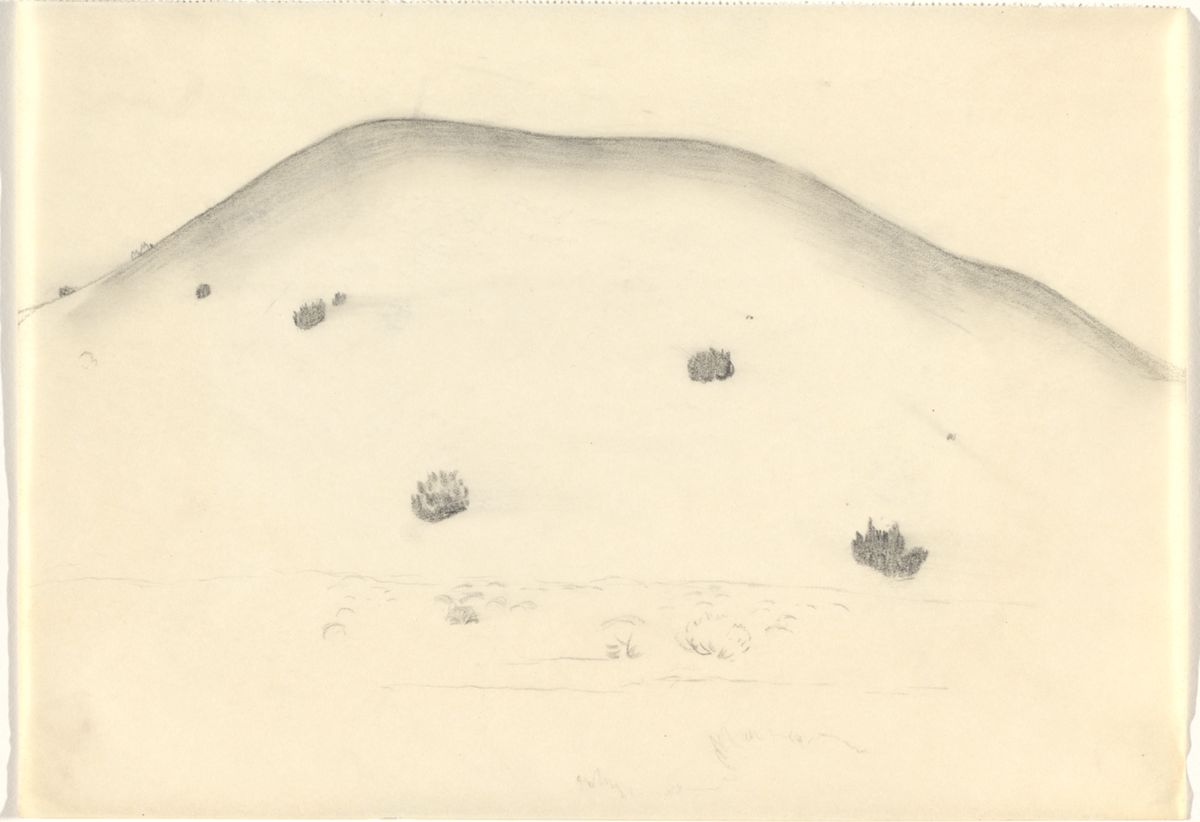 #56
#56
Hill - Alcalde I
With "Hill - Alcalde I", Georgia O'Keeffe transforms a precise pattern into an experience of duration, scale and color. The landscape is reduced to a few decisive relationships - horizon, curve, flat and distance - which preserve the sensation of a place without copying all the details. During the 1920s, she alternated floral enlargements, views of Lake George and New York verticals, affirming that an intimate motif can have the monumental power of architecture. Dated 1929 -1930, this painting today belongs to Georgia O'Keeffe Museum. The file for the Georgia O'Keeffe Museum, dated 1929 -1930, this painting belongs today to Georgia O'Keeffe Museum. The file for the Georgia O'Keeffe Museum, in the Access O'Keeffe catalog raisonné, allows you to verify the title, dating, number of catalog and the holding institution. The image is only used to identify and comment on the work: Alpha Reproduction does not offer any reproduction of this painting. A click leads to the official website of the holding museum, which defines its own conditions of access and use. The painting therefore invites you to slow down: its clarity does not abolish the mystery, on the contrary it allows you to perceive the finest variations in shape and color.
Image: Georgia O'Keeffe Museum - Access O'Keeffe · Documentary consultation only; no reproduction offered by Alpha Reproduction.
See the museum website → #57
#57
Black Flower and Blue Larkspur
"Black Flower and Blue Larkspur" shows how Georgia O'Keeffe knows how to condense a sensation into an immediately readable composition. The close framing does not transform the flower into a simple symbol: it forces us to look at its folds, its tensions and its passages of color like an autonomous landscape. After his first stays in New Mexico, his vocabulary expanded to the hills, bones and flowers of the desert, assembled without losing their physical precision. After his first stays in New Mexico, his vocabulary expanded to the hills, bones and flowers of the desert, assembled without losing their physical precision. After his first stays in New Mexico, his vocabulary expanded to the hills, bones and flowers of the desert, assembled without losing their physical precision. After his first stays in New Mexico, his vocabulary expanded to the hills, bones and flowers of the desert, assembled without losing their physical precision. After his first stays in New Mexico, his vocabulary expanded to the hills, bones and flowers of the desert, assembled without losing their physical precision. Dated 1930, this painting today belongs to the Metropolitan Museum of Art (The Met). The Georgia O'Keeffe Museum file, in the Access O'Keeffe catalog raisonné, allows you to check the title, the dating, the catalog number and the holding institution. The image is only used to identify and comment on the work: Alpha Reproduction does not offer any reproduction of this painting. A click leads to the official website of the holding museum, which defines its own conditions of access and use. The work thus remains concrete without becoming anecdotal: it requires less recognition of an object than testing the way in which it occupies the visual field.
Image: Georgia O'Keeffe Museum - Access O'Keeffe · Documentary consultation only; no reproduction offered by Alpha Reproduction.
See the museum website →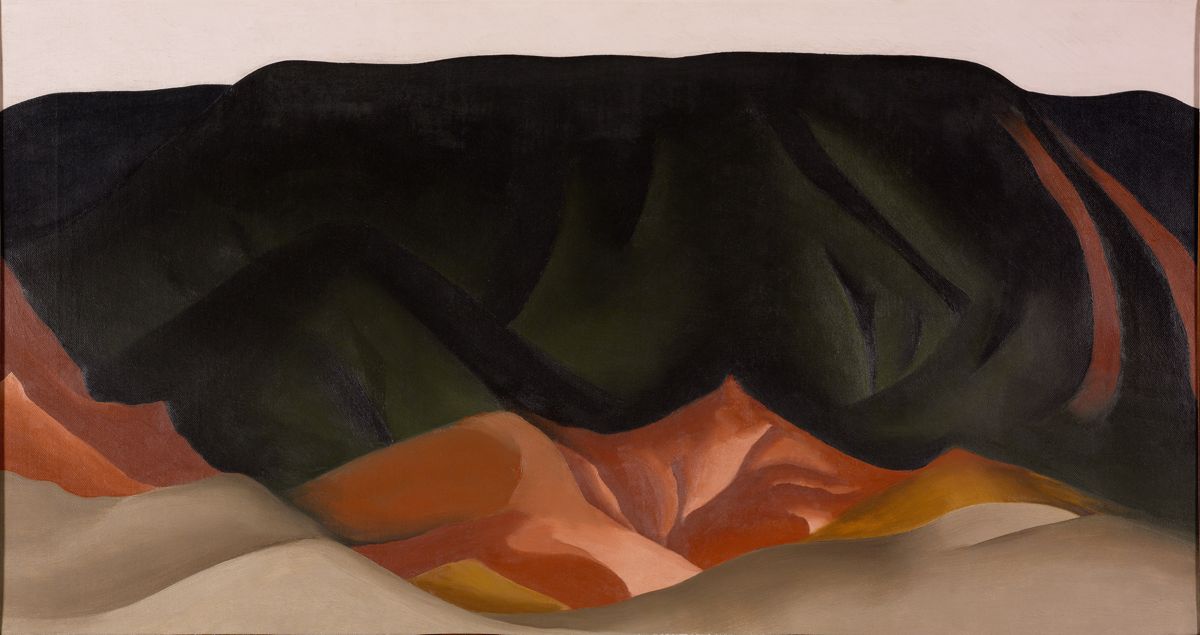 #58
#58
Dark Mesa with Pink Sky
In "Dark Mesa with Pink Sky", the gaze advances slowly between the contours, the flat areas and the intervals left open. The landscape is reduced to a few decisive relationships - horizon, curve, flat areas and distance - which preserve the sensation of a place without copying all the details. After his first stays in New Mexico, his vocabulary expanded to the hills, bones and flowers of the desert, assembled without losing their physical precision. After his first stays in New Mexico, his vocabulary expanded to the hills, bones and flowers of the desert, assembled without losing their physical precision. After his first stays in New Mexico, his vocabulary expanded to the hills, bones and flowers of the desert, assembled without losing their physical precision. Dated 1930, this painting today belongs to the Amon Carter Museum of American Art. After his first stays in New Mexico, his vocabulary expanded to the hills, bones and flowers of the desert, assembled without losing their physical precision. Dated 1930, this painting now belongs to Amon Carter Museum of American Art. After his first stays in New Mexico, his vocabulary expanded to the hills, bones and flowers of the desert, assembled without losing their physical precision. Dated 1930, this painting now belongs to Amon Carter Museum of American Art. After his first stays in New Mexico, his vocabulary expanded to the hills, bones and flowers of the desert, assembled without losing their physical precision. Dated 1930, this painting now belongs to and the holding institution. The image is only used to identify and comment on the work: Alpha Reproduction does not offer any reproduction of this painting. A click leads to the official website of the holding museum, which defines its own conditions of access and use. This tension explains its lasting presence: the image seems simple, but each outline modifies the relationship between what is close, what is distant and what goes beyond the frame.
Image: Georgia O'Keeffe Museum - Access O'Keeffe · Documentary consultation only; no reproduction offered by Alpha Reproduction.
See the museum website →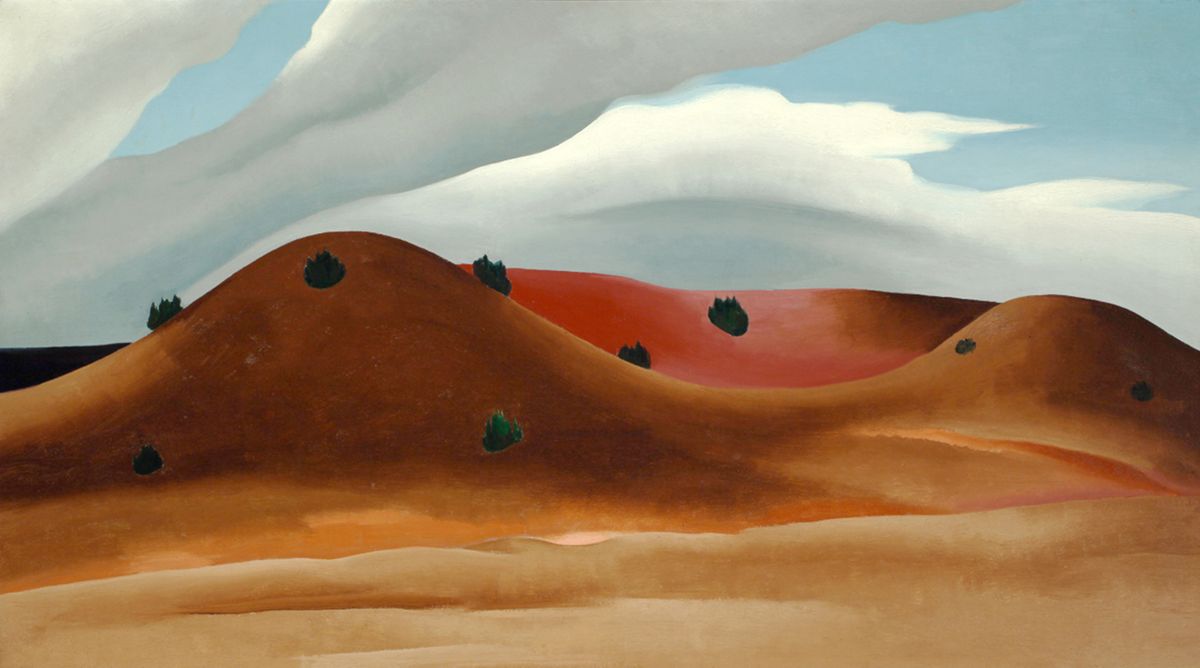 #59
#59
Gray Hills Painted Red
The strength of "Grey Hills Painted Red" comes from a balance between careful observation and voluntary simplification. The landscape is reduced to a few decisive relationships - horizon, curve, flat and distance - which preserve the sensation of a place without copying all the details. After his first stays in New Mexico, his vocabulary expanded to the hills, bones and flowers of the desert, assembled without losing their physical precision. After his first stays in New Mexico, his vocabulary expanded to the hills, bones and flowers of the desert, assembled without losing their physical precision. After his first stays in New Mexico, his vocabulary expanded to the hills, bones and flowers of the desert, assembled without losing their physical precision. Dated 1930, this painting now belongs to the Museum of Fine Arts, St. Petersburg. Georgia O'Keeffe Museum's file, in the Access O'Keeffe catalog raisonné, allows you to check the title, dating, catalog number and the holding institution. The image is only used to identify and comment on the work: Alpha Reproduction does not offer any reproduction of this painting. A click leads to the official website of the holding museum, which defines its own conditions of access and use. O'Keeffe does not deliver a fixed emblem; it constructs an experience of the gaze where the motif gains intensity as it is stripped of the accessory.
Image: Georgia O'Keeffe Museum - Access O'Keeffe · Documentary consultation only; no reproduction offered by Alpha Reproduction.
See the museum website →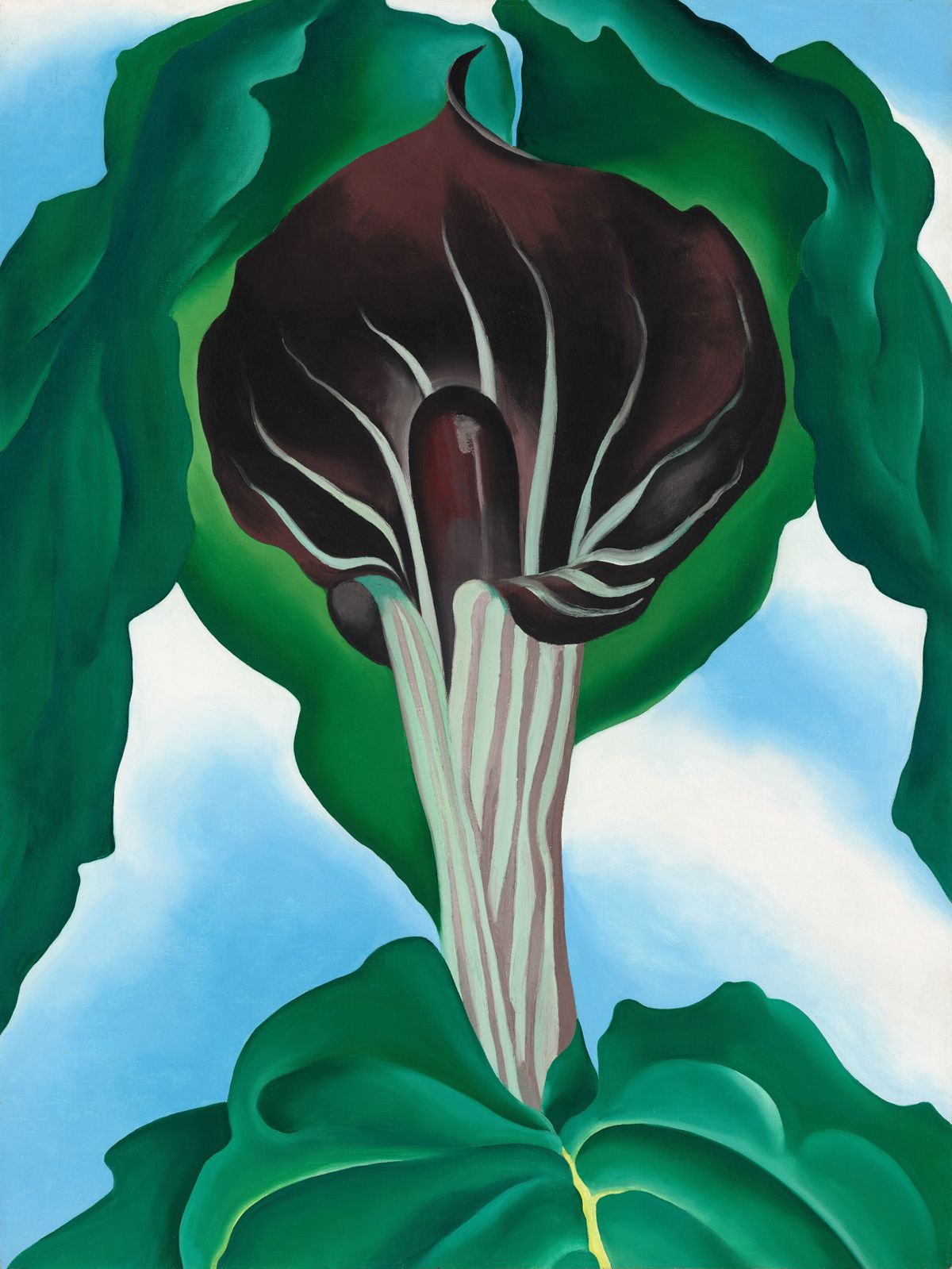 #60
#60
Jack-in-the-Pulpit No. 3
Beneath its apparent evidence, "Jack-in-the-Pulpit No. 3" constructs a very calculated relationship between proximity, distance and rhythm. The composition is based on a circulation of shapes and colors which reflects a sensation experienced without enclosing it in a literal description. After his first stays in New Mexico, his vocabulary expanded to the hills, bones and flowers of the desert, assembled without losing their physical precision. After his first stays in New Mexico, his vocabulary expanded to the hills, bones and flowers of the desert, assembled without losing their physical precision. Dated 1930, this painting today belongs to the National Gallery of Art (NGA). The Georgia O'Keeffe Museum file, in the Access O'Keeffe catalog raisonné, allows you to verify the title, dating, catalog number and institution holder. The image is only used to identify and comment on the work: Alpha Reproduction does not offer any reproduction of this painting. A click leads to the official website of the holding museum, which defines its own conditions of access and use. The painting therefore invites you to slow down: its clarity does not abolish the mystery, on the contrary it allows you to perceive the finest variations in shape and color.
Image: Georgia O'Keeffe Museum - Access O'Keeffe · Documentary consultation only; no reproduction offered by Alpha Reproduction.
See the museum website →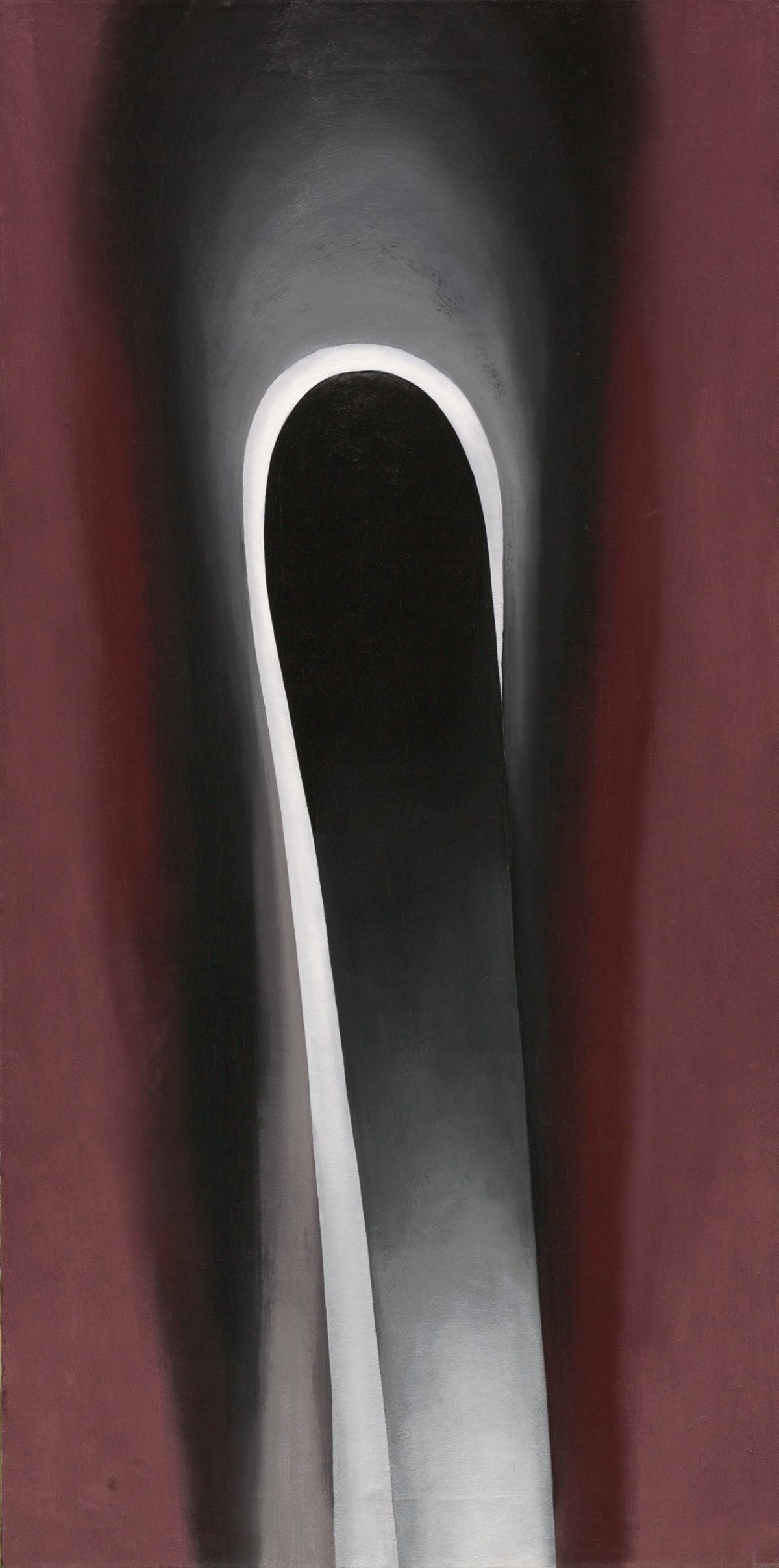 #61
#61
Jack-in-the-Pulpit No. VI
With "Jack-in-the-Pulpit No. VI", Georgia O'Keeffe transforms a precise pattern into an experience of duration, scale and color. The composition is based on a circulation of shapes and colors which reflects a sensation experienced without enclosing it in a literal description. After his first stays in New Mexico, his vocabulary expanded to the hills, bones and flowers of the desert, assembled without losing their physical precision. After his first stays in New Mexico, his vocabulary expanded to the hills, bones and flowers of the desert, assembled without losing their physical precision. Dated 1930, this painting today belongs to the National Gallery of Art (NGA). The Georgia O'Keeffe Museum file, in the Access O'Keeffe catalog raisonné, allows you to verify the title, dating, catalog number and institution holder. The image is used only to identify and comment on the work: Alpha Reproduction does not offer any reproduction of this painting. A click leads to the official website of the holding museum, which defines its own conditions of access and use. The work thus remains concrete without becoming anecdotal: it requires less recognition of an object than testing the way in which it occupies the visual field.
Image: Georgia O'Keeffe Museum - Access O'Keeffe · Documentary consultation only; no reproduction offered by Alpha Reproduction.
See the museum website →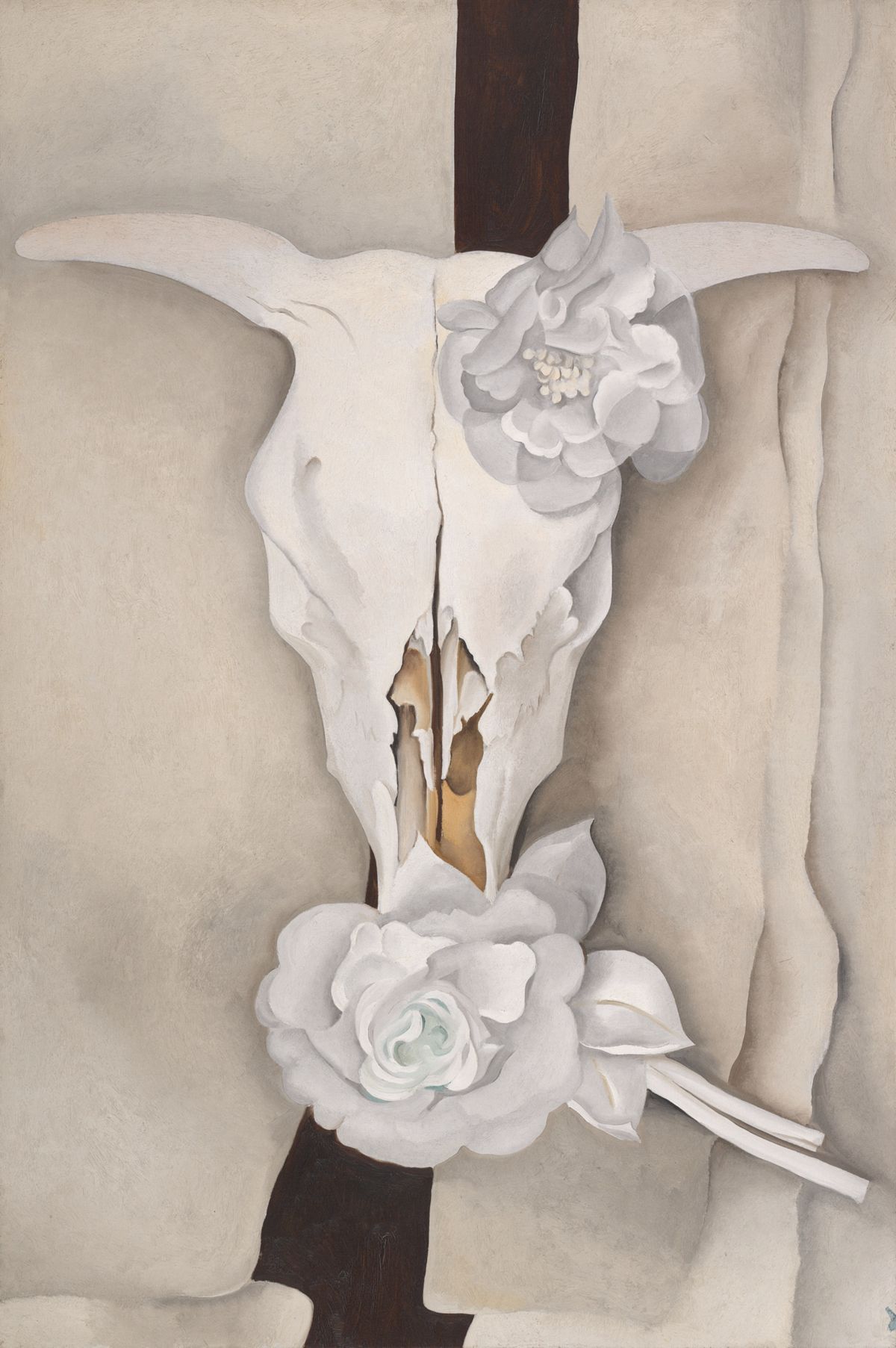 #62
#62
Cow's Skull with Calico Roses
"Cow's Skull with Calico Roses" shows how Georgia O'Keeffe knows how to condense a sensation into an immediately readable composition. The bone is treated like open architecture: its voids frame the sky or the earth, while its mineral whiteness dialogues with the colors of the desert. After his first stays in New Mexico, his vocabulary expanded to the hills, bones and flowers of the desert, assembled without losing their physical precision. After his first stays in New Mexico, his vocabulary expanded to the hills, bones and flowers of the desert, assembled without losing their physical precision. After his first stays in New Mexico, his vocabulary expanded to the hills, bones and flowers of the desert, assembled without losing their physical precision. Dated 1931, this painting is now owned by the Art Institute of Chicago. Dated 1931, this painting is now owned by the Art Institute of Chicago. Dated 1931, this painting is now owned by the Art Institute of Chicago. Dated 1931, this painting is now owned by the Art Institute of Chicago. Dated 1931, this painting is now owned by the Art Institute of Chicago. Dated 1931, this painting is now owned by the hills, bones and flowers of the desert, assembled without losing their physical precision. Dated 1931, this painting is now owned by the Art Institute of Chicago. Dated 1931 and the holding institution. The image is only used to identify and comment on the work: Alpha Reproduction does not offer any reproduction of this painting. A click leads to the official website of the holding museum, which defines its own conditions of access and use. This tension explains its lasting presence: the image seems simple, but each outline modifies the relationship between what is close, what is distant and what goes beyond the frame.
Image: Georgia O'Keeffe Museum - Access O'Keeffe · Documentary consultation only; no reproduction offered by Alpha Reproduction.
See the museum website →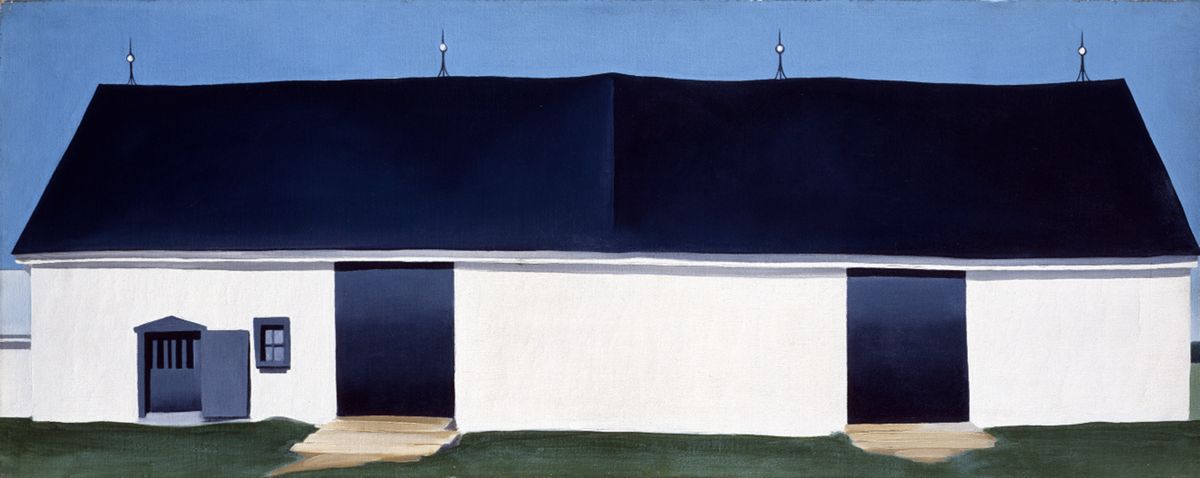 #63
#63
White Canadian Barn, No. 2
In "White Canadian Barn, No. 2", the gaze advances slowly between the contours, the flat areas and the intervals left open. O'Keeffe simplifies architecture to the point of making facades, streets and built masses a vertical rhythm where light measures modern space. After his first stays in New Mexico, his vocabulary expanded to the hills, bones and flowers of the desert, assembled without losing their physical precision. After his first stays in New Mexico, his vocabulary expanded to the hills, bones and flowers of the desert, assembled without losing their physical precision. After his first stays in New Mexico, his vocabulary expanded to the hills, bones and flowers of the desert, assembled without losing their physical precision. After his first stays in New Mexico, his vocabulary expanded to the hills, bones and flowers of the desert, assembled without losing their physical precision. Dated 1932, this painting now belongs to the Metropolitan Museum of Art (The Met). The Georgia O'Keeffe Museum file, in the Access O'Keeffe catalog raisonné, allows you to check the title, dating, catalog number and the holding institution. The image is only used to identify and comment on the work: Alpha Reproduction does not offer any reproduction of this painting. A click leads to the official website of the holding museum, which defines its own conditions of access and use. O'Keeffe does not deliver a fixed emblem; it constructs an experience of the gaze where the motif gains intensity as it is stripped of the accessory.
Image: Georgia O'Keeffe Museum - Access O'Keeffe · Documentary consultation only; no reproduction offered by Alpha Reproduction.
See the museum website →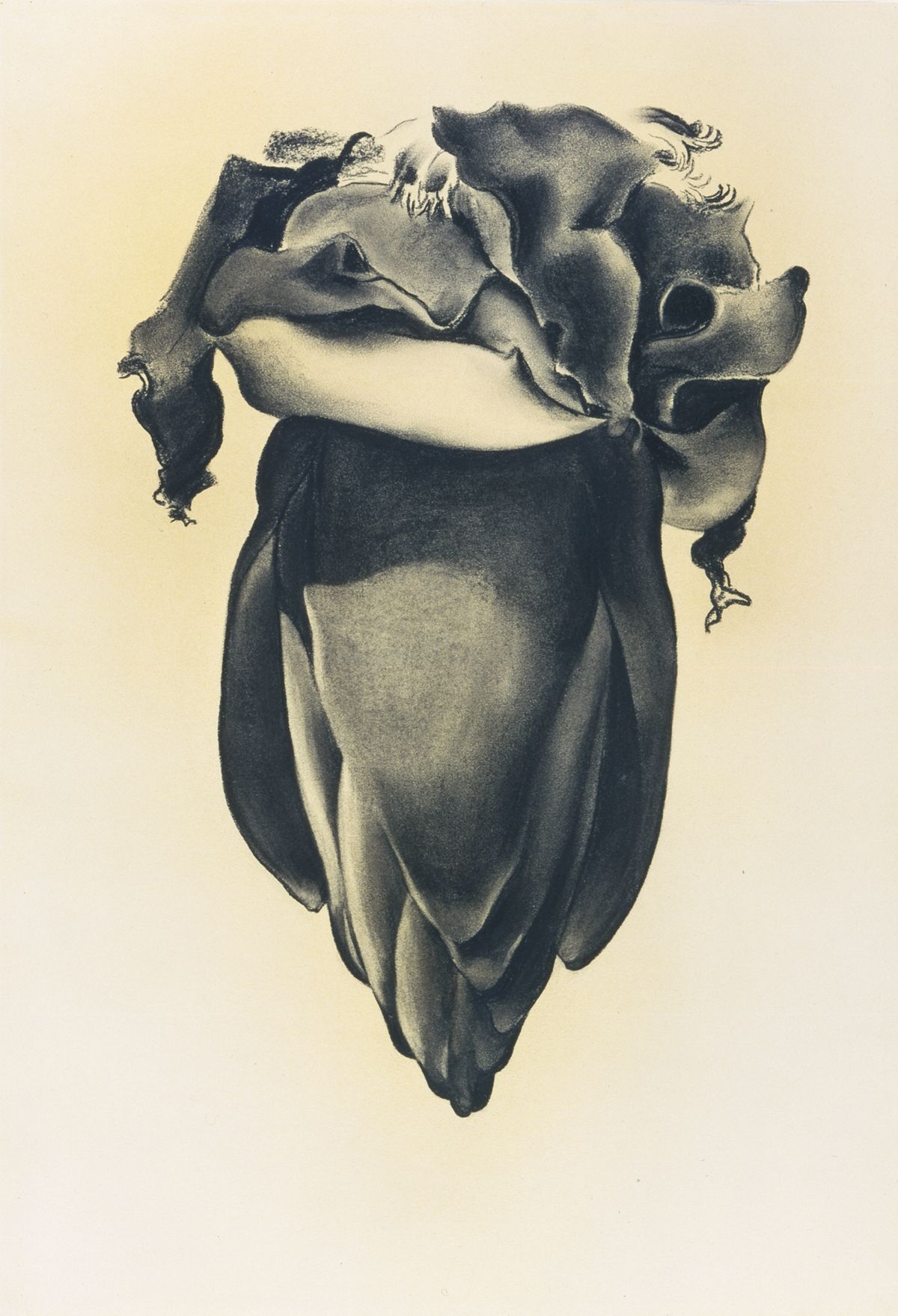 #64
#64
Banana Flower
The strength of "Banana Flower" comes from a balance between careful observation and voluntary simplification. Close framing does not transform the flower into a simple symbol: it forces us to look at its folds, its tensions and its passages of color as an autonomous landscape. After his first stays in New Mexico, his vocabulary expanded to the hills, bones and flowers of the desert, assembled without losing their physical precision. After his first stays in New Mexico, his vocabulary expanded to the hills, bones and flowers of the desert, assembled without losing their physical precision. Dated 1934, this painting today belongs to the Museum of Modern Art (MoMA). The Georgia O'Keeffe Museum file, in the Access O'Keeffe catalog raisonné, allows you to check the title, dating, catalog number and institution holder. The image is only used to identify and comment on the work: Alpha Reproduction does not offer any reproduction of this painting. A click leads to the official website of the holding museum, which defines its own conditions of access and use. The painting therefore invites you to slow down: its clarity does not abolish the mystery, on the contrary it allows you to perceive the finest variations in shape and color.
Image: Georgia O'Keeffe Museum - Access O'Keeffe · Documentary consultation only; no reproduction offered by Alpha Reproduction.
See the museum website →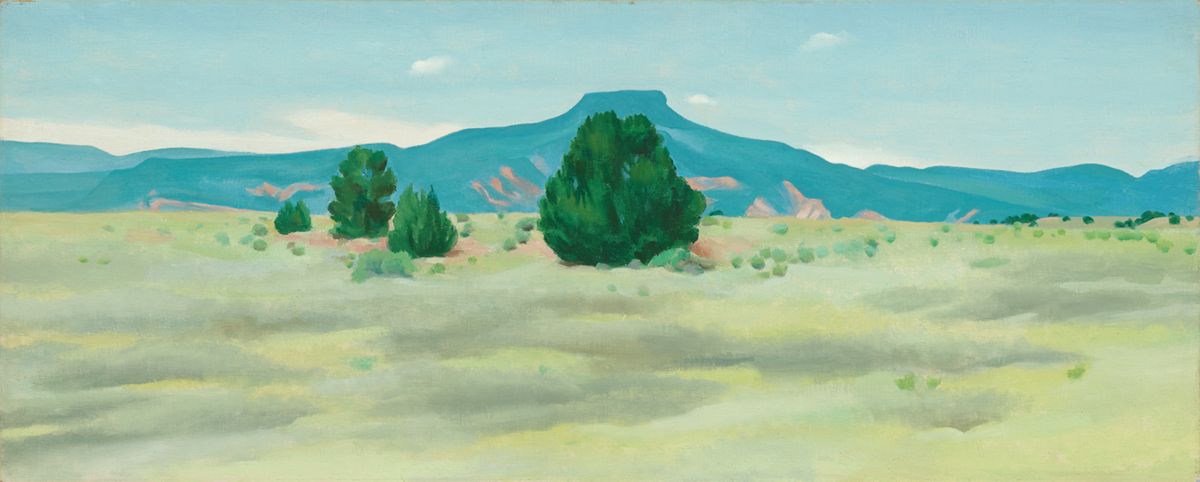 #65
#65
Ghost Ranch Landscape
Beneath its apparent evidence, "Ghost Ranch Landscape" constructs a very calculated relationship between proximity, distance and rhythm. The landscape is reduced to a few decisive relationships - horizon, curve, flat and distance - which preserve the sensation of a place without copying all the details. After his first stays in New Mexico, his vocabulary expanded to the hills, bones and flowers of the desert, assembled without losing their physical precision. Dated ca. 1936, this painting today belongs to Georgia O'Keeffe Museum. Georgia O'Keeffe Museum is listed in the first place. the holding institution. The image is only used to identify and comment on the work: Alpha Reproduction does not offer any reproduction of this painting. A click leads to the official website of the holding museum, which defines its own conditions of access and use. The work thus remains concrete without becoming anecdotal: it requires less recognition of an object than testing the way in which it occupies the visual field.
Image: Georgia O'Keeffe Museum - Access O'Keeffe · Documentary consultation only; no reproduction offered by Alpha Reproduction.
See the museum website →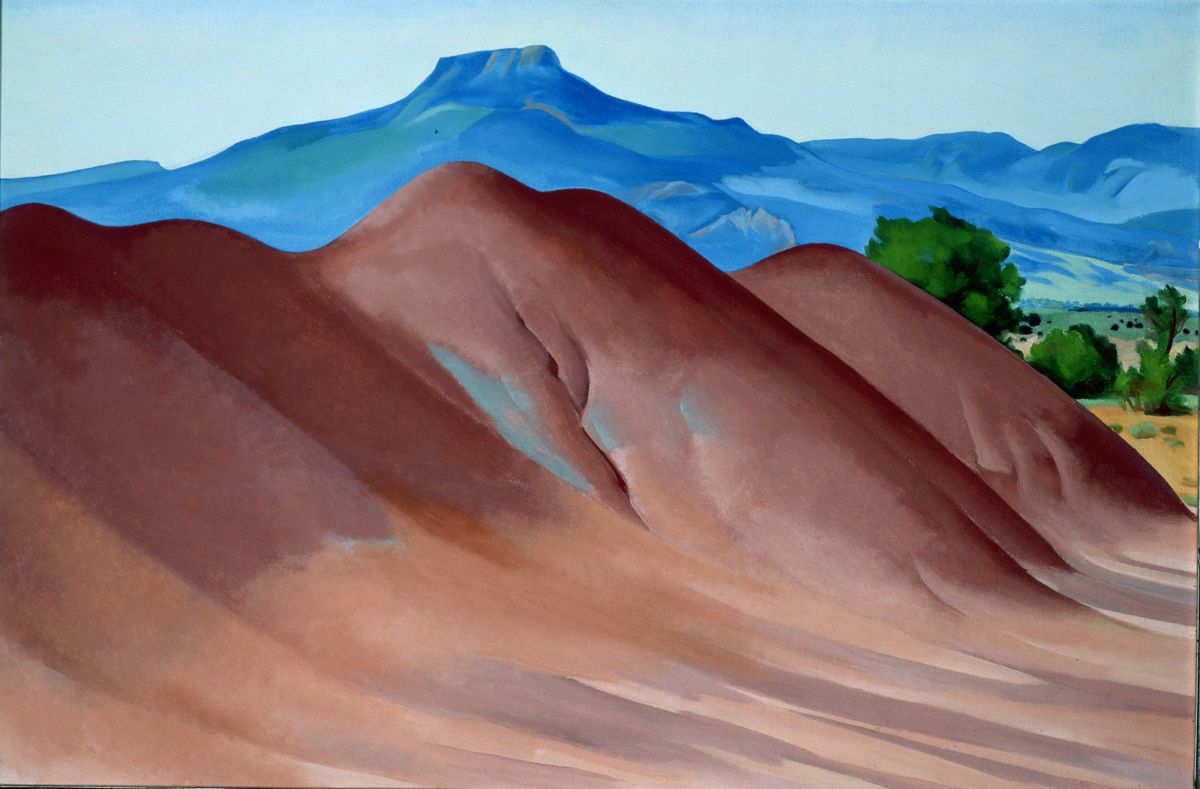 #66
#66
Pedernal with Red Hills
With "Pedernal with Red Hills", Georgia O'Keeffe transforms a precise pattern into an experience of duration, scale and color. The landscape is reduced to a few decisive relationships - horizon, curve, flat and distance - which preserve the sensation of a place without copying all the details. After his first stays in New Mexico, his vocabulary expanded to the hills, bones and flowers of the desert, assembled without losing their physical precision. After his first stays in New Mexico, his vocabulary expanded to the hills, bones and flowers of the desert, assembled without losing their physical precision. After his first stays in New Mexico, his vocabulary expanded to the hills, bones and flowers of the desert, assembled without losing their physical precision. After his first stays in New Mexico, his vocabulary expanded to the hills, bones and flowers of the desert, assembled without losing their physical precision. Dated 1936, this painting today belongs to the New Mexico Museum of Art. After his first stays in New Mexico, his vocabulary expanded to the hills, bones and flowers of the desert, assembled without losing their physical precision. Dated 1936, this painting now belongs to the New Mexico Museum of Art. After his first stays in New Mexico, his vocabulary expanded to the hills, bones and flowers of the desert, assembled without losing their physical precision. Dated 1936, this painting now belongs to the New Mexico Museum of Art. After his first stays in New Mexico, his the holding institution. The image is only used to identify and comment on the work: Alpha Reproduction does not offer any reproduction of this painting. A click leads to the official website of the holding museum, which defines its own conditions of access and use. This tension explains its lasting presence: the image seems simple, but each outline modifies the relationship between what is close, what is distant and what goes beyond the frame.
Image: Georgia O'Keeffe Museum - Access O'Keeffe · Documentary consultation only; no reproduction offered by Alpha Reproduction.
See the museum website →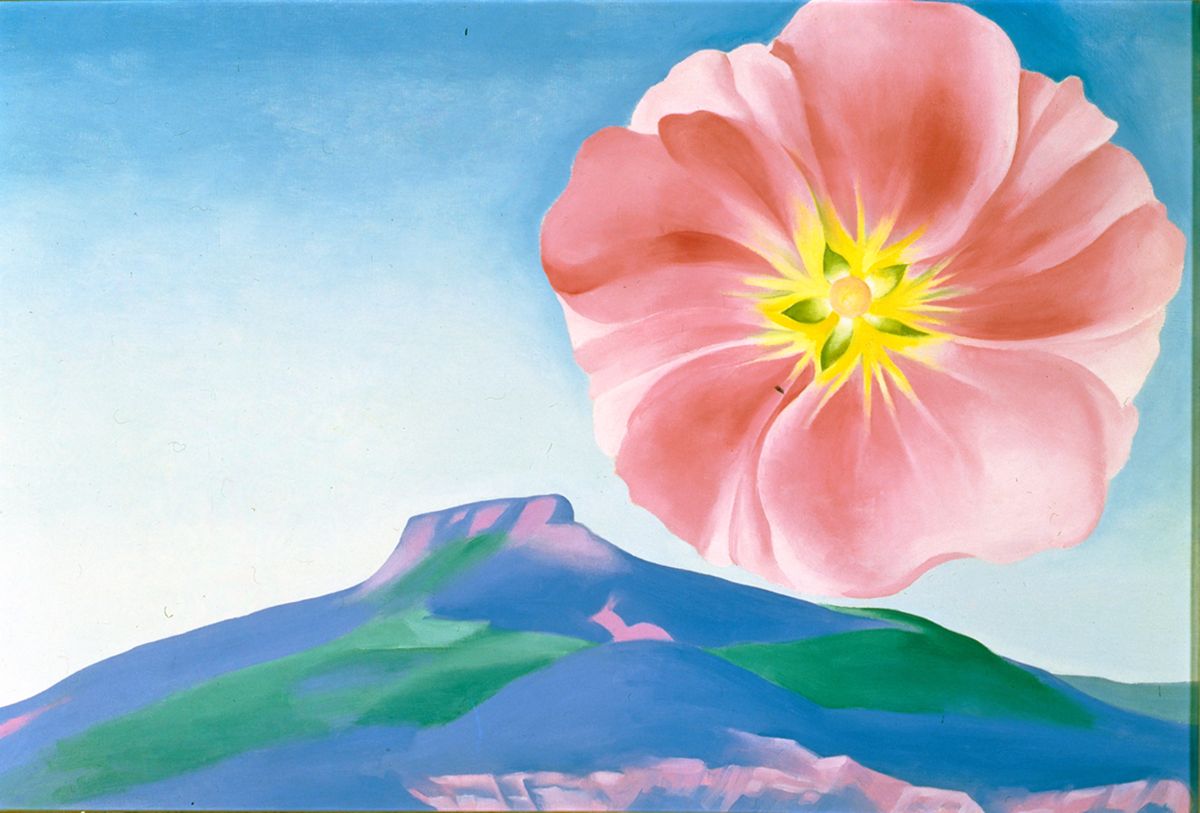 #67
#67
Hollyhock Pink with the Pedernal, New Mexico
"Hollyhock Pink with the Pedernal, New Mexico" shows how Georgia O'Keeffe knows how to condense a sensation into an immediately readable composition. The close framing does not transform the flower into a simple symbol: it forces us to look at its folds, its tensions and its passages of color like an autonomous landscape. After his first stays in New Mexico, his vocabulary expanded to the hills, bones and flowers of the desert, assembled without losing their physical precision. After his first stays in New Mexico, his vocabulary expanded to the hills, bones and flowers of the desert, assembled without losing their physical precision. After his first stays in New Mexico, his vocabulary expanded to the hills, bones and flowers of the desert, assembled without losing their physical precision. After his first stays in New Mexico, his vocabulary expanded to the hills, bones and flowers of the desert, assembled without losing their physical precision. After his first stays in New Mexico, his vocabulary expanded to the hills, bones and flowers of the desert, assembled without losing their physical precision. Dated 1937, this painting today belongs to Milwaukee Art Museum. The Georgia O'Keeffe Museum file, in the Access O'Keeffe catalog raisonné, allows you to check the title, the dating, the number catalog and the holding institution. The image is only used to identify and comment on the work: Alpha Reproduction does not offer any reproduction of this painting. A click leads to the official website of the holding museum, which defines its own conditions of access and use. O'Keeffe does not deliver a fixed emblem; it constructs an experience of the gaze where the motif gains intensity as it is stripped of the accessory.
Image: Georgia O'Keeffe Museum - Access O'Keeffe · Documentary consultation only; no reproduction offered by Alpha Reproduction.
See the museum website →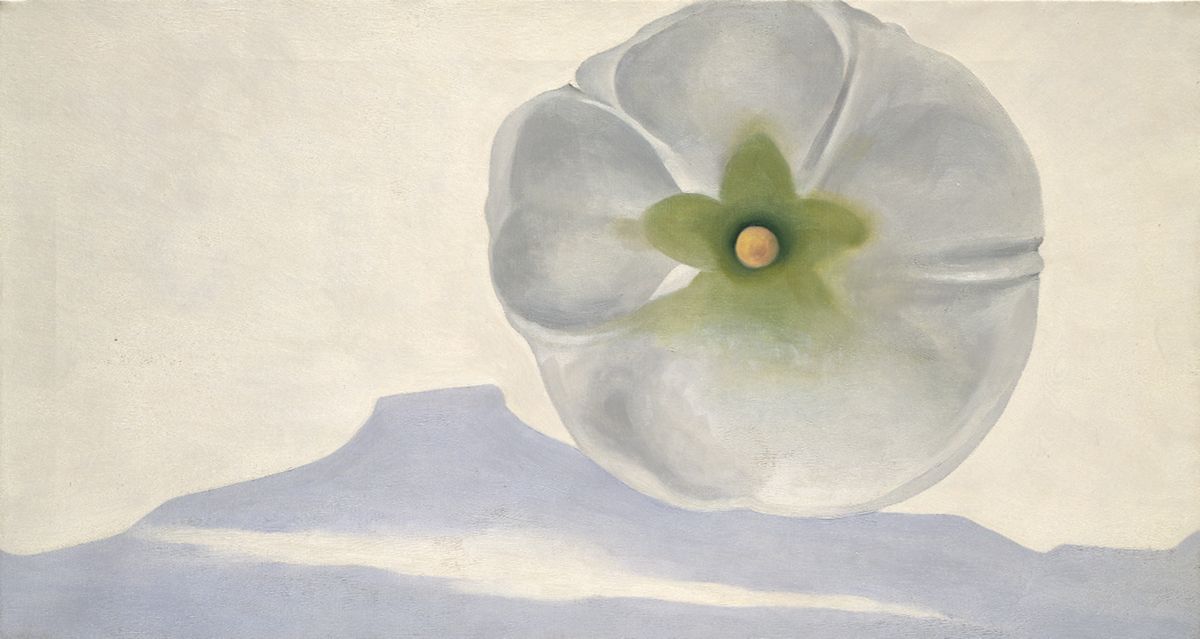 #68
#68
Hollyhock White with Pedernal
In "Hollyhock White with Pedernal", the gaze advances slowly between the contours, the flat areas and the intervals left open. The close framing does not transform the flower into a simple symbol: it forces us to look at its folds, its tensions and its passages of color like an autonomous landscape. After his first stays in New Mexico, his vocabulary expanded to the hills, bones and flowers of the desert, assembled without losing their physical precision. After his first stays in New Mexico, his vocabulary expanded to the hills, bones and flowers of the desert, assembled without losing their physical precision. Dated 1937, this painting today belongs to the National Museum of Modern Art, Tokyo. The Georgia O'Keeffe Museum file, in the Access O'Keeffe catalog raisonné, allows you to check the title, dating, number of catalog and the holding institution. The image is only used to identify and comment on the work: Alpha Reproduction does not offer any reproduction of this painting. A click leads to the official website of the holding museum, which defines its own conditions of access and use. The painting therefore invites you to slow down: its clarity does not abolish the mystery, on the contrary it allows you to perceive the finest variations in shape and color.
Image: Georgia O'Keeffe Museum - Access O'Keeffe · Documentary consultation only; no reproduction offered by Alpha Reproduction.
See the museum website →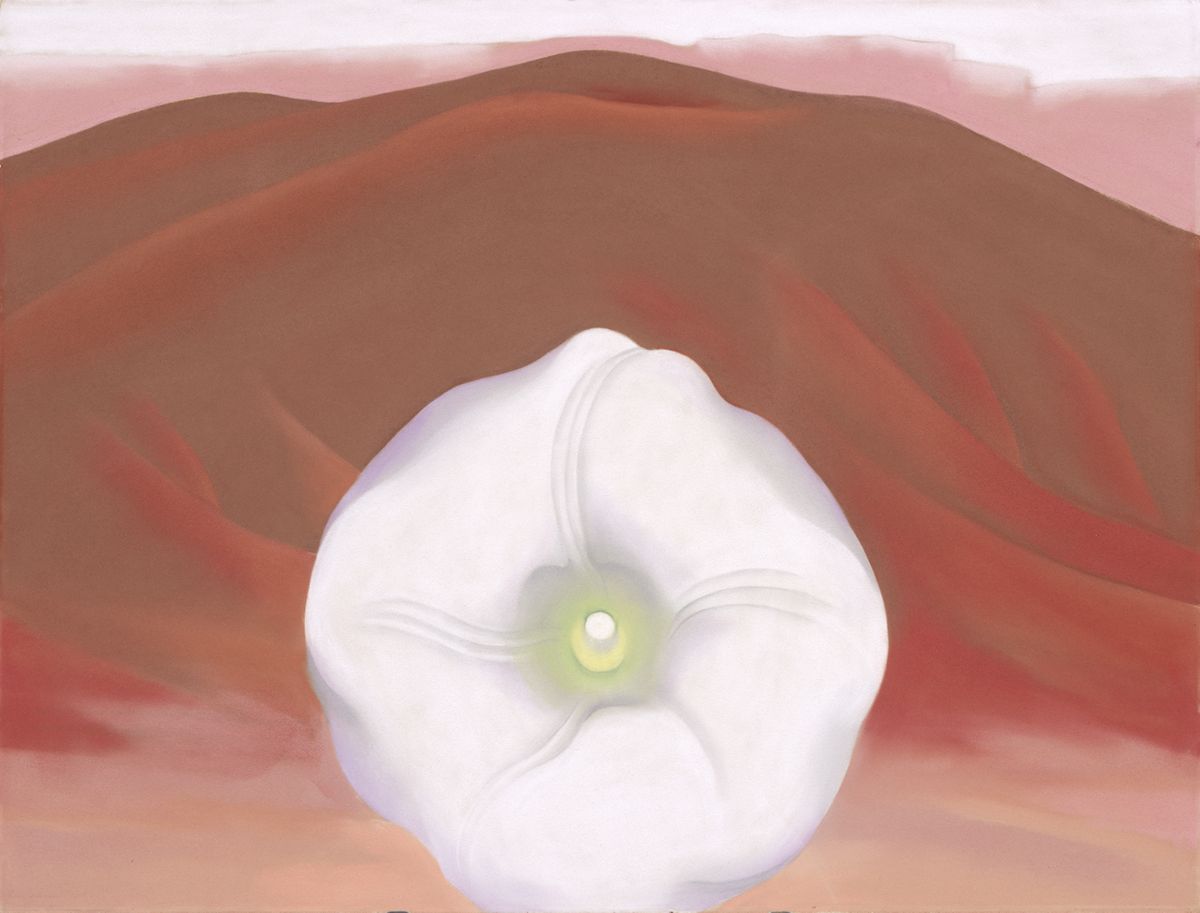 #69
#69
Red Hills and White Flower
The strength of "Red Hills and White Flower" comes from a balance between careful observation and voluntary simplification. Close framing does not transform the flower into a simple symbol: it forces us to look at its folds, its tensions and its passages of color as an autonomous landscape. After his first stays in New Mexico, his vocabulary expanded to the hills, bones and flowers of the desert, assembled without losing their physical precision. After his first stays in New Mexico, his vocabulary expanded to the hills, bones and flowers of the desert, assembled without losing their physical precision. Dated 1937, this painting today belongs to Georgia O'Keeffe Museum. Georgia O'Keeffe Museum is listed in the Georgia O'Keeffe Museum, bones and flowers, assembled without losing their physical precision. Dated 1937, this painting now belongs to Georgia O'Keeffe Museum. The Georgia O'Keeffe Museum file, in the Access O'Keeffe catalog raisonné, allows you to check the title, dating, catalog number and institution holder. The image is used only to identify and comment on the work: Alpha Reproduction does not offer any reproduction of this painting. A click leads to the official website of the holding museum, which defines its own conditions of access and use. The work thus remains concrete without becoming anecdotal: it requires less recognition of an object than testing the way in which it occupies the visual field.
Image: Georgia O'Keeffe Museum - Access O'Keeffe · Documentary consultation only; no reproduction offered by Alpha Reproduction.
See the museum website →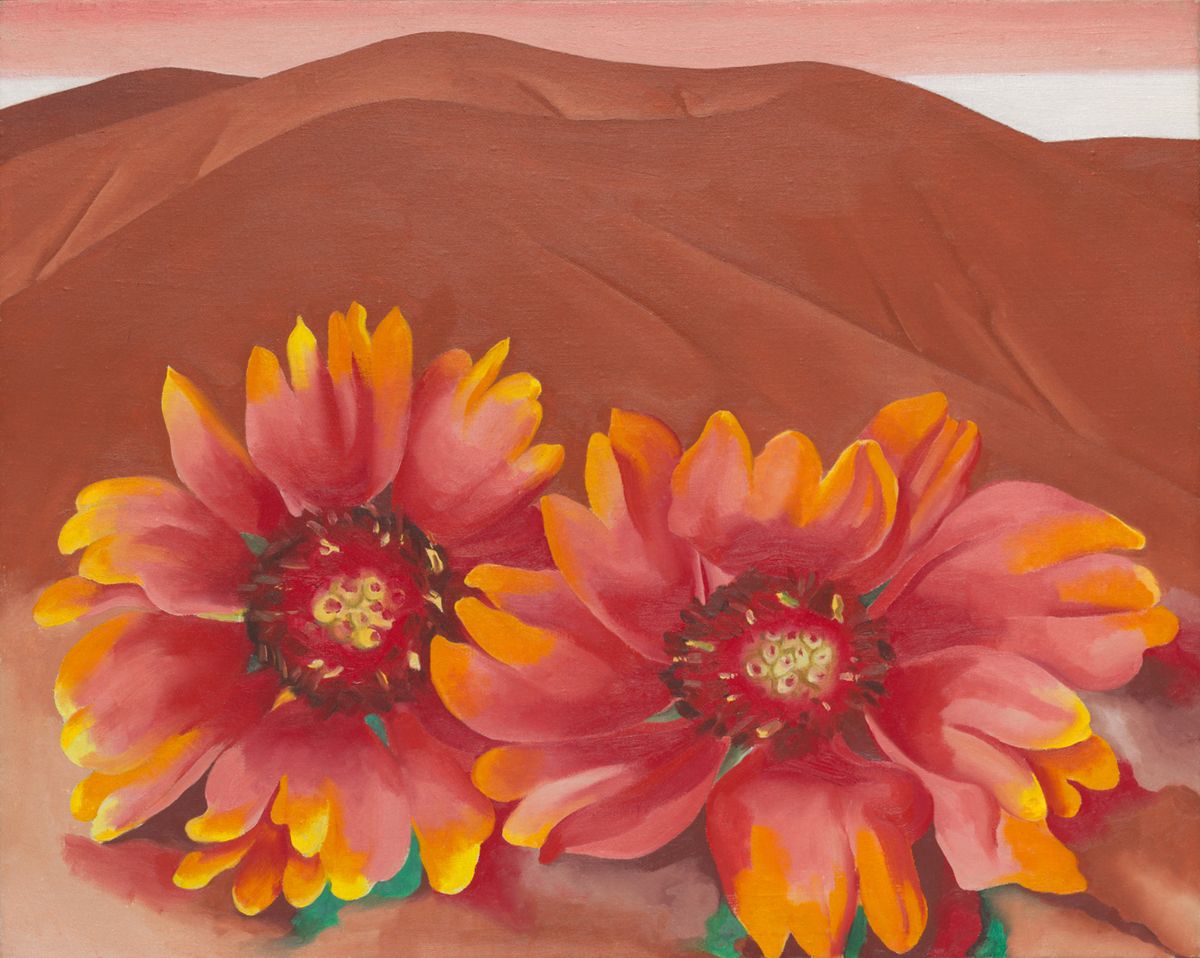 #70
#70
Red Hills with Flowers
Beneath its apparent obviousness, "Red Hills with Flowers" constructs a very calculated relationship between proximity, distance and rhythm. The close framing does not transform the flower into a simple symbol: it forces us to look at its folds, its tensions and its passages of color like an autonomous landscape. After his first stays in New Mexico, his vocabulary expanded to the hills, bones and flowers of the desert, assembled without losing their physical precision. After his first stays in New Mexico, his vocabulary expanded to the hills, bones and flowers of the desert, assembled without losing their physical precision. Dated 1937, this painting today belongs to the Art Institute of Chicago. After his first stays in New Mexico, his vocabulary expanded to the hills, bones and flowers of the desert, assembled without losing their physical precision. Dated 1937, this painting is now owned by the Art Institute of Chicago. After his first stays in New Mexico, his vocabulary expanded to the hills, bones and flowers of the desert, assembled without losing their physical precision. Dated 1937, this painting is now owned by the Art Institute of Chicago. After his first stays in New Mexico, his vocabulary expanded to the hills, bones and flowers of the desert, assembled without losing their physical precision. Dated 1937, this painting is now owned by the Art Institute of Chicago. Dated 1937, this painting is now owned by the the holding institution. The image is only used to identify and comment on the work: Alpha Reproduction does not offer any reproduction of this painting. A click leads to the official website of the holding museum, which defines its own conditions of access and use. This tension explains its lasting presence: the image seems simple, but each outline modifies the relationship between what is close, what is distant and what goes beyond the frame.
Image: Georgia O'Keeffe Museum - Access O'Keeffe · Documentary consultation only; no reproduction offered by Alpha Reproduction.
See the museum website →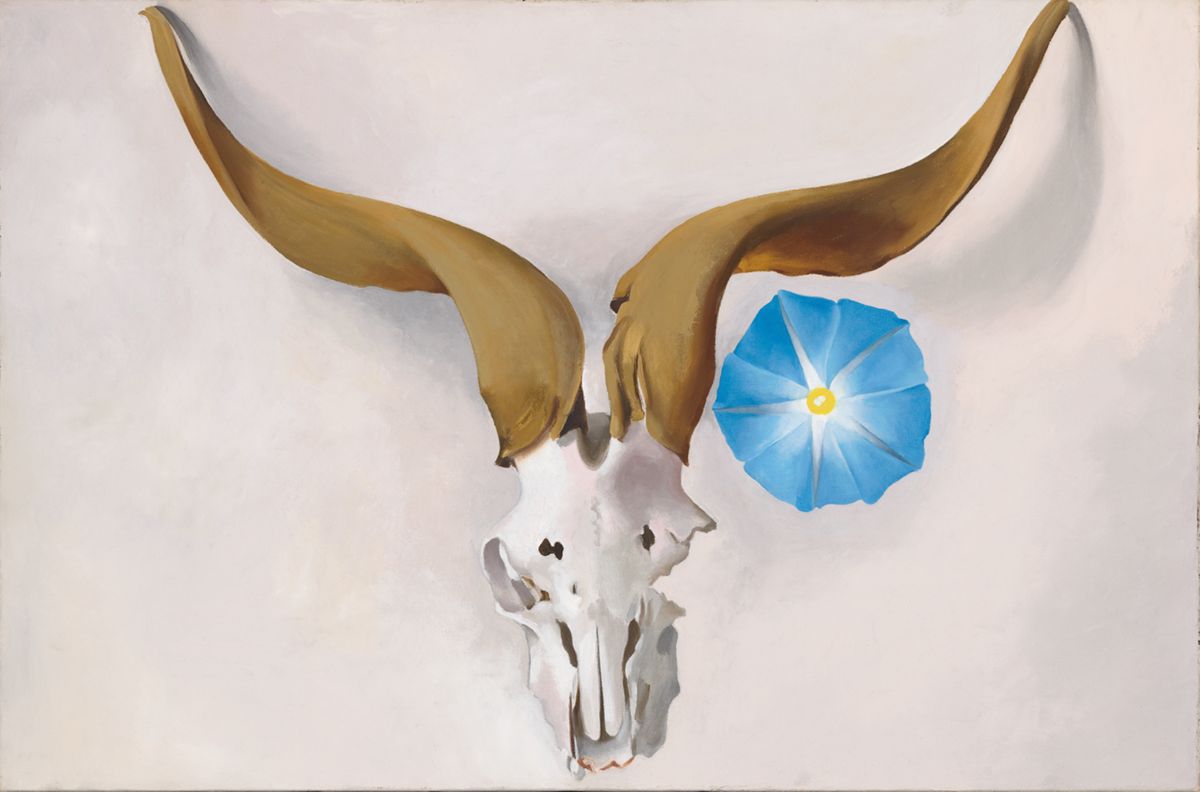 #71
#71
Ram's Head, Blue Morning Glory
With "Ram's Head, Blue Morning Glory", Georgia O'Keeffe transforms a precise pattern into an experience of duration, scale and color. The composition is based on a circulation of shapes and colors which reflects a sensation experienced without enclosing it in a literal description. After his first stays in New Mexico, his vocabulary expanded to the hills, bones and flowers of the desert, assembled without losing their physical precision. After his first stays in New Mexico, his vocabulary expanded to the hills, bones and flowers of the desert, assembled without losing their physical precision. Dated 1938, this painting today belongs to Georgia O'Keeffe Museum. Georgia O'Keeffe Museum is listed in the Georgia O'Keeffe Museum, its vocabulary expanded to the hills, bones and flowers of the desert, assembled without losing their physical precision. Dated 1938, this painting now belongs to Georgia O'Keeffe Museum. Georgia O'Keeffe Museum is listed today. Dated 1938, this painting now belongs to Georgia O'Keeffe Museum. Georgia O'Keeffe Museum is listed in the Georgia O'Keeffe Museum. The Georgia O'Keeffe Museum file, in the Access O'Keeffe catalog raisonné, allows you to verify the title, dating, catalog number and institution holder. The image is only used to identify and comment on the work: Alpha Reproduction does not offer any reproduction of this painting. A click leads to the official website of the holding museum, which defines its own conditions of access and use. O'Keeffe does not deliver a fixed emblem; it constructs an experience of the gaze where the motif gains intensity as it is stripped of the accessory.
Image: Georgia O'Keeffe Museum - Access O'Keeffe · Documentary consultation only; no reproduction offered by Alpha Reproduction.
See the museum website →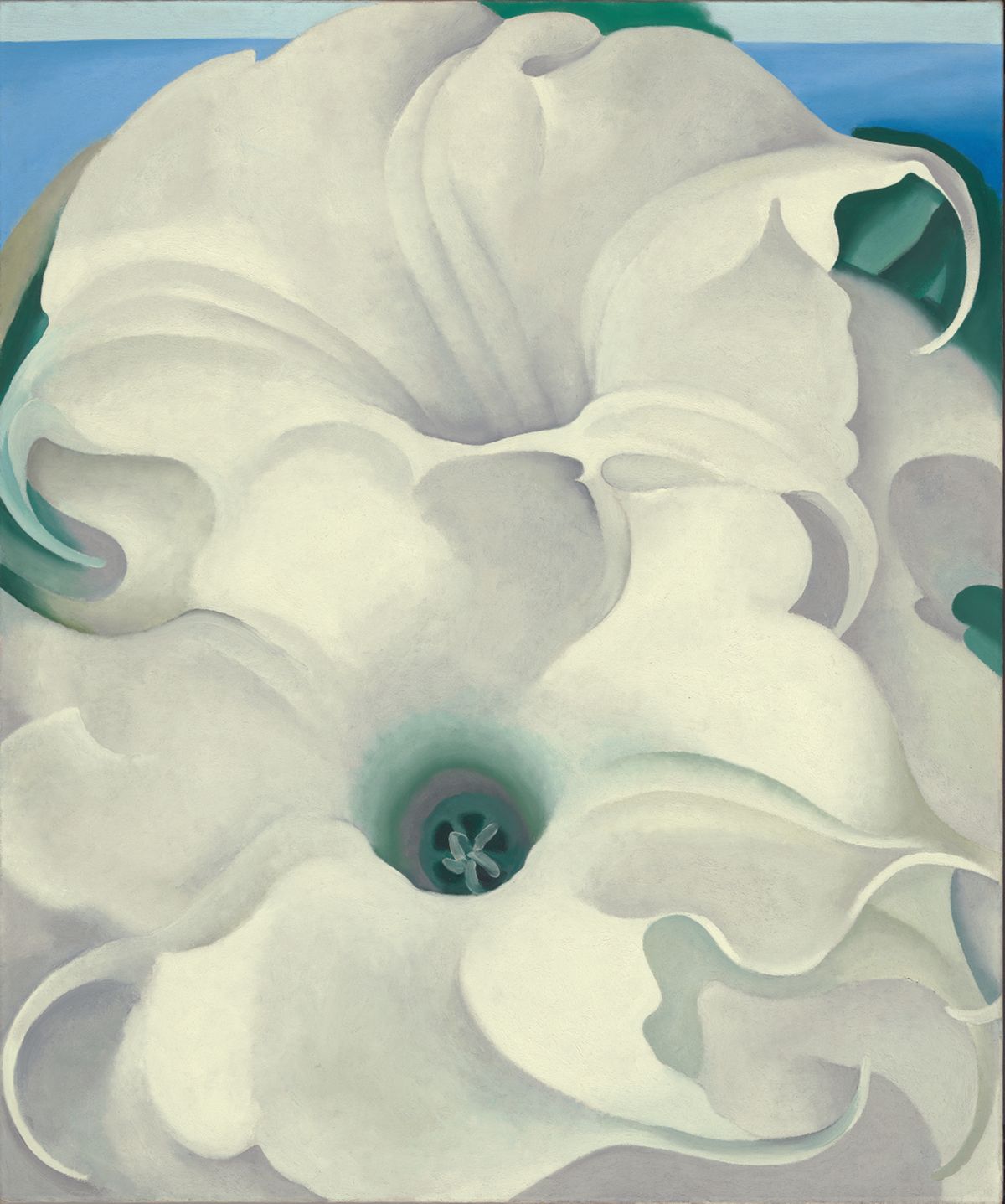 #72
#72
Bella Donna
"Bella Donna" shows how Georgia O'Keeffe knows how to condense a sensation into an immediately readable composition. The close framing does not transform the flower into a simple symbol: it forces us to look at its folds, its tensions and its passages of color as an autonomous landscape. After his first stays in New Mexico, his vocabulary expanded to the hills, bones and flowers of the desert, assembled without losing their physical precision. After his first stays in New Mexico, his vocabulary expanded to the hills, bones and flowers of the desert, assembled without losing their physical precision. Dated 1939, this painting today belongs to Georgia O'Keeffe Museum. Georgia O'Keeffe Museum is listed in the Georgia O'Keeffe Museum, bones and flowers, assembled without losing their physical precision. Dated 1939, this painting now belongs to Georgia O'Keeffe Museum. The Georgia O'Keeffe Museum file, in the Access O'Keeffe catalog raisonné, allows you to check the title, dating, catalog number and institution holder. The image is only used to identify and comment on the work: Alpha Reproduction does not offer any reproduction of this painting. A click leads to the official website of the holding museum, which defines its own conditions of access and use. The painting therefore invites you to slow down: its clarity does not abolish the mystery, on the contrary it allows you to perceive the finest variations in shape and color.
Image: Georgia O'Keeffe Museum - Access O'Keeffe · Documentary consultation only; no reproduction offered by Alpha Reproduction.
See the museum website →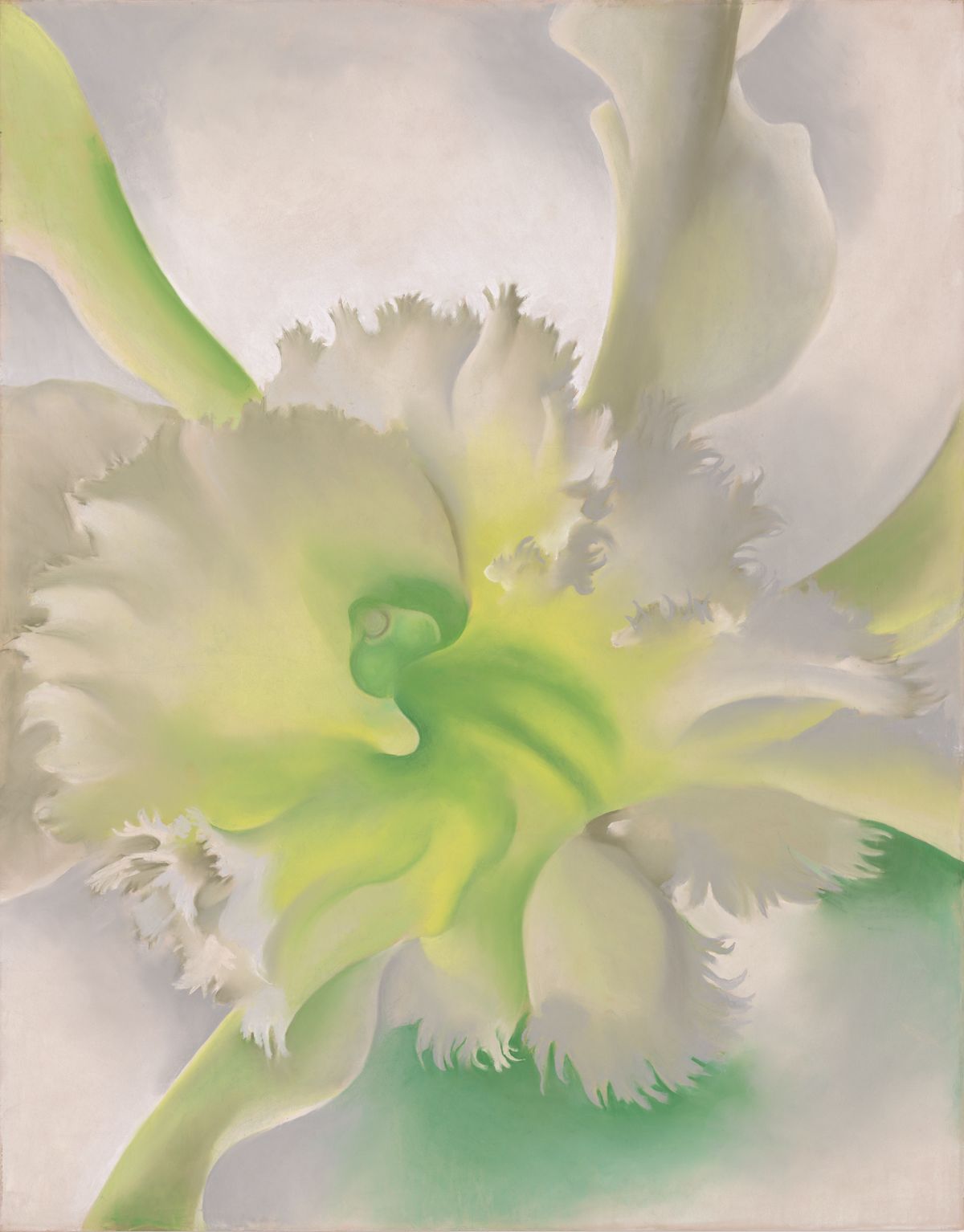 #73
#73
An Orchid
In "An Orchid", the gaze advances slowly between the contours, the flat areas and the intervals left open. Close framing does not transform the flower into a simple symbol: it forces us to look at its folds, its tensions and its passages of color like an autonomous landscape. In the 1940s, the spaces of Ghost Ranch and Abiquiú became a laboratory of series: the same place changes scale, light and tension depending on the framing. Dated 1941, this painting today belonged to the Museum of Modern Art (MoMA). The Georgia O'Keeffe Museum file, in the Access O'Keeffe catalog raisonné, allows you to check the title, dating, catalog number and institution holder. The image is used only to identify and comment on the work: Alpha Reproduction does not offer any reproduction of this painting. A click leads to the official website of the holding museum, which defines its own conditions of access and use. The work thus remains concrete without becoming anecdotal: it requires less recognition of an object than testing the way in which it occupies the visual field.
Image: Georgia O'Keeffe Museum - Access O'Keeffe · Documentary consultation only; no reproduction offered by Alpha Reproduction.
See the museum website →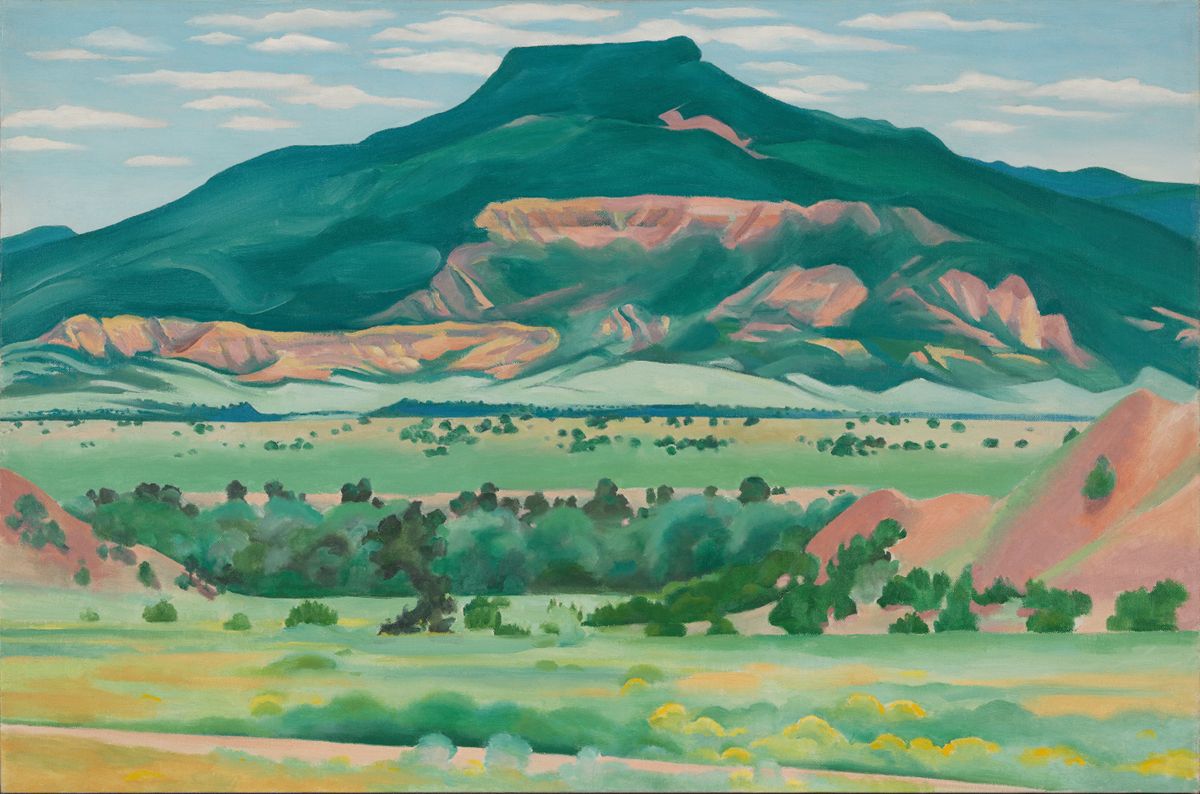 #74
#74
My Front Yard, Summer
The strength of "My Front Yard, Summer" comes from a balance between careful observation and voluntary simplification. The composition is based on a circulation of shapes and colors which reflects a sensation experienced without enclosing it in a literal description. In the 1940s, the spaces of Ghost Ranch and Abiquiú became a laboratory of series: the same place changes scale, light and tension depending on the framing. Dated 1941, this painting today belonged to Georgia O'Keeffe Museum. The Georgia O'Keeffe Museum file, in the Access O'Keeffe catalog raisonné, allows you to verify the title, dating, catalog number and holding institution. The picture used only to identify and comment on the work: Alpha Reproduction does not offer any reproduction of this painting. A click leads to the official website of the holding museum, which defines its own conditions of access and use. This tension explains its lasting presence: the image seems simple, but each outline modifies the relationship between what is close, what is distant and what goes beyond the frame.
Image: Georgia O'Keeffe Museum - Access O'Keeffe · Documentary consultation only; no reproduction offered by Alpha Reproduction.
See the museum website →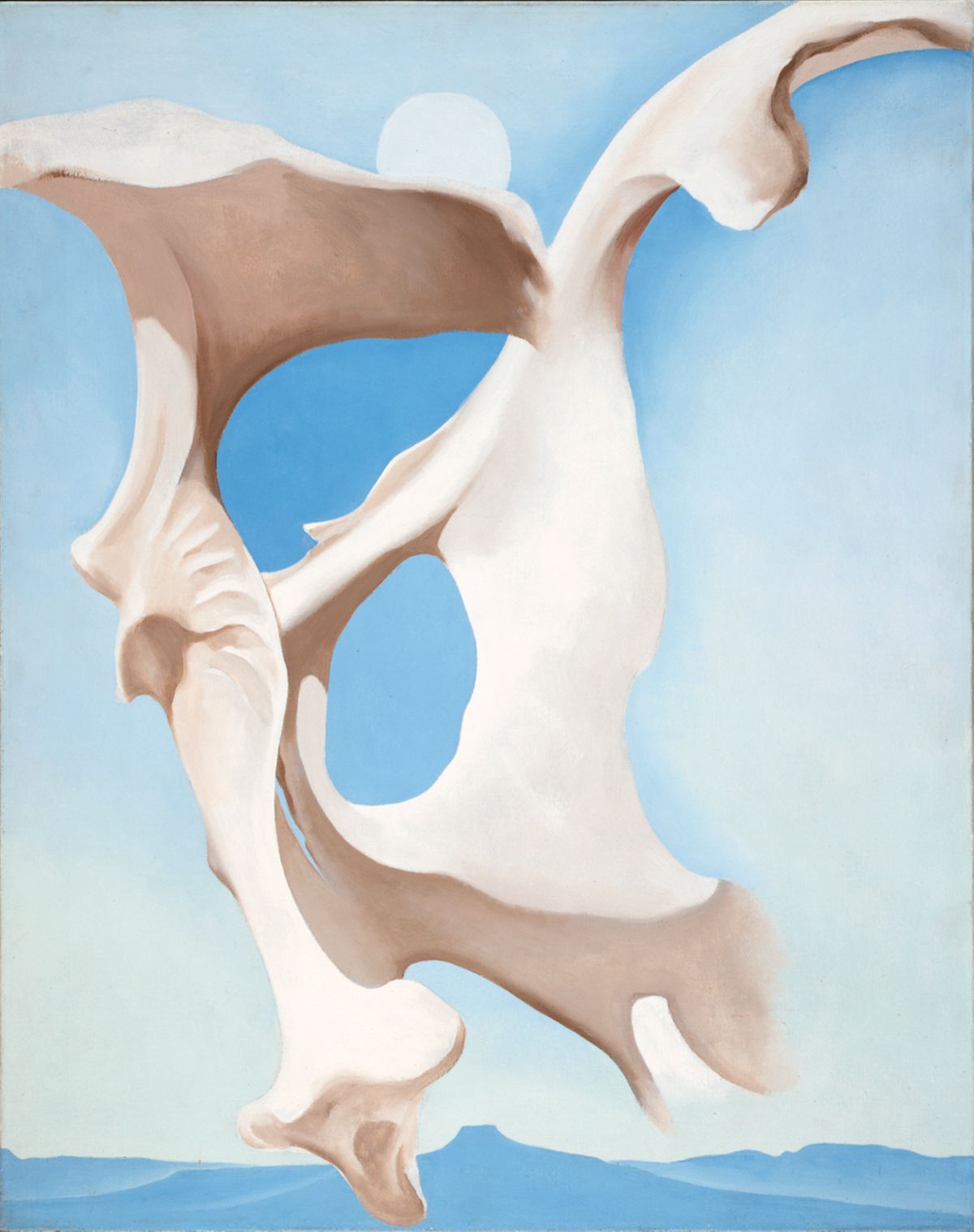 #75
#75
Pelvis with the Moon - New Mexico
Beneath its apparent evidence, "Pelvis with the Moon - New Mexico" constructs a very calculated relationship between proximity, distance and rhythm. The bone is treated like an open architecture: its voids frame the sky or the earth, while its mineral whiteness dialogues with the colors of the desert. In the 1940s, the spaces of Ghost Ranch and Abiquiú became a laboratory of series: the same place changes scale, light and tension depending on the framing. Dated 1943, this painting today belonged to Norton Museum of Art. The Georgia O'Keeffe Museum file, in the Access O'Keeffe catalog raisonné, allows you to check the title, dating and catalog number and the holding institution. The image is only used to identify and comment on the work: Alpha Reproduction does not offer any reproduction of this painting. A click leads to the official website of the holding museum, which defines its own conditions of access and use. O'Keeffe does not deliver a fixed emblem; it constructs an experience of the gaze where the motif gains intensity as it is stripped of the accessory.
Image: Georgia O'Keeffe Museum - Access O'Keeffe · Documentary consultation only; no reproduction offered by Alpha Reproduction.
See the museum website →From the patios of Abiquiú to the horizons seen from an airplane, the late work gains in silence, scale and economy.
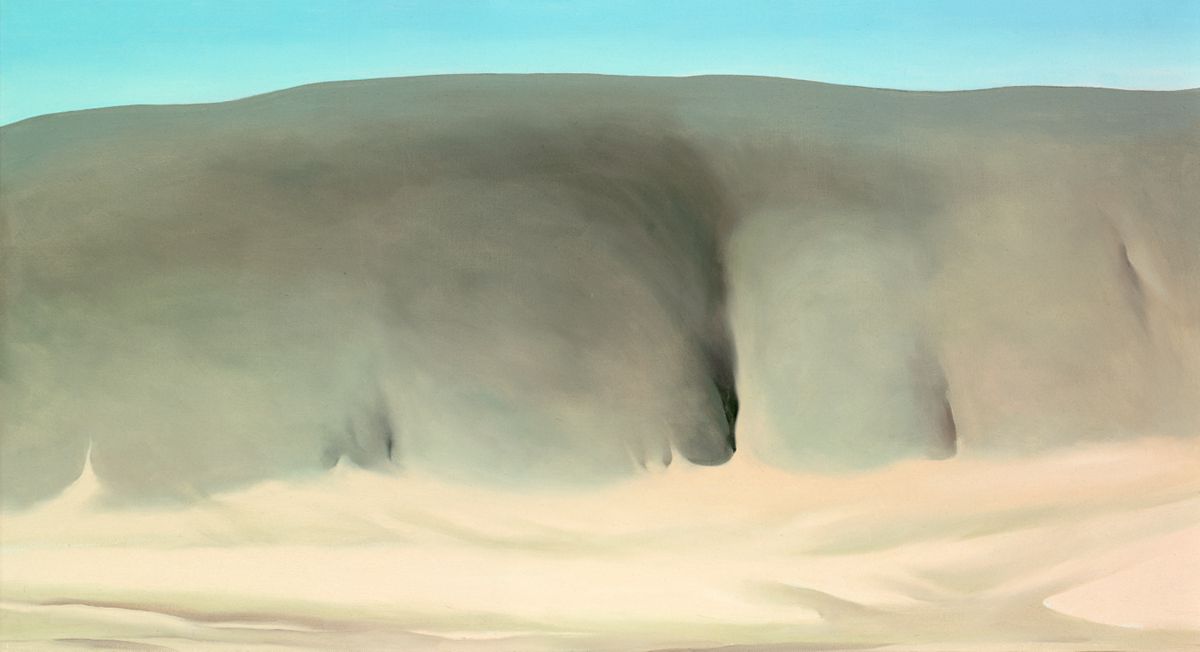 #76
#76
The Black Place
With "The Black Place", Georgia O'Keeffe transforms a precise pattern into an experience of duration, scale and color. The landscape is reduced to a few decisive relationships - horizon, curve, flat and distance - which preserve the sensation of a place without copying all the details. In the 1940s, the spaces of Ghost Ranch and Abiquiú became a laboratory of series: the same place changes scale, light and tension depending on the framing. Dated 1943, this painting became a laboratory of series: the same place changes scale, light and tension depending on the framing. Dated 1943, this painting today belongs to the Art Institute of Chicago. The Georgia O'Keeffe Museum file, in the Access O'Keeffe catalog raisonné, allows you to verify the title, dating, catalog number and institution holder. The image is only used to identify and comment on the work: Alpha Reproduction does not offer any reproduction of this painting. A click leads to the official website of the holding museum, which defines its own conditions of access and use. The painting therefore invites you to slow down: its clarity does not abolish the mystery, on the contrary it allows you to perceive the finest variations in shape and color.
Image: Georgia O'Keeffe Museum - Access O'Keeffe · Documentary consultation only; no reproduction offered by Alpha Reproduction.
See the museum website →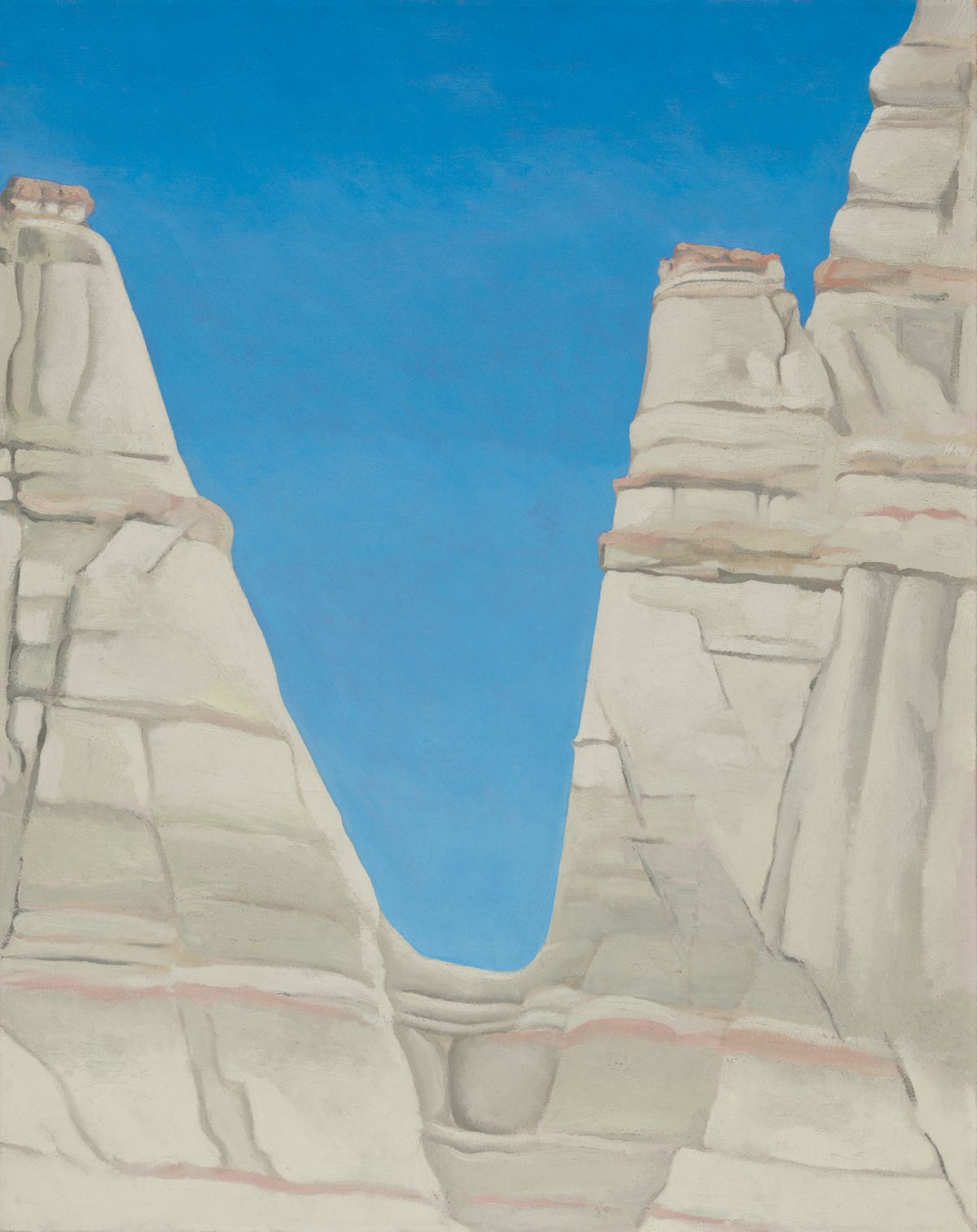 #77
#77
The White Place in Sun
"The White Place in Sun" shows how Georgia O'Keeffe knows how to condense a sensation into an immediately readable composition. The landscape is reduced to a few decisive relationships - horizon, curve, flat areas and distance - which preserve the sensation of a place without copying all the details. In the 1940s, the spaces of Ghost Ranch and Abiquiú became a laboratory of series: the same place changes scale, light and tension depending on the framing. Dated 1943, this painting became a laboratory of series: the same place changed scale, light and tension depending on the framing. Dated 1943, this painting today belonged to the Art Institute of Chicago. The Georgia O'Keeffe Museum file, in the Access O'Keeffe catalog raisonné, allows you to check the title, dating, catalog number and the holding institution. The image is only used to identify and comment on the work: Alpha Reproduction does not offer any reproduction of this painting. A click leads to the official website of the holding museum, which defines its own conditions of access and use. The work thus remains concrete without becoming anecdotal: it requires less recognition of an object than testing the way in which it occupies the visual field.
Image: Georgia O'Keeffe Museum - Access O'Keeffe · Documentary consultation only; no reproduction offered by Alpha Reproduction.
See the museum website →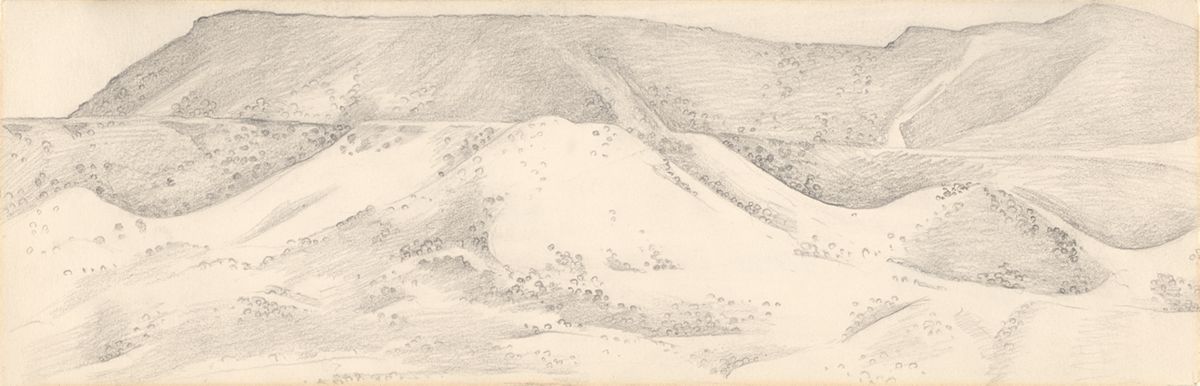 #78
#78
Abiquiu Mesa I
In "Abiquiú Mesa I", the gaze advances slowly between the contours, the flat areas and the intervals left open. The landscape is reduced to a few decisive relationships - horizon, curve, flat areas and distance - which preserve the sensation of a place without copying all the details. In the 1940s, the spaces of Ghost Ranch and Abiquiú became a laboratory of series: the same place changes scale, light and tension depending on the framing. Dated 1944 -1945, this painting today belonged to Georgia O'Keeffe Museum: the same place changes scale, light and tension depending on the framing. Dated 1944 -1945, this painting today belongs to Georgia O'Keeffe Museum. The Georgia O'Keeffe Museum file, in the Access O'Keeffe catalog raisonné, allows you to check the title, dating, catalog number and the holding institution. The image is only used to identify and comment on the work: Alpha Reproduction does not offer any reproduction of this painting. A click leads to the official website of the holding museum, which defines its own conditions of access and use. This tension explains its lasting presence: the image seems simple, but each outline modifies the relationship between what is close, what is distant and what goes beyond the frame.
Image: Georgia O'Keeffe Museum - Access O'Keeffe · Documentary consultation only; no reproduction offered by Alpha Reproduction.
See the museum website →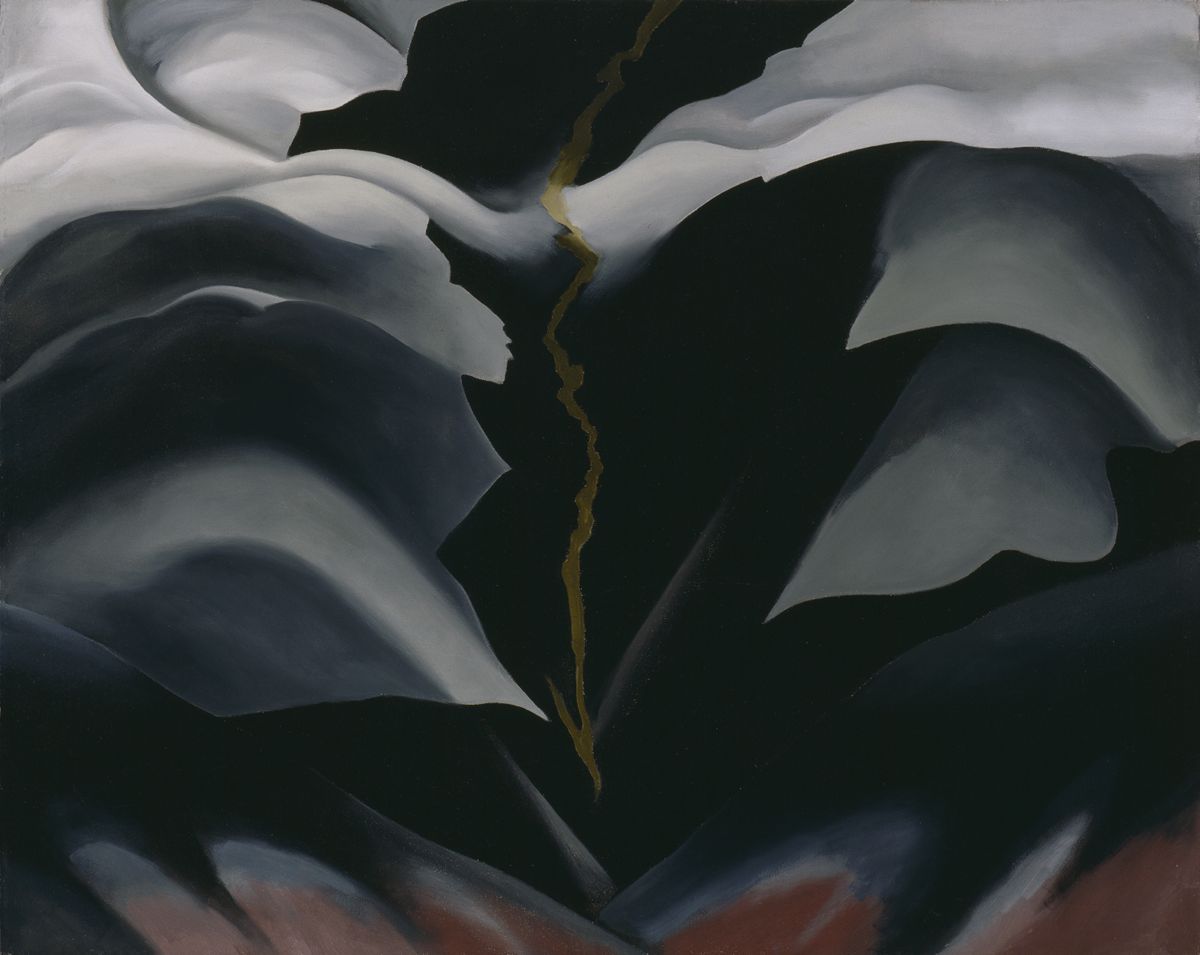 #79
#79
Black Place II
The strength of "Black Place II" comes from a balance between careful observation and voluntary simplification. The landscape is reduced to a few decisive relationships - horizon, curve, flat areas and distance - which preserve the sensation of a place without copying all the details. In the 1940s, the spaces of Ghost Ranch and Abiquiú became a laboratory of series: the same place changes scale, light and tension depending on the framing. Dated 1944, this painting today belonged to Metropolitan Museum of Art (The Met). The same place changes scale, light and tension depending on the framing. Dated 1944, this painting now belongs to Metropolitan Museum of Art (The Met). The Georgia O'Keeffe Museum file, in the Access O'Keeffe catalog raisonné, allows you to verify the title, dating, catalog number and institution holder. The image is only used to identify and comment on the work: Alpha Reproduction does not offer any reproduction of this painting. A click leads to the official website of the holding museum, which defines its own conditions of access and use. O'Keeffe does not deliver a fixed emblem; it constructs an experience of the gaze where the motif gains intensity as it is stripped of the accessory.
Image: Georgia O'Keeffe Museum - Access O'Keeffe · Documentary consultation only; no reproduction offered by Alpha Reproduction.
See the museum website →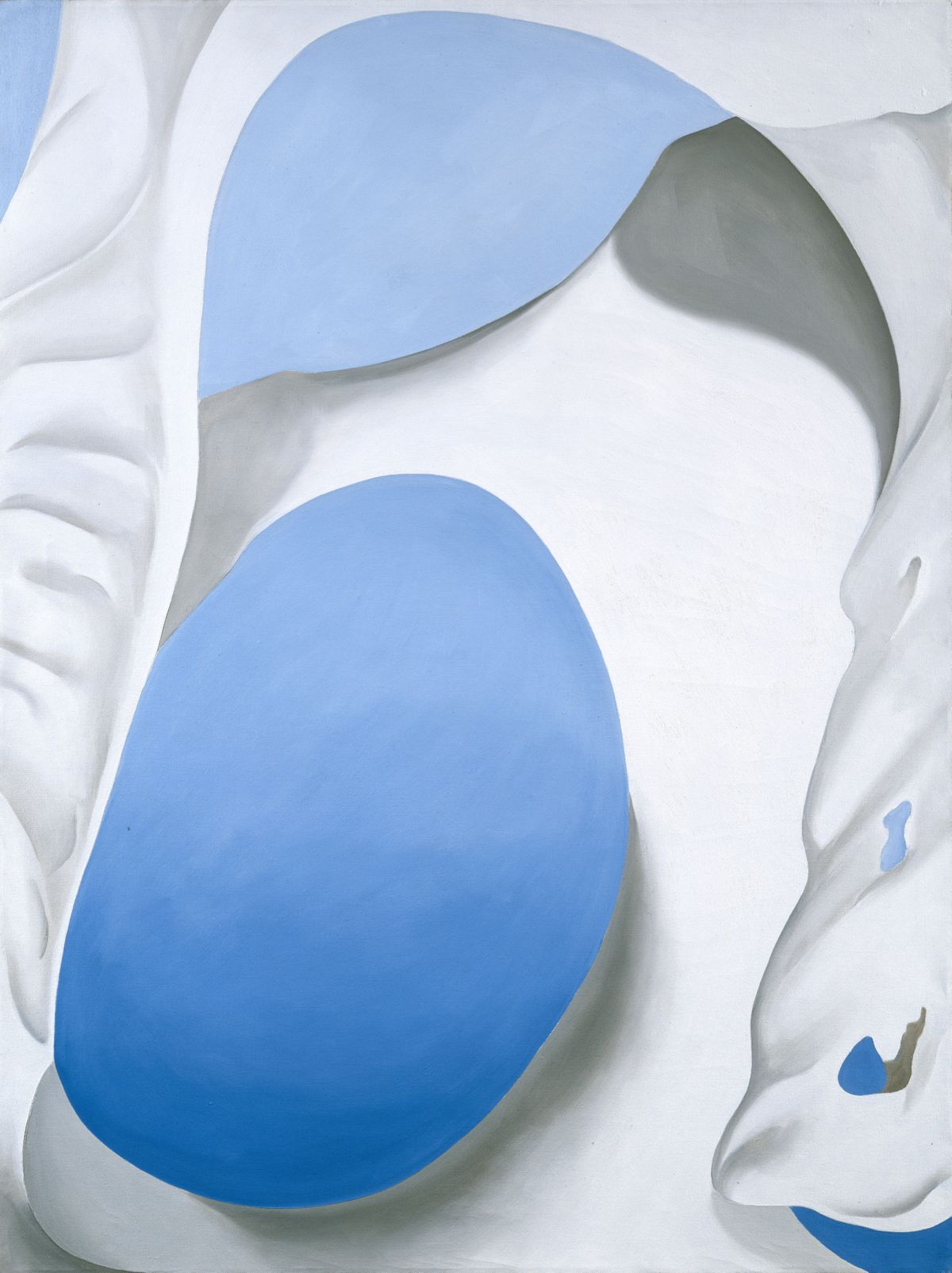 #80
#80
Pelvis II
Beneath its apparent evidence, "Pelvis II" constructs a very calculated relationship between proximity, distance and rhythm. The bone is treated like an open architecture: its voids frame the sky or the earth, while its mineral whiteness dialogues with the colors of the desert. In the 1940s, the spaces of Ghost Ranch and Abiquiú became a laboratory of series: the same place changes scale, light and tension depending on the framing. Dated 1944, this painting today belonged to Metropolitan Museum of Art (The Met). The same place changes scale, light and tension depending on the framing. Dated 1944, this painting now belongs to Metropolitan Museum of Art (The Met). The Georgia O'Keeffe Museum file, in the Access O'Keeffe catalog raisonné, allows you to check the title, dating, catalog number and the holding institution. The image is only used to identify and comment on the work: Alpha Reproduction does not offer any reproduction of this painting. A click leads to the official website of the holding museum, which defines its own conditions of access and use. The painting therefore invites you to slow down: its clarity does not abolish the mystery, on the contrary it allows you to perceive the finest variations in shape and color.
Image: Georgia O'Keeffe Museum - Access O'Keeffe · Documentary consultation only; no reproduction offered by Alpha Reproduction.
See the museum website →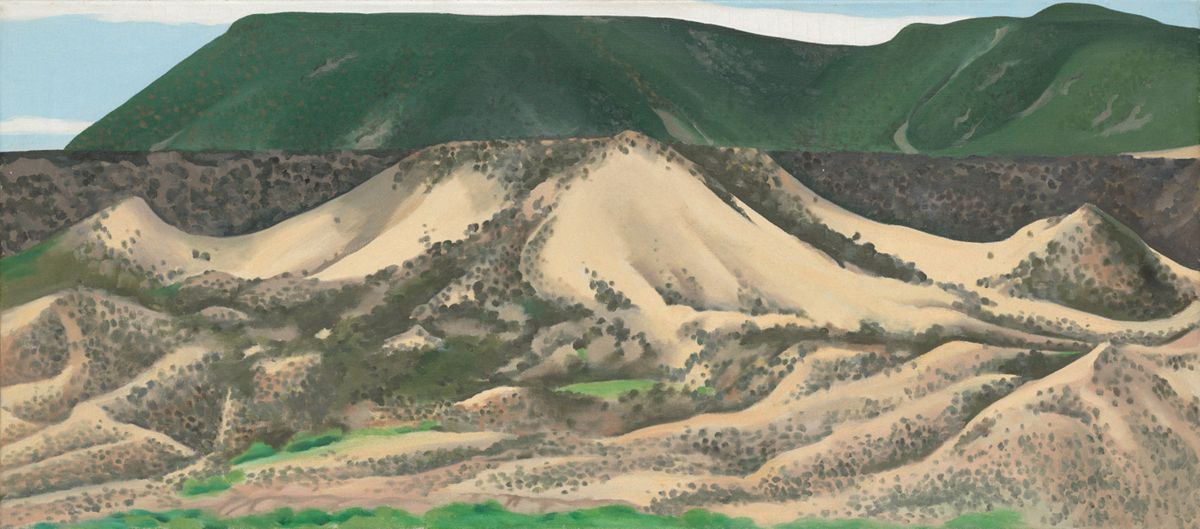 #81
#81
Abiquiu Sand Hills and Mesa
With "Abiquiú Sand Hills and Mesa", Georgia O'Keeffe transforms a precise pattern into an experience of duration, scale and color. The landscape is reduced to a few decisive relationships - horizon, curve, flat and distance - which preserve the sensation of a place without copying all the details. In the 1940s, the spaces of Ghost Ranch and Abiquiú became a laboratory of series: the same place changes scale, light and tension depending on the framing. Dated 1945, this painting today belonged to the Art Institute of Chicago. The same place changes scale, light and tension according to the framing. Dated 1945, this painting now belongs to the Art Institute of Chicago. The Georgia O'Keeffe Museum file, in the Access O'Keeffe catalog raisonné, allows you to check the title, dating, catalog number and the holding institution. The image is only used to identify and comment on the work: Alpha Reproduction does not offer any reproduction of this painting. A click leads to the official website of the holding museum, which defines its own conditions of access and use. The work thus remains concrete without becoming anecdotal: it requires less recognition of an object than testing the way in which it occupies the visual field.
Image: Georgia O'Keeffe Museum - Access O'Keeffe · Documentary consultation only; no reproduction offered by Alpha Reproduction.
See the museum website →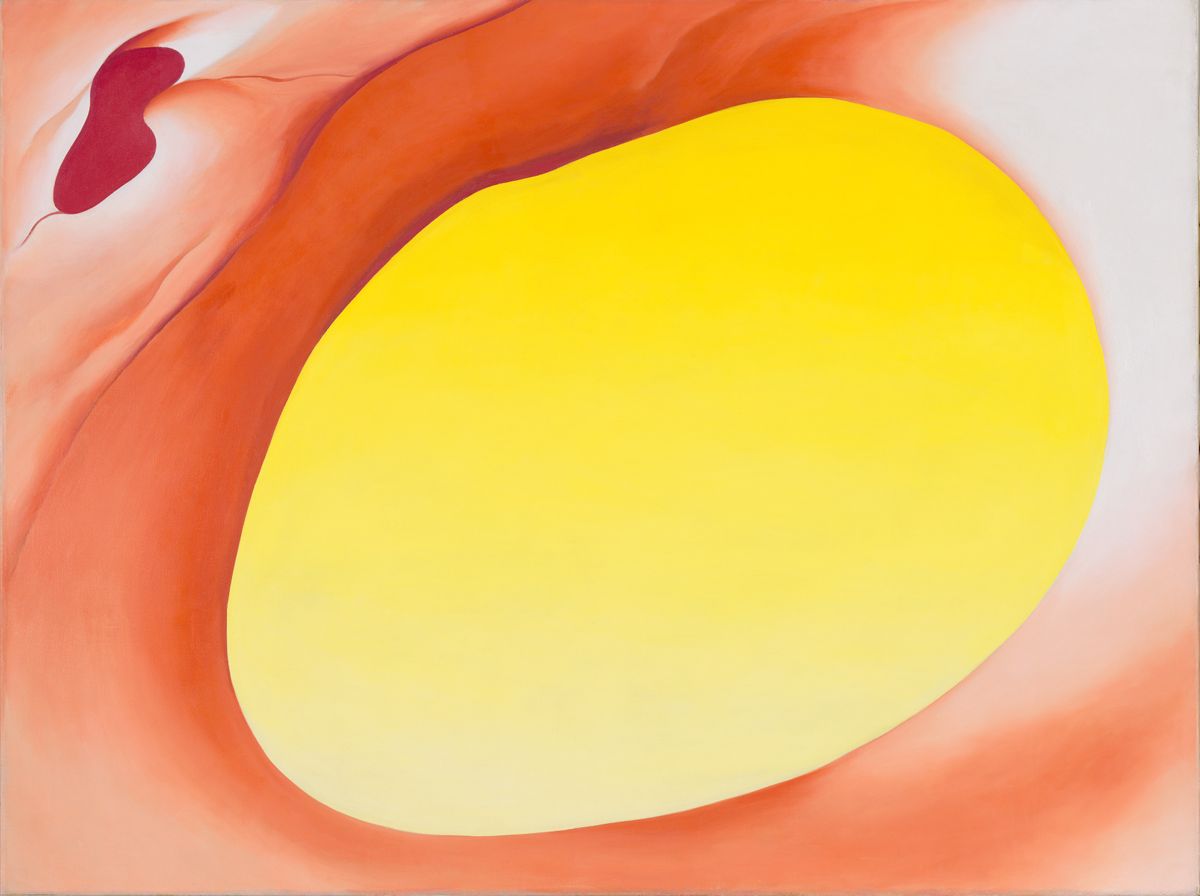 #82
#82
Pelvis Series, Red with Yellow
"Pelvis Series, Red with Yellow" shows how Georgia O'Keeffe knows how to condense a sensation into an immediately readable composition. The bone is treated like an open architecture: its voids frame the sky or the earth, while its mineral whiteness dialogues with the colors of the desert. In the 1940s, the spaces of Ghost Ranch and Abiquiú became a laboratory of series: the same place changes scale, light and tension depending on the framing. Dated 1945, this painting today belonged to Georgia O'Keeffe Museum. The Georgia O'Keeffe Museum file, in the Access O'Keeffe catalog raisonné, allows you to check the title, dating, number of catalog and the holding institution. The image is only used to identify and comment on the work: Alpha Reproduction does not offer any reproduction of this painting. A click leads to the official website of the holding museum, which defines its own conditions of access and use. This tension explains its lasting presence: the image seems simple, but each outline modifies the relationship between what is close, what is distant and what goes beyond the frame.
Image: Georgia O'Keeffe Museum - Access O'Keeffe · Documentary consultation only; no reproduction offered by Alpha Reproduction.
See the museum website →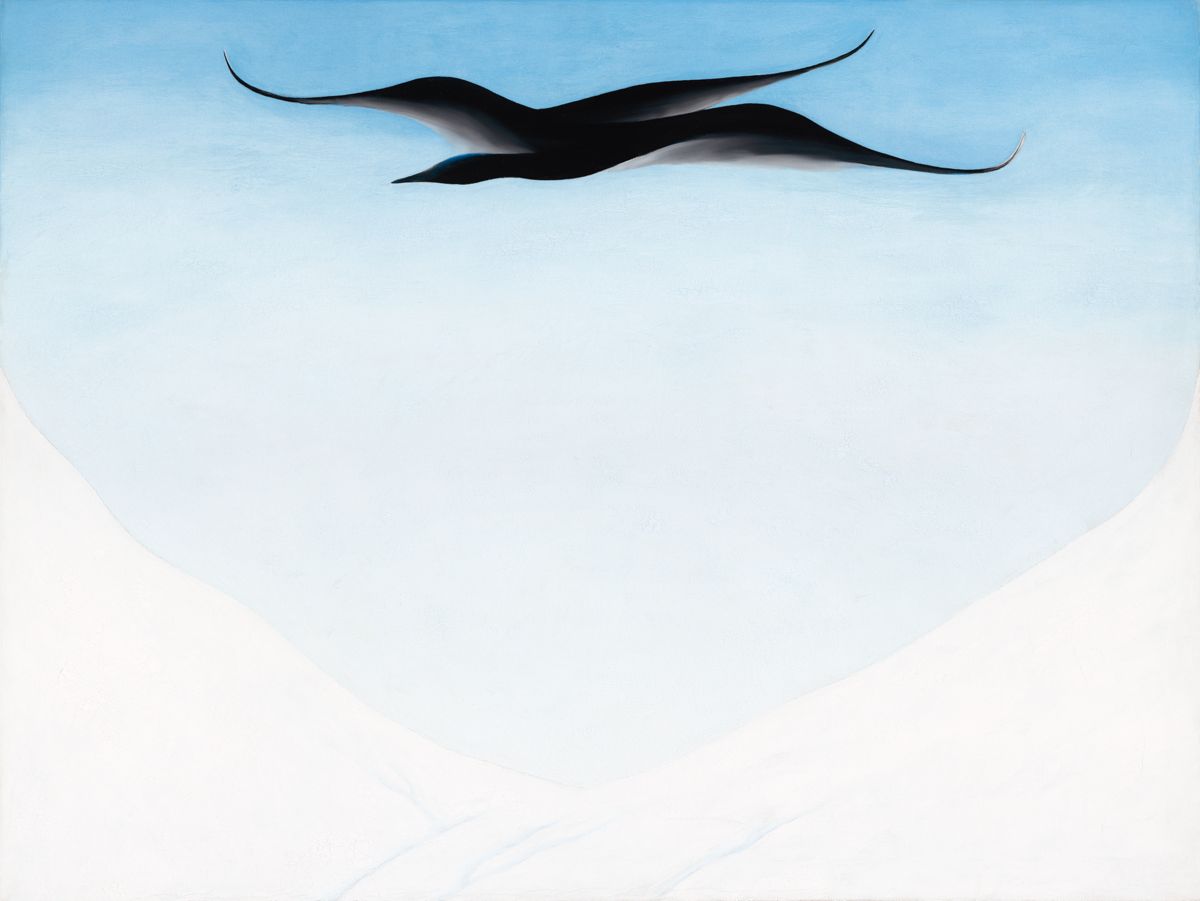 #83
#83
A Black Bird with Snow-Covered Red Hills
In "A Black Bird with Snow-Covered Red Hills", the gaze moves slowly between the contours, the flat areas and the intervals left open. The landscape is reduced to a few decisive relationships - horizon, curve, flat areas and distance - which preserve the sensation of a place without copying all the details. In the 1940s, the spaces of Ghost Ranch and Abiquiú became a laboratory of series: the same place changes scale, light and tension depending on the framing. Dated 1946, this painting became a laboratory of series: the same place changes scale, light and tension depending on the framing. Dated 1946, this painting today belonged to the National Gallery of Art (NGA). The Georgia O'Keeffe Museum file, in the Access O'Keeffe catalog raisonné, allows you to check the title, the dating, the number catalog and the holding institution. The image is only used to identify and comment on the work: Alpha Reproduction does not offer any reproduction of this painting. A click leads to the official website of the holding museum, which defines its own conditions of access and use. O'Keeffe does not deliver a fixed emblem; it constructs an experience of the gaze where the motif gains intensity as it is.
Image: Georgia O'Keeffe Museum - Access O'Keeffe · Documentary consultation only; no reproduction offered by Alpha Reproduction.
See the museum website →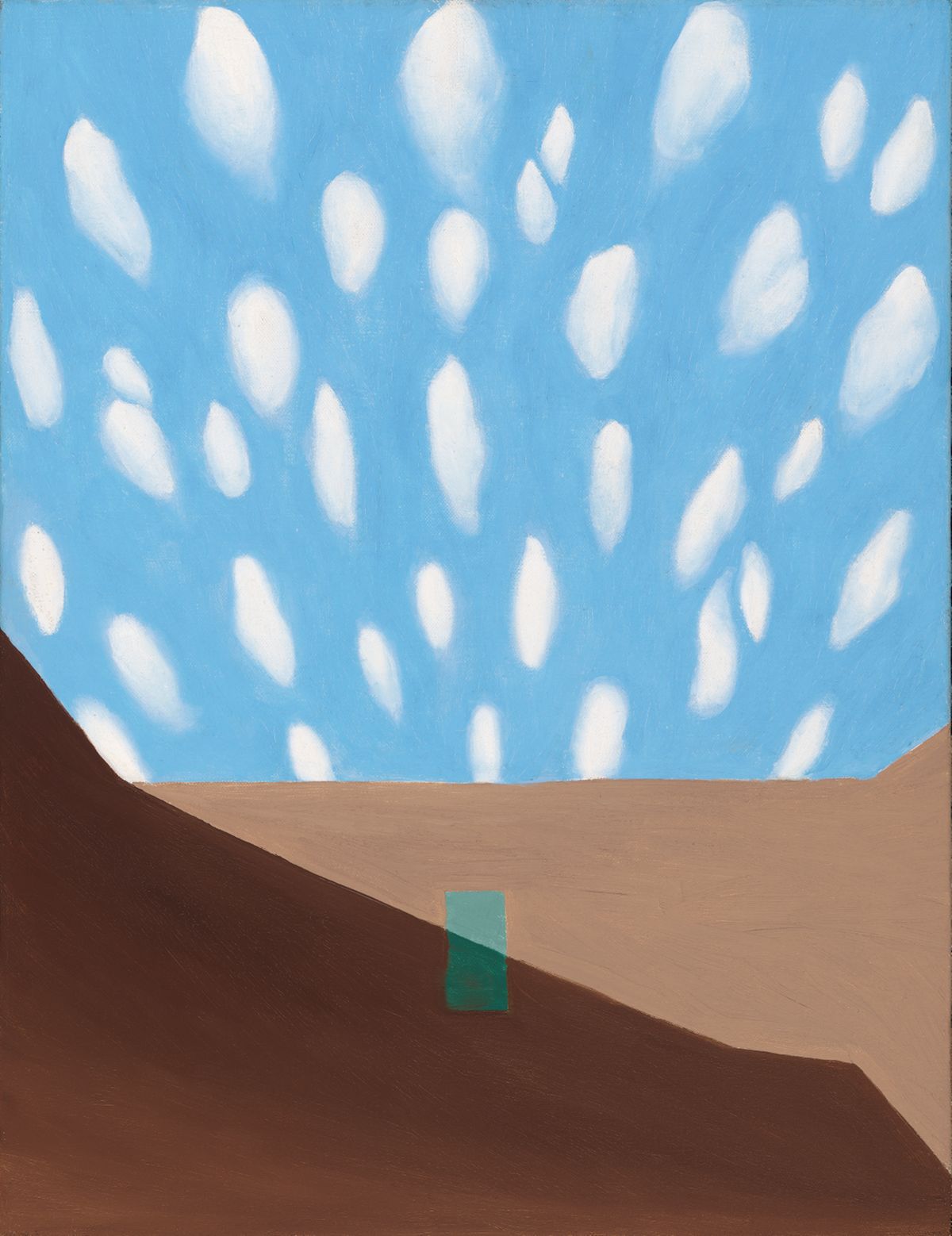 #84
#84
In the Patio VIII
The strength of "In the Patio VIII" comes from a balance between careful observation and voluntary simplification. The landscape is reduced to a few decisive relationships - horizon, curve, flat areas and distance - which preserve the sensation of a place without copying all the details. The doors, patios and roads of the 1950s further tighten the composition; a few colorful plans are now enough to make you feel the depth, silence and warmth. The doors, patios and roads of the 1950s further tighten the composition; a few colorful plans are now enough to make you feel the depth, silence and warmth. Dated 1950, this painting now belongs to Georgia O'Keeffe Museum. A few colorful plans are now enough to make you feel the depth, silence and warmth. Dated 1950, this painting now belongs to Georgia O'Keeffe Museum. A few colorful plans are now enough to make you feel the depth, silence and warmth. Dated 1950, this painting now belongs to Georgia O'Keeffe Museum. A few colorful plans are now enough to make you feel the depth, silence and warmth. Dated 1950, this painting now belongs to Georgia O'Keeffe Museum. A few colorful plans are now enough to make you feel the depth, silence and warmth. Dated 1950, this painting now belongs to Georgia O'Keeffe holder. The image is only used to identify and comment on the work: Alpha Reproduction does not offer any reproduction of this painting. A click leads to the official website of the holding museum, which defines its own conditions of access and use. The painting therefore invites you to slow down: its clarity does not abolish the mystery, on the contrary it allows you to perceive the finest variations in shape and color.
Image: Georgia O'Keeffe Museum - Access O'Keeffe · Documentary consultation only; no reproduction offered by Alpha Reproduction.
See the museum website →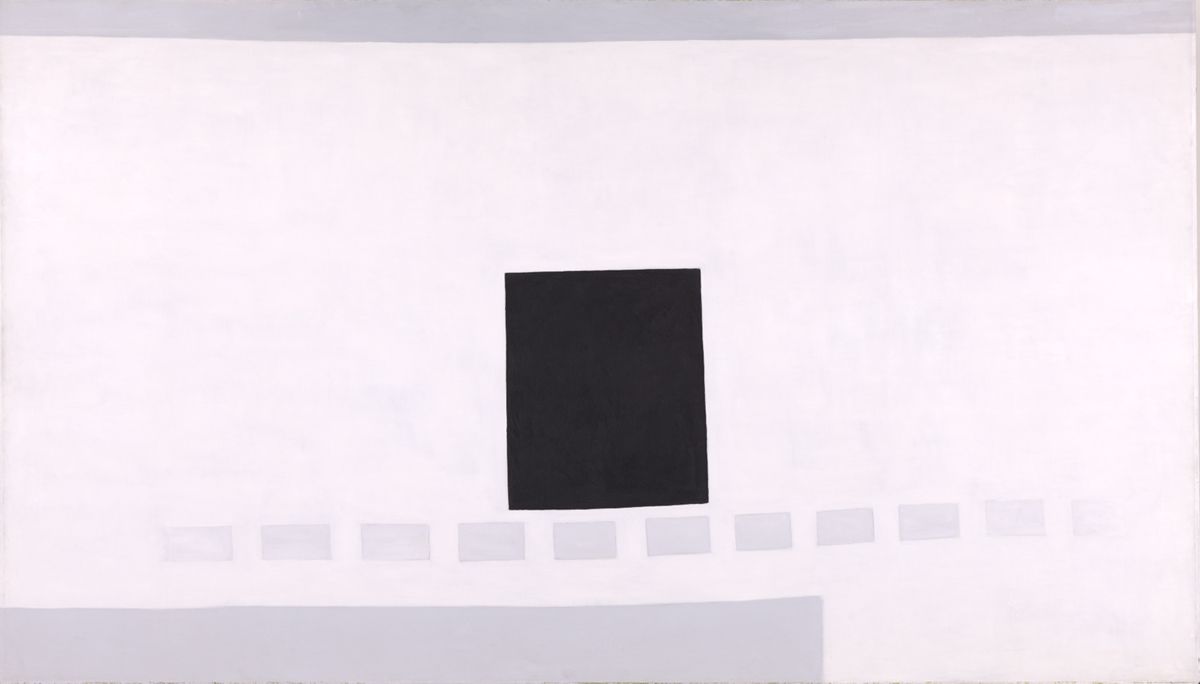 #85
#85
My Last Door
Beneath its apparent evidence, "My Last Door" constructs a very calculated relationship between proximity, distance and rhythm. The landscape is reduced to a few decisive relationships - horizon, curve, flat and distance - which preserve the sensation of a place without copying all the details. The doors, patios and roads of the 1950s further tighten the composition; a few colorful plans are now enough to make you feel the depth, silence and warmth. The doors, patios and roads of the 1950s further tighten the composition; a few colorful plans are now enough to make you feel the depth, silence and warmth. Dated 1952 -1954, this painting now belongs to Georgia O'Keeffe Museum. A few colorful plans are now enough to make you feel the depth, silence and warmth. Dated 1952 -1954, this painting now belongs to Georgia O'Keeffe Museum. A few colorful plans are now enough to make you feel the depth, silence and warmth. Dated 1952 -1954, this painting now belongs to Georgia O'Keeffe Museum. A few colorful plans are now enough to make you feel the depth, silence and warmth. Dated 1952 -1954, this painting now belongs to Georgia O'Keeffe Museum. A few colorful plans are now enough to make you feel the depth, the holding institution. The image is only used to identify and comment on the work: Alpha Reproduction does not offer any reproduction of this painting. A click leads to the official website of the holding museum, which defines its own conditions of access and use. The work thus remains concrete without becoming anecdotal: it requires less recognition of an object than testing the way in which it occupies the visual field.
Image: Georgia O'Keeffe Museum - Access O'Keeffe · Documentary consultation only; no reproduction offered by Alpha Reproduction.
See the museum website →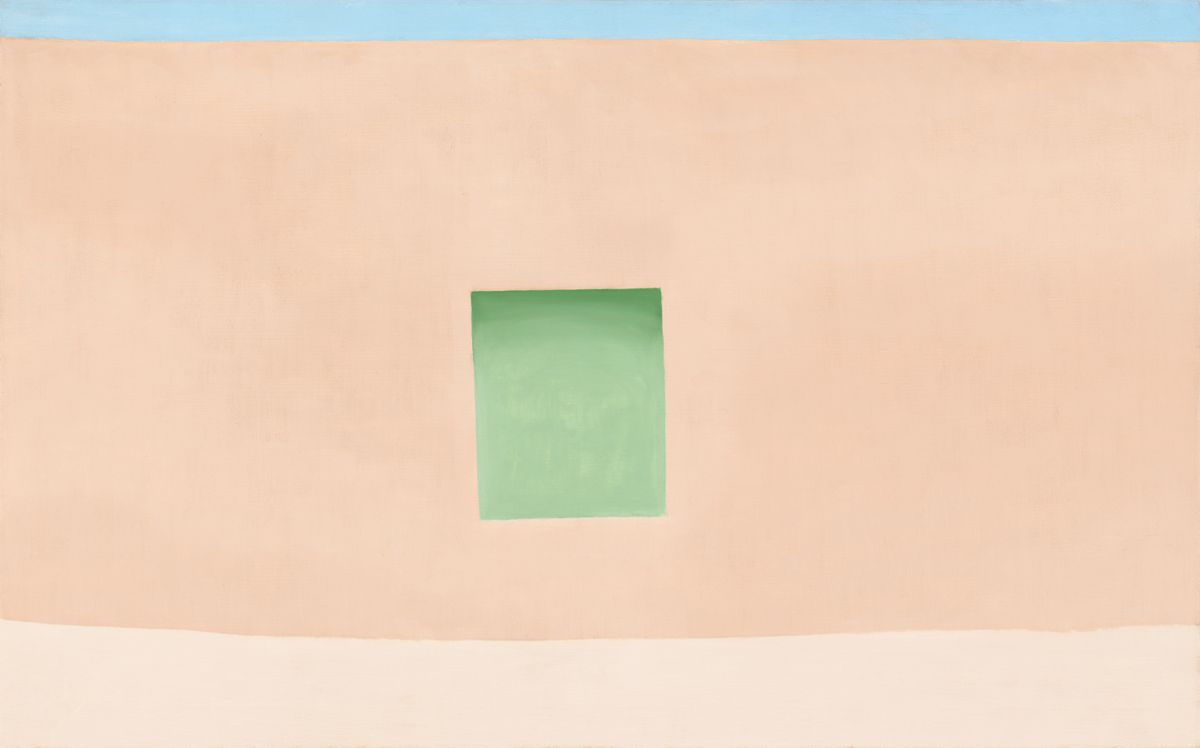 #86
#86
Wall with Green Door
With "Wall with Green Door", Georgia O'Keeffe transforms a precise pattern into an experience of duration, scale and color. The landscape is reduced to a few decisive relationships - horizon, curve, flat and distance - which preserve the sensation of a place without copying all the details. The doors, patios and roads of the 1950s further tighten the composition; a few colorful shots are now enough to make you feel the depth, silence and warmth. The doors, patios and roads of the 1950s further tighten the composition; a few colorful shots are now enough to make you feel the depth, silence and warmth. The doors, patios and roads of the 1950s further tighten the composition; a few colorful shots are now enough to make you feel the depth, silence and warmth. The doors, patios and roads of the 1950s further tighten the composition; a few colorful shots are now enough to make you feel the depth, silence and warmth. The doors, patios and roads of the 1950s further tighten the composition; a few colorful shots are now enough to make you feel the depth, silence and warmth. The doors, patios and roads of the 1950s further tighten the composition; a few colorful shots are now enough to make you feel the depth, silence and warmth. The doors, patios and roads of the 1950s further tighten the holding institution. The image is only used to identify and comment on the work: Alpha Reproduction does not offer any reproduction of this painting. A click leads to the official website of the holding museum, which defines its own conditions of access and use. This tension explains its lasting presence: the image seems simple, but each outline modifies the relationship between what is close, what is distant and what goes beyond the frame.
Image: Georgia O'Keeffe Museum - Access O'Keeffe · Documentary consultation only; no reproduction offered by Alpha Reproduction.
See the museum website →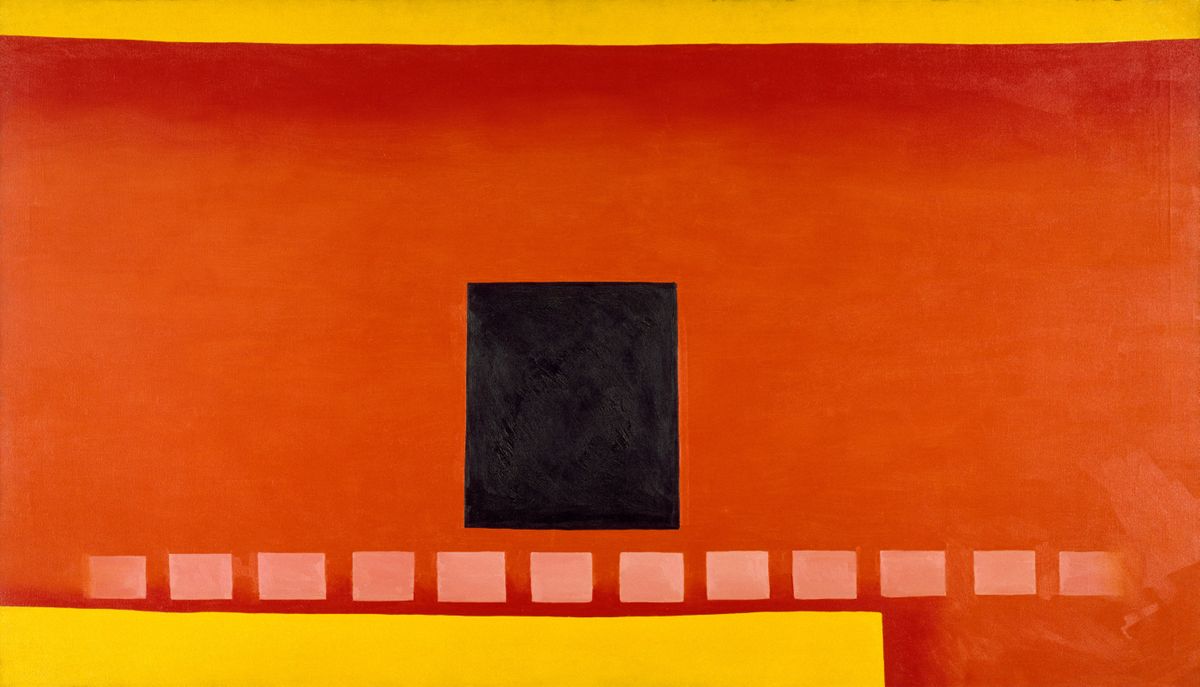 #87
#87
Black Door with Red
"Black Door with Red" shows how Georgia O'Keeffe knows how to condense a sensation into an immediately readable composition. The landscape is reduced to a few decisive relationships - horizon, curve, flat and distance - which preserve the sensation of a place without copying all the details. The doors, patios and roads of the 1950s further tighten the composition; a few colorful shots are now enough to make you feel the depth, silence and warmth. The doors, patios and roads of the 1950s further tighten the composition; a few colorful shots are now enough to make you feel the depth, silence and warmth. The doors, patios and roads of the 1950s further tighten the composition; a few colorful plans are now enough to make you feel the depth, silence and warmth. The doors, patios and roads of the 1950s further tighten the composition; a few colorful plans are now enough to make you feel the depth, silence and warmth. The doors, patios and roads of the 1950s further tighten the composition; a few colorful plans are now enough to make you feel the depth, silence and warmth. The doors, patios and roads of the 1950s further tighten the composition; a few colorful plans are now enough to make you feel the depth, silence and warmth. The doors, patios and roads of the 1950s further tighten the the holding institution. The image is only used to identify and comment on the work: Alpha Reproduction does not offer any reproduction of this painting. A click leads to the official website of the holding museum, which defines its own conditions of access and use. O'Keeffe does not deliver a fixed emblem; it constructs an experience of the gaze where the motif gains intensity as it is stripped of the accessory.
Image: Georgia O'Keeffe Museum - Access O'Keeffe · Documentary consultation only; no reproduction offered by Alpha Reproduction.
See the museum website →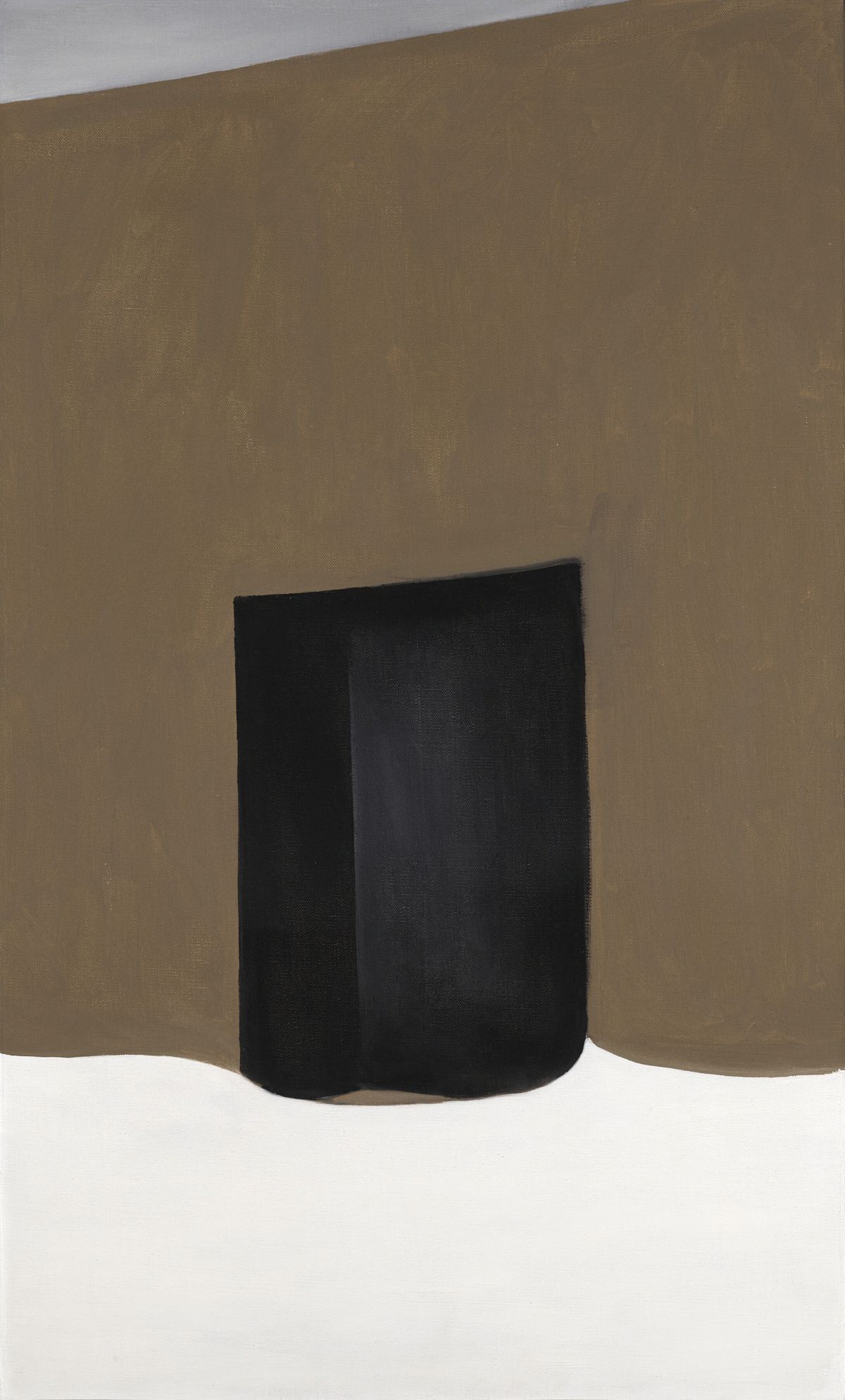 #88
#88
Black Door with Snow II
In "Black Door with Snow II", the gaze advances slowly between the contours, the flat areas and the intervals left open. The landscape is reduced to a few decisive relationships - horizon, curve, flat areas and distance - which preserve the sensation of a place without copying all the details. The doors, patios and roads of the 1950s further tighten the composition; a few colorful shots are now enough to make you feel the depth, silence and warmth. The doors, patios and roads of the 1950s further tighten the composition; a few colorful shots are now enough to make you feel the depth, silence and warmth. The doors, patios and roads of the 1950s further tighten the composition; a few colorful shots are now enough to make you feel the depth, silence and warmth. The doors, patios and roads of the 1950s further tighten the composition; a few colorful shots are now enough to make you feel the depth, silence and warmth. The doors, patios and roads of the 1950s further tighten the composition; a few colorful shots are now enough to make you feel the depth, silence and warmth. The doors, patios and roads of the 1950s further tighten the composition; a few colorful shots are now enough to make you feel the depth, silence and warmth. The doors, patios and roads of the 1950s further tighten the composition the holding institution. The image is only used to identify and comment on the work: Alpha Reproduction does not offer any reproduction of this painting. A click leads to the official website of the holding museum, which defines its own conditions of access and use. The painting therefore invites you to slow down: its clarity does not abolish the mystery, on the contrary it allows you to perceive the finest variations in shape and color.
Image: Georgia O'Keeffe Museum - Access O'Keeffe · Documentary consultation only; no reproduction offered by Alpha Reproduction.
See the museum website →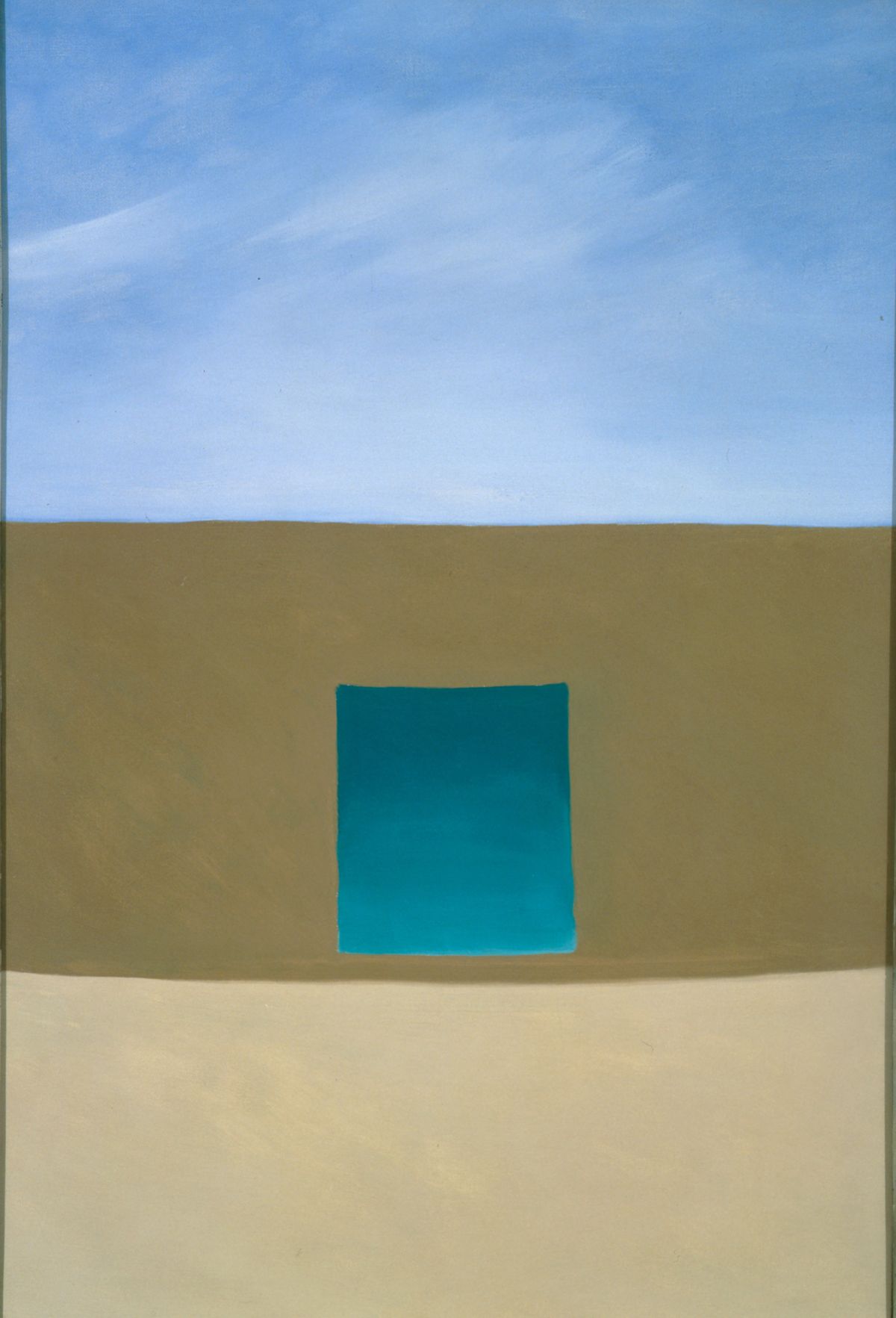 #89
#89
Green Patio Door
The strength of "Green Patio Door" comes from a balance between careful observation and voluntary simplification. The landscape is reduced to a few decisive relationships - horizon, curve, flat areas and distance - which preserve the sensation of a place without copying all the details. The doors, patios and roads of the 1950s further tighten the composition; a few colorful plans are now enough to make you feel the depth, silence and warmth. The doors, patios and roads of the 1950s further tighten the composition; a few colorful plans are now enough to make you feel the depth, silence and warmth. Dated 1955, this painting now belongs to Buffalo AKG Art Museum. A few colorful plans are now enough to make you feel the depth, silence and warmth. Dated 1955, this painting now belongs to Buffalo AKG Art Museum. A few colorful plans are now enough to make you feel the depth, silence and warmth. Dated 1955, this painting now belongs to Buffalo AKG Art Museum. A few colorful plans are now enough to make you feel the depth, silence and warmth. Dated 1955, this painting now belongs to Buffalo AKG Art Museum. A few colorful plans are now enough to make you feel the depth, silence and warmth. Dated 1955, this painting now holder. The image is used only to identify and comment on the work: Alpha Reproduction does not offer any reproduction of this painting. A click leads to the official website of the holding museum, which defines its own conditions of access and use. The work thus remains concrete without becoming anecdotal: it requires less recognition of an object than testing the way in which it occupies the visual field.
Image: Georgia O'Keeffe Museum - Access O'Keeffe · Documentary consultation only; no reproduction offered by Alpha Reproduction.
See the museum website →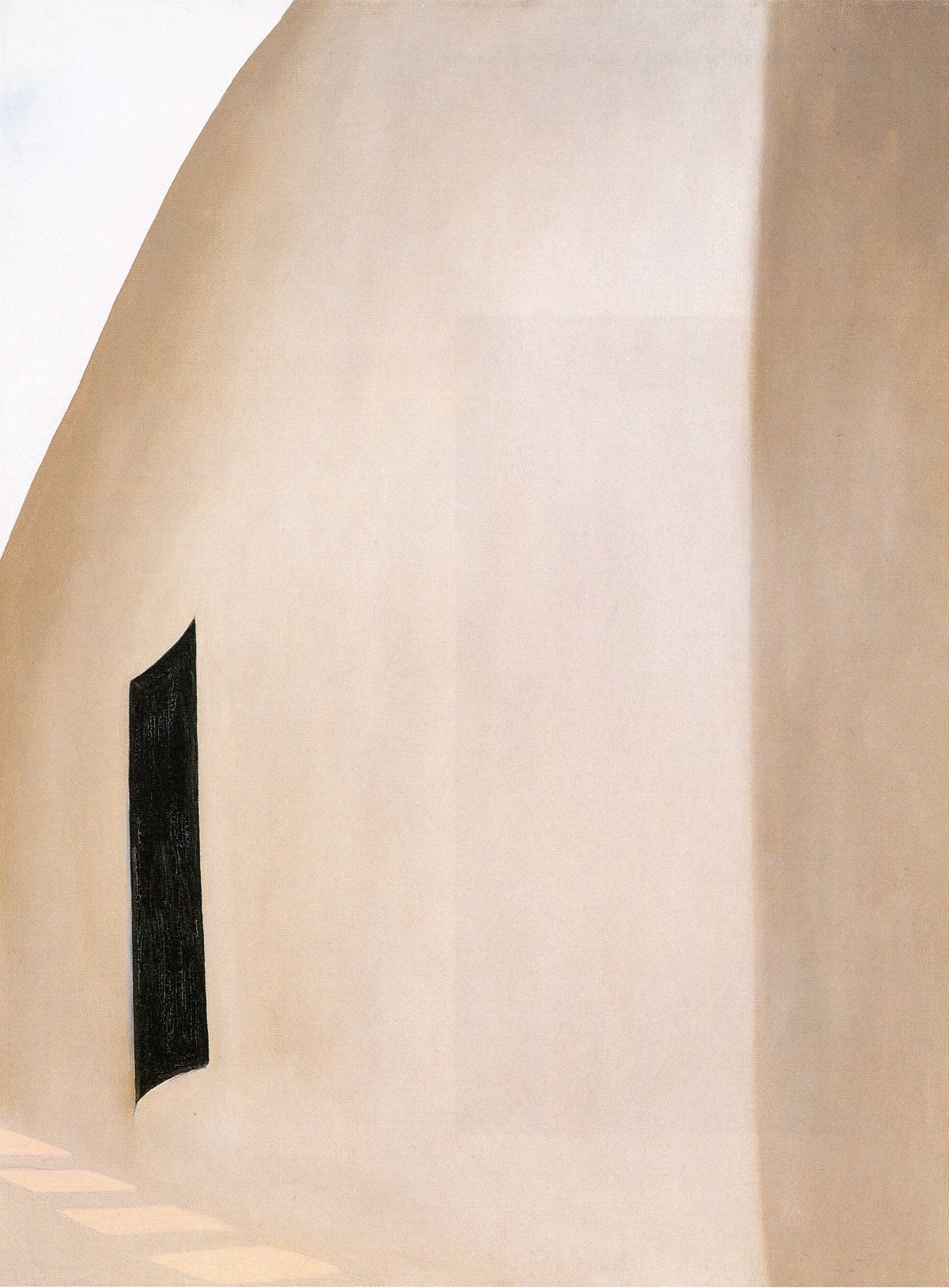 #90
#90
Patio with Black Door
Beneath its apparent evidence, "Patio with Black Door" constructs a very calculated relationship between proximity, distance and rhythm. The landscape is reduced to a few decisive relationships - horizon, curve, flat and distance - which preserve the sensation of a place without copying all the details. The doors, patios and roads of the 1950s further tighten the composition; a few colorful shots are now enough to make you feel the depth, silence and warmth. The doors, patios and roads of the 1950s further tighten the composition; a few colorful shots are now enough to make you feel the depth, silence and warmth. The doors, patios and roads of the 1950s further tighten the composition; a few colorful shots are now enough to make you feel the depth, silence and warmth. The doors, patios and roads of the 1950s further tighten the composition; a few colorful shots are now enough to make you feel the depth, the silence and the warmth. Dated 1955, this painting now belongs to Museum of Fine Arts (MFA Boston). A few colorful plans are now enough to make you feel the depth, the silence and the warmth. Dated 1955, this painting now belongs to Museum of Fine Arts (MFA Boston). A few colorful plans are now enough to make you feel catalog and the holding institution. The image is only used to identify and comment on the work: Alpha Reproduction does not offer any reproduction of this painting. A click leads to the official website of the holding museum, which defines its own conditions of access and use. This tension explains its lasting presence: the image seems simple, but each outline modifies the relationship between what is close, what is distant and what goes beyond the frame.
Image: Georgia O'Keeffe Museum - Access O'Keeffe · Documentary consultation only; no reproduction offered by Alpha Reproduction.
See the museum website →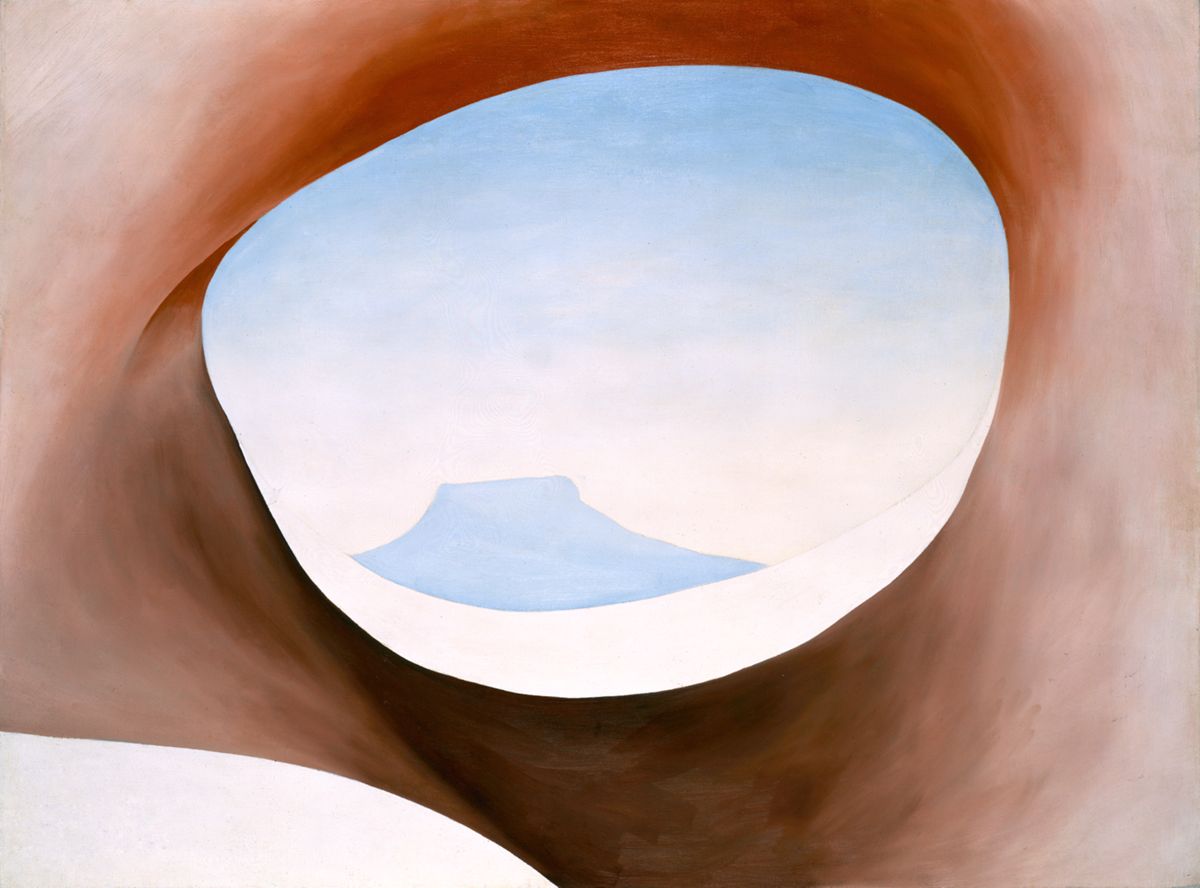 #91
#91
Pedernal - From the Ranch I
With "Pedernal - From the Ranch I", Georgia O'Keeffe transforms a precise pattern into an experience of duration, scale and color. The landscape is reduced to a few decisive relationships - horizon, curve, flat and distance - which preserve the sensation of a place without copying all the details. The doors, patios and roads of the 1950s further tighten the composition; a few colorful shots are now enough to make you feel the depth, silence and warmth. The doors, patios and roads of the 1950s further tighten the composition; a few colorful shots are now enough to make you feel the depth, silence and warmth. The doors, patios and roads of the 1950s further tighten the composition; a few colorful shots are now enough to make you feel the depth, the silence and the warmth. The doors, patios and roads of the 1950s further tighten the composition; a few colorful shots are now enough to make you feel the depth, the silence and the warmth. The doors, patios and roads of the 1950s further tighten the composition; a few colorful shots are now enough to make you feel the depth, the silence and the warmth. The doors, patios and roads of the 1950s further tighten the composition; a few colorful shots are now enough to make you feel the catalog and the holding institution. The image is only used to identify and comment on the work: Alpha Reproduction does not offer any reproduction of this painting. A click leads to the official website of the holding museum, which defines its own conditions of access and use. O'Keeffe does not deliver a fixed emblem; it constructs an experience of the gaze where the motif gains intensity as it is stripped of the accessory.
Image: Georgia O'Keeffe Museum - Access O'Keeffe · Documentary consultation only; no reproduction offered by Alpha Reproduction.
See the museum website →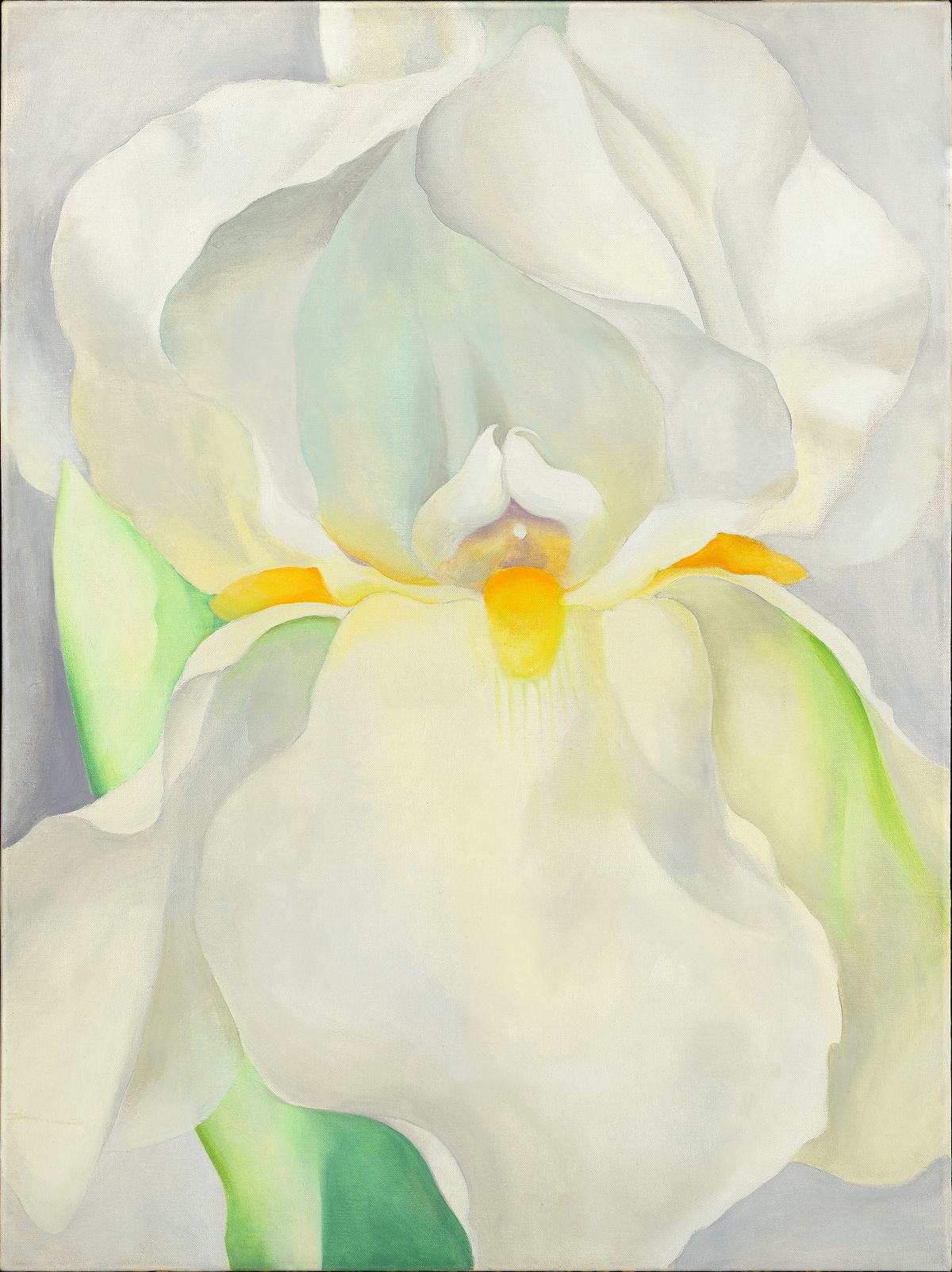 #92
#92
White Iris No. 7
"White Iris No. 7" shows how Georgia O'Keeffe knows how to condense a sensation into an immediately readable composition. The close framing does not transform the flower into a simple symbol: it forces us to look at its folds, its tensions and its passages of color like an autonomous landscape. The doors, patios and roads of the 1950s further tighten the composition; a few colored plans are now enough to make you feel the depth, silence and warmth. Dated 1957, this painting now belongs to Museo Nacional Thyssen-Bornemisza. a few colored plans are now enough to make you feel the depth, the silence and the warmth. Dated 1957, this painting now belongs to Museo Nacional Thyssen-Bornemisza. A few colored plans are now enough to make you feel the depth, the silence and the warmth. Dated 1957, this painting now belongs to Museo Nacional Thyssen-Bornemisza. A few colored plans are now enough to make you feel the depth, the silence and the warmth. Dated 1957, this painting now belongs to Museo Nacional Thyssen-Bornemisza. A few colored plans are now enough to make you feel catalog and the holding institution. The image is only used to identify and comment on the work: Alpha Reproduction does not offer any reproduction of this painting. A click leads to the official website of the holding museum, which defines its own conditions of access and use. The painting therefore invites you to slow down: its clarity does not abolish the mystery, on the contrary it allows you to perceive the finest variations in shape and color.
Image: Georgia O'Keeffe Museum - Access O'Keeffe · Documentary consultation only; no reproduction offered by Alpha Reproduction.
See the museum website →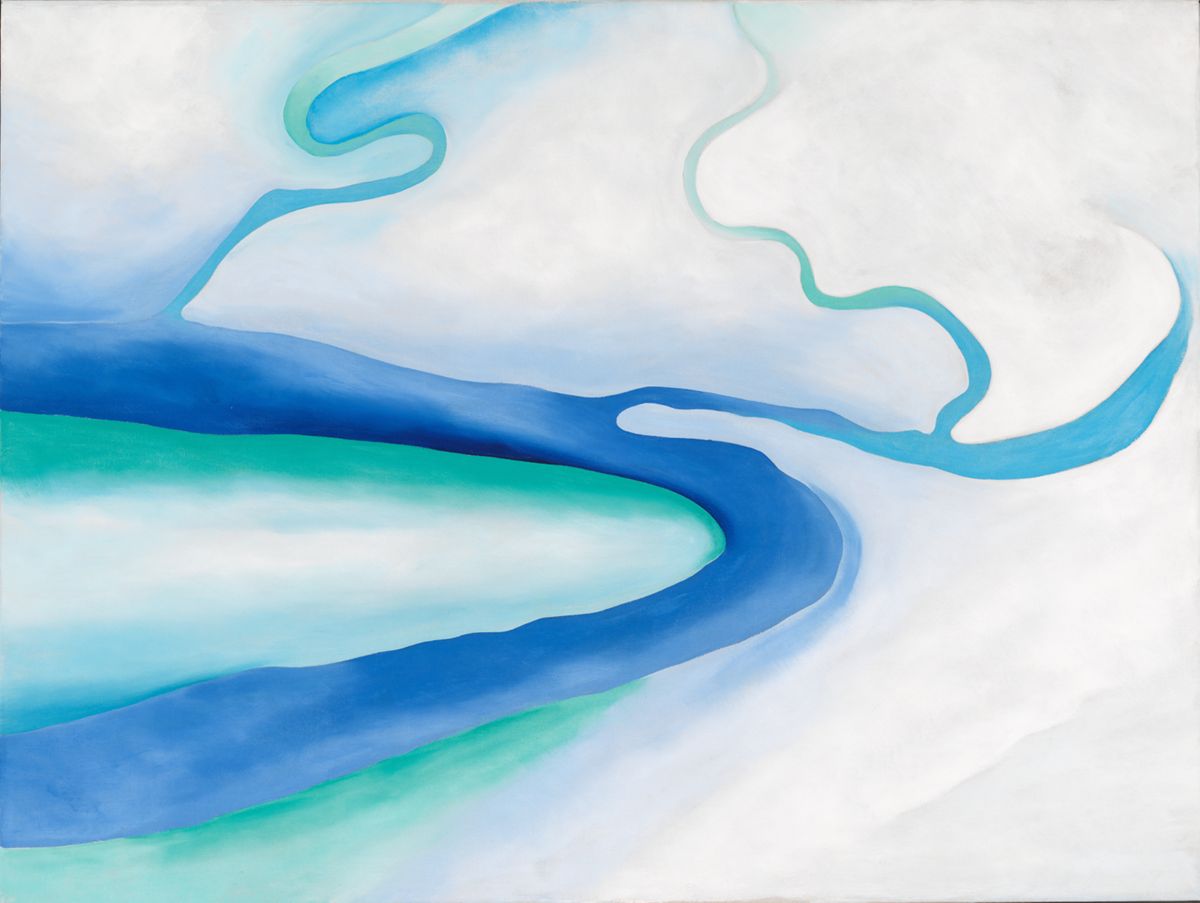 #93
#93
It Was Blue and Green
In "It Was Blue and Green", the gaze advances slowly between the contours, the flat areas and the intervals left open. The composition is based on a circulation of shapes and colors which reflects a sensation experienced without enclosing it in a literal description. Late works extend the gaze towards plane-viewed roads, clouds and immense horizons, with an economy of means which makes the space almost meditative. Dated 1960, this painting today belongs to Whitney Museum of American Art. Dated 1960, this painting belongs today to Whitney Museum of American Art. Dated 1960, this painting belongs today to Whitney Museum of American Art. Dated 1960, this painting belongs today to Whitney Museum of American Art. Dated 1960, this painting belongs today to Whitney Museum of American Art. Dated 1960, this painting belongs today to Whitney Museum of American Art. Dated 1960, this painting belongs today to Whitney Museum of American Art. Dated 1960, this painting belongs today to Whitney Museum of American Art. Dated 1960, this painting belongs today to Whitney Museum of American Art. Dated 1960, this painting belongs today to Whitney Museum of American Art. Dated 1960, this painting belongs holder. The image is used only to identify and comment on the work: Alpha Reproduction does not offer any reproduction of this painting. A click leads to the official website of the holding museum, which defines its own conditions of access and use. The work thus remains concrete without becoming anecdotal: it requires less recognition of an object than testing the way in which it occupies the visual field.
Image: Georgia O'Keeffe Museum - Access O'Keeffe · Documentary consultation only; no reproduction offered by Alpha Reproduction.
See the museum website →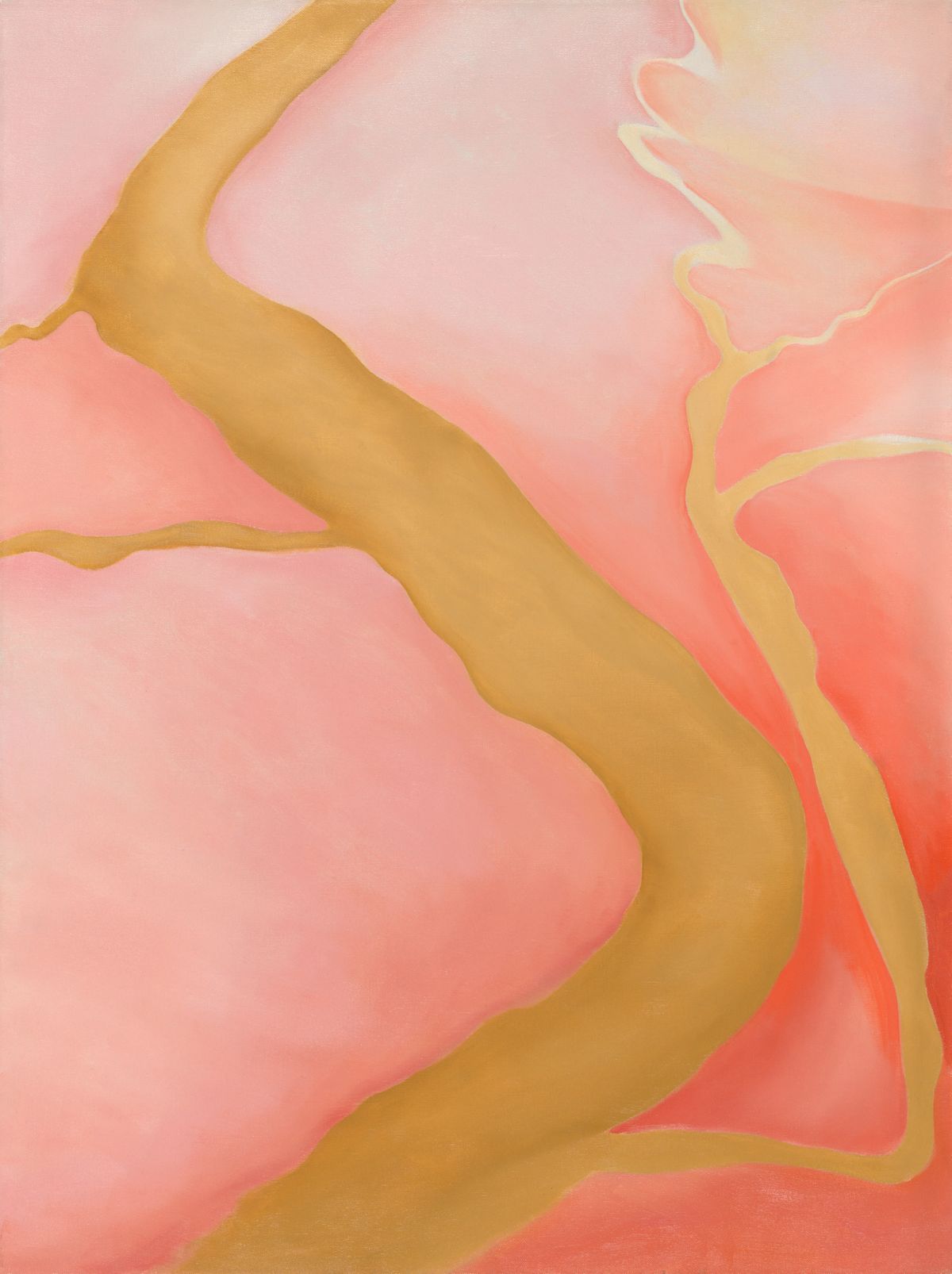 #94
#94
It Was Yellow and Pink III
The strength of "It Was Yellow and Pink III" comes from a balance between careful observation and voluntary simplification. The composition is based on a circulation of shapes and colors which reflects a sensation experienced without enclosing it in a literal description. Late works extend the gaze towards plane-view roads, clouds and immense horizons, with an economy of means which makes the space almost meditative. Dated 1960, this painting today belongs to the Art Institute of Chicago. Dated 1960, this painting belongs today to the Art Institute of Chicago. Dated 1960, this painting belongs today to the Art Institute of Chicago. The Georgia O'Keeffe Museum file, in the Access O'Keeffe catalog raisonné, allows you to verify the title, dating, catalog number and the institution holding it. The picture used only to identify and comment on the work: Alpha Reproduction does not offer any reproduction of this painting. A click leads to the official website of the holding museum, which defines its own conditions of access and use. This tension explains its lasting presence: the image seems simple, but each outline modifies the relationship between what is close, what is distant and what goes beyond the frame.
Image: Georgia O'Keeffe Museum - Access O'Keeffe · Documentary consultation only; no reproduction offered by Alpha Reproduction.
See the museum website →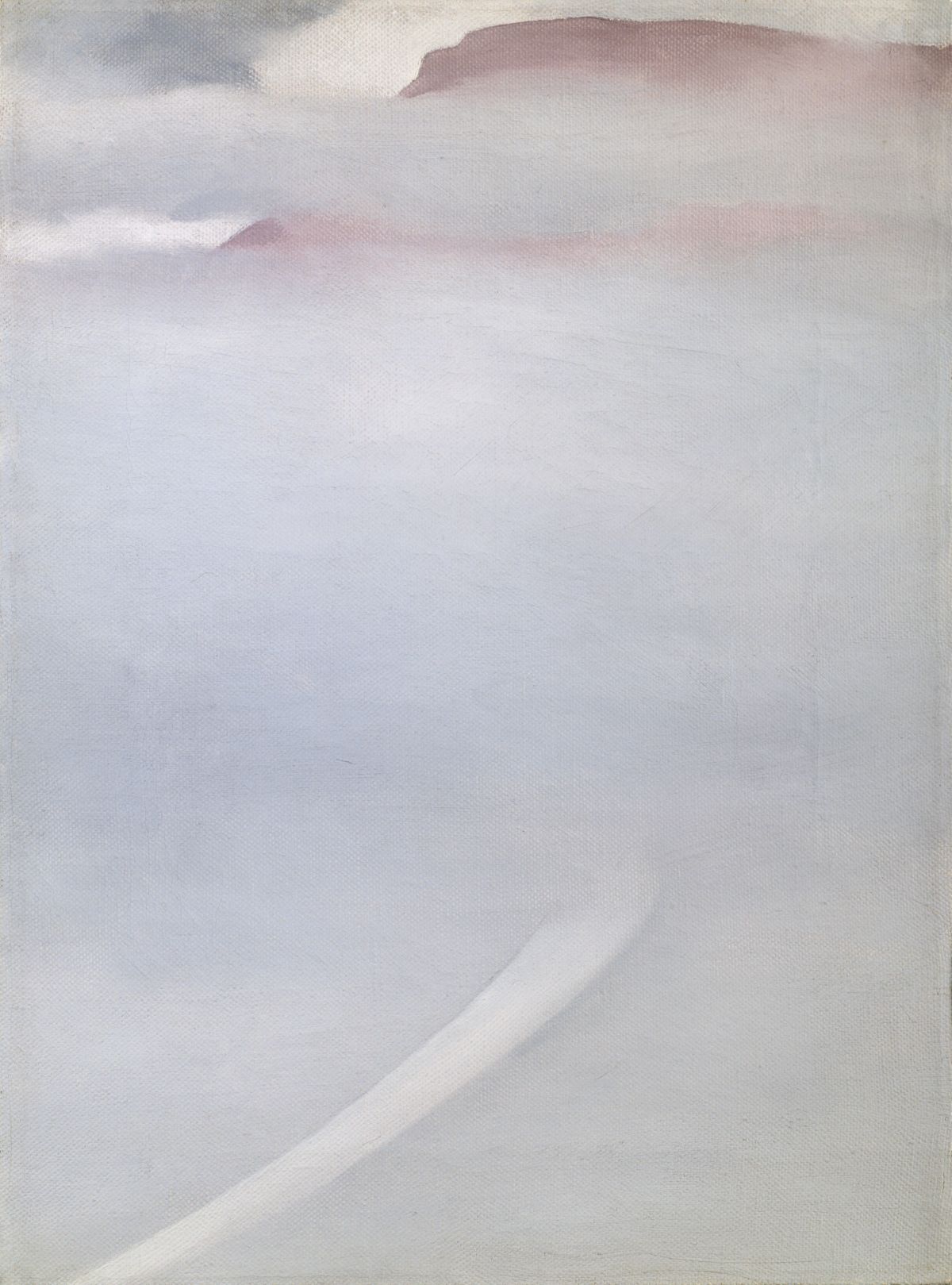 #95
#95
Road - Mesa with Mist
Beneath its apparent evidence, "Road - Mesa with Mist" constructs a very calculated relationship between proximity, distance and rhythm. The landscape is reduced to a few decisive relationships - horizon, curve, flat and distance - which preserve the sensation of a place without copying all the details. Late works extend the gaze towards the airplane-view roads, clouds and immense horizons, with an economy of means that makes the space almost meditative. Dated 1961, this painting today belongs to the Art Institute of Chicago. Dated 1961, this painting belongs to the Art Institute of Chicago. Dated 1961, this painting belongs to Art Institute of Chicago. Dated 1961, this painting belongs to Art Institute of Chicago. Dated 1961, this painting belongs to Art Institute of Chicago today. The Georgia O'Keeffe Museum file, in the Access O'Keeffe catalog raisonné, allows you to check the title, dating, catalog number and the holding institution. The image is only used to identify and comment on the work: Alpha Reproduction does not offer any reproduction of this painting. A click leads to the official website of the holding museum, which defines its own conditions of access and use. O'Keeffe does not deliver a fixed emblem; it constructs an experience of the gaze where the motif gains intensity as it is stripped of the accessory.
Image: Georgia O'Keeffe Museum - Access O'Keeffe · Documentary consultation only; no reproduction offered by Alpha Reproduction.
See the museum website →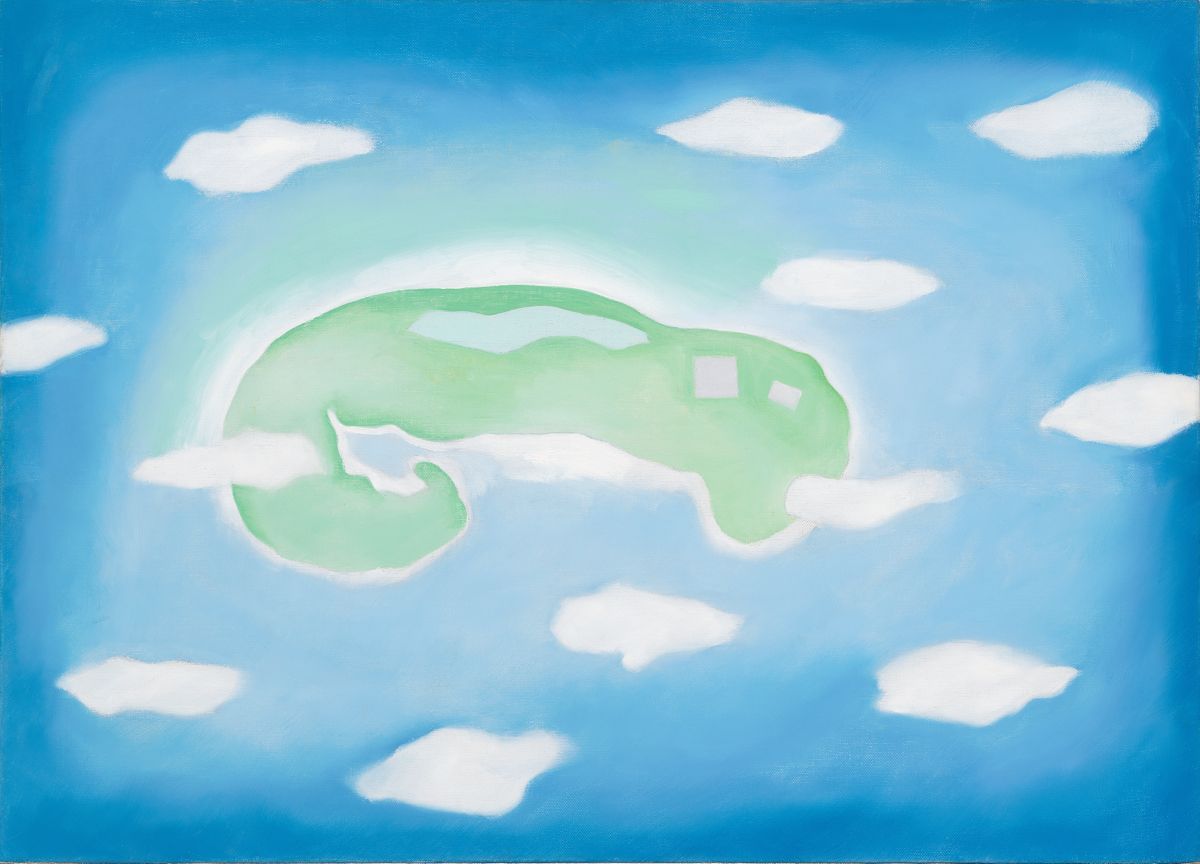 #96
#96
An Island with Clouds
With "An Island with Clouds", Georgia O'Keeffe transforms a precise pattern into an experience of duration, scale and color. The landscape is reduced to a few decisive relationships - horizon, curve, flat and distance - which preserve the sensation of a place without copying all the details. Late works extend the gaze towards airplane-view roads, clouds and immense horizons, with an economy of means that makes the space almost meditative. Dated 1962, this painting today belongs to Georgia O'Keeffe Museum. The Georgia O'Keeffe Museum's file, in the Access O'Keeffe catalog raisonné, allows you to verify the title, dating, catalog number and institution holder. The image is only used to identify and comment on the work: Alpha Reproduction does not offer any reproduction of this painting. A click leads to the official website of the holding museum, which defines its own conditions of access and use. The painting therefore invites you to slow down: its clarity does not abolish the mystery, on the contrary it allows you to perceive the finest variations in shape and color.
Image: Georgia O'Keeffe Museum - Access O'Keeffe · Documentary consultation only; no reproduction offered by Alpha Reproduction.
See the museum website →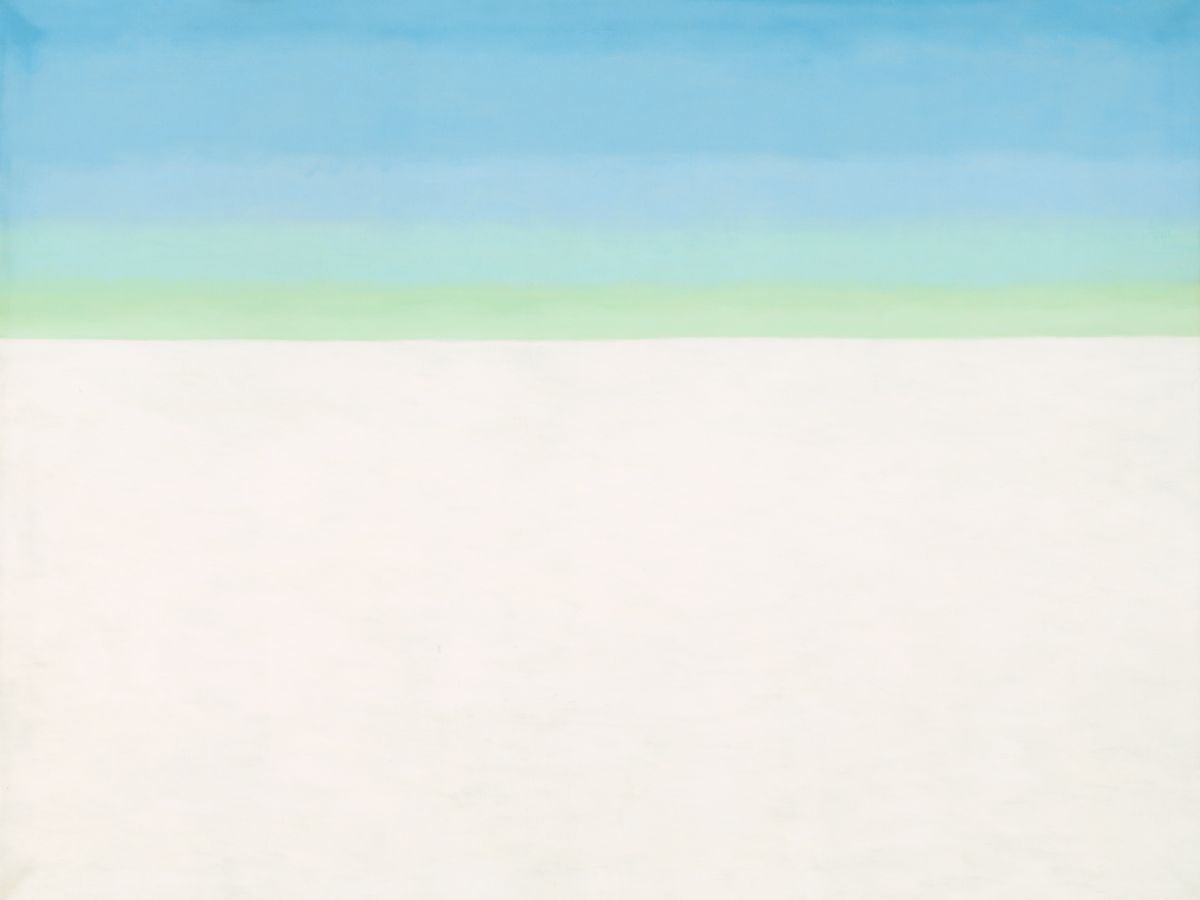 #97
#97
Sky with Flat White Cloud
"Sky with Flat White Cloud" shows how Georgia O'Keeffe knows how to condense a sensation into an immediately readable composition. The landscape is reduced to a few decisive relationships - horizon, curve, flat and distance - which preserve the sensation of a place without copying all the details. The late works extend the gaze towards the roads seen from an airplane, the clouds and the immense horizons, with an economy of means which makes the space almost meditative. Dated 1962, this painting today belongs to the National Gallery of Art (NGA). The Georgia O'Keeffe Museum file, in the Access O'Keeffe catalog raisonné, allows you to check the title, dating, catalog number and the holding institution. The image is only used to identify and comment on the work: Alpha Reproduction does not offer any reproduction of this painting. A click leads to the official website of the holding museum, which defines its own conditions of access and use. The work thus remains concrete without becoming anecdotal: it requires less recognition of an object than testing the way in which it occupies the visual field.
Image: Georgia O'Keeffe Museum - Access O'Keeffe · Documentary consultation only; no reproduction offered by Alpha Reproduction.
See the museum website →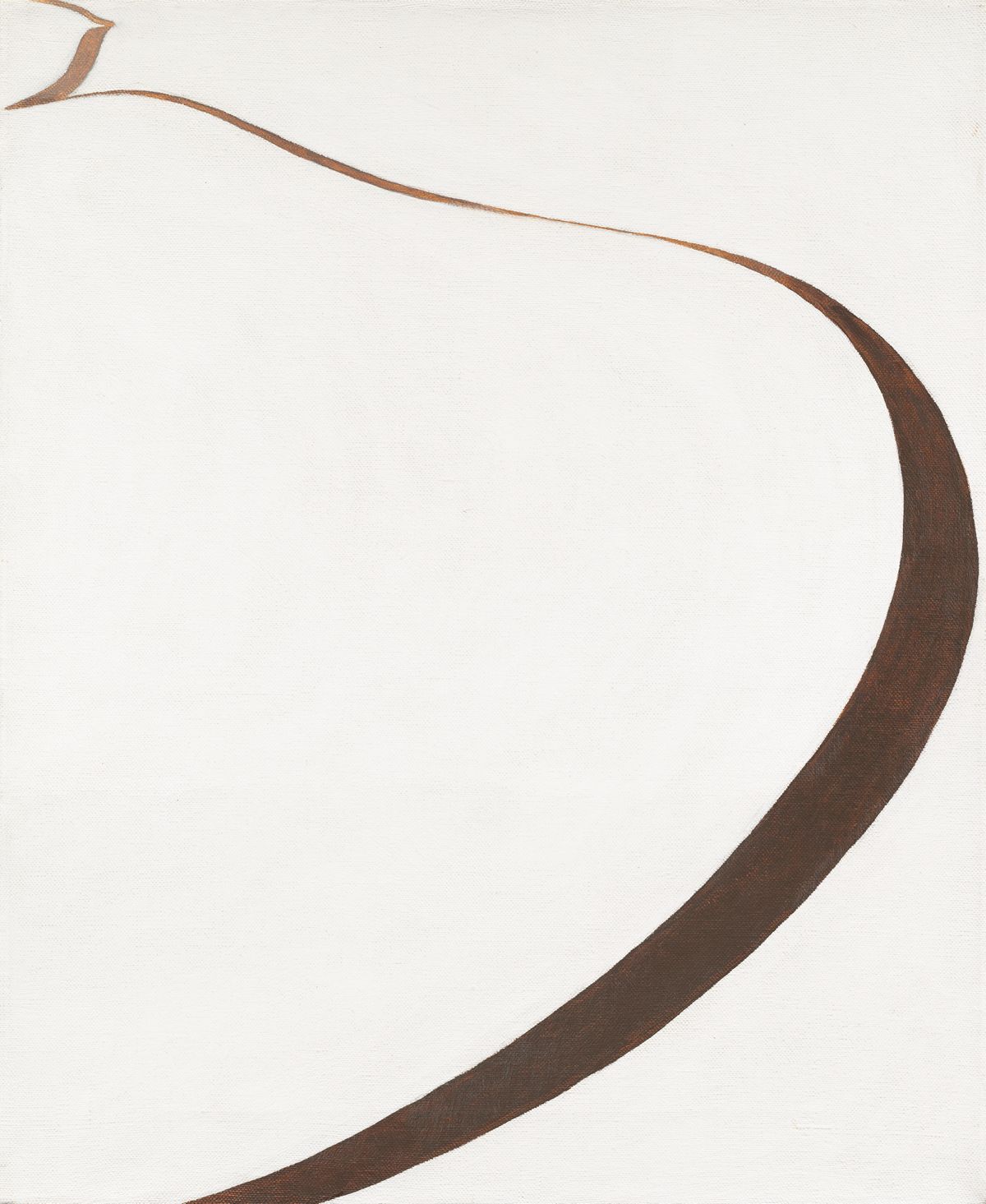 #98
#98
Winter Road I
In "Winter Road I", the gaze advances slowly between the contours, the flat areas and the intervals left open. The landscape is reduced to a few decisive relationships - horizon, curve, flat areas and distance - which preserve the sensation of a place without copying all the details. Late works extend the gaze towards the airplane-view roads, clouds and immense horizons, with an economy of means that makes the space almost meditative. Dated 1963, this painting today belongs to the National Gallery of Art (NGA). The Georgia O'Keeffe Museum's file, in the Access O'Keeffe catalog raisonné, allows you to verify the title, dating, catalog number and institution holder. The image is only used to identify and comment on the work: Alpha Reproduction does not offer any reproduction of this painting. A click leads to the official website of the holding museum, which defines its own conditions of access and use. This tension explains its lasting presence: the image seems simple, but each outline modifies the relationship between what is close, what is distant and what goes beyond the frame.
Image: Georgia O'Keeffe Museum - Access O'Keeffe · Documentary consultation only; no reproduction offered by Alpha Reproduction.
See the museum website →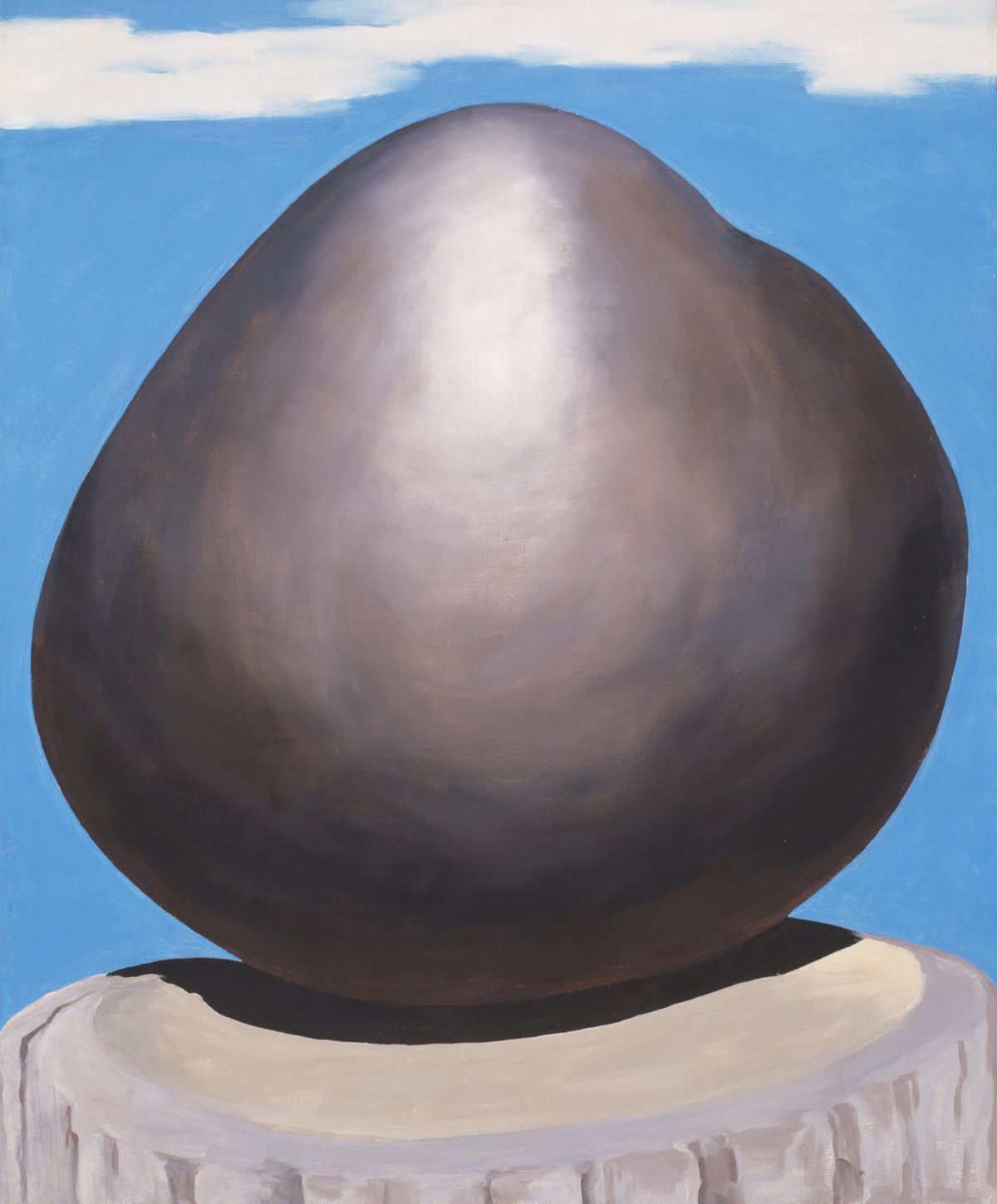 #99
#99
Black Rock with Blue Sky and White Clouds
The strength of "Black Rock with Blue Sky and White Clouds" comes from a balance between careful observation and voluntary simplification. The landscape is reduced to a few decisive relationships - horizon, curve, flat and distance - which preserve the sensation of a place without copying all the details. Late works extend the gaze towards the airplane-view roads, clouds and immense horizons, with an economy of means that makes the space almost meditative. Dated 1972, this painting today belongs to the Art Institute of Chicago. The Georgia O'Keeffe Museum file, in the Access O'Keeffe catalog raisonné, allows you to check the title, dating, catalog number and the holding institution. The image is only used to identify and comment on the work: Alpha Reproduction does not offer any reproduction of this painting. A click leads to the official website of the holding museum, which defines its own conditions of access and use. O'Keeffe does not deliver a fixed emblem; it constructs an experience of the gaze where the motif gains intensity as it is stripped of the accessory.
Image: Georgia O'Keeffe Museum - Access O'Keeffe · Documentary consultation only; no reproduction offered by Alpha Reproduction.
See the museum website →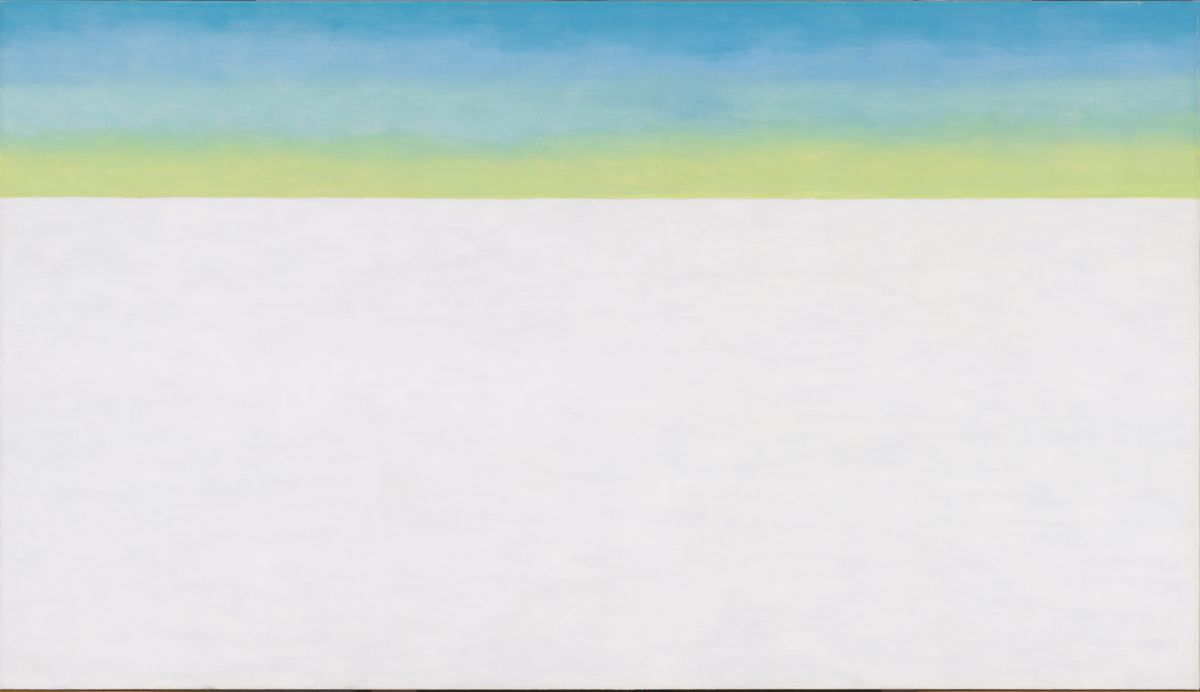 #100
#100
Sky Above Clouds/Yellow Horizon and Clouds
Beneath its apparent evidence, "Sky Above Clouds/Yellow Horizon and Clouds" constructs a very calculated relationship between proximity, distance and rhythm. The landscape is reduced to a few decisive relationships - horizon, curve, flat and distance - which preserve the sensation of a place without copying all the details. The late works extend the gaze towards the roads seen from an airplane, the clouds and the immense horizons, with an economy of means which makes the space almost meditative. Dated 1976 -1977, this painting today belongs to Georgia O'Keeffe Museum. The Georgia O'Keeffe Museum file, in the Access O'Keeffe catalog raisonné, allows you to check the title, the dating, the number catalog and the holding institution. The image is only used to identify and comment on the work: Alpha Reproduction does not offer any reproduction of this painting. A click leads to the official website of the holding museum, which defines its own conditions of access and use. The painting therefore invites you to slow down: its clarity does not abolish the mystery, on the contrary it allows you to perceive the finest variations in shape and color.
Image: Georgia O'Keeffe Museum - Access O'Keeffe · Documentary consultation only; no reproduction offered by Alpha Reproduction.
See the museum website →What the journey reveals
Three gestures at the heart of the work
O'Keeffe observes, simplifies and enlarges until the intimate structure of a pattern is felt.
Frame
The edge cuts the flower, facade or hill and transforms a view into a physical experience.
Simplify
Secondary details disappear to let curves, planes and colored transitions act.
Repeat
Each series takes a pattern without freezing it: light, distance and scale move its meaning.
One life, five benchmarks
Follow Georgia O'Keeffe
Georgia Totto O'Keeffe grew up on a farm near Sun Prairie before training in Chicago and New York.
His abstract charcoal breaks with academic teaching and soon attracts the attention of Alfred Stieglitz.
Based in New York, she exhibits regularly while sharing her time with Lake George.
The desert, the bones and the Pedernal become central motifs of his work.
Upon his death in Santa Fe, O'Keeffe became a major figure in American modernism.
O'Keeffe in depth
From abstraction to the immensity of the sky
The first charcoal films of 1915 mark a decisive choice: O'Keeffe wants to find shapes capable of translating an inner sensation without depending on a recognizable subject.
Photography, modern cropping and exchanges with Stieglitz's circle nourish her attention to scale. Her flowers become huge because she wants us to finally look at them.
New York offers him another type of motif. Streets, lit windows and skyscrapers are reduced to verticals that measure the city without imitating its hustle and bustle.
From 1929, New Mexico gave it new distances. Bones, crosses, hills and plains are not exotic accessories, but elements of a long-used territory.
O'Keeffe works in series. The Pedernal, the gates of Abiquiú or the Black Places return because no single image can exhaust their changes in light and proportion.
In the 1960s and 1970s, air travel further changed his outlook. Roads and clouds become almost abstract patterns, suspended between map, memory and feeling of infinity.
Four reading keys
How to watch O'Keeffe
Start with the relationship between the pattern and the edge, then follow the color rather than looking for an immediate symbol.
Measure the pattern
An enlarged detail changes the distance of the viewer and transforms the perception of the subject.
Observe the cuts
What goes out of the box is as important as what remains visible in the center.
Follow transitions
The gradients connect the planes and give the shapes their breathing.
Compare repeats
The same place or the same flower reveals its richness when we compare several versions.
Works and institutions
Continue after the hundredth painting
The images and buttons on each card open the official website of the holding museum. Access O'Keeffe remains the documentary source of the corpus; no reproduction is offered by Alpha Reproduction.
Frequently asked questions
Georgia O'Keeffe, between abstraction and landscape
The essential benchmarks on its motifs, its series, its museums and the rights of images.
What is Georgia O'Keeffe's most famous painting?
Jimson Weed, Black Iris, Cow's Skull: Red, White and Blue and Sky Above Clouds IV are among his most famous images. Their notoriety is as much due to the framing as to the simplification of the shapes.
Why was Georgia O'Keeffe painting flowers in close-up?
She enlarges the flowers to force the audience to take the time to look at them. The change in scale transforms a familiar pattern into a field of shapes, folds and colors.
Was Georgia O'Keeffe an abstract painter?
An essential part of her work is abstract, especially from the 1910s. Even when she paints a flower, a bone or a hill, she simplifies the motif to the point of making her fundamental rhythms felt.
What role does New Mexico play in his work?
From 1929, the hills, bones, the Pedernal, Ghost Ranch and Abiquiú became central motifs. O'Keeffe not only documents them: she uses them in series and variations.
Where to see Georgia O'Keeffe's main works?
The Georgia O'Keeffe Museum in Santa Fe retains a major ensemble. The MoMA, the Metropolitan Museum of Art, the National Gallery of Art, the Art Institute of Chicago, the Whitney and several American museums also have important works.
What's Access O'Keeffe?
Access O'Keeffe is the online research catalog of the Georgia O'Keeffe Museum. It brings together known works, catalog raisonné issues, collections, available images and documentary resources.
Why are there multiple versions of the same pattern?
O'Keeffe often works in series. A flower, a hill, a door or a bone returns from another angle, in another light or with a different framing.
Are Georgia O'Keeffe's images royalty free?
No. Alpha Reproduction does not offer any reproduction of the paintings presented in this article. The images are used solely for information and documentary consultation; they redirect to the holding museums, which define their conditions of use with the rights holders.
0 comments