

13th - 20th centuries · real gold
The 100 paintings gold background
One hundred works where gold is really present in the material: browned sheet, punched background, metal powder, gilding on paper, silver and platinum.

Leaf, powder and browning
Gold here is not a color: it is a material
A traditional gold background begins with carefully smoothed preparation. On the wooden panel, the painter places several layers of gesso, then a bowl of red clay which warms the metal and facilitates its adhesion. Very thin gold leaf is then applied, browned with agate and sometimes engraved, incised or punched. The light therefore does not come from a yellow imitating metal: it is actually reflected on a metallic surface.
This process profoundly transforms space. In Italian panels and icons, gold removes the earth's sky and installs the figures in a timeless presence. On Japanese screens, it can become mist and atmosphere, while amplifying the light of an interior. At Klimt, finally, the metal foil dialogues with oil, silver and platinum to produce a modern surface that is as precious as it is unstable.
The classification has therefore been completely redone. Paintings only yellow, ocher, brown or lit by warm light have been removed. Each entry explicitly mentions a gold background, gold leaf, gold powder, paper gold or another precious metal in its technique. Klimt's works close the journey because they consciously reactivate Byzantine heritage with real gold, silver, and sometimes platinum.
The criterion is material: the work must contain real gold or a proven shiny metallic application.
The metal sheet replaces natural space and gives sacred figures a timeless presence.
Tools struck into the sheet create halos, borders and patterns that sparkle differently depending on the angle.
Mixed with a binder, it allows fine lines, precise ornaments and passages more flexible than the leaf.
Klimt combines gold, silver, platinum, oil and added materials to make the surface a precious object.
The 100 most famous golden paintings
Editorial ranking1 -20
Klimt and the absolute icons of gold
Gustav Klimt
The Kiss
Gold leaf almost completely absorbs both bodies in the same precious rectangle. Klimt contrasts the angular patterns of the male coat with the soft circles of the dress, then lets the faces and hands reintroduce the flesh. True gold doesn't just adorn the scene: it suspends the couple out of time and transforms the embrace into a modern icon.
See reproduction →
Gustav Klimt
Portrait of Adèle Bloch-Bauer I
Adèle emerges from a surface saturated with gold and silver where dress, armchair and background tend to merge. The eyes, spirals, squares and signs inspired by Egypt and Byzantium build a symbolic skin around the model. The material metallic makes the portrait a sumptuous but unstable presence, halfway between real person, jewel and apparition.
See reproduction →
Gustav Klimt
Judith I
The gold background and necklace give Judith the frontal glow of an icon, while her sensual expression radically shifts the biblical subject. Klimt uses the metal foil to compress the space and isolate the face, bust and Holofernes' head. Sacred gold here becomes an ambiguous material, divided between triumph, desire and threat.
See reproduction →
Gustav Klimt
Pallas Athena
Helmet, breastplate and aegis make a compact, almost heraldic goddess sparkle. Applications of gold materialize less a luxury than a cold power: Athena looks straight ahead and holds little Nuda Veritas as one artistic program. This alliance between painting, metal and decor announces the golden period while maintaining monumental harshness.
See reproduction →
Gustav Klimt
Hope II
The pregnant woman tilts her head over a monumental garment where gold and platinum mingle with the colored circles. A skull appears near the stomach, while kneeling figures transform the bottom of the canvas into a frieze prayer. Precious matter does not erase anxiety: it gives the cycle of birth and death a ritual gravity.
See reproduction →
Gustav Klimt
The Beethoven Friesland
Designed as an environment for the 1902 Beethoven exhibition, the frieze combines paint, stucco, glass, mother-of-pearl and gold leaf. The slender bodies pass through desire, hostile powers and final appeasement in a space deliberately flat. Gold connects the episodes like a continuous vibration and transforms the wall into a visual score.
See reproduction →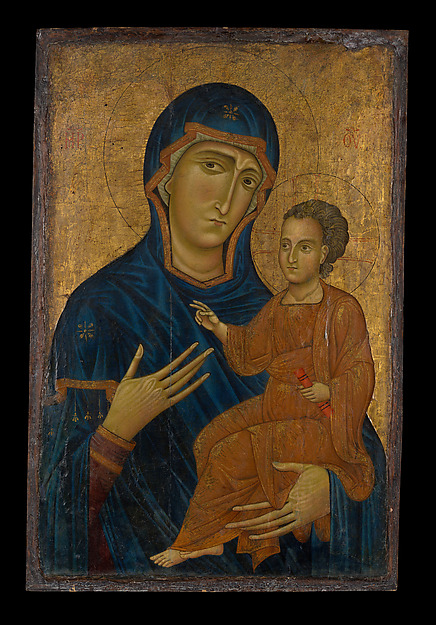
Berlinghiero
Virgin and Child
In "Virgin and Child", the gold background acts as an autonomous luminous material and not as a simple yellow tint. Berlinghiero uses it to isolate figures, densify borders or suspend real space. The metallic surface retains its power of reflection: it reacts to the movement of the gaze and makes painting an object as much as an image.
View work in collection →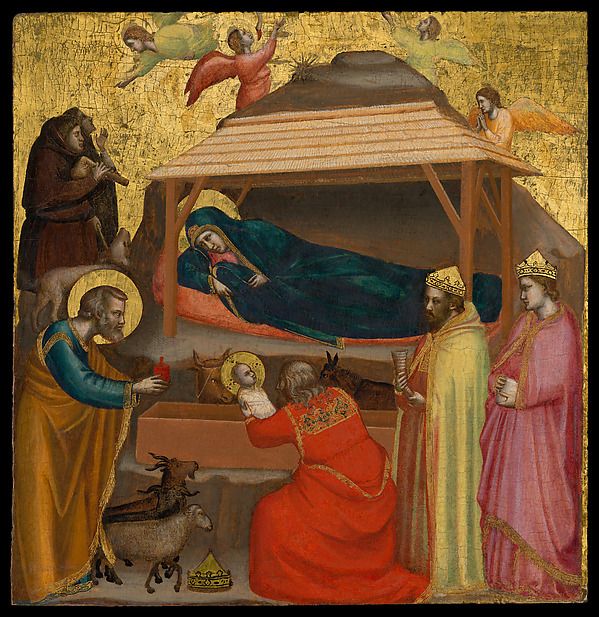
Giotto di Bondone
The Adoration of the Magi
In "The Adoration of the Magi", the gold background acts as an autonomous luminous material and not as a simple yellow tint. Giotto di Bondone uses it to isolate figures, densify borders or suspend real space. The surface metallic retains its power of reflection: it reacts to the movement of the gaze and makes painting an object as much as an image.
View work in collection →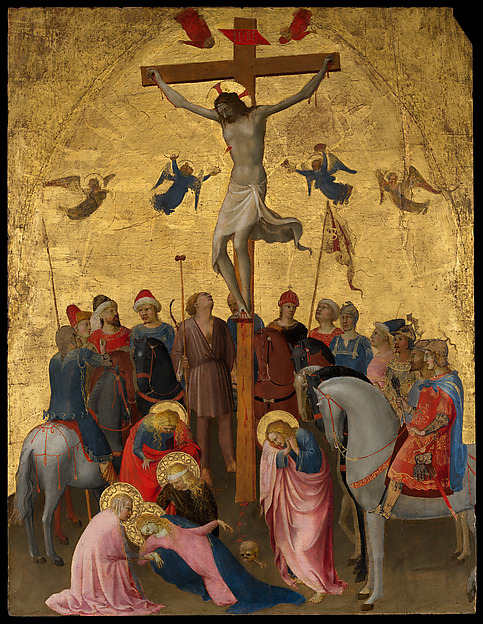
Fra Angelico (Guido di Pietro)
The Crucifixion
In "The Crucifixion", the gold background acts as an autonomous luminous material and not as a simple yellow tint. Fra Angelico (Guido di Pietro) uses it to isolate figures, densify borders or suspend real space. There metallic surface retains its power of reflection: it reacts to the movement of the gaze and makes the painting an object as much as an image.
View work in collection →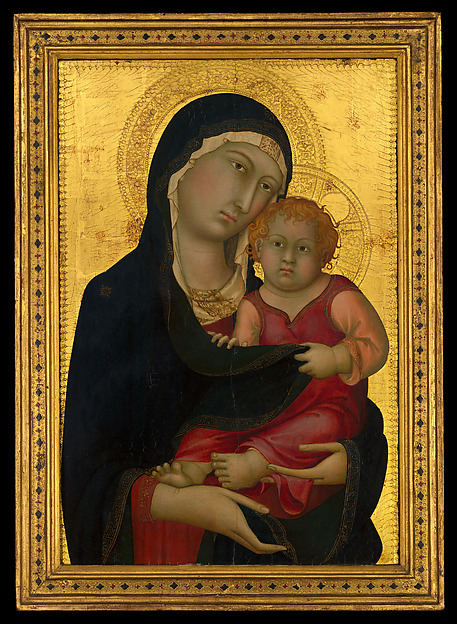
Simone Martini
Virgin and Child
In "Virgin and Child", the gold background acts as an autonomous luminous material and not as a simple yellow tint. Simone Martini uses it to isolate figures, densify borders or suspend real space. The surface metallic retains its power of reflection: it reacts to the movement of the gaze and makes painting an object as much as an image.
View work in collection →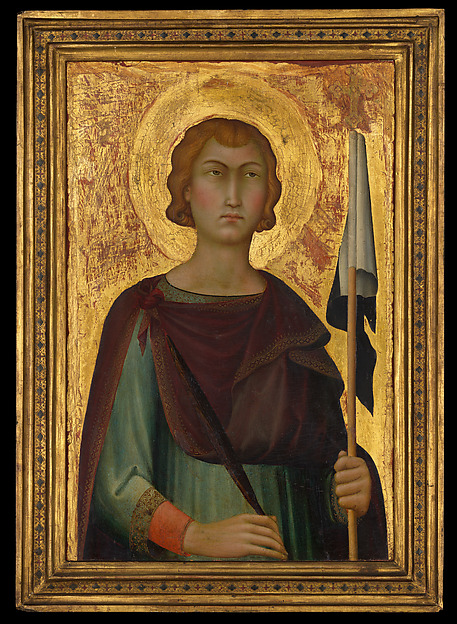
Simone Martini
Saint Ansanus
In "Saint Ansanus", the gold background acts as an autonomous luminous material and not as a simple yellow tint. Simone Martini uses it to isolate figures, densify borders or suspend real space. The metallic surface retains its power of reflection: it reacts to the movement of the gaze and makes painting an object as much as an image.
View work in collection →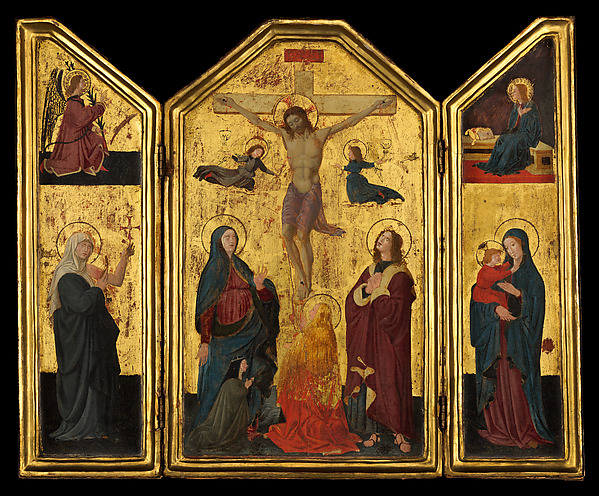
Paolo Uccello (Paolo di Dono)
The Crucifixion
In "The Crucifixion", the gold background acts as an autonomous luminous material and not as a simple yellow tint. Paolo Uccello (Paolo di Dono) uses it to isolate figures, densify borders or suspend real space. There metallic surface retains its power of reflection: it reacts to the movement of the gaze and makes the painting an object as much as an image.
View work in collection →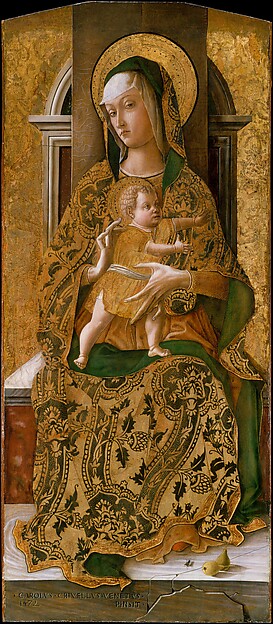
Carlo Crivelli
Virgin and Child in majesty
In "Virgin and Child in Majesty", the gold background acts as an autonomous luminous material and not as a simple yellow tint. Carlo Crivelli uses it to isolate figures, densify borders or suspend real space. There metallic surface retains its power of reflection: it reacts to the movement of the gaze and makes the painting an object as much as an image.
View work in collection →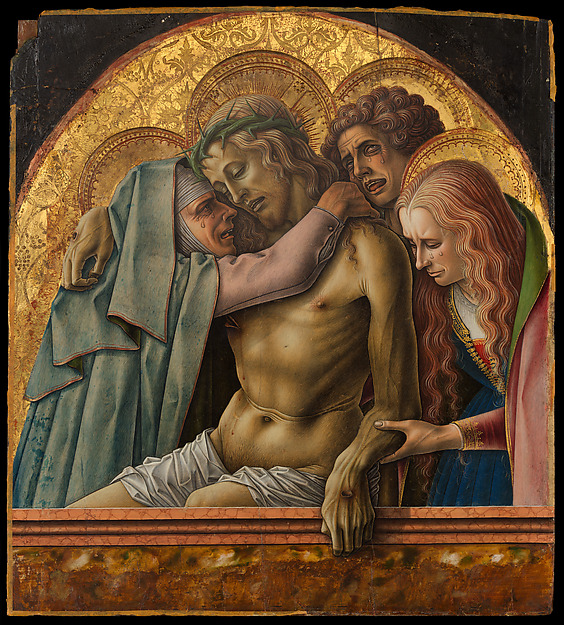
Carlo Crivelli
Pietà
In "Pietà", the gold background acts as an autonomous luminous material and not as a simple yellow tint. Carlo Crivelli uses it to isolate figures, densify borders or suspend real space. The metallic surface preserves its power of reflection: it reacts to the movement of the gaze and makes painting an object as much as an image.
View work in collection →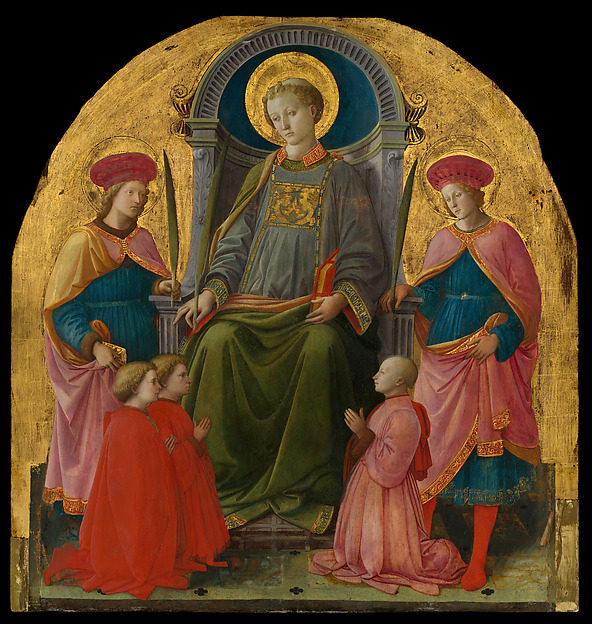
Fra Filippo Lippi
Saint Lawrence in majesty with saints and donors
In "Saint Lawrence in Majesty with Saints and Givers", the gold background acts as an autonomous luminous material and not as a simple yellow tint. Fra Filippo Lippi uses it to isolate figures, densify borders or suspend real space. The metallic surface retains its power of reflection: it reacts to the movement of the gaze and makes the painting an object as much as an image.
View work in collection →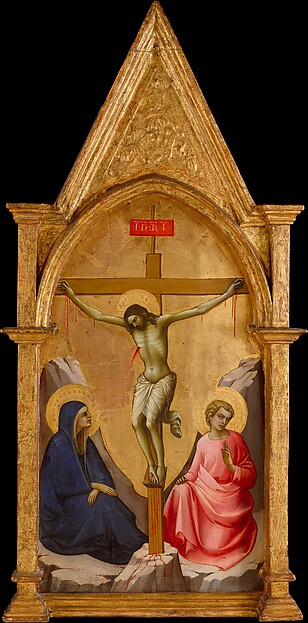
Lorenzo Monaco (Piero di Giovanni)
Christ crucified between the Virgin and Saint John the Evangelist
In "Christ crucified between the Virgin and Saint John the Evangelist", the gold background acts as an autonomous luminous material and not as a simple yellow tint. Lorenzo Monaco (Piero di Giovanni) uses it to isolate figures, densify borders or suspend real space. The metal surface retains its power of reflection: it reacts to the movement of the gaze and makes the painting an object as much as an image.
View work in collection →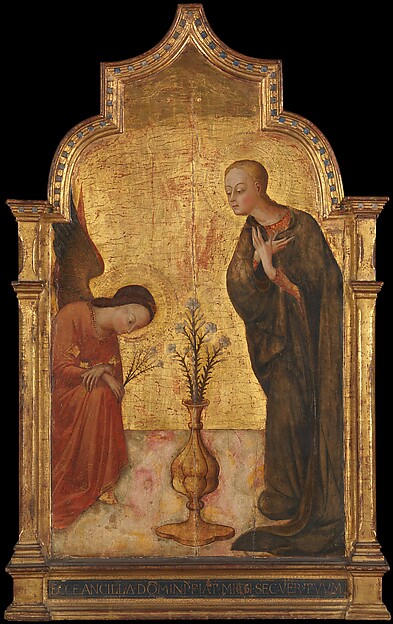
Sassetta (Stefano di Giovanni)
The Annunciation
In "The Annunciation", the gold background acts as an autonomous luminous material and not as a simple yellow tint. Sassetta (Stefano di Giovanni) uses it to isolate figures, densify borders or suspend real space. There metallic surface retains its power of reflection: it reacts to the movement of the gaze and makes the painting an object as much as an image.
View work in collection →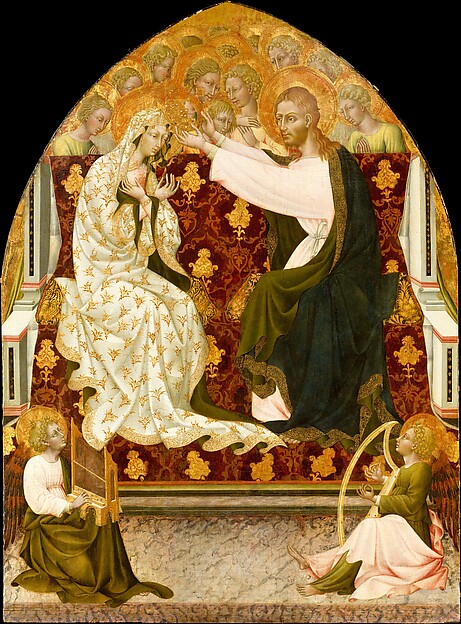
Giovanni di Paolo (Giovanni di Paolo di Grazia)
The Coronation of the Virgin
In "The Coronation of the Virgin", the gold background acts as an autonomous luminous material and not as a simple yellow tint. Giovanni di Paolo (Giovanni di Paolo di Grazia) uses it to isolate figures, densify borders or suspend real space. The metallic surface retains its power of reflection: it reacts to the movement of the gaze and makes the painting an object as much as an image.
View work in collection →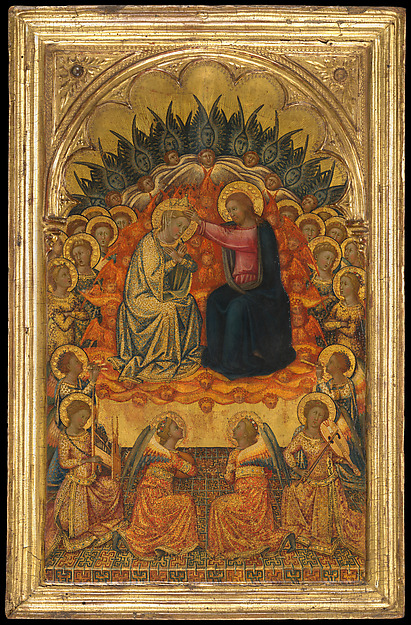
Niccolo di Buonaccorso
The Coronation of the Virgin
In "The Coronation of the Virgin", the gold background acts as an autonomous luminous material and not as a simple yellow tint. Niccolo di Buonaccorso uses it to isolate figures, densify borders or suspend real space. The metal surface retains its power of reflection: it reacts to the movement of the gaze and makes the painting an object as much as an image.
View work in collection →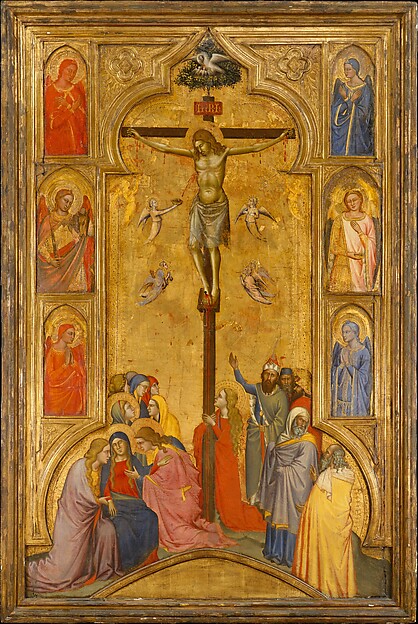
Andrea di Cione (Orcagna)
The Crucifixion
In "The Crucifixion", the gold background acts as an autonomous luminous material and not as a simple yellow tint. Andrea di Cione (Orcagna) uses it to isolate figures, densify borders or suspend real space. The surface metallic retains its power of reflection: it reacts to the movement of the gaze and makes painting an object as much as an image.
View work in collection →21 -40
The Italian Great Gold Funds
Giovanni Baronzio
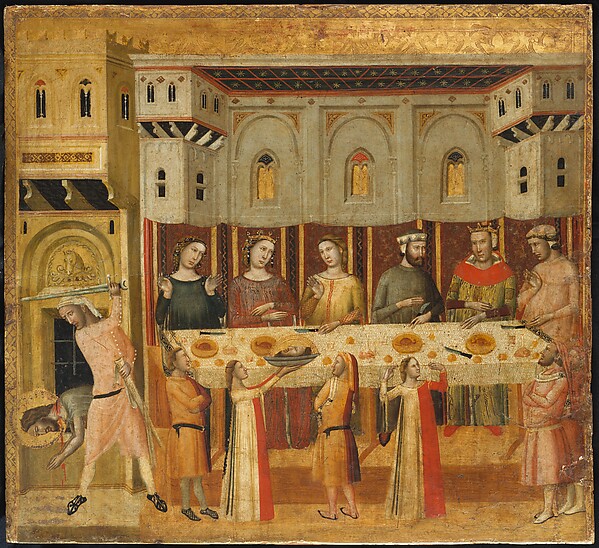
Herod's Feast and the Beheading of Saint John the Baptist
In "Herod's Feast and the Beheading of Saint John the Baptist", the gold background describes neither a sky nor a real setting: it places the drama in a sacred space, without time and without ordinary depth. Giovanni Baronzio plays the reds, blues and flesh against this metallic surface so that every gesture remains readable. The punches and incisions give the gold a vibration that changes with the light of the viewer.
View work in collection →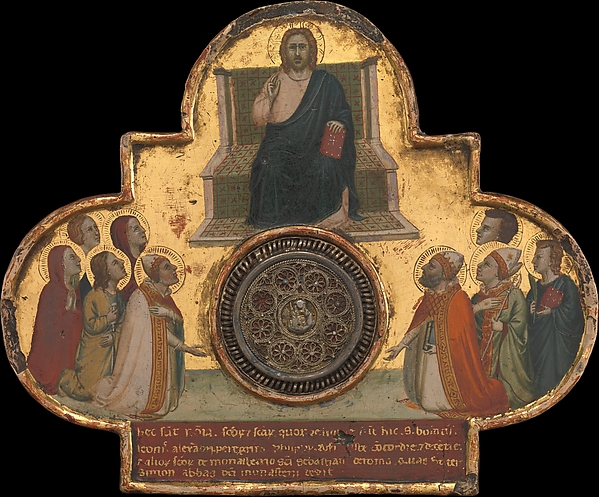
Bernardo Daddi
Christ in majesty with saints
In "Christ in Majesty with Saints", the gold background describes neither a sky nor a real setting: it places the drama in a sacred space, without time and without ordinary depth. Bernardo Daddi plays reds, blues and flesh against this metal surface so that every gesture remains readable. The punches and incisions give the gold a vibration that changes with the light of the viewer.
View work in collection →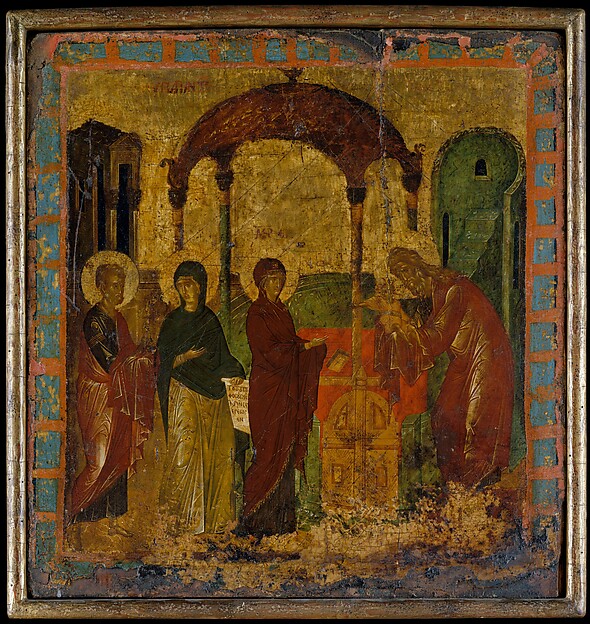
Byzantine Painter
The Presentation at the Temple
The gold background of "The Presentation in the Temple" abolishes the landscape and brings the figures of the world closer to the icon. Byzantine Painter superimposes color, design and hallmarked ornaments: true gold becomes light, space and sign at the same time majesty. The colored folds and skin tones seem to advance in front of this reflective surface, whose shine varies depending on the angle of the gaze.
View work in collection →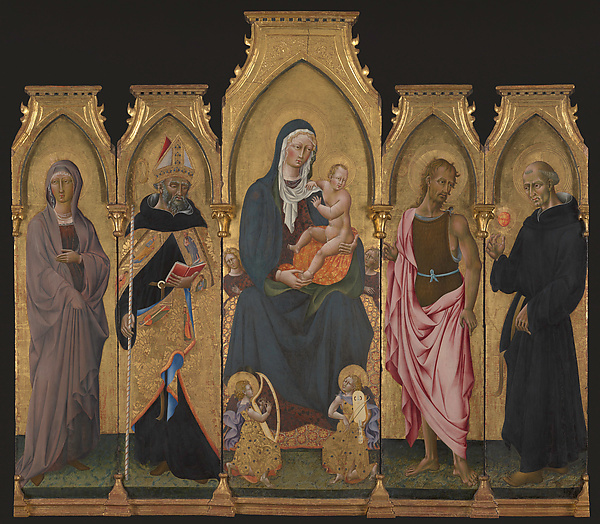
Giovanni di Paolo (Giovanni di Paolo di Grazia)
Virgin and Child with Saints
The gold background of "Virgin and Child with Saints" abolishes the landscape and brings world figures closer to the icon. Giovanni di Paolo (Giovanni di Paolo di Grazia) superimposes color, design and hallmarked ornaments: real gold becomes light, space and a sign of majesty at the same time. The colored folds and skin tones seem to advance in front of this reflective surface, whose radiance varies depending on the angle of the gaze.
View work in collection →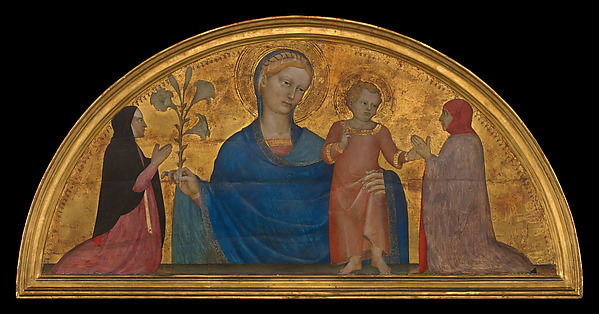
Giovanni da Milano
Virgin and Child with donors
The gold background of "Virgin and Child with Donors" abolishes the landscape and brings world figures closer to the icon. Giovanni da Milano superimposes color, design and hallmarked ornaments: true gold becomes light at the same time, space and sign of majesty. The colored folds and skin tones seem to advance in front of this reflective surface, whose shine varies depending on the angle of the gaze.
View work in collection →
Bartolo di Fredi
The Adoration of the Shepherds
The gold background of "The Adoration of the Shepherds" abolishes the landscape and brings the figures of the world closer to the icon. Bartolo di Fredi superimposes color, design and hallmarked ornaments: true gold becomes light, space and a sign of majesty. The colored folds and skin tones seem to advance in front of this reflective surface, whose shine varies depending on the angle of the gaze.
View work in collection →
Master of the Codex of Saint George
The Crucifixion
In "The Crucifixion", the gold background describes neither a sky nor a real setting: it places the drama in a sacred space, without ordinary time and depth. Master of the Codex of Saint George plays reds, blues and flesh against this metal surface so that every gesture remains readable. The punches and incisions give the gold a vibration that changes with the light of the viewer.
View work in collection →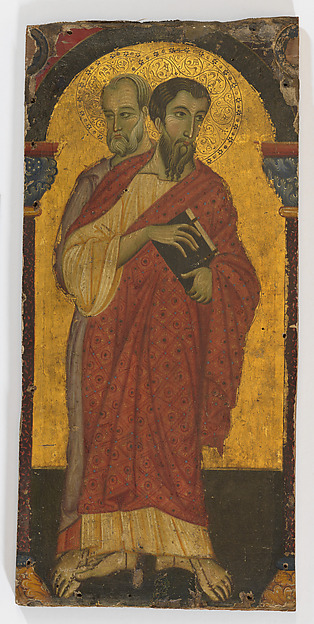
Master of Saint Francis
Saints Bartholomew and Simon
The gold background of "Saints Bartholomew and Simon" abolishes the landscape and brings the figures of the world closer to the icon. Master of Saint Francis superimposes color, design and hallmarked ornaments: true gold becomes light, space and at the same time sign of majesty. The colored folds and skin tones seem to advance in front of this reflective surface, whose shine varies depending on the angle of the gaze.
View work in collection →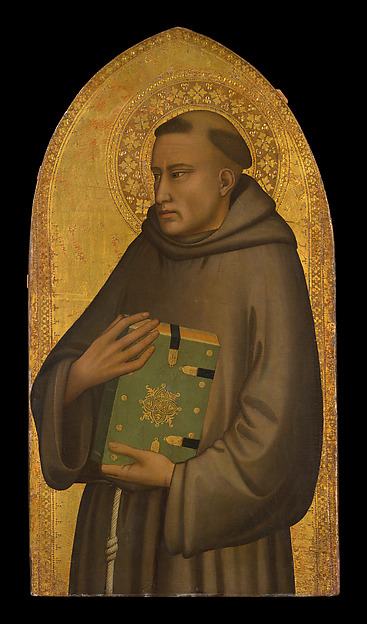
Maso di Banco
Saint Anthony of Padua
The gold background of "Saint Anthony of Padua" abolishes the landscape and brings the figures of the world closer to the icon. Maso di Banco superimposes color, design and hallmarked ornaments: true gold becomes light, space and a sign of majesty. The colored folds and skin tones seem to advance in front of this reflective surface, whose shine varies depending on the angle of the gaze.
View work in collection →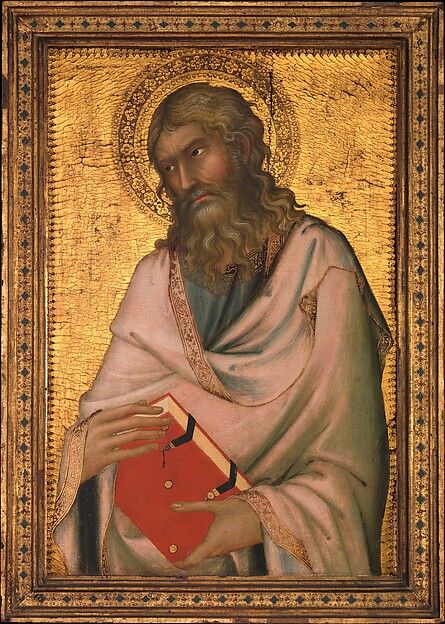
Simone Martini
Saint Andrew
The gold background of "Saint Andrew" abolishes the landscape and brings the figures of the world closer to the icon. Simone Martini superimposes color, design and hallmarked ornaments: true gold becomes light, space and a sign of majesty at the same time. THE colored folds and skin tones seem to advance in front of this reflective surface, whose shine varies depending on the angle of the gaze.
View work in collection →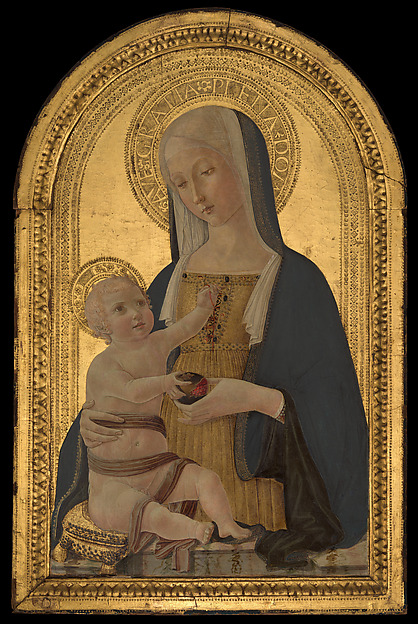
Benvenuto di Giovanni
Virgin and Child
The gold background of "Virgin and Child" abolishes the landscape and brings the figures of the world closer to the icon. Benvenuto di Giovanni superimposes color, design and hallmarked ornaments: true gold becomes light, space and a sign of majesty. The colored folds and skin tones seem to advance in front of this reflective surface, whose shine varies depending on the angle of the gaze.
View work in collection →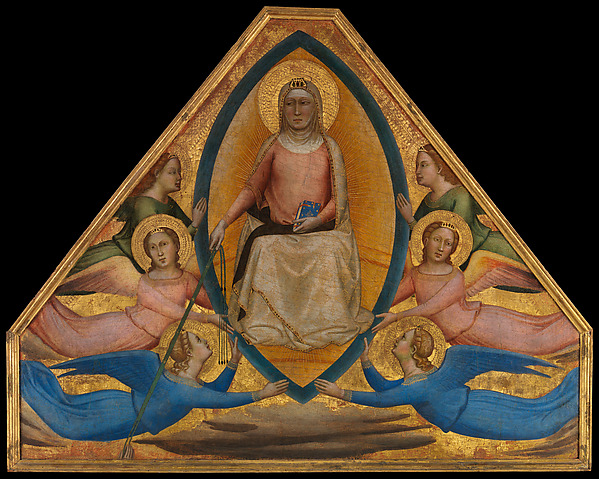
Bernardo Daddi
The Assumption of the Virgin
The gold background of "The Assumption of the Virgin" abolishes the landscape and brings the figures of the world closer to the icon. Bernardo Daddi superimposes color, design and hallmarked ornaments: true gold becomes light, space and a sign of majesty. The colored folds and skin tones seem to advance in front of this reflective surface, whose shine varies depending on the angle of the gaze.
View work in collection →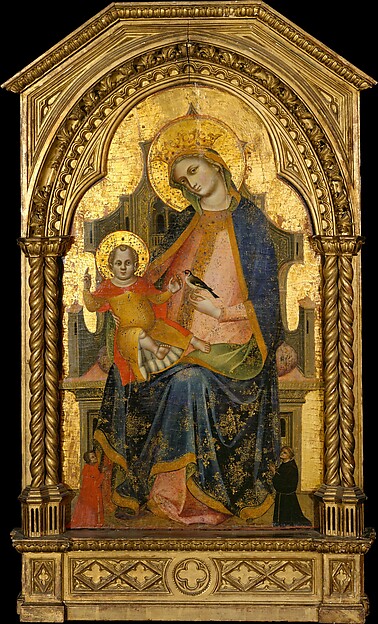
Lorenzo Veneziano
Virgin and Child in majesty with two donors
The gold background of "Virgin and Child in Majesty with Two Donors" abolishes the landscape and brings the figures of the world closer to the icon. Lorenzo Veneziano superimposes color, design and hallmarked ornaments: true gold becomes both light, space and a sign of majesty. The colored folds and skin tones seem to advance in front of this reflective surface, whose brightness varies depending on the angle of the gaze.
View work in collection →
Pietro di Giovanni d'Ambrogio
Saint Michael
The gold background of "Saint Michael" abolishes the landscape and brings the figures of the world closer to the icon. Pietro di Giovanni d'Ambrogio superimposes color, design and hallmarked ornaments: true gold becomes light, space and sign at the same time majesty. The colored folds and skin tones seem to advance in front of this reflective surface, whose shine varies depending on the angle of the gaze.
View work in collection →
Giovanni di Tano Fei
The Coronation of the Virgin and the Saints
The gold background of "The Coronation of the Virgin and Saints" abolishes the landscape and brings the figures of the world closer to the icon. Giovanni di Tano Fei superimposes color, design and hallmarked ornaments: true gold becomes both light, space and a sign of majesty. The colored folds and skin tones seem to advance in front of this reflective surface, whose brightness varies depending on the angle of the gaze.
View work in collection →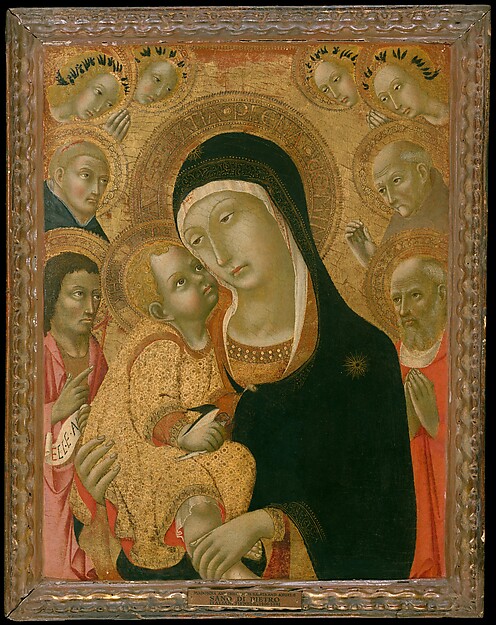
Sano di Pietro (Ansano di Pietro di Mencio)
Virgin and Child surrounded by saints and four angels
The gold background of "Virgin and Child surrounded by saints and four angels" abolishes the landscape and brings the figures of the world closer to the icon. Sano di Pietro (Ansano di Pietro di Mencio) superimposes color, design and hallmarked ornaments: true gold becomes light, space and a sign of majesty at the same time. The colored folds and skin tones seem to advance in front of this reflective surface, whose shine varies depending on the angle of the gaze.
View work in collection →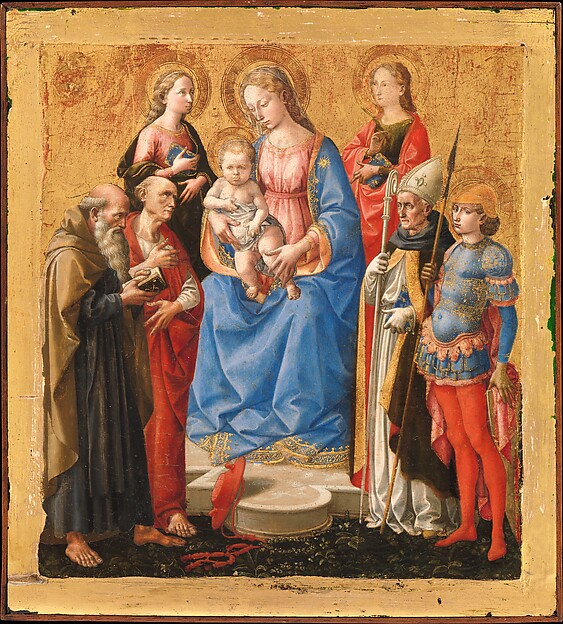
Pesellino (Francesco di Stefano)
Virgin and Child with six saints
The gold background of "Virgin and Child with Six Saints" abolishes the landscape and brings the figures of the world closer to the icon. Pesellino (Francesco di Stefano) superimposes color, design and hallmarked ornaments: true gold becomes both light, space and a sign of majesty. The colored folds and skin tones seem to advance in front of this reflective surface, whose brightness varies depending on the angle of the gaze.
View work in collection →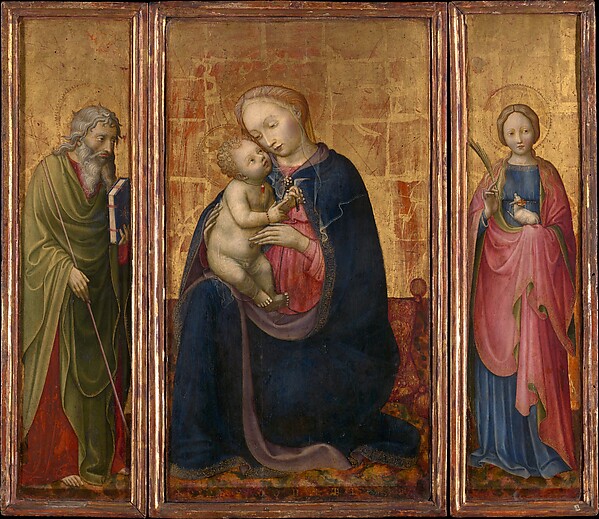
Donato de' Bardi
Virgin and Child with Saint Philip and Saint Agnes
The gold background of "Virgin and Child with Saint Philip and Saint Agnes" abolishes the landscape and brings the figures of the world closer to the icon. Donato de' Bardi superimposes color, design and hallmarked ornaments: true gold becomes times light, space and sign of majesty. The colored folds and skin tones seem to advance in front of this reflective surface, whose radiance varies depending on the angle of the gaze.
View work in collection →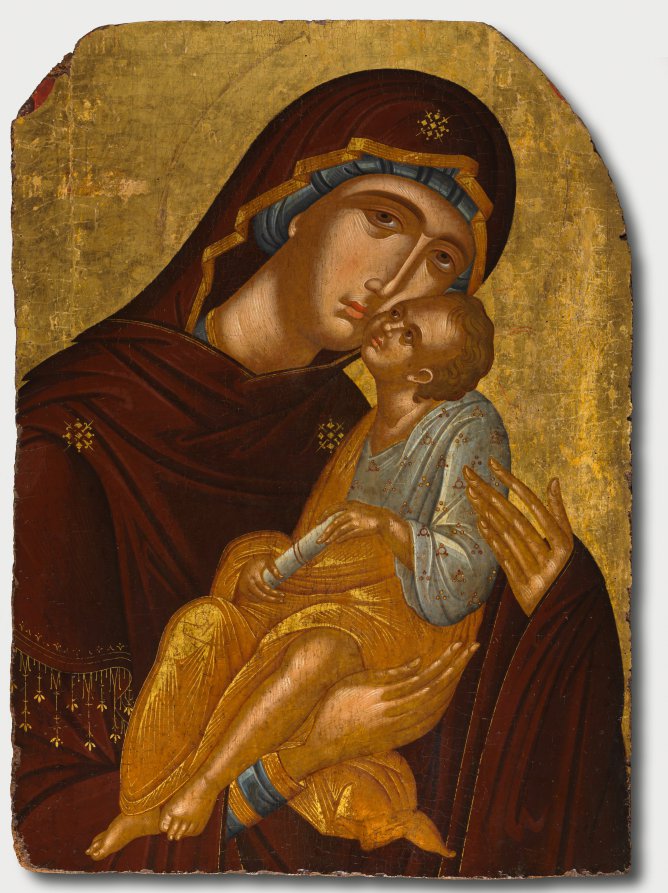
Angelos Akotantos (Cretan, died 1450)
Icon of the Mother of God and Child
The applied gold of "Icon of the Mother of God and Child" abolishes the landscape and brings the figures of the world closer to the icon. Angelos Akotantos (Cretan, died 1450) superimposes color, design and hallmarked ornaments on it: true gold becomes at the same time light, space and a sign of majesty. The colored folds and skin tones seem to advance in front of this reflective surface, whose shine varies depending on the angle of the gaze.
View work in collection →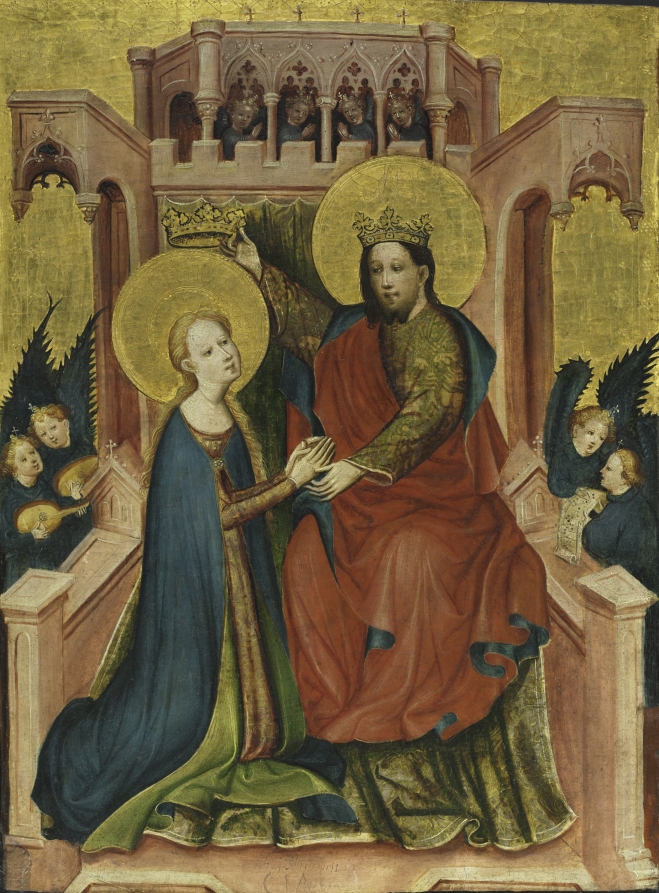
Master of the Fröndenberg Altarpiece (German)
The Coronation of the Virgin
The applied gold of "The Coronation of the Virgin" abolishes the landscape and brings the figures of the world closer to the icon. Master of the Fröndenberg Altarpiece (German) superimposes color, design and hallmarked ornaments: real gold becomes both light, space and a sign of majesty. The colored folds and skin tones seem to advance in front of this reflective surface, whose radiance varies depending on the angle of the gaze.
View work in collection →41 -60
Altarpieces and icons of Christian Europe
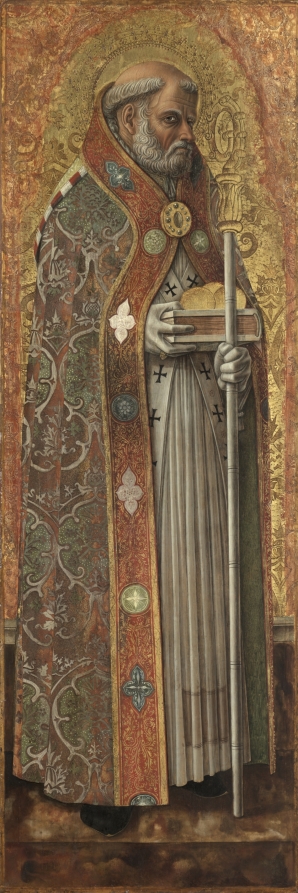
Carlo Crivelli (Italian, 1430/35 -1495)
Saint Nicholas of Bari
In "Saint Nicholas of Bari", the gold leaf organizes the hierarchy of figures and transforms the panel into an object of devotion. Carlo Crivelli (Italian, 1430/35 -1495) does not seek the illusion of a painted metal: the precious material is actually applied, then worked to catch the light. This sparkle animates the halos, borders and background while separating the sacred register from everyday space.
View work in collection →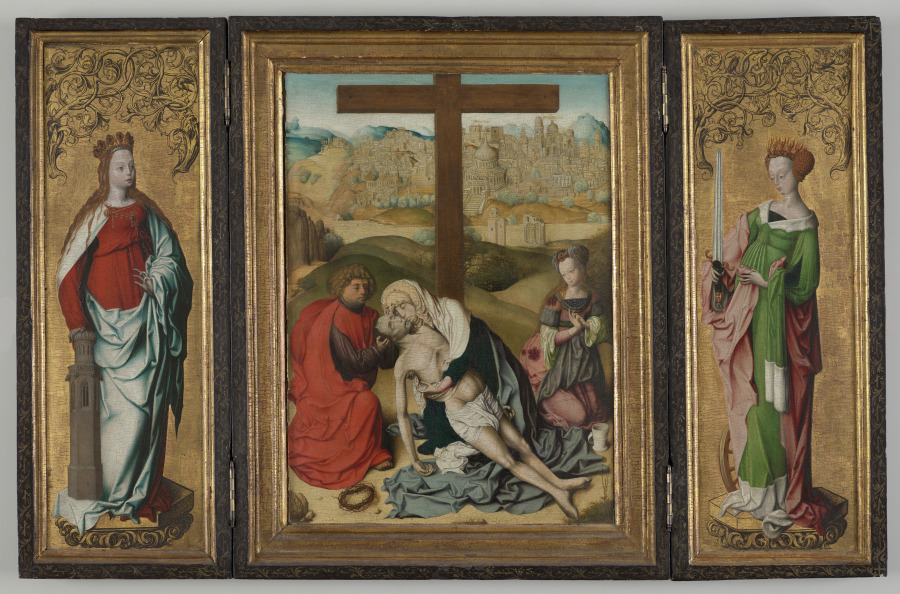
Master of the Krainburg Altar (Austrian, active c. 1485 -1510)
Triptych of the Lamentation of Christ
In "Triptych of the Lamentation of Christ", the gold leaf organizes the hierarchy of figures and transforms the panel into an object of devotion. Master of the Krainburg Altar (Austrian, active c. 1485 -1510) does not seek the illusion of one painted metal: the precious material is actually applied, then worked to catch the light. This sparkle animates the halos, borders and background while separating the sacred register from everyday space.
View work in collection →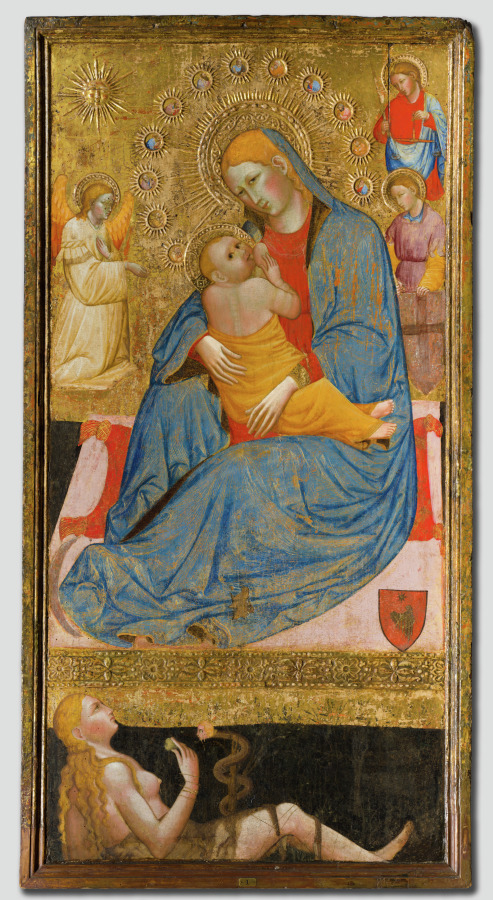
Olivuccio di Ciccarello (Italian, Marche, 1360/65 -1439)
The Virgin of Humility and the Temptation of Eve
In "The Virgin of Humility and the Temptation of Eve", applied gold organizes the hierarchy of figures and transforms the panel into an object of devotion. Olivuccio di Ciccarello (Italian, Marche, 1360/65 -1439) does not seek the illusion of one painted metal: the precious material is actually applied, then worked to catch the light. This sparkle animates the halos, borders and background while separating the sacred register from everyday space.
View work in collection →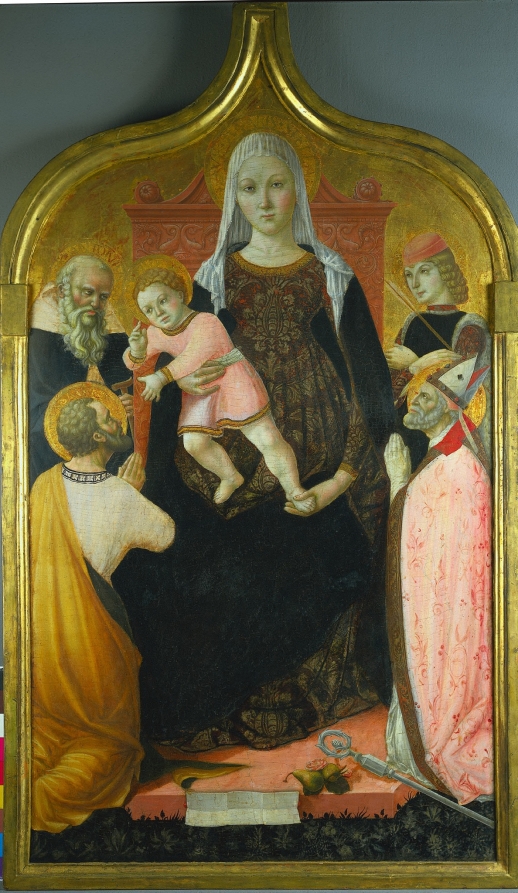
Lorenzo da Sanseverino (Italian, 1468 -1500)
Virgin and Child with Saint Anthony, Saint Mark, Saint Severinus and Saint Sebastian
In "Virgin and Child with Saint Anthony, Saint Mark, Saint Severinus and Saint Sebastian", applied gold organizes the hierarchy of figures and transforms the panel into an object of devotion. Lorenzo da Sanseverino (Italian, 1468 -1500) does not don't look for the illusion of painted metal: the precious material is actually applied, then worked to catch the light. This sparkle animates the halos, borders and background while separating the sacred register from space daily.
View work in collection →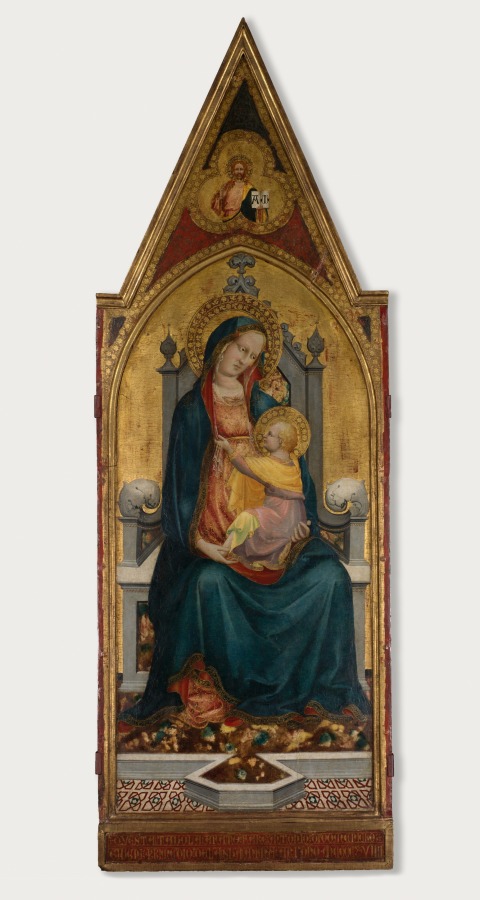
Battista di Biagio Sanguigni (Italian, active 1393 -1451)
Virgin and Child in majesty
In "Virgin and Child in Majesty", applied gold organizes the hierarchy of figures and transforms the panel into an object of devotion. Battista di Biagio Sanguigni (Italian, active 1393 -1451) does not seek the illusion of a painted metal: the precious material is actually applied, then worked to catch the light. This sparkle animates the halos, borders and background while separating the sacred register from everyday space.
View work in collection →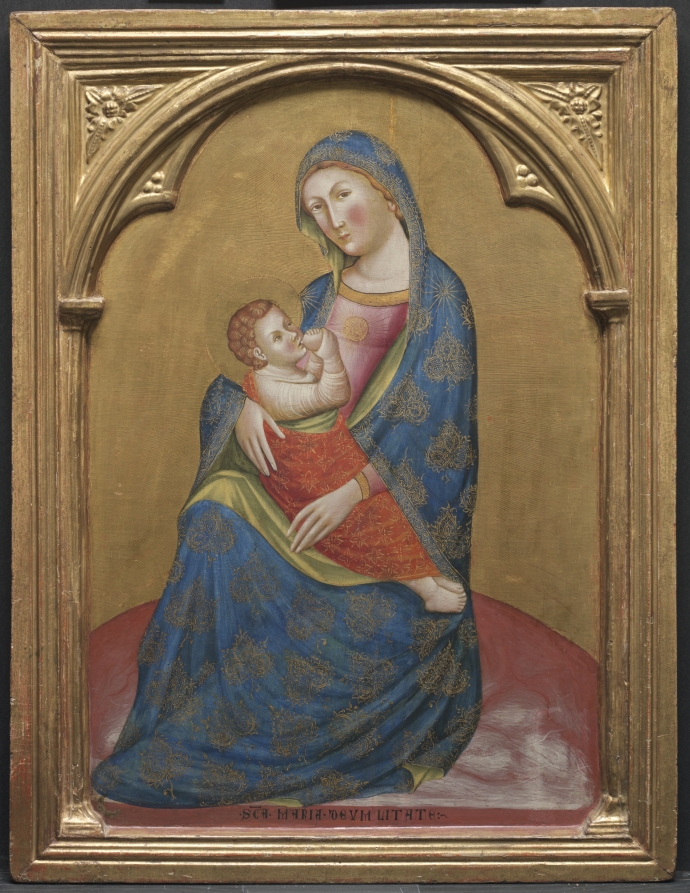
Caterino Veneziano (Italian, active 1362 -82)
Virgin of Humility
In "Virgin of Humility", applied gold organizes the hierarchy of figures and transforms the panel into an object of devotion. Caterino Veneziano (Italian, active 1362 -82) does not seek the illusion of a painted metal: the precious material is actually applied, then worked to catch the light. This sparkle animates the halos, borders and background while separating the sacred register from everyday space.
View work in collection →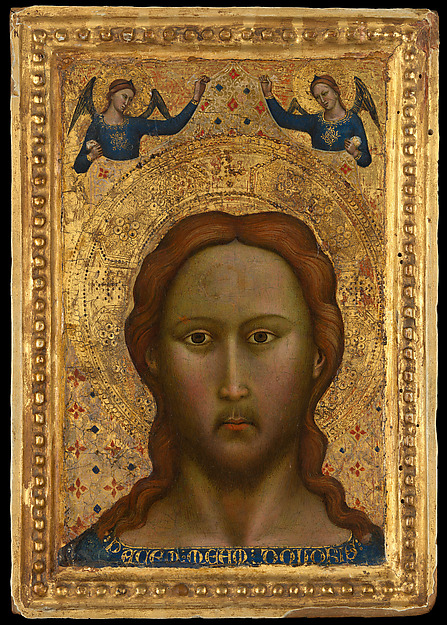
Master of the Orcagnesque Misericordia
Head of Christ
In "Head of Christ", the gold background organizes the hierarchy of figures and transforms the panel into an object of devotion. Master of the Orcagnesque Misericordia does not seek the illusion of a painted metal: the precious material really is applied, then worked to catch the light. This sparkle animates the halos, borders and background while separating the sacred register from everyday space.
View work in collection →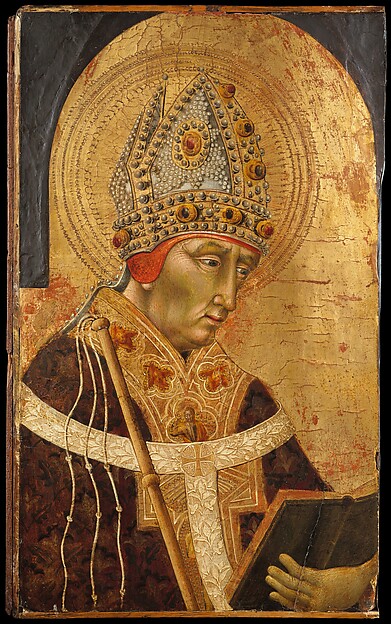
Giovanni di Paolo (Giovanni di Paolo di Grazia)
Saint Ambrose
In "Saint Ambrose", the gold background organizes the hierarchy of figures and transforms the panel into an object of devotion. Giovanni di Paolo (Giovanni di Paolo di Grazia) does not seek the illusion of a painted metal: the precious material is actually applied, then worked to catch the light. This sparkle animates the halos, borders and background while separating the sacred register from everyday space.
View work in collection →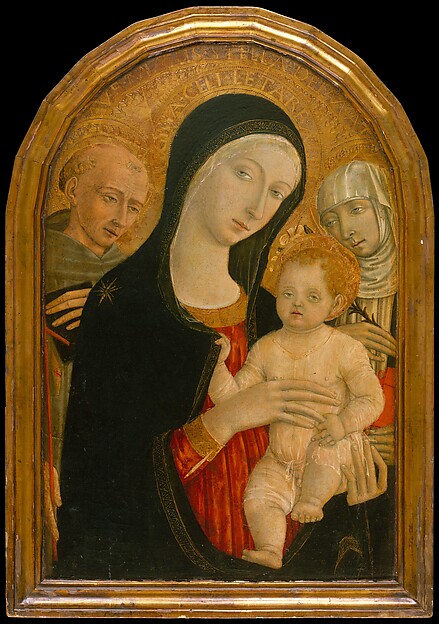
Matteo di Giovanni di Bartolo
Virgin and Child with Saint Francis and Saint Catherine
In "Virgin and Child with Saint Francis and Saint Catherine", the gold background organizes the hierarchy of figures and transforms the panel into an object of devotion. Matteo di Giovanni di Bartolo does not seek the illusion of a painted metal: the precious material is actually applied, then worked to catch the light. This sparkle animates the halos, borders and background while separating the sacred register from everyday space.
View work in collection →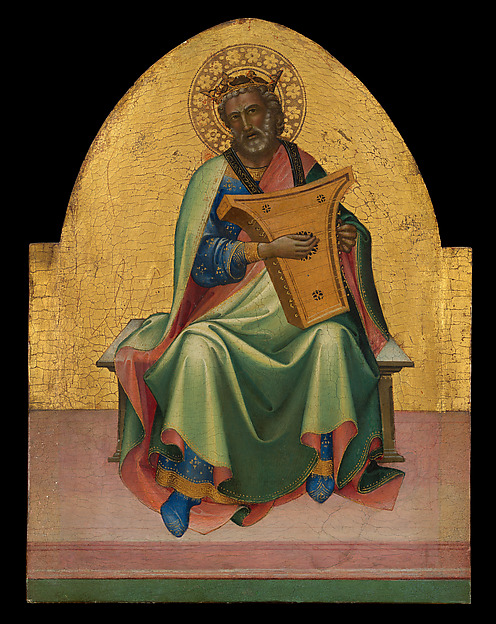
Lorenzo Monaco (Piero di Giovanni)
David
In "David", the gold background organizes the hierarchy of figures and transforms the panel into an object of devotion. Lorenzo Monaco (Piero di Giovanni) does not seek the illusion of a painted metal: the precious material is actually applied, then worked to catch the light. This sparkle animates the halos, borders and background while separating the sacred register from everyday space.
View work in collection →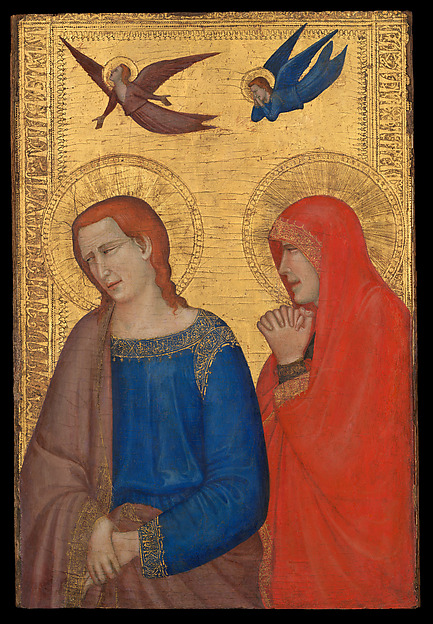
Italian, Neapolitan Follower of Giotto
Saint John the Evangelist and Saint Mary Magdalene
In "Saint John the Evangelist and Saint Mary Magdalene", the gold background organizes the hierarchy of figures and transforms the panel into an object of devotion. Italian, Neapolitan Follower of Giotto does not seek the illusion of painted metal: the precious material is actually applied, then worked to catch the light. This sparkle animates the halos, borders and background while separating the sacred register from everyday space.
View work in collection →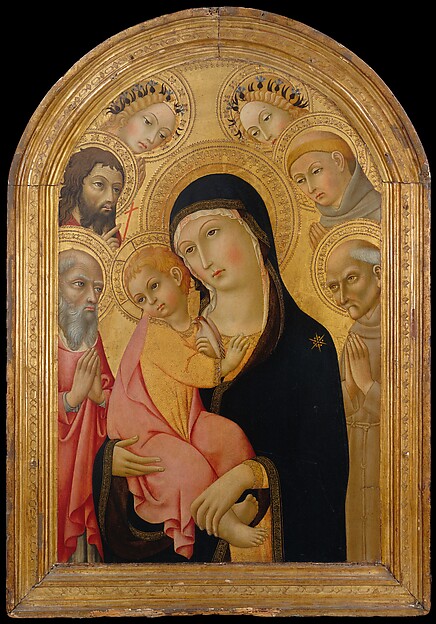
Sano di Pietro (Ansano di Pietro di Mencio)
Virgin and Child surrounded by saints and two angels
In "Virgin and Child surrounded by saints and two angels", the gold background organizes the hierarchy of figures and transforms the panel into an object of devotion. Sano di Pietro (Ansano di Pietro di Mencio) does not seek the illusion of metal painted: the precious material is actually applied, then worked to catch the light. This sparkle animates the halos, borders and background while separating the sacred register from everyday space.
View work in collection →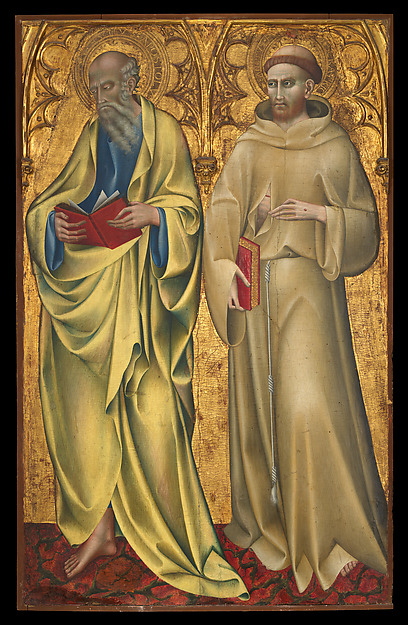
Giovanni di Paolo (Giovanni di Paolo di Grazia)
Saint Matthew and Saint Francis
In "Saint Matthew and Saint Francis", the gold background organizes the hierarchy of figures and transforms the panel into an object of devotion. Giovanni di Paolo (Giovanni di Paolo di Grazia) does not seek the illusion of a painted metal: the precious material is actually applied, then worked to catch the light. This sparkle animates the halos, borders and background while separating the sacred register from everyday space.
View work in collection →
Sano di Pietro (Ansano di Pietro di Mencio)
Saint Francis
In "Saint Francis", the gold background organizes the hierarchy of figures and transforms the panel into an object of devotion. Sano di Pietro (Ansano di Pietro di Mencio) does not seek the illusion of a painted metal: the precious material is actually applied, then worked to catch the light. This sparkle animates the halos, borders and background while separating the sacred register from everyday space.
View work in collection →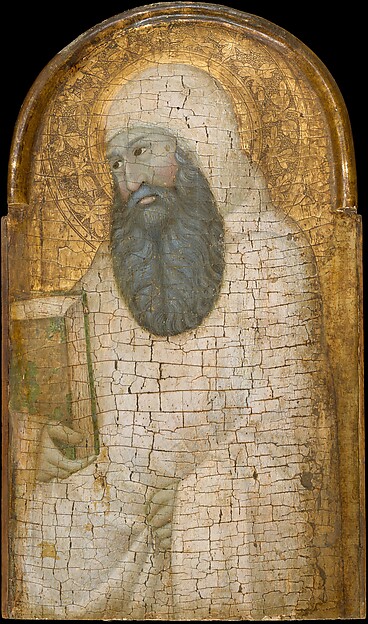
Pseudo-Palmeruccio
Saint Romuald
In "Saint Romuald", the gold background organizes the hierarchy of figures and transforms the panel into an object of devotion. Pseudo-Palmeruccio does not seek the illusion of a painted metal: the precious material is actually applied, then worked to catch the light. This sparkle animates the halos, borders and background while separating the sacred register from everyday space.
View work in collection →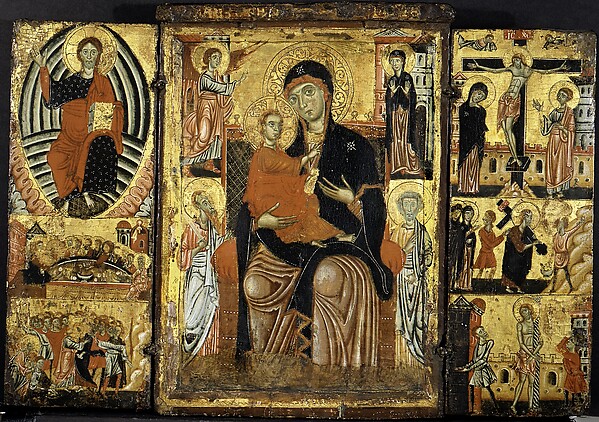
Master of the Magdalen
Virgin and Child in majesty
In "Virgin and Child in Majesty", the gold background organizes the hierarchy of figures and transforms the panel into an object of devotion. Master of the Magdalen does not seek the illusion of a painted metal: the precious material really is applied, then worked to catch the light. This sparkle animates the halos, borders and background while separating the sacred register from everyday space.
View work in collection →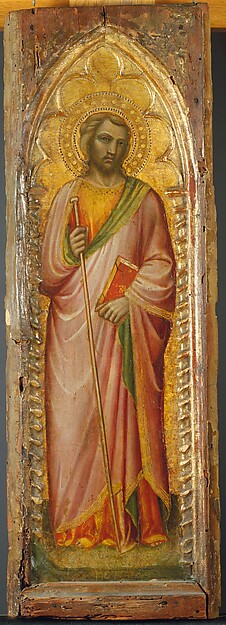
Spinello Aretino (Spinello di Luca Spinelli)
A saint, perhaps James the Greater
In "A Saint, Perhaps James the Greater", the gold background organizes the hierarchy of figures and transforms the panel into an object of devotion. Spinello Aretino (Spinello di Luca Spinelli) does not seek the illusion of a painted metal: the precious material is actually applied, then worked to catch the light. This sparkle animates the halos, borders and background while separating the sacred register from everyday space.
View work in collection →
Giovanni di Paolo (Giovanni di Paolo di Grazia)
Blessed Andrea Gallerani
In "Blessed Andrea Gallerani", the gold background organizes the hierarchy of figures and transforms the panel into an object of devotion. Giovanni di Paolo (Giovanni di Paolo di Grazia) does not seek the illusion of a painted metal: matter precious is actually applied, then worked to catch the light. This sparkle animates the halos, borders and background while separating the sacred register from everyday space.
View work in collection →
Vincenzo Foppa
Virgin and Child
In "Virgin and Child", applied gold organizes the hierarchy of figures and transforms the panel into an object of devotion. Vincenzo Foppa does not seek the illusion of a painted metal: the precious material is actually applied, then worked to catch the light. This sparkle animates the halos, borders and background while separating the sacred register from everyday space.
View work in collection →
Emmanuel Tzanès
Head of the Virgin
In "Head of the Virgin", the gold background organizes the hierarchy of figures and transforms the panel into an object of devotion. Emmanuel Tzanès does not seek the illusion of a painted metal: the precious material is actually applied, then worked to catch the light. This sparkle animates the halos, borders and background while separating the sacred register from everyday space.
View work in collection →61 -80
Japan's Gold Screens
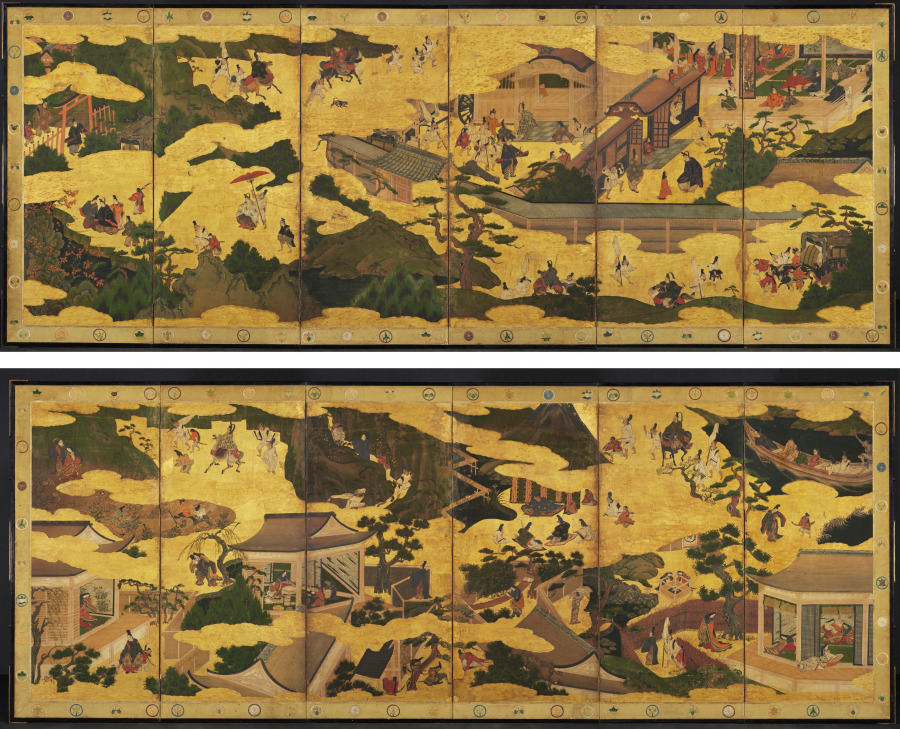
Japan, Edo period (1615 -1868)
Scenes from Ise's Tales
In "Scenes from the Tales of Ise", the golden paper is a real atmospheric surface. The figures, birds, trees or mountains seem to float in front of the metal, while the joints of the screen cut the story into sequences mobiles. Ambient light glides over the gold and changes the work throughout the day: the background simultaneously becomes mist, ceremonial space and decorative shine.
View work in collection →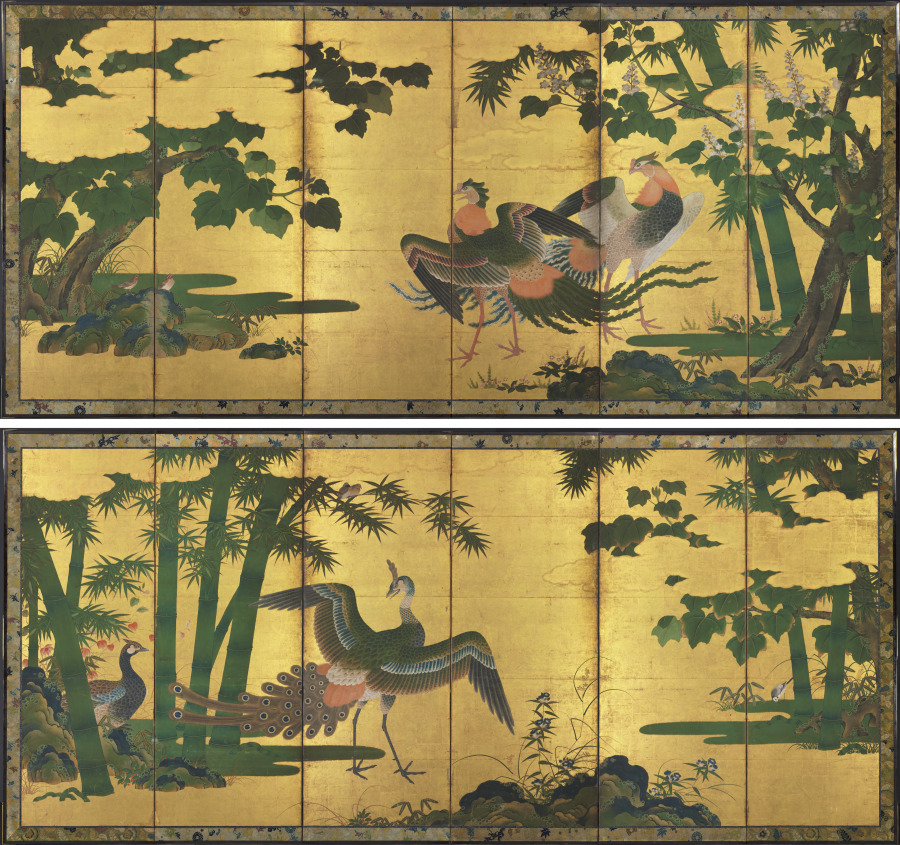
Tosa Mitsuyoshi (Japanese, 1539 -1613)
Peacocks and phoenixes
In "Peacocks and Phoenix", the golden paper is a real atmospheric surface. The figures, birds, trees or mountains seem to float in front of the metal, while the joints of the screen cut the story into mobile sequences. There ambient light glides over the gold and changes the work throughout the day: the background simultaneously becomes mist, ceremonial space and decorative shine.
View work in collection →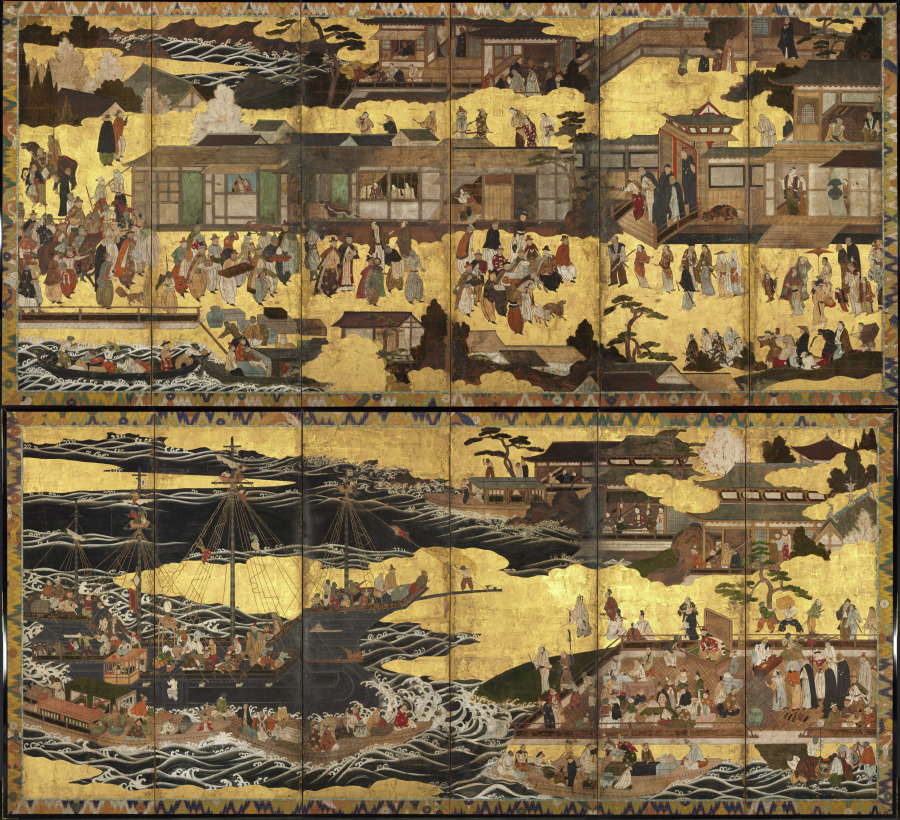
Japan, Momoyama period (1573 -1615)
The Arrival of the Southern Barbarians
In "The Arrival of the Southern Barbarians", applied gold is a real atmospheric surface. The figures, birds, trees or mountains seem to float in front of the metal, while the joints of the screen cut the story into sequences mobiles. Ambient light glides over the gold and changes the work throughout the day: the background simultaneously becomes mist, ceremonial space and decorative shine.
View work in collection →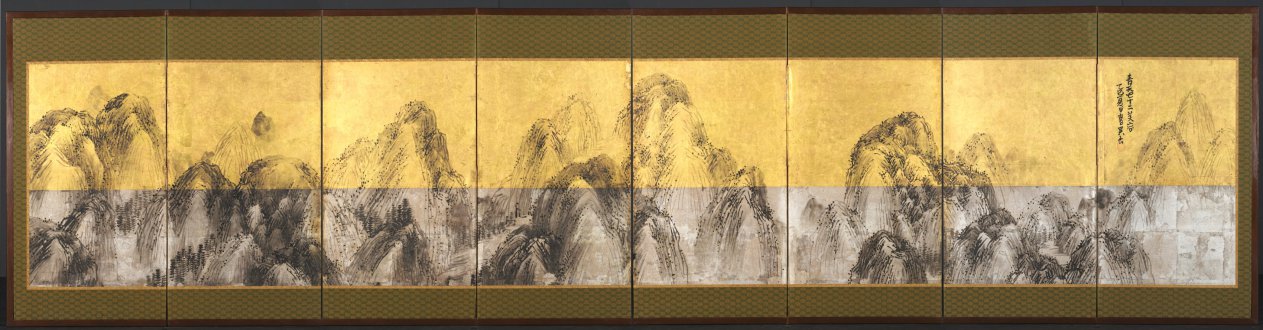
Matsumura Goshun (Japanese, 1752 -1811)
Seventy-two peaks under the blue sky with Mount Furong
In "Seventy-two peaks under the blue sky with Mount Furong", gold and silver is a real atmospheric surface. Figures, birds, trees or mountains seem to float in front of the metal, while the joints of the screen cut the story into moving sequences. The ambient light glides over the gold and changes the work throughout the day: the background simultaneously becomes mist, ceremonial space and decorative shine.
View work in collection →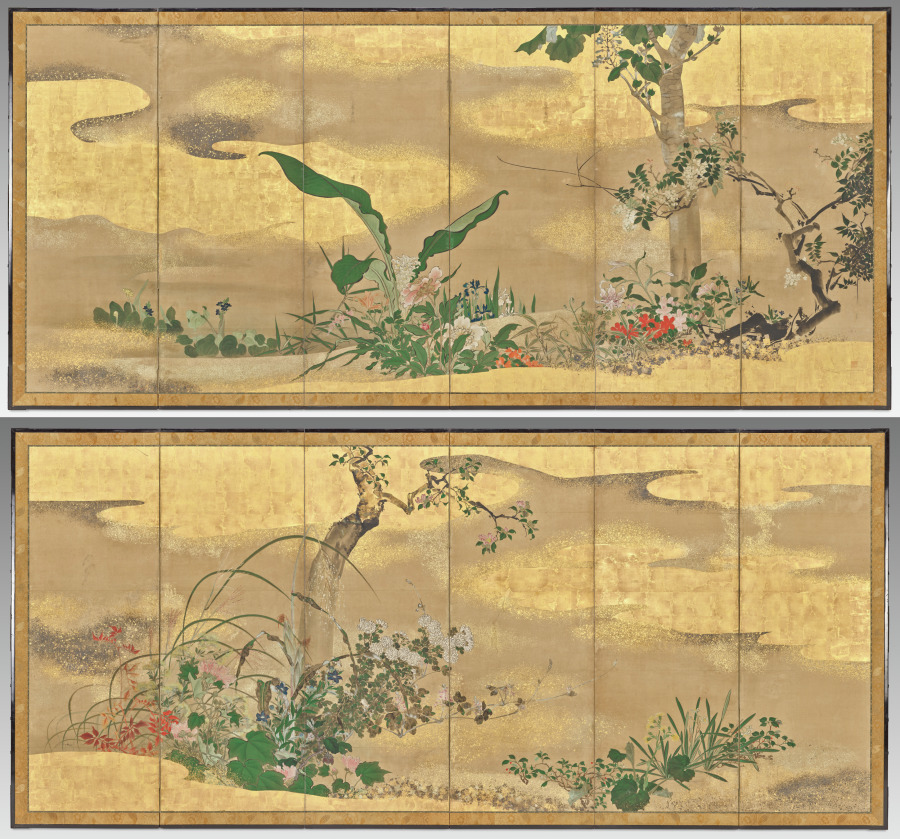
Watanabe Shiko (Japanese, 1683 -1755)
Flowers and trees of the four seasons
In "Flowers and Trees of the Four Seasons", gold and silver is a true atmospheric surface. The figures, birds, trees or mountains seem to float in front of the metal, while the joints of the screen cut the story into moving sequences. Ambient light glides over the gold and changes the work throughout the day: the background simultaneously becomes mist, ceremonial space and decorative shine.
View work in collection →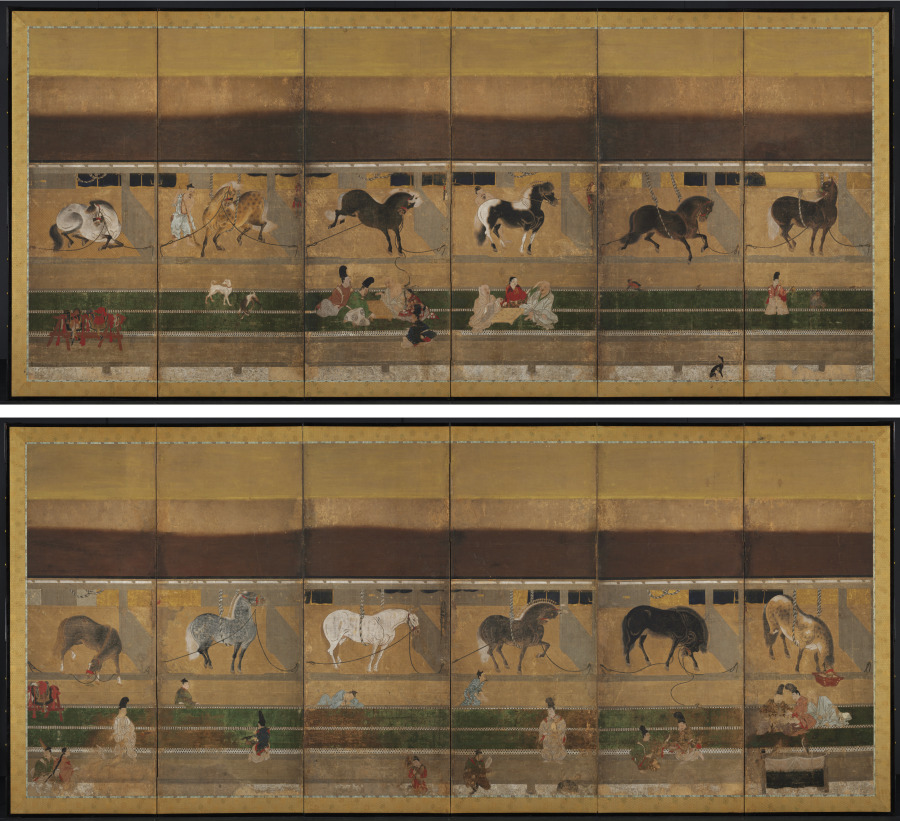
Japan, Muromachi period (1392 -1573)
The Stable
In "The Stable", the applied gold is a real atmospheric surface. The figures, birds, trees or mountains seem to float in front of the metal, while the joints of the screen cut the story into mobile sequences. The light ambient glides over the gold and changes the work throughout the day: the background simultaneously becomes mist, ceremonial space and decorative shine.
View work in collection →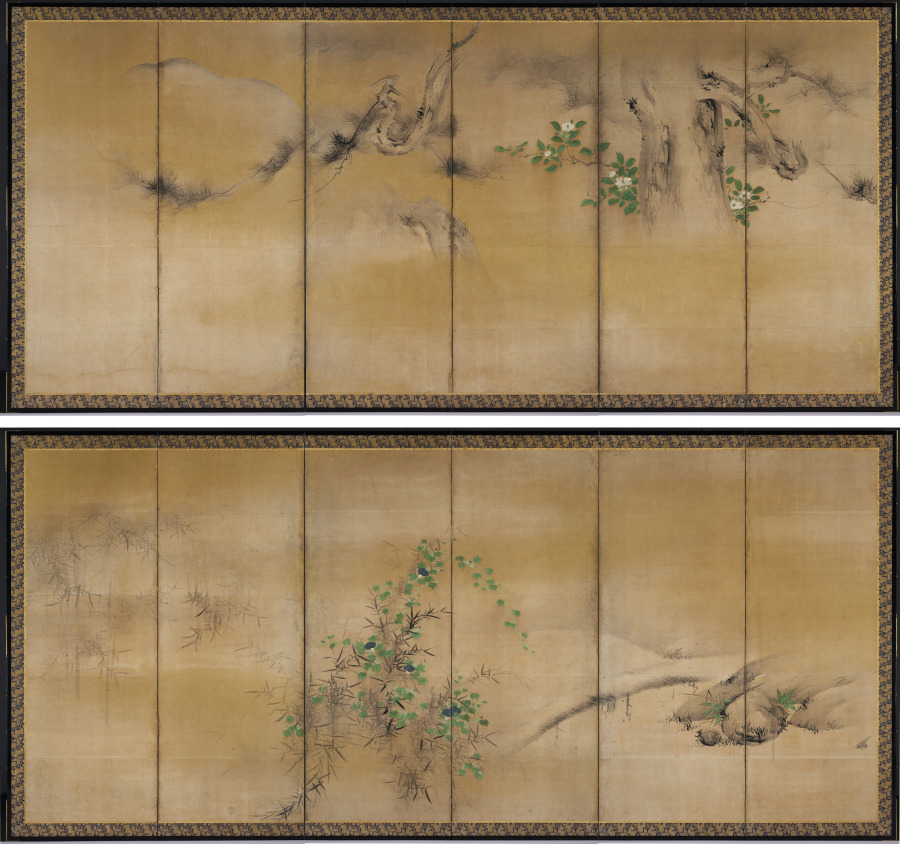
Kaiho Yusho (Japanese, 1533 -1615)
Winter and summer flowers
In "Winter and Summer Flowers", applied gold is a real atmospheric surface. The figures, birds, trees or mountains seem to float in front of the metal, while the joints of the screen cut the story into sequences mobiles. Ambient light glides over the gold and changes the work throughout the day: the background simultaneously becomes mist, ceremonial space and decorative shine.
View work in collection →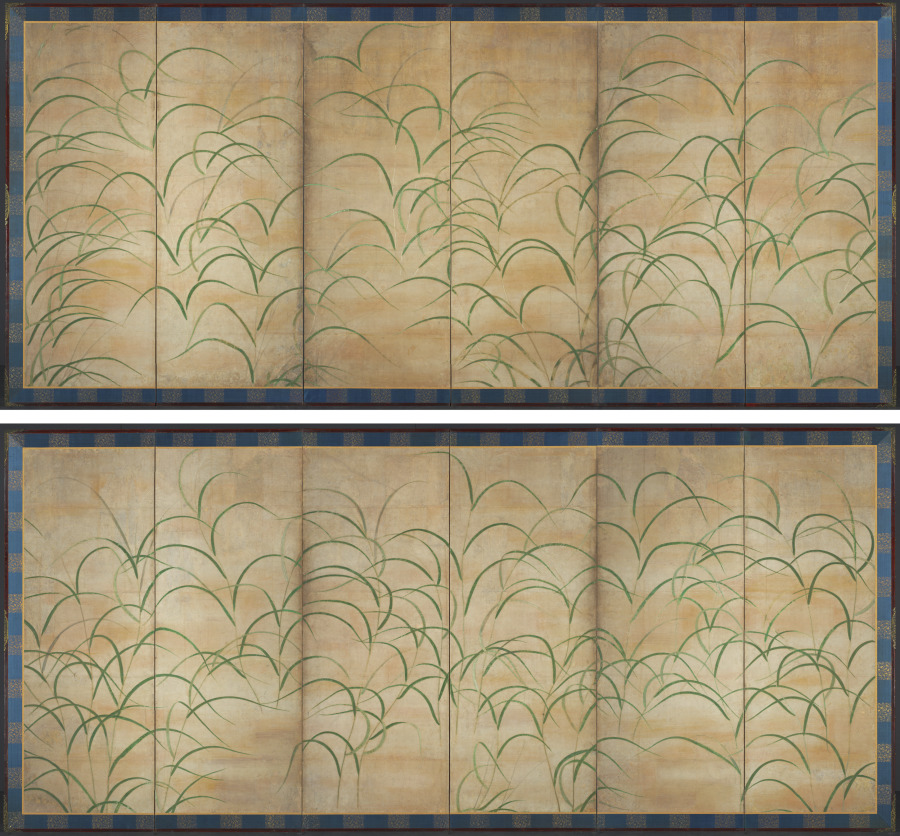
Japan, Muromachi period (1392 -1573)
Susuki herbs
In "Susuki Herbs", the applied gold is a real atmospheric surface. The figures, birds, trees or mountains seem to float in front of the metal, while the joints of the screen cut the story into mobile sequences. There ambient light glides over the gold and changes the work throughout the day: the background simultaneously becomes mist, ceremonial space and decorative shine.
View work in collection →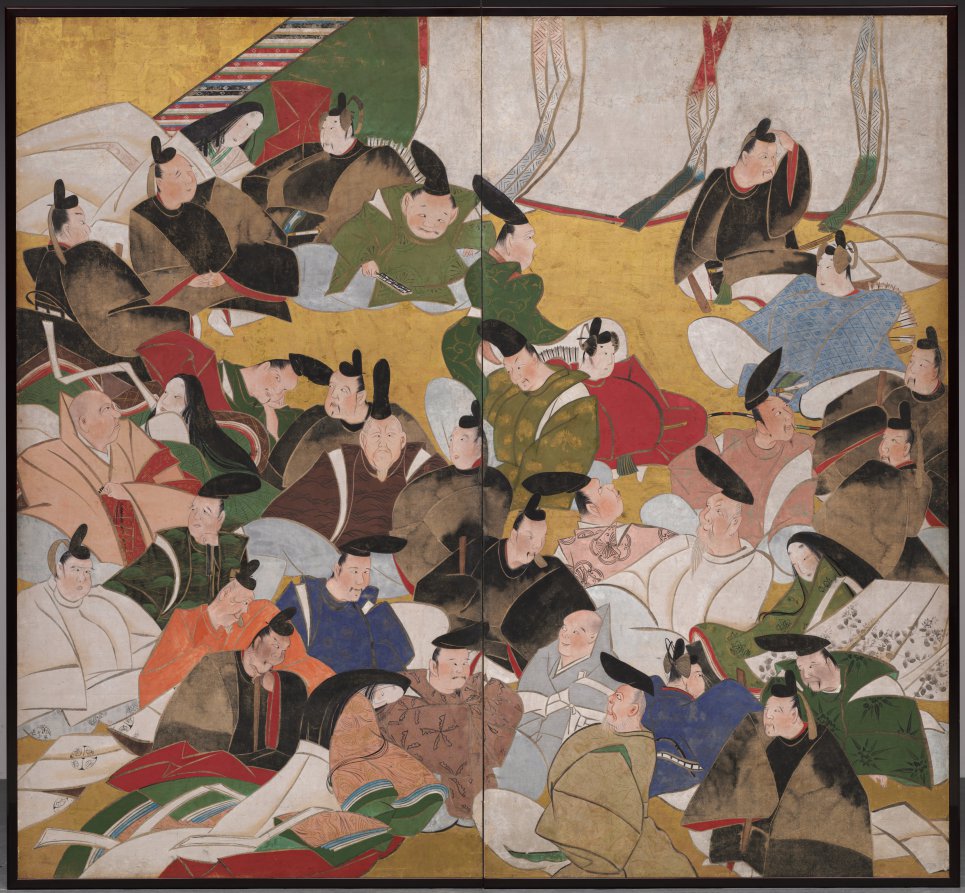
Tatebayashi Kagei (Japanese, active mid-1700s)
The Thirty-Six Immortals of Poetry
In "The Thirty-Six Immortals of Poetry", applied gold is a true atmospheric surface. The figures, birds, trees or mountains seem to float in front of the metal, while the joints of the screen cut the story into moving sequences. Ambient light glides over the gold and changes the work throughout the day: the background simultaneously becomes mist, ceremonial space and decorative shine.
View work in collection →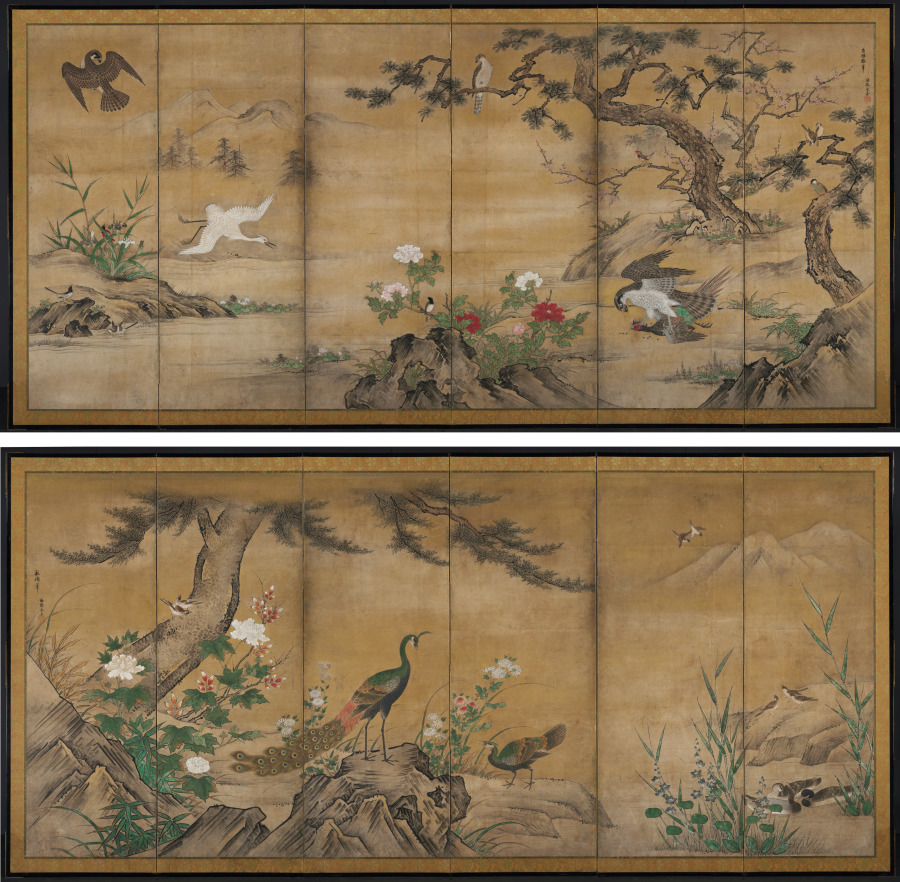
Kano Mitsunobu (Japanese, 1565 -1608); Kano Shoei (Japanese, 1519 -1592)
Birds and flowers
In "Birds and Flowers", the applied gold is a real atmospheric surface. The figures, birds, trees or mountains seem to float in front of the metal, while the joints of the screen cut the story into mobile sequences. There ambient light glides over the gold and changes the work throughout the day: the background simultaneously becomes mist, ceremonial space and decorative shine.
View work in collection →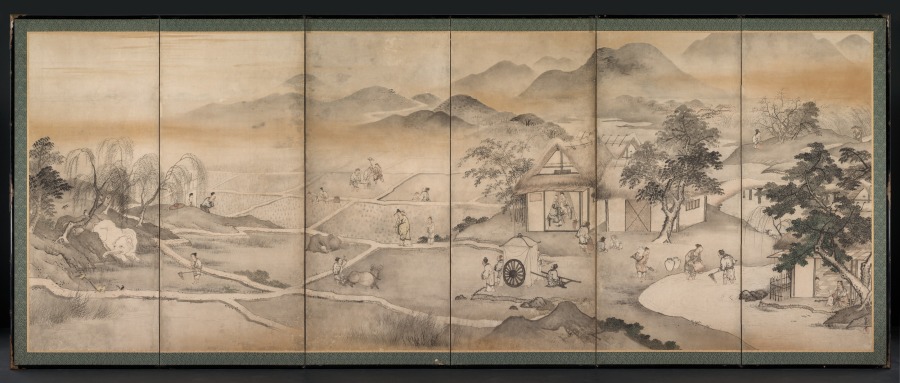
Kusumi Morikage (Japanese, active c. 1620 -1690)
Emperor Yao visits Yu Chonghua
In "Emperor Yao Visits Yu Chonghua", applied gold is a true atmospheric surface. The figures, birds, trees or mountains seem to float in front of the metal, while the joints of the screen cut out the story in moving sequences. Ambient light glides over the gold and changes the work throughout the day: the background simultaneously becomes mist, ceremonial space and decorative shine.
View work in collection →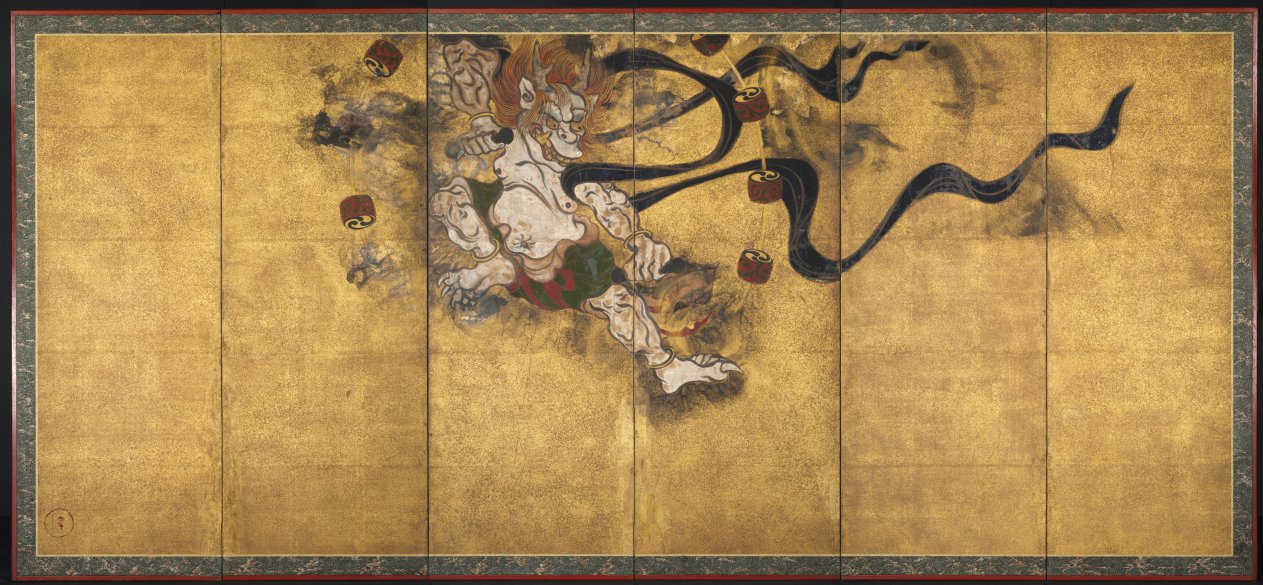
Tawaraya Sôtatsu (Japanese, c. 1570 -c. 1640)
The God of Thunder, Raijin
In "The God of Thunder, Raijin", applied gold is a true atmospheric surface. The figures, birds, trees or mountains seem to float in front of the metal, while the joints of the screen cut the story into sequences mobiles. Ambient light glides over the gold and changes the work throughout the day: the background simultaneously becomes mist, ceremonial space and decorative shine.
View work in collection →
Japan, Edo period (1615 -1868)
Autumn evening under the full moon in the Musashino plain
In "Autumn Evening Under the Full Moon in the Musashino Plain", the golden paper is a real atmospheric surface. Figures, birds, trees or mountains seem to float in front of the metal, while the joints of the screens cut the story into moving sequences. The ambient light glides over the gold and changes the work throughout the day: the background simultaneously becomes mist, ceremonial space and decorative shine.
View work in collection →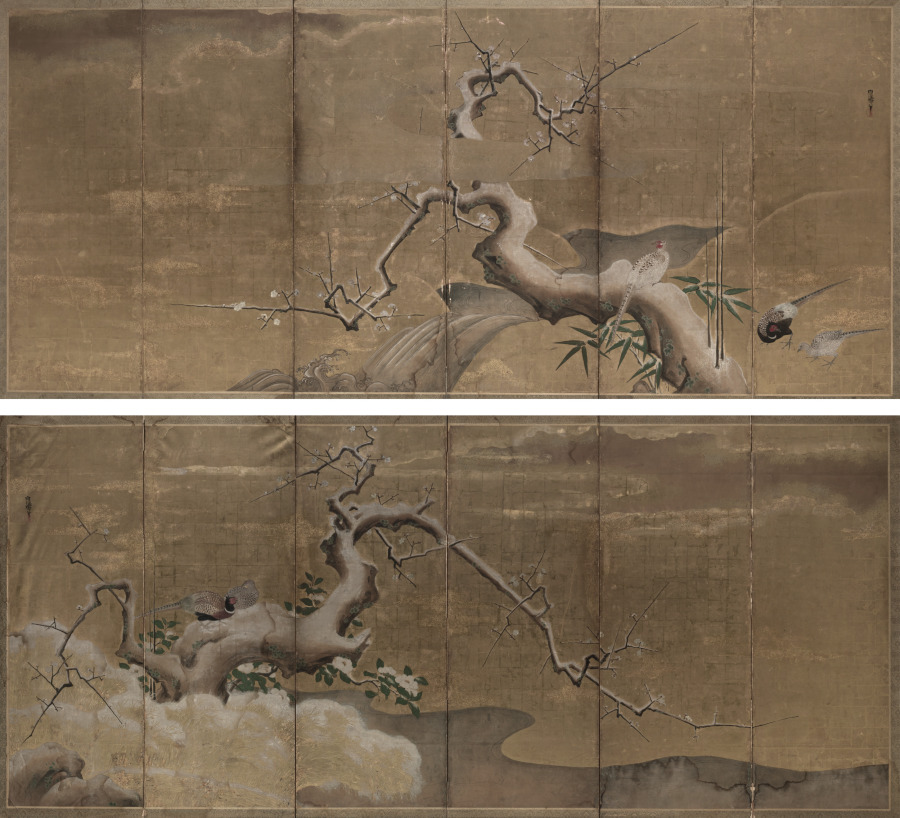
Kano Naonobu (Japanese, 1607 -1650)
Winter scene with plum and pheasants
In "Winter Scene with Plum and Pheasant Trees", the gold leaf is a real atmospheric surface. The figures, birds, trees or mountains seem to float in front of the metal, while the joints of the screen cut the story into moving sequences. Ambient light glides over the gold and changes the work throughout the day: the background simultaneously becomes mist, ceremonial space and decorative shine.
View work in collection →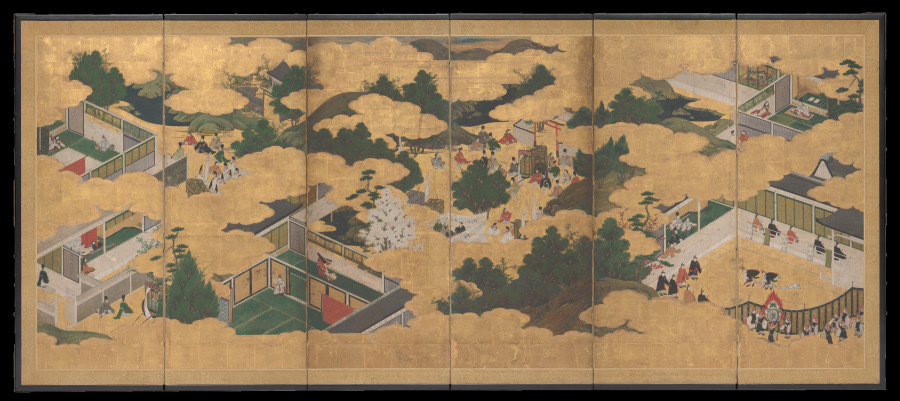
Japan, Edo period (1615 -1868)
Scenes from Tale of Genji
In "Scenes from the Tale of Genji", gold and silver are a real atmospheric surface. The figures, birds, trees or mountains seem to float in front of the metal, while the joints of the screen cut the story into sequences mobiles. Ambient light glides over the gold and changes the work throughout the day: the background simultaneously becomes mist, ceremonial space and decorative shine.
View work in collection →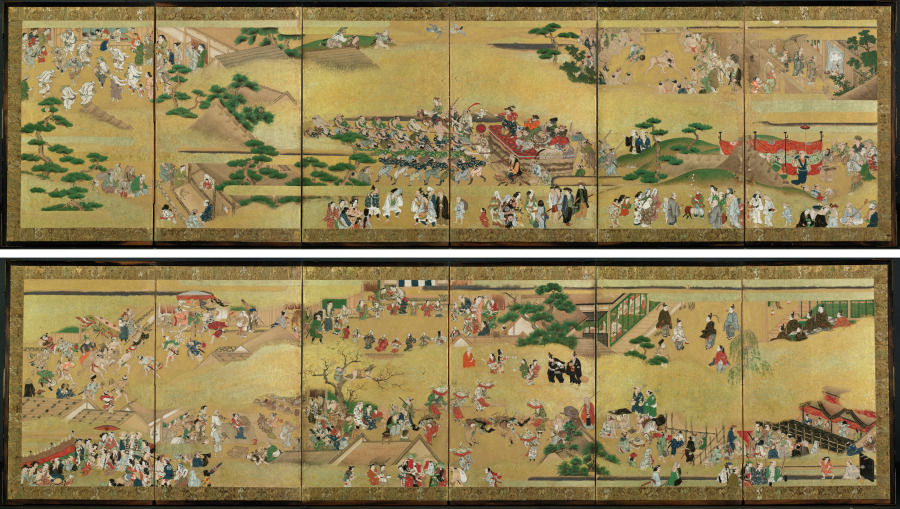
Japan, Edo period (1615 -1868)
Party scenes
In "Party Scenes", the gold leaf is a real atmospheric surface. The figures, birds, trees or mountains seem to float in front of the metal, while the joints of the screen cut the story into mobile sequences. There ambient light glides over the gold and changes the work throughout the day: the background simultaneously becomes mist, ceremonial space and decorative shine.
View work in collection →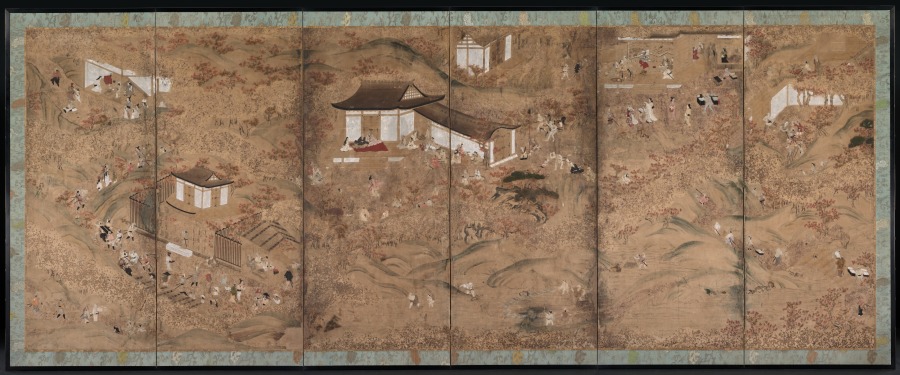
Japan, Edo period (1615 -1868)
Autumn in the mountains
In "Autumn in the Mountains", gold leaf is a real atmospheric surface. The figures, birds, trees or mountains seem to float in front of the metal, while the joints of the screen cut the story into sequences mobiles. Ambient light glides over the gold and changes the work throughout the day: the background simultaneously becomes mist, ceremonial space and decorative shine.
View work in collection →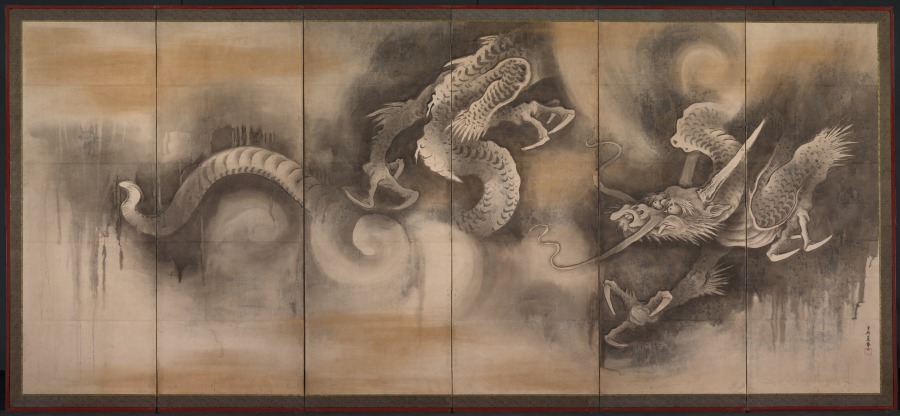
Soga Nichokuan (Japanese)
Dragon
In "Dragon", applied gold is a true atmospheric surface. The figures, birds, trees or mountains seem to float in front of the metal, while the joints of the screen cut the story into moving sequences. The light ambient glides over the gold and changes the work throughout the day: the background simultaneously becomes mist, ceremonial space and decorative shine.
View work in collection →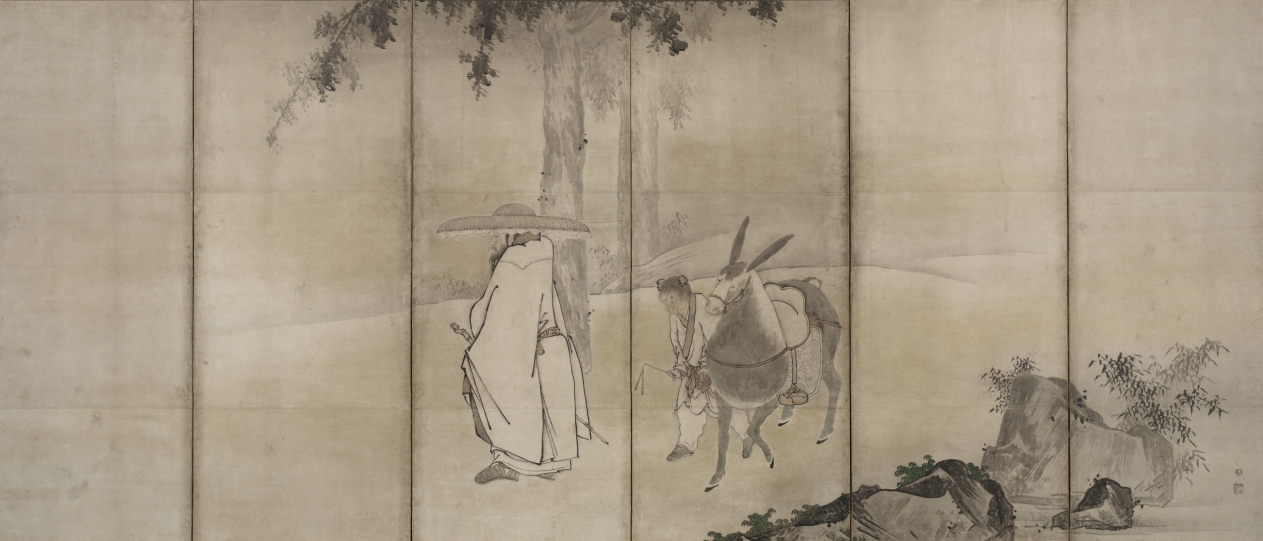
Unkoku Tôgan (Japanese, 1547 -1618)
Su Shi
In "Su Shi", applied gold is a true atmospheric surface. The figures, birds, trees or mountains seem to float in front of the metal, while the joints of the screen cut the story into moving sequences. The light ambient glides over the gold and changes the work throughout the day: the background simultaneously becomes mist, ceremonial space and decorative shine.
View work in collection →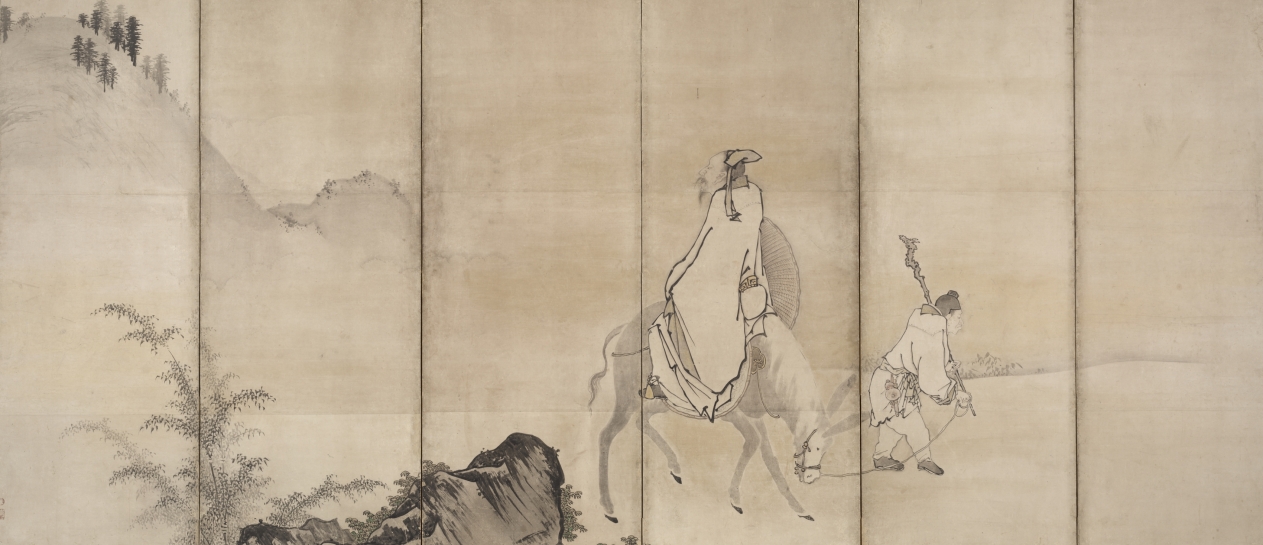
Unkoku Tôgan (Japanese, 1547 -1618)
Pan Lang
In "Pan Lang", applied gold is a real atmospheric surface. The figures, birds, trees or mountains seem to float in front of the metal, while the joints of the screen cut the story into moving sequences. The light ambient glides over the gold and changes the work throughout the day: the background simultaneously becomes mist, ceremonial space and decorative shine.
View work in collection →81 -100
Sacred gold and precious surfaces
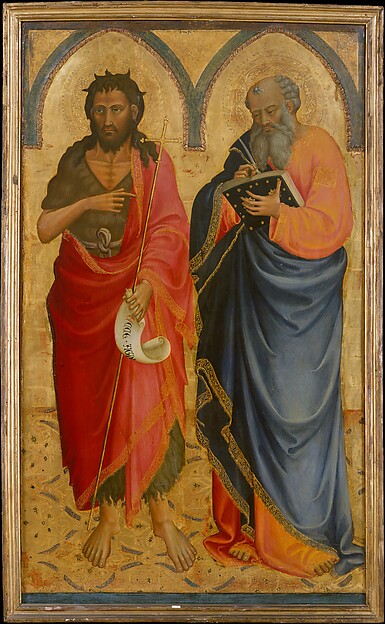
Bicci di Lorenzo
Saint John the Baptist and an evangelist
In "Saint John the Baptist and an Evangelist", the gold background acts as an autonomous luminous material and not as a simple yellow tint. Bicci di Lorenzo uses it to isolate figures, densify borders or suspend space real. The metal surface retains its power of reflection: it reacts to the movement of the gaze and makes the painting an object as much as an image.
View work in collection →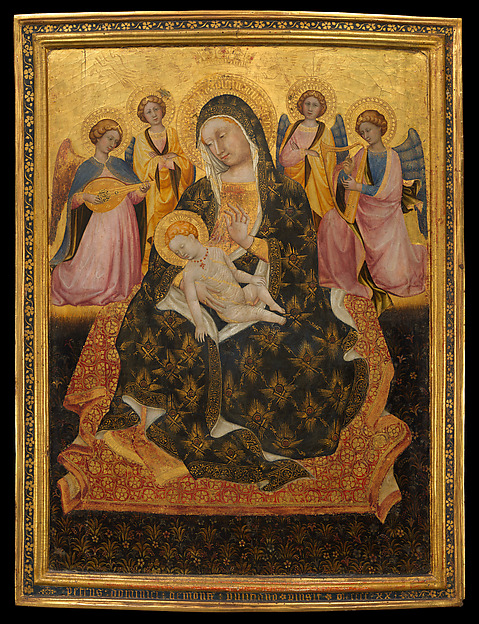
Pietro di Domenico da Montepulciano
Virgin and Child with angels
In "Virgin and Child with Angels", the gold background acts as an autonomous luminous material and not as a simple yellow tint. Pietro di Domenico da Montepulciano uses it to isolate figures, densify borders or suspend real space. The metallic surface retains its power of reflection: it reacts to the movement of the gaze and makes the painting an object as much as an image.
View work in collection →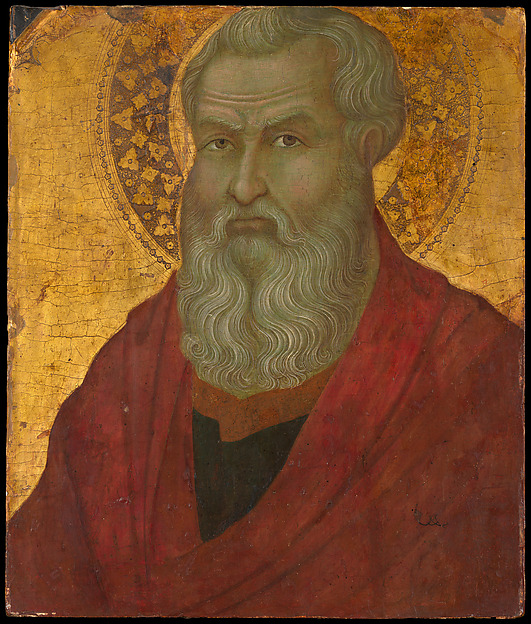
Ugolino da Siena (Ugolino di Nerio)
Saint Matthew
In "Saint Matthew", the gold background acts as an autonomous luminous material and not as a simple yellow tint. Ugolino da Siena (Ugolino di Nerio) uses it to isolate figures, densify borders or suspend real space. The metal surface retains its power of reflection: it reacts to the movement of the gaze and makes the painting an object as much as an image.
View work in collection →
Taddeo di Bartolo
Christ and the twelve apostles
In "Christ and the Twelve Apostles", the gold background acts as an autonomous luminous material and not as a simple yellow tint. Taddeo di Bartolo uses it to isolate figures, densify borders or suspend real space. There metallic surface retains its power of reflection: it reacts to the movement of the gaze and makes the painting an object as much as an image.
View work in collection →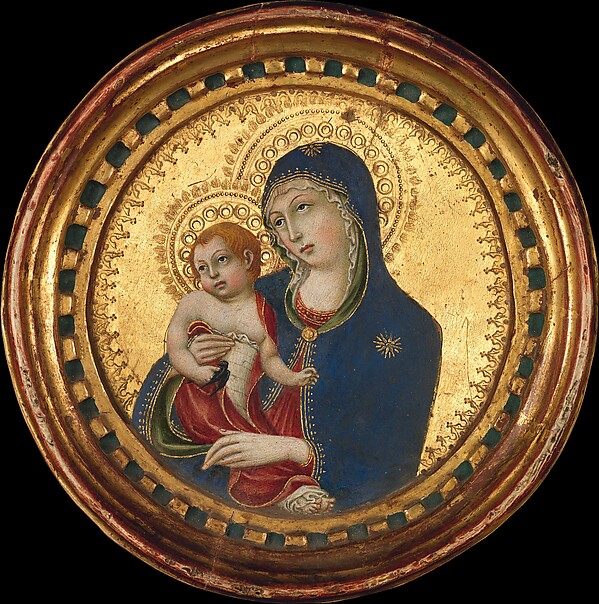
Sano di Pietro (Ansano di Pietro di Mencio)
Virgin and Child
In "Virgin and Child", the gold background acts as an autonomous luminous material and not as a simple yellow tint. Sano di Pietro (Ansano di Pietro di Mencio) uses it to isolate figures, densify borders or hang real space. The metallic surface retains its power of reflection: it reacts to the movement of the gaze and makes the painting an object as much as an image.
View work in collection →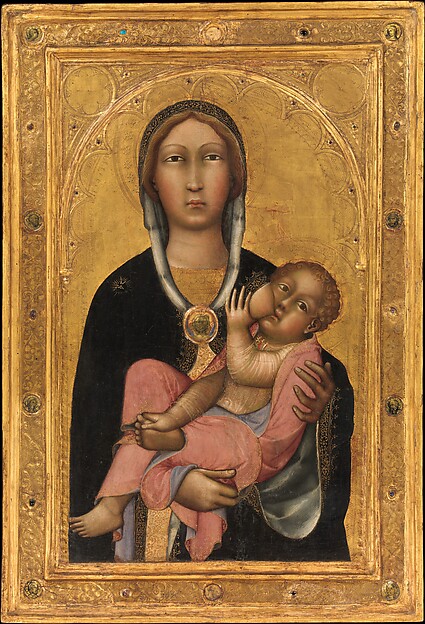
Paolo di Giovanni Fei
Virgin and Child
In "Virgin and Child", the gold background acts as an autonomous luminous material and not as a simple yellow tint. Paolo di Giovanni Fei uses it to isolate figures, densify borders or suspend real space. The surface metallic retains its power of reflection: it reacts to the movement of the gaze and makes painting an object as much as an image.
View work in collection →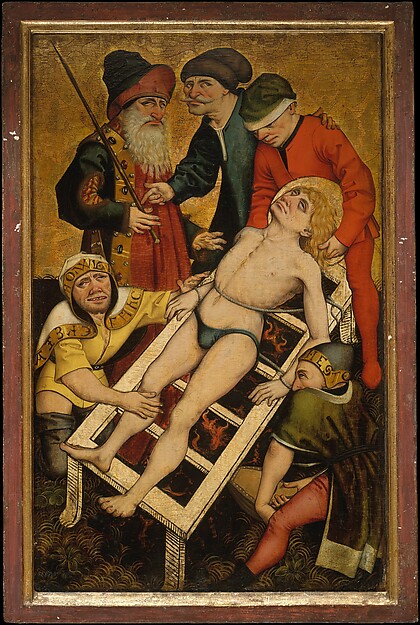
Master of the Acts of Mercy
The Martyrdom of Saint Lawrence
In "The Martyrdom of Saint Lawrence", the gold background acts as an autonomous luminous material and not as a simple yellow tint. Master of the Acts of Mercy uses it to isolate figures, densify borders or suspend space real. The metal surface retains its power of reflection: it reacts to the movement of the gaze and makes the painting an object as much as an image.
View work in collection →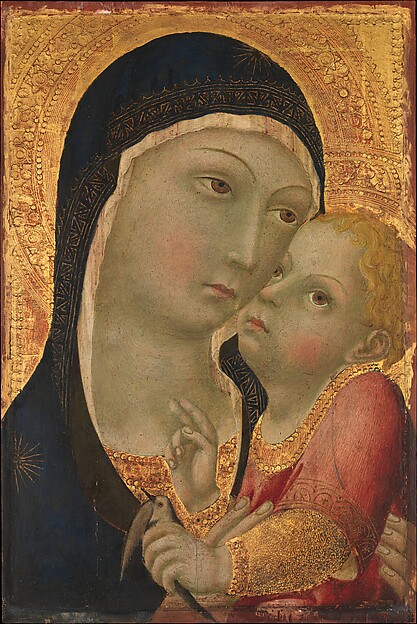
Sano di Pietro (Ansano di Pietro di Mencio)
Virgin and Child
In "Virgin and Child", the gold background acts as an autonomous luminous material and not as a simple yellow tint. Sano di Pietro (Ansano di Pietro di Mencio) uses it to isolate figures, densify borders or hang real space. The metallic surface retains its power of reflection: it reacts to the movement of the gaze and makes the painting an object as much as an image.
View work in collection →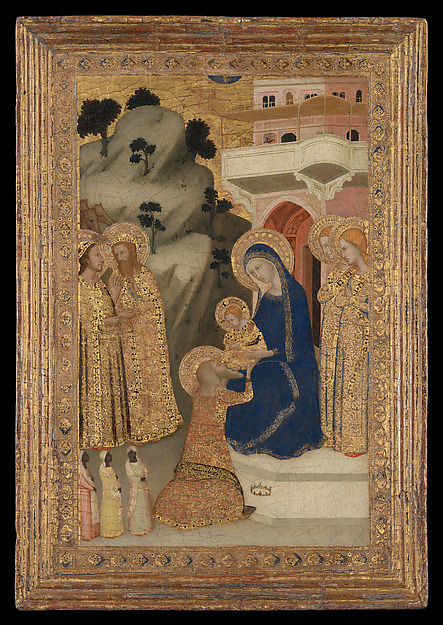
Italian, Neapolitan Follower of Giotto
The Adoration of the Magi
In "The Adoration of the Magi", the gold background acts as an autonomous luminous material and not as a simple yellow tint. Italian, Neapolitan Follower of Giotto uses it to isolate figures, densify borders or hang real space. The metallic surface retains its power of reflection: it reacts to the movement of the gaze and makes the painting an object as much as an image.
View work in collection →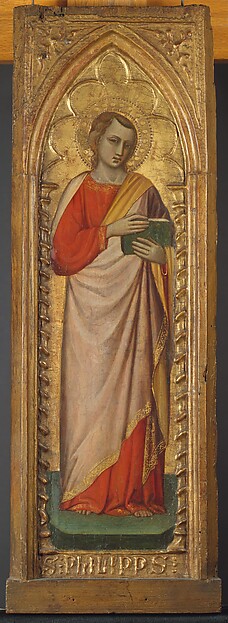
Spinello Aretino (Spinello di Luca Spinelli)
Saint Philip
In "Saint Philippe", the gold background acts as an autonomous luminous material and not as a simple yellow tint. Spinello Aretino (Spinello di Luca Spinelli) uses it to isolate figures, densify borders or hang real space. The metallic surface retains its power of reflection: it reacts to the movement of the gaze and makes the painting an object as much as an image.
View work in collection →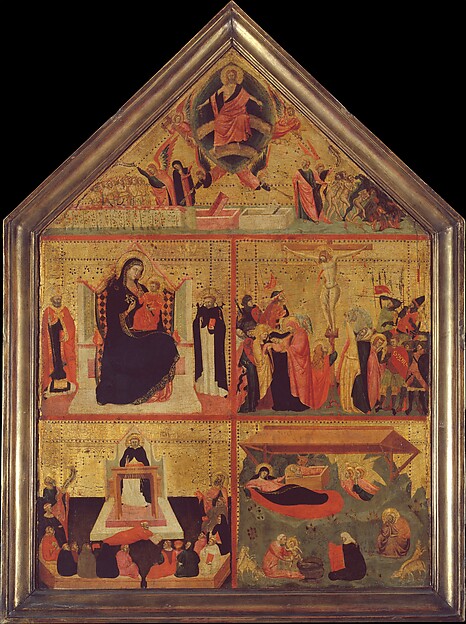
Master of the Dominican Effigies
The Last Judgment and the glorification of Saint Thomas Aquinas
In "The Last Judgment and the Glorification of Saint Thomas Aquinas", the gold background acts as an autonomous luminous material and not as a simple yellow tint. Master of the Dominican Effigies uses it to isolate figures, densify borders or suspend real space. The metal surface retains its power of reflection: it reacts to the movement of the gaze and makes the painting an object as much as an image.
View work in collection →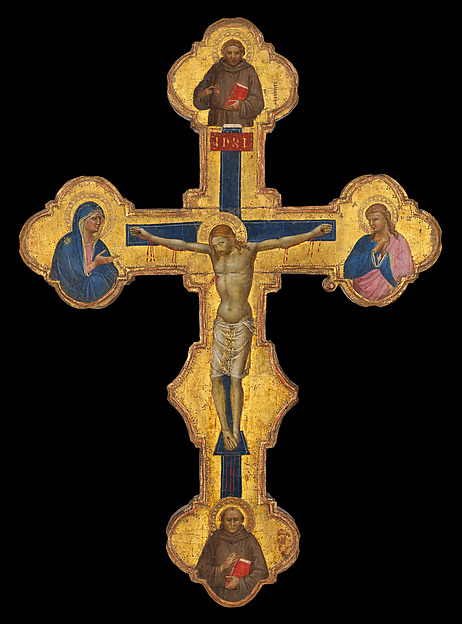
Master of the Orcagnesque Misericordia
Crucifix
In "Crucifix", the gold background acts as an autonomous luminous material and not as a simple yellow tint. Master of the Orcagnesque Misericordia uses it to isolate figures, densify borders or suspend real space. There metallic surface retains its power of reflection: it reacts to the movement of the gaze and makes the painting an object as much as an image.
View work in collection →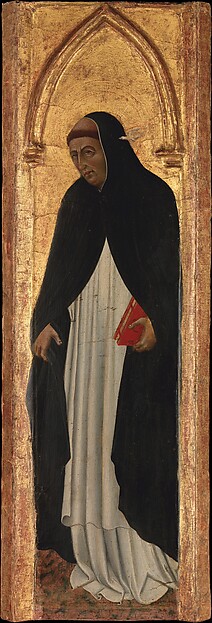
Giovanni di Paolo (Giovanni di Paolo di Grazia)
Blessed Ambrogio Sansedoni
In "Blessed Ambrogio Sanzedoni", the gold background acts as an autonomous luminous material and not as a simple yellow tint. Giovanni di Paolo (Giovanni di Paolo di Grazia) uses it to isolate figures and densify them borders or suspend real space. The metal surface retains its power of reflection: it reacts to the movement of the gaze and makes the painting an object as much as an image.
View work in collection →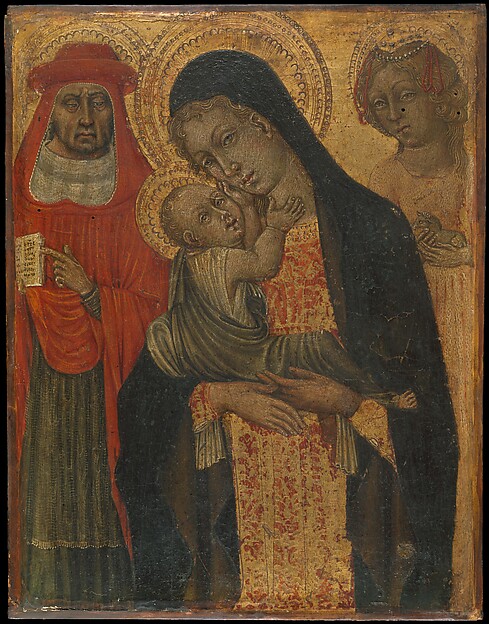
Giovanni di Paolo (Giovanni di Paolo di Grazia)
Virgin and Child with Saint Jerome and Saint Agnes
In "Virgin and Child with Saint Jerome and Saint Agnes", the gold background acts as an autonomous luminous material and not as a simple yellow tint. Giovanni di Paolo (Giovanni di Paolo di Grazia) uses it to isolate figures, densify borders or suspend real space. The metal surface retains its power of reflection: it reacts to the movement of the gaze and makes the painting an object as much as an image.
View work in collection →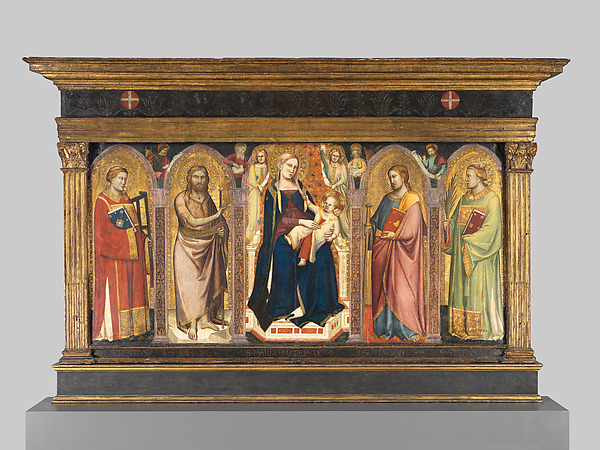
Taddeo Gaddi
Virgin and Child in majesty with saints
In "Virgin and Child in Majesty with Saints", the gold background acts as an autonomous luminous material and not as a simple yellow tint. Taddeo Gaddi uses it to isolate figures, densify borders or suspend space real. The metal surface retains its power of reflection: it reacts to the movement of the gaze and makes the painting an object as much as an image.
View work in collection →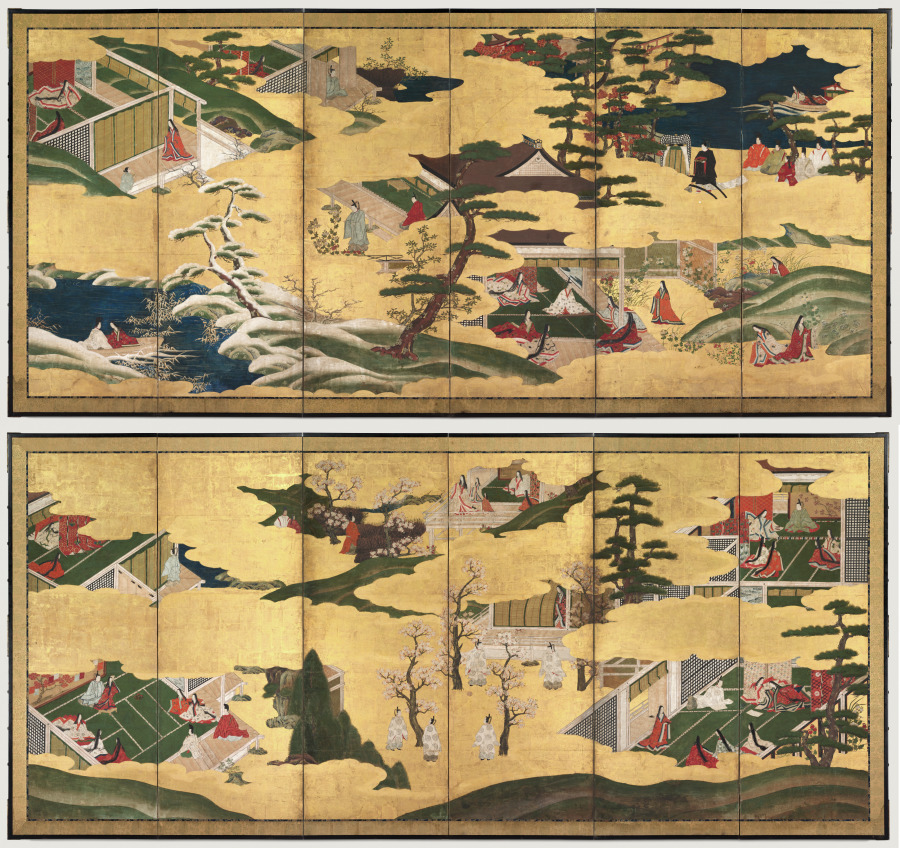
Japan, Edo period (1615 -1868)
Scenes from Tale of Genji
In "Scenes from the Tale of Genji", gold paper acts as an autonomous luminous material and not as a simple yellow tint. Japan, Edo period (1615 -1868) used it to isolate figures, densify borders or suspend space real. The metal surface retains its power of reflection: it reacts to the movement of the gaze and makes the painting an object as much as an image.
View work in collection →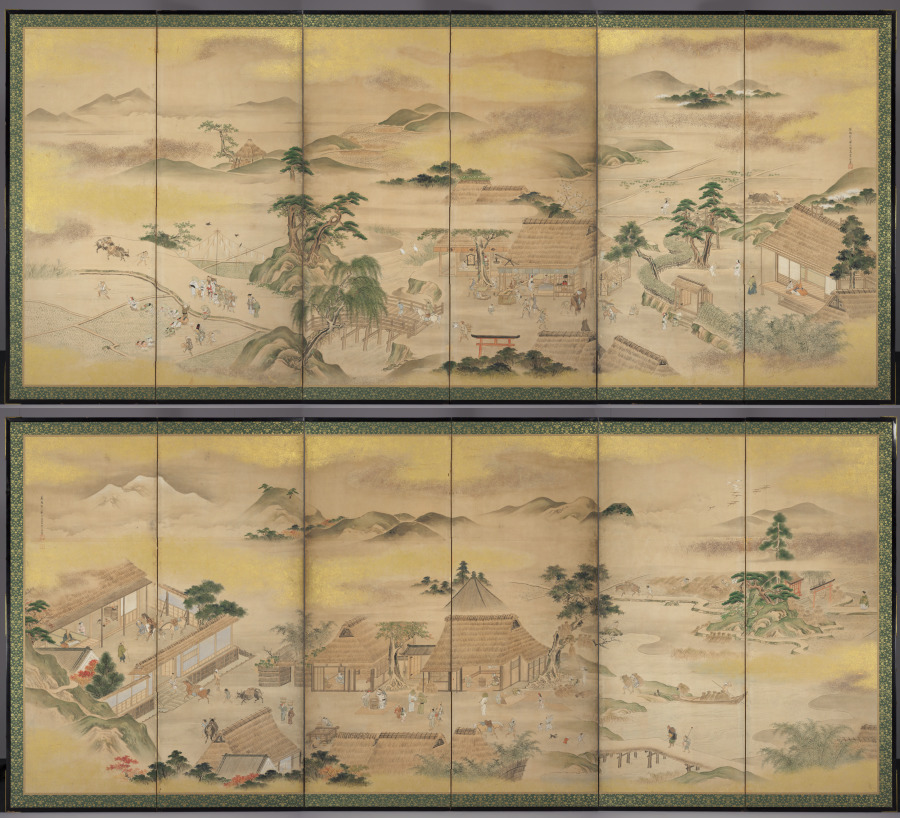
Ko Sukoku (Japanese, 1730 -1804)
Spring and fall agricultural work
In "Spring and Autumn Agricultural Work", applied gold acts as a self-contained luminous material and not as a simple yellow tint. Ko Sukoku (Japanese, 1730 -1804) uses it to isolate figures and densify borders or suspend real space. The metallic surface retains its power of reflection: it reacts to the movement of the gaze and makes the painting an object as much as an image.
View work in collection →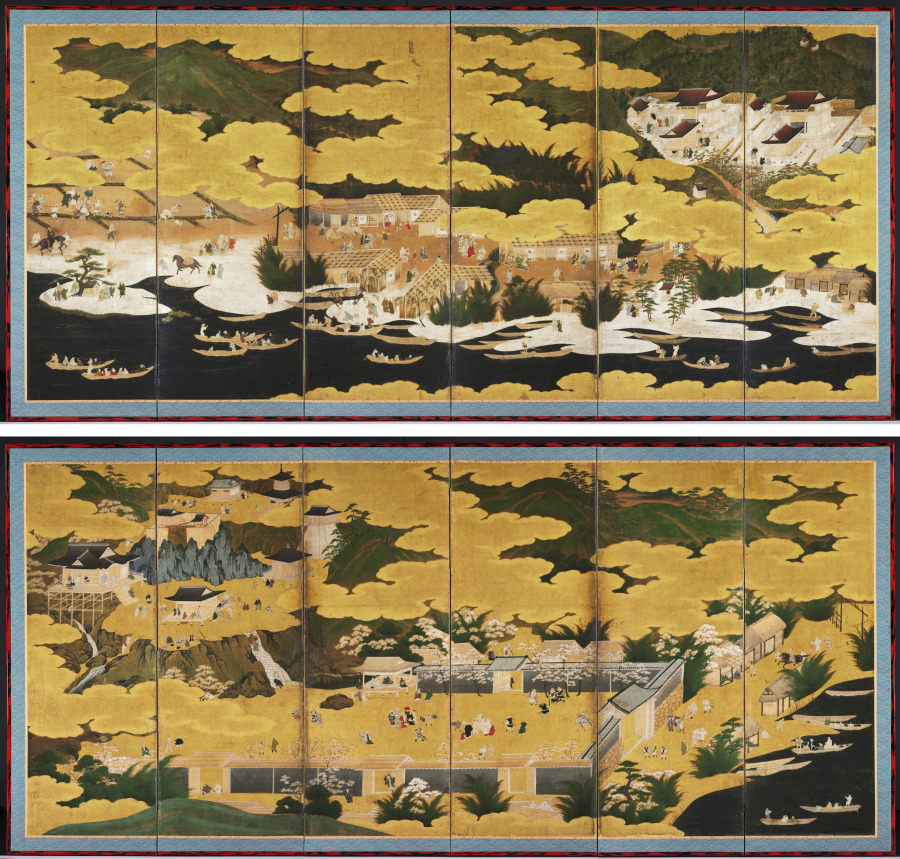
Japan, Edo period (1615 -1868)
Famous views of Omi
In "Famous Views of Omi", gold paper acts as a standalone luminous material and not as a simple yellow tint. Japan, Edo period (1615 -1868) used it to isolate figures, densify borders or suspend real space. The metal surface retains its power of reflection: it reacts to the movement of the gaze and makes the painting an object as much as an image.
View work in collection →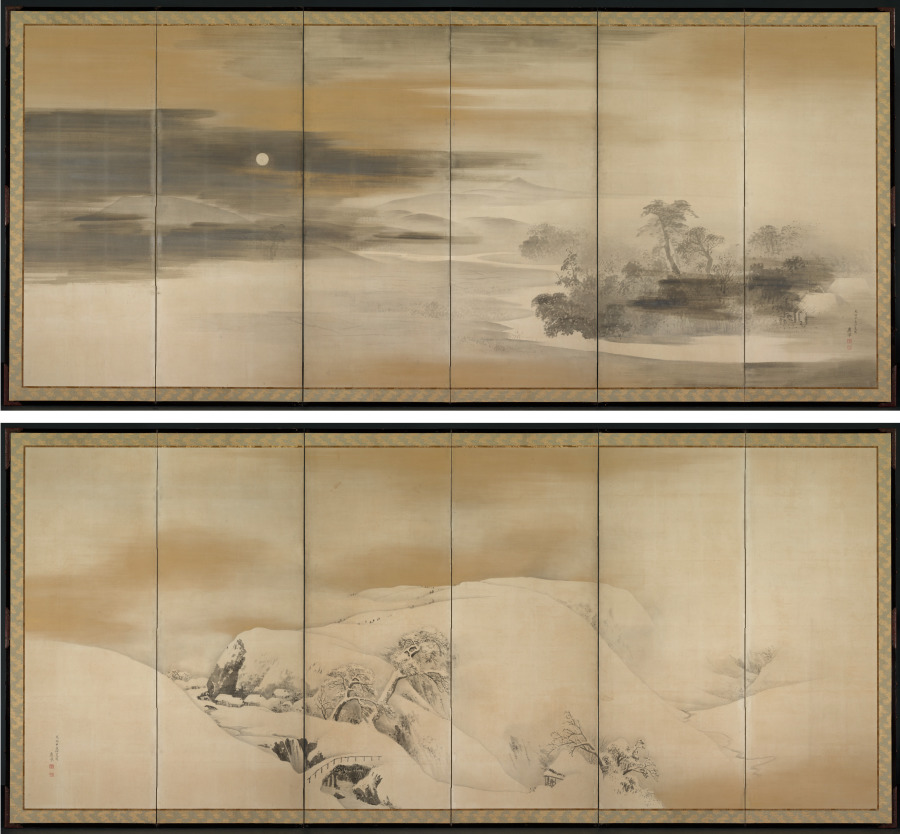
Maruyama Okyo (Japanese, 1733 -1795)
Summer night and winter day
In "Summer Night and Winter Day", applied gold acts as a standalone luminous material and not as a simple yellow tint. Maruyama Okyo (Japanese, 1733 -1795) uses it to isolate figures, densify borders or hang real space. The metallic surface retains its power of reflection: it reacts to the movement of the gaze and makes the painting an object as much as an image.
View work in collection →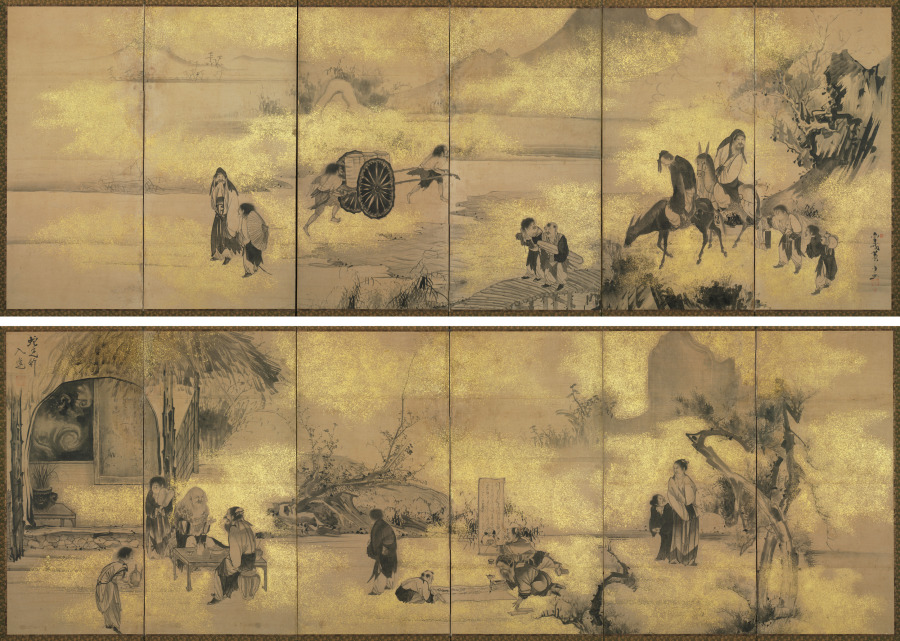
Soga Shôhaku (Japanese, 1730 -1781)
The Eight Immortals of the Cup of Wine
In "The Eight Immortals of the Cup of Wine", applied gold acts as an autonomous luminous material and not as a simple yellow tint. Soga Shôhaku (Japanese, 1730 -1781) uses it to isolate figures, densify borders or suspend real space. The metallic surface retains its power of reflection: it reacts to the movement of the gaze and makes the painting an object as much as an image.
View work in collection →Materials and gestures
Five ways to actually make gold shine
Gold leaf is so thin that thousands of leaves can be obtained from a small amount of metal. Placed on a colored bowl then browned, it produces a warm mirror; applied to the mixture, it maintains a more shine mat. Artists can then engrave the halos, punch the backgrounds, paint over them or let the metal appear between the colors.
Gold powder, shell gold, and metallic paints allow for finer lines. The all-gold paper of Japanese screens diffuses light into the architectural space, while silver and platinum introduce colder reflections. These material differences explain why the hundred works never shine in the same way.
A film of beaten metal applied to a smooth preparation, then often browned with agate.
This fine clay placed under the leaf warms the gold and facilitates its browning.
Mixed with a binder, it is worked with a brush for details, contours and inscriptions.
Colder and more fragile, it dialogues with gold and can today appear dark after oxidation.
At Klimt, this clear metal complements gold and silver in a deliberately precious surface.
Selection method
A classification controlled by the material
Gold attested
Each technique explicitly mentions a gold background, leaf, powder, gilding or precious metal incorporated into the paint.
Europe and Japan
The corpus brings together panels, icons, altarpieces, Japanese screens and modern paintings by Klimt. All Indian works have been removed.
Verified images and links
The hundred images were tested individually. The Shopify button is used when reproduction exists; otherwise, it leads to the institutional collection.
Frequently asked questions
Recognize true gold
Do these works actually contain gold?
Yes. Their technique documents a gold background, gold leaf, gold powder, gold paper or other precious metal. The simple yellow and ocher palettes have been removed.
Why does gold sometimes appear brown or matte?
The sheet can be worn, covered with glaze, mixed or photographed without direct reflection. The underlying red bowl, varnishes and aging also change its appearance.
Why are Japanese screens included?
These are painted surfaces in which gold leaf and powder directly participate in composition, light and architectural space.
Why is Klimt opening the rankings?
His six most important works actually using gold now occupy the top six places. They make visible the continuity between Byzantine icon and Viennese modernity.
How are works classified?
The route combines historical importance, visual presence of gold, quality of technique and diversity of European and Japanese traditions, without repeating a work or an image.
0 comments