


Top 100 - Tempera paints
The 100 most famous tempera paintings
From The Last Supper to Christina's World, a hundred matte surfaces where the pigment dries quickly but the image takes up all its time.
Tempera is one of the great techniques in the history of painting: pigments mixed with a water-soluble binder, often egg yolk, placed on wood, canvas, cardboard or prepared panel. Even after seven centuries, the color remains fresh; the egg, fortunately, has long since left the kitchen.
Pigments, water and binder
One hundred paintings to understand tempera without walking on shells
Before oil painting dominated European workshops, tempera provided a stable, matte and precise color. On a gesso-prepared panel, it dries quickly and promotes sharp contours, fine details and controlled layering.
The tempera dries quickly, forgives little and yet crosses the centuries with remarkable calm. The brush simply doesn't have time to chat.Switch to images
Classification in images
The Last Supper, The Birth of Venus, The Scream, Christina's World and Spring open the journey with their international recognition.
#1
The Last Supper
The first look holds the silhouette; the second understands that the entire surface regulates the distance. The subject remains identifiable, but its true singularity appears in the way in which shapes, rhythm and material regulate what the eye discovers first and then last. Leonardo da Vinci uses tempera to maintain drawing, color and rhythm on the same plane of sharpness. Tempera: technique is not a cartel detail, it determines the light and precision of the image. Its place at rank 1 comes from its international recognition as much as from its importance in the history of technology.
See the museum notice → #2
#2
The Birth of Venus
This painting advances in clear contours, matte colors and details which refuse to serve as simple garnish. The ancient subject gives the artist a theater of gestures, fabrics and symbols where elegance can afford some scholarly detours. At Botticelli, the line directs the gaze even before the characters have had time to pose. Tempera: technique is not a cartel detail, it determines the light and precision of the image. Its place at rank 2 comes from its international recognition as much as from its importance in the history of technology.
See the museum notice → #3
#3
The cry
Here, tempera does not play respectable antiques: it organizes the story with very current effectiveness. Tension distorts space and accelerates diagonals; matte matter makes anxiety closer, almost without a protective screen. Munch makes dry matter a nervous vibration; the surface appears to hold the cry instead of simply illustrating it. Tempera and grease pencil on cardboard: the technique is not a cartel detail, it determines the light and precision of the image. Its place at rank 3 comes from its international recognition as much as from its importance in the history of technology.
See the museum notice → #4
#4
Christina's World
The composition appears calm, but each line discreetly pushes the gaze towards the decisive point. The religious drama lies in the balance between bodies, gestures and gazes; the sharpness of the tempera prevents emotion from dissolving in the atmosphere. Wyeth exploits the matte dryness of the tempera to detail grass, wood and waiting without making the landscape talkative. Tempera on panel: the technique is not a cartel detail, it determines the light and precision of the image. Its place at rank 4 comes from its international recognition as much as from its importance in the history of technology.
See the museum notice → #5
#5
The Lady with the Ermine
The subject is famous; its material is less so, even though it explains a good part of its precision. The face provides the identity, but the clothing, posture and background specify the status, reserve or confidence of the model. Leonardo da Vinci uses tempera to maintain the design, color and rhythm on the same plane of sharpness. Tempera: technique is not a cartel detail, it determines the light and rhythm of the image. Its place at rank 5 comes from its international recognition as much as from its importance in the history of technology.
See the museum notice → #6
#6
Spring
Before telling a story, this work constructs a surface where the light remains as close as possible to the pigment. The subject remains identifiable, but its true singularity appears in the way in which shapes, rhythm and material regulate what the eye discovers first and then last. In Botticelli, the line directs the gaze even before the characters have had time to pose. Tempera: technique is not a cartel detail, it determines the light and precision of the image. Its place at rank 6 comes from its international recognition as much as from its importance in the history of technology.
See the museum notice → #7
#7
Lamentation over the dead Christ
The figures occupy the panel with a clarity that leaves little room for chance and even less for chatter. The religious drama lies in the balance between bodies, gestures and gazes; the sharpness of the tempera prevents emotion from dissolving in the atmosphere. Mantegna constructs the bodies like volumes of stone, then lets the tempera give them an almost tactile presence. Tempera: technique is not a cartel detail, it determines the light and precision of the image. Its place at rank 7 comes from its international recognition as much as from its importance in the history of technology.
See the museum notice → #8
#8
Trinity
This image is held as much by its subject as by the discipline of its forms, all perfectly aware of their role. The subject remains identifiable, but its true singularity appears in the way in which shapes, rhythm and material regulate what the eye discovers first and then last. Andrei Rublev uses tempera to maintain drawing, color and rhythm on the same plane of sharpness. Tempera: technique is not a cartel detail, it determines the light and rhythm on the same plane of sharpness. Tempera: technique is not a cartel detail, it determines the light and precision of the image. Its place at rank 8 comes from its international recognition as much as from its importance in the history of technology.
See the museum notice →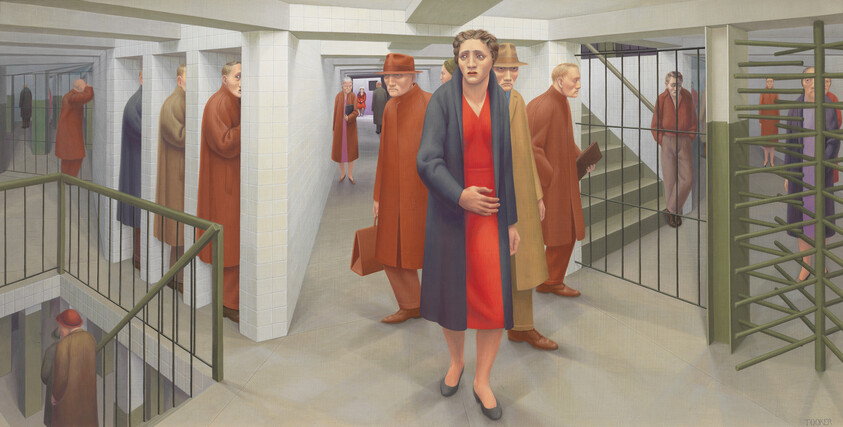 #9
#9
The Subway
Color does not seek oily brilliance: it prefers a matte, direct and surprisingly durable presence. The subject remains identifiable, but its true singularity appears in the way in which shapes, rhythm and material regulate what the eye discovers first and then last. Tooker uses Renaissance tempera to paint the corridors, grilles and isolation of the modern world. Egg-on-panel tempera: the technique is not a cartel detail, it determines the light and precision of the image. Its place at rank 9 comes from its international recognition as much as from its importance in the history of technology.
See the museum notice → #10
#10
The Parable of the Blind
The painting reads first as a scene, then as a mechanism of looks, gestures and surfaces. The subject remains identifiable, but its true singularity appears in the way in which shapes, rhythm and material regulate what the eye discovers first and then last. Pieter Brueghel the Elder uses tempera to maintain drawing, color and rhythm on the same plane of sharpness. Tempera: technique is not a cartel detail, it determines the light and rhythm on the same plane of sharpness. Tempera: technique is not a cartel detail, it determines the light and precision of the image. Its place at rank 10 comes from its international recognition as much as from its importance in the history of technology.
See the museum notice → #11
#11
Venus and Mars
Nothing floats freely here: the contours, folds and intervals each carry a part of the story. The ancient subject gives the artist a theater of gestures, fabrics and symbols where elegance can afford a few scholarly detours. At Botticelli, the line directs the gaze even before the characters have had time to pose. Tempera: technique is not a cartel detail, it determines the light and precision of the image. Its place at rank 11 comes from its international recognition as much as from its importance in the history of technology.
See the museum notice → #12
#12
The Fleet's In!
Tempera dries quickly; the artist transforms this constraint into rhythm, precision and sometimes tension. The subject remains identifiable, but its true singularity appears in the way in which shapes, rhythm and material regulate what the eye discovers first and then last. Cadmus uses the precision of tempera for a biting social scene where each gesture seems to have prepared its replica. Tempera on canvas: technique is not a cartel detail, it determines the light and precision of the image. Its place at rank 12 comes from its international recognition as much as from its importance in the history of technology.
See the museum notice → #13
#13
Our Lady of Vladimir
Beneath an apparent simplicity, the work organizes several viewing speeds without installing a traffic sign. The relationship between mother, child, angels and sacred space is played out in the hands, inclinations and intervals as much as in the attributes. Anonymous artist uses tempera to maintain drawing, color and rhythm on the same plane of sharpness. Tempera: technique is not a cartel detail, it determines the light and precision of the image. Its place at rank 13 comes from its international recognition as much as from its importance in the history of technology.
See the museum notice → #14
#14
The Adoration of the Magi
This painting shows why a matte surface can have as much presence as a large, spectacular glaze. The crowd, the presents and the architectures organize several episodes around a silent center, like a procession which has finally found its best point of view. At Botticelli, the line directs the gaze even before the characters have had time to pose. Tempera: technique is not a cartel detail, it determines the light and precision of the image. Its place at rank 14 comes from its international recognition as much as from its importance in the history of technology.
See the museum notice → #15
#15
The Flagellation of Christ
The pattern is immediately readable, but the details fortunately delay the moment when we think we have understood everything. The religious drama lies in the balance between body, gestures and looks; the sharpness of the tempera prevents emotion from dissolving in the atmosphere. Piero della Francesca regulates space, silence and geometry with a precision that would make a graduated ruler look like a lyrical instrument. Tempera: technique is not a cartel detail, it determines the light and precision of the image. Its place at rank 15 comes from its international recognition as much as from its importance in the history of technology.
See the museum notice → #16
#16
The Baptism of Christ
The line gives the impulse, the color establishes the atmosphere and the support keeps the memory of the gesture. The religious drama lies in the balance between body, gestures and looks; the sharpness of the tempera prevents emotion from dissolving in the atmosphere. Piero della Francesca regulates space, silence and geometry with a precision that would make a graduated ruler look like a lyrical instrument. Tempera: technique is not a cartel detail, it determines the light and precision of the image. Its place at rank 16 comes from its international recognition as much as from its importance in the history of technology.
See the museum notice → #17
#17
Virgin of Ognissanti
The painting does not rely on a single effect: it builds its strength through a series of very exact decisions. The relationship between mother, child, angels and sacred space is played out in the hands, inclinations and intervals as much as in the attributes. Giotto gives weight to figures and measure to emotions, two new features which did not need a press release to be noticed. Tempera: technique is not a cartel detail, it determines the light and precision of the image. Its place at rank 17 comes from its international recognition as much as from its importance in the history of technology.
See the museum notice → #18
#18
Annunciation between Saints Ansan and Marguerite
This work has the rare politeness of allowing itself to be recognized while keeping several things to reveal. The meeting between Gabriel and Marie transforms the slightest void into suspended time; architecture here does almost as much narration as the characters. Simone Martini and Lippo Memmi use tempera to maintain drawing, color and rhythm on the same level of sharpness. Tempera: technique is not a cartel detail, it determines the light and precision of the image. Its place at rank 18 comes from its international recognition as much as from its importance in the history of technology.
See the museum notice → #19
#19
Wilton's Diptych
The image strikes from afar, then the tempera rewards the visitor who agrees to approach mentally. The subject remains identifiable, but its true singularity appears in the way in which shapes, rhythm and material regulate what the eye discovers first and then last. Anonymous artist uses tempera to maintain drawing, color and rhythm on the same plane of sharpness. Tempera: technique is not a cartel detail, it determines the light and precision of the image. Its place at rank 19 comes from its international recognition as much as from its importance in the history of technology.
See the museum notice →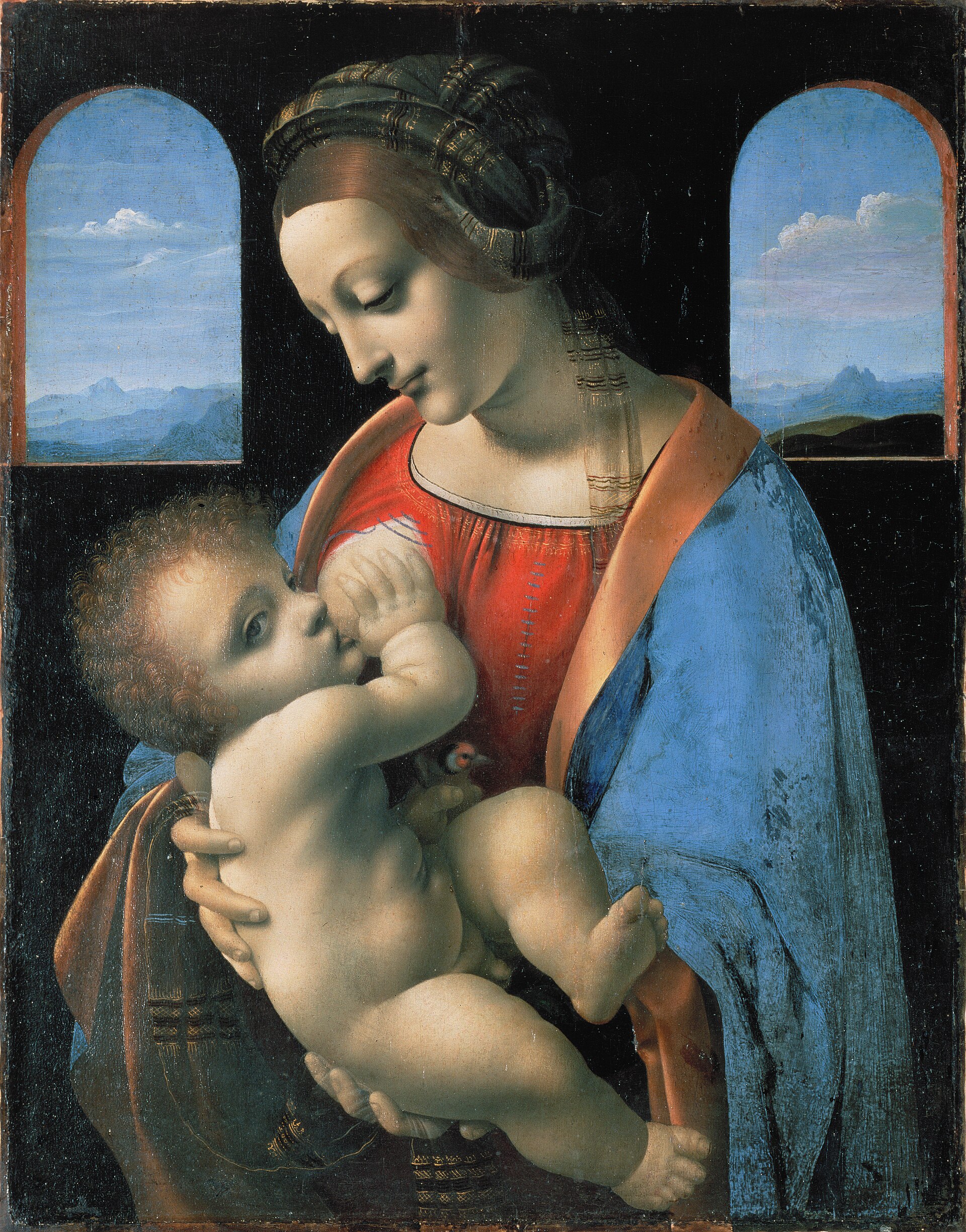 #20
#20
Madonna Litta
The subject could become solemn; the brush retains a human presence and a perfectly breathable rhythm. The relationship between mother, child, angels and sacred space is played out in the hands, inclinations and intervals as much as in the attributes. Leonardo da Vinci uses tempera to maintain drawing, color and rhythm on the same plane of sharpness. Tempera: technique is not a cartel detail, it determines the light and precision of the image. Its place at rank 20 comes from its international recognition as much as from its importance in the history of technology.
See the museum notice →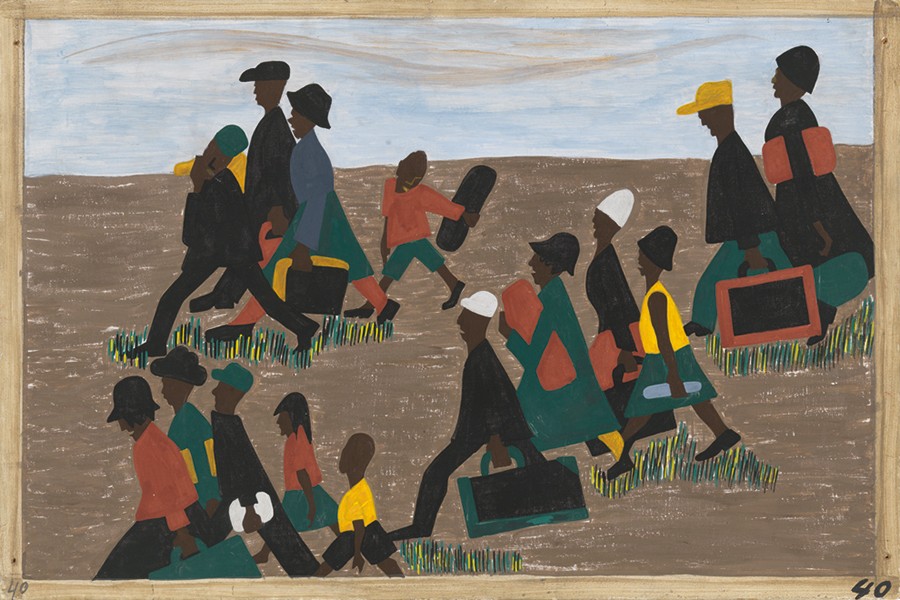 #21
#21
The migrants arrived in great numbers
The first look holds the silhouette; the second understands that the entire surface regulates the distance. The subject remains identifiable, but its true singularity appears in the way in which shapes, rhythm and material regulate what the eye discovers first and then last. Lawrence works his panels in series, with rapid and coherent flat areas which give the historical narrative an immediate visual cadence. Casein temperature on hard panel: the technique is not a cartel detail, it determines the light and precision of the image. The documentary marker - 1940-1941; Museum of Modern Art, New York; 30.5 × 45.7 cm - allows it to be precisely distinguished from neighboring works without transforming the instructions into hardware inventory.
See the museum notice → #22
#22
Portrait of an old man and a young boy
This painting advances in clear contours, matte colors and details that refuse to serve as simple trim. The face provides the identity, but the clothing, posture and background specify the status, reserve or confidence of the model. Domenico Ghirlandaio uses tempera to maintain the design, color and rhythm on the same plane of sharpness. Tempera: the technique is not a cartel detail, it determines the light and precision of the image. The documentary marker - 1490; paintings department of the Louvre Museum - allows it to be precisely distinguished from neighboring works without transforming the instructions into a hardware inventory.
See the museum notice → #23
#23
Adoration of the Magi
Here, tempera does not play respectable antiques: it organizes the story with very current efficiency. The crowd, the presents and the architecture organize several episodes around a silent center, like a procession which has finally found its best point of view. Gentile da Fabriano uses tempera to maintain drawing, color and rhythm on the same plane of sharpness. Tempera: the technique is not a cartel detail, it determines the light and precision of the image. The documentary marker - 1423; Uffizi Gallery - allows it to be precisely distinguished from neighboring works without transforming the instructions into a hardware inventory.
See the museum notice → #24
#24
The Virgin of Victory
The composition appears calm, but each line discreetly pushes the gaze towards the decisive point. The relationship between mother, child, angels and sacred space is played out in the hands, inclinations and intervals as much as in the attributes. Mantegna constructs the bodies like volumes of stone, then lets tempera give them an almost tactile presence. Tempera: the technique is not a cartel detail, it determines the light and precision of the image. The documentary marker - 1495; paintings department of the Louvre Museum - allows it to be precisely distinguished from neighboring works without transforming the instructions into a hardware inventory.
See the museum notice → #25
#25
Madonna Rucellai
The subject is famous; its material is less so, even though it explains a good part of its precision. The relationship between mother, child, angels and sacred space is played out in the hands, inclinations and intervals as much as in the attributes. Duccio di Buoninsegna uses tempera to maintain drawing, color and rhythm on the same plane of sharpness. Tempera: the technique is not a cartel detail, it determines the light and precision of the image. The documentary marker - 1285; Uffizi Gallery - allows it to be precisely distinguished from neighboring works without transforming the instructions into a hardware inventory.
See the museum notice →Duccio, Cimabue, Fra Angelico, Mantegna and Piero della Francesca move the sacred figure towards an increasingly constructed space.
 #26
#26
The Annunciation
Before telling a story, this work constructs a surface where the light remains as close as possible to the pigment. The meeting between Gabriel and Marie transforms the slightest void into suspended time; architecture here does almost as much narration as the characters. Fra Angelico associates the clarity of the story with a light which seems to have polished the color without making it brilliant. Tempera: the technique is not a cartel detail, it determines the light and precision of the image. The documentary marker - 1420; Prado Museum - allows it to be precisely distinguished from neighboring works without transforming the instructions into hardware inventory.
See the museum notice → #27
#27
Chess game
The figures occupy the panel with a sharpness that leaves little room for chance and even less for chatter. The subject remains identifiable, but its true singularity appears in the way in which shapes, rhythm and material regulate what the eye discovers first and then last. Sofonisba Anguissola uses tempera to maintain drawing, color and rhythm on the same plane of sharpness. Tempera: the technique is not a cartel detail, it determines the light and precision of the image. The documentary marker - 1555; PoznaFran - National Museum allows it to be precisely distinguished from neighboring works without transforming the instructions into a hardware inventory.
See the museum notice → #28
#28
Self-portrait
This image is held as much by its subject as by the discipline of its forms, all perfectly aware of their role. The face provides identity, but the clothing, posture and background specify the status, reserve or confidence of the model. Raphaël uses tempera to maintain the design, color and rhythm on the same plane of sharpness. Tempera: the technique is not a cartel detail, it determines the light and precision of the image. The documentary marker - 1505; Uffizi Gallery - allows it to be precisely distinguished from neighboring works without transforming the instructions into a hardware inventory.
See the museum notice → #29
#29
Lemminkäinen's Mother
Color does not seek oily brilliance: it prefers a matte, direct and surprisingly durable presence. The subject remains identifiable, but its true singularity appears in the way in which shapes, rhythm and material regulate what the eye discovers first and then last. Akseli Gallen-Kallela uses tempera to maintain drawing, color and rhythm on the same plane of sharpness. Tempera: the technique is not a cartel detail, it determines the light and precision of the image. The documentary marker - 1897; National Gallery of Finland - allows it to be precisely distinguished from neighboring works without transforming the instructions into hardware inventory.
See the museum notice → #30
#30
The Lippina
The painting reads first like a scene, then like a mechanism of looks, gestures and surfaces. The subject remains identifiable, but its true singularity appears in the way in which shapes, rhythm and material regulate what the eye discovers first and then last. Fra Filippo Lippi uses tempera to maintain drawing, color and rhythm on the same plane of sharpness. Tempera: the technique is not a cartel detail, it determines the light and precision of the image. The documentary marker - 1460; Uffizi Gallery - allows it to be precisely distinguished from neighboring works without transforming the instructions into hardware inventory.
See the museum notice → #31
#31
Agony in the garden of olive trees
Nothing floats freely here: the contours, folds and intervals each carry a part of the story. The subject remains identifiable, but its true singularity appears in the way in which shapes, rhythm and material regulate what the eye discovers first and then last. Giovanni Bellini uses tempera to maintain drawing, color and rhythm on the same plane of sharpness. Tempera: the technique is not a cartel detail, it determines the light and precision of the image. The documentary marker - 1459; National Gallery - allows it to be precisely distinguished from neighboring works without transforming the instructions into hardware inventory.
See the museum notice → #32
#32
The Ghost of a Flea
Tempera dries quickly; the artist transforms this constraint into rhythm, precision and sometimes tension. The subject remains identifiable, but its true singularity appears in the way in which shapes, rhythm and material regulate what the eye discovers first and then last. William Blake uses tempera to maintain drawing, color and rhythm on the same plane of sharpness. Tempera: technique is not a cartel detail, it determines the light and precision of the image. The documentary marker - 1819; National Gallery - allows it to be precisely distinguished from neighboring works without transforming the instructions into hardware inventory.
See the museum notice → #33
#33
The Death of the Virgin
Under apparent simplicity, the work organizes several viewing speeds without installing a traffic sign. The relationship between mother, child, angels and sacred space is played out in the hands, inclinations and intervals as much as in the attributes. Mantegna constructs the bodies like volumes of stone, then lets tempera give them an almost tactile presence. Tempera: the technique is not a cartel detail, it determines the light and precision of the image. The documentary marker - 1462; Prado Museum - allows it to be precisely distinguished from neighboring works without transforming the instructions into a hardware inventory.
See the museum notice → #34
#34
The Vision of Saint Eustace
This painting shows why a matte surface can have as much presence as a large, spectacular glaze. The subject remains identifiable, but its true singularity appears in the way in which shapes, rhythm and material regulate what the eye discovers first and then last. Pisanello uses tempera to maintain drawing, color and rhythm on the same plane of sharpness. Tempera: the technique is not a cartel detail, it determines the light and precision of the image. The documentary marker - 1400; National Gallery - allows it to be precisely distinguished from neighboring works without transforming the instructions into hardware inventory.
See the museum notice →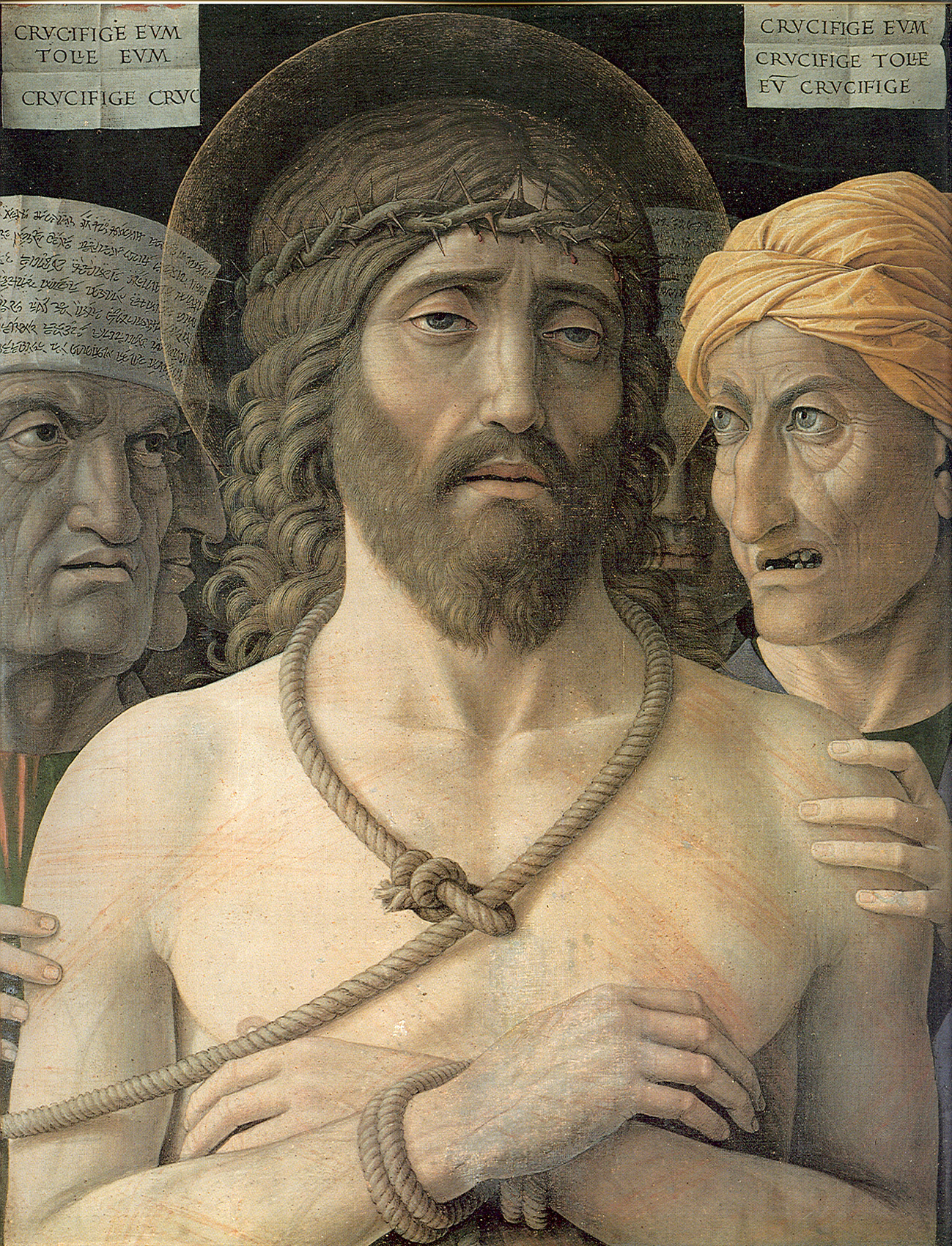 #35
#35
Ecce Homo
The pattern is immediately readable, but the details fortunately delay the moment when we think we have understood everything. The subject remains identifiable, but its true singularity appears in the way in which shapes, rhythm and material regulate what the eye discovers first and then last. Mantegna constructs bodies like volumes of stone, then lets tempera give them an almost tactile presence. Tempera: the technique is not a cartel detail, it determines the light and precision of the image. The documentary marker - 1500; Jacquemart-André museum allows it to be precisely distinguished from neighboring works without transforming the instructions into a hardware inventory.
See the museum notice → #36
#36
The Virgin with the Rose Bush
The line gives the impulse, the color establishes the atmosphere and the support keeps the memory of the gesture. The relationship between mother, child, angels and sacred space is played out in the hands, inclinations and intervals as much as in the attributes. Stefan Lochner uses tempera to maintain drawing, color and rhythm on the same plane of sharpness. Tempera: the technique is not a cartel detail, it determines the light and precision of the image. The documentary marker - 1440; Wallraf-Richartz Museum - allows it to be precisely distinguished from neighboring works without transforming the instructions into hardware inventory.
See the museum notice → #37
#37
The Miracle of the Relic of the Cross at the Rialto Bridge
The painting does not rely on a single effect: it builds its strength through a series of very exact decisions. The subject remains identifiable, but its true singularity appears in the way in which shapes, rhythm and material regulate what the eye discovers first and then last. Vittore Carpaccio uses tempera to maintain drawing, color and rhythm on the same plane of sharpness. Tempera: the technique is not a cartel detail, it determines the light and precision of the image. The documentary marker - 1494; Galeries de l'Académie - allows it to be precisely distinguished from neighboring works without transforming the instructions into a hardware inventory.
See the museum notice → #38
#38
The Presentation at the Temple
This work has the rare politeness of allowing itself to be recognized while keeping several things to reveal. The subject remains identifiable, but its true singularity appears in the way in which shapes, rhythm and material regulate what the eye discovers first and then last. Giovanni Bellini uses tempera to maintain drawing, color and rhythm on the same plane of sharpness. Tempera: technique is not a cartel detail, it determines the light and precision of the image. The documentary marker - 1469; Pinacoteca Querini Stampalia - allows it to be precisely distinguished from neighboring works without transforming the instructions into hardware inventory.
See the museum notice → #39
#39
The Adoration of the Magi
The image strikes from afar, then the tempera rewards the visitor who agrees to approach mentally. The crowd, the presents and the architecture organize several episodes around a silent center, like a procession which has finally found its best point of view. Hieronymus Bosch uses tempera to maintain drawing, color and rhythm on the same plane of sharpness. Tempera: the technique is not a cartel detail, it determines the light and precision of the image. The documentary marker - 1475; Metropolitan Museum of Art - allows it to be precisely distinguished from neighboring works without transforming the instructions into hardware inventory.
See the museum notice → #40
#40
The Entombment
The subject could become solemn; the brush retains a human presence and a perfectly breathable rhythm. The religious drama lies in the balance between body, gestures and gazes; the sharpness of the tempera prevents emotion from dissolving in the atmosphere. Michelangelo uses tempera to maintain drawing, color and rhythm on the same plane of sharpness. Tempera: the technique is not a cartel detail, it determines the light and precision of the image. The documentary marker - 1500; National Gallery - allows it to be precisely distinguished from neighboring works without transforming the instructions into hardware inventory.
See the museum notice → #41
#41
The Connestabile Madonna
The first look holds the silhouette; the second understands that the entire surface regulates the distance. The relationship between mother, child, angels and sacred space is played out in the hands, inclinations and intervals as much as in the attributes. Raphael uses tempera to maintain drawing, color and rhythm on the same plane of sharpness. Tempera: the technique is not a cartel detail, it determines the light and precision of the image. The documentary marker - 1504; Hermitage Museum - allows it to be precisely distinguished from neighboring works without transforming the instructions into a hardware inventory.
See the museum notice → #42
#42
The Sacred Conversation
This painting advances in clear contours, matte colors and details which refuse to serve as simple trim. The subject remains identifiable, but its true singularity appears in the way in which shapes, rhythm and material regulate what the eye discovers first and then last. Piero della Francesca regulates space, silence and geometry with a precision that would make a graduated ruler appear as a lyrical instrument. Tempera: the technique is not a cartel detail, it determines the light and precision of the image. Tempera: the technique is not a cartel detail, it determines the light and precision of the image. The documentary marker - 1472; Brera pinacothèque - allows it to be precisely distinguished from neighboring works without transforming the instructions into a hardware inventory.
See the museum notice → #43
#43
Portrait of Simonetta Vespucci
Here, tempera does not play respectable antiques: it organizes the story with very current effectiveness. The face provides the identity, but the clothing, posture and background specify the status, reserve or confidence of the model. Piero di Cosimo uses tempera to maintain the design, color and rhythm on the same plane of sharpness. Tempera: the technique is not a cartel detail, it determines the light and precision of the image. The documentary marker - 1480; Condé Museum - allows it to be precisely distinguished from neighboring works without transforming the instructions into a hardware inventory.
See the museum notice → #44
#44
Manchester Madonna
The composition appears calm, but each line discreetly pushes the gaze towards the decisive point. The relationship between mother, child, angels and sacred space is played out in the hands, inclinations and intervals as much as in the attributes. Michelangelo uses tempera to maintain drawing, color and rhythm on the same plane of sharpness. Tempera: the technique is not a cartel detail, it determines the light and precision of the image. The documentary marker - 1494; National Gallery - allows it to be precisely distinguished from neighboring works without transforming the instructions into hardware inventory.
See the museum notice → #45
#45
Maestà di Santa Trinita
The subject is famous; its material is less so, even though it explains a good part of its precision. The relationship between mother, child, angels and sacred space is played out in the hands, inclinations and intervals as much as in the attributes. Cimabue uses tempera to maintain drawing, color and rhythm on the same plane of sharpness. Tempera: the technique is not a cartel detail, it determines the light and precision of the image. The documentary marker - 1290; Uffizi Gallery - allows it to be precisely distinguished from neighboring works without transforming the instructions into a hardware inventory.
See the museum notice →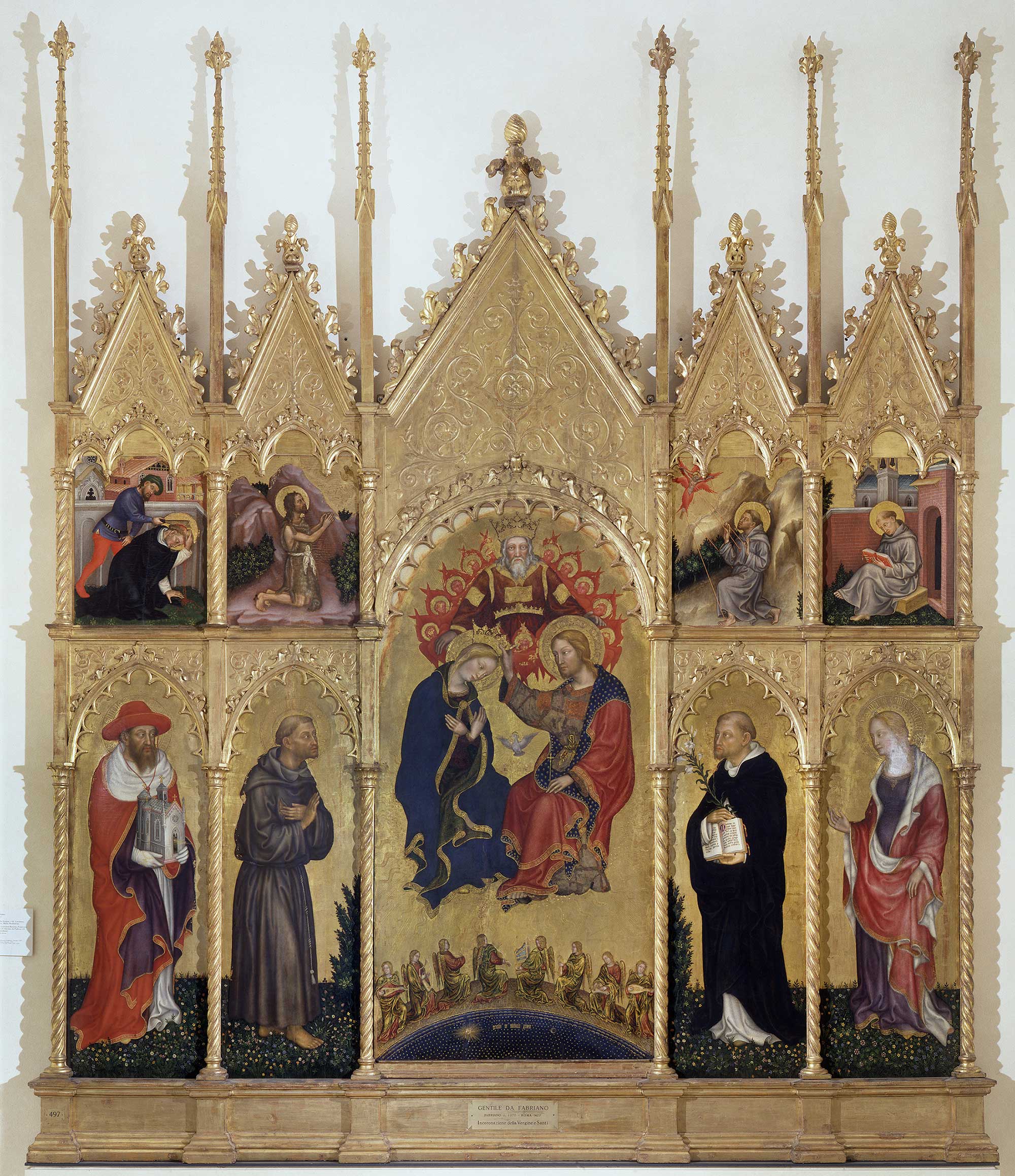 #46
#46
polyptych by Valle Romita
Before telling a story, this work constructs a surface where the light remains as close as possible to the pigment. The subject remains identifiable, but its true singularity appears in the way in which shapes, rhythm and material regulate what the eye discovers first and then last. Gentile da Fabriano uses tempera to maintain drawing, color and rhythm on the same plane of sharpness. Tempera: the technique is not a cartel detail, it determines the light and precision of the image. The documentary marker - 1408; Brera pinacothèque - allows it to be precisely distinguished from neighboring works without transforming the instructions into hardware inventory.
See the museum notice → #47
#47
Christ at the column
The figures occupy the panel with a sharpness that leaves little room for chance and even less for chatter. The religious drama lies in the balance between body, gestures and gazes; the sharpness of the tempera prevents emotion from dissolving in the atmosphere. Bramante uses tempera to maintain drawing, color and rhythm on the same plane of sharpness. Tempera: the technique is not a cartel detail, it determines the light and precision of the image. The documentary marker - 1487; Brera pinacothèque - allows it to be precisely distinguished from neighboring works without transforming the instructions into hardware inventory.
See the museum notice → #48
#48
Saint George
This image is held as much by its subject as by the discipline of its forms, all perfectly aware of their role. The subject remains identifiable, but its true singularity appears in the way in which forms, rhythm and matter regulate what the eye discovers first and then last. Mantegna constructs bodies like volumes of stone, then lets tempera give them an almost tactile presence. Tempera: the technique is not a cartel detail, it determines the light and precision of the image. The documentary marker - 1460; Galeries de l'Académie - allows it to be precisely distinguished from neighboring works without transforming the instructions into hardware inventory.
See the museum notice →The Waiting Room
Color does not seek oily brilliance: it prefers a matte, direct and surprisingly durable presence. The subject remains identifiable, but its true singularity appears in the way in which shapes, rhythm and material regulate what the eye discovers first and then last. Tooker uses Renaissance tempera to paint the corridors, grilles and isolation of the modern world. Egg-on-wood tempera: the technique is not a cartel detail, it determines the light and precision of the image. The documentary marker - 1959; Smithsonian American Art Museum; 61 × 76.2 cm - allows it to be precisely distinguished from neighboring works without transforming the instructions into hardware inventory.
See the museum notice → #50
#50
The Descent from the Cross
The painting reads first like a scene, then like a mechanism of looks, gestures and surfaces. The subject remains identifiable, but its true singularity appears in the way in which shapes, rhythm and material regulate what the eye discovers first and then last. Fra Angelico associates the clarity of the story with a light which seems to have polished the color without making it brilliant. Tempera: the technique is not a cartel detail, it determines the light and precision of the image. The documentary marker - 1500; San Marco National Museum - allows it to be precisely distinguished from neighboring works without transforming the instructions into hardware inventory.
See the museum notice →Italy, Russia, Catalonia, Flanders and Central Europe expand the tempera map without losing the precision of the panel.
 #51
#51
The Virgin of the Gift
Nothing floats freely here: the contours, folds and intervals each carry a part of the story. The relationship between mother, child, angels and sacred space is played out in the hands, inclinations and intervals as much as in the attributes. Theophanes the Greek uses tempera to maintain drawing, color and rhythm on the same plane of sharpness. Tempera: technique is not a cartel detail, it determines the light and precision of the image. The documentary marker - 1382; Tretyakov Gallery - allows it to be precisely distinguished from neighboring works without transforming the instructions into hardware inventory.
See the museum notice → #52
#52
The Visitation with Marie-Jacobie and Marie-Salomé
Tempera dries quickly; the artist transforms this constraint into rhythm, precision and sometimes tension. The subject remains identifiable, but its true singularity appears in the way in which shapes, rhythm and material regulate what the eye discovers first and then last. Domenico Ghirlandaio uses tempera to maintain drawing, color and rhythm on the same plane of sharpness. Tempera: technique is not a cartel detail, it determines the light and precision of the image. The documentary marker - 1491; paintings department of the Louvre Museum - allows it to be precisely distinguished from neighboring works without transforming the instructions into a hardware inventory.
See the museum notice →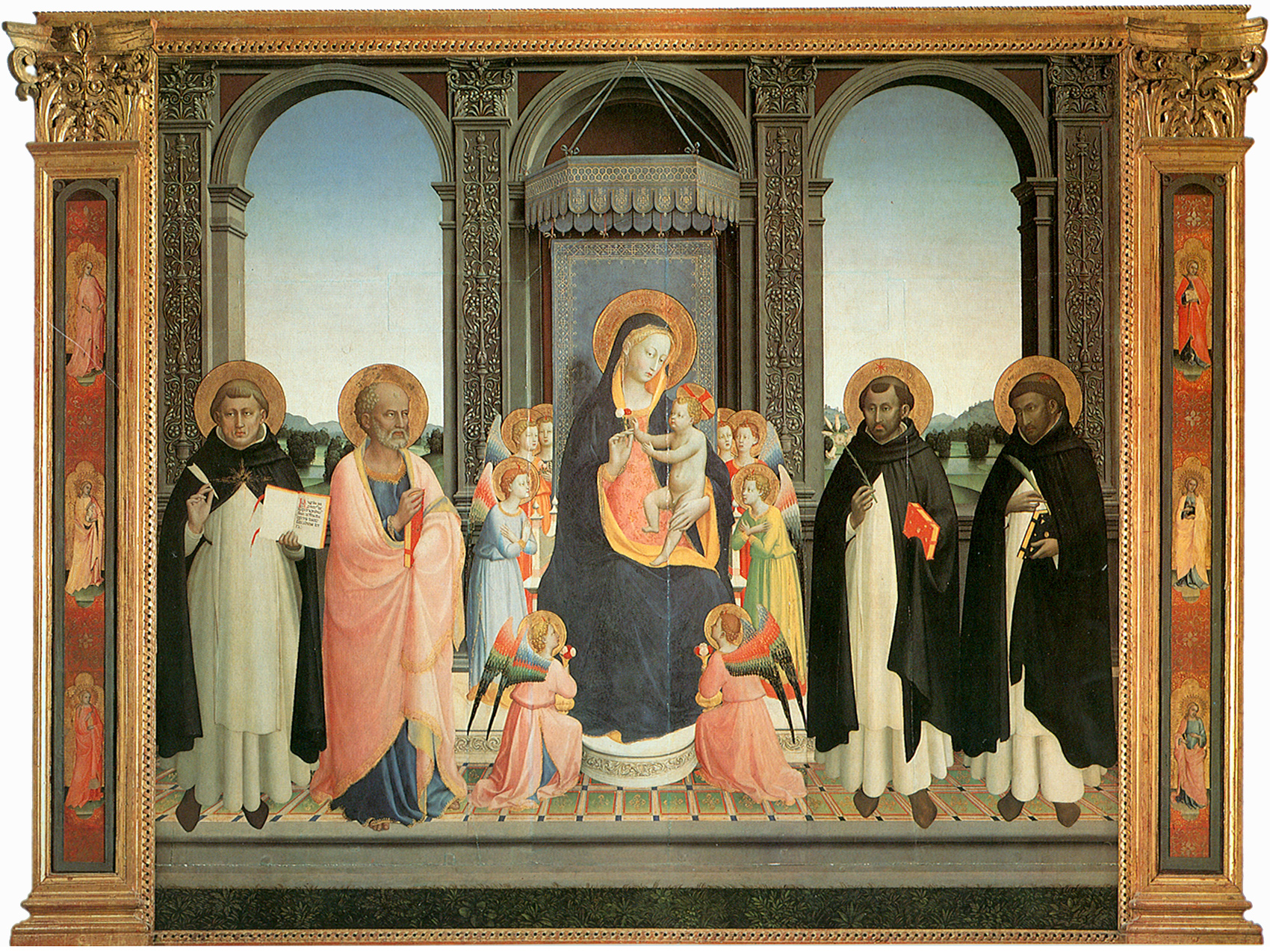 #53
#53
Pala di Fiesole
Beneath an apparent simplicity, the work organizes several viewing speeds without installing a traffic sign. The subject remains identifiable, but its true singularity appears in the way in which shapes, rhythm and material regulate what the eye discovers first and then last. Fra Angelico associates the clarity of the story with a light which seems to have polished the color without making it brilliant. Tempera: the technique is not a cartel detail, it determines the light and precision of the image. The documentary marker - 1420; San Domenico convent allows it to be precisely distinguished from neighboring works without transforming the instructions into hardware inventory.
See the museum notice → #54
#54
Madonna dell'Umiltà
This painting shows why a matte surface can have as much presence as a large, spectacular glaze. The subject remains identifiable, but its true singularity appears in the way in which shapes, rhythm and material regulate what the eye discovers first and then last. Fra Angelico associates the clarity of the story with a light which seems to have polished the color without making it brilliant. Tempera: the technique is not a cartel detail, it determines the light and precision of the image. The documentary marker - 1433; National Art Museum of Catalonia - allows it to be precisely distinguished from neighboring works without transforming the instructions into hardware inventory.
See the museum notice → #55
#55
The Coronation of the Virgin
The pattern is immediately readable, but the details fortunately delay the moment when we think we have understood everything. The relationship between mother, child, angels and sacred space is played out in the hands, inclinations and intervals as much as in the attributes. Fra Angelico associates the clarity of the story with a light which seems to have polished the color without making it brilliant. Tempera: the technique is not a cartel detail, it determines the light and precision of the image. The documentary marker - 1434; Uffizi Gallery - allows it to be precisely distinguished from neighboring works without transforming the instructions into hardware inventory.
See the museum notice → #56
#56
Greek Madonna
The line gives the impulse, the color establishes the atmosphere and the support keeps the memory of the gesture. The relationship between mother, child, angels and sacred space is played out in the hands, inclinations and intervals as much as in the attributes. Giovanni Bellini uses tempera to maintain drawing, color and rhythm on the same plane of sharpness. Tempera: the technique is not a cartel detail, it determines the light and precision of the image. The documentary marker - 1460; Brera pinacothèque - allows it to be precisely distinguished from neighboring works without transforming the instructions into a hardware inventory.
See the museum notice → #57
#57
The Annunciation of Cortona
The painting does not rely on a single effect: it builds its strength through a series of very exact decisions. The meeting between Gabriel and Mary transforms the slightest void into suspended time; architecture here does almost as much narration as the characters. Fra Angelico associates the clarity of the story with a light which seems to have polished the color without making it brilliant. Tempera: the technique is not a cartel detail, it determines the light and precision of the image. The documentary marker - 1430; diocesan museum in Cortona - allows it to be precisely distinguished from neighboring works without transforming the instructions into hardware inventory.
See the museum notice → #58
#58
Portrait of Sigismond Malatesta, lord of Rimini
This work has the rare politeness of allowing itself to be recognized while keeping several things to reveal. The face provides the identity, but the clothing, posture and background specify the status, reserve or confidence of the model. Piero della Francesca rules space, silence and geometry with a precision that would make a graduated ruler appear as a lyrical instrument. Tempera: the technique is not a cartel detail, it determines the light and precision of the image. The documentary marker - 1450; paintings department of the Louvre Museum - allows it to be precisely distinguished from neighboring works without transforming the instructions into a hardware inventory.
See the museum notice → #59
#59
Annunciation of Oustioug
The image strikes from afar, then the tempera rewards the visitor who agrees to approach mentally. The meeting between Gabriel and Marie transforms the slightest void into suspended time; architecture here does almost as much narration as the characters. Anonymous artist uses tempera to maintain drawing, color and rhythm on the same plane of sharpness. Tempera: the technique is not a cartel detail, it determines the light and precision of the image. The documentary marker - 1130; Tretyakov Gallery - allows it to be precisely distinguished from neighboring works without transforming the instructions into hardware inventory.
See the museum notice → #60
#60
Painting of the Investiture
The subject could become solemn; the brush retains a human presence and a perfectly breathable rhythm. The subject remains identifiable, but its true singularity appears in the way in which shapes, rhythm and material regulate what the eye discovers first and then last. Anonymous artist uses tempera to maintain drawing, color and rhythm on the same plane of sharpness. Tempera: the technique is not a cartel detail, it determines the light and precision of the image. The documentary marker - -180; department of oriental antiquities of the Louvre museum - allows it to be precisely distinguished from neighboring works without transforming the instructions into a hardware inventory.
See the museum notice → #61
#61
Crucifixion
The first look holds the silhouette; the second understands that the entire surface regulates the distance. The religious drama lies in the balance between body, gestures and gazes; the sharpness of the tempera prevents emotion from dissolving in the atmosphere. Masaccio uses tempera to maintain drawing, color and rhythm on the same plane of sharpness. Tempera: the technique is not a cartel detail, it determines the light and precision of the image. The documentary marker - 1426; Capodimonte Museum - allows it to be precisely distinguished from neighboring works without transforming the instructions into a hardware inventory.
See the museum notice → #62
#62
Sant'Anna Metterza
This painting advances in clear contours, matte colors and details which refuse to serve as simple trim. The subject remains identifiable, but its true singularity appears in the way in which shapes, rhythm and material regulate what the eye discovers first and then last. Masaccio uses tempera to maintain drawing, color and rhythm on the same plane of sharpness. Tempera: the technique is not a cartel detail, it determines the light and precision of the image. The documentary marker - 1424; Uffizi Gallery - allows it to be precisely distinguished from neighboring works without transforming the instructions into a hardware inventory.
See the museum notice → #63
#63
The Last Judgment
Here, tempera does not play respectable antiques: it organizes the story with very current effectiveness. The subject remains identifiable, but its true singularity appears in the way in which forms, rhythm and material regulate what the eye discovers first and then last. Fra Angelico associates the clarity of the story with a light which seems to have polished the color without making it brilliant. Tempera: the technique is not a cartel detail, it determines the light and precision of the image. The documentary marker - 1431; San Marco National Museum - allows it to be precisely distinguished from neighboring works without transforming the instructions into hardware inventory.
See the museum notice → #64
#64
Hercules and the Hydra
The composition appears calm, but each line discreetly pushes the gaze towards the decisive point. The ancient subject gives the artist a theater of gestures, fabrics and symbols where elegance can afford some clever detours. Antonio Pollaiuolo uses tempera to maintain drawing, color and rhythm on the same plane of sharpness. Tempera: the technique is not a cartel detail, it determines the light and precision of the image. The documentary marker - 1475; Uffizi Gallery - allows it to be precisely distinguished from neighboring works without transforming the instructions into hardware inventory.
See the museum notice →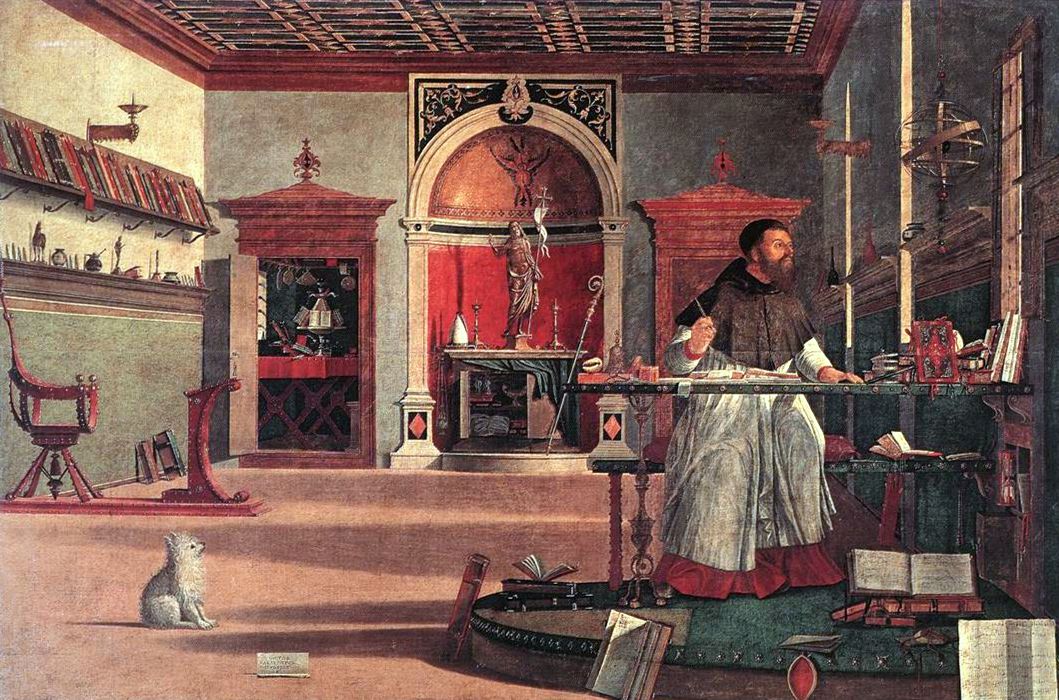 #65
#65
The Vision of Saint Augustine
The subject is famous; its material is less so, even though it explains a good part of its precision. The subject remains identifiable, but its true singularity appears in the way in which shapes, rhythm and material regulate what the eye discovers first and then last. Vittore Carpaccio uses tempera to maintain drawing, color and rhythm on the same plane of sharpness. Tempera: the technique is not a cartel detail, it determines the light and precision of the image. The documentary marker - 1502; Scuola di San Giorgio degli Schiavoni - allows it to be precisely distinguished from neighboring works without transforming the instructions into hardware inventory.
See the museum notice → #66
#66
Pietà de Villeneuve-lès-Avignon
Before telling a story, this work constructs a surface where the light remains as close as possible to the pigment. The subject remains identifiable, but its true singularity appears in the way in which shapes, rhythm and material regulate what the eye discovers first and then last. Enguerrand Quarton uses tempera to maintain drawing, color and rhythm on the same plane of sharpness. Tempera: the technique is not a cartel detail, it determines the light and precision of the image. The documentary marker - 1455; paintings department of the Louvre Museum - allows it to be precisely distinguished from neighboring works without transforming the instructions into a hardware inventory.
See the museum notice → #67
#67
Virgin of the Advisors
The figures occupy the panel with a sharpness that leaves little room for chance and even less for chatter. The relationship between mother, child, angels and sacred space is played out in the hands, inclinations and intervals as much as in the attributes. Lluís Dalmau uses tempera to maintain drawing, color and rhythm on the same plane of sharpness. Tempera: the technique is not a cartel detail, it determines the light and precision of the image. The documentary marker - 1445; National Art Museum of Catalonia - allows it to be precisely distinguished from neighboring works without transforming the instructions into hardware inventory.
See the museum notice → #68
#68
Altarpiece of Santa Lucia dei Magnoli
This image is held as much by its subject as by the discipline of its forms, all perfectly aware of their role. The subject remains identifiable, but its true singularity appears in the way in which shapes, rhythm and material regulate what the eye discovers first and then last. Domenico Veneziano uses tempera to maintain drawing, color and rhythm on the same plane of sharpness. Tempera: the technique is not a cartel detail, it determines the light and precision of the image. The documentary marker - 1445; Uffizi Gallery - allows it to be precisely distinguished from neighboring works without transforming the instructions into a hardware inventory.
See the museum notice → #69
#69
Entombment of Christ
Color does not seek oily brilliance: it prefers a matte, direct and surprisingly lasting presence. The religious drama lies in the balance between body, gestures and looks; the sharpness of the tempera prevents emotion from dissolving in the atmosphere. Greco uses tempera to maintain drawing, color and rhythm on the same plane of sharpness. Tempera: the technique is not a cartel detail, it determines the light and precision of the image. The documentary marker - 1570; National Pinacoteca of Athens - allows it to be precisely distinguished from neighboring works without transforming the instructions into hardware inventory.
See the museum notice → #70
#70
The Angel with Golden Hair
The painting reads first as a scene, then as a mechanism of looks, gestures and surfaces. The subject remains identifiable, but its true singularity appears in the way in which shapes, rhythm and material regulate what the eye discovers first and then last. Anonymous artist uses tempera to maintain drawing, color and rhythm on the same plane of sharpness. Tempera: the technique is not a cartel detail, it determines the light and precision of the image. The documentary marker - 1200; Russian museum - allows it to be precisely distinguished from neighboring works without transforming the instructions into hardware inventory.
See the museum notice → #71
#71
Last Supper by Andrea del Castagno
Nothing floats freely here: the contours, folds and intervals each carry a part of the story. The subject remains identifiable, but its true singularity appears in the way in which shapes, rhythm and material regulate what the eye discovers first and then last. Andrea del Castagno uses tempera to maintain drawing, color and rhythm on the same plane of sharpness. Tempera: the technique is not a cartel detail, it determines the light and precision of the image. The documentary marker - 1440; Cenacolo di Sant'Apollonia - allows it to be precisely distinguished from neighboring works without transforming the instructions into a hardware inventory.
See the museum notice → #72
#72
Annunciation
Tempera dries quickly; the artist transforms this constraint into rhythm, precision and sometimes tension. The meeting between Gabriel and Marie transforms the slightest void into suspended time; architecture here does almost as much narration as the characters. Fra Filippo Lippi uses tempera to maintain drawing, color and rhythm on the same plane of sharpness. Tempera: the technique is not a cartel detail, it determines the light and precision of the image. The documentary marker - 1450; National Gallery - allows it to be precisely distinguished from neighboring works without transforming the instructions into hardware inventory.
See the museum notice → #73
#73
Madonna di Senigallia
Beneath an apparent simplicity, the work organizes several viewing speeds without installing a traffic sign. The subject remains identifiable, but its true singularity appears in the way in which shapes, rhythm and material regulate what the eye discovers first and then last. Piero della Francesca regulates space, silence and geometry with a precision that would make a graduated ruler appear as a lyrical instrument. Tempera: technique is not a cartel detail, it determines the light and precision of the image. The documentary marker - 1476; Galleria Nazionale delle Marche - allows it to be precisely distinguished from neighboring works without transforming the instructions into hardware inventory.
See the museum notice → #74
#74
Madonna del Bordone
This painting shows why a matte surface can have as much presence as a large, spectacular glaze. The subject remains identifiable, but its true singularity appears in the way in which shapes, rhythm and material regulate what the eye discovers first and then last. Coppo di Marcovaldo uses tempera to maintain drawing, color and rhythm on the same plane of sharpness. Tempera: the technique is not a cartel detail, it determines the light and precision of the image. The documentary marker - 1261; Basilica of San Clemente in Santa Maria dei Servi - allows it to be precisely distinguished from neighboring works without transforming the instructions into a hardware inventory.
See the museum notice → #75
#75
The Virgin and Child in majesty surrounded by six angels
The pattern is immediately readable, but the details fortunately delay the moment when we think we have understood everything. The relationship between mother, child, angels and sacred space is played out in the hands, inclinations and intervals as much as in the attributes. Cimabue uses tempera to maintain drawing, color and rhythm on the same plane of sharpness. Tempera: the technique is not a cartel detail, it determines the light and precision of the image. The documentary marker - 1300; paintings department of the Louvre Museum - allows it to be precisely distinguished from neighboring works without transforming the instructions into a hardware inventory.
See the museum notice →Blake, Gallen-Kallela, Spartali Stillman, Modersohn-Becker, Munch, Wyeth, Lawrence, Cadmus and Tooker bring technology back to the modern world.
 #76
#76
The Madonna of the Eucharist
The line gives the impulse, the color establishes the atmosphere and the support keeps the memory of the gesture. The relationship between mother, child, angels and sacred space is played out in the hands, inclinations and intervals as much as in the attributes. At Botticelli, the line directs the gaze even before the characters have had time to pose. Tempera: the technique is not a cartel detail, it determines the light and precision of the image. The documentary marker - 1470; Isabella-Stewart-Gardner Museum - allows it to be precisely distinguished from neighboring works without transforming the instructions into hardware inventory.
See the museum notice → #77
#77
The Fight of Love and Chastity
The painting does not rely on a single effect: it builds its strength through a series of very exact decisions. The subject remains identifiable, but its true singularity appears in the way in which shapes, rhythm and material regulate what the eye discovers first and then last. Perugino uses tempera to maintain drawing, color and rhythm on the same plane of sharpness. Tempera: the technique is not a cartel detail, it determines the light and precision of the image. The documentary marker - 1503; paintings department of the Louvre Museum - allows it to be precisely distinguished from neighboring works without transforming the instructions into a hardware inventory.
See the museum notice → #78
#78
The Night Hunt
This work has the rare politeness of allowing itself to be recognized while keeping several things to reveal. The subject remains identifiable, but its true singularity appears in the way in which shapes, rhythm and material regulate what the eye discovers first and then last. Paolo Uccello uses tempera to maintain drawing, color and rhythm on the same plane of sharpness. Tempera: the technique is not a cartel detail, it determines the light and precision of the image. The documentary marker - 1470; Ashmolean Museum - allows it to be precisely distinguished from neighboring works without transforming the instructions into hardware inventory.
See the museum notice → #79
#79
The Coronation of the Virgin
The image strikes from afar, then the tempera rewards the visitor who agrees to approach mentally. The relationship between mother, child, angels and sacred space is played out in the hands, inclinations and intervals as much as in the attributes. Fra Filippo Lippi uses tempera to maintain drawing, color and rhythm on the same plane of sharpness. Tempera: the technique is not a cartel detail, it determines the light and precision of the image. The documentary marker - 1441; Uffizi Gallery - allows it to be precisely distinguished from neighboring works without transforming the instructions into a hardware inventory.
See the museum notice → #80
#80
Presentation of Jesus in the Temple
The subject could become solemn; the brush retains a human presence and a perfectly breathable rhythm. The subject remains identifiable, but its true singularity appears in the way in which shapes, rhythm and material regulate what the eye discovers first and then last. Ambrogio Lorenzetti uses tempera to maintain drawing, color and rhythm on the same plane of sharpness. Tempera: technique is not a cartel detail, it determines the light and precision of the image. The documentary marker - 1342; Uffizi Gallery - allows it to be precisely distinguished from neighboring works without transforming the instructions into a hardware inventory.
See the museum notice → #81
#81
Portrait of Sir Richard Southwell
The first look holds the silhouette; the second understands that the entire surface regulates the distance. The face provides the identity, but the clothing, posture and background specify the status, reserve or confidence of the model. Hans Holbein the Younger uses tempera to maintain the design, color and rhythm on the same plane of sharpness. Tempera: the technique is not a cartel detail, it determines the light and precision of the image. The documentary marker - 1536; Uffizi Gallery - allows it to be precisely distinguished from neighboring works without transforming the instructions into a hardware inventory.
See the museum notice → #82
#82
Portrait of a woman
This painting advances in clear contours, matte colors and details that refuse to serve as simple trim. The face provides the identity, but the clothing, posture and background specify the status, reserve or confidence of the model. Antonio Pollaiuolo uses tempera to maintain the design, color and rhythm on the same plane of sharpness. Tempera: the technique is not a cartel detail, it determines the light and precision of the image. The documentary marker - 1475; Uffizi Gallery - allows it to be precisely distinguished from neighboring works without transforming the instructions into a hardware inventory.
See the museum notice → #83
#83
Virgin Gualino
Here, tempera does not play respectable antiques: it organizes the story with very current effectiveness. The relationship between mother, child, angels and sacred space is played out in the hands, inclinations and intervals as much as in the attributes. Duccio di Buoninsegna uses tempera to maintain drawing, color and rhythm on the same plane of sharpness. Tempera: the technique is not a cartel detail, it determines the light and precision of the image. The documentary marker - 1280; Riccardo Gualino Collection - allows it to be precisely distinguished from neighboring works without transforming the instructions into a hardware inventory.
See the museum notice → #84
#84
Christ outraged
The composition appears calm, but each line discreetly pushes the gaze towards the decisive point. The religious drama lies in the balance between bodies, gestures and looks; the sharpness of the tempera prevents emotion from dissolving in the atmosphere. Matthias Grünewald uses tempera to maintain drawing, color and rhythm on the same plane of sharpness. Tempera: the technique is not a cartel detail, it determines the light and precision of the image. The documentary marker - 1504; Collection of paintings from the state of Bavaria - allows it to be precisely distinguished from neighboring works without transforming the instructions into hardware inventory.
See the museum notice → #85
#85
Love's Messenger
The subject is famous; its material is less so, even though it explains a good part of its precision. The subject remains identifiable, but its true singularity appears in the way in which shapes, rhythm and material regulate what the eye discovers first and then last. Marie Spartali Stillman uses tempera to maintain drawing, color and rhythm on the same plane of sharpness. Tempera: technique is not a cartel detail, it determines the light and precision of the image. The documentary marker - 1885; Delaware Art Museum - allows it to be precisely distinguished from neighboring works without transforming the instructions into hardware inventory.
See the museum notice → #86
#86
Self-portrait on the 6th wedding anniversary
Before telling a story, this work constructs a surface where the light remains as close as possible to the pigment. The face provides the identity, but the clothing, posture and background specify the status, reserve or confidence of the model. Paula Modersohn-Becker uses tempera to maintain the design, color and rhythm on the same plane of sharpness. Tempera: the technique is not a cartel detail, it determines the light and precision of the image. The documentary marker - 1906; Paula Modersohn-Becker museum - allows it to be precisely distinguished from neighboring works without transforming the instructions into hardware inventory.
See the museum notice → #87
#87
Santa Croce Crucifix
The figures occupy the panel with a sharpness that leaves little room for chance and even less for chatter. The religious drama lies in the balance between body, gestures and gazes; the sharpness of the tempera prevents emotion from dissolving in the atmosphere. Cimabue uses tempera to maintain drawing, color and rhythm on the same plane of sharpness. Tempera: the technique is not a cartel detail, it determines the light and precision of the image. The documentary marker - 1300; museum of the Work of Santa Croce - allows it to be precisely distinguished from neighboring works without transforming the instructions into hardware inventory.
See the museum notice → #88
#88
Saint Francis of Assisi receiving the stigmata
This image is held as much by its subject as by the discipline of its forms, all perfectly aware of their role. The subject remains identifiable, but its true singularity appears in the way in which shapes, rhythm and material regulate what the eye discovers first and then last. Giotto gives weight to the figures and measure to the emotions, two new features which did not need a press release to be noticed. Tempera: technique is not a cartel detail, it determines the light and precision of the image. The documentary marker - 1297; paintings department of the Louvre Museum - allows it to be precisely distinguished from neighboring works without transforming the instructions into hardware inventory.
See the museum notice → #89
#89
Triptych of Saint Peter the Martyr
Color does not seek oily brilliance: it prefers a matte, direct and surprisingly durable presence. The subject remains identifiable, but its true singularity appears in the way in which shapes, rhythm and material regulate what the eye discovers first and then last. Fra Angelico associates the clarity of the story with a light that seems to have polished the color without making it brilliant. Tempera: the technique is not a cartel detail, it determines the light and precision of the image. The documentary marker - 1420; San Marco National Museum - allows it to be precisely distinguished from neighboring works without transforming the instructions into hardware inventory.
See the museum notice → #90
#90
Annunciation
The painting reads first like a scene, then like a mechanism of looks, gestures and surfaces. The meeting between Gabriel and Marie transforms the slightest void into suspended time; architecture here does almost as much narration as the characters. Ambrogio Lorenzetti uses tempera to maintain drawing, color and rhythm on the same plane of sharpness. Tempera: technique is not a cartel detail, it determines the light and precision of the image. The documentary marker - 1344; National Pinacoteca of Siena - allows it to be precisely distinguished from neighboring works without transforming the instructions into hardware inventory.
See the museum notice → #91
#91
Birth of the Virgin
Nothing floats freely here: the contours, folds and intervals each carry a part of the story. The relationship between mother, child, angels and sacred space is played out in the hands, inclinations and intervals as much as in the attributes. Pietro Lorenzetti uses tempera to maintain drawing, color and rhythm on the same plane of sharpness. Tempera: the technique is not a cartel detail, it determines the light and precision of the image. The documentary marker - 1342; Museo dell'Opera Metropolitana del Duomo - allows it to be precisely distinguished from neighboring works without transforming the instructions into a hardware inventory.
See the museum notice → #92
#92
Polyptych of Badia
Tempera dries quickly; the artist transforms this constraint into rhythm, precision and sometimes tension. The subject remains identifiable, but its true singularity appears in the way in which shapes, rhythm and material regulate what the eye discovers first and then last. Giotto gives weight to figures and measure to emotions, two new features which did not need a press release to be noticed. Tempera: technique is not a cartel detail, it determines the light and precision of the image. The documentary marker - 1300; Uffizi Gallery - allows it to be precisely distinguished from neighboring works without transforming the instructions into hardware inventory.
See the museum notice → #93
#93
Angelot playing the lute
Beneath an apparent simplicity, the work organizes several viewing speeds without installing a traffic sign. The subject remains identifiable, but its true singularity appears in the way in which shapes, rhythm and material regulate what the eye discovers first and then last. Rosso Fiorentino uses tempera to maintain drawing, color and rhythm on the same plane of sharpness. Tempera: the technique is not a cartel detail, it determines the light and precision of the image. The documentary marker - 1518; Uffizi Gallery - allows it to be precisely distinguished from neighboring works without transforming the instructions into hardware inventory.
See the museum notice → #94
#94
Allegory of Virtue
This painting shows why a matte surface can have as much presence as a large, spectacular glaze. The subject remains identifiable, but its true singularity appears in the way in which shapes, rhythm and material regulate what the eye discovers first and then last. Correggio uses tempera to maintain drawing, color and rhythm on the same plane of sharpness. Tempera: the technique is not a cartel detail, it determines the light and precision of the image. The documentary marker - 1531; Department of Graphic Arts of the Louvre Museum - allows it to be precisely distinguished from neighboring works without transforming the instructions into a hardware inventory.
See the museum notice → #95
#95
Holy Family with little Saint John
The pattern is immediately readable, but the details fortunately delay the moment when you think you have understood everything. The subject remains identifiable, but its true singularity appears in the way in which shapes, rhythm and material regulate what the eye discovers first and then last. Parmigianino uses tempera to maintain drawing, color and rhythm on the same plane of sharpness. Tempera: the technique is not a cartel detail, it determines the light and precision of the image. The documentary marker - 1528; Capodimonte Museum - allows it to be precisely distinguished from neighboring works without transforming the instructions into a hardware inventory.
See the museum notice → #96
#96
Allegory of Industry
The line gives the impulse, the color establishes the atmosphere and the support keeps the memory of the gesture. The subject remains identifiable, but its true singularity appears in the way in which shapes, rhythm and material regulate what the eye discovers first and then last. Francisco de Goya uses tempera to maintain drawing, color and rhythm on the same plane of sharpness. Tempera: the technique is not a cartel detail, it determines the light and precision of the image. The documentary marker - 1804; Prado Museum - allows it to be precisely distinguished from neighboring works without transforming the instructions into a hardware inventory.
See the museum notice → #97
#97
The plague
The painting does not rely on a single effect: it builds its strength through a series of very exact decisions. Tension distorts space and accelerates diagonals; matte material makes anxiety closer, almost without a protective screen. Arnold Böcklin uses tempera to maintain drawing, color and rhythm on the same plane of sharpness. Tempera: the technique is not a cartel detail, it determines the light and precision of the image. The documentary marker - 1898; Kunstmuseum Basel - allows it to be precisely distinguished from neighboring works without transforming the instructions into a hardware inventory.
See the museum notice → #98
#98
Defense of the sampo
This work has the rare politeness of allowing itself to be recognized while keeping several things to reveal. Tension distorts space and accelerates diagonals; the matte material makes the anxiety closer, almost without a protective screen. Akseli Gallen-Kallela uses tempera to maintain drawing, color and rhythm on the same plane of sharpness. Tempera: the technique is not a cartel detail, it determines the light and precision of the image. The documentary marker - 1896; Turku Art Museum - allows it to be precisely distinguished from neighboring works without transforming the instructions into hardware inventory.
See the museum notice → #99
#99
Entombment
The image strikes from afar, then the tempera rewards the visitor who agrees to approach mentally. The religious drama lies in the balance between body, gestures and gazes; the sharpness of the tempera prevents emotion from dissolving in the atmosphere. Dirk Bouts uses tempera to maintain drawing, color and rhythm on the same plane of sharpness. Tempera: the technique is not a cartel detail, it determines the light and precision of the image. The documentary marker - 1450; National Gallery - allows it to be precisely distinguished from neighboring works without transforming the instructions into hardware inventory.
See the museum notice →In the Summerhouse
The subject could become solemn; the brush retains a human presence and a perfectly breathable rhythm. The subject remains identifiable, but its true singularity appears in the way in which shapes, rhythm and material regulate what the eye discovers first and then last. Tooker uses Renaissance tempera to paint the corridors, grids and isolation of the modern world. Egg tempera on fiberboard: the technique is not a cartel detail, it determines the light and precision of the image. The documentary marker - 1958; Smithsonian American Art Museum; 61 × 61.8 cm - allows it to be precisely distinguished from neighboring works without transforming the instructions into hardware inventory.
See the museum notice →What the ranking reveals
An old technique, several modernities
Tempera is neither a period nor a style. It connects the gold background, the resurgent perspective, the icon, symbolism and American realism with a matte surface, precise and quick to dry.
Support matters
Wood, canvas, cardboard and hardboard change the fineness of the line, the scale and the way the color absorbs light.
Dullness gives presence
Without the deep brilliance of the oil, shapes, flat areas and details advance with almost graphic clarity.
The old tool remains modern
Wyeth, Lawrence and Tooker use tempera to paint isolation, migration and the American landscape, not to imitate an altarpiece.
A story in five points of reference
Five moments to cross the rankings
Giotto and Cimabue bring the bodies out of pure convention without abandoning the panel or the gold background.
The Annunciation by Simone Martini and Lippo Memmi combines line, luxury and narrative tension in a perfectly regulated surface.
Botticelli transforms tempera into a movement of lines, draperies and flowers that has become instantly recognizable.
Munch combines tempera and grease pencil in Le Cri, proof that an ancient medium knows very well how to lose his calm.
Wyeth's Christina's World uses tempera for dry precision where the landscape becomes as much psychological as rural.
Tempera deep
Why does tempera last so well through the centuries?
Before oil painting dominated European workshops, tempera provided a stable, matte and precise color. On a gesso-prepared panel, it dries quickly and promotes sharp contours, fine details and controlled layering.
Duccio, Cimabue and Giotto give sacred figures more weight and space. Fra Angelico, Botticelli, Mantegna and Piero della Francesca then show that the same technique can carry linear grace, perspective, drama or almost silent geometry.
Tempera is not limited to Florence or the 15th century. Rublev icons, Nordic paintings, Pre-Raphaelitism and Finnish symbolism shift the technique to other spiritualities, other stories and other lights.
In the 20th century, it became frankly modern. Munch combines tempera and pencil in The Scream; Jacob Lawrence uses casein to punctuate the Migration Series; Wyeth paints every grass with a patience that would make a lawn blush; Tooker transforms hallways and offices into psychological mazes.
Records from the Uffizi, MoMA, Whitney, Metropolitan Museum, Smithsonian and Nasjonalmuseet serve as landmarks. For ancient works, Wikidata and Wikimedia Commons complete dates, collections and images when provenance is clearly indicated.
Each entry corresponds to a distinct painting and a distinct image. Posters, sculptures, drawings, commercial reproductions and monochrome scans are excluded: the tempera already has enough variations without lending it objects from the neighboring cloakroom.
Four reading keys
How to look at these hundred paintings
Observing the surface, the support, the line and the light allows you to compare a 13th century panel, a Russian icon and an American scene without imposing the same story on them.
Watch dullness
Light often stays close to color instead of sinking into deep glazes like with oil.
Follow the contours
Quick drying promotes clean shapes, precise covers and silhouettes capable of structuring the entire painting.
Identify the panel
Wood prepared with gesso, cardboard, canvas or hard panel also tell the story of the period, the workshop and the ambition of the work.
Check the technique
Museum notices and Wikidata avoid naming tempera any matte paint seen from afar on a Tuesday morning.
Museums, collections and references
Continue after the hundredth painting
The Uffizi, MoMA, Whitney, Nasjonalmuseet, Metropolitan Museum, Smithsonian, Wikipedia and Wikidata allow you to verify technique, date, dimensions and collection.
In Alpha Reproduction
01All Top Famous PaintingsAlpha Reproduction Guides02100 masterpieces before 1500Alpha Reproduction Guides03The most famous paintings in the worldAlpha Reproduction Guides04Paintings by BotticelliAlpha Reproduction GuidesMuseums and references
01The Birth of Venus at the UffiziMuseum & reference02Spring at the UffiziMuseum & reference03Tempera in the MoMA collectionMuseum & reference04The Cry at NasjonalmuseetMuseum & reference05The Subway at the Whitney MuseumMuseum & reference06Tempera on WikidataMuseum & referenceFrequently asked questions
Tempera without egg yolk on the glasses
Some references to distinguish tempera, egg tempera, casein, oil and tempera, then find the works in their museums.
What is tempera paint?
Tempera is a technique in which pigments are mixed with a water-soluble binder, often egg yolk. It dries quickly and generally produces a matte, precise and durable surface.
What is the most famous tempera painting?
The Birth of Venus and Botticelli's Spring are among the most famous temperas. Leonardo's Last Supper, Munch's Scream and Andrew Wyeth's Christina's World are also world landmarks linked to this technique.
Is the Last Supper a fresco?
Not in the strict technical sense. Leonardo experimented with a technique based on tempera and oil on dry preparation, which allowed him to work slowly but made the work very fragile.
What is the difference between tempera and egg tempera?
Tempera is a general term for an aqueous binder paint. Egg tempera specifically uses egg yolk as a binder; other variants use casein or emulsions in particular.
Why did Botticelli use tempera?
The technique suited its clean design, soft contours and matte colors. It made it possible to precisely construct figures, draperies, flowers and decorative details.
Have modern artists used tempera?
Yes. Edvard Munch, Andrew Wyeth, Jacob Lawrence, Paul Cadmus and George Tooker used or adapted it for modern subjects, sometimes on cardboard, canvas or hardboard.
Where to see large temperas?
The Uffizi in Florence, the MoMA, the Whitney Museum, the Metropolitan Museum, the Nasjonalmuseet, the Smithsonian and many European national galleries preserve major examples.
How is this Top 100 ranked?
The top of the ranking combines global notoriety, historical importance, influence and authority of museum sources. The following ranks ensure a diversity of eras, schools and artists without duplication of painting or image.
0 comments