

Top 50 · Engaged art and social realities
When the painting takes position
Fifty artists to understand how an image can bear witness, challenge and transform our view of society.
Engaged painting is neither a unique school nor a closed style. It appears when the artist makes conflict, injustice or a power relationship the very material of the work. Goya shows the victims of the Napoleonic War; Delacroix and David construct revolutionary imaginations; Courbet, Millet and Daumier shift attention to work and the popular condition. In the 20th century, Picasso, Kollwitz, Dix and Beckmann confronted war and fascism, while Rivera, Orozco and Siqueiros focused the debate on the public walls of Mexico. Harlem, struggles for civil rights, feminisms, colonial memory and street art then broadened the subjects like the public. The ranking assesses the plastic strength, historical significance, consistency of commitment, influence and ability of a work to make visible what a society sometimes prefers to ignore.

The subject, composition and exhibition location can all become political.
Definition
What do you call a committed or social painting?
A work is undertaken when it is not content to represent an event or an environment: it organizes the gaze to make violence understood, defend a cause, challenge a hierarchy or restore dignity. The term brings together history painting, satire, social realism, muralism, expressionism, portrait and urban art. The commitment can be explicit, as in a militant poster, or more indirect, when Millet enlarges a peasant gesture, Neel paints people ignored by the art world or Marshall rewrites the history of great painting from black figures.
Look critically
Testimony, persuasion, propaganda: where does the border cross?
Every political image selects, dramatizes and constructs a story. David stages the Revolution; Rivera organizes a collective story; Siqueiros claims militant effectiveness; On the contrary, Dix and Goya show what heroic stories erase. A work can therefore support a just cause while simplifying reality, or serve a power before being reread against it. A work can therefore support a just cause while simplifying reality, or serve a power before being reread against it. Examining the sponsor, the target audience, the exhibition location and the composition choices makes it possible to distinguish information, emotion and persuasion without reducing the painting to a slogan.
Classification method
How did we choose these 50 artists?
Rank combines the importance of engagement in the entire work, formal invention, historical impact, public circulation of images and their ability to renew our understanding of conflict or condition social. The selection covers revolutions, wars, labor, anti-fascism, civil rights, feminisms, colonialism, identities and criticism of power. It favors painters whose position is readable in the works themselves, while distinguishing artistic value from automatic adherence to their political program.
Founding images of the protest
Top 10 - When the image becomes a position
From Goya to Orozco, these artists give lasting form to revolt, repression, the people and the human consequences of war.
 #1
#1
Francisco Goya
From Tres de mayo to Disasters of War, he abandons heroism to show fear, execution, starvation and brutality. His gaze makes the anonymous victim the moral center of modern painting.
See the works #2
#2
Pablo Picasso
With Guernica, he transforms the bombing of a Basque city into a universal accusation against war. The grayness, the broken bodies and the monumental scale give the event the lasting strength of a symbol.
Discover the artist #3
#3
Diego Rivera
His frescoes place workers, peasants and pre-Columbian cultures at the heart of national history. Public art becomes for him a tool of education, revolutionary memory and collective debate.
See the works #4
#4
Eugene Delacroix
Liberty Leading the People combines real barricade and allegory to give a face to the insurrection of 1830. Its color and movement have fixed one of the most reinterpreted political images in the world.
See the works #5
#5
Jacques-Louis David
Actor of the Revolution then painter of the Empire, he puts neoclassical clarity at the service of successive regimes. The Death of Marat reveals how effectively an image can create a political martyr.
See the works #6
#6
Théodore Géricault
The Raft of the Medusa starts from a shipwreck caused by the incompetence of those in power. By investigating survivors, he makes the great historical picture a critical report on abandonment and responsibility.
See the works #7
#7
Honoré Daumier
Caricatures of deputies, judges and bourgeois, scenes of transport or courts: his work follows class relations on a daily basis. Satire becomes a way of making domination, fatigue and social absurdity visible.
See the works #8
#8
Gustave Courbet
He gives the peasants, workers and inhabitants of Ornans the format hitherto reserved for heroes. His realism, his action during the Commune and his refusal of institutions link aesthetic choice and political position.
See the works #9
#9
Käthe Kollwitz
Engravings, drawings and sculptures carry the voices of mothers, workers, the hungry and the bereaved. After the death of his son, his pacifist art refused all grandeur to war and insisted on its human cost.
See the works #10
#10
Jose Clemente Orozco
More skeptical than celebratory, he paints the revolution as a cycle of violence, sacrifice and disillusionment. His figures burned by light question both the machine and saving ideologies.
See the worksWars, anti-fascism and dark stories
Ranks 11 to 20 - Resist, bear witness, rebuild
Expressionism, Muralism and the Harlem Renaissance confront fascism, state violence, exile and narratives long removed from official history.
 #11
#11
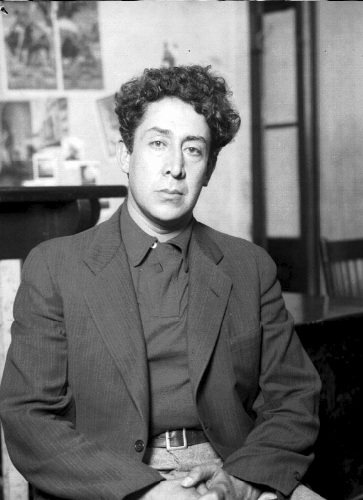
David Alfaro Siqueiros
A communist activist and anti-fascist fighter, he seeks a public, collective and technologically modern painting. His dynamic perspectives place the viewer in the middle of the conflict rather than in front of a distant stage.
Discover the artist #12
#12
Otto Dix
A former soldier, he dissects war, the mutilated and Weimar society with cold precision. His portraits and triptych The War denounce the persistent violence behind reconstruction and urban spectacle.
Discover the artist #13
#13
George Grosz
His drawings populate Berlin with profiteers, soldiers, prostitutes and bourgeois drunk with power. The sharp line and visual montage make caricature a weapon against militarism and social hypocrisy.
Discover the artist #14
#14
Max Beckmann
The experience of military hospitals breaks its language before feeding a universe of traps, exile and violence. Classified as "degenerate" by the Nazis, he transformed the triptych into the moral theater of his time.
See the works #15
#15
Frida Kahlo
His injured body becomes a territory where Mexican identity, gender, disability and communist commitment intersect. His self-portraits make intimate experiences long kept outside of great history political.
See the works #16
#16
Fernand Léger
Fascinated by the city, industry and the world of work, he defends monumental art accessible to all. Its simplified figures give popular leisure activities, builders and machines a modern visual dignity.
See the works #17
#17
Ben Shahn
From the Sacco and Vanzetti affair to union campaigns, he combines drawing, photography, typography and painting. Its immediately readable language puts art at the service of public freedoms and social justice.
Discover the artist #18
#18
Jacob Lawrence
His series tell the story of black migration, abolition, work and segregation in rhythmic panels. He refuses the great isolated hero in favor of a collective story made up of departures, obstacles and communities on the move.
Discover the artist #19
#19
Romare Bearden
Collage allows him to recompose family memory, Great Migration, jazz and African-American urban life. Photographic fragments and colors form a language where the black experience becomes the center of modern history.
Discover the artist #20
#20
Aaron Douglas
Its silhouettes, luminous circles and Art Deco rhythms connect Africa, slavery, emancipation and Harlem. He invents a modern iconography capable of simultaneously carrying cultural pride and historical awareness.
Discover the artistRights, feminisms and social realisms
Ranks 21 to 30 - Private lives become political
Identity, body, work, poverty and domination run through works that give a monumental presence to diminished experiences.
 #21
#21
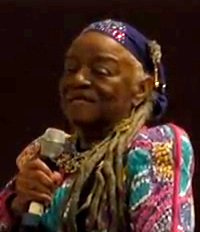
Faith Ringgold
Paintings, posters and narrative quilts address racism, police violence, women's rights and museum exclusion. By mixing family narrative and collective history, it transforms domestic media into spaces of protest.
Discover the artist #22
#22
Alice Neel
His portraits grant a full presence to activists, poor families, queer people and residents of Spanish Harlem. Without idealizing her models, she constructs a social chronicle attentive to bodies and vulnerabilities.
Discover the artist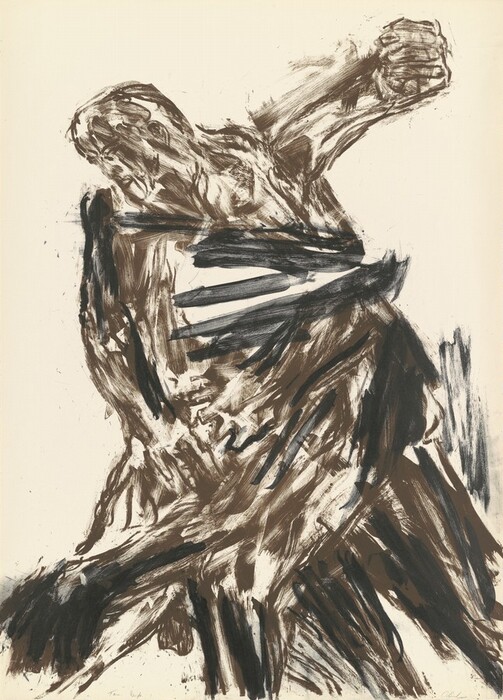 #23
#23
Leon Golub
Mercenaries, interrogations and political leaders occupy large, deliberately rough webs. It shows violence as a professional and institutional system, produced by bodies trained to exercise power.
Discover the artist #24
#24
Philip Guston
After abstraction, he returns to a grotesque representation to confront racism, the Vietnam War and personal compromise. His Ku Klux Klan hoods shift the issue of evil towards everyday life and individual responsibility.
Discover the artist #25
#25
Paula Rego
Tales, Family and Theater serve as a precise critique of authoritarianism and the roles imposed on women. His series on clandestine abortion makes visible a political suffering that public debate often abstracts.
Discover the artist #26
#26
Renato Guttuso
Resistance fighter and communist, he painted massacres, land occupations, crowds and work with a tense color. Its Mediterranean realism seeks an accessible language without renouncing the complexity of modern composition.
Discover the artist #27
#27
Boris Taslitzky
A resistance fighter deported to Buchenwald, he clandestinely designed the camp before painting strikes, colonial repression and workers' struggles. Testifying and taking sides remain one and the same demand for him.
Discover the artist #28
#28
André Fougeron
A figure of French social realism, he represents miners, peace activists and working-class neighborhoods. His direct images assume their combat function while documenting the gestures, places and tensions of the post-war period.
Discover the artist #29
#29
Candido Portinari
Coffee workers, Northeast migrants and poor children become the protagonists of a monumental Brazilian painting. Its War and Peace panels extend this social attention to international meditation.
Discover the artist #30
#30
Antonio Berni
He invented Juanito Laguna and Ramona Montiel to tell the story of poverty, industrial waste and urban exploitation. Recovered materials and collage give a physical presence to the economic world described by his stories.
Discover the artistPeople, work and social criticism
Ranks 31 to 40 - Observe the balance of power
From the Americas to Russia, these painters look at the work, injustice, satire of the powerful and daily dignity without idealization.
 #31
#31
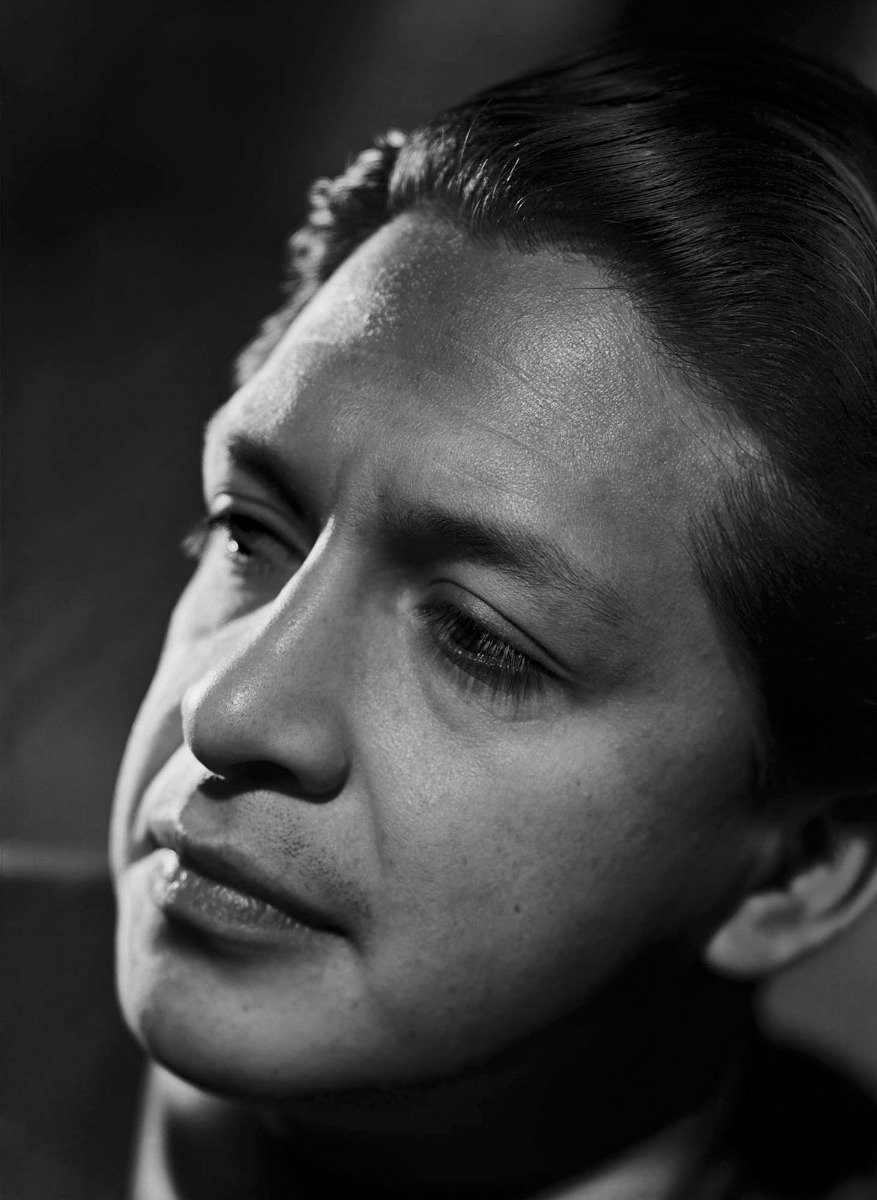
Oswaldo Guayasamin
Outstretched hands, tense faces and angular bodies condense political violence, racism and Latin American suffering. Its cycles seek less reporting than the monumental expression of wounded dignity.
Discover the artist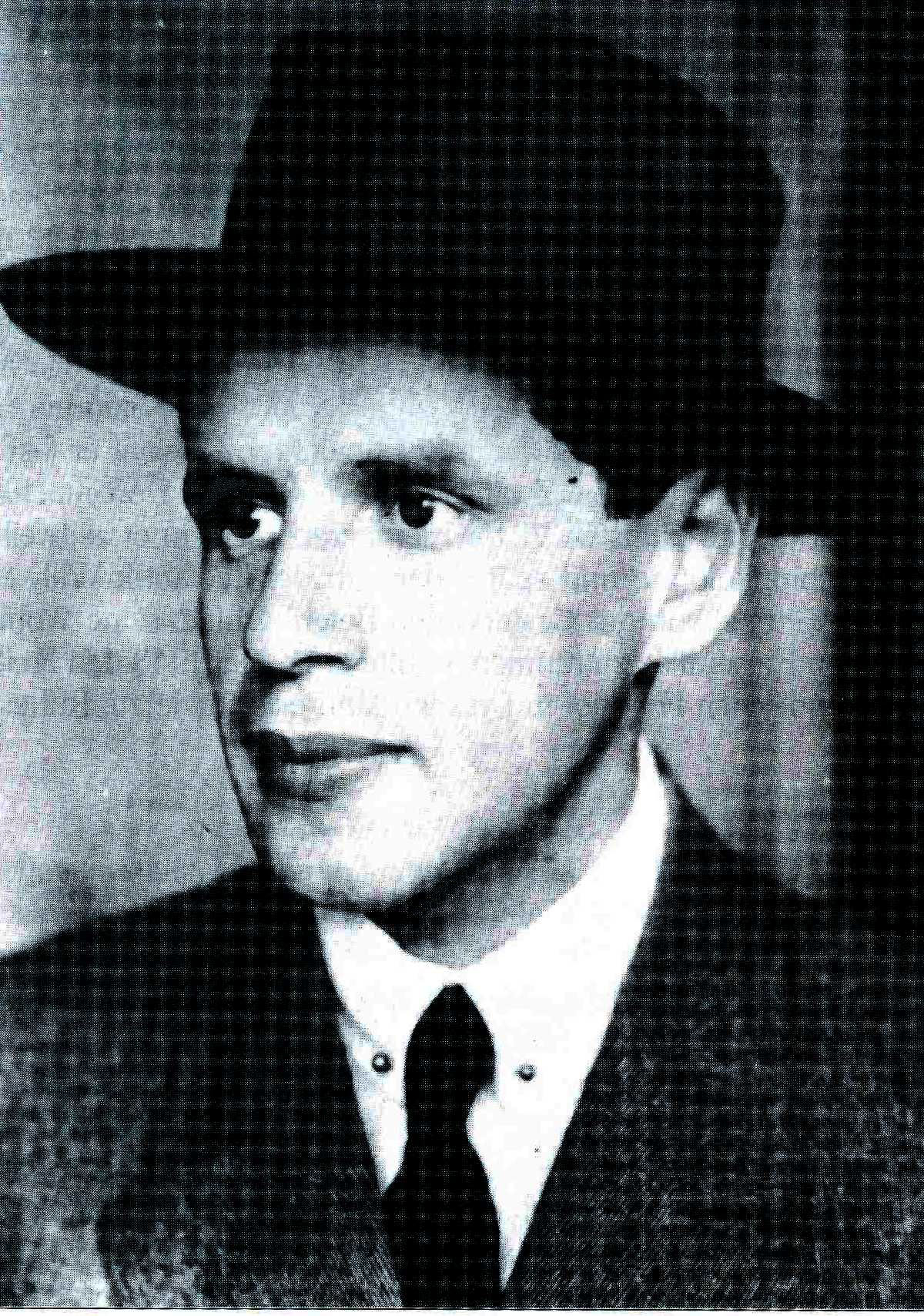 #32
#32
Lasar Segall
A European exile in Brazil, he painted emigrants, refugees, prostitutes and victims of pogroms in stripped-down forms. His expressionism links personal uprooting and collective history of persecution.
Discover the artist #33
#33
Théophile Alexandre Steinlen
Poster artist and press cartoonist, he observes workers, strikes, poor people and war victims without picturesqueness. Printed distribution gives his commitment a much wider audience than that of trade fairs.
See the works #34
#34
Jean-Francois Millet
It places sowers, gleaners and shepherds at the center of serious and monumental compositions. Without an explicit activist program, this dignity granted to peasant work became politically sensitive in 19th century France.
See the works #35
#35
Julius Adler
Nicknamed the painter of the humble, he followed strikes, soup kitchens, working families and crowd movements. His naturalism makes the street and industrial work subjects of contemporary history.
See the works #36
#36
Ilia Repin
Boatmen, revolutionaries, prisoners and political leaders make up a vast chronicle of Russia. Its psychological realism shows both social oppression and the individual contradictions of those who suffer or exercise it.
See the works #37
#37
Vasily Vereshchagin
A traveler and former witness to the fighting, he refused triumphant military painting. Fields of death, ruins and absurd trophies transform his war scenes into accusations against imperial glory.
See the works #38
#38
Nikolai Yaroshenko
Students, prisoners, workers and protesting intellectuals populate his portraits and social scenes. It gives ordinary figures a moral autonomy which opposes the hierarchies of Imperial Russia.
See the works #39
#39
Abram Arkhipov
Exhausted washerwomen, peasants and workers from the Russian North are painted with dense material and attention to concrete conditions. Color never masks fatigue or the hardness of work.
See the works #40
#40
William hogarth
His narrative series follow rise, corruption, marriage of interest, alcoholism and social fall. Thought like readable stories, they make painting and engraving a critical observatory in London.
See the worksAbolition, memory and contemporary commitments
Ranks 41 to 50 - From critical history to public space
Abolition, Commune, black memory, migrations, propaganda and street art show that the image undertaken continues to change form and terrain.
 #41
#41
François-Auguste Biard
The abolition of slavery in the French colonies depicts the legal moment of freedom. Despite its colonial conventions and ambiguities, the painting remains a major document on the official representation of emancipation.
See the works #42
#42
Édouard Manet
Maximilian's Execution transforms a contemporary diplomatic event into a cold accusation, while his scenes of civil war avoid heroic pathos. Modern life includes his political conflicts.
See the works #43
#43
Felix Vallotton
Its engraved woods analyze demonstrations, police, press and bourgeois relations with a radical black and white economy. During the war, its landscapes of destruction remained deliberately ambiguous and distant.
See the works #44
#44
George Bellows
He paints boxers, docks, crowds and working-class neighborhoods with a physical energy that exposes class divisions. His war images, more propagandistic, also show the moral tensions of commitment.
See the works #45
#45
Thomas Hart Benton
His frescoes tell the story of work, industry, music and American conflicts in powerfully modeled bodies. Regionalism becomes a public story, popular but sometimes crossed by the contradictions of its time.
Discover the artist #46
#46
John Steuart Curry
Tornadoes, abolitionism and Kansas struggles enter into his great civic compositions. His monumental John Brown makes local memory a living debate on violence, justice and national construction.
See the works #47
#47
Kerry James Marshall
He places black figures in the prestigious formats of history painting, portraiture and the leisure scene. This presence corrects the absences of the canon without reducing the characters to a single message.
Discover the artist #48
#48
Kehinde Wiley
By taking up poses and settings from the aristocratic portrait, he questions who can embody power, beauty and national memory. His contemporary black models occupy a place long reserved for white elites.
Discover the artist #49
#49
Banksy
Stencils and urban interventions divert surveillance, borders, consumption and military imagery. Humor makes the message immediately shareable, while the real wall places each image in a specific political context.
Discover the artist #50
#50
Shepard Fairey
Its graphics borrow the codes of propaganda to return them to climate, democracy, peace or racial justice. Posters and frescoes seek immediate public effectiveness, between popular icon and activist campaign.
Discover the artistSources and extensions
Deepening the history of engaged art
Museum notices place these images in their event, their order and their first reception. They help to understand why certain works have become symbols, but also how their meaning continues to evolve.
Read on Alpha Reproduction
Committed painting not only gives an answer: it forces you to look
Goya, Géricault, Delacroix, Daumier, Courbet and Kollwitz showed that a work could intervene in its time without abandoning its complexity. They give a face to the victims, displace the heroes, make work and poverty visible, or turn against power the prestigious formats of history painting. Picasso, Dix, Grosz, Rivera, Orozco and Siqueiros extend this gesture in the face of world wars, fascism and revolutions.
Ringgold, Bearden, Douglas, Neel, Rego, Portinari, Berni, Guayasamin and Marshall further broaden the field: intimacy, race, gender, colonial memory and daily life become major subjects. Banksy, Wiley and Fairey finally show that engagement circulates today between museum, street and media. The best political painting does not replace thought; it creates an image strong enough and open enough for the debate to continue after it.
0 comments