

Authenticated photo
Is there a real photo of Vincent van Gogh?
Yes, but the answer is much shorter than we imagine: a single photograph of Vincent van Gogh is today generally considered authenticated. She shows him young, at 19, well before the red beard and nervous face of self-portraits.
The trap comes from images often shared online: fake portraits, confusion with Theo, group photographs discussed, painted portraits presented as documents. Here's how to read these images without falling for it.

Short answer
The real photo: Vincent at 19 years old
The most reliable photograph shows Vincent van Gogh in January 1873. He then worked for Goupil & Cie and was not yet the painter we know. It is precisely this discrepancy that surprises: no straw hat, no flamboyant beard, no eye hallucinated by legend.

Why this image matters
This photo is important because it gives a documentary reference, but it does not summarize Van Gogh. It precedes the great self-portraits of Paris, the crisis of Arles, Saint-Rémy and Auvers.
- Date: january 1873.
- Age: 19 years.
- Photographer: Jacobus Marinus Wilhelmus of Louw.
- Collection: Van Gogh Museum, Amsterdam.
- Interest: the only widely accepted photographic portrait of Vincent.
Famous mistake
The “Vincent child” was actually Theo
For decades, a teenage photograph was published as a portrait of Vincent van Gogh around age 13. In 2018, the Van Gogh Museum revised this attribution: it would be Theo van Gogh, his younger brother, aged around 15.


Method
How to spot a fake photo of Van Gogh
An image is unreliable because it resembles” in self-portraits. You have to look at the origin, the date, the medium, the family context and the position of the museums.
Ask for provenance
A serious photo must indicate a collection, an inventory, a photographer or at least a controllable material history.
Check the date
If the photo is supposed to show Vincent young, it must correspond to his living spaces. Theo's error was precisely revealed by a problem of location and chronology.
Do not confuse painting and photography
Self-portraits are precious, but they are not neutral statements. Van Gogh paints himself, builds himself, simplifies himself, sometimes exaggerates the color and the look.
Be wary of viral images
Networks often include portraits of strangers, Theo, lookalikes or reconstructions. A beautiful image is not proof.
The painted face
Self-portraits almost replace photography
Van Gogh didn't leave many photos, but he painted his face with rare intensity. Self-portraits do not give an identity photo: they show an evolution of color, touch and presence.

The face becomes a touch laboratory: short lines, divided color, direct gaze.

The hat, red beard and vibrant background shaped Van Gogh's mental image.

A self-portrait from 1887, often used to compare the painted face to the young photographed face.

Here, the image is biographical, but it remains a painting: composition, color, silence, control.

Palette in hand: the artist shows himself as a painter at work, in blue and green tension.
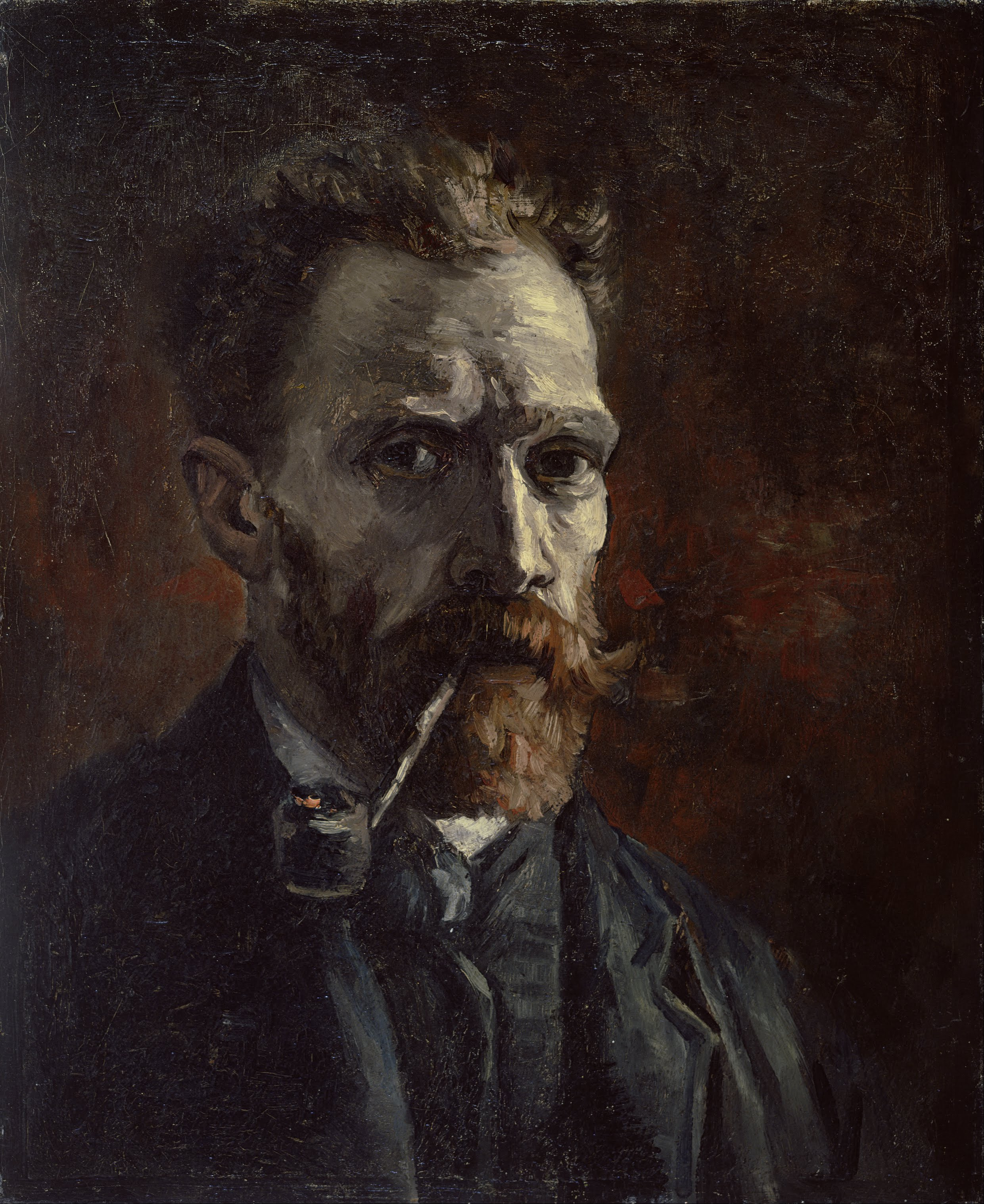
The pipe gives a more everyday, less iconic face, close to the years of Parisian training.

Another face of Van Gogh: lighter, more summery, but always constructed by the touch.

A late self-portrait where the gaze seems fixed, almost sculpted by brushstrokes.
Photos to be handled with caution
Van Gogh's other “photos”: documents, hypotheses and images discussed
There are other photographs related to Van Gogh or his entourage. But we must distinguish three levels: the authenticated photo of Vincent, the photos of relatives like Theo, and the group images where Vincent's identification remains debated.


Clear picture
Images of Van Gogh: which ones to believe?
To quickly answer a Google search, here is the useful ranking: safe image, reassigned image, discussed image, painted image.
| Picture | Status | Why | How to use it |
|---|---|---|---|
| Vincent at 19, January 1873 | Authenticated /admitted | Documented photograph, preserved by the Van Gogh Museum. | Use as the only real, safe photo of Vincent's face. |
| Portrait of a teenager long said “Vincent at 13” | Reattributed to Theo | Van Gogh Museum research and chronological/forensic analysis. | To be presented as an example of a famous error, not like Vincent. |
| Group photos supposed to show adult Van Gogh | Discussed | Fragile identifications, often based on resemblance or hypothesis. | Avoid as primary visual evidence. |
| Self-portraits of Paris, Arles, Saint-Rémy | Authentic works, not photos | They show how Van Gogh represents himself, not a neutral capture. | To be used to analyze your public image and its pictorial construction. |
In the store
Explore Van Gogh's portraits and self-portraits
If the 1873 photograph is the safest document, the self-portraits remain the best visual entry into his work. They show the transition from the young man photographed to the artist who invents his own face.

Self-portraits of Van Gogh
Van Gogh's face by himself, from Paris to Arles.

Vincent van Gogh
Portraits, landscapes, flowers, nights and rural scenes.

Bandaged ear
One of the most famous and charged portraits of his legend.

Doctor Gachet
A late, melancholy portrait, useful for prolonging the question of the face.
Sources
Useful sources and credits
The documentary images come from Wikimedia Commons and notices linked to the Van Gogh Museum. Information on the reallocation of the adolescent photo is based on announcements and summaries published in 2018.
Vincent, January 1873
Wikimedia Commons notice, Van Gogh Museum collection.
Error correctedTheo, 1873
Photo long considered Vincent as a child, reattributed to Theo.
Research 2018The Art Newspaper
Detailed summary of the discovery and the position of the museum.
Self-portraitMusée d'Orsay
Official notice of the 1887 self-portrait.
FAQs
Frequently asked questions
Quick responses to avoid the most common confusion.
Is there a real photo of Vincent van Gogh?
Yes. The photograph from January 1873, where Vincent van Gogh was 19 years old, is today the only portrait photo generally accepted as authenticated.
Is Van Gogh's photo as a child true?
No according to the reallocation announced in 2018: the image long presented as Vincent at 13 most likely represents his brother Theo, aged around 15.
Why are there so few photos of Van Gogh?
Van Gogh did not particularly like portrait photography and his recognized artistic career was very short. The most numerous images of his face are therefore his self-portraits.
Do the self-portraits show his true face?
They give valuable clues, but they are painted works: color, touch, framing and expression are artistic choices, not a neutral photographic record.
Conclusion
Van Gogh's true image lies between rare photography and powerful self-portraits
To see Vincent “en true”, you have to start from the photo of 1873. To understand the artist, you then have to look at the self-portraits: not as photos, but as a way of transforming his face into painting.
See Van Gogh's self-portraits
0 comments