

Mouvements artistiques célèbres • Guide art & décoration
Mouvements artistiques célèbres : styles, ruptures et grandes idées qui ont changé le regard
Une promenade cultivée à travers l'histoire de l'art pour comprendre les courants majeurs, décoder leurs codes visuels et choisir une reproduction avec justesse, loin des classements scolaires.
Parler de mouvements artistiques célèbres, c'est souvent imaginer une longue file d'attente où chaque style attend sagement son tour pour être présenté au public. La réalité fut bien plus tumultueuse : ces courants sont nés de disputes, de manifestes jetés comme des pavés dans la mare et d'artistes refusant de peindre ce que les autres voyaient déjà. De la Renaissance aux avant-gardes du XXe siècle, chaque rupture répondait à une question brûlante sur la manière de capturer la lumière, la vitesse ou le rêve. Comprendre cette histoire, c'est apprendre à lire non pas une étiquette collée au dos d'un tableau, mais le pouls d'une époque qui cherchait désespérément à se réinventer devant la toile blanche.
_-_Central_Park,_NYC.jpg) Image libre
Image libreThe Met serves as a major museum landmark here: a fitting symbol for journeying through artistic movements without reducing them to a dry list.
Méthode de lecture
The connoisseur's eye: decoding style through observation
To identify a movement without reciting a technical sheet, simply observe how the painting handles light, form, and space. A hatched brushstroke often reveals a quest for the instantaneous, while a serpentine line announces a desire for total ornament. These visual clues are the true signatures of the great movements.
Context before prestige.
We place it back within the famous artistic movements of its era—its studios, its exhibitions, its small rebellions. A work without context is sometimes just a very beautiful person who has forgotten their story.
The telltale signs of style
We can spot perspective, chiaroscuro, plein air. These clues often say more than grand speeches, especially when they carry gold or nervous brushstrokes.
The artwork in a real room
We end with the useful question: does this image breathe in your space, or does it merely pose like a poster that's read two books?
Contexte historique
An artistic movement isn't a label: it's an organized fight around vision.

An artistic movement never arises spontaneously in some isolated studio; it is always the collective response to a problem of representation stirring within a community. Take Caravaggio in early seventeenth-century Rome: his violent use of chiaroscuro was no mere passing trend, but a radical way of making the sacred tangible, almost brutal, by plunging figures into a theatrical darkness pierced by harsh light. This approach sent such shockwaves that painters across Europe—the Caravaggisti—immediately adopted this dramaturgy of shadow to upend the religious conventions established since the High Renaissance.
These groupings function like clans in which shared ways of seeing come before shared techniques. When the Italian Futurists published their manifesto in 1909, they didn't just propose a new style—they declared war on the past, demanding that painting capture the speed of automobiles and the violence of modern life. Thus, defining a movement means understanding what common enemy it fights, whether that be stuffy academicism, the emerging photograph, or reason itself, transforming art history into a series of aesthetic revolutions rather than a peaceful linear evolution.
Style artistique
Academies, Salons and Museums: Styles are also born in rooms where judgment cuts deep

It is impossible to grasp the emergence of styles without entering the social arena where they were validated or rejected, namely the Official Salons and the Academies. In France, the Royal Academy of Painting and Sculpture imposed for centuries a strict hierarchy of genres, placing history painting at the top and relegating landscape or still life to a lower, almost undignified rank. To be recognized, an artist had to convince a conservative jury at the annual Salon, a monstrous exhibition where thousands of works were hung from floor to ceiling, creating a visual saturation in which only conformity to classical rules guaranteed decent visibility.
However, it is often on the fringes of these rigid institutions that true revolutions take root, driven by bold merchants and visionary critics. When the Salon des Refusés opened its doors in 1863 by order of Napoleon III, it inadvertently exhibited works rejected by the official jury, providing an unexpected platform for painters like Whistler and Manet, who were shaking up the norms. These alternative spaces, supported by gallerists such as Durand-Ruel, allowed new visual languages to find their audience, proving that artistic legitimacy no longer depends solely on the verdict of the establishment, but also on the ability to create a new market and a new way of seeing.
Art & détails
Impressionism: the light goes out for some fresh air and comes back with a group of friends

Impressionism marks the precise moment when painting decides to leave the dim studio behind to face the caprices of natural light in the open air. At the first exhibition of 1874, held at photographer Nadar's in Paris, Claude Monet presented his work *Impression, Sunrise*, whose title was seized derisively by critic Leroy to christen an entire group. What shocked audiences at the time was less the subject matter—scenes of modern life such as regattas or balls—than the technique itself: the brushstroke became visible, broken and hatched, while contours dissolved into colorful vibrations that suggested the fleeting instant rather than eternal form.
This group of friends, including Renoir, Degas, Pissarro, and Berthe Morisot, shared a common obsession with the way light alters the perception of colors at different times of day. They abandoned black for shadows, preferring to use complementary colors like blue or violet to model volume—a technical boldness that made their canvases look blurry to the regulars of the Salon. By capturing the steam of train stations or the shifting reflections on the Seine, they invented a visual modernity where the subject matters less than the pure sensation of seeing, transforming each painting into a quick note taken on the fly of existence.
Art & détails
Post-Impressionism: when everyone keeps the color, then goes their own way

If the Impressionists liberated color, the next generation—labeled post-Impressionist in hindsight—felt the need to restore structure and meaning to that overflowing freedom. Paul Cézanne, working tirelessly before the Sainte-Victoire mountain, sought to treat nature through the cylinder, the sphere, and the cone, thereby laying the geometric foundations that would lead directly to Cubism. Conversely, Vincent van Gogh used color no longer to describe objective light, but to express his inner turmoil, applying paint with violent knife strokes that made cypresses and starry skies swirl with an almost hallucinatory energy.
Other paths emerge with scientific rigor or a spiritual quest, as with Georges Seurat, who pushes the division of tones to the pointillist method, building his images through a mosaic of pure color dots that blend in the viewer's eye. Meanwhile, Paul Gauguin flees industrial civilization for Brittany and then Tahiti, seeking in symbolism and flat areas of color outlined in black a primitive and mystical truth. This abundance shows that the late 19th century is not a single style, but an intense laboratory where each artist takes up the Impressionist heritage to bend it to their own vision of the world.
Art & détails
Art Nouveau: curved lines walk into the room and refuse to go straight

At the turn of the century, Art Nouveau emerged as a reaction against historical eclecticism and the perceived ugliness of industrial production, proposing a total art that permeated architecture, furniture, and everyday objects. Its visual language is instantly recognizable through that organic line, the famous "whiplash," which imitates plant stems, stylized flowers, and flowing locks of hair, rejecting any geometric rigidity. Artists like Alphonse Mucha turned it into a popular icon through their theatrical posters featuring ethereal women surrounded by intricate vegetal motifs, while Hector Guimard applied it to the wrought iron of Parisian metro entrances, weaving art into the very fabric of the modern city.
Gustav Klimt, a central figure of the Vienna Secession, pushed this decorative logic to its extreme by covering his characters with gold leaf and Byzantine motifs, creating a pictorial surface that hovers between painting and jewelry. In *The Kiss*, the lovers' bodies seem to dissolve into a tapestry of geometric and floral forms, erasing the boundary between the human figure and its ornate environment. The ambition of this movement was noble and utopian: to abolish the hierarchy between fine arts and applied arts in order to create a beautiful and coherent living environment, though this dream of unification was soon swept away by the cold rationality of the subsequent avant-gardes.
Art & détails
Cubism: a unique perspective, masterfully taken apart
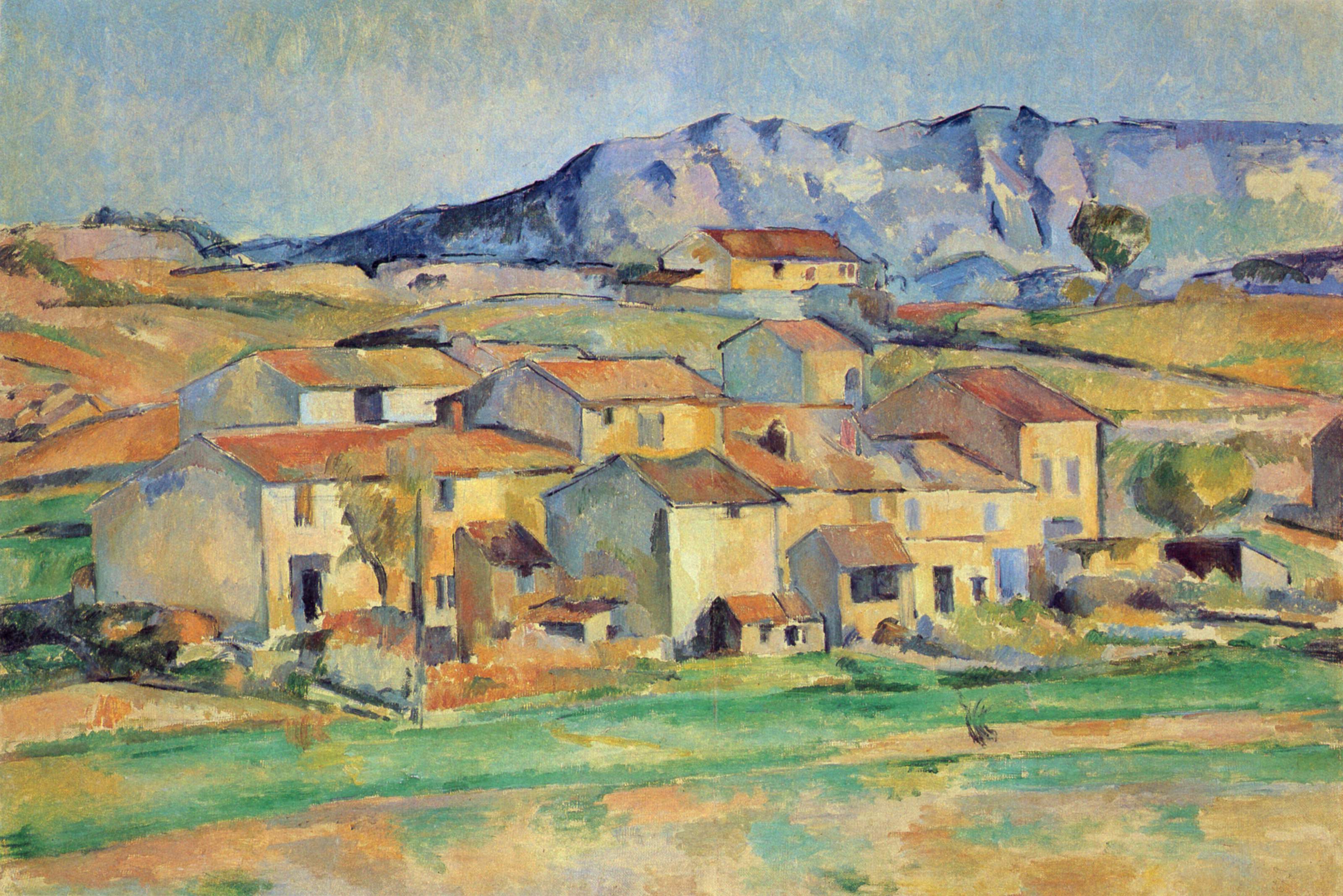
Cubism undoubtedly represents the most radical break in the history of Western art since the invention of perspective during the Renaissance, asserting that an object cannot be understood from a single fixed viewpoint. Initiated by Pablo Picasso and Georges Braque around 1907–1908, under the influence of African masks and the geometry of Cézanne, this movement fragments reality into multiple facets shown simultaneously on the canvas. Picasso's famous *Les Demoiselles d'Avignon* shatters bodies into angular, threatening planes, while Braque reduces the landscapes of L'Estaque to interlocking cubes and cylinders, forcing the viewer to mentally reconstruct form in space.
Over the course of its evolution, Synthetic Cubism introduced real elements into painting through the technique of collage, incorporating newspaper, faux wood grain, and sheet music directly onto the canvas. This intrusion of the everyday into high art further blurred the lines between illusion and the material reality of the work. Juan Gris brought a crystalline clarity and mathematical rigor to this language, organizing these scattered fragments into harmonious, colorful compositions. Cubism was not concerned with copying the world as it appears, but as it is intellectually known, revolutionizing our way of conceiving the image in a lasting way.
Art & détails
Abstraction and Surrealism: When Painting Stops Asking Reality to Hold the Reins

Abstraction marks the great leap where painting finally frees itself from the obligation to represent anything visible, finding its justification in music, spirituality, or pure emotion. Wassily Kandinsky, often cited as the father of lyrical abstraction, theorizes this approach by comparing colors to piano keys that vibrate directly on the soul of the viewer, without passing through the recognition of an object. His improvised compositions, where forms float in an undefined space, pave the way for a universal language of lines and colored patches that will be explored differently by Mondrian's rigorous neoplasticism or American abstract expressionism.
At the same time, surrealism explores the depths of the unconscious and dreams, using painting to depict the impossible with unsettling photographic precision. Salvador Dalí, with his paranoiac-critical method, paints melting soft watches drooping over olive branches in *The Persistence of Memory*, creating dreamlike landscapes where physical logic is suspended. René Magritte, for his part, plays on the gap between image and word, painting a pipe with the caption "This is not a pipe" to question the very nature of representation. These two movements, though distinct, share the desire to move beyond the rational to reach a higher reality, whether inner or psychic.
Art & détails
Recognize a style without reading from a card: look at the touch, the light, and the small obsessions

To identify a movement when looking at a work of art, you need to learn to read the material clues the artist has left behind, starting with how the paint is applied to the canvas. A smooth surface, where brushstrokes are invisible and the finish is flawless, often points to the academic ideal or the 19th-century realist tradition, both concerned with concealing the manual labor. Conversely, if you see thick, impastoed paint with visible tool marks and colors placed side by side without prior blending, you are likely looking at an Impressionist, Expressionist, or Fauvist approach, where the energy of the gesture takes precedence over a polished finish.
Next, observe how space is handled and what relationship the artwork maintains with depth. The presence of strict linear perspective, with a single vanishing point and respected proportions, indicates an adherence to classical or neoclassical codes. If space appears flattened, if planes overlap in a confusing manner, or if objects are represented from multiple angles at once, cubism or certain forms of modern art are at play. Similarly, an unnaturalistic color palette—purples for shadows or greens for faces—is a strong signal of an expressive or symbolist intent, far removed from the mere imitation of nature.
Décoration intérieure
Choosing a pattern for a wall: let the story in, but make sure it agrees with the sofa

Selecting a reproduction for your home requires considering the visual energy of the chosen piece and its ability to dialogue with the room's architecture without overwhelming it. A large abstract format with vibrant colors, inspired by Rothko or Soulages, can serve as a powerful focal point in a minimalist living room with clean-lined furniture, bringing a meditative depth where white walls would feel too cold. Conversely, a luminous Impressionist scene, with its pastel blues and greens, will introduce an airy breath and a sense of expanded space—ideal for brightening a dark room or a narrow hallway without weighing down the atmosphere.
It is also crucial to respect the scale and emotional context: Art Nouveau, with its curved lines and gilded details, fits wonderfully into interiors rich in woodwork or botanical elements, creating a warm stylistic continuity. However, installing a highly fragmented analytical Cubism piece in a bedroom could create a counterproductive visual agitation for rest, unless you are specifically seeking that intellectual tension. The goal is not to turn your living room into a cold museum, but to choose a work whose visual language resonates with your sensibility and complements the harmony of your everyday living space.
| Pièce | Suggestion | Effet décoratif |
|---|---|---|
| Salon | Une oeuvre liée à Mouvements artistiques célèbres avec une composition forte | Point focal cultivé, chaleureux et facile à commenter sans réciter un cartel. |
| Chambre | Une palette douce ou une scène plus intime | Atmosphère calme, présence visuelle sans agitation inutile. |
| Bureau | Une image structurée, colorée ou graphiquement nette | Énergie créative et petit rappel que le mur peut aussi travailler. |
| Entrée | Un format vertical ou une oeuvre immédiatement lisible | Première impression claire, élégante, et nettement moins timide qu'un vide blanc. |
Pour continuer la visite
Sources, collections, and paths truly related to the topic
Some handy references for cross-checking the information, comparing freely available images, and continuing the reading without dragging an unsuspecting museum into it.
Useful collections
Useful resources on this topic
FAQ
Frequently Asked Questions about Famous Art Movements
What are famous art movements in painting?
Famous art movements aren't a list of names to recite: they're moments when artists change the rules of perception—sometimes with elegance, sometimes with the quiet calm of a chair hurled into an official salon.
How to quickly recognize this style?
Pay close attention to perspective, chiaroscuro, plein air, visible brushwork, and expressive color, then notice how the composition guides your eye. If the piece holds your attention longer than expected, that's probably no accident.
Which artists should you know?
The main reference points are Leonardo da Vinci, Caravaggio, Claude Monet, Vincent van Gogh, and Gustav Klimt.
Does this style suit a modern décor?
Yes, provided you choose the right format, a palette that ties in with the room, and a piece whose presence remains a pleasure day after day.
Should we choose the most famous work?
Not necessarily. The most well-known piece may be perfect, but the right choice really depends on the room, the format, the palette, and the atmosphere you're going for.
Where to verify the information?
Start with museum records, Wikipedia/Wikidata for general orientation, then Wikimedia Commons when a free-to-use image is needed.
Art as a journey companion
Navigating through famous artistic movements ultimately means accepting that the history of art is an endless conversation, where each era responds to the previous one with its own tools and its own questions. Whether it's the vibrant light of Monet, the unsettling dreams of Dalí, or the geometric structures of Picasso, each style offers a different key to deciphering the world around us. Choosing to welcome one of these visions into your home, through a carefully crafted reproduction, keeps that dialogue alive, transforming a simple wall into an open window onto human boldness. Beyond academic classifications, what truly matters is that spark of recognition when our gaze meets that of an artist who, a century ago, was searching for exactly what we are searching for today: giving meaning to what we see.
0 comments