

Van Gogh the Impressionist: Paris lights everything up, the guide that looks beneath the varnish
A dive into Vincent's Parisian years, where the light transforms his palette and his gaze, well beyond museum labels.
We often picture Vincent van Gogh as a solitary figure burning under the Arles sun, but to forget his two Parisian years between 1886 and 1888 would be to ignore the spark that lit the fuse. It was in the tumult of the capital, in contact with his brother Theo and the avant-gardes, that the Dutch painter, shaped by the earthy tones of Nuenen, discovered a new visual grammar. Paris doesn't simply welcome him; it absorbs him, jolts him, and eventually hands him the keys to a chromatic freedom he would never have dared imagine on his own. To understand this metamorphosis is to grasp how an artist can digest Impressionism in order to surpass it, turning every brushstroke into a vibrant affirmation of modern life.
 Free image
In Paris, even the self-portrait changes temperature: the brushstroke stirs, color turns up the volume, and brown starts packing its bags.
Reading method
Reading light the way you read a city
To fully appreciate this pivotal period, you need to observe how the painterly matter evolves from dark to luminous, how urban subjects replace peasant scenes, and how artistic encounters forge a unique style. The eye must track the vibration of color rather than the mere fidelity of drawing.
Context before prestige
We place the impressionist Van Gogh in his era, his studios, his exhibitions, and his small rebellions. A work without context is sometimes just a very beautiful person who has forgotten their own story.
The signs that betray the style
We spot composition, palette, texture. These clues often say more than grand speeches, especially when they carry gold or nervous brushstrokes.
The artwork in a real room
We end with the useful question: does this image breathe in your home, or does it merely pose like a poster that has read two books?
Historical context
Van Gogh impressionist? Let's rather say: Paris ignites his colors

When Vincent arrives in Paris in March 1886, he leaves behind the gray skies of Brabant and his potato-eating peasants, mired in thick ochres and bitumens. His brother Theo, a gallery owner on rue Lepic, immediately introduces him to the closed circle of the moderns, opening the doors to a world where painting no longer seeks to copy reality but to capture the instant. This brutal immersion in the artistic effervescence of Montmartre acts as a visual electroshock for the Dutchman, until then accustomed to a muted and religious palette. He frequently attends exhibitions, notably that of the Impressionnists, where light seems finally to have won the battle against the traditional shadow of academic studios.
This is not a passive adherence, but a voracious absorption of everything the capital offers in terms of new vision. Vincent observes how his contemporaries break down natural light, using fragmented touches to suggest the movement of air rather than the solidity of forms. In his studio on boulevard de Clichy, he begins to experiment feverishly, scraping his old dark canvases or painting over them to release clarity. Paris becomes his life-size laboratory, a place where every stroll along the Haussmann boulevards teaches him that color can carry within itself the emotion and structure of the painting, without needing the aid of dramatic chiaroscuro.
Artistic style
The palette lightens: brown packs its bags, leaving no forwarding address

The most spectacular transformation of this period lies in the radical dismissal of earth siennas and ivory blacks in favor of a symphony of vibrant blues, greens, and yellows. Where he previously applied paint in heavy, uniform layers, Vincent now adopts the technique of the divided touch, directly inspired by the Impressionist masters he studies with fervor. Each brushstroke becomes a distinct note, placed side by side so that the viewer's eye performs the optical mixing at a distance, creating a luminosity that mixing on the palette would have irreparably muddied. This method demands a new speed of execution and confidence in the pure power of saturated color.
We can observe this striking evolution by comparing his works from 1885 with those produced during the winter of 1887, where shadows are no longer absences of light but zones rich in complementary colors. Brown, once king of his composition, literally packs its bags to make way for deep violets and brilliant oranges that sing the urban life. This clarification of the palette is not merely aesthetic; it signals a mental liberation, as if Vincent had finally found the language capable of translating the intensity of his sensory perceptions. The very matter of the paint lightens, becoming more airy, allowing the canvas to breathe and capture the changing reflections of Parisian light.

Bedroom in Arles
A reproduction related to Impressionist Van Gogh, useful for comparing atmosphere, palette, and wall presence.

The Starry Night
A reproduction related to Impressionist Van Gogh, useful for comparing atmosphere, palette, and wall presence.
Boulevards, rain, and crowds: modernity arrives in wet shoes
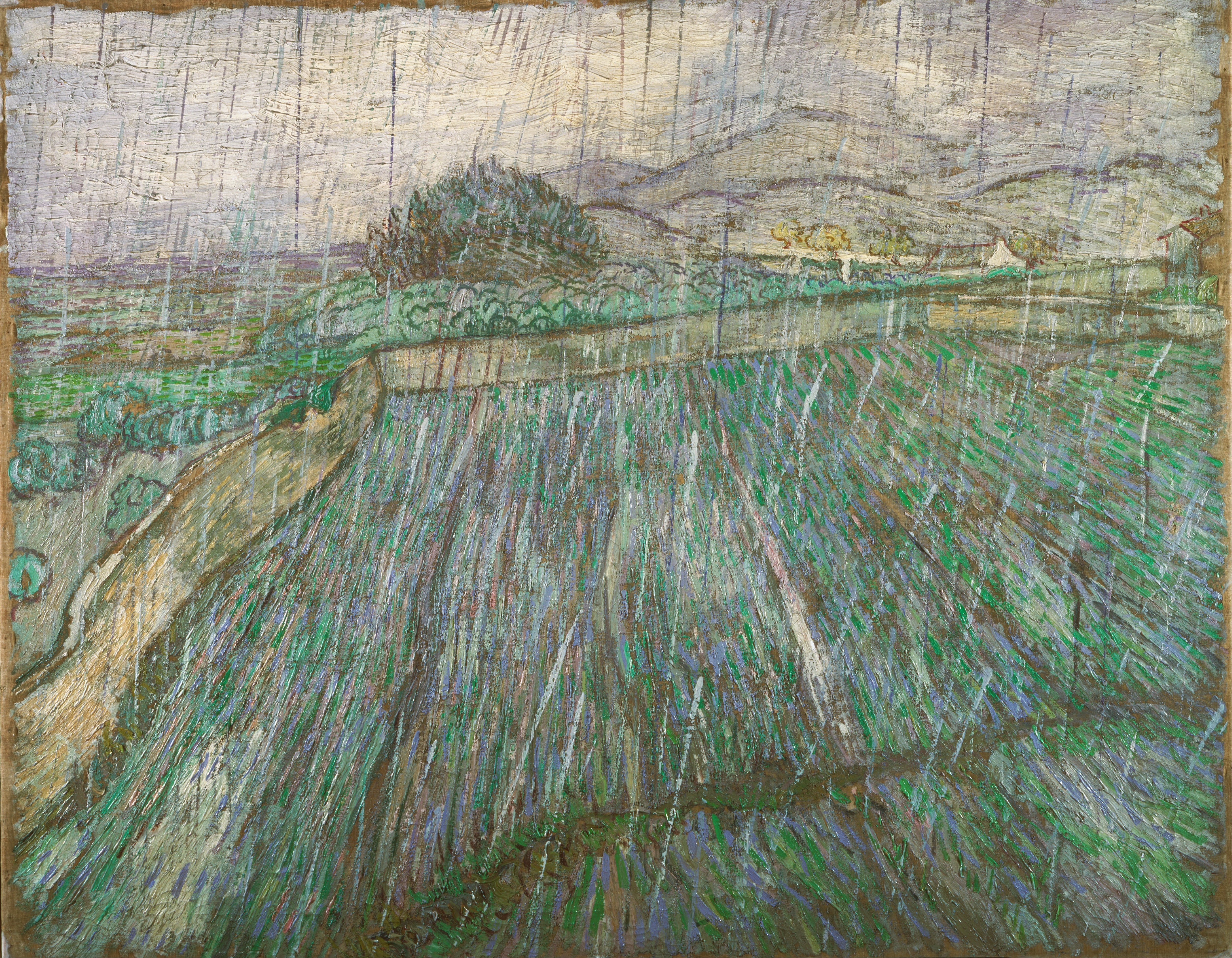
Gone are the static scenes of rural life; Vincent now throws himself wholeheartedly into representing the booming modernity of the capital, capturing the nervous energy of crowds and the vertical architecture of the new neighborhoods. He paints the wide, straight boulevards, the rows of hackney carriages, and the hurried passersby, capturing the specific atmosphere of a city in full transformation under the impetus of Baron Haussmann. Rain, snow, or fog are no longer obstacles to painting, but subjects in their own right that allow the exploration of subtly nuanced ranges of bluish grays and off-whites. His gaze falls on the anonymous everyday, transforming a simple avenue in the drizzle into a complex study of reflections and fluid movements.
This fascination with the urban subject is accompanied by a desire to render the social vibration of the era, far from the romantic idealizations of the previous century. In works like those depicting public gardens or views from his balcony, one senses the human presence even when the figures remain sketched or distant. Vincent understands that the city is a living organism whose rhythm dictates the pace of the brush, imposing a sense of urgency in execution so that the fleeting moment does not escape. This approach already foreshadows expressionism, for it is not only the topography of Paris that he captures, but the raw emotion aroused in him by this perpetual spectacle of modern life in action.
Pissarro, Signac, Toulouse-Lautrec: a band of friends who doesn't paint quietly
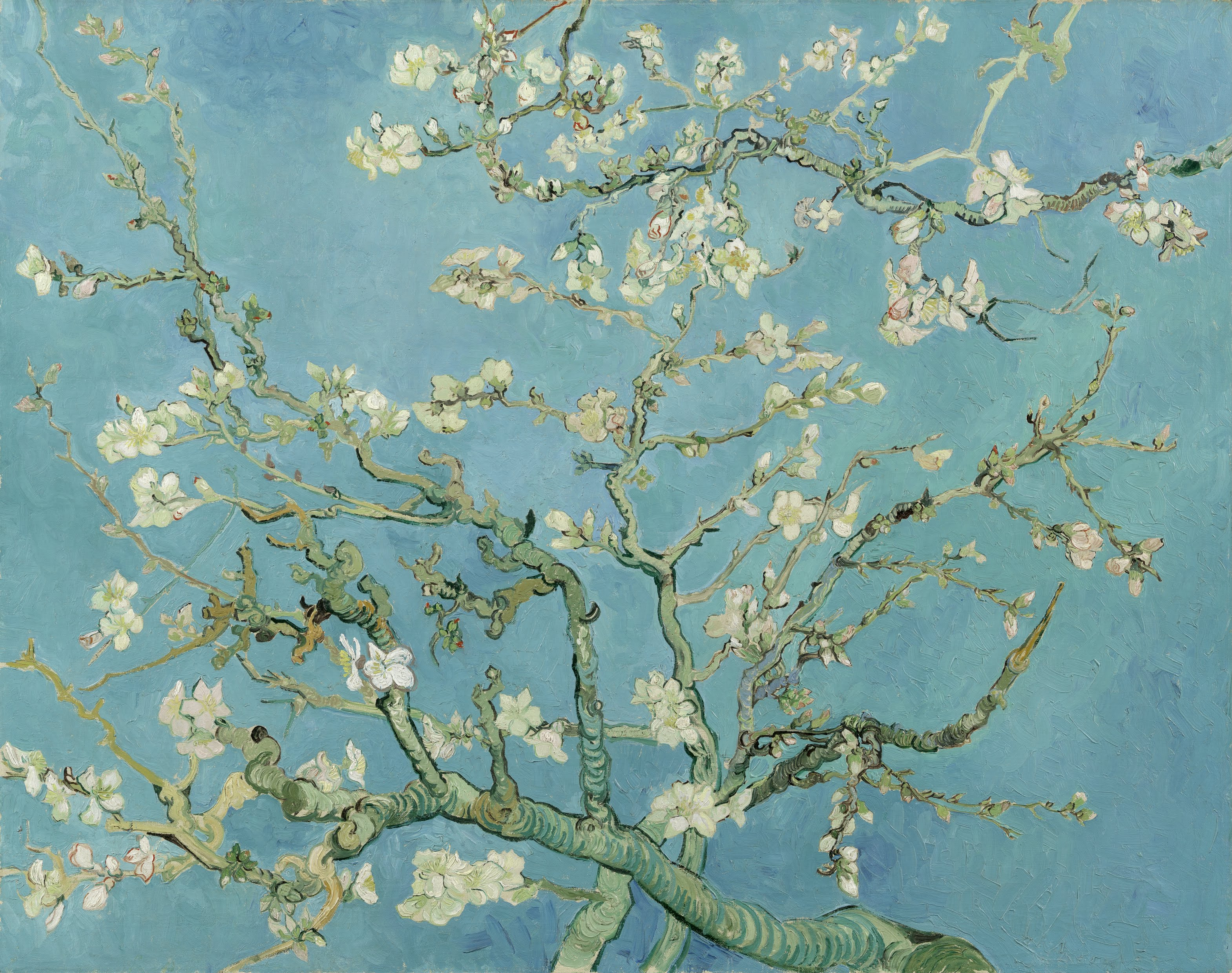
Vincent does not go through this period as a hermit, but weaves strong ties with a generation of artists who constantly push the boundaries of painting, forming a dense and stimulating network of mutual influences. Camille Pissarro, the group's benevolent dean, initiates him into the subtleties of the Impressionist touch and encourages him to lighten his palette, while Paul Signac opens the doors of scientific and rigorous Divisionism for him. These regular exchanges in the Montmartre cafés or during the Indépendants exhibitions allow Vincent to compare his intuitions with structured chromatic theories, considerably enriching his technical toolbox. He learns from them the patience of building light through methodical small touches, while keeping his own instinctive fire.
Henri de Toulouse-Lautrec, with his sharp sense of caricature and movement, also shows him how to capture the essence of a character or a night scene with a baffling economy of means. This collective emulation creates a climate of effervescence where each artist draws from the other without ever losing their own singularity. Vincent admires their audacity, their refusal of academic conformism, and their ability to make painting an act of joyful resistance in the face of the surrounding dreariness. These artistic friendships are crucial, because they validate his own research and give him the confidence needed to push his experiments even further, knowing that he is not alone in this quest for a new and dazzling visual truth.
Guinguettes and dance: even when he does not imitate them, Van Gogh watches the century move

Although Vincent does not paint exactly like Renoir the scenes of country dances or bourgeois leisure, he is immersed in this atmosphere of popular celebration that then permeates Parisian culture and profoundly influences his imagination. The guinguettes of the suburbs, the balls at the Moulin de la Galette, and the bustle of Sunday afternoons form the sound and visual setting in which he moves daily. He observes how the artificial light of lanterns or the softened light of dance halls alters the colors of clothes and faces, creating warm and enveloping atmospheres that he will later seek to render in his nocturnal cafés. This immersion in festive life teaches him to see joy and movement as pictorial elements in their own right.
Even when he tackles quieter subjects, such as portraits or still lifes, this latent energy of the moving century shows through in the vividness of his colors and the dynamics of his compositions. He understands that modern painting must be in step with its time, reflecting not only landscapes but also new ways of living and entertaining oneself. This attention paid to leisure and urban sociability helps him humanize his art, connect it to contemporary concerns without falling into easy anecdote. An entire era passes before his eyes, and he strives to capture its dizzying rhythm, turning each canvas into a vibrant echo of this hectic and colorful Parisian life.
Works to know
Famous Van Gogh impressionist works to look at before choosing
For a hand-painted Van Gogh impressionist reproduction, an oil painting of a Van Gogh impressionist, or a copy of a Van Gogh impressionist painting, the most useful thing is to compare several images: the gilding, the faces, the density of the patterns, and the way each work holds the wall.
- Café Terrace at NightA visual gateway to understanding Van Gogh the Impressionist without turning the article into an inventory.
- Bedroom in ArlesA reproduction linked to Van Gogh the Impressionist, useful for comparing atmosphere, palette, and wall presence.
- The Starry NightA reproduction linked to Van Gogh the Impressionist, useful for comparing atmosphere, palette, and wall presence.
Degas and framing: learning the cut without losing one's own accent
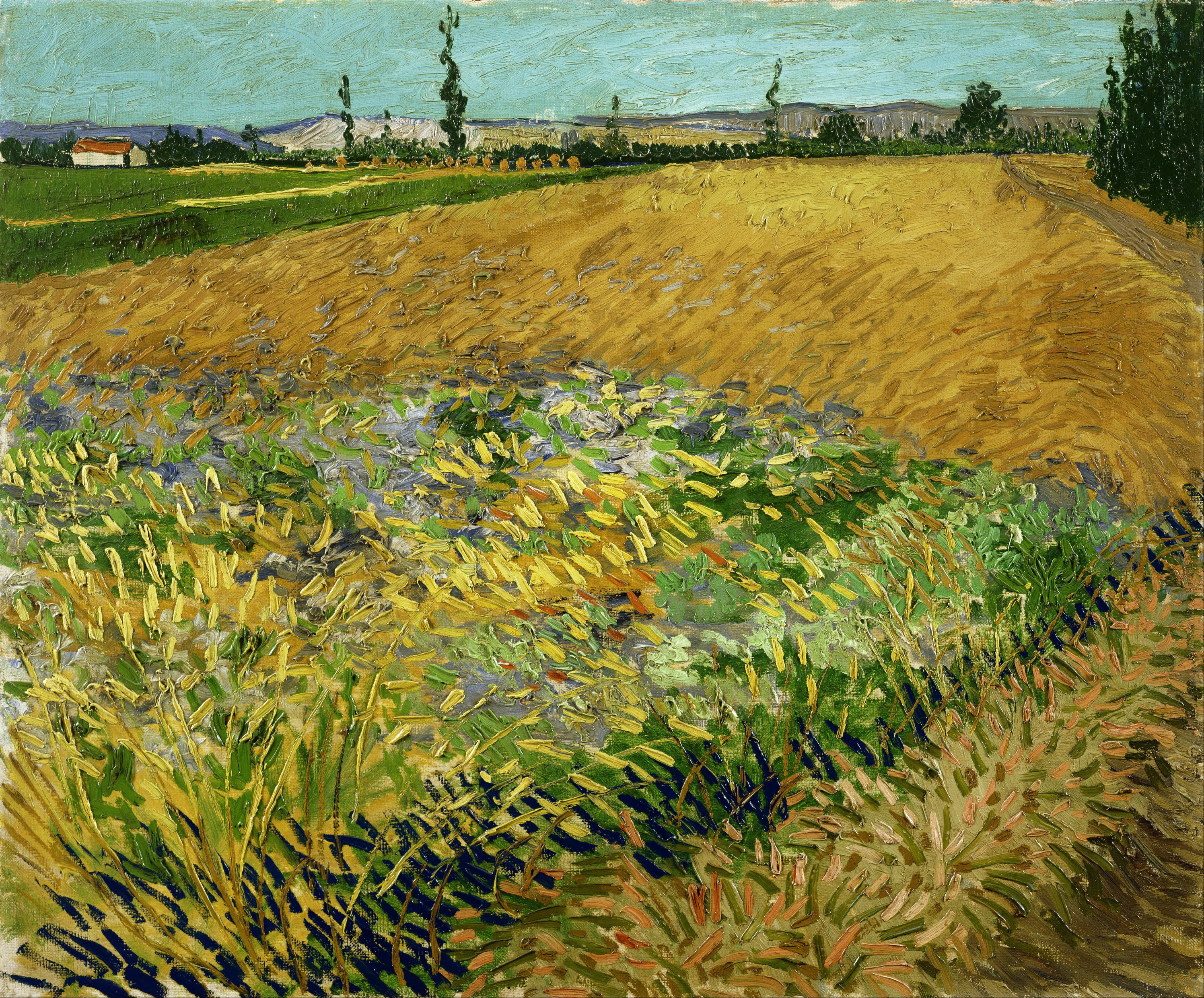
The influence of Edgar Degas is evident in Vincent through a new boldness in framing, borrowing from photography and Japanese prints those asymmetrical cuts that seem to truncate reality in order to energize it. He dares to place his subjects at the edge of the canvas, leaving large empty spaces or cropping figures at mid-body, thus breaking with the centered, hieratic composition of the classical tradition. This freedom of construction allows the viewer's eye to be guided more directly and immersively, as if one were catching the scene in the act, without prior staging. Vincent adopts these principles enthusiastically, applying them as much to his views of Parisian rooftops as to his intimate portraits.
However, he is not content with slavishly copying these technical devices; he infuses them with his own tormented and passionate sensibility, giving them a unique emotional resonance. Where Degas often remains distant and a cold observer, Vincent invests every angle of view with a strong psychological intensity, making framing a tool for expressing his state of mind. He thus learns to use negative space and lines of force to create a visual tension that keeps the viewer on edge. This intelligent assimilation of the lessons of modern composition allows him to structure his most chaotic paintings, proving that formal freedom can coexist with a solid and thoughtful constructive rigor.
Manet opens the door, Van Gogh arrives with his own colors under his arm
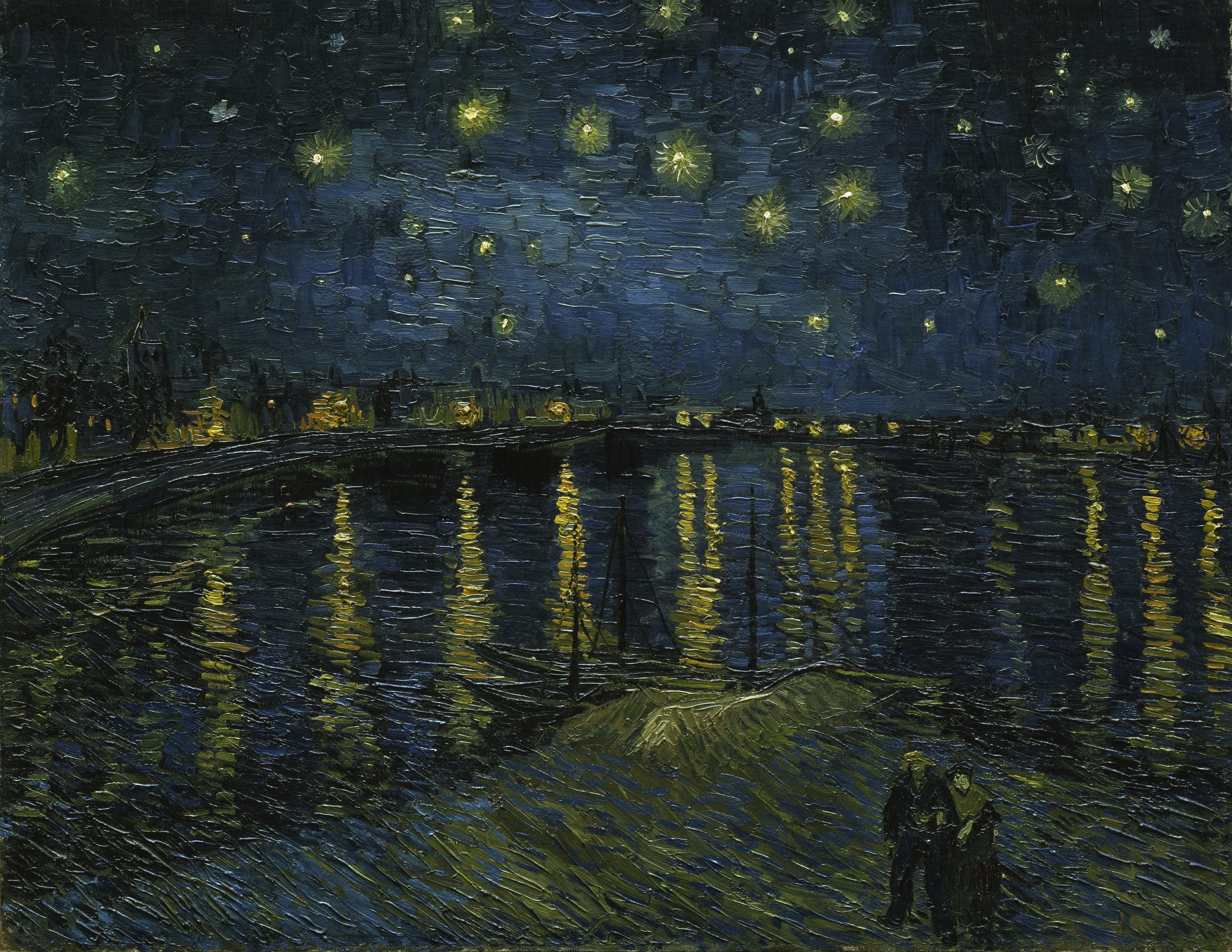
Édouard Manet, although he died shortly before Vincent's arrival in Paris, remains a tutelary figure whose legacy weighs heavily on the generation of moderns and paves the way for all future boldness. By abolishing the hierarchies of subjects and affirming the primacy of direct vision over academic finish, Manet bequeathed a fundamental freedom that Vincent appropriates with vigor. He admires the frankness of the line and the way flat areas of color can define volumes without excessive modeling, a lesson he quickly integrates into his own practice by sometimes hardening his outlines. This spiritual lineage gives him the legitimacy needed to dare violent contrasts and formal simplifications that would have scandalized the purists of yesteryear.
Yet Vincent is not content to walk in the master's footsteps; he radicalizes the use of color, pushing saturation and expressiveness far beyond what Manet had envisioned. If the elder opened the door to modernity, Vincent rushes through it, carrying with him a flamboyant palette that already heralds the upheavals of the 20th century. He transforms the Manetian legacy into a personal language where color becomes the main vector of emotion, going beyond simple optical description to touch the universal. It is this ability to digest influences in order to transcend them that makes him not a follower, but an absolute pioneer who durably changes the course of Western art history.
Interior decoration
After Impressionism: Arles transforms the lesson into a controlled bonfire of jubilation

Weary of the capital's frenetic pace and seeking an even purer light, Vincent left Paris in February 1888 for Arles, carrying in his luggage the entire technical arsenal acquired during these two decisive years. The South of France offers the ideal setting to put into practice his discoveries on complementary color and divided brushstroke, but with an intensity amplified by the relentless sun of Provence. This is no longer the soft, nuanced Impressionism of Monet or Pissarro, but a chromatic exaltation where lemon yellow and cobalt blue clash in a visual symphony of extraordinary power. The sunflowers, the wheat fields, and the yellow room become the manifestos of this new stage where the Parisian lesson is transcended.
In Arles, Vincent's painting reaches a dazzling maturity, transforming the observation of nature into an almost mystical experience where each element vibrates with an inner energy. He retains the freedom of touch learned in Paris but subjects it to a more structured and symbolic vision, thus preparing the ground for Expressionism and Fauvism. This period marks the culmination of his artistic journey: he has absorbed urban modernity only to project it into a sublimated nature, creating a totally new style that is entirely his own. The legacy of Paris remains alive in each of his later works, but it has been alchemized by the fire of the southern sun to give birth to a timeless and universally recognized art.
| Room | Suggestion | Decorative effect |
|---|---|---|
| Living room | A work related to Van Gogh the Impressionist with a strong composition | A cultivated, warm focal point that's easy to comment on without reciting a wall label. |
| Bedroom | A soft palette or a more intimate scene | Calm atmosphere, visual presence without unnecessary clutter. |
| Office | A structured, colorful, or graphically crisp image | Creative energy and a gentle reminder that the wall can work too. |
| Entryway | A vertical format or a piece that's immediately readable | A clear, elegant first impression, and far less shy than an empty white wall. |
To continue the visit
Sources, collections, and paths genuinely connected to the subject
A few useful references to verify information, compare freely available images, and keep reading without wandering into a museum that never asked for the visit.
Useful collections
Related reproductions
FAQ
Frequently asked questions about Van Gogh the Impressionist
What is Van Gogh the Impressionist in painting?
Van Gogh the Impressionist deserves a full-length article because this style engages with an era, a way of painting, and a very concrete way of living with images.
How can you quickly recognize this style?
Look especially at composition, palette, texture, light, and atmosphere, then at how the composition guides the eye. If the work holds your attention longer than expected, it's probably not an accident.
Which artists should you know?
You should cross-reference the central artists of the movement with museums and reliable sources to avoid hasty attributions.
Does this style suit modern decor?
Yes, provided you choose the right format, a palette that harmonizes with the room, and a work whose presence remains enjoyable on a daily basis.
Should you pick the most famous work?
Not necessarily. The best-known work can be perfect, but the right choice depends above all on the room, the format, the palette, and the atmosphere you're after.
Where can you verify the information?
Start with museum notes, Wikipedia/Wikidata for general orientation, then turn to Wikimedia Commons when a rights-free image is needed.
A light that never goes out
Ultimately, calling Van Gogh an Impressionist would be reductive, because he used the tools of that movement as a springboard toward something broader and more personal. His Paris stay was the essential crucible where black gave way to light, where rural solitude met the urban din, forging the artist we celebrate today. For anyone looking to choose a reproduction, understanding this genesis makes it possible to appreciate not only the immediate beauty of the colors, but also the extraordinary story of resilience and transformation they tell. Whether it's to brighten a modern living room or to recall the power of creation, a work from this period carries within it the vibrant echo of a city that ignited everything, and of a man who managed to keep that flame alive until the end.
0 comments