

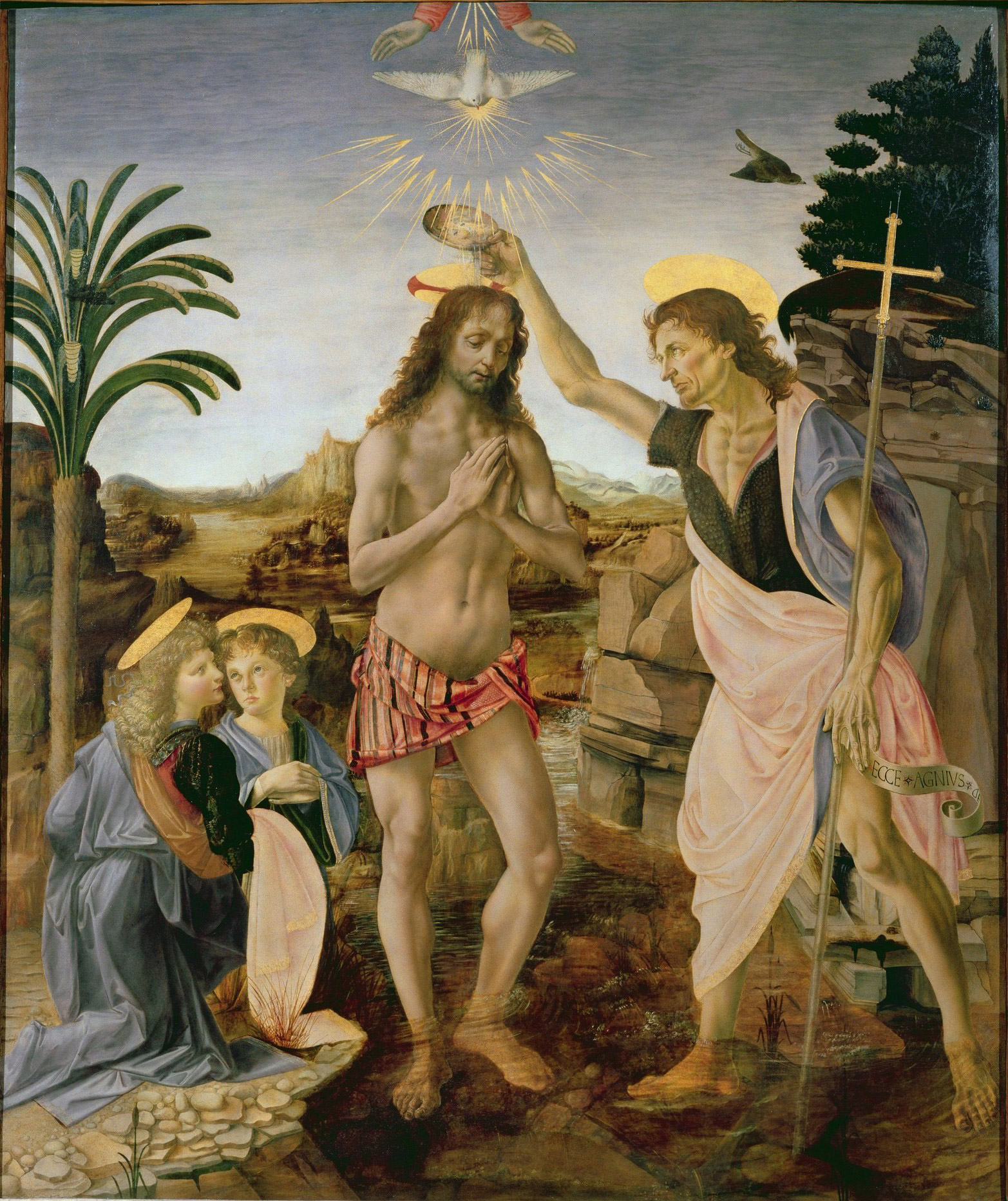
Leonardo da Vinci in Verrocchio's workshop
Before machines, codices and the Mona Lisa, there was a Florentine bottega where young Leonardo learned to draw, model, paint and observe.
What was Verrocchio's workshop?
La bottega is neither a modern classroom nor a painter's solitary studio. It is a master-run company, capable of fulfilling orders for altarpieces, sculptures, monuments, precious objects and decorations. Apprentices, assistants and collaborators prepare the supports, copy models, grind the pigments, draw and execute certain parts of the works.
Andrea del Verrocchio is among Florence's most versatile masters. A goldsmith by training, a major sculptor and painter, he offers Leonardo an environment where the transition between the arts is daily. This diversity helps to understand why the artist will then develop thinking based on volume, movement, mechanics and the study of nature.
Four jobs in the same place
Leonardo doesn't just receive painting recipes. He learns to think of a figure as a constructed form, visible from several angles.
Drawing
Outline, study from nature, tiling, research of gestures and preparation of compositions.
Painting
Panel preparation, tempera, new uses of oil, glazes and light transitions.
Sculpture
Earth modeling, relief study, body rotation and concrete understanding of anatomy.
Metal
Chiseling, cast iron, precision of goldsmithing and technical organization of large public projects.

Verrocchio teaches volume and movement
The David de Verrocchio shows what Leonardo can observe around him: a silhouette that can be read in space, a balanced but lively pose, an individualized face and details treated with the precision of a goldsmith. Teaching does not necessarily involve an oral course; it is transmitted by watching, repeating and participating.
Sculpture requires checking the coherence of a body on all sides. This discipline later nourished Leonardo's rotating figures, his anatomical studies and his way of making an organism felt under clothing.
The Baptism of Christ: recognizing the hand of Leonardo
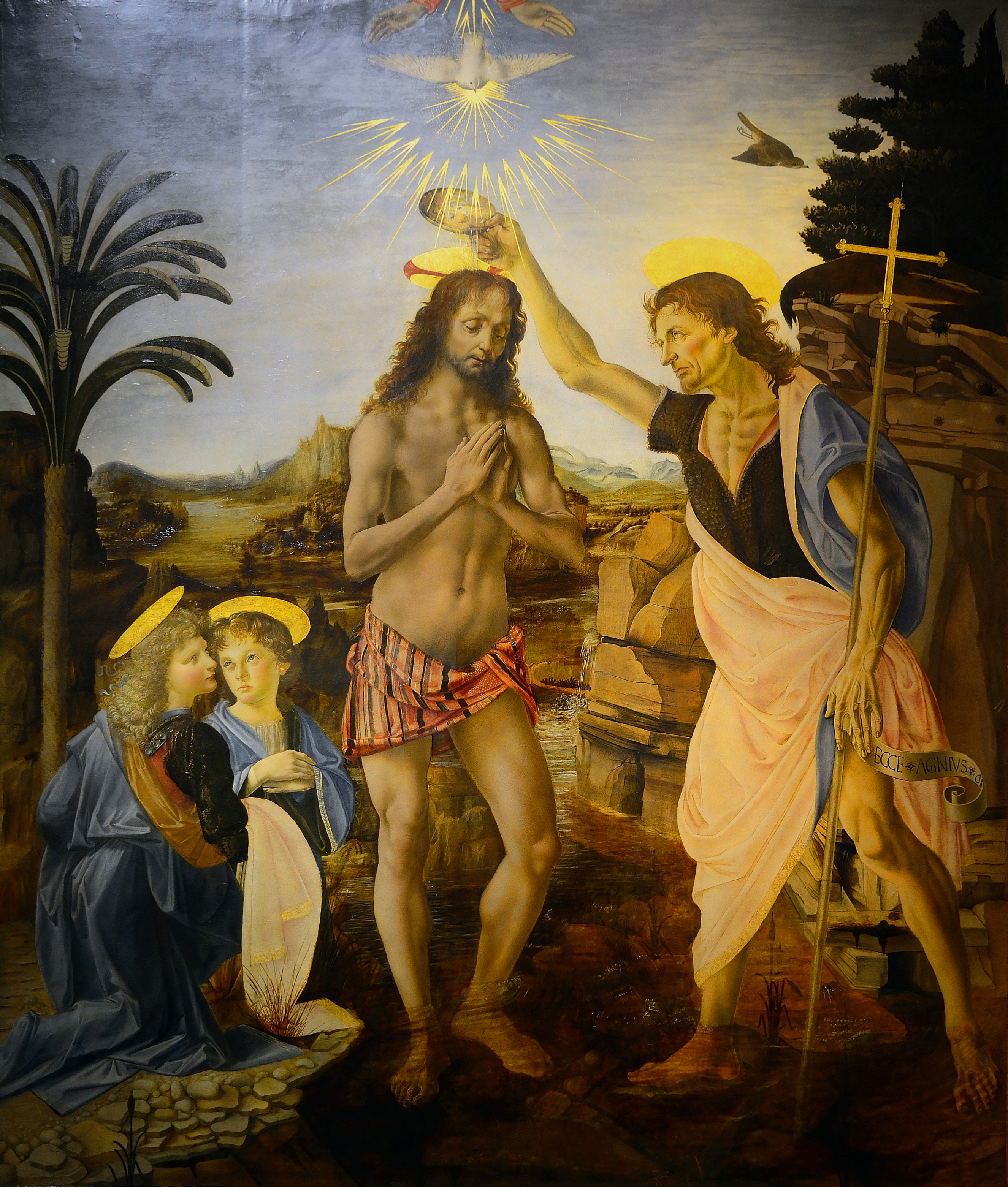
The large Uffizi table, painted around 1470 -1475 in tempera and oil, summarizes the collective functioning of the workshop. Verrocchio directs the design; several hands intervene.
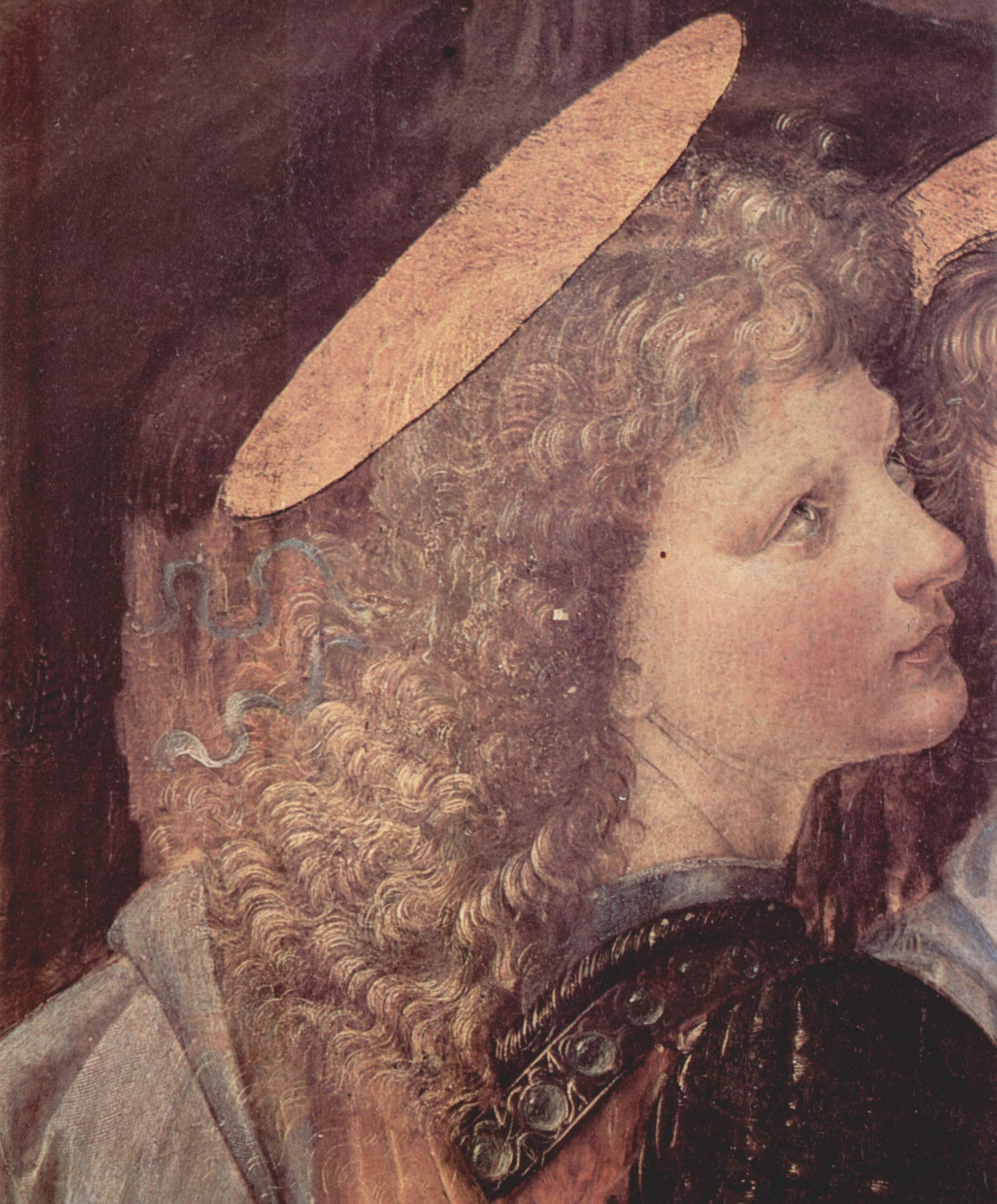
A body that turns
The shoulders, neck and gaze do not follow a single axis: Leonardo transforms a secondary figure into a mobile presence.
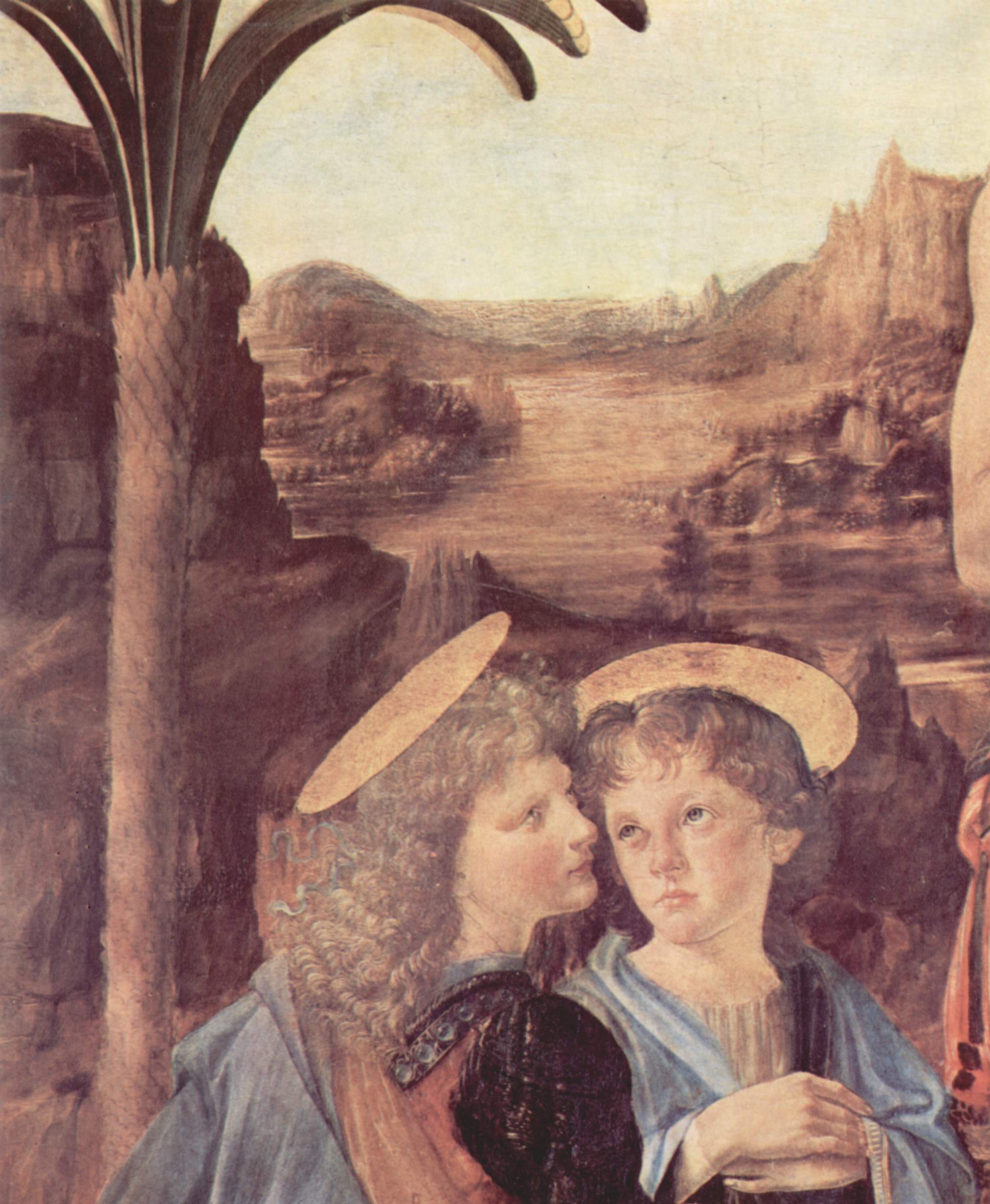
Air, water and depth
Current research often extends his intervention to the landscape, the golden light and certain areas of Christ, without claiming to separate each touch with absolute certainty.
Five steps to independence

Enter the bottega
The young man joins one of the most active workshops in Florence and learns through successive tasks.

Collaborate
In Tobit and the angel, the fish or the little dog have sometimes been brought closer to Leonardo, but the attribution remains cautious.
Experiment
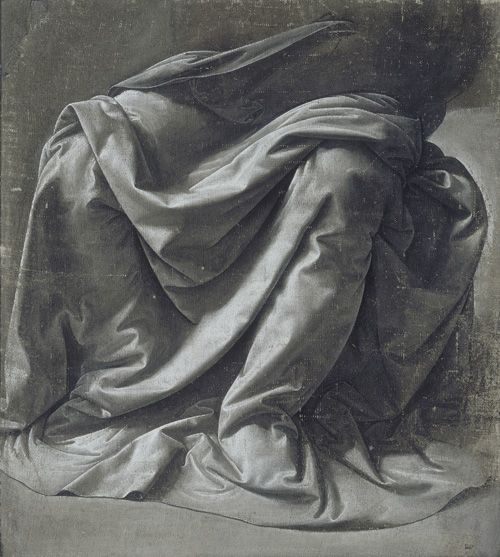
Drapery studies explore light on fabrics placed on earthen models or supports.

Sign a look
Ginevra de' Benci affirms a new attention to atmosphere, psychology and glacis.

Receive a large order
L'Adoration of the Magi reveals independent thinking before leaving for Milan.
What we know - and what we assume
The Angel of Baptism
The Offices present this intervention as the major example of young Leonardo's collaboration with Verrocchio.
Tobit and the angel
Naturalistic details were proposed for Leonardo. The painting remains classified as a work from Verrocchio's studio.
Does the master abandon painting?
Vasari says that the angel's superiority would have discouraged Verrocchio. It's a famous story, but not a documentary fact to be taken literally.
When learning becomes invention
The Annunciation
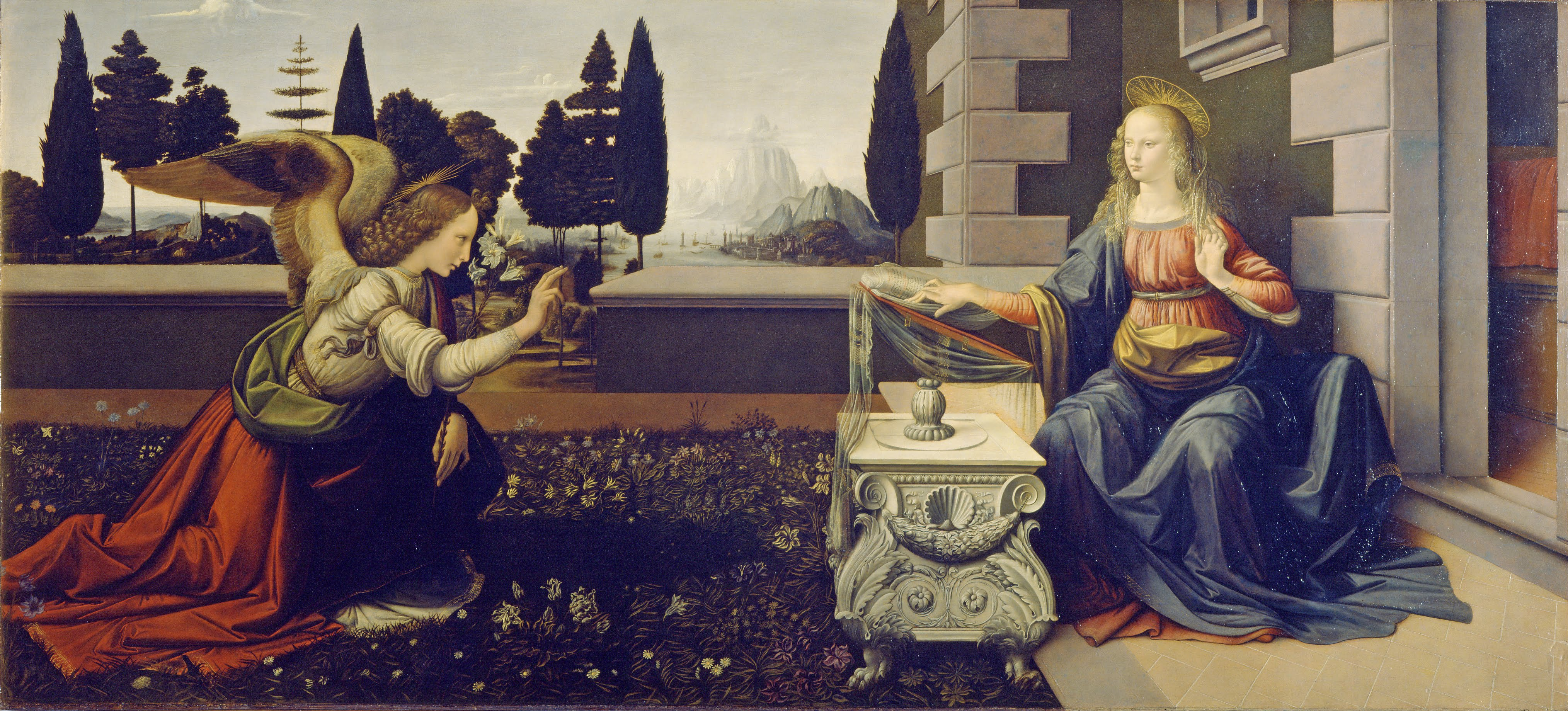
The perspective garden retains Florentine sharpness, while the wings studied from the bird, the angel's shadow and the distant landscape announce a personal observation of nature.

The Madonna with the Carnation
The movement of the hands, the folds, the crystal and the landscape combine the know-how of the workshop. But the luminous unity and living instability of the group already belong to Leonardo.

A method more than a style
Leonardo does not permanently copy the appearance of his master's works. Above all, he maintains a way of working: comparing the arts, verifying by model, understanding the structure before the surface and making technique a tool of knowledge.
In Milan, his equestrian monument projects directly extend Verrocchio's sculptural ambition. In his portraits, he transforms the rotation of the bust and the face. In his scientific studies, drawing remains the instrument learned in the bottega, but pushed to a new scale.
The workshop thus explains less "how to paint like Verrocchio" than the birth of an artist capable of bringing together painting, sculpture, engineering and natural observation.
Find the works from this Florentine training

The Annunciation
An atmospheric landscape in a composition still linked to the workshop.

Ginevra de' Benci
The face, juniper and landscape testify to the early control of the oil.

Madonna Benois
A living relationship between the two figures, far from hieratic pose.

The Virgin of the Rocks
In Milan, Florentine modeling becomes an enveloping atmosphere.
Explore the Leonardo da Vinci collection
Hand painted reproductions and customizable formats.
Leonard's apprenticeship
At what age did Leonardo join Verrocchio?
Exact date undocumented. Historians generally place his entry into the studio in the late 1460s, when he was a teenager.
How much time is left in the workshop?
He was registered as a master in 1472, but continued to collaborate in Verrocchio's environment for several years, probably until the late 1470s.
What part of Christ's Baptism did he paint?
The kneeling angel on the left is the most solidly recognized intervention. The Offices also point out possible contributions to the landscape, light and certain parts of Christ.
Did Verrocchio really stop painting after seeing Leonardo's Angel?
This is the spectacular story passed down by Giorgio Vasari. It illustrates Leonardo's early reputation, but it does not constitute documentary evidence.
Which artists have passed through Verrocchio's studio?
Verrocchio's environment is associated with several great Florentine artists, including Leonardo, Perugino and Lorenzo di Credi. The exact terms of their presence vary depending on the sources.
What is Leonardo's first work?
There is no absolutely certain answer. The angel of Baptism of Christ is his most famous youth intervention; l'Annunciation among the first generally recognized autonomous works.
0 comments