

Van Gogh in London • Art & Decoration Guide
Van Gogh in London: Fog, Museums, and a Warming Gaze
A deep dive into the formative years of the Dutch master in the heart of the British capital, between art dealing, dark engravings, and urban solitude.
We often imagine Vincent van Gogh as an explosive sun, burning his canvases under the blue sky of Arles, willingly forgetting that before the madness of color, there was the methodical gray of London. Between 1873 and 1876, the young Dutchman landed in a rapidly expanding industrial metropolis, far from the future sunflowers, to work at Goupil & Cie. This period produced no painted masterpiece, for Vincent was not yet an artist, but it constitutes the secret laboratory where his eye sharpened through contact with English modernity. Understanding this stay means grasping how a commercial employee became a relentless observer, transforming every walk in the fog into a lesson in visual composition before its time.
 Free Image
The National Gallery recalls the London of collections: a solid backdrop to understand the young Van Gogh before the burning yellows.
Reading Method
Reading London as a Silent Workshop
To appreciate this crucial stage, one must abandon the idea of a gallery of non-existent London paintings and focus on cultural accumulation. The approach consists of tracing the links between the engravings purchased, the museums visited, and the letters written to Theo, revealing an education of the eye that precedes the painter's hand.
Context before Prestige
We place Van Gogh in London within his era, his workshops, his exhibitions, and his small revolts. A work without context is sometimes just a very beautiful person who forgot their history.
The Signs that Betray the Style
We identify the formation of the gaze, Goupil, English engravings. These clues often say more than grand speeches, especially when they carry gold or nervous brushstrokes.
The Work in a Real Room
We end with the useful question: does this image breathe in your home, or does it just pose like a poster that has read two books?
Historical Context
Van Gogh in London: Before the Sunflowers, a Young Man Learns to See

When Vincent set foot in London in June 1873, he was only twenty years old and worked as a clerk for the branch of the Goupil house located at 17 Southampton Street. The city was then the nerve center of global trade, a buzzing hive where the misery of the docks and Victorian opulence coexisted, offering the young man a permanent spectacle of social contrasts. He first lodged with the Loyer family in Brixton, discovering a rigid English domestic life that contrasted with his passionate nature, while he daily walked the cobbled streets to get to the office. This is not yet the tormented painter we know, but a diligent employee who began to mentally collect images of this modern city, observing the diffuse light filtering through the smoke of factory chimneys.
During these early years, his apprenticeship relied less on the practice of the brush than on total immersion in British visual culture, marked by growing solitude despite his initial professional success. He spent his evenings reading Dickens or walking alone along the Thames, absorbing the melancholic atmosphere of the docks and the geometry of the new metal bridges spanning the river. This formative period is essential because it instilled in him a particular sensitivity to the human condition and urban settings, themes that would later return in radically different forms. London taught him that art resides not only in ideal beauty, but also in the raw truth of everyday scenes, a lesson he would cherish long before touching a canvas.
Artistic Style
Goupil: Selling Images Before Making Paint Burn

Working at Goupil meant handling thousands of reproductions, engravings, and paintings daily, destined for a bourgeoisie eager for interior decoration, making Vincent an unwitting expert in the art market. He had to advise clients, evaluate the quality of prints, and understand why certain images appealed while others remained on the shelves, thus developing a sharp critical sense for composition and subject matter. This commercial immersion allowed him to study old and contemporary masters without needing to travel immediately, accumulating an exceptionally rich mental visual library. Ironically, it was by selling images made by others that he began to understand what was missing from these standardized works, already sensing the need for a more direct expression less formatted by the taste of the day.
However, his commercial zeal eventually eroded in the face of his own growing moral and religious convictions, transforming the salesman into a harsh critic of the commodification of art. He began to favor works deemed honest or moving, neglecting the frivolous subjects highly prized by Victorian clientele, which gradually harmed his career within the firm. This tension between commerce and artistic ethics marks a decisive turning point: Vincent realized that the image must serve a human truth rather than a simple wall ornament. Although he eventually left the company, these years spent sorting, packing, and discussing works of art structured his aesthetic judgment, giving him the tools to analyze painting with the rigor of a professional before even becoming a creator.
Art & Details
National Gallery, Tate, British Museum: London Served as His Visual Gym
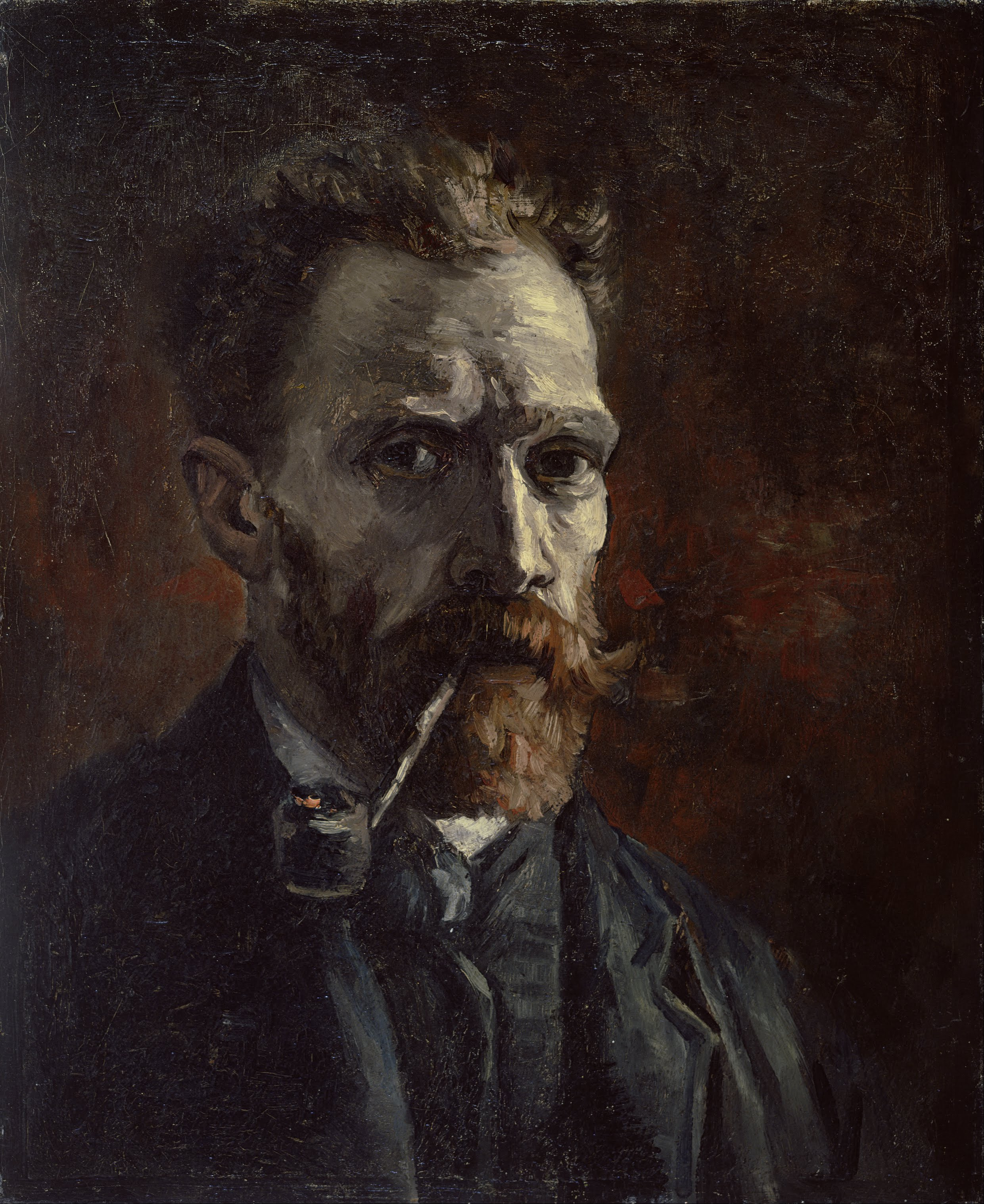
Vincent's London Sundays were often devoted to intensive cultural pilgrimages to the capital's great institutions, notably the National Gallery and the British Museum, where he spent hours motionless before the canvases. There he fervently discovered English landscape painters like John Constable and J.M.W. Turner, whose tumultuous skies and atmospheric light play resonated deeply with his own nascent sensibility. Careful observation of the layers of paint and glazing techniques of these masters offered him a free technical education, far more effective than any formal academic course. These regular visits transformed the museums into veritable gyms for his eyes, where he learned to dissect how a tree or a cloud could be translated into living pictorial matter.
Beyond simple admiration, Vincent used these collections to compare national approaches, pitting Dutch precision against English romantic freedom in a constant internal dialogue. He took mental notes on how Turner dissolved forms in light, a pre-impressionist approach that strangely anticipated his own future research on color vibration. The British Museum, with its collections of Japanese prints and antiquities, further broadened his horizon, showing him that art could draw its strength from traditions far removed from classical Europe. This assiduous attendance at London museums forged his visual rigor, imposing a standard of quality and emotion against which he would later measure his own productions with relentless severity.
Art & Details
English Engravings: Black and White Sometimes Prepares Very Loud Colors

At a time when photography was still in its infancy, engraving was the main vector for the dissemination of images, and Vincent became a passionate collector of these popular prints illustrating everyday life. He avidly bought works by Gustave Doré, whose dramatic depictions of London poverty, as in 'London: A Pilgrimage', captured the dark soul of the industrial city with rare narrative power. These black-and-white images, with their striking contrasts and expressive hatching, taught him the importance of graphic rhythm and compositional structure independent of color. It can be said that the chromatic violence of his future canvases paradoxically finds its roots in the mastery of light contrast acquired through these intense and often poignant monochromes.
These engravings were not mere decorations for his Brixton room, but ethical and aesthetic models that validated his interest in the working classes and the marginalized of society. By studying scenes of miners, weavers, or urban crowds engraved by English artists, he understood that art could be a powerful social testimony, an idea that would guide his entire subsequent career. The texture of the line, the density of the ink, and the way shadow could suggest volume became key elements of his evolving visual vocabulary. Thus, even before mixing his first tubes of paint, Vincent had already learned to 'draw with light' thanks to these cheap sheets of paper that circulated throughout Victorian England.
Art & Details
The Letters: London Speaks Less in Paintings Than in Very Talkative Clues

Since he was not yet painting, it is in his abundant correspondence, mainly addressed to his brother Theo, that Vincent left the most vivid traces of his London stay and his inner evolution. These letters function as a detailed diary where he describes his readings, his walks, his moods, and his observations of the city with surprising eloquence for a twenty-year-old. We discover a sharp, cultivated mind, quoting Shakespeare, Milton, or George Eliot, proving that his education was as literary as it was visual, nourishing his imagination with complex narratives. Each missive is a window into his growing solitude, revealing how he transformed his social isolation into an inner richness conducive to the fine observation of the world around him.
These writings allow us to reconstruct his schedule and concerns with rare historical precision, showing a young man in search of meaning long before the religious crisis that would follow. He speaks of his disappointed hopes in love, his professional doubts, and his admiration for certain artists, painting the portrait of a raw sensitivity ready to explode. The London letters are fundamental because they establish the continuity of his thought: we see the ideas germinating that would later flourish in his paintings, such as the importance of sincerity and the rejection of superficial conventions. Without these documents, the link between the Goupil employee and the genius of Arles would remain an enigma, but thanks to them, the trajectory becomes clear and human.
Art & Details
The London Fog Didn't Paint in His Place, But It Made His Eyes Work

London in the 1870s was a city enveloped in thick fog, mixing the natural mist of the Thames with the black smoke of coal, creating a unique visual atmosphere that left a lasting mark on the retina. For Vincent, this particular atmosphere was not an obstacle, but a fascinating subject of study on how light behaves when filtered, diffused, and altered by polluted air. He observed how the outlines of buildings faded, how street lamps created mysterious halos, and how the silhouettes of passersby became shadow puppets in this almost pre-impressionist setting. This intense sensory experience refined his perception of nuances and values, teaching him to see beyond sharp lines to capture the overall mood of a scene.
The city itself, with its gigantic bridges like the under-construction Tower Bridge and its densely populated working-class neighborhoods, embodied industrial modernity in its most dizzying and alienating aspects. Vincent walked for hours in these urban labyrinths, absorbing the mechanical rhythm of the crowd and the constant rumble of the metropolis, integrating this nervous energy into his own psychic constitution. This urban baptism, though solitary and sometimes depressing, forged his ability to feel the soul of places, an essential quality for one who would later paint the starry night or the agitated wheat fields. The London fog thus acted as a developer, preparing his eye to capture not photographic reality, but the atmospheric emotion of the landscapes he would later encounter.
Art & Details
From London to Paris then Arles: The Fuse is Slow, But It Catches Fire Very Well

It would be wrong to consider the London stay as an isolated parenthesis; it constitutes, on the contrary, the first essential link in a chain that would lead directly to the colorist explosion of the south of France. The seeds planted in London, whether it be the love for social engravings, the admiration for Turner, or the habit of solitary observation, germinated slowly during his subsequent years in Belgium and the Netherlands. It is this patient accumulation of references and lived experiences that allowed him, once in Paris, to immediately understand the stakes of Impressionism and to seize it with disconcerting speed. London had given him the basic vocabulary; Paris would provide the new grammar, and Arles would become the place where he would finally write his own visual poem in complete freedom.
The transition from London darkness to southern light is not a rejection of the past, but a transfiguration of everything he had learned about contrast and human expression. The moral rigor acquired in the face of English misery is found in the dignity he lends to Provençal peasants, while his mastery of black and white evolves into a bold use of complementary colors. It can be said that the sun of Arles is the brilliant answer to the fog of London, two extremes that constantly dialogue in his mature work. Without this long British incubation, it is likely that Van Gogh would never have developed the narrative depth and emotional intensity that distinguish his canvases from those of his purely optical contemporaries.
Interior Decoration
Choosing a Reproduction Around Van Gogh: Keep the Trajectory, Not Just the Sun

When it comes to choosing a reproduction for a modern interior, it is tempting to systematically fall back on the Sunflowers or the Starry Night, but this amounts to ignoring the richness of Vincent's artistic trajectory. For an enlightened enthusiast, incorporating a work inspired by his dark period or his character studies serves as a reminder that genius is also made of patience, doubt, and underground work before the blossoming. A reproduction evoking the influence of English engravings or the urban atmosphere can bring a melancholic and intellectual depth to a living room, breaking with the overly cheerful and sometimes clichéd imagery of the Dutch master. This allows for telling a more complete story, that of a man who built his style stone by stone, rather than that of a madman illuminated by a single flash of genius.
Choosing works that show the diversity of his influences, such as his homages to Millet or his interpretations of engravings, also offers a decorative opportunity to play with more restrained palettes and more complex textures. These choices reflect a nuanced understanding of art history, valuing the creative process as much as the spectacular final result. Whether one opts for a touch reminiscent of Turner's skies dear to Vincent or for a composition structured by the engraved line, the important thing is to maintain the link with this vibrant humanity that runs through his entire existence. Thus, the chosen work becomes a starting point for conversation, inviting visitors to explore the behind-the-scenes of creation and the long journey that led a London clerk to become one of the world's most beloved painters.
| Room | Suggestion | Decorative Effect |
|---|---|---|
| Living Room | A work related to Van Gogh in London with a strong composition | Cultured focal point, warm, and easy to comment on without reciting a label. |
| Bedroom | A soft palette or a more intimate scene | Calm atmosphere, visual presence without unnecessary agitation. |
| Office | A structured, colorful, or graphically sharp image | Creative energy and a small reminder that the wall can also work. |
| Entryway | A vertical format or an immediately readable work | Clear, elegant first impression, and decidedly less shy than a blank white space. |
To Continue the Visit
Sources, Collections, and Paths Truly Related to the Subject
A few useful references to verify information, compare free images, and extend the reading without going to a museum that didn't ask for anything.
Useful Collections
FAQ
Frequently Asked Questions About Van Gogh in London
What is Van Gogh in London in painting?
Van Gogh in London tells of a Van Gogh before the great pictorial explosion: an employee at Goupil, a passionate reader, a museum visitor, an observer of the city, and a young man already worked by images.
How to quickly recognize this style?
Observe especially the formation of the gaze, Goupil, English engravings, London museums, and the modern city, then how the composition organizes the gaze. If the work holds your attention longer than expected, it's probably not an accident.
Which artists should you know?
The main references are Vincent van Gogh, Theo van Gogh, John Constable, J. M. W. Turner, and Gustave Doré.
Is this style suitable for modern decoration?
Yes, provided you choose the right format, a palette consistent with the room, and a work whose presence remains pleasant on a daily basis.
Should you choose the most famous work?
Not necessarily. The most famous work can be perfect, but the right choice depends above all on the room, the format, the palette, and the desired atmosphere.
Where to verify the information?
Start with museum notices, Wikipedia/Wikidata for general orientation, then Wikimedia Commons when a free image is needed.
London, the Invisible Foundation of Genius
Ultimately, Van Gogh in London is not a minor biographical anecdote, but the silent foundation upon which all his future work was built. This gray and misty city offered him the school of reality, contrast, and suffering humanity, far from the sunny clichés too exclusively associated with his name. By revisiting this period, we rediscover an artist under construction, hungry for knowledge and deeply connected to his time, whose gaze was sharpened in the museums and streets of the English capital before igniting under the sky of Provence. Choosing to honor this facet of his journey, whether through reading or through the choice of a thoughtful reproduction, is to pay homage to the complexity of a genius who knew how to transform every experience, even the most modest, into universal artistic material.
0 comments