


HISTORY · LANDSCAPE · SYMBOL · MODERNITY
Polish painting: 100 paintings from Matejko to Tamara de Lempicka
A nation told by its painters
From the great historical theater of Jan Matejko to the metallic silhouettes of Tamara de Lempicka, Polish painting is built between national memory and formal invention. Rural landscapes, insurrections, Jewish and Houtsoule cultures, symbolism of Young Poland and Art Deco elegance compose a rich history here, crossed by ruptures.
A story under tension
Painting Poland when its borders change
In the 19th century, when Poland was divided between several empires, painting became a place of memory. Matejko recreates the great episodes of national history; Michałowski, Grottger, the Gierymskis and Chełmoÿski look at the war, the city and the countryside with new ambitions.
Polish history of painting never completely separates the past, territory and intimate experience.
Around 1900, Malczewski, Wyspiaÿski, Boznaÿska, Mehoffer and Ruszczyc brought psychology, symbol and modern color into this story. The journey ends with six paintings by Tamara de Lempicka documented by the Center Pompidou: they are presented for information purposes and are not offered for reproduction.
Enter the rankingOne hundred paintings to understand Polish painting
Battles, political unions and moral crises become a historical theater destined for a stateless Poland.
#1
The Battle of Grunwald
The Polish-Lithuanian victory of 1410 is shown at the height of the fray: Vytautas dominates the center while the great master Ulrich von Jungingen is drawn towards his death. Matejko does not reconstruct the past as a neutral setting: he makes it a theater of political responsibilities.
Image and link: Alpha Reproduction.
See this reproduction → #2
#2
Stainczyk
While a ball continues at the palace, the jester Stanishczyk remains alone after learning of Smolensk's loss in 1514; court comedy becomes tragic consciousness of the nation. The costumes, objects and documented portraits give the event an almost archaeological density, but the organization remains deliberately dramatic.
Image and link: Alpha Reproduction.
See this reproduction → #3
#3
Rejtan - The fall of Poland
In 1773, Tadeusz Rejtan threw himself in front of the door of the Diet to prevent the ratification of the first partition; his body blocks political capitulation. The crowd is hierarchical by gestures and looks, so that the spectator can simultaneously read the action and his moral judgment.
Image and link: Alpha Reproduction.
See this reproduction → #4
#4
The Astronomer Copernicus or Conversations with God
Copernicus is kneeling on the terrace of Frombork, caught between scientific calculation and cosmic revelation; the night sky becomes the scientist's true interlocutor. Painted during the partition of Poland, history here becomes a means of maintaining an active national memory.
Image and link: Alpha Reproduction.
See this reproduction → #5
#5
Prussian tribute
In Krakow Square in 1525, Albert of Brandenburg kneels before Sigismund I: Matejko paints the moment when the Teutonic order becomes a vassal duchy of the Crown. Matejko does not reconstruct the past as a neutral setting: he makes it a theater of political responsibilities.
Image and link: Alpha Reproduction.
See this reproduction → #6
#6
The Constitution of May 3, 1791
The procession to Saint-Jean Cathedral celebrates the adoption of the Constitution of May 3, 1791; gestures of enthusiasm do not erase the tensions of a threatened reform. The costumes, objects and documented portraits give the event an almost archaeological density, but the organization remains deliberately dramatic.
Image and link: Alpha Reproduction.
See this reproduction → #7
#7
The Sermon of Pyotr Skarga
The Jesuit Piotr Skarga warns the court of the divisions which weaken the Republic; around him, indifference, worry and political calculation form a second discourse. The crowd is hierarchical by gestures and looks, so that the spectator can simultaneously read the action and his moral judgment.
Image and link: Alpha Reproduction.
See this reproduction → #8
#8
Stephen Bathory in Pskov
Russian envoys come to negotiate before Stephen Bathory during the Livonian War; the king's assurance opposes the fatigue of a long conflict. Painted during the partition of Poland, history here becomes a means of maintaining an active national memory.
Image and link: Alpha Reproduction.
See this reproduction → #9
#9
Jan Sobieski in Vienna
After the victory of 1683, John III Sobieski handed over to the papal legate the message intended for Innocent XI; the battle is told by its diplomatic consequences. Matejko does not reconstruct the past as a neutral setting: he makes it a theater of political responsibilities.
Image and link: Alpha Reproduction.
See this reproduction → #10
#10
Lublin Union
The act of 1569 which united Poland and Lithuania is presented as a collective political construction, made of oaths, resistance and compromise. The costumes, objects and documented portraits give the event an almost archaeological density, but the organization remains deliberately dramatic.
Image and link: Alpha Reproduction.
See this reproduction → #11
#11
Suspension of the Sigismond Bell
The gigantic Sigismund bell was hoisted to the Wawel in 1521; the effort of the workers and the presence of the court bring together work, faith and dynastic power. The crowd is hierarchical by gestures and looks, so that the spectator can simultaneously read the action and his moral judgment.
Image and link: Alpha Reproduction.
See this reproduction → #12
#12
The Poisoning of Queen Bona
Matejko dramatizes the death of Bona Sforza in Bari, attributed to poisoning: the intimacy of the room becomes the scene of a European intrigue. Painted during the partition of Poland, history here becomes a means of maintaining an active national memory.
Image and link: Alpha Reproduction.
See this reproduction → #13
#13
The Maid of Orléans
Joan of Arc enters Orléans as a heroine already surrounded by legend; the profusion of the procession links popular fervor, war and providence. Matejko does not reconstruct the past as a neutral setting: he makes it a theater of political responsibilities.
Image and link: Alpha Reproduction.
See this reproduction → #14
#14
The Oath of John Casimir
During Lwów's vows in 1656, John II Casimir entrusted the Republic to the Virgin at the heart of the Swedish Flood; the ceremony becomes a promise of moral refoundation. The costumes, objects and documented portraits give the event an almost archaeological density, but the organization remains deliberately dramatic.
Image and link: Alpha Reproduction.
See this reproduction → #15
#15
The Republic of Babin
The Republic of Babin, a satirical society of the Polish Renaissance, distributes imaginary charges and transforms scholarly jokes into political commentary. The crowd is hierarchical by gestures and looks, so that the viewer can simultaneously read the action and its moral judgment.
Image and link: Alpha Reproduction.
See this reproduction → #16
#16
Vernyhora
The Cossack bard Wernyhora prophesies the trials and then the recovery of Poland; the vision unites history, Ukrainian folklore and national hope. Painted during the partition of Poland, history here becomes a means of maintaining an active national memory.
Image and link: Alpha Reproduction.
See this reproduction → #17
#17
Battle of Raclawice
Koîtciuszko and the reapers dominate the 1794 episode: the insurrection receives a popular face where peasant clothing and uniform fight together. Matejko does not reconstruct the past as a neutral setting: he makes it a theater of political responsibilities.
Image and link: Alpha Reproduction.
See this reproduction → #18
#18
Poland 1863
Poland in 1863 appears as a chained woman driven into exile after the January insurrection; the allegory makes the defeat immediately corporeal. The costumes, objects and documented portraits give the event an almost archaeological density, but the organization remains deliberately dramatic.
Image and link: Alpha Reproduction.
See this reproduction → #19
#19
Portrait of the artist's four children
Matejko leaves the big story here to observe his own children; costumes, attitudes and age differences make up an unemphasized family chronicle. The crowd is hierarchical by gestures and looks, so that the viewer can simultaneously read the action and its moral judgment.
Image and link: Alpha Reproduction.
See this reproduction → #20
#20
Self-portrait of Jan Matejko
In this late self-portrait, the painter presents himself with austere gravity, more guardian of memory than worldly artist. Painted during the partition of Poland, history here becomes a means of maintaining an active national memory.
Image and link: Alpha Reproduction.
See this reproduction → #21
#21
Veit Stoss, blind, with his granddaughter
The sculptor Veit Stoss, aged and blind, advances with his granddaughter; the image meditates on transmission when the master's hand can no longer see his work. Matejko does not reconstruct the past as a neutral setting: he makes it a theater of political responsibilities.
Image and link: Alpha Reproduction.
See this reproduction → #22
#22
Sigismund Augustus and Barbara at the court of Radziwiłł in Vilnius
The relationship between Sigismund Augustus and Barbara Radziwiłł is captured before its royal accomplishment; romantic intimacy already clashes with dynastic interests. The costumes, objects and documented portraits give the event an almost archaeological density, but the organization remains deliberately dramatic.
Image and link: Alpha Reproduction.
See this reproduction → #23
#23
Christianization of Poland 966 AD
The baptism of Mieszko I in 966 is presented as the political and religious threshold of the Polish state. The crowd is hierarchical by gestures and looks, so that the spectator can simultaneously read the action and his moral judgment.
Image and link: Alpha Reproduction.
See this reproduction → #24
#24
The baptism of Lithuania
The Christianization of Lithuania in 1387 was organized around Ladislas Jagiello, but Matejko also shows the collective transformation of an ancient order. Painted during the partition of Poland, history here becomes a means of maintaining an active national memory.
Image and link: Alpha Reproduction.
See this reproduction → #25
#25
Welcoming Jews, from the series "History of Civilization in Poland"
Matejko evokes the reception of Jewish communities in medieval Poland and places this episode in his vast painted history of Polish civilization, between national memory and political reading of the past. Matejko does not reconstruct the past as a neutral setting: he makes it a theater of political responsibilities.
Image and link: Alpha Reproduction.
See this reproduction →Chełmoÿrski and the Gierymski shift attention to the seasons, work, communities and daily life.
 #26
#26
Indian summer
A young guardian lying in the grass plays with a thread of the Virgin; "Indian summer" is captured as a tenuous break between rural work and change of season. Chełmoÿski combines rural observation, animal movement and vast horizons to give the Polish landscape a physical presence.
Image and link: Alpha Reproduction.
See this reproduction → #27
#27
The Storks
A father and son interrupt their meal to watch the storks return; flight connects the modesty of the field to the great cycle of the seasons. The realism of the motif never prevents a poetry of climate, silence and seasonal rhythms.
Image and link: Alpha Reproduction.
See this reproduction → #28
#28
The Four-Packer
Four horses thrown towards the viewer burst the depth; the mud, reins and pace gaps give the speed striking credibility. Chełmoÿski combines rural observation, animal movement and vast horizons to give the Polish landscape a physical presence.
Image and link: Alpha Reproduction.
See this reproduction → #29
#29
Cranes in the morning
The cranes rise in cold light while an injured bird remains on the ground; the landscape combines migration, solitude and fragility. The realism of the motif never prevents a poetry of climate, silence and seasonal rhythms.
Image and link: Alpha Reproduction.
See this reproduction → #30
#30
Partridge in the snow
The group of partridges almost absorbed by the snow transforms an animal scene into a study of survival, silence and visibility. Chełmoÿski combines rural observation, animal movement and vast horizons to give the Polish landscape a physical presence.
Image and link: Alpha Reproduction.
See this reproduction → #31
#31
Jewish woman with oranges
The elderly merchant squeezes her oranges like a reserve of color in the urban grayness; his gaze gives monumental dignity to precarious work. Gierymski makes light an instrument of social investigation: urban detail leads to a precise human reality.
Image and link: Alpha Reproduction.
See this reproduction → #32
#32
The Trumpet Festival
On the bank of the Vistula, the Jewish ritual of Rosh Hashanah is observed without exoticism: water, crowds and light organize a community in prayer. Its realism refuses the easy picturesque and restores the communities of Warsaw with attention and gravity.
Image and link: Alpha Reproduction.
See this reproduction → #33
#33
The Insurgent Patrol
An 1863 insurrection patrol crosses uncertain terrain; no heroic charge, only the vigilance of exposed men. Gierymski avoids parade heroism: war is waiting, fatigue and uncertainty in a closed landscape.
Image and link: Alpha Reproduction.
See this reproduction → #34
#34
Hyacinth self-portrait
"Hotwood Self-Portrait" focuses attention on the face, pose and clothing, which construct a social identity as much as a resemblance. Malczewski mixes portrait, allegory and national destiny; symbols appear as real psychological presences.
Image and link: Alpha Reproduction.
See this reproduction → #35
#35
Self-portrait in armor
"Self-portrait in armor" focuses attention on the face, pose and clothing, which construct a social identity as well as a resemblance. His self-portraits transform costume into a moral role and question the artist's place in Polish history.
Image and link: Alpha Reproduction.
See this reproduction → #36
#36
Polish hamlet. Portrait of Aleksander Wielopolski
Aleksander Wielopolski is placed between two figures of Poland, one captive and the other liberated; the portrait becomes a political dilemma rather than a celebration. Malczewski mixes portrait, allegory and national destiny; symbols appear as real psychological presences.
Image and link: Alpha Reproduction.
See this reproduction → #37
#37
Thanatos
Death takes on the appearance of a fake young woman, both close and distant; the allegory mixes seduction, finitude and native landscape. His self-portraits transform costume into a moral role and question the artist's place in Polish history.
Image and link: Alpha Reproduction.
See this reproduction → #38
#38
Józef Mehoffer in his workshop
"Józef Mehoffer in his studio" shows how Stanisław Wyspiaÿski transforms an identifiable subject into the construction of looks, rhythms and pictorial tensions. Wyspiaÿski simplifies drawing and intensifies color in order to capture an immediate, often familiar and deeply modern presence.
Image and link: Alpha Reproduction.
See this reproduction → #39
#39
Self-portrait of the artist with his wife
"Self-portrait of the artist with his wife" focuses attention on the face, pose and clothing, which construct a social identity as much as a resemblance. The intimate or urban motif retains the decorative line of Art Nouveau while remaining attentive to the truth of the model.
Image and link: Alpha Reproduction.
See this reproduction → #40
#40
Little girl putting out a candle
The flame disappears under the child's breath and concentrates the scene on a domestic moment that the color makes almost theatrical. Wyspiaÿski simplifies the drawing and intensifies the color in order to capture an immediate, often familiar and deeply modern presence.
Image and link: Alpha Reproduction.
See this reproduction → #41
#41
Little Hélène with a vase
The artist's daughter is absorbed in the vase she is holding; the unofficial pose preserves the child's concentration and autonomy. The intimate or urban motif retains the decorative line of Art Nouveau while remaining attentive to the truth of the model.
Image and link: Alpha Reproduction.
See this reproduction → #42
#42
Barges on the Seine
In "Péniches sur la Seine", the climate and the organization of space carry the meaning as much as the motif represented. Wyspiaÿski simplifies the design and intensifies the color in order to capture an immediate, often familiar and deeply modern presence.
Image and link: Alpha Reproduction.
See this reproduction → #43
#43
Planty Park with a view of Wawel Castle
In "Planty Park with a view of Wawel Castle", the climate and the organization of the space carry the meaning as much as the motif represented. The intimate or urban motif retains the decorative line of Art Nouveau while remaining attentive to the truth of the model.
Image and link: Alpha Reproduction.
See this reproduction → #44
#44
Rhapsode. Portrait of Andrzej Mielewski
"Rhapsode. Portrait of Andrzej Mielewski" focuses attention on the face, pose and clothing, which construct a social identity as well as a resemblance. Wyspiaÿski simplifies the drawing and intensifies the color in order to capture an immediate, often familiar and deeply modern presence.
Image and link: Alpha Reproduction.
See this reproduction → #45
#45
View of Wawel Castle
In "View of Wawel Castle", the climate and the organization of space carry the meaning as much as the motif represented. The intimate or urban motif retains the decorative line of Art Nouveau while remaining attentive to the truth of the model.
Image and link: Alpha Reproduction.
See this reproduction → #46
#46
The Muse
"The Muse" shows how Józef Mehoffer transforms an identifiable subject into the construction of looks, rhythms and pictorial tensions. Mehoffer unites portrait, decor and symbolism in a refined surface where each flower or fabric becomes meaningful.
Image and link: Alpha Reproduction.
See this reproduction → #47
#47
Self-portrait of Olga Boznaranska
"Self-portrait of Olga Boznaÿnska" focuses attention on the face, pose and clothing, which construct a social identity as much as a resemblance. Boznaÿnska lets the contours and backgrounds vibrate; the resemblance arises from a psychological atmosphere rather than a closed drawing.
Image and link: Alpha Reproduction.
See this reproduction → #48
#48
Orphan of Poronin
"Orphan of Poronin" shows how Władysław Çlewiÿski transforms an identifiable subject into the construction of looks, rhythms and pictorial tensions. Close to Pont-Aven synthetism, Çherwiÿski reduces volumes and colors to give the subject a silent gravity.
Image and link: Alpha Reproduction.
See this reproduction → #49
#49
A croquet game
"A Croquet Game" shows how Leon Wyczółkowski transforms an identifiable subject into the construction of looks, rhythms and pictorial tensions. Wyczółkowski captures the brilliance of light with a quick touch that transforms the social scene into an optical experience.
Image and link: Alpha Reproduction.
See this reproduction → #50
#50
Loading uhlans in Somosierra
"Charge des uhlans à Somosierra" chooses a moment of tension where direction of bodies, terrain and light make the event immediately readable. Kossak masters the military and equestrian narrative: the readability of the uniform always serves the sensation of collective movement.
Image and link: Alpha Reproduction.
See this reproduction → #51
#51
Olszynka Grochowska
"Olszynka Grochowska" shows how Wojciech Kossak transforms an identifiable subject into the construction of looks, rhythms and pictorial tensions. Kossak masters the military and equestrian narrative: the readability of the uniform always serves the sensation of collective movement.
Image and link: Alpha Reproduction.
See this reproduction →From Siemiradzki to Malczewski, scholarly narrative meets the allegory, dream and concerns of modernity.
 #52
#52
Dance among swords
The dancer advances between blades placed on the ground; the elegance of the show depends on a danger that each step must control. Siemiradzki reconstructs Antiquity through the sun, marble and spectacle, while creating a moral conflict at the heart of the stage.
Image and link: Alpha Reproduction.
See this reproduction → #53
#53
Christian Dirce
The martyrdom attached to the bull is offered to the gaze of Nero; Roman splendor makes the violence of imperial entertainment even more accusatory. Siemiradzki reconstructs Antiquity through the sun, marble and spectacle, while creating a moral conflict at the heart of the scene.
Image and link: Alpha Reproduction.
See this reproduction → #54
#54
The Torches of Nero
Christians will be burned like living torches as Nero's court gathers; the grandiose architecture frames cruelty transformed into spectacle. Siemiradzki reconstructs Antiquity through sun, marble and spectacle, while creating a moral conflict at the heart of the stage.
Image and link: Alpha Reproduction.
See this reproduction → #55
#55
Phryne at the festivals of Poseidon in Eleusis
Phryne descends towards the sea in front of an admiring crowd; the ancient nude becomes a beauty ceremony as much as a public demonstration of the gaze. Siemiradzki reconstructs Antiquity through the sun, marble and spectacle, while creating a moral conflict at the heart of the stage.
Image and link: Alpha Reproduction.
See this reproduction → #56
#56
The Flight of Henry de Valois from Poland
"The Flight of Henri de Valois from Poland" chooses a moment of tension where direction of bodies, terrain and light make the event immediately readable. Grottger focuses the historical drama on a decisive gesture, preferring human tension to spectacular accumulation.
Image and link: Alpha Reproduction.
See this reproduction → #57
#57
Charging in Somosierra
The climb to Somosierra is reduced to a few horses stretched out, riders leaning and layers of smoke; the story emerges in the very momentum of the touch. Michałowski paints the charge as a thrust of matter: the horse and the rider merge in speed.
Image and link: Alpha Reproduction.
See this reproduction → #58
#58
Frenzy of exultations
The naked woman clinging to a black horse thrown into space condenses desire, loss of control and scandal; the image abruptly breaks with naturalism. Podkowiransski moves from the impressionist outdoors to a symbolist vision where color, desire and movement become almost violent.
Image and link: Alpha Reproduction.
See this reproduction → #59
#59
Portrait of Wincentyna Karska
"Portrait of Wincentyna Karska" focuses attention on the face, pose and clothing, which construct a social identity as well as a resemblance. Podkowiÿski moves from the impressionist outdoors to a symbolist vision where color, desire and movement become almost violent.
Image and link: Alpha Reproduction.
See this reproduction → #60
#60
Nowy Street Çwiat on a summer day
"Nowy Street Swiat on a Summer Day" shows how Władysław Podkowiÿski transforms an identifiable subject into the construction of looks, rhythms and pictorial tensions. Podkowiÿski moves from the impressionist outdoors to a symbolist vision where color, desire and movement become almost violent.
Image and link: Alpha Reproduction.
See this reproduction → #61
#61
Earth
A peasant guides his plow under an immense and dark sky; the earth is not a bottom, but a power with which man must negotiate. Ruszczyc transforms the landscape into a cosmic force; earth, water and sky seem to carry a will of their own.
Image and link: Alpha Reproduction.
See this reproduction → #62
#62
Nec mergitur
A ship fights against a night sea under a heavy sky; the title "he does not sink" transforms the landscape into a declaration of resistance. Ruszczyc transforms the landscape into a cosmic force; earth, water and sky seem to carry a will of their own.
Image and link: Alpha Reproduction.
See this reproduction → #63
#63
Clouds in Finland
In "Clouds in Finland", the climate and the organization of space carry the meaning as much as the motif represented. Krzytzanowski uses a dark and nervous touch which makes the portrait or the sky the revealer of an inner state.
Image and link: Alpha Reproduction.
See this reproduction → #64
#64
Portrait of Józef Piłsudski
"Portrait of Józef Piłsudski" focuses attention on the face, pose and clothing, which construct a social identity as much as a resemblance. Krzyglasowski uses a dark and nervous touch which makes the portrait or the sky the revealer of an inner state.
Image and link: Alpha Reproduction.
See this reproduction → #65
#65
Portrait of Pelagia Witosławska
"Portrait of Pelagia Witosławska" focuses attention on the face, pose and clothing, which construct a social identity as much as a resemblance. Krzyglasanowski uses a dark and nervous touch which makes the portrait or the sky the revealer of an inner state.
Image and link: Alpha Reproduction.
See this reproduction → #66
#66
The Sabotiers
"The Sabotiers" shows how Tadeusz Makowski transforms an identifiable subject into the construction of looks, rhythms and pictorial tensions. Makowski simplifies the figures to the point of the sign, but retains the concrete warmth of the profession, the group and daily life.
Image and link: Alpha Reproduction.
See this reproduction → #67
#67
Jews praying at the synagogue on Yom Kippur
Gottlieb represents himself among the faithful of Yom Kippur and inscribes personal memories on the fabrics; prayer also becomes autobiography and presentiment. Gottlieb brings together Jewish culture, Polish history and European tradition in scenes where identity is constructed through memory.
Image and link: Alpha Reproduction.
See this reproduction → #68
#68
Christ preaching in Capernaum
"Christ preaching in Capernaum" translates a religious subject through gestures, the distance between figures and the quality of light, without reducing the scene to a simple illustration. Gottlieb brings together Jewish culture, Polish history and European tradition in scenes where identity is constructed through memory.
Image and link: Alpha Reproduction.
See this reproduction → #69
#69
Portrait of Laura Rosenfeld
"Portrait of Laura Rosenfeld" focuses attention on the face, pose and clothing, which construct a social identity as much as a resemblance. Gottlieb brings together Jewish culture, Polish history and European tradition in scenes where identity is constructed through memory.
Image and link: Alpha Reproduction.
See this reproduction → #70
#70
Shylock and Jessica
"Shylock and Jessica" shows how Maurycy Gottlieb transforms an identifiable subject into the construction of views, rhythms and pictorial tensions. Gottlieb brings together Jewish culture, Polish history and European tradition in scenes where identity is constructed through memory.
Image and link: Alpha Reproduction.
See this reproduction → #71
#71
Czarniecki in Koldynga
"Czarniecki in Koldynga" shows how Józef Brandt transforms an identifiable subject into the construction of looks, rhythms and pictorial tensions. Brandt combines equestrian precision and narrative breadth to transform the military episode into a visual legend.
Image and link: Alpha Reproduction.
See this reproduction → #72
#72
The Death of Barbara Radziwiłł
Sigismund Auguste watches over dying Barbara Radziwiłł; dynastic drama is brought back to the solitude of a couple in the face of death. Simmler adapts academic clarity to national drama; the costume and pose make the emotion historically believable.
Image and link: Alpha Reproduction.
See this reproduction → #73
#73
Portrait of Julia Simmler
"Portrait of Julia Simmler" focuses attention on the face, pose and clothing, which construct a social identity as well as a resemblance. Simmler adapts academic clarity to national drama; the costume and pose make the emotion historically believable.
Image and link: Alpha Reproduction.
See this reproduction → #74
#74
The resurrection of the son of Nain's widow
"The resurrection of the son of Nain's widow" translates a religious subject through gestures, the distance between figures and the quality of light, without reducing the scene to a simple illustration. Kotarbiÿski slides academicism towards dreams: ruins, ancient figures and apparitions compose theatrical symbolism.
Image and link: Alpha Reproduction.
See this reproduction → #75
#75
The Two Romans
"The Two Romans" shows how Wilhelm Kotarbiÿski transforms an identifiable subject into the construction of views, rhythms and pictorial tensions. Kotarbiÿski slides academicism towards dreams: ruins, ancient figures and apparitions compose theatrical symbolism.
Image and link: Alpha Reproduction.
See this reproduction →Tatras, regional cultures, portraits and decorative visions broaden the definition of Polish painting.
 #76
#76
The Three Marys at the Tomb
"The Three Marys at the Tomb" translates a religious subject through gestures, the distance between figures and the quality of light, without reducing the scene to a simple illustration. Kotarbiÿski slides academicism towards dreams: ruins, ancient figures and apparitions compose theatrical symbolism.
Image and link: Alpha Reproduction.
See this reproduction → #77
#77
Victorious procession after the battle
"Victorious procession after the battle" chooses a moment of tension where direction of bodies, terrain and light make the event immediately readable. Kotarbiÿski slides academicism towards dreams: ruins, ancient figures and apparitions compose theatrical symbolism.
Image and link: Alpha Reproduction.
See this reproduction → #78
#78
Sphinx and a ghost woman
"Sphinx and a Ghost Woman" shows how Wilhelm Kotarbiÿski transforms an identifiable subject into the construction of looks, rhythms and pictorial tensions. Kotarbiÿski slides academicism towards dreams: ruins, ancient figures and apparitions compose theatrical symbolism.
Image and link: Alpha Reproduction.
See this reproduction → #79
#79
Grave of a suicide
"Tomb of a Suicide" translates a religious subject through gestures, the distance between figures and the quality of light, without reducing the scene to a simple illustration. Kotarbiÿski slides academicism towards dreams: ruins, ancient figures and apparitions compose theatrical symbolism.
Image and link: Alpha Reproduction.
See this reproduction → #80
#80
Milda
"Milda" shows how Kazimierz Alchimowicz transforms an identifiable subject into the construction of views, rhythms and pictorial tensions. Alchimowicz gives the Baltic myth a monumental form and participates in the romantic rediscovery of regional legends.
Image and link: Alpha Reproduction.
See this reproduction → #81
#81
The Kidnapping of the King's Daughter
"The Rapture of the King's Daughter" shows how Witold Wojtkiewicz transforms an identifiable subject into the construction of looks, rhythms and pictorial tensions. Wojtkiewicz transforms the tale into disturbing theater; childhood, celebration and power take on a fragile and ironic tone.
Image and link: Alpha Reproduction.
See this reproduction → #82
#82
Houtsoule Madonna
"Houtsoule Madonna" shows how Kazimierz Sichulski transforms an identifiable subject into the construction of views, rhythms and pictorial tensions. Sichulski brings together religious fervor and Houtsoule culture in a modern, decorative and strongly rooted image.
Image and link: Alpha Reproduction.
See this reproduction → #83
#83
Kolomyjka
"Koolomyjka" shows how Teodor Axentowicz transforms an identifiable subject into the construction of looks, rhythms and pictorial tensions. Axentowicz captures popular dance as a rhythm of colors, fabrics and shared gestures.
Image and link: Alpha Reproduction.
See this reproduction → #84
#84
Montmartre cemetery in Paris
In "Cimetière de Montmartre à Paris", the climate and the organization of space carry the meaning as much as the motif represented. Fałat lightens the material and favors the atmosphere; snow, water or meditation become experiences of light.
Image and link: Alpha Reproduction.
See this reproduction → #85
#85
Snow landscape with river
In "Snow landscape with river", the climate and the organization of space carry the meaning as much as the motif represented. Fałat lightens the material and favors the atmosphere; snow, water or meditation become experiences of light.
Image and link: Alpha Reproduction.
See this reproduction → #86
#86
Old man praying
"Old man praying" translates a religious subject through gestures, the distance between figures and the quality of light, without reducing the scene to a simple illustration. Fałat lightens the material and favors the atmosphere; snow, water or meditation become experiences of light.
Image and link: Alpha Reproduction.
See this reproduction → #87
#87
Landscape of the Tatras
In "Landscape of the Tatras", the climate and the organization of space carry the meaning as much as the motif represented. Gerson links careful study of the landscape and social consciousness, basing the story on the concrete geography of Poland.
Image and link: Alpha Reproduction.
See this reproduction → #88
#88
Landless
In "Without Land", climate and the organization of space carry meaning as much as the motif represented. Gerson links careful study of landscape and social consciousness, basing the story on the concrete geography of Poland.
Image and link: Alpha Reproduction.
See this reproduction → #89
#89
Portrait of Leon Sapieha
"Portrait of Leon Sapieha" focuses attention on the face, pose and clothing, which construct a social identity as much as a resemblance. Rodakowski combines sobriety of the background, precision of the face and authority of the pose to renew the official portrait.
Image and link: Alpha Reproduction.
See this reproduction → #90
#90
Portrait of General Henryk Dembiÿski
"Portrait of General Henryk Dembiÿski" focuses attention on the face, pose and clothing, which construct a social identity as much as a resemblance. Rodakowski combines sobriety of the background, precision of the face and authority of the pose to renew the official portrait.
Image and link: Alpha Reproduction.
See this reproduction → #91
#91
Jarema's Dumka
"La Dumka de Jarema" shows how Stanislaw Maslowski transforms an identifiable subject into the construction of looks, rhythms and pictorial tensions. Masłowski transforms the popular motif into lyrical meditation, attentive to music, memory and landscape.
Image and link: Alpha Reproduction.
See this reproduction → #92
#92
The Halny
"The Halny" shows how Stanisław Witkiewicz transforms an identifiable subject into the construction of looks, rhythms and pictorial tensions. Witkiewicz gives the Tatras dramatic grandeur and bases the landscape on the observation of meteorological phenomena.
Image and link: Alpha Reproduction.
See this reproduction → #93
#93
Interior of St. John's Cathedral in Warsaw
"Interior of St. John's Cathedral in Warsaw" shows how Marcin Zaleski transforms an identifiable subject into the construction of views, rhythms and pictorial tensions. Zaleski treats architecture as an exact witness to Warsaw's upheavals, from religious life to insurrection.
Image and link: Alpha Reproduction.
See this reproduction → #94
#94
The Capture of the Warsaw Arsenal
The assault on the Arsenal in November 1830 is described from real urban space; Warsaw architecture becomes an actor of the insurrection. Zaleski treats architecture as an exact witness to Warsaw's upheavals, from religious life to insurrection.
Image and link: Alpha Reproduction.
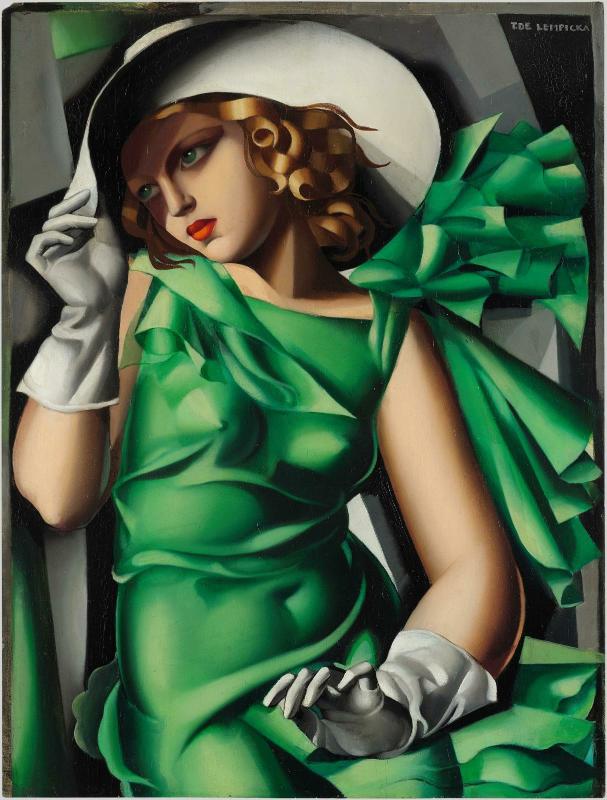
See this reproduction →Six works from the Center Pompidou show how modern portraiture becomes architecture of volumes, light and confidence.
 #95
#95
Young girl in green
The green dress, white gloves and tight framing transform the model into an icon of the modern woman, independent and perfectly aware of her image. Lempicka combines sculpted volumes, photographic framing and Art Deco elegance to construct a modern image of the individual.
Documentary image and instructions: Pompidou Center. This work is not offered for reproduction by Alpha Reproduction.
See the institution's notice →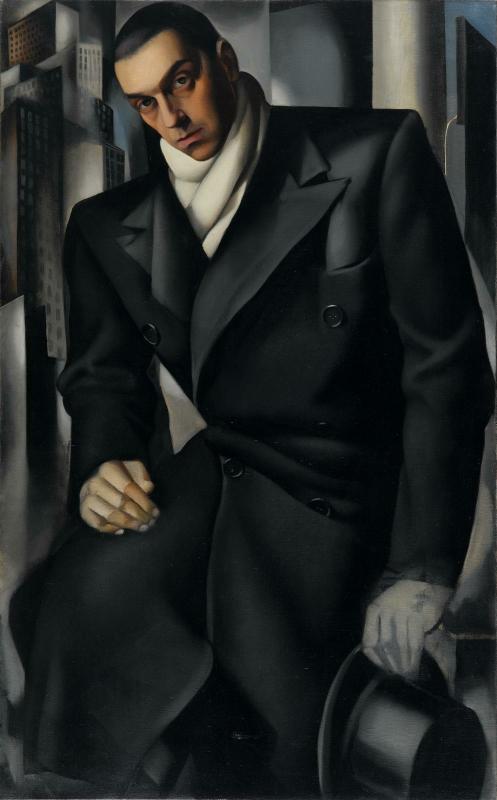 #96
#96
Mr. Thadeus Lempicki
The portrait of the artist's first husband combines elegance, reserve and geometric volumes; marital intimacy adopts the codes of worldly portraiture. The smooth surface and metallic shapes give the model a worldly assurance which nevertheless reveals a certain coldness.
Documentary image and instructions: Pompidou Center. This work is not offered for reproduction by Alpha Reproduction.
See the institution's notice →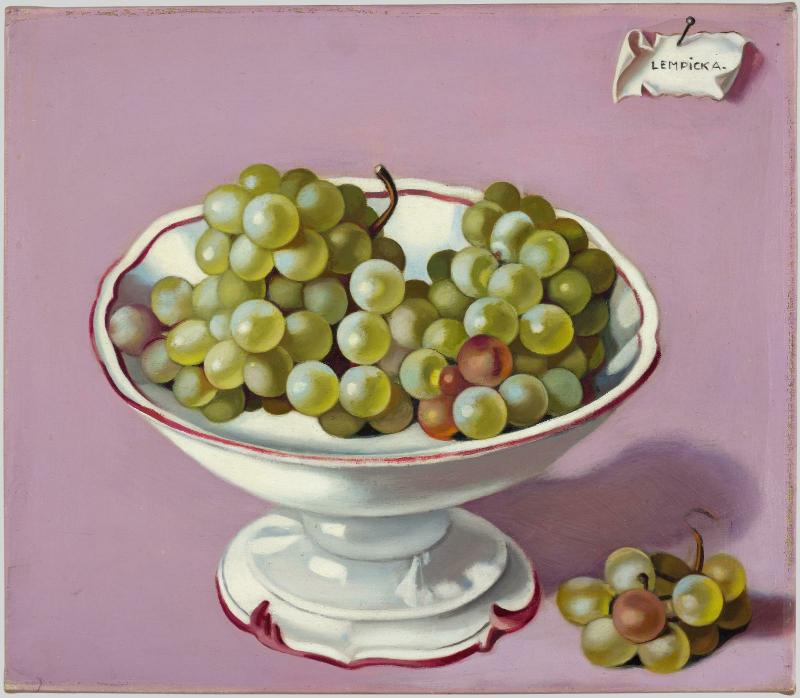 #97
#97
Grape cut
The fruits and container are modeled as polished volumes; still life retains the controlled sensuality of his portraits. Lempicka combines sculpted volumes, photographic framing and Art Deco elegance to construct a modern image of the individual.
Documentary image and instructions: Pompidou Center. This work is not offered for reproduction by Alpha Reproduction.
See the institution's notice →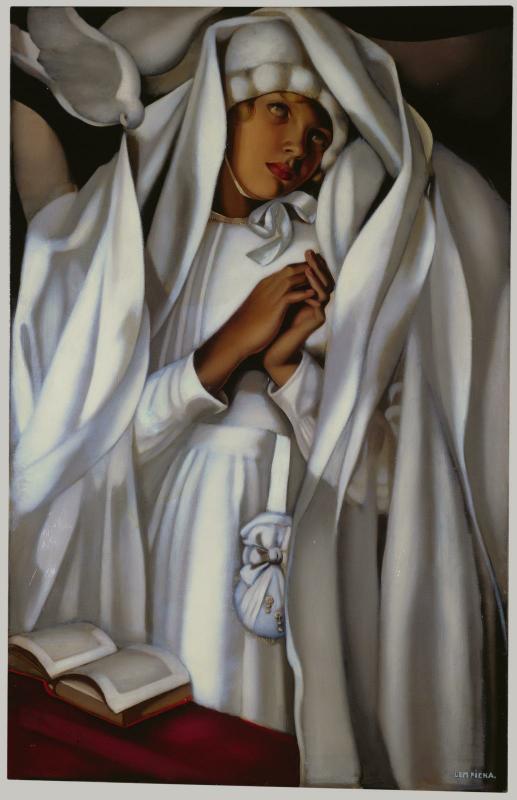 #98
#98
The Communicant
Kizette, daughter of the artist, appears under a white veil whose icy folds combine religious fervor, fashion photography and Art Deco theatricality. The smooth surface and metallic shapes give the model a worldly confidence which nevertheless reveals a certain coldness.
Documentary image and instructions: Pompidou Center. This work is not offered for reproduction by Alpha Reproduction.
See the institution's notice →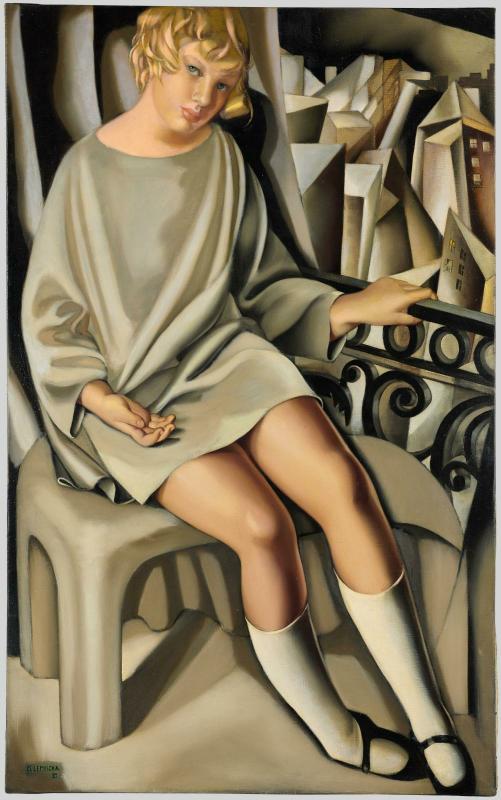 #99
#99
Kizette on the balcony
The little girl leans on the balcony with almost adult confidence; architecture and body fit together in a rhythm of curves and angles. Lempicka combines sculpted volumes, photographic framing and Art Deco elegance to construct a modern image of the individual.
Documentary image and instructions: Pompidou Center. This work is not offered for reproduction by Alpha Reproduction.
See the institution's notice →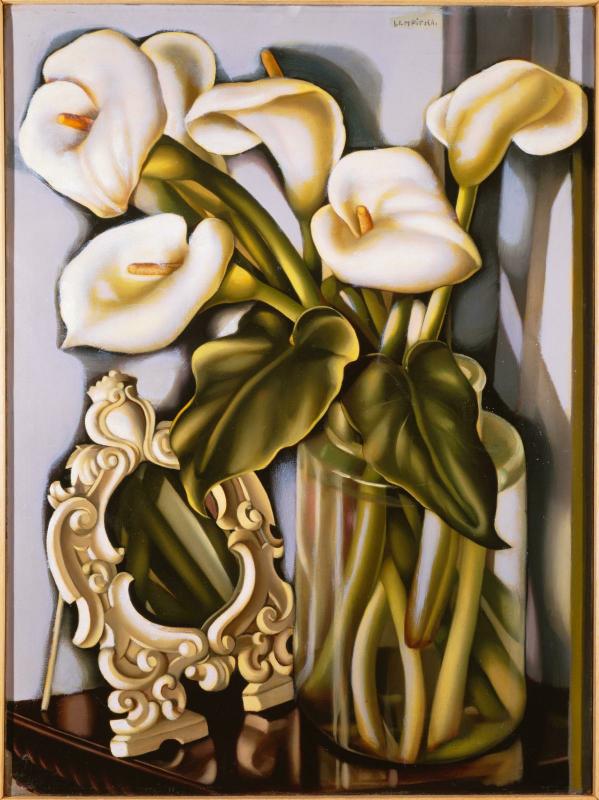 #100
#100
The Arums
The white flowers unfold in front of a dark mirror; Lempicka applies the same smooth monumentality to still life as to her figures. The smooth surface and metallic shapes give the model a worldly confidence which nevertheless allows a certain coldness to emerge.
Documentary image and instructions: Pompidou Center. This work is not offered for reproduction by Alpha Reproduction.
See the institution's notice →Sources and links
Alpha sheets and museum notices
The 94 historical works present in the store use their Alpha Reproduction images and links. The six paintings by Tamara de Lempicka are documented by the Center Pompidou; their images open the corresponding notices and do not constitute an offer of reproduction.
Jan Matejko
Jan Matejko - Alpha ReproductionHistory paintings, portraits and historical cycles available in the store.The Battle of GrunwaldThe great historical composition which opens the route.From realism to Young Poland
Józef Chełmoÿrski - Alpha ReproductionCountrysides, animals and climates of Polish realistic painting.Jacek Malczewski - Alpha ReproductionPortraits and allegories at the heart of Polish symbolism.Stanislaw Wyspiaÿrski - Alpha ReproductionIntimate portraits, Krakow landscapes and modern decorative language.Frequently asked questions
Questions about Polish painting
Some benchmarks to situate artists, movements and the documentary status of modern works.
Why is Jan Matejko so important?
Matejko gave monumental form to Poland's founding episodes, victories and political crises. Painted during the country's divisions, his works helped maintain a common national memory.
What is Young Poland?
Young Poland designates the artistic revival around 1890 -1918. Symbolism, Art Nouveau, portrait psychology and fascination with regional cultures are found there in Malczewski, Wyspiaÿski, Mehoffer, Boznaÿska and Ruszczyc.
Is Tamara de Lempicka a Polish painter?
Born in Warsaw according to the generally accepted biography, she built her career in Paris then in the United States. Its cosmopolitanism and its Art Deco language here extend the journey towards international modernity.
Are the works of Tamara de Lempicka offered for reproduction?
No. Lempicka's six paintings are presented for documentary purposes only. Their images and buttons refer to the notices of the Center Pompidou.
How were duplicates avoided?
Titles, addresses, image files and perceptual similarities were checked. Two different files from the Sigismond Bell referred to the same painting; one was replaced before publication.
0 comments