

Return of figure, matter and postmodernity
Top 50 neo-expressionist painters: Baselitz, Kiefer, Schnabel and the others
A guide to understanding Baselitz, Kiefer, Schnabel, Clemente, Chia, Cucchi, Basquiat, Dumas, Lassnig, Barcelo and the heirs of expressive painting.
Neo-expressionism put painting back at the center at the end of the 1970s and in the 1980s. After minimalism and conceptual art, it brought back body, history, myth, gesture, material, violence, humor and narration. This Top 50 follows the German and Italian core, the New York scene, Free Figuration and contemporary legacies.

Before the grid
Why neo-expressionism brings painting back
Neo-expressionism is less a unique style than a climate: a voluntary return to the canvas, to the visible gesture, to the figure, to the story and to the material. In Germany, he confronts history and memory; in Italy, Transavanguardia reactivates myths; in New York, Basquiat, Schnabel, Fischl and Longo cross streets, media images and postmodernity.
The selection also includes precursors and heirs when their work directly sheds light on this return of the figure: Bacon, Dubuffet, Guston, Dumas, Lassnig, Barcelo, Kentridge and Doig show that pictorial expression goes far beyond the 1980s.
Top 1 to 10
Germany, memory and sudden return of the figure
The first block brings together the major figures: Baselitz, Kiefer, Schnabel, the Italian Transavanguardia and the great German painters.
#1
Georg Baselitz
Baselitz reverses the figures, lacerates the painting and imposes a raw, German figuration, deliberately unstable.
Read Georg Baselitz's biography on Wikipedia #2
#2
Anselm Kiefer
Kiefer transforms lead, straw, ash and German history into tragic and monumental supermarkets.
Read Anselm Kiefer's biography on Wikipedia #3
#3
Julian Schnabel
Schnabel brings painting back to a spectacular, broken, material scale, between plates, gestures and personal mythologies.
Read Julian Schnabel's biography on Wikipedia #4
#4
Francesco Clemente
Clemente mixes body, dream, symbols, India, self-portrait and a very free poetic figuration.
Read Francesco Clemente's biography on Wikipedia #5
#5
Sandro Chia
Chia reactivates myths, powerful bodies, warm colors and heroic painting in post-conceptual Italy.
Read Sandro Chia's biography on Wikipedia #6
#6
Enzo Cucchi
Cucchi constructs dark, archaic and visionary images, between mental landscape, sign and matter.
Read Enzo Cucchi's biography on Wikipedia #7
#7
Mimmo Paladino
Paladino combines totemic figures, archaic signs, muted color and Mediterranean memory.
Read Mimmo Paladino's biography on Wikipedia #8
#8
AR Penck
Penck invents a vocabulary of silhouettes, pictograms and primitive signs, between politics and rock energy.
Read AR Penck's biography on Wikipedia #9
#9
Joerg Immendorff
Immendorff loads painting with political allegories, historical theater and deliberately excessive figuration.
Read Joerg Immendorff's biography on Wikipedia #10
#10
Markus Lüpertz
Lüpertz paints massive, mythological forms, between abstraction, figure, military motif and sculptural gesture.
Read the biography of Markus Lüpertz on WikipediaRanks 11 to 20
Neue Wilde, New York and urban image
This section follows the wild Berlin painting, Basquiat, Fischl, Rothenberg, Murray, Longo and the return of the dramatic image.
 #11
#11
Rainer Fetting
Fetting gives Berlin an electric painting: body, city, acidic colors and urban gestures.
Read Rainer Fetting's biography on Wikipedia #12
#12
Salome
Salomé imposes a queer, lively, deliberately provocative painting, between body, desire and underground culture.
Read Salomé's biography on Wikipedia #13
#13
Jiri Georg Dokoupil
Dokoupil refuses the unique style: smoke, soap, gesture, irony and changing images become method.
Read the biography of Jiri Georg Dokoupil on Wikipedia #14
#14
Martin Kippenberger
Kippenberger makes painting a theater of failures, jokes, ego, institutional criticism and provocation.
Read Martin Kippenberger's biography on Wikipedia #15
#15
Jean-Michel Basquiat
Basquiat mixes street, jazz, anatomy, words, crowns and racial criticism in a dazzling painting.
Read the biography of Jean-Michel Basquiat on Wikipedia #16
#16
Eric Fischl
Fischl paints American suburban malaise, exposed bodies, ambiguous scenes and narrative tensions.
Read Eric Fischl's biography on Wikipedia #17
#17
Susan Rothenberg
Rothenberg brings back the figure - horse, body, sign - in a dry, frontal and strongly gestural painting.
Read Susan Rothenberg's biography on Wikipedia #18
#18
Elizabeth Murray
Murray dynamites the painting with cut-out shapes, cartoon, domestic and abstract at the same time.
Read Elizabeth Murray's biography on Wikipedia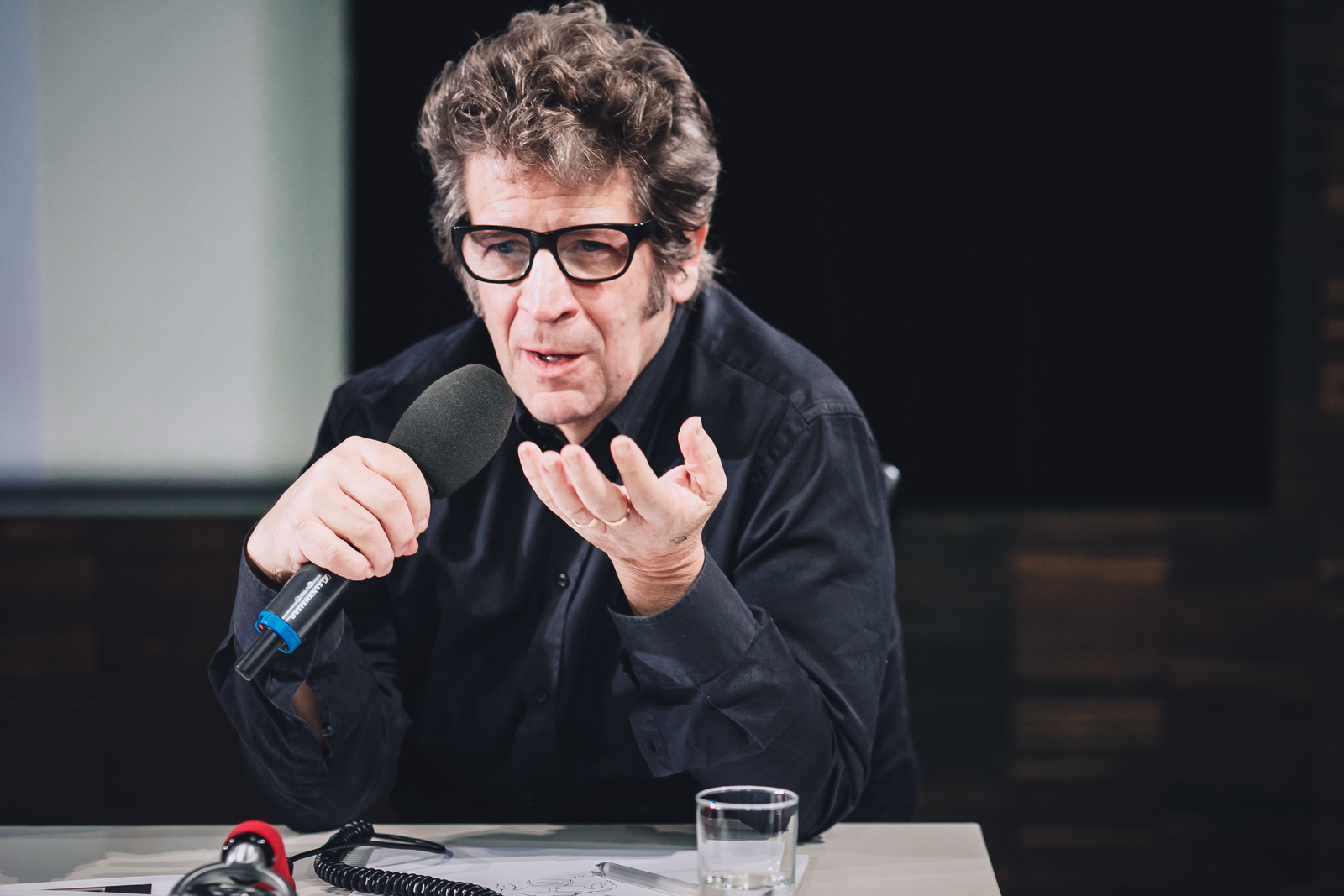 #19
#19
Robert Longo
Longo dramatizes the media image through monumental drawing, projected bodies and spectacular black.
Read Robert Longo's biography on Wikipedia #20
#20
Keith Haring
Haring condenses urban energy, pictograms, activism and expressive line into an immediately readable iconography.
Read Keith Haring's biography on WikipediaRanks 21 to 30
Body, precursors and pictorial material
From the grotesque portrait to the bodies of Dumas, Lassnig, Bacon, Dubuffet and Barcelo, the figure once again becomes a surface of conflict.
 #21
#21
George Condo
Condo invents grotesque portraits, between old masters, caricature, psychosis and pictorial virtuosity.
Read George Condo's biography on Wikipedia #22
#22
Marlene Dumas
Dumas paints fragile, political, erotic bodies and faces, often from media images.
Read Marlene Dumas' biography on Wikipedia #23
#23
Maria Lassnig
Lassnig transforms the felt body into raw, acidic, psychic and deeply embodied painting.
Read Maria Lassnig's biography on Wikipedia #24
#24
Philip Guston
Guston prepares the brutal return of the figure with his hoods, shoes, walls and objects painted without seduction.
Read Philip Guston's biography on Wikipedia #25
#25
Francis Bacon
Bacon offers a model of a deformed body, psychic violence and existential figuration for subsequent generations.
Read Francis Bacon's biography on Wikipedia #26
#26
Jean Dubuffet
Dubuffet nourishes neo-expressionism through material, outsider art, childish drawing and anti-culture.
Read the biography of Jean Dubuffet on Wikipedia #27
#27
Miquel Barcelo
Barcelo works with matter, the sea, animals, skulls and a physical, Mediterranean painting, very expressive.
Read Miquel Barcelo's biography on Wikipedia #28
#28
Peter Finger
Doig extends expressive figurative painting with hallucinatory landscapes, photographic memory and murky color.
Read Peter Doig's biography on Wikipedia #29
#29
Daniel Richter
Richter actualizes neo-expressionist energy through crowds, acidic colors, politics and unstable storytelling.
Read Daniel Richter's biography on Wikipedia #30
#30
Cecily Brown
Brown connects abstraction, body, sexuality, old masters and explosive touch in a sensual and dense painting.
Read Cecily Brown's biography on WikipediaRanks 31 to 40
Critical representation and international scenes
British, Congolese and post-Soviet legacies show how pictorial expression becomes narrative, politics and memory.
 #31
#31
Nicole Eisenman
Eisenman mixes satire, queer bodies, historical painting, humor and melancholy in a very contemporary representation.
Read Nicole Eisenman's biography on Wikipedia #32
#32
Tracey Emin
Emin brings an autobiographical, textual and bodily intensity to contemporary expressive figuration.
Read Tracey Emin's biography on Wikipedia #33
#33
Neo Rauch
Rauch mixes socialism, dreams, industry, theater and German figurative painting in enigmatic scenes.
Read Neo Rauch's biography on Wikipedia #34
#34
Paula Rego
Rego imposes a narrative, cruel and theatrical figuration, nourished by tales, the body and domination.
Read Paula Rego's biography on Wikipedia #35
#35
RB Kitaj
Kitaj combines story, Jewish culture, quotation, drawing and intellectual figuration in a tense painting.
Read RB Kitaj's biography on Wikipedia #36
#36
Lucian Freud
Freud is not a strict neo-expressionist, but his raw bodies and his pictorial material dialogue strongly with the return of the figure.
Read the biography of Lucian Freud on Wikipedia #37
#37
David Hockney
Hockney offers another figurative path, lively, colorful, very conscious of image and modernity.
Read David Hockney's biography on Wikipedia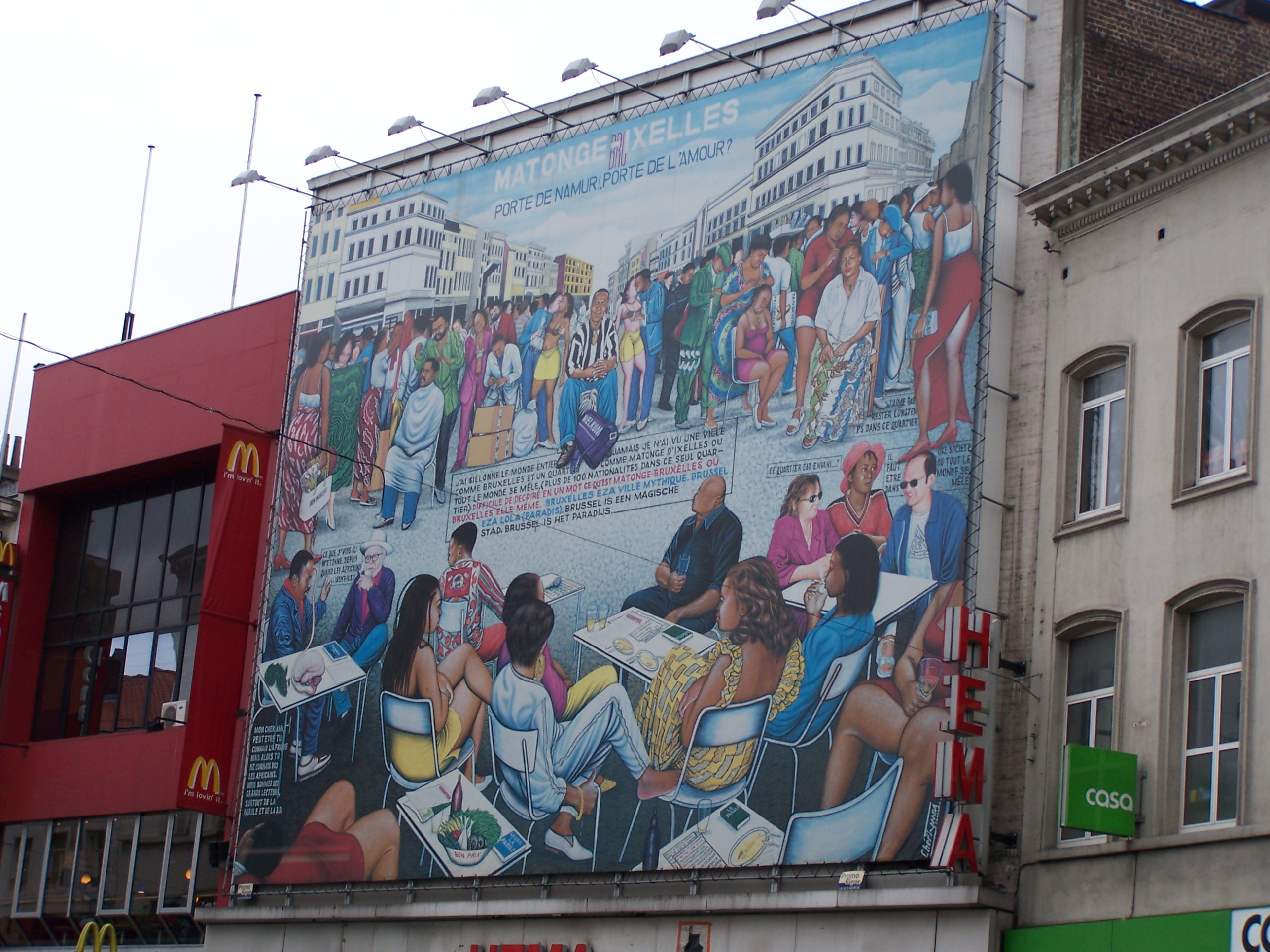 #38
#38
Darling Samba
Samba combines painting, text, social satire and popular color in direct and critical representation.
Read Chéri Samba's biography on Wikipedia #39
#39
Darling Cherin
Chérin develops an urban, political and narrative painting close to Congolese popular culture.
Read Chéri Chérin's biography on Wikipedia #40
#40
Ilya Kabakov
Kabakov is not a strict neo-expressionist, but his post-Soviet narrative dialogues with the return of images.
Read Ilya Kabakov's biography on WikipediaRanks 41 to 50
Contemporary heirs and visual culture
The last block expands the movement towards contemporary Germany, sign writing, Japan, China, street art and Kentridge.
 #41
#41
Erik Bulatov
Bulatov combines text, image, space and ideological criticism in postmodern figurative painting.
Read Erik Bulatov's biography on Wikipedia #42
#42
Jonathan Meese
Meese pushes the expression towards the stage, the grotesque, personal mythology and provocation.
Read Jonathan Meese's biography on Wikipedia #43
#43
Cy Twombly
Twombly transforms the gesture into writing, scratching, ancient memory and a nervous trace.
Read Cy Twombly's biography on Wikipedia #44
#44
Yoshitomo Nara
Nara transforms childhood, anger, loneliness and pop culture into deceptively simple and very expressive figures.
Read Yoshitomo Nara's biography on Wikipedia #45
#45
Takashi Murakami
Murakami is not neo-expressionist, but extends postmodern pictorial excess through color, manga and the market.
Read Takashi Murakami's biography on Wikipedia #46
#46
Zhang Xiaogang
Zhang paints Chinese family and political memory with pale, fixed, haunted portraits.
Read Zhang Xiaogang's biography on Wikipedia #47
#47
Yue Minjun
Yue Minjun transforms laughter into a critical, grotesque and instantly recognizable mask.
Read Yue Minjun's biography on Wikipedia #48
#48
Shepard Fairey
Fairey connects street, poster, politics and graphics in a direct and expressive contemporary image.
Read Shepard Fairey's biography on Wikipedia #49
#49
Banksy
Banksy extends critical figuration through stenciling, social satire and the immediate impact of the image.
Read Banksy's biography on Wikipedia #50
#50
William kentridge
Kentridge connects drawing, theater, political memory and animation in a dark, nervous and historical representation.
Read William Kentridge's biography on WikipediaMethod
How the 50 artists were selected
The selection favors artists associated with neo-expressionism, Transavanguardia, Neue Wilde, Free Figuration and the postmodern return of the figure. She adds some precursors and heirs when their work helps to understand matter, body, image and narrative.
According to the usual rule, artists who died after 1956 or were alive refer to Wikipedia.
Choose an entry
Where to start?
For the historical core, start with Baselitz, Kiefer, Schnabel, Clemente, Chia, Cucchi, Paladino, Penck, Immendorff and Lüpertz. For New York, look at Basquiat, Fischl, Rothenberg, Murray, Longo, Haring and Condo.
To expand, Dumas, Lassnig, Bacon, Dubuffet, Barcelo, Doig, Kentridge, Chéri Samba and Zhang Xiaogang show how the expressive return of the figure becomes global.
Continue
Guides, rankings and references
Explore Alpha Reproduction
Museum landmarks
Quick markers
The painting returns with a bang
Neo-expressionism not only brought back the figure: it restored painting's right to excess, bad taste, history, the body and brutal emotion.
From Baselitz to Kentridge, from Kiefer to Dumas, this Top 50 shows a painting that refuses neutrality: it tells, attacks, smears, quotes, sometimes screams - and this is precisely what still makes it so alive.
0 comments