

Documents · spelling · expertise
The signature
Leonard's
What does it really look like? Why are paintings rarely signed? And how can we distinguish an autograph writing from a workshop inscription or a fake brand added to sell?

The short answer
Is there an official signature of Leonardo da Vinci?
No, not in the form of a stable logo affixed to his paintings. Leonardo wrote his name in several ways in documents and manuscripts, most often in Italian of his time. His major paintings generally do not bear a visible autograph signature. An inscription "Leonardo da Vinci" on a painting is therefore more often a later mark, an attribution, a collection label or a false commercial argument than proof.
Documentary formula
"Lionardo di ser Piero da Vinci"
This form develops his identity: Lionardo, son of Ser Piero, originally from Vinci. The modern spelling "Leonardo da Vinci" is not a commercial signature used uniformly by the artist.
In the sources, we encounter variations because the spelling is not yet standardized and certain mentions are written by notaries, secretaries or copyists.

I · Shapes
Three things often confused
The name writes
An occurrence of the first name or identity in a note, list or documentary formula. It must be placed in its folio.
Leonardo's hand
Cursive graphics often going from right to left, with pen habits and abbreviations. It's a set of traits, not a magic word.
The mark on a work
Text added by the workshop, an owner, a merchant or a restorer. Its date can be very later than the drawing.
II · Mirror writing
A famous clue, but easy to imitate

From right to left
The majority of Leonardo's private notes can be read in a mirror. This habit is compatible with his left-handedness and reduces the passage of the hand over fresh ink. It does not necessarily constitute a secret code.
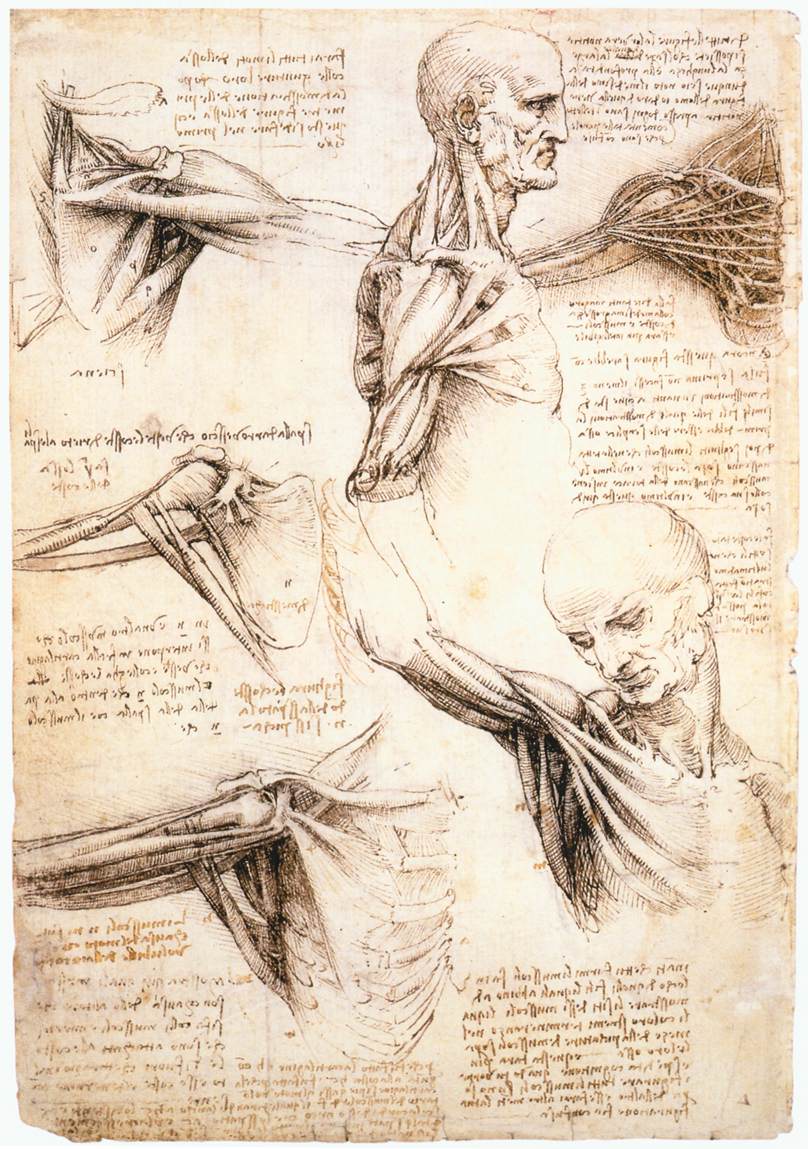
The movement of the pen
The expert studies line order, pressure, connections, inclination, abbreviations and rhythm. A forger can reverse letters; it makes it more difficult to reproduce living writing on an entire page.

Text and drawing
The writing must belong to the same material moment as the drawing: same ink, coherent aging, natural relationship to contours and reserved spaces.
The complete folio
A signature cut or photographed without margins loses the essential clues: watermark, seam, numbering, back, provenance and relationship to neighboring pages.
III · The tables
Why can't we see his signature on The Mona Lisa?

The Mona Lisa
Attribution is based on the history of the work, testimonies, technique, scientific examinations and comparison, not on a name painted in a corner.

The Annunciation
The debates focused on the hand, the workshop and stylistic evolution. An apparent modern signature would, on the contrary, be a wake-up call.

The Last Supper
Order, location and historical sources establish context. Highly altered material requires distinguishing between original, restorations and copies.
Leaves bear other marks
Numbers, stamps, collector's initials and classification inscriptions can be valuable for provenance without being autographs.
IV · False and additions
Six warning signs
Too modern spelling
"Leonardo da Vinci" writes like a contemporary signature, regular and immediately readable.
An isolated signature
The seller shows the name but refuses the back, edges, provenance or analyses.
An incompatible ink
The binder, pigments or penetration into the support do not correspond to the advertised age.
A mechanical copy
A known signature is reproduced line for line without natural variations.
A circular provenance
The certificate cites the table as proof and the table cites the certificate, without an independent archive.
A name that promises too much
The signature serves to avoid any discussion of support, technique, workshop and material history.
V · Method
How to examine a so-called signature?
| Step | Question | What to get |
|---|---|---|
| 1 · Locate | Is the mark on the pictorial layer, support, frame or label? | General photographs, macro, grazing light and back. |
| 2 · Read | What exactly does the inscription say? In what language and spelling? | Careful transcription, without completing missing letters. |
| 3 · Date | Is the ink or pigment contemporary with the work? | Microscopic examination and non-invasive analyzes by a competent laboratory. |
| 4 · Compare | Do the gestures correspond to documented autographs? | Comparison with original manuscripts, never with a digital font. |
| 5 · Provenance | When does the brand first appear? | Inventories, old photographs, catalogs and property history. |
| 6 · Assign | Does all data converge? | Collegial opinion of specialists; no signature replaces the study of the work. |
VI · True or false?
What the signature can actually prove
On a manuscript
It can help identify a hand if it is consistent with paper, ink, spelling and provenance.
On a drawing
It can be an autograph, but also a collection annotation. The drawing remains to be studied independently.
On a painting
It is particularly suspect if it constitutes the sole argument for attribution to Leonardo.
Sources
Compare with secure documents
FAQs
Questions about signing
How did Leonardo sign his name?
The documents use several forms, including "Lionardo" and formulations developing its parentage and origin. There is no single model.
Does mirror writing prove that a text is by Leonardo?
No. It is easy to imitate. You have to study the spelling, the material, the support, the content and the provenance.
Is the Mona Lisa signed?
Not by a visible signature recognized as an autograph. Its attribution does not depend on a painted name.
Could a signature have been added previously?
Yes. An ancient addition can document a historical attribution without being in Leonardo's handwriting.
Can we authenticate a work with a photo of the signature?
No. Serious expertise requires the entire object, back, support, layers, provenance and appropriate examinations.
Continue
0 comments