

Top 30 · Modern Greek painting
From Gyzis to Tsarouchis: thirty painters to understand Greek modernity
Munich, Paris, Byzantium, Mediterranean light and post-war avant-gardes.
Modern Greek painting is born from a fruitful tension between international training and the search for its own expression. After independence, Athens looked largely towards the Munich Academy: Lytras, Gyzis, Volanakis and Iakovidis gave the young state its great stories, its portraits and its daily scenes. At the end of the 19th century, Pantazis, Altamouras and the landscapers loosened academicism through the open air. The 20th century then moved the center of gravity towards Paris, the Secession, Cézanne, Cubism and Surrealism, without ceasing to re-examine Antiquity, Byzantium and popular art. The 20th century then moved the center of gravity towards Paris, the Secession, Cézanne, Cubism and Surrealism, without ceasing to re-examine Antiquity, Byzantium and popular art. The 20th century then moved the center of gravity towards Paris, the Secession, Cézanne, Cubism and Surrealism, without ceasing to re-examine Antiquity, Byzantium and popular art. The 20th century then moved the center of gravity towards Paris, the Secession, Cézanne, Cubism and Surrealism, without ceasing to re-examine

Athens, Munich, Paris, Rome and New York.
The academic model
Why does Munich dominate modern Greek painting in the first place?
The political and cultural ties between independent Greece and Bavaria directed many artists towards Munich in the 19th century. They learn drawing, perspective, history painting and genre realism. Lytras, Gyzis, Volanakis and Iakovidis do not, however, form a uniform block: the family scene, the navy, allegory and symbolism become all means of building a national visual culture.
Tradition reinvented
How did Byzantium and folk art become modern?
At the beginning of the 20th century, the use of tradition was not a simple step backwards. Theophilos, Kontoglou, Papaloukas, Tsarouchis and Engonopoulos select lines, colors, frontality and narration to respond to the European avant-gardes. The "Greekness" of the generation of the 1930s is therefore built by editing: icon, popular theater, Antiquity, island architecture, Matisse, cubism and surrealism.
Post-war and diaspora
Does the painting remain Greek when it circulates?
Paris, Rome and New York allowed Galanis, Stamos, Gaitis, Kounellis and others to participate directly in the international avant-gardes. Their origin does not summarize their works, but the experiences of displacement, war, dictatorship and Mediterranean memory remain active there. Abstraction, series and installation then prolong pictorial problems of color, rhythm, surface and presence.
The essential masters
Top 10 - From Gyzis to Iakovidis
The Munich School meets popular painting, symbolism, cubism and the search for a modern visual identity.
#1
Nikolaos Gyzis
A central figure in the Munich School, Gyzis goes beyond the genre scene with dramatic light and a keen sense of allegory. His religious and idealistic compositions announce symbolism while giving Greek academicism a European ambition.
See the Nikolaos Gyzis collection #2
#2
Yannis Tsarouchis
Tsarouchis combines Byzantine icon, popular costume, Renaissance and Matisse lesson in an immediately personal painting. Its sailors, soldiers and cafes make the modern body the place where desire, theater and Greek identity meet.
Read the Wikipedia entry by Yannis Tsarouchis #3
#3
Nikiforos Lytras
Considered a father of modern Greek painting, Lytras trained several generations in Athens after his Munich studies. His family and rural scenes transform daily observation into a social story of great sobriety.
See the Nikiforos Lytras collection #4
#4
Theophilos Hatzimihail
Self-taught, Theophilos paints ancient heroes, fighters, landscapes and customs on walls, canvases or ordinary objects. The frankness of its design and its colors becomes a decisive reference for artists in search of popular Greek modernity.
See the Theophilos Hatzimihail collection #5
#5
Konstantinos Parthenis
Parthenis combines the Viennese Secession, symbolism, the Nabis and a refined reading of Hellenic traditions. His clear line and spiritual visions break with the naturalism of Munich and open Greek painting to modernism.
Read the Wikipedia entry by Konstantinos Parthenis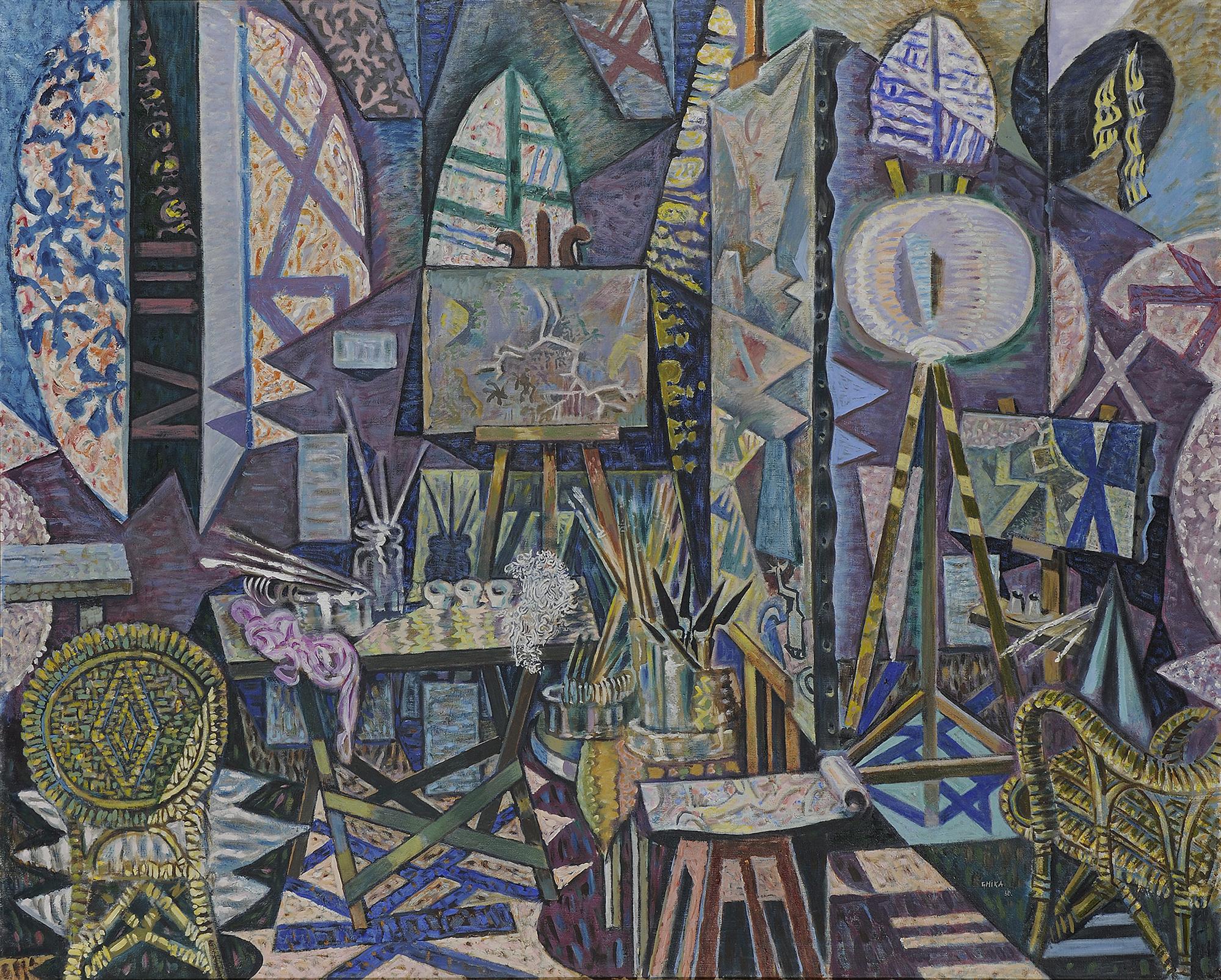 #6
#6
Nikos Hadjikyriakos-Ghika
Ghika reorganizes Mediterranean houses, rocks and gardens into tight postcubist architecture. He does not copy the Parisian avant-garde: he adapts it to the light, the rhythms and the constructed memory of Greek landscapes.
Read the Wikipedia entry for Nikos Hadjikyriakos-Ghika #7
#7
Yannis Moralis
Moralis gradually reduces the human figure to curves, flat areas and geometric relationships of great serenity. Eros, mourning and ancient memory run through a work which also had a profound impact on Greek artistic teaching.
Read the Wikipedia entry by Yannis Moralis #8
#8
Periklis Pantazis
Based in Brussels, Pantazis abandoned academic conventions early for a free touch and atmospheric light. Landscapes, still lifes and work scenes make him one of the first Greek painters fully engaged in European modernity.
See the Periklis Pantazis collection #9
#9
Konstantinos Volanakis
Volanakis gives the navy a major place in 19th century Greek painting. Its ports, naval battles and calm horizons combine descriptive precision, national memory and a remarkable sense of bright space.
See the Konstantinos Volanakis collection #10
#10
Georgios Iakovidis
Iakovidis masters Munich realism in portraits and childhood scenes where every gesture is carefully observed. Director of the first Greek National Pinacoteca, he also plays a determining institutional role.
See the Georgios Iakovidis collectionByzantium, surrealism and expression
Ranks 11 to 15 - Kontoglou, Engonopoulos and the ruptures of the interwar period
Religious tradition, constructed landscape, expressionism and serial figuration compose very different responses to modernity.
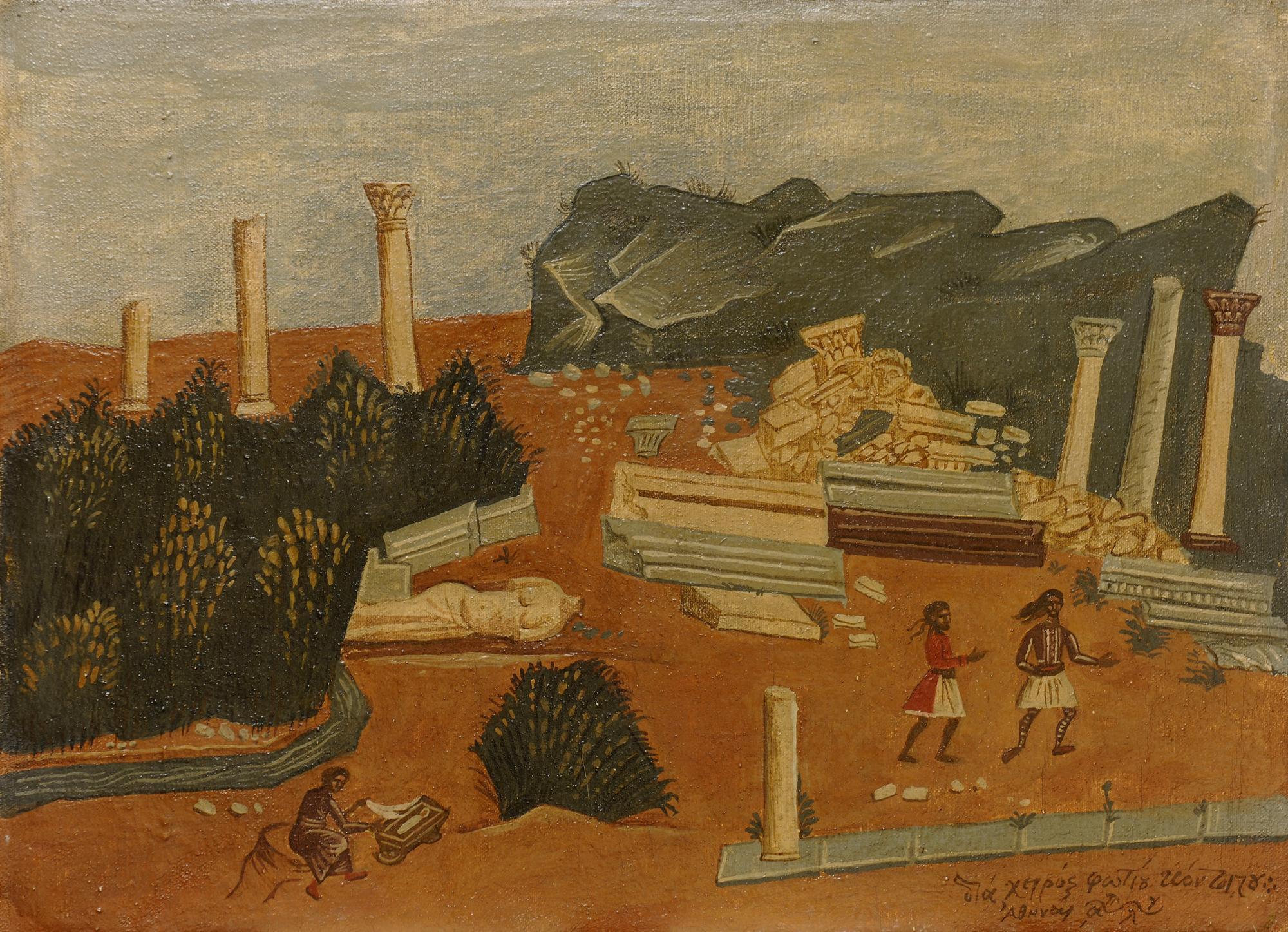 #11
#11
Fotis Kontoglou
Kontoglou places Byzantine technique at the heart of a modern, literary and sometimes fantastic creation. His frescoes, icons and writings lastingly modify the way we look at tradition and directly influence Tsarouchis and Engonopoulos.
Read the Wikipedia entry for Fotis Kontoglou #12
#12
Nikos Engonopoulos
Engonopoulos populates metaphysical architectures of faceless heroes, mythological figures and Byzantine colors. His surrealism remains linked to the poetry, history and contradictions of modern Greek identity.
Read the Wikipedia entry by Nikos Engonopoulos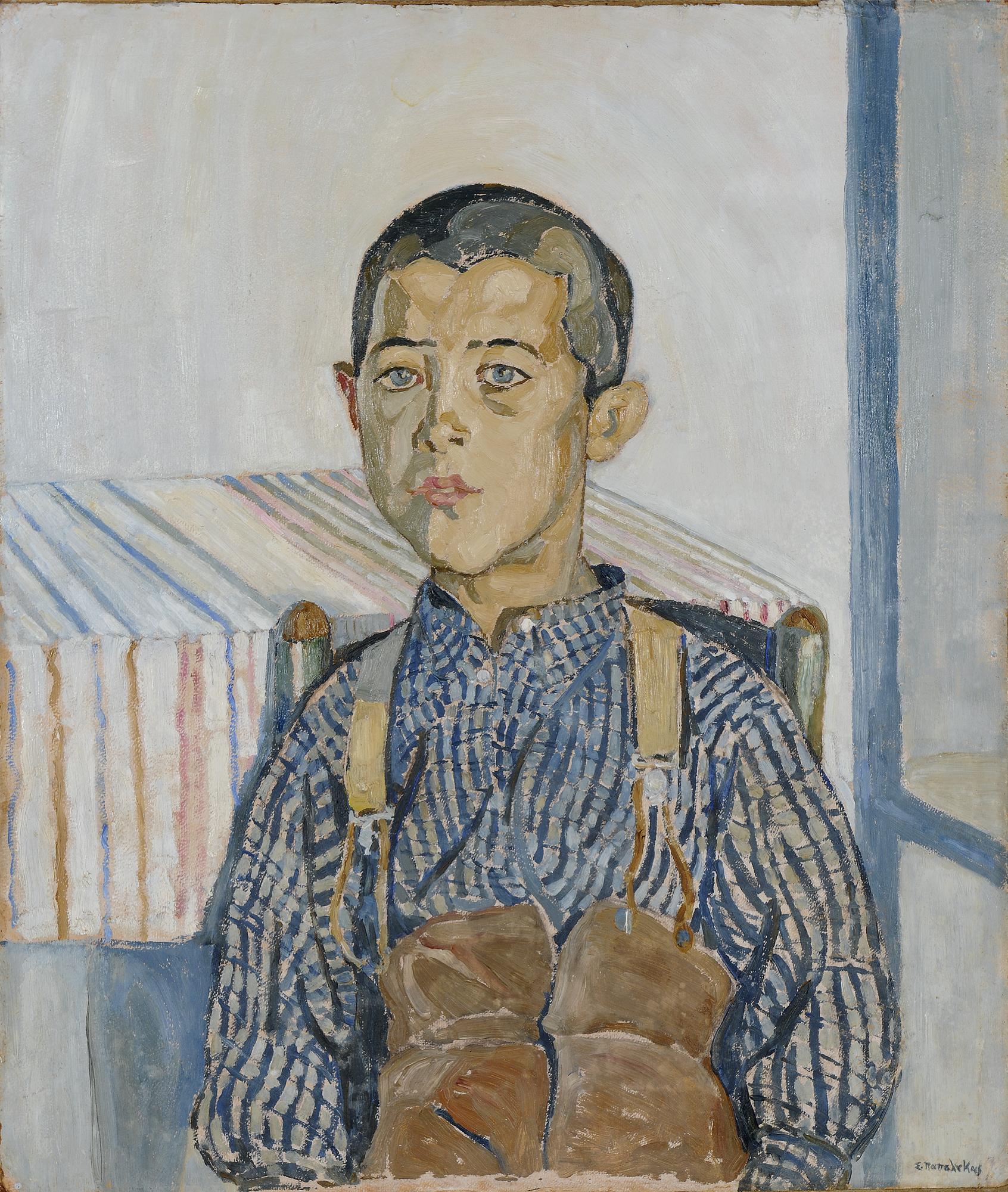 #13
#13
Papaloukas Spyros
Papaloukas confronts Cézanne, the Nabis and pointillism with his direct study of Mount Athos and the island landscape. It shows that the Byzantine tradition can become a modern method of construction rather than a nostalgic setting.
Read the Wikipedia entry for Spyros Papaloukas #14
#14
Giorgos Bouzianis
Bouzianis developed an expressionist painting of unstable bodies and intensely psychological faces in Munich and Berlin. Long isolated on his return to Greece, he appears today as one of the great renovators of the figure.
Read the Wikipedia entry by Giorgos Bouzianis #15
#15
Yannis Gaitis
Gaïtis gradually transforms her anonymous silhouettes into a crowd of identical men wearing hats. Repeated on paintings, objects and installations, this figure becomes an ironic critique of social normalization.
Read the Wikipedia entry by Yannis GaitisFrom Paris to New York
Ranks 16 to 20 - Fassianos, Stamos, Kounellis and the diasporas
Greek painting circulates between Athens, Paris, Rome and New York, until it widens the canvas towards the colored field and the installation.
 #16
#16
Alekos Fassianos
Fassianos invents cyclists, smokers and winged profiles in bold colors, between antique vase, poster and urban scene. Its continuous design gives Athenian daily life an immediately mythical dimension.
Read the Wikipedia entry for Alekos Fassianos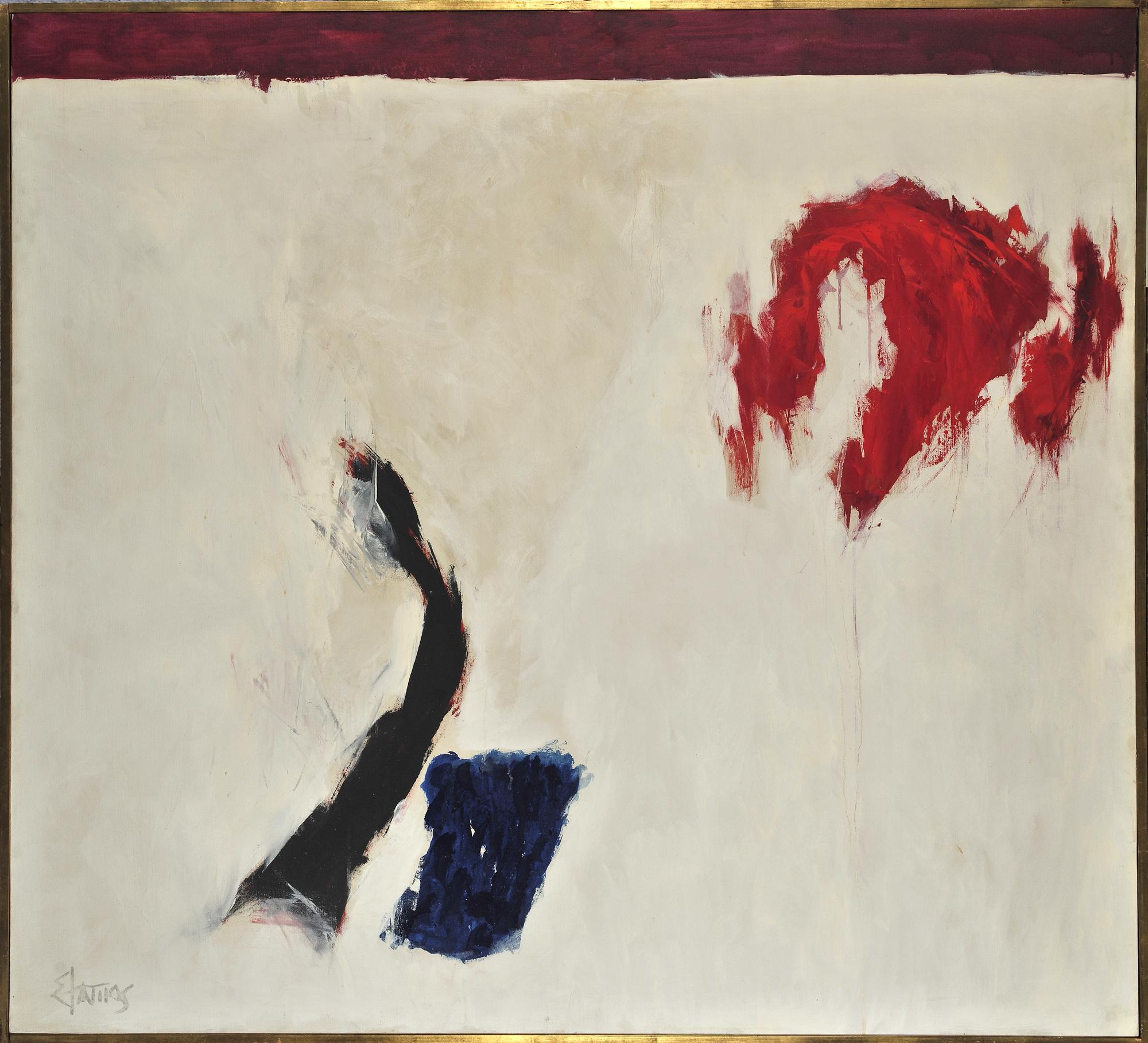 #17
#17
Theodoros Stamos
Born in New York into a Greek family, Stamos belongs to the first generation of American abstract expressionism. His colorful fields and Lefkada-inspired series connect chromatic meditation, nature and Mediterranean memory.
Read the Wikipedia entry for Theodoros Stamos #18
#18
Jannis Kounellis
Kounellis starts from the canvas and painted signs before introducing coal, iron, bags, fire or living animals into the exhibition space. Even when she becomes an installation, her work retains a deeply pictorial thought of weight, rhythm and presence.
Read the Wikipedia entry by Jannis Kounellis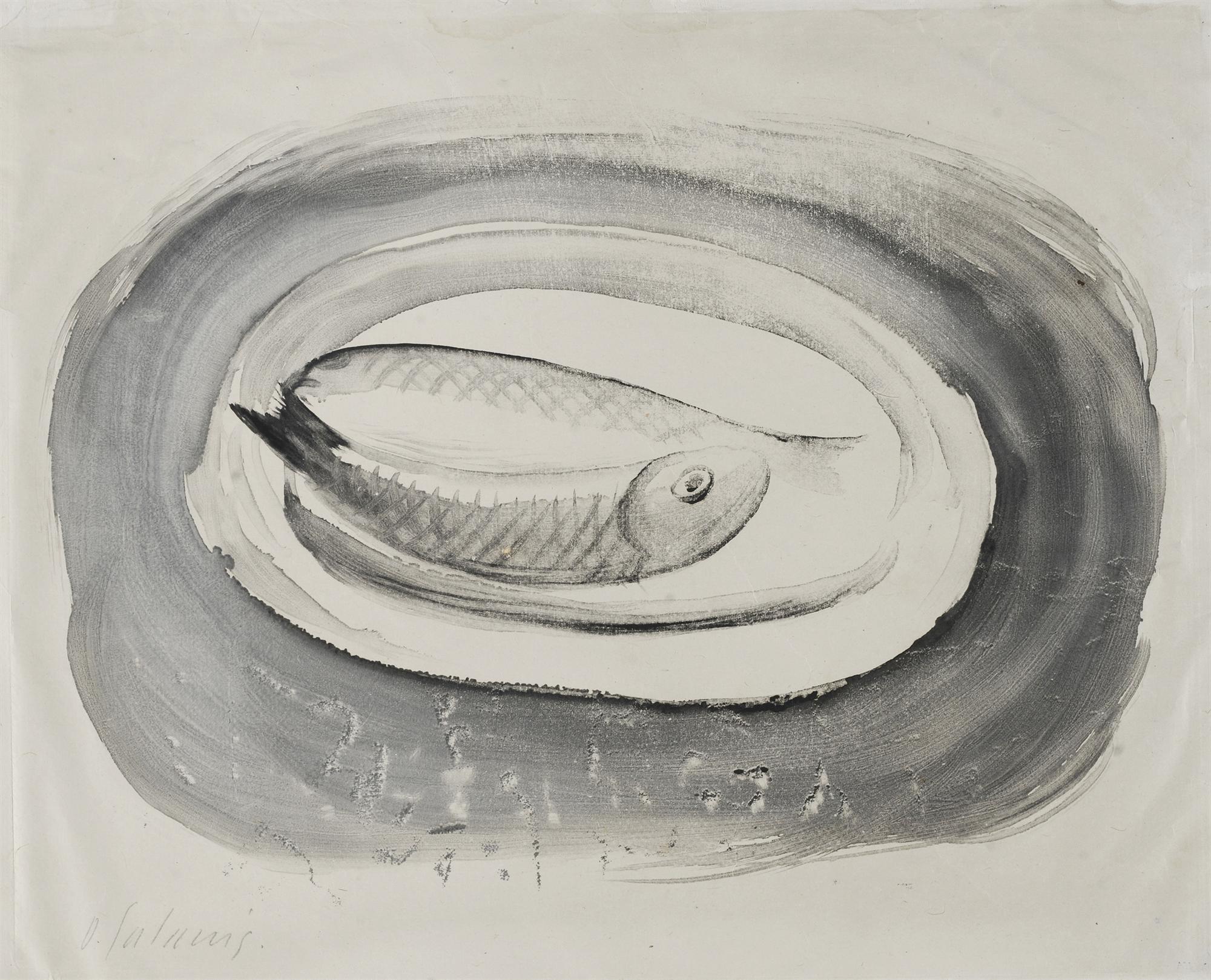 #19
#19
Demetrios Galanis
Based in Paris, Galanis dialogues with Derain, Matisse, Braque and Picasso while constructing a very personal modern classicism. His painted and engraved work makes him an essential conduit between the French avant-garde and Greek art.
Read the Wikipedia entry for Demetrios Galanis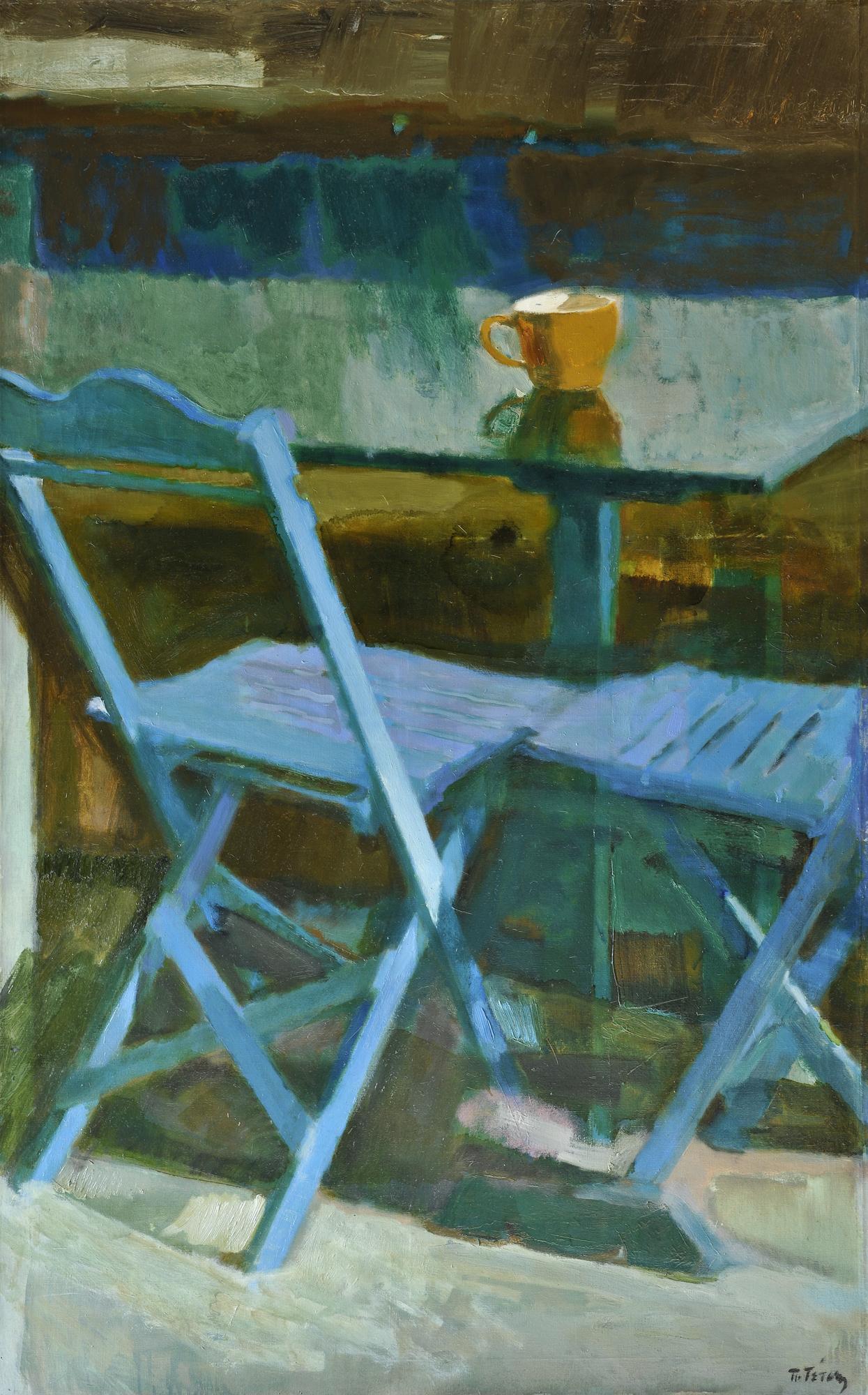 #20
#20
Panayiotis Tetsis
Tetsis stays true to observation while releasing color and touch in her views of Hydra, markets and still lifes. It restores Greek light without picturesqueness, through powerful and structured chromatic relationships.
Read the Wikipedia entry for Panayiotis TetsisFigures, light and pioneers
Ranks 21 to 25 - Expression, landscape and early modernities
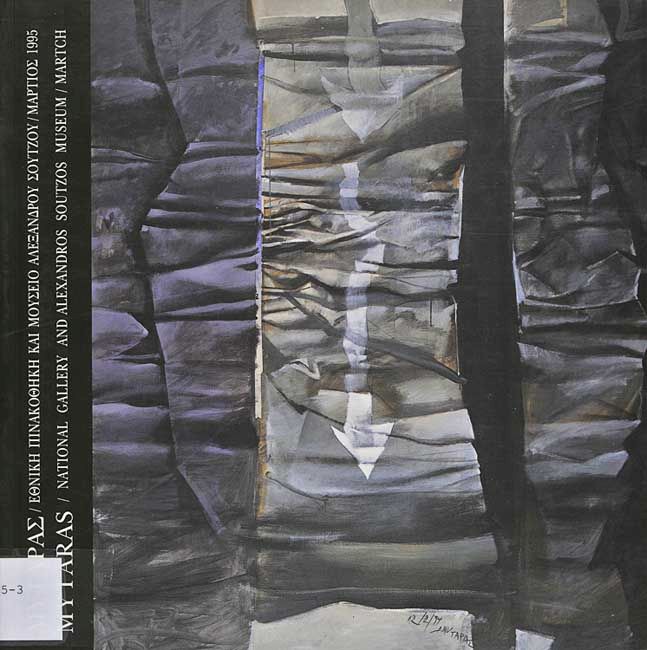
Mytaras' expressionist gesture dialogues with the landscapes of Maleas and Altamouras as well as with the pioneering journey of Eleni Boukoura.
 #21
#21
Dimitris Mytaras
Mytaras moves from photorealism to a nervous figuration dominated by drawing, contrasts and sharp colors. Portraits, automobiles and scenes of power become instruments of social criticism for him.
Read the Wikipedia entry for Dimitris Mytaras #22
#22
Nikolaos Lytras
Son of Nikiforos Lytras, Nikolaos breaks with the academic finish with thick material and an energetic touch. His portraits and landscapes establish in Greece a modernism close to Fauvism and expressionism.
See the Nikolaos Lytras collection #23
#23
Konstantinos Maleas
Maleas simplifies mountains, villages and shores into colorful masses subject to Mediterranean light. Its synthetic landscape strongly contributes to diverting Greek painting from the Munich academic model.
See the Konstantinos Maleas collection #24
#24
Ioannis Altamouras
Altamouras paints the sea with direct observation of atmospheric variations acquired between Athens and Copenhagen. Despite a career interrupted at twenty-six, his marines possess exceptional luminous freedom.
See the Ioannis Altamouras collection #25
#25
Eleni Boukoura-Altamoura
Boukoura-Altamoura disguises himself as a man to study in 19th century Italy, where academies remain closed to women. His journey, marked by intimate exile and the loss of part of his work, made him a pioneering figure in Greek artistic history.
See the Eleni Boukoura-Altamoura collectionLandscapes and views on history
Ranks 26 to 30 - Shores, orientalism and live painting
Ports, Attic countryside, military scenes and Mediterranean circulations close the ranking on the diversity of the modern gaze.
 #26
#26
Michalis Oikonomou
Oikonomou paints ports, houses and shores of France and Greece in a fluid material with softened contours. Its silent landscapes replace topographical description with a mental and melancholic atmosphere.
See the Michalis Oikonomou collection #27
#27
Georgios Roilos
Roilos addresses historical painting, portrait and landscape while gradually softening the academic heritage. His teaching in Athens accompanies the transition towards a freer touch and more immediate observation of light.
See the Georgios Roilos collection #28
#28
Theodoros Rallis
Trained in Paris with Gérôme, Rallis developed an orientalist painting of great material precision. Its interiors, costumes and religious scenes also bear witness to the circulation between Greece, France and the Eastern Mediterranean.
See the Theodoros Rallis collection #29
#29
Thalia Flora-Karavia
Flora-Karavia combines portrait, landscape and drawing taken from life during the Balkan wars. Her correspondent's gaze transforms the military event into a human experience attentive to soldiers, refugees and ordinary gestures.
Read the Wikipedia entry for Thalia Flora-Karavia #30
#30
Georgios Chatzopoulos
A student of Gyzis in Munich, Chatzopoulos became one of the most innovative Greek landscapers of the turn of the century. His views of Attica favor atmospheric vibrations, heat and mobility of light.
See the Georgios Chatzopoulos collectionSources and extensions
See modern Greek painting in public collections
The chronologies and contexts were cross-referenced as a priority with the National Pinacoteca of Athens, whose notices follow the evolution of the Munich School to the post-war avant-gardes. The Benaki Museum particularly documents Ghika and the generation of the 1930s; the Goulandris Foundation and the National Museum of Contemporary Art in Athens extend this journey towards international art.
Greek modernity never chooses between heritage and invention
From Gyzis to Tsarouchis, the narrative does not simply lead from academicism to the avant-garde. Greek painters constantly move what they receive: the Munich discipline becomes a social scene or symbolist vision; the outdoors transforms the sea and light; Byzantium and popular art become modern tools of construction.
After the Second World War, circulation intensified further. Ghika's Hellenized Cubism, Moralis's figures, Bouzianis's Expressionism, Gaitis' series, Stamos' colorful fields and Kounellis' expanded painting prove that there is not a single Greek school, but a constellation of experiences linked by memory, territory and gaze.
0 comments