

Top 50 · Fresco and monumental art
When painting transforms architecture
Fifty artists to explore seven centuries of painted walls, vaults, mosaics and urban art.
Mural painting is born from the dialogue between an image, a building and an audience. In Italian chapels, Giotto, Masaccio and Piero della Francesca settle their stories on the walls, windows and the movement of the faithful. Michelangelo, Raphael and the Baroque masters then open vaults and ceilings onto fictional spaces. After the Mexican Revolution, Rivera, Orozco and the Baroque masters then opened vaults and ceilings onto fictional spaces. After the Mexican Revolution, Rivera, Orozco and the Baroque masters then opened vaults and ceilings onto fictional spaces. After the Mexican Revolution, Rivera, Orozco and the Baroque masters then opened vaults and ceilings onto fictional spaces. After the Mexican Revolution, Rivera, Orozco and Siqueiros gave the wall a civic function: telling national history, educating and debating in public space. American programs, monumental abstraction and Siqueiros gave the wall a civic function: telling national history, educating and debating in public space. American programs, monumental abstraction and street art gave the wall a civic function: telling national history, educating and debating in public space. American programs, monumental abstraction and evaluates formal invention, integration into architecture, historical influence, public force of works and diversity of techniques.

The wall imposes distance, light, circulation and point of view on the painter.
Technique and vocabulary
Fresco, mural, mosaic: what are the differences?
The fresco in the strict sense is painted on a still damp coating: the pigment penetrates the surface when the lime sets. Mural painting refers more broadly to any image designed for a wall, whether it is made dry, on mounted canvas, in resin, with a stencil or spray. Mosaic and ceramics are not paint, but they belong to the same history of monumental art when an artist uses them to wrap a facade or organize a public space. This Top 50 therefore follows an open definition, centered on the relationship between image, wall and architecture.
See with the body
Why does scale change composition?
A monumental work cannot be viewed as a painting held at a distance. It can surround the visitor, be discovered while walking, climb above the head or be seen from a square. The painter must anticipate shortcuts, deformations, real light and architectural obstacles. Mantegna adjusts his dome for a raised look; Pozzo calculates an ideal point on the ground; Siqueiros composes on curved surfaces; JR adapts a portrait to an entire facade. Monumentality is therefore less a question of dimensions than a staging by the spectator.
Classification method
How did we choose these 50 muralists?
The rank takes into account the real importance of the wall in each work, technical innovation, the quality of the preserved ensembles, the influence exerted on other artists and the ability to transform a place. The selection crosses chapels, palaces, civic buildings, schools, museums and streets. It brings together Italian frescoes, large baroque decor, Mexican muralism, American public art, architectural abstraction and contemporary urban practices. General fame is not enough: each artist must have made an identifiable contribution to the art of the wall.
The founding walls
Top 10 - From Giotto to the Mexican Revolution
These ten masters changed the scale of the painted story, from the medieval chapel to the major political programs of the 20th century.
 #1
#1
Michelangelo
At the Sistine Chapel, he conceived the ceiling as an architectural universe populated by titanic bodies. His Last Judgment proves that a wall can become at the same time cosmic theater, anatomical manifesto and spiritual experience.
See the works #2
#2
Diego Rivera
It transforms palaces, ministries and schools into vast stories accessible to all. Pre-Columbian history, conquest, revolution, industry and collective work follow one another in a visual pedagogy that is as ambitious as it is readable.
See the works #3
#3
Jose Clemente Orozco
His frescoes refuse easy heroism: machines, flames and sacrificed bodies give the revolution a tragic tone. In Guadalajara as in Dartmouth, monumentality serves as a lucid critique of power and progress.
See the works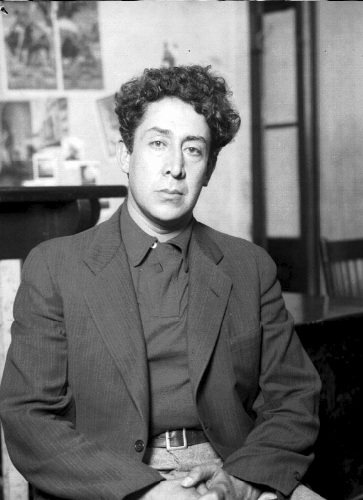 #4
#4
David Alfaro Siqueiros
More experimental of the great Mexican muralists, he uses projections, photography, paint guns and curved surfaces. His compositions envelop the viewer and make the wall a field of moving political forces.
Discover the artist #5
#5
Giotto
In the Scrovegni chapel, he organizes the entire architecture into clear sequences where gestures, looks and volumes make the sacred story immediately human. The Western fresco finds with it a new dramatic power.
See the works #6
#6
Raphael
The Vatican Chambers articulate philosophy, theology, poetry and law in a space of perfect intelligence. The School of Athens remains a model of mural composition, capable of unifying painted architecture and a host of thinkers.
See the works #7
#7
Fra Angelico
In San Marco, his frescoes accompany the silence of Dominican cells and corridors. The sobriety of the decorations, the clear light and the softness of the gestures transform each wall into a meditation support.
See the works #8
#8
Masaccio
The Trinity of Santa Maria Novella fictitiously opens the wall through a rigorous perspective, while the Brancacci Chapel gives the bodies a new weight and emotion. His brief work establishes the resurgent monumentality.
See the works #9
#9
Piero della Francesca
The Legend of the True Cross in Arezzo advances with solemn slowness. Perspective, equal light and geometry of the groups construct a story where each scene has the silent stability of a monument.
See the works #10
#10
Andrea Mantegna
In the Bridegroom's Room, walls and ceilings seem to open onto a living courtyard and a populated sky. His taste for Antiquity and shortcuts transforms the room into a complete illusionist device.
See the worksThe Renaissance as a laboratory
Ranks 11 to 20 - Fresco, perspective and architecture
In Florence, Rome, Umbria and Parma, the wall becomes a constructed space where perspective, light and narration match the building.
 #11
#11
Domenico Ghirlandaio
Its Florentine cycles insert sacred stories into contemporary architecture and portraits. The fresco thus becomes a social chronicle, a gallery of families and an urban spectacle without losing its narrative clarity.
See the works #12
#12
Luca Signorelli
At the San Brizio Chapel in Orvieto, he deploys resurrections, damned and chosen in spectacular anatomy. The tension of his bodies directly announces the monumental inventions of Michelangelo.
See the works #13
#13
Perugino
Its frescoes balance vast squares, Umbrian horizons and ordered figures with an instantly recognizable serenity. The Presentation of the Keys to the Vatican shows how perspective can guide an entire public narrative.
See the works #14
#14
Paolo Uccello
Obsessed with perspective, he uses walls and cloisters as space laboratories. His compositions combine sharp silhouettes, bold shortcuts and almost fantastic episodes, notably in the Flood of Santa Maria Novella.
See the works #15
#15
Benozzo Gozzoli
The Chapel of the Magi unfolds a sumptuous procession through a continuous landscape. Medicean portraits, fabrics, animals and precious details make this small room one of the great wall journeys of the Renaissance.
See the works #16
#16
Fra Filippo Lippi
In Prato and Spoleto, its cycles give sacred stories a familiar grace, populated with elegant profiles and observed gestures. Its flexible line animates the large scale without sacrificing privacy.
See the works #17
#17
Pinturicchio
The Borgia apartment and the Piccolomini library bear witness to his taste for bold colors, gold and archaeological decorations. He designs the wall as a precious, narrative whole perfectly integrated into the architecture.
See the works #18
#18
Melozzo da Forligh
His musical angels and apostles seen from a low angle master the shortcut intended for vaults and domes. Even fragmentary, his frescoes give the impression that the figures are really floating above the viewer.
See the works #19
#19
Andrea del Castagno
The Last Supper of Sant'Apollonia places the apostles in an architecture of painted marble of almost sculptural force. Its isolated and tense characters impose an unusual physical presence on the wall.
See the works #20
#20
Correggio
In the domes of Parma, he dissolves architecture under clouds of ascending bodies and light. His celestial illusionism frees the fresco from the frame and prepares the large baroque ceilings.
See the worksFrom mannerism to grand decor
Ranks 21 to 30 - Palaces, vaults and baroque illusions
The frames open, the ceilings rise and the viewer enters settings that unite painting, stucco, architecture and staging.
 #21
#21
Pontormo
His Chartreuse settings of Galluzzo and Florence abandon classical balance for acidic colors and unstable poses. The fresco becomes a restless, mental and deeply mannerist space for him.
See the works #22
#22
Rosso Fiorentino
In Fontainebleau, he combined painting, stucco and ornaments in a total setting intended for the French court. His nervous figures and strange inventions circulated Italian mannerism on a European scale.
See the works #23
#23
Giulio Romano
The Te Palace in Mantua is his immersive masterpiece: in the Hall of Giants, walls and vaults fictitiously collapse around the visitor. Painting and architecture become a single spectacle.
See the works #24
#24
Veronese
Its large Venetian decorations combine sumptuous architecture, clear skies and elegant crowds. At Villa Barbaro, he plays with doors, balconies and painted figures to erase the line between residence and representation.
See the works #25
#25
The Tintoretto
At the Scuola Grande di San Rocco, he orchestrates dozens of scenes with plunging perspectives and dazzling lights. The cycle transforms the building into a dramatic journey of almost cinematic intensity.
See the works #26
#26
Annibale Carracci
The Farnese gallery reconciles naturalist observation, mythology and ancient models in a false scholarly architecture. This ceiling gives the large baroque decor a flexible, spectacular and lastingly influential grammar.
See the works #27
#27
Stone of Cortona
His Triumph of Divine Providence at the Barberini Palace opens the ceiling to a vision overflowing with allegories. The painted frames break, the figures invade the space and the propaganda becomes a visual celebration.
See the works #28
#28
Giambattista Tiepolo
From Venice to Würzburg, his frescoes transform stairs and ceilings into luminous skies. The lightness of the colors, the audacity of the diagonals and the mastery of the points of view give the Baroque its last great European breath.
See the works #29
#29
Andrea Pozzo
Jesuit and perspective theorist, he made the vault of Sant'Ignazio disappear under an impossible celestial architecture. His quadraturism precisely regulates the illusion from a point of view chosen from the ground.
See the works #30
#30
Josep Maria Sert
It covers salons, palaces, cathedrals and institutions with titanic compositions in gold, brown and metallic gray. Painted on panels then mounted on the wall, his work reinvents the great baroque decor in the 20th century.
See the worksPublic art in the 20th century
Ranks 31 to 40 - Mexico, United States and monumental abstraction
Revolution, work, identity, science and modernity give the mural a civic function, while mosaic and abstraction renew its materials.
 #31
#31
Rufino Tamayo
Without repeating Rivera's revolutionary program, it integrates pre-Columbian forms, dense color and modern language with several wall controls. Its large surfaces favor plastic energy and the human condition.
Discover the artist #32
#32
Juan O'Gorman
Painter, mosaicist and architect, he unites building and image in the central library of UNAM. Thousands of colored stones envelop the facades of a visual history of Mexico readable on an urban scale.
Discover the artist #33
#33
Thomas Hart Benton
Its regional cycles undulate American workers, machines, musicians and landscapes in almost sculpted compositions. The walls become a popular history of the territory, crossed by conflicts and rhythms.
Discover the artist #34
#34
John Steuart Curry
At the Kansas Capitol, he painted tornado, abolitionist and rural life with direct energy. Its monumental regionalism combines local identity, climate drama and political history without idealizing the Midwest.
See the works #35
#35
Ben Shahn
His murals and mosaics combine expressive silhouettes, letters and stories of social justice. He brings a humanist, critical and instantly recognizable voice to the American public program.
Discover the artist #36
#36
Aaron Douglas
In Aspects of Negro Life, its layered silhouettes, luminous circles and Art Deco rhythms tell the African-American history of Africa in Harlem. The mural becomes collective memory and modern affirmation.
Discover the artist #37
#37
Jose Chavez Morado
Heir to the second Mexican generation, he experiments with fresco, vinyl, stone, bronze and mosaic. His ensembles at UNAM and Guanajuato connect national history, science, work and modern architecture.
Discover the artist #38
#38
Rina Lazo
Trained with Diego Rivera, she develops her own frescoes around Mayan cultures, social memory and political struggles. His reconstructions of Bonampak also transmitted a fragile wall heritage to the public.
Discover the artist #39
#39
Fernand Léger
He dreams of colorful art taken out of the frame and shared by all. Murals, mosaics and stained glass extend its simplified figures and frank contrasts in architecture, from the factory to the civic building.
See the works #40
#40
Jean Dewasne
Its Antisculptures and vast decorations use flat industrial areas, mechanical networks and acidic colors. It adapts constructive abstraction to architectural surfaces, up to the immense Grande Arche de la Défense.
Discover the artistThe contemporary wall
Ranks 41 to 50 - From Picasso to world street art
Ceramics, ceilings, stencils, photographic collage and wall engraving extend monumental painting in the contemporary city.
 #41
#41
Pablo Picasso
Guernica, designed for a pavilion, gives modern monumental painting universal political power. Its Vallauris and UNESCO decorations also show how it adapts line, ceramics and story to public space.
Discover the artist #42
#42
Joan Miro
He transposes signs, stars and primary colors onto ceramic walls, facades and public spaces. With Josep Llorens Artigas, he creates resistant surfaces where the poetic gesture dialogues with the city and architecture.
Discover the artist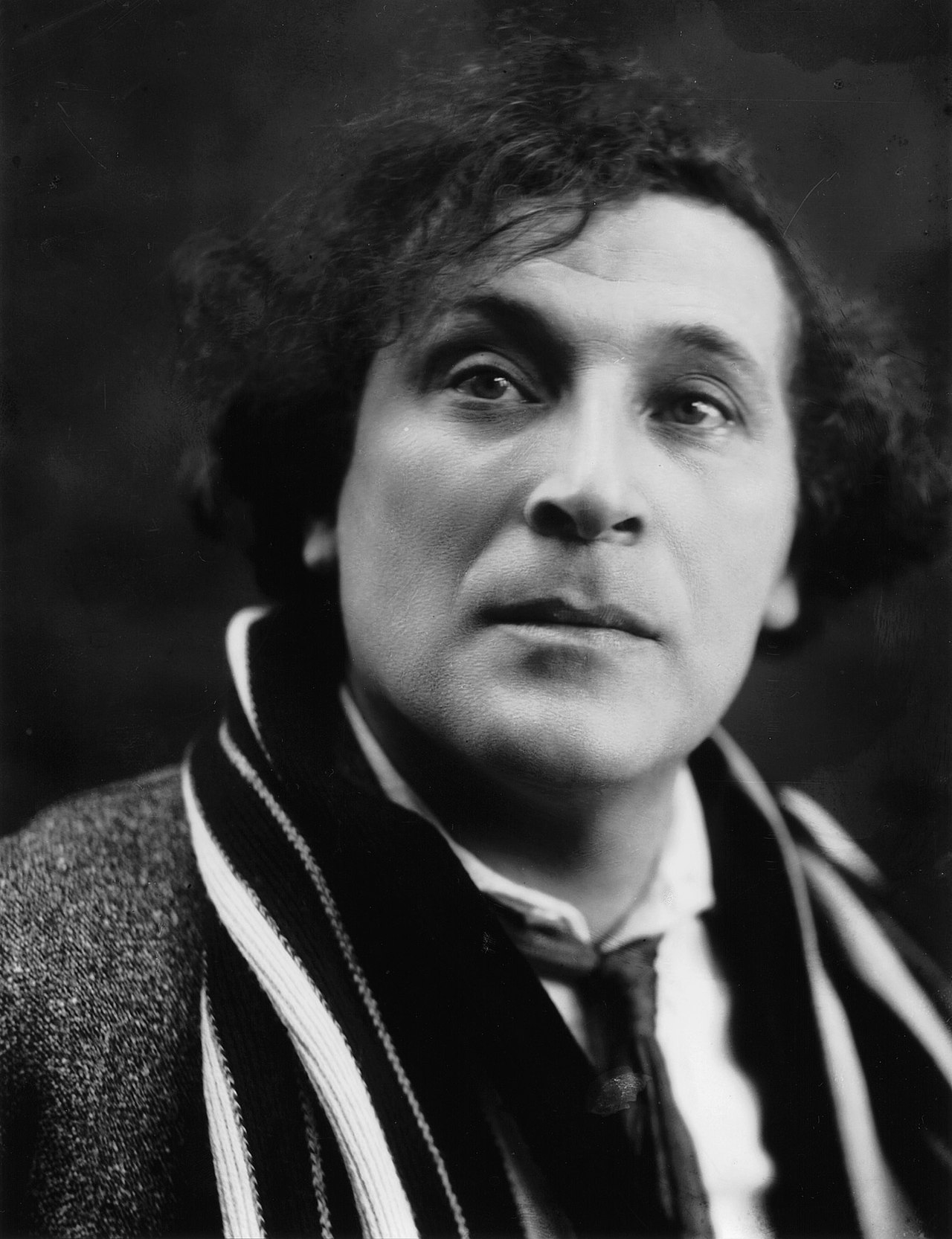 #43
#43
Marc Chagall
Ceilings, stained glass windows, mosaics and monumental paintings allow it to envelop the viewer in a world of music, memory and floating figures. Its ceiling at the Paris Opera remains his most famous public gesture.
Discover the artist #44
#44
Keith Haring
It preserves the immediacy of line drawing on public walls. Crack Is Wack, Tuttomondo and his hospital frescoes transform pop vocabulary into collective messages about health, solidarity and freedom.
Discover the artist #45
#45
Banksy
The stencil allows him to intervene quickly on urban architecture and divert its signs. By playing with cracks, doors and surveillance devices, it makes the real place an essential part of the image.
Discover the artist #46
#46
Shepard Fairey
Coming from the sticker and the poster, it enlarges portraits, decorative motifs and slogans down to the scale of the building. Its walls combine graphic seduction, diverted propaganda and civic positions.
Discover the artist #47
#47
JR
His monumental photographic portraits shift muralism toward collage and participation. Facades, slums, museums and borders become temporary supports of faces that make often ignored communities visible.
Discover the artist #48
#48
Os Gêmeos
Brazilian twins populate walls, trains and buildings with yellow characters, imaginary architecture and motifs inspired by Sao Paulo. Their universe transforms the urban fresco into an immediately recognizable dreamlike story.
Discover the artist #49
#49
Eduardo Kobra
His faceted polychrome portraits occupy entire facades and celebrate historical figures, indigenous peoples or themes of peace. Bright color becomes an urban signal capable of modifying the perception of a neighborhood.
Discover the artist #50
#50
Vhils
Rather than adding a layer, he removes coating, posters and material to make faces appear. His engraved portraits literally reveal the stratified memory of the wall and that of the inhabitants.
Discover the artistSources and extensions
Deepen the history of mural painting
The resources of museums and heritage institutions make it possible to place the works in their building, their iconographic program and their technique. They also show how conservation and visit are inseparable from monumental art.
Read on Alpha Reproduction
Museum references
- Vatican Museums - the ceiling of the Sistine Chapel
- Vatican Museums - history of the chapel frescoes
- MoMA - Mexican muralism
- MoMA - Diego Rivera's transportable frescoes
- INBAL - the muralists of the Palacio de Bellas Artes
- Smithsonian American Art Museum - Aaron Douglas
- Keith Haring Foundation - public works and frescoes
The wall makes painting a collective experience
From the Scrovegni Chapel to the ceiling of the Sistine Chapel, the wall allowed painters to coordinate narrative, architecture and movement of the gaze. Giotto gives human weight to sacred stories; Raphael commands knowledge; Mantegna, Correggio, Carracci and Pozzo open fictional spaces above the visitor. Each era invents a different way of making people forget, emphasize or cross the wall.
In the 20th century, Rivera, Orozco and Siqueiros placed society and conflict at the center of the public image. Benton, Douglas, Shahn, Léger, Miro and Dewasne extend this ambition into other contexts and other materials. Haring, Banksy, JR, Os Gêmeos, Kobra and Vhils finally recall that a wall remains a living support, exposed to the neighborhood, time and debate. Monumental painting is therefore not only an enlarged format: it is a way of making art inseparable from a place and those who pass through it.
0 comments