

50 artists · Peoples, territories and modernities
50 indigenous and indigenous painters to know
From Norval Morrisseau, Emily Kame Kngwarreye and Kenojuak Ashevak to Esther Mahlangu, Jangarh Singh Shyam and Britta Marakatt-Labba.
"Indigenous" and "indigenous" designate neither a common aesthetic nor a fixed era. This classification brings together Anishinaabe, Inuit, Cree, Yolŋu, Gija, Arrernte, Morāori, Zapotec, Aymara, Pardhan Gond, Sámi, Ndebele and other peoples whose works are constructed in very different contexts: colonization, missions, residential schools, exiles, artist cooperatives, land defense movements and contemporary global scenes. The centers studied range from Kinngait and the Great Lakes to the central Australian desert, from Sápmi to the Andes, from Oaxaca to Madhya Pradesh. The classification combines historical influence, formal invention, role in transmission, political reach, museum presence and capacity to transform the language of painting, drawing and prints. It does not claim to speak on behalf of communities: each notice locates a unique trajectory and invites you to consult the sources chosen by institutions and artists.
Painting, drawing, prints, bark, watercolor, textiles and contemporary practices.
Name accurately
Indigenous, indigenous, First Peoples: relationship terms
Words vary by country, language and community preferences. In Canada, there are First Nations, Inuit and Métis; in Australia, Aboriginal and Torres Strait Islander peoples brings together many nations; Sápmi crosses several states; "Adivasi" covers diverse realities in India. The term "indigenous" is used here in its international sense, close to indigenous peoples, and not as a stylistic label. Each card favors, when sources allow, the people or community of the artist.
Territory and transmission
An image can be map, memory, rights and responsibility
In many traditions, representing a place, an ancestral being or a clan design is not a freely available decoration. The artist may hold specific rights and responsibilities over what he shows. Country in Australia, Inuit Nunangat, Anishinaabe territories, Sápmi or Andean landscapes are not simple backgrounds: they organize kinship, narrative, ecology and sovereignty. Looking at these works therefore requires observing the form while respecting the limits of what is explained publicly.
Markets and institutions
Cooperatives, museums and copyright have shaped visibility
The workshops of Kinngait, Papunya Tula, Utopia, Warmun and Yirrkala allowed artists to produce and distribute their works, but the markets also encouraged pressure, copies and simplifying stories. Several figures on this list defended image control, remuneration and intellectual property. Museums today revise attribution, provenance, vocabulary and exhibition conditions. This institutional history matters as much as formal movements in understanding why certain names became famous and others remain to be discovered.
The Top 10
Ten landmarks that changed art history
From Morrisseau and Kngwarreye to Mahlangu, Tamayo and Guayasamin, these ten artists show from the outset that there is neither a unique indigenous style nor a simple opposition between tradition and modernity.
#1
Norval Morrisseau
Founder of the Woodland School, Norval Morrisseau surrounds animals, spirits and figures with powerful black contours connected by energy lines. He transposes Anishinaabe stories into modern language without reducing them to folklore.
Read Norval Morrisseau's biography on Wikipedia #2
#2
Emily Kame Kngwarreye
Emily Kame Kngwarreye transforms the responsibilities of her Country of Alhalkere into fields of dots, lines and colors of astonishing freedom. His late career shakes up the history of Australian abstraction.
Read Emily Kame Kngwarreye's biography on Wikipedia #3
#3
Albert Namatjira
Albert Namatjira masters Western watercolor to paint the gorges, gum trees and luminous distances of his country Arrernte. Beneath their apparent serenity, its landscapes affirm an intimate knowledge of the territory and an indigenous presence.
Read the biography of Albert Namatjira on Wikipedia #4
#4
Kenojuak Ashevak
Kenojuak Ashevak gives Arctic birds, fish and creatures an instantly recognizable heraldic grace. The Enchanted Owl made her a founding figure in modern Kinngait printmaking.
Read Kenojuak Ashevak's biography on Wikipedia #5
#5
Kent Monkman
Kent Monkman turns the codes of great history painting to tell the story of colonization, dispossession and resilience from a Cree and Queer perspective. His alter ego Miss Chief Eagle Testickle humorously shifts the authority of the museum.
Read Kent Monkman's biography on Wikipedia #6
#6
Daphne Odjig
Daphne Odjig combines fluid contours, flat chromatic areas and family stories to explore love, community and cultural sovereignty. Co-founder of Professional Native Indian Artists Inc., she opened a decisive space for contemporary Indigenous artists.
Read Daphne Odjig's biography on Wikipedia #7
#7
Clifford Possum Tjapaltjarri
Clifford Possum Tjapaltjarri organizes Western Desert stories as vast layered maps. Its networks of circles, tracks and dotted fields make several times and places visible in a single surface.
Read the biography of Clifford Possum Tjapaltjarri on Wikipedia #8
#8
Esther Mahlangu
Esther Mahlangu transposes ndebele wall geometries onto canvas, architecture, objects and automobiles without losing their cultural force. Its bold colors show that a living tradition can circulate worldwide while remaining situated.
Read Esther Mahlangu's biography on Wikipedia #9
#9
Rufino Tamayo
Rufino Tamayo favors material, color and human figure rather than the orthodox muralist narrative. Nourished by his Zapotec heritage and international modern art, his painting affirms a Mexican modernity irreducible to slogans.
Read Rufino Tamayo's biography on Wikipedia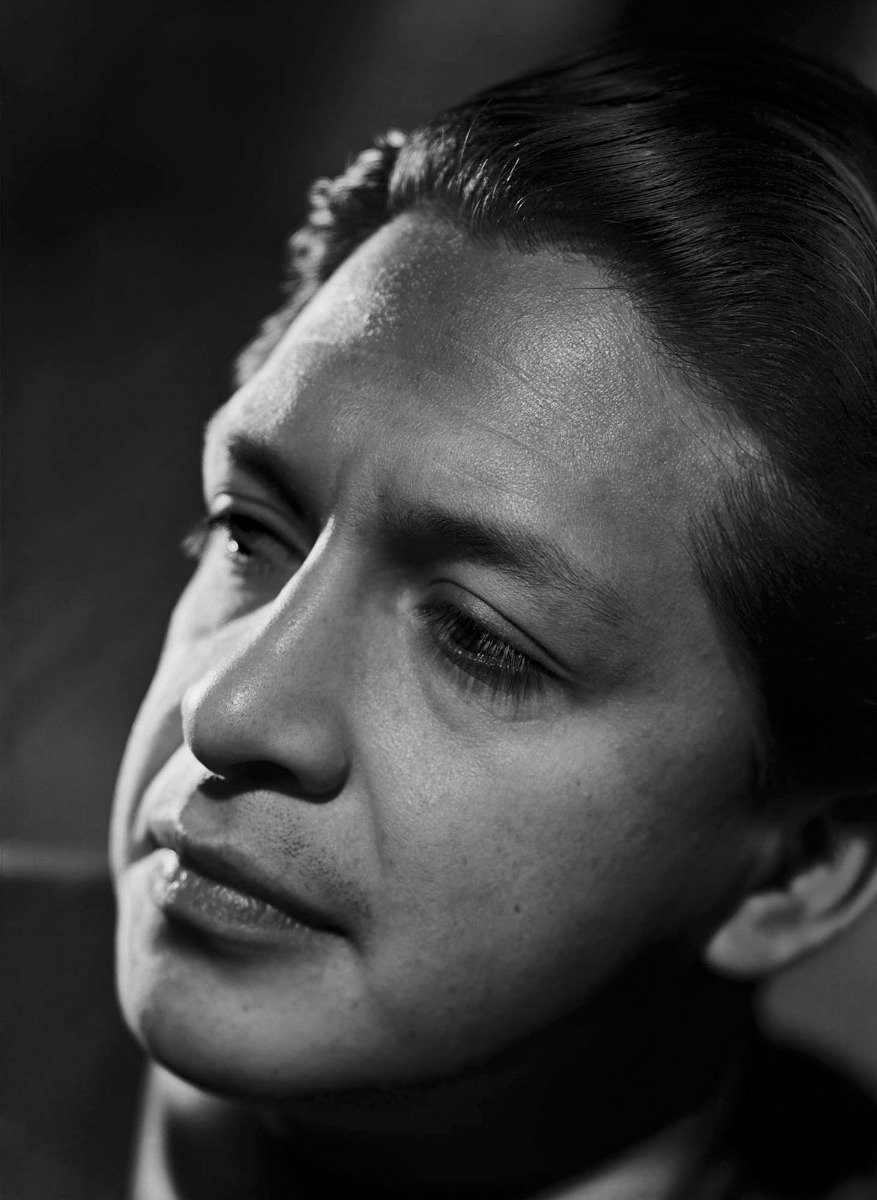 #10
#10
Oswaldo Guayasamin
Oswaldo Guayasamin enlarges hands, faces and bodies to the point of making pain a monumental language. His work, marked by his Kichwa and mixed-race origins, denounces political violence, racism and poverty in the Andes and beyond.
Read the biography of Oswaldo Guayasamin on WikipediaChapter I · Ranks 11 to 20
Arctic and North America: drawing the contemporary world
Woodland School, Kinngait workshops, abstraction and critical painting circulate stories, memory and urban experience without detaching the image of the community.
 #11
#11
Rita Letendre
Rita Letendre throws oblique beams into dark spaces where color appears to become speed. Its abstraction, built between Abenaki heritage and Quebec avant-gardes, refuses any assigned identity and imposes a physical presence.
Read Rita Letendre's biography on Wikipedia #12
#12
Pitseolak Ashoona
Pitseolak Ashoona draws from memory camps, clothes, travels and family relationships with a rare autobiographical franchise. Its thousands of sheets preserve a lived Inuit experience while participating in the invention of Kinngait's graphic art.
Read Pitseolak Ashoona's biography on Wikipedia #13
#13
Jessie Oonark
Jessie Oonark constructs frontal and symmetrical silhouettes inspired by Inuit clothing, tattoos and female roles. Drawing, print and hanging become architectures of memory and transmission for her.
Read Jessie Oonark's biography on Wikipedia #14
#14
Shuvinai Ashoona
Shuvinai Ashoona populates large drawings of monsters, planets, eggs and community scenes where everyday life and cosmic imagination mingle. Its visual world radically expands what is expected of contemporary Inuit art.
Read Shuvinai Ashoona's biography on Wikipedia #15
#15
Annie Pootoogook
Annie Pootoogook observes televisions, shopping, meals, intimacy and domestic violence without exoticism. His direct line brings Kinngait's contemporary life into the field of international drawing.
Read Annie Pootoogook's biography on Wikipedia #16
#16
Kananginak Pootoogook
Kananginak Pootoogook represents hunters, birds and transformations of the North with attentive precision. A founding member of the Kinngait cooperative, he links graphic mastery, knowledge of wildlife and collective history of prints.
Read Kananginak Pootoogook's biography on Wikipedia #17
#17
Michael Nicoll Yahgulanaas
Michael Nicoll Yahgulanaas brings together formal Haida lines, comics and environmental storytelling in his "Haida Manga". His compositions read both as spectacular images and stories of responsibility.
Read the biography of Michael Nicoll Yahgulanaas on Wikipedia #18
#18
Rebecca Belmore
Rebecca Belmore mobilizes drawing, sculpture, performance and installation to make territory, body and colonial memory sensitive. Even when painting is not his only medium, his work places the Anishinaabe voice at the center of the gaze.
Read Rebecca Belmore's biography on Wikipedia #19
#19
Yellow Quick-to-See Smith
Yellow Quick-to-See Smith superimposes maps, newspapers, signs and painted gestures to question the making of the United States. His incisive humor transforms clichés about indigenous peoples into visual critique of power.
Read Jaune Quick-to-See Smith's biography on Wikipedia #20
#20
George Morrison
George Morrison narrows the Lake Superior skyline to a persistent line crossing mosaics of material and abstract fields. His painting connects modernist experience and Anishinaabe relationship to the place without illustrating an expected symbol.
Read George Morrison's biography on WikipediaChapter II · Ranks 21 to 30
Inuit print and maps of the Australian desert
From Chee Chee's minimal gesture to Country maps of Gabori, Petyarre and Pwerle, the surface becomes a territory of transmission, invention and responsibility.
 #21
#21
Benjamin Chee Chee
Benjamin Chee Chee purifies birds and animals in a few rapid curves, letting the white of the paper carry the movement. This economy of means gives it a distinct voice within the second generation Woodland.
Read Benjamin Chee Chee's biography on Wikipedia #22
#22
Andrew Qappik
Andrew Qappik masters stone engraving, stenciling, etching and lithography to tell the story of life on earth, family and Arctic changes. He also designed major elements of Nunavut's visual identity.
Read Andrew Qappik's biography on Wikipedia #23
#23
Lukta Qiatsuk
Master printer of the West Baffin Eskimo Co-operative, Lukta Qiatsuk has contributed to more than two hundred prints while developing her own figures, birds and owls. His technical knowledge is inseparable from Kinngait's influence.
Read Lukta Qiatsuk's biography on Wikipedia #24
#24
David Ruben Piqtoukun
David Ruben Piqtoukun combines stone, metal and drawing to talk about shamanism, displacement and family memory. His expanded practice brings Inuit materials and contemporary forms into dialogue with a strong narrative dimension.
Read the biography of David Ruben Piqtoukun on Wikipedia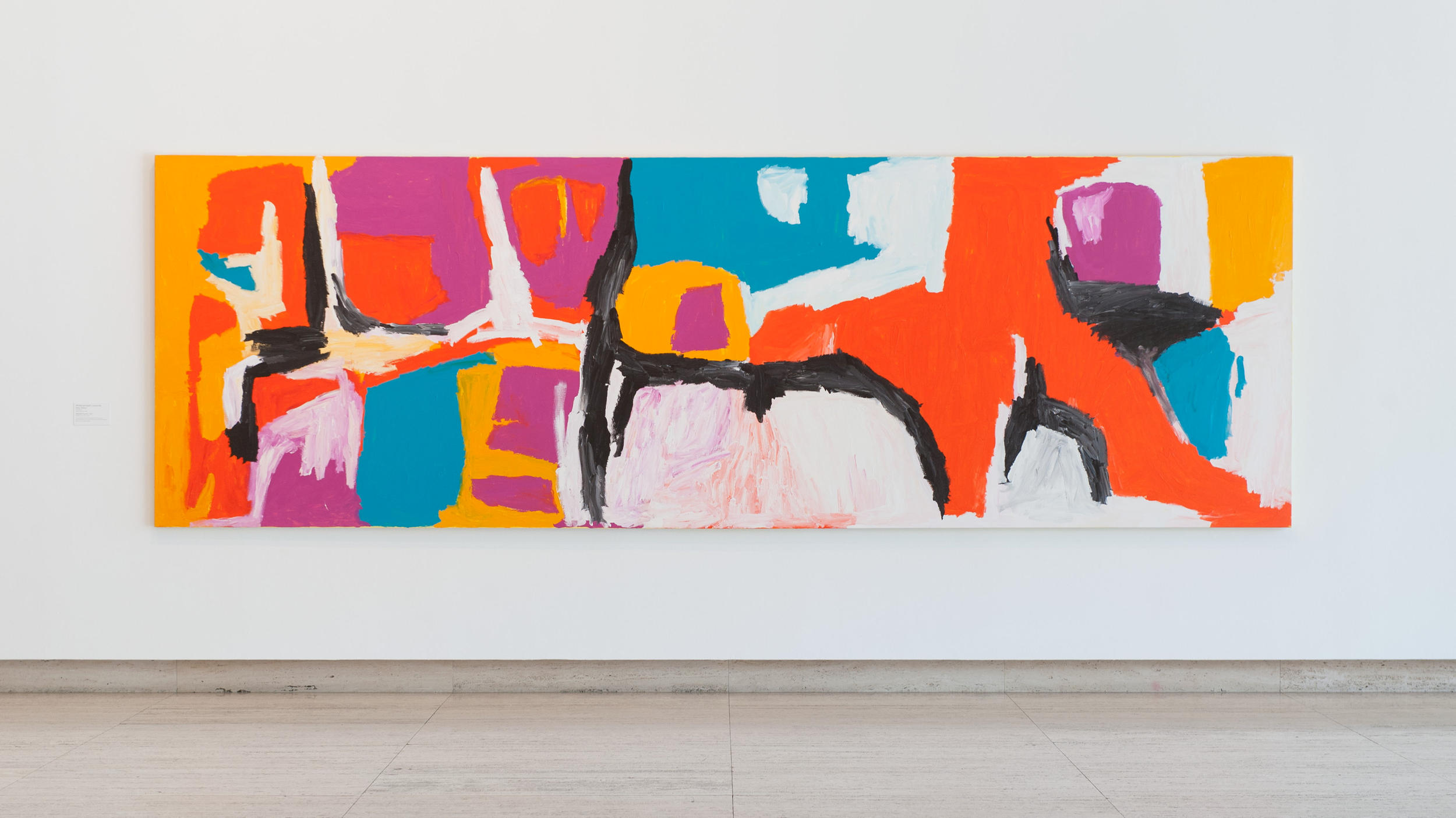 #25
#25
Sally Gabori
Sally Gabori began painting very late and immediately invented vast colorful fields linked to the places of Bentinck Island. Its vibrant flat areas are not detached abstractions: they condense geography, family and kaiadilt memory.
Read Sally Gabori's biography on Wikipedia #26
#26
Kathleen Petyarre
Kathleen Petyarre builds tiny networks of points around the courses of the Arnkerrth, the thorny devil. Its surfaces appear seen from the sky while recording wind, dunes and obligations towards Country.
Read Kathleen Petyarre's biography on Wikipedia #27
#27
Minnie Pwerle
Minnie Pwerle paints in broad gestures Awelye's motifs and the foods of her country Atnwengerrp. Begun around 2000, his brief career produced an immediately physical, rhythmic and luminous painting.
Read Minnie Pwerle's biography on Wikipedia #28
#28
Gabriella Possum Nungurrayi
Gabriella Possum Nungurrayi deploys female ceremonies, constellations and ancestral journeys in dense compositions. She renews the pictorial heritage of her father Clifford Possum with expansive color and personal narration.
Read Gabriella Possum Nungurrayi's biography on Wikipedia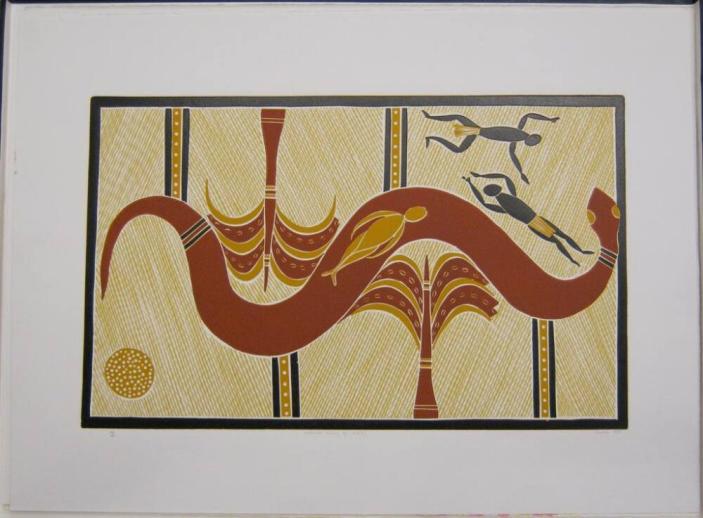 #29
#29
Banduk Marika
Banduk Marika engraves and paints Yalangbara's stories with the authority of a rirratjingu guardian. Artist, copyright activist and cultural leader, she defended indigenous control of images and knowledge.
Read Banduk Marika's biography on Wikipedia #30
#30
Lin Onus
Lin Onus combines rarrk from Arnhem Land, Western landscape and sometimes surreal images to reveal colonial history hidden in the Australian setting. His humor never attenuates the political precision of the subject.
Read Lin Onus' biography on WikipediaChapter III · Ranks 31 to 40
Australia: colonial history, sovereignty and Country
Postmodern painting, bark, Hermannsburg watercolor and urban art reveal the diversity of nations, languages and visual strategies of Australia's First Peoples.
/https://agsa-prod.s3.amazonaws.com/media/dd/images/89875-WR-20182P9.48f057f.jpg) #31
#31
Richard Bell
Richard Bell diverts slogans, pop art and abstraction to expose the mechanisms of the market and the "Aboriginal art" category. His painting is deliberately polemical, funny and directly linked to self-determination.
Read Richard Bell's biography on Wikipedia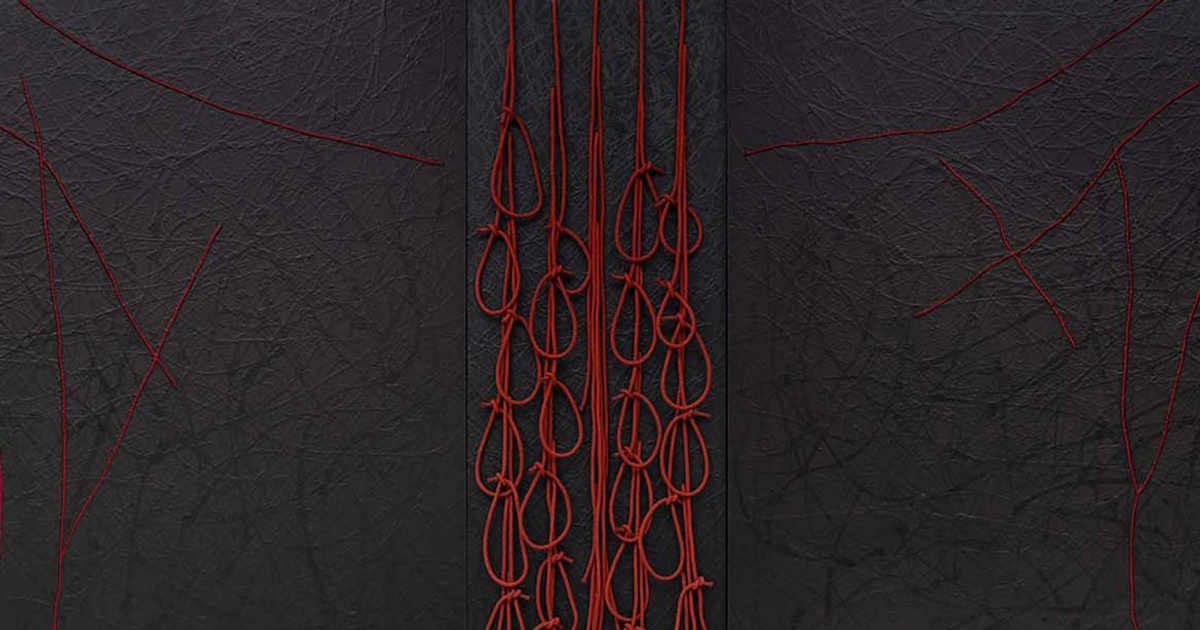 #32
#32
Gordon Bennett
Gordon Bennett cites Pollock, Basquiat, maps and textbooks to dismantle the racial construct of Australian history. Its visual collisions refuse to allow a single identity to enclose the artist or spectator.
Read Gordon Bennett's biography on Wikipedia #33
#33
Bronwyn Bancroft
Bronwyn Bancroft combines intense color, graphics and Country stories in both painting and illustration. His cultural and educational work has made several generations of Australian First Nations creators visible.
Read Bronwyn Bancroft's biography on Wikipedia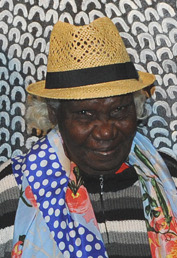 #34
#34
Lena Nyadbi
Lena Nyadbi repeats barramundi scales and lance points in sober ochres to tell Dayiwul Country. The monumental transposition of Dayiwul Lirlmim on the roof of Quai Branly connects work, territory and mining history.
Read Lena Nyadbi's biography on Wikipedia #35
#35
Wanyubi Marika
Wanyubi Marika paints the stories and drawings of the clan for which he is responsible in ocher on bark. His work combines ceremonial demands, community leadership and the ability to invite the public into yolŋu knowledge systems.
Read Wanyubi Marika's biography on Wikipedia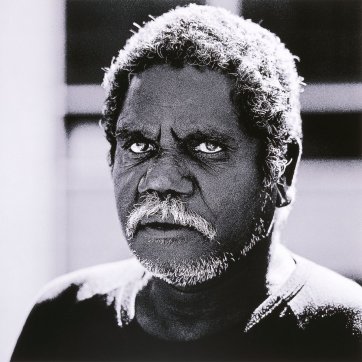 #36
#36
Jimmy Wululu
Jimmy Wululu transforms fish bones, honey and long-necked turtles into networks of high-density chevrons. His paintings on bark and burial posts gave a major voice to the Aboriginal Memorial.
Read Jimmy Wululu's biography on WikipediaHenoch Raberaba
Henoch Raberaba continues Hermannsburg watercolor with landscapes of mountains, valleys and trees described from an arrernte knowledge of the terrain. Its calm design retains the geological structure behind the light.
Read Henoch Raberaba's biography on WikipediaRichard Moketarinja
Richard Moketarinja paints Palm Valley and the central ranges in light watercolor, retaining a more traditional construction than many of his contemporaries in Hermannsburg. His views articulate memory, observation and belonging.
Read the biography of Richard Moketarinja on Wikipedia #39
#39
Aretha Brown
Aretha Brown uses portraiture, murals and graphics to represent youth, queer identity and Gumbaynggirr activism. His public images make the contemporary indigenous face a subject of authority rather than an ethnographic object.
Read Aretha Brown's biography on Wikipedia #40
#40
Ralph Hotere
Ralph Hotere charges the black with reflections, incisions and words to speak of mourning, land and political opposition. Its material sobriety gives New Zealand abstraction a profoundly morai gravity.
Read Ralph Hotere's biography on WikipediaChapter IV · Ranks 41 to 50
Pacific, Andes, Gond and Sápmi: related modernities
Morai, Niueans, Zapotecs, Aymaras, Pardhan Gond, Sami and Greenland Inuit place their works in global networks without abandoning specific histories and territories.
 #41
#41
John Pule
John Pule covers large canvases of figures, plants, maps and signs arranged like an expanding cosmology. Migration, Christianization and memory of Niue become an unstable and poetic pictorial space.
Read John Pule's biography on Wikipedia #42
#42
Francisco Toledo
Francisco Toledo brings out iguanas, bats, insects and bodies in an earthy and sensual material. His Zapotec work is accompanied by a lasting commitment to the languages, libraries and heritage of Oaxaca.
Read Francisco Toledo's biography on Wikipedia #43
#43
Roberto Mamani Mamani
Roberto Mamani Mamani uses suns, mountains, condors and saturated colors to celebrate an Aymara vision of the world. His monumental painting places Andean symbols and indigenous pride in the heart of the contemporary city.
Read the biography of Roberto Mamani Mamani on Wikipedia #44
#44
Jangarh singh shyam
Jangarh Singh Shyam transposes deities, animals and pardhan gond stories onto paper, canvas and walls with a pulsating network of dots and lines. His language opened a major path to contemporary Adivasi art.
Read Jangarh Singh Shyam's biography on Wikipedia #45
#45
Bhajju Shyam
Bhajju Shyam describes London, the forest and everyday life using animal signs and hinge textures. His work shows how a narrative tradition can interpret the global metropolis without losing its own logic.
Read Bhajju Shyam's biography on Wikipedia #46
#46
Nils-Aslak Valkeapää
Nils-Aslak Valkeapää unites drawing, photography, poetry and joik to make people feel reindeer migrations, seasons and smani continuity. His visual books are total works where page, landscape and voice respond to each other.
Read the biography of Nils-Aslak Valkeapää on Wikipedia #47
#47
Britta Marakatt-Labba
Britta Marakatt-Labba embroiders on long strips of fabric migrations, camps, myths and political resistance. The delicacy of the thread becomes a linear painting capable of carrying a collective Sámi story.
Read Britta Marakatt-Labba's biography on Wikipedia #48
#48
Maret Anne Sara
Mâret Anne Sara combines drawing, installation and reindeer-related materials to denounce policies that threaten livestock breeding and Sámi sovereignty. Its visual language transforms a local conflict into a universal ecological question.
Read the biography of Maret Anne Sara on Wikipedia #49
#49
Jessie Kleemann
Jessie Kleemann brings painting, poetry, video and performance into dialogue with uaajeerneq masked dance. Her body and images confront Danish colonial heritage, feminism and climate change from Greenland.
Read Jessie Kleemann's biography on Wikipedia #50
#50
Freddie Timms
Freddie Timms paints flat areas of ocher aerial maps of the Kimberley marked by tracks, stations and places of violence. His landscapes of memory record the gija experience of colonization without separating history and Country.
Read Freddie Timms' biography on WikipediaSources and routes
Deepen without detaching the works from their contexts
Explore Alpha Reproduction
Museum and indigenous references
- Inuit Art Foundation - artist profiles
- National Gallery of Canada - Indigenous and Canadian art
- National Gallery of Australia - First Nations art
- Art Gallery of New South Wales - Aboriginal and Torres Strait Islander art
- Smithsonian National Museum of the American Indian
- Art Canada Institute - Pitseolak Ashoona
- Kluge-Ruhe - Maḏayin, painting on yolŋu bark
These fifty trajectories do not form a margin: they redraw the center
This ranking places side by side artists whom ancient art histories separated between "modern art", "craft", "ethnography" and "tradition". However, Morrisseau invents a modern graphic language based on Anishinaabe knowledge; Kngwarreye transforms abstract painting from Alhalkere; Ashevak and Oonark make prints and drawings from living archives; Bennett and Bell dismantle colonial images with the tools of contemporary art; Marakatt-Labba makes thread a historical line on the scale of Sápmi.
The best way to navigate these works is to hold formal freedom and context together. Compare the lines: woodland energetic outline, Arnhem Land rarrk, desert dotted line, Chee Chee minimal curve, smi embroidery. Then observe what each image allows you to see and what it chooses to preserve. Finally, favor the sources of artists, communities and institutions engaged in a lasting relationship. Knowing these painters does not mean collecting patterns; it means learning to recognize authors, rights, territories and modernities that speak in the present.
0 comments