

25 facts about Van Gogh
Twenty-five facts dated, sourced, cross-checked - and five preconceived ideas that we read everywhere but which do not hold up as soon as we open the letters or catalogs. To understand Van Gogh without confusion.

Twenty-five facts, in five blocks
Vincent van Gogh (1853-1890) is one of the most documented and distorted artists in art history. The scholarly edition of his correspondence (Van Gogh Museum /Huygens ING) brings together 903 letters (820 written by Vincent, 83 received) - available online. The printed edition in 6 volumes (2009) listed 902 (819 + 83); a letter since discovered has been added to the web edition. For their part, the catalogs raisonnés and material research make it possible to date and contextualize almost the entire work. However, we still read that "Van Gogh cut off his ear", that "his madness made him great", or that'"he never sold any paintings". None of these statements are accurate as worded.
Here are 25 cross-checked facts, with institutional sources, and 5 preconceived ideas to correct.
Birth, family, original profession.
Formation, rupture, turning points.
Nuenen, Paris, Arles, Saint-Rémy, Auvers.
Figures, sales, flagship tables.
Correspondence, death, posterity.

Facts 1-5: The Man Behind the Myth
Five dates, five names, five sentences are enough to set the framework for Van Gogh's life - and to avoid the misinterpretations that we read everywhere.
Died July 29, 1890 in Auvers-sur-Oise (France), at age 37. His date of birth is regularly confused with that of Théo (May 1, 1857) or with his own date of death. Sources: Wikipedia (en) - Vincent van Gogh, Van Gogh Museum.
His father, Theodorus van Gogh (1822-1885), was pastor of the Dutch Reformed Church. His mother, Anna Cornelia Carbentus (1819-1907), from a bourgeois family in The Hague. The environment is religious, literate, stable. Source: Wikipedia (en) - Theodorus van Gogh (pastor).
Four years apart. Théo worked at Goupil & Cie from 1873, became an art dealer in Paris, and financially supported Vincent from 1881 to 1890. He died on January 25, 1891 in Utrecht, after a serious deterioration in his physical and neurological condition. The exact causes are still the subject of medical and biographical debate. Source: Van Gogh Museum - Theo van Gogh.
From 1869 to 1876, Van Gogh worked for Goupil & Cie, a major international art house, in The Hague, London then Paris. A member of his family was associated with it (his uncle Vincent van Gogh, known as "Uncle Cent"), but the company did not belong to the family. His relations with the art trade gradually deteriorated and his employment ended in 1876. Source: Wikipedia (fr) - Goupil & Cie.
In 1877, he prepared to study theology in Amsterdam, abandoned this project, attended a missionary school in Brussels, then was sent as a lay preacher to Borinage (Belgium) in 1878-1879. His mission is not renewed, which will be decisive for his artistic orientation. Source: Van Gogh Museum - Le Borinage.
Facts 6 to 10: the shift towards painting
Van Gogh decided to become an artist in 1880, at the age of 27. In ten years, he produced most of a work of more than 2,000 pieces. It's a short, late, and largely self-taught career - but not without training.
The turning point began in 1880, in Brussels, after the failure of Borinage. He then decided to become a painter, even though he had already been drawing before, notably during his years at Goupil. Letters to his brother Théo from this period document this choice, more than a precise first work. Source: The Letters of Vincent van Gogh.
Van Gogh was initiated alone, copied engravings (Millet, Rembrandt) and practiced on live models. He also received advice from Anton Mauve in The Hague, briefly attended the Royal Academy of Fine Arts in Brussels (1880-1881), then the Royal Academy of Fine Arts in Antwerp (January-May 1886), then the Royal Academy of Fine Arts in Antwerp (January-May 1886), which he left angry with his teachers. Source: Van Gogh Museum.
Hired as a lay preacher in Wasmes, in the mining basin. His mission is not renewed: he lived among the miners, shared their misery, neglected official reports. This rupture is founding - he ceases to be a notable to become an observer of the people. Source: Van Gogh Museum - Le Borinage.
Twenty-two months at Théo's, 54 rue Lepic in Montmartre. There he met Toulouse-Lautrec, Pissarro, Gauguin, Seurat, Signac. His palette becomes clearer: from the browns and blacks of Nuenen, he goes to yellows, reds, greens. More than 200 paintings in two years. Source: Musée d'Orsay - Van Gogh in Paris.
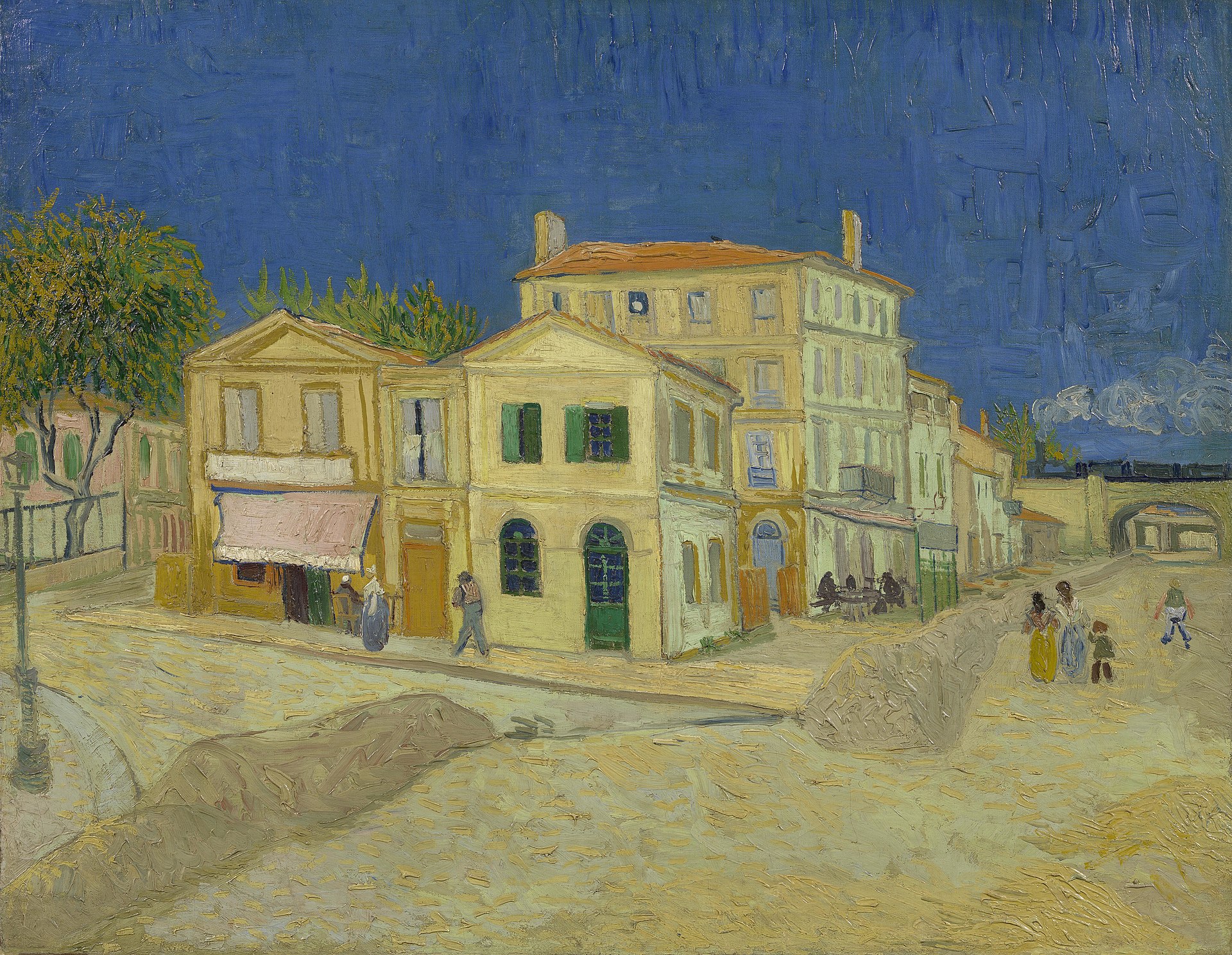
Van Gogh and Gauguin have known each other since Paris. In October 1888, Gauguin joined Van Gogh in the "Yellow House" of Arles, where they shared the workshop for about nine weeks. The experiment was cut short after the incident of December 23, 1888: following an argument, Van Gogh mutilated his ear. Gauguin leaves Arles shortly after. Source: Van Gogh Museum - The Yellow House.
Facts 11 to 15: ten years, five periods
L'autobiography in painting de Van Gogh reads like a journey: Brabant, Paris, Provence, asylum, village of Île-de-France. Five places, five palettes, five intensities.


Two years in the Netherlands, in Nuenen with his parents. Flagship work: Potato Eaters (april-may 1885). Dark palette, peasant subjects, interest in Millet. Source: Van Gogh Museum - The Potato Eaters.
Under the influence of Pissarro, Seurat and Signac, Van Gogh abandoned earthy tones. In two years, he produced more than 200 paintings, including series of restaurants, gardens and Parisian portraits. Source: Musée d'Orsay.
The most productive period. The "dream of the South": painting under the sun, founding a community of artists. Sunflowers, The Yellow House, The Night Café, The bedroom. Cohabitation with Gauguin ends in ear incident. Source: Van Gogh Museum - In Arles.
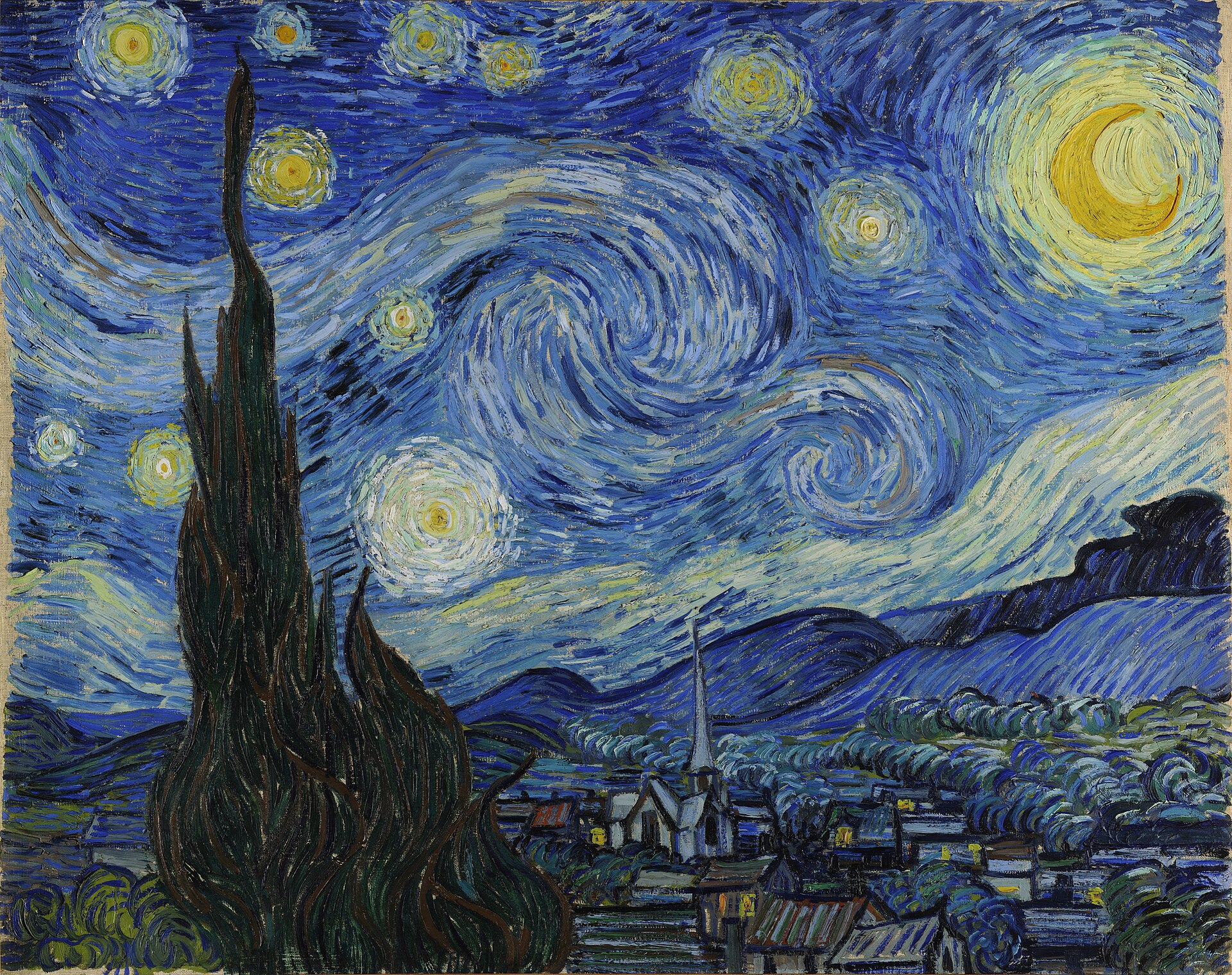
Voluntarily interned at the Saint-Paul-de-Mausole asylum. He paints in the garden and in the workshop: Starry Night, The Iris, The Olives. More than 150 works in one year. Released May 16, 1890. Source: Van Gogh Museum - In Saint-Rémy.
In Auvers, he lived at the Ravoux inn and received the attention of Doctor Paul Gachet, doctor and art lover. The wheat field with crows, Portrait of Dr. Gachet, The Auvers Church. He shot himself on the evening of July 27, 1890. He died on July 29, 1890, Théo being at his bedside. Buried on July 30 in Auvers. Source: Musée d'Orsay - Portrait of Dr Gachet.
Facts 16-20: What Van Gogh Produced
Van Gogh's production figures are of rare precision: 903 letters give dates, the Van Gogh Museum keeps a catalog raisonné. We can therefore speak with virtual certainty - provided we cite the source.
The Van Gogh Museum lists 860 oil paintings, more than 1,200 drawings, sketches and watercolors. Production began in 1880, culminated in 1888-1889, and ended in July 1890.
The Red Vine (1888, Pushkin Museum, Moscow) is the most clearly documented public sale of paintings during Vincent's lifetime: purchased in Brussels in February 1890 by Anna Boch, painter and collector, for 400 francs. Other exchanges, orders and transactions are attested or debated in correspondence. Source: Wikipedia (fr) - The Red Vine.
Van Gogh paints Starry Night in June 1889 at the Saint-Rémy asylum, in the workshop, from the landscape visible from his window. He profoundly recomposes the sky, the village and the general organization - the result is therefore not a simple transcription of the panorama, but a recomposed view. Source: MoMA - Starry Night audio guide.
The title Sunflowers in reality covers several sets: the cut sunflowers painted in Paris in 1887, the large bouquets of Arles from August-September 1888 (intended for Gauguin's room), and the repetitions made in 1889. The best-known versions are preserved at the National Gallery, London, at the Neue Pinakothek in Munich, at the Philadelphia Museum of Art, and at the Van Gogh Museum, Amsterdam (which holds the Van Gogh version called itself Sunflowers).
First version painted in October 1888 (Van Gogh Museum, Amsterdam), a second reduced version entrusted to Théo then to the Art Institute of Chicago, and a third smaller one kept at Musée d'Orsay. The fleeting perspective and the peaceful colors (blue, yellow) make this painting an indirect self-portrait.
Facts 21-25: What's left
Van Gogh's posterity is due to three elements: exceptional correspondence, a still lively debate over his death, and an art market that took him to the top in the 20th century.
The scholarly edition of the correspondence, published by the Van Gogh Museum and theHuygens ING Institute on vangoghletters.org, brings together 903 letters: 820 written by Vincent, 83 received. The printed edition in 6 volumes (2009) included 902 (819 + 83); a letter since discovered has been added to the online edition. The complete corpus can be read online, with transcriptions, translations and historical context.
The letters make it possible to date and contextualize a large number of works, in addition to catalogs raisonnés (Van Gogh Museum, Kroeller-Müller), material research (canvases, frames, pallets) and stylistic analyses. No single source is enough to date the entire work. Source: vangoghletters.org.
On December 23, 1888, in Arles, after an argument with Gauguin, Van Gogh cut off a significant part of his left ear. The exact extent of the mutilation has long been debated. The rediscovered medical documents and the drawing attributed to Doctor Félix Rey suggest that it probably went beyond the simple lobe. The identity of the person to whom the fragment was allegedly given remains uncertain. Source: Wikipedia (en) - Ear incident.
The classic thesis, taken up by the majority of historians, is suicide by shooting on the evening of July 27, 1890, in Auvers. An alternative thesis published in 2011 by Steven Naifeh and Gregory White Smith envisages an accidental shooting involving a third party (two teenagers from Auvers). It remains in the minority among specialists and is not universally accepted. Source: Wikipedia (en) - Death of Vincent van Gogh.
After a first major retrospective at Stedelijk Museum from Amsterdam in 1905, organized by Johanna van Gogh-Bonger (Theo's widow), Van Gogh's rating continued to rise. Record sale in 1990: Portrait of Dr. Gachet82.5 million $ at Christie's. For results after 2020, refer to Christie's /Sotheby's catalogs. Sources: Christie's - Van Gogh auction records, Wikipedia (fr) - Posterity.

Five misinterpretations that we read everywhere
Much of Van Gogh's public image comes from fictionalized biographies, films and the Internet. Here are the five most repeated statements - and what the letters, catalogs and archives really say. Each time, the truth is more complex than the myth.
The ear
The sale
Madness
Death
The market
The style
In summary, the mythical version is simpler than the documented version. To go further, it is best to open them letters online, the catalog of the Van Gogh Museum and the institutional pages of the museums which hold the works.
Explore Van Gogh by theme
Vincent van Gogh Collection
All of our hand painted reproductions.
See the collection →Sunflowers
The Arles sunflower series (1888-1889).
See →Starry nights
Starry skies, night roads, Saint-Rémy asylum.
See →Van Gogh in Arles
The most colorful period, 1888-1889.
See →Saint-Rémy-de-Provence
Spirals, cypresses, olive trees, 1889-1890.
See →Van Gogh Cafes
Night café, terrace, Parisian interiors.
See →Still lifes
Bible, shoes, books and flowers.
See →Wheat fields
Sowers, harvests, crows.
See →The popular 100 Van Goghs
The most sought-after works.
See →Twenty-five facts, in practice
How many paintings did Van Gogh paint?
Around 860 oils and more than 1,200 drawings or watercolors, or around 2,100 works in ten years (1880-1890). Source: catalog raisonné of Van Gogh Museum.
How many letters did he write?
The scholarly edition of the correspondence brings together 903 letters (820 written by Vincent, 83 received). The printed edition in 6 volumes (2009) listed 902. The complete corpus can be read on vangoghletters.org.
Did he sell a painting during his lifetime?
The Red Vine (1888) is the most clearly documented public sale, to Anna Boch, Brussels, February 1890, for 400 francs. Other exchanges, orders and transactions are attested or debated in correspondence.
What happened with ear?
On December 23, 1888, in Arles, after an argument with Gauguin, Van Gogh cut off a significant part of his left ear. The exact extent has long been debated and probably extends beyond the simple lobe, according to rediscovered medical documents. Doctor Félix Rey treats him at the Hôtel-Dieu.
Did Van Gogh really kill himself?
The classic thesis is suicide by shooting on July 27, 1890, accepted by the majority of historians. An alternative thesis (Naifeh & White Smith, 2011) envisages an accidental shooting involving a third party, but it remains in the minority and is not universally accepted.
What happened to his paintings after his death?
Johanna van Gogh-Bonger, Theo's widow, inherited almost the entire workshop. She organized exhibitions, publications and sales that built Van Gogh's posthumous rating.
What is the record for a work by Van Gogh?
The documented record remains Portrait of Dr. Gachet$82.5 million at Christie's in 1990. Results after 2020 must be verified in the Christie's /Sotheby's catalogs.
Where to see his letters?
The official website vangoghletters.org publishes the critical edition of the 903 letters, with context, transcriptions and translations.
Go to texts
- Van Gogh Museum - Vincent van Gogh, official biography, chronology of works, context.
- The Letters of Vincent van Gogh, Van Gogh Museum /Huygens ING, online critical edition (903 letters: 820 + 83).
- Van Gogh Museum - collection, catalog raisonné, 860 oils and 1,200 drawings.
- Van Gogh Museum - Theo van Gogh, biography of the brother and art dealer.
- MoMA - The Starry Night (work sheet), catalog sheet, dimensions, origin.
- Musée d'Orsay - Portrait of Dr Gachet, work sheet, history.
- Musée d'Orsay - Van Gogh's Room in Arles, work sheet.
- Art Institute of Chicago - Bedroom in Arles, work sheet, history.
- National Gallery, London - Sunflowers, work sheet.
- Stedelijk Museum Amsterdam, history of the 1905 retrospective.
- Christie's - Van Gogh auction records, public sales rankings.
- Sotheby's - Vincent van Gogh, sales history and results.
- Huygens Institute, scientific co-editor of critical letter publishing.
- Kroeller-Müller Museum, collection and conservation of works by Van Gogh.
- Wikipedia (en) - Death of Vincent van Gogh, investigation into the circumstances of death and bibliography.
This informative article cites public sources and does not reproduce correspondence under law. The figures (number of works, dates, ratings) come from the institutional sources cited. Information likely to have changed after 2025, in particular sales results, must be verified in the Christie's/Sotheby's catalogs before publication.
0 comments