

Best painting reproduction site • Art & decoration guide
Best painting reproduction site: the art of choosing without getting the canvas wrong
Practical guide to distinguish handcrafted copies from industrial prints, with a critical eye on workshops, pigments, and the truth of artworks.
Finding the best painting reproduction site sometimes feels like a treasure hunt in a digital bazaar where everything is equal, or nearly so. Between the promise of a Van Gogh Starry Night delivered in forty-eight hours and the offer of a hand-painted copy by Flemish masters, the novice risks confusing a laminated poster with a genuine work of art on a stretcher. The stakes are not only decorative but also historical and sensory: a true reproduction must restore the thickness of the paste, the glaze of a Rembrandt portrait, or the luminous vibration of a Monet, which no inkjet printer can ever perfectly simulate. This guide helps you navigate between marketing promises and the reality of workshops, so that your order is a lasting investment and not a regret hanging on the living room wall.
 Free image
Practical guide to distinguish handcrafted copies from industrial prints, with a critical eye on workshops, pigments, and the truth of artworks.
Reading method
The five-step method to validate your choice
Before taking out your credit card, adopt this rigorous approach: identify your real need, verify the announced technique, demand visual proof from the workshop, compare quotes detail by detail, and require photo validation before shipping. This approach eliminates nine out of ten unpleasant surprises.
Context before prestige
We place the best painting reproduction site in its era, its workshops, its exhibitions, and its small revolts. A work without context is sometimes just a very beautiful person who forgot their history.
Signs that betray the style
We spot workshop, hand-painted, canvas. These clues often say more than grand speeches, especially when they carry gold or nervous brushstrokes.
The work in a real room
We end with the useful question: does this image breathe in your home, or does it just pose like a poster that has read two books?
Historical context
Start with the real need, not the first buy button

Before even typing your query into a search engine, it is crucial to define precisely what you are trying to achieve in your space. Do you simply want to fill an empty wall in a hallway with a colorful ambiance, or are you looking to install a centerpiece in a bourgeois living room that will withstand the close scrutiny of guests? The difference is fundamental because it dictates the budget and technique: a print on stretched canvas will suffice for a temporary graphic touch, while an oil painting reproduction on linen canvas is necessary for a noble, textured finish worthy of the halls of the Musée d'Orsay. Ignoring this step is like buying a racing bike to go grocery shopping at the market—that is, paying a lot for useless features or, conversely, ending up with an object too fragile for its intended use.
Once the use is defined, physically measure the available space with a tape measure, because computer screens are deceptive and often minimize the actual scale of artworks. A fifty by seventy centimeter format may seem imposing on a web interface, but appear tiny above a three-meter-long sofa, creating an immediate visual imbalance. Also consider the room's lighting: a copy of a Caravaggio with strong contrasts will require specific lighting to reveal its chiaroscuro, while a Matisse work with bright color blocks will better tolerate diffuse light. By clarifying these parameters of format, subject, and lighting context before any site visit, you naturally filter out unsuitable offers and save precious time in your quest for the best painting reproduction site.
Artistic style
Signs of a truly serious reproduction site

A trustworthy site does not just display perfect images from royalty-free image banks like those of the Metropolitan Museum of Art or the Rijksmuseum. It must show the reality of its workshop, with photographs of painters in action, close-ups of canvases in progress where brushstrokes and impasto are clearly visible. Beware of overly polished galleries where each painting seems to float in a digital void without shadow or texture; a true professional is proud to show their tools, palettes loaded with pigments, and even the intermediate stages of a complex order. The presence of a verifiable physical address, a direct phone number, and detailed terms and conditions outlining the retouching policy are much more reliable indicators than a simple anonymous contact form hidden at the bottom of the page.
Transparency about the validation process is also an essential marker of seriousness: a good workshop systematically offers to send a high-definition photograph of the finished canvas before final shipping. This step allows the customer to verify color fidelity, respect for the initial framing, and the quality of the finish, requesting touch-ups if necessary before the package leaves the workbench. Sites that ship without notice or categorically refuse any prior visual proof often operate in industrial opacity, prioritizing volume over artistic quality. Also look for customer reviews accompanied by real photos taken in private homes, far from studio lighting, because it is there, in an amateur's living room, that the truth of a hand-painted reproduction fully reveals itself.
Art & details
Hand-painted, canvas print, poster: don't pay for the wrong item
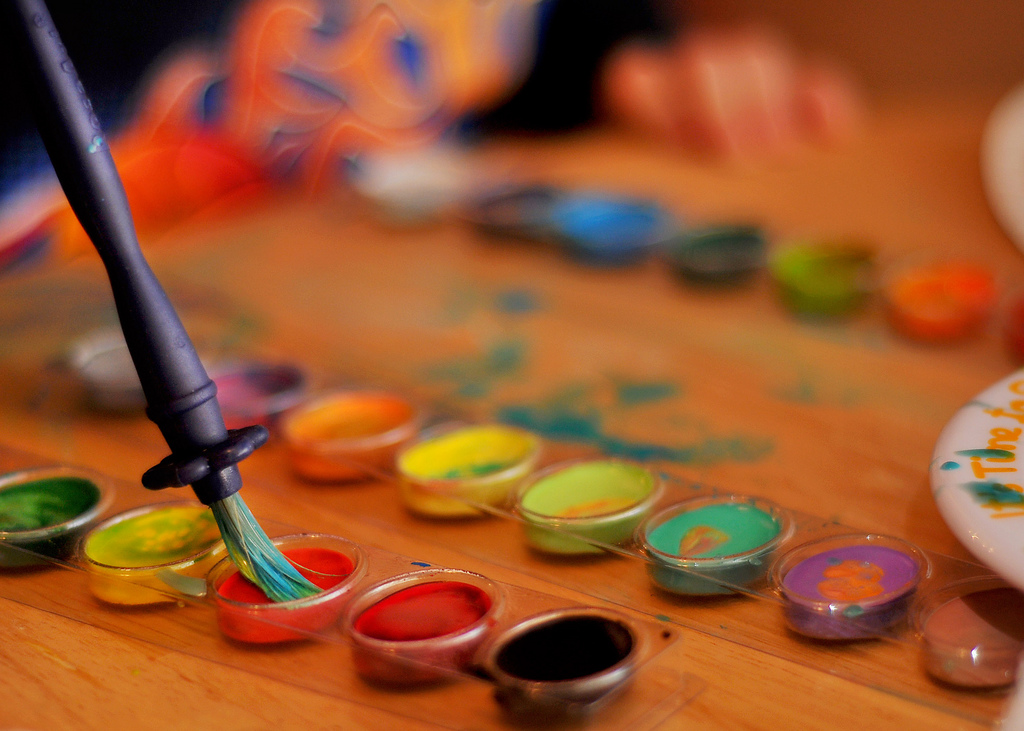
There is a frequent confusion, sometimes deliberately maintained by certain sellers, between a digital print on canvas and a true hand-painted reproduction by an artist. The print, produced by an inkjet machine, deposits a uniform layer of pigment on a textile support, offering a flat finish lacking the characteristic relief of oil or acrylic applied with a knife or brush. Conversely, a manual copy involves hours of human work to reconstruct the original artist's gesture, whether it be Van Gogh's swirling strokes or Renoir's fragmented touches, creating a visual depth that changes depending on the viewing angle. Paying a high price for a simple print while believing you are acquiring a handmade work is a costly mistake that can be avoided by demanding explicit mention of the technique and materials used in the product description.
The distinction also lies in the durability and nobility of the materials used: a high-quality linen canvas stretched on a solid wooden keyed stretcher will hold up over time much better than cheap polyester stapled onto plywood. The inks used for prints can yellow or crack after a few years of exposure to light, while artist-quality oil or acrylic paints, properly varnished, last for decades without losing their brilliance. If your goal is to create a perfect illusion from a distance, a print may suffice, but if you want to invite the viewer to come closer to admire the material, only hand painting can meet that aesthetic and tactile requirement characteristic of great museums like the Louvre.
Art & details
Why prices vary so much from one painting to another

The price of a hand-painted reproduction is never arbitrary; it directly depends on the complexity of the original work and the time required to faithfully recreate it. Copying a Gustav Klimt portrait rich in gold leaf and complex geometric patterns will require many more hours of work and specific technical skills than reproducing a still life with simple contours and uniform color blocks. Similarly, the size of the painting exponentially affects the cost: doubling the dimensions of a canvas not only doubles the surface area to cover but often quadruples the work time needed to maintain precision of details and consistency of the overall composition. An abnormally low quote for a complex work is generally a warning sign of a sloppy execution, carried out by underpaid workers using low-end materials.
Other factors come into play, such as the level of finish requested, the urgency of the order, or the inclusion of additional options like custom framing or museum-grade protective varnish. A serious workshop will fairly charge for the time spent on canvas preparation, preliminary sketch, multiple layers of paint, and mandatory drying between each phase—a process that cannot be artificially accelerated without compromising the final result. Understanding this cost structure allows you to accept that a quality work has a price reflecting human craftsmanship, far from the standards of mass production where speed trumps artistic excellence. The right price is one that ensures the artist had the necessary time to observe and restore the soul of the original.
Art & details
Comparing two quotes without being hypnotized by the lowest number

When you receive several proposals for the same order, it is tempting to immediately select the cheapest option, but this apparent savings can turn into costly disappointment upon receiving the package. You need to read between the lines of each quote to identify what is actually included: does the price cover only the raw painting, or does it also include the stretcher, canvas tension, protective varnish, and secure shipping? A complete quote will detail each expense item, specify the type of paint used (oil, acrylic, mixed), and clearly indicate the number of retouching sessions included in the base price before final validation. The absence of these details in an attractively low offer often signals hidden costs that will arise later or a minimal quality of service.
Also compare commitments regarding deadlines and communication: a provider offering delivery in three days for a large-format oil on canvas is likely lying about the manufacturing method, sacrificing the drying time essential to the work's solidity. Conversely, a realistic deadline of several weeks demonstrates respect for the technical constraints of painting and allows regular monitoring of progress. Also check the warranty conditions in case of damage during transport or major non-conformity compared to the validation photo; a professional site will assume these risks and offer a clear solution, while an opportunistic seller will hide behind vague clauses. The best value for money is the one that offers the security of a complete and transparent service, not the one that displays the lowest amount on the initial invoice.
Art & details
The source image: the small file that can save or ruin the canvas

The final quality of your reproduction intrinsically depends on the quality of the image file you provide or that the site uses as a base reference. For public domain works, always prioritize high-resolution institutional sources like Europeana, Wikimedia Commons, or the open databases of the Met and the National Gallery of Art, which offer digitized files with exceptional color fidelity. A pixelated image, roughly cropped, or from an amateur photograph taken at a bad angle in a museum will inevitably lead to interpretation errors by the painter, who will have to guess lost details or correct perspective distortions, thus altering the truth of the original work. Take the time to download the heaviest file available and verify that it preserves the subtle nuances of shadows and highlights before sending it to the workshop.
Beyond technical resolution, make sure to respect copyright if the chosen work is not yet in the public domain, as some modern artists like Picasso or Dalí are still protected by intellectual property laws. Ordering an exact copy of a protected work without authorization can pose legal problems, both for you and for the reproduction site, which should normally alert you to this point. If you want a free interpretation or a stylistic variation inspired by a contemporary work rather than a faithful copy, specify this clearly in your order to avoid any misunderstanding. Good communication about the source and legal expectations from the start ensures a serene relationship and a result that meets your decorative and ethical expectations.
Art & details
Deadlines, drying, retouching: craftsmanship doesn't like a nervous stopwatch

Oil paint is a living material that imposes its own rhythm, dictated by the chemical drying time between each layer of color to prevent pigments from mixing muddily or cracking over time. A respectable workshop will patiently explain why a large canvas requires several weeks of work, including phases of sketching, underpainting, glazing, and final varnishing, unlike acrylic which dries faster but offers a different finish. Wanting to accelerate this natural process by demanding express delivery is like asking a great vintage wine to ferment in twenty-four hours: the result will be technically present, but artistically mediocre and potentially fragile over time. Accept that quality requires patience and consider this delay as the guarantee that your painting receives the necessary care for its longevity.
Order tracking should be active and visual: expect to receive regular updates, ideally accompanied by intermediate photos showing the painting's evolution on the easel. This transparency allows early detection of any deviations from your vision and requests for minor adjustments before the paint is completely dry and difficult to modify. A site that remains completely silent for three weeks and then abruptly ships the package without notice lacks professionalism and respect for the investing client. The relationship between the commissioner and the reproduction workshop should resemble a partnership where progressive validation ensures that the final result exactly matches expectations, turning the wait into an engaging experience rather than a source of anxiety.
Art & details
The simple grid to choose the right site without pulling out a detective's magnifying glass

To summarize your search and avoid getting lost in dozens of open tabs, apply a quick reading grid based on five non-negotiable criteria that any serious site must immediately satisfy. First, the technique must be explicitly described with the materials used; second, real production examples must be visible with zooms on the texture; third, a photo validation process before shipping must be systematically offered. Fourth, the announced deadlines must be consistent with the hand-painting technique, and fifth, a responsive customer service must be reachable to answer specific technical questions. If any of these five pillars is missing or seems vague, move on without hesitation, as it is often the sign of an industrialized production chain disguised as an artist's workshop.
This quick filtering method allows you to instantly eliminate the majority of dubious offers and focus your attention on the few providers that truly deserve your trust and budget. It transforms a tedious comparison task into a logical and efficient procedure, based on observable facts rather than catchy advertising slogans. By adopting this demanding but reasonable stance, you position yourself not as a simple consumer, but as an informed connoisseur who knows how to recognize the value of a job well done. The best painting reproduction site is ultimately the one that has nothing to hide about its method and places the client's artistic satisfaction at the heart of its sales and creation process.
Interior decoration
Choosing a reproduction that really works in the room

Once the ideal site is identified and the order is placed, the last crucial step is to harmoniously integrate this new work into the architecture of your interior so that it dialogues with the surrounding space. In a large, bright living room, a monumental reproduction of a 19th-century romantic landscape can serve as a majestic focal point, while in a more intimate bedroom, a work with soothing tones and a medium format, such as an Impressionist floral study, will promote relaxation and rest. Consider the hanging height: the center of the painting should ideally be at eye level, about 1.60 meters from the floor, for an optimal perspective, except in circulation spaces where a slightly higher height may be preferable to avoid accidental bumps. Lighting also plays a key role; a directed lamp or a discreet spotlight can enhance the reliefs of an oil painting and reveal details invisible under overly diffuse ambient light.
Don't hesitate to play with stylistic contrasts to energize your decor: a classic reproduction of an old master can bring a touch of timeless elegance to a minimalist contemporary interior, creating a striking and refined contrast. Conversely, a copy of a modern work with bright colors by Kandinsky or Mondrian can warm up a room with overly austere lines and bring the necessary energy to an office or dining room. The important thing is that the chosen painting resonates with your personal sensitivity and with the atmosphere you wish to create, transforming a simple decorative object into a narrative element of your domestic story. A successful reproduction is one that, once hung, seems to have always been part of the place, as if it had been destined for it from the start.
| Room | Suggestion | Decorative effect |
|---|---|---|
| Living room | A work related to the best painting reproduction site with a strong composition | Cultivated focal point, warm, and easy to comment on without reciting a label. |
| Bedroom | A soft palette or a more intimate scene | Calm atmosphere, visual presence without unnecessary agitation. |
| Office | A structured, colorful, or graphically sharp image | Creative energy and a small reminder that the wall can also work. |
| Entryway | A vertical format or an immediately readable work | Clear, elegant first impression, and decidedly less timid than a white void. |
To continue the visit
Sources, collections, and paths truly related to the subject
A few useful references to verify information, compare free images, and extend the reading without going to a museum that didn't ask for anything.
Related articles to read next
Artist and movement guides
Verified collections
Useful blog hubs
FAQ
Frequently asked questions about the best painting reproduction site
What is the best painting reproduction site in painting?
The best painting reproduction site is not the one that shouts the loudest, but the one that makes visible its method, its examples, its deadlines, its retouching, its guarantees, and the real quality of the ordered canvas.
How to quickly recognize this style?
Observe especially workshop, hand-painted, canvas, stretcher, and palette, then the way the composition organizes the gaze. If the work holds your attention longer than expected, it's probably not an accident.
Which artists should you know?
The main references are Vincent van Gogh, Claude Monet, Gustav Klimt, Wassily Kandinsky, and Pablo Picasso.
Does this style suit modern decoration?
Yes, provided you choose the right format, a palette consistent with the room, and a work whose presence remains pleasant on a daily basis.
Should you choose the most famous work?
Not necessarily. The most famous work can be perfect, but the right choice depends above all on the room, the format, the palette, and the desired atmosphere.
Where to verify the information?
Start with museum notices, Wikipedia/Wikidata for general orientation, then Wikimedia Commons when a free image is needed.
Excellence as the only compass for a successful purchase
Choosing the best painting reproduction site does not rely on discovering a well-kept secret or a fleeting promotion, but on the rigorous application of quality and transparency criteria. By clearly distinguishing the hand-painted copy from the industrial print, by demanding concrete proof of artisanal know-how, and by respecting the time necessary for artistic creation, you guarantee the acquisition of a work that will honor your walls for years. Whether you are drawn to Picasso's blue melancholy, Turner's golden light, or the botanical precision of the Dutch masters, remember that real value lies in intention and execution. Your role as an informed commissioner is essential to support an accessible art market that preserves technical excellence and the timeless beauty of universal masterpieces.
0 comments