

Post-impressionnisme • Guide art & décoration
Post-impressionnisme : définition, artistes et peintures, ou l'art de ne pas s'arrêter en si bon chemin
Un voyage au cœur d'une époque où la lumière impressionniste a cédé la place à la structure, au symbole et à une liberté de ton qui résonne encore dans nos intérieurs.
Imaginez un instant la scène parisienne de 1886 : l'impressionnisme vient de tenir sa dernière exposition collective et le public commence à se lasser de ces taches floues qui capturent l'instant mais oublient la durée. C'est précisément à ce moment charnière que surgit ce que l'on nommera plus tard le post-impressionnisme, non pas comme un mouvement uni sous une bannière commune, mais comme une constellation d'esprits libres refusant de laisser la peinture se dissoudre dans la seule atmosphère. Ces artistes, dont les noms résonnent aujourd'hui comme des monuments, ont décidé que la couleur devait servir autre chose que la simple rétine : elle devait construire, émouvoir, symboliser et parfois même choquer. Pour le amateur d'art souhaitant accrocher une reproduction dans son salon, comprendre cette rupture est essentiel, car elle transforme une jolie image en un manifeste visuel capable de dialoguer avec l'architecture moderne.
 Image libre
Red poppies bring to mind Van Gogh's Parisian flowers: learning color is sometimes about placing a bouquet on the table and letting it speak back.
Méthode de lecture
Reading the web like an architect reads a blueprint
Approaching these works requires setting aside the quest for photographic realism to observe how the pictorial matter itself becomes the subject of the painting. Look at the brushstroke, follow the line, question color no longer as a description of the world, but as the expression of an inner truth or a hidden structure.
Context over prestige
We place Post-Impressionism back in its time, its studios, its exhibitions, and its small rebellions. A work without context is sometimes just a very beautiful person who has forgotten their story.
Signs that give away the style
We notice expressive color, structured composition, simplified forms. These clues often say more than grand speeches, especially when they carry gold or nervous brushstrokes.
The artwork in a real room
Let's end with the useful question: does this image breathe in your space, or does it just pose like a poster that's read two books?
Contexte historique
Post-Impressionism: when light alone is no longer enough and everyone complicates things
If Impressionism had pulled off the remarkable feat of capturing the vibration of light on water or snow, it nonetheless left a sense of incompleteness in those who sought the permanence of forms. The term Post-Impressionism, coined retroactively by critic Roger Fry in 1910 for a London exhibition, actually brings together radically different approaches born from the same realization: one must stop copying nature in order to begin reinventing it. Between 1886 and the early twentieth century, no single manifesto united these painters, yet all shared a fierce determination to move beyond the luminous anecdote in order to reach something essential. Some turned toward optical science, others toward mysticism or geometry, creating fertile ground where each artist became his own theorist, far from the fashionable dinner parties of the previous generation.
This period marks a decisive turning point where painting ceases to be a window open onto the world and becomes an autonomous object possessing its own internal logic. Where Monet painted the Rouen Cathedral to showcase the changing hours, his successors would paint the cathedral to explore the solidity of the stone or the spiritual weight of the place. This diversification of intentions makes the movement fascinating to study, because it imposes not a style but an attitude: that of intellectual rigor coupled with total technical freedom. For today's collector, this means that a Post-Impressionist work can deliver either architectural precision or an emotional explosion, depending on the artist chosen, offering a decorative palette of extraordinary richness for our contemporary walls.
Style artistique
Cézanne constructs the mountain as if nature had a hidden framework.

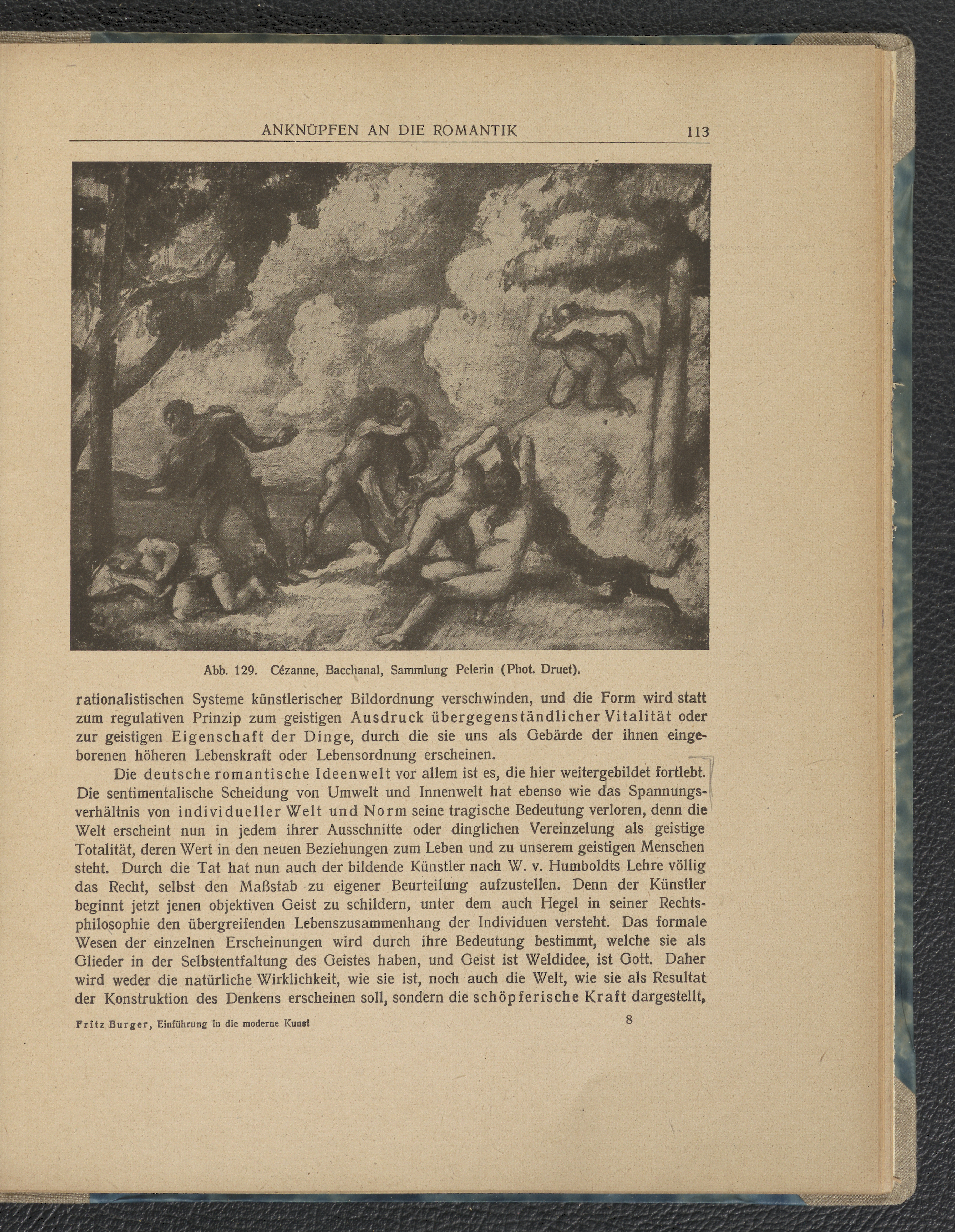
Paul Cézanne, that shadowy figure from Aix-en-Provence, spent his life trying to make of Impressionism something solid and lasting, like the great arts of the museums. His revolutionary method consisted of treating nature through the cylinder, the sphere, and the cone, reducing complex landscapes to an underlying geometric architecture that the naked eye does not immediately perceive. In observing his inexhaustible series of the Sainte-Victoire mountain, one quickly grasps that he is not seeking to reproduce the mountain as it appears at noon or at twilight, but rather to reveal its permanent, almost mineral structure. Each brushstroke, carefully applied like a brick, contributes to this mental construction in which sky and earth interlock with a precision that directly foreshadows the Cubism of Picasso and Braque.
The influence of Cézanne on modern interior decoration is immense, as his compositions bring a calm, structuring order without ever falling into abstract coldness. A reproduction of The Card Players, with its simplified volumes and earthy tones modulated with extreme subtlety, acts as a visual stabilizer in a living space. He teaches us that beauty lies not in superficial detail but in the balance of masses and the precision of color relationships. Hanging a Cézanne, even as a reproduction, is to invite a form of geometric meditation into the room, reminding us that behind the apparent chaos of everyday life there exists a secret harmony that the artist was able to capture and freeze for eternity.

Where do we come from? What are we? Where are we going?
A reproduction tied to Post-Impressionism, useful for comparing atmosphere, palette, and wall presence.

The Card Players
A reproduction related to Post-Impressionism, useful for comparing mood, palette, and wall presence.

The Vision After the Sermon
A reproduction connected to Post-Impressionism, perfect for comparing mood, palette, and wall presence.
Art & détails
Van Gogh puts emotion into the brushstroke, and the brushstroke doesn't pretend.

Vincent van Gogh took the complete opposite approach to Cézanne's structural research by making the brushstroke the direct seismograph of his tormented and passionate soul. His canvases, often created in the fever of creation in Arles or during his stay at the asylum of Saint-Rémy-de-Provence, vibrate with a kinetic energy where each brushstroke seems to have been applied in the urgency of expression. The famous Starry Night is not a faithful astronomical representation, but a visual translation of an inner state where the sky swirls with a lyrical violence that only the thick matter of paint, the impasto, can convey. Van Gogh uses pure color, squeezed directly from the tube, to create violent complementary contrasts, such as cobalt blue against chrome yellow, generating a luminosity that seems to emanate from the canvas itself.
In a contemporary interior, a Van Gogh painting acts as an injector of vital energy, capable of instantly warming up a room that feels too tidy or too minimalist. The expressive power of his sunflowers or his wheat fields under the Provence sun brings a human warmth and dramatic intensity that few other styles can match. However, this force demands a certain respect in the way it's hung: the artwork needs space to breathe, because its visual energy calls for the eye to settle in and follow the movement of the lines. Choosing Van Gogh means accepting that the wall is no longer a neutral surface but becomes the stage for raw emotion, a daily reminder that life is made of intense passions and fleeting beauties.
Art & détails
Gauguin prefers symbol to reportage: color sets out on a mission

While his contemporaries were still searching for anchors in visible reality, Paul Gauguin chose to cut loose and sail toward the troubled and fascinating waters of symbolism and the imaginary. His departure for Brittany, followed by his self-imposed exile to Tahiti, marked a definitive break with naturalistic observation in favor of a style in which color serves its suggestive and emotional purpose rather than a descriptive one. In masterpieces such as The Vision After the Sermon or Where Do We Come From? What Are We? Where Are We Going?, Gauguin outlines forms with bold dark contours—a technique known as cloisonnism—and lays down broad, flat planes of vivid color that defy the rules of classical perspective. He does not paint what he sees, but what he feels and what he imagines, transforming the canvas into a dreamlike realm where Polynesian myth and Christian mysticism coexist.
Gauguin's contribution to decoration lies in this ability to create immersive, exotic atmospheres that transport the viewer far from the ordinary. His palettes—rich in ochres, deep greens, and vibrant reds—bring an enveloping warmth and a strong narrative dimension to a wall. A Gauguin reproduction works particularly well in spaces dedicated to relaxation or daydreaming, as it naturally invites mental escape. Unlike Cézanne's rigor or Van Gogh's turbulence, Gauguin's universe offers a stylized refuge, an open door to an idealized elsewhere where nature is tamed by dream. It is a bold choice for those who wish to assert a taste for mystery and exoticism without falling into kitsch folklore.
Art & détails
The user wants me to translate a French headline into English. Let me analyze it:
"Points, science et patience : la couleur se met à compter ses pas"
This appears to be a headline, likely about something (maybe a brand called "la couleur" or similar) starting to count steps/track steps. It mentions points, science, and patience.
Let me think about this more carefully. "La couleur" could be a brand name or could literally mean "the color." In context, it seems like it could be a brand name (like "Couleur" - a French brand perhaps).
"Points, science et patience" - these are three elements
"se met à compter ses pas" - starts to count its steps
This sounds like it could be about a fitness/wellness brand that uses points, science, and patience as methodology, and is now adding step counting.
Natural English translation: "Points, science and patience: la couleur starts counting its steps"
Or if I want to be more creative: "Points, science, and patience: la couleur begins to track its steps"
Let me preserve "la couleur" as a brand name as instructed. The translation should be natural and engaging for ecommerce context.
I'll go with: "Points, science and patience: la couleur starts counting its steps"
Or perhaps: "Points, science, and patience: la couleur begins to count its steps"
Actually, "se met à" suggests beginning/starting an activity. "Comptes ses pas" literally means "counts its steps" - this is likely about step tracking.
Let me finalize: "Points, science and patience: la couleur begins to count its steps" Points, science and patience: la couleur starts counting its steps

In contrast to Van Gogh's raw instinct, Georges Seurat and Paul Signac developed an almost scientific approach to painting, called pointillism or divisionism, based on the optical theories of their time. Their method consisted of applying tiny dots of pure color to the canvas, juxtaposed with mathematical precision, leaving the viewer's eye to perform the optical blending from a distance. A work such as Seurat's Bathers at Asnières demonstrates how this technique achieves exceptional luminosity and formal stability that traditional mixing on the palette could never attain. Each dot acts as an atom of light, and the entire composition emerges from this patient accumulation, creating urban or harbor scenes that seem suspended in an immobile, silent time.
For the lover of decorative art, pointillism offers a unique visual texture that changes depending on viewing distance, adding a subtle interactive dimension to the room. Up close, the canvas reveals a fascinating grainy abstraction, while from a few feet away, the forms come into focus with crystalline clarity. This duality makes reproductions of Seurat or Signac particularly interesting for transitional or reception spaces where the gaze constantly shifts. What's more, the freshness of the colors, preserved by the absence of physical blending, brings a soft, constant luminosity that adapts beautifully to modern interiors seeking to maximize natural light. It is the art of patience elevated to method, proving that science and poetry can coexist perfectly on a single surface.
Œuvres à connaître
Famous Post-Impressionism works to see before choosing
For a hand-painted Post-Impressionist reproduction, a Post-Impressionist oil painting, or a copy of a Post-Impressionist work, the most useful thing is to compare several images: the gilding, the faces, the density of the patterns, and how each piece holds up on the wall.
- Une baignade à AsnièresUne porte d'entrée visuelle pour comprendre Post-impressionnisme sans transformer l'article en inventaire.
- D'où venons-nous ? Que sommes-nous ? Où allons-nous ?Une reproduction liée à Post-impressionnisme, utile pour comparer ambiance, palette et présence murale.
- Les Joueurs de cartesUne reproduction liée à Post-impressionnisme, utile pour comparer ambiance, palette et présence murale.
- La Vision après le sermonUne reproduction liée à Post-impressionnisme, utile pour comparer ambiance, palette et présence murale.
- Au Moulin RougeUne reproduction liée à Post-impressionnisme, utile pour comparer ambiance, palette et présence murale.
Art & détails
The Nabis, Symbols and Walls: Painting Begins to Think in Terms of Décor

The Nabis group, formed around figures such as Pierre Bonnard, Édouard Vuillard, and Maurice Denis, pushed post-impressionist logic to the point of erasing the boundary between easel painting and the decorative arts. Influenced by Gauguin and Japanese prints, these artists considered that a painting was first and foremost a flat surface covered with colors arranged in a certain order, meant to harmoniously integrate into its architectural surroundings. Their works, often characterized by repetitive patterns, flowing arabesques, and flattened perspectives, transform bourgeois interior scenes into living tapestries where figures blend into floral or textile decor. Maurice Denis would go so far as to theorize this approach, asserting that painting should embellish the wall rather than seek to pierce through it as an illusion of depth.
This philosophy makes the Nabis natural allies for contemporary interior decoration, as their paintings were designed from the outset to engage in dialogue with the space that holds them. Vuillard's intimate interiors, with their intricate patterns and muted yet rich colors, bring a hushed warmth and understated elegance that pair perfectly with design or vintage furniture. Choosing a Nabi means opting for a work that does not aggressively dominate the room but weaves a subtle connection with the textiles, wallpapers, and overall atmosphere. They understood before anyone else that art should not merely be looked at, but lived—an extension of our everyday environment.
Art & détails
From Post-Impressionism to the 20th Century: The Heirs Found the Door Wide Open

The impact of post-impressionism on the history of art that followed is such that it can be considered the true birth of artistic modernity in the twentieth century. By freeing color from its descriptive function and form from its realistic obligation, these pioneers paved the way for all subsequent avant-gardes, from the wild Fauvism of Matisse to the analytical Cubism of Picasso, not to mention German Expressionism. Without Cézanne's geometric structuring, Cubism would have been inconceivable; without the chromatic expressiveness of Van Gogh, Fauvism would never have dared its bold experiments; and without the symbolism of Gauguin, abstraction would have emerged much later. This movement acted as a powerful catalyst, demonstrating that painting could explore uncharted territory far beyond the mere imitation of the visible world.
Today, this legacy continues to nourish not only museums such as the Musée d'Orsay or MoMA, but also contemporary decorative creation, which draws from this period an inexhaustible source of inspiration. Graphic designers, illustrators, and even interior designers constantly revisit the visual codes of post-impressionism to create modern atmospheres. Understanding this lineage allows us to appreciate a reproduction not as a simple reminder of the past, but as a living element of an unbroken aesthetic chain. When you hang a work from this period in your space, you connect it to that precise moment when art tilted toward total freedom—affirming that human creativity has no limits other than the ones it imposes on itself.
Décoration intérieure
Choosing post-impressionism: bold color, solid wall, diplomatic neighborhood
Choosing a post-impressionist reproduction for your interior requires considering the specific energy of each artist in order to avoid visual dissonance with your existing furniture. If your space lacks light or warmth, the vibrant yellows and deep blues of Van Gogh or the golden ochres of Gauguin will be precious allies in energizing the atmosphere instantly. Conversely, if you're looking to bring calm and structure to a busy room, the balanced compositions and natural tones of Cézanne will offer a restful focal point for the eye. It is also crucial to consider the scale of the work: the large formats of Seurat require distance to reveal their magic, while the intimate scenes of the Nabis flourish in more confined spaces such as a home office or reading nook.
Finally, don't forget that the quality of the reproduction plays a major role in conveying the painterly texture, a central element of post-impressionist aesthetics. A good print should capture the thickness of Van Gogh's brushstrokes or the delicate pointillism of Signac—without this, the work loses much of its expressive power. Don't hesitate to test the piece in situ, perhaps using digital tools or temporary prints, to see how the palette interacts with your walls and lighting. The goal isn't to turn your living room into a museum, but to create a coherent visual ecosystem where the art you choose resonates with your own sensibility, making every glance at the painting a small, renewed aesthetic experience.
| Pièce | Suggestion | Effet décoratif |
|---|---|---|
| Salon | Une oeuvre liée à Post-impressionnisme avec une composition forte | Point focal cultivé, chaleureux et facile à commenter sans réciter un cartel. |
| Chambre | Une palette douce ou une scène plus intime | Atmosphère calme, présence visuelle sans agitation inutile. |
| Bureau | Une image structurée, colorée ou graphiquement nette | Énergie créative et petit rappel que le mur peut aussi travailler. |
| Entrée | Un format vertical ou une oeuvre immédiatement lisible | Première impression claire, élégante, et nettement moins timide qu'un vide blanc. |

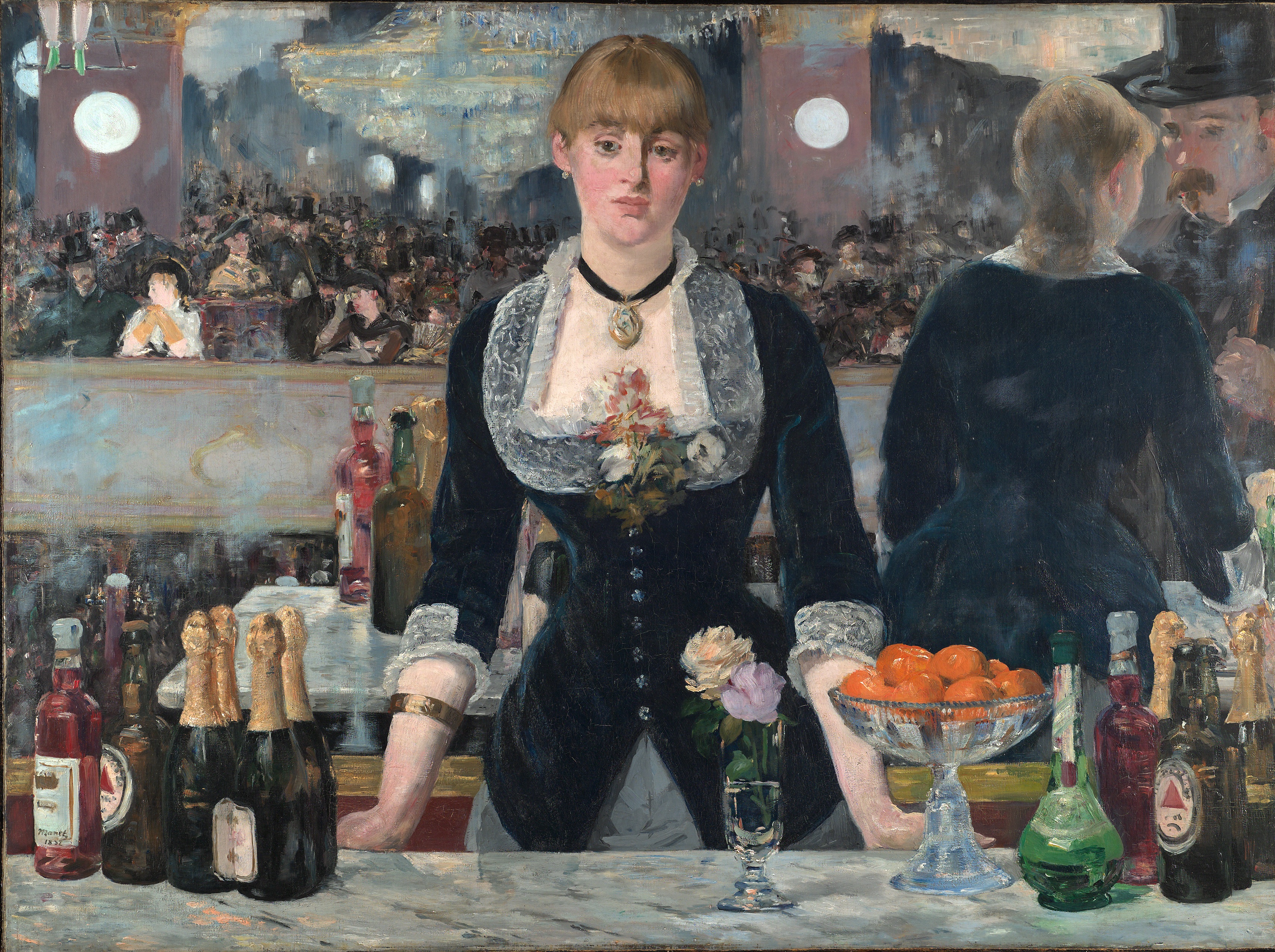
At the Moulin Rouge
A reproduction tied to Post-Impressionism, useful for comparing mood, palette, and wall presence.
Pour continuer la visite
Sources, collections, and paths genuinely relevant to the topic
A few useful references for checking the information, comparing the open-access images, and extending your reading — without dragging a museum into it that never asked to be mentioned.
Useful collections
Artists to explore
Related reproductions
Useful sources on this topic
FAQ
Frequently Asked Questions about Post-Impressionism
What is Post-Impressionism in painting?
Post-Impressionism takes the free use of color from the Impressionists, then adds more structure, symbolism, and emotional depth.
How to recognize this style quickly?
Pay particular attention to expressive color, structured composition, simplified forms, personal touch, and latent symbolism—then notice how the composition guides the eye. If the artwork holds your attention longer than expected, it's probably no accident.
Which artists should you know?
The main references are Vincent van Gogh, Paul Cézanne, Paul Gauguin, Georges Seurat, and Paul Signac.
Does this style suit a modern décor?
Yes, as long as you choose the right size, a color palette that harmonizes with the room, and a piece that remains a pleasure to live with day after day.
Should we choose the most famous work?
Not necessarily. The best-known piece might be perfect, but the right choice mainly depends on the room, the format, the color palette, and the atmosphere you're going for.
Where to check the information?
Start with museum records, Wikipedia/Wikidata for general orientation, then Wikimedia Commons when a freely-licensed image is needed.
An invitation to see the world differently
Post-Impressionism remains, more than a century after its emergence, an inexhaustible source of wonder and inspiration for anyone who loves observing the world with attention. It reminds us that reality is never singular, but rather bends to the multiple visions of artists who dare to reinterpret it with courage and sincerity. Whether you are drawn to geometric rigor, emotional explosion, or symbolic dreams, this movement offers a work capable of answering your personal aesthetic quest. Hanging one of these images in your home is ultimately accepting to live surrounded by intelligent beauty—the kind that is not content merely to decorate the wall, but elevates the spirit and colors the everyday with a new depth.
0 comments