

Gift a painting: an art present without panic, the guide that looks beneath the varnish
Choose a reproduction with tact, taste, and a touch of psychology to avoid having the work silently judge your guests for ten years.
Gifting a painting has nothing to do with giving a decorative mug or a ceramic vase that gets tucked away in the back of a cupboard if the pattern displeases. A canvas hung on the wall becomes a permanent member of the household, a silent witness that observes dinners, arguments, and difficult mornings with a sometimes intimidating consistency. Choosing a reproduction therefore calls for a dose of artistic diplomacy and a keen understanding of the space it will inhabit, because a casting mistake can transform a cozy living room into a cold gallery. It's less about spending a fortune than about finding the right resonance between the recipient's personality and the energy given off by masters like Monet or Klimt.
 Free image
Choose a reproduction with tact, taste, and a touch of psychology to avoid having the work silently judge your guests for ten years.
Reading method
The approach of the informed flâneur
Before pulling out your credit card, you must learn to read an image the way you read a face, by decoding the light, the matter, and the artist's intention to avoid decorative awkwardness.
Context before prestige
We place Giving a painting back in its era, its studios, its exhibitions, and its small revolts. A work without context is sometimes just a very beautiful person who has forgotten their story.
The signs that betray the style
We spot composition, palette, texture. These clues often say more than grand speeches, especially when they wear gold or nervous brushstrokes.
The work in a real room
We end with the useful question: does this image breathe in your home, or is it merely posing like a poster that has read two books?
Historical context
Where does this tradition of giving art come from, and why is it more than just a pretty label?

The habit of giving hand-painted reproductions draws its roots from the democratization of art in the 19th century, when printing and copying techniques allowed the bourgeoisie to appropriate the masterpieces of the Louvre without being millionaires. At that time, owning a copy of The Marriage at Cana or a Barbizon landscape was a mark of cultural distinction, a way of displaying one's belonging to a refined world while decorating often dark and cluttered interiors. This gesture was not trivial: it transformed the private home into a small personal museum where each painting told a precise aesthetic and social ambition.
Today, although we are flooded with digital images, the desire to hang a physical canvas remains intact because it brings a texture and a presence that screens cannot imitate. Giving a painting means perpetuating this ancient ritual of cultural transmission, but with the freedom to choose between the boldness of an abstract Kandinsky and the reassuring serenity of an Impressionist. Understanding this heritage helps to grasp that the gift is not limited to a decorative object, but constitutes a fragment of art history offered in sharing, laden with the memory of Parisian studios and the aesthetic debates that have shaped our modern gaze.
Artistic style
Why does the idea of giving a painting still interest our contemporaries so much?

The persistence of this enthusiasm is explained by the human need to anchor one's living space in something durable and meaningful, far from the rapid obsolescence of fleeting trends. A Van Gogh painting, with its swirls of blue and yellow energy, brings an emotional vibration capable of warming a minimalist interior or energizing a too-quiet hallway. Unlike a design object that can go out of style in two seasons, a great work of art crosses the ages with intact relevance, offering its owner a visual point of escape that stimulates the imagination and soothes the mind through its very complexity.
Furthermore, offering a reproduction makes the inaccessible accessible, bringing the grandeur of the collections of the Musée d'Orsay or Tate Modern into an ordinary living room. It is an elegant way of saying that art is not reserved for elites confined to cultural temples, but that it has its place above the sofa, where life truly unfolds. This democratization of beauty responds to a deep desire for daily beautification, transforming the simple act of painting a wall into a declaration of love for human creativity and the diversity of styles available on today's market.
Visual signs that immediately betray the style and mood

To choose wisely, one must know how to decode the silent language of composition and palette, for these elements dictate the atmosphere of a room long before one knows its title. A painting dominated by ochre tones, curved lines, and the generous use of gold leaf, typical of Gustav Klimt, will instantly evoke intimacy, luxury, and a certain Viennese sensuality from the late 19th century. Conversely, a canvas structured by pure geometric shapes and vibrant primary colors will immediately point to the modern abstraction of Piet Mondrian or the experiments of the Bauhaus, imposing a more intellectual and refined rhythm on the surrounding space.
Texture also plays a crucial role in this visual identification: the thickness of the brushstroke, visible in Van Gogh's nervous impasto, brings a tactile relief that captures the changing light of the day, creating a living spectacle on the wall. In contrast, the subtle glazes and hazy blends of Monet's impressionist landscapes dissolve contours to favor the atmospheric effect, inviting the eye to wander rather than fix on a precise detail. Recognizing these visual signatures makes it possible to anticipate how the work will dialogue with existing furniture, thus avoiding a stylistic clash between a flamboyant baroque and a clean Scandinavian interior.
Works to look at as if they might answer you before buying

Some paintings possess such a magnetic presence that they seem to establish an immediate dialogue with the viewer, demanding particular attention when choosing a gift. Take Klimt's The Kiss: the embrace of the figures, drowned in a decor of symbolic patterns and true gold, creates a bubble of timelessness that imposes silence and contemplation in the room where it reigns. Offering such a reproduction is offering a moment of suspension outside of time, ideal for a bedroom or a reading nook, but potentially overwhelming in a fast-paced space where one simply seeks visual lightness.
At the other end of the emotional spectrum, Monet's Water Lilies offer a different immersive experience, where the absence of a fixed horizon invites reverie and deep relaxation. These works, often reproduced in large panoramic formats, act as open windows onto an imaginary garden, bringing a soft luminosity that never tires the eye. Choosing between these giants of art history comes down to choosing the mood one wishes to install durably in the recipient's home: do we want dramatic exaltation, mystical contemplation, or the liquid peace of a Giverny pond? The answer will dictate the purchase.
Symbols, details, and small visual quirks that make all the difference

Beyond the general impact, it is often the tiniest details that reveal the artist's mastery and give the reproduction its soul, transforming a simple image into a work in its own right. Observe the way Turner handles light in his maritime storms: it is not merely a matter of yellow or orange, but an almost violent fusion between sky, sea and steam, where the ships seem to dissolve into the unleashed elements. Ignoring these subtle nuances risks acquiring a flat copy that has lost the original dramatic tension, reducing an English Romantic masterpiece to a simple colored poster devoid of depth or breath.
Likewise, the hidden symbols in Dutch still lifes or Renaissance portraits add a fascinating intellectual layer of reading for the curious recipient. A skull discreetly placed on a table, a mirror reflecting an unseen scene or a dog symbolizing fidelity are all historical nods that enrich the everyday experience of the object. A good reproduction must render these elements with sufficient sharpness to be discovered over time, offering the owner the constant pleasure of new visual discoveries with every glance at the wall.
Neighbors, allies and turbulent cousins in the great family of art

It is fascinating to see how certain artists, although not strictly belonging to the same movement, speak perfectly to one another when hung side by side, creating unexpected harmonies. For example, placing a late work by Cézanne, with its rigorous geometric constructions, near a Cubist painting by Braque can reveal a direct and logical lineage that art history has theorized but that the wall makes tangible. These visual alliances allow us to compose eclectic ensembles that tell a stylistic evolution, showing how the fragmentation of forms in some prepares the abstract explosion of others.
However, one must also respect the turbulent cousins whose overly assertive style might clash with the rest of the decor, like a German expressionist with acid colors in a pastel living room. Mucha's Art Nouveau, with its organic lines and flower-women, can coexist wonderfully with bentwood furniture, but will seem entirely out of place in a raw industrial setting of concrete and steel. Understanding these kinships and incompatibilities is essential to avoid the stylistic split that gives the impression of an unfinished move rather than a thoughtful, personal curation.
What museums confirm when shortcuts go too fast

Institutions like the Metropolitan Museum of Art or MoMA regularly remind us that the quality of a reproduction depends intrinsically on chromatic fidelity and the restitution of the original scale. A quick glance on the internet can deceive the eye about the true dimensions of a canvas: what seems to be an intimate format on a smartphone screen often turns out to be a monumental fresco three meters wide once printed. Museums, by exhibiting the originals, allow us to become aware of the physicality of painting, of how size influences perception and how certain works require distance to be fully understood.
Furthermore, museum notices highlight the context of creation that can radically change the reading of an image, transforming a mundane landscape into a political manifesto or a still life into a moral vanitas. Relying solely on surface aesthetics without consulting these authoritative sources means missing out on the semantic richness of the work. For those wishing to offer a meaningful gift, a virtual detour through the collections of the Louvre or the Tate allows them to validate their intuitions and ensure that the choice rests on solid understanding rather than a passing trend or a dubious recommendation algorithm.
How to choose a reproduction without panicking the room's wall?
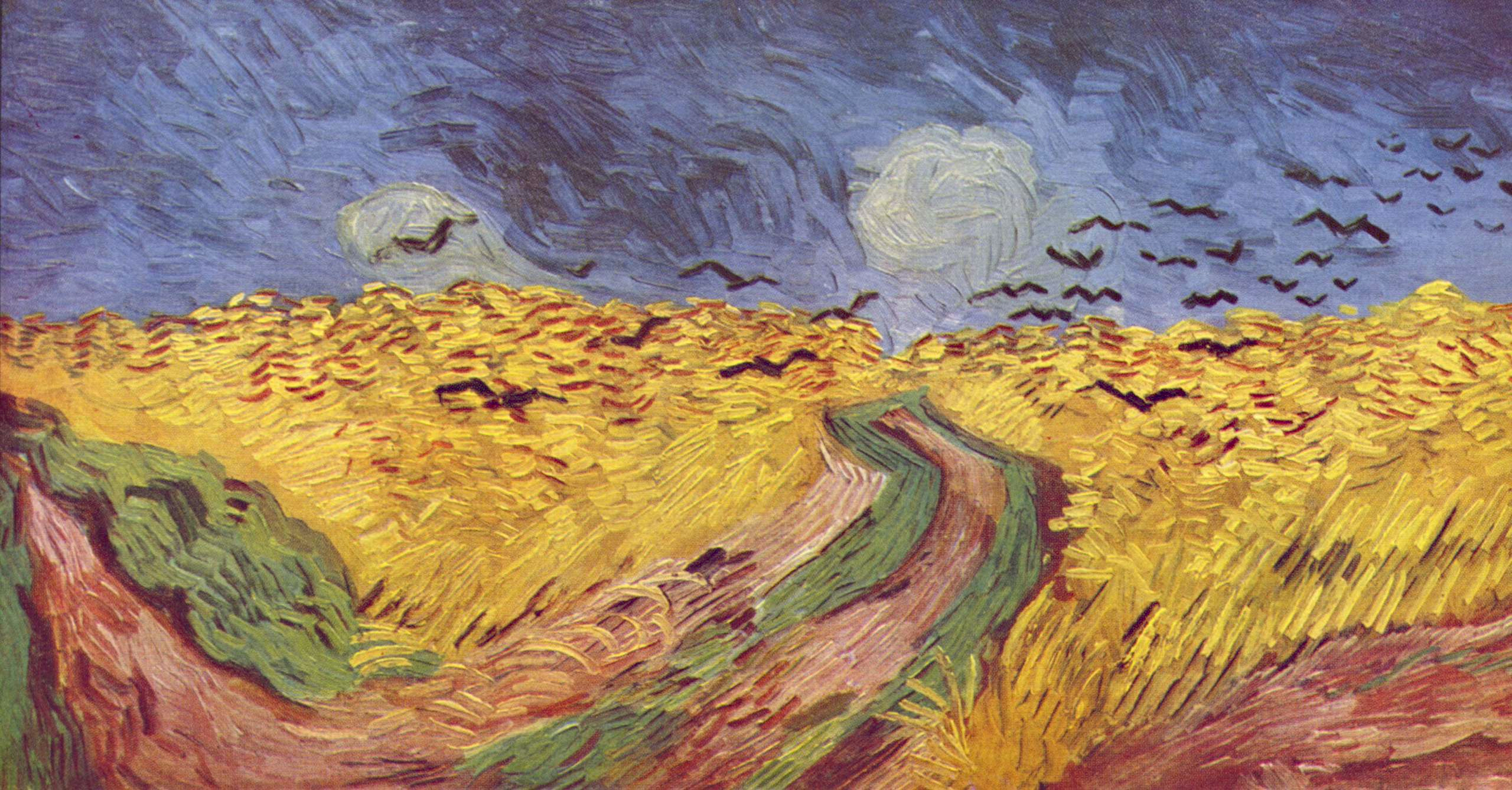
The successful integration of a painting begins with an honest analysis of the receiving room, taking into account the natural light and the ceiling height that dictate the ideal format. In a living room bathed in northern light, a canvas saturated with Matisse's colors can explode with vitality, while in a dark office, an Impressionist landscape in grey-blue tones risks disappearing completely if it is not highlighted by dedicated lighting. Format is equally critical: a small painting lost on a large white wall creates an awkward empty effect, whereas an XXL format in a narrow entryway will give an immediate feeling of suffocation.
It is also worth considering the hanging height and the relationship with the furniture, because a painting does not float in a void but dialogues with what surrounds it. The empirical rule is that the center of the work should sit at eye level, about 1.60 meters from the floor, but this must be adapted if the painting is placed above a console or a low bed. The goal is to create a visual unity where the frame, the canvas and the piece of furniture form a coherent whole, preventing the work from resembling a foreign body awkwardly grafted onto a wall that was not expecting it.
Interior decor
Classic mistakes to absolutely avoid before hanging the painting

The first fatal mistake is choosing a work solely because it bears a famous name, without caring about its resonance with the interior, thus turning the living room into an awkward branch of a commercial gallery. Buying a cubist Picasso just for the prestige of the name, when the room is decorated in a soft country style, will create a permanent cognitive dissonance for the occupants and visitors. The artist's name should never take precedence over the overall harmony, because a painting is meant to be lived with daily, not to impress guests at a social gathering before being forgotten the next day.
Another frequent lapse in taste concerns the choice of the frame, often overlooked even though it acts as the border between the work and the real world. Pairing a contemporary abstract canvas with an ornate gilded baroque frame is a historical nonsense that weighs down the whole and harms the legibility of the painting. Conversely, a frame that is too thin or absent on an old oil can give an impression of fragility and incompletion. The frame should be considered a full architectural element in its own right, capable of highlighting the colors of the canvas or creating a soft transition with the tone of the adjacent wall.
| Room | Suggestion | Decorative effect |
|---|---|---|
| Living room | A work related to offering a painting with a strong composition | Cultivated, warm focal point, easy to comment on without reciting a label. |
| Bedroom | A soft palette or a more intimate scene | Calm atmosphere, visual presence without unnecessary bustle. |
| Office | A structured, colorful, or graphically sharp image | Creative energy and a small reminder that the wall can also work. |
| Entryway | A vertical format or an immediately readable work | First impression: clear, elegant, and noticeably less shy than a blank wall. |
To continue the visit
Sources, collections and paths truly related to the subject
A few useful references to verify information, compare free images and keep reading without wandering off to a museum that never asked for the company.
Related articles to read next
Useful blog hubs
FAQ
Frequently Asked Questions about Gifting a Painting
What does gifting a painting mean in art?
Gifting a painting deserves an in-depth article because this style encompasses an era, a way of painting, and a very concrete way of living with images.
How can you quickly recognize this style?
Focus above all on composition, palette, texture, light, and atmosphere, then on how the composition guides the eye. If the piece holds your attention longer than expected, that's probably no accident.
Which artists should you know?
Cross-reference the central artists of the movement with museums and reliable sources to avoid hasty attributions.
Is this style suited to modern decor?
Yes, provided you choose the right format, a palette that harmonizes with the room, and a piece whose presence remains pleasing day to day.
Should you choose the most famous work?
Not necessarily. The most well-known piece can be perfect, but the right choice depends above all on the room, the format, the palette, and the atmosphere you're after.
Where can you verify the information?
Start with museum records, Wikipedia/Wikidata for general guidance, then turn to Wikimedia Commons when a rights-free image is needed.
The art of gifting without trembling
Gifting a painting remains one of the noblest and most lasting presents one can offer, provided you accept that it requires a little time, observation, and empathy toward the future owner. Moving away from the reflexes of fast consumption to favor a thoughtful approach, guided by light, texture, and the history of the works, transforms a simple purchase into a powerful cultural gesture. Whether it's the swirling energy of Van Gogh, the vaporous softness of Monet, or the precious radiance of Klimt, each canvas gifted becomes a permanent invitation to see the world differently, enriching everyday life with an artistic presence that, hopefully, will judge your guests with kindness.
0 comments