

Price of a painting reproduction • Art & decoration guide
Price of a painting reproduction: understanding the real value behind the number
Deciphering costs, techniques, and pitfalls to avoid when acquiring a faithful copy without turning your living room into a supermarket gallery.
Buying a painting reproduction sometimes feels like a high-wire act where you try to balance budget and aesthetic demands. Why can a copy of Monet's Water Lilies cost the price of a coffee while another requires an investment comparable to buying an original work by a young artist? The answer lies not in magic, but in the material, the studio time, and the complexity of the gesture. A digital print on stretched canvas takes minutes, whereas a hand-painted reproduction by a craftsman requires weeks of work, layers of varnish, and an intimate knowledge of Van Gogh's or Klimt's touch. Understanding these distinctions is the first step to not paying a lot for an illusion or underestimating a true artistic work.
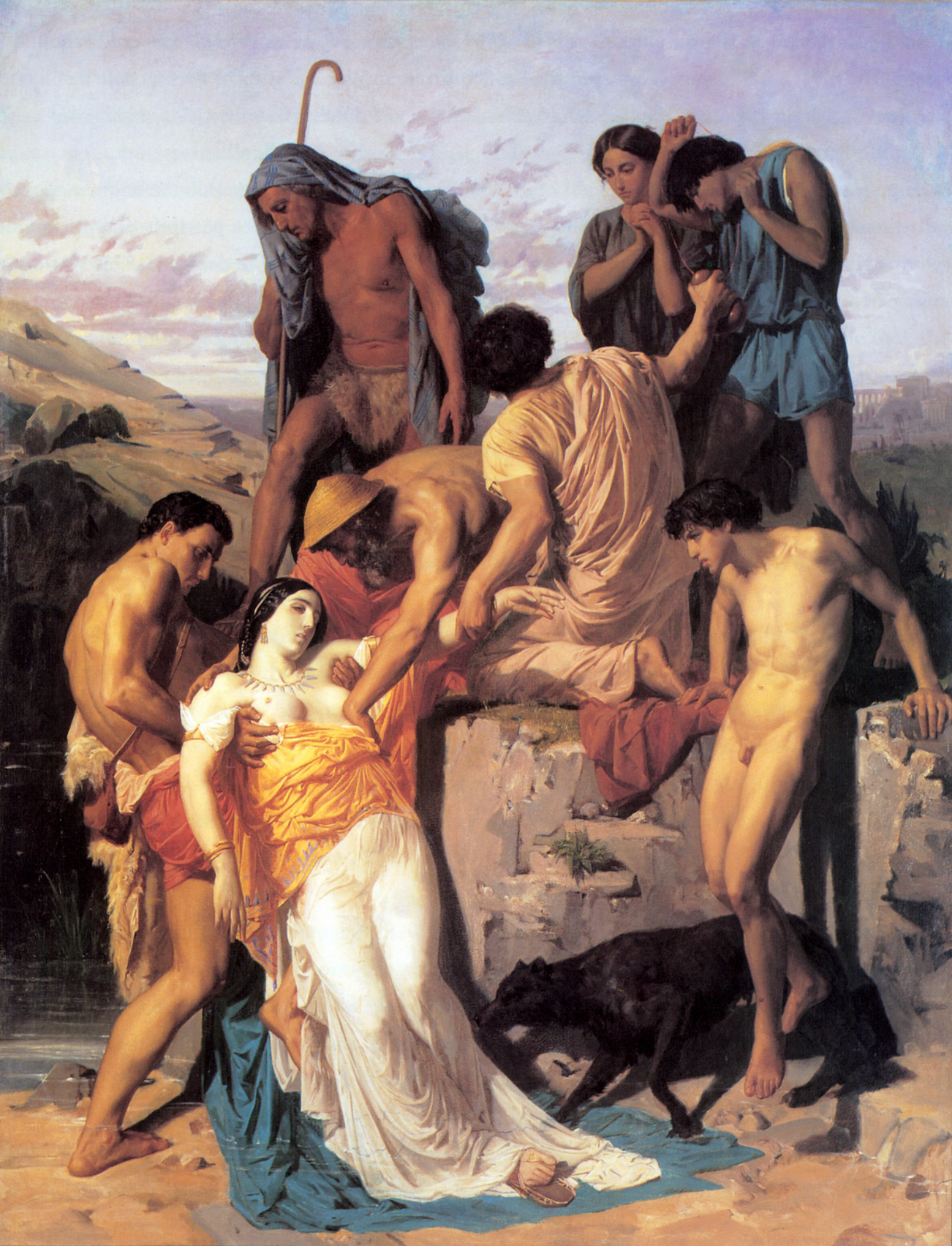 Free image
Deciphering costs, techniques, and pitfalls to avoid when acquiring a faithful copy without turning your living room into a supermarket gallery.
Reading method
How to navigate this guide
This text invites you to explore the behind-the-scenes of making a reproduction to identify the factors that cause price variation. We will review techniques, supports, hidden details of quotes, and essential criteria for choosing a work that will live with you.
Context before prestige
We place Price of a painting reproduction in its era, its workshops, its exhibitions, and its small revolts. A work without context is sometimes just a very beautiful person who forgot their history.
The signs that betray the style
We spot format, quote, canvas. These clues often say more than grand speeches, especially when they carry gold or nervous brushstrokes.
The work in a real room
We end with the useful question: does this image breathe in your home, or does it just pose like a poster that has read two books?
Historical context
Start with the real need, not the first buy button

Before even consulting a catalog, it is crucial to define the actual use of the work in your space. Do you want to fill a huge wall above a sofa in a Haussmann-style living room or add a touch of color to a cramped office? A large format, say 150 by 200 centimeters, will naturally cost more than a 40 by 60 centimeter canvas, not only for the amount of paint but also for the solidity of the necessary wooden stretcher frame. If your goal is purely decorative for a hotel or restaurant, a high-definition print may suffice, whereas a demanding collector will prioritize the texture of oil to capture the depth of a Cézanne.
The budget must also incorporate the notion of durability and expected final rendering. A reproduction intended as a gift or to remain in a high-traffic area does not have the same requirements as a centerpiece in your living room. You also need to consider the lighting environment: a very bright room will require UV-resistant pigments and museum-quality varnish, which directly influences the quote. By clarifying these parameters from the start, you avoid comparing apples and oranges, or worse, ordering a fragile poster where you expected the nobility of a hand-painted canvas with all the charming irregularities of the brush.
Artistic style
The signs of a truly serious reproduction site

A trustworthy workshop does not hide behind perfect vector images or overly smooth 3D renderings. Actively look for real photographs of canvases in progress, showing the thick texture of oil paint or the characteristic impasto of an expressionist style. A serious site often offers close-ups that allow you to distinguish the layering of color, proof that the artist's hand has worked the material and not a machine. The presence of clear information about the copyist artists, their training, and their references, such as copies made for the Louvre or the Musée d'Orsay, is a guarantee of professionalism rarely found among mass resellers.
Transparency about the validation process is another major indicator of quality. The best workshops send intermediate photos of the work's progress, allowing the client to request adjustments to hues or contrasts before the final finish. This retouching step, often included in the price of a high-end service, ensures that the blue of the sky in your reproduction of The Starry Night matches your expectations. Beware of sites that ship directly without any human verification or that offer delivery times incompatible with the natural drying time of oil paint, because true craftsmanship rejects industrial haste.
Art & details
Hand-painted, canvas print, poster: don't pay for the wrong item

The fundamental distinction lies in the presence or absence of human gesture. A canvas print uses inks projected by print heads to recreate an image, resulting in a flat result, devoid of relief, and whose colors may appear slightly artificial under certain lights. Conversely, a hand-painted reproduction involves the physical application of paint, whether oil or acrylic, creating tangible relief, tonal variations, and that visual vibration unique to original works. The cost of a painted canvas reflects the hours spent at the easel, while that of a print mainly covers consumables and machine depreciation.
The support also plays a determining role in longevity and final price. A poster on thin paper will yellow quickly and tear at the slightest snag, suitable at most for ephemeral decor. A printed canvas mounted on a stretcher frame offers better durability but remains limited by the printer's resolution. In contrast, a hand-painted canvas, stretched on a solid wooden frame with tightening keys to maintain tension, is designed to last for decades. Choosing the right technique for your use avoids the disappointment of discovering, once the painting is hung, that the desired effect of depth and material richness is absent.
Art & details
Why prices vary so much from one painting to another

The complexity of the original work is the primary driver of price variation. Reproducing a Mondrian with clean geometric lines and flat color areas requires less time and skill than tackling the thousands of petals in a Fantin-Latour flower bouquet or the changing reflections of water in Turner. Similarly, a composition with many figures, like Rembrandt's The Night Watch, requires precise mastery of anatomy, facial expressions, and shadow play, multiplying the hours of work compared to a minimalist landscape. Each additional detail, each touch of simulated gilding or each transparency of a veil adds time to the bill.
The format acts as a direct multiplier on the price, but not always linearly. Doubling the dimensions of a canvas quadruples its surface area, requiring four times more paint and considerably more time to cover the space without losing precision. Very large formats, exceeding two meters in width, often require the intervention of several artists or specific scaffolding in the workshop, which justifies a significant surcharge. Finally, the urgency of the order can drive up prices, because accelerating the drying process between layers of varnish or prioritizing one project over another disrupts the natural and fluid organization of the workshop.
Art & details
Comparing two quotes without being hypnotized by the lowest number

An abnormally low quote often hides savings made on invisible but essential elements for final quality. This may involve the use of student-grade paints with few noble pigments, which will dull over time, or cheap polyester canvases instead of museum-quality linen or cotton. Systematically check whether the price includes the stretcher frame, mounting, protective varnish, and especially any retouches after receipt. An attractive price that excludes delivery or charges separately for each modification requested after photo validation will end up costing more than a initially higher but transparent all-inclusive offer.
Careful reading of the terms and conditions reveals the workshop's philosophy regarding customer satisfaction. Some providers include in their price a guarantee of perfect color matching and commit to redoing the canvas if the rendering is not satisfactory after adjustments, while others consider the sale final upon shipment. The presence of hidden fees for secure packaging, essential for transporting a painted work without damaging it, is also a point of vigilance. Comparing two quotes therefore requires comparing not only the final amount but also the exhaustive list of included services and the legal security offered in case of dispute.
Art & details
The source image: the small file that can save or ruin the canvas

The quality of the reproduction is intrinsically dependent on the quality of the document provided as a reference. Sending a photograph taken with a smartphone in a poorly lit museum room, with glass reflections and distorted perspective, forces the artist to guess colors and shapes, increasing the risk of error. To obtain a faithful result, it is imperative to provide a high-resolution image, ideally from museum open access databases like the Metropolitan Museum of Art or the National Gallery, which offer digital files free of distortions. The sharper and more correctly exposed the source image, the more the artist can focus on rendering the material rather than correcting digital artifacts.
You must also check the usage rights of the image, especially if the reproduction is intended for commercial or public use. Although works by old masters are generally in the public domain, recent photographs of these works may be protected by the copyright of the institutions that hold them. Providing a cropped or digitally modified image can also be problematic if the artist has to recompose missing elements or extend the background, a complex task that is more about creation than copying. Good communication about the source image helps avoid costly misunderstandings and ensures that the final canvas respects the spirit of the original.
Art & details
Deadlines, drying, retouches: craftsmanship does not like a nervous stopwatch

Oil painting imposes its own rhythm, dictated by the chemistry of binders and the drying time between each layer. Unlike instant digital printing, a painted reproduction requires several weeks, even months for very large formats, so that each layer of color is perfectly stable before the next is applied. Trying to skip these steps risks premature cracking, yellowing of the varnish, or mixing of colors that would muddy the sharpness of details. A serious workshop will patiently explain why it cannot deliver a copy of the Mona Lisa painted in oil within forty-eight hours, because nature does not rush.
The validation and retouching process also fits into this long and thoughtful timeline. Receiving photos of the sketch, then of the color application, allows for gradual corrections, but each round trip adds time to the schedule. These dialogue phases are essential to refine the rendering, adjust the saturation of a red, or soften a contour, ensuring that the final result matches your vision. Accepting these deadlines means accepting the indispensable counterpart of artisanal quality: time is the secret ingredient that transforms a simple copy into a work capable of fooling the eye and moving the viewer.
Art & details
The simple grid to choose the right site without taking out a detective's magnifying glass

To select the right partner, rely on three simple pillars: proof by image, clarity of discourse, and technical specialization. A site that proudly displays its achievements with powerful zooms showing the texture of the brushstroke inspires more confidence than a gallery of generic images stolen from the internet. The team's ability to answer your technical questions precisely about types of varnish, provenance of canvases, or methods of fixing stretcher frames demonstrates real expertise and not just a role as an intermediary reseller. Do not hesitate to test their responsiveness and pedagogy before signing the order form.
Finally, evaluate the consistency between the announced price and the promise of quality. A hand-painted master reproduction cannot cost the price of a restaurant meal; if the offer seems too good to be true, it is probably a disguised print or a sloppy job done by anonymous production chains. Favor workshops that highlight their human know-how, their location, and their history, as these elements are often guarantees of personalized follow-up and attention to every detail of your order. The best site is the one that makes you feel that your painting is unique, even if it is a copy.
Interior decoration
Choosing a reproduction that really works in the room

The successful integration of a reproduction depends on its harmony with the architecture and light of the room that welcomes it. In a living room with light walls and contemporary decor, a copy of an abstract painting by Kandinsky or Pollock will bring graphic dynamism without weighing down the space, while a richly framed classic portrait will find its natural place in a more traditional or bourgeois interior. It is essential to measure the viewing distance available to the spectator: a very detailed painting like a 17th-century Dutch genre scene must be admired up close, which excludes its placement in a narrow hallway where only the overall composition will be perceptible.
Framing plays a crucial role in the final presentation and should be chosen according to the style of the work and the desired ambiance. A gold leaf frame, typical of 19th-century museum presentations, would enhance a Renoir reproduction but might clash with a modern work displayed in an industrial loft. Also consider lighting: a dark canvas will need a directed light source to reveal its depths, while a brightly colored work may be content with natural light. Choosing your reproduction well means anticipating its daily dialogue with the surrounding space so that it becomes a living element of your decor.
| Room | Suggestion | Decorative effect |
|---|---|---|
| Living room | A work related to Price of a painting reproduction with a strong composition | Cultivated focal point, warm, and easy to comment on without reciting a label. |
| Bedroom | A soft palette or a more intimate scene | Calm atmosphere, visual presence without unnecessary agitation. |
| Office | A structured, colorful, or graphically sharp image | Creative energy and a little reminder that the wall can also work. |
| Entryway | A vertical format or an immediately readable work | Clear, elegant first impression, and decidedly less shy than a white void. |
To continue the visit
Sources, collections, and paths truly related to the subject
A few useful references to verify information, compare free images, and extend reading without going to a museum that didn't ask for anything.
Related articles to read next
Artist and movement guides
Verified collections
Useful blog hubs
FAQ
Frequently asked questions about Price of a painting reproduction
What is Price of a painting reproduction in painting?
At Alpha Reproduction, our prices generally start around 300 USD for a hand-painted reproduction in 50 x 60 cm. For a more complex painting, with multiple characters in the work, many details, or a more demanding composition, the budget is rather around 600 USD. For very large formats or particularly ambitious orders, the price can go up to more than 2,000 to 3,000 euros, sometimes more, depending on the exact size of the canvas, the complexity of the subject, the number of characters, the level of finish, and the retouches requested. The final price therefore depends mainly on the format, technique, detail, support, framing, deadline, and validation before delivery.
How to quickly recognize this style?
Observe especially the format, quote, canvas, oil, and brushes, then the way the composition organizes the gaze. If the work holds your attention longer than expected, it is probably not an accident.
Which artists should you know?
The main references are Vincent van Gogh, Claude Monet, Gustav Klimt, Wassily Kandinsky, and Paul Cézanne.
Does this style suit modern decor?
Yes, provided you choose the right format, a palette consistent with the room, and a work whose presence remains pleasant on a daily basis.
Should you choose the most famous work?
Not necessarily. The most famous work can be perfect, but the right choice depends mainly on the room, format, palette, and desired atmosphere.
Where to verify the information?
Start with museum notices, Wikipedia/Wikidata for general orientation, then Wikimedia Commons when a free image is needed.
The investment of a successful copy
Understanding the price of a painting reproduction is ultimately learning to value the time, material, and human know-how behind every square centimeter of canvas. Whether it is a careful print to brighten an office or a hand-painted copy destined to preside over a family living room, each option meets a specific need and deserves thoughtful consideration. By avoiding the pitfalls of the lowest price and prioritizing workshop transparency, you ensure you acquire not just a decorative object, but a fragment of beauty capable of withstanding the test of time. Art, even reproduced, remains a human adventure where the quality of the gaze placed on the work makes all the difference between a banal image and a domestic treasure.
0 comments