

Decorating Your Home with Monet • Art & Decoration Guide
Decorating Your Home with Monet: Bringing Light In Without Drilling a Hole
How to transform your rooms into luminous spaces using the nuances of Impressionism, far from postcard clichés.
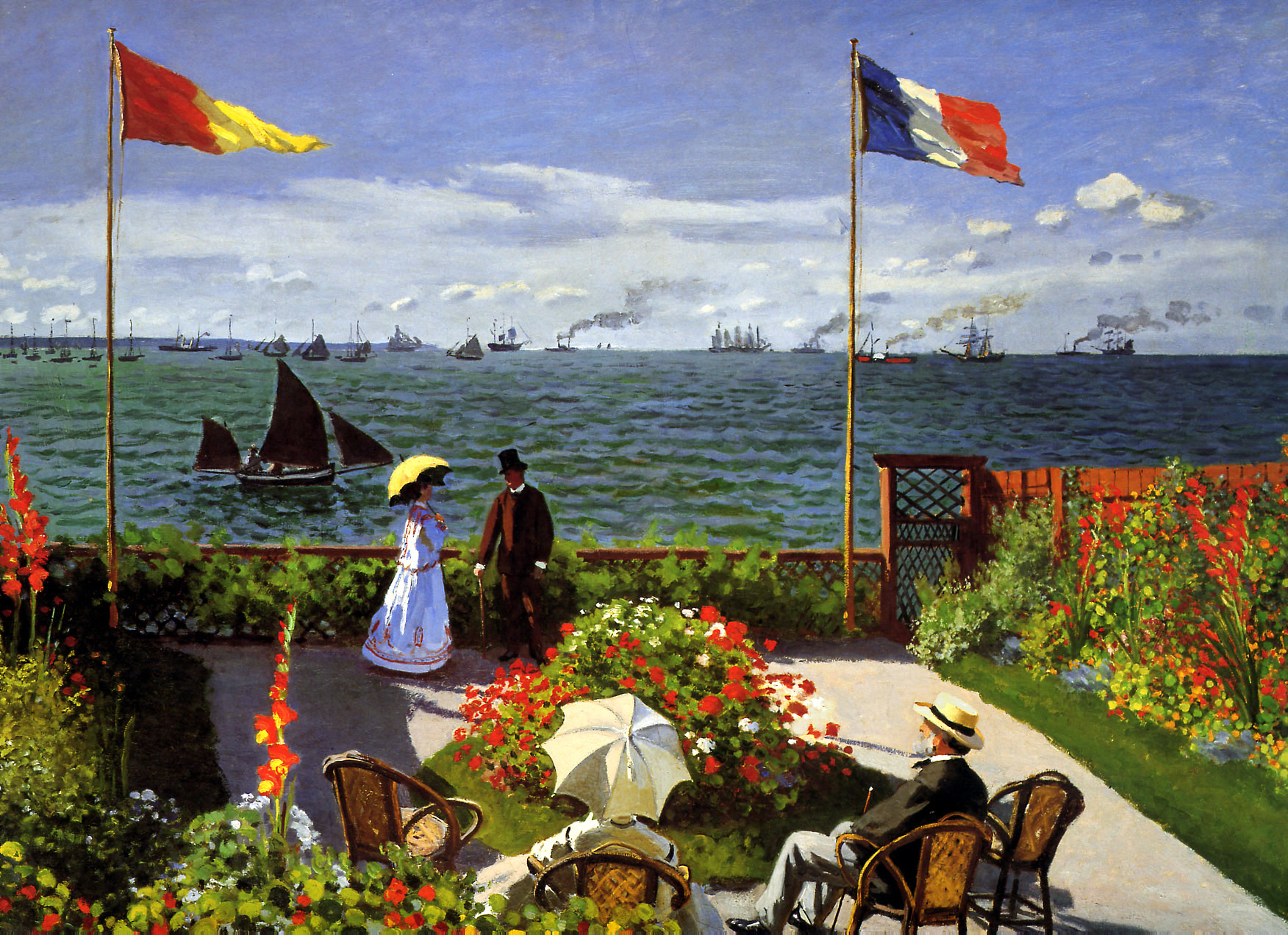
Inviting Claude Monet into your home is not simply about hanging a picture of water lilies above the sofa; it's about installing a virtual window where concrete refuses to open. This painter, who spent his life chasing the elusive clarity of morning on haystacks or the golden mist on the Thames, offers an elegant solution to brighten a dark living room without any masonry work. Decorating your home with Monet means understanding that the canvas acts as an artistic solar collector, reflecting the vibrant colors of Argenteuil or the aquatic reflections of Giverny back into the room. Far from being mere decoration, a well-chosen reproduction alters the perception of space, visually enlarging walls through the sheer power of a vibrant brushstroke and a palette designed to capture the moment.
 Free Image
How to transform your rooms into luminous spaces using the nuances of Impressionism, far from postcard clichés.
Reading Method
The Art of Reading Light Before Choosing Your Painting
To successfully integrate an Impressionist work, you must first observe how the natural light in your own room dialogues with the dominant colors of the intended painting. Do not seek technical perfection, but rather the emotional and atmospheric resonance the canvas will provoke at different times of the day.
Context Before Prestige
We place Decorating Your Home with Monet in its era, its studios, its exhibitions, and its small revolts. A work without context is sometimes just a very beautiful person who forgot their history.
The Signs That Betray the Style
We identify composition, palette, texture. These clues often say more than grand speeches, especially when they carry gold or nervous brushstrokes.
The Work in a Real Room
We end with the useful question: does this image breathe in your home, or does it just pose like a poster that has read two books?
Historical Context
Where Does This Luminous Obsession Come From, and Why Is It Not Just a Pretty Label?

Understanding Monet's approach requires delving into the Paris of the 1860s, where a group of artists rejected the rigid rules of the Académie des Beaux-Arts and its dusty historical subjects. They preferred to paint outdoors, directly from the motif, as Constable or Turner had already done, to capture the changing truth of the sky and water. This radical break transformed painting into a temporal experience: a Rouen Cathedral is no longer an immutable stone building, but a surface that turns blue, pink, or gray depending on the hour. When you choose a reproduction, you are not buying a fixed image, but a fragment of suspended time, a promise that light will still move on your wall.
The social context of the time also plays a crucial role, as these painters documented the emergence of a modern life made of leisure, train stations, and sea bathing, far from ancient mythologies. Monet painted the bourgeoisie strolling on the beach at Trouville or the regattas at Argenteuil with a spontaneity that shocked critics accustomed to smooth finishes. This original freshness explains why his works transcend centuries without aging: they capture the vibrant energy of the present moment. Hanging such a painting in a contemporary interior reactivates this spirit of freedom and reminds us that beauty lies in the ephemeral, in that ray of sunlight that crosses the room before disappearing behind the clouds.
Artistic Style
Why Does This Aesthetic Still Interest Our Modern Interiors So Much?

The persistence of Monet's success lies in his unique ability to soothe the mind while stimulating the eye with a constant chromatic vibration. In a world saturated with digital screens and cold artificial lights, his canvases offer an organic alternative where colors mix optically rather than on the palette. A field of poppies or a water surface with green and mauve reflections creates an infinite depth that seems to breathe, offering an immediate mental escape upon entering the room. It is a form of visual therapy that works particularly well in confined urban spaces, bringing a breath of fresh air and wild nature without leaving your living room.
Moreover, the universality of the subjects allows easy integration into various decors, from industrial lofts to country cottages, without creating major stylistic dissonance. Whether it is the wind-sculpted cliffs of Étretat or the Japanese gardens of Giverny, these images speak a common language of serenity and wonder at nature. Unlike more hermetic or conceptual movements, Impressionism does not require a degree in art history to be appreciated; it is experienced instinctively. This emotional accessibility makes each reproduction a warm focal point that humanizes the sometimes too cold architecture of our modern habitats.
Art & Details
The Visual Signs That Immediately Betray the Style

The first clue is unmistakable: the total absence of black outlines or rigid definition lines that usually delineate objects in classical painting. In Monet, a boat, a bridge, or a face exists only through the juxtaposition of small touches of pure color placed side by side, leaving the viewer's eye to recompose the image from a distance. This technique, called divisionism or fragmented touch, creates a palpable surface texture that seems to tremble under the ambient light of your room. If you squint at the reproduction, the forms should dissolve slightly, leaving only a global harmony of vibrant and luminous tones.
The palette used is also a distinctive marker, favoring light colors and systematically avoiding deep blacks or traditional dark earth tones. Shadows are never gray or brown, but composed of blues, violets, and complementary greens that reflect the surrounding light, as seen in the Haystacks or Poplars series. This chromatic richness gives the work an airy transparency, as if air actually circulates between the layers of paint. Recognizing these visual signatures will help you distinguish a true study of light from a simple decorative imitation that lacks this fundamental optical complexity.
Art & Details
The Works to Look at as If They Were Going to Respond to Your Space

For a room lacking brightness, nothing beats the explosive power of Impression, Sunrise, painted in Le Havre in 1872, where the rising sun pierces the morning mist with an incandescent orange. This painting, which gave its name to the movement, has an almost magical quality for warming a cold atmosphere, virtually projecting this golden glow onto adjacent walls. The simplicity of the composition, with a few boat silhouettes floating on shimmering water, avoids visual overload while imposing a strong and poetic presence. It is the ideal choice for an entrance hall or a reading nook where you want to create an energetic and optimistic starting point for the day.
Conversely, if you are looking to establish a deep meditative atmosphere, the large formats of the Water Lilies, designed for the Orangerie in Paris, offer total immersion in a liquid world without a defined horizon. These circular or oval panoramas, where sky and water merge in a ballet of greens, blues, and pinks, abolish the architectural limits of the room. Installing a reproduction from this series in a bedroom or office transforms the space into a floating sanctuary, promoting calm and daydreaming. The absence of traditional vanishing points invites the eye to wander endlessly, creating a sense of infinity that is particularly restful after a busy day.
Art & Details
Symbols, Details, and Little Visual Quirks to Decipher

Beyond immediate beauty, one must observe the thematic recurrences that structure Monet's work, such as his obsession with series where the same subject is explored under all possible lights. The Rouen Cathedrals, painted between 1892 and 1894 from a window facing the Gothic facade, celebrate not religious architecture but the way stone absorbs and reflects changing daylight. Each canvas is a scientific study of perception, showing how solid matter can become vaporous and colorful. Recognizing this intention in a reproduction allows one to appreciate the subtlety of the nuances, shifting from the cold blue of dawn to the intense gold of sunset, adding an intellectual layer to decorative contemplation.
Another fascinating detail lies in how Monet integrates human or artificial elements without ever giving them primacy over the enveloping nature. In his views of the Gare Saint-Lazare, the smoke from locomotives becomes a pictorial subject in its own right, mingling with the glass roofs and creating sublime vaporous atmospheres. Similarly, the Japanese bridge at Giverny, painted many times, serves less as an architectural subject than as a frame to observe the changing reflections of water and lush vegetation. These choices reveal a philosophy of life where man is a humble observer, integrated into the cycle of seasons and elements, a gentle message to recall in our daily domestic life.
Art & Details
Neighbors, Allies, and Turbulent Cousins of Impressionism

Although Monet is the figurehead, decorating with his spirit also involves knowing his companions whose approaches perfectly complement his own in an interior. Renoir, for example, brings human warmth and softness in the treatment of flesh and social scenes, which contrasts pleasantly with the sometimes melancholic solitude of Monet's landscapes. A Renoir canvas next to a Monet creates an interesting dialogue between the intimacy of the characters and the grandeur of nature, balancing the atmosphere of a living room. Similarly, Sisley, often underestimated, offers skies and waters of extreme sensitivity, perfect for rooms requiring a touch of discretion and nuanced poetry.
We must also mention Pissarro, whose rural and urban scenes have a more solid structure, sometimes anchoring Monet's vaporous lightness in a more tangible earthly reality. Associating these artists allows for varying textures and visual rhythms without leaving the overall Impressionist harmony. However, it is crucial not to dilute the desired effect by mixing too many different styles; staying within the Impressionist family ensures consistency of light and color. These 'cousins' allow you to expand the range of decorative possibilities while maintaining that specific atmosphere of clarity and vibration that defines the movement.
Art & Details
What Museums Confirm When Shortcuts Go Too Fast

Visiting institutions like the Musée d'Orsay in Paris or the Metropolitan Museum of Art in New York, virtually or physically, reveals the true extent of Monet's technical mastery, often reduced to mere colored spots in cheap reproductions. These museums preserve complete series that show the evolution of his thinking, proving that each touch, however spontaneous it may seem, is the result of relentless observation and thoughtful construction. Seeing the works in full scale allows you to understand the monumental scale the artist intended for certain scenes, a dimension difficult to reproduce on a small printed format without losing impact.
The Tate Modern in London or the MoMA in New York also exhibit late works, such as the large Water Lilies decorations, which anticipate 20th-century abstract art through their total dissolution of form. These visits, even digital via their online collections, offer high-resolution details impossible to see elsewhere, revealing the richness of the impasto and the layering of coats. To choose a faithful reproduction, it is essential to refer to these official sources that guarantee the accuracy of colors and respect for the artist's original intention, thus avoiding commercial deviations that impoverish the work.
Art & Details
How to Choose a Reproduction Without Making the Wall Panic?

The secret to a successful integration lies in the match between the dominant palette of the painting and the light exposure of the room in question. For a north-facing living room receiving little direct sunlight, favor works with warm tones like the Haystacks at sunset or the autumn landscapes of Vetheuil, which will bring compensatory visual warmth. Conversely, in a room bathed in southern light, a winter scene with its bluish snows or the morning mists of the Seine will create a refreshing and calming contrast, preventing the space from becoming overwhelming. The geographical orientation of your home should dictate the choice of the season represented on the wall.
The size of the reproduction plays an equally critical role: a small vignette will lose all its vibrant power if it is drowned in a large empty wall, while a giant format can suffocate a small entrance. Aim for a proportion where the work occupies about two-thirds of the width of the underlying furniture or the available wall, allowing space to breathe around it. For series like the Cathedrals or the Water Lilies, dare to go for a large format or even a triptych to recreate the immersion intended by the artist. Remember that the eye needs distance to merge the color touches; therefore, plan a sufficient viewing distance between the painting and the main observation point of the room.
Interior Decoration
Mistakes to Avoid Before Hanging the Painting

The most common mistake is choosing a reproduction based solely on the popularity of the image without considering the print quality and the support used. A cheap glossy paper print will create parasitic reflections that destroy the subtlety of the half-tones dear to Monet, turning a subtle work into a flat, garish image. Always opt for prints on textured canvas or high-density matte paper, which respect the grain of the original painting and diffuse light softly. Color fidelity is non-negotiable: check that the blues do not turn into electric violet and that the greens retain their vegetal naturalness.
Another frequent faux pas is thematic overkill, filling the entire house with Monet reproductions to the point of visual saturation. Impressionist art needs air and space to function; multiplying sources of luminous vibration creates sensory confusion rather than harmony. Limit yourself to one or two masterpieces per living area, allowing each work to play its role as a luminous focal point without competing with its neighbors. Finally, avoid pairing these paintings with frames that are too heavy or gilded in an old style, which would weigh down the whole; a thin frame, white, black, or light wood, will suffice to highlight the lightness of the touch.
| Room | Suggestion | Decorative Effect |
|---|---|---|
| Living Room | A work related to Decorating Your Home with Monet with a strong composition | Cultivated focal point, warm, and easy to comment on without reciting a label. |
| Bedroom | A soft palette or a more intimate scene | Calm atmosphere, visual presence without unnecessary agitation. |
| Office | A structured, colorful, or graphically sharp image | Creative energy and a small reminder that the wall can also work. |
| Entrance | A vertical format or an immediately readable work | Clear, elegant first impression, and decidedly less timid than an empty white space. |
To Continue the Visit
Sources, Collections, and Paths Truly Related to the Subject
A few useful references to verify information, compare free images, and extend the reading without heading to a museum that didn't ask for anything.
Related Articles to Read Next
Useful Blog Hubs
Useful Sources on This Subject
FAQ
Frequently Asked Questions about Decorating Your Home with Monet
What is Decorating Your Home with Monet in painting?
Decorating Your Home with Monet deserves an in-depth article because this style engages both an era, a way of painting, and a very concrete way of living with images.
How to quickly recognize this style?
Observe especially composition, palette, texture, light, and atmosphere, then how the composition organizes the gaze. If the work holds your attention longer than expected, it is probably not an accident.
Which artists should you know?
You need to cross-reference the central artists of the movement with museums and reliable sources to avoid too hasty attributions.
Does this style suit modern decoration?
Yes, provided you choose the right format, a palette consistent with the room, and a work whose presence remains pleasant on a daily basis.
Should you choose the most famous work?
Not necessarily. The most famous work can be perfect, but the right choice depends above all on the room, the format, the palette, and the desired atmosphere.
Where to verify the information?
Start with museum notices, Wikipedia/Wikidata for general orientation, then Wikimedia Commons when a free image is needed.
Making Your Wall a Window Open to the Eternal Present
Decorating your home with Monet goes far beyond a passing trend to become a lasting way of inhabiting light and pacing your days to the rhythm of the seasons. By wisely choosing a reproduction, you are not just installing a decorative object; you are inviting a philosophy of the present moment and attentive observation of the natural world. Whether through the aquatic serenity of Giverny or the solar energy of poppy fields, these works radically transform the atmosphere of a place, offering a poetic escape within reach. So let these canvases vibrate on your walls, daily reminding us that beauty lies in perpetual change and that every ray of light deserves to be celebrated.
0 comments