

10 paintings to give • Art & decoration guide
Ten paintings to give without ending in panic: the guide that looks under the varnish
Choosing a work for someone else is a balancing act between pure emotion and domestic diplomacy, far from simple bestseller lists.
Giving a painting sometimes feels like sending a coded message that the recipient must decipher before even finding a nail to hang it. Too bland, the landscape disappears behind the sofa like a shy guest; too intense, the abstract canvas takes over the living room and almost demands its own lease with utilities included. The art of hand-painted reproduction lies not in servile copying, but in the ability to capture the soul of an era, whether it be the vibrant light of Provence or Viennese gold, to transform a bare wall into a silent but eloquent conversation.
 Free image
Choosing a work for someone else is a balancing act between pure emotion and domestic diplomacy, far from simple bestseller lists.
Reading method
The enlightened flâneur's approach
Rather than ticking boxes on a standardized wish list, let's approach these ten leads like a curious visitor lingering in front of each window display. It's about understanding why certain images cross the centuries without aging, by observing the material, the brushstroke, and the atmosphere they truly exude once installed in your home.
Context before prestige
We place 10 paintings to give in their era, their workshops, their exhibitions, and their small revolts. A work without context is sometimes just a very beautiful person who forgot their history.
The signs that betray the style
We identify composition, palette, material. These clues often say more than grand speeches, especially when they carry gold or nervous brushstrokes.
The work in a real room
We end with the useful question: does this image breathe in your home, or does it just pose like a poster that has read two books?
Historical context
Where does this idea of ten paintings come from, and why is it not just a pretty label?
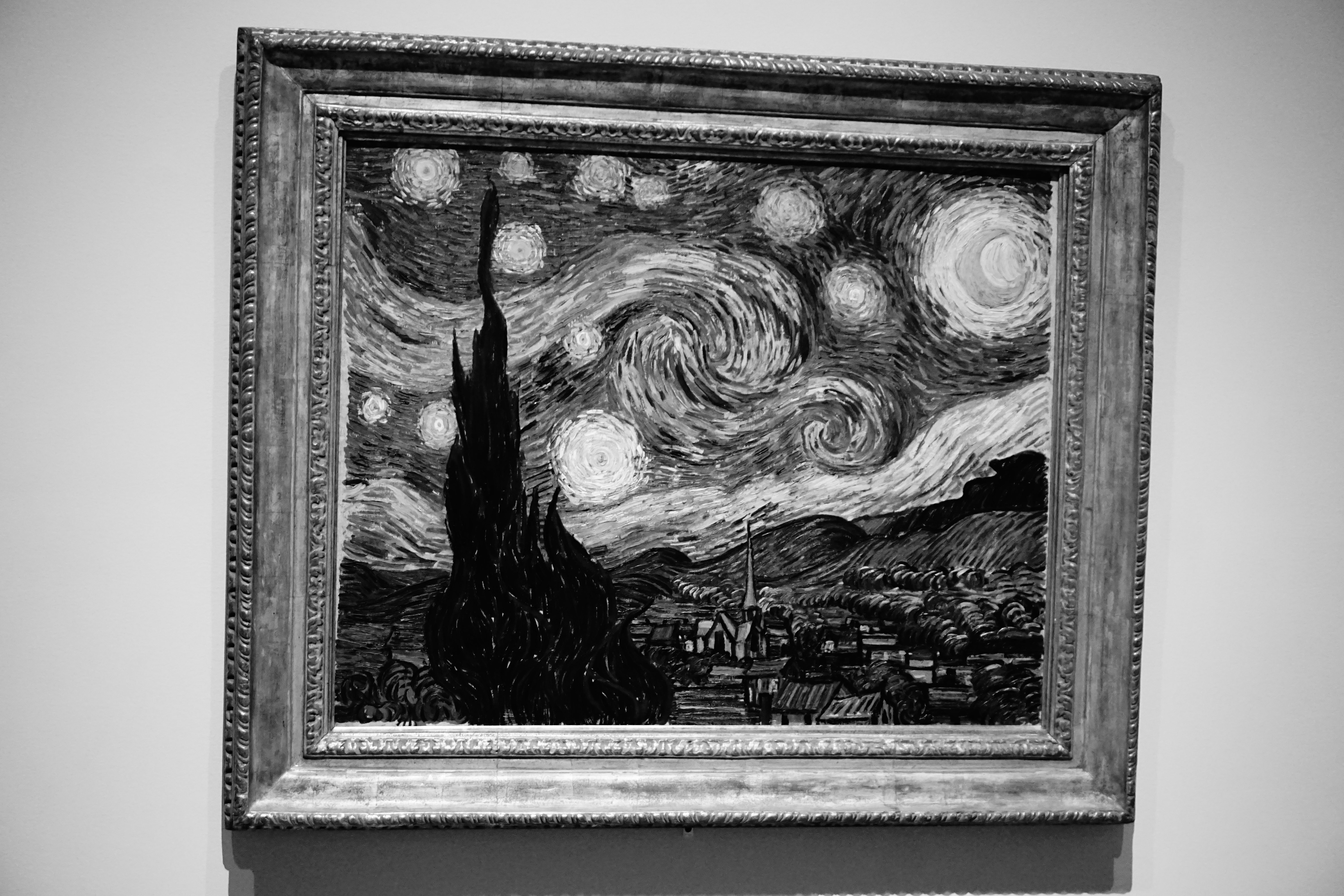
The idea of selecting ten iconic works does not arise from marketing chance, but sinks its roots into the tumultuous history of Parisian and Viennese workshops of the late 19th century. At that time, dealers like Durand-Ruel or daring collectors took the risk of exhibiting canvases deemed scandalous, thus creating an aesthetic canon that still defies time. Understanding this context means realizing that each painting proposed here carries the memory of artistic battles, where the simple depiction of a water lily or a kiss could overturn the established academic order.
One must distinguish the artists who defined these movements from those who merely accompanied them, because nuance makes all the difference when making a purchase. An Impressionist landscape is not just a country view; it is a technical revolution born in the 1870s, favoring natural light over rigorous drawing. Offering such a work is therefore transmitting a fragment of this history where speed of execution replaced smooth finish, bringing a raw vitality that modern reproductions desperately try to keep intact.
Artistic style
Why do these paintings still interest our contemporary interiors so much?

The persistence of these images in our modern living rooms is explained by their unique ability to dialogue with very diverse architectures, from industrial lofts to country houses. A seascape with gray-blue tones, reminiscent of the changing skies of the English Channel painted by Boudin, brings a calming depth where contemporary minimalism might seem cold. These works function as visual anchors, offering an emotional vanishing point that allows the eye to rest after staring at our bright screens all day.
Contrary to popular belief, it is not the celebrity of the name that ensures the lasting success of these paintings, but their intrinsic atmospheric power. A bouquet of sunflowers or a garden scene are not mere decorations; they introduce organic warmth and human imperfection that manufactured objects cannot imitate. The modern viewer finds in them a form of contemplative slowness, an invitation to slow down the frantic pace of daily life simply by letting the gaze wander over superimposed touches of color.
Art & details
The visual signs that immediately betray the style and era

Recognizing the style of a work without reciting a museum card requires observing how light is treated and how the material is deposited on the canvas. In Impressionism, for example, the absence of sharp outlines and the juxtaposition of pure colors create an optical vibration that changes with viewing distance, a crucial technical detail for choosing the right location in a room. Conversely, Klimt's Art Nouveau is distinguished by the use of real gold leaf and flat geometric patterns that encircle softly modeled figures, creating a striking contrast between the divine and the earthly.
The chromatic palette also acts as an immediate temporal signature: warm ochres and cobalt blues inevitably evoke the south of France and Van Gogh's solar energy, while water greens and pale pinks signal Monet's dreamlike universe at Giverny. Texture plays an equally important role; a quality reproduction must render the impasto, that thickness of paint that casts small shadows and brings the subject to life, transforming a flat image into a tangible physical presence in the domestic space.
Art & details
Works to look at as if they were going to answer you directly

Some canvases possess such intensity that they seem to establish direct eye contact with the viewer, demanding special attention when choosing the format. Take the soft portrait of a young girl with rosy cheeks, typical of Renoir, where the smile seems frozen in a timeless joy that illuminates even the darkest corridors. These works work best in medium size, neither too imposing to become oppressive, nor too small to lose the finesse of the facial expressions that make all their communicative charm.
Conversely, large iconic works intended for the seasoned enthusiast, like certain abstract compositions by Kandinsky, require space to unfold their musical language of shapes and colors. Here, the painting does not merely illustrate a subject; it creates a visual sound environment where black lines dance around red and yellow patches. Offering such a piece is offering an immersive experience that transforms a white wall into a permanent theater stage, provided the recipient is ready to accept this level of energy in their daily living space.
Art & details
Symbols, details, and small visual quirks hidden under the paint

Behind the apparent beauty of a bouquet or a garden scene often hide complex symbols related to vanity, the passage of time, or the rebirth of nature. The wilted flowers in the foreground of a 17th-century still life reminded of the fragility of existence, while the lush gardens of the Victorian era celebrated man's mastery over natural chaos. Spotting these details considerably enriches the sentimental value of the gift, transforming a decorative object into a support for philosophical reflection for the recipient.
The small quirks of artists, such as the repetitive way Cézanne builds his apples with faceted planes or how Matisse simplifies lines to the essential, become signatures recognizable among thousands. These stylistic choices are not errors or approximations, but conscious decisions to reveal the essence of the subject beyond its superficial appearance. A knowledgeable enthusiast will appreciate these deliberate distortions that give the work its unique personality, far more than a perfectly smooth but soulless photographic copy.
Art & details
Neighbors, allies, and turbulent cousins of these artistic movements

No artist is an island, and understanding the links between recognized masters and their less famous contemporaries allows expanding the range of possibilities for an original gift. Alongside Monet, painters like Sisley or Pissarro explored subtle variations on the theme of urban and rural landscapes, sometimes offering more intimate and less expected compositions than museum masterpieces. Choosing a reproduction of these 'cousins' allows honoring the Impressionist style while avoiding the banality of images seen over and over in all mainstream decoration catalogs.
Similarly, Klimt's universe finds fascinating echoes in artists of the Vienna Secession like Koloman Moser, who share this love for geometric ornamentation and fluid lines without falling into golden kitsch. Exploring these artistic neighborhoods offers the opportunity to unearth visual gems that will pleasantly surprise the recipient, thus proving an in-depth knowledge of the subject. It is an elegant way to say that one has looked beyond the obvious, valuing the recipient's personal taste rather than blindly following the trend of the moment.
Art & details
What museums confirm when shortcuts go too fast

Institutions like the Musée d'Orsay in Paris or the MoMA in New York not only preserve the original works, but also the proof that popular perception sometimes oversimplifies artistic movements. By visiting their collections, one realizes that the diversity within a single movement is immense, contradicting the received idea that all Impressionists painted the same way. This documentary richness reminds us that there are a thousand ways to interpret light or form, inviting a more nuanced and personal selection when purchasing a reproduction.
These museums also highlight the importance of the original exhibition context, showing how certain works were designed to dialogue with each other in a specific salon or particular gallery. Ignoring these interactions can lead to isolating a painting in an environment that is hostile to it, thus breaking the visual harmony intended by the artist. Referring to historical hangings validated by curators allows recreating at home an authentic atmosphere, respectful of the original intention and guaranteeing successful integration into the interior decor.
Art & details
How to choose a reproduction without panicking the existing wall?

The harmonious integration of a painting depends above all on the dialogue between the work's palette and the dominant colors of the room, whether it is a living room with white walls or an office paneled in dark wood. A cool-toned seascape can refresh a south-facing room bathed in light, while a landscape with golden ochres will immediately warm up a somewhat sad northern space. It is crucial to visualize the impact of the canvas's color dominance on the overall atmosphere, because a tonal error can transform a lovingly thought-out gift into a persistent discordant note.
The format also plays a determining role in spatial balance: a large iconic work needs a clear wall to breathe, while a series of small formats can rhythm a library or narrow hallway without cluttering it. One must avoid the classic mistake of choosing a painting too small for a large wall, which gives the impression of a lost postage stamp, or conversely, suffocating a small room with an overly busy composition. The ideal is to measure the available space and imagine the painting as a window open to another world, proportionate to the size of the room.
Interior decoration
Fatal errors to avoid before hammering the first nail

The first mistake is to be seduced solely by the fame of the artist's name without checking whether the subject really matches the recipient's taste or their interior. Offering a very abstract Kandinsky to someone who prefers classical realism is like imposing a visual language they do not speak, risking the work being relegated to a dark closet. It is better to prioritize an emotional connection with the image itself, ensuring that the theme resonates with the recipient's personality, whether they are a lover of calm nature or urban dynamism.
Then, neglecting the quality of the reproduction and the finish of the stretcher can turn a beautiful project into a quick disappointment, with dull colors or a canvas that loosens with humidity. A hand-painted reproduction must show visible brushstrokes and a credible thickness of material, far from the flat look of cheap digital prints. Finally, forgetting to plan the correct hanging height, generally at eye level, can ruin the perspective of the work and make contemplation uncomfortable, canceling all previous efforts of careful selection.
| Room | Suggestion | Decorative effect |
|---|---|---|
| Living room | A work related to 10 paintings to give with a strong composition | Cultivated focal point, warm and easy to comment on without reciting a label. |
| Bedroom | A soft palette or a more intimate scene | Calm atmosphere, visual presence without unnecessary agitation. |
| Office | A structured, colorful, or graphically sharp image | Creative energy and a small reminder that the wall can also work. |
| Entryway | A vertical format or an immediately readable work | Clear, elegant first impression, and decidedly less shy than a white void. |
To continue the visit
Sources, collections, and paths truly related to the subject
A few useful references to verify information, compare free images, and extend the reading without going to a museum that didn't ask for anything.
Related articles to read next
Useful blog hubs
FAQ
Frequently asked questions about 10 paintings to give
What is 10 paintings to give in painting?
10 paintings to give deserves an in-depth article because this style engages both an era, a way of painting, and a very concrete way of living with images.
How to quickly recognize this style?
Observe especially composition, palette, material, light, and atmosphere, then how the composition organizes the gaze. If the work holds you longer than expected, it's probably not an accident.
Which artists should you know?
You need to cross-reference the central artists of the movement with museums and reliable sources to avoid too hasty attributions.
Is this style suitable for modern decoration?
Yes, provided you choose the right format, a palette consistent with the room, and a work whose presence remains pleasant on a daily basis.
Should you choose the most famous work?
Not necessarily. The most famous work can be perfect, but the right choice depends above all on the room, the format, the palette, and the desired atmosphere.
Where to verify the information?
Start with museum notices, Wikipedia/Wikidata for general orientation, then Wikimedia Commons when a free image is needed.
The art of the successful wall offering
Choosing one of these ten paintings to give is ultimately accepting to play the mediator between art history and the daily lives of those we love. Whether you opt for the serenity of a water lily, the brilliance of a sunflower, or the complexity of an abstract composition, the true success lies in the work's ability to integrate naturally while bringing an extra touch of magic. By avoiding last-minute panic and prioritizing reflection over emotion, the gift becomes much more than an object: it becomes a visual travel companion, a silent but present witness to the life unfolding before it.
0 comments