

Monet's Luncheon • Art & Decoration Guide
Monet's Luncheon: A Meal, Open Air, and a Tablecloth Under High Light Tension
Diving into the heart of a young painter's outsized ambitions, who transformed the simple act of eating into a revolution of light and scale.
It is tempting to see Monet's Luncheon as a simple genre scene, a frozen bourgeois snapshot where bread and wine are shared. Yet behind this apparent ordinariness lies one of the most resounding audacities in the history of modern art. When Claude Monet decided, around 1868, to paint his family at the table, he was not seeking to document a meal but to elevate the everyday to the rank of visual epic. This painting, now housed at the Städel Museum in Frankfurt, defies conventions with its monumental format, previously reserved for historical or religious scenes. Here, the white tablecloth becomes a battlefield of light where the future of painting is played out, far from ancient myths and heroes in togas.
 Free Image
The Seine at Argenteuil places Monet in the years when modern life, leisure, and family light became serious subjects.
Reading Method
Reading Light as a Story
To fully appreciate these works, one must forget the hierarchy of genres and observe how Monet uses the size of the canvas to impose the dignity of the present moment. Each brushstroke tells a struggle between academic tradition and the truth of the gaze.
Context Before Prestige
We place Monet's Luncheon in its era, its studios, its exhibitions, and its small revolts. A work without context is sometimes just a very beautiful person who forgot their history.
The Signs That Betray the Style
We spot the lunch scene, large format, modern figures. These clues often say more than grand speeches, especially when they carry gold or nervous brushstrokes.
The Work in a Real Room
We end with the useful question: does this image breathe in your home, or does it just pose like a poster that has read two books?
Historical Context
The Luncheon: Monet Sets the Table, but with an Ambition Too Grand to Remain Domestic

In 1868, Claude Monet settled in Bennecourt and undertook to paint a family scene of unprecedented scale for such a trivial subject. The Luncheon, now visible at the Städel Museum, measures nearly two meters by two and a half meters, a size usually reserved for the grand historical machines exhibited at the official Salon. Monet depicts his son Jean, aged two, playing with a toy while Camille Doncieux and Léonard, a model, seem to await service. This deliberate disproportion between the intimate subject and the gigantic support constitutes a silent manifesto: modern life deserves as much solemnity as Napoleon's battles.
The composition plays with an astonishing mastery of natural light filtering through the foliage to strike the white tablecloth, creating vibrant contrasts that already herald Impressionism. The objects on the table, such as fruits and glasses, are not mere accessories but visual anchors that structure the deep space of the room. Here, Monet rejects the brownish tones of Parisian studios in favor of the raw clarity of daylight, transforming an ordinary dining room into a theater where every cast shadow becomes a character in its own right. It is a declaration of aesthetic independence that paves the way for all his future explorations of light.
Artistic Style
Luncheon on the Grass: The Picnic That Took on Cathedral Dimensions

A few years earlier, between 1865 and 1866, Monet had already attempted an even more dizzying feat with his project for Luncheon on the Grass. Inspired by the scandal caused by Édouard Manet three years prior, the young painter aimed for a completely different target: integrating modern figures into a life-size landscape, without any mythological allegory. He gathered his friends Frédéric Bazille and Gustave Courbet, along with Camille, to pose in the Forest of Fontainebleau. The ambition was immense, as the final canvas was to reach nearly six meters in width, a colossal size meant to literally engulf the viewer when exhibited at the Salon of 1866.
This pharaonic project forced Monet to paint en plein air, a practice then considered merely a preparatory step and not an end in itself. He had to manage the complexity of multiple figures dressed in contemporary fashion, sitting or standing on the grass, under changing light that constantly altered tonal relationships. Bazille, ever generous, lent his Parisian studio on Rue de la Condamine to allow Monet to work on this immense canvas during the winter. Although the painting was never completed as planned, the preparatory studies and surviving fragments testify to a fierce determination to make the landscape the true subject, relegating the figures to the status of natural elements among others.
Art & Details
A Painting Cut into Pieces: When Humidity Becomes an Art Critic, but a Very Bad One

The story of this large Luncheon on the Grass takes a tragic turn when Monet, unable to pay his rent in Argenteuil in 1871, had to leave his canvas as a pledge with his landlord. Abandoned in a damp, poorly protected place, the massive work suffered irreversible damage from water infiltration and temperature variations. When he finally recovered his property, the assessment was disastrous: the paint was blistered, the canvas slack, and some parts were beyond repair. Faced with this material disaster, Monet made a radical and surgical decision: he cut the giant canvas to save what could still be saved, transforming a monumental work into several distinct fragments.
These pieces, now dispersed between the Musée d'Orsay in Paris and the Pushkin Museum in Moscow, nonetheless offer a fascinating glimpse of what could have been the definitive masterpiece of the young artist. The central panel, kept at Orsay, shows elegant figures in the clearing, while other fragments focus on the play of light through the trees or details of clothing. This involuntary mutilation has paradoxically allowed a new intimacy in studying Monet's technique, revealing the speed of his touch and the precision of his observation even before the official blossoming of Impressionism. What remains is less a failure than a romantic ruin of an ambition devoured by material reality.
Art & Details
Camille in History: Model, Companion, Real Presence, Not Just a Silhouette in a Dress

At the center of these pictorial agitations is Camille Doncieux, who was much more than a simple model for Monet; she was the living muse of his early great successes. Present in The Luncheon of 1868 as well as in the sketches for the large Luncheon on the Grass, she embodies feminine modernity, far from the nude goddesses or dusty allegories dear to academicism. Monet paints her with particular tenderness, capturing not an idealized pose but the reality of her presence, her fashionable clothes, her natural attitudes amidst nature. She becomes the emotional anchor of these scenes, lending human credibility to compositions that could have remained cold stylistic exercises.
The relationship between the artist and his model goes beyond a simple professional transaction into the realm of shared intimacy, which is felt in the fluidity of the lines and the accuracy of the expressions. Unlike the stereotypical figures of official painters, Camille seems to think, breathe, and interact with her immediate environment. Her role is crucial to understanding Monet's evolution toward a painting of real life, where each individual matters for their own uniqueness. Even when other models like Bazille or Courbet appear in the surroundings, it is often Camille's silhouette that guides the eye and structures the luminous balance of the whole, proving that affection can be a powerful aesthetic driver.
Art & Details
Tablecloths, Fruits, Bottles: Objects Don't Eat, But They Hold the Scene

In these meal scenes, whether indoors or outdoors, inanimate objects play an essential active role in constructing the image. The white tablecloth, recurring in Monet, acts as a natural reflector that bounces light onto faces and softens cast shadows, creating a characteristic airy atmosphere. The fruits, breads, and bottles arranged on the table are not there by chance; they serve as chromatic and textural anchors that ground the composition in reality. Monet treats these still lifes with the same scrupulous attention as landscapes, using the pictorial material to suggest the shine of glass or the velvet of a peach, demonstrating that the banal possesses its own visual nobility.
The arrangement of these elements reveals a deep understanding of how light interacts with different surfaces. A wine bottle can capture a blue reflection from the sky, while a carelessly placed knife creates a vanishing line that guides the eye toward the figures. These details, often overlooked in a quick reading, are in fact the keystones that prevent the scene from floating into too light an abstraction. By painting these objects with such vigor, Monet asserts that beauty lies not in the rarity of the subject, but in the quality of the gaze upon it, transforming a simple lunch into a symphony of textures and reflections.
Art & Details
Rejection from the Salon: Even Lunch Can Become Too Modern for the Academic Stomach

Despite their nascent genius, these early works faced incomprehension, even rejection, from the artistic institutions of the time. The Salon jury, the stern guardian of the hierarchy of genres, struggled to accept that such an imposing format could be devoted to subjects as trivial as picnics or family meals. For the academicians, great painting was meant to instruct, to elevate the soul through historical or religious subjects, not to show bourgeois people eating cheese. The implicit or explicit rejection of these paintings pushed Monet and his friends to seek other paths, thus contributing to the gradual formation of an alternative circuit that would lead to the Impressionist exhibitions.
This institutional resistance paradoxically freed Monet from the narrative constraints that weighed on his contemporaries. Since he could not rely on official recognition to validate his work, he had to trust his own vision and the pure force of his painting. The monumental format of his luncheons then became a necessary provocation, a way of saying that modernity deserved its own visual cathedrals. This confrontation between the young painter's audacity and the judges' rigidity forged the rebellious character of Impressionism, turning each rejection into a badge of honor and an additional motivation to explore new artistic territories without compromise.
Art & Details
From Meal to Landscape: Monet Keeps the Light and Lets Conventions Clear the Table
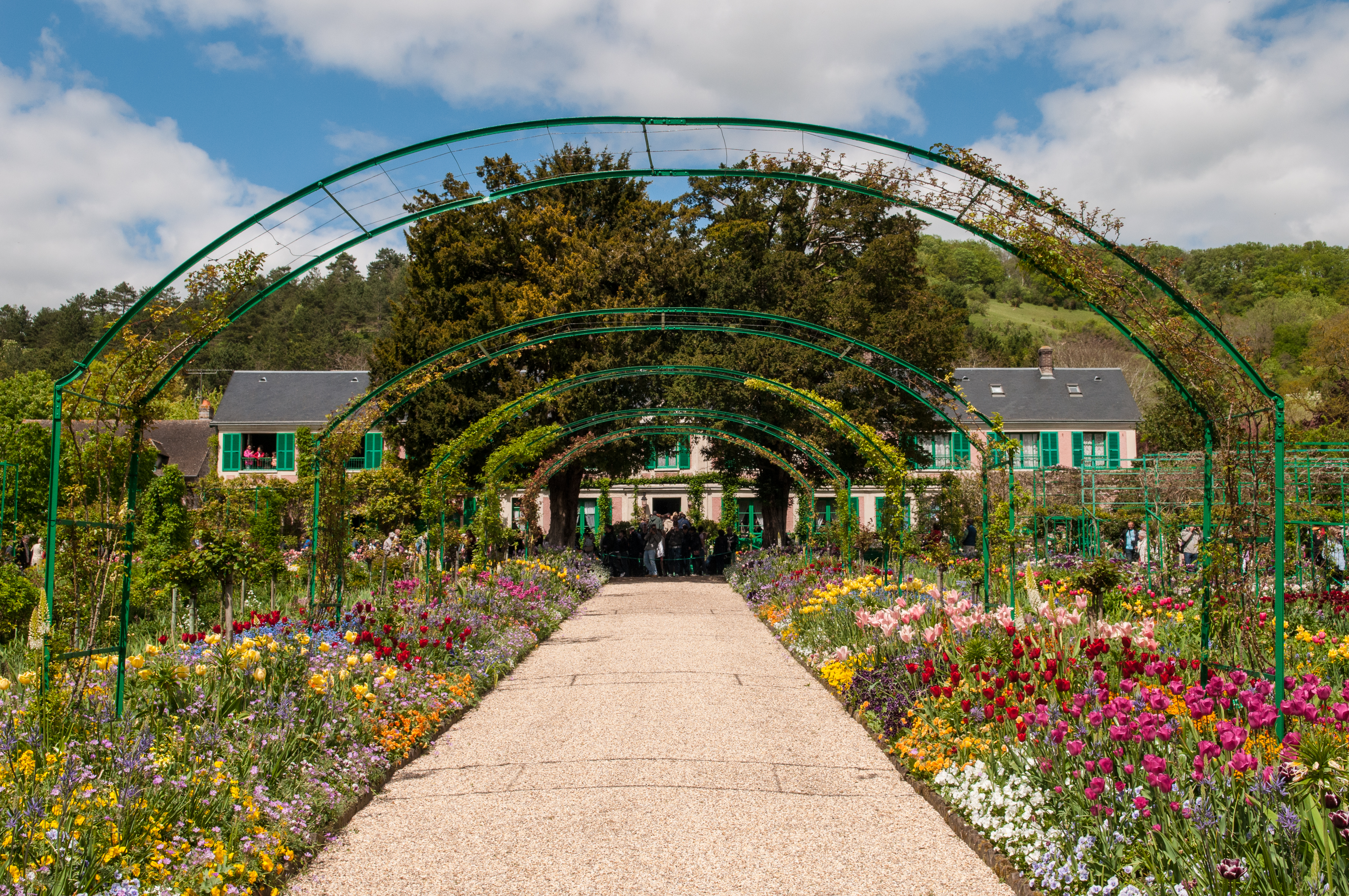
Monet's evolution after these grand lunch projects shows a gradual shift where the human figure slowly gives way to the absolute predominance of landscape and light. The scenes of Argenteuil, which directly follow this period, retain the spirit of conviviality and open air, but the figures often become silhouettes integrated into the vegetation rather than central protagonists. The lesson learned during the creation of Luncheon on the Grass—that light is the true subject—becomes the founding principle of all his subsequent work. The table disappears, the tablecloth merges into the grass, and only the shimmer of the atmosphere captured at a precise moment remains.
This transition from human narrative to pure sensory experience marks the maturity of Impressionism. Monet understands that painting a lunch is not about telling who eats what, but about rendering the overall impression of a moment of joy and clarity. The gardens of Giverny, with their water lilies and Japanese bridges, will be the logical culmination of this approach initiated thirty years earlier under the trees of Chailly. The food matters little; it is the way the sun caresses objects and beings that constitutes the very essence of painting. Thus, these early large formats served as an indispensable laboratory for refining a technique that would change the face of Western art.
Interior Decoration
Choosing a Monet Luncheon: For a Wall That Loves Conversations and Luminous Whites

For those who wish to welcome a reproduction of these works into their home, choosing a Monet Luncheon offers a unique opportunity to inject luminosity and history into a contemporary interior. These paintings, with their dominant greens of foliage and brilliant whites, possess the rare virtue of expanding the visual space of a room while bringing palpable human warmth. They work particularly well in a dining room or living room where one entertains, as they naturally evoke conviviality and sharing without falling into the kitsch of overly literal genre scenes. The richness of the pictorial touch, even in a quality reproduction, invites contemplation and stimulates conversation among guests.
It is advisable to favor prints that respect the saturation of the original colors, especially the vibrancy of the greens and the purity of the whites of the tablecloth, in order to preserve the freshness effect sought by the artist. A large format is preferable to pay homage to Monet's initial ambition, allowing the eye to get lost in the details of the foliage and reflections. Hanging such a work means accepting to live with a fragment of that artistic revolution that dared to say that the morning light on a breakfast was worth a historical battle. It is a smart decorative choice that combines cultural refinement and immediate visual pleasure, transforming an ordinary wall into a window open onto art history.
| Room | Suggestion | Decorative Effect |
|---|---|---|
| Living Room | A work related to Monet's Luncheon with a strong composition | Cultivated, warm focal point, easy to comment on without reciting a label. |
| Bedroom | A soft palette or a more intimate scene | Calm atmosphere, visual presence without unnecessary agitation. |
| Office | A structured, colorful, or graphically sharp image | Creative energy and a small reminder that the wall can also work. |
| Entryway | A vertical format or an immediately readable work | Clear, elegant first impression, and decidedly less timid than a blank white. |
To Continue the Visit
Sources, Collections, and Truly Relevant Paths on the Subject
A few useful references to verify information, compare free images, and extend the reading without heading to a museum that didn't ask for anything.
Useful Collections
Useful Sources on This Subject
- Städel Museum - Monet and the Birth of Impressionism
- Wikipedia - Le Déjeuner sur l'herbe (Monet)
- Musée d'Orsay - Le Déjeuner sur l'herbe
- Wikimedia Commons - Le Déjeuner sur l'herbe by Claude Monet
- Wikipedia - Camille Monet
- Wikidata - Claude Monet
- Wikipedia - Claude Monet
- Wikimedia Commons - Claude Monet
- Wikipedia - Impressionism
- Wikidata - Impressionism
FAQ
Frequently Asked Questions About Monet's Luncheon
What is Monet's Luncheon in painting?
Monet's Luncheon and his grand lunch projects show a young painter who takes everyday life very seriously: family, table, grass, modern figures, saved fragments, and already stubborn light.
How to quickly recognize this style?
Observe especially the lunch scene, large format, modern figures, white tablecloth and open air, then the way the composition organizes the gaze. If the work holds your attention longer than expected, it's probably not an accident.
Which artists should you know?
The main references are Claude Monet, Camille Doncieux, Frédéric Bazille, Gustave Courbet, and Édouard Manet.
Does this style suit modern decoration?
Yes, provided you choose the right format, a palette consistent with the room, and a work whose presence remains pleasant on a daily basis.
Should you choose the most famous work?
Not necessarily. The most famous work can be perfect, but the right choice depends above all on the room, the format, the palette, and the desired atmosphere.
Where to verify the information?
Start with museum labels, Wikipedia/Wikidata for general orientation, then Wikimedia Commons when a free image is needed.
A Table Set for Eternity
Ultimately, Monet's Luncheon and its unfinished avatars remain poignant testimonies of an artistic youth in full ferment, ready to redefine the rules of the game. What began as an attempt to conquer the Salon through size and audacity transformed, thanks to life's vicissitudes and the perseverance of genius, into a timeless lesson on the value of the present moment. These canvases remind us that art should not seek grandeur in the distant or mythical, but seize it here and now, in the simplicity of a shared meal under bright light. Choosing to live with these images means accepting to see the world with fresh eyes, where every ray of sunlight on a plate becomes a small victory against oblivion and grayness.
0 comments