

Gustav Klimt · 1916 -1917 · Piacenza
Portrait of a Lady: Theft, Rediscovery and Hidden Double Portrait
A young woman turns around on a green background. However, under his face there is another. Stolen in 1997 then found twenty-three years later in a wall of his own museum, this late painting by Klimt has two stories and two images.

Direct response
Why the Portrait of a lady is he so famous?
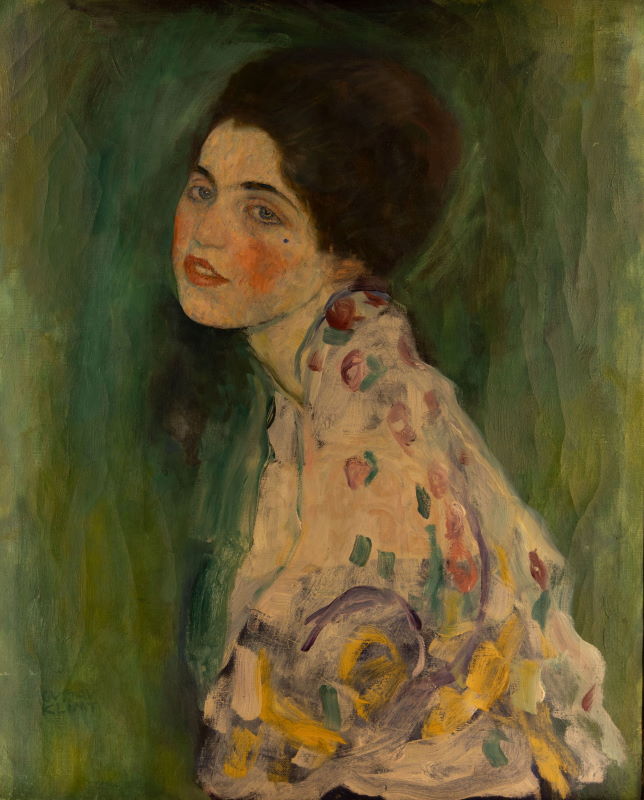
The Portrait of a lady . Ritratto di signora in Italian - is an oil on canvas painted by Gustav Klimt around 1916 -1917. The work belongs to the Galleria d'arte moderna Ricci Oddi in Plaisance, Italy. Its importance comes as much from its late language as from its exceptional material history.
In 1996, Claudia Maga, a high school student from Plaisance, noticed that the face and pose strongly resembled an older portrait of Klimt known only from a photograph. Analyzes confirm that the visible canvas covers a first painting. A year later, when the museum was preparing an exhibition around this discovery, the painting disappeared.
The theft remains unexplained. For almost twenty-three years, false leads and dubious statements multiplied. Then, in December 2019, gardeners released ivy on an exterior wall of the museum. Behind a small door without a lock, they discovered a plastic bag containing a canvas. Examinations establish that it is indeed the stolen Klimt.
Two paintings
Klimt transforms a first young woman into a new portrait without changing the canvas.
An opaque flight
The frame on the roof and the proximity of a skylight were never enough to explain the disappearance.
An intact return
The stamps and marks on the reverse, then the examinations, make it possible to authenticate the found work.
The discovery of 1996
A portrait painted on another portrait
The comparison doesn't show two women simply looking alike. It reveals how Klimt kept a face and general orientation while rebuilding the garment, hair and colorful environment.

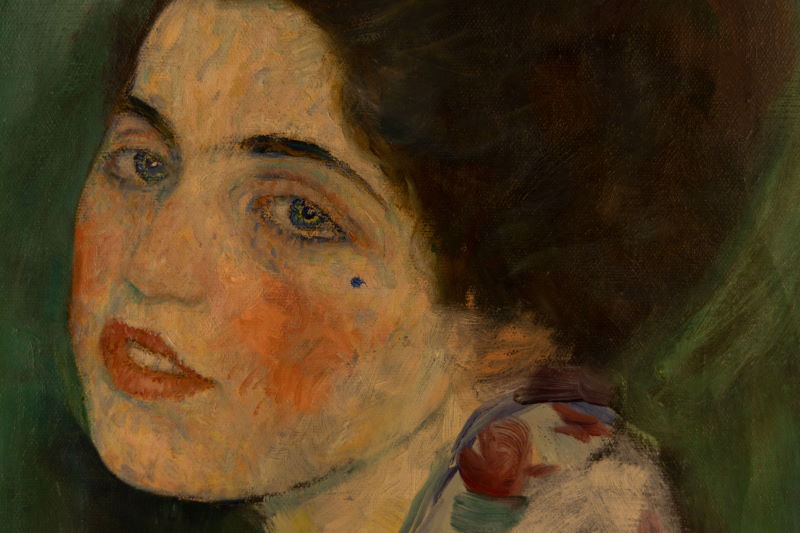
Same general inclination, sideways gaze and cheek volume: this is the clue that triggered the comparison.
The large hat of the first state is replaced by a mass of black hair which tightens the head.
The dark stole becomes a light, flowery blouse, constructed with quick and colorful touches.
The dense brown space gives way to a luminous green which brings the figure closer to the viewer.
Claudia Maga does not have an x-ray in front of her when she formulates her intuition. She compares the Plaisance painting to a photograph of the older painting, then considered lost. The hypothesis is then subjected to scientific examinations which confirm the presence of the first composition.
This discovery does not allow us to name the models. The formula according to which Klimt covered the portrait of a dead lover is often repeated, but it is not established by a decisive document. The most solid reading remains material: Klimt reuses an already painted canvas and profoundly transforms the visual identity of the figure.
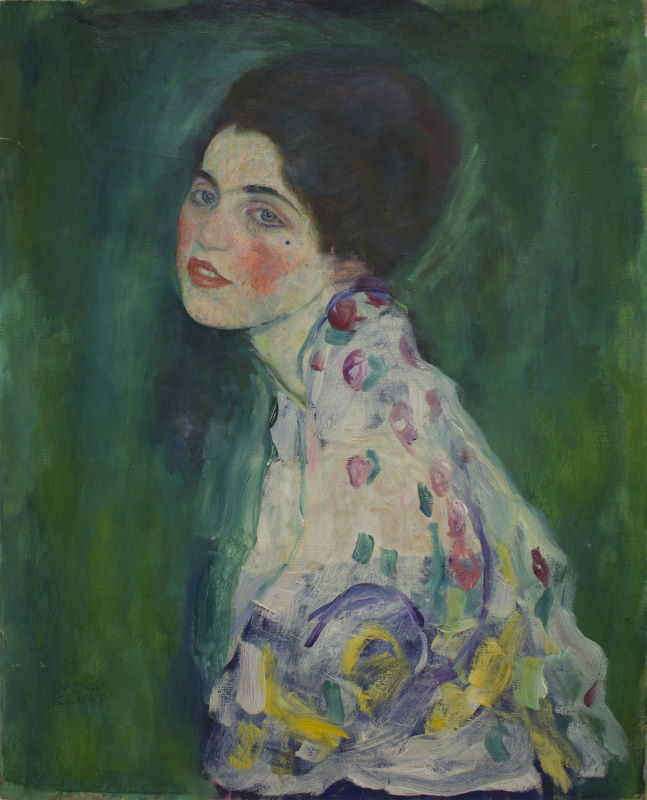
Guided reading
A presence built by color, not gold
The painting belongs to Klimt's last years. The surface no longer rests on the continuous metal networks of the Kiss or d'Adèle Bloch-Bauer I. The green background is placed visibly, with variations that prevent the solid color from becoming neutral.
The face is located slightly above the center. The bust pivots to the right while the head returns to the viewer. This twist creates an immediate presence: the young woman seems surprised as she turns around.
The floral blouse absorbs several colors from the painting. Roses, yellows, whites and greens circulate there without uniform outline. The garment thus serves as a transition between fair skin, black hair and the background. Unity does not come from a closed design, but from a repetition of touches.
The contours remain firmer around the eyes, mouth and chin. Klimt therefore reserves precision for what carries identity. Everything else - background, fabric, jewelry, hair - can vibrate and come undone.
1997 -2020
From theft to restitution: a chronology without a definitive scenario
The dates are known. The modus operandi and identity of those responsible are not. The real story is therefore more cautious - and stranger - than the fictionalized versions.
The hidden portrait
Claudia Maga compares the visible canvas to an old portrait of a young woman. Analyzes confirm that Klimt painted one image on top of the other.
The disappearance
Museum discovers painting stolen during exhibition preparation. The exact circumstances are never clarified.
The frame on the roof
The frame is found near a skylight. This spectacular scene may correspond to an exit, a staging or a false lead.
The bag in the wall
Gardeners removing ivy discover a cavity closed by a small door. A plastic bag contains the painting.
Authentication
Examinations of the canvas, its reverse, seals and marks lead experts to confirm that it is the stolen original.
The return
The work was officially returned to the Galleria Ricci Oddi, before meeting the public in exhibitions dedicated to Klimt.

The masterpiece found
The return to the museum transforms the investigation into an exhibition object
After authentication, the painting is not presented as if nothing had happened. His absence, his return and his double background become part of his reception. Exhibitions can now juxtapose the work, the old photograph of the first portrait and the story of the discovery.
This story also changes the way we look at the surface. Visitors know that another image remains under the visible layer. Each outline becomes potentially ambiguous: does it belong entirely to the figure of 1916 -1917, or does it take up a structure already in place?
The work was notably presented at the Museo di Roma as part of the exhibition dedicated to Klimt and Italy. The installation views recall its real scale: at 60 × 55 cm, the painting is more intimate than many of the painter's large worldly portraits.
See the work
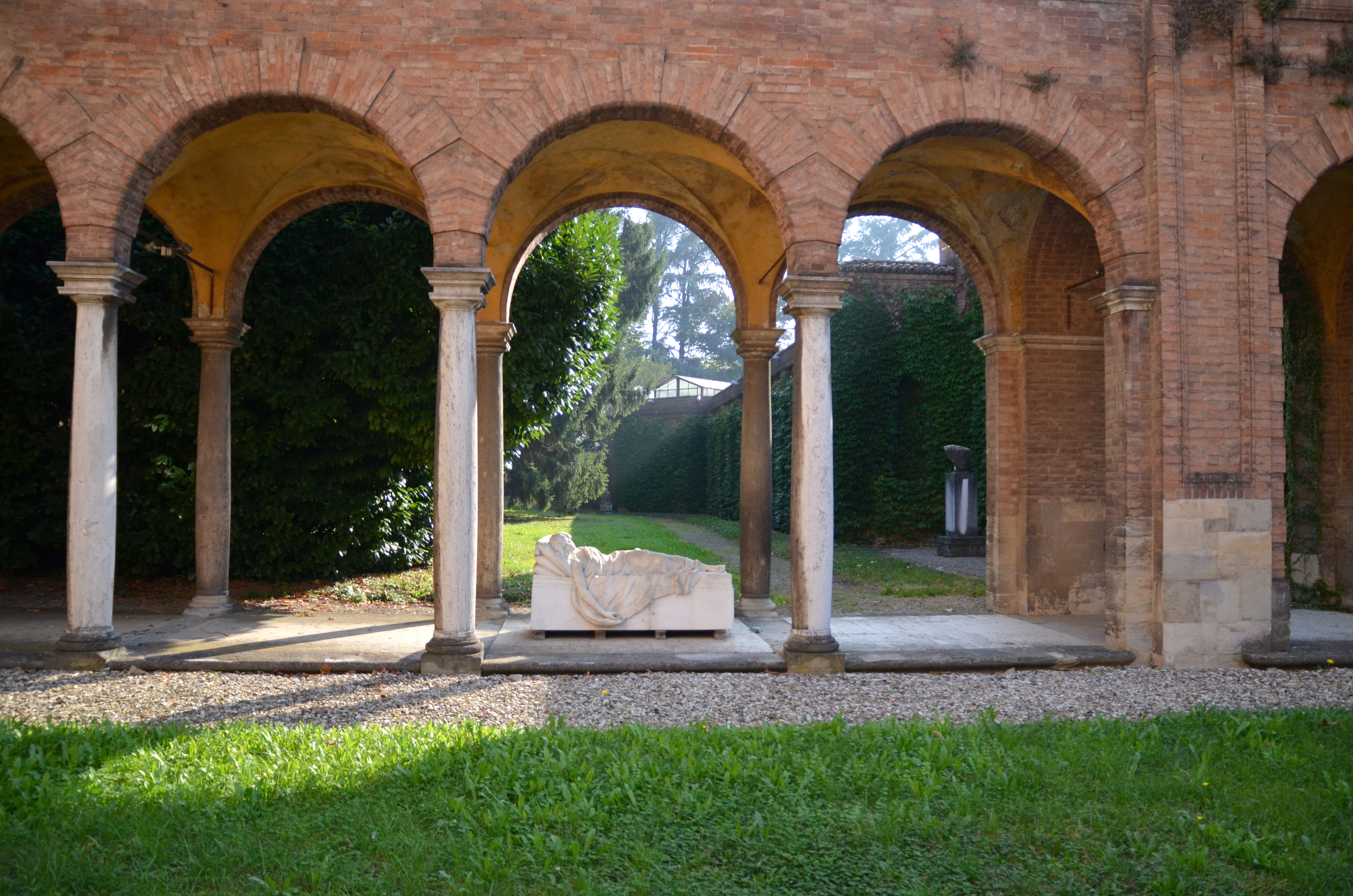
At the Galleria Ricci Oddi in Plaisance
Giuseppe Ricci Oddi acquired the painting in 1925 for his collection. The gallery he offered to his city opened to the public in 1931. Klimt's portrait occupied a unique place within an ensemble mainly devoted to 19th century Italian arte and XXe centuries.
Hanging may change depending on loans and exhibitions. Before traveling, check the museum information. In front of the work, start two or three meters away to read the green background and the twist of the bust, then approach the eyes, the necklace and the flowers of the garment.
The enlarged photograph reveals the gestures of the brush, but it does not replace the perception of the surface. Differences in dullness and density between face, hair, background and blouse become sharper in front of the canvas.
Klimt's last way
Three works to situate late freedom
The Portrait of a lady is not an isolated anomaly. Around 1916 -1918, Klimt often replaced the continuity of gold with open backgrounds, bold colors, and deliberately visible passages.

Amalie Zuckerkandl
The precise face emerges from a still open body and background. The work shows how Klimt deliberately prioritizes completion.
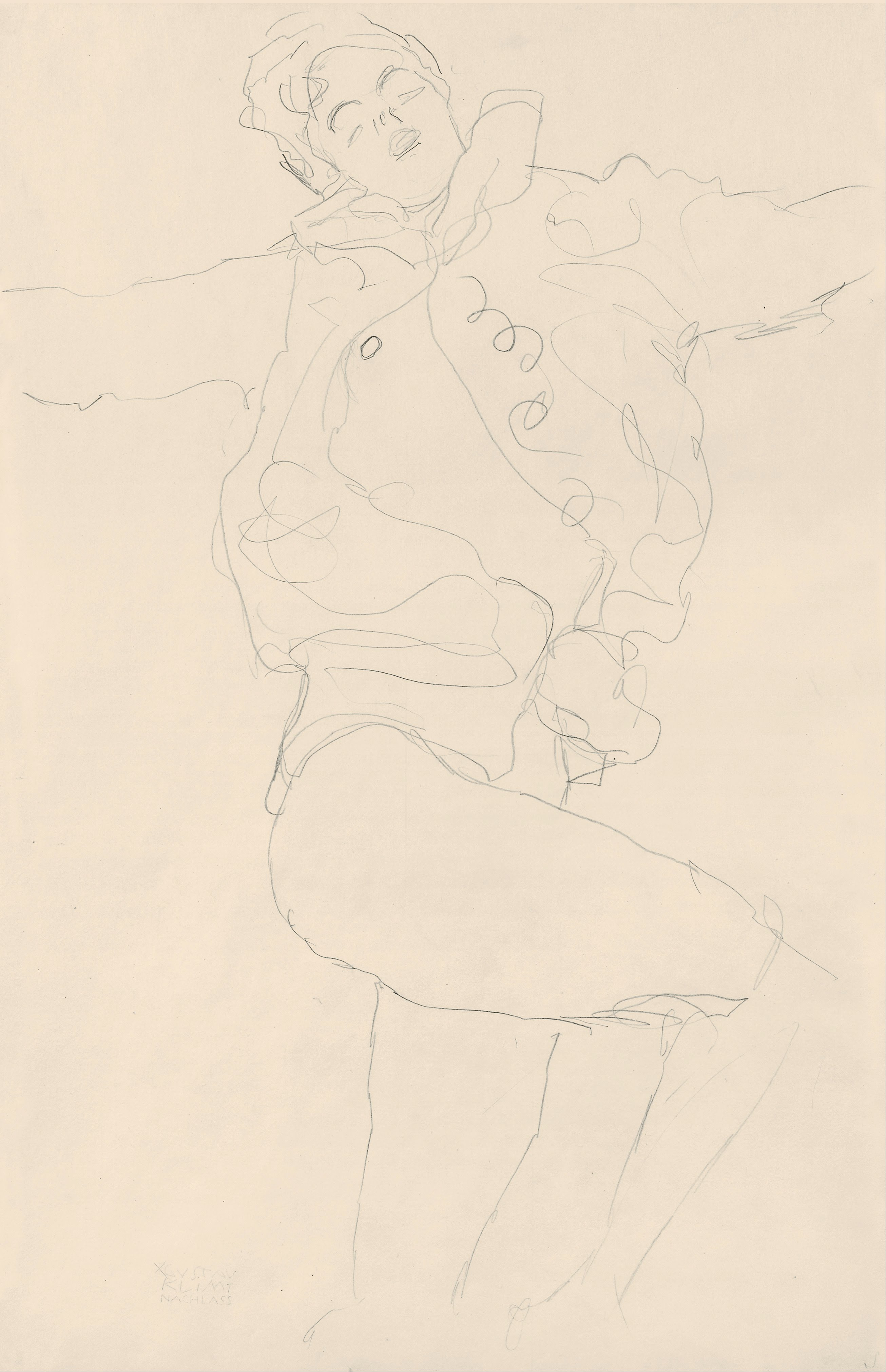
Dancer with cape
Flowers, skin, green and fabrics meet in touches. The figure is held together by color as much as by drawing.
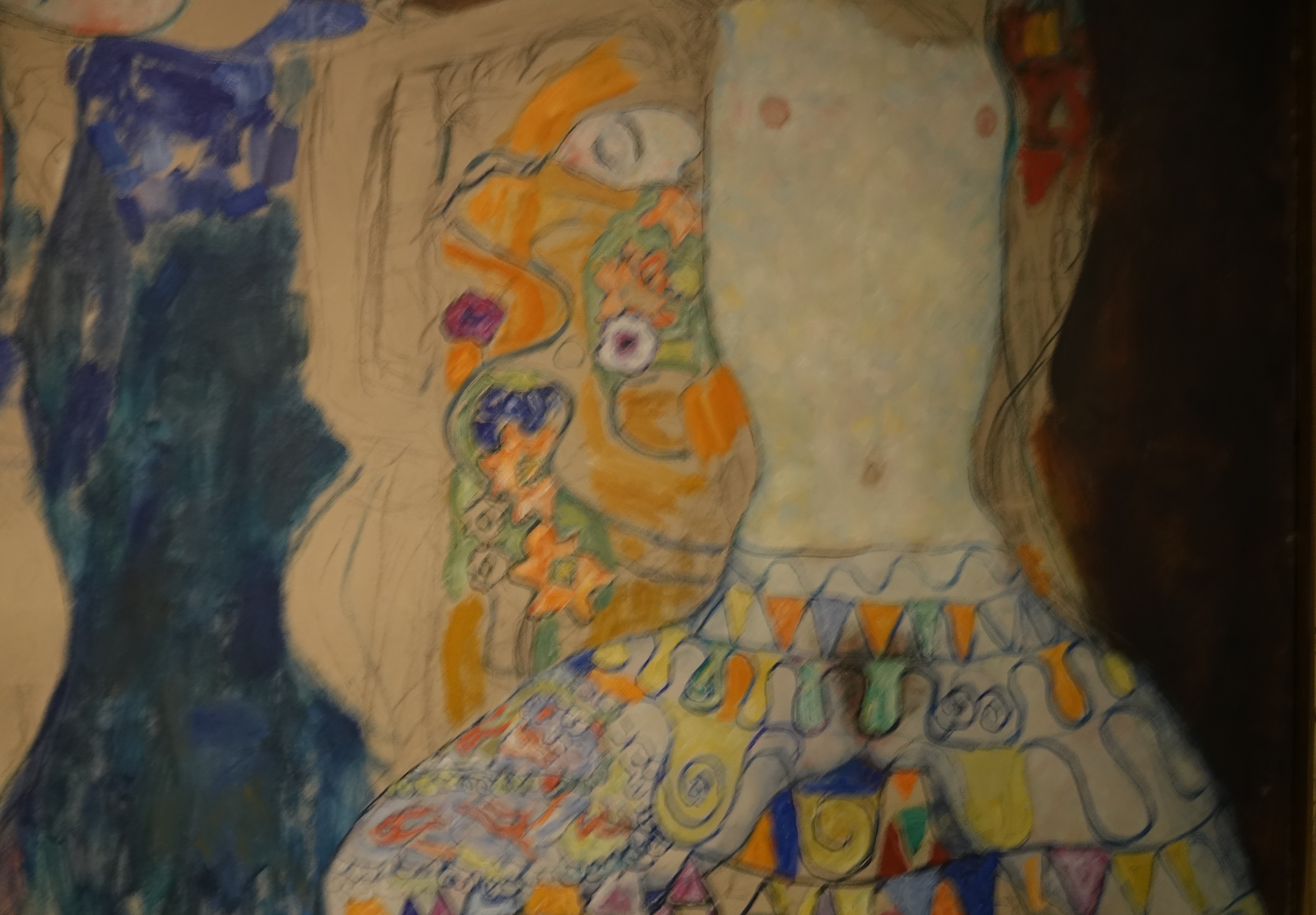
The bride
This real museum view shows a late composition that remains under construction, where groups, fabrics and figures form to different degrees.
| Element | Golden period | Portrait of a lady | Product effect |
|---|---|---|---|
| Background | Gold, mosaic, closed surface | Modulated and visible green | A more mobile atmosphere |
| Outline | Forms embedded in ornament | Firm contour to the face, freer elsewhere | The gaze carries identity |
| Clothing | Regular and symbolic motifs | Flowers painted in touches | A more pictorial material |
| Light | Metallic reflection | Color contrast | A less ceremonial presence |
Related works and collections
From the portrait found to the big faces of Klimt
These selections refer to the reproductions and collections available in the store. Each sheet indicates the formats and production options.
 Main work · 1916 -1917Portrait of a woman
Find the figure on the green background and its floral blouse in the sheet dedicated to reproduction.
See reproduction → Golden period · 1907Adèle Bloch-Bauer I
An essential counterpoint for measuring the transition from continuous gold to late color.
See reproduction → Late portrait · 1916 -1917The dancer
Another figure reconstructed by flowers, fabrics and a complex material state.
See reproduction →Explore more
Portraits, Klimt and Art Nouveau
Extend the reading with collections of female portraits, works by Klimt and paintings associated with Viennese Art Nouveau.
Documentation verified
Main sources
Belvedere · Google Arts & Culture
Institutional file on dating, purchase by Ricci Oddi, the underlying portrait, theft, rediscovery and return of the work.
Read the folder →Museo di Roma
Exhibition notice, summary of Claudia Maga's discovery, dates of the flight and rediscovery, real photographs of the hanging.
Consult the instructions →Google Arts & Culture · work sheet
Title, author, dating, dimensions, technique and conservation collection.
See the work in detail →Wikimedia Commons
High definition image of the painting, reconstruction of the first state and photographs of the Galleria Ricci Oddi.
View files →Visual credits: works by Gustav Klimt in the public domain via Wikimedia Commons; exhibition photographs provided by the Museo di Roma; facade and garden of the Galleria Ricci Oddi via Wikimedia Commons according to the licenses indicated on each file; images of reproductions via Alpha Reproduction. Each visible image address is used only once in the body of the article.
Frequently asked questions
The Portrait of a lady in eight answers
When did Klimt paint the Portrait of a lady ?
The visible work is dated 1916 -1917. It covers a first portrait generally located around 1910.
Who is the woman depicted?
The identity of the model is not established with certainty. We must avoid presenting the legend of a dead lover as fact.
How was the double portrait discovered?
In 1996, Claudia Maga, a high school student from Plaisance, compared the face and pose of the canvas to an old photograph showing a portrait of Klimt considered lost. Examinations confirmed the reuse of the canvas.
When was the painting stolen?
The disappearance was discovered on February 22, 1997 at the Galleria Ricci Oddi, during the preparation of an exhibition.
Where was the painting found?
On December 10, 2019, gardeners found the canvas in a plastic bag, inside a small cavity in an exterior wall of the museum and hidden by ivy.
Has the thief been identified?
No. The exact circumstances of the theft, the cache and possible subsequent movement of the canvas remain publicly unresolved.
Where to see it Portrait of a lady ?
The work belongs to the Galleria d'arte moderna Ricci Oddi in Plaisance, Italy. It is advisable to check the hanging before visiting.
Is there a reproduction of the painting?
Yes. The Alpha Reproduction store offers a "Portrait of a woman - Gustav Klimt" sheet and several collections dedicated to portraits and Klimt.
0 comments