

Top 50 · Portuguese painting
From Nuno Gonçalves to Paula Rego, six centuries of Portuguese painting
Renaissance altarpieces, outdoor naturalism, modernism, surrealism and contemporary creation: fifty artists to understand a history open to the Atlantic and Europe.
Portuguese painting was built between royal court, religious commissions, academies, travels and exiles. Lisbon, Viseu, Porto, Évora, Paris and London are the main centers. This classification combines historical influence, plastic invention, quality of works, role in institutions and international posterity; he favors painters who have really modified the forms, subjects or conditions of creation.

Courtyard, altarpiece, landscape, avant-garde and contemporary creation.
Court and religious orders
Lisbon, Viseu and Évora: the Renaissance workshops
In the 15th and 16th centuries, the Aviz court and large religious establishments supported workshops capable of integrating new products from the Netherlands and Italy. Nuno Gonçalves imposes the strength of collective portraiture; Jorge Afonso, Grao Vasco, Gregório Lopes and their contemporaries then organized the production of vast altarpieces in which models, collaborators and techniques circulated.
The 19th century outdoors
Academies, portrait and birth of the modern landscape
After Domingos Sequeira, Portuguese painting is divided between great decor, portrait and observation of nature. Tomás da Anunciaçao prepares the ground; Silva Porto and Marques de Oliveira install the outdoors in the center of the landscape; Malhoa, Columbano, Aurélia de Sousa and Henrique Pousaïo finally give naturalism very different social, psychological or luminous inflections.
Ruptures and circulation
Modernism, surrealism and post-war experiences
Paris accelerates the rupture of Amadeo de Souza-Cardoso, Almada Negreiros, Eduardo Viana and Mily Possoz, while the magazines Orpheu and Portugal Futurista shift the cultural debate. After 1945, Vieira da Silva, Cesariny, Nadir Afonso, Helena Almeida, Lourdes Castro and Paula Rego demonstrated that there is not a single Portuguese modernity, but a network of trajectories between abstraction, story, body and space.
The essential figures
Top 10 - Founders and universal voices
From the altarpiece by Nuno Gonçalves to the stories of Paula Rego, this first ensemble brings together Renaissance, naturalism, modernism and abstraction. It brings together the artists whose work has most profoundly shifted their gaze to Portugal and beyond.
#1
Nuno Goncalves
Court painter to Alfonso V, Nuno Gonçalves gives the Panels of Saint Vincent an almost documentary force. The variety of faces, the seriousness of the attitudes and the monumental unity of the whole make it the essential starting point of this classification.
See the Nuno Gonçalves collection #2
#2
Paula Rego
Paula Rego transforms tales, family memories and power relations into scenes of disturbing intensity. Its robust drawing, pastels and ambiguous heroines have renewed European representation while retaining a deeply Portuguese memory.
Read Paula Rego's Wikipedia entry #3
#3
Amadeo de Souza-Cardoso
In a few years, Amadeo de Souza-Cardoso assimilated cubism, futurism and orphism without losing his autonomy. His exploded compositions mix words, popular motifs, machines and bold colors: a cosmopolitan synthesis which places Portugal at the heart of the avant-gardes.
See the Amadeo collection by Souza-Cardoso #4
#4
Jose Malhoa
José Malhoa observes Portuguese society in its leisure, festivals and works. Its narrative naturalism, served by bright light and solid staging, produced some of the most familiar images of popular life during the Belle Époque.
See the José Malhoa collection #5
#5
Columbano Bordalo Pinheiro
Columbano Bordalo Pinheiro tightens the portrait around the face and silence. In its brown harmonies, writers, musicians and politicians emerge from a dark background with a psychological presence that breaks with academic pageantry.
See the Columbano Bordalo Pinheiro collection #6
#6
Almada Negreiros
Painter, designer, writer and performer, Almada Negreiros embodies the total ambition of Portuguese modernism. His frescoes, portraits and geometric compositions bring together futuristic energy, popular culture and the search for a public language for the modern city.
Read the Wikipedia entry for Almada Negreiros #7
#7
Maria Helena Vieira da Silva
Maria Helena Vieira da Silva builds mental cities made of networks, huts and unstable perspectives. His painting transforms library, station or workshop into moving spaces where the eye seeks its path between architecture and memory.
Read the Wikipedia entry for Maria Helena Vieira da Silva #8
#8
Domingos Sequeira
Domingos Sequeira crosses the age of revolutions by giving drawing and chiaroscuro a new intensity. His portraits, political scenes and religious visions move from neoclassical discipline to almost romantic emotion.
See the Domingos Sequeira collection #9
#9
Grao Vasco
Vasco Fernandes, known as Grao Vasco, gives the Viseu altarpieces a monumentality nourished by Flemish and Iberian exchanges. Individualized faces, heavy drapes and detailed landscapes make his saints human as well as sacred presences.
See the Grao Vasco collection #10
#10
Henrique Pousao
Henrique Pousao died at twenty-five, but his Italian studies were enough to reveal an exceptional outlook. Walls heated by the sun, figures at rest and free touches announce a painting of light well beyond academic exercise.
See the Henrique Pousao collectionBaroque and 20th century
Ranks 11 to 20 - From Josefa de Obidos to Nadir Afonso
Josefa's baroque singularity opens a chapter dominated by 20th century experiments: neo-realism, surrealism, modern city, public arts and geometry compose a plural history.
 #11
#11
Josefa de Obidos
Josefa de Obidos asserts an autonomous and recognized career in Baroque Portugal. His still lifes, Agnus Dei and devotional images combine tactile precision, precious colors and an intimate sensitivity that immediately distinguishes his hand.
See the Josefa de Obidos collection #12
#12
Julio Pomar
Julio Pomar refuses to lock himself into a formula: militant neo-realism, bullfighting scenes, portraits of writers and gestural painting follow one another. Its rapid line keeps the body and movement at the center of the image everywhere.
Read the Wikipedia entry by Julio Pomar #13
#13
Julio Resende
Julio Resende translates workers, fishermen and landscapes into colorful rhythms. Trained in Porto then attentive to the European avant-gardes, he maintains a readable representation while releasing the color and structure of the painting.
Read the Julio Resende Wikipedia entry #14
#14
Mario Cesariny
Mario Cesariny makes surrealism a practice of freedom rather than an imported style. Painting, collage, poetry and diverted objects compose an irreverent work where automatism becomes a way of resisting cultural and political conventions.
Read the Wikipedia entry by Mario Cesariny #15
#15
Eduardo Viana
Eduardo Viana introduces a dense color into the landscape and still life, structured by contact with Paris. His modernism remains attached to the motif, but he subjects it to powerful contrasts and an almost architectural construction.
Read the Wikipedia entry by Eduardo Viana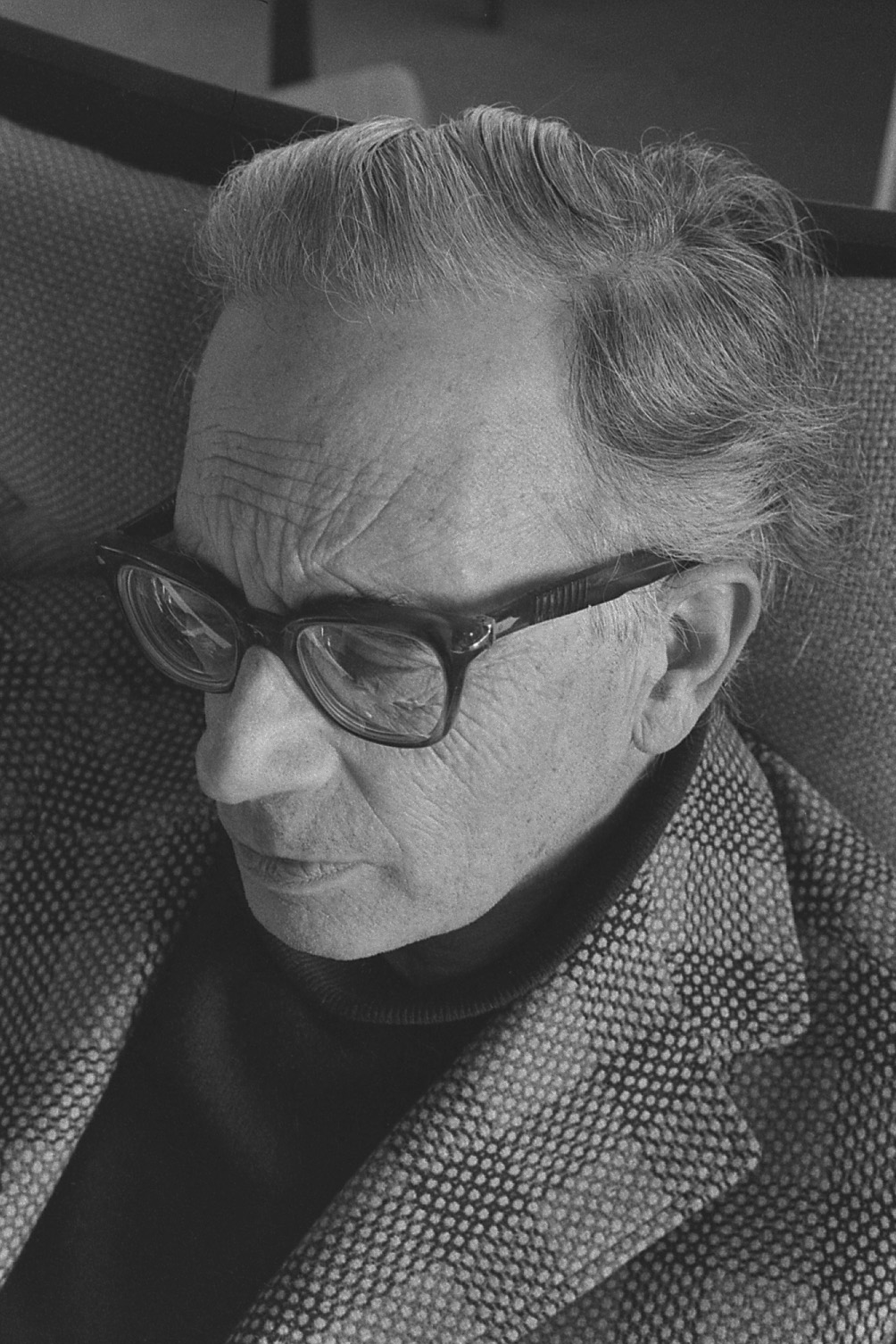 #16
#16
Carlos Botelho
Carlos Botelho paints Lisbon as a living organism: facades, hills, river and roofs are reorganized according to light. His experience as a caricaturist gives these urban views a clear synthesis, sensitive to the transformations of the capital.
Read Carlos Botelho's Wikipedia entry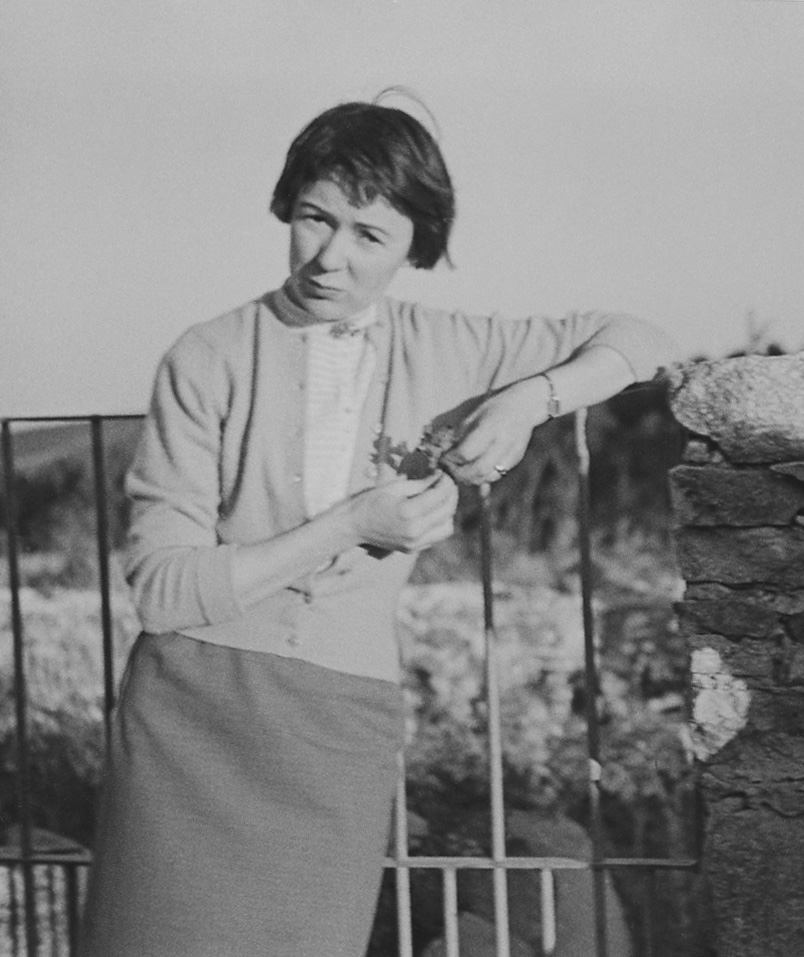 #17
#17
Maria Keil
Maria Keil erases the boundaries between painting, illustration and decorative arts. Its extensive azulejo panels for the Lisbon Metro show how modern, clear and rhythmic language can transform the daily experience of the city.
Read Maria Keil's Wikipedia entry #18
#18
Helena Almeida
Helena Almeida brings her own body into the photographed painting. Blue lines, red spots and choreographed gestures blur the boundaries between painting, photography and performance, while questioning the physical place of the artist in the work.
Read the Wikipedia entry by Helena Almeida #19
#19
Lourdes Castro
Lourdes Castro reduces human presence to a silhouette, shadow or outline. Plexiglas, screen printing, artist's books and shadow theater give the absence a poetic form, light in appearance but very precise.
Read the Wikipedia entry for Lourdes Castro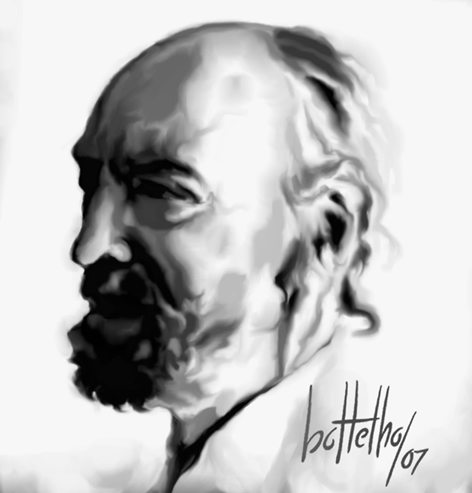 #20
#20
Nadir Afonso
An architect by training, Nadir Afonso seeks laws of rhythm and proportion in painting. Its geometric cities and colorful surfaces combine calculation, optical movement and the memory of places crossed between Europe and Brazil.
Read Nadir Afonso's Wikipedia entryPost-war and inheritances
Ranks 21 to 30 - Abstraction, body and memory
The Portuguese post-war period expanded painting towards writing, photography, constructed space and installation. The journey then returns to the 19th century masters who prepared the modernity of portraiture and landscape.
 #21
#21
Fernando Lanhas
Fernando Lanhas approaches abstraction with the curiosity of an architect, an astronomer and a collector. Elementary forms, mineral backgrounds and measured signs give his paintings a cosmic slowness, rare in post-war Portuguese painting.
Read the Wikipedia entry by Fernando Lanhas #22
#22
Pedro Cabrita Reis
Pedro Cabrita Reis treats painting, sculpture and architecture as fragments of the same construction site. Doors, windows, neon lights and colored surfaces question the way in which a body inhabits, measures and reconstructs space.
Read the Wikipedia entry by Pedro Cabrita Reis #23
#23
Juliao Sarmento
Juliao Sarmento works on the image as an incomplete memory. Female silhouettes, texts, suspended gestures and large white backgrounds compose a theater of desire where every detail seems charged with an absent story.
Read the Wikipedia entry for Juliao Sarmento #24
#24
Ana Hatherly
Ana Hatherly transforms writing into visual material. Invented calligraphies, networks of signs and research on Baroque bring together page, drawing and painting, making reading a simultaneously intellectual and sensitive experience.
Read Ana Hatherly's Wikipedia entry #25
#25
Joao Vieira
Joao Vieira takes the letter as form, gesture and space. His painted alphabets do not deliver a stable message: they set the language in motion, between calligraphy, the painter's body and the energy of color.
Read Joao Vieira's Wikipedia entry #26
#26
Manuel Cargaleiro
Manuel Cargaleiro circulates color between canvas, ceramic and architecture. Its modules, checkerboards and light signs evoke azulejo without copying it, in a joyful balance between constructive rigor and manual vibration.
Read the Wikipedia entry by Manuel Cargaleiro #27
#27
Abel Manta
Abel Manta keeps portraiture and still life at the heart of Portuguese modernity. His calm painting, attentive to volumes and tonal relationships, favors the solidity of presence over spectacular effect.
Read the Wikipedia entry for Abel Manta #28
#28
Veloso Salgado
Veloso Salgado has an ambitious academic profession in portraiture, history painting and civic settings. His great compositions organize crowds, costume and architecture with clarity intended for public memory.
See the Veloso Salgado collection #29
#29
Antonio Carneiro
António Carneiro gives Portuguese symbolism a meditative tone. Portraits, triptychs and interior landscapes use a supple line and muffled harmonies to evoke solitude, family and spirituality.
See the Antonio Carneiro collection #30
#30
Miguel Angelo Lupi
Miguel Ângelo Lupi excels in the art of characterizing a model without overload. His portraits and history paintings combine academic drawing, attention to costume and an expressive sobriety that resists official rhetoric.
See the Miguel Ângelo Lupi collectionLandscape and early modernisms
Ranks 31 to 40 - From the outdoors to the avant-garde
Naturalists, Renaissance painters and futurist pioneers recall that ruptures take root in workshops, schools and very concrete international circulations.
 #31
#31
Joao Marques de Oliveira
Joao Marques de Oliveira brings back from France a demanding outdoor practice. On the northern beaches and in the countryside, he observes atmospheric variations with a clear palette and discreet construction.
See the Joao Marques de Oliveira collection #32
#32
Tomas da Anunciaçao
Tomás da Anunciaçao makes animals and rural paths real subjects of painting. His patient observation of the terrain and his teaching prepared Portuguese naturalism before the outdoors took hold.
See the Tomás da Anunciaçao collection #33
#33
Jorge Afonso
Painter to the king and head of an active workshop, Jorge Afonso structures Lisbon religious production from the beginning of the 16th century. Its altarpieces combine clear narration, dense figures and contributions from the ancient Netherlands.
See the Jorge Afonso collection #34
#34
Gregorio Lopes
Gregório Lopes gives the great religious cycles a remarkable ceremonial scale. Architectures, costumes and groups of figures are flexibly ordered, while color supports the movement of the story.
See the Gregório Lopes collection #35
#35
Cristovao de Morais
Cristóvao de Morais is the great portraitist of the Portuguese court in the time of John III and Sebastian. His precise frontality transforms adornment, armor and contained gaze into signs of dynastic authority.
See the Cristóvao de Morais collection #36
#36
Francisco Henriques
Probably of Flemish origin, Francisco Henriques plays a decisive role in the circulation of Nordic forms in Portugal. Its altarpieces combine luminous details, landscape depth and solemnity adapted to Iberian orders.
See the Francisco Henriques collection #37
#37
Guilherme de Santa-Rita
Santa-Rita Pintor seeks rupture more than career. His rare preserved images, linked to Orpheu and Portugal Futurista, condense cubist fragmentation, futuristic speed and the desire for cultural scandal.
See the Guilherme collection in Santa-Rita #38
#38
Armando Basto
Armando Basto develops a brief, incisive and very personal work. Self-portraits, urban figures and drawings combine nervousness of line, modern simplification and humor which subtly moves the observed scene.
See the Armando Basto collection #39
#39
Aurelia de Sousa
Aurélia de Sousa approaches self-portrait, studio scene and peasant figure with unusual frankness. His dark mastery of light and his direct gaze affirm a painter's identity beyond the roles assigned to the women of his time.
See the Aurélia de Sousa collection #40
#40
Adriano de Sousa Lopes
Adriano de Sousa Lopes moves from the bright outdoors to a testimony of war without losing the mobility of his touch. His paintings and engravings capture both the intimacy of a face and the instability of a collective event.
See the Adriano collection by Sousa LopesRenaissance workshops and modern extensions
Ranks 41 to 50 - Altarpieces, academies and contemporary experiences
The 16th century workshops structure a collective tradition of the altarpiece. The 19th century then renewed landscape and history painting, before the last artists in the ranking reopened the field of surrealism and conceptual figuration.
 #41
#41
Garcia Fernandes
Garcia Fernandes participated in the major religious projects of the Portuguese Renaissance. Its solid characters, its light colors and its orderly architecture make complex narrative programs immediately readable.
See the Garcia Fernandes collection #42
#42
Cristovao de Figueiredo
Cristóvao de Figueiredo develops a sacred language that is both precise and expressive. Draped, faces and gestures converge towards the dramatic center of each panel, in a balance between Flemish tradition and resurgent space.
See the Cristóvao de Figueiredo collection #43
#43
Diogo de Contreiras
Diogo de Contreiras stretches religious compositions with elongated silhouettes and eloquent gestures. Its manner announces Portuguese mannerism while retaining the narrative density of the traditional altarpiece.
See the Diogo de Contreiras collection #44
#44
Gaspar Vaz
Gaspar Vaz extends the workshop and heritage of Grao Vasco to Viseu without limiting himself to imitation. Its panels favor monumental figures, structured drapes and a gravity adapted to regional altarpieces.
See the Gaspar Vaz collection #45
#45
Antonio Silva Porto
António Silva Porto places the landscape painted on the motif at the center of Portuguese artistic modernization. Fields, herds and shores become studies of changing light, carried by a supple touch.
See the Antonio Silva Porto collection #46
#46
Antonio Manuel da Fonseca
António Manuel da Fonseca represents the great academic tradition of the Portuguese 19th century. Official portraits, historical subjects and church decorations reveal disciplined drawing and a solid culture of composition.
See the Antonio Manuel da Fonseca collection #47
#47
Jorge Martins
Jorge Martins explores what appears and disappears in light. Drawings, canvases and long series sometimes reduce the image to a threshold, a reflection or an almost empty structure, inviting the gaze to slow down.
Read the Wikipedia entry by Jorge Martins #48
#48
Mily Possoz
Mily Possoz brings to Portuguese modernism an elegant line and a keen sense of the intimate scene. Painting, engraving and illustration describe women, children and urban leisure without sacrificing plastic construction.
Read the Wikipedia entry by Mily Possoz #49
#49
Fernando Azevedo
Fernando Azevedo develops a precise surrealism, often more constructed than automatic. Collages, painting and critical activity allow him to organize improbable encounters where strangeness is born from very controlled relationships.
Read the Wikipedia entry by Fernando Azevedo #50
#50
Antonio Costa Pinheiro
António Costa Pinheiro reinterprets history, power and identity through immediately recognizable sign figures. Installed for a long time in Germany, he built a work where ironic drawing meets painting, objects and political memory.
Read the Wikipedia entry for Antonio Costa PinheiroSources and extensions
Compare works in public collections
The dates, movements and landmarks were cross-checked with the resources of the institutions which preserve the major sets of Portuguese painting. The Museu Nacional de Arte Antiga illuminates Renaissance altarpieces; the Museu Nacional de Arte Contemporânea, the Fundaçao Calouste Gulbenkian, Serralves and the Casa das Histórias Paula Rego make it possible to follow the ruptures of the 19th, 20th and 21st centuries.
Portuguese painting changes scale without losing the force of the story
From the faces brought together by Nuno Gonçalves to the indocile heroines of Paula Rego, this story advances in movements: the altarpiece becomes a collective portrait, the landscape becomes an experience of light, the letter becomes a painting and the body enters directly into the image. Lisbon remains a major center, but Porto, Viseu, Évora, Paris and London are constantly expanding the map.
The ranking above all invites us to compare generations. Look at how the density of a resurgent panel reappears in the modern scene, how azulejo nourishes abstraction, or how surrealism allows us to speak of censorship, desire and memory. Each notice opens a path to a work larger than its rank.
0 comments