

Hand-painted reproduction: how to choose wisely, or the art of distinguishing a noble copy from mere décor
Understanding the matter, the brushwork, and the soul of a hand-painted reproduction to turn a wall into a gallery, without being fooled by the shine of impostors.
Buying a hand-painted reproduction is nothing like acquiring a framed poster or a digital print, no matter how high its definition. Here, it is about inviting into your home an object that has known the resistance of the canvas, the laborious mixing of pigments on the palette, and the long drying time between each layer. Unlike a flat image that merely reflects light, artisanal painting captures it in its hollows and ridges, offering a physical presence that the eye perceives immediately, even from a distance. Choosing such a work therefore requires setting aside simple visual comparison with a photograph to focus on the material life of the painting: how light dances on the impasto of a recreated Van Gogh, or how the gold of a Klimt retains its mysterious depth thanks to the manual application of metallic leaf rather than an industrial golden varnish.
 Free image
Understanding the matter, the brushwork, and the soul of a hand-painted reproduction to turn a wall into a gallery, without being fooled by the shine of impostors.
Reading method
The approach of the attentive connoisseur
To navigate the world of reproductions, one must adopt the gaze of a curious restorer: lean in, observe the edge, almost smell the resin and understand that every brushstroke is an artistic decision. This method rules out haste and favors the analysis of texture, surface preparation, and chromatic fidelity, turning the purchase into a true aesthetic investigation.
Context before prestige
We place hand-painted reproduction in its era, its workshops, its exhibitions, and its small revolts. A work without context is sometimes just a very beautiful person who has forgotten their story.
The signs that betray the style
We spot composition, palette, material. These clues often say more than grand speeches, especially when they carry gold or nervous brushstrokes.
The artwork in a real room
We end with the useful question: does this image breathe in your home, or does it merely pose like a poster that has read two books?
Historical context
Where does the hand-painted reproduction come from, and why is it not just a pretty label?
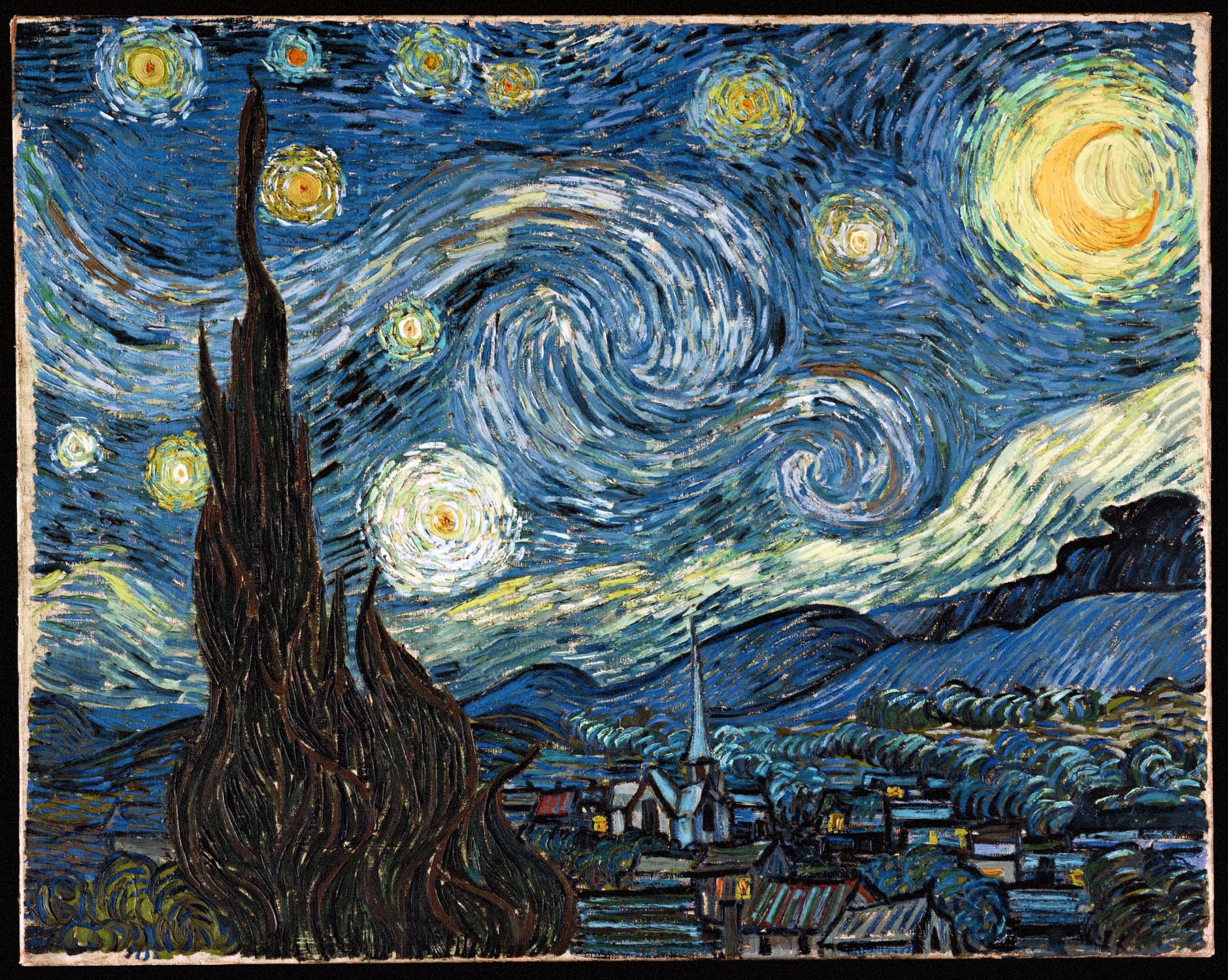
The history of the painted copy goes back well before the invention of photography, when the workshops of masters trained apprentices to reproduce the great models in order to spread know-how and satisfy a private clientele unable to afford the original. In the 19th century, cities like Munich or Florence saw entire neighborhoods spring up dedicated to this practice, where talented artisans copied Renaissance frescoes or royal portraits with almost scientific rigor. It was not seen as a falsification, but as a technical tribute and an essential teaching tool, allowing students to learn the management of Titian's glazes or Rubens's fiery energy through direct practice of the hand.
Today, this tradition endures but must contend with the confusion fostered by modern marketing, which slaps the "handmade" label on roller-applied textured prints. A true hand-painted reproduction involves a slow process in which the artist analyzes the structure of the source work, prepares a frame of solid wood stretched with linen or cotton canvas of a specific grain, and applies the colors layer by layer. The fundamental distinction lies in this temporality: where the printer lays down ink in a few seconds, the painter spends hours building the material—sometimes several weeks for a large, complex format—thereby respecting the constructive logic of the original rather than its mere surface appearance.
Artistic style
Why does the hand-painted reproduction still interest people so much?

In a world saturated with smooth, fleeting digital images, hand painting offers a physical resistance and a singularity that speaks directly to our need for tactile authenticity. Each painting has its own micro-variations, its controlled hesitations and happy accidents that give it a soul, making it impossible for two strictly identical copies to exist, even from the same studio. This relative uniqueness transforms the decorative object into a piece of character capable of engaging in dialogue with the interior space, bringing a warmth and vibration that glossy paper or printed canvas will never match, regardless of the resolution quality.
Moreover, the durability of an oil or high-quality acrylic painting defies that of prints whose pigments can fade or whose support can deteriorate over time. The protective varnishes applied by hand to an artisanal reproduction can be cleaned, or even removed and redone by a restorer in fifty years, thus extending the life of the image far beyond that of a poster. It is this commitment to longevity and this capacity to age with dignity, developing a natural patina rather than degrading, that seduces art lovers keen to pass on a visual heritage to their descendants.
Visual signs that betray style and quality

The first indicator of quality lies in the handling of light on the surface: a real painting shows subtle variations in gloss due to the different binders and thicknesses of paste, while an industrial imitation often displays a uniform, artificial sheen. Observe the areas of shadow and light; in a hand-painted copy, the impastos catch the side light, creating micro-shadows that give volume to the petals of a sunflower or the folds of a baroque garment, where the print remains desperately flat even if it simulates a relief texture through embossing. Chromatic richness is also an essential marker, since the optical mixing of translucent layers, or glazes, produces color depths that no CMYK ink can faithfully reproduce.
Also examine the outlines and color transitions: the brush leaves organic marks, progressive blends, and sharp stops that bear witness to a human gesture, unlike the invisible but perceptible to the trained eye pixelation or the overly perfect edges of digital cutting. On a quality reproduction, you can follow the path of the brush, see where the artist loaded the brush and where it was wiped, notably in Turner's tormented skies or the detailed hair of classical portraits. These mastered irregularities are the signature of the hand and constitute the ultimate proof that the work was built pigment by pigment, and not deposited in a single mechanical pass.
Works to look at as if they were about to answer

Certain works lend themselves beautifully to painted reproduction because their very essence lies in the material, such as Vincent van Gogh's canvases where the violence of the gesture and the thickness of the paint are inseparable from the subject. Reproducing The Starry Night requires reconstructing these swirls in three dimensions, sometimes using the palette knife technique to obtain those ridges of paint that seem to vibrate under the living room lamp. Similarly, the works of Gustav Klimt, with their golden flats and complex geometric patterns, demand a meticulous application of real gold leaf or specific metallic paints to avoid the cheap cardboard effect often seen in low-end copies.
Conversely, Kandinsky's abstractions or Mondrian's geometric compositions pose a different challenge: here, it is the purity of the line and the absolute accuracy of color relationships that are at stake. A slight deviation in the blue of a rectangle or a quiver in a black circle can destroy the harmonious balance of the whole. Choosing a reproduction of these modern masters implies checking the graphic tension and the saturation of the pigments, since the absence of a figurative subject forgives no technical approximation. The eye must feel the same dynamic energy as before the original at MoMA or the Centre Pompidou, without being distracted by a soft execution or washed-out colors.
Symbols, details and small visual quirks

Beyond technique, a good reproduction respects the symbolic grammar and the narrative details that give the great masters their richness—details often sacrificed in simplified versions made for mass retail. Take the Flemish Renaissance paintings: every object, from the goldfinch to the extinguished candle, carries a precise meaning that the copyist must render with crystalline sharpness, without dissolving the contours into a convenient artistic blur. Ignoring these elements empties the work of its intellectual content and keeps only an aesthetic shell, transforming a masterpiece laden with meaning into a simple wall illustration devoid of substance.
One must also pay attention to the small mannerisms of the artists—those gestural signatures invisible to the novice yet crucial to the copy's authenticity. The way Rembrandt lights a face from below, or the way Monet fragments a reflection in the water with juxtaposed rather than blended strokes, are codes the reproduction painter must have absorbed and understood. A successful reproduction does not simply place the right colors in the right places; it adopts the artist's internal logic, reproducing even their hesitations and revisions, thus offering the viewer the possibility of a slow, in-depth reading comparable to that offered by the originals kept in national museums.
Neighbors, allies and unruly cousins

It is important to distinguish a hand-painted reproduction from decorative or style painting, which draws freely on an era or movement without seeking faithfulness to a specific work. An "impressionist-style" painting made today can be charming and well executed, but it is not a reproduction because it has no single, historical referent against which to be measured. This distinction is crucial for the buyer: if you are looking to complete a thematic collection or to enter into dialogue with a genuine antique, a faithful copy is required, whereas to bring a splash of color to a child's bedroom, an original creation with classical inspiration will more than suffice and often cost less.
Moreover, beware of "hybrids"—works that begin with a high-quality digital print onto which an artist adds a few strategic brushstrokes to simulate texture. While this technique can produce a visually appealing result from three meters away, it fails as soon as one approaches, revealing a flat base beneath a thick layer of varnish. These unruly cousins of the true hand-painted reproduction have their place in contemporary décor, but they should not be sold or bought as entirely manual copies, because the deep structure of the image remains mechanical and lacks the spatial coherence offered by an entirely human execution, from the first brushstroke to the final varnish.
What museums confirm when shortcuts go too far

Institutions like the Louvre, the Musée d'Orsay or the Tate Modern constantly remind us that the perception of a work changes radically depending on the lighting and the distance—two parameters a reproduction must anticipate in order to be convincing. Curators stress that the colors perceived in a museum, often under controlled and neutral museum lighting, can look different in a living room bathed in natural light or lit by warm bulbs. A quality reproduction takes this variability into account by using stable pigments and varnishes that preserve the chromatic balance in various lighting environments, avoiding unpleasant surprises once the painting is hung at home.
Furthermore, museums teach us the importance of format and scale: seeing a thumbnail of a detail from La Liberté guidant le peuple on a phone screen does not prepare you for the physical impact of the full-size work. Serious studios often work from high-definition files validated by art historians and respect the original proportions to maintain the painter's dramatic or contemplative intent. Ignoring this dimension risks reducing a historical drama to a pretty splash of color, losing along the way the emotional power that major institutions strive to preserve and convey to the public through the very materiality of the canvases on display.
How to choose a reproduction without making the wall panic?

Integrating a hand-painted reproduction into a modern interior requires thinking about scale and the dialogue with the existing furniture, rather than simply filling an empty stretch of wall. A large format, such as a copy of a royal hunting scene or a German Romantic landscape, can structure a minimalist living room by bringing a historical gravity, provided the frame is chosen with care to bridge the eras. Conversely, in a bedroom or study, more intimate formats—such as Dutch still lifes or figure studies—create soothing focal points that invite reverie without overwhelming the space with monumentality.
The color palette of the reproduction should also resonate with its immediate surroundings: a canvas in ochre and raw sienna tones will harmonize naturally with noble materials like wood, leather or stone, while a copy in cobalt blues and silvery whites can energize a contemporary interior with clean lines. The goal is not to match every cushion perfectly to the painting, which would feel overly theatrical, but to create subtle echoes that unify the room. Ideally, place the reproduction where it can receive suitable light, avoiding direct sunlight that could, over time, alter even the most resistant pigments.
Interior decoration
Mistakes to avoid before hanging the painting

The first fatal mistake is relying solely on the online product photograph without asking for close-up images showing the texture and edges of the painting. Many buyers discover to their disappointment that their "oil painting" is actually a print on thin canvas mounted on a lightweight plywood stretcher that warps with humidity. Always insist on seeing detailed photos taken from different angles to check the thickness of the paint and the sturdiness of the stretcher, which should be made of solid wood and deep enough to allow proper canvas tension without future distortion.
Another common mistake involves expecting photographic perfection: a hand-painted reproduction will never be a pixel-by-pixel tracing of the original, and seeking that absolute identity inevitably leads to frustration. Accept that the artist's hand lightly interprets certain areas, because it is precisely this share of living interpretation that gives the object its charm and authenticity. Finally, neglecting upkeep is a fault: an oil or acrylic painting dusted regularly with a soft, dry cloth will keep its brilliance for decades, while total neglect will allow dust particles to settle into the relief, irreparably dulling the beauty of the work acquired with such care.
| Room | Suggestion | Decorative effect |
|---|---|---|
| Living room | A piece tied to a hand-painted reproduction with a strong composition | A cultivated, warm focal point that's easy to comment on without reciting a label. |
| Bedroom | A soft palette or a more intimate scene | A calm atmosphere, visual presence without unnecessary agitation. |
| Office | A structured, colorful, or graphically crisp image | Creative energy and a small reminder that the wall can work too. |
| Entryway | A vertical format or a piece that's immediately readable | First impression: clear, elegant, and far less shy than a blank wall. |
To continue the visit
Sources, collections, and paths truly related to the topic
A few useful references to verify information, compare freely available images, and keep reading without drifting off to a museum that never asked for the visit.
Related articles to read next
Useful blog hubs
FAQ
Frequently asked questions about Hand-painted reproductions
What is Hand-painted reproduction in painting?
Hand-painted reproduction deserves a feature article because this style involves an entire era, a way of painting, and a very concrete way of living with images.
How can you recognize this style quickly?
Focus primarily on composition, palette, texture, light and atmosphere, then on the way the composition guides the eye. If the piece holds your attention longer than expected, it's probably no accident.
Which artists should you know?
It's best to cross-reference the central artists of the movement with museums and reliable sources to avoid hasty attributions.
Is this style suited to modern décor?
Yes, provided you choose the right format, a palette consistent with the room, and a work whose presence remains pleasant on a daily basis.
Should you choose the most famous work?
Not necessarily. The best-known work can be perfect, but the right choice depends above all on the room, the format, the palette and the atmosphere you're after.
Where can you verify the information?
Start with museum descriptions, Wikipedia/Wikidata for general guidance, then turn to Wikimedia Commons when a rights-free image is needed.
The investment of a lasting presence
Choosing a hand-painted reproduction is ultimately an act of trust in craftsmanship and a declaration of love for pictorial matter. It means accepting that art resides not only in the image represented, but in the way that image was conquered, layer after layer, through the patient work of an artist. By favoring the quality of the support, the accuracy of the pigments and the truth of the gesture, you are not simply buying a decorative object—you are inviting into your home a fragment of living art history, capable of evolving with your gaze and standing the test of time with an elegance that mass production will never match. Whether rediscovering the old masters or appreciating the modernity of abstract works, hand-painted reproduction remains the noblest way to make art accessible without ever compromising its dignity.
0 comments