

100 paintings - 20 countries and territories
100 paintings from the Arab world and the Middle East to know
An editorial ranking from the Maghreb to the Mashreq, from Sudan to the Gulf, focused exclusively on painting and based on institutional notices.
Ninety-nine images open their documentary notice. The Portrait of Amin Rihani by Khalil Gibran leads to the Alpha Reproduction sheet created according to the rule of artists who died before 1956.
A story without a single center
Look at the works before the categories
The Arab world and the Middle East do not form a homogeneous school. The ranking brings together national trajectories, diasporas and generations who have reinvented portraiture, landscape, abstraction and history painting.
From Jewad Selim to Mahmoud Said, from Baya to Etel Adnan, each painting opens a particular history of modernity.
The order is neither chronological nor mechanically generated: it favors the importance of the works, regional diversity and the solidity of the notices.
The 100 paintings in pictures
Figures, portraits and first ruptures set up the great benchmarks of Arab modernities.
#1
Untitled (Two figures)
Jewad Selim inscribes Untitled (Two Figures) in a history of painting linked to Iraq. The modern Iraqi school transforms Mesopotamian legacies, urban life and abstraction into contemporary vocabulary. The figure is constructed by framing, posture and tension between the body and the background. The portrait thus goes beyond resemblance to become a study of presence, of memory and social position. The Barjeel Art Foundation notice presents the work as dated 1951, made in oil on canvas. Its place in this classification is due to this ability to connect a situated experience to a broader history of modern painting. The link associated with the image opens the institutional notice, where the original title, dating, technique and data of collection can be viewed.
Image: Barjeel Art Foundation · Documentary use; rights with the institution.
See the institution's notice → #2
#2
Young girl in painted dress
Mahmoud Said inscribes Young Girl in a Painted Dress in a History of Painting Related to Egypt. Modern Egyptian painting here articulates local heritage, social observation and international language. The subject remains immediately recognizable, but the essential is played out in the agreement between scale, color, material and rhythm. The painting thus transforms a scene or a symbol into autonomous pictorial proposal. The Barjeel Art Foundation notice presents the work as dated 1938, made in oil on canvas. The work thus becomes a benchmark for understanding how regional modernities were constituted without following a single model. The French title makes the route easier to read, while the source retains the original information and conditions use of image. Digital reproduction makes it possible to identify composition and palette; the real format and material remain essential to fully measure the work.
Image: Barjeel Art Foundation · Documentary use; rights with the institution.
See the institution's notice →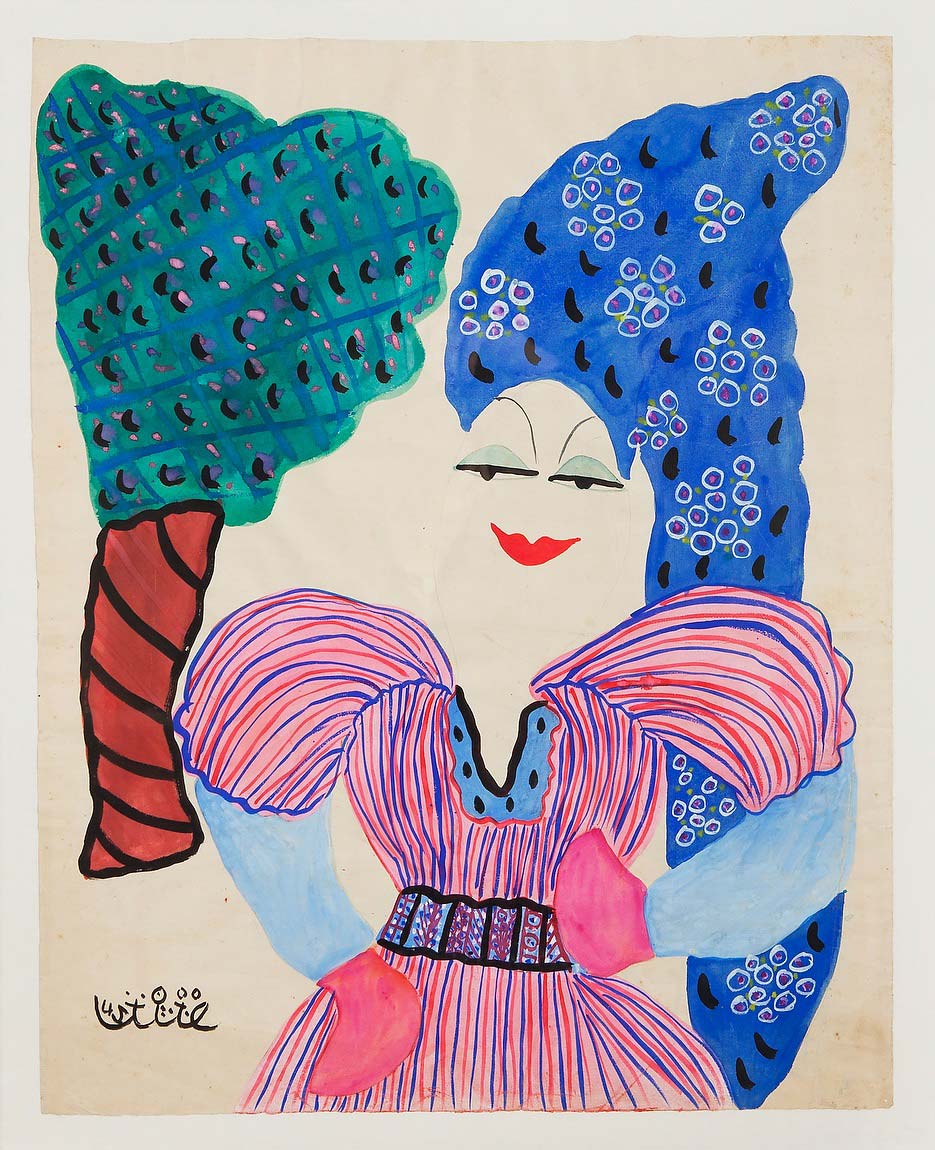 #3
#3
Woman in pink dress
Baya places Woman in the Pink Dress in a history of painting linked to Algeria. In Algeria, modern painting moves the landscape, the sign and the figure beyond colonial frameworks. The figure is constructed by framing, posture and tension between the body and the background. The portrait thus goes beyond resemblance to become a study of presence, memory and social position. The Barjeel Art Foundation notice presents the work as without dating specified in the online notice, made in watercolor and gouache on paper. Digital reproduction makes it possible to identify composition and palette; the actual format and material remain essential to fully measure the work.
Image: Barjeel Art Foundation · Documentary use; rights with the institution.
See the institution's notice → #4
#4
The eloquent Rooster
Shakir Hassan Al Said places The Eloquent Rooster in a history of painting linked to Iraq. The modern Iraqi school transforms Mesopotamian legacies, urban life and abstraction into contemporary vocabulary. The subject remains immediately recognizable, but the essential is played out in the agreement between scale, color, material and rhythm. The painting thus transforms a scene or a symbol in autonomous pictorial proposal. The Barjeel Art Foundation notice presents the work as dated 1954, made in oil on canvas. The painting counts here for its own invention as much as for the artistic and political memory that it makes visible. The link associated with the image opens the institutional notice, where the original title, dating, technique and data of collection can be viewed. The French title makes the route easier to read, while the source keeps the original information and conditions of use of the image.
Image: Barjeel Art Foundation · Documentary use; rights with the institution.
See the institution's notice →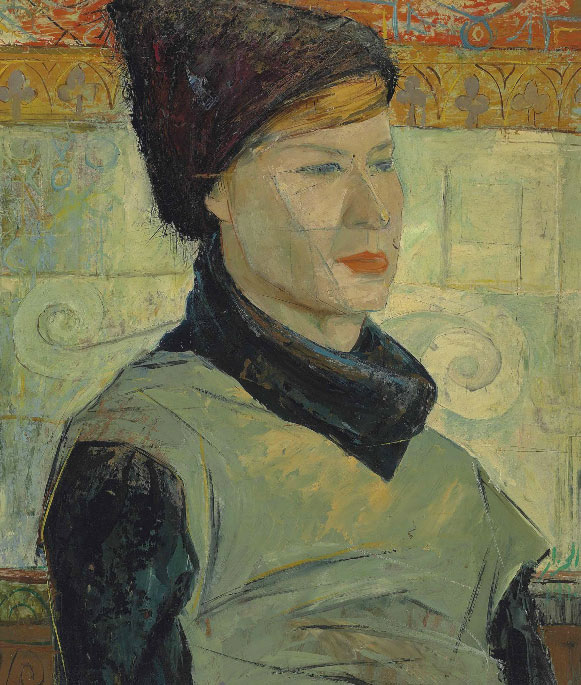 #5
#5
Portrait of an Italian woman
Abdel Hadi El Gazzar places Portrait of an Italian woman in a history of painting linked to Egypt. Modern Egyptian painting here articulates local heritage, social observation and international language. The figure is constructed by framing, posture and tension between the body and the background. The portrait thus goes beyond resemblance to become a study of presence, memory and social position. The Barjeel Art Foundation notice presents the work as dated 1960, made in oil and tempera on panel. Its place in this classification lies in this ability to connect a situated experience to a broader history of modern painting. The French title makes the route easier to read, while the source retains the original information and conditions use of image. Digital reproduction makes it possible to identify composition and palette; the real format and material remain essential to fully measure the work.
Image: Barjeel Art Foundation · Documentary use; rights with the institution.
See the institution's notice →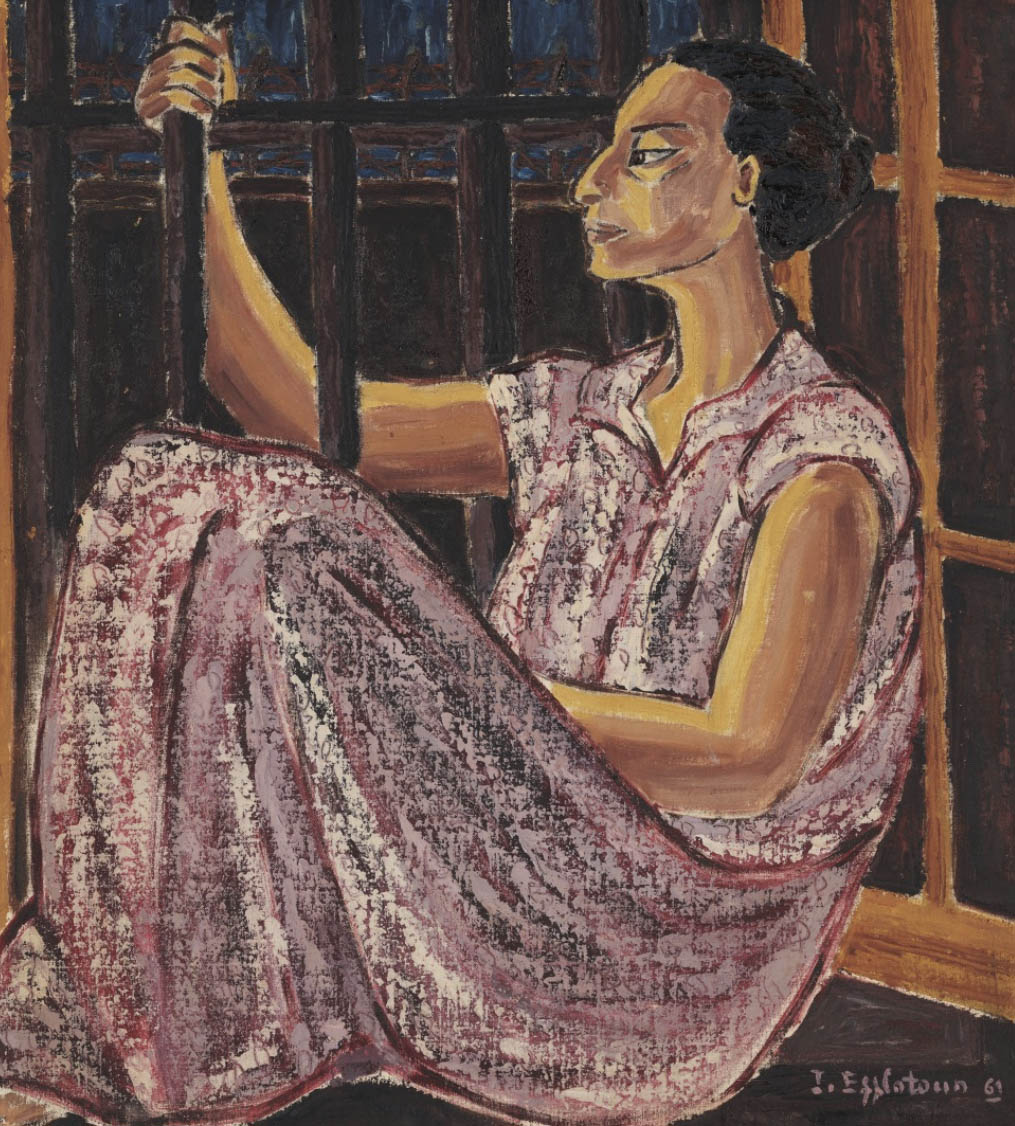 #6
#6
Dreams of the inmate
Inji Efflatoun places Dreams of the Inmate in a history of painting linked to Egypt. Modern Egyptian painting here articulates local heritage, social observation and international language. The figure is constructed by framing, posture and tension between the body and the background. The portrait thus goes beyond resemblance to become a study of presence, memory and position social. The Barjeel Art Foundation notice presents the work as dated 1961, made in oil on canvas. The work thus becomes a benchmark for understanding how regional modernities were constituted without following a single model. Digital reproduction makes it possible to identify composition and palette; the real format and material remain essential to fully measure the work. THE link associated with the image opens the institutional notice, where the original title, dating, technique and collection data can be viewed.
Image: Barjeel Art Foundation · Documentary use; rights with the institution.
See the institution's notice → #7
#7
The Red City
Fahr El-Nissa Zeid places The Red City in a history of painting linked to Turkey. This work contributes to a regional modernity made up of circulations, ruptures and reinterpretations. The place is not a simple setting: plans, horizons, architecture and color relationships organize the circulation of the gaze. The territory becomes a mental form as much as an observed space. The Barjeel Art Foundation notice presents the work as dated 1957, made in oil on canvas. The link associated with the image opens the institutional notice, where the original title, dating, technique and collection data can be viewed. The French title makes the route easier to read, while the source keeps the original information and conditions image usage.
Image: Barjeel Art Foundation · Documentary use; rights with the institution.
See the institution's notice →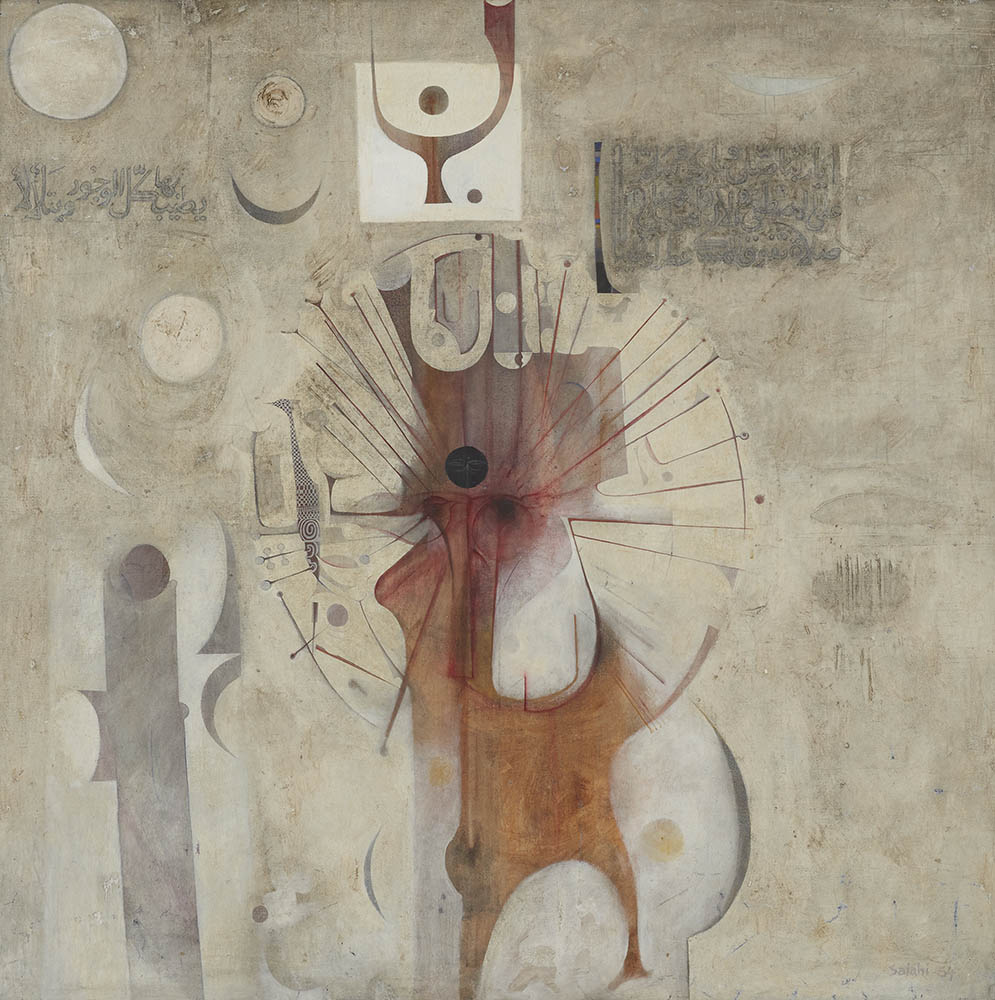 #8
#8
The Last Sound
Ibrahim El-Salahi places The Last Sound in a history of painting linked to Sudan. The Sudanese school combines sign, spirituality, color and experiences of African and Arab modernity. The subject remains immediately recognizable, but the essential is played out in the agreement between scale, color, material and rhythm. The painting thus transforms a scene or a symbol into a proposition autonomous pictorial. The Barjeel Art Foundation notice presents the work as dated 1964, made in oil on canvas. The painting counts here for its own invention as much as for the artistic and political memory that it makes visible. The French title makes the route easier to read, while the source preserves the original information and the conditions of use of the image. THERE digital reproduction helps identify composition and palette; the real format and material remain essential to fully measure the work.
Image: Barjeel Art Foundation · Documentary use; rights with the institution.
See the institution's notice → #9
#9
Icons of Moudarres
Fateh Al Moudarres inscribes Icons of Moudarres in a history of painting linked to Syria. Syrian painting brings together icon, portrait, material and historical memory. The subject remains immediately recognizable, but the essential is played out in the agreement between scale, color, material and rhythm. The painting thus transforms a scene or a symbol into an autonomous pictorial proposition. There barjeel Art Foundation Notice presents the work as dated 1962, made in painting. Its place in this ranking is due to this ability to connect a situated experience to a broader history of modern painting. Digital reproduction makes it possible to identify composition and palette; the actual format and material remain essential to fully measure the work. The link associated with the image opens the institutional record, where the original title, dating, technique and collection data can be viewed.
Image: Barjeel Art Foundation · Documentary use; rights with the institution.
See the institution's notice →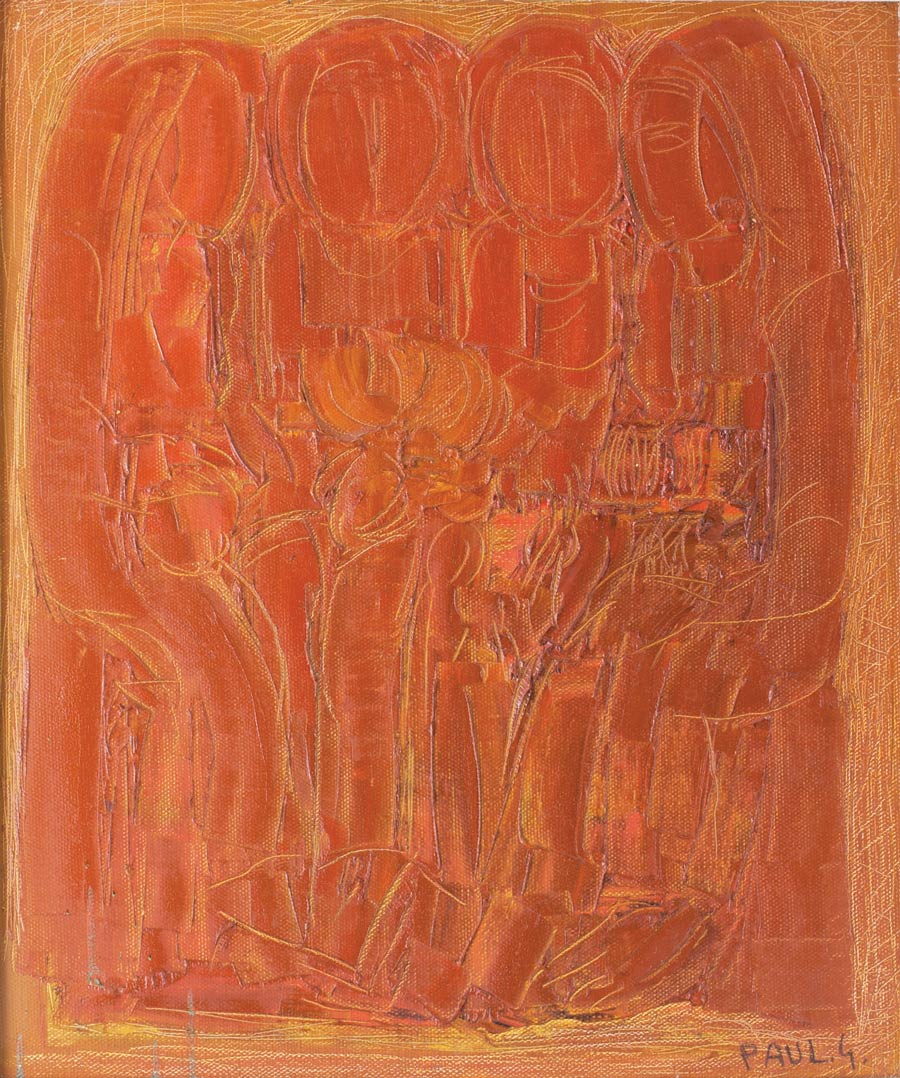 #10
#10
Flower group
Paul Guiragossian places Flower Group in a history of painting linked to Armenia. This work contributes to a regional modernity made up of circulations, ruptures and reinterpretations. The subject remains immediately recognizable, but the essential is played out in the agreement between scale, color, material and rhythm. The painting thus transforms a scene or a symbol into a proposition autonomous pictorial. The Barjeel Art Foundation notice presents the work as without dating specified in the online notice, made in oil on canvas. The work thus becomes a benchmark for understanding how regional modernities were constituted without following a single model. The link associated with the image opens the institutional notice, where the original title, dating, technique and collection data can be viewed. The French title makes the route easier to read, while the source keeps the original information and conditions of use of the image.
Image: Barjeel Art Foundation · Documentary use; rights with the institution.
See the institution's notice →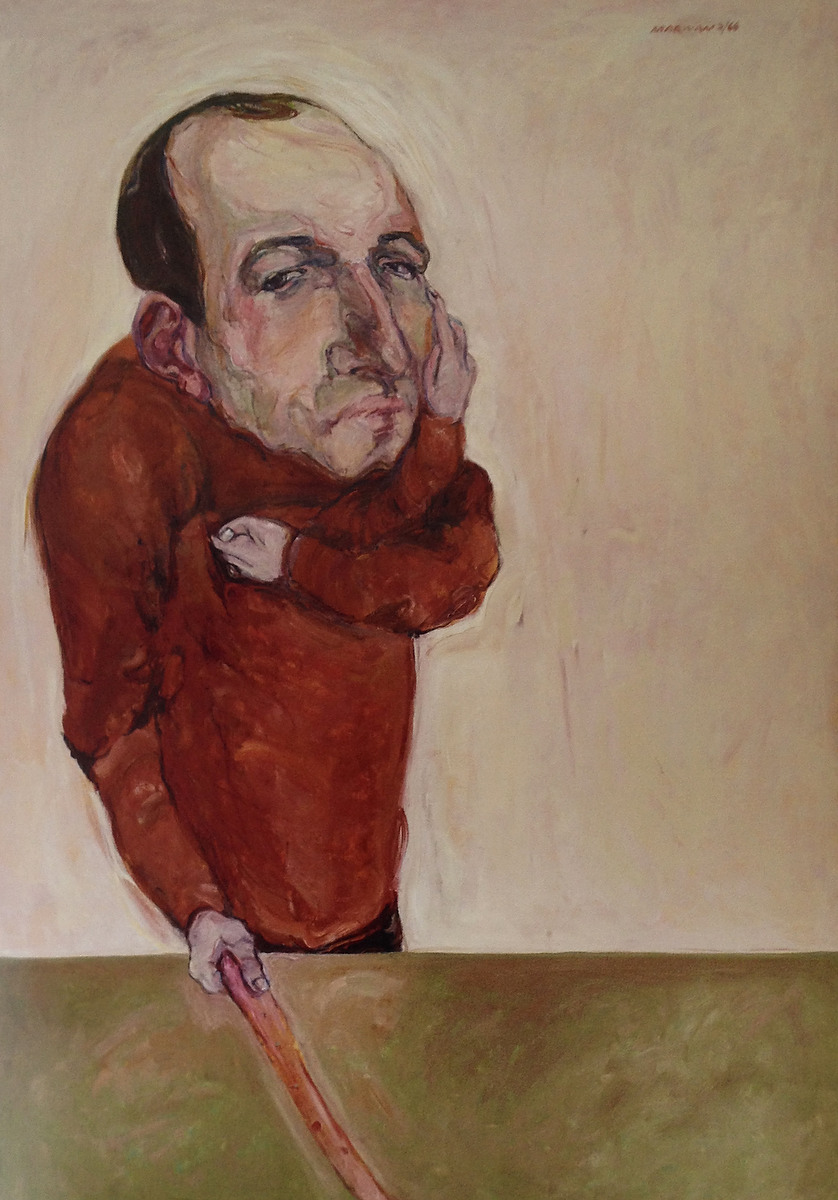 #11
#11
The husband
Marwan places The Husband in a history of painting linked to Syria. Syrian painting brings together icon, portrait, material and historical memory. The figure is constructed by framing, posture and tension between the body and the background. The portrait thus goes beyond resemblance to become a study of presence, memory and social position. Barjeel Art's notice Foundation presents the work as dated 1966, made in oil on canvas. The French title makes the route easier to read, while the source preserves the original information and the conditions of use of the image. Digital reproduction makes it possible to identify composition and palette; the real format and material remain essential to fully measure the work.
Image: Barjeel Art Foundation · Documentary use; rights with the institution.
See the institution's notice →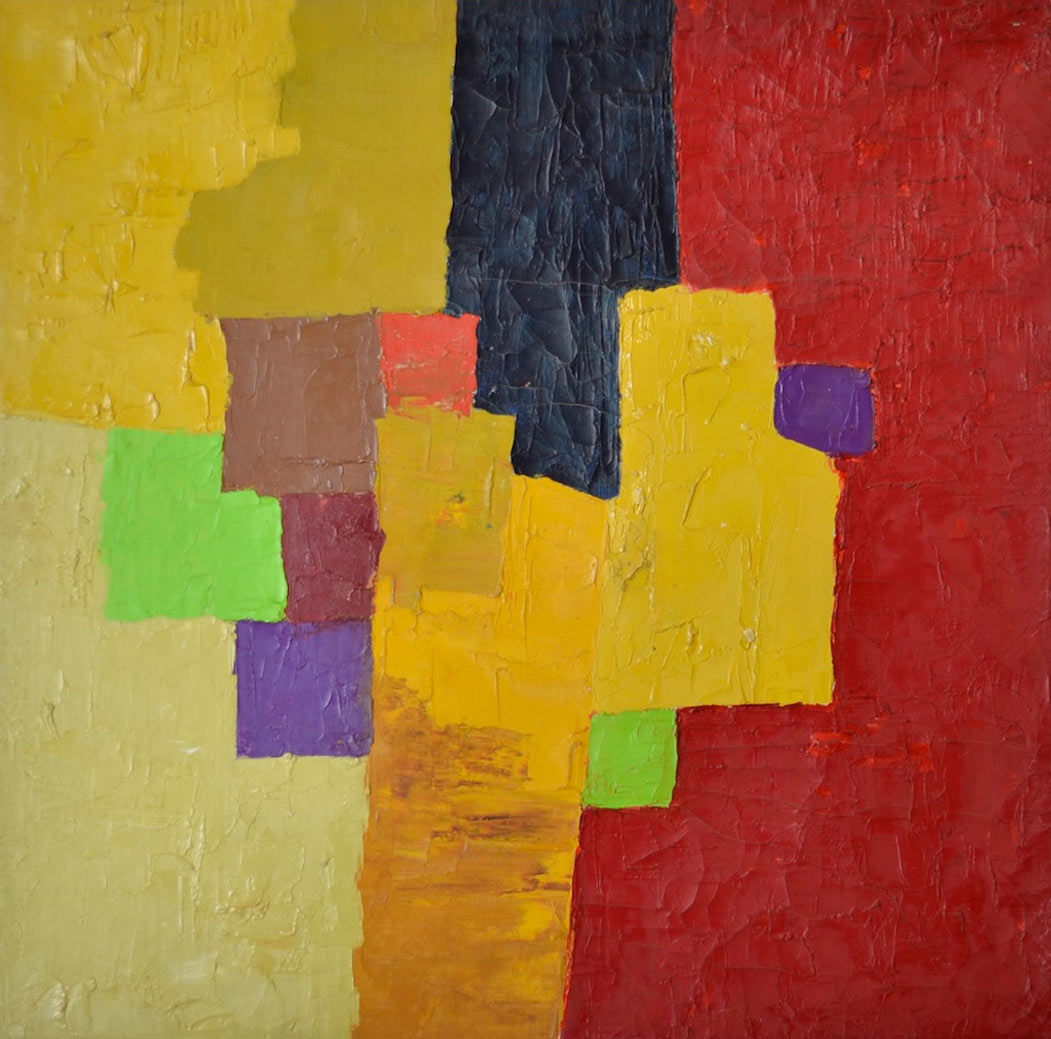 #12
#12
Autumn in Yosemite Valley
Etel Adnan places Autumn in the Yosemite Valley in a history of painting linked to Lebanon. In Lebanon, workshops, magazines and Mediterranean circulations have favored a modernity open to diasporas. The subject remains immediately recognizable, but the essential is played out in the agreement between scale, color, material and rhythm. The painting thus transforms a scene or a symbol into autonomous pictorial proposal. The Barjeel Art Foundation notice presents the work as dated 1964, made in oil on canvas. Painting counts here for its own invention as much as for the artistic and political memory it makes visible. Digital reproduction makes it possible to identify composition and palette; the real format and the material remain essential for measuring fully the work. The link associated with the image opens the institutional notice, where the original title, dating, technique and collection data can be viewed.
Image: Barjeel Art Foundation · Documentary use; rights with the institution.
See the institution's notice →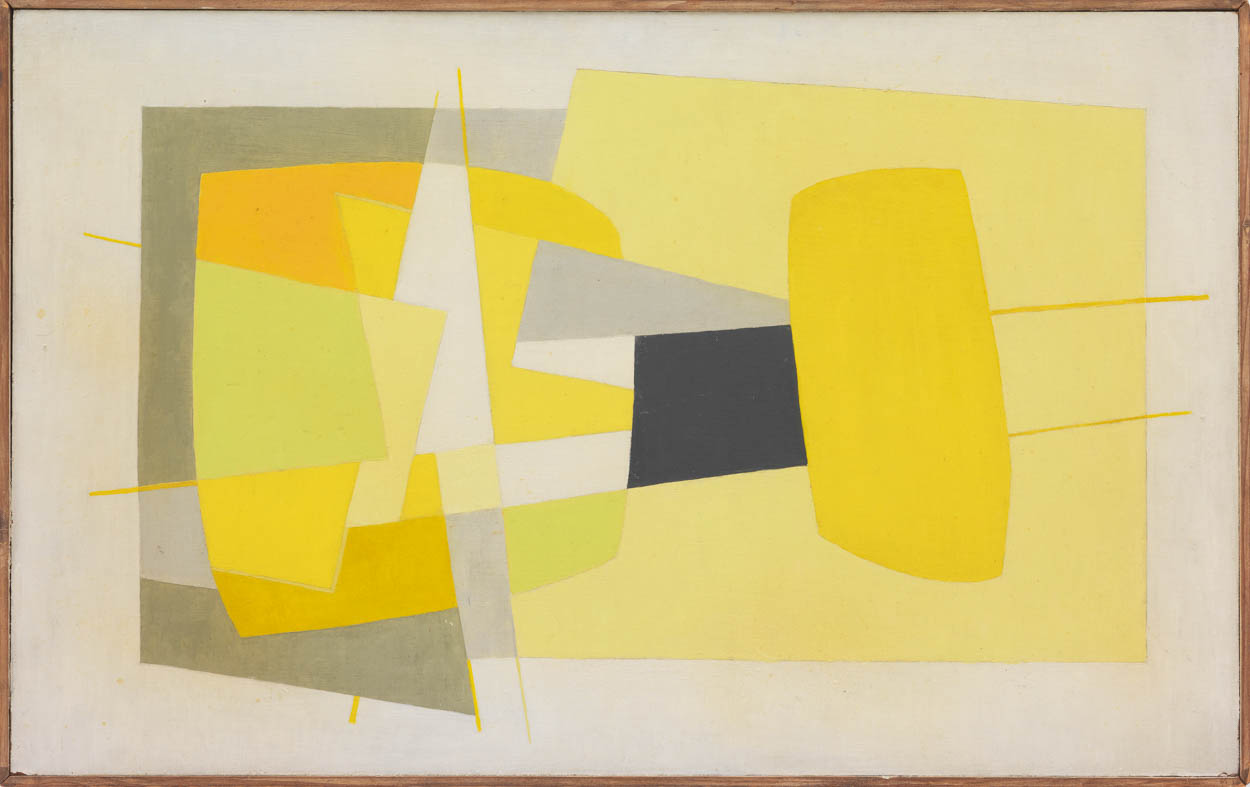 #13
#13
Composition in yellow
Saloua Raouda Choucair inscribes Composition in yellow in a history of painting linked to Lebanon. In Lebanon, workshops, magazines and Mediterranean circulations have favored a modernity open to diasporas. The surface is ordered by masses, intervals, signs and superpositions. Color does not fill a pre-existing form: it constructs the depth, rhythm and very balance of painting. The Barjeel Art Foundation notice presents the work as dated 1965, made in oil on panel. Its place in this classification lies in this ability to connect a situated experience to a broader history of modern painting. The link associated with the image opens the institutional notice, where the original title, dating, technique and collection data can be consulted. The French title makes the route easier to read, while the source keeps the original information and the conditions of use of the image.
Image: Barjeel Art Foundation · Documentary use; rights with the institution.
See the institution's notice →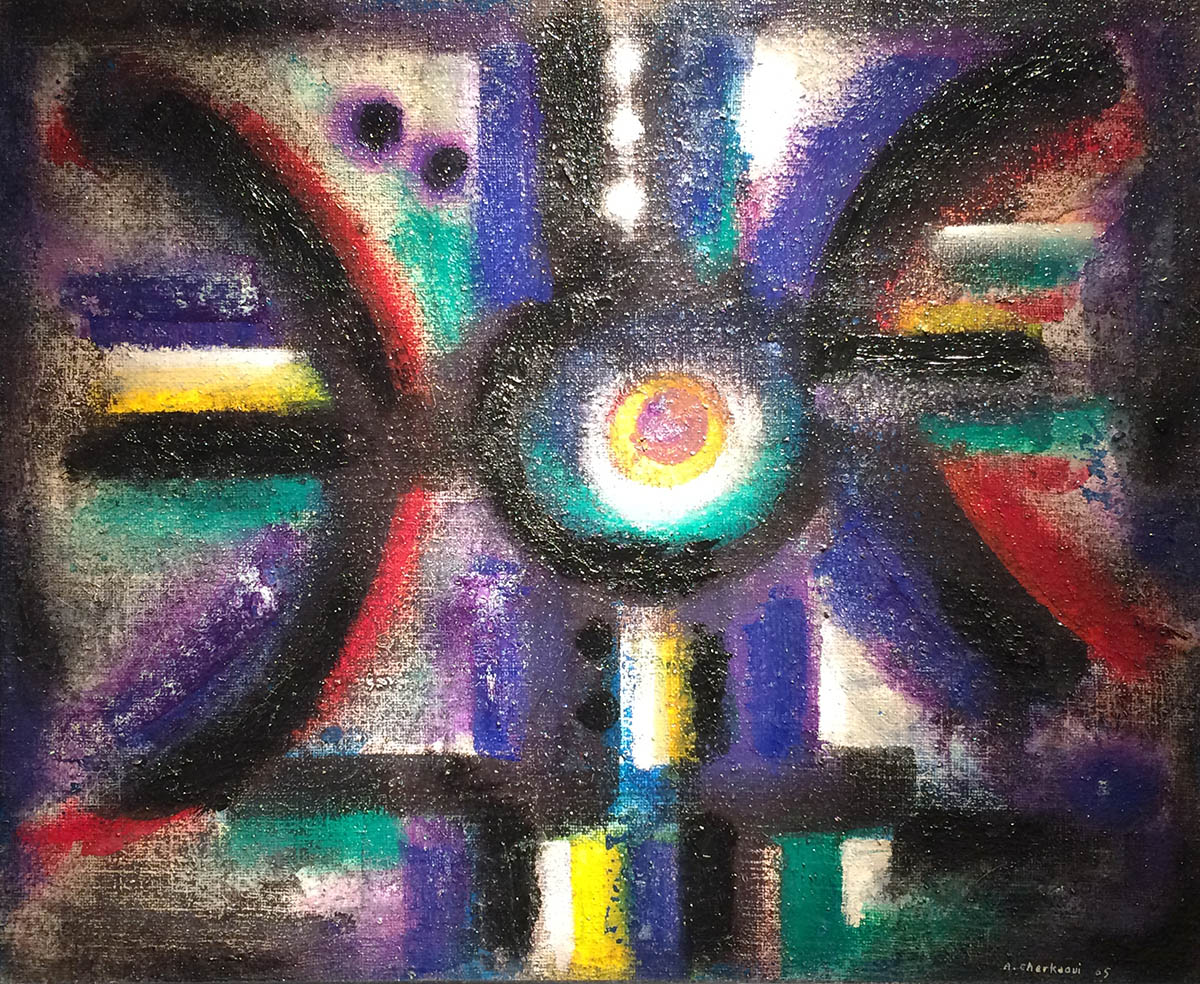 #14
#14
Alea
Ahmed Cherkaoui places Aléa in a history of painting linked to Morocco. Moroccan modernity links material, sign, popular culture and autonomy of the painted surface. The subject remains immediately recognizable, but the essential is played out in the agreement between scale, color, material and rhythm. The painting thus transforms a scene or a symbol into an autonomous pictorial proposition. There notice from Barjeel Art Foundation presents the work as dated 1965, made in oil on jute mounted on panel. The work thus becomes a benchmark for understanding how regional modernities were constituted without following a single model. The French title makes the route easier to read, while the source retains the original information and conditions of use the picture. Digital reproduction makes it possible to identify composition and palette; the real format and the material remain essential to fully measure the work.
Image: Barjeel Art Foundation · Documentary use; rights with the institution.
See the institution's notice →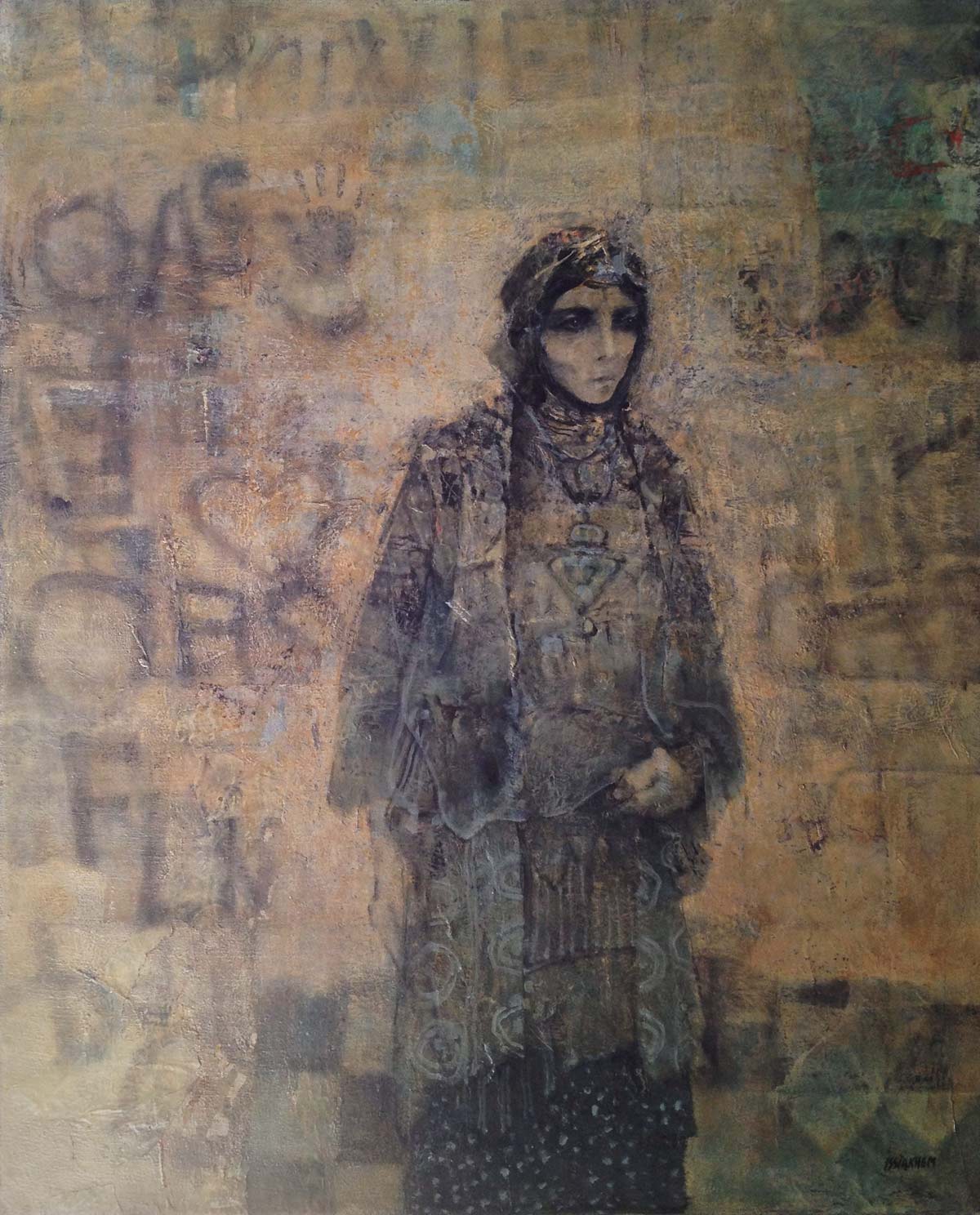 #15
#15
Woman and wall
Mohammed Issiakhem places Woman and Wall in a history of painting linked to Algeria. In Algeria, modern painting moves the landscape, the sign and the figure beyond colonial frameworks. The figure is constructed by framing, posture and tension between the body and the background. The portrait thus goes beyond resemblance to become a study of presence, memory and position social. The Barjeel Art Foundation notice presents the work as dated 1977-78, made in oil on canvas. Digital reproduction makes it possible to identify composition and palette; the actual format and material remain essential to fully measure the work. The link associated with the image opens the institutional notice, where the original title, dating, technique and data of collection can be viewed.
Image: Barjeel Art Foundation · Documentary use; rights with the institution.
See the institution's notice → #16
#16
Untitled (Zar)
Kamala Ibrahim Ishaq inscribes Untitled (Zar) in a history of painting linked to Sudan. The Sudanese school combines sign, spirituality, color and experiences of African and Arab modernity. The subject remains immediately recognizable, but the essential is played out in the agreement between scale, color, material and rhythm. The painting thus transforms a scene or a symbol into a proposition autonomous pictorial. The Barjeel Art Foundation notice presents the work as dated 1973, made in oil on canvas (covered with board on backside). Painting counts here for its own invention as much as for the artistic and political memory it makes visible. The link associated with the image opens the institutional notice, where the original title, dating, technique and data collectibles can be viewed. The French title makes the route easier to read, while the source keeps the original information and conditions of use of the image.
Image: Barjeel Art Foundation · Documentary use; rights with the institution.
See the institution's notice → #17
#17
The Martyr
Gazbia Sirry places The Martyr in a history of painting linked to Egypt. Modern Egyptian painting here articulates local heritage, social observation and international language. The subject remains immediately recognizable, but the essential is played out in the agreement between scale, color, material and rhythm. The painting thus transforms a scene or a symbol into a pictorial proposition autonomous. The Barjeel Art Foundation notice presents the work as dated 1961, made in oil on canvas. Its place in this classification is due to this ability to link a situated experience to a broader history of modern painting. The French title makes the route easier to read, while the source retains the original information and the conditions of use of the image. THERE digital reproduction helps identify composition and palette; the real format and material remain essential to fully measure the work.
Image: Barjeel Art Foundation · Documentary use; rights with the institution.
See the institution's notice →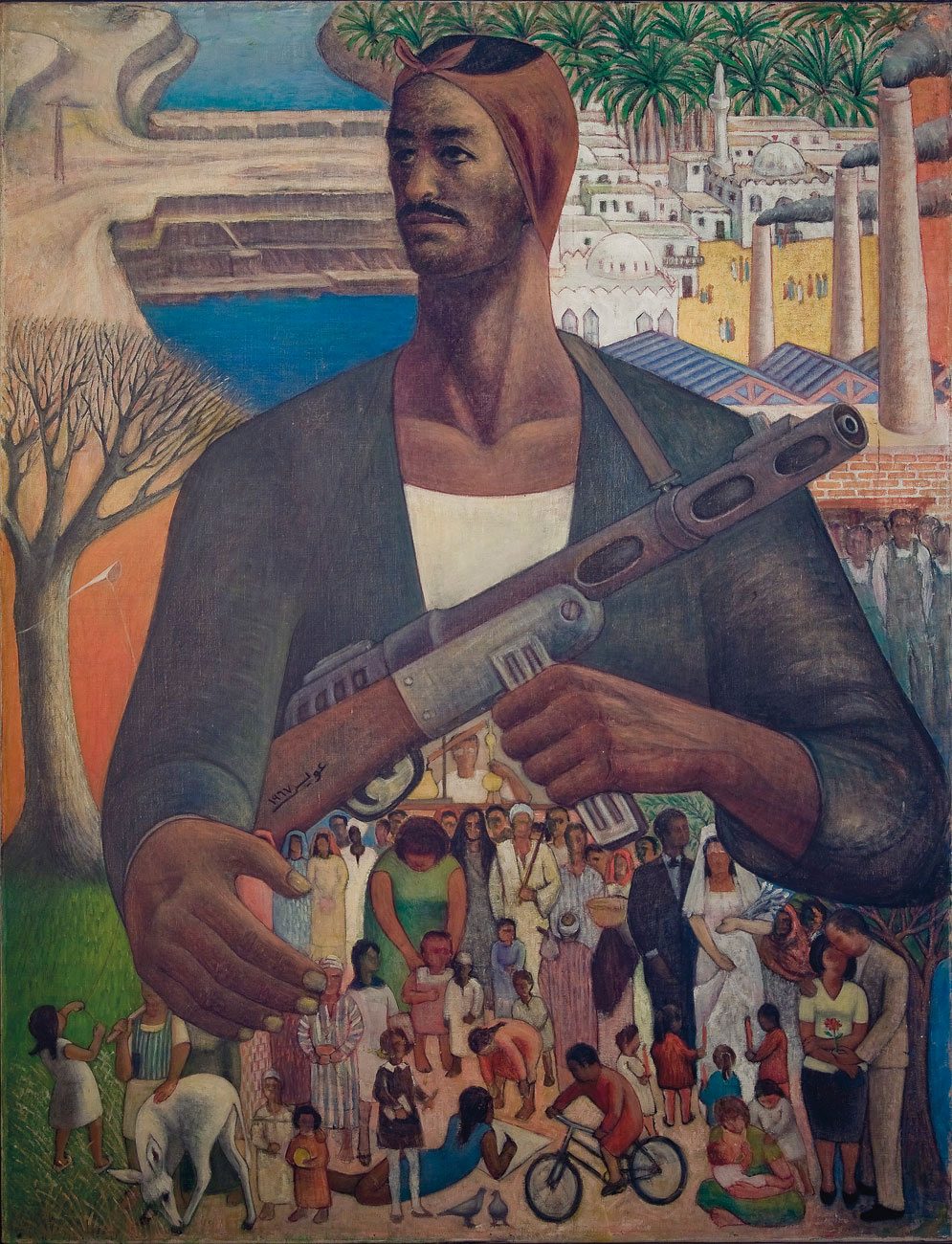 #18
#18
The Guardian of Life
Hamed Ewais places The Guardian of Life in a history of painting linked to Egypt. Modern Egyptian painting here articulates local heritage, social observation and international language. The subject remains immediately recognizable, but the essential is played out in the agreement between scale, color, material and rhythm. The painting thus transforms a scene or a symbol into a proposition autonomous pictorial. The Barjeel Art Foundation notice presents the work as dated 1968, made in oil on canvas. The work thus becomes a benchmark for understanding how regional modernities were constituted without following a single model. Digital reproduction makes it possible to identify composition and palette; the real format and material remain essential to fully measure the work. The link associated with the image opens the institutional notice, where the original title, dating, technique and collection data can be viewed.
Image: Barjeel Art Foundation · Documentary use; rights with the institution.
See the institution's notice →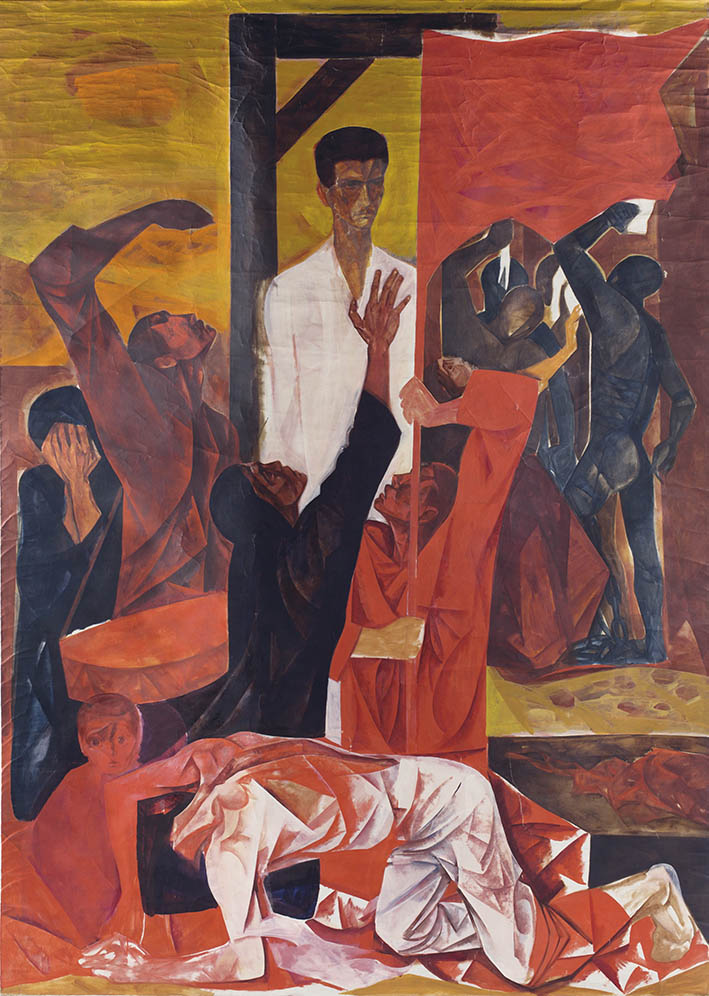 #19
#19
The hero
Mahmoud Sabri places The Hero in a history of painting linked to Iraq. The modern Iraqi school transforms Mesopotamian legacies, urban life and abstraction into contemporary vocabulary. The subject remains immediately recognizable, but the essential is played out in the agreement between scale, color, material and rhythm. The painting thus transforms a scene or a symbol into autonomous pictorial proposal. The Barjeel Art Foundation notice presents the work as dated 1963, made in oil on canvas. The link associated with the image opens the institutional notice, where the original title, dating, technique and collection data can be consulted. The French title makes the route easier to read, while the source keeps the information originals and terms of use of the image.
Image: Barjeel Art Foundation · Documentary use; rights with the institution.
See the institution's notice →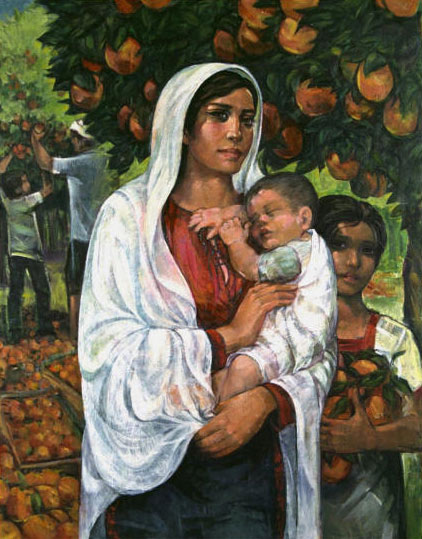 #20
#20
Orange Madonna
Ismail Shammout inscribes Madonna of Oranges in a history of painting linked to Palestine. Palestinian painting makes territory, memory and figures places of visual resistance. The subject remains immediately recognizable, but the essential is played out in the agreement between scale, color, material and rhythm. The painting thus transforms a scene or a symbol into autonomous pictorial proposal. The Barjeel Art Foundation notice presents the work as dated 1997, made in oil on canvas. The painting counts here for its own invention as much as for the artistic and political memory that it makes visible. The French title makes the route easier to read, while the source preserves the original information and the conditions of use of the picture. Digital reproduction makes it possible to identify composition and palette; the real format and the material remain essential to fully measure the work.
Image: Barjeel Art Foundation · Documentary use; rights with the institution.
See the institution's notice → #21
#21
Sad melodies
Suleiman Mansour inscribes Sad Melodies in a history of painting linked to Palestine. Palestinian painting makes territory, memory and figures places of visual resistance. The subject remains immediately recognizable, but the essential is played out in the agreement between scale, color, material and rhythm. The painting thus transforms a scene or a symbol into autonomous pictorial proposal. The Barjeel Art Foundation notice presents the work as dated 1977, made in oil on canvas. Its place in this classification is due to this ability to link a situated experience to a broader history of modern painting. Digital reproduction makes it possible to identify composition and palette; the real format and material remain essential for fully measure the work. The link associated with the image opens the institutional notice, where the original title, dating, technique and collection data can be viewed.
Image: Barjeel Art Foundation · Documentary use; rights with the institution.
See the institution's notice → #22
#22
Woman sewing
Louay Kayyali inscribes Woman Sewing in a History of Painting Related to Syria. Syrian painting brings together icon, portrait, material and historical memory. The figure is constructed by framing, posture and tension between the body and the background. The portrait thus goes beyond resemblance to become a study of presence, memory and social position. Barjeel's notice Art Foundation presents the work as dated 1974, made of oil on composite wood. The work thus becomes a benchmark for understanding how regional modernities were constituted without following a single model. The link associated with the image opens the institutional notice, where the original title, dating, technique and collection data can be consulted. The French title makes it easy to read the course, while the source keeps the original information and conditions of use of the image.
Image: Barjeel Art Foundation · Documentary use; rights with the institution.
See the institution's notice → #23
#23
Composition
Mona Al Khaja places Composition in a history of painting linked to Lebanon. In Lebanon, workshops, magazines and Mediterranean circulations have favored a modernity open to diasporas. The surface is ordered by masses, intervals, signs and superpositions. Color does not fill a pre-existing form: it constructs the depth, rhythm and very balance of the painting. There notice from Barjeel Art Foundation presents the work as dated 2006, produced in mixed media. The French title makes the route easier to read, while the source retains the original information and the conditions of use of the image. Digital reproduction makes it possible to identify composition and palette; the real format and material remain essential to fully measure the work.
Image: Barjeel Art Foundation · Documentary use; rights with the institution.
See the institution's notice → #24
#24
Body scraps
Huguette Caland places Bits of Bodies in a history of painting linked to Lebanon. In Lebanon, workshops, magazines and Mediterranean circulations have favored a modernity open to diasporas. The subject remains immediately recognizable, but the essential is played out in the agreement between scale, color, material and rhythm. The painting thus transforms a scene or a symbol into a proposition autonomous pictorial. The Barjeel Art Foundation notice presents the work as dated 1971, made in oil on canvas. Painting counts here for its own invention as much as for the artistic and political memory it makes visible. Digital reproduction makes it possible to identify composition and palette; the real format and material remain essential to fully measure the work. The link associated with the image opens the institutional record, where the original title, dating, technique and collection data can be viewed.
Image: Barjeel Art Foundation · Documentary use; rights with the institution.
See the institution's notice → #25
#25
White cube in a brown cube
Samia Halaby inscribes White Cube in a brown cube in a history of painting linked to Palestine. Palestinian painting makes territory, memory and figure places of visual resistance. The surface is ordered by masses, intervals, signs and superpositions. Color does not fill a pre-existing form: it constructs depth, rhythm and even balance from the painting. The Barjeel Art Foundation notice presents the work as dated 1969, made in oil on canvas. Its place in this classification lies in this ability to connect a situated experience to a broader history of modern painting. The link associated with the image opens the institutional notice, where the original title, dating, technique and collection data can be consulted. The French title makes the route easier to read, while the source retains the original information and conditions of use of the image.
Image: Barjeel Art Foundation · Documentary use; rights with the institution.
See the institution's notice →Painting becomes a space for bodies, cities, conflicts, work and exile.
 #26
#26
Composition No. 3
Ramses Younan inscribes Composition No. 3 in a history of painting linked to Egypt. Modern Egyptian painting here articulates local heritage, social observation and international language. The surface is ordered by masses, intervals, signs and superpositions. Color does not fill a pre-existing form: it constructs the depth, rhythm and very balance of the painting. THERE barjeel Art Foundation Notice presents the work as dated c. 1964, made in oil on canvas. The work thus becomes a benchmark for understanding how regional modernities were constituted without following a single model. The French title makes the route easier to read, while the source preserves the original information and the conditions of use of the image. There digital reproduction helps identify composition and palette; the real format and material remain essential to fully measure the work.
Image: Barjeel Art Foundation · Documentary use; rights with the institution.
See the institution's notice →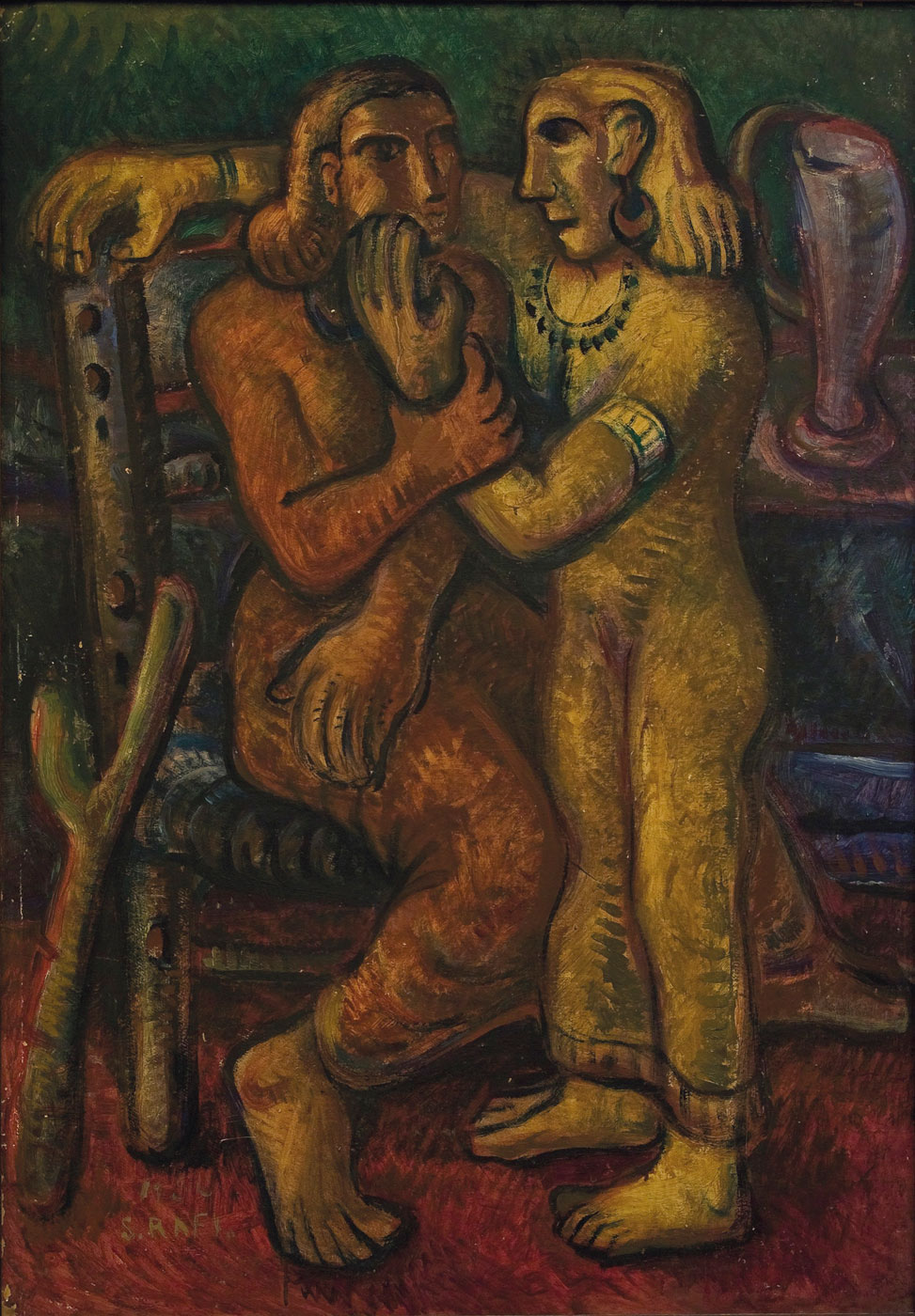 #27
#27
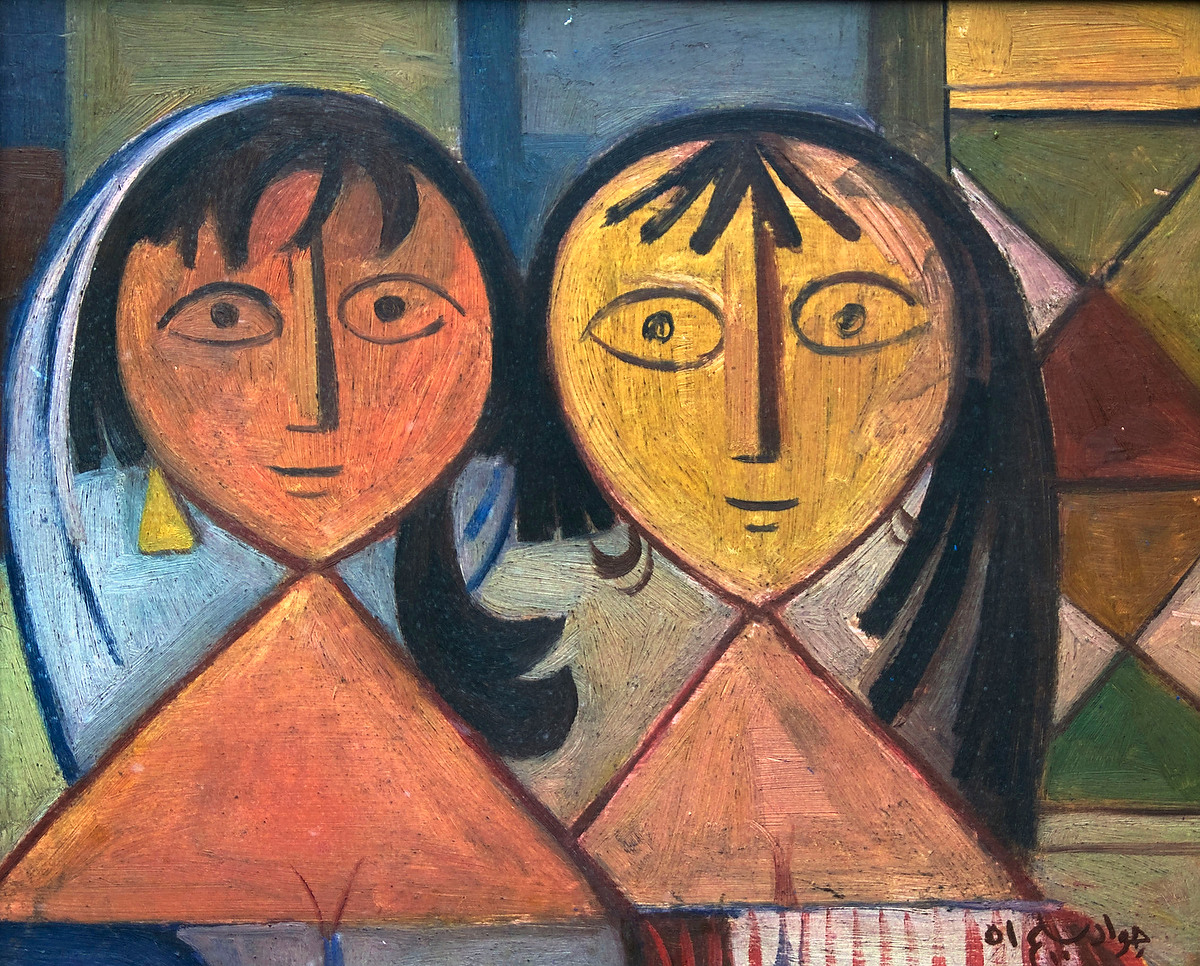
Two Sisters
Samir Rafi places Two Sisters in a history of painting linked to Egypt. Modern Egyptian painting here articulates local heritage, social observation and international language. The figure is constructed by framing, posture and tension between the body and the background. The portrait thus goes beyond resemblance to become a study of presence, memory and social position. There barjeel Art Foundation Notice presents the work as dated 1950, made in oil on panel. Digital reproduction helps identify composition and palette; the actual format and material remain essential to fully measure the work. The link associated with the image opens the institutional notice, where the original title, dating, technique and collection data can be consulted.
Image: Barjeel Art Foundation · Documentary use; rights with the institution.
See the institution's notice → #28
#28
Nocturne
Seif Wanly places Nocturne in a history of painting linked to Egypt. Modern Egyptian painting here articulates local heritage, social observation and international language. The subject remains immediately recognizable, but the essential is played out in the agreement between scale, color, material and rhythm. The painting thus transforms a scene or a symbol into a pictorial proposition autonomous. The Barjeel Art Foundation notice presents the work as dated 1953, made in oil on panel. The painting counts here for its own invention as much as for the artistic and political memory it makes visible. The link associated with the image opens the institutional notice, where the original title, dating, technique and collection data can be viewed. THE french title makes the route easier to read, while the source keeps the original information and conditions of use of the image.
Image: Barjeel Art Foundation · Documentary use; rights with the institution.
See the institution's notice →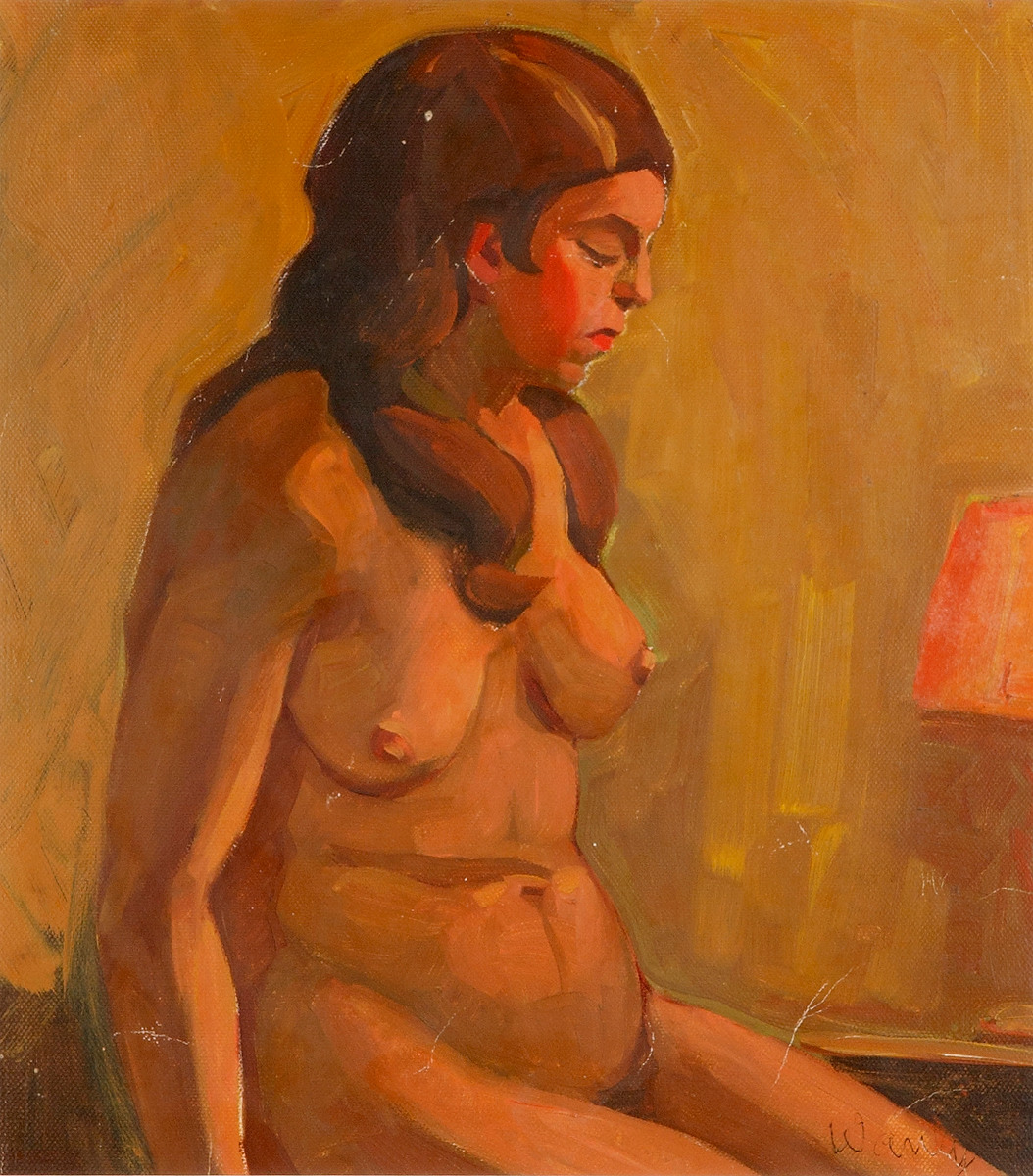 #29
#29
Naked woman
Adham Wanly places Naked Woman in a history of painting linked to Egypt. Modern Egyptian painting here articulates local heritage, social observation and international language. The figure is constructed by framing, posture and tension between the body and the background. The portrait thus goes beyond resemblance to become a study of presence, memory and social position. There notice from Barjeel Art Foundation presents the work as undating specified in the online notice, made in oil on canvas. Its place in this ranking is due to this ability to link a situated experience to a broader history of modern painting. The French title makes the route easier to read, while the source retains the original information and conditions image usage.
Image: Barjeel Art Foundation · Documentary use; rights with the institution.
See the institution's notice → #30
#30
Temple priests
Dia Azzawi inscribes Priests of the Temple in a history of painting linked to Iraq. The modern Iraqi school transforms Mesopotamian heritage, urban life and abstraction into contemporary vocabulary. The subject remains immediately recognizable, but the essential is played out in the agreement between scale, color, material and rhythm. The painting thus transforms a scene or a symbol into autonomous pictorial proposal. The Barjeel Art Foundation notice presents the work as without dating specified in the online notice, made in oil on canvas. The work thus becomes a benchmark for understanding how regional modernities were constituted without following a single model. Digital reproduction makes it possible to identify composition and palette; the real format and the material remain essential to fully measure the work. The link associated with the image opens the institutional notice, where the original title, dating, technique and collection data can be viewed.
Image: Barjeel Art Foundation · Documentary use; rights with the institution.
See the institution's notice →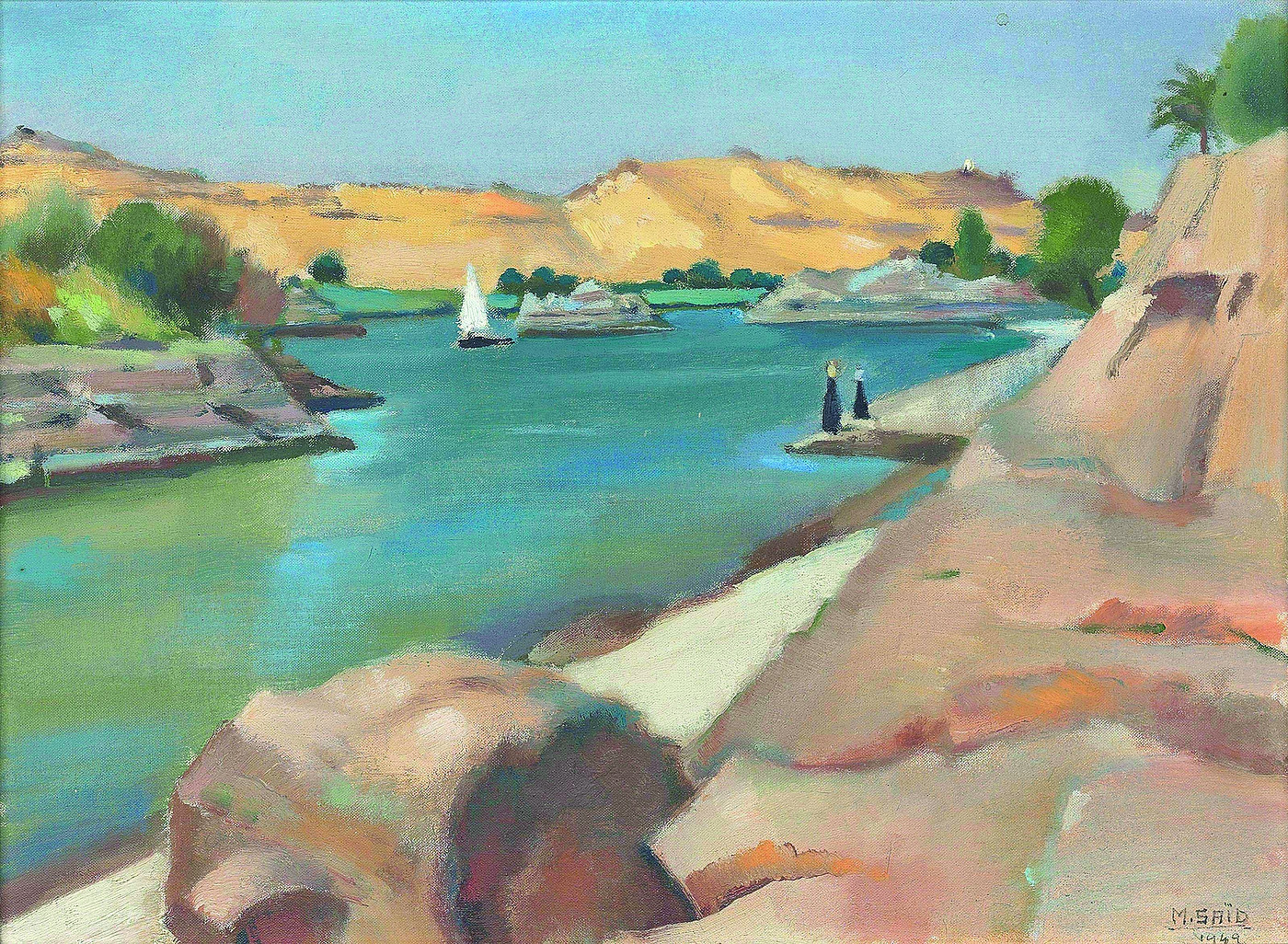 #31
#31
Aswan - The Rocks
Mahmoud Said places Aswan - The Rocks in a history of painting linked to Egypt. Modern Egyptian painting here articulates local heritage, social observation and international language. The place is not a simple setting: plans, horizons, architecture and color relationships organize the circulation of the gaze. The territory becomes a mental form as much as an observed space. The Barjeel Art Foundation notice presents the work as undating specified in the online notice, made in oil on canvas cardboard. The link associated with the image opens the institutional notice, where the original title, dating, technique and collection data can be consulted. The French title makes the route easier to read, while the source keeps them original information and terms of use of the image.
Image: Barjeel Art Foundation · Documentary use; rights with the institution.
See the institution's notice → #32
#32
The Fourth Wife
Inji Efflatoun places The Fourth Wife in a history of painting linked to Egypt. Modern Egyptian painting here articulates local heritage, social observation and international language. The subject remains immediately recognizable, but the essential is played out in the agreement between scale, color, material and rhythm. The painting thus transforms a scene or a symbol into a proposition autonomous pictorial. The Barjeel Art Foundation notice presents the work as dated 1952, made in oil on canvas. The painting counts here for its own invention as much as for the artistic and political memory that it makes visible. The French title makes the route easier to read, while the source preserves the original information and the conditions of use of the image. THERE digital reproduction helps identify composition and palette; the real format and material remain essential to fully measure the work.
Image: Barjeel Art Foundation · Documentary use; rights with the institution.
See the institution's notice → #33
#33
Portrait of a Nubian family
Gazbia Sirry places Portrait of a Nubian family in a history of painting linked to Egypt. Modern Egyptian painting here articulates local heritage, social observation and international language. The figure is constructed by framing, posture and tension between the body and the background. The portrait thus goes beyond resemblance to become a study of presence, memory and social position. The Barjeel Art Foundation notice presents the work as dated 1962, made in oil on canvas. Its place in this classification is due to this ability to link a situated experience to a broader history of modern painting. Digital reproduction makes it possible to identify composition and palette; the real format and material remain essential to fully measure the work. The link associated with the image opens the institutional notice, where the original title, dating, technique and collection data can be viewed.
Image: Barjeel Art Foundation · Documentary use; rights with the institution.
See the institution's notice →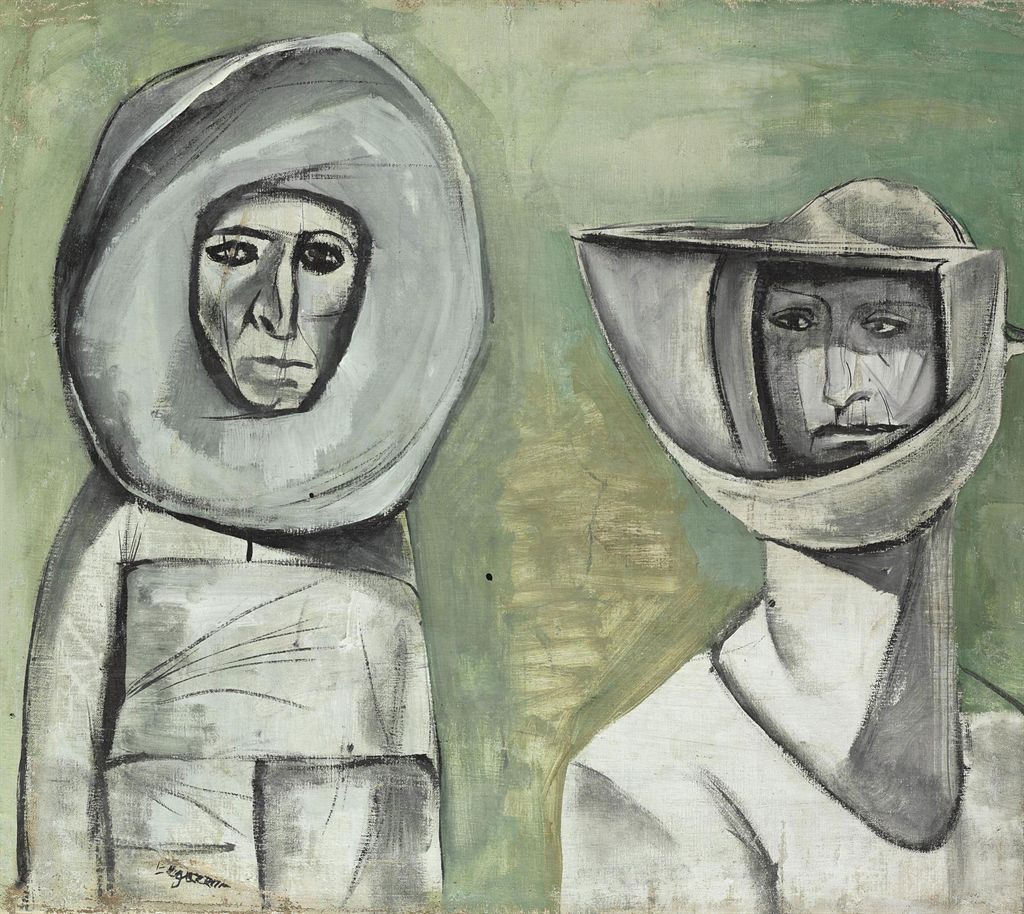 #34
#34
Two people in spacesuits
Abdel Hadi El Gazzar places Two people in space outfits in a history of painting linked to Egypt. Modern Egyptian painting here articulates local heritage, social observation and international language. The subject remains immediately recognizable, but the essential is played out in the agreement between scale, color, material and rhythm. The painting thus transforms a scene or a symbol in autonomous pictorial proposal. The Barjeel Art Foundation notice presents the work as dated c. early 1960s, made in oil on canvas. The work thus becomes a benchmark for understanding how regional modernities were constituted without following a single model. The link associated with the image opens the institutional notice, where the original title, dating, technique and collection data can be viewed. The French title makes the route easier to read, while the source keeps the original information and conditions of use of the image.
Image: Barjeel Art Foundation · Documentary use; rights with the institution.
See the institution's notice → #35
#35
Fabric merchant
Jewad Selim places Fabric Merchant in a history of painting linked to Iraq. The modern Iraqi school transforms Mesopotamian heritage, urban life and abstraction into contemporary vocabulary. The subject remains immediately recognizable, but the essential is played out in the agreement between scale, color, material and rhythm. The painting thus transforms a scene or a symbol into autonomous pictorial proposal. The Barjeel Art Foundation notice presents the work as dated 1953, made in oil on panel. The French title makes the route easier to read, while the source retains the original information and the conditions of use of the image. Digital reproduction makes it possible to identify composition and palette; the actual format and material remain essential to fully measure the work.
Image: Barjeel Art Foundation · Documentary use; rights with the institution.
See the institution's notice →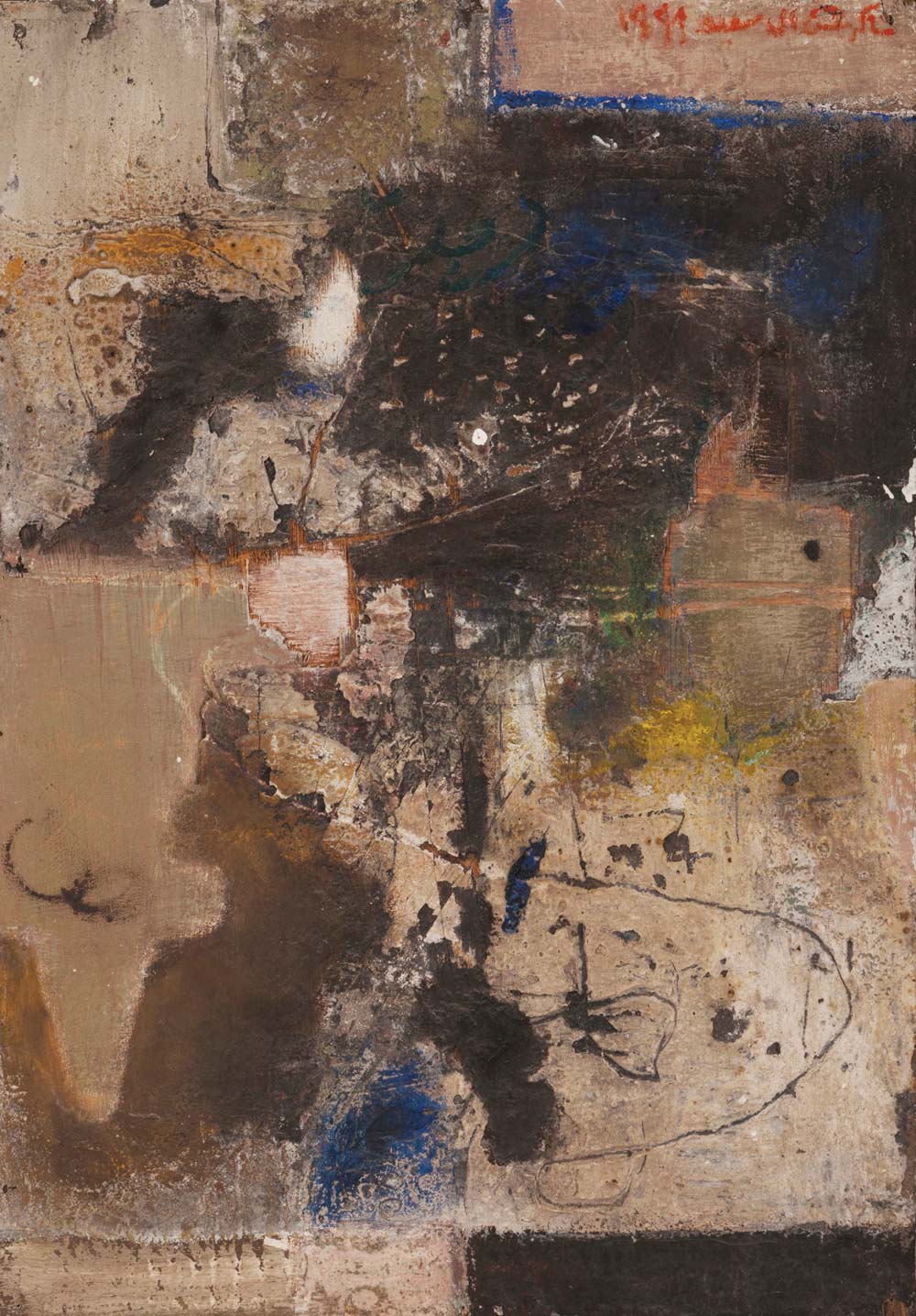 #36
#36
Wall No. 1
Shakir Hassan Al Said places Wall No. 1 in a history of painting linked to Iraq. The modern Iraqi school transforms Mesopotamian legacies, urban life and abstraction into contemporary vocabulary. The surface is ordered by masses, intervals, signs and superpositions. Color does not fill a pre-existing form: it constructs depth, rhythm and even balance from the painting. The Barjeel Art Foundation notice presents the work as without dating specified in the online notice, made in oil on a wooden panel. Painting counts here for its own invention as much as for the artistic and political memory it makes visible. Digital reproduction makes it possible to identify composition and palette; the real format and material remain essential to fully measure the work. The link associated with the image opens the institutional notice, where the original title, dating, technique and collection data can be viewed.
Image: Barjeel Art Foundation · Documentary use; rights with the institution.
See the institution's notice →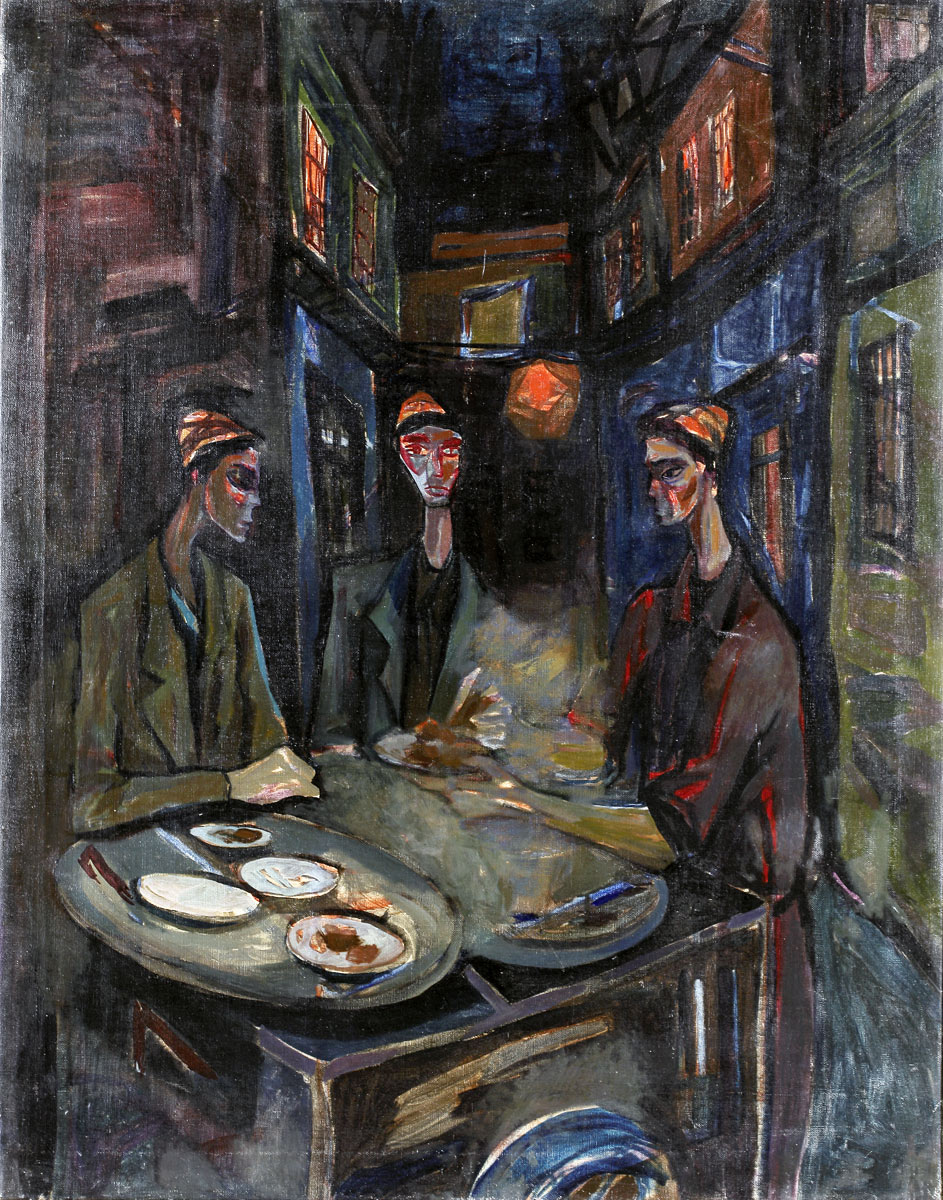 #37
#37
The Parsnip Merchant
Mahmoud Sabri places The Parsnip Merchant in a history of painting linked to Iraq. The modern Iraqi school transforms Mesopotamian legacies, urban life and abstraction into contemporary vocabulary. The subject remains immediately recognizable, but the essential is played out in the agreement between scale, color, material and rhythm. The painting thus transforms a scene or a symbol in autonomous pictorial proposal. The Barjeel Art Foundation notice presents the work as dated 1950, made in oil on canvas. Its place in this classification is due to this ability to connect a situated experience to a broader history of modern painting. The link associated with the image opens the institutional notice, where the original title, dating, technique and data collectibles can be viewed. The French title makes the route easier to read, while the source keeps the original information and conditions of use of the image.
Image: Barjeel Art Foundation · Documentary use; rights with the institution.
See the institution's notice →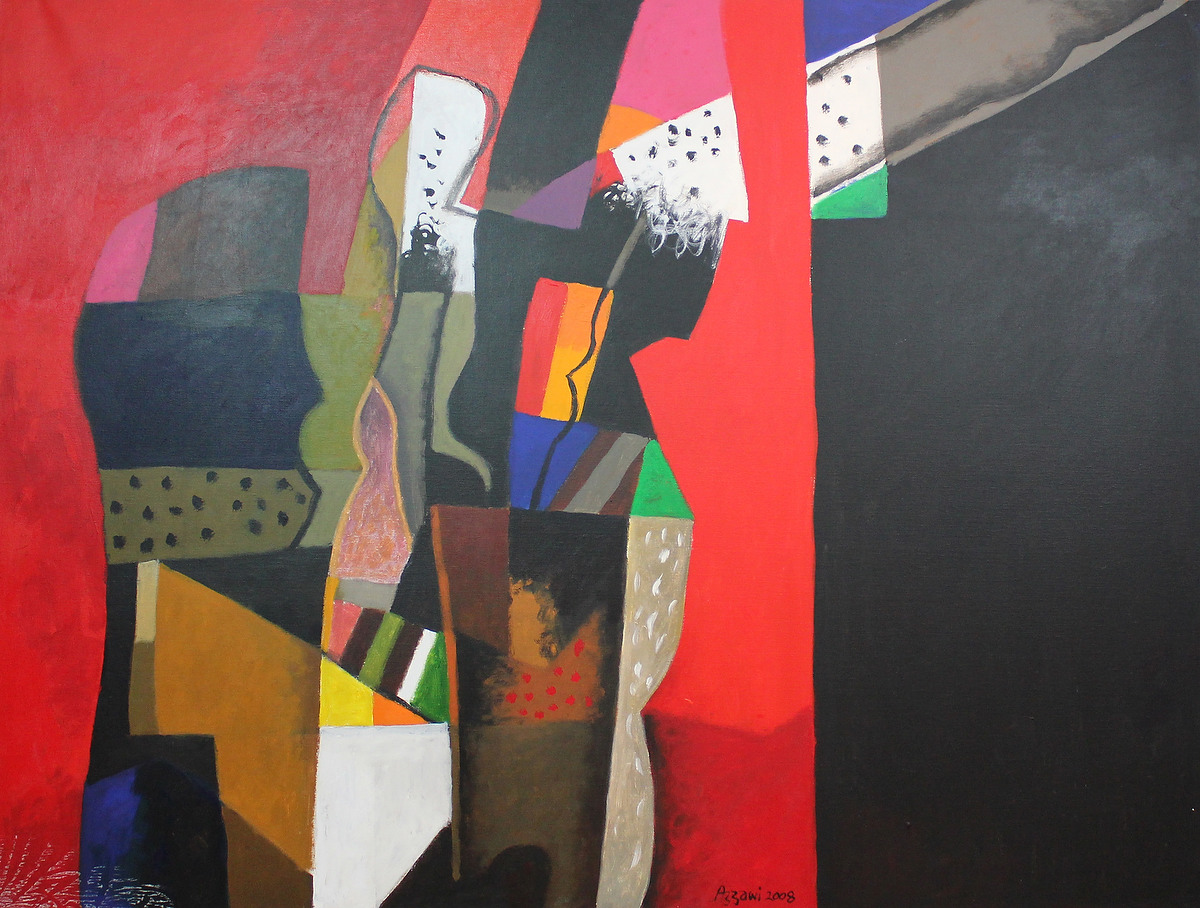 #38
#38
Broken dream
Dia Azzawi places Broken Dream in a history of painting linked to Iraq. The modern Iraqi school transforms Mesopotamian legacies, urban life and abstraction into contemporary vocabulary. The subject remains immediately recognizable, but the essential is played out in the agreement between scale, color, material and rhythm. The painting thus transforms a scene or a symbol into autonomous pictorial proposal. The Barjeel Art Foundation notice presents the work as without dating specified in the online notice, made in oil on canvas. The work thus becomes a benchmark for understanding how regional modernities were constituted without following a single model. The French title makes it easier to read the route, while the source keeps the information originals and conditions of use of the image. Digital reproduction makes it possible to identify composition and palette; the real format and material remain essential to fully measure the work.
Image: Barjeel Art Foundation · Documentary use; rights with the institution.
See the institution's notice →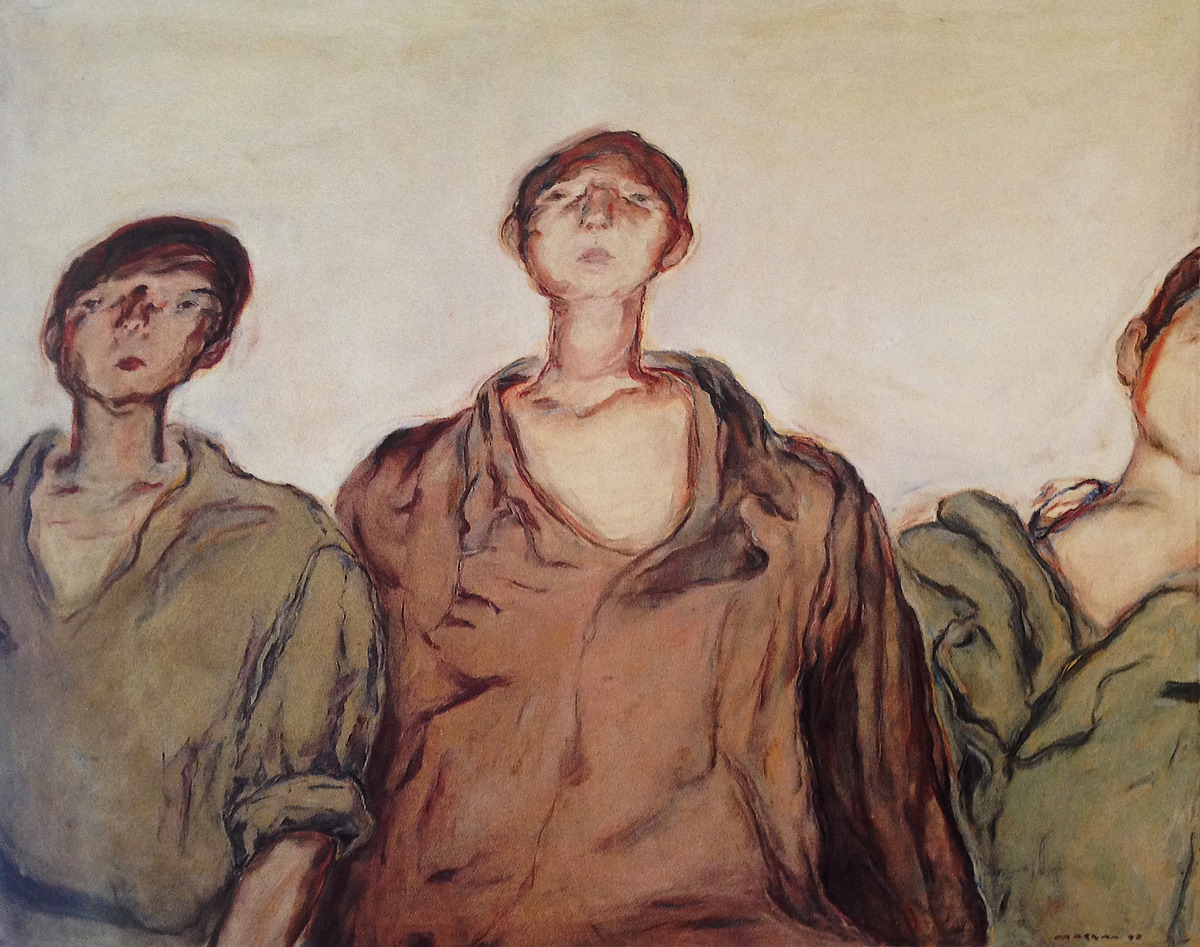 #39
#39
Three Palestinian boys
Marwan places Three Palestinian boys in a history of painting linked to Syria. Syrian painting brings together icon, portrait, material and historical memory. The figure is constructed by framing, posture and tension between the body and the background. The portrait thus goes beyond resemblance to become a study of presence, memory and social position. The notice of Barjeel Art Foundation presents the work as dated 1970, made in oil on canvas. Digital reproduction makes it possible to identify composition and palette; the actual format and material remain essential to fully measure the work. The link associated with the image opens the institutional notice, where the original title, dating, technique and collection data can be consulted.
Image: Barjeel Art Foundation · Documentary use; rights with the institution.
See the institution's notice →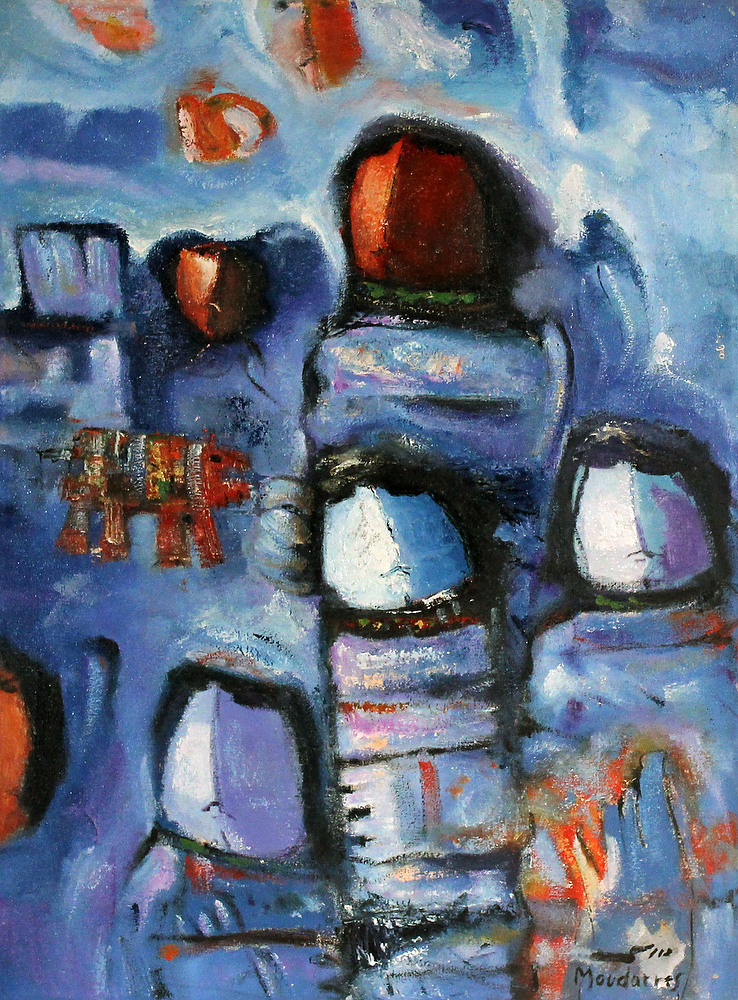 #40
#40
The Beast and the Man of the People
Fateh Al Moudarres places The Beast and the Man of the People in a history of painting linked to Syria. Syrian painting brings together icon, portrait, material and historical memory. The subject remains immediately recognizable, but the essential is played out in the agreement between scale, color, material and rhythm. The painting thus transforms a scene or a symbol into a pictorial proposition autonomous. The Barjeel Art Foundation notice presents the work as dated 1987, made in oil on canvas. The painting counts here for its own invention as much as for the artistic and political memory it makes visible. The link associated with the image opens the institutional notice, where the original title, dating, technique and collection data can be viewed. THE french title makes the route easier to read, while the source keeps the original information and conditions of use of the image.
Image: Barjeel Art Foundation · Documentary use; rights with the institution.
See the institution's notice → #41
#41
Kurdish family
Chafic Abboud places Kurdish family in a history of painting linked to Lebanon. In Lebanon, workshops, magazines and Mediterranean circulations have favored a modernity open to diasporas. The figure is constructed by framing, posture and tension between the body and the background. The portrait thus goes beyond resemblance to become a study of presence, memory and position social. The Barjeel Art Foundation notice presents the work as dated 1950, made in oil on panel. Its place in this classification is due to this ability to link a situated experience to a broader history of modern painting. The French title makes the route easier to read, while the source retains the original information and the conditions of use of the image. THERE digital reproduction helps identify composition and palette; the real format and material remain essential to fully measure the work.
Image: Barjeel Art Foundation · Documentary use; rights with the institution.
See the institution's notice →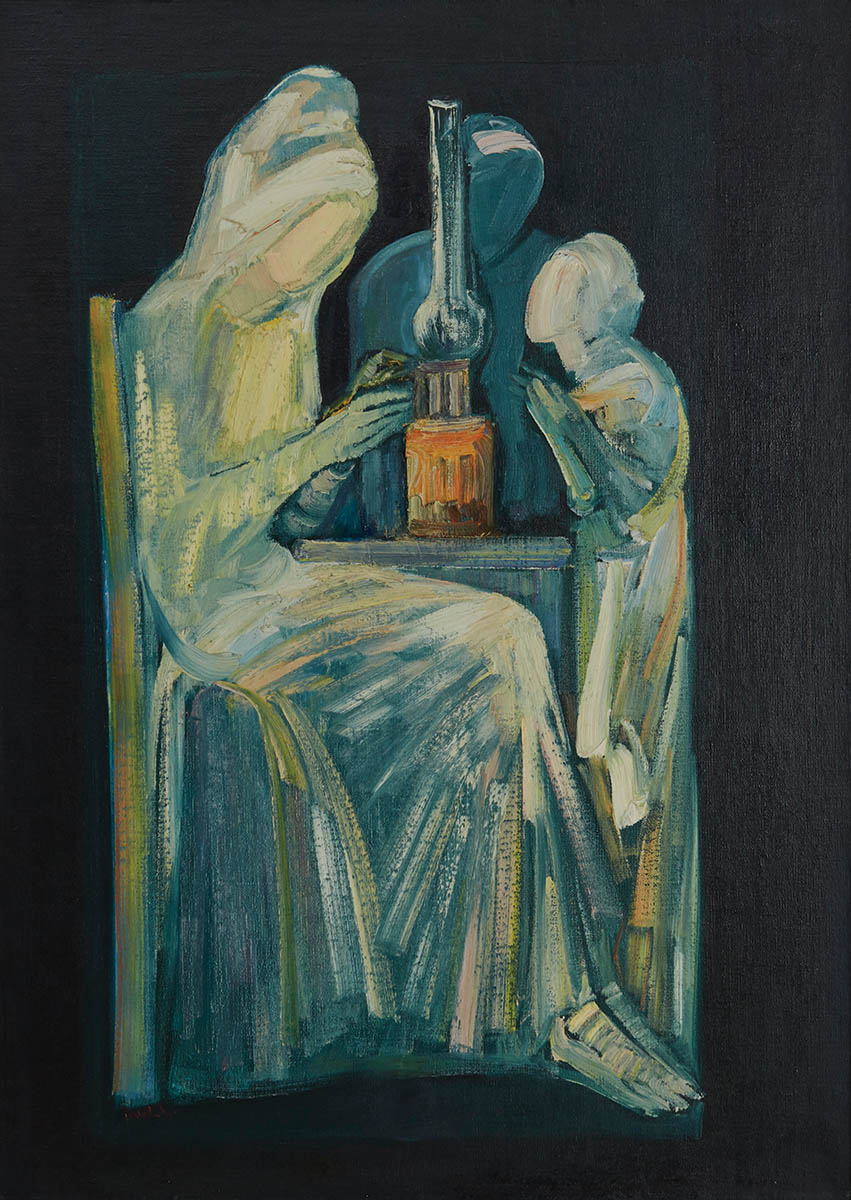 #42
#42
The lamp
Paul Guiragossian places La Lampe in a history of painting linked to Armenia. This work contributes to a regional modernity made up of circulations, ruptures and reinterpretations. The subject remains immediately recognizable, but the essential is played out in the agreement between scale, color, material and rhythm. The painting thus transforms a scene or a symbol into a proposition autonomous pictorial. The Barjeel Art Foundation notice presents the work as dated 1979, made in oil on canvas. The work thus becomes a benchmark for understanding how regional modernities were constituted without following a single model. Digital reproduction makes it possible to identify composition and palette; the real format and material remain essential to fully measure the work. The link associated with the image opens the institutional notice, where the original title, dating, technique and collection data can be viewed.
Image: Barjeel Art Foundation · Documentary use; rights with the institution.
See the institution's notice → #43
#43
City II
Huguette Caland places Ville II in a history of painting linked to Lebanon. In Lebanon, workshops, magazines and Mediterranean circulations have favored a modernity open to diasporas. The place is not a simple setting: plans, horizons, architecture and color relationships organize the circulation of the gaze. The territory becomes a mental form as much as an observed space. There barjeel Art Foundation Notice presents the work as dated 1968, made in oil on canvas. The link associated with the image opens the institutional notice, where the original title, dating, technique and collection data can be viewed. The French title makes the route easier to read, while the source keeps the original information and conditions of use from the picture.
Image: Barjeel Art Foundation · Documentary use; rights with the institution.
See the institution's notice → #44
#44
The Mountain, Lebanon
Etel Adnan places La Montagne, Lebanon in a history of painting linked to Lebanon. In Lebanon, workshops, magazines and Mediterranean circulations have favored a modernity open to diasporas. The place is not a simple setting: plans, horizons, architecture and color relationships organize the circulation of the gaze. The territory becomes a mental form as much as an observed space. There barjeel Art Foundation Notice presents the work as dated 1973, made in oil on canvas. The painting counts here for its own invention as much as for the artistic and political memory it makes visible. The French title makes the route easier to read, while the source preserves the original information and the conditions of use of the image. Digital reproduction allows you to identify composition and palette; the actual format and material remain essential to fully measure the work.
Image: Barjeel Art Foundation · Documentary use; rights with the institution.
See the institution's notice →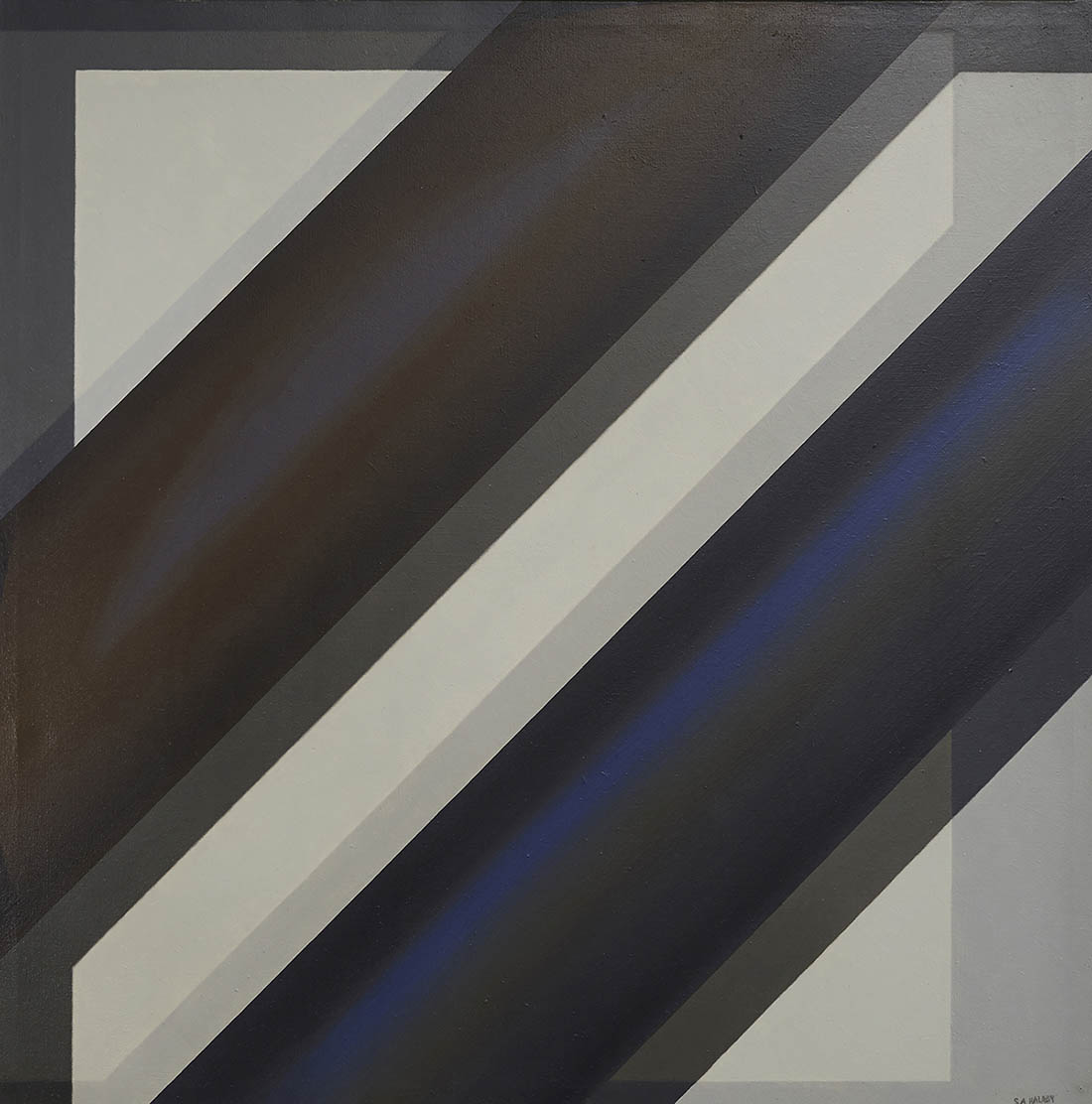 #45
#45
Two diagonals
Samia Halaby inscribes Two diagonals in a history of painting linked to Palestine. Palestinian painting makes territory, memory and figure places of visual resistance. The surface is ordered by masses, intervals, signs and superpositions. Color does not fill a pre-existing form: it constructs the depth, rhythm and very balance of the painting. The Barjeel Art Foundation notice presents the work as dated 1968, made in painting. Its place in this classification is due to this ability to link a situated experience to a broader history of modern painting. Digital reproduction makes it possible to identify composition and palette; the actual format and material remain essential to fully measure the work. The link associated with the image opens the institutional record, where the original title, dating, technique and collection data can be viewed.
Image: Barjeel Art Foundation · Documentary use; rights with the institution.
See the institution's notice → #46
#46
Racist section
Nabil Anani places Racist Section in a history of painting linked to Palestine. Palestinian painting makes territory, memory and figures places of visual resistance. The subject remains immediately recognizable, but the essential is played out in the agreement between scale, color, material and rhythm. The painting thus transforms a scene or a symbol into a proposition autonomous pictorial. The Barjeel Art Foundation notice presents the work as dated 2011, made in acrylic on canvas. The work thus becomes a benchmark for understanding how regional modernities were constituted without following a single model. The link associated with the image opens the institutional notice, where the original title, dating, technique and collection data can be consulted. The French title makes the route easier to read, while the source keeps the original information and the conditions of use of the image.
Image: Barjeel Art Foundation · Documentary use; rights with the institution.
See the institution's notice → #47
#47
Sliman
Tammam Al-Akhal places Sliman in a history of painting linked to Palestine. Palestinian painting makes territory, memory and figures places of visual resistance. The subject remains immediately recognizable, but the essential is played out in the agreement between scale, color, material and rhythm. The painting thus transforms a scene or a symbol into a proposition autonomous pictorial. The Barjeel Art Foundation notice presents the work as dated 1974, made in oil on canvas. The French title makes the route easier to read, while the source retains the original information and the conditions of use of the image. Digital reproduction makes it possible to identify composition and palette; the real format and material remain essential to fully measure the work.
Image: Barjeel Art Foundation · Documentary use; rights with the institution.
See the institution's notice → #48
#48
Horses
Jumana El Husseini places Horses in a history of painting linked to Palestine. Palestinian painting makes territory, memory and figures places of visual resistance. The subject remains immediately recognizable, but the essential is played out in the agreement between scale, color, material and rhythm. The painting thus transforms a scene or a symbol into a proposition autonomous pictorial. The Barjeel Art Foundation notice presents the work as dated 1972, made in oil on canvas. Painting counts here for its own invention as much as for the artistic and political memory it makes visible. Digital reproduction makes it possible to identify composition and palette; the real format and material remain essential to fully measure the work. The link associated with the image opens the institutional record, where the original title, dating, technique and collection data can be viewed.
Image: Barjeel Art Foundation · Documentary use; rights with the institution.
See the institution's notice →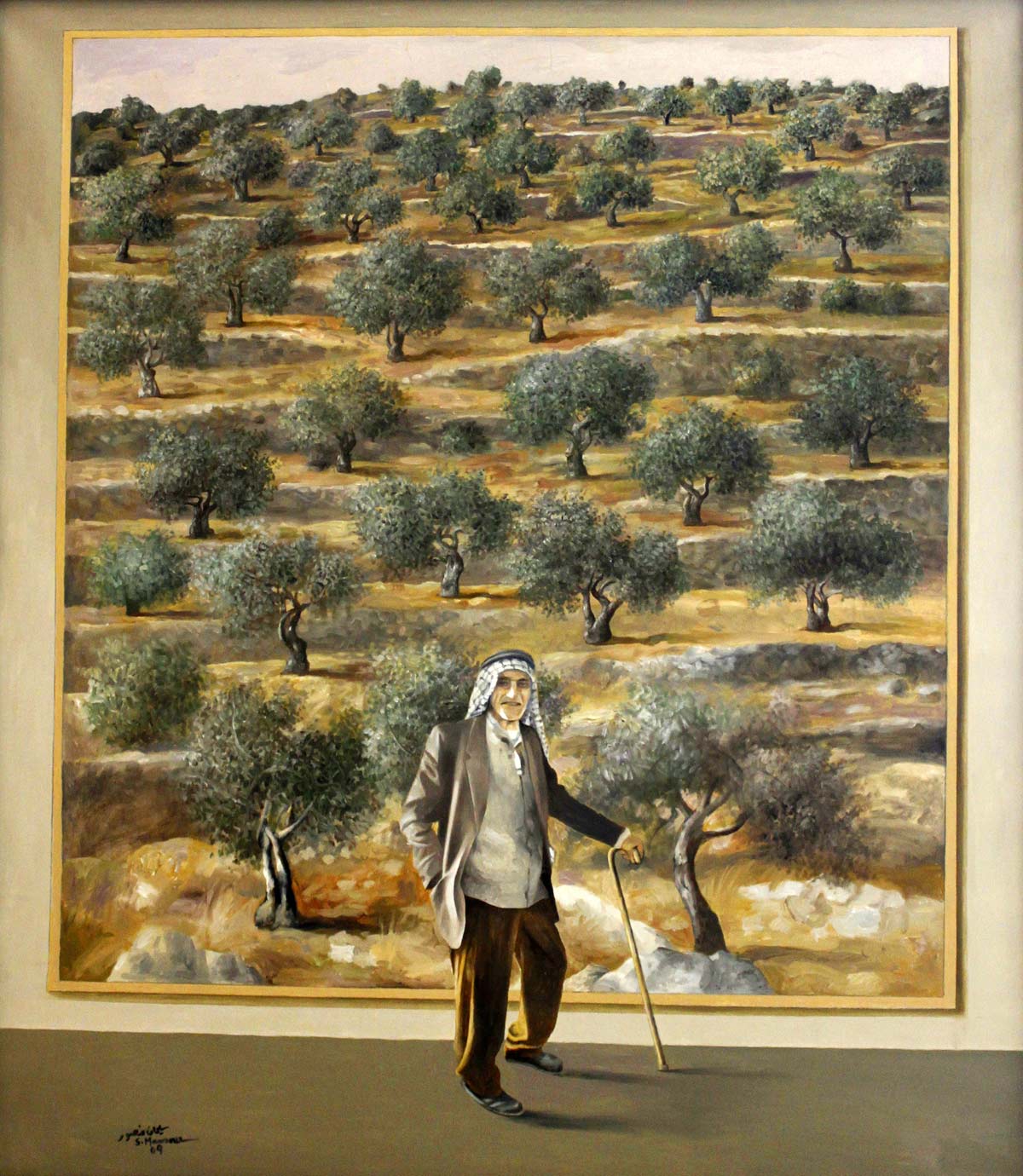 #49
#49
Memory of places
Suleiman Mansour inscribes Memory of Places in a history of painting linked to Palestine. Palestinian painting makes territory, memory and the figure places of visual resistance. The place is not a simple setting: plans, horizons, architecture and color relationships organize the circulation of the gaze. The territory becomes a mental form as much as a space observed. The Barjeel Art Foundation notice presents the work as undating specified in the online notice, made in oil on canvas. Its place in this classification is due to this ability to connect a situated experience to a broader history of modern painting. The link associated with the image opens the institutional notice, where the original title, dating, technique and collection data can be viewed.
Image: Barjeel Art Foundation · Documentary use; rights with the institution.
See the institution's notice →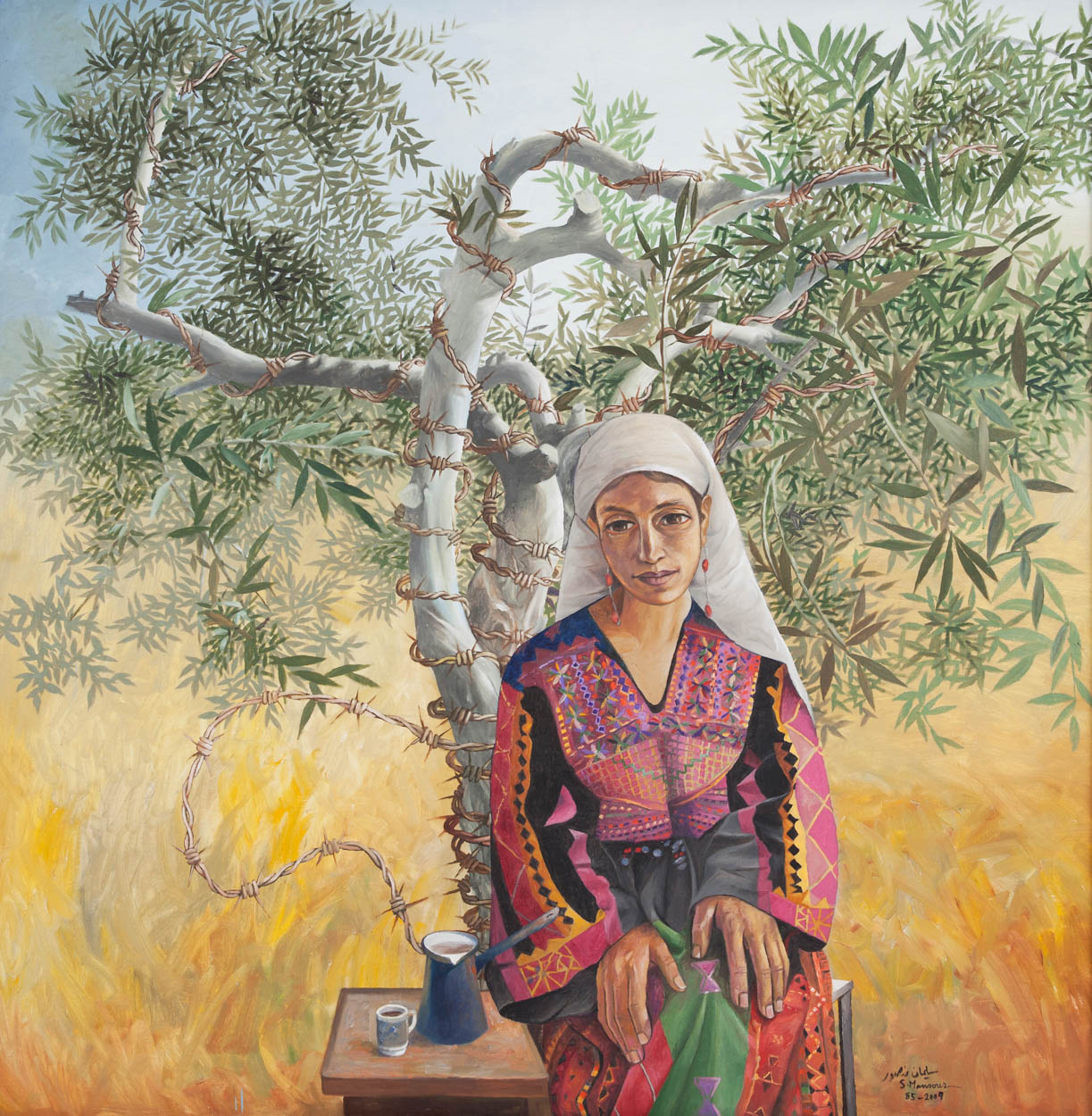 #50
#50
Quiet morning
Suleiman Mansour places Morning Calm in a history of painting linked to Palestine. Palestinian painting makes territory, memory and the figure places of visual resistance. The place is not a simple setting: plans, horizons, architecture and color relationships organize the circulation of the gaze. The territory becomes a mental form as much as an observed space. The Barjeel Art Foundation notice presents the work as without dating specified in the online notice, made in oil on canvas. The work thus becomes a benchmark for understanding how regional modernities were constituted without following a single model. The French title makes it easier to read the route, while the source keeps the original information and conditions use of image. Digital reproduction makes it possible to identify composition and palette; the real format and the material remain essential to fully measure the work.
Image: Barjeel Art Foundation · Documentary use; rights with the institution.
See the institution's notice →From the Maghreb to Sudan, the painted surface accommodates geometries, calligraphy and new materials.
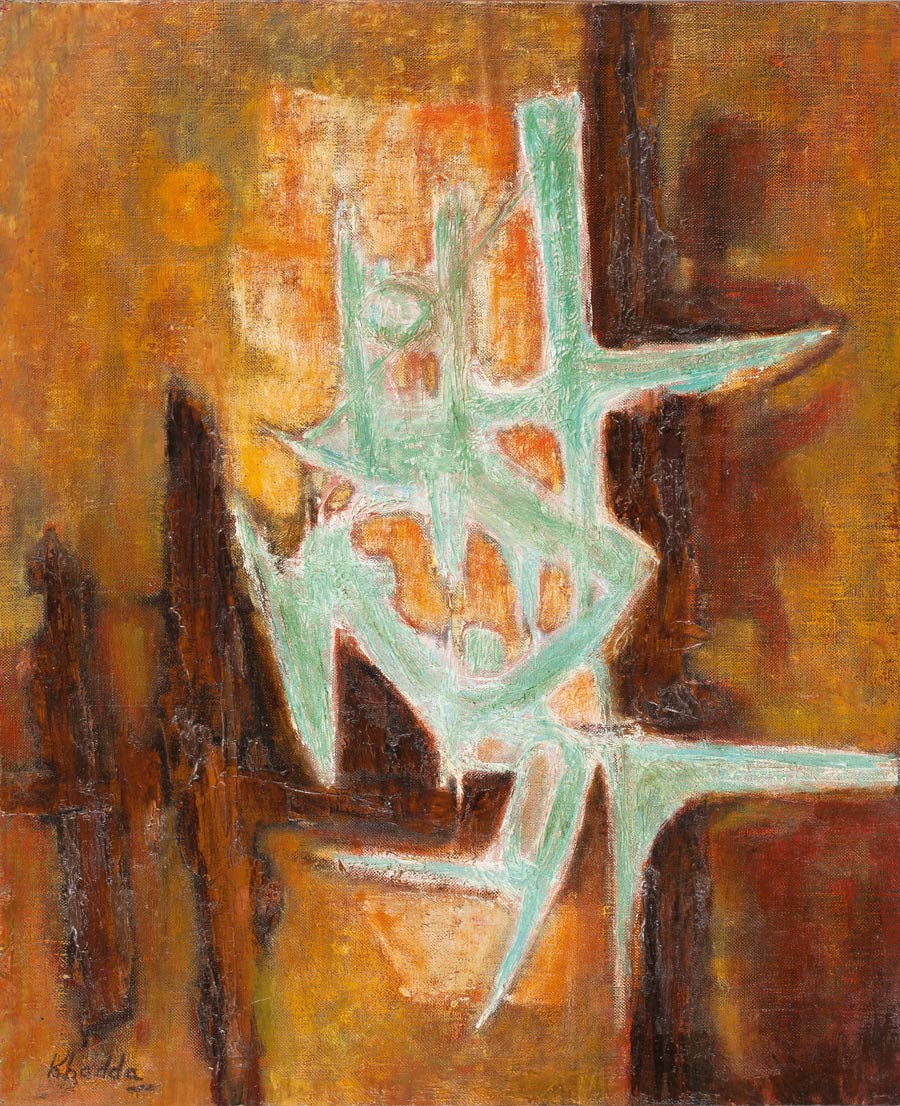 #51
#51
Green abstraction
Mohammed Khadda places Green Abstraction in a history of painting linked to Algeria. In Algeria, modern painting moves the landscape, the sign and the figure beyond colonial frameworks. The surface is ordered by masses, intervals, signs and superpositions. Color does not fill a pre-existing form: it constructs the depth, rhythm and very balance of the painting. THERE barjeel Art Foundation Notice presents the work as dated 1969, made in oil on canvas. Digital reproduction makes it possible to identify composition and palette; the actual format and material remain essential to fully measure the work. The link associated with the image opens the institutional notice, where the original title, dating, technique and collection data can be consulted.
Image: Barjeel Art Foundation · Documentary use; rights with the institution.
See the institution's notice →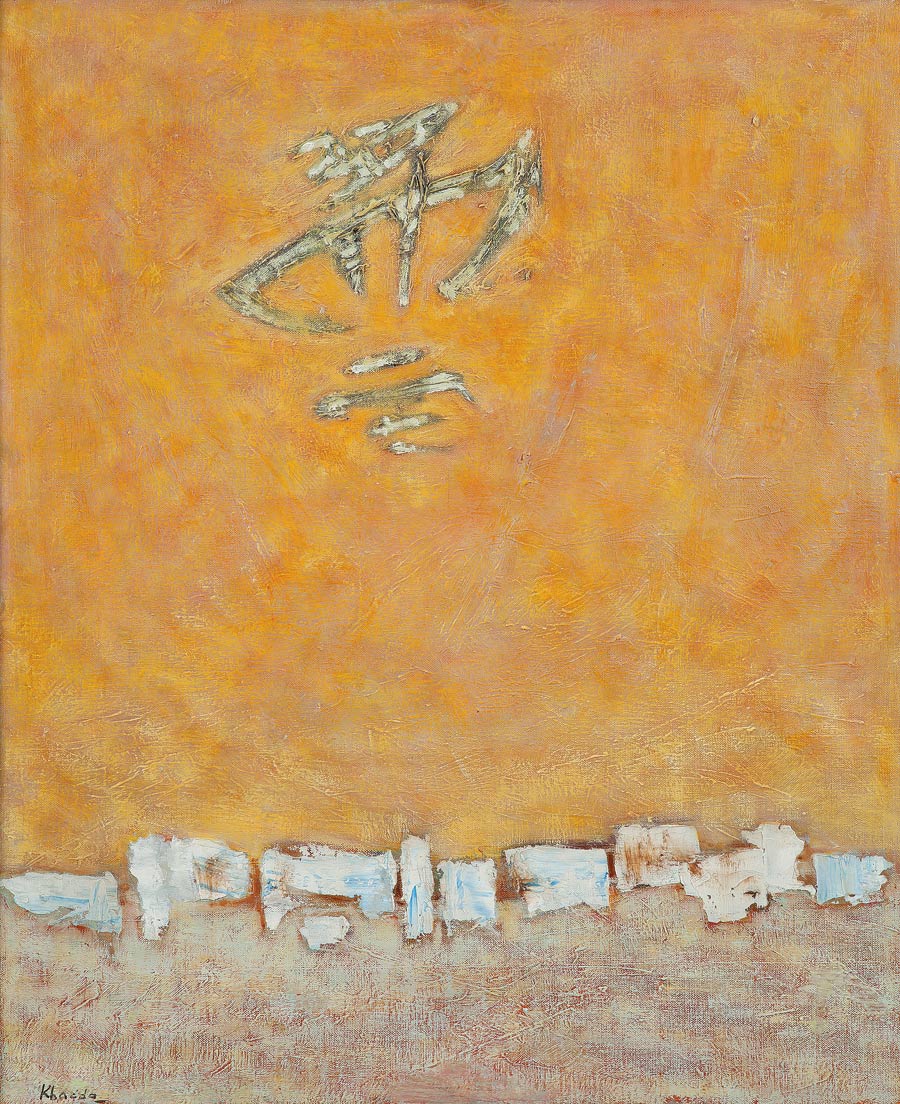 #52
#52
Green abstraction on orange background
Mohammed Khadda inscribes Green Abstraction on an orange background in a history of painting linked to Algeria. In Algeria, modern painting moves the landscape, the sign and the figure beyond colonial frameworks. The surface is ordered by masses, intervals, signs and superpositions. Color does not fill a pre-existing form: it constructs depth, rhythm and even balance from the painting. The Barjeel Art Foundation notice presents the work as without dating specified in the online notice, made in oil on canvas 73 x 60 cm. The painting counts here for its own invention as much as for the artistic and political memory that it makes visible. The link associated with the image opens the institutional notice, where the original title, dating, technique and collection data can be viewed.
Image: Barjeel Art Foundation · Documentary use; rights with the institution.
See the institution's notice → #53
#53
Southern Light
Abdallah Benanteur places Light of the South in a history of painting linked to Algeria. In Algeria, modern painting moves the landscape, the sign and the figure beyond colonial frameworks. The subject remains immediately recognizable, but the essential is played out in the agreement between scale, color, material and rhythm. The painting thus transforms a scene or a symbol into a proposition autonomous pictorial. The Barjeel Art Foundation notice presents the work as dated 1960, made in oil on cardboard. Its place in this ranking is due to this ability to link a situated experience to a broader history of modern painting. The French title makes the route easier to read, while the source retains the original information and conditions of use the picture. Digital reproduction makes it possible to identify composition and palette; the real format and the material remain essential to fully measure the work.
Image: Barjeel Art Foundation · Documentary use; rights with the institution.
See the institution's notice → #54
#54
The Saadi Garden
Abdallah Benanteur places The Garden of Saadi in a history of painting linked to Algeria. In Algeria, modern painting moves the landscape, the sign and the figure beyond colonial frameworks. The place is not a simple setting: plans, horizons, architecture and color relationships organize the circulation of the gaze. The territory becomes a mental form as much as an observed space. The Barjeel Art Foundation notice presents the work as dated 1984, made in oil on canvas. The work thus becomes a benchmark for understanding how regional modernities were constituted without following a single model. Digital reproduction makes it possible to identify composition and palette; the real format and material remain essential to fully measure the work. The link associated with the image opens the institutional notice, where the original title, dating, technique and collection data can be viewed.
Image: Barjeel Art Foundation · Documentary use; rights with the institution.
See the institution's notice → #55
#55
Dream
Abdel Kader Guermaz places Dream in a history of painting linked to Algeria. In Algeria, modern painting moves the landscape, the sign and the figure beyond colonial frameworks. The subject remains immediately recognizable, but the essential is played out in the agreement between scale, color, material and rhythm. The painting thus transforms a scene or a symbol into a pictorial proposition autonomous. The Barjeel Art Foundation notice presents the work as dated 1975, made in oil on canvas. The link associated with the image opens the institutional notice, where the original title, dating, technique and collection data can be viewed. The French title makes the route easier to read, while the source keeps the original information and conditions image usage.
Image: Barjeel Art Foundation · Documentary use; rights with the institution.
See the institution's notice →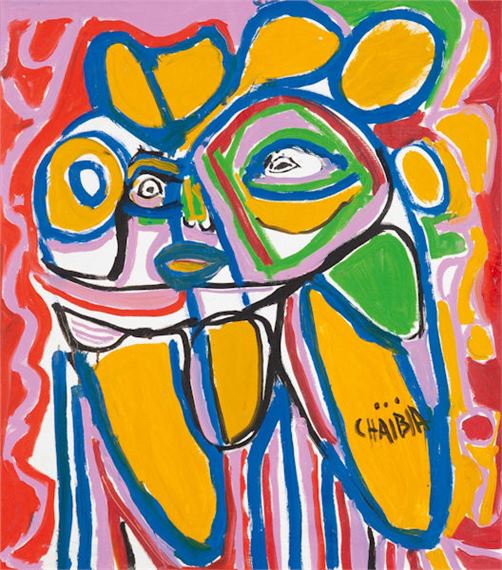 #56
#56
The Storyteller
Chaïbia Talal places The Storyteller in a history of painting linked to Morocco. Moroccan modernity links material, sign, popular culture and autonomy of the painted surface. The subject remains immediately recognizable, but the essential is played out in the agreement between scale, color, material and rhythm. The painting thus transforms a scene or a symbol into an autonomous pictorial proposition. There barjeel Art Foundation Notice presents the work as dated 1988, made in oil on canvas. The painting counts here for its own invention as much as for the artistic and political memory it makes visible. The French title makes the route easier to read, while the source preserves the original information and the conditions of use of the image. Digital reproduction allows you to identify composition and palette; the actual format and material remain essential to fully measure the work.
Image: Barjeel Art Foundation · Documentary use; rights with the institution.
See the institution's notice →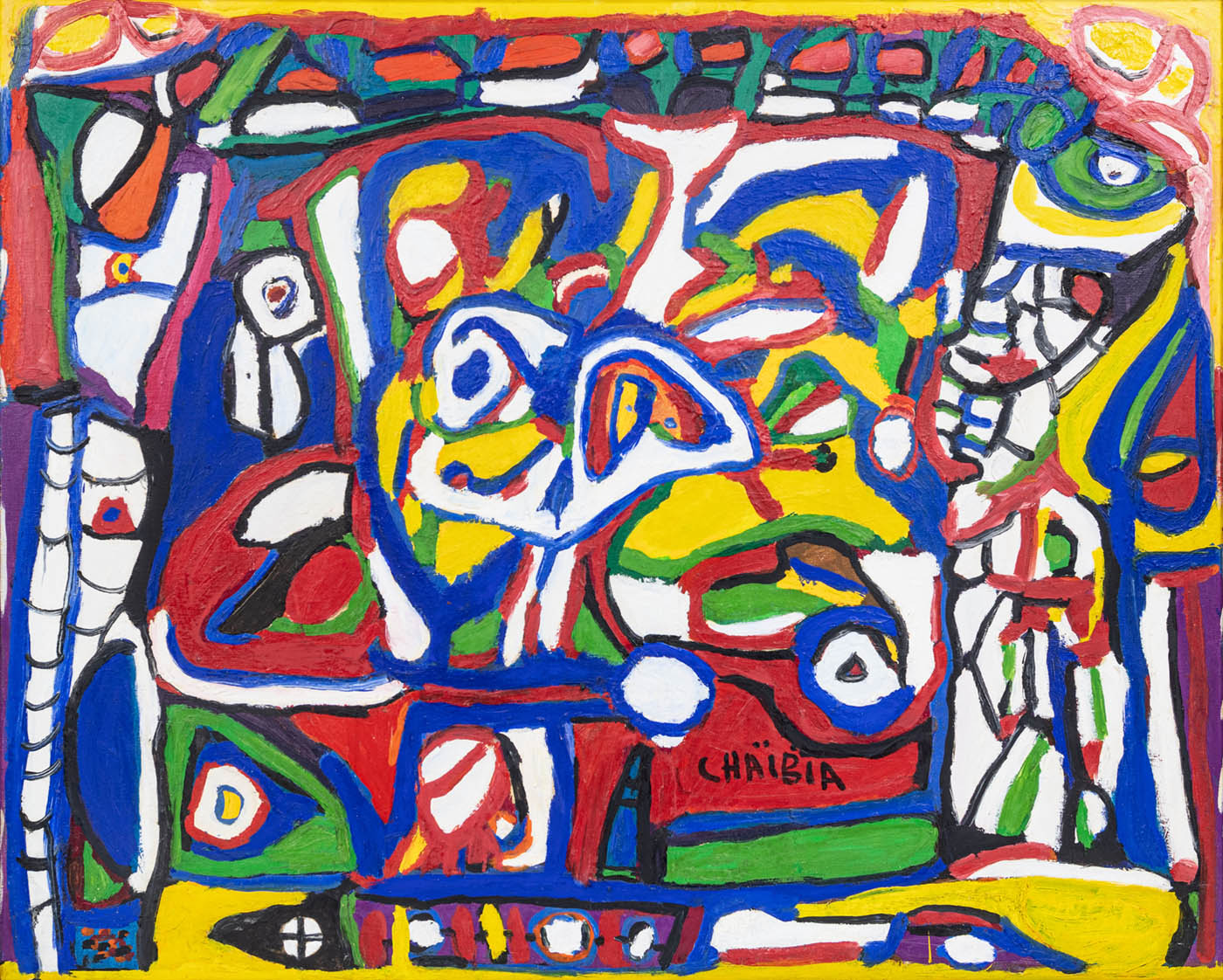 #57
#57
August
Chaïbia Talal places August in a history of painting linked to Morocco. Moroccan modernity links material, sign, popular culture and autonomy of the painted surface. The subject remains immediately recognizable, but the essential is played out in the agreement between scale, color, material and rhythm. The painting thus transforms a scene or a symbol into an autonomous pictorial proposition. There barjeel Art Foundation Notice presents the work as dated 1969, made in oil on canvas. Its place in this classification is due to this ability to connect a situated experience to a broader history of modern painting. Digital reproduction makes it possible to identify composition and palette; the real format and material remain essential to fully measure the work. The link associated with the image opens the institutional notice, where the original title, dating, technique and collection data can be viewed.
Image: Barjeel Art Foundation · Documentary use; rights with the institution.
See the institution's notice → #58
#58
Rif Women's Orchestra
Meriem Meziane inscribes Rif Women's Orchestra in a history of painting linked to Morocco. Moroccan modernity links material, sign, popular culture and autonomy of the painted surface. The figure is constructed by framing, posture and tension between the body and the background. The portrait thus goes beyond resemblance to become a study of presence, memory and position social. The Barjeel Art Foundation notice presents the work as dated c. 1969, made in oil on canvas. The work thus becomes a benchmark for understanding how regional modernities were constituted without following a single model. The link associated with the image opens the institutional notice, where the original title, dating, technique and collection data can be consulted. The French title makes the route easier to read, while the source retains the original information and conditions of use of the image.
Image: Barjeel Art Foundation · Documentary use; rights with the institution.
See the institution's notice → #59
#59
Nejia and Saida
Safia Farhat places Nejia and Saida in a history of painting linked to Tunisia. Tunisian painting confronts daily scene, territory and experimentation with color. The subject remains immediately recognizable, but the essential is played out in the agreement between scale, color, material and rhythm. The painting thus transforms a scene or a symbol into a pictorial proposition autonomous. The Barjeel Art Foundation notice presents the work as dated early 1960s, made of acrylic on canvas. The French title makes the route easier to read, while the source retains the original information and the conditions of use of the image. Digital reproduction makes it possible to identify composition and palette; the real format and material remain essential to fully measure the work.
Image: Barjeel Art Foundation · Documentary use; rights with the institution.
See the institution's notice → #60
#60
Fertile plain
Hedi Turki places Fertile Plain in a history of painting linked to Tunisia. Tunisian painting confronts daily scene, territory and experimentation with color. The place is not a simple setting: plans, horizons, architecture and color relationships organize the circulation of the gaze. The territory becomes a mental form as much as an observed space. The notice of Barjeel Art Foundation presents the work as dated 1990, made of acrylic on board. Painting counts here for its own invention as much as for the artistic and political memory it makes visible. Digital reproduction makes it possible to identify composition and palette; the real format and material remain essential to fully measure the work. The link associated with the image opens the institutional record, where the original title, dating, technique and collection data can be viewed.
Image: Barjeel Art Foundation · Documentary use; rights with the institution.
See the institution's notice → #61
#61
Self-portrait, series 6 ×
Rafik El Kamel inscribes Self-portrait, series 6 × in a history of painting linked to Tunisia. Tunisian painting confronts daily scene, territory and experimentation with color. The figure is constructed by framing, posture and the tension between the body and the background. The portrait thus goes beyond resemblance to become a study of presence, memory and position social. The Barjeel Art Foundation notice presents the work as dated 1987, made of acrylic on canvas. Its place in this classification lies in this ability to connect a situated experience to a broader history of modern painting. The link associated with the image opens the institutional notice, where the original title, dating, technique and collection data can be consulted. The French title makes the route easier to read, while the source retains the original information and conditions of use of the image.
Image: Barjeel Art Foundation · Documentary use; rights with the institution.
See the institution's notice → #62
#62
Berber village
Shasha Guiga places Berber Village in a history of painting linked to Tunisia. Tunisian painting confronts daily scene, territory and experimentation with color. The place is not a simple setting: plans, horizons, architecture and color relationships organize the circulation of the gaze. The territory becomes a mental form as much as an observed space. The notice of Barjeel Art Foundation presents the work as dated 1967, made of oil on wood. The work thus becomes a benchmark for understanding how regional modernities were constituted without following a single model. The French title makes the route easier to read, while the source preserves the original information and the conditions of use of the image. Digital reproduction allows you to identify composition and palette; the actual format and material remain essential to fully measure the work.
Image: Barjeel Art Foundation · Documentary use; rights with the institution.
See the institution's notice → #63
#63
The fighter
Al Taher Al Maghrabi places The Fighter in a history of painting linked to Libya. This work contributes to a regional modernity made up of circulations, ruptures and reinterpretations. The subject remains immediately recognizable, but the essential is played out in the agreement between scale, color, material and rhythm. The painting thus transforms a scene or a symbol into a proposition autonomous pictorial. The Barjeel Art Foundation notice presents the work as dated 1990, made in oil on canvas. Digital reproduction makes it possible to identify composition and palette; the actual format and material remain essential to fully measure the work. The link associated with the image opens the institutional notice, where the original title, dating, technique and data collectible can be viewed.
Image: Barjeel Art Foundation · Documentary use; rights with the institution.
See the institution's notice → #64
#64
Henna night
Massoud Al Barouni places Henna Night in a history of painting linked to Libya. This work contributes to a regional modernity made up of circulations, ruptures and reinterpretations. The subject remains immediately recognizable, but the essential is played out in the agreement between scale, color, material and rhythm. The painting thus transforms a scene or a symbol into a proposition autonomous pictorial. The Barjeel Art Foundation notice presents the work as dated 1960, made of oil on wood. Painting counts here for its own invention as much as for the artistic and political memory it makes visible. The link associated with the image opens the institutional notice, where the original title, dating, technique and collection data can be consulted. The French title makes the route easier to read, while the source retains the original information and conditions of use of the image.
Image: Barjeel Art Foundation · Documentary use; rights with the institution.
See the institution's notice →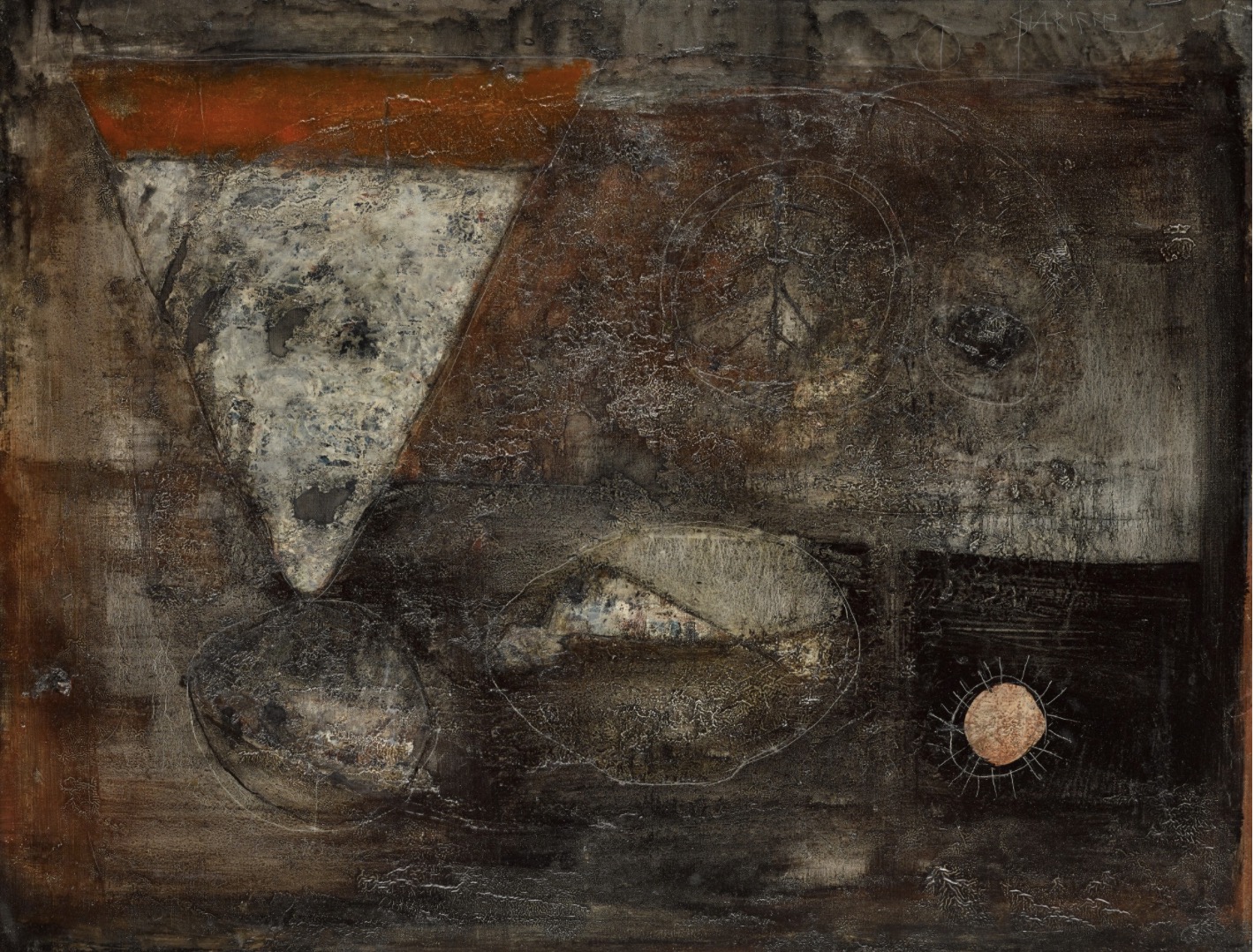 #65
#65
Moons and overturned mountain
Hussein Shariffe inscribes Moons and Upset Mountains in a history of painting linked to Sudan. The Sudanese school combines sign, spirituality, color and experiences of African and Arab modernity. The place is not a simple setting: plans, horizons, architecture and color relationships organize the circulation of the gaze. The territory becomes a mental form as much as a space observed. The Barjeel Art Foundation notice presents the work as undated specified in the online notice, made in oil on canvas. Its place in this classification is due to this ability to link a situated experience to a broader history of modern painting. The French title makes the route easier to read, while the source keeps the original information and image Terms of Use. Digital reproduction helps identify composition and palette; the real format and material remain essential to fully measure the work.
Image: Barjeel Art Foundation · Documentary use; rights with the institution.
See the institution's notice → #66
#66
North of the North Wind
Hussein Shariffe inscribes North of the North Wind in a history of painting linked to Sudan. The Sudanese school combines sign, spirituality, color and experiences of African and Arab modernity. The subject remains immediately recognizable, but the essential is played out in the agreement between scale, color, material and rhythm. The painting thus transforms a scene or a symbol into autonomous pictorial proposal. The Barjeel Art Foundation notice presents the work as dated 1960, made in oil on canvas. The work thus becomes a benchmark for understanding how regional modernities were constituted without following a single model. Digital reproduction makes it possible to identify composition and palette; the real format and the material remain essential for measuring fully the work. The link associated with the image opens the institutional notice, where the original title, dating, technique and collection data can be viewed.
Image: Barjeel Art Foundation · Documentary use; rights with the institution.
See the institution's notice →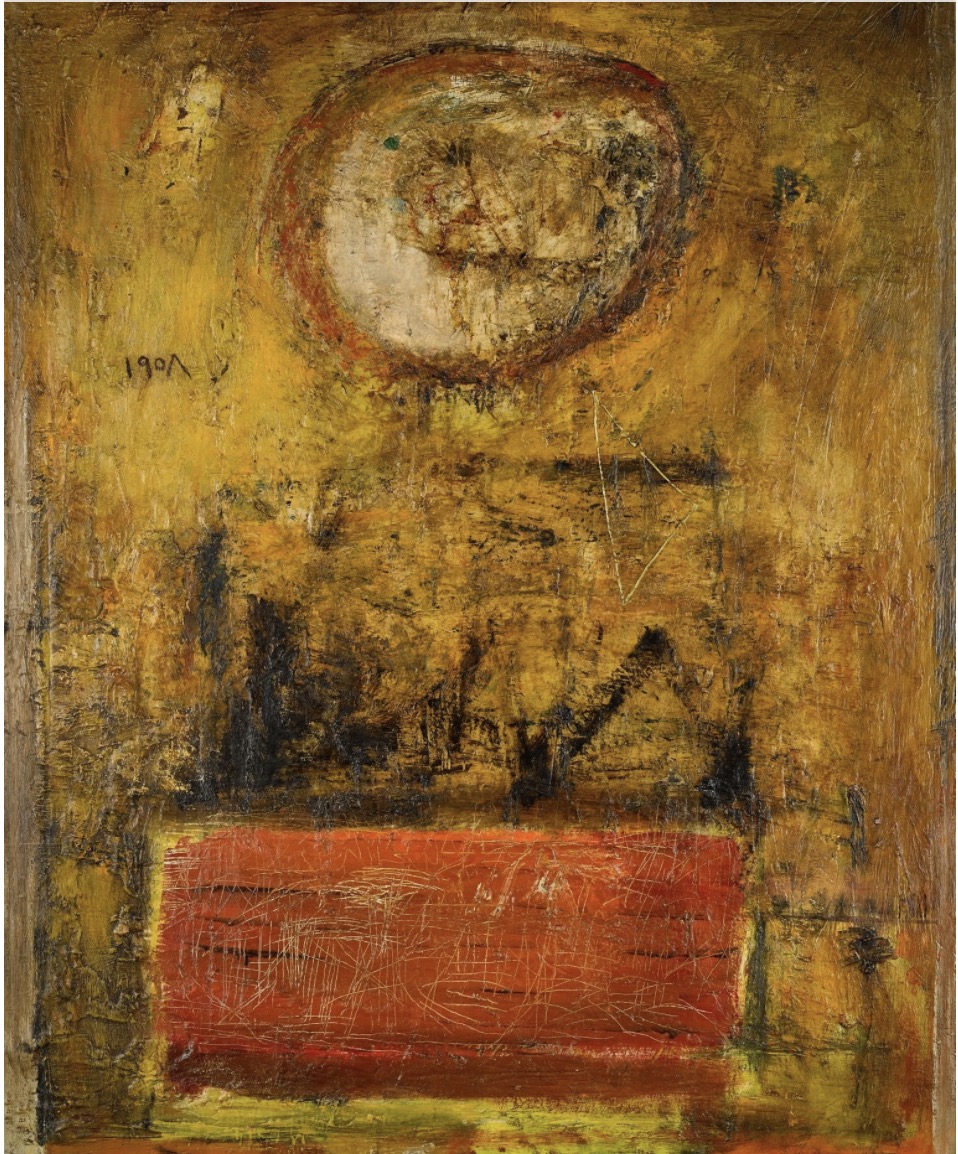 #67
#67
Big Red
Hussein Shariffe places Grand Rouge in a history of painting linked to Sudan. The Sudanese school combines sign, spirituality, color and experiences of African and Arab modernity. The surface is ordered by masses, intervals, signs and superpositions. Color does not fill a pre-existing form: it constructs the depth, rhythm and very balance of the painting. THERE barjeel Art Foundation Notice presents the work as dated 1958, made in oil on canvas. The link associated with the image opens the institutional notice, where the original title, dating, technique and collection data can be viewed. The French title makes the route easier to read, while the source keeps the original information and conditions of use from the picture.
Image: Barjeel Art Foundation · Documentary use; rights with the institution.
See the institution's notice → #68
#68
Tribute to Paolo Uccello
Mohammed Omar Khalil places Homage to Paolo Uccello in a history of painting linked to Sudan. The Sudanese school combines sign, spirituality, color and experiences of African and Arab modernity. The subject remains immediately recognizable, but the essential is played out in the agreement between scale, color, material and rhythm. The painting thus transforms a scene or a symbol into autonomous pictorial proposal. The Barjeel Art Foundation notice presents the work as dated 1966, made in oil on canvas. The painting counts here for its own invention as much as for the artistic and political memory that it makes visible. The French title makes the route easier to read, while the source preserves the original information and the conditions of use of the picture. Digital reproduction makes it possible to identify composition and palette; the real format and the material remain essential to fully measure the work.
Image: Barjeel Art Foundation · Documentary use; rights with the institution.
See the institution's notice →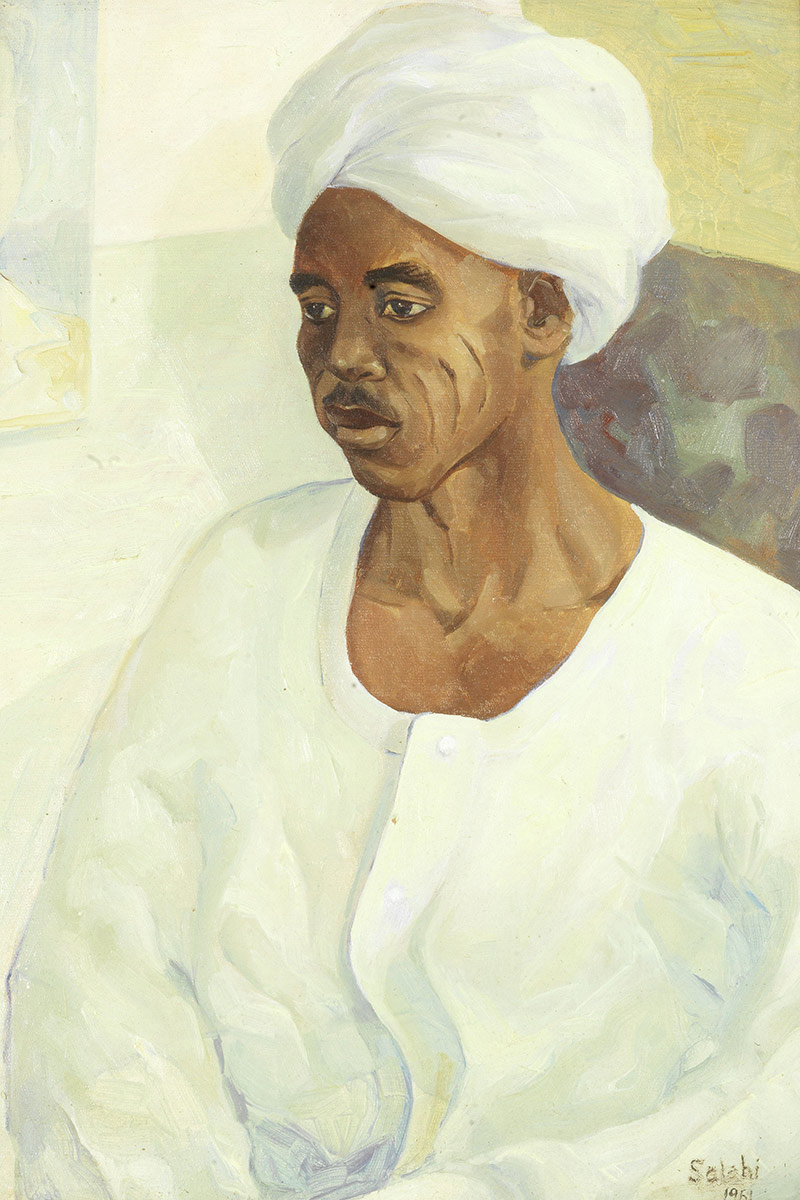 #69
#69
Portrait of a Sudanese gentleman
Ibrahim El-Salahi inscribes Portrait of a Sudanese Gentleman in a history of painting linked to Sudan. The Sudanese school combines sign, spirituality, color and experiences of African and Arab modernity. The figure is constructed by framing, posture and tension between the body and the background. The portrait thus goes beyond resemblance to become a study of presence, of memory and social position. The Barjeel Art Foundation notice presents the work as without dating specified in the online notice, made in oil on panel. Its place in this classification is due to this ability to link a situated experience to a broader history of modern painting. Digital reproduction makes it possible to identify composition and palette; the real format and the material remains essential to fully measure the work.
Image: Barjeel Art Foundation · Documentary use; rights with the institution.
See the institution's notice →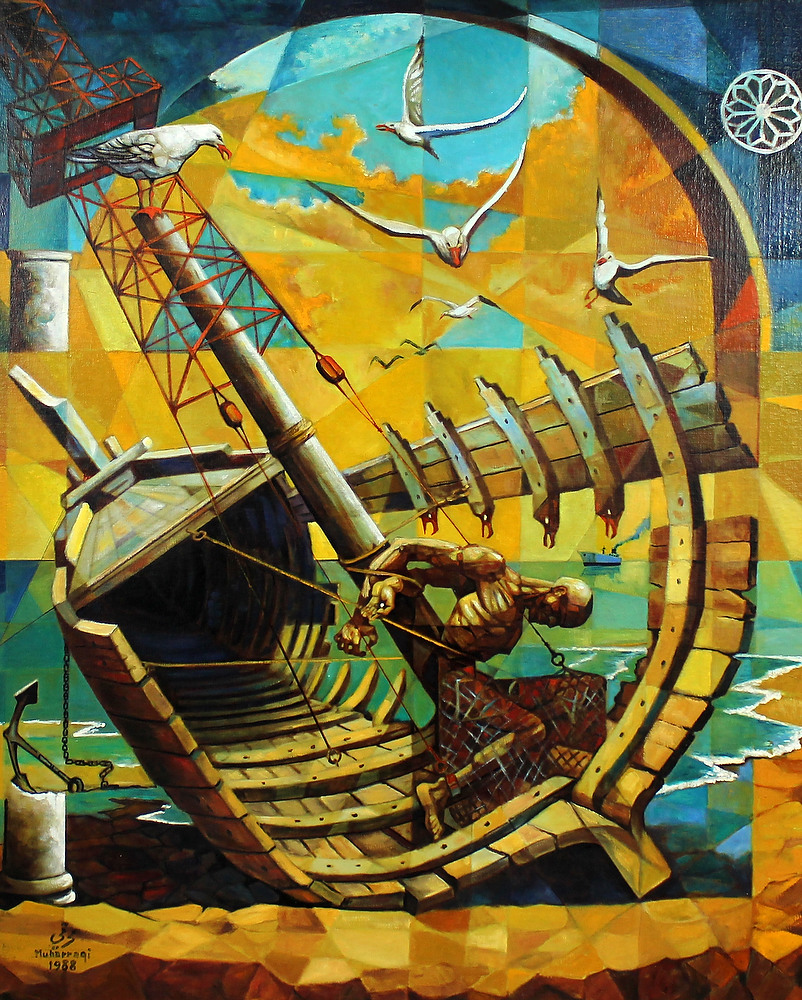 #70
#70
Eternal torment
Abdullah Al Muharraqi inscribes Eternal Torment in a history of painting linked to Bahrain. This work contributes to a regional modernity made up of circulations, ruptures and reinterpretations. The subject remains immediately recognizable, but the essential is played out in the agreement between scale, color, material and rhythm. The painting thus transforms a scene or a symbol into autonomous pictorial proposal. The Barjeel Art Foundation notice presents the work as dated 1988, made in oil on canvas mounted on panel. The work thus becomes a benchmark for understanding how regional modernities were constituted without following a single model. The link associated with the image opens the institutional notice, where the original title, dating, technique and collection data can be viewed. The French title makes the route easier to read, while the source keeps the original information and conditions of use of the image.
Image: Barjeel Art Foundation · Documentary use; rights with the institution.
See the institution's notice →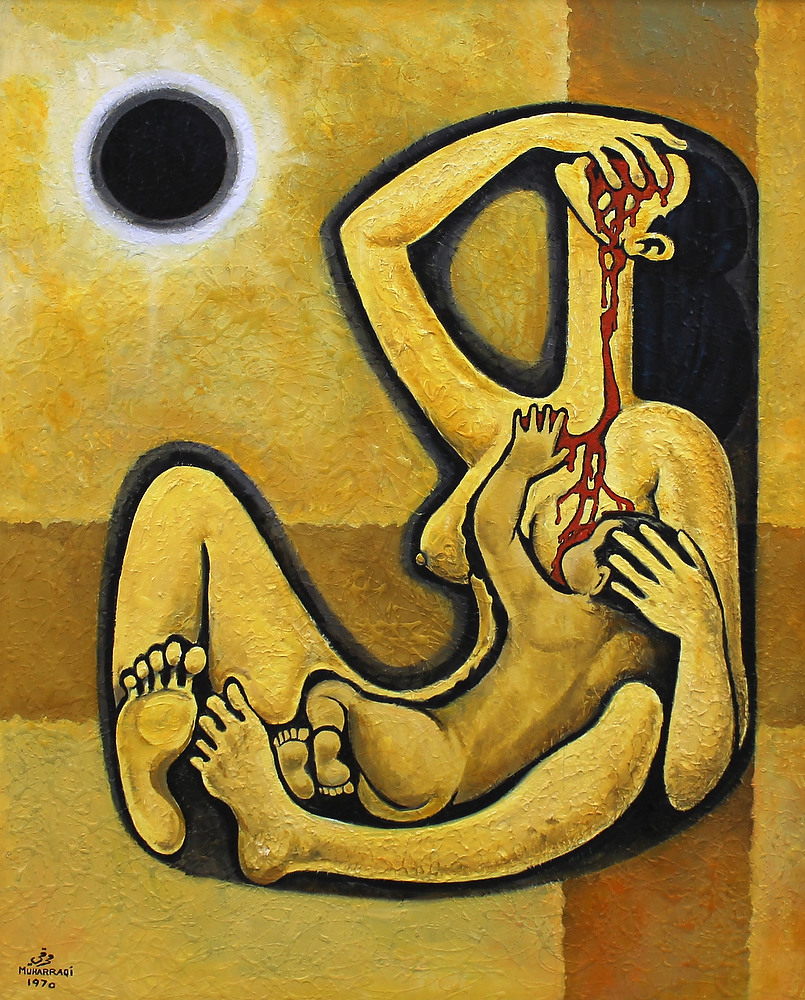 #71
#71
War generation
Abdullah Al Muharraqi places War Generation in a history of painting linked to Bahrain. This work contributes to a regional modernity made up of circulations, ruptures and reinterpretations. The subject remains immediately recognizable, but the essential is played out in the agreement between scale, color, material and rhythm. The painting thus transforms a scene or a symbol into autonomous pictorial proposal. The Barjeel Art Foundation notice presents the work as without dating specified in the online notice, made in oil on canvas. The French title makes it easier to read the route, while the source retains the original information and the conditions of use of the image. Digital reproduction makes it possible to identify composition and palette; THE actual format and material remain essential to fully measure the work.
Image: Barjeel Art Foundation · Documentary use; rights with the institution.
See the institution's notice → #72
#72
The bride
Nasser Al Yousif places The Bride in a history of painting linked to Bahrain. This work contributes to a regional modernity made up of circulations, ruptures and reinterpretations. The figure is constructed by framing, posture and tension between the body and the background. The portrait thus goes beyond resemblance to become a study of presence, memory and position social. The Barjeel Art Foundation notice presents the work as dated 1979, made in Nasser al Yousif. Painting counts here for its own invention as much as for the artistic and political memory it makes visible. Digital reproduction makes it possible to identify composition and palette; the real format and material remain essential to fully measure the work. The link associated with the image opens the institutional notice, where the original title, dating, technique and collection data can be viewed.
Image: Barjeel Art Foundation · Documentary use; rights with the institution.
See the institution's notice →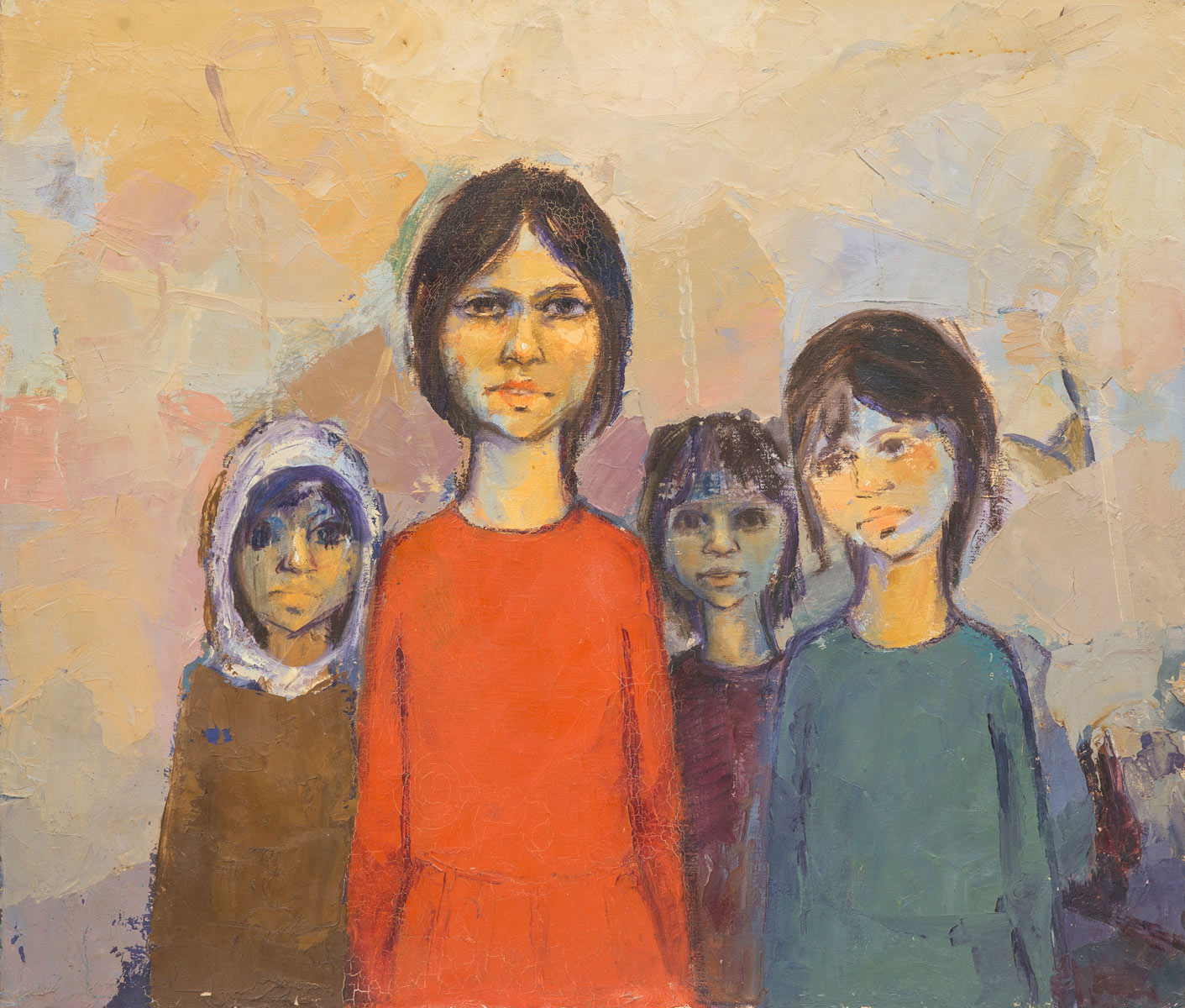 #73
#73
The Waiting
Abdul Qader Al Rais places Waiting in a history of painting linked to the United Arab Emirates. In the Emirates, pioneers move from landscape and figure to research on sign and material. The subject remains immediately recognizable, but the essential is played out in the agreement between scale, color, material and rhythm. The painting thus transforms a scene or a symbol into autonomous pictorial proposal. The Barjeel Art Foundation notice presents the work as dated c. 1970, made in oil on canvas. Its place in this classification is due to this ability to connect a situated experience to a broader history of modern painting. The link associated with the image opens the institutional notice, where the original title, dating, technique and data of collection can be viewed.
Image: Barjeel Art Foundation · Documentary use; rights with the institution.
See the institution's notice →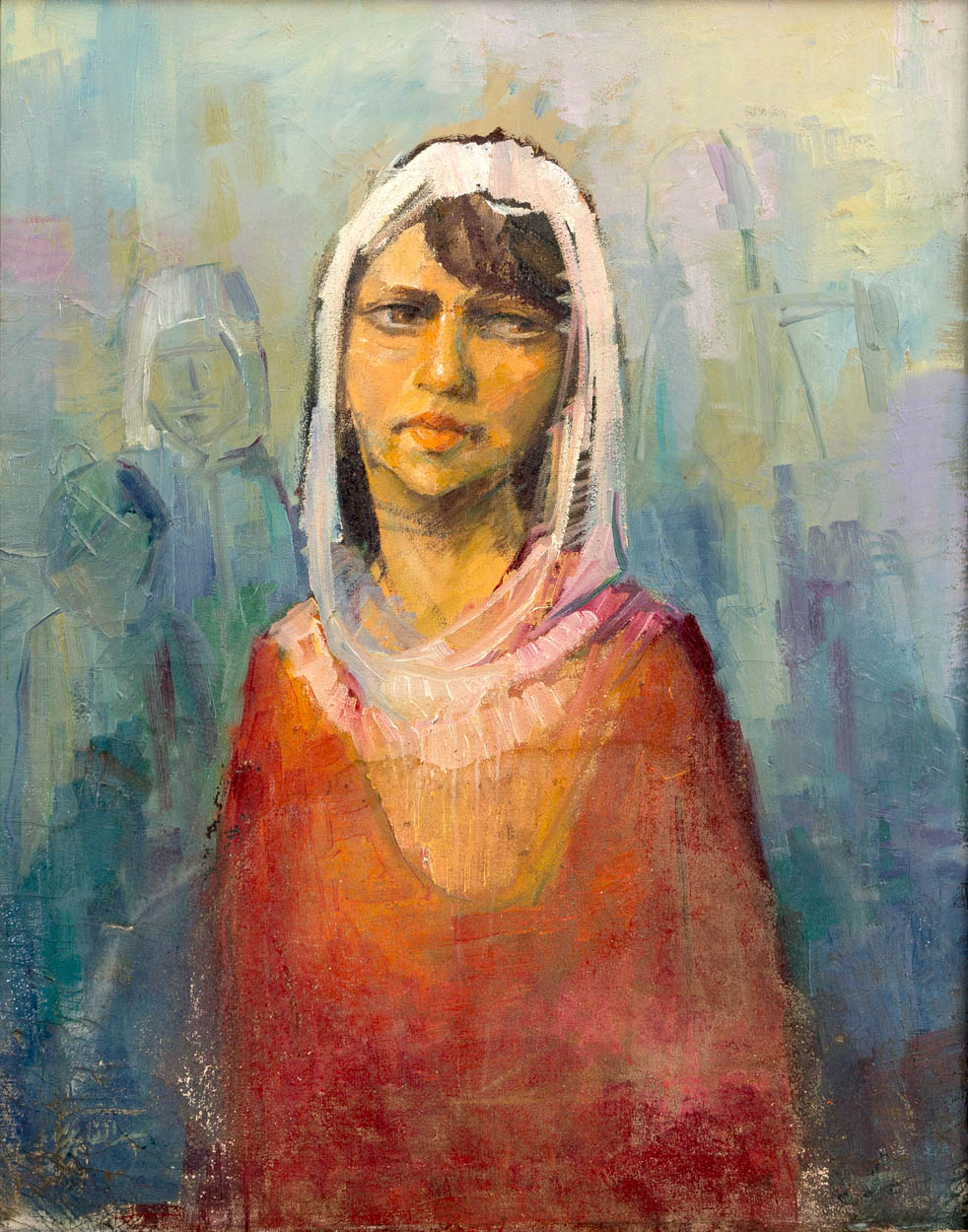 #74
#74
Hope
Abdul Qader Al Rais inscribes Hope in a history of painting linked to the United Arab Emirates. In the Emirates, pioneers move from landscape and figure to research on sign and material. The subject remains immediately recognizable, but the essential is played out in the agreement between scale, color, material and rhythm. The painting thus transforms a scene or symbol into autonomous pictorial proposal. The Barjeel Art Foundation notice presents the work as without dating specified in the online notice, made in oil on canvas. The work thus becomes a benchmark for understanding how regional modernities were constituted without following a single model. The French title makes it easier to read the route, while the source keeps the information originals and terms of use of the image.
Image: Barjeel Art Foundation · Documentary use; rights with the institution.
See the institution's notice →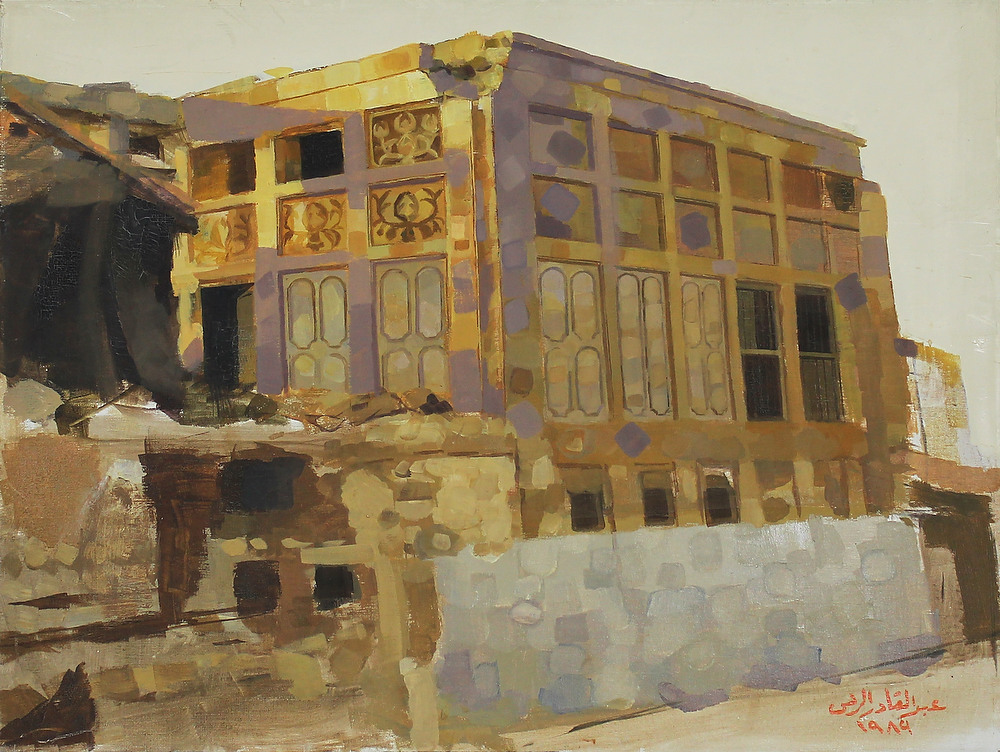 #75
#75
Decline
Abdul Qader Al Rais inscribes Decline in a history of painting linked to the United Arab Emirates. In the Emirates, pioneers move from landscape and figure to research on sign and material. The subject remains immediately recognizable, but the essential is played out in the agreement between scale, color, material and rhythm. The painting thus transforms a scene or symbol into autonomous pictorial proposal. The Barjeel Art Foundation notice presents the work as dated 1989, made in oil on canvas. Digital reproduction makes it possible to identify composition and palette; the actual format and material remain essential to fully measure the work. The link associated with the image opens the institutional notice, where the original title, dating, technique and collection data can be viewed.
Image: Barjeel Art Foundation · Documentary use; rights with the institution.
See the institution's notice →Gulf schools and regional circulations broaden the story to contemporary practices.
 #76
#76
Black and white
Hassan Sharif inscribes Black and White in a history of painting linked to the United Arab Emirates. In the Emirates, pioneers move from landscape and figure to research on sign and material. The surface is ordered by masses, intervals, signs and superpositions. Color does not fill a pre-existing form: it constructs the depth, rhythm and very balance of painting. The Barjeel Art Foundation notice presents the work as dated 1985, made in oil on canvas. The painting counts here for its own invention as much as for the artistic and political memory it makes visible. The link associated with the image opens the institutional notice, where the original title, dating, technique and collection data can be viewed. THE french title makes the route easier to read, while the source keeps the original information and conditions of use of the image.
Image: Barjeel Art Foundation · Documentary use; rights with the institution.
See the institution's notice → #77
#77
Untitled
Najat Maki inscribes Untitled in a history of painting linked to the United Arab Emirates. In the Emirates, pioneers move from landscape and figure to research on sign and material. The subject remains immediately recognizable, but the essential is played out in the agreement between scale, color, material and rhythm. The painting thus transforms a scene or a symbol into a proposition autonomous pictorial. The Barjeel Art Foundation notice presents the work as dated 2015, made in acrylic on canvas. Its place in this ranking is due to this ability to link a situated experience to a broader history of modern painting. The French title makes the route easier to read, while the source retains the original information and conditions of use from the image. Digital reproduction makes it possible to identify composition and palette; the real format and the material remain essential to fully measure the work.
Image: Barjeel Art Foundation · Documentary use; rights with the institution.
See the institution's notice → #78
#78
Composition with fish
Abdulhalim Radwi places Composition aux Poissons in a history of painting linked to Saudi Arabia. This work participates in a regional modernity made of circulations, ruptures and reinterpretations. The surface is ordered by masses, intervals, signs and superpositions. Color does not fill a pre-existing form: it constructs depth, rhythm and balance even from the painting. The Barjeel Art Foundation notice presents the work as without dating specified in the online notice, made in oil and sand on masonite. The work thus becomes a benchmark for understanding how regional modernities were constituted without following a single model. Digital reproduction makes it possible to identify composition and palette; the real format and the material remain essential to fully measure the work. The link associated with the image opens the institutional notice, where the original title, dating, technique and collection data can be viewed.
Image: Barjeel Art Foundation · Documentary use; rights with the institution.
See the institution's notice →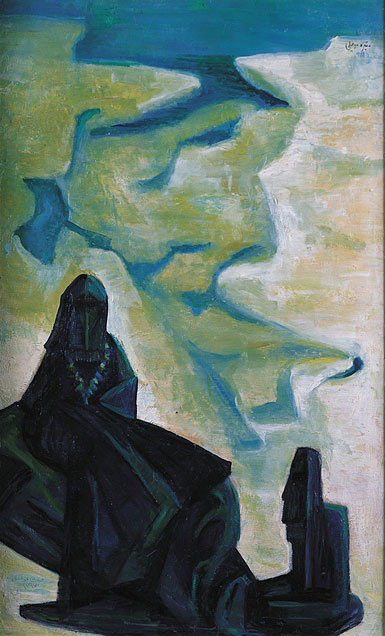 #79
#79
The Land of Solidarity
Mounirah Mosly places The Land of Solidities in a history of painting linked to Saudi Arabia. This work contributes to a regional modernity made up of circulations, ruptures and reinterpretations. The subject remains immediately recognizable, but the essential is played out in the agreement between scale, color, material and rhythm. The painting thus transforms a scene or a symbol into autonomous pictorial proposal. The Barjeel Art Foundation notice presents the work as dated 1970, made in oil on wood. The link associated with the image opens the institutional notice, where the original title, dating, technique and collection data can be consulted. The French title makes the route easier to read, while the source keeps the information originals and terms of use of the image.
Image: Barjeel Art Foundation · Documentary use; rights with the institution.
See the institution's notice → #80
#80
Faithful leaving the mosque
Abdulrahman Al Soliman inscribes Faithful leaving the mosque in a history of painting linked to Saudi Arabia. This work contributes to a regional modernity made up of circulations, ruptures and reinterpretations. The place is not a simple setting: plans, horizons, architecture and color relationships organize the circulation of the gaze. The territory becomes a mental form as much as an observed space. The Barjeel Art Foundation notice presents the work as dated 1981, made in oil on canvas. The painting counts here for its own invention as much as for the artistic and political memory that it makes visible. The French title makes the route easier to read, while the source preserves the original information and the conditions of use of the picture. Digital reproduction makes it possible to identify composition and palette; the real format and the material remain essential to fully measure the work.
Image: Barjeel Art Foundation · Documentary use; rights with the institution.
See the institution's notice → #81
#81
Pearl fishermen
Maryam Mohamed Abdulla Al-Hammadi places Pearl Fishers in a history of painting linked to Qatar. This work contributes to a regional modernity made up of circulations, ruptures and reinterpretations. The subject remains immediately recognizable, but the essential is played out in the agreement between scale, color, material and rhythm. The painting thus transforms a scene or a symbol as an autonomous pictorial proposal. The Barjeel Art Foundation notice presents the work as dated 1985, made in oil on canvas. Its place in this classification is due to this ability to link a situated experience to a broader history of modern painting. Digital reproduction makes it possible to identify composition and palette; the real format and material remain essential for fully measure the work. The link associated with the image opens the institutional record, where the original title, dating, technique and collection data can be viewed.
Image: Barjeel Art Foundation · Documentary use; rights with the institution.
See the institution's notice →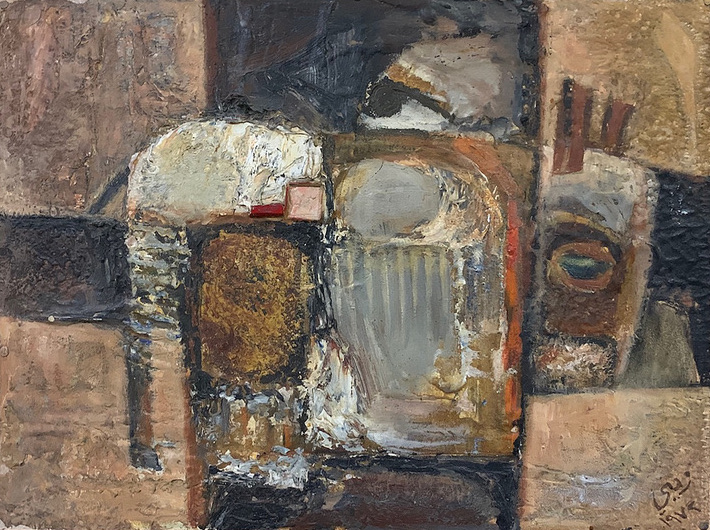 #82
#82
Untitled No. 13
Jassim Zaini inscribes Untitled No. 13 in a history of painting linked to Qatar. This work contributes to a regional modernity made up of circulations, ruptures and reinterpretations. The subject remains immediately recognizable, but the essential is played out in the agreement between scale, color, material and rhythm. The painting thus transforms a scene or a symbol into a proposition autonomous pictorial. The Barjeel Art Foundation notice presents the work as dated 1972, made of oil on fiberboard. The work thus becomes a benchmark for understanding how regional modernities were constituted without following a single model. The link associated with the image opens the institutional notice, where the original title, dating, technique and data of collection can be viewed. The French title makes the route easier to read, while the source keeps the original information and conditions of use of the image.
Image: Barjeel Art Foundation · Documentary use; rights with the institution.
See the institution's notice → #83
#83
Calligraphic abstraction
Wijdan places Calligraphic Abstraction in a history of painting linked to Jordan. This work participates in a regional modernity made of circulations, ruptures and reinterpretations. The surface is ordered by masses, intervals, signs and superpositions. Color does not fill a pre-existing form: it constructs the depth, rhythm and very balance of the painting. The Barjeel Art Foundation notice presents the work as dated 1971, made in oil on canvas. The French title makes the route easier to read, while the source preserves the original information and the conditions of use of the image. Digital reproduction makes it possible to identify composition and palette; the real format and material remain essential to fully measure the work.
Image: Barjeel Art Foundation · Documentary use; rights with the institution.
See the institution's notice → #84
#84
Transparency
Muhanna Durra places Transparency in a history of painting linked to Jordan. This work participates in a regional modernity made of circulations, ruptures and reinterpretations. The surface is ordered by masses, intervals, signs and superpositions. Color does not fill a pre-existing form: it constructs the depth, rhythm and very balance of the painting. THERE barjeel Art Foundation Notice presents the work as dated 1970, made in oil on canvas. The painting counts here for its own invention as much as for the artistic and political memory it makes visible. Digital reproduction makes it possible to identify composition and palette; the actual format and material remain essential to fully measure the work. The link associated with the image opens the institutional record, where the original title, dating, technique and collection data can be viewed.
Image: Barjeel Art Foundation · Documentary use; rights with the institution.
See the institution's notice → #85
#85
Requiem for a city
Asma Fayoumi inscribes Requiem for a city in a history of painting linked to Jordan. This work contributes to a regional modernity made up of circulations, ruptures and reinterpretations. The place is not a simple setting: plans, horizons, architecture and color relationships organize the circulation of the gaze. The territory becomes a mental form as much as a space observed. The Barjeel Art Foundation notice presents the work as dated 1968, made in oil on canvas. Its place in this classification lies in this ability to connect a situated experience to a broader history of modern painting. The link associated with the image opens the institutional notice, where the original title, dating, technique and collection data can be consulted. The French title makes the route easier to read, while the source retains the original information and conditions of use of the image.
Image: Barjeel Art Foundation · Documentary use; rights with the institution.
See the institution's notice → #86
#86
Ayla
Hind Nasser places Ayla in a history of painting linked to Jordan. This work contributes to a regional modernity made up of circulations, ruptures and reinterpretations. The subject remains immediately recognizable, but the essential is played out in the agreement between scale, color, material and rhythm. The painting thus transforms a scene or a symbol into a pictorial proposition autonomous. The Barjeel Art Foundation notice presents the work as dated 1975, made in oil on canvas. The work thus becomes a benchmark for understanding how regional modernities were constituted without following a single model. The French title makes the route easier to read, while the source preserves the original information and the conditions of use of the image. THERE digital reproduction helps identify composition and palette; the real format and material remain essential to fully measure the work.
Image: Barjeel Art Foundation · Documentary use; rights with the institution.
See the institution's notice → #87
#87
Flower of the heart
Sabiha Bishara places Fleur du coeur in a history of painting linked to Kuwait. This work contributes to a regional modernity made up of circulations, ruptures and reinterpretations. The subject remains immediately recognizable, but the essential is played out in the agreement between scale, color, material and rhythm. The painting thus transforms a scene or a symbol into a proposition autonomous pictorial. The Barjeel Art Foundation notice presents the work as dated 1977, made in oil on canvas. Digital reproduction makes it possible to identify composition and palette; the actual format and material remain essential to fully measure the work. The link associated with the image opens the institutional notice, where the original title, dating, technique and data collectible can be viewed.
Image: Barjeel Art Foundation · Documentary use; rights with the institution.
See the institution's notice →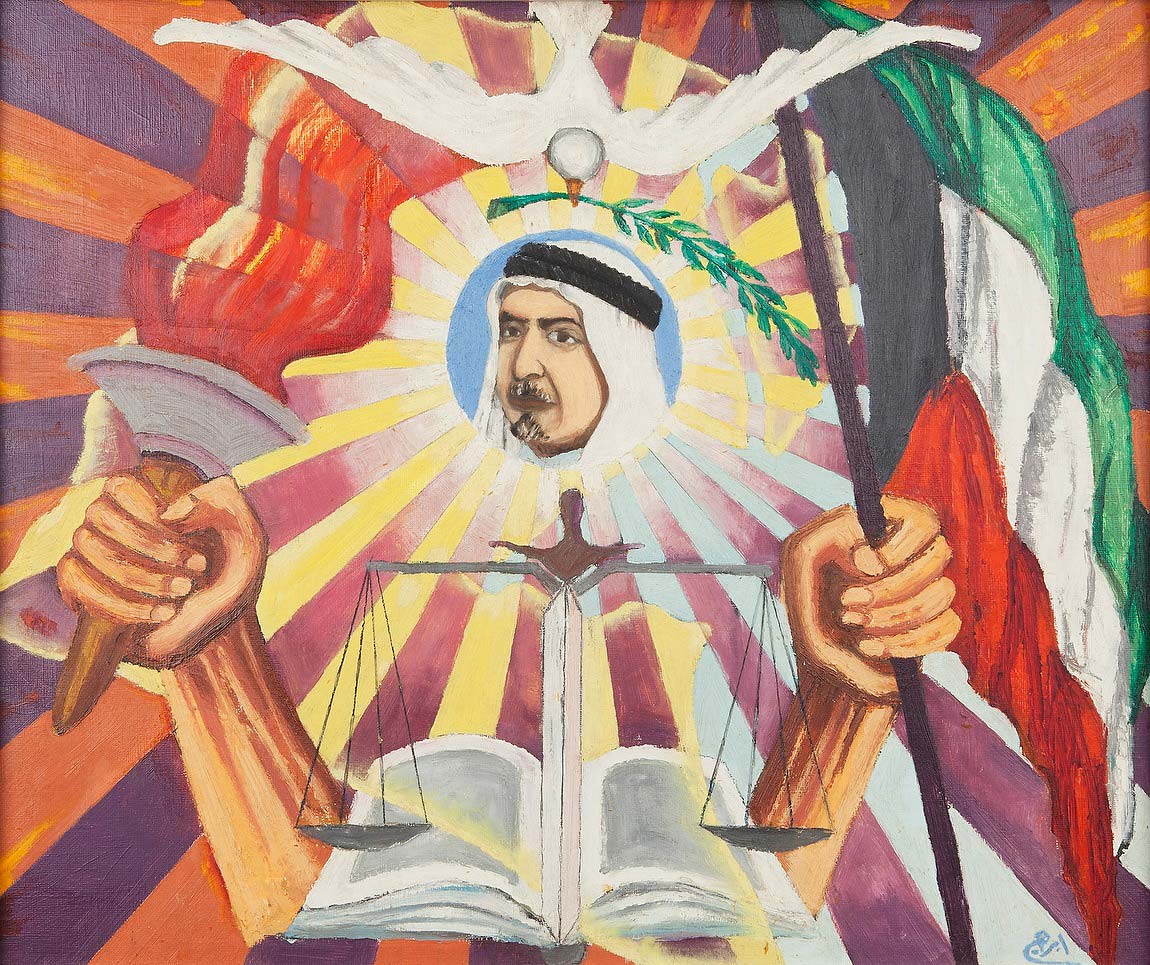 #88
#88
Independence and the Constitution
Ibrahim Ismail places Independence and the Constitution in a history of painting linked to Kuwait. This work contributes to a regional modernity made up of circulations, ruptures and reinterpretations. The subject remains immediately recognizable, but the essential is played out in the agreement between scale, color, material and rhythm. The painting thus transforms a scene or a symbol into autonomous pictorial proposal. The Barjeel Art Foundation notice presents the work as without dating specified in the online notice, made in oil on canvas. Painting counts here for its own invention as much as for the artistic and political memory that it makes visible. The link associated with the image opens the institutional notice, where the original title, the dating, the technique and collection data can be viewed. The French title makes the route easier to read, while the source keeps the original information and conditions of use of the image.
Image: Barjeel Art Foundation · Documentary use; rights with the institution.
See the institution's notice →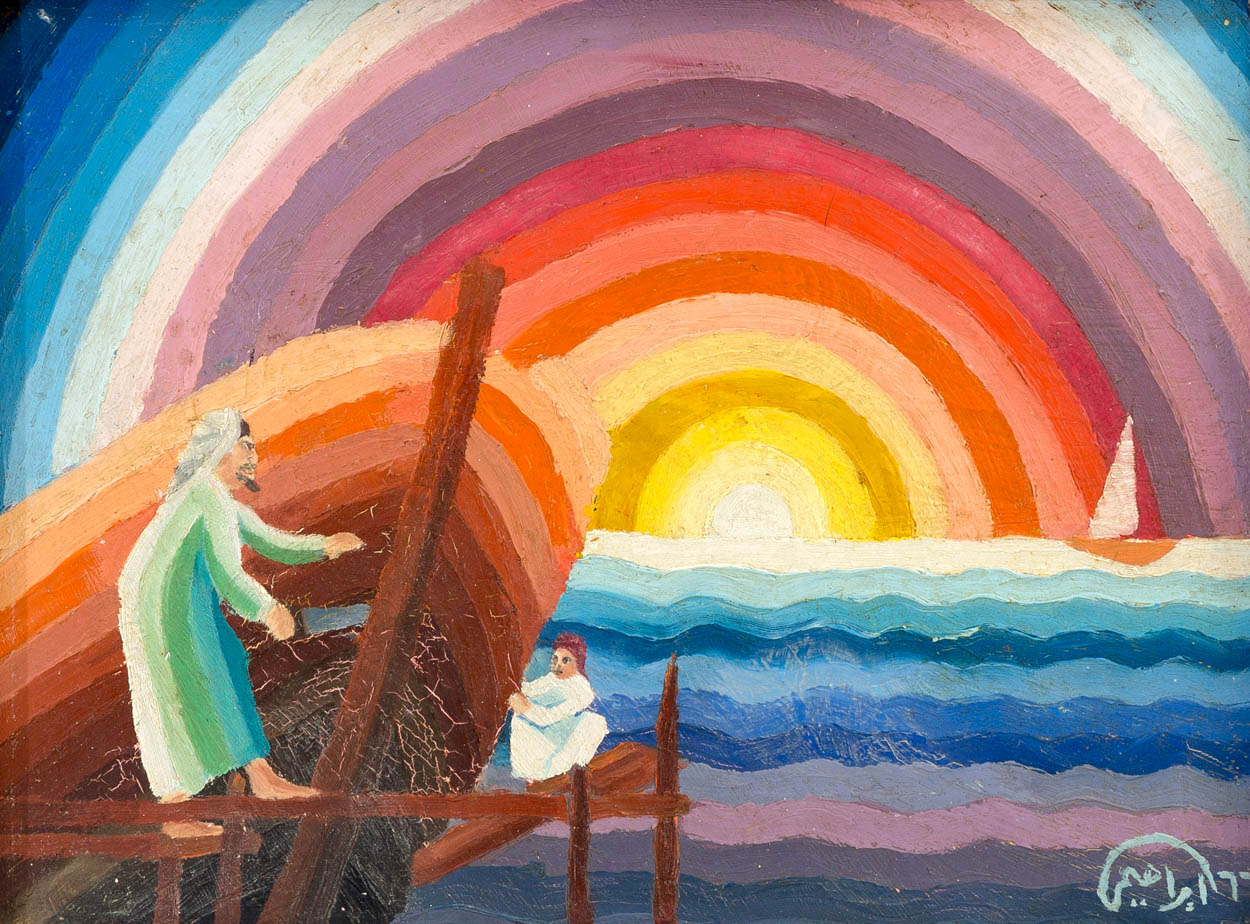 #89
#89
Shipbuilding
Ibrahim Ismail places Shipbuilding in a history of painting linked to Kuwait. This work contributes to a regional modernity made up of circulations, ruptures and reinterpretations. The subject remains immediately recognizable, but the essential is played out in the agreement between scale, color, material and rhythm. The painting thus transforms a scene or a symbol into autonomous pictorial proposal. The Barjeel Art Foundation notice presents the work as without dating specified in the online notice, made in oil on canvas cardboard. Its place in this classification is due to this ability to link a situated experience to a broader history of modern painting. The French title makes the route easier to read, while the source retains the original information and conditions of use of the image. Digital reproduction makes it possible to identify composition and palette; the real format and material remain essential to fully measure the work.
Image: Barjeel Art Foundation · Documentary use; rights with the institution.
See the institution's notice →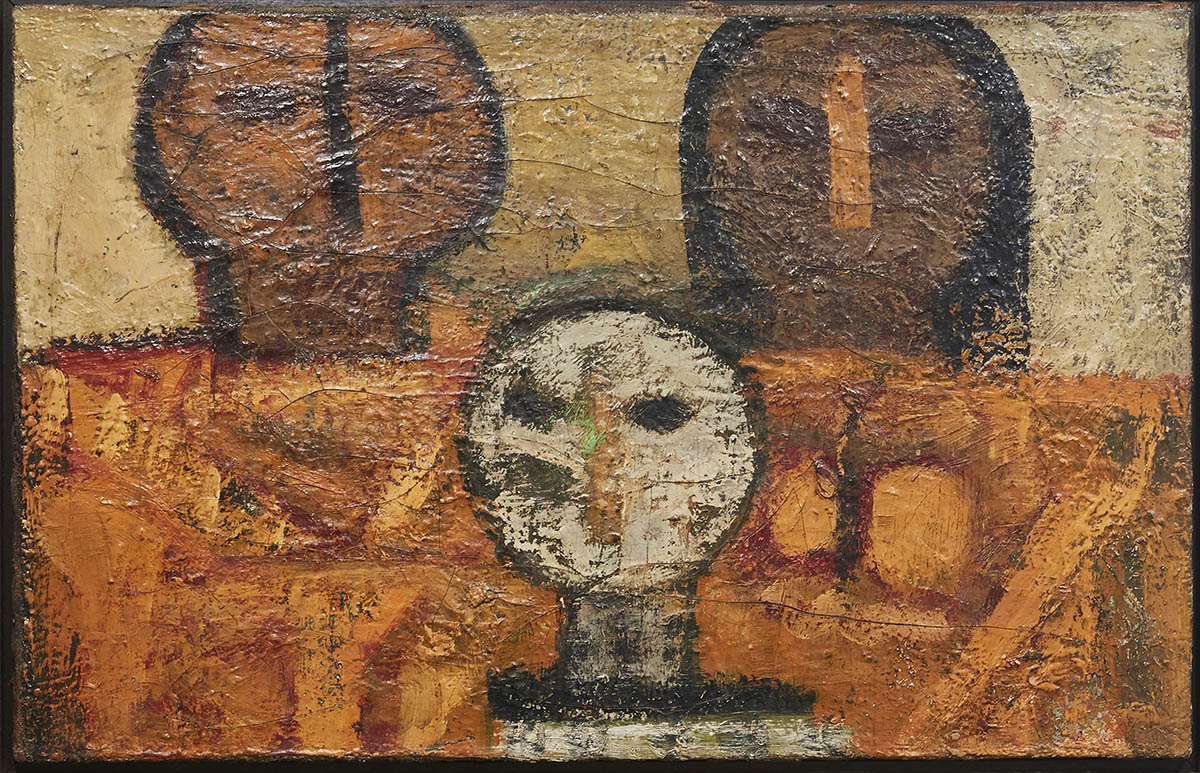 #90
#90
Untitled (Family)
Munira Al Kazi inscribes Untitled (Family) in a history of painting linked to Kuwait. This work participates in a regional modernity made up of circulations, ruptures and reinterpretations. The figure is constructed by framing, posture and tension between the body and the background. The portrait thus goes beyond resemblance to become a study of presence, memory and social position. The Barjeel Art Foundation notice presents the work as dated 1965, made in oil on canvas. The work thus becomes a benchmark for understanding how regional modernities were constituted without following a single model. Digital reproduction makes it possible to identify composition and palette; the real format and material remain essential to fully measure the work. The link associated with the image opens the institutional notice, where the original title, dating, technique and collection data can be viewed.
Image: Barjeel Art Foundation · Documentary use; rights with the institution.
See the institution's notice → #91
#91
Symbolic history of Arab joy (happy Arabia)
Hakim Al Akel inscribes Symbolic History of Arab Joy (Happy Arabia) in a history of painting linked to Yemen. This work contributes to a regional modernity made up of circulations, ruptures and reinterpretations. The subject remains immediately recognizable, but the essential is played out in the agreement between scale, color, material and rhythm. The painting thus transforms one scene or symbol in autonomous pictorial proposal. The Barjeel Art Foundation notice presents the work as dated 1994, made in tempera on canvas. The link associated with the image opens the institutional notice, where the original title, dating, technique and collection data can be consulted. The French title makes the route easier to read, while the source preserves original information and terms of use of the image.
Image: Barjeel Art Foundation · Documentary use; rights with the institution.
See the institution's notice →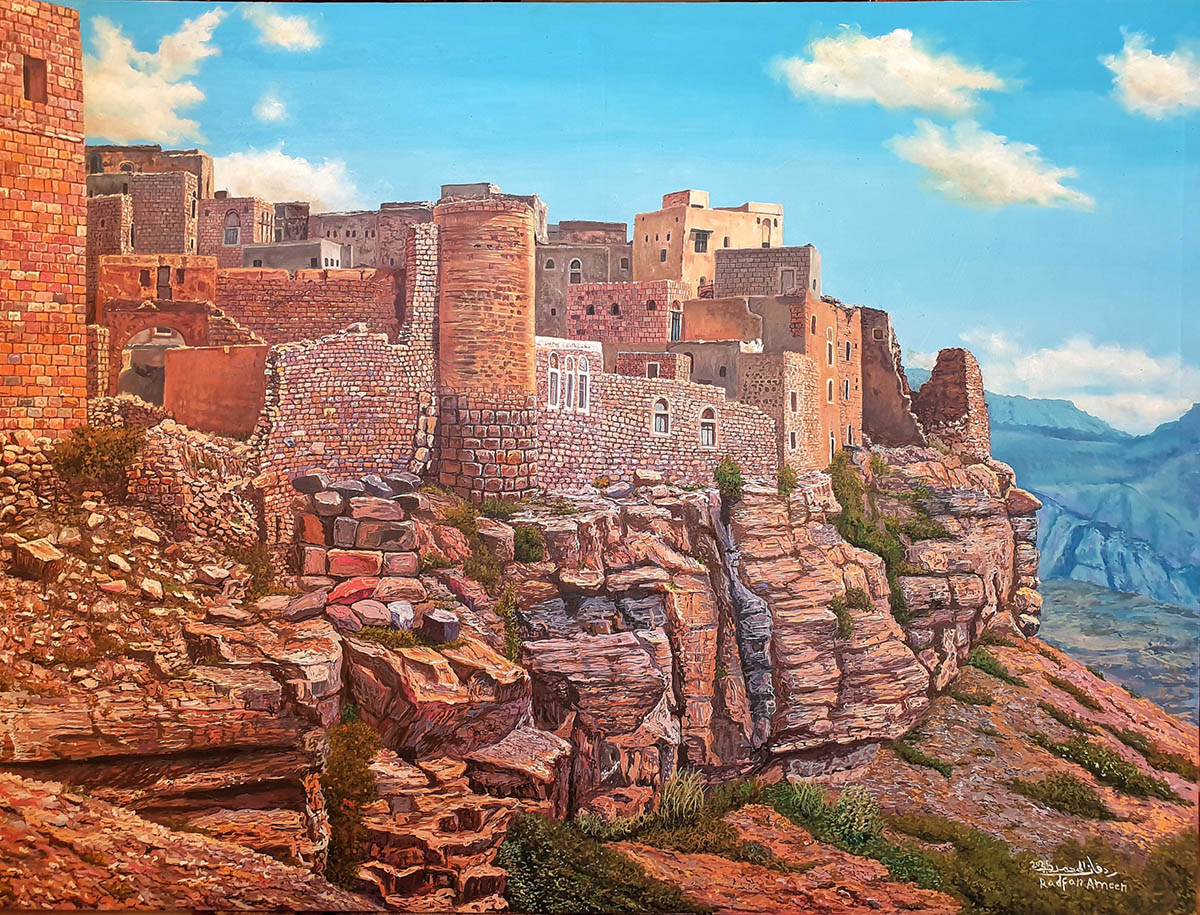 #92
#92
View of Shibam Kawkaban
Radfan Al Mohammadi inscribes View of Shibam Kawkaban in a history of painting linked to Yemen. This work contributes to a regional modernity made up of circulations, ruptures and reinterpretations. The place is not a simple setting: plans, horizons, architecture and color relationships organize the circulation of the gaze. The territory becomes a mental form as much as a space observed. The Barjeel Art Foundation notice presents the work as dated 2021, made of oil and acrylic on canvas. The painting counts here for its own invention as much as for the artistic and political memory that it makes visible. The French title makes the route easier to read, while the source preserves the original information and the conditions of use of the image. THERE digital reproduction helps identify composition and palette; the real format and material remain essential to fully measure the work.
Image: Barjeel Art Foundation · Documentary use; rights with the institution.
See the institution's notice →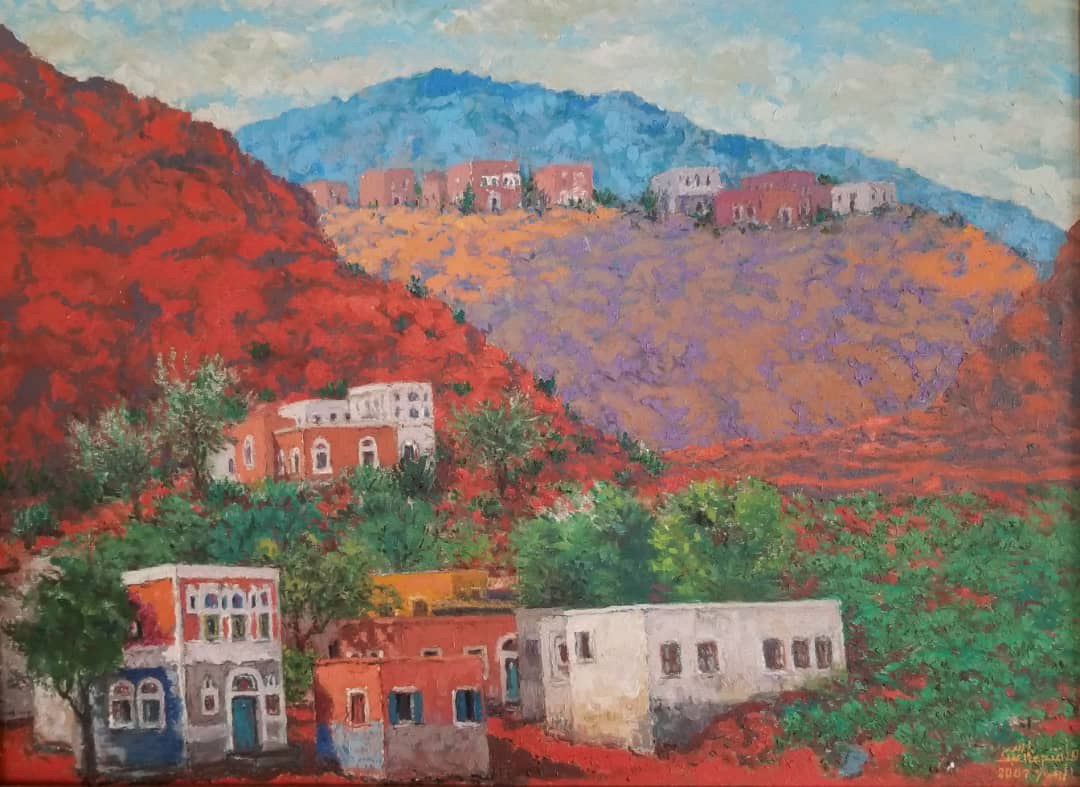 #93
#93
Untitled
Hashem Ali inscribes Untitled in a history of painting linked to Yemen. This work participates in a regional modernity made of circulations, ruptures and reinterpretations. The subject remains immediately recognizable, but the essential is played out in the agreement between scale, color, material and rhythm. The painting thus transforms a scene or a symbol into a pictorial proposition autonomous. The Barjeel Art Foundation notice presents the work as dated 2007, made in oil on canvas. Its place in this classification is due to this ability to link a situated experience to a broader history of modern painting. Digital reproduction makes it possible to identify composition and palette; the real format and material remain essential to fully measure the work. The link associated with the image opens the institutional record, where the original title, dating, technique and collection data can be viewed.
Image: Barjeel Art Foundation · Documentary use; rights with the institution.
See the institution's notice → #94
#94
Untitled
Hassan Meer inscribes Untitled in a history of painting linked to Oman. This work participates in a regional modernity made of circulations, ruptures and reinterpretations. The subject remains immediately recognizable, but the essential is played out in the agreement between scale, color, material and rhythm. The painting thus transforms a scene or a symbol into a pictorial proposition autonomous. The Barjeel Art Foundation notice presents the work as without dating specified in the online notice, made in oil on canvas. The work thus becomes a benchmark for understanding how regional modernities were constituted without following a single model. The link associated with the image opens the institutional notice, where the original title, dating, technique and collection data can be viewed. The French title makes the route easier to read, while the source keeps the original information and conditions of use of the image.
Image: Barjeel Art Foundation · Documentary use; rights with the institution.
See the institution's notice → #95
#95
The Faces of your other
Abdul Rahman Al Ma'aini places The Faces of Your Other in a history of painting linked to Oman. This work contributes to a regional modernity made up of circulations, ruptures and reinterpretations. The subject remains immediately recognizable, but the essential is played out in the agreement between scale, color, material and rhythm. The painting thus transforms a scene or a symbol into autonomous pictorial proposal. The Barjeel Art Foundation notice presents the work as without dating specified in the online notice, made in acrylic on canvas. The French title makes it easier to read the route, while the source retains the original information and the conditions of use of the image. Digital reproduction makes it possible to identify composition and palette; THE actual format and material remain essential to fully measure the work.
Image: Barjeel Art Foundation · Documentary use; rights with the institution.
See the institution's notice →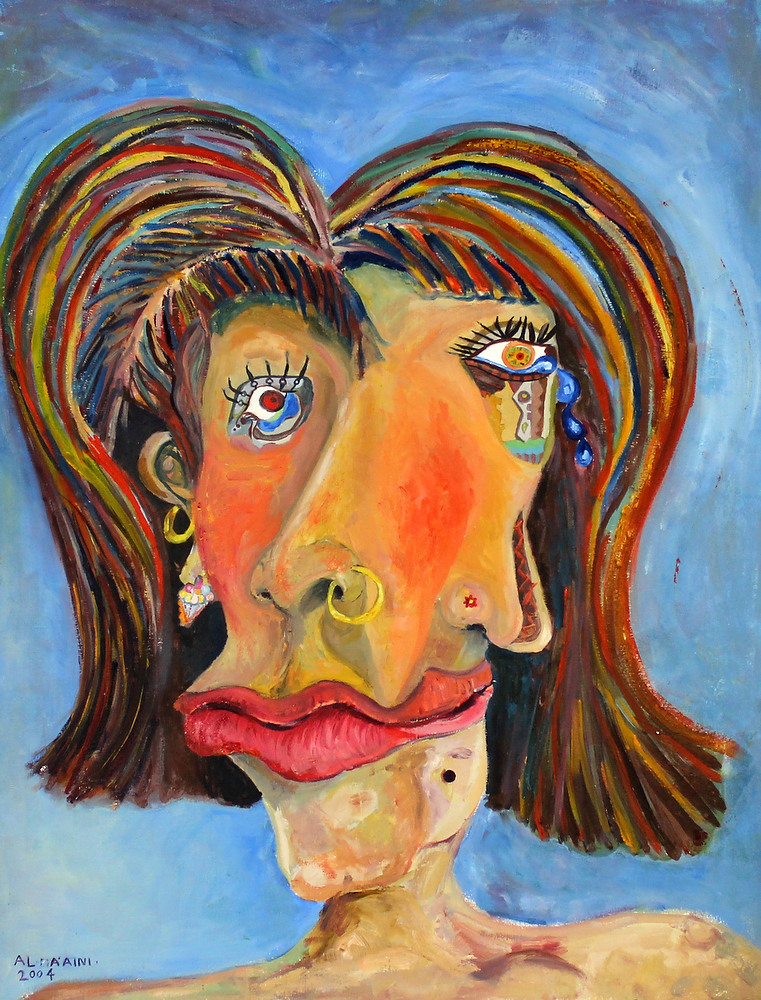 #96
#96
Figure
Abdul Rahman Al Ma'aini inscribes Figure in a history of painting linked to Oman. This work participates in a regional modernity made up of circulations, ruptures and reinterpretations. The figure is constructed by framing, posture and tension between the body and the background. The portrait thus goes beyond resemblance to become a study of presence, memory and position social. The Barjeel Art Foundation notice presents the work as without dating specified in the online notice, made in acrylic on canvas. Painting counts here for its own invention as much as for the artistic and political memory it makes visible. Digital reproduction makes it possible to identify composition and palette; the real format and material remain essential for fully measure the work. The link associated with the image opens the institutional notice, where the original title, dating, technique and collection data can be viewed.
Image: Barjeel Art Foundation · Documentary use; rights with the institution.
See the institution's notice → #97
#97
Portrait of Amin Rihani
Khalil Gibran inscribes Portrait of Amin Rihani in a history of painting linked to Lebanon. In Lebanon, workshops, magazines and Mediterranean circulations have favored a modernity open to diasporas. The figure is constructed by framing, posture and tension between the body and the background. The portrait thus goes beyond resemblance to become a study of presence, memory and social position. The Barjeel Art Foundation notice presents the work as dated c. 1908-1912, made in oil on panel. Its place in this classification is due to this ability to link a situated experience to a broader history of modern painting. Khalil Gibran having died before 1956, the image and the button also lead to the oil reproduction proposed by Alpha Reproduction; the original institutional record remains retained in the working data.
Image: Alpha Reproduction · Hand painted oil reproduction.
See this reproduction →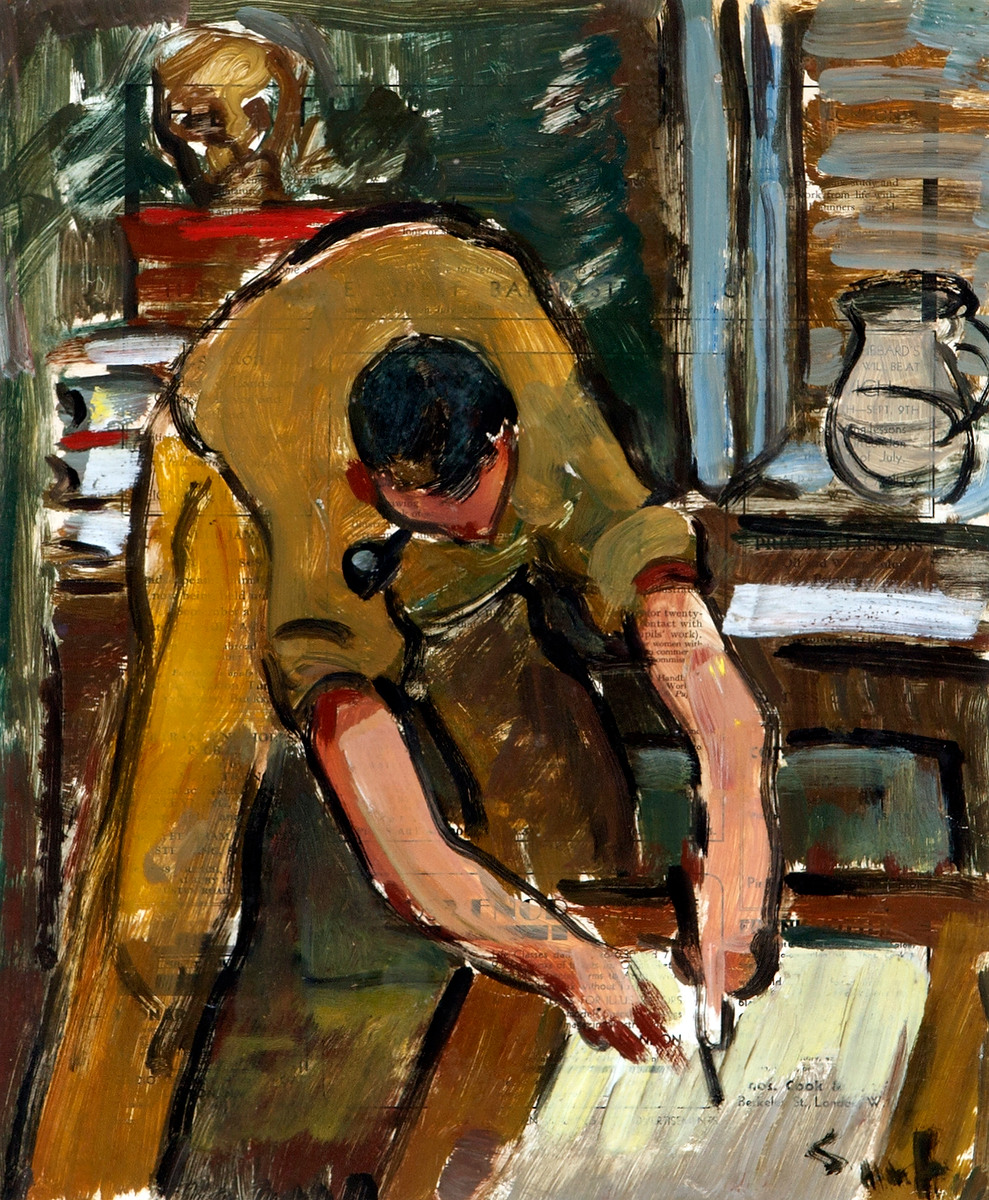 #98
#98
Self-portrait (The Artist in his studio)
Seif Wanly places Self-portrait (The Artist in his studio) in a history of painting linked to Egypt. Modern Egyptian painting here articulates local heritage, social observation and international language. The figure is constructed by framing, posture and tension between the body and the background. The portrait thus goes beyond resemblance to become a study of presence, of memory and social position. The Barjeel Art Foundation notice presents the work as without dating specified in the online notice, made in oil on panel. The work thus becomes a benchmark for understanding how regional modernities were constituted without following a single model. The French title makes it easier to read the route, while the source keeps the information originals and conditions of use of the image. Digital reproduction makes it possible to identify composition and palette; the real format and material remain essential to fully measure the work.
Image: Barjeel Art Foundation · Documentary use; rights with the institution.
See the institution's notice → #99
#99
Russian Ballet
Seif Wanly places Russian Ballet in a history of painting linked to Egypt. Modern Egyptian painting here articulates local heritage, social observation and international language. The subject remains immediately recognizable, but the essential is played out in the agreement between scale, color, material and rhythm. The painting thus transforms a scene or a symbol into a pictorial proposition autonomous. The Barjeel Art Foundation notice presents the work as without dating specified in the online notice, made in oil on panel. Digital reproduction makes it possible to identify composition and palette; the actual format and material remain essential to fully measure the work. The link associated with the image opens the institutional notice, where the original title, the dating, the technique and collection data can be viewed.
Image: Barjeel Art Foundation · Documentary use; rights with the institution.
See the institution's notice →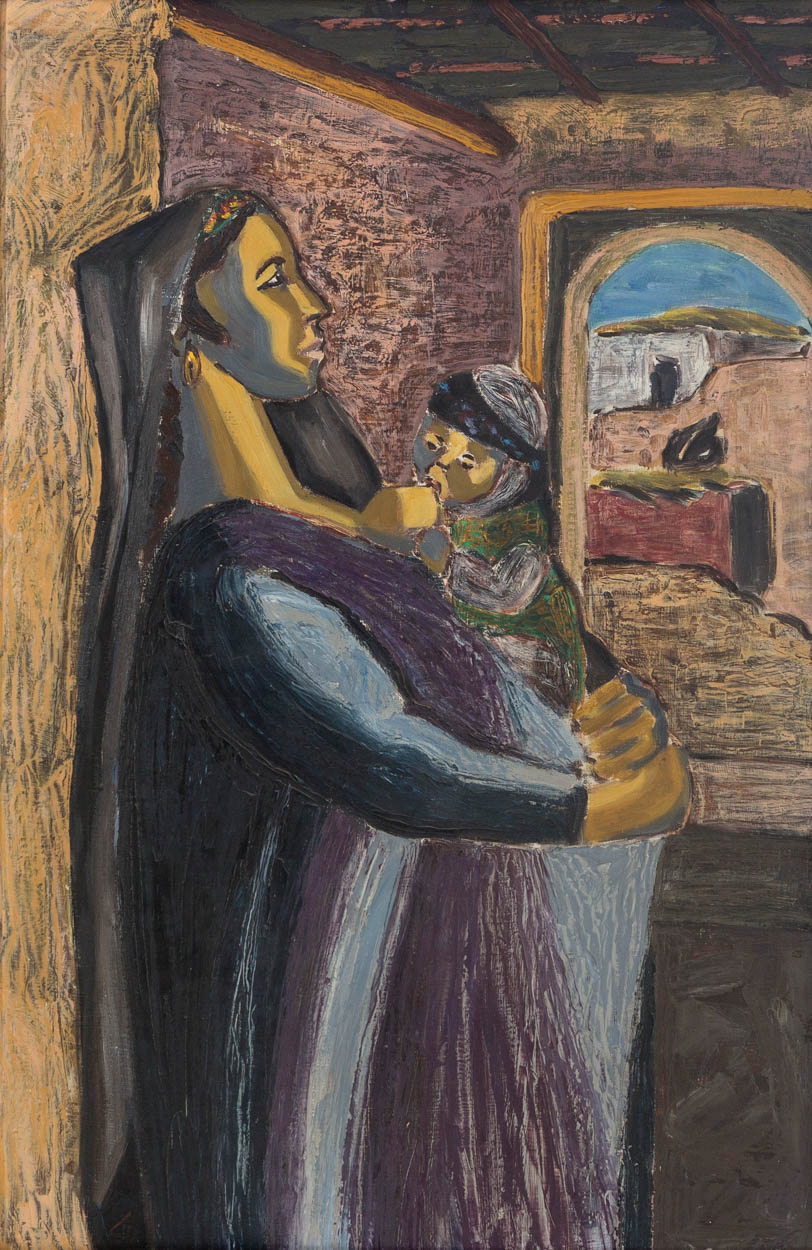 #100
#100
Maternity
Inji Efflatoun places Maternity in a history of painting linked to Egypt. Modern Egyptian painting here articulates local heritage, social observation and international language. The figure is constructed by framing, posture and tension between the body and the background. The portrait thus goes beyond resemblance to become a study of presence, memory and social position. The Barjeel Art Foundation notice presents the work as dated 1950s, made of oil on wood. The painting counts here for its own invention as much as for the artistic and political memory it makes visible. The link associated with the image opens the institutional notice, where the original title, dating, technique and collection data can be viewed. The title french makes the route easier to read, while the source keeps the original information and conditions of use of the image.
Image: Barjeel Art Foundation · Documentary use; rights with the institution.
See the institution's notice →What the journey reveals
Three lines of force
The works share circulations, but retain distinct visual histories and languages.
Represent
Portraits, families, workers and political figures give a presence to modern societies.
Remember
Territory, exile, prison and war cross painting without locking it into illustration.
Transform
Signs, materials and geometries reinvent abstraction from local experiences.
Connected modernities
Workshops, schools, exiles and circulations
In Cairo, Baghdad, Beirut, Damascus, Khartoum and Casablanca, artists found groups, taught, exhibited and developed languages capable of responding to rapid political transformations.
Ancient legacies are never mere quotes. Icon, calligraphy, folk arts, archeology and landscape become critical resources for constructing the present.
Migration to Paris, Rome, Berlin, London and New York further broadens the field. The regional history of painting thus proves inseparable from a world history made of back and forth.
Four reading keys
How to look at these paintings
The classification can be read by the forms as much as by the stories.
Read the presences
Posture, framing and gaze give the portrait a social significance.
Follow the territory
City, village, desert and mountain condense memory and movement.
Observe the surface
Calligraphies, geometries and traces organize the rhythm of the painting.
Approach the painting
Oil, tempera, acrylic and gouache produce different temporalities.
Institutional sources
Continue after the hundredth painting
Each image remains linked to the instructions chosen to document the work.
Main collection
01Barjeel Art FoundationModern and contemporary artFrequently asked questions
Arabic and Middle Eastern painting
Essential benchmarks for understanding ranking, techniques and sources.
How was the ranking established?
The order favors historical importance, pictorial invention, the quality of the institutional source and the capacity of each painting to illuminate a moment or a territory. It does not follow an automatic timeline.
Are all entrances paintings?
Yes. The hundred notices were controlled by their technique. Drawings, photographs, sculptures, tapestries and installations were excluded.
Why are the titles in French?
The titles are translated for the French-speaking readership. The original title and complete data remain accessible on the institutional notice opened by the image.
Which countries are represented?
The route covers twenty countries and territories, from Morocco to Oman, from Egypt to Iraq, with Palestine, Sudan, Lebanon, Syria, the Gulf and Turkey.
Where do the images come from?
Documentary works refer to the Barjeel Art Foundation, whose records indicate artist, country, date and technique.
Does Alpha Reproduction sell these paintings?
Only one entry, the Portrait of Amin Rihani by Khalil Gibran, opens a boutique profile according to the rule of artists who died before 1956. The other ninety-nine remain documentary.
Can we reuse images?
You must consult the conditions of the institution. Their display in this article does not transfer any reproduction rights.
Why bring together the Arab world and the Middle East?
The two sets overlap without being identical. The title allows you to follow artistic circulations that cross linguistic and national borders.
0 comments