

Arles · Van Gogh in dialogue with today's art
Vincent van Gogh Arles Foundation: history, exhibitions and tour guide
A private mansion crossed by the light of Arles, regular loans of Van Gogh paintings and contemporary exhibitions which refuse the sanctuary museum.
This guide explains what the Foundation really is, what we can see there in 2026, how to organize your journey and which places in the city extend the painter's experience.
july 2026

Short answer
Is the Foundation "the Van Gogh Museum in Arles"?
Yes by his spirit and by his mission; no if we imagine a permanent collection filled with masterpieces by the painter.
The Vincent van Gogh Arles Foundation is an art center dedicated to Van Gogh's presence in modern and contemporary creation. It constantly returns to the painter, but it does not lock him into a biographical reconstruction. Each season, his works dialogue with more recent artists: sometimes through color, sometimes through repetition, freedom of gesture, excess, the figure of the artist or the relationship with the world.
This is precisely what makes the place unique. Van Gogh lived in Arles from February 1888 to May 1889, fifteen months during which he produced some of his most decisive images: The Yellow House, The room, Sunflowers, Café terrace in the evening, Starry Night on the Rhône, The Night Café, orchards, bridges and Alyscamps. However, no large public collection of these paintings remained in the city. The Foundation responds to this absence not with a fixed copy, but with an active loan policy.
Since its opening in April 2014, more than eighty paintings and fifty drawings by Van Gogh have been exhibited in Arles according to the 2026 program. Their rotation is a constraint, but also a strength: returning several times can lead to seeing totally different works and discovering new correspondences with today's art.
For the visitor, the good expectation is therefore this: come and see an exhibition designed as a visual essay, locate the original or the announced Van Gogh originals, enjoy a remarkable building and then continue the visit on foot in the places painted by the artist.
Authentic Van Goghs
Yes, regularly, but loaned for a limited period. Their number varies: a work can constitute the center of an entire exhibition.
A different permanent collection
The Yolande Clergue Collection brings together artist tributes, photographs, texts, music and costumes, rather than a fixed collection of Van Gogh.
A visit that continues outside
Rhône, Place du Forum, former hospital, Alyscamps and Pont de Langlois make up a second open-air route in Arles.
History
From the intuition of Yolande Clergue to the 2014 Foundation
The project was born from an Arlesian paradox: a crucial period of Van Gogh, but almost none of his works preserved on site.
The Founding Association
Yolande Clergue creates the Association for the creation of the Van Gogh Foundation. She asks living artists to pay tribute to the painter.
A collection of tributes
The collection begins to be built up with works by artists like Francis Bacon, David Hockney, Roy Lichtenstein and Karel Appel.
The project relaunched
Luc Hoffmann gives new impetus to the idea of an independent foundation capable of hosting large exhibitions and international loans.
Public recognition
On July 8, the Vincent van Gogh Arles Foundation was recognized as being of public utility by ministerial decree.
The transformed building
The Hôtel Léautaud de Donines is renovated by Guillaume Avenard and Hervé Schneider. Bice Curiger took over as artistic director in 2013.
Open to the public
On April 7, the Foundation opens with Van Gogh Live!, manifesto program linking the painter to the creations of the 20th and 21st centuries.
Why is Yolande Clergue central?
Wife of photographer Lucien Clergue and actress of Arlesian cultural life, Yolande Clergue understood very early on that Van Gogh's memory cannot rest only on plaques placed in front of disappeared sites. She chooses another path: asking creators to express their debt, their admiration or their disagreement with the painter.
This intuition shifts the question. It is no longer just a question of "bringing Van Gogh back to Arles", but of showing what his work continues to trigger. The donations received construct a very open genealogy, where painting meets sculpture, photography, literature, music and fashion.
The current Foundation extends this heritage while organizing ambitious exhibitions. The artistic direction, provided in 2026 by Jean de Loisy, maintains the tension between art history and living creation.
Real architecture
A private mansion recomposed by the light of Arles
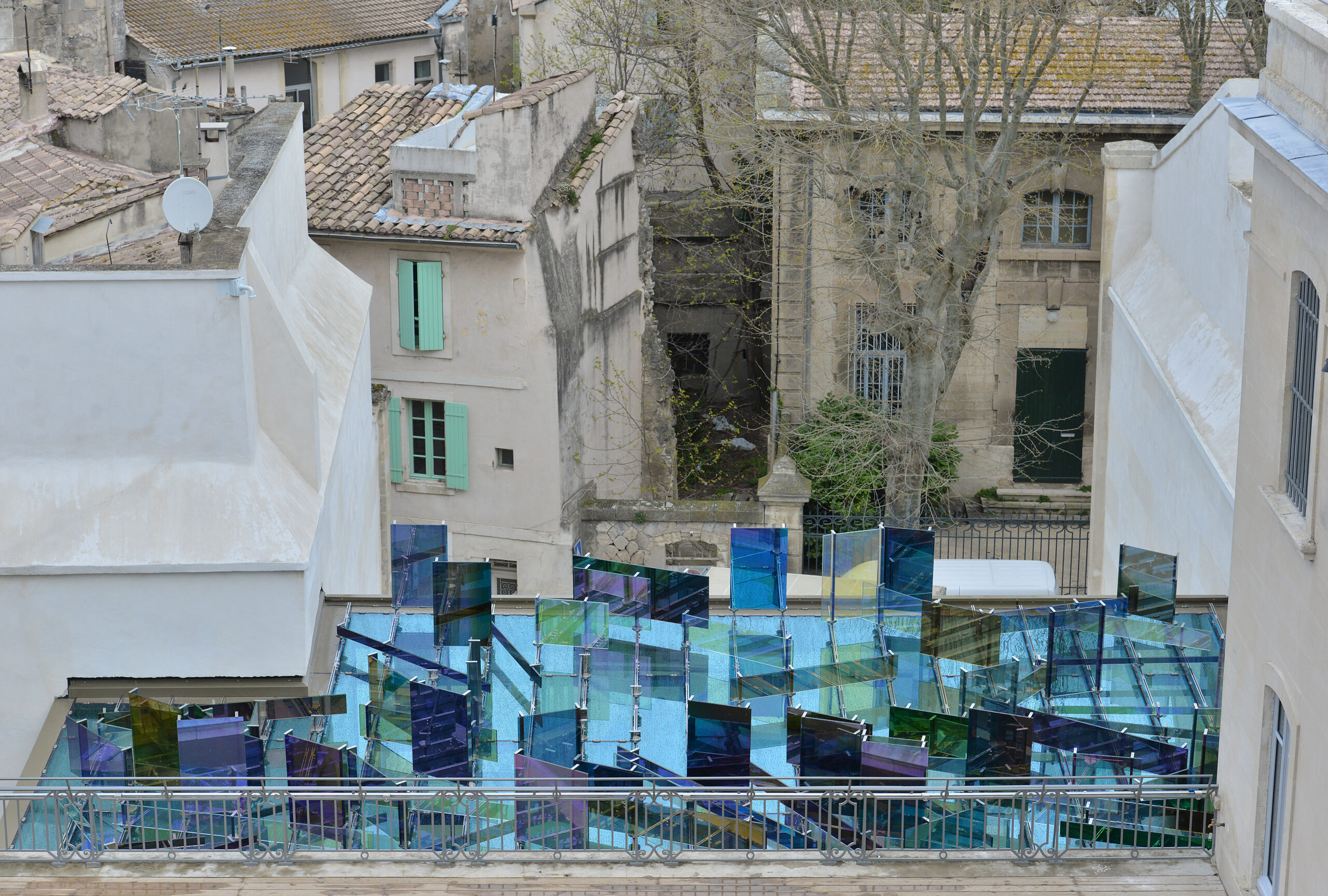
Old stones, roof sheds, colored glass and permanent interventions already form an exhibition before the first room.


What to look for in the building
The Hôtel Léautaud de Donines dates back in part to the 15th century. Becoming a branch of the Banque de France in 1924, it was then acquired by the City of Arles in the 2000s. The project by Guillaume Avenard and Hervé Schneider, FLUOR agency, transformed approximately 2,400 to 2,500 m² while retaining readable layers.
Arlesian light serves as a common thread. Twenty roof-facing sheds bring controlled light into the rooms. At the entrance, Raphael Hefti's glass roof projects moving colors; elsewhere, Bertrand Lavier's portal and Fritz Hauser's intervention on the staircase place art in the circulation itself.
So don't cross the ground floor too quickly. Observe the colorful reflections on the ground, the relationship between light stone and metal, then the way the day changes between the rooms. Finally, if the route and the opening conditions allow it, go up to the terrace: it places the Foundation in the landscape of Arles, between roofs, Rhône and Provençal horizons.
Collection and loans
What does the Foundation keep, and where do the Van Goghs come from?
Understanding the difference between collection, loans and exhibitions avoids the main possible disappointment.
The Yolande Clergue Collection recounts Van Gogh's reception rather than his career in the form of a chronological catalog. We meet artists like Arman, Christo, César, David Hockney, Roy Lichtenstein, Karel Appel, Olivier Debré, Erró or Robert Rauschenberg. Photography plays an important role there with Édouard Boubat, Henri Cartier-Bresson, Lucien Clergue, Robert Doisneau, Bernard Faucon, Mario Giacomelli, Eikoh Hosoe, Bernard Plossu and Willy Ronis.
Added to this are literary texts, musical manuscripts and costumes by Christian Lacroix. This diversity corresponds to Yolande Clergue's original question: how do very different creators respond to the intensity of a painter who has become universal? Some answers are admiring; others go through quotation, distance, humor or radical transformation.
Van Gogh's paintings and drawings arrived thanks to collaborations with major lenders. Their presence depends on calendars, conservation, transport and the curatorial project. An exhibition can bring together several famous works; another can focus on a single painting, the power of which is amplified by the works around it.
You must therefore read the official website as you would read a festival poster: title of the exhibition, exact dates, list of artists, work or works by Van Gogh announced. The name of the Foundation guarantees the relationship with the painter, not an immutable clash.
Tributes and deviations
From Bacon to Lichtenstein, the artists do not reproduce Van Gogh: they respond to his way of pushing the color, the subject and the figure of the artist.
Arles by the look
Lucien Clergue and other photographers connect the territory, the body, Mediterranean light and the cultural memory of the city.
Originals on the move
Since 2014, the Foundation has shown dozens of Van Gogh paintings and drawings from external collections.
The present as a method
The exhibitions not only ask "what did Van Gogh paint?", but "what does his work still allow today?"
Current exhibition
What do we see at the Foundation during the summer of 2026?
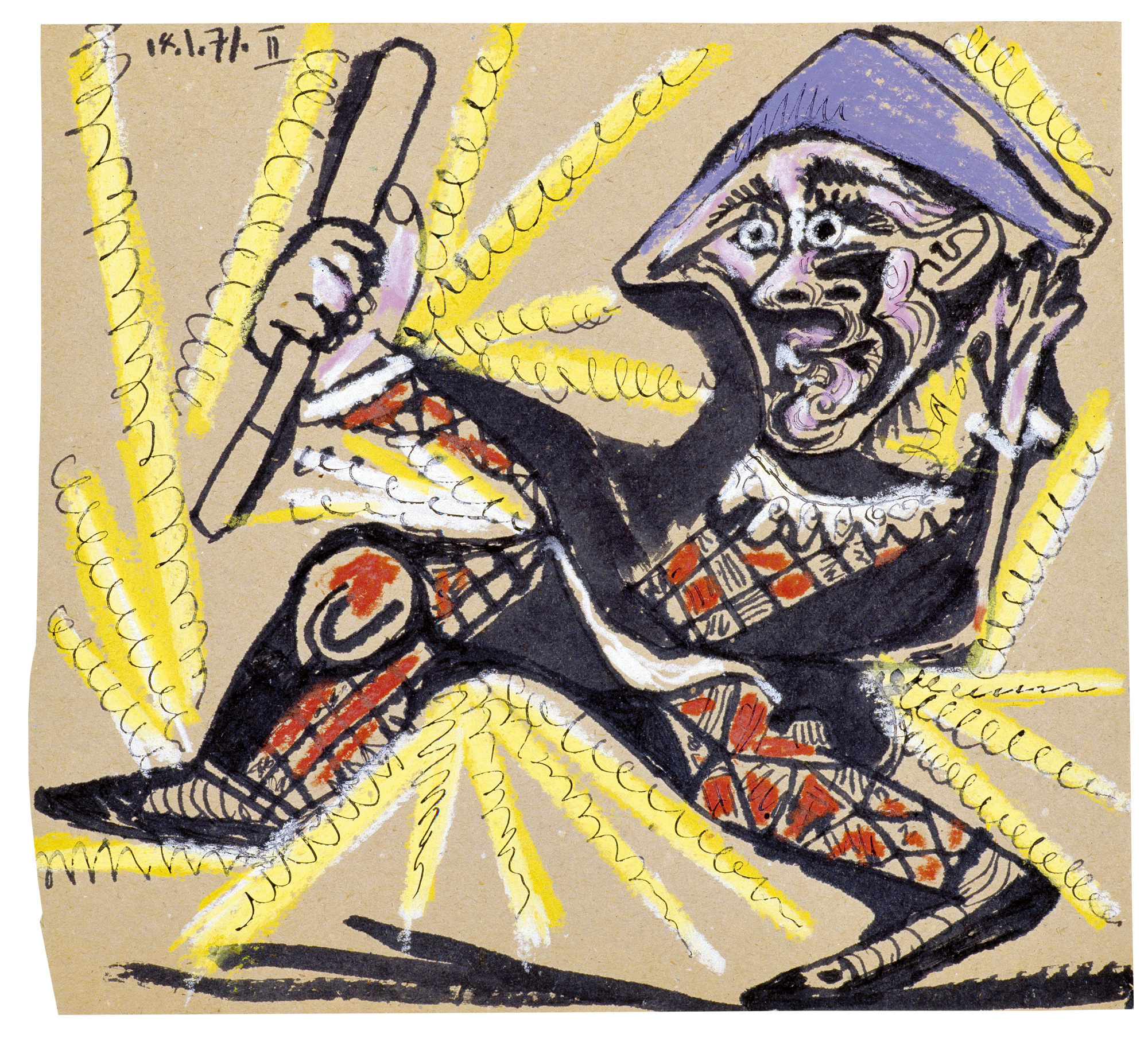
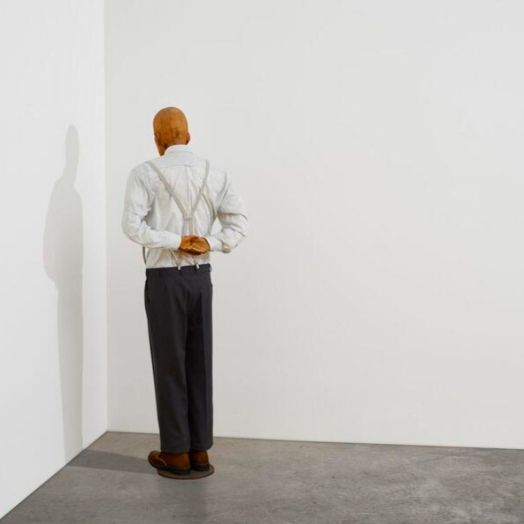
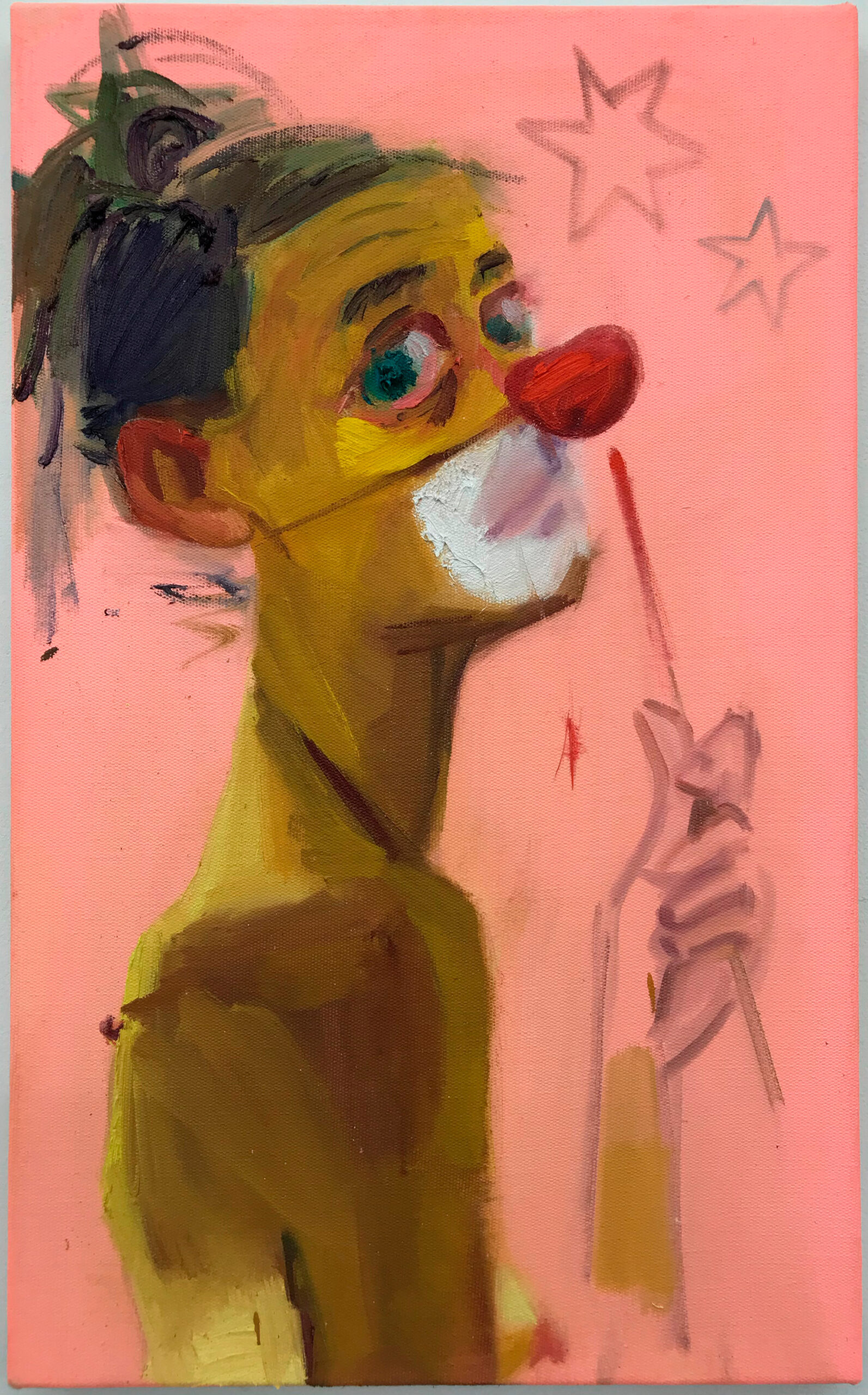
SUSPECTS - Van Gogh, Tricksters & Co. brings together Van Gogh and modern or contemporary artists around insolence, reversal and the figure of the "trickster".

May 22 - October 18, 2026
SUSPECTS : laughter, excess and disobedience
Van Gogh's original visible at the heart of the exhibition is the small and biting one Skeleton skull smoking a cigarette. Painted in Antwerp in 1886, well before Arles' stay, he already shows an artist capable of black humor and provocation. The skeleton does not deliver a serious moral: it seems to play the living, cigarette in its teeth.
Around him, the exhibition brings together Van Gogh and thirty-two modern and contemporary artists - thirty-three names in total according to the official presentation - including Pablo Picasso, Cindy Sherman, Andy Warhol, Maurizio Cattelan, Sarah Lucas, Bruce Nauman, Martin Kippenberger, Maria Lassnig and Nina Childress. Around a hundred works explore trickery, masks, transgression and the freedom not to stay in one's place.
- Dates: from May 22 to October 18, 2026.
- Van Gogh Original: Skeleton skull smoking a cigarette.
- Tip: start with Van Gogh's work, then return to it after the tour.
- Warning: some works may offend young visitors or sensitive people; they are reported.
Recommended route
How to visit the Foundation without missing out on your idea?
Allow around 1 hour 30 minutes for an attentive journey, more if you follow a guided tour or take the time to read the connections.

Start with the threshold, the light and the history of the place
Look at the facade, Bertrand Lavier's gate and Raphael Hefti's glass roof. The building already announces the program: an ancient Arlesian heritage crossed by new interventions.
In the lobby, locate the mediation documents and ask where Van Gogh's original work is located. The hanging may change, and this information avoids going through the exhibition with false expectation.
See the architectural project →See Van Gogh first
Give the board five minutes before reading the cartel. Note the scale, material, colors and emotional tone. In SUSPECTS, the little smoking skull is ironic, fast and much less solemn than the popular image of the cursed painter.
Compare without seeking imitation
Contemporary artists don't necessarily look like Van Gogh. Instead, look for a common attitude: exaggerate, shift the rules, transform the self-portrait, use humor or make color a strength.
Return to original
After the other rooms, return to Van Gogh. The painting has not changed, but the exhibition has given it other neighbors. It is this mental displacement which constitutes the heart of the curatorial project.
Look up
Between two rooms, observe the sheds, the sections of light, the stairs and the views. The Foundation also understands itself as a machine for filtering the Arlesian sun.
Return the horizon to Van Gogh
If access is open, finish high up. Then exit towards the Rhône and the streets of Arles: the best complement to temporary loans remains the real territory where the painter worked.
Express route
Work by Van Gogh, two major rooms, architecture of the hall and a final return in front of the painting.
Recommended route
The entire exhibition, comparisons, essential cartels, shop, architecture and possible terrace.
In-depth course
Add the guided tour, sensitive works watched slowly and reading time in the mediation spaces.
Memory of exhibitions
Some exhibitions which defined the identity of the place
The program alternates historical investigations, exceptional loans and direct confrontations with a living artist.
| Exposure | Year | Why it matters |
|---|---|---|
| Van Gogh Live! | 2014 | The opening exhibition lays down the founding principle: Van Gogh is not a still monument, but an active presence in creation. |
| Colors of the North, colors of the South | 2014 | The journey connects the experiences of the North and the southern dazzling which transforms the painter's palette. |
| Van Gogh's drawings: Influences and innovations | 2015 | An important reminder: line, calame, pen and graphic construction are essential to an artist often reduced to color. |
| Van Gogh in Provence: Modernized tradition | 2016 | The exhibition places Provençal works in a broader history, between tradition of the motif and modern invention. |
| Calm and exaltation - Bührle collection | 2017 | Loans make it possible to study the unstable balance between concentration, intensity and movement in Van Gogh. |
| Vincent van Gogh: Speed and Aplomb | 2018 | Speed of execution is not opposed to mastery: the gesture can be lively while remaining extremely constructed. |
| Laura Owens & Vincent van Gogh | 2021 | A contemporary artist enters into a direct dialogue with the works, signs and materiality of the painter. |
| Van Gogh and the Stars /The High Yellow Note | 2024 | Two complementary entries: the sky as a cosmic motif and yellow as chromatic, spiritual and modern intensity. |
| To Vincent: A Winter's Tale | 2025 -26 | A previous season course SUSPECTS, proof that the program is not reduced to a single major summer exhibition. |
Practical information 2026
Schedules, prices, guided tours and access
This information corresponds to the season SUSPECTS and were verified in July 2026. Check the official website before departure.
| Information | Useful detail | Counseling |
|---|---|---|
| Address | 35 ter, rue du Docteur-Fanton, 13200 Arles. | The old center is well explored on foot; leave a margin if you arrive by car. |
| May, June, September, October | Open every day from 10 a.m. to 6 p.m.; last entry at 5:30 p.m. | The last half hour is too short for a real journey. |
| July and August | Open every day from 10 a.m. to 7 p.m.; last entry at 6:30 p.m. | Come at the opening or late afternoon for a quieter tour. |
| Full price | 10 €. | Optionally add €4 for the guided tour. |
| Reduced price | €8 according to official conditions; free entry for under 26s. | Get proof. |
| Guided tours | Every day at 11 a.m. and 3 p.m., approximately one hour, without reservation, supplement of €4. | They can be canceled. Call the day before on +33 (0)4 88 65 82 93. |
| Annual pass | €20 full price; €15 reduced rate. | Interesting if you want to see several clashes or come back with loved ones. |
| Combined tickets | LUMA + Foundation: €17; Réattu Museum + Foundation: €12; Contemporary South Pass: €20. | Compare opening days and energy requirements: two large locations in the same day can be dense. |
| Accessibility | The building is accessible to people with reduced mobility and has an elevator. | Contact reception if you need specific support. |
| Young audience | The 2026 exhibition highlights sensitive works or works not recommended for certain audiences. | Locate signage and ask the team for advice before entering the affected areas. |
The most readable slot
When opened, the rooms are often quieter and the light on the glass roof allows you to start with the architecture.
Avoid running
Do not place the visit between two obligations. The force of confrontations is lost if you cannot return to the works.
Walk in Arles
Allow at least an extra hour for the Rhône, Place du Forum and the Van Gogh space of the old hospital.
Heat and festival
In July and August, Arles is very busy. Book your accommodation, check events and choose to travel on foot.
The museum continues in the city
Six places in Van Gogh to connect to the visit
The paintings are scattered around the world; the distances, the squares, the stone and the Rhône are still there.
Arles is not an untouched setting
Several buildings painted by Van Gogh have disappeared or changed profoundly. The Yellow House was destroyed during the Second World War; the Café de la Gare no longer exists as in 1888; the Langlois bridge visible today has been moved and restored.
However, the route remains powerful if you are not looking for an identical postcard. It allows us to measure the painter's choices: framing, simplification, movement of colors, compression of perspective and transformation of an ordinary place into a mental image.
Start near the Foundation, go down towards the Rhône, reach Place du Forum and the old hospital, then reserve the Alyscamps and the Langlois bridge for a longer route.
Read our great Van Gogh guide in ArlesThe Rhône
The quay and the curve of the river allow us to understand the blue depth of Starry Night on the Rhône, even though urban lighting has changed.
Forum Square
The terrace associated with the famous café preserves the memory of the motif. Above all, compare the real narrowness of the square to the opening built by Van Gogh.
Van Gogh Space
The courtyard of the old hospital, now a cultural space, recalls the garden painted during the artist's convalescence.
Place Lamartine
The Yellow House has disappeared. Documentation and the urban structure help to replace the dream of the Atelier du Midi.
The Alyscamps
The ancient necropolis and its avenue of trees were painted by Van Gogh and Gauguin in the fall of 1888, each with their own rhythm.
Langlois Bridge
The drawbridge now known as the "Van-Gogh Bridge" is far from the center. Its mechanism, its diagonals and the canal illuminate the series painted in 1888.
Arles in painting
Eight works to extend the visit home
These paintings are not necessarily exhibited at the Foundation today: they reconstruct the Arlesian trajectory of the painter through the shop.

Starry Night on the Rhône
The reflections of the gas, the deep blue and the couple in the foreground transform the river into an inhabited night scene.
See the work →
Café terrace in the evening
Van Gogh paints a night without black, articulated by the orange-yellow of the terrace and the blue of the sky.
See the work →
The Room in Arles
Flat areas, contours and deliberately inflected perspective to evoke a rest that remains intensely vibrant.
See the work →
The Yellow House
A missing building that became the image of the collective workshop project that Van Gogh wanted to found in the South.
See the work →
The Night Café
Red, green, sulfur yellow and plunging perspective make the billiard room a psychological space.
See analysis →
The Langlois Bridge
The drawbridge mechanism becomes an almost Japanese structure between clear sky, water and daily activity.
See the work →
Sunflowers
A decoration designed to accommodate Gauguin, which has become evident in the impasto and variations of yellow.
See the work →
Bandaged ear self-portrait
Beyond the biographical drama, a rigorous construction of greens, oranges and cut-out shots.
See the work →Important collections
Explore Van Gogh by places, motifs and periods
The collections make it possible to place the fifteen months of Arles throughout the career: Netherlands, Paris, Provence and Auvers.
Continue reading
Four articles to deepen the works of Arles
Each guide starts from a painting or a place and returns to letters, color and composition choices.
Van Gogh in Arles
Chronology of the fifteen months, addresses, crises, friendships and birth of the great motifs of the South.
AnalysisThe Room in Arles
Perspective, colors, three versions and history of the Yellow House.
AnalysisThe Night Café
Red and green, billiards, characters, Café de la Gare and comparison with Gauguin.
SeriesSunflowers
Versions, dates, decorative project, welcome of Gauguin and role of yellow material.
Frequently asked questions
FAQ about the Vincent van Gogh Arles Foundation
Are there still original Van Gogh paintings at the Foundation?
The Foundation regularly presents originals through loans, but their number and identity change depending on the exhibition. You must check the official page of the current exhibition before the visit.
Which Van Gogh is on display in Arles during summer 2026?
In SUSPECTS - Van Gogh, Tricksters & Co., the original work announced is Skeleton skull smoking a cigarette, painted in Antwerp in 1886 and loaned by the Van Gogh Museum in Amsterdam.
What are the dates of the SUSPECTS exhibition?
The exhibition is announced from May 22 to October 18, 2026. As information may change, consult the official website before your trip.
How much time should you allow for the visit?
Allow approximately 1 hour 30 minutes for the exhibition and architecture. A guided tour lasts approximately one hour; add time if you then want to explore Van Gogh's locations in Arles.
What is the entry price in 2026?
For the 2026 season, the full price announced is €10, the reduced price is €8 and entry is free for those under 26. Combined tickets and an annual pass exist.
Is the Foundation suitable for children?
The place can be visited with the family, but the 2026 exhibition contains works likely to offend young visitors or sensitive people. Signage is provided; ask reception for advice.
Is the Foundation accessible to people with reduced mobility?
Yes, the building has an elevator and is advertised as accessible to people with reduced mobility. Contact reception for any specific needs.
Can we see the Chamber or the Sunflowers in Arles?
Not permanently. These paintings are kept in various international museums. The Foundation may receive one-off loans, but the presence of a specific work must always be verified.
What's the difference with the Van Gogh Museum in Amsterdam?
Amsterdam maintains Van Gogh's largest permanent collection. Arles organizes temporary exhibitions linking loans from the painter to modern and contemporary artists, in the same city where he lived for fifteen months.
What to see around the Foundation?
On foot, reach the Rhône, Place du Forum, Espace Van Gogh in the old hospital and Place Lamartine. The Alyscamps and the Langlois bridge require a longer route.
Verified sources
Official documents and visit references
Historical, architectural and practical information comes primarily from the Foundation and institutional stakeholders in the region.
History and mission
Chronology of the project, Yolande Clergue Collection and artistic vocation of the place.
Exhibition 2026SUSPECTS
Dates, artists, curatorial presentation, works and warning to the public.
VisitingSchedules and prices
Ticketing, seasonal timetables, guided tours, address and accessibility.
Official program2026 season
Complete exhibition program, practical information and assessment of Van Gogh's loans since 2014.
ArchitectureFluorine project
Rehabilitation, lighting, surfaces, permanent works and photographs of the building.
Arles TourismInstitutional sheet
Location in the city, presentation of the location and destination information.
ShopVan Gogh in Arles
Reproductions of works linked to the Arlesian stay and the Atelier du Midi.
Alpha GuideRoute in Arles
Biographical and urban complement to continue after the Foundation.
The Foundation does not replace Van Gogh's places: it learns to look at them differently.
Its originality lies in this circulation between a loaned painting, contemporary works, architecture crossed by sunshine and the real city. People come there less to check off a list of masterpieces than to understand why Van Gogh remains a living interlocutor.
Explore the Van Gogh collection in Arles
0 comments