

Netherlands · Van Gogh · living spaces · museums
Van Gogh in the Netherlands: Zundert, Nuenen, Amsterdam and Otterlo in the painter's footsteps
Before Arles, Saint-Rémy and Auvers, Van Gogh was first and foremost a Dutch painter. Zundert recounts childhood, Nuenen the birth of the peasant painter, Amsterdam brings the work together in a museum, and Otterlo offers the other large Van Gogh collection in the middle of nature.
This route is not only touristy: it shows how a pastor's son from Brabant becomes one of the most watched painters in the world, passing through the villages, mills, dark interiors and museums that today guard his heritage.

Quick guide
Four steps to understanding Dutch Van Gogh
Direct response
To follow Van Gogh to the Netherlands, you have to connect Brabant and major museums
The best route starts at Zundert, birthplace, passes Nuenen, where Van Gogh produced his first great masterpiece, then goes back to Amsterdam and Otterlo to see the major collections. This is the route that best shows the transition from the dark rural world to modern color.
What to remember
Zundert explains the origin: pastor's family, Brabant, youthful landscapes. Nuenen explains the method: hard work, peasant figures, head and hand studies, Potato Eaters. Amsterdam shows the complete trajectory. Otterlo, with the Kroeller-Müller Museum, offers a different experience: Van Gogh in a museum surrounded by forest and sculpture.
If you only do one day, choose Amsterdam. If you want to understand painter training, add Nuenen. If you want a deeper journey, do Brabant + Otterlo.
- Birth
- Zundert, March 30, 1853
- Dark formation
- Nuenen, 1883 -1885
- Great museum
- Van Gogh Museum, Amsterdam
- Nature collection
- Kroeller-Müller, Otterlo

Recommended route
The correct order of visit to follow the painter
These places can be visited separately, but the chronological order gives a much clearer reading. We start from birth, we go through work on the motif, then we finish with museums.
Zundert
Start with the native village and the Van GoghHuis: childhood, family memory, Brabant of origin.
Nuenen
Continue with the Van Gogh Village Museum and the painted places around the village.
Amsterdam
See the summary: self-portraits, letters, landscapes, flowers, French period, masterpieces.
Otterlo
Finish at the Kroeller-Müller: another large Van Gogh collection, museum in nature.
Major locations
Zundert, Nuenen, Amsterdam, Otterlo: what each stage reveals
Each place corresponds to a different layer: birth, vocation, museum recognition, then the meeting between art and landscape.
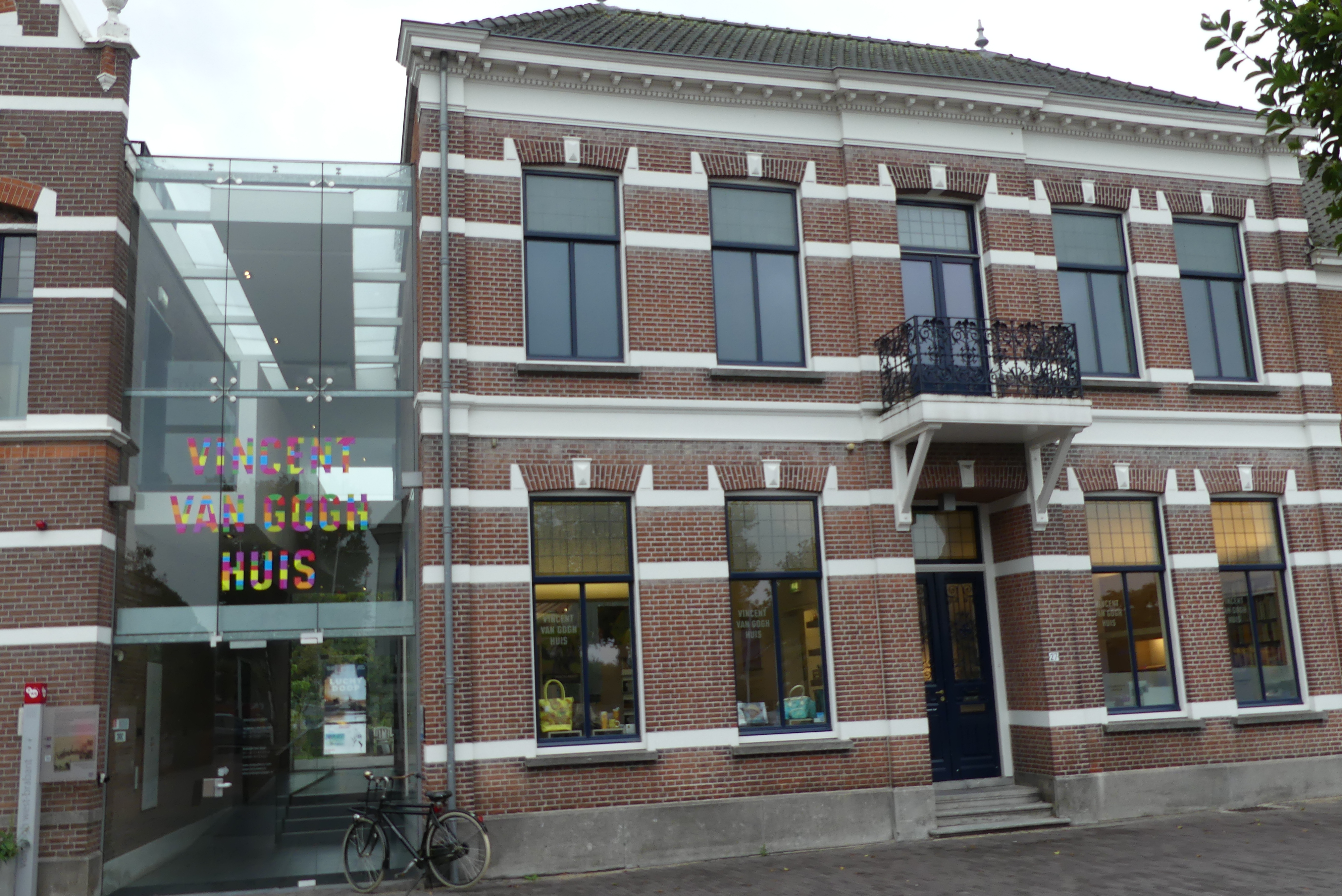
Zundert
The native village: Van Gogh before Van Gogh
Vincent was born in Zundert on March 30, 1853, into a pastor's family. The Vincent van GoghHuis is today a place of memory and experience rather than a simple museum of objects. It allows us to place the painter in his native Brabant: a world of religion, villages, flat landscapes, roads and fields.
- To see: the Van GoghHuis, the square, the traces of the native village.
- To understand: the importance of Brabant in the painter's imagination.
- Good article angle: Van Gogh was not born “cursed painter”, but a child of a very structured environment.

Nuenen
The laboratory of peasants and dark interiors
Van Gogh lived and worked in Nuenen from December 1883 to November 1885. It was one of the most productive moments of his artistic youth. There he drew and painted peasants, weavers, fields, mills, churches, hands and faces. This is where the preparation is taking place Potato Eaters.
- To see: Van Gogh Village Museum, village trail, painted places.
- To understand: the painter seeks a social truth, not yet the Provençal brilliance.
- The strong detail: Nuenen claims many places directly linked to his works.

Amsterdam
The grand narrative: the work brought together
The Van Gogh Museum in Amsterdam is the obvious step to understanding the painter's complete evolution. We follow the Dutch beginnings, Paris, Arles, Saint-Rémy, Auvers, letters, color research and the construction of the modern myth of Van Gogh.
- To see: self-portraits, flowers, landscapes, drawings, letters.
- To understand: Amsterdam gives the timeline, not just the icons.
- Tip: set aside time for drawings, which are often essential for understanding your method.

Otterlo
Van Gogh in nature: the Kroeller-Müller Museum
The Kroeller-Müller Museum preserves one of the most important Van Gogh collections in the world. Its interest is also spatial: we do not leave a museum street, but a national park. Van Gogh dialogues with pines, moorland, paths, modern sculpture and the idea of a collection built out of passion.
- To see: paintings by Van Gogh, sculpture garden, Hoge Veluwe park.
- To understand: Helene Kroeller-Müller played a major role in the reception of Van Gogh.
- Good addition: plan a slow day, museum + park.
Works to associate
Paintings that give relief to the journey
The journey becomes much clearer if we associate each place with a family of works: farmers and weavers in Nuenen, self-portraits and flowers in Amsterdam, landscapes and collectors in Otterlo.

Potato Eaters
The great outcome of Dutch Van Gogh: a harsh, deliberately dark scene, centered on peasant life.

Self-portraits
Amsterdam helps read Van Gogh as an artist who observes himself as much as he observes the world.
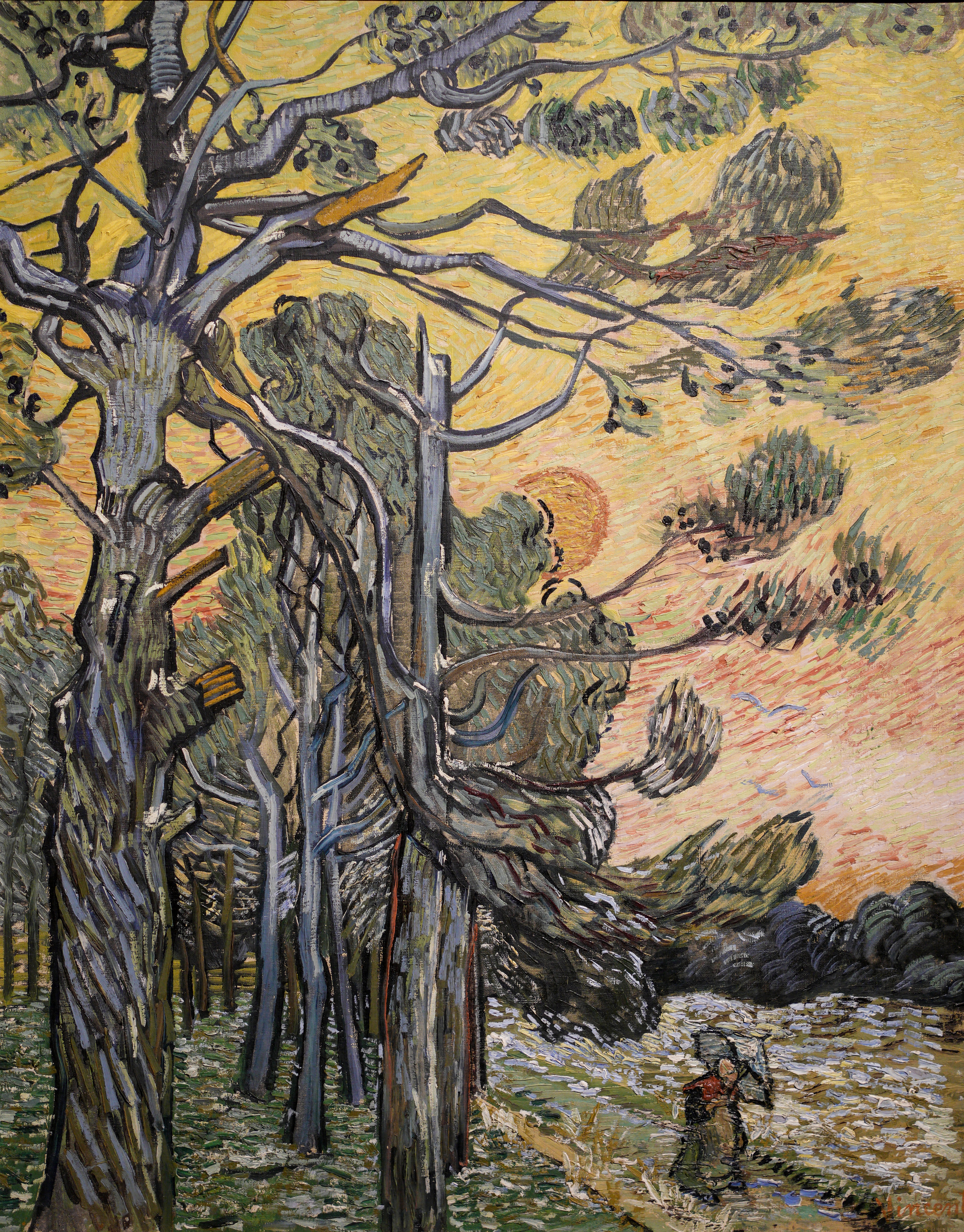
Landscape and vibration
At Kroeller-Müller, Van Gogh is often read through the material and tension of the landscape.

The shock of color
Comparing Sunflowers to Nuenen's works shows the extent of the shift towards French color.
More tables
Twelve works to cross Van Gogh from the Netherlands to France
To enrich the route, here is a wider selection: dark beginnings of Nuenen, interiors of Arles, nights, flowers, gardens, landscapes of Saint-Rémy and last fields of Auvers. Each painting extends a stage of the journey.

Potato Eaters
The dark manifesto of the Brabant Van Gogh, focused on peasant life.

The room
A dream refuge, built by color and a deliberately unstable perspective.

Sunflowers
Color almost becomes an autonomous subject: yellow, matter, rhythm.

Starry Night
The sky is no longer a setting: it becomes movement, spiral and inner force.

Café terrace in the evening
The urban night becomes warm, yellow, welcoming, almost theatrical.

The Night Café
Red, green, artificial light: the interior becomes psychological.

Starry Night on the Rhône
A calmer night than Saint-Rémy: reflections, couple, deep blue.

The Yellow House
The dream of an artistic community in Arles, summarized in a facade.

Almond tree in bloom
An image of birth and spring, very different from dark Brabant.

Wheat field with crows
A final landscape, broad, nervous, charged with intensity.

The Cypress
The tree becomes black and vertical flame, almost a signature.

Doctor Gachet
Van Gogh's last circle: care, melancholy, portrait and tension.
Special collections
Explore Van Gogh by series, locations and major motifs
The store contains very strong Van Gogh collections: some follow the locations, others the subjects. I highlight them here so that the reader can continue naturally after the article.

Vincent van Gogh Collection
The general entrance door: portraits, landscapes, flowers, nights, houses and rural scenes.

Van Gogh Nuenen
The period of Brabant peasants, weavers, mills and interiors.

Peasants
The social, earthy, brown Van Gogh, built around the gestures of work.

Self-portraits
The face as a workshop: fatigue, discipline, color and direct gaze.

Landscapes
Fields, roads, nights, trees and horizons crossed by the touchline.

Flowers
Sunflowers, irises, almond trees: still life becomes vibration.

Arles
The great solar explosion: yellow, blue, bridges, cafes and yellow house.

Saint-yarnaRémy
Cypress trees, olive trees, night sky and landscapes crossed by energy.

Auvers-sur-Oise
The last chapter: Gachet, fields, houses and final tension.

Starry nights
Blue, the stars, reflections and the night as an inner experience.

Wheat fields
The motif of roads, crows, wind and great horizons.

Japonism
Prints, flat areas, framing and decorative taste in the language of Van Gogh.
Practical advice
How to organize the trip without running around
The four stages cannot be visited with the same logic. Amsterdam is urban and museum; Zundert and Nuenen ask to walk in places of memory; Otterlo requires more time, because the museum is linked to the park.
| Step | Recommended time | What we gain | To associate |
|---|---|---|---|
| Zundert | Half day | Understanding family origin and native Brabant. | Van GoghHuis, village square, local promenade. |
| Nuenen | Half day to one day | See the Van Gogh of peasants, weavers and serious beginnings. | Van Gogh Village Museum + outdoor tour. |
| Amsterdam | Two to three hours minimum | Follow the full timeline and masterpieces. | Van Gogh Museum, Museumplein, other nearby museums. |
| Otterlo | A day | See Van Gogh in a major collection, with park and sculpture. | Kroeller-Müller Museum + Hoge Veluwe. |
Real photos
The journey in images: houses, museums, landscapes
These images help avoid too abstract a reading: Van Gogh is also a concrete geography, made up of villages, facades, roads, museums and flat landscapes.


Sources
Image sources and credits
Visit and collection data are based on the official websites of the institutions and on Wikimedia Commons for free or documentary images.
FAQs
Frequently asked questions
Quick answers to choose the stages, understand the locations and organize the route.
Where was Vincent van Gogh born in the Netherlands?
Vincent van Gogh was born in Zundert, North Brabant, on March 30, 1853.
Why is Nuenen important to Van Gogh?
Van Gogh lived there from December 1883 to November 1885. It was a very productive period, linked to peasants, weavers, Brabant landscapes and Potato eaters.
Which museum should you see first in Amsterdam?
The Van Gogh Museum is the main stop: it allows you to follow the entire career, from Dutch beginnings to French works.
Why go as far as Otterlo?
The Kroeller-Müller Museum maintains a very large Van Gogh collection and offers a different experience, in the heart of the De Hoge Veluwe National Park.
Can you do everything in one day?
No, not comfortably. For a day, choose Amsterdam or Nuenen. For a real route, plan several days between Brabant, Amsterdam and Otterlo.
Conclusion
The Netherlands shows Van Gogh's base before the solar myth
Following Van Gogh to the Netherlands is looking ahead to the explosion: the villages, the peasants, the interiors, the museums and the landscapes that prepare everything. Zundert and Nuenen give the root; Amsterdam and Otterlo give scale.
See Van Gogh reproductions
0 comments