

17th - 20th centuries · oil paintings
The 100 paintings roses the most famous
One hundred paintings where powder pink, flesh, salmon, old pink, fuchsia or magenta really construct the image - from Waterhouse and Monet to Matisse, Picasso, Klimt and Kandinsky.
More complex color than it looks
How did pink become a major color?
Pink is not a single pigment, but a family of mixtures and transparencies. Painters obtain it by lightening a red with white, superimposing a transparent lacquer on a light preparation or by bringing together touches of red, purple and cream. Depending on the material chosen, the shade becomes flesh, peach, salmon, old pink, mauve or fuchsia. Depending on the material chosen, the shade becomes flesh, peach, salmon, old pink, mauve or fuchsia. This instability explains its richness: pink can be tender, incandescent, artificial or disturbing.
Long associated with carnations, flowers and precious fabrics, it changed status in the 19th century when impressionism introduced it into the sky, shadows and reflections. Matisse then made it an architectural surface; Picasso pits it against blues and ochres; Klimt pulverizes it in his gardens; Kandinsky, Delaunay and abstract painters free him from the motif. Pink then becomes a spatial force capable of advancing towards the viewer or opening the canvas.
This classification does not retain a painting for an isolated pink detail. The color must structure the figures, the light or a significant part of the composition. The hundred works are oil paintings: no drawing, pastel, charcoal, watercolor, gouache, print, photograph or decorative object has been added.
Pink doesn't always soften paint: it can also make it more direct, more physical and more modern.
Very lightened and slightly grayed out, it binds skin tones, fabrics and interiors without hardening transitions.
Warmer and orange, it reflects the sun on the skin, the facades, the sand and the evening clouds.
Transparent and deep, it enriches glazes, flowers and colored shadows without making them opaque.
Lively and cold, it takes on an almost electric force on contact with green, blue and black.
100 paintings where pink constructs the image
Editorial rankingTwenty images that have become unforgettable
The absolute icons of pink
Pablo Picasso
The Ladies of Avignon
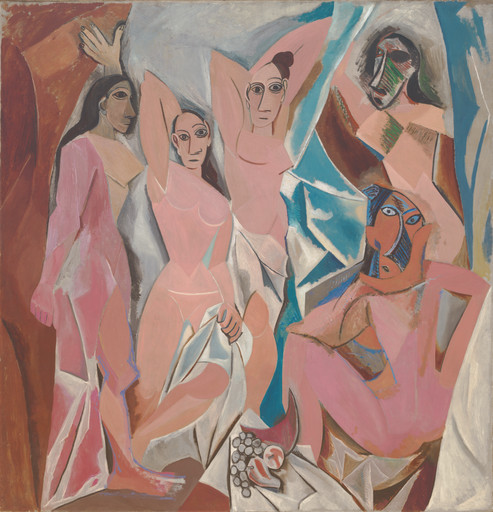
In "Les Demoiselles d'Avignon", pink does not play a decorative role: it regulates the light, depth and general rhythm of the image. Picasso uses carnal pink to bring the body closer to the painted surface and make the blues, ochres and blacks that cut it more abrupt. The color is distributed in repeats: a pink area calls for a neighboring halftone, then a dark accent restores depth. Its place in this first set is due to the memorial force of this range: pink is one of the elements which allows the work to be immediately identified.
View work in collection →
Henri Matisse
Window open, Collioure
In "Open Window, Collioure", pink does not play a decorative role: it regulates the light, depth and general rhythm of the image. Matisse treats pink as a constructive surface: it advances, recedes or vibrates neighboring colors without being reduced to a pleasant hue. Light values give the initial momentum, but the composition remains held by darker contours and counterpoints. Its place in this first set is due to the memorial force of this range: pink is one of the elements which allows the work to be immediately identified.
See reproduction →
Georges Seurat
The Poseuses
In "Les Poseuses", pink does not play a decorative role: it regulates the light, depth and general rhythm of the image. Seurat constructs his roses by optical neighborhoods; warm tones recompose at a distance and give the skin an almost powdery light. Pink does not necessarily cover the entire canvas; its strategic position is enough to adjust the balance of the masses and the path of the gaze. Its place in this first set is due to the memory force of this range: pink is one of the elements which allows the work to be immediately identified.
See reproduction →
Paul Gauguin
Women of Tahiti
In "Women of Tahiti", pink does not play a decorative role: it regulates the light, depth and general rhythm of the image. Gauguin places the pink in flat areas, between skin tones, fabrics and floor, so that the color organizes the painting even before the modeling. The color accompanies the figure without flattening it: it shapes the skin, specifies the fabric and organizes the distance between the body and its environment. Its place in this first set is due to the memory force of this range: pink is one of the elements which allows the work to be immediately identified.
See reproduction →
William Bouguereau
The Birth of Venus
In "The Birth of Venus", pink does not play a decorative role: it regulates the light, depth and general rhythm of the image. William Bouguereau modulates pink between light values and denser accents, so that the color retains both softness and construction power. The color accompanies the figure without flattening it: it shapes the skin, specifies the fabric and organizes the distance between the body and its environment. Its place in this first set is due to the memory force of this range: pink is one of the elements which allows the work to be immediately identified.
See reproduction →
John william waterhouse
The Rose Soul
In "The Soul of the Rose", pink does not play a decorative role: it regulates the light, depth and general rhythm of the image. Waterhouse reserves pink for fabrics, flowers and skin tones, then darkens it with deep greens to give the story a suspended intensity. The pink touches do not remain isolated: they propagate by echoes in whites, greens and browns, giving the pattern sensual continuity. Its place in this first set is due to the memorial force of this range: pink is one of the elements which allows the work to be immediately identified.
See reproduction →
Joaquin Sorolla
The Pink Bathrobe
In "The Pink Bathrobe", pink does not play a decorative role: it regulates the light, depth and general rhythm of the image. Sorolla gives rise to the pink of the sun: white, lilac and salmon respond to each other in the fabrics, skin and reflections of the water. The pink touches do not remain isolated: they propagate by echoes in whites, greens and browns, giving the pattern sensual continuity. Its place in this first set is due to the memorial force of this range: pink is one of the elements which allows the work to be immediately identified.
See reproduction →
Amedeo Modigliani
The Pink Blouse
In "The Pink Blouse", pink does not play a decorative role: it regulates the light, depth and general rhythm of the image. Modigliani reduces pink with ocher and gray; this matte range gives the model a calm, immediately recognizable presence. The pink touches do not remain isolated: they propagate by echoes in whites, greens and browns, giving the pattern sensual continuity. Its place in this first set is due to the memorial force of this range: pink is one of the elements which allows the work to be immediately identified.
See reproduction →
Edvard Munch
The Dance of Life
In "The Dance of Life", pink does not play a decorative role: it regulates the light, depth and general rhythm of the image. In Munch, pink is never innocent: close to red, mauve or acid green, it becomes a color of desire, memory and worry. The color is distributed in repeats: a pink area calls for a neighboring halftone, then a dark accent restores depth. Its place in this first ensemble is due to the memorial force of this range: pink is one of the elements which allows the work to be immediately identified.
See reproduction →
Paul Signac
The Port of Saint-Tropez
In "Le Port de Saint-Tropez", pink does not play a decorative role: it regulates the light, depth and general rhythm of the image. Signac fragments the pink into separate touches of blue, orange and purple; the atmosphere recomposes itself in the eye rather than on the palette. Between sky, water and earth, the salmon notes serve as a passage; they warm the horizon and prevent the blues from closing the space. Its place in this first set is due to the memorial force of this range: pink is one of the elements which allows the work to be immediately identified.
See reproduction →
JMW Turner
The Fighting Temeraire Tugged to Her Last Berth to be Broken Up, 1838
In "The Fighting Temeraire Tugged to Her Last Berth to be Broken Up, 1838", pink does not play a decorative role: it regulates the light, depth and general rhythm of the image. JMW Turner modulates pink between light values and denser accents, so that the color retains both softness and construction power. Pink does not necessarily cover the entire canvas; its strategic position is enough to adjust the balance of the masses and the path of the gaze. Its place in this first set is due to the memory force of this range: pink is one of the elements which allows the work to be immediately identified.
See reproduction →
Claude Monet
Parliament, sunset
In "Parliament, Sunset", pink does not play a decorative role: it regulates the light, depth and general rhythm of the image. Monet uses pink as a transient light, caught between the blue of the sky, the purple of the shadows and the cream vibration of the clouds. Between sky, water and earth, the salmon notes serve as a passage; they warm the horizon and prevent the blues from closing the space. Its place in this first set is due to the memorial force of this range: pink is one of the elements which allows the work to be immediately identified.
See reproduction →
Henri Matisse
Luxury, calm and voluptuousness
In "Luxury, Calm and Voluptuousness", pink does not play a decorative role: it regulates the light, depth and general rhythm of the image. Matisse treats pink as a constructive surface: it advances, recedes or vibrates neighboring colors without being reduced to a pleasant hue. The color is distributed in repeats: a pink area calls for a neighboring halftone, then a dark accent restores depth. Its place in this first set is due to the memorial force of this range: pink is one of the elements which allows the work to be immediately identified.
See reproduction →
Henri Matisse
The Green Ray
In "The Green Ray", pink does not play a decorative role: it regulates the light, depth and general rhythm of the image. Matisse treats pink as a constructive surface: it advances, recedes or vibrates neighboring colors without being reduced to a pleasant hue. Light values give the initial momentum, but the composition remains held by darker contours and counterpoints. Its place in this first set is due to the memorial force of this range: pink is one of the elements which allows the work to be immediately identified.
See reproduction →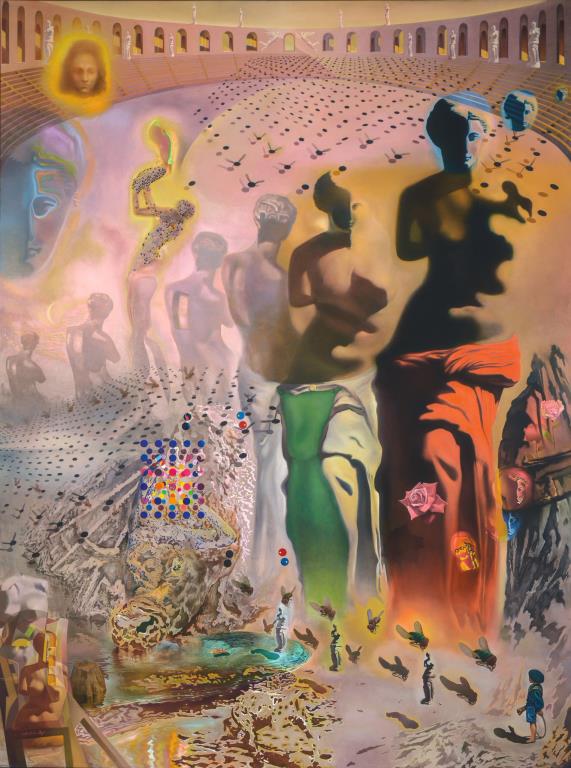
Salvador Dali
The Hallucinogenic Toreador
In "The Hallucinogenic Toreador", pink does not play a decorative role: it regulates the light, depth and general rhythm of the image. Salvador Dalí modulates pink between light values and denser accents, so that the color retains both softness and construction power. Pink does not necessarily cover the entire canvas; its strategic position is enough to regulate the balance of the masses and the path of the gaze. Its place in this first set is due to the memory force of this range: pink is one of the elements which allows the work to be immediately identified.
View work in collection →
John william waterhouse
At the sanctuary
In "At the Sanctuary", pink does not play a decorative role: it regulates the light, depth and general rhythm of the image. Waterhouse reserves pink for fabrics, flowers and skin tones, then darkens it with deep greens to give the story a suspended intensity. The shade oscillates between powder, salmon and magenta, which allows it to unite shapes that the drawing keeps distinct. Its place in this first set is due to the memorial force of this range: pink is one of the elements which allows the work to be immediately identified.
See reproduction →
Henri Matisse
The Pink Workshop
In "L'Atelier rose", pink does not play a decorative role: it regulates the light, depth and general rhythm of the image. Matisse treats pink as a constructive surface: it advances, recedes or vibrates neighboring colors without being reduced to a pleasant hue. The pink touches do not remain isolated: they propagate by echoes in whites, greens and browns, giving the pattern sensual continuity. Its place in this first set is due to the memorial force of this range: pink is one of the elements which allows the work to be immediately identified.
See reproduction →
Henri Matisse
The Pink Tablecloth
In "La Nappe rose", pink does not play a decorative role: it regulates the light, depth and general rhythm of the image. Matisse treats pink as a constructive surface: it advances, recedes or vibrates neighboring colors without being reduced to a pleasant hue. The pink touches do not remain isolated: they propagate by echoes in whites, greens and browns, giving the pattern sensual continuity. Its place in this first set is due to the memorial force of this range: pink is one of the elements which allows the work to be immediately identified.
See reproduction →
Alexej von Jawlensky
Summary: Symphony in pink
In "Summary: Symphony in Pink", pink does not play a decorative role: it regulates the light, depth and general rhythm of the image. Jawlensky concentrates pink in simplified forms where the face, landscape or sign acquires an almost iconic density. The pink touches do not remain isolated: they propagate by echoes in whites, greens and browns, giving the pattern sensual continuity. Its place in this first ensemble is due to the memorial force of this range: pink is one of the elements which allows the work to be immediately identified.
See reproduction →
Wassily Kandinsky
Decisive rose
In "Decisive Rose", pink does not play a decorative role: it regulates the light, depth and general rhythm of the image. Kandinsky releases pink from the pattern: the hue becomes an autonomous sound whose weight varies according to the black, green or yellow shapes that surround it. The pink touches do not remain isolated: they propagate by echoes in the whites, greens and browns, giving the pattern sensual continuity. Its place in this first set is due to the memorial force of this range: pink is one of the elements which allow the work to be immediately identified.
See reproduction →Skin, fabric and presence
The pink of figures, fabrics and flesh

Henri Matisse
White and pink head
In "White and Pink Head", pink does not play a decorative role: it regulates the light, depth and general rhythm of the image. Matisse treats pink as a constructive surface: it moves forward, backward or vibrates neighboring colors without being reduced to a friendly hue. The pink touches do not remain isolated: they propagate by echoes in whites, greens and browns, giving the pattern sensual continuity. Pink brings the face, clothing and decor together while maintaining fine differences between living flesh, fabric and reflected light.
See reproduction →
Henri Matisse
Pink nude sitting
In "Sitting Pink Nude", pink does not play a decorative role: it regulates the light, depth and general rhythm of the image. Matisse treats pink as a constructive surface: it moves forward, backward or vibrates neighboring colors without being reduced to a friendly hue. The pink touches do not remain isolated: they propagate by echoes in whites, greens and browns, giving the pattern sensual continuity. Pink brings the face, clothing and decor together while maintaining fine differences between living flesh, fabric and reflected light.
See reproduction →
Henri Rousseau
Young Girl in Pink
In "Young Girl in Pink", pink does not play a decorative role: it regulates the light, depth and general rhythm of the image. Henri Rousseau modulates pink between light values and denser accents, so that the color retains both softness and construction power. The pink touches do not remain isolated: they propagate by echoes in whites, greens and browns, giving the pattern sensual continuity. Pink touches do not remain isolated: they propagate by echoes in whites, greens and browns, giving the pattern sensual continuity. Pink brings the face, clothing and decor together while maintaining fine differences between living flesh, fabric and reflected light.
See reproduction →
Pierre-Auguste Renoir
Woman with a rose in front of the mirror
In "Woman with a Rose in Front of the Mirror", pink does not play a decorative role: it regulates the light, depth and general rhythm of the image. Renoir melts the pink of the cheeks, flowers and fabrics in a warm light, then retains some brighter accents to guide the eye. The pink touches do not remain isolated: they propagate by echoes in whites, greens and browns, giving the pattern sensual continuity. The pink touches do not remain isolated: they propagate by echoes in whites, greens and browns, giving the pattern sensual continuity. Pink brings the face, clothing and decor together while maintaining fine differences between living flesh, fabric and reflected light.
See reproduction →
James Abbott McNeill Whistler
Harmony in Pink and Gray: Lady Meux
In "Harmony in Pink and Gray: Lady Meux", pink does not play a decorative role: it regulates the light, depth and general rhythm of the image. James Abbott McNeill Whistler modulates pink between light values and denser accents, so that the color retains both softness and construction power. The pink touches do not remain isolated: they propagate by echoes in whites, greens and browns, giving the pattern sensual continuity. Pink touches do not remain isolated: they propagate by echoes in whites, greens and browns, giving the pattern sensual continuity. Pink brings the face, clothing and decor together while maintaining fine differences between living flesh, fabric and reflected light.
See reproduction →
Amedeo Modigliani
Caryatid rose (Audacity)
In "Caryatid Rose (Audacity)", pink does not play a decorative role: it regulates the light, depth and general rhythm of the image. Modigliani reduces pink with ocher and gray; this matte range gives the model a calm, immediately recognizable presence. The pink touches do not remain isolated: they propagate by echoes in whites, greens and browns, giving the pattern sensual continuity. Pink brings the face, clothing and decor together while maintaining fine differences between living flesh, fabric and reflected light.
See reproduction →
Henri Matisse
Woman on pink couch
In "Woman on the Pink Couch", pink does not play a decorative role: it regulates the light, depth and general rhythm of the image. Matisse treats pink as a constructive surface: it moves forward, backward or vibrates neighboring colors without being reduced to a friendly hue. The pink touches do not remain isolated: they propagate by echoes in whites, greens and browns, giving the pattern sensual continuity. Pink brings the face, clothing and decor together while maintaining fine differences between living flesh, fabric and reflected light.
See reproduction →
Henri Matisse
Three Sisters and "The Pink Marble Table" (The Three Sisters at "The Pink Marble Table")
In "Three Sisters and "The Pink Marble Table" (The Three Sisters at "The Pink Marble Table")", pink does not play a decorative role: it regulates the light, depth and general rhythm of the 'picture. Matisse treats pink as a constructive surface: it advances, recedes or vibrates neighboring colors without being reduced to a pleasant hue. The pink touches do not remain isolated: they propagate by echoes in whites, greens and browns, giving the pattern sensual continuity. Pink touches do not remain isolated: they propagate by echoes in whites, greens and browns, giving the pattern sensual continuity. Pink brings the face, clothing and decor together while maintaining fine differences between living flesh, fabric and reflected light.
See reproduction →
Joaquin Sorolla
Clotilde in an evening dress
In "Clotilde in an evening dress", pink does not play a decorative role: it regulates the light, depth and general rhythm of the image. Sorolla gives rise to the pink of the sun: white, lilac and salmon respond to each other in the fabrics, skin and reflections of the water. The color accompanies the figure without flattening it: it shapes the skin, specifies the fabric and organizes the distance between the body and its environment. Pink here brings the face, clothing and decor together while maintaining fine differences between living flesh, fabric and reflected light.
See reproduction →
John william waterhouse
Psyche opening the golden box
In "Psyche Opening the Golden Box", pink does not play a decorative role: it regulates the light, depth and general rhythm of the image. Waterhouse reserves pink for fabrics, flowers and skin tones, then darkens it with deep greens to give the story a suspended intensity. The color accompanies the figure without flattening it: it shapes the skin, specifies the fabric and organizes the distance between the body and its environment. Pink brings the face, clothing and decor together while maintaining fine differences between living flesh, fabric and reflected light.
See reproduction →
John william waterhouse
Psyche entering Cupid's garden
In "Psyche Entering Cupid's Garden", pink does not play a decorative role: it regulates the light, depth and general rhythm of the image. Waterhouse reserves pink for fabrics, flowers and skin tones, then darkens it with deep greens to give the story a suspended intensity. The pink touches do not remain isolated: they propagate by echoes in whites, greens and browns, giving the pattern sensual continuity. Pink touches do not remain isolated: they propagate by echoes in whites, greens and browns, giving the pattern sensual continuity. Pink brings the face, clothing and decor together while maintaining fine differences between living flesh, fabric and reflected light.
See reproduction →
John william waterhouse
The witch
In "The Witch", pink does not play a decorative role: it regulates the light, depth and general rhythm of the image. Waterhouse reserves pink for fabrics, flowers and skin tones, then darkens it with deep greens to give the story a suspended intensity. The shade oscillates between powder, salmon and magenta, which allows it to unite shapes that the design keeps distinct. The shade oscillates between powder, salmon and magenta, which allows it to unite shapes that the design keeps distinct. Pink brings the face, clothing and decor together here while maintaining fine differences between living flesh, fabric and reflected light.
See reproduction →
John william waterhouse
Tristan and Isolde, second version
In "Tristan and Isolde, second version", pink does not play a decorative role: it regulates the light, depth and general rhythm of the image. Waterhouse reserves pink for fabrics, flowers and skin tones, then darkens it with deep greens to give the story a suspended intensity. The color is distributed in repeats: a pink area calls for a neighboring halftone, then a dark accent restores depth. Pink brings the face, clothing and decor together while maintaining fine differences between living flesh, fabric and reflected light.
See reproduction →
John william waterhouse
Ariadne
In "Ariadne", pink does not play a decorative role: it regulates the light, depth and general rhythm of the image. Waterhouse reserves pink for fabrics, flowers and skin tones, then darkens it with deep greens to give the story a suspended intensity. The color accompanies the figure without flattening it: it shapes the skin, specifies the fabric and organizes the distance between the body and its environment. Pink brings the face, clothing and decor together while maintaining fine differences between living flesh, fabric and reflected light.
See reproduction →
John william waterhouse
Juliet
In "Juliette", pink does not play a decorative role: it regulates the light, depth and general rhythm of the image. Waterhouse reserves pink for fabrics, flowers and skin tones, then darkens it with deep greens to give the story a suspended intensity. The color accompanies the figure without flattening it: it shapes the skin, specifies the fabric and organizes the distance between the body and its environment. Pink brings the face, clothing and decor together while maintaining fine differences between living flesh, fabric and reflected light.
See reproduction →
Johannes Vermeer
The Lacemaker
In "La Dentellière", pink does not play a decorative role: it regulates the light, depth and general rhythm of the image. Johannes Vermeer modulates pink between light values and denser accents, so that the color retains both softness and construction power. The shade oscillates between powder, salmon and magenta, which allows it to unite shapes that the design keeps distinct. The shade oscillates between powder, salmon and magenta, which allows it to unite shapes that the design keeps distinct. Pink brings the face, clothing and decor together while maintaining fine differences between living flesh, fabric and reflected light.
See reproduction →
Johannes Vermeer
The Girl with the Glass of Wine
In "The Girl with the Glass of Wine", pink does not play a decorative role: it regulates the light, depth and general rhythm of the image. Johannes Vermeer modulates pink between light values and denser accents, so that the color retains both softness and construction power. The shade accompanies the figure without flattening it: it shapes the skin, specifies the fabric and organizes the distance between the body and its environment. Pink brings the face, clothing and decor together while maintaining fine differences between living flesh, fabric and reflected light.
See reproduction →
Joaquin Sorolla
My wife and my children
In "My Wife and My Children", pink does not play a decorative role: it regulates the light, depth and general rhythm of the image. Sorolla gives birth to the pink of the sun: white, lilac and salmon respond to each other in the fabrics, skin and reflections of the water. The color accompanies the figure without flattening it: it shapes the skin, specifies the fabric and organizes the distance between the body and its environment. Pink here brings the face, clothing and decor together while maintaining fine differences between living flesh, fabric and reflected light.
See reproduction →
Henri Matisse
The Spaniard: harmony in blue
In "The Spaniard: Harmony in Blue", pink does not play a decorative role: it regulates the light, depth and general rhythm of the image. Matisse treats pink as a constructive surface: it advances, recedes or vibrates neighboring colors without being reduced to a pleasant hue. Pink does not necessarily cover the entire canvas; its strategic position is enough to adjust the balance of the masses and the path of the gaze. Pink does not necessarily cover the entire canvas; its strategic position is enough to adjust the balance of the masses and the path of the gaze. Pink here brings the face, clothing and decor closer together while maintaining fine differences between living flesh, fabric and reflected light.
See reproduction →
Henri Matisse
Pink statuette and jug on a red chest of drawers
In "Pink statuette and jug on a red chest of drawers", pink does not play a decorative role: it regulates the light, depth and general rhythm of the image. Matisse treats pink as a constructive surface: it moves forward, backward or vibrates neighboring colors without being reduced to a friendly hue. The pink touches do not remain isolated: they propagate by echoes in whites, greens and browns, giving the pattern sensual continuity. Pink touches do not remain isolated: they propagate by echoes in whites, greens and browns, giving the pattern sensual continuity. Pink brings the face, clothing and decor together while maintaining fine differences between living flesh, fabric and reflected light.
See reproduction →From the petal to the surface
Flowers, gardens and pink materials

Gustav Klimt
Rose bushes under the trees
In "Roses Under the Trees", pink does not play a decorative role: it regulates the light, depth and general rhythm of the image. Klimt disseminates pink into small floral units; color transforms the garden into a living tapestry without abolishing depth. The pink touches do not remain isolated: they propagate by echoes in whites, greens and browns, giving the pattern sensual continuity. In this group, the pink touches do not remain isolated: they propagate by echoes in whites, greens and browns, giving the pattern sensual continuity. In this group, the hue circulates between petals, foliage, tablecloth and wall; it makes the natural pattern a true chromatic architecture.
See reproduction →
Gustav Klimt
Orchard with rose bushes
In "Overage with Rose Bushes", pink does not play a decorative role: it regulates the light, depth and general rhythm of the image. Klimt disseminates pink into small floral units; color transforms the garden into a living tapestry without abolishing depth. The pink touches do not remain isolated: they propagate by echoes in whites, greens and browns, giving the pattern sensual continuity. In this group, the pink touches do not remain isolated: they propagate by echoes in whites, greens and browns, giving the pattern sensual continuity. In this group, the hue circulates between petals, foliage, tablecloth and wall; it makes the natural pattern a true chromatic architecture.
See reproduction →
Gustav Klimt
Flower garden
In "Garden of Flowers", pink does not play a decorative role: it regulates the light, depth and general rhythm of the image. Klimt disseminates pink into small floral units; color transforms the garden into a living tapestry without abolishing depth. The pink touches do not remain isolated: they propagate by echoes in whites, greens and browns, giving the pattern sensual continuity. In this group, the pink touches do not remain isolated: they propagate by echoes in whites, greens and browns, giving the pattern sensual continuity. In this group, the hue circulates between petals, foliage, tablecloth and wall; it makes the natural pattern a true chromatic architecture.
See reproduction →
Gustav Klimt
Garden path with chickens
In "Garden Alley with Chickens", pink does not play a decorative role: it regulates the light, depth and general rhythm of the image. Klimt disseminates pink into small floral units; color transforms the garden into a living tapestry without abolishing depth. The pink touches do not remain isolated: they propagate by echoes in whites, greens and browns, giving the pattern sensual continuity. In this group, the pink touches do not remain isolated: they propagate by echoes in whites, greens and browns, giving the pattern sensual continuity. In this group, the hue circulates between petals, foliage, tablecloth and wall; it makes the natural pattern a true chromatic architecture.
See reproduction →
Gustav Klimt
Two girls with a oleander
In "Two Girls with a Oleander", pink does not play a decorative role: it regulates the light, depth and general rhythm of the image. Klimt disseminates pink into small floral units; color transforms the garden into a living tapestry without abolishing depth. The pink touches do not remain isolated: they propagate by echoes in whites, greens and browns, giving the pattern sensual continuity. In this group, the pink touches do not remain isolated: they propagate by echoes in whites, greens and browns, giving the pattern sensual continuity. In this group, the hue circulates between petals, foliage, tablecloth and wall; it makes the natural pattern a true chromatic architecture.
See reproduction →
Henri Matisse
Christmas roses and saxifrage
In "Christmas Roses and Saxifrage", pink does not play a decorative role: it regulates the light, depth and general rhythm of the image. Matisse treats pink as a constructive surface: it advances, recedes or vibrates neighboring colors without being reduced to a pleasant hue. The pink touches do not remain isolated: they propagate by echoes in whites, greens and browns, giving the pattern sensual continuity. In this group, the pink touches do not remain isolated: they propagate by echoes in whites, greens and browns, giving the pattern sensual continuity. In this group, the hue circulates between petals, foliage, tablecloth and wall; it makes the natural pattern a true chromatic architecture.
See reproduction →
Henri Matisse
Pink onions
In "Pink Onions", pink does not play a decorative role: it regulates the light, depth and general rhythm of the image. Matisse treats pink as a constructive surface: it advances, recedes or vibrates neighboring colors without being reduced to a pleasant hue. The pink touches do not remain isolated: they propagate by echoes in whites, greens and browns, giving the pattern sensual continuity. In this group, the pink touches do not remain isolated: they propagate by echoes in whites, greens and browns, giving the pattern sensual continuity. In this group, the hue circulates between petals, foliage, tablecloth and wall; it makes the natural pattern a true chromatic architecture.
See reproduction →
Piet Mondrian
White rose in a glass
In "White Rose in a Glass", pink does not play a decorative role: it regulates the light, depth and general rhythm of the image. Piet Mondrian modulates pink between light values and denser accents, so that the color retains both softness and construction power. The pink touches do not remain isolated: they propagate by echoes in whites, greens and browns, giving the pattern sensual continuity. In this group, the pink touches do not remain isolated: they propagate by echoes in whites, greens and browns, giving the pattern sensual continuity. In this group, the hue circulates between petals, foliage, tablecloth and wall; it makes the natural pattern a true chromatic architecture.
See reproduction →
Robert Delaunay
White hollyhock
In "White Hollyhock", pink does not play a decorative role: it regulates the light, depth and general rhythm of the image. Delaunay circulates pink between discs and colored planes; it no longer illustrates an object, but the speed and expansion of light. The pink touches do not remain isolated: they propagate by echoes in whites, greens and browns, giving the pattern sensual continuity. In this group, the hue circulates between petals, foliage, tablecloth and wall; it makes the natural pattern a true chromatic architecture.
See reproduction →
Martin Johnson Heade
Cherokee roses on a light gray fabric
In "Cherokee Roses on Light Gray Fabric", pink does not play a decorative role: it regulates the light, depth and general rhythm of the image. Martin Johnson Heade modulates pink between light values and denser accents, so that the color retains both softness and construction power. The pink touches do not remain isolated: they propagate by echoes in whites, greens and browns, giving the pattern sensual continuity. In this group, the pink touches do not remain isolated: they propagate by echoes in whites, greens and browns, giving the pattern sensual continuity. In this group, the hue circulates between petals, foliage, tablecloth and wall; it makes the natural pattern a true chromatic architecture.
See reproduction →
John william waterhouse
Pick the roses while there's time, first version
In "Pick the roses while there is time, first version", pink does not play a decorative role: it regulates the light, depth and general rhythm of the image. Waterhouse reserves pink for fabrics, flowers and skin tones, then darkens it with deep greens to give the story a suspended intensity. The pink touches do not remain isolated: they propagate by echoes in whites, greens and browns, giving the pattern sensual continuity. In this group, the hue circulates between petals, foliage, tablecloth and wall; it makes the natural pattern a true chromatic architecture.
See reproduction →
John william waterhouse
Pick the roses while there's time, second version
In "Pick the roses while there is time, second version", pink does not play a decorative role: it regulates the light, depth and general rhythm of the image. Waterhouse reserves pink for fabrics, flowers and skin tones, then darkens it with deep greens to give the story a suspended intensity. The pink touches do not remain isolated: they propagate by echoes in whites, greens and browns, giving the pattern sensual continuity. In this group, the hue circulates between petals, foliage, tablecloth and wall; it makes the natural pattern a true chromatic architecture.
See reproduction →
John william waterhouse
Gathering summer flowers in a Devonshire garden
In "Gathering Summer Flowers in a Devonshire Garden", pink does not play a decorative role: it regulates the light, depth and general rhythm of the image. Waterhouse reserves pink for fabrics, flowers and skin tones, then darkens it with deep greens to give the story a suspended intensity. The pink touches do not remain isolated: they propagate by echoes in whites, greens and browns, giving the pattern sensual continuity. In this group, the hue circulates between petals, foliage, tablecloth and wall; it makes the natural pattern a true chromatic architecture.
See reproduction →
John william waterhouse
The enchanted garden
In "The Enchanted Garden", pink does not play a decorative role: it regulates the light, depth and general rhythm of the image. Waterhouse reserves pink for fabrics, flowers and skin tones, then darkens it with deep greens to give the story a suspended intensity. The pink touches do not remain isolated: they propagate by echoes in whites, greens and browns, giving the pattern sensual continuity. In this group, the hue circulates between petals, foliage, tablecloth and wall; it makes the natural pattern a true chromatic architecture.
See reproduction →
John william waterhouse
Ophélie with flowers
In "Ophélie aux fleurs", pink does not play a decorative role: it regulates the light, depth and general rhythm of the image. Waterhouse reserves pink for fabrics, flowers and skin tones, then darkens it with deep greens to give the story a suspended intensity. The pink touches do not remain isolated: they propagate by echoes in whites, greens and browns, giving the pattern sensual continuity. In this group, the hue circulates between petals, foliage, tablecloth and wall; it makes the natural pattern a true chromatic architecture.
See reproduction →
John william waterhouse
Windflowers
In "Fleurs des vents", pink does not play a decorative role: it regulates the light, depth and general rhythm of the image. Waterhouse reserves pink for fabrics, flowers and skin tones, then darkens it with deep greens to give the story a suspended intensity. The pink touches do not remain isolated: they propagate by echoes in whites, greens and browns, giving the pattern sensual continuity. In this group, the pink touches do not remain isolated: they propagate by echoes in whites, greens and browns, giving the pattern sensual continuity. In this group, the color circulates between petals, foliage, tablecloth and wall; it makes the natural pattern a true chromatic architecture.
See reproduction →
Ethel Carrick
Flower market
In "Flower market", pink does not play a decorative role: it regulates the light, depth and general rhythm of the image. Ethel Carrick modulates pink between light values and denser accents, so that the color retains both softness and construction power. The color is distributed in repeats: a pink area calls for a neighboring halftone, then a dark accent restores depth. In this group, the hue circulates between petals, foliage, tablecloth and wall; it makes the natural pattern a true chromatic architecture.
See reproduction →
Joaquin Sorolla
Garden of Maison Sorolla
In "Jardin de la Maison Sorolla", pink does not play a decorative role: it regulates the light, depth and general rhythm of the image. Sorolla gives rise to the pink of the sun: white, lilac and salmon respond to each other in the fabrics, skin and reflections of the water. The pink touches do not remain isolated: they propagate by echoes in whites, greens and browns, giving the pattern sensual continuity. In this group, the pink touches do not remain isolated: they propagate by echoes in whites, greens and browns, giving the pattern sensual continuity. In this group, the color circulates between petals, foliage, tablecloth and wall; it makes the natural pattern a true chromatic architecture.
See reproduction →
Joaquin Sorolla
Garden of Maison Sorolla in 1920
In "Jardin de la Maison Sorolla in 1920", pink does not play a decorative role: it regulates the light, depth and general rhythm of the image. Sorolla gives birth to the pink of the sun: white, lilac and salmon respond to each other in the fabrics, skin and reflections of the water. The pink touches do not remain isolated: they propagate by echoes in the whites, greens and browns, giving the pattern sensual continuity. In this group, the pink touches do not remain isolated: they propagate by echoes in the whites, greens and browns, giving the pattern sensual continuity. In this group, the color circulates between petals, foliage, tablecloth and wall; it makes the natural pattern a true chromatic architecture.
See reproduction →
August Macke
Garden on the shores of Lake Thun
In "Garden on the shores of Lake Thun", pink does not play a decorative role: it regulates the light, depth and general rhythm of the image. Macke combines pink with solar yellows and transparent greens, producing a joyful clarity whose structure remains firmly ordered. The pink touches do not remain isolated: they propagate by echoes in whites, greens and browns, giving the pattern sensual continuity. In this group, the pink touches do not remain isolated: they propagate by echoes in whites, greens and browns, giving the pattern sensual continuity. In this group, the hue circulates between petals, foliage, tablecloth and wall; it makes the natural pattern a true chromatic architecture.
See reproduction →Color becomes autonomous
From Fauvism to modern magenta

Henri Matisse
Still life with apples on a pink tablecloth
In "Still Life with Apples on a Pink Tablecloth", pink does not play a decorative role: it regulates the light, depth and general rhythm of the image. Matisse treats pink as a constructive surface: it advances, recedes or vibrates neighboring colors without being reduced to a pleasant hue. The pink touches do not remain isolated: they propagate by echoes in whites, greens and browns, giving the pattern sensual continuity. The modern touches of the work also come from this autonomy of pink, which has become plan, rhythm or tension rather than a simple local color.
See reproduction →
Henri Matisse
Goldfish
In "Goldfish", pink does not play a decorative role: it regulates the light, depth and general rhythm of the image. Matisse treats pink as a constructive surface: it advances, recedes or vibrates neighboring colors without being reduced to a pleasant hue. Pink acts as a support plane: it connects objects and walls, sometimes reverses depth and transforms the interior into a colorful field. The modernity of the work also comes from this autonomy of pink, which has become plan, rhythm or tension rather than a simple local color.
See reproduction →
Henri Matisse
Yellow Odalisque
In "Odalisque jaune", pink does not play a decorative role: it regulates the light, depth and general rhythm of the image. Matisse treats pink as a constructive surface: it advances, recedes or vibrates neighboring colors without being reduced to a pleasant hue. Pink does not necessarily cover the entire canvas; its strategic position is enough to adjust the balance of the masses and the path of the gaze. The modernity of the work also comes from this autonomy of pink, which has become plan, rhythm or tension rather than a simple local color.
See reproduction →
Henri Matisse
Odalisque with a yellow Persian color
In "Odalisque with a yellow Persian color", pink does not play a decorative role: it regulates the light, depth and general rhythm of the image. Matisse treats pink as a constructive surface: it advances, recedes or vibrates neighboring colors without being reduced to a pleasant hue. The hue accompanies the figure without flattening it: it shapes the skin, specifies the fabric and organizes the distance between the body and its environment. The modernity of the work also comes from this autonomy of pink, which has become plan, rhythm or tension rather than a simple local color.
See reproduction →
Henri Matisse
Young Woman in white, red background
In "Young Woman in White, Red Background", pink does not play a decorative role: it regulates the light, depth and general rhythm of the image. Matisse treats pink as a constructive surface: it advances, recedes or vibrates neighboring colors without being reduced to a pleasant hue. The hue accompanies the figure without flattening it: it shapes the skin, specifies the fabric and organizes the distance between the body and its environment. The modernity of the work also comes from this autonomy of pink, which has become plan, rhythm or tension rather than a simple local color.
See reproduction →
Henri Matisse
Two little girls, yellow and red background
In "Two Little Girls, Yellow and Red Background", pink does not play a decorative role: it regulates the light, depth and general rhythm of the image. Matisse treats pink as a constructive surface: it advances, recedes or vibrates neighboring colors without being reduced to a pleasant hue. The hue accompanies the figure without flattening it: it shapes the skin, specifies the fabric and organizes the distance between the body and its environment. The modernity of the work also comes from this autonomy of pink, which has become plan, rhythm or tension rather than a simple local color.
See reproduction →
Fernand Léger
The Pink Tugboat
In "The Pink Tug", pink does not play a decorative role: it regulates the light, depth and general rhythm of the image. Fernand Léger modulates pink between light values and denser accents, so that the color retains both softness and construction power. The pink touches do not remain isolated: they propagate by echoes in whites, greens and browns, giving the pattern sensual continuity. The modern touches of the work also come from this autonomy of pink, which has become plan, rhythm or tension rather than simple local color.
See reproduction →
Wassily Kandinsky
Pink with Gray
In "Rose with Gray", pink does not play a decorative role: it regulates the light, depth and general rhythm of the image. Kandinsky releases pink from the pattern: the hue becomes an autonomous sound whose weight varies according to the black, green or yellow shapes that surround it. The pink touches do not remain isolated: they propagate by echoes in the whites, greens and browns, giving the pattern sensual continuity. The pink touches do not remain isolated: they propagate by echoes in the whites, greens and browns, giving the pattern sensual continuity. The modernity of the work also comes from this autonomy of pink, which has become plan, rhythm or tension rather than a simple local color.
See reproduction →
Wassily Kandinsky
Pink accent
In "Accent en rose", pink does not play a decorative role: it regulates the light, depth and general rhythm of the image. Kandinsky releases pink from the pattern: the hue becomes an autonomous sound whose weight varies according to the black, green or yellow shapes that surround it. The pink touches do not remain isolated: they propagate by echoes in the whites, greens and browns, giving the pattern sensual continuity. The pink touches do not remain isolated: they propagate by echoes in the whites, greens and browns, giving the pattern sensual continuity. The modernity of the work also comes from this autonomy of pink, which has become plan, rhythm or tension rather than a simple local color.
See reproduction →
Wassily Kandinsky
Bright and silent pink
In "Lively and Silent Rose", pink does not play a decorative role: it regulates the light, depth and general rhythm of the image. Kandinsky releases pink from the pattern: the hue becomes an autonomous sound whose weight varies according to the black, green or yellow shapes that surround it. The pink touches do not remain isolated: they propagate by echoes in the whites, greens and browns, giving the pattern sensual continuity. The pink touches do not remain isolated: they propagate by echoes in the whites, greens and browns, giving the pattern sensual continuity. The modernity of the work also comes from this autonomy of pink, which has become plan, rhythm or tension rather than a simple local color.
See reproduction →
Wassily Kandinsky
Penetrating green
In "Penetrating Green", pink does not play a decorative role: it regulates the light, depth and general rhythm of the image. Kandinsky frees pink from the pattern: the hue becomes an autonomous sound whose weight varies according to the black, green or yellow shapes that surround it. Pink does not necessarily cover the entire canvas; its strategic position is enough to regulate the balance of the masses and the path of the gaze. The modernity of the work also comes from this autonomy of pink, which has become plan, rhythm or tension rather than simple local color.
See reproduction →
Wassily Kandinsky
Green void
In "Vide vert", pink does not play a decorative role: it regulates the light, depth and general rhythm of the image. Kandinsky releases pink from the pattern: the hue becomes an autonomous sound whose weight varies according to the black, green or yellow shapes that surround it. The shade oscillates between powder, salmon and magenta, which allows it to unite shapes that the design keeps distinct. The nuance oscillates between powder, salmon and magenta, which allows it to unite shapes that the design keeps distinct. The modernity of the work also comes from this autonomy of pink, which has become plan, rhythm or tension rather than simple local color.
See reproduction →
Alexej von Jawlensky
Mystical woman's head on red background
In "Head of a Mystical Woman on a Red Background", pink does not play a decorative role: it regulates the light, depth and general rhythm of the image. Jawlensky concentrates pink in simplified forms where the face, landscape or sign acquires an almost iconic density. The color accompanies the figure without flattening it: it shapes the skin, specifies the fabric and organizes the distance between the body and its environment. The modernity of the work also comes from this autonomy of pink, which has become plan, rhythm or tension rather than simple local color.
See reproduction →
Alexej von Jawlensky
Red Road, St. Prex
In "Red Path, St. Prex", pink does not play a decorative role: it regulates the light, depth and general rhythm of the image. Jawlensky concentrates pink in simplified forms where the face, landscape or sign acquires an almost iconic density. The light values give the initial momentum, but the composition remains held by darker contours and counterpoints. The modernity of the work also comes from this autonomy of pink, which has become plan, rhythm or tension rather than simple local color.
See reproduction →
Jackson Pollock
Easter and the Totem
In "Easter and the Totem", pink does not play a decorative role: it regulates the light, depth and general rhythm of the image. Jackson Pollock modulates pink between light values and denser accents, so that the color retains both softness and construction power. Pink does not necessarily cover the entire canvas; its strategic position is enough to regulate the balance of masses and the path of the gaze. The modernity of the work also comes from this autonomy of pink, which has become plan, rhythm or tension rather than simple local color.
See reproduction →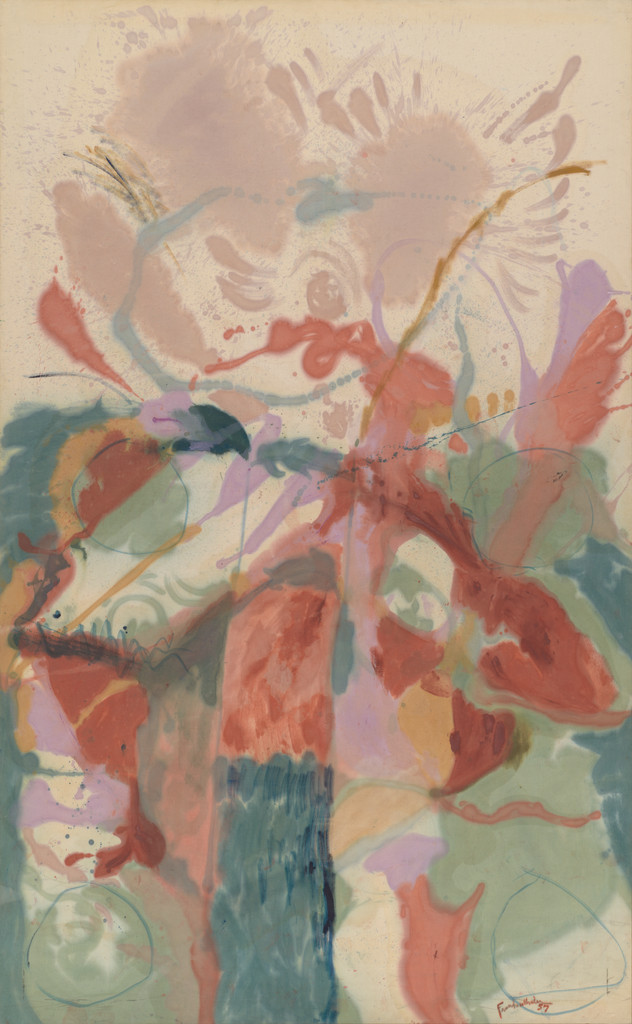
Helen Frankenthaler
Jacob's Ladder
In "Jacob's Ladder", pink does not play a decorative role: it regulates the light, depth and general rhythm of the image. Helen Frankenthaler modulates pink between light values and denser accents, so that the color retains both softness and construction power. The shade oscillates between powder, salmon and magenta, which allows it to unite shapes that the design keeps distinct. The nuance oscillates between powder, salmon and magenta, which allows it to unite shapes that the design keeps distinct. The modernity of the work also comes from this autonomy of pink, which has become plan, rhythm or tension rather than simple local color.
View work in collection →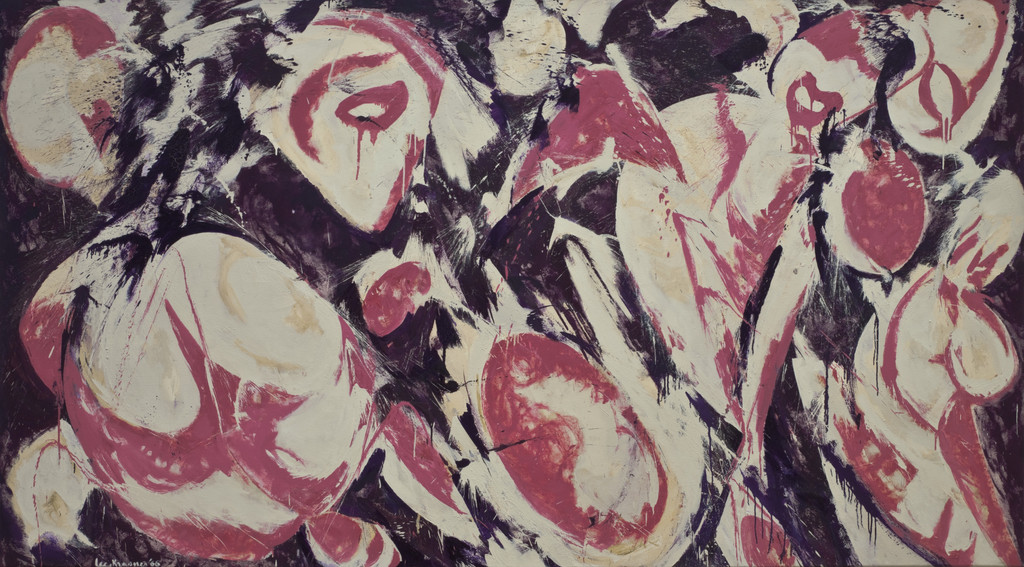
Lee Krasner
Gaea
In "Gaea", pink does not play a decorative role: it regulates the light, depth and general rhythm of the image. Lee Krasner modulates pink between light values and denser accents, so that the color retains both softness and construction power. The color is distributed in repeats: a pink area calls for a neighboring halftone, then a dark accent restores depth. The modernity of the work also comes from this autonomy of pink, which has become plan, rhythm or tension rather than a simple local color.
View work in collection →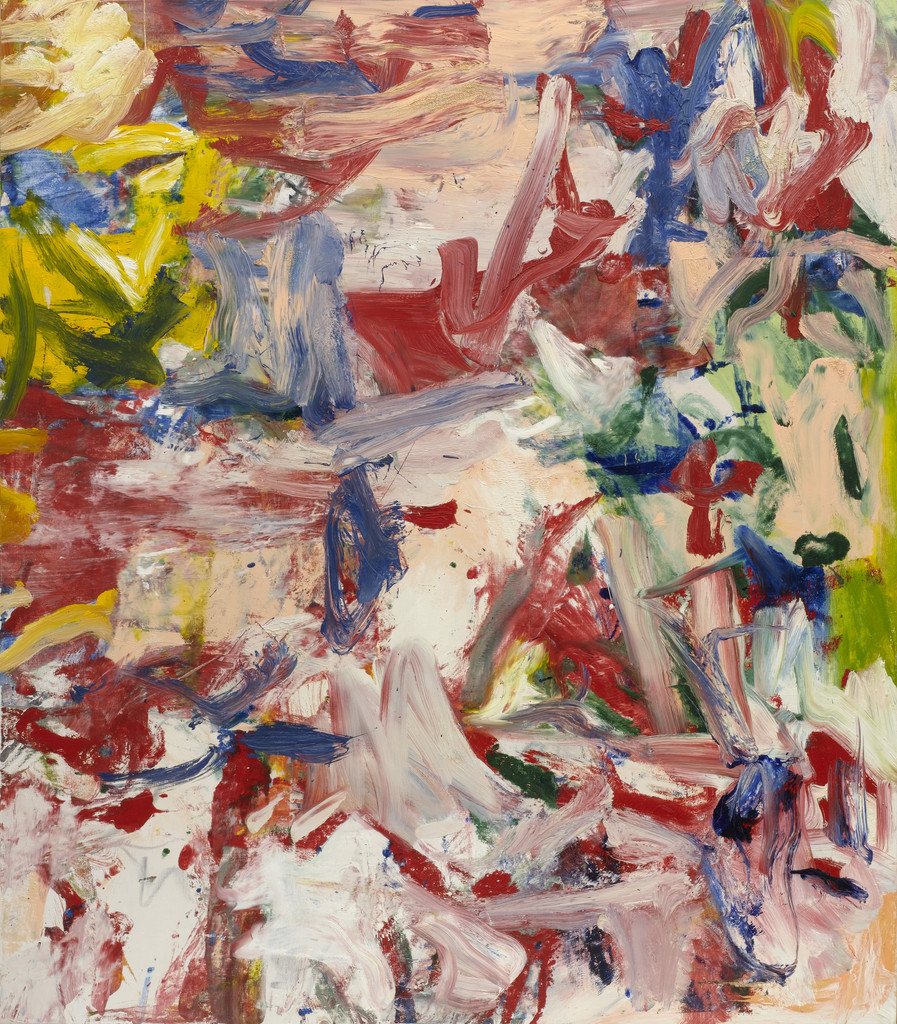
Willem de Kooning
Untitled XIX
In "Untitled XIX", pink does not play a decorative role: it regulates the light, depth and general rhythm of the image. Willem de Kooning modulates pink between light values and denser accents, so that the color retains both softness and construction power. Light values give the initial momentum, but the composition remains held by darker contours and counterpoints. The modernity of the work also comes from this autonomy of pink, which has become plan, rhythm or tension rather than simple local color.
View work in collection →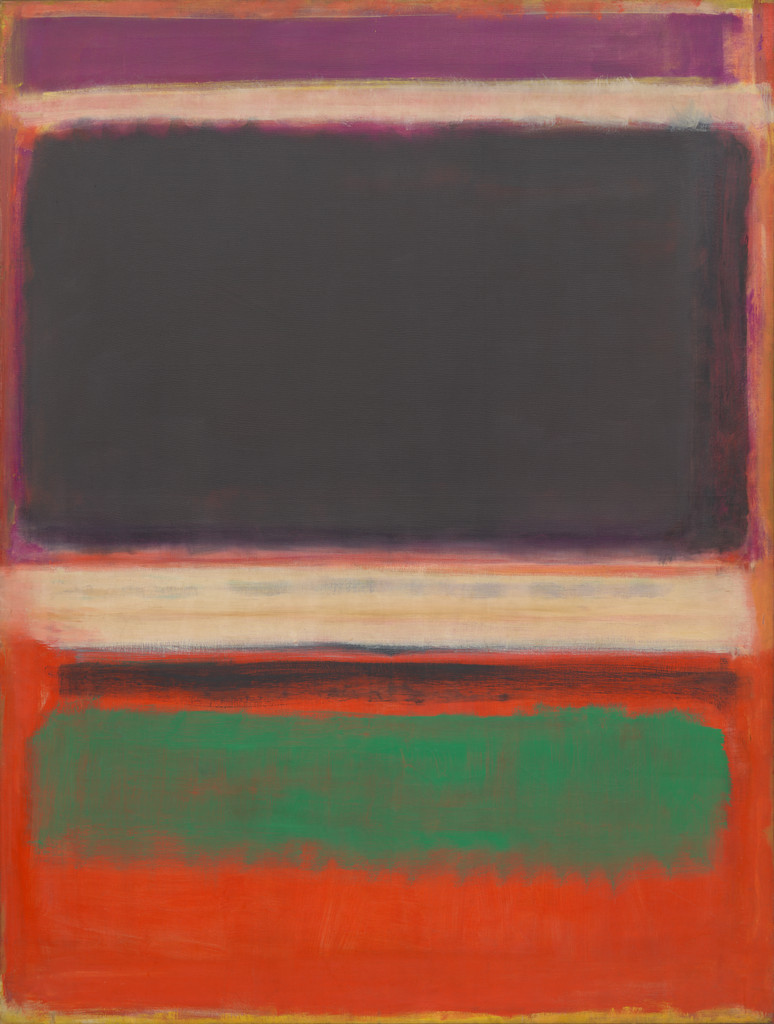
Mark Rothko
No. 3/No. 13
In "No. 3/No. 13", pink does not play a decorative role: it regulates the light, depth and general rhythm of the image. Mark Rothko modulates pink between light values and denser accents, so that the color retains both softness and construction power. Pink does not necessarily cover the entire canvas; its strategic position is enough to regulate the balance of masses and the path of the gaze. The modernity of the work also comes from this autonomy of pink, which has become plan, rhythm or tension rather than simple local color.
View work in collection →
Robert Delaunay
Circular shapes. Sun, Moon
In "Circular Shapes. Sun, Moon", pink does not play a decorative role: it regulates the light, depth and general rhythm of the image. Delaunay circulates pink between discs and colored planes; it no longer illustrates an object, but the speed and expansion of light. The nuance oscillates between powder, salmon and magenta, which allows it to unite shapes that the drawing keeps distinct. The modernity of the work also comes from this autonomy of pink, which has become plan, rhythm or tension rather than simple local color.
See reproduction →The pink hour of the landscape
Pink skies, shores and salmon light

Joaquin Sorolla
Oxen pulling a boat on Valencia beach
In "Owls pulling a boat on the beach of Valencia", pink does not play a decorative role: it regulates the light, depth and general rhythm of the image. Sorolla gives rise to the pink of the sun: white, lilac and salmon respond to each other in the fabrics, skin and reflections of the water. Between sky, water and earth, salmon notes serve as a passage; they warm the horizon and prevent blues from closing the space. Between sky, water and earth, salmon notes serve as a passage; they warm the horizon and prevent blues from closing the space. Pink behaves here like an hour of the day: it measures heat, atmospheric distance and the fleeting passage of light.
See reproduction →
Joaquin Sorolla
Getting out of the bath
In "The Exit from the Bath", pink does not play a decorative role: it regulates the light, depth and general rhythm of the image. Sorolla gives rise to the pink of the sun: white, lilac and salmon respond to each other in the fabrics, skin and reflections of the water. The light values give the initial momentum, but the composition remains held by darker contours and counterpoints. Pink behaves here like an hour of the day: it measures heat, atmospheric distance and the fleeting passage of light.
See reproduction →
Joaquin Sorolla
Nalon Estuary, Asturias
In "Nalon Estuary, Asturias", pink does not play a decorative role: it regulates the light, depth and general rhythm of the image. Sorolla gives rise to the pink of the sun: white, lilac and salmon respond to each other in the fabrics, skin and reflections of the water. Between sky, water and earth, salmon notes serve as a passage; they warm the horizon and prevent blues from closing the space. Pink behaves like an hour of the day here: it measures heat, atmospheric distance and the fleeting passage of light.
See reproduction →
Joaquin Sorolla
Ladies' walk on Biarritz beach
In "Ladies' Walk on the Beach of Biarritz", pink does not play a decorative role: it regulates the light, depth and general rhythm of the image. Sorolla gives rise to the pink of the sun: white, lilac and salmon respond to each other in the fabrics, skin and reflections of the water. Between sky, water and earth, salmon notes serve as a passage; they warm the horizon and prevent blues from closing the space. Between sky, water and earth, salmon notes serve as a passage; they warm the horizon and prevent blues from closing the space. Pink behaves here like an hour of the day: it measures heat, atmospheric distance and the fleeting passage of light.
See reproduction →
Joaquin Sorolla
Valencia
In "Valencia", pink does not play a decorative role: it regulates the light, depth and general rhythm of the image. Sorolla gives rise to the pink of the sun: white, lilac and salmon respond to each other in the fabrics, skin and reflections of the water. Between sky, water and earth, salmon notes serve as a passage; they warm the horizon and prevent blues from closing the space. Pink behaves like an hour of the day here: it measures heat, atmospheric distance and the fleeting passage of light.
See reproduction →
Joaquin Sorolla
Aragon: the jota
In "Aragon: the jota", pink does not play a decorative role: it regulates the light, depth and general rhythm of the image. Sorolla gives rise to the pink of the sun: white, lilac and salmon respond to each other in the fabrics, skin and reflections of the water. The light values give the initial momentum, but the composition remains held by darker contours and counterpoints. Pink behaves here like an hour of the day: it measures heat, atmospheric distance and the fleeting passage of light.
See reproduction →
Joaquin Sorolla
Catalonia: fish
In "Catalonia: the fish", pink does not play a decorative role: it regulates the light, depth and general rhythm of the image. Sorolla gives birth to the pink of the sun: white, lilac and salmon respond to each other in the fabrics, skin and reflections of the water. Pink acts as a support plane: it connects objects and walls, sometimes reverses depth and transforms the interior into a colored field. Pink behaves like an hour of the day here: it connects objects and walls, sometimes reverses depth and transforms the interior into a colored field. Pink behaves like an hour of the day here: it measures heat, atmospheric distance and the fleeting passage of light.
See reproduction →
Joaquin Sorolla
Young Amphibians
In "The Young Amphibians", pink does not play a decorative role: it regulates the light, depth and general rhythm of the image. Sorolla gives rise to the pink of the sun: white, lilac and salmon respond to each other in the fabrics, skin and reflections of the water. The shade oscillates between powder, salmon and magenta, which allows it to unite shapes that the design keeps distinct. Pink behaves here like an hour of the day: it measures heat, atmospheric distance and the fleeting passage of light.
See reproduction →
Joaquin Sorolla
Boat stranding, afternoon light
In "Beach Stranding, Afternoon Light", pink does not play a decorative role: it regulates the light, depth and general rhythm of the image. Sorolla gives rise to the pink of the sun: white, lilac and salmon respond to each other in the fabrics, skin and reflections of the water. The color is distributed in repeats: a pink area calls for a neighboring halftone, then a dark accent restores depth. Pink behaves here like an hour of the day: it measures heat, atmospheric distance and the fleeting passage of light.
See reproduction →
Claude Monet
Woman with parasol facing right
In "Woman with Umbrella Facing Right", pink does not play a decorative role: it regulates the light, depth and general rhythm of the image. Monet uses pink as a transient light, caught between the blue of the sky, the purple of shadows and the cream vibration of the clouds. The hue accompanies the figure without flattening it: it shapes the skin, specifies the fabric and organizes the distance between the body and its environment. Pink behaves here like an hour of the day: it measures heat, atmospheric distance and the fleeting passage of light.
See reproduction →
Claude Monet
Woman with umbrella turned left
In "Woman with a Umbrella Facing Left", pink does not play a decorative role: it regulates the light, depth and general rhythm of the image. Monet uses pink as a transient light, caught between the blue of the sky, the purple of shadows and the cream vibration of the clouds. The hue accompanies the figure without flattening it: it shapes the skin, specifies the fabric and organizes the distance between the body and its environment. Pink behaves here like an hour of the day: it measures heat, atmospheric distance and the fleeting passage of light.
See reproduction →
Claude Monet
Rue Montorgueil, in Paris. Festival of June 30, 1878
In "La Rue Montorgueil, in Paris. Festival of June 30, 1878", pink does not play a decorative role: it regulates the light, depth and general rhythm of the image. Monet uses pink as a transient light, caught between the blue of the sky, the purple of the shadows and the cream vibration of the clouds. The shade oscillates between powder, salmon and magenta, which allows him to unite shapes that the design keeps distinct. Pink behaves here like an hour of the day: it measures heat, atmospheric distance and the fleeting passage of light.
See reproduction →
Paul Signac
The Château des Papes in Avignon
In "Le Château des Papes à Avignon", pink does not play a decorative role: it regulates the light, depth and general rhythm of the image. Signac fragments the pink into separate touches of blue, orange and purple; the atmosphere recomposes itself in the eye rather than on the palette. Between sky, water and earth, the salmon notes serve as a passage; they warm the horizon and prevent the blues from closing the space. Pink behaves here like an hour of the day: it measures heat, atmospheric distance and the fleeting passage of light.
See reproduction →
Edvard Munch
Red rocks
In "Red Rocks", pink does not play a decorative role: it regulates the light, depth and general rhythm of the image. In Munch, pink is never innocent: close to red, mauve or acid green, it becomes a color of desire, memory and worry. Between sky, water and earth, salmon notes serve as a passage; they warm the horizon and prevent blues from closing the space. Pink behaves like an hour of the day here: it measures heat, atmospheric distance and the fleeting passage of light.
See reproduction →
Edvard Munch
Spring landscape
In "Spring Landscape", pink does not play a decorative role: it regulates the light, depth and general rhythm of the image. In Munch, pink is never innocent: close to red, mauve or acid green, it becomes a color of desire, memory and worry. Pink does not necessarily cover the entire canvas; its strategic position is enough to regulate the balance of the masses and the path of the gaze. Pink does not necessarily cover the entire canvas; its strategic position is enough to regulate the balance of the masses and the path of the gaze. Pink behaves here like an hour of the day: it measures heat, atmospheric distance and the fleeting passage of light.
See reproduction →
August Macke
Couple at the garden table
In "Couple at the Garden Table", pink does not play a decorative role: it regulates the light, depth and general rhythm of the image. Macke combines pink with solar yellows and transparent greens, producing a joyful clarity whose structure remains firmly ordered. The pink touches do not remain isolated: they propagate by echoes in whites, greens and browns, giving the pattern sensual continuity. Pink behaves here like an hour of the day: it measures heat, atmospheric distance and the fleeting passage of light.
See reproduction →
August Macke
Three girls wearing yellow straw hats
In "Three Girls Wearing Yellow Straw Hats", pink does not play a decorative role: it regulates the light, depth and general rhythm of the image. Macke combines pink with solar yellows and transparent greens, producing a joyful clarity whose structure remains firmly ordered. The hue accompanies the figure without flattening it: it shapes the skin, specifies the fabric and organizes the distance between the body and its environment. Pink behaves here like an hour of the day: it measures heat, atmospheric distance and the fleeting passage of light.
See reproduction →
John william waterhouse
Tristan and Isolde with the potion
In "Tristan and Isolde with the Potion", pink does not play a decorative role: it regulates the light, depth and general rhythm of the image. Waterhouse reserves pink for fabrics, flowers and skin tones, then darkens it with deep greens to give the story a suspended intensity. The light values give the initial momentum, but the composition remains held by darker contours and counterpoints. Pink behaves here like an hour of the day: it measures heat, atmospheric distance and the fleeting passage of light.
See reproduction →
John william waterhouse
The court /Sweet offerings
In "The Court/Sweet Offerings", pink does not play a decorative role: it regulates the light, depth and general rhythm of the image. Waterhouse reserves pink for fabrics, flowers and skin tones, then darkens it with deep greens to give the story a suspended intensity. Pink does not necessarily cover the entire canvas; its strategic position is enough to regulate the balance of the masses and the path of the gaze. Pink does not necessarily cover the entire canvas; its strategic position is enough to regulate the balance of the masses and the path of the gaze. Pink behaves here like an hour of the day: it measures heat, atmospheric distance and the fleeting passage of light.
See reproduction →
Vincent van Gogh
Van Gogh's Room in Arles
In "Van Gogh's Room in Arles", pink does not play a decorative role: it regulates the light, depth and general rhythm of the image. Vincent van Gogh modulates pink between light values and denser accents, so that the color retains both softness and construction power. Pink acts as a support plane: it connects objects and walls, sometimes reverses depth and transforms the interior into a colored field. Pink behaves like an hour of the day here: it connects objects and walls, sometimes reverses depth and transforms the interior into a colored field. Pink behaves like an hour of the day here: it measures heat, atmospheric distance and the fleeting passage of light.
See reproduction →Color matter
Five ways to get pink
Historic roses often come from madder lacquer, carmine from cochineal or white-lightened vermilion. The first two are transparent and deep, but more sensitive to light; the mixture with white becomes more covering and more matte. The choice of white matters as much as that of red: a cold white produces a clean pink, while a warmer white directs it towards peach or salmon.
In the 19th century, new dyes expanded the range and made more intense roses possible. In the 20th century, modern organic pigments, notably quinacridones, offered luminous and long-lasting magentas. In oil, the same chromatic family can therefore take the form of an almost immaterial glaze, a carnal paste or a saturated flat surface.
Traditional transparent red, valuable for pink glazes, skin shadows and draperies.
Intense color historically derived from cochineal, capable of giving deep and slightly purplish pinks.
The opaque mixture produces flesh roses, salmon and peach tones whose temperature depends on the pigments chosen.
A formulation sought after for its transparency and its ability to enrich the passages without masking the lower layers.
Very bright modern pigment, available from bright pink to magenta and particularly stable in contemporary blends.
Selection method
Really verified pink harmonies
Oil only
The hundred original works are oil paintings. Drawings, inks, pastels, watercolors, prints and photographs are excluded.
Pink must structure
The selection combines visual control and measurement of powder pink, flesh, salmon and magenta areas; a small isolated accessory is not enough.
Controlled images and links
Each image has been tested. The Shopify button is used when reproduction exists; otherwise, it leads to the institutional collection.
Frequently asked questions
Look at pink differently
Is pink a pigment or a mixture?
Most often it results from a white-lightened red or a transparent red lacquer placed on a light layer. Modern pigments also offer directly formulated roses and magentas.
Why do some works appear salmon or purple?
Pink changes temperature depending on red, white and neighboring colors. More orange makes it salmon; proximity to blue or purple cools it towards mauve.
Why is Matisse very present?
He gave pink an exceptionally varied role: workshop wall, tablecloth, flesh, clothing, background or counterpoint. For him, color becomes a real spatial framework.
Is a painting with pink flowers enough to enter the list?
No. Flowers must contribute to the general balance of the palette or trigger important echoes in the image; a tiny bouquet is not enough.
How are works classified?
The top spots combine international fame, historical significance and the power of pink harmony. The following chapters develop the figure, the garden, modernity and the landscape.
0 comments