


Top 100 - Thai painting
Thai Painting: 100 Essential Paintings from Thailand's Museums
From MOCA Bangkok to the National Gallery and Silpakorn collections, one hundred paintings chosen for their importance, not for their simple online availability.
This Top 100 is based on museum notices and a very simple rule: each entry must be a verifiable painting. Bronzes, photographs, drawings, prints and museum bags therefore remain politely at the door.
National collections at MOCA Bangkok
One hundred paintings chosen by their weight in Thai art
MOCA Bangkok maintains an extensive body of contemporary Thai painting. The rooms dedicated to Thawan Duchanee and the ensembles of Chalermchai Kositpipat, Prateep Kochabua, Somphong Adulyasaraphan and Panya Vijinthanasarn give the ranking its first core.
A true classification does not confuse one hundred available images with one hundred essential works: the museum, the artist and history must first vote.Switch to images
Works in pictures
Chalermchai, Thawan, Fua, Chakrabhand, Panya and the most recognized historical images open the ranking.
#1
Paying Respect to Lord Buddha
"Paying Respect to Lord Buddha" first attracts with its color, then catches the eye with a narration that can be read almost gesture after gesture. In "Paying Respect to Lord Buddha", chalermchai Kositpipat associates Buddhist iconography, virtuoso drawing and visionary space; tradition does not serve as a decorative background, it becomes the driving force of the image. The instructions for "Paying Respect to Lord Buddha" give concrete benchmarks: 1990, MOCA Bangkok, 63cm x 232.5cm. For " Paying Respect to Lord Buddha, its singularity comes precisely from this mixture between codified framework and freedom in details.
See the museum notice → #2
#2
Spiritual Eye
In "Spiritual Eye", the painted space becomes an active scene where architecture, figures and ornaments advance at the same pace. In "Spiritual Eye", Chalermchai Kositpipat combines Buddhist iconography, virtuoso drawing and space visionary; tradition does not serve as a decorative background, it becomes the driving force of the image. The instructions for "Spiritual Eye" give concrete benchmarks: 1994, MOCA Bangkok, 64cm x 89cm. For "Spiritual Eye", we come back to it for the episode, then we stay for the details which had discreetly prepared their move.
See the museum notice → #3
#3
Black Magic Defies Goddess
"Black Magic Defies Goddess" never really separates the story from the setting: each outline helps the story find its place. In "Black Magic Defies Goddess", chalermchai Kositpipat combines Buddhist iconography, virtuoso drawing and visionary space; tradition does not serve as a decorative background, it becomes the driving force of the image. The instructions for "Black Magic Defies Goddess" give concrete benchmarks: 1987, MOCA Bangkok, 89.5cm x 120cm. For "Black Magic Defies Goddess", the work thus recalls that Thai painting tells with the line as much as with the characters.
See the museum notice → #4
#4
Good and Evil
The composition of "Good and Evil" organizes a host of details without losing the main thread, which prevents the eye from asking for directions. In "Good and Evil", Chalermchai Kositpipat combines Buddhist iconography and virtuoso drawing and visionary space; tradition does not serve as a decorative background, it becomes the driving force of the image. The instructions for "Good and Evil" give concrete benchmarks: 1990, MOCA Bangkok, 90cm x 120cm. For "Good and Evil", the painting preserves so a double life: document of its time and visual experience still active.
See the museum notice → #5
#5
The Whisper of Love (Pu Man Ya Man)
With "The Whisper of Love (Pu Man Ya Man)", Thai painting transforms a precise scene into lasting visual memory. In "The Whisper of Love (Pu Man Ya Man)", at Wat Phumin, close profiles, clothes and confidential gesture gives this scene an intimacy that has become emblematic of Nan. The notice of "The Whisper of Love (Pu Man Ya Man)" gives concrete benchmarks: around 1867, Wat Phumin, Nan. For "The Whisper of Love (Pu Man Ya Man) the image thus gains depth without losing the clarity which makes it immediately memorable.
See the museum notice → #6
#6
Childing of the Milk Ocean
"Churning of the Milk Ocean" is discovered in layers: the action first, the signs then, then the tiny finds left in the margins. In "Churning of the Milk Ocean", prateep Kochabua constructs a surrealism thai populated with myths, bodies, animals and memories; the dream has a lot of details and no desire to remain discreet. The instructions for "Churning of the Milk Ocean" give concrete benchmarks: 2010, MOCA Bangkok, 200cm x 500cm. For "Churning of the Milk Ocean", the result remains alive because the story never erases the material or the pleasure of watching.
See the museum notice → #7
#7
Middle Earth (Part of The Three Kingdoms)
In "Middle Earth (Part of The Three Kingdoms)", the flat areas, lines and changes of scale give the story a very concrete energy. In "Middle Earth (Part of The Three Kingdoms)", panya Vijinthanasarn renews the buddhist painting through monumental compositions where cosmology, symbol and contemporary space respond to each other. The notice from "Middle Earth (Part of The Three Kingdoms)" gives concrete benchmarks: 2011, MOCA Bangkok, 300cm x 700cm. For "Middle Earth (Part of The Three Kingdoms)", this dialogue between story and surface gives it a presence that goes far beyond its immediate subject.
See the museum notice → #8
#8
Portrait of a Girl (Duangta Nandakwang)
"Portrait of a Girl (Duangta Nandakwang)" shows that an image can be at once devotion, chronicle and pleasure of detail without becoming an endless reunion. In "Portrait of a Girl (Duangta Nandakwang)", chakrabhand Posayakrit gives the portrait an elegant precision where the costume, pose and silence of the model become as important as the face. The instructions for "Portrait of a Girl (Duangta Nandakwang)" give concrete benchmarks: 1971, Art Centre Silpakorn University. For "Portrait of a Girl (Duangta Nandakwang)", it offers a useful milestone for understanding how Siamese workshops adapted texts, rites and observation of the world.
See the museum notice → #9
#9
Mahabhinishkramana 2
The first look captures the episode of "Mahabhinishkramana 2"; the second notices how gestures and colors regulate the tempo. In "Mahabhinishkramana 2", thongchai Srisukprasert combines painting, collage and iconography buddhist to make awakening, renunciation and the cycles of existence visible. The notice of "Mahabhinishkramana 2" gives concrete benchmarks: 2008, MOCA Bangkok, 175cm x 250cm. For "Mahabhinishkramana 2", this tension between religious function and visual invention explains its lasting strength.
See the museum notice → #10
#10
New Exhibition of Fossils
"New Exhibition of Fossils" circulates the eye between main figures and secondary scenes like a story that knows its shortcuts perfectly. In "New Exhibition of Fossils", somphong Adulyasaraphan transforms concerns ecological and rural imagination in surreal worlds where each metamorphosis carries a concrete idea. The notice of "New Exhibition of Fossils" gives concrete benchmarks: 2006, MOCA Bangkok, 194cm x 153cm. For "New Exhibition of Fossils", its strength lies as much in its historical value as in the way in which the image remains readable today.
See the museum notice → #11
#11
Seated Man
In "Seated Man", the setting does not enclose the story: it gives it a well-chosen direction, pauses and a few detours. In "Seated Man", chakrabhand Posayakrit gives the portrait an elegant precision where the costume, pose and the silence of the model becomes as important as the face. The notice from "Seated Man" gives concrete benchmarks: 1974, Art Center Silpakorn University. For "Seated Man", its singularity comes precisely from this mixture between frames codified and freedom in details.
See the museum notice → #12
#12
Queen Suriyothai in battle on her elephant
The strength of "Queen Suriyothai in Combat on Her Elephant" comes from its balance between narrative readability and decorative profusion. In "Queen Suriyothai in Combat on Her Elephant", anonymous Siamese artist organizes the image according to a pictorial logic where color, rhythm, material and Thai references work together. The notice of "Queen Suriyothai in combat on her elephant" gives concrete benchmarks: 19th century, Thai Collection. For "Queen Suriyothai in battle on her elephant", we come back for the episode, then we stay for the details which had discreetly prepared their move.
See the museum notice → #13
#13
Festival
"Festival" has this generous density where each character seems to have something to do, sometimes even more than expected. In "Festival", prasong Luemuang belongs to the generations distinguished by the Exhibitions national art; composition, color and local experience build a solidly Thai modernity. The "Festival" notice gives concrete benchmarks: 1988, Art Center Silpakorn University. For "Festival", the work thus reminds us that Thai painting tells stories with the line as much as with the characters.
See the museum notice → #14
#14
Blind Musicians
In "Blind Musicians", the hierarchy of sizes and positions makes the episode understandable before even knowing all the names. In "Blind Musicians", Bundit Padungvichian organizes the image according to a pictorial logic where color, rhythm, material and Thai references work together. The notice from "Blind Musicians" gives concrete benchmarks: 1967, Art Center Silpakorn University. For "Blind Musicians", the painting therefore retains a double life: document of its time and visual experience still active.
See the museum notice → #15
#15
Zebra Crossing
"Zebra Crossing" combines precision of drawing and freedom of story in a surface that remains alive at all distances. In "Zebra Crossing", Bundit Padungvichian organizes the image according to a pictorial logic where color, rhythm, thai materials and references work together. The notice from "Zebra Crossing" gives concrete benchmarks: 1965, Art Center Silpakorn University. For "Zebra Crossing", the image thus gains depth without losing clarity which makes it immediately memorable.
See the museum notice → #16
#16
The Gateway to Nirvana
The scene of "The Gateway to Nirvana" advances through looks, hands, animals and architecture, with a sense of movement that does not depend on noise. In "The Gateway to Nirvana", Chalermchai Kositpipat combines Buddhist iconography, virtuoso drawing and visionary space; tradition does not serve as a decorative background, it becomes the driving force of the image. The instructions for "The Gateway to Nirvana" give concrete benchmarks: 1994, MOCA Bangkok, 180cm x 200cm. For "The Gateway to Nirvana, the result remains alive because the story never erases the material or the pleasure of watching.
See the museum notice → #17
#17
In Praise of Lord Buddha
"In Praise of Lord Buddha" gives an immediate presence to the religious or epic world it represents, without reducing it to a simple illustration. In "In Praise of Lord Buddha", chalermchai Kositpipat associates Buddhist iconography, virtuoso drawing and visionary space; tradition does not serve as a decorative background, it becomes the driving force of the image. The instructions for "In Praise of Lord Buddha" give concrete benchmarks: 1992, MOCA Bangkok, 150cm x 300cm. For "In Praise of Lord Buddha, this dialogue between story and surface gives it a presence that goes far beyond its immediate subject.
See the museum notice → #18
#18
Village and Town Corruption
In "Village and Town Corruption", repeated patterns build rhythm while gaps give each episode its particular emphasis. In "Village and Town Corruption", somphong Adulyasaraphan transforms worries ecological and rural imagination in surreal worlds where each metamorphosis carries a concrete idea. The notice of "Village and Town Corruption" gives concrete benchmarks: 1994, MOCA Bangkok, 115cm x 134cm. For "Village and Town Corruption", it offers a useful milestone for understanding how the Siamese workshops adapted texts, rites and observation of the world.
See the museum notice →.jpg) #19
#19
Vidhura teaches Dhamma to the Punnaka yakkha
"Vidhura teaches Dhamma to the Punnaka yakkha" knows how to fill space without suffocating it, an appreciable skill in a palace or on a screen. In "Vidhura teaches Dhamma to the Punnaka yakkha", workshops of Wat Suthat organizes the image according to a pictorial logic where color, rhythm, material and Thai references work together. The notice of "Vidhura teaches Dhamma to Punnaka yakkha" gives concrete benchmarks: 19th century, Wat Suthat, Bangkok. For "Vidhura teaches Dhamma to Punnaka yakkha", this tension between religious function and visual invention explains its lasting strength.
See the museum notice →,_Thailand_-_Buddhas_of_the_past_and_future;_banner_painting_(phra_bot)_-_Google_Art_Project.jpg) #20
#20
Buddhas of the past and future, phra bot banner
The color of "Buddhas of the past and future, phra bot banner" distributes roles as surely as costumes, postures and attributes. In "Buddhas of the past and future, phra bot banner", the figure of the Buddha commands the axis of the composition; expectations, flames, lotuses and secondary registers make a spiritual hierarchy visible. The notice of "Buddhas of the past and the future, phra bot banner" gives concrete benchmarks: Rattanakosin era, Asian Art Museum, San Francisco. For "Buddhas of the past and the future, phra bot banner", its strength lies as much in its historical value as in the way in which the image remains readable today.
See the museum notice → #21
#21
Panya or Wisdom: Means of Survival
"Panya or Wisdom: Means of Survival" combines sacred narrative and everyday observation, so that a familiar detail can suddenly carry a huge idea. In "Panya or Wisdom: Means of Survival", Tungprasartwong organizes the image according to a pictorial logic where color, rhythm, material and Thai references work together. The notice from "Panya or Wisdom: Means of Survival" gives concrete benchmarks: 2011, Art Center Silpakorn University. For "Panya or Wisdom: Means of Survival", its singularity comes precisely from this mixture between codified framework and freedom in details.
See the museum notice → #22
#22
Calumny
In "Calumny", ornament does not come after the story: it contributes to its speed, its solemnity and sometimes its humor. In "Calumny", prateep Kochabua constructs a Thai surrealism populated by myths, bodies, animals and memories; the dream has a lot of details and no desire to remain discreet. The instructions for "Calumny" give concrete benchmarks: 2002, MOCA Bangkok, 110cm x 150cm. For "Calumny", we come back for the episode, then we stay for the details that had discreetly prepared their move.
See the museum notice → #23
#23
Dream Land I
"Dream Land I" transforms the wall, the canvas or the page into a space that the eye travels through rather than into an image consumed in one go. In "Dream Land I", prateep Kochabua constructs a Thai surrealism populated by myths, bodies, animals and memories; the dream has a lot of details and no desire to remain discreet. The instructions for "Dream Land I" give concrete benchmarks: 2002, MOCA Bangkok, 150cm x 200cm. For "Dream Land I", the work recalls as well as Thai painting tells with the line as much as with the characters.
See the museum notice → #24
#24
The 15th Day of the Waxing Moon in the Year of the Tiger
The narration of "The 15th Day of the Waxing Moon in the Year of the Tiger" remains clear despite the richness of the details, proof that a well-painted crowd can be better organized than a queue. In "The 15th Day of the Waxing Moon in the Year of the Tiger, somphong Adulyasaraphan transforms ecological concerns and rural imagination into surreal worlds where each metamorphosis carries a concrete idea. The notice of "The 15th Day of the Waxing Moon in the Year of the Tiger gives concrete benchmarks: 2008, MOCA Bangkok, 137cm x 181cm. For "The 15th Day of the Waxing Moon in the Year of the Tiger", the painting therefore retains a double life: a document of its time and a visual experience always active.
See the museum notice → #25
#25
Hanuman and Ongkhot discover Kumphakan's armies
"Hanuman and Ongkhot discover the armies of Kumphakan" brings together movement, symbol and setting in a composition whose order is revealed little by little. In "Hanuman and Ongkhot discover the armies of Kumphakan", the episode belongs to the Ramakien: armies, palaces and heroic figures are distributed in rapid sequences, while Hanuman often brings as much momentum as mischief. The notice of "Hanuman and Ongkhot discover the armies of Kumphakan" provides benchmarks concrete: 19th century, Painting by the Ramakien. For "Hanuman and Ongkhot discover the armies of Kumphakan", the image thus gains depth without losing the clarity which makes it immediately memorable.
See the museum notice →Works from MOCA Bangkok and winners of the National Exhibitions install a documented modern canon.
 #26
#26
Telepathy
"Telepathy" first attracts with its color, then catches the eye with a narration that can be read almost gesture after gesture. In "Telepathy", Chalermchai Kositpipat combines Buddhist iconography, virtuoso drawing and visionary space; tradition does not serve as a decorative background, it becomes the driving force of the image. The instructions for "Telepathy" give concrete benchmarks: 1990, MOCA Bangkok, 120cm x 90cm. For "Telepathy", the result remains alive because the story never erases the material or the pleasure of looking.
See the museum notice → #27
#27
lndra at Travatimsa Heaven
In "lndra at Travatimsa Heaven", the painted space becomes an active scene where architecture, figures and ornaments advance at the same pace. In "lndra at Travatimsa Heaven", chalermchai Kositpipat combines Buddhist iconography and drawing virtuoso and visionary space; tradition does not serve as a decorative background, it becomes the driving force of the image. The instructions for "lndra at Travatimsa Heaven" give concrete benchmarks: 1993, MOCA Bangkok, 89cm x 119cm. For "lndra at Travatimsa Heaven", this dialogue between story and surface gives it a presence that goes far beyond its immediate subject.
See the museum notice →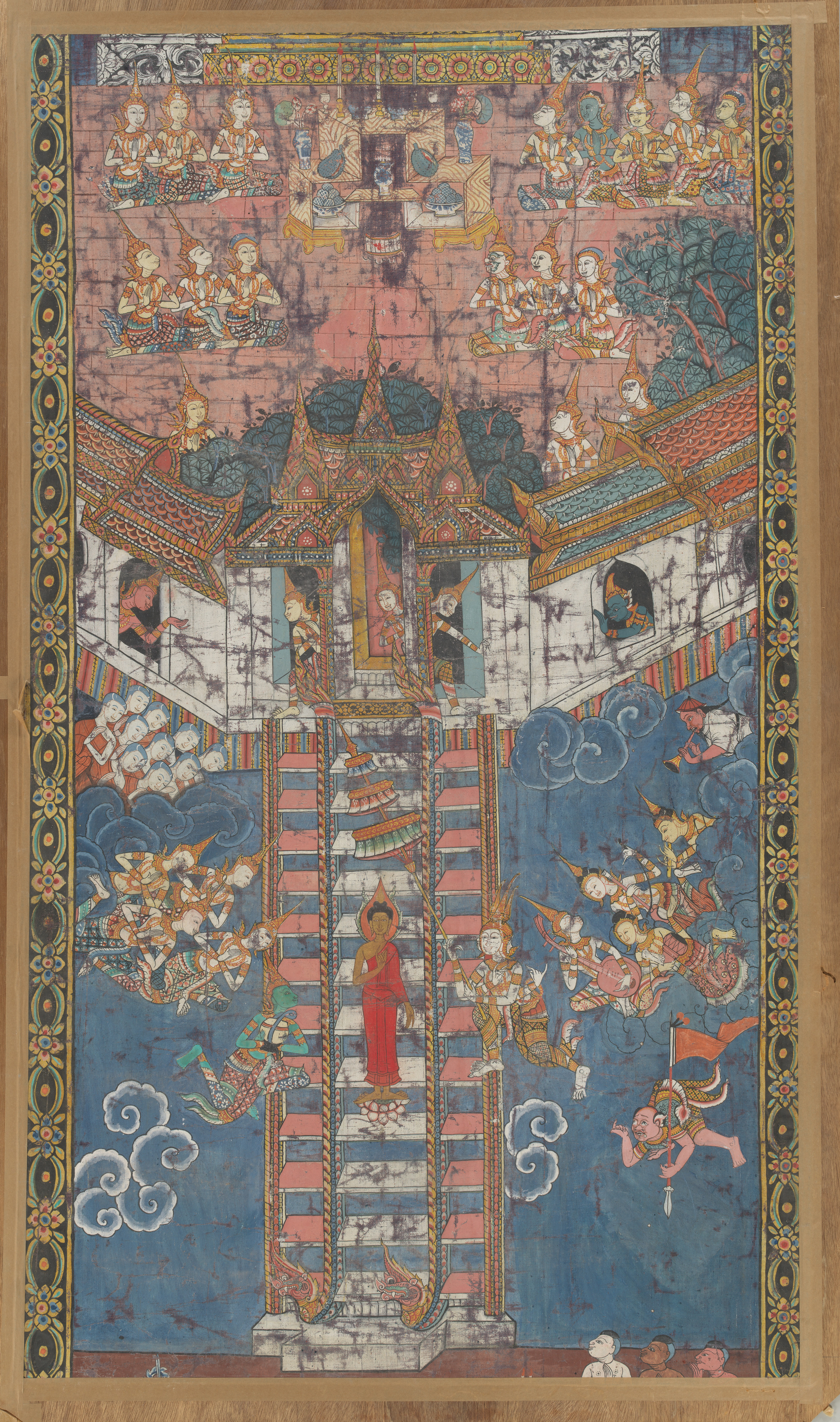 #28
#28
The Buddha descending from the sky Trayastrimsa in Sankissa
"The Buddha descending from the sky Trayastrimsa in Sankissa" never really separates the story from the setting: each outline helps the story find its place. In "The Buddha descending from the sky Trayastrimsa in Sankissa", the figure of the Buddha controls the axis of the composition; expectations, flames, lotuses and secondary registers make a spiritual hierarchy visible. The notice of "The Buddha descending from the sky Trayastrimsa to Sankissa" gives concrete benchmarks: 19th century century, Metropolitan Museum of Art, 142.2 x 74.3 cm. For "The Buddha descending from the sky Trayastrimsa to Sankissa", it offers a useful milestone for understanding how the Siamese workshops adapted texts, rites and observation of the world.
See the museum notice → #29
#29
The Blessing of Lord Buddha
The composition of "The Blessing of Lord Buddha" organizes a host of details without losing the main thread, which prevents the eye from asking for directions. In "The Blessing of Lord Buddha", Chalermchai Kositpipat combines iconography buddhist, virtuoso drawing and visionary space; tradition does not serve as a decorative background, it becomes the driving force of the image. The instructions for "The Blessing of Lord Buddha" give concrete benchmarks: 2006, MOCA Bangkok, 177.5cm x 146.7cm. For "The Blessing of Lord Buddha", this tension between religious function and visual invention explains its lasting strength.
See the museum notice →_(CBL_Thi_1302).jpg) #30
#30
Phrommachat divination manual
With "Phrommachat Divination Manual", Thai painting transforms a precise scene into lasting visual memory. In "Phrommachat Divination Manual", anonymous Thai artist organizes the image according to logic pictorial where color, rhythm, material and Thai references work together. The notice of "Phrommachat Divination Manual" gives concrete benchmarks: 19th century, Chester Beatty Library, Dublin. For "Divination Manual Phrommachat", its strength lies as much in its historical value as in the way in which the image remains readable today.
See the museum notice → #31
#31
Clairvoyant in Heaven
"Clairvoyant in Heaven" is discovered in layers: action first, signs later, then the tiny finds left in the margins. In "Clairvoyant in Heaven", chalermchai Kositpipat associates Buddhist iconography, virtuoso drawing and visionary space; tradition does not serve as a decorative background, it becomes the driving force of the image. The instructions for "Clairvoyant in Heaven" give concrete benchmarks: 1989, MOCA Bangkok, 90cm x 120cm. For "Clairvoyant in Heaven", its singularity comes precisely from this mixture between codified framework and freedom in details.
See the museum notice → #32
#32
At Your Beck and Call
In "At Your Beck and Call", the flat areas, lines and changes of scale give the story a very concrete energy. In "At Your Beck and Call", prateep Kochabua constructs a Thai surrealism populated by myths, bodies, animals and memories; the dream has a lot of details and no desire to remain discreet. The instructions for "At Your Beck and Call" give concrete benchmarks: 2000, MOCA Bangkok, 105cm x 145cm. For "At Your Beck and Call ", we come back to it for the episode, then we stay for the details which had discreetly prepared their move.
See the museum notice →_-_Walters_35264_-_A_T_Front.jpg) #33
#33
Vessantara Jataka: The Ten Gifts
"Vessantara Jataka: The Ten Gifts" shows that an image can be at once devotion, chronicle and pleasure of detail without becoming an endless reunion. In "Vessantara Jataka: The Ten Gifts", Prince Vessantara's story highlights the test of generosity, separation and return; gestures make these moral choices immediately visible. The notice of "Vessantara Jataka: The Ten Gifts" gives concrete benchmarks: 19th century, Walters Art Museum, Baltimore. For "Vessantara Jataka: The Ten Gifts", the work thus recalls that Thai painting tells with the line as much as with the characters.
See the museum notice → #34
#34
Fantasy Land III
The first look captures the episode of "Fantasy Land III"; the second notices how gestures and colors regulate the tempo. In "Fantasy Land III", prateep Kochabua constructs a Thai surrealism populated by myths, bodies, animals and memories; the dream has a lot of details and no desire to remain discreet. The instructions for "Fantasy Land III" give concrete benchmarks: 2011, MOCA Bangkok, 150cm x 225cm. For "Fantasy Land III", the painting therefore retains a double life: a document of its time and an ever-active visual experience.
See the museum notice →_-_Walters_35265_-_A_T_Front.jpg) #35
#35
Vessantara Jataka: The Himavanta Forest
"Vessantara Jataka: The Himavanta Forest" circulates the eye between main figures and secondary scenes like a story that knows its shortcuts perfectly. In "Vessantara Jataka: The Himavanta Forest", the story prince Vessantara tests generosity, separation and return; gestures make these moral choices immediately visible. The notice of "Vessantara Jataka: The Himavanta Forest" gives concrete benchmarks: 19th century century, Walters Art Museum, Baltimore. For "Vessantara Jataka: The Himavanta Forest", the image thus gains depth without losing the clarity that makes it immediately memorable.
See the museum notice → #36
#36
Way to Heaven
In "Way to Heaven", the setting does not enclose the story: it gives it a well-chosen direction, pauses and a few detours. In "Way to Heaven", prateep Kochabua constructs a Thai surrealism populated by myths, bodies, animals and memories; the dream has a lot of details and no desire to remain discreet. The instructions for "Way to Heaven" give concrete benchmarks: 2011, MOCA Bangkok, 200cm x 170cm. For "Way to Heaven", the result remains alive because the story never erases the material or the pleasure of watching.
See the museum notice → #37
#37
Fantasy Land II
The strength of "Fantasy Land II" comes from its balance between narrative readability and decorative profusion. In "Fantasy Land II", prateep Kochabua constructs a Thai surrealism populated by myths, bodies, animals and memories; the dream has a lot of details and no desire to remain discreet. The instructions for "Fantasy Land II" give concrete benchmarks: 2010, MOCA Bangkok, 165cm x 300cm. For "Fantasy Land II", this dialogue between story and surface gives it a presence that goes far beyond its immediate subject.
See the museum notice →_-_Walters_35266_-_A_T_Front.jpg) #38
#38
Vessantara Jataka: The Don
"Vessantara Jataka: The Gift" has this generous density where each character seems to have something to do, sometimes even more than expected. In "Vessantara Jataka: The Gift", Prince Vessantara's story puts things to the test generosity, separation and return; gestures make these moral choices immediately visible. The notice of "Vessantara Jataka: The Gift" gives concrete benchmarks: 19th century, Walters Art Museum, Baltimore. For "Vessantara Jataka: The Gift, it offers a useful milestone for understanding how the Siamese workshops adapted texts, rites and observation of the world.
See the museum notice → #39
#39
Journey to the Next World IV: Journey by Sea
In "Journey to the Next World IV: Journey by Sea", the hierarchy of sizes and positions makes the episode understandable before you even know all the names. In "Journey to the Next World IV: Journey by Sea", prateep Kochabua builds Thai surrealism populated with myths, bodies, animals and memories; the dream has a lot of details and no desire to remain discreet. The instructions for "Journey to the Next World IV: Journey by Sea" gives concrete benchmarks: 2007, MOCA Bangkok, 160cm x 260cm. For "Journey to the Next World IV: Journey by Sea", this tension between religious function and visual invention explains its lasting strength.
See the museum notice →_-_Walters_35268_-_A_T_Front.jpg) #40
#40
Vessantara Jataka: The Royal Children
"Vessantara Jataka: The Royal Children" combines precision of drawing and freedom of story in a surface that remains alive at all distances. In "Vessantara Jataka: The Royal Children", Prince Vessantara's story highlights the ordeal of generosity, separation and return; gestures make these moral choices immediately visible. The notice of "Vessantara Jataka: The Royal Children" gives concrete benchmarks: 19th century, Walters Art Museum, Baltimore. For "Vessantara Jataka: The Royal Children", its strength lies as much in its historical value as in the way in which the image remains readable today.
See the museum notice → #41
#41
Dream Land II
The scene of "Dream Land II" advances through looks, hands, animals and architecture, with a sense of movement that does not depend on noise. In "Dream Land II", prateep Kochabua constructs a Thai surrealism populated by myths, bodies, animals and memories; the dream has a lot of details and no desire to remain discreet. The instructions for "Dream Land II" give concrete benchmarks: 2009, MOCA Bangkok, 150cm x 300cm. For "Dream Land II", its singularity comes precisely from this mixture between codified framework and freedom in details.
See the museum notice → #42
#42
Journey to the Next World VIII
"Journey to the Next World VIII" gives an immediate presence to the religious or epic world it represents, without reducing it to a simple illustration. In "Journey to the Next World VIII", prateep Kochabua constructs surrealism thai populated with myths, bodies, animals and memories; the dream has many details and no desire to remain discreet. The instructions for "Journey to the Next World VIII" give concrete benchmarks: 2011, MOCA Bangkok, 165cm x 270cm. For "Journey to the Next World VIII", we come back for the episode, then we stay for the details which had discreetly prepared their move.
See the museum notice →_-_Walters_35247_-_A_T_Front.jpg) #43
#43
Vessantara Jataka: The Return of Maddi
In "Vessantara Jataka: The Return of Maddi", the repeated patterns build the rhythm while the gaps give each episode its particular emphasis. In "Vessantara Jataka: The Return of Maddi", the story of Prince Vessantara tests generosity, separation and return; gestures make these moral choices immediately visible. The notice of "Vessantara Jataka: The Return of Maddi" gives concrete benchmarks: 19th century, Walters Art Museum, Baltimore. For "Vessantara Jataka: The Return of Maddi", the work thus recalls that Thai painting tells with the line as much as with the characters.
See the museum notice → #44
#44
A Tale from Ko Samet
"A Tale from Ko Samet" knows how to fill space without suffocating it, an appreciable skill in a palace or on a screen. In "A Tale from Ko Samet", somphong Adulyasaraphan transforms ecological concerns and rural imagination into surreal worlds where each metamorphosis carries a concrete idea. The instructions for "A Tale from Ko Samet" give concrete benchmarks: 2005, MOCA Bangkok, 84cm x 150cm. For "A Tale from Ko Samet", the painting therefore retains a double life : document of his time and visual experience still active.
See the museum notice →_-_Walters_35269_-_A_T_Front.jpg) #45
#45
Vessantara Jataka: The Kingdom of Indra
The color of "Vessantara Jataka: The Kingdom of Indra" distributes roles as surely as costumes, postures and attributes. In "Vessantara Jataka: The Kingdom of Indra", Prince Vessantara's story puts things to the test generosity, separation and return; gestures make these moral choices immediately visible. The notice of "Vessantara Jataka: The Kingdom of Indra" gives concrete benchmarks: 19th century, Walters Art Museum, Baltimore. For " Vessantara Jataka: The Kingdom of Indra, the image thus gains depth without losing the clarity which makes it immediately memorable.
See the museum notice → #46
#46
Played by Girl
"Played by Girl" combines sacred narrative and everyday observation, so that a familiar detail can suddenly carry a huge idea. In "Played by Girl", prateep Kochabua constructs a Thai surrealism populated by myths, bodies, animals and memories; the dream has a lot of details and no desire to remain discreet. The instructions for "Played by Girl" give concrete benchmarks: 2005, MOCA Bangkok, 90cm x 120cm. For "Played by Girl", the result remains alive because the story never erases the material or the pleasure of watching.
See the museum notice → #47
#47
Delight
In "Delight", ornament does not come after the story: it contributes to its speed, its solemnity and sometimes its humor. In "Delight", prateep Kochabua constructs a Thai surrealism populated by myths, bodies, animals and memories; the dream has a lot of details and no desire to remain discreet. The instructions for "Delight" give concrete benchmarks: 2013, MOCA Bangkok, 150cm x 100cm. For "Delight", this dialogue between story and surface gives it a presence that goes far beyond its immediate subject.
See the museum notice →_and_a_scene_from_hell_Wellcome_L0030799.jpg) #48
#48
Phra Malai in front of a scene from hell
"Phra Malai in front of a scene from hell" transforms the wall, the canvas or the page into a space that the gaze travels through rather than into an image consumed in one go. In "Phra Malai in front of a scene from hell", the cycle of Phra Malai connects spiritual journey, paradise, hell and Buddhist merit in pages where text and image progress together. The notice of "Phra Malai in front of a scene from hell" gives concrete benchmarks: 19th century, Wellcome Collection, London. For "Phra Malai in front of a scene from hell", it offers a useful milestone for understanding how the Siamese workshops adapted texts, rites and observation of the world.
See the museum notice → #49
#49
Immersed in the Moon
The narration of "Immersed in the Moon" remains clear despite the richness of the details, proof that a well-painted crowd can be better organized than a queue. In "Immersed in the Moon", somphong Adulyasaraphan transforms ecological concerns and rural imagination in surreal worlds where each metamorphosis carries a concrete idea. The instructions for "Immersed in the Moon" give concrete benchmarks: 2011, MOCA Bangkok, 90cm x 100cm. For "Immersed in the Moon", this tension between religious function and visual invention explains its lasting strength.
See the museum notice → #50
#50
The poor lumberjack picks lotuses
"The poor lumberjack picks lotuses" brings together movement, symbol and decor in a composition whose order is revealed little by little. In "The Poor Lumberjack Picks Lotuses", the Phra Malai cycle links spiritual journey, paradise, hell and Buddhist merit in pages where text and image progress together. The notice of "The poor lumberjack picks lotuses" gives concrete benchmarks: 19th century, Wellcome Collection, London. For "The poor lumberjack picks lotus", its strength lies as much in its historical value as in the way in which the image remains readable today.
See the museum notice →Surrealism, abstraction, portraiture and landscape show several ways of being modern without losing the local accent.
 #51
#51
Two-Dimensional Village
"Two-Dimensional Village" first attracts with its color, then catches the eye with a narration that can be read almost gesture after gesture. In "Two-Dimensional Village", somphong Adulyasaraphan transforms ecological concerns and rural imagination in surreal worlds where each metamorphosis carries a concrete idea. The instructions for "Two-Dimensional Village" give concrete benchmarks: 2013, MOCA Bangkok, 195cm x 280cm. For "Two-Dimensional Village", sa singularity comes precisely from this mixture between codified framework and freedom in details.
See the museum notice → #52
#52
A Land Where Life is Found
In "A Land Where Life is Found", the painted space becomes an active scene where architecture, figures and ornaments advance at the same pace. In "A Land Where Life is Found", somphong Adulyasaraphan transforms ecological concerns and rural imagination in surreal worlds where each metamorphosis carries a concrete idea. The notice for "A Land Where Life is Found" gives concrete benchmarks: 2009, MOCA Bangkok, 271.5cm x 187.5cm. For "A Land Where Life is Found", on comes back for the episode, then we stay for the details which had discreetly prepared their move.
See the museum notice → #53
#53
Phra Malai converses with Indra
"Phra Malai converse with Indra" never really separates the story from the setting: each outline helps the story find its place. In "Phra Malai converse with Indra", the Phra Malai cycle connects spiritual journey, heaven, hell and buddhist merit in pages where text and image progress together. The notice of "Phra Malai converse with Indra" gives concrete benchmarks: 19th century, Wellcome Collection, London. For "Phra Malai converse with Indra", the work thus reminds us that Thai painting tells stories with the line as much as with the characters.
See the museum notice → #54
#54
Rainbow-Colored Fantasy
The composition of "Rainbow-Colored Fantasy" organizes a host of details without losing the main thread, which prevents the eye from asking for directions. In "Rainbow-Colored Fantasy", somphong Adulyasaraphan transforms worries ecological and rural imagination in surreal worlds where each metamorphosis carries a concrete idea. The instructions for "Rainbow-Colored Fantasy" give concrete benchmarks: 2011, MOCA Bangkok, 190cm x 140cm. For "Rainbow-Colored Fantasy painting therefore retains a double life: a document of its time and an ever-active visual experience.
See the museum notice → #55
#55
Bodhisattva in heaven accompanied by angels
With "Bodhisattva in Heaven Accompanied by Angels", Thai painting transforms a precise scene into lasting visual memory. In "Bodhisattva in Heaven Accompanied by Angels", anonymous Thai artist organizes the image according to a pictorial logic where color, rhythm, material and Thai references work together. The notice of "Bodhisattva in heaven accompanied by angels" gives concrete benchmarks: 19th century, Wellcome Collection, London. For " Bodhisattva in heaven accompanied by angels", the image thus gains depth without losing the clarity which makes it immediately memorable.
See the museum notice → #56
#56
The Land of Dreams
"The Land of Dreams" is discovered in layers: action first, signs later, then tiny finds left in the margins. In "The Land of Dreams", somphong Adulyasaraphan transforms ecological concerns and rural imagination in surreal worlds where each metamorphosis carries a concrete idea. The instructions for "The Land of Dreams" give concrete benchmarks: 1995, MOCA Bangkok, 126cm x 145cm. For "The Land of Dreams", the result remains alive because the story never erases the material or the pleasure of watching.
See the museum notice → #57
#57
Luang Ta Ma (Traditional Thai Music)
In "Luang Ta Ma (Traditional Thai Music)", the flat areas, lines and changes of scale give the story a very concrete energy. In "Luang Ta Ma (Traditional Thai Music)", prateep Kochabua constructs surrealism thai populated with myths, bodies, animals and memories; the dream has many details and no desire to remain discreet. The instructions for "Luang Ta Ma (Traditional Thai Music)" give concrete benchmarks: 2002, MOCA Bangkok, 156cm x 176cm. For "Luang Ta Ma (Traditional Thai Music)", this dialogue between story and surface gives it a presence that goes far beyond its immediate subject.
See the museum notice → #58
#58
The Thorny Tree of Hell
"The Thorny Tree of Hell" shows that an image can be at once devotion, chronicle and pleasure of detail without becoming an endless meeting. In "The Thorny Tree of Hell", the Phra Malai cycle connects spiritual journey, paradise, hell and Buddhist merit in pages where text and image progress together. The notice of "The Thorny Tree of Hell" gives concrete benchmarks: 19th century, Wellcome Collection, London. For "The Thorny Tree of Hell it offers a useful milestone for understanding how the Siamese workshops adapted texts, rites and observation of the world.
See the museum notice → #59
#59
A Land of Mobility
The first look captures the episode of "A Land of Mobility"; the second notices how gestures and colors regulate its tempo. In "A Land of Mobility", somphong Adulyasaraphan transforms ecological and imaginary concerns rural in surreal worlds where each metamorphosis carries a concrete idea. The notice for "A Land of Mobility" gives concrete benchmarks: 1992, MOCA Bangkok, 51cm x 143cm. For "A Land of Mobility", this tension between functions religious and visual invention explains its lasting strength.
See the museum notice → #60
#60
Candakumara's Jataka and Indra's intervention
"Candakumara's Jataka and Indra's intervention" circulates the eye between main figures and secondary scenes like a story that knows its shortcuts perfectly. In "Candakumara's Jataka and Indra's Intervention the Phra Malai cycle connects spiritual journey, heaven, hell and Buddhist merit in pages where text and image progress together. The notice of "Candakumara's Jataka and Indra's intervention" gives concrete benchmarks: 19th century, Wellcome Collection, London. For "Candakumara's Jataka and Indra's intervention", its strength lies as much in its historical value as in the way in which the image remains readable today.
See the museum notice → #61
#61
When Humans Ignore Art
In "When Humans Ignore Art", the setting does not enclose the story: it gives it a well-chosen direction, pauses and a few detours. In "When Humans Ignore Art", prateep Kochabua constructs a Thai surrealism populated by myths, bodies, animals and memories; the dream has a lot of details and no desire to remain discreet. The instructions for "When Humans Ignore Art" give concrete benchmarks: 2003, MOCA Bangkok, 120cm x 150cm. For "When Humans Ignore Art", its singularity comes precisely from this mixture between codified framework and freedom in details.
See the museum notice → #62
#62
Clairvoyant in the Land of Lord Buddha
The strength of "Clairvoyant in the Land of Lord Buddha" comes from its balance between narrative readability and decorative profusion. In "Clairvoyant in the Land of Lord Buddha", chalermchai Kositpipat combines Buddhist iconography, virtuoso drawing and visionary space; tradition does not serve as a decorative background, it becomes the driving force of the image. The instructions for "Clairvoyant in the Land of Lord Buddha" give concrete benchmarks: 1994, MOCA Bangkok, 65cm x 90cm. For "Clairvoyant in the Land of Lord Buddha", we come back for the episode, then we stay for the details which had discreetly prepared their move.
See the museum notice →.jpg) #63
#63
Ramakien, panel 29 of the cloister of Wat Phra Kaew
"Ramakien, panel 29 of the cloister of Wat Phra Kaew" has this generous density where each character seems to have something to do, sometimes even more than expected. In "Ramakien, panel 29 of the cloister of Wat Phra Kaew", the episode belongs to the Ramakien: armies, palaces and heroic figures are distributed in rapid sequences, while Hanuman often brings as much momentum as mischief. The notice of "Ramakien, panel 29 of the cloister of Wat Phra Kaew" gives concrete benchmarks: end of the 18th century, since restored, Wat Phra Kaew, Bangkok. For "Ramakien, panel 29 of the cloister of Wat Phra Kaew", the work thus recalls that Thai painting tells with the line as much as with the characters.
See the museum notice → #64
#64
Scarecrow's Dream
In "Scarecrow's Dream", the hierarchy of sizes and positions makes the episode understandable before even knowing all the names. In "Scarecrow's Dream", somphong Adulyasaraphan transforms ecological concerns and rural imagination in surreal worlds where each metamorphosis carries a concrete idea. The instructions for "Scarecrow's Dream" give concrete benchmarks: 1996, MOCA Bangkok, 81cm x 104.5cm. For "Scarecrow's Dream", the painting preserves so a double life: document of its time and visual experience still active.
See the museum notice →.jpg) #65
#65
Ramakien, panel 40 of the cloister of Wat Phra Kaew
"Ramakien, panel 40 of the cloister of Wat Phra Kaew" combines precision of drawing and freedom of story in a surface that remains alive at all distances. In "Ramakien, panel 40 of the cloister of Wat Phra Kaew", the episode belongs to the Ramakien: armies, palaces and heroic figures are distributed in rapid sequences, while Hanuman often brings as much momentum as mischief. The notice of "Ramakien, panel 40 of the cloister of Wat Phra Kaew" gives benchmarks concrete: end of the 18th century, since restored, Wat Phra Kaew, Bangkok. For "Ramakien, panel 40 of the cloister of Wat Phra Kaew", the image thus gains depth without losing the clarity which makes it immediately memorable.
See the museum notice → #66
#66
The Last Rainbow Fish
The scene of "The Last Rainbow Fish" advances through looks, hands, animals and architecture, with a sense of movement that does not depend on noise. In "The Last Rainbow Fish", somphong Adulyasaraphan transforms ecological concerns and rural imagination in surreal worlds where each metamorphosis carries a concrete idea. The instructions for "The Last Rainbow Fish" give concrete benchmarks: 2001, MOCA Bangkok, 60cm x 160cm. For "The Last Rainbow Fish", the result remains alive because the story never erases the material or the pleasure of watching.
See the museum notice → #67
#67
Mother Earth
"Mother Earth" gives an immediate presence to the religious or epic world it represents, without reducing it to a simple illustration. In "Mother Earth", prateep Kochabua constructs a Thai surrealism populated by myths, bodies, animals and memories; the dream has many details and no desire to remain discreet. The instructions for "Mother Earth" give concrete benchmarks: 2011, MOCA Bangkok, 200cm x 130cm. For "Mother Earth", this dialogue between story and surface gives it a presence that goes far beyond its immediate subject.
See the museum notice →.jpg) #68
#68
Ramakien, panel 90 of the cloister of Wat Phra Kaew
In "Ramakien, panel 90 of the Wat Phra Kaew cloister", the repeated patterns build the rhythm while the gaps give each episode its particular emphasis. In "Ramakien, panel 90 of the Wat Phra Kaew cloister", the episode belongs to the Ramakien: armies, palaces and heroic figures are distributed in rapid sequences, while Hanuman often brings as much momentum as mischief. The notice of "Ramakien, panel 90 of the cloister of Wat Phra Kaew" gives concrete landmarks: end of the 18th century, since restored, Wat Phra Kaew, Bangkok. For "Ramakien, panel 90 of the cloister of Wat Phra Kaew", it offers a useful milestone for understanding how the Siamese workshops adapted texts, rites and observation of the world.
See the museum notice → #69
#69
Mahabhinishkramana
"Mahabhinishkramana" knows how to fill space without suffocating it, an appreciable skill in a palace or on a screen. In "Mahabhinishkramana", thongchai Srisukprasert combines painting, collage and Buddhist iconography for make awakening, renunciation and the cycles of existence visible. The notice of "Mahabhinishkramana" gives concrete benchmarks: 2008, MOCA Bangkok, 125cm x 175cm. For "Mahabhinishkramana", this tension between religious function and visual invention explains its lasting strength.
See the museum notice →.jpg) #70
#70
Ramakien, panel 100 of the cloister of Wat Phra Kaew
The color of "Ramakien, panel 100 of the cloister of Wat Phra Kaew" distributes the roles as surely as the costumes, postures and attributes. In "Ramakien, panel 100 of the cloister of Wat Phra Kaew", the episode belongs to the Ramakien: armies, palaces and heroic figures are distributed in rapid sequences, while Hanuman often brings as much momentum as mischief. The notice of "Ramakien, panel 100 of the cloister of Wat Phra Kaew" gives benchmarks concrete: late 18th century, since restored, Wat Phra Kaew, Bangkok. For "Ramakien, panel 100 of the cloister of Wat Phra Kaew", its strength lies as much in its historical value as in the way in which the image remains readable today.
See the museum notice → #71
#71
Transiency
"Transiency" combines sacred narrative and everyday observation, so that a familiar detail can suddenly carry an immense idea. In "Transiency", thongchai Srisukprasert combines painting, collage and Buddhist iconography for make awakening, renunciation and the cycles of existence visible. The "Transiency" notice gives concrete benchmarks: 2011, MOCA Bangkok, 125cm x 175cm. For "Transiency", its singularity comes precisely from this mixture between codified framework and freedom in details.
See the museum notice → #72
#72
Logiyadhamma 1
In "Logyadhamma 1", the ornament does not come after the story: it contributes to its speed, its solemnity and sometimes its humor. In "Logyadhamma 1", thongchai Srisukprasert combines painting, collage and Buddhist iconography to make awakening, renunciation and the cycles of existence visible. The instructions for "Logyadhamma 1" give concrete benchmarks: 2012, MOCA Bangkok, 283cm x 283cm. For "Logyadhamma 1", we come back for the episode, then we stay for the details that had discreetly prepared their move.
See the museum notice →.jpg) #73
#73
Ramakien, panel 150 of the cloister of Wat Phra Kaew
"Ramakien, panel 150 of the cloister of Wat Phra Kaew" transforms the wall, the canvas or the page into a space that the eye travels through rather than into an image consumed in one go. In "Ramakien, panel 150 of the cloister of Wat Phra Kaew", the episode belongs to the Ramakien: armies, palaces and heroic figures are distributed in rapid sequences, while Hanuman often brings as much momentum as mischief. The notice of "Ramakien, panel 150 of the cloister of Wat Phra Kaew" gives concrete benchmarks: end of the 18th century, since restored, Wat Phra Kaew, Bangkok. For "Ramakien, panel 150 of the cloister of Wat Phra Kaew", the work thus recalls that Thai painting tells with the line as much as with the characters.
See the museum notice → #74
#74
Circle has no End
The narration of "Circle has no End" remains clear despite the richness of the details, proof that a well-painted crowd can be better organized than a queue. In "Circle has no End", thongchai Srisukprasert combines painting, collage and Buddhist iconography to make visible awakening, renunciation and the cycles of existence. The notice of "Circle has no End" gives concrete benchmarks: 2012, MOCA Bangkok, 176cm x 176cm. For "Circle has no End", the painting therefore retains a double life: a document of its time and an ever-active visual experience.
See the museum notice →.jpg) #75
#75
Offerings in court
"Offerings in front of the court" brings together movement, symbol and decor in a composition whose order is revealed little by little. In "Offerings in front of the court", Wat Suthat’s workshops organize the image according to a pictorial logic where color, rhythm, material and Thai references work together. The notice of "Offerings in front of the court" gives concrete benchmarks: 19th century, Wat Suthat, Bangkok. For "Offerings in front of the court", the image thus gains depth without losing the clarity that makes it immediately memorable.
See the museum notice →The last rows widen the route, but each work must remain identified, museum-like and truly distinct.
 #76
#76
Scene of Construction No.1
"Scene of Construction No.1" first attracts with its color, then catches the eye with a narration that can be read almost gesture after gesture. In "Scene of Construction No.1", pitcher Burapathanin organizes the image according to logic pictorial where color, rhythm, material and Thai references work together. The notice of "Scene of Construction No.1" gives concrete benchmarks: 2007, Art Center Silpakorn University. For "Scene of Construction No.1", the the result remains alive because the story never erases the material or the pleasure of watching.
See the museum notice → #77
#77
Impression of Art in the Past No.1
In "Impression of Art in the Past No.1", the painted space becomes an active scene where architecture, figures and ornaments advance at the same pace. In "Impression of Art in the Past No.1", Praiwan Dakliang organizes the image according to a pictorial logic where color, rhythm, material and Thai references work together. The notice of "Impression of Art in the Past No.1" gives concrete benchmarks: 1986, Art Center Silpakorn University. For "Impression of Art in the Past No.1, this dialogue between story and surface gives it a presence that goes far beyond its immediate subject.
See the museum notice →.jpg) #78
#78
On the back of an elephant
"On the back of an elephant" never really separates the story from the setting: each outline helps the story find its place. In "On the Back of an Elephant", Wat Suthat’s workshops organize the image according to a pictorial logic where color, rhythm, material and Thai references work together. The instructions for "On the Back of an Elephant" give concrete benchmarks: 19th century, Wat Suthat, Bangkok. For "On the Back of an Elephant", it offers a useful milestone for understanding how the workshops siamese adapted texts, rites and observation of the world.
See the museum notice → #79
#79
The Past No.2
The composition of "The Past No.2" organizes a host of details without losing the main thread, which prevents the eye from asking for directions. In "The Past No.2", Praiwan Dakliang organizes the image according to a pictorial logic where color, rhythm, material and Thai references work together. The notice of "The Past No.2" gives concrete benchmarks: 1981, Art Center Silpakorn University. For "The Past No.2", this tension between religious function and visual invention explains its lasting strength.
See the museum notice →.jpg) #80
#80
Court musicians
With "The Court Musicians", Thai painting transforms a precise scene into lasting visual memory. In "The Court Musicians", Wat Suthat’s workshops organize the image according to a pictorial logic where color, rhythm, thai materials and references work together. The notice of "The Court Musicians" gives concrete benchmarks: 19th century, Wat Suthat, Bangkok. For "The Court Musicians", its strength is as much due to its historical value than the way the image remains readable today.
See the museum notice → #81
#81
Perceptless
"Perceptless" is discovered in layers: action first, signs later, then tiny finds left in the margins. In "Perceptless", anupong Chantorn organizes the image according to a pictorial logic where color, rhythm, material and Thai references work together. The notice from "Perceptless" gives concrete benchmarks: 2007, Art Center Silpakorn University. For "Perceptless", its singularity comes precisely from this mixture between codified framework and freedom in details.
See the museum notice →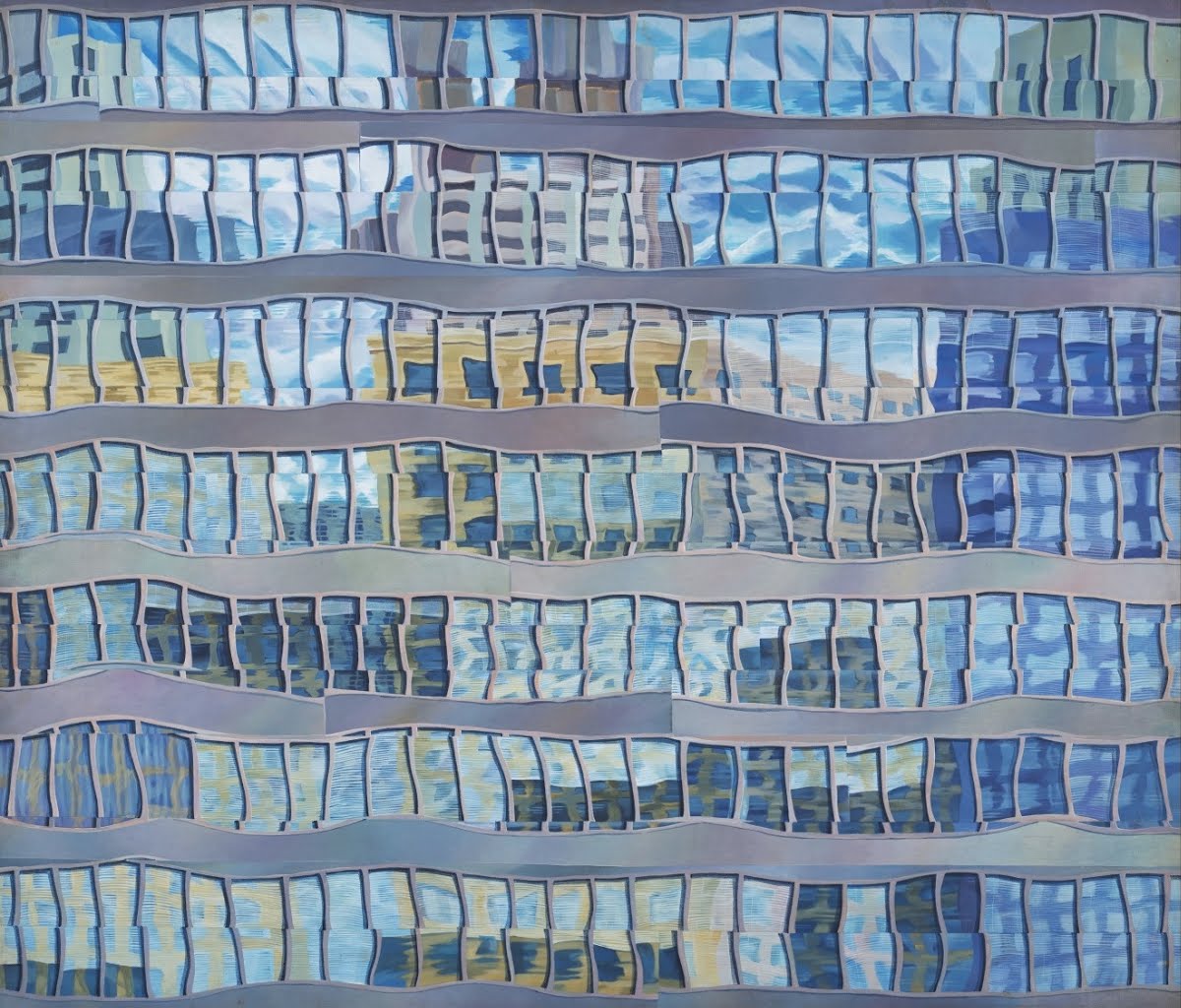 #82
#82
Reflection No.1
In "Reflection No.1", the flat areas, lines and changes of scale give the story a very concrete energy. In "Reflection No.1", Amrit Chusuwan organizes the image according to a pictorial logic where color, rhythm, material and thai references work together. The notice from "Reflection No.1" gives concrete benchmarks: 1984, Art Center Silpakorn University. For "Reflection No.1", we come back to it for the episode, then we stay for the details which had discreetly prepared their move.
See the museum notice →.jpg) #83
#83
Indra on the elephant Airavata
"Indra on the Elephant Airavata" shows that an image can be at once devotion, chronicle and pleasure of detail without becoming an endless reunion. In "Indra on the Elephant Airavata", the Phra Malai cycle connects spiritual journey, paradise, hell and Buddhist merit in pages where text and image progress together. The notice of "Indra on the elephant Airavata" gives concrete benchmarks: 19th century, Wat Suthat, Bangkok. For "Indra on the elephant Airavata", the work thus reminds us that Thai painting tells stories with the line as much as with the characters.
See the museum notice → #84
#84
Serenity
The first look captures the episode of "Serenity"; the second notices how gestures and colors regulate the tempo. In "Serenity", Saokong surasit organizes the image according to a pictorial logic where color, rhythm, material and thai references work together. The notice from "Serenity" gives concrete benchmarks: 1981, Art Center Silpakorn University. For "Serenity", painting therefore retains a double life: a document of its time and experience visual still active.
See the museum notice →.jpg) #85
#85
The Three Kingdoms, panel 1 by Wat Bowonniwet
"The Three Kingdoms, panel 1 by Wat Bowonniwet" circulates the eye between main figures and secondary scenes like a story that knows its shortcuts perfectly. In "The Three Kingdoms, panel 1 by Wat Bowonniwet", at Wat Bowonniwet, the Chinese story of the Three Kingdoms is adapted to Thai mural painting, with battles, processions and carefully distributed architecture. The notice for "The Three Kingdoms, panel 1 of Wat Bowonniwet" gives concrete landmarks: 19th century, Wat Bowonniwet, Bangkok. For "The Three Kingdoms, panel 1 of Wat Bowonniwet", the image thus gains depth without losing the clarity which makes it immediately memorable.
See the museum notice → #86
#86
Life and Time No.2
In "Life and Time No.2", the setting does not enclose the story: it gives it a well-chosen direction, pauses and a few detours. In "Life and Time No.2", Kiettisak Chanonnart organizes the image according to a pictorial logic where color, rhythm, material and Thai references work together. The notice of "Life and Time No.2" gives concrete benchmarks: 1993, Art Center Silpakorn University. For "Life and Time No.2", the result remains alive because may the story never erase the material or the pleasure of watching.
See the museum notice → #87
#87
Beside My Home No.9
The strength of "Beside My Home No.9" comes from its balance between narrative readability and decorative profusion. In "Beside My Home No.9", surapong Somsook organizes the image according to a pictorial logic where color, rhythm, material and thai references work together. The notice of "Beside My Home No.9" gives concrete benchmarks: 1994, Art Center Silpakorn University. For "Beside My Home No.9", this dialogue between story and surface gives it a presence which goes far beyond its immediate subject.
See the museum notice →.jpg) #88
#88
The Three Kingdoms, panel 3 by Wat Bowonniwet
"The Three Kingdoms, panel 3 by Wat Bowonniwet" has this generous density where each character seems to have something to do, sometimes even more than expected. In "The Three Kingdoms, panel 3 by Wat Bowonniwet", at Wat Bowonniwet, the Chinese story of the Three Kingdoms is adapted to Thai mural painting, with battles, processions and carefully distributed architecture. The notice of "The Three Kingdoms, panel 3 of Wat Bowonniwet" gives concrete landmarks: 19th century, Wat Bowonniwet, Bangkok. For "The Three Kingdoms, panel 3 of Wat Bowonniwet", it offers a useful milestone for understanding how the Siamese workshops adapted texts, rites and observation of the world.
See the museum notice → #89
#89
Soul of Human
In "Soul of Human", the hierarchy of sizes and positions makes the episode understandable before even knowing all the names. In "Soul of Human", thaweesak Srithongdee organizes the image according to a pictorial logic where color, rhythm, material and Thai references work together. The notice of "Soul of Human" gives concrete benchmarks: 1995, Art Center Silpakorn University. For "Soul of Human", this tension between religious function and visual invention explains its lasting strength.
See the museum notice →.jpg) #90
#90
Wall cycle by Wat Ko Kaeo Suttharam, scene 4
"Wat Ko Kaeo Suttharam wall cycle, scene 4" combines precision of drawing and freedom of narrative in a surface that remains alive at all distances. In "Wat Ko Kaeo Suttharam wall cycle, scene 4", the temple setting preserves here its primary role: to accompany the ritual journey while offering a painted chronicle of the clothes, buildings and gestures of its time. The notice of "Wat Ko Kaeo Suttharam wall cycle, scene 4" gives concrete benchmarks: era from late Ayutthaya, Wat Ko Kaeo Suttharam, Phetchaburi. For "Wat Ko Kaeo Suttharam Wall Cycle, Scene 4", its strength lies as much in its historical value as in the way the image remains readable today.
See the museum notice → #91
#91
Symbol (Five)
The scene of "Symbol (Five)" advances through looks, hands, animals and architecture, with a sense of movement that does not depend on the din. In "Symbol (Five)", Parinya Tantisuk organizes the image according to a pictorial logic where color, rhythm, material and Thai references work together. The notice from "Symbol (Five)" gives concrete benchmarks: 1998, Art Center Silpakorn University. For "Symbol (Five)", its singularity comes precisely from this mixture between codified framework and freedom in details.
See the museum notice → #92
#92
Calmness
"Calmness" gives an immediate presence to the religious or epic world it represents, without reducing it to a simple illustration. In "Calmness", Saokong surasit organizes the image according to a pictorial logic where color, rhythm, thai materials and references work together. The "Calmness" notice gives concrete benchmarks: 1986, Art Center Silpakorn University. For "Calmness", we come back to it for the episode, then we stay for the details which had discreetly prepared their move.
See the museum notice → #93
#93
The Vessantara Jataka at Wat Suwannaram
In "The Vessantara Jataka at Wat Suwannaram", the repeated patterns build the rhythm while the gaps give each episode its particular emphasis. In "The Vessantara Jataka at Wat Suwannaram", the story of Prince Vessantara tests generosity, separation and return; gestures make these moral choices immediately visible. The notice of "The Vessantara Jataka at Wat Suwannaram" gives concrete benchmarks: 19th century, Wat Suwannaram, Bangkok. For "The Vessantara Jataka at Wat Suwannaram", the work recalls that Thai painting tells stories with the line as much as with the characters.
See the museum notice → #94
#94
Girl with Man and Woman in the Past
"Girl with Man and Woman in the Past" knows how to fill space without suffocating it, an appreciable skill in a palace or on a screen. In "Girl with Man and Woman in the Past", weerasak Sutsadee organizes the image according to logic pictorial where color, rhythm, material and Thai references work together. The notice of "Girl with Man and Woman in the Past" gives concrete benchmarks: 2006, Art Center Silpakorn University. For "Girl with Man and Woman in the Past, painting therefore retains a double life: a document of its time and an ever-active visual experience.
See the museum notice →.jpg) #95
#95
The Buddha and the faithful at Wat Suwannaram
The color of "The Buddha and the faithful at Wat Suwannaram" distributes roles as surely as costumes, postures and attributes. In "The Buddha and the faithful at Wat Suwannaram", the figure of the Buddha commands the axis of the composition; expectations, flames, lotuses and secondary registers make a spiritual hierarchy visible. The notice of "The Buddha and the faithful at Wat Suwannaram" gives concrete benchmarks: 19th century, Wat Suwannaram, Bangkok. For "The Buddha and the faithful at Wat Suwannaram", the image thus gains depth without losing the clarity which makes it immediately memorable.
See the museum notice → #96
#96
Life - Truth
"Life - Truth" combines sacred narrative and observation of everyday life, so that a familiar detail can suddenly carry an immense idea. In "Life - Truth", Kiettisak Chanonnart organizes the image according to a pictorial logic where color, rhythm, material and Thai references work together. The notice from "Life - Truth" gives concrete benchmarks: 1994, Art Center Silpakorn University. For "Life - Truth", the result remains alive because the story never erases the material or the pleasure of looking.
See the museum notice → #97
#97
Dancing in Silence
In "Dancing in Silence", the ornament does not come after the story: it contributes to its speed, its solemnity and sometimes its humor. In "Dancing in Silence", prasong Luemuang belongs to the generations distinguished by the National art exhibitions; composition, color and local experience build a solidly Thai modernity. The notice from "Dancing in Silence" gives concrete benchmarks: 1987, Art Center Silpakorn University. For " Dancing in Silence, this dialogue between story and surface gives it a presence that goes far beyond its immediate subject.
See the museum notice → #98
#98
Court scene at Wat Suwannaram
"Court scene at Wat Suwannaram" transforms the wall, canvas or page into a space that the eye travels through rather than into an image consumed in one go. In "Court Scene at Wat Suwannaram", the temple setting retains its role here first: accompany the ritual journey while offering a painted chronicle of the clothes, buildings and gestures of his time. The notice of "Court scene at Wat Suwannaram" gives concrete benchmarks: 19th century, Wat Suwannaram, Bangkok. For "Court Scene at Wat Suwannaram", it offers a useful milestone for understanding how Siamese workshops adapted texts, rites and observation of the world.
See the museum notice → #99
#99
Ghost Family
The narrative of "Ghost Family" remains clear despite the richness of the details, proof that a well-painted crowd can be better organized than a queue. In "Ghost Family", weerasak Sutsadee organizes the image according to logic pictorial where color, rhythm, material and Thai references work together. The instructions for "Ghost Family" give concrete benchmarks: 2009, Art Center Silpakorn University. For "Ghost Family", this tension between functions religious and visual invention explains its lasting strength.
See the museum notice → #100
#100
Heavenly Assembly at Wat Suwannaram
"Heavenly Assembly at Wat Suwannaram" brings together movement, symbol and decoration in a composition whose order is gradually revealed. In "Heavenly Assembly at Wat Suwannaram", the decoration of the temple retains its primary role here: to accompany the ritual journey while offering a painted chronicle of the clothes, buildings and gestures of his time. The notice of "Heavenly Assembly at Wat Suwannaram" gives concrete benchmarks: 19th century, Wat Suwannaram, Bangkok. For "Assembly celestial at Wat Suwannaram", its strength lies as much in its historical value as in the way in which the image remains readable today.
See the museum notice →What the works reveal
One hundred paintings, three criteria that count
The availability of an image no longer brings a medal on its own.
The museum provides context
An institutional notice provides date, technique, dimensions, collection and history rather than a simple attractive legend.
The artist builds continuity
The works of recognized masters make it possible to follow the ruptures and loyalties of modern Thai painting.
The image must remain legal
A protected work can be classified and linked to its source; however, it does not become a free reproduction for sale.
A story in five points of reference
Five steps to get through the rankings
Pu Man Ya Man becomes one of the country's most beloved historical images.
The university founded around the teaching of Silpa Bhirasri structures several generations of modern painters.
The first National Art Exhibition establishes a lasting place of recognition and conservation.
The institution brings together Siamese tradition, modern painting and works by major artists.
The private museum brings together a vast panorama of Thai painting from recent decades.
Thai painting in depth
From modern masters to historical images
MOCA Bangkok maintains an extensive body of contemporary Thai painting. The rooms dedicated to Thawan Duchanee and the ensembles of Chalermchai Kositpipat, Prateep Kochabua, Somphong Adulyasaraphan and Panya Vijinthanasarn give the ranking its first core.
The National Gallery connects Siamese tradition with modern art. Its collections make it possible to place Fua Hariphitak, royal paintings and historical works in a continuity that images of temples alone could not tell.
The Silpakorn Art Center preserves the award-winning works at the National Art Exhibitions. Coconut Grove by Chalood Nimsamer, Hua Hin by Misiem Yipintsoi, the portraits of Chakrabhand Posayakrit or the landscapes of Tawee Nandakwang provide a simple and robust criterion: these works have been judged, awarded and preserved.
The BACC completes this panorama with courses devoted to national artists, notably Damrong Wong-Uparaj. The ranking can thus compare one major work to another, instead of aligning twenty anonymous variations from the same cycle.
Wat Phumin's Whisper of Love, the phra bot, some Jātaka and the Ramakien remain present. They do not disappear; they simply find a proportionate place in a history that continues well after the 19th century.
Each entry must bring together a distinct title, a strong artist or attribution, an institutional source, and a legally usable image. A contemporary work can be cited and linked to its museum without automatically becoming a commercial reproduction; copyright is not a small cartel that is put behind the frame.
Four reading keys
How to read this new ranking
Museum, notoriety, price and visual singularity make it possible to distinguish an essential work from an image that is simply easy to find.
Check presence
A national or university collection weighs more than a gallery of results without provenance.
Measure recognition
National artist, major prize and museum exhibition reinforce the place of a work.
Evaluate the singularity
Title, composition and history must clearly distinguish each entry from the ninety-nine others.
Separate see and reproduce
The link to a museum documents a work; a commercial license alone authorizes its copy on a product.
Museums, temples and notices
Continue after the hundredth painting
The National Gallery, MOCA Bangkok, the Art Center of Silpakorn and the BACC provide the notices which now structure the classification.
In Alpha Reproduction
01All the famous painting topsAlpha Reproduction Guides02Japanese painting: 100 worksAlpha Reproduction Guides03Famous paintingsAlpha Reproduction GuidesMuseums and references
01National Gallery of Thailand - Fine Arts DepartmentMuseum & reference02MOCA Bangkok - permanent collectionMuseum & reference03MOCA Bangkok - online collectionMuseum & reference04Art Center Silpakorn University - collectionMuseum & reference05Bangkok Art and Culture Center - collectionMuseum & reference06Grand Palace of Bangkok - paintings by the RamakienMuseum & reference07The Met - Buddhist Temple PaintingMuseum & reference08Smarthistory - Wat Phra KaewMuseum & reference09Wikimedia Commons - paintings from ThailandMuseum & referenceFrequently asked questions
Thai painting, museums and major artists
Some guidelines for understanding the classification, its sources and the difference between a work visible online and a royalty-free image.
Which artists dominate modern Thai painting?
Chalermchai Kositpipat, Thawan Duchanee, Fua Hariphitak, Chakrabhand Posayakrit, Panya Vijinthanasarn, Prateep Kochabua, Chalood Nimsamer and Damrong Wong-Uparaj are among the major references retained by museums and institutions.
What is Ramakien?
The Ramakien is the Thai national epic adapted from the Ramayana. Its episodes include Phra Ram, Sida, Thotsakan and Hanuman.
Where to see the Ramakien paintings?
The cloister of Wat Phra Kaew, within the grounds of the Grand Palace in Bangkok, preserves a monumental cycle of 178 panels dedicated to the Ramakien.
What do the Jātaka say?
The Jātaka recount the past lives of the Buddha. The Vessantara Jātaka, dedicated to the generosity of Prince Vessantara, is particularly present in Thai painting.
What is a phra bot?
A phra bot is a Buddhist banner or devotional painting, usually on textile, intended to be hung in a religious context.
Why are daily scenes found in temples?
Artists integrate their era into sacred stories. Clothing, architecture, trades and customs make the episodes accessible while documenting Siamese society.
Are all the hundred entries paintings?
Yes. The route brings together murals, panels, banners and painted manuscripts.
What sources allow these works to be verified?
The National Gallery of Thailand, MOCA Bangkok, the Art Center of Silpakorn, the Bangkok Art and Culture Center and direct museum records document the works, their dates and techniques.
0 comments