
LANDSCAPE · HISTORY · IDENTITY · MODERNITY
100 paintings from the painting irish
Three centuries of painting irish
From the valleys of Wicklow to the streets of Dublin, from great historical stories to the inventions of abstraction, the painting irish is not limited to the green of the landscape or just the national awakening. It transforms the territory, political memory, modern life and the experience of exile into deeply personal languages.
One island, several modernities
From observed landscape to lived history
In the 18th century, Barret, Roberts and Ashford gave the Irish landscape a new ambition, while Hone and Barry built European careers through portraiture and painting history. In the following century, Maclise transformed medieval memory into a spectacle and Osborne confronted the outdoors with the social reality of Dublin.
La painting irish becomes unique when it unites a very specific place with a larger history: that of exile, power, memory and modern invention.
Orpen and Lavery wear the Irish portrait in British institutions and on war fronts; O'Conor passes through Pont-Aven to release his color. Jellett introduces abstraction, then Yeats, Henry, Keating and Swanzy give the tensions of the 20th century images that have become central to Irish visual culture.
Enter the rankingOne hundred paintings to understand Irish art
Racing, horse riding, war and memories of the West become experiences of color and movement.
#1
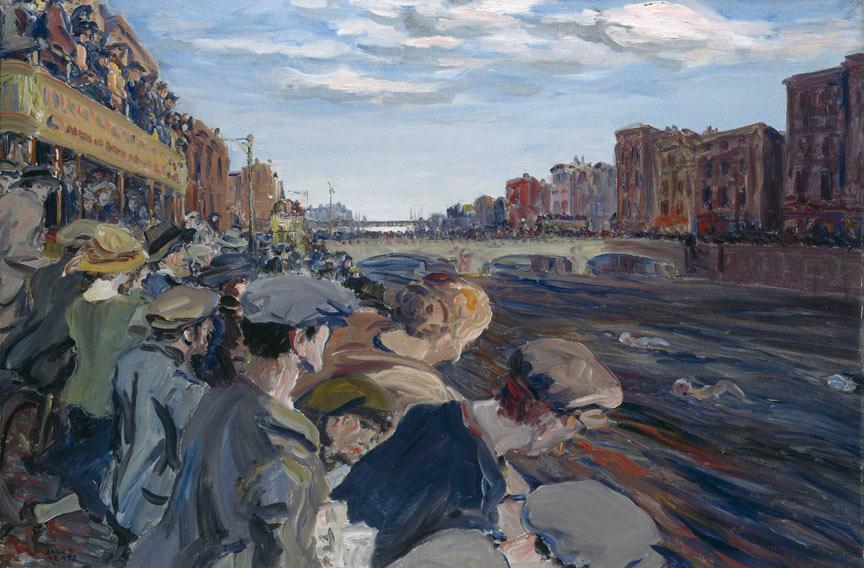
Swimming in the Liffey
Thirty-four swimmers took part in the 1923 race. Yeats placed the viewer in the crowd, distorted perspective and adopted a smoother touch; the work received a medal at the 1924 Olympic Games. This image is presented at documentary title and opens the museum notice. This work is not offered at the reproduction by Alpha Reproduction.
See the institution's notice →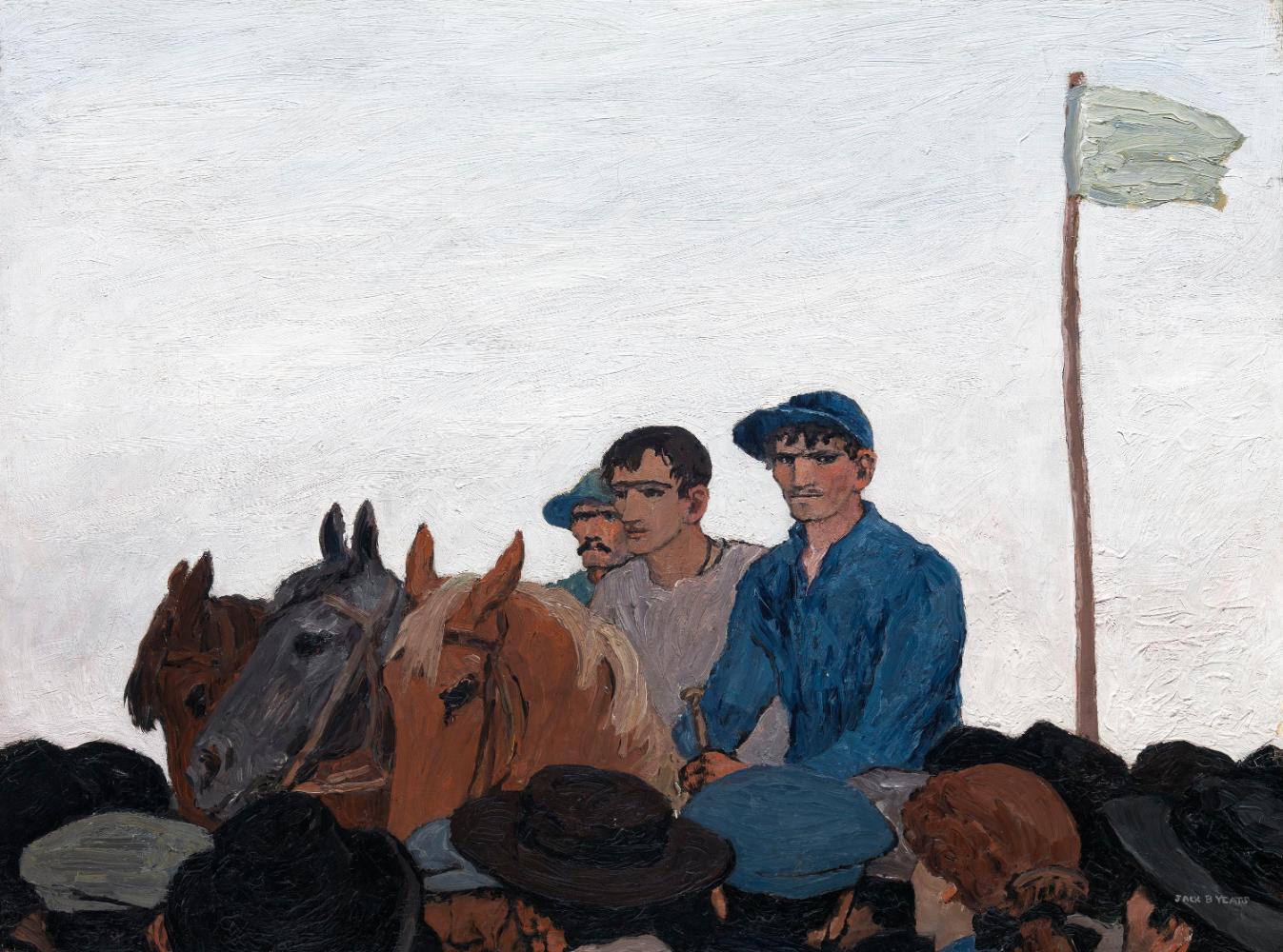 #2
#2
Before departure
Three jockeys are waiting for the signal. Yeats condenses the racing experience into this moment of tense stillness, where the mounts, colors and looks already announce the explosion of the start. This image is presented as documentary and opens the museum notice. This work is not offered at the reproduction by Alpha Reproduction.
See the institution's notice →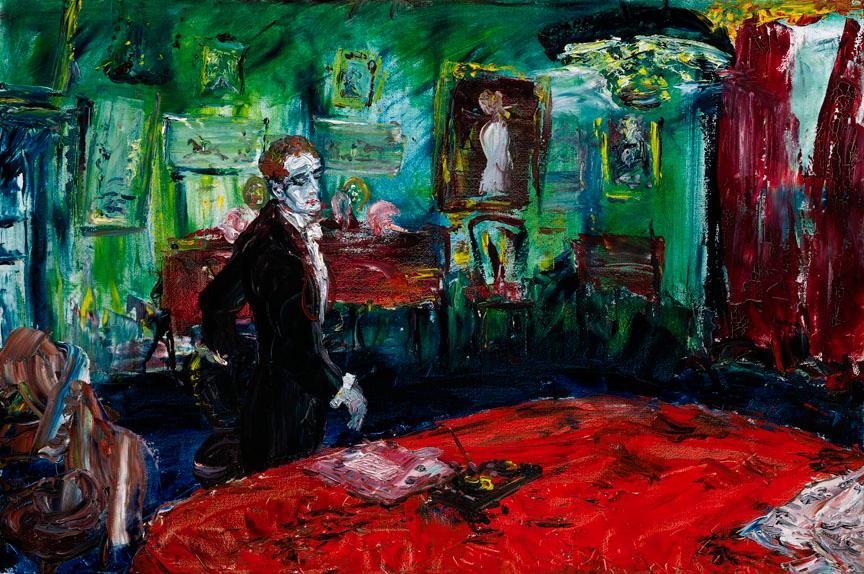 #3
#3
About to write a letter
Inspired by a boxing and love story, the painting suspend action before writing. The scarlet table and the black coat construct a mental space charged with hesitation. This image is presented for documentary purposes and opens the museum notice. This work is not offered at the reproduction by Alpha Reproduction.
See the institution's notice →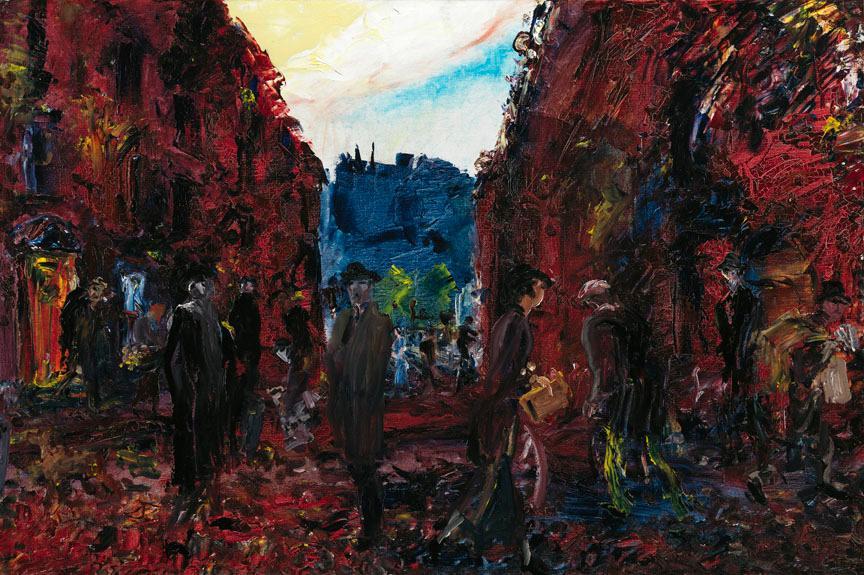 #4
#4
Morning in a city
Yeats reconstructs a Georgian Dublin crossed by memory. The bricks take on morning light while the figures seem to emerge from a city lived as well as looked at. This image is presented for documentary purposes and opens the museum notice. This work is not offered at the reproduction by Alpha Reproduction.
See the institution's notice →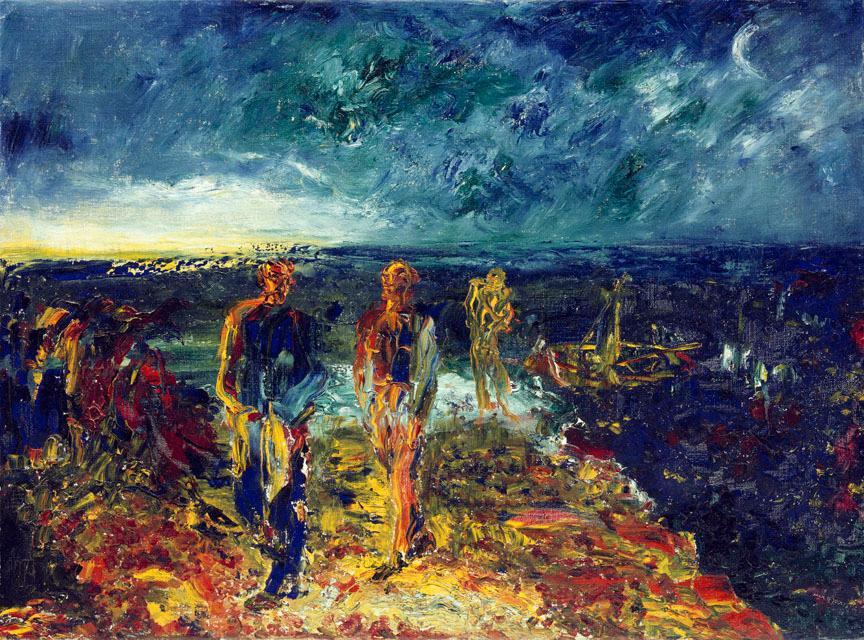 #5
#5
Men of destiny
Painted in 1946, thirty years after the Easter Rising, the painting associates Sligo fishermen with independence fighters. Freedom becomes an energy of color and movement. This image is presented for documentary purposes and opens the museum notice. This work is not offered at the reproduction by Alpha Reproduction.
See the institution's notice →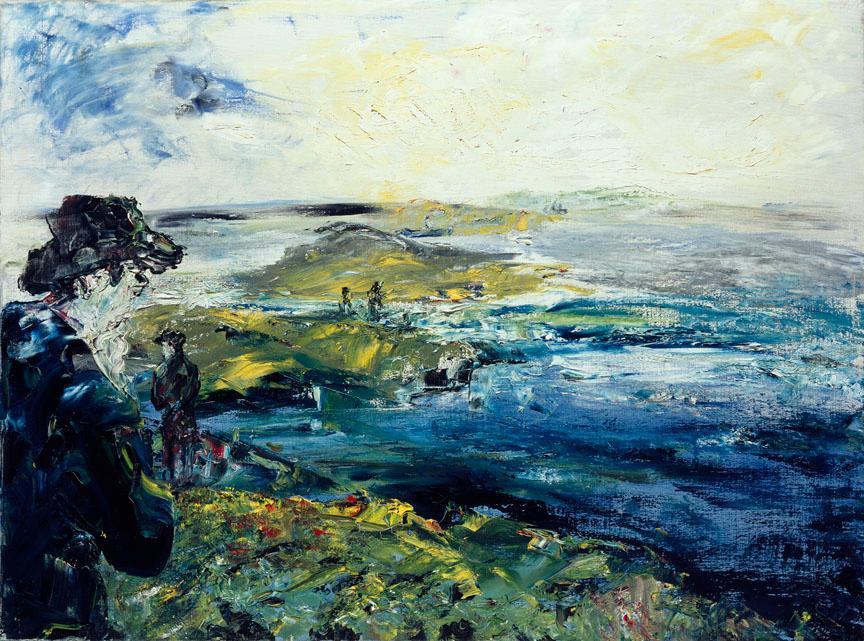 #6
#6
Many bins
Yeats remembers a 1905 trip with JM Synge to Dinish Island. The wide-hatted ferryman contemplates the archipelago, transforming a real excursion into condensed memory. This image is presented for documentary purposes and opens the museum notice. This work is not offered at the reproduction by Alpha Reproduction.
See the institution's notice →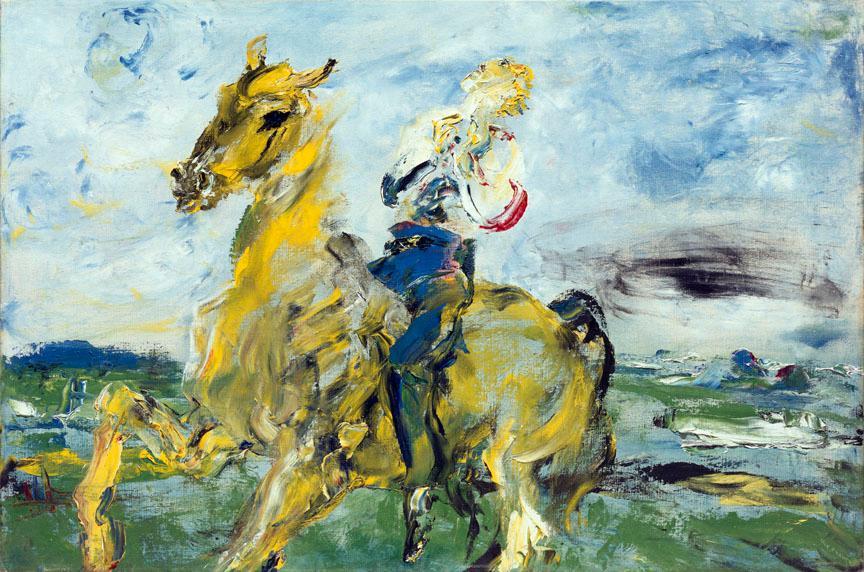 #7
#7
The Singing Horseman
The rider crosses the painting in a burst of joy that seems to reach the horse and the landscape. The bright color and dynamic touch almost make the song heard. This image is presented for documentary purposes and opens the museum notice. This work is not offered at the reproduction by Alpha Reproduction.
See the institution's notice →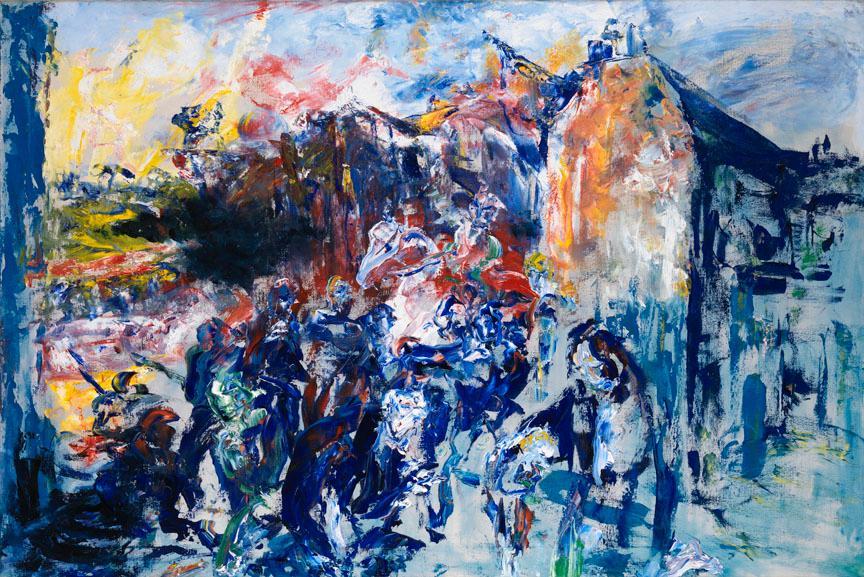 #8
#8
Grief
Designed against war, the image brings together an apocalyptic figure, a mother, a child and an old man. Yeats transforms collective pain into a vision where no heroic story comes to console her. This image is presented as a title documentary and opens the museum notice. This work is not offered at the reproduction by Alpha Reproduction.
See the institution's notice →National landscape, political crisis and modern machine give three very different answers to 20th century Ireland.
 #9
#9
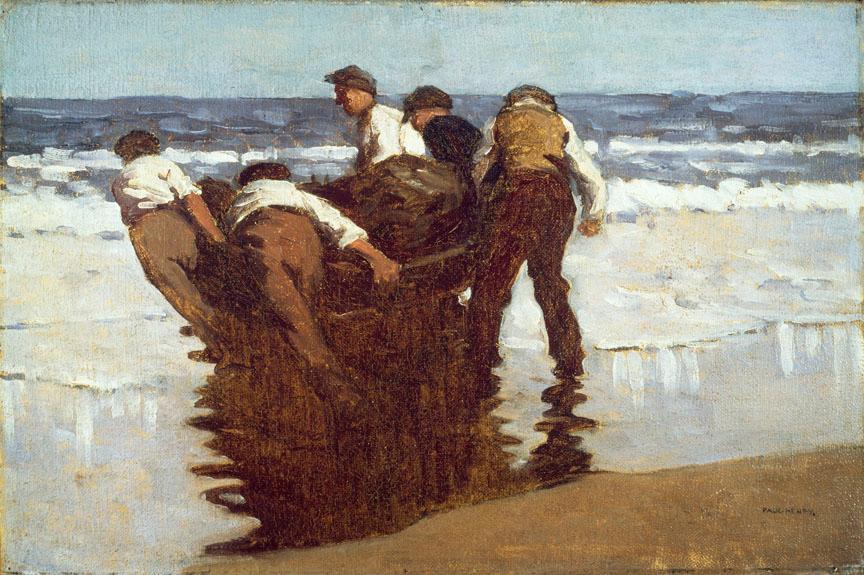
Launching the currach
On Achill, several men carry the light traditional boat towards the sea. Henry gives monumentality to the collective gesture while retaining the harshness of the wind and the shore. This image is presented for documentary purposes and opens the museum notice. This work is not offered at the reproduction by Alpha Reproduction.
See the institution's notice →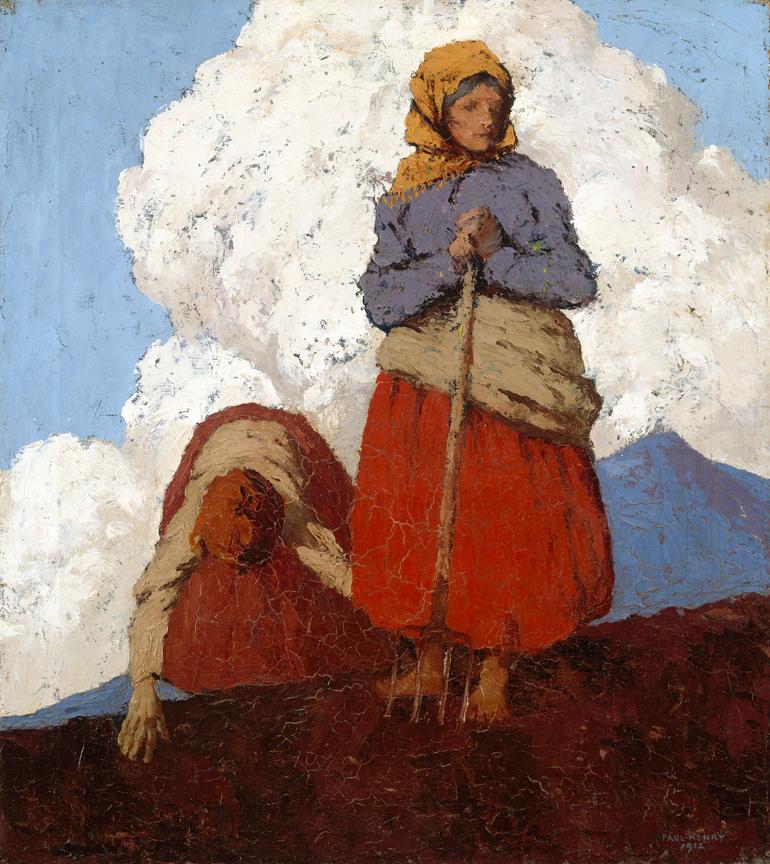 #10
#10
Potato harvesters
Henry takes the leaning figure of the Glaneuses from Millet, but places it back in the stony fields of Achill. The small format gives agricultural work an almost monumental weight. This image is presented for documentary purposes and opens the museum notice. This work is not offered at the reproduction by Alpha Reproduction.
See the institution's notice →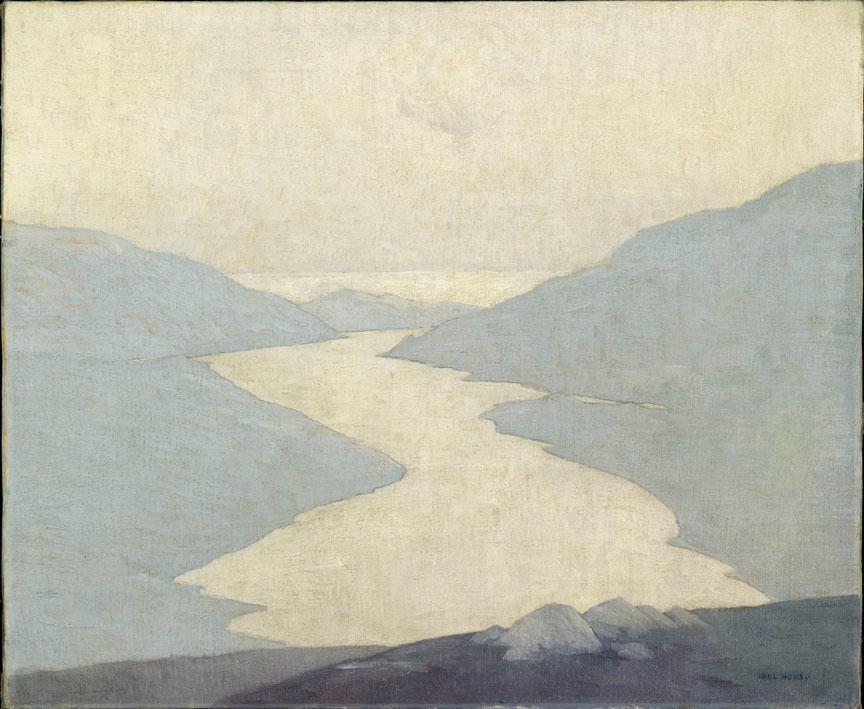 #11
#11
Early morning in Connemara
Killary Harbor is reduced to large, almost monochrome forms. Henry unites the influence of Whistler and Japanese prints with a very direct perception of western Ireland. This image is presented for documentary purposes and opens the museum notice. This work is not offered at the reproduction by Alpha Reproduction.
See the institution's notice →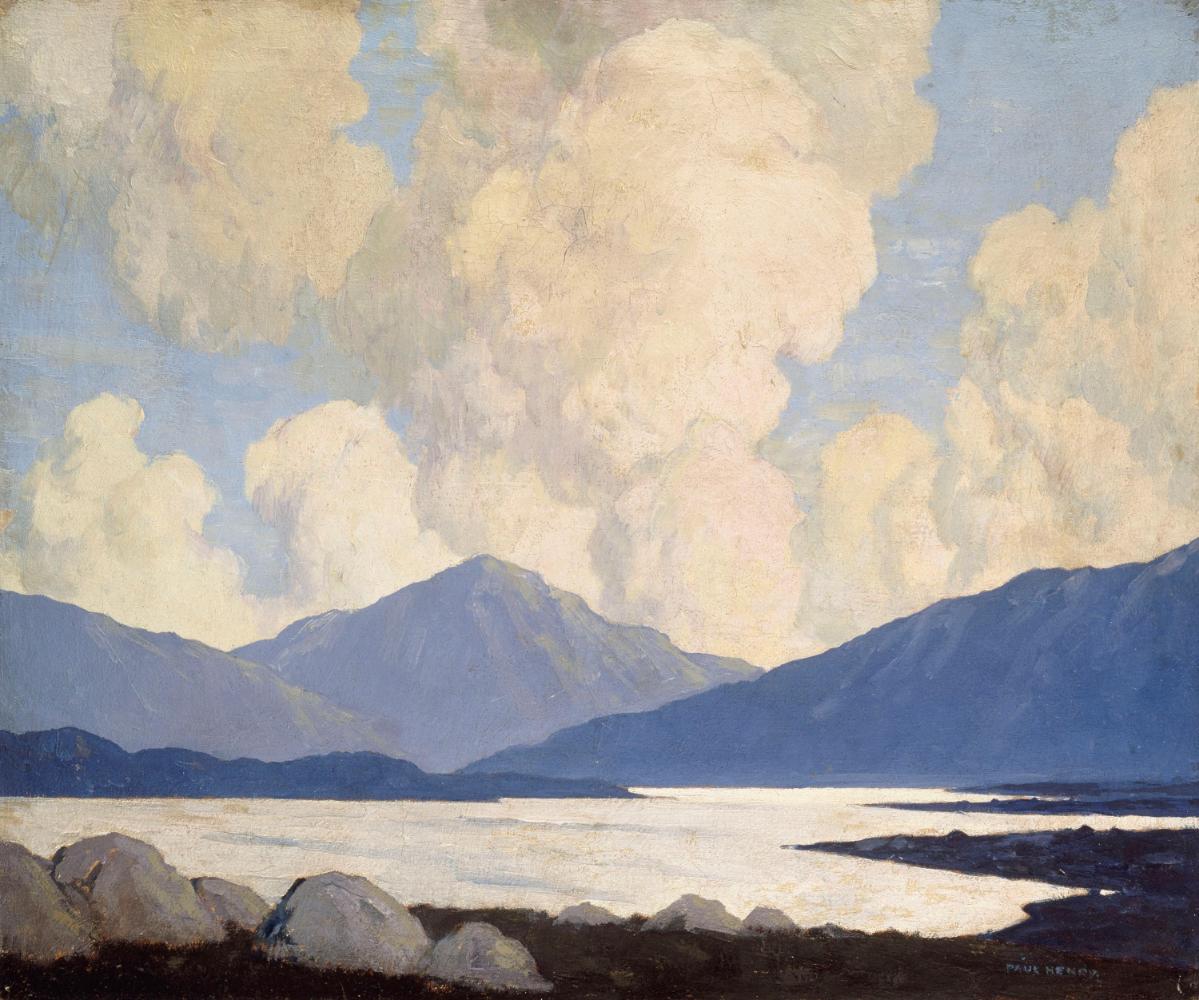 #12
#12
In the West of Ireland
Mountains, clouds, cottages and water make up the image that has lastingly shaped Connemara's vision. The apparent simplicity rests on a very constructed balance of the masses. This image is presented for documentary purposes and opens the museum notice. This work is not offered at the reproduction by Alpha Reproduction.
See the institution's notice →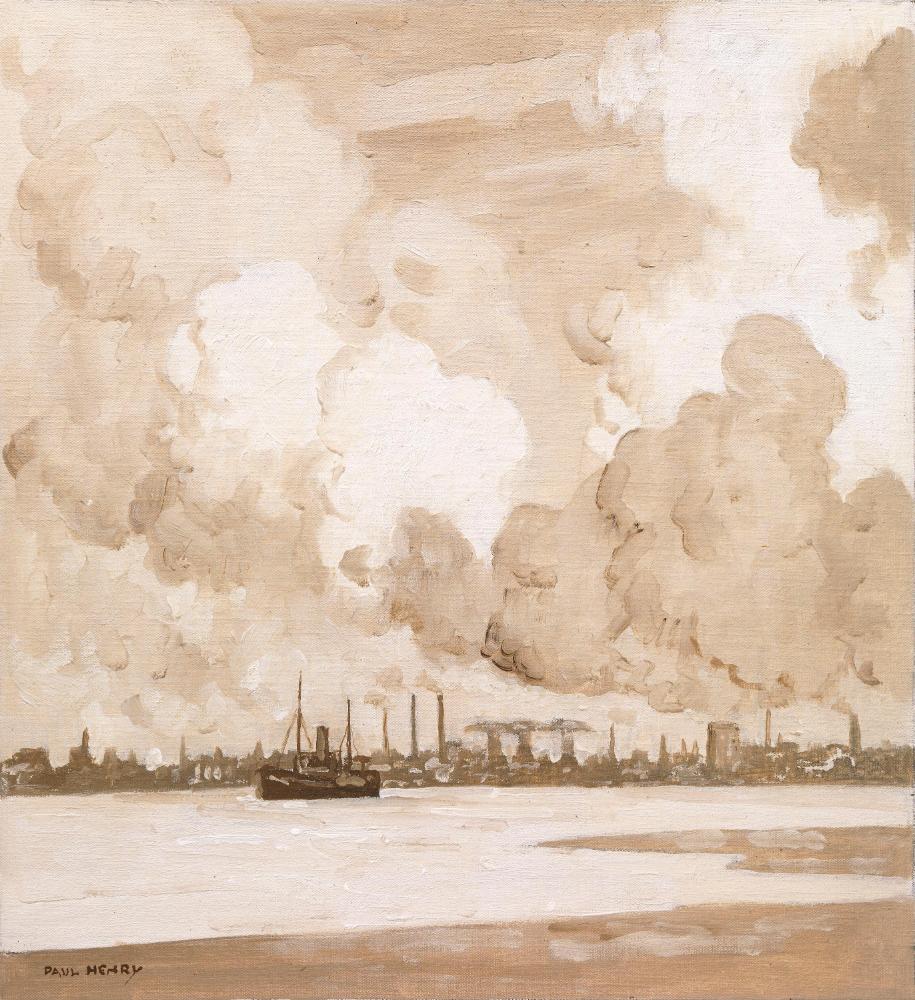 #13
#13
Belfast seen from Greencastle
From Greencastle, Henry confronts the expanse of Belfast Lough with the city and the port. This late work connects his native northern landscape to his vocabulary of simplified forms. This image is presented for documentary purposes and opens the museum notice. This work is not offered at the reproduction by Alpha Reproduction.
See the institution's notice →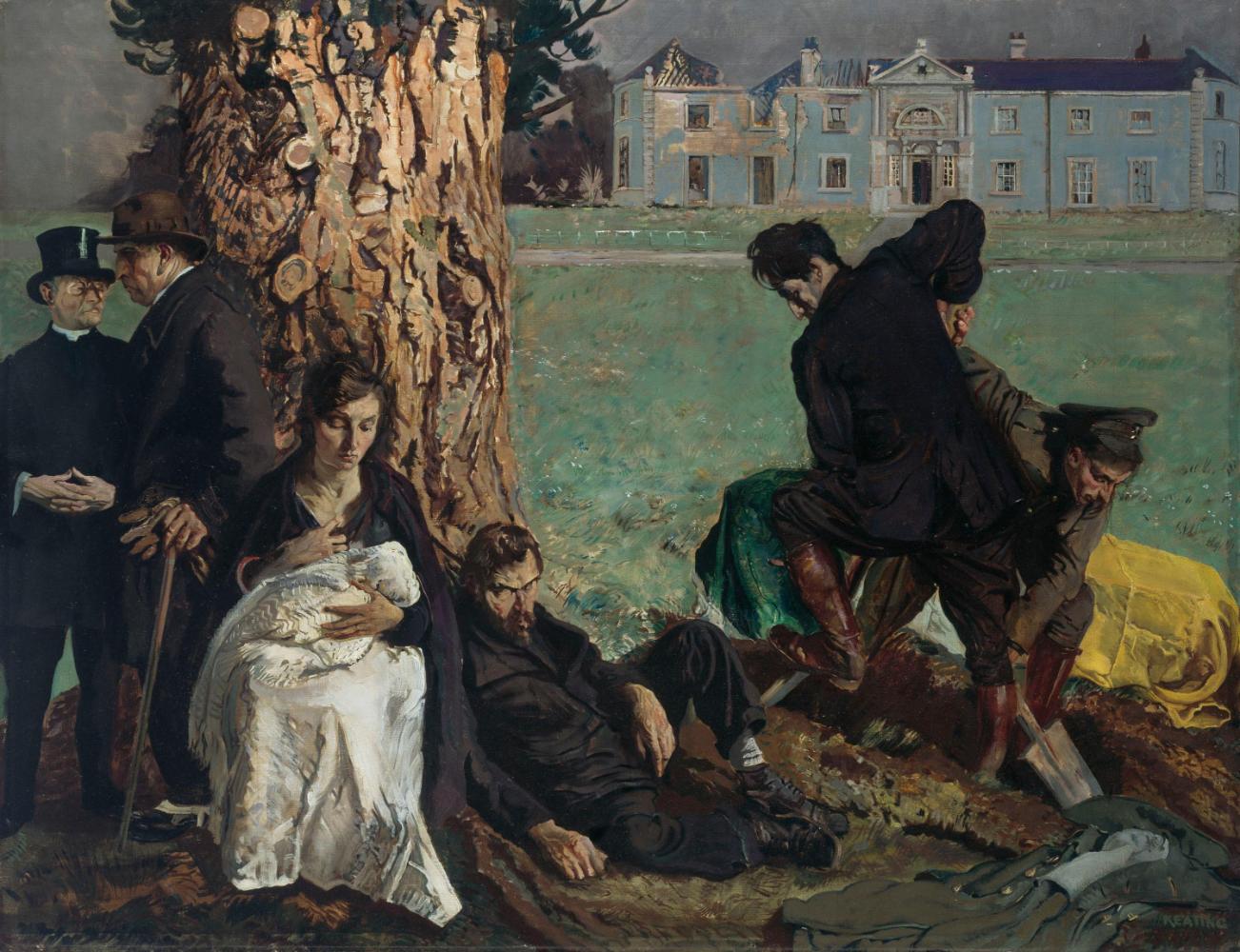 #14
#14
An allegory
After the Irish Civil War, Keating gathered enemy soldiers, coffin, mother and child around a dead tree. THE painting denounces the abandonment of the ideals of independence in favor of political and social interests. This image is presented for documentary purposes and opens the museum notice. This work is not offered at the reproduction by Alpha Reproduction.
See the institution's notice →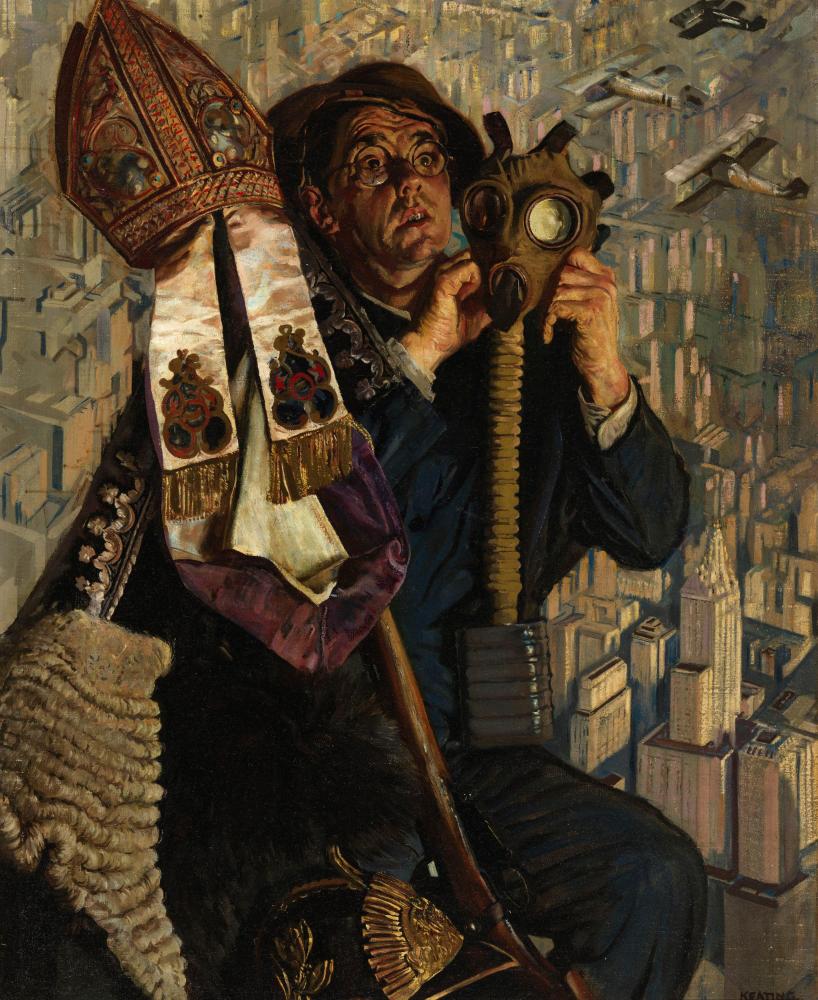 #15
#15
Homo sapiens: an allegory of democracy
Keating tests democracy with a symbolic composition where figures embody collective tensions and responsibilities. The irony of the title questions modern pretension to political wisdom. This image is presented as a title documentary and opens the museum notice. This work is not offered at the reproduction by Alpha Reproduction.
See the institution's notice →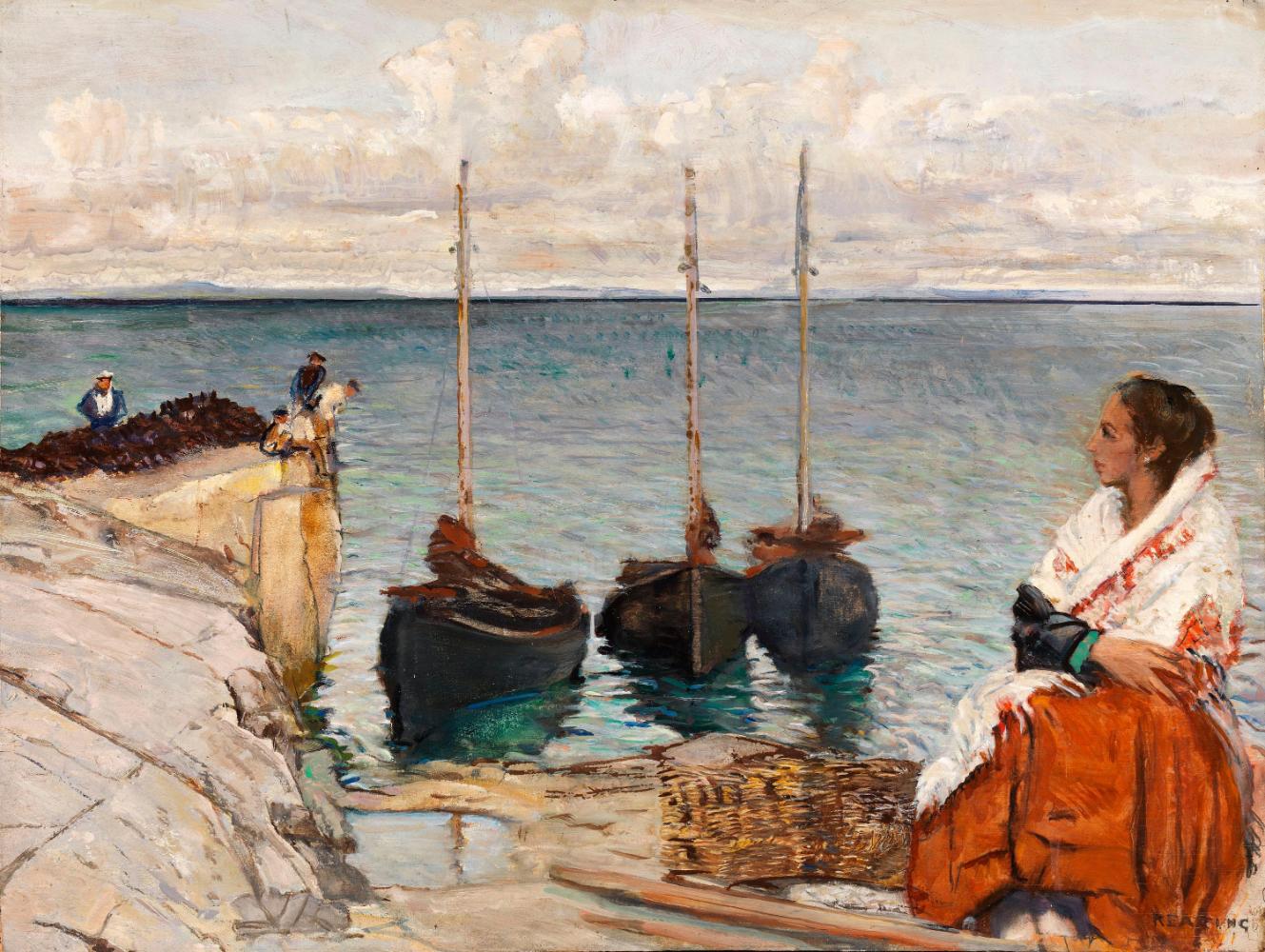 #16
#16
Seascape with figures
The figures are measured against a coastline swept by light. Keating links shoreline observation to human presence without idealizing the work or harshness of the maritime world. This image is presented for documentary purposes and opens the museum notice. This work is not offered at the reproduction by Alpha Reproduction.
See the institution's notice →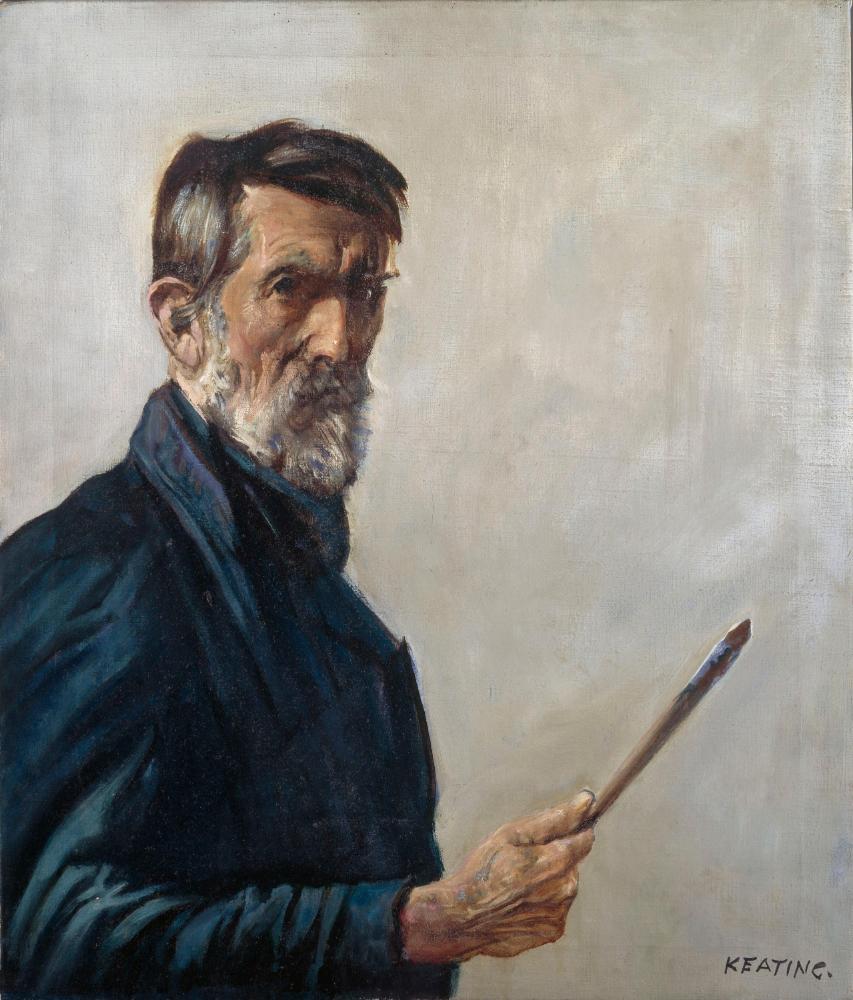 #17
#17
Self-portrait of Sean Keating
Keating constructs his identity as a painter through frontal pose and sustained attention to the face. The self-portrait connects artistic profession, historical awareness and critical outlook. This image is presented for documentary purposes and open the museum notice. This work is not offered at the reproduction by Alpha Reproduction.
See the institution's notice →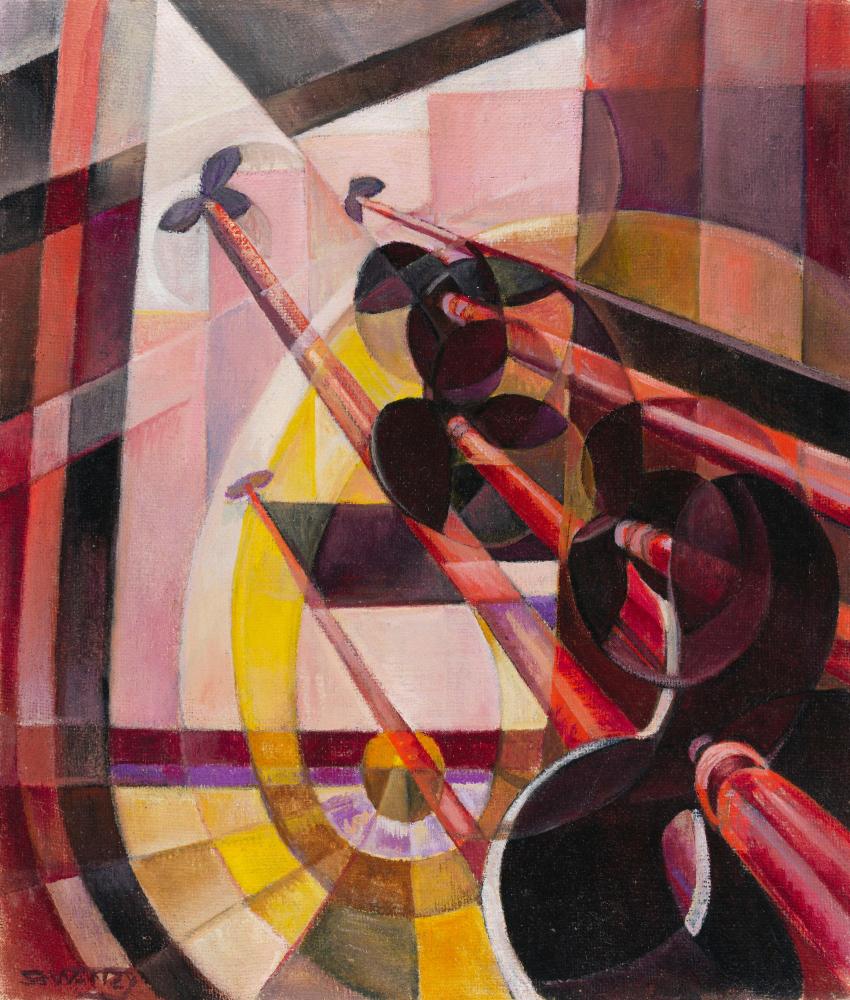 #18
#18
Propellers
Painted during World War II, the work translates mechanical spinning through fragments and lines of force. Swanzy combines futurism and Orphic cubism in a rare Irish response to the age of the machine. This picture is presented for documentary purposes and opens the museum notice. This work is not offered at the reproduction by Alpha Reproduction.
See the institution's notice →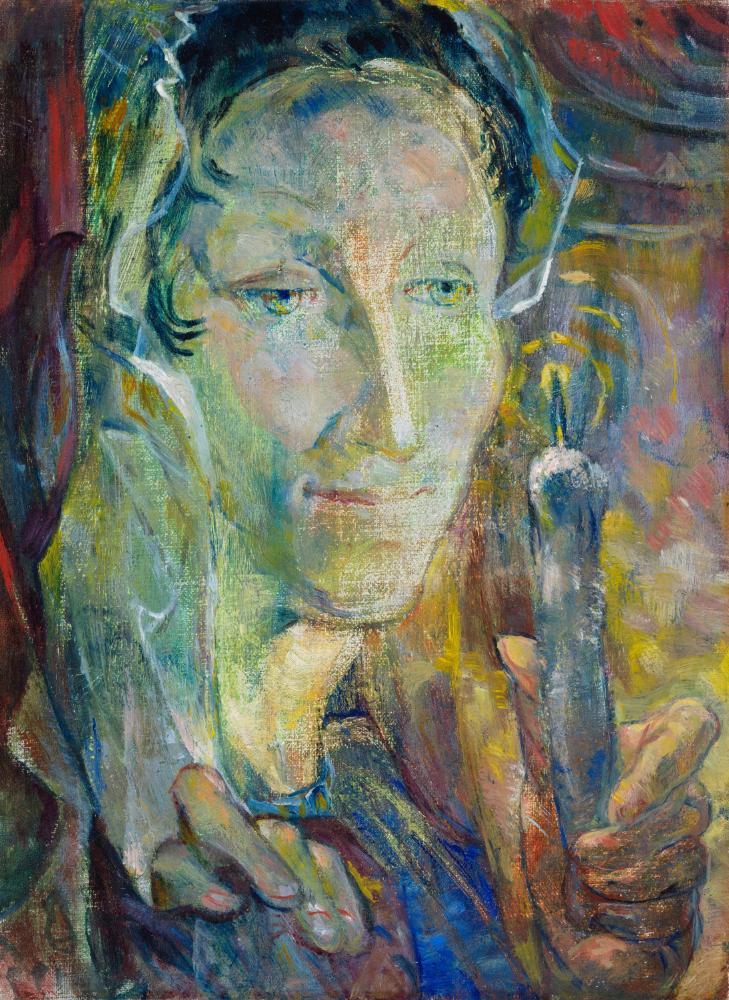 #19
#19
Self-portrait with candlelight
The flame shapes the face in a tight nocturnal space. Swanzy transforms the self-portrait into a study of inner vigilance, particularly busy in the context of war. This image is presented for documentary purposes and opens the museum notice. This work is not offered at the reproduction by Alpha Reproduction.
See the institution's notice →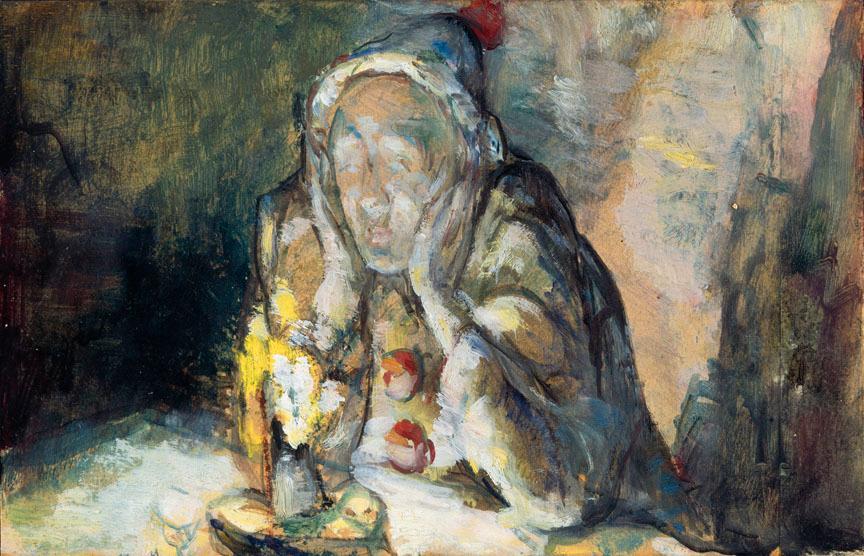 #20
#20
Candlelight clown
Taking refuge in Dublin after the bombing of her London home, Swanzy paints a solitary clown, head in his hands. The image combines the tradition of the melancholic clown with the uncertainty of war. This image is presented as a title documentary and opens the museum notice. This work is not offered at the reproduction by Alpha Reproduction.
See the institution's notice →The portrait and the painting history is building a new place for Irish artists.
 #21
#21
Landscape with a man washing his feet at a fountain
The stop near the fountain combines a daily gesture with a landscape composed like an ancient scene. Barry uses the leaning body and architecture to lead the gaze towards depth. An ambitious history painter, Barry wanted to give moral and mythological subjects civic significance.
See this reproduction → #22
#22
Adam's Temptation
Adam hesitates before the forbidden at the moment when the biblical story changes. Barry concentrates the moral drama in the opposition of gestures, looks and a nature charged with threat. An ambitious history painter, Barry wanted to give moral and mythological subjects civic significance.
See this reproduction → #23
#23
Philoctetes on the island of Lemnos
Abandoned in Lemnos with his wound and the arc of Heracles, Philoctetes embodies the suffering of the rejected hero. Barry chose isolation rather than action to give myth its tragic force. An ambitious history painter, Barry wanted to give moral and mythological subjects civic significance.
See this reproduction → #24
#24
Achilles Education
The centaur Chiron instructs young Achilles, future hero of the Iliad. The scene makes learning the body and mind the silent prelude to a warlike destiny. An ambitious history painter, Barry wanted to give moral and mythological subjects civic significance.
See this reproduction → #25
#25
The Death of Adonis
Adonis' death transforms the love story of Venus into lamentation. Barry organizes the bodies around the young hunter in order to make people feel the brutal break between beauty, desire and mortality. An ambitious history painter, Barry wanted to give moral and mythological subjects civic significance.
See this reproduction → #26
#26
Self-portrait with easel
Hone appears in front of his easel and claims his identity as a painter. The direct gaze, the tools of the trade and the sobriety of the staging replace the usual signs of social rank. undefined
See this reproduction → #27
#27
Young woman with a blue scarf
The blue scarf frames the face and draws light towards the eyes. Hone transforms a simple accessory into an element of character, without reducing the model to a costume study. undefined
See this reproduction → #28
#28
Mary Hone, the artist's wife
Mary Hone's portrait is based on closeness rather than pageantry. Attention to features and expression makes the marital image an autonomous and restrained presence. undefined
See this reproduction → #29
#29
Portrait of a man
The anonymous model is seized with a frankness that refuses the anecdote. Hone gives the face, clothing and direction of gaze all the psychological weight of the painting. undefined
See this reproduction → #30
#30
Sir john fielding
Blind magistrate John Fielding helped organize the Bow Street Runners in London. Hone makes his blindness and public authority the two poles of a remarkably contained portrait. undefined
See this reproduction →Wicklow, Donegal, Fermanagh and Dublin enter into a landscape tradition attentive to the real climate.
 #31
#31
View near Avoca
The Avoca Valley becomes a theater of light, reliefs and vegetation. Barret not only describes the site: he composes an Irish landscape capable of competing with classic models. undefined
See this reproduction → #32
#32
Powerscourt, County Wicklow
The Wicklow Mountains and the Powerscourt Estate are ordered in successive plans. The actual topography nourishes a broad vision where Irish territory acquires monumental dignity. undefined
See this reproduction → #33
#33
View of Powerscourt Waterfall
The waterfall cuts the relief with a vertical movement and animates the immobility of the rocks. Barret transforms this spectacular Wicklow site into an experience of distance, freshness and natural power. undefined
See this reproduction → #34
#34
Landscape with two boys fishing in the evening
The two fishermen give the scale of the landscape while the evening light slows down the scene. The daily motif becomes a meditation on time, water and modest work. undefined
See this reproduction → #35
#35
The Horse Box at sunset
The passage of horses on the water connects the two banks as the day goes out. Barret combines narrative movement and atmosphere to renew the pastoral landscape. undefined
See this reproduction → #36
#36
Landscape
Roberts constructs the landscape through faint transitions of light rather than theatrical effect. The trees, terrain and sky appear to be observed on site, with a rare sensitivity to the Irish climate. The luminous precision of Roberts made him one of the most sensitive Irish landscapers of the 18th century.
See this reproduction → #37
#37
View of Ballyshannon, County Donegal
The view of Ballyshannon combines valley, river and human settlement without sacrificing the precision of the place. Roberts makes topography a living experience of relief and air. Roberts' luminous precision made him one of the most sensitive Irish landscapers of the 18th century.
See this reproduction → #38
#38
View of Belleek, County Fermanagh
Belleek appears at the water's edge in a balance of clear planes and wooded masses. The scene documents a territory while retaining the breathing of a landscape traveled. Roberts' luminous precision made him one of the most sensitive Irish landscapers of the 18th century.
See this reproduction → #39
#39
Knock Ninney and Lough Erne from Bellisle
From Bellisle, the gaze crosses Lough Erne to the relief of Knock Ninney. Roberts organizes this depth without grandiloquence and lets the light unify the water, land and sky. Roberts' luminous precision makes he one of the most sensitive Irish landscapers of the 18th century.
See this reproduction → #40
#40
The Liffey in the Lucan House estate
The River Liffey winds through the Lucan House estate and connects landscaped gardens and freer nature. Roberts makes noticeable how a property landscape transforms the land. Roberts' luminous precision makes him one of the most sensitive Irish landscapers of the 18th century.
See this reproduction → #41
#41
Flower group
The flowers come together for their differences in silhouettes, textures and colors. Ashford treats still life as a small landscape where each stem contributes to the general balance. Ashford unites classic landscape, topographical views and new attention to weather effects.
See this reproduction → #42
#42
Morning landscape with a triumphal arch
The ancient arch gives the morning historical depth and orders perspective. Ashford combines fresh light, ideal architecture and tiny figures in the tradition of classical landscape. Ashford unites classical landscape, topographical views and new attention to weather effects.
See this reproduction → #43
#43
Evening landscape with Mercury and Argus
The episode of Mercury and Argus slips into a vast evening landscape. The myth becomes less a spectacle than a narrative landmark within a dominant nature. Ashford unites classic landscape, topographical views and new attention to meteorological effects.
See this reproduction → #44
#44
The Storm
The dark sky, wind and contrasts of light herald the breaking of the storm. Ashford makes weather a pictorial force that disrupts the peaceful order of the landscape. Ashford unites classic landscape, topographical views and new attention to weather effects.
See this reproduction → #45
#45
View of Dublin from Chapelizod
From Chapelizod, Dublin unfolds in distance rather than as an accumulation of monuments. There painting preserves the memory of a city still linked to its banks and its countryside. Ashford unites classic landscape, topographical views and new attention to meteorological effects.
See this reproduction →From the great medieval story to the streets of Dublin, the painting connects spectacle, society and self-awareness.
 #46
#46
The Marriage of Strongbow and Aoife
After the capture of Waterford in 1170, Richard de Clare, known as Strongbow, married Aoife, daughter of Diarmait Mac Murchada. Maclise transformed this controversial episode of the Norman Conquest into an immense political theater. Maclise transforms history, literature and customs in theatrical compositions where every detail carries the story.
See this reproduction → #47
#47
Apple Night
The Irish snap-apple game hosts a Halloween vigil full of gestures, looks and domestic details. Maclise makes the popular festival a social chronicle as precise as it is spectacular. Maclise transforms history, literature and customs in theatrical compositions where every detail carries the story.
See this reproduction → #48
#48
The chivalrous wish of the ladies and the peacock
The vow pronounced in front of the peacock takes up a medieval court ritual where the bird symbolizes nobility and splendor. Maclise orchestrates costumes and attitudes like a historical theater stage. Maclise transforms history, literature and customs in theatrical compositions where every detail carries the story.
See this reproduction → #49
#49
Interview between Charles I and Oliver Cromwell
The imaginary meeting between Charles I and Cromwell condenses the conflict which will lead to the English Civil War. The positions of the two men make visible the opposition between royal power and political revolution. Maclise transforms history, literature and customs in theatrical compositions where every detail carries the story.
See this reproduction → #50
#50
Christmas in the baron's great hall
The large room brings together music, meals and exchanges between generations. Maclise uses the abundance of details to reconstruct a dreamed medieval Christmas and show how a community is staged. Maclise transforms history, literature and customs in theatrical compositions where every detail carries the story.
See this reproduction → #51
#51
Apple harvest in Quimperlé
Painted in Brittany, the harvest combines rural work and outdoor lighting. Osborne avoids the folk scene: precise gestures and color make you feel the real weight of the activity. undefined
See this reproduction → #52
#52
One October morning
The low October light envelops the countryside without erasing the freshness of the air. Osborne paints the season as an immediate sensation, attentive to the passages between shadow, humidity and sun. undefined
See this reproduction → #53
#53
Cottage garden
The garden is neither orderly nor decorative: flowers, walls and vegetation respond to it in changing light. Osborne finds in a modest space a laboratory of color and depth. undefined
See this reproduction → #54
#54
The Streets of Dublin: the book seller
A saleswoman offers her books in the street, in the middle of urban traffic. Osborne gives dignified visibility to this precarious work without converting the scene into a moral lesson. undefined
See this reproduction → #55
#55
Landscape with cattle
The animals structure the foreground and give their measure to the terrain. Osborne combines naturalistic observation and a touch of light to renew an ancient pastoral motif. undefined
See this reproduction → #56
#56
Chess game
The checkerboard focuses the players' attention and silently organizes the scene. Orpen transforms a game of chess into a study of calculation, expectation and relationships between figures. A virtuoso of portraiture, Orpen knows how to bring anxiety and self-staging to the surface beneath social elegance.
See this reproduction → #57
#57
Augustus John
The portrait of the painter Augustus John captures an independent personality rather than an official status. Orpen combines drawing virtuosity, physical presence and friendly rivalry between artists. A portrait virtuoso, Orpen knows how to do it flush with social elegance, concern and self-presentation.
See this reproduction → #58
#58
Grace reading in Howth Bay
Grace reads on the edge of Howth Bay, protected from the spectacle by her book. Orpen connects intimacy, Irish landscape and marine light in a suspended concentration scene. A virtuoso of portraiture, Orpen knows how to bring anxiety and self-staging to the surface beneath social elegance.
See this reproduction → #59
#59
The Young Man Artist
Orpen presents himself at the start of his career with deliberately studied confidence. THE painting involves the public identity of the painter and the ironic distance he maintains from her. A virtuoso of portraiture, Orpen knows how to bring anxiety and self-presentation to the surface beneath social elegance.
See this reproduction → #60
#60
The mirror
The mirror multiplies points of view and disturbs the boundary between model, painter and spectator. Orpen uses this familiar object to make the representation itself the true subject. A portrait virtuoso, Orpen knows how to do it flush with social elegance, concern and self-presentation.
See this reproduction →Pont-Aven and Paris moved Irish forms towards post-impressionism and the avant-garde.
 #61
#61
The Glade
The clearing opens with wide touches and colors that no longer just imitate nature. O'Conor transforms the undergrowth into rhythm, in the wake of Pont-Aven. undefined
See this reproduction → #62
#62
La Ferme de Lezaven, Finistère
In Lezaven, buildings and fields are unified by an energetic touch. O'Conor makes the Breton farm a modern motif where color builds space as much as light. undefined
See this reproduction → #63
#63
The Young Breton
The Breton costume situates the model without locking it into the picturesque. The simplification of shapes and colorful intensity move the portrait towards an almost emblematic presence. undefined
See this reproduction → #64
#64
Still life with apples and Breton pots
Breton apples and pottery are brought together for their volumes and chromatic accords. O'Conor gives ordinary objects a density that extends his post-impressionist research. undefined
See this reproduction → #65
#65
The Rose of Heaven, Blackcurrant
In Cassis, the pink sky responds to the masses of the relief and the sea. O'Conor does not describe a simple sunset: he constructs a sensation in large, colorful relationships. undefined
See this reproduction → #66
#66
Nudes dancing around a fountain in the moonlight
The circle of bodies around the fountain combines movement, water and night light. Jellett simplifies the figures to make the dance a decorative rhythm rather than a narrative. Jellett introduced Cubist abstraction to Ireland and oriented it towards an order that was both plastic and spiritual.
See this reproduction → #67
#67
Decoration
Nested shapes, axes and colors make up an image that no longer depends on a recognizable subject. This work is one of the founding assertions of abstraction in the painting irish. Jellett introduced Cubist abstraction to Ireland and oriented it towards an order that was both plastic and spiritual.
See this reproduction → #68
#68
Unique element
Jellett focuses the composition around a dominant form and its resonances. The title invites you to read the painting as an autonomous organization, close to spiritual architecture. Jellett introduced Cubist abstraction to Ireland and oriented it towards an order that was both plastic and spiritual.
See this reproduction → #69
#69
Composition of four elements
Four formal units balance each other without a traditional perspective. Trained in Cubism in Paris, Jellett adapts this grammar to a search for measure, color and sacred meaning. Jellett introduces Cubist abstraction in Ireland and directs it towards an order that is both plastic and spiritual.
See this reproduction → #70
#70
Achill Horses
Achill's horses remain recognizable but their silhouettes are simplified and rhythmic. Jellett connects a pattern from the Irish West to structures learned in the European avant-garde. Jellett introduces cubist abstraction in Ireland and directs it towards an order that is both plastic and spiritual.
See this reproduction →Thirty paintings reveal a cosmopolitan artist attentive to society, war and the landscapes crossed.
 #71
#71
Aida, a young Moorish girl
The portrait of Aïda was born from Lavery's Moroccan stays. The model retains an individual presence: costume, complexion and colorful background avoid the orientalism of simple decor. A cosmopolitan portraitist born in Belfast, Lavery connects modern society, landscape and contemporary history.
See this reproduction → #72
#72
Anna Pavlova (1881 -1931), as the "Dying Swan"
Anna Pavlova plays the solo choreographed by Michel Fokine on Le Cygne de Saint-Saëns. Lavery seeks less real movement than the moment when the dancer becomes an apparition. A cosmopolitan portraitist born in Belfast, Lavery connects modern society, landscape and contemporary history.
See this reproduction → #73
#73
In Morocco
Lavery paints Morocco through light, light walls and the distance between figures. The scene reflects his experience of the place without accumulating picturesque accessories. A cosmopolitan portraitist born in Belfast, Lavery connects modern society, landscape and contemporary history.
See this reproduction → #74
#74
Self-portrait
The self-portrait combines professional confidence and self-examination. Lavery controls the pose and the material while letting the face retain a slight reserve. A cosmopolitan portraitist born in Belfast, Lavery connects modern society, landscape and contemporary history.
See this reproduction → #75
#75
Swimming at the Lido
At the Lido, modern leisure meets Venetian light. The bathers and body of water allow Lavery to balance worldly observation, movement and sea air. A cosmopolitan portraitist born in Belfast, Lavery connects modern society, landscape and contemporary history.
See this reproduction → #76
#76
North Queensferry Air Force Base, 1917
Painted during the First World War, the North Queensferry base documents a military infrastructure that has become a landscape. Lavery measures the technical presence on the scale of the Firth of Forth. A cosmopolitan portraitist born in Belfast, Lavery connects modern society, landscape and contemporary history.
See this reproduction → #77
#77
Blessing of Colors.
The blessing of the flags brings together religious authority, army and public ceremony. Lavery orders the crowd in such a way as to make the collective gestures and the seriousness of the ritual legible. A cosmopolitan portraitist born in Belfast, Lavery connects modern society, landscape and contemporary history.
See this reproduction → #78
#78
Twilight, Lake Geneva
Lake Geneva absorbs the last colors of the day. Lavery reduces contrasts to make twilight a delicate transition between water surface, relief and sky. A cosmopolitan portraitist born in Belfast, Lavery connects modern society, landscape and contemporary history.
See this reproduction → #79
#79
Lady in gray and black
Gray and black define elegance without ostentation. Lavery uses dark values to highlight the model's face, pose and social intelligence. A cosmopolitan portraitist born in Belfast, Lavery connects modern society, landscape and contemporary history.
See this reproduction → #80
#80
Eileen, her first communion
The whiteness of the dress and Eileen's seriousness give the first communion a family intimacy. Lavery avoids religious anecdote and focuses on a passage from childhood. A cosmopolitan portraitist born in Belfast, Lavery connects modern society, landscape and contemporary history.
See this reproduction → #81
#81
Winter
The winter landscape is constructed by the gaps of white, gray and earth. Lavery makes you feel the cold and the space without loading the scene with a story. A cosmopolitan portraitist born in Belfast, Lavery connects modern society, landscape and contemporary history.
See this reproduction → #82
#82
Inauguration of the Modern Foreign and Sargent galleries at the Tate Gallery, June 26, 1926
The inauguration of the Tate galleries becomes a collective portrait of the British art world. Lavery documents the relationships between artists, patrons, institution and public. A cosmopolitan portraitist born in Belfast, Lavery connects modern society, landscape and contemporary history.
See this reproduction → #83
#83
Jockeys and owners in Epsom
In Epsom, jockeys and owners gather before or after the race. The colors of the jackets and the tension of the exchanges animate this social theater of sport. A cosmopolitan portraitist born in Belfast, Lavery connects modern society, landscape and contemporary history.
See this reproduction → #84
#84
The artist's studio: Lady Hazel Lavery with her daughter Alice and her daughter-in-law Eileen
Hazel, Alice and Eileen occupy the workshop as a space that is both family and professional. THE painting reveals how Lavery transforms those around him into an image of artistic life. A cosmopolitan portraitist born in Belfast, Lavery connects modern society, landscape and contemporary history.
See this reproduction → #85
#85
The tennis festival
This outdoor scene combines sport, conversation and modern sociability. The clear touch and dispersion of the figures place Lavery in Glasgow's research into naturalism. A cosmopolitan portraitist born in Belfast, Lavery connects modern society, landscape and contemporary history.
See this reproduction → #86
#86
The mother
The relationship between mother and child is based on the proximity of bodies and the economy of decor. Lavery gives the family bond a calm gravity rather than a demonstrative sentimentalism. A cosmopolitan portraitist born in Belfast, Lavery connects modern society, landscape and contemporary history.
See this reproduction → #87
#87
The Red Rose
The red rose first catches the eye before returning the eye to the model. This chromatic accent condenses the elegance and discreet tension of the portrait. A cosmopolitan portraitist born in Belfast, Lavery connects modern society, landscape and contemporary history.
See this reproduction → #88
#88
Switzerland in winter (Le Moine)
The dark silhouette of the Monk stands out in the white immensity. Lavery confronts human presence with an alpine landscape where snow simplifies all forms. A cosmopolitan portraitist born in Belfast, Lavery connects modern society, landscape and contemporary history.
See this reproduction → #89
#89
The cemetery, Étaples, 1919
The Étaples cemetery recalls the dead of war without battle or heroism. The alignments and cold light give the absence a lasting form. A cosmopolitan portraitist born in Belfast, Lavery connects modern society, landscape and contemporary history.
See this reproduction → #90
#90
The dentist
The dentist scene introduces modern medicine into the painting interior. Lavery observes the technical gestures, the vulnerability of the patient and the strange intimacy of the office. A cosmopolitan portraitist born in Belfast, Lavery connects modern society, landscape and contemporary history.
See this reproduction → #91
#91
The Red Book
The red book provides the color center of a reading scene. Lavery makes silence, posture and the printed object signs of an inner life. A cosmopolitan portraitist born in Belfast, Lavery connects modern society, landscape and contemporary history.
See this reproduction → #92
#92
The green coat
The green coat structures the entire portrait with its mass and color. The garment affirms the character of the model without distracting attention from the face. A cosmopolitan portraitist born in Belfast, Lavery connects modern society, landscape and contemporary history.
See this reproduction → #93
#93
The return of the goats
The return of the herd gives the landscape its movement and its time. Lavery captures a rural rhythm where dust, silhouettes and end-of-day light respond to each other. A cosmopolitan portraitist born in Belfast, Lavery connects modern society, landscape and contemporary history.
See this reproduction → #94
#94
The injured in Dover
In Dover, wounded soldiers return from the front. Lavery refuses heroization and insists on waiting, fatigue and the material organization of reception. A cosmopolitan portraitist born in Belfast, Lavery connects modern society, landscape and contemporary history.
See this reproduction → #95
#95
Chess players
The game of chess creates a silent concentration between the two opponents. The hands, checkerboard and looks are enough to make mental arithmetic visible. A cosmopolitan portraitist born in Belfast, Lavery connects modern society, landscape and contemporary history.
See this reproduction → #96
#96
The jockeys' locker rooms at Ascot
Ascot's locker room reveals the other side of a social spectacle. Lavery paints the preparation, the colors of the jackets and the professional tension before the race. A cosmopolitan portraitist born in Belfast, Lavery connects modern society, landscape and contemporary history.
See this reproduction → #97
#97
Loch Katrine
Loch Katrine is rendered by vast relationships of water, mountains and sky. Lavery avoids the postcard and seeks the changing breathing of the Scottish landscape. A cosmopolitan portraitist born in Belfast, Lavery connects modern society, landscape and contemporary history.
See this reproduction → #98
#98
Night, Tangier
In Tangier, the night absorbs architecture and lets a few lights organize the space. Lavery transforms the city into an accord of dark values and reflections. A cosmopolitan portraitist born in Belfast, Lavery connects modern society, landscape and contemporary history.
See this reproduction → #99
#99
Under the cherry tree (formerly titled "On the Loing, an afternoon conversation")
Under the cherry tree, the conversation is part of the rhythm of shadows and foliage. The scene of Grez-sur-Loing unites modern intimacy and painting outdoor. A cosmopolitan portraitist born in Belfast, Lavery connects modern society, landscape and contemporary history.
See this reproduction → #100
#100
On the Grez bridge
The Grez-sur-Loing bridge frames the figures and the river in a clear composition. Lavery shares a taste for the outdoors with the village's international painters. A cosmopolitan portraitist born in Belfast, Lavery connects modern society, landscape and contemporary history.
See this reproduction →Sources and links
Alpha sheets and Irish collections
The 80 paintings in the public domain use their images and links Alpha Reproduction. The 20 works by Jack B. Yeats, Paul Henry, Sean Keating and Mary Swanzy are presented for documentary purposes only: each image opens the exact notice of the National Gallery of Ireland, and none of these works are offered to the reproduction.
National Gallery of Ireland
Online collectionThe institutional catalog used for modern documentary works.Swimming in the Liffey - Jack B. YeatsThe Dublin race has become an icon of the painting irish.Frequently asked questions
Questions about the painting irish
Some benchmarks to situate artists, European circulations and the status of modern works.
What characterizes the painting irish?
It often associates a strong awareness of place with political and cultural history. The landscape plays a major role, but the portrait, the painting in history, urban life and abstraction show a much more diverse tradition.
Why is Jack B. Yeats placed in the lead?
Swimming in the Liffey, Men of Destiny and his late paintings profoundly renewed the representation of the city, memory and independence. Its free color gives it a central place in 20th century Irish art.
What role have Irish artists played abroad?
Barry, Hone, Maclise, Orpen and Lavery worked extensively in Britain; O'Conor linked up with Pont-Aven; Jellett and Swanzy were formed through contact with the European avant-gardes. These circulations are constitutive of their painting.
Is Mainie Jellett a pioneer of abstraction?
Yes. After her training with André Lhote and Albert Gleizes, she exhibited in Dublin in the 1920s painting non-figurative which first causes incomprehension before being recognized as a founder.
Are modern works offered in reproduction ?
No. The works of Yeats, Henry, Keating and Swanzy appear solely to document the continuity of the history of the painting irish. Their images and buttons open the notices of the National Gallery of Ireland.
0 comments