


BAROQUE ALTARPIECE · NATURALISM · MODERNITY
Portuguese painting: 100 works from Nuno Gonçalves to Paula Rego
Six centuries of Portuguese painting
From the faces gathered around Saint Vincent to the political fictions of Paula Rego, Portuguese painting advances through profound transformations. Renaissance altarpieces, baroque still lifes, romantic history, naturalistic light and avant-gardes compose a story where tradition constantly dialogues with Europe.
An art between Atlantic and Europe
From the collective altarpiece to personal narration
In the 15th century, Nuno Gonçalves gave the panels of Saint Vincent an almost portrait density. Grao Vasco extended this invention into the great altarpieces of Viseu, then Josefa de Ôbidos made fruit, glass and devotion an immediately recognizable baroque language.
Portuguese painting often unites collective memory with a very concrete experience of faces, matter and light.
In the 19th century, Sequeira, Pousao, Malhoa, Columbano, Aurélia de Sousa and António Carneiro shifted the gaze towards contemporary history, popular life and interiority. Amadeo opens the surface to the avant-gardes; Paula Rego finally transforms the tale, the power and the body into unparalleled visual stories.
Enter the rankingOne hundred paintings to understand Portuguese art
Saints, princes, knights and fishermen form a community where each face has a singular weight.
#1
Infant Panel
Around Saint Vincent, the Infante and the dignitaries form a silent assembly where rank can be read in the square, clothing and intensity of the gaze. The clean volumes, the concentration of the faces and the precision of the fabrics give 15th century Portuguese painting an exceptional human presence.
See this reproduction → #2
#2
Relic Panel
The relic presented at the center organizes the views and reminds us that the six panels of Saint-Vincent were designed as a vast collective ceremony. The work combines religious ceremony and almost portrait observation, at a time when the court of Afonso V affirms its political and maritime ambition.
See this reproduction → #3
#3
Archbishop's Sign
In "Archbishop's Panel", Nuno Gonçalves transforms an identifiable subject into a pictorial construction where light, rhythm and direction of gaze carry meaning. The clean volumes, the concentration of the faces and the precision of the fabrics give 15th century Portuguese painting an exceptional human presence.
See this reproduction → #4
#4
Knights' sign
In "Panneau des Chevaliers", Nuno Gonçalves transforms an identifiable subject into a pictorial construction where light, rhythm and the direction of gaze carry meaning. The work combines religious ceremony and almost portrayed observation, at a time when the court of Afonso V affirms its political and maritime ambition.
See this reproduction → #5
#5
Brothers sign
In "Panneau des Frères", Nuno Gonçalves transforms an identifiable subject into a pictorial construction where the light, rhythm and direction of gaze carry meaning. The sharp volumes, the concentration of the faces and the precision of the fabrics give 15th century Portuguese painting an exceptional human presence.
See this reproduction → #6
#6
Fishermen's Panel
The kneeling fishermen introduce faces marked by work into the cycle and broaden the representation beyond the court alone. The work combines religious ceremony and almost portraiture observation, at a time when the court of Afonso V affirms its political and maritime ambition.
See this reproduction → #7
#7
Martyrdom of Saint Vincent attached to the column
"Martyrdom of Saint Vincent attached to the column" organizes the sacred story through gestures, distances and looks, so that the episode remains immediately readable while retaining a human presence. The clean volumes, the concentration of the faces and the precision of the fabrics give 15th century Portuguese painting an exceptional human presence.
See this reproduction → #8
#8
Portrait of Saint Joan, Princess of Portugal
"Portrait of Saint Joan, Princess of Portugal" focuses attention on the pose, the face and the relationship of the body to space, without transforming the model into a simple social type. The work combines religious ceremony and almost portrait observation, at a time when the court of Afonso V affirms its political and maritime ambition.
See this reproduction → #9
#9
Saint Theoton
"Saint Théoton" organizes the sacred story through gestures, distances and looks, so that the episode remains immediately readable while retaining a human presence. The clean volumes, the concentration of the faces and the precision of the fabrics give 15th century Portuguese painting an exceptional human presence.
See this reproduction → #10
#10
Saint Vincent on the cross in saltire
"Saint Vincent on the cross in saltire" organizes the sacred story through gestures, distances and looks, so that the episode remains immediately readable while retaining a human presence. The work combines religious ceremony and almost portraiture observation, at a time when the court of Afonso V affirms its political and maritime ambition.
See this reproduction →Sacred narration opens up to the architectures, landscapes and objects of the visible world.
 #11
#11
The Annunciation of Lamego
"The Annunciation of Lamego" organizes the sacred story through gestures, distances and looks, so that the episode remains immediately readable while retaining a human presence. Grao Vasco adapts the novelties of the Renaissance to the tradition of the Portuguese altarpiece, with massive figures and meticulously constructed landscapes.
See this reproduction → #12
#12
The Presentation at the Temple
"The Presentation in the Temple" organizes the sacred story through gestures, distances and looks, so that the episode remains immediately readable while retaining a human presence. The biblical narration remains readable, but the light, architecture and objects bring the sacred event closer to the spectator's experience.
See this reproduction → #13
#13
Circumcision
"La Circumcision" organizes the sacred story through gestures, distances and looks, so that the episode remains immediately readable while retaining a human presence. Grao Vasco adapts the novelties of the Renaissance to the tradition of the Portuguese altarpiece, with massive figures and meticulously constructed landscapes.
See this reproduction → #14
#14
The Creation of Animals
In "The Creation of Animals", Grao Vasco transforms an identifiable subject into a pictorial construction where light, rhythm and direction of gaze carry meaning. The biblical narration remains readable, but the light, architecture and objects bring the sacred event closer to the spectator's experience.
See this reproduction → #15
#15
The Visitation of Viseu
"The Visitation of Viseu" organizes the sacred story through gestures, distances and looks, so that the episode remains immediately readable while retaining a human presence. Grao Vasco adapts the novelties of the Renaissance to the tradition of the Portuguese altarpiece, with massive figures and meticulously constructed landscapes.
See this reproduction → #16
#16
The Adoration of the Magi
In "The Adoration of the Magi", Grao Vasco transforms an identifiable subject into a pictorial construction where the light, rhythm and direction of gaze carry meaning. The biblical narration remains readable, but the light, architecture and objects bring the sacred event closer to the spectator's experience.
See this reproduction → #17
#17
The Annunciation of the Viseu polyptych
"The Annunciation of the Viseu Polyptych" organizes the sacred story through gestures, distances and looks, so that the episode remains immediately readable while retaining a human presence. Grao Vasco adapts the novelties of the Renaissance to the tradition of the Portuguese altarpiece, with massive figures and meticulously constructed landscapes.
See this reproduction → #18
#18
The Nativity of the Viseu polyptych
"The Nativity of the Viseu Polyptych" organizes the sacred story through gestures, distances and looks, so that the episode remains immediately readable while retaining a human presence. The biblical narration remains readable, but the light, architecture and objects bring the sacred event closer to the spectator's experience.
See this reproduction → #19
#19
The Assumption of the Virgin
"The Assumption of the Virgin" organizes the sacred story through gestures, distances and looks, so that the episode remains immediately readable while retaining a human presence. Grao Vasco adapts the novelties of the Renaissance to the tradition of the Portuguese altarpiece, with massive figures and meticulously constructed landscapes.
See this reproduction → #20
#20
The Crucifixion
"The Crucifixion" organizes the sacred story through gestures, distances and looks, so that the episode remains immediately readable while retaining a human presence. The biblical narration remains readable, but the light, architecture and objects bring the sacred event closer to the spectator's experience.
See this reproduction → #21
#21
Saint Peter
"Saint Peter" organizes the sacred story through gestures, distances and looks, so that the episode remains immediately readable while retaining a human presence. Grao Vasco adapts Renaissance novelties to the tradition of the Portuguese altarpiece, with massive figures and meticulously constructed landscapes.
See this reproduction → #22
#22
The Last Supper
"The Last Supper" organizes the sacred story through gestures, distances and looks, so that the episode remains immediately readable while retaining a human presence. The biblical narration remains readable, but the light, architecture and objects bring the sacred event closer to the viewer's experience.
See this reproduction →Devotion, fruits, flowers, glass and pastries are painted with tactile and luminous precision.
 #23
#23
The Mystical Marriage of Saint Catherine
"The Mystical Marriage of Saint Catherine" organizes the sacred story through gestures, distances and looks, so that the episode remains immediately readable while retaining a human presence. Josefa de Ôbidos gives Portuguese Baroque a brilliant color, a taste for tactile detail and a theatricality that never erases intimacy.
See this reproduction → #24
#24
Pilgrim Child Jesus
"The Pilgrim Child Jesus" organizes the sacred story through gestures, distances and looks, so that the episode remains immediately readable while retaining a human presence. The precision of the materials - skin, glass, fruits, flowers or fabrics - transforms devotion and daily life into a sensory experience.
See this reproduction → #25
#25
The Thorned Child Jesus
"The Child Jesus with the Thorn" organizes the sacred story through gestures, distances and looks, so that the episode remains immediately readable while retaining a human presence. Josefa de Obidos gives Portuguese Baroque a brilliant color, a taste for tactile detail and a theatricality that never erases intimacy.
See this reproduction → #26
#26
The Nativity
"The Nativity" organizes the sacred story through gestures, distances and looks, so that the episode remains immediately readable while retaining a human presence. The precision of the materials - skin, glass, fruits, flowers or fabrics - transforms devotion and daily life into a sensory experience.
See this reproduction → #27
#27
Saint Mary Magdalene
"Saint Mary Magdalene" organizes the sacred story through gestures, distances and looks, so that the episode remains immediately readable while retaining a human presence. Josefa de Ôbidos gives Portuguese Baroque a brilliant color, a taste for tactile detail and a theatricality that never erases intimacy.
See this reproduction → #28
#28
Still life in boxes and containers
In "Still Life with Boxes and Containers", the order of objects, their textures and dark intervals give the table an almost ceremonial solemnity. The precision of the materials - skin, glass, fruits, flowers or fabrics - transforms devotion and daily life into sensory experience.
See this reproduction → #29
#29
Still life with boxes, glass and ceramic vase
In "Still Life with Ceramic Boxes, Glass and Vase", the order of the objects, their textures and dark intervals give the table an almost ceremonial solemnity. Josefa de Ôbidos gives Portuguese Baroque a brilliant color, a taste for tactile detail and a theatricality that never erases intimacy.
See this reproduction → #30
#30
Still life with cakes
In "Still Life with Cakes", the order of the objects, their textures and the dark intervals give the table an almost ceremonial solemnity. The precision of the materials - skin, glass, fruits, flowers or fabrics - transforms devotion and daily life into sensory experience.
See this reproduction → #31
#31
Still life with fruits, vegetables and flowers
In "Still Life with Fruits, Vegetables and Flowers", the order of the objects, their textures and dark intervals give the table an almost ceremonial solemnity. Josefa de Ôbidos gives Portuguese Baroque a brilliant color, a taste for tactile detail and a theatricality that never erases intimacy.
See this reproduction → #32
#32
Still life with melon and mushrooms
In "Still Life with Melon and Mushrooms", the order of the objects, their textures and the dark intervals give the table an almost ceremonial solemnity. The precision of the materials - skin, glass, fruits, flowers or fabrics - transforms devotion and daily life into sensory experience.
See this reproduction → #33
#33
Pentecost
"Pentecost" organizes the sacred story through gestures, distances and looks, so that the episode remains immediately readable while retaining a human presence. Josefa de Obidos gives Portuguese Baroque a brilliant color, a taste for tactile detail and a theatricality that never erases intimacy.
See this reproduction → #34
#34
The Lactation of Saint Bernard
"The Lactation of Saint Bernard" organizes the sacred story through gestures, distances and looks, so that the episode remains immediately readable while retaining a human presence. The precision of the materials - skin, glass, fruits, flowers or fabrics - transforms devotion and daily life into a sensory experience.
See this reproduction →The religious narrative meets the French occupation, the monarchy and the tensions of liberalism.
 #35
#35
Saint Mary Magdalene in penance
"Saint Mary Magdalene in penance" organizes the sacred story through gestures, distances and looks, so that the episode remains immediately readable while retaining a human presence. Sequeira stands between academicism, romantic agitation and contemporary history; its light dramatizes the subject without sacrificing readability.
See this reproduction → #36
#36
Caesar's Pence
In "Caesar's Pence", Domingos Sequeira transforms an identifiable subject into a pictorial construction where the light, rhythm and direction of gaze carry meaning. The painter transforms the religious or political episode into a conflict of gestures, looks and values, often crossed by the crises in Portugal.
See this reproduction → #37
#37
Allegory of the founding of Casa Pia de Belém
In "Allegory of the founding of Casa Pia de Belém", Domingos Sequeira transforms an identifiable subject into a pictorial construction where light, rhythm and direction of gaze carry meaning. Sequeira stands between academicism, romantic agitation and contemporary history; its light dramatizes the subject without sacrificing readability.
See this reproduction → #38
#38
The Miracle of Ourique
The vision of Christ before the Battle of Ourique transforms the founding legend of Afonso Henriques into a scene of political and religious revelation. The painter transforms the religious or political episode into a conflict of gestures, looks and values, often affected by the crises in Portugal.
See this reproduction → #39
#39
The Preaching of Saint John the Baptist
"The Preaching of Saint John the Baptist" organizes the sacred story through gestures, distances and looks, so that the episode remains immediately readable while retaining a human presence. Sequeira stands between academicism, romantic agitation and contemporary history; its light dramatizes the subject without sacrificing readability.
See this reproduction → #40
#40
The Gods of Olympus
In "The Gods of Olympus", Domingos Sequeira transforms an identifiable subject into a pictorial construction where the light, rhythm and direction of the gaze carry meaning. The painter transforms the religious or political episode into a conflict of gestures, looks and values, often crossed by the crises in Portugal.
See this reproduction → #41
#41
Saint Bruno in prayer
"Saint Bruno in prayer" organizes the sacred story through gestures, distances and looks, so that the episode remains immediately readable while retaining a human presence. Sequeira stands between academicism, romantic agitation and contemporary history; its light dramatizes the subject without sacrificing readability.
See this reproduction → #42
#42
Portrait of King John VI
"Portrait of King John VI" focuses attention on the pose, the face and the relationship of the body to space, without transforming the model into a simple social type. The painter transforms the religious or political episode into a conflict of gestures, looks and values, often affected by the crises in Portugal.
See this reproduction → #43
#43
Alfonso V arming John II knight
In "Alphonse V arming John II knight", Domingos Sequeira transforms an identifiable subject into a pictorial construction where light, rhythm and the direction of gaze carry meaning. Sequeira stands between academicism, romantic agitation and contemporary history; its light dramatizes the subject without sacrificing readability.
See this reproduction → #44
#44
Junot protecting the city of Lisbon
Painted during the French occupation, the scene presents Junot as protector of Lisbon; this official image today retains all the ambiguity of propaganda. The painter transforms the religious or political episode into a conflict of gestures, looks and values, often affected by the crises in Portugal.
See this reproduction → #45
#45
Lisbon protecting its inhabitants
In "Lisbon Protecting Its Inhabitants", Domingos Sequeira transforms an identifiable subject into a pictorial construction where light, rhythm and direction of gaze carry meaning. Sequeira stands between academicism, romantic agitation and contemporary history; its light dramatizes the subject without sacrificing readability.
See this reproduction → #46
#46
Portugal on the brink of collapse
In 1820, the personified country wavered on the edge of a precipice: the allegory condenses the political uncertainties which precede the liberal revolution. The painter transforms the religious or political episode into a conflict of gestures, looks and values, often crossed by the crises of Portugal.
See this reproduction →Modernity is built in the streets of Capri, the workshops, the beaches and popular Portuguese life.
 #47
#47
Landscape of Saint-Sauves
In "Landscape of Saint-Sauves", the climate, the light and the construction of the plans give the place a stronger identity than just the picturesque one. Pousao painted outdoors with remarkable freedom: white walls, colorful shadows and silent figures announce a modernity interrupted by his early death.
See this reproduction → #48
#48
Old woman unwinding a skein
"Old woman unwinding a skein" focuses attention on the pose, the face and the relationship of the body to space, without transforming the model into a simple social type. The light touch and simple framing give the pattern a luminous density that goes beyond the anecdote.
See this reproduction → #49
#49
Portrait of Neapolitan boy
"Portrait of a Neapolitan Boy" focuses attention on pose, face and the body's relationship to space, without transforming the model into a simple social type. Pousao painted outdoors with remarkable freedom: white walls, colorful shadows and silent figures announce a modernity interrupted by his early death.
See this reproduction → #50
#50
Tired
"Tired" focuses attention on the pose, the face and the relationship of the body to space, without transforming the model into a simple social type. The light touch and simple framing give the pattern a luminous density that goes beyond the anecdote.
See this reproduction → #51
#51
White houses of Capri
In "White Houses of Capri", the climate, the light and the construction of the plans give the place a stronger identity than just the picturesque one. Pousao painted outdoors with remarkable freedom: white walls, colorful shadows and silent figures announce a modernity interrupted by his early death.
See this reproduction → #52
#52
Cecilia
"Cécilia" focuses attention on the pose, the face and the relationship of the body to space, without transforming the model into a simple social type. The light touch and simple framing give the pattern a luminous density that goes beyond the anecdote.
See this reproduction → #53
#53
Waiting for success
In "Waiting for Success", Henrique Pousaïo transforms an identifiable subject into a pictorial construction where light, rhythm and direction of gaze carry meaning. Pousaïo painted outdoors with remarkable freedom: white walls, colored shadows and silent figures announce a modernity interrupted by his early death.
See this reproduction → #54
#54
Capri Street
In "Rue de Capri", the climate, the light and the construction of the plans give the place a stronger identity than just the picturesque one. The light touch and simple framing give the pattern a luminous density that goes beyond the anecdote.
See this reproduction → #55
#55
The House with Blue Shutters
In "The House with Blue Shutters", Henrique Pousao transforms an identifiable subject into a pictorial construction where the light, rhythm and direction of gaze carry meaning. Pousao painted outdoors with remarkable freedom: white walls, colored shadows and silent figures announce a modernity interrupted by his early death.
See this reproduction → #56
#56
The Water Carrier
In "The Water Carrier", Henrique Pousao transforms an identifiable subject into a pictorial construction where the light, rhythm and direction of the eyes carry the meaning. The light touch and simple framing give the pattern a luminous density that goes beyond the anecdote.
See this reproduction → #57
#57
The Caldas Wood
In "The Wood of Caldas", the climate, the light and the construction of the plans give the place a stronger identity than just the picturesque one. Malhoa makes naturalism a theater of Portuguese life, attentive to popular gestures, leisure, music and landscapes.
See this reproduction → #58
#58
The Workshop of the sculptor Simoes de Almeida
"The Workshop of the sculptor Simoes de Almeida" makes a familiar activity a constructed scene: the objects, silences and positions of the figures subtly regulate social relations. The frank light and direct narration give the scene a social presence without reducing it to folklore.
See this reproduction → #59
#59
A difficult measure - violin lesson
In "A difficult measure - violin lesson", José Malhoa transforms an identifiable subject into a pictorial construction where light, rhythm and direction of gaze carry meaning. Malhoa makes naturalism a theater of Portuguese life, attentive to popular gestures, leisure, music and landscapes.
See this reproduction → #60
#60
The Nap
"La Sieste" makes a familiar activity a constructed scene: the objects, silences and positions of the figures subtly regulate social relationships. Frank light and direct narration give the scene a social presence without reducing it to folklore.
See this reproduction → #61
#61
The Drunkards
Malhoa observes drunkenness as a collective scene, made of abandonment, heavy gestures and camaraderie, without erasing the part of social criticism. Malhoa makes naturalism a theater of Portuguese life, attentive to popular gestures, leisure, music and landscapes.
See this reproduction → #62
#62
The Fado
A singer and guitarist occupy a popular Lisbon interior; the proximity of bodies and the darkness have made this canvas a major image of fado. The clear light and direct narration give the scene a social presence without reducing it to folklore.
See this reproduction → #63
#63
The Isle of Loves
In "The Island of Loves", José Malhoa transforms an identifiable subject into a pictorial construction where light, rhythm and the direction of gaze carry meaning. Malhoa makes naturalism a theater of Portuguese life, attentive to popular gestures, leisure, music and landscapes.
See this reproduction → #64
#64
By the sea
In "By the Sea", the climate, the light and the construction of the shots give the place a stronger identity than just the picturesque one. The clear light and direct narration give the scene a social presence without reducing it to folklore.
See this reproduction → #65
#65
The promises
"Les Promesses" makes a familiar activity a constructed scene: objects, silences and the positions of figures subtly regulate social relations. Malhoa makes naturalism a theater of Portuguese life, attentive to popular gestures, leisure, music and landscapes.
See this reproduction → #66
#66
Apple Beach
In "La Plage des Pommes", the climate, the light and the construction of the shots give the place a stronger identity than just the picturesque one. The clear light and direct narration give the scene a social presence without reducing it to folklore.
See this reproduction →A generation questions the artist, the writer, the family and the self-portrait with a new psychological intensity.
 #67
#67
Amateur Concert
"Amateur Concert" makes a familiar activity a constructed stage: objects, silences and positions of figures subtly regulate social relationships. Columbano constructs faces in a dark and enveloping range, letting hands, gazes and a few objects concentrate psychology.
See this reproduction → #68
#68
The Lion Group
Gathered in the Leao d'Ouro brewery, the artists of the Lion Group give themselves the image of a generation determined to renew Portuguese naturalism. His portraits and interior scenes renew the representation of writers, artists and elites of the late Portuguese 19th century.
See this reproduction → #69
#69
Five o'clock tea
"Five Hour Tea" makes a familiar activity a constructed scene: objects, silences and figure positions subtly regulate social relationships. Columbano constructs faces in a dark and enveloping range, letting hands, gazes and a few objects concentrate psychology.
See this reproduction → #70
#70
The Cup of Tea
"The Cup of Tea" makes a familiar activity a constructed scene: the objects, silences and positions of the figures subtly regulate social relations. His portraits and interior scenes renew the representation of writers, artists and elites of the late Portuguese 19th century.
See this reproduction → #71
#71
Woman with a telescope
In "Woman with a telescope", Columbano Bordalo Pinheiro transforms an identifiable subject into a pictorial construction where light, rhythm and direction of gaze carry meaning. Columbano constructs faces in a dark and enveloping range, letting hands, gazes and a few objects concentrate psychology.
See this reproduction → #72
#72
Portrait of Antero de Quental
"Portrait of Antero de Quental" focuses attention on pose, face and the relationship of the body to space, without transforming the model into a simple social type. His portraits and interior scenes renew the representation of writers, artists and elites of the late Portuguese 19th century.
See this reproduction → #73
#73
Portrait of Rafael Bordalo Pinheiro
"Portrait of Rafael Bordalo Pinheiro" focuses attention on pose, face and the relationship of the body to space, without transforming the model into a simple social type. Columbano constructs faces in a dark and enveloping range, letting hands, looks and a few objects focus psychology.
See this reproduction → #74
#74
The Drama of Inès de Castro
The assassination of Inès de Castro, a central episode in Portuguese memory, becomes a tight drama where political violence enters intimate space. His portraits and interior scenes renew the representation of writers, artists and elites of the end of the Portuguese 19th century.
See this reproduction → #75
#75
The Old Man from Restelo
In "The Old Man of the Restelo", Columbano Bordalo Pinheiro transforms an identifiable subject into a pictorial construction where light, rhythm and direction of gaze carry meaning. Columbano constructs faces in a dark and enveloping range, letting hands, looks and a few objects concentrate psychology.
See this reproduction → #76
#76
Self-portrait
"Self-portrait" focuses attention on pose, face and the relationship of the body to space, without transforming the model into a simple social type. His portraits and interior scenes renew the representation of writers, artists and elites of the late Portuguese 19th century.
See this reproduction → #77
#77
Self-portrait with black bow
Facing the viewer, the black knot and the frontal framing refuse idealization; the artist constructs an image of authority rather than a portrait of convenience. Aurélia de Sousa asserts an independent view: the model is neither decorative nor worldly, but present, reserved and conscious of itself.
See this reproduction → #78
#78
Portrait of the artist
"Portrait of the Artist" focuses attention on the pose, the face and the relationship of the body to space, without transforming the model into a simple social type. Its sober material and direct framing give the portraits and interiors a psychological force rare in Portuguese painting of its time.
See this reproduction → #79
#79
Saint Anthony
"Saint Anthony" organizes the sacred story through gestures, distances and looks, so that the episode remains immediately readable while retaining a human presence. Aurélia de Sousa affirms an independent look: the model is neither decorative nor worldly, but present, reserved and conscious of itself.
See this reproduction → #80
#80
Portrait of a young girl
"Portrait of a Young Girl" focuses attention on pose, face and the body's relationship to space, without transforming the model into a simple social type. Its sober material and direct framing give the portraits and interiors a psychological force rare in Portuguese painting of its time.
See this reproduction → #81
#81
Portrait of a young boy
"Portrait of a Young Boy" focuses attention on pose, face and the body's relationship to space, without transforming the model into a simple social type. Aurélia de Sousa asserts an independent view: the model is neither decorative nor worldly, but present, reserved and self-aware.
See this reproduction → #82
#82
Family scene
In "Family Scene", Aurélia de Sousa transforms an identifiable subject into a pictorial construction where light, rhythm and the direction of gaze carry meaning. Its sober material and its direct framing give the portraits and interiors a psychological force rare in the Portuguese painting of its time.
See this reproduction → #83
#83
Seated figure
"Sitting figure" focuses attention on the pose, the face and the relationship of the body to space, without transforming the model into a simple social type. Aurélia de Sousa asserts an independent view: the model is neither decorative nor worldly, but present, reserved and self-aware.
See this reproduction → #84
#84
In the workshop
In "Dans l'atelier", Aurélia de Sousa transforms an identifiable subject into a pictorial construction where light, rhythm and the direction of gaze carry meaning. Its sober material and direct framing give the portraits and interiors a psychological force rare in the Portuguese painting of its time.
See this reproduction →Symbolist interiority precedes Amadeo's cubist, futuristic and typographic rhythms.
 #85
#85
Life
This vast symbolist triptych connects love, pain and hope; family figures give a personal dimension to the allegory. António Carneiro combines symbolism, spirituality and family observation in a painting where color seems to reflect an inner state.
See this reproduction → #86
#86
Street in Brittany
In "Rue en Bretagne", the climate, the light and the construction of the plans give the place a stronger identity than just the picturesque one. The concrete motif becomes meditation on memory, artistic vocation or the passage of time.
See this reproduction → #87
#87
The Little Cat Girl
"The Little Girl with the Cat" focuses attention on the pose, the face and the relationship of the body to space, without transforming the model into a simple social type. António Carneiro combines symbolism, spirituality and family observation in a painting where color seems to reflect an inner state.
See this reproduction → #88
#88
Nocturne
In "Nocturne", António Carneiro transforms an identifiable subject into a pictorial construction where light, rhythm and the direction of gaze carry meaning. The concrete motif becomes meditation on memory, artistic vocation or the passage of time.
See this reproduction → #89
#89
Contemplation
In "Contemplation", António Carneiro transforms an identifiable subject into a pictorial construction where light, rhythm and the direction of gaze carry meaning. António Carneiro combines symbolism, spirituality and family observation in a painting where color seems to reflect an inner state.
See this reproduction → #90
#90
Self-portrait of Antonio Carneiro
"Self-portrait of António Carneiro" focuses attention on pose, face and the relationship of the body to space, without transforming the model into a simple social type. The concrete motif becomes meditation on memory, artistic vocation or the passage of time.
See this reproduction → #91
#91
The Rabbit Jump
The animal's leap is broken down into rapid arcs and planes; the pattern becomes a speed experience close to futuristic research. Amadeo mixes cubism, futurism, popular signs and typography without settling into a single school.
See this reproduction → #92
#92
The Greyhounds
In "The Greyhounds", Amadeo de Souza-Cardoso transforms an identifiable subject into a pictorial construction where light, rhythm and the direction of gaze carry meaning. Colorful shots, fragments of objects and simultaneous rhythms make the surface an energetic, fully European and yet personal space.
See this reproduction → #93
#93
The Riders
Horses and riders fragment in a tense surface, where the repetition of movement matters more than the description of a single scene. Amadeo mixes cubism, futurism, popular signs and typography without settling into a single school.
See this reproduction → #94
#94
Coty
The word "Coty", industrial colors and geometric fragments bring advertising and the modern city into the language of painting. Colorful shots, fragments of objects and simultaneous rhythms make the surface an energetic, fully European and yet personal space.
See this reproduction → #95
#95
Entrance
The word "Entrada" mixes with discs, letters and colored surfaces: the image functions as a poster, a machine and a simultaneous score. Amadeo mixes cubism, futurism, popular signs and typography without settling into a single school.
See this reproduction → #96
#96
Parto da Viola - Birth of the guitar
French and Portuguese words, mechanical shapes and instrument fragments fit together in one of Amadeo's most daring syntheses. Colorful shots, fragments of objects and simultaneous rhythms make the surface an energetic, fully European and yet personal space.
See this reproduction →Four paintings documented by CAM Gulbenkian make the body, memory and authority visual enigmas.
 #97
#97
The Turkish Bath
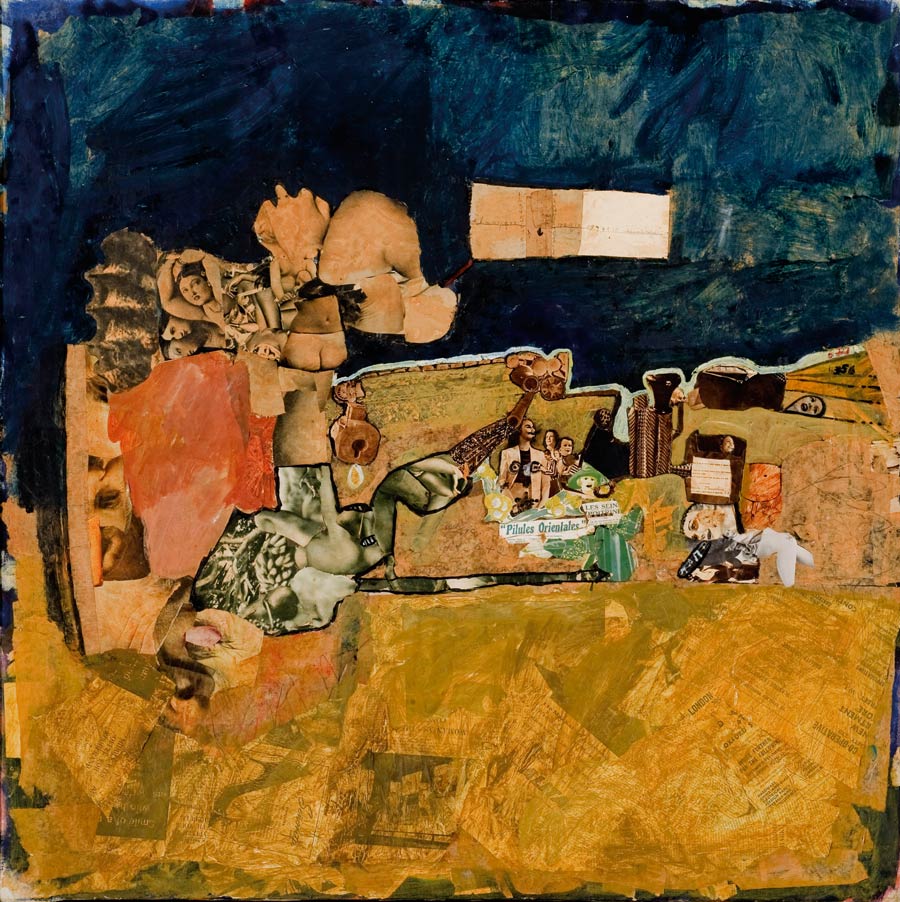
In response to Ingres' famous bath, Paula Rego mixes painting, collage and graphite to shift the nude tradition towards an unstable image of the female body, constructed from her own point of view.
See the institution's notice →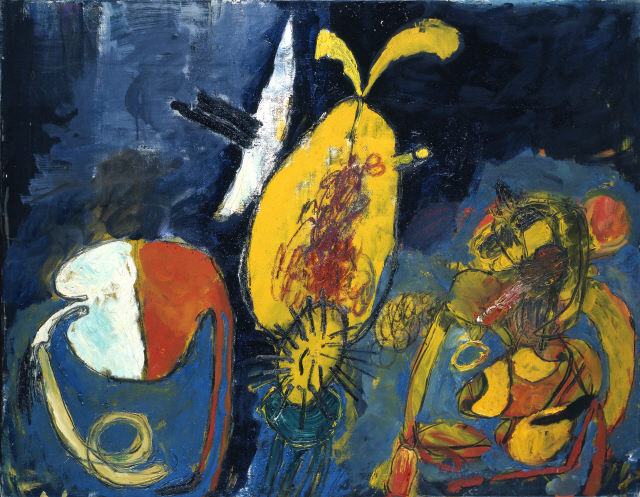 #98
#98
Salazar vomiting the homeland
Created under the dictatorship, this painting attacks Salazar with an organic and grotesque imagination. Paula Rego deliberately reverses the expected formula: the violence of power seems to contaminate the very body of the homeland.
See the institution's notice →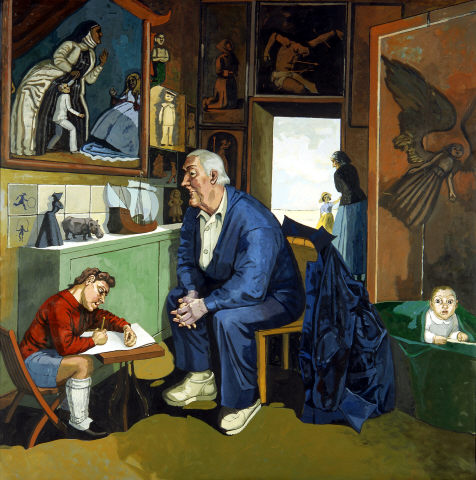 #99
#99
Time - past and present
Designed after Paula Rego's residency at the National Gallery, this square room brings memories, ancient paintings and domestic objects into the same mental space, as if the walls preserved several simultaneous stories.
See the institution's notice →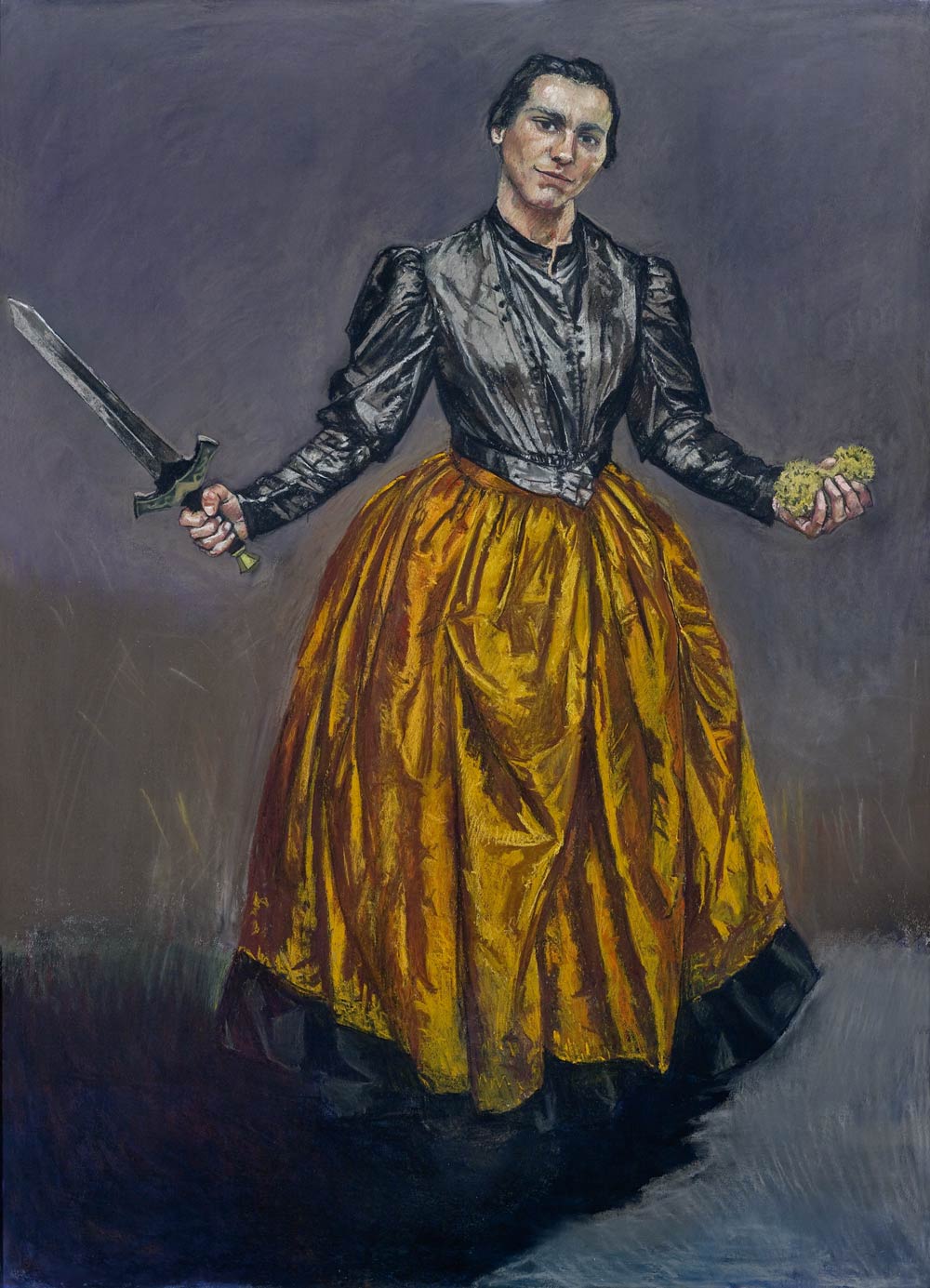 #100
#100
The Angel
Coming from the cycle inspired by The Crime of Father Amaro, the figure holds a sword and a sponge, signs of punishment and compassion. This ambiguity between revenge, protection and forgiveness explains the emblematic power of the work.
See the institution's notice →Sources and links
Alpha sheets and Portuguese collections
The 96 historical paintings use their Alpha Reproduction images and links. The four works of Paula Rego are presented for documentary purposes: their images open the notices of the Centro de Arte Moderna Gulbenkian and they are not offered for reproduction.
Renaissance and Baroque
Saint Vincent Panels - MNAAThe notice from the Museu Nacional de Arte Antiga dedicated to the Nuno Gonçalves cycle.Grao Vasco CollectionThe altarpieces and paintings preserved at the Museu Nacional Grao Vasco de Viseu.Josefa de Obidos - MNAAA reference set for understanding the Portuguese painter and baroque.From naturalism to the avant-gardes
Portuguese painting - Alpha ReproductionPortuguese painting sheets available in the store.The Fado - José MalhoaThe Lisbon scene has become one of the major images of Portuguese naturalism.Coty - Amadeo de Souza-CardosoTypography, advertising and geometry in the Portuguese avant-garde.Paula Rego
The Turkish Bath - CAM GulbenkianA personal response to the nude tradition and Ingres.Salazar vomiting the homeland - CAM GulbenkianA direct pictorial attack against the Portuguese dictatorship.The Angel - CAM GulbenkianThe ambivalent figure of the cycle inspired by The Crime of Father Amaro.Frequently asked questions
Questions about Portuguese painting
Some benchmarks to situate artists, periods and the documentary status of contemporary works.
Why are St. Vincent signs so important?
They constitute one of the peaks of 15th century European painting. Their system brings together several social groups around Saint Vincent and gives each figure a remarkable individuality, while leaving open the precise interpretation of certain characters.
What does Grao Vasco's painting distinguish?
Grao Vasco combines the monumentality of the Portuguese altarpiece with the novelties of the Renaissance. Its powerful figures, architecture and landscapes make the sacred story readable while placing it in a carefully observed material world.
Did Josefa de Obidos even paint still lifes?
No. Her still lifes are famous for their tactile precision, but she has also painted religious subjects, figures of saints and images of the Child Jesus. In both registers, matter and color carry a strong devotional intensity.
How does Amadeo de Souza-Cardoso fit into the European avant-garde?
Installed between Portugal and Paris, Amadeo dialogues with cubism, futurism and orphism without limiting himself to a school. It combines geometry, bold colors, printed words and popular signs in an immediately personal language.
Are Paula Rego's works offered for reproduction?
No. Paula Rego's four works are presented solely to document the continuity of Portuguese painting up to contemporary times. The images and buttons refer directly to the notices of the Centro de Arte Moderna Gulbenkian.
0 comments