


100 paintings - Louvre route
Top 100 famous paintings from the Louvre to see
From the Mona Lisa to the great Delacroixes, from Chardin to Rembrandt, from Raphael to Ghirlandaio: one hundred paintings from the Louvre to see at least once.
This classification favors paintings preserved by the Louvre. The images open either an exact Alpha Reproduction sheet or the official museum notice. There is no slideshow in this version.
Before the visit
A painting tour, not a complete inventory
The Louvre preserves several thousand paintings. This top 100 does not seek to cover everything: it offers a clear gateway to the most famous works, the most useful to see and the most representative of the rooms.
The right classification is not the one that exhausts the museum, but the one that makes you want to return to the paintings.
The works are presented in editorial cards. Each image is clickable and links to the corresponding source: Alpha sheet when it exists, Louvre notice for others.
Enter the rankingThe 100 famous paintings of the Louvre to see
The paintings that structure the visit, from Leonardo da Vinci to Delacroix and David.
#1The Mona Lisa
The Mona Lisa, by Leonardo da Vinci, is among the paintings in the Louvre to see to understand the density of the museum. The composition focuses attention on the balance of the figures, the softness of the transitions and the precision of the pictorial gesture. The Louvre notice associates the work with the Department of Paintings; the technique indicated is oil on wood (poplar) and the dating chosen is Date of creation/manufacturing: 1st quarter of the 16th century (1503 - 1519). Its high rank is due to its worldwide fame, its location in the museum route and its role in the collective imagination of the Louvre. The map here uses the existing Alpha Reproduction image and link, without creating a duplicate product.
Image and link: Alpha Reproduction.
See this reproduction → #2
#2The Wedding at Cana
The Wedding at Cana, by Paul Veronese, is among the paintings in the Louvre to see to understand the density of the museum. Its interest comes from the way in which the subject, technique and collection history meet in an immediately recognizable image. The Louvre notice associates the work with the Department of Paintings; the technique indicated is oil on canvas and the dating chosen is Date of creation/manufacturing: 16th century (1500 - 1600). Its high rank is due to its worldwide fame, its location in the museum's route and its role in the collective imagination of the Louvre. The map here uses the existing Alpha Reproduction image and link, without creating a product duplicate.
Image and link: Alpha Reproduction.
See this reproduction → #3
#3Freedom guiding the people
Liberty Leading the People, by Eugène Delacroix, is among the paintings in the Louvre to see to understand the density of the museum. The painting shows how the Louvre preserves one of the great French laboratories of history painting and romanticism. The Louvre notice associates the work with the Department of Paintings; the technique indicated is oil on canvas and the dating chosen is Date of creation/manufacturing: 2nd quarter of the 19th century (1830). Its high rank is due to its worldwide fame, its location in the museum's route and its role in the collective imagination of the Louvre. The map here uses the existing Alpha Reproduction image and link, without creating a product duplicate.
Image and link: Alpha Reproduction.
See this reproduction → #4
#4The Raft of the Medusa
The Raft of the Medusa, by Théodore Géricault, is among the paintings in the Louvre to see to understand the density of the museum. The painting shows how the Louvre preserves one of the great French laboratories of history painting and romanticism. The Louvre notice associates the work with the Department of Paintings; the technique indicated is oil on canvas and the dating chosen is Date of creation/manufacturing: 1st quarter of the 19th century (1818). Its high rank is due to its worldwide fame, its location in the museum's route and its role in the collective imagination of the Louvre. The map here uses the existing Alpha Reproduction image and link, without creating a product duplicate.
Image and link: Alpha Reproduction.
See this reproduction → #5
#5The Rite of Napoleon
The Rite of Napoleon, by Jacques-Louis David, is among the paintings in the Louvre to see to understand the density of the museum. The painting shows how the Louvre preserves one of the great French laboratories of history painting and romanticism. The Louvre notice associates the work with the Department of Paintings; the technique indicated is oil on canvas and the dating chosen is Date of creation/manufacturing: 1st quarter of the 19th century (1807). Its high rank is due to its worldwide fame, its location in the museum's route and its role in the collective imagination of the Louvre. The map here uses the existing Alpha Reproduction image and link, without creating a product duplicate.
Image and link: Alpha Reproduction.
See this reproduction → #6
#6The Great Odalisque
The Grande Odalisque, by Jean-Auguste-Dominique Ingres, is among the paintings in the Louvre to see to understand the density of the museum. The painting shows how the Louvre preserves one of the great French laboratories of history painting and romanticism. The Louvre notice associates the work with the Department of Paintings; the technique indicated is oil on canvas and the dating chosen is 1814. Its high rank is due to its worldwide fame, its location in the museum's route and its role in the collective imagination of the Louvre. The map here uses the existing Alpha Reproduction image and link, without creating a product duplicate. The map uses the existing Alpha Reproduction image and link here, without creating a product duplicate. The map uses the existing Alpha Reproduction image and link here, without creating a product duplicate. The map uses the existing Alpha Reproduction image and link here, without creating a product duplicate. The map uses the existing Alpha Reproduction image and link here, without creating a product duplicate. The map uses the existing Alpha Reproduction image and link here, without creating a product duplicate. The map uses the existing Alpha Reproduction image and link here, without creating a product duplicate. The map uses the existing Alpha Reproduction image and link here, without creating a product duplicate. The date, technique
Image and link: Alpha Reproduction.
See this reproduction → #7
#7The Virgin of the Rocks
The Virgin of the Rocks, by Leonardo da Vinci, is among the paintings in the Louvre to see to understand the density of the museum. The composition focuses attention on the balance of the figures, the softness of the transitions and the precision of the pictorial gesture. The Louvre notice associates the work with the Department of Paintings; the technique indicated is oil on canvas (transposition (of wood on canvas)) and the dating chosen is Date of creation/manufacturing: 4th quarter of the 15th century (around 1483 - 1494). Its high rank is due to its worldwide fame, its location in the museum route and its role in the collective imagination of the Louvre. The map here uses the existing Alpha Reproduction image and link, without creating a duplicate product.
Image and link: Alpha Reproduction.
See this reproduction → #8
#8The Beautiful Planter
La Belle Jardinière, by Raphaël, is among the paintings in the Louvre to see to understand the density of the museum. The composition focuses attention on the balance of the figures, the softness of the transitions and the precision of the pictorial gesture. The Louvre notice associates the work with the Department of Paintings; the technique indicated is oil on wood (poplar) and the dating chosen is Date of creation/manufacturing: 1st quarter of the 16th century (around 1507 - 1508). Its high rank is due to its worldwide fame, its location in the museum route and its role in the collective imagination of the Louvre. The map here uses the existing Alpha Reproduction image and link, without creating a product duplicate.
Image and link: Alpha Reproduction.
See this reproduction → #9
#9The Cheater with the Ace of Diamonds
The Cheater with the Ace of Diamonds, by Georges de La Tour, is among the paintings in the Louvre to see to understand the density of the museum. The strength of the work comes from an apparently close scene, where light, objects and eyes build a silent presence. The Louvre notice associates the work with the Department of Paintings; the technique indicated is oil on canvas and the dating chosen is Date of creation/manufacturing: 2nd quarter of the 17th century (around 1636 - 1640). Its high rank is due to its worldwide fame, its location in the museum route and its role in the collective imagination of the Louvre. The map here uses the existing Alpha Reproduction image and link, without creating a duplicate product.
Image and link: Alpha Reproduction.
See this reproduction →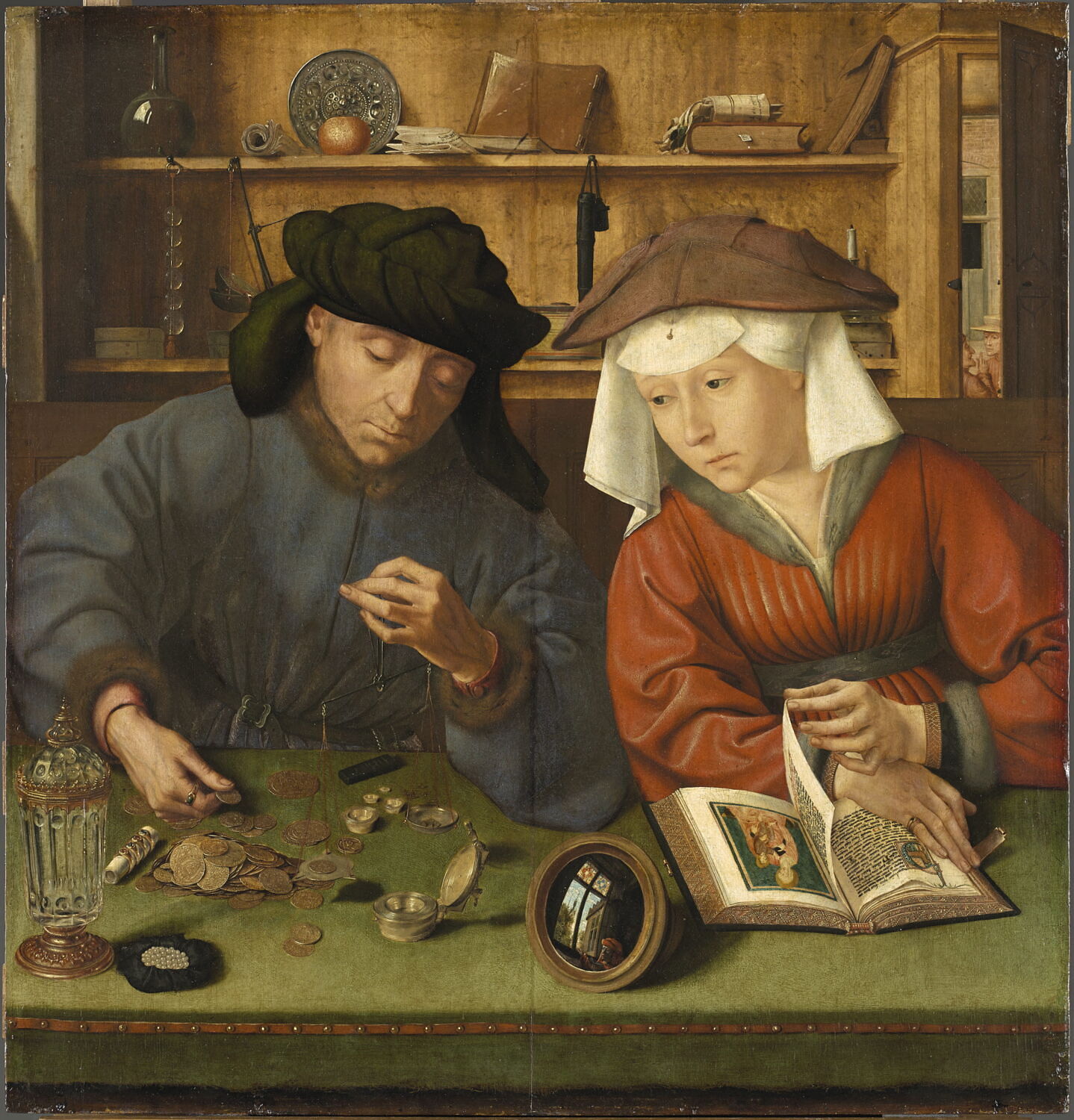 #10
#10The Lender and his wife
The Lender and His Wife, by Quentin Metsys, is among the paintings in the Louvre to see to understand the density of the museum. Its interest comes from the way in which the subject, technique and collection history meet in an immediately recognizable image. The Louvre notice associates the work with the Department of Paintings; the technique indicated is oil on wood and the dating chosen is Date of creation/manufacturing: End of the 15th century - beginning of the 16th century (1514). Its high rank is due to its worldwide fame, its location in the museum route and its role in the collective imagination of the Louvre. This entry refers directly to the Louvre notice in order to keep the image, title and institutional data in the same place.
Image and link: Louvre Museum.
See the Louvre instructions → #11
#11The Death of the Virgin
The Death of the Virgin, by Caravaggio, is among the paintings in the Louvre to see to understand the density of the museum. The composition focuses attention on the balance of the figures, the softness of the transitions and the precision of the pictorial gesture. The Louvre notice associates the work with the Department of Paintings; the technique indicated is oil on canvas and the dating chosen is Date of creation/manufacturing: Early 17th century (around 1601 - 1606). Its high rank is due to its worldwide fame, its location in the museum's route and its role in the collective imagination of the Louvre. The map here uses the existing Alpha Reproduction image and link, without creating a duplicate product.
Image and link: Alpha Reproduction.
See this reproduction → #12
#12The Coronation of the Virgin
The Coronation of the Virgin, by Fra Angelico, is among the paintings in the Louvre to see to understand the density of the museum. The composition focuses attention on the balance of the figures, the softness of the transitions and the precision of the pictorial gesture. The Louvre notice associates the work with the Department of Paintings; the technique indicated is wood (poplar, panel in one piece) and the dating chosen is Date of creation/manufacturing: 2nd quarter of the 15th century (1425 - 1450). Its high rank is due to its worldwide fame, its location in the museum route and its role in the collective imagination of the Louvre. This entry refers directly to the Louvre notice in order to keep the image, title and institutional data in the same place.
Image and link: Louvre Museum.
See the Louvre instructions → #13
#13The Lacemaker
The Lacemaker, by Johannes Vermeer, is among the paintings in the Louvre to see to understand the density of the museum. It recalls the importance of the schools of the North in the Louvre collections, between portrait, material, detail and narrative invention. The Louvre notice associates the work with the Department of Paintings; the technique indicated is oil on canvas glued to wood and the dating chosen is Date of creation/manufacturing: 3rd quarter of the 17th century (around 1669 - 1670). Its high rank is due to its worldwide fame, its location in the museum's route and its role in the collective imagination of the Louvre. The map here uses the existing Alpha Reproduction image and link, without creating a duplicate product.
Image and link: Alpha Reproduction.
See this reproduction → #14
#14The Turkish Bath
The Turkish Bath, by Jean-Auguste-Dominique Ingres, is among the paintings in the Louvre to see to understand the density of the museum. The painting shows how the Louvre preserves one of the great French laboratories of history painting and romanticism. The Louvre notice associates the work with the Department of Paintings; the technique indicated is oil on canvas glued to wood and the dating chosen is Date of creation/manufacturing: 3rd quarter of the 19th century (1862). Its high rank is due to its worldwide fame, its location in the museum route and its role in the collective imagination of the Louvre. The map here uses the existing Alpha Reproduction image and link, without creating a duplicate product.
Image and link: Alpha Reproduction.
See this reproduction →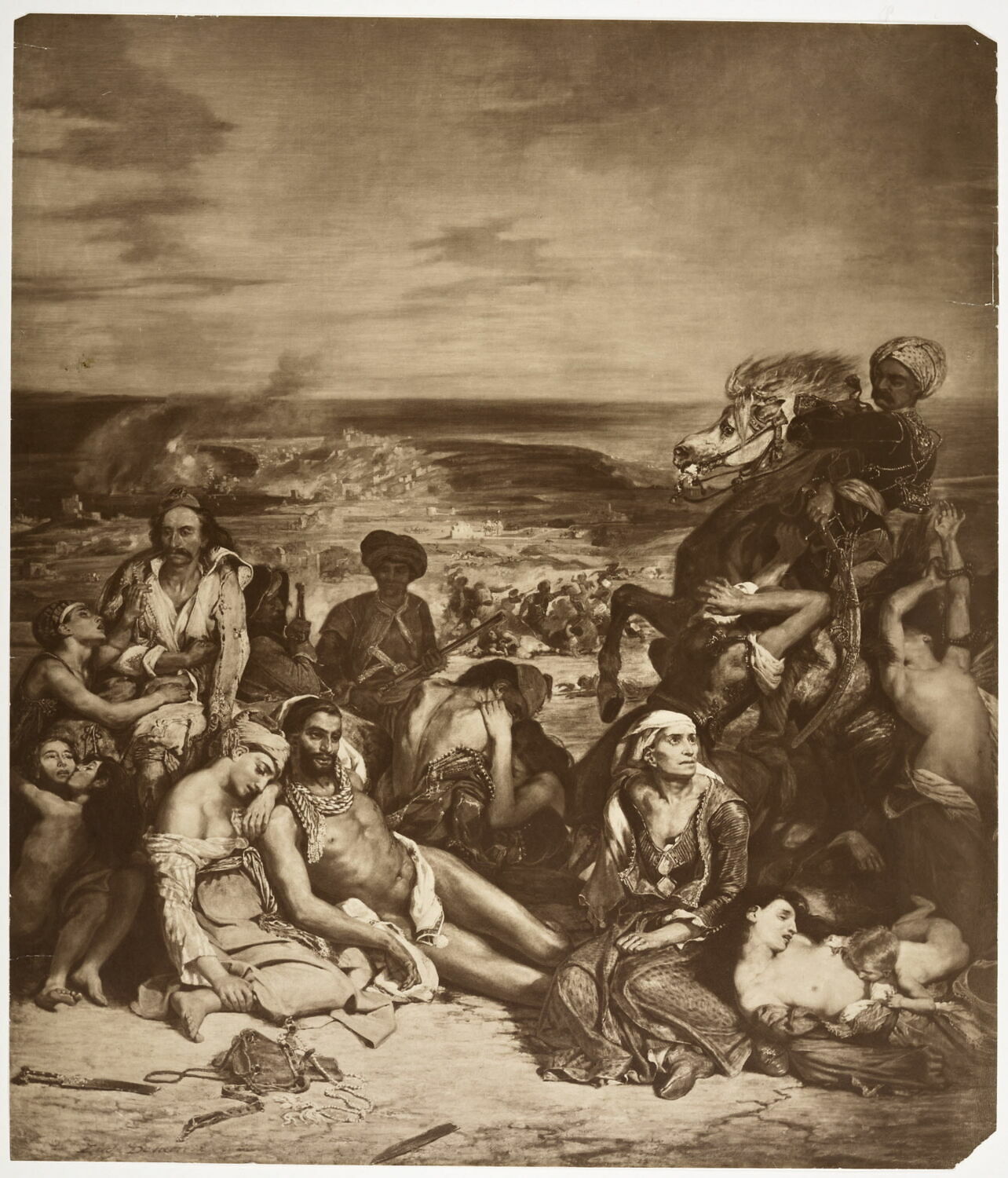 #15
#15The Scio Massacre
The Massacre of Scio, by Eugène Delacroix, is among the paintings in the Louvre to see to understand the density of the museum. The painting shows how the Louvre preserves one of the great French laboratories of history painting and romanticism. The Louvre notice associates the work with the Department of Paintings; the technique indicated is technical: photography and the dating chosen is Date of creation/manufacturing: 1800 - 1900. Its high rank is due to its worldwide fame, its location in the museum route and its role in the collective imagination of the Louvre. This entry refers directly to the Louvre notice in order to keep the image, title and institutional data in the same place.
Image and link: Louvre Museum.
See the Louvre instructions → #16
#16The Death of Sardanapalus
The Death of Sardanapalus, by Eugène Delacroix, is among the paintings in the Louvre to see to understand the density of the museum. The painting shows how the Louvre preserves one of the great French laboratories of history painting and romanticism. The Louvre notice associates the work with the Department of Paintings; the technique indicated is oil on canvas and the dating chosen is Date of creation/manufacturing: 2nd quarter of the 19th century (1827). Its high rank is due to its worldwide fame, its location in the museum's route and its role in the collective imagination of the Louvre. The map here uses the existing Alpha Reproduction image and link, without creating a duplicate product.
Image and link: Alpha Reproduction.
See this reproduction → #17
#17Portrait of Madame Récamier
Portrait of Madame Récamier, by Jacques-Louis David, is among the paintings in the Louvre to see to understand the density of the museum. The painting shows how the Louvre preserves one of the great French laboratories of history painting and romanticism. The Louvre notice associates the work with the Department of Paintings; the technique indicated is oil on canvas and the dating chosen is Date of creation/manufacturing: 18th century (1700 - 1800). Its high rank is due to its worldwide fame, its location in the museum route and its role in the collective imagination of the Louvre. The map here uses the existing Alpha Reproduction image and link, without creating a duplicate product.
Image and link: Alpha Reproduction.
See this reproduction → #18
#18The Sabines
Les Sabines, by Jacques-Louis David, is among the paintings in the Louvre to see to understand the density of the museum. The painting shows how the Louvre preserves one of the great French laboratories of history painting and romanticism. The Louvre notice associates the work with the Department of Paintings; the technique indicated is oil on canvas and the dating chosen is Date of creation/manufacturing: 4th quarter of the 18th century (1799). Its high rank is due to its worldwide fame, its location in the museum's route and its role in the collective imagination of the Louvre. The map here uses the existing Alpha Reproduction image and link, without creating a product duplicate.
Image and link: Alpha Reproduction.
See this reproduction → #19
#19Leonidas at Thermopylae
Léonidas aux Thermopyles, by Jacques-Louis David, is among the paintings in the Louvre to see to understand the density of the museum. The painting shows how the Louvre preserves one of the great French laboratories of history painting and romanticism. The Louvre notice associates the work with the Department of Paintings; the technique indicated is pen, black ink, gray wash and white highlights on black pencil. signed and dated with a pen black ink at the bottom left: 'l. david./1813'. restored drawing and dating chosen is 1813. Its high rank is due to its worldwide fame, its location in the museum route and its role in the collective imagination of the Louvre. The map here uses the existing Alpha Reproduction image and link, without creating a duplicate product.
Image and link: Alpha Reproduction.
See this reproduction → #20
#20The Oath of the Horatii
The Oath of the Horaces, by Jacques-Louis David, is among the paintings in the Louvre to see to understand the density of the museum. The painting shows how the Louvre preserves one of the great French laboratories of history painting and romanticism. The Louvre notice associates the work with the Department of Paintings; the technique indicated is oil on canvas and the dating chosen is Date of creation/manufacturing: 4th quarter of the 18th century (1784). Its high rank is due to its worldwide fame, its location in the museum's route and its role in the collective imagination of the Louvre. The map here uses the existing Alpha Reproduction image and link, without creating a duplicate product.
Image and link: Alpha Reproduction.
See this reproduction →Poussin, Claude Lorrain, Chardin, Watteau, La Tour, Le Nain and Ingres give depth to the course.
 #21
#21The Shepherds of Arcadia
The Shepherds of Arcadia, by Nicolas Poussin, is among the paintings in the Louvre to see to understand the density of the museum. Its interest comes from the way in which the subject, technique and collection history meet in an immediately recognizable image. The Louvre notice associates the work with the Department of Paintings; the technique indicated is oil on canvas and the dating chosen is Date of creation/manufacturing: 2nd quarter of the 17th century (around 1638). It belongs to the major landmarks of the visit, those which allow us to understand a school, a period or an entire room. The map here uses the existing Alpha Reproduction image and link, without creating a duplicate product.
Image and link: Alpha Reproduction.
See this reproduction → #22
#22The Abduction of the Sabines
The Abduction of the Sabines, by Nicolas Poussin, is among the paintings in the Louvre to see to understand the density of the museum. Its interest comes from the way in which the subject, the technique and the history of the collection meet in an immediately recognizable image. The Louvre notice associates the work with the Department of Paintings; the technique indicated is oil on canvas and the dating chosen is Date of creation/manufacturing: 2nd quarter of the 17th century (around 1637 - 1638). It belongs to the major landmarks of the visit, those which allow us to understand a school, a period or an entire room. The map here uses the existing Alpha Reproduction image and link, without creating a duplicate product.
Image and link: Alpha Reproduction.
See this reproduction → #23
#23The Poet's Inspiration
The Inspiration of the Poet, by Nicolas Poussin, is among the paintings in the Louvre to see to understand the density of the museum. Its interest comes from the way in which the subject, technique and collection history meet in an immediately recognizable image. The Louvre notice associates the work with the Department of Paintings; the technique indicated is oil on canvas (transposition) and the dating chosen is Date of creation/manufacturing: 2nd quarter of the 17th century (around 1629). It belongs to the major landmarks of the visit, those which allow us to understand a school, a period or an entire room. The map here uses the existing Alpha Reproduction image and link, without creating a duplicate product.
Image and link: Alpha Reproduction.
See this reproduction →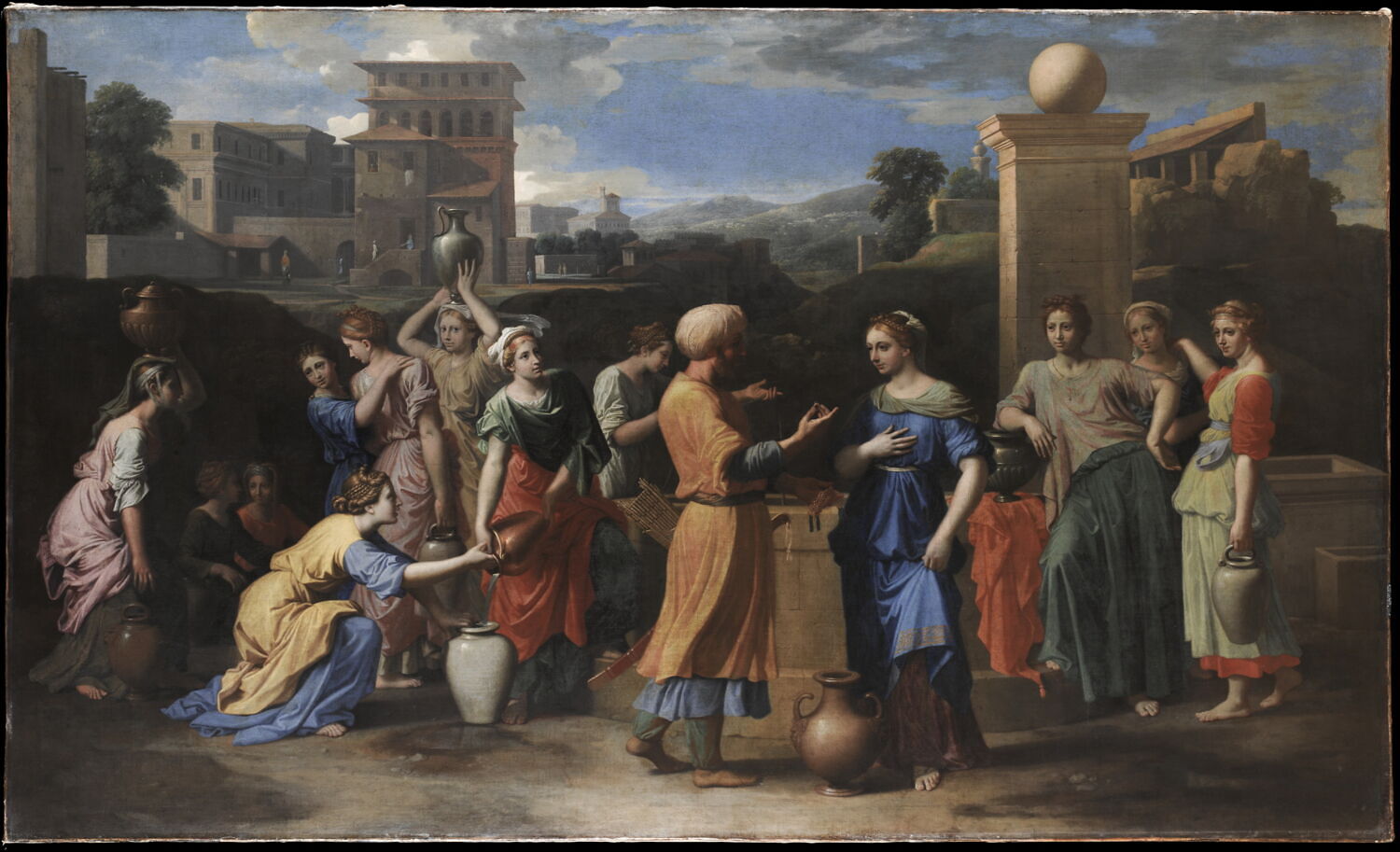 #24
#24Eliezer and Rebecca
Éliézer and Rébecca, by Nicolas Poussin, are among the paintings in the Louvre to see to understand the density of the museum. Its interest comes from the way in which the subject, technique and collection history meet in an immediately recognizable image. The Louvre notice associates the work with the Department of Paintings; the technique indicated is oil on canvas (transposition (1848)) and the dating chosen is Date of creation/manufacturing: 2nd quarter of the 17th century (1648). It belongs to the major landmarks of the visit, those which allow us to understand a school, a period or an entire room. This entry refers directly to the Louvre notice in order to keep the image, the title and the institutional data in the same place.
Image and link: Louvre Museum.
See the Louvre instructions →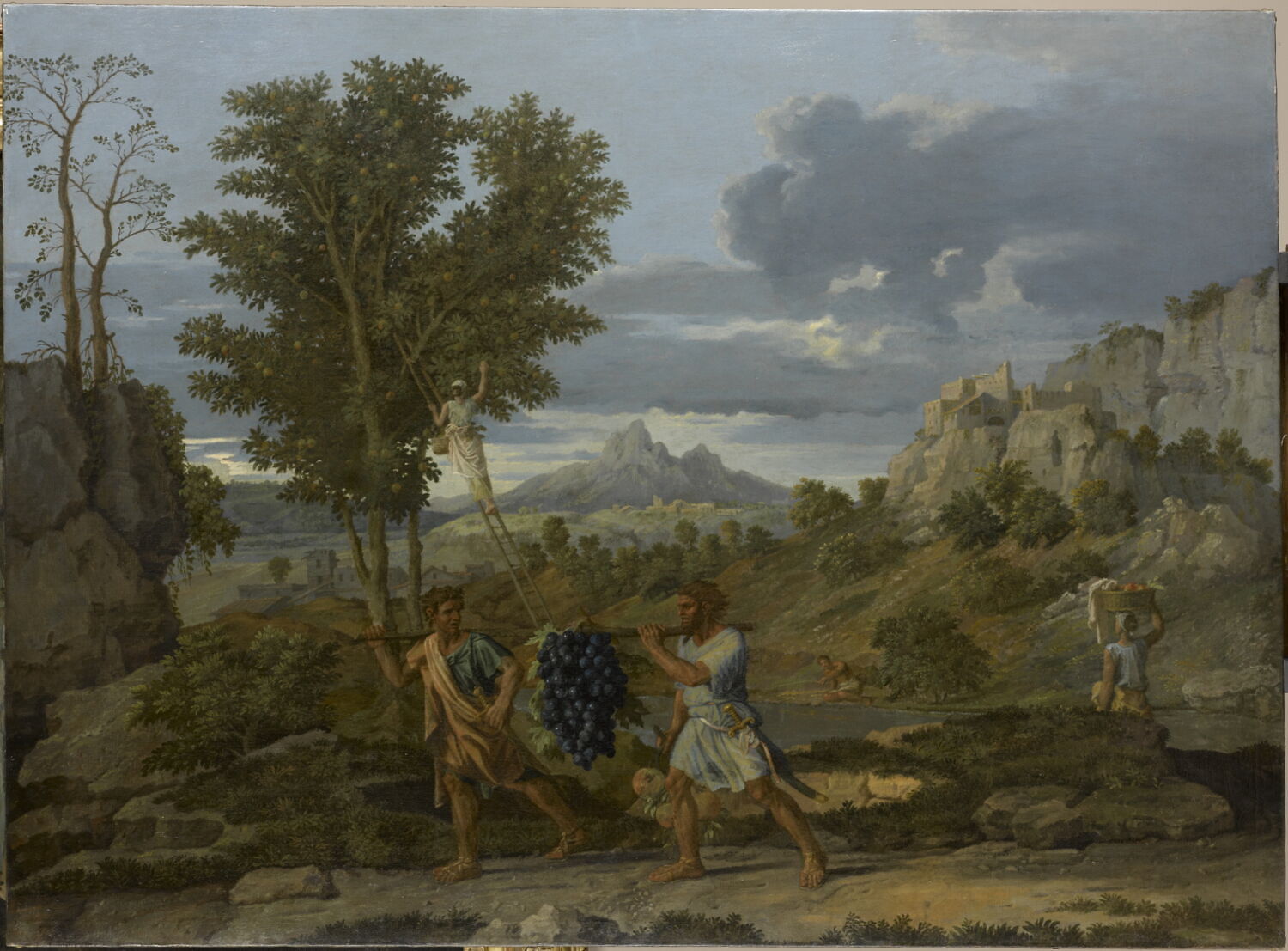 #25
#25Autumn or The Cluster of the Promised Land
Autumn or The Cluster of the Promised Land, by Nicolas Poussin, is among the paintings in the Louvre to see to understand the density of the museum. Its interest comes from the way in which the subject, technique and collection history meet in an immediately recognizable image. The Louvre notice associates the work with the Department of Paintings; the technique indicated is oil on canvas and the dating chosen is Date of creation/manufacturing: 3rd quarter of the 17th century (1660 - 1664). It belongs to the major landmarks of the visit, those which allow us to understand a school, a period or an entire room. This entry refers directly to the Louvre notice in order to keep the image, the title and the institutional data in the same place.
Image and link: Louvre Museum.
See the Louvre instructions → #26
#26Peasant family
Peasant Family, by Louis Le Nain, is among the paintings in the Louvre to see to understand the density of the museum. The strength of the work comes from an apparently close scene, where light, objects and eyes build a silent presence. The Louvre notice associates the work with the Department of Paintings; the technique indicated is oil on canvas and the dating chosen is Date of creation/manufacturing: 2nd quarter of the 17th century (around 1642). It belongs to the major landmarks of the visit, those which allow us to understand a school, a period or an entire room. This entry refers directly to the Louvre notice in order to keep the image, title and institutional data in the same place.
Image and link: Louvre Museum.
See the Louvre instructions → #27
#27Seaport at sunset
Seaport at Sunset, by Claude Lorrain, is among the paintings in the Louvre to see to understand the density of the museum. Its interest comes from the way in which the subject, technique and collection history meet in an immediately recognizable image. The Louvre notice associates the work with the Department of Paintings; the technique indicated is oil on canvas and the dating chosen is Date of creation/manufacturing: 2nd quarter of the 17th century (1639). It belongs to the major landmarks of the visit, those which allow us to understand a school, a period or an entire room. The map here uses the existing Alpha Reproduction image and link, without creating a duplicate product.
Image and link: Alpha Reproduction.
See this reproduction →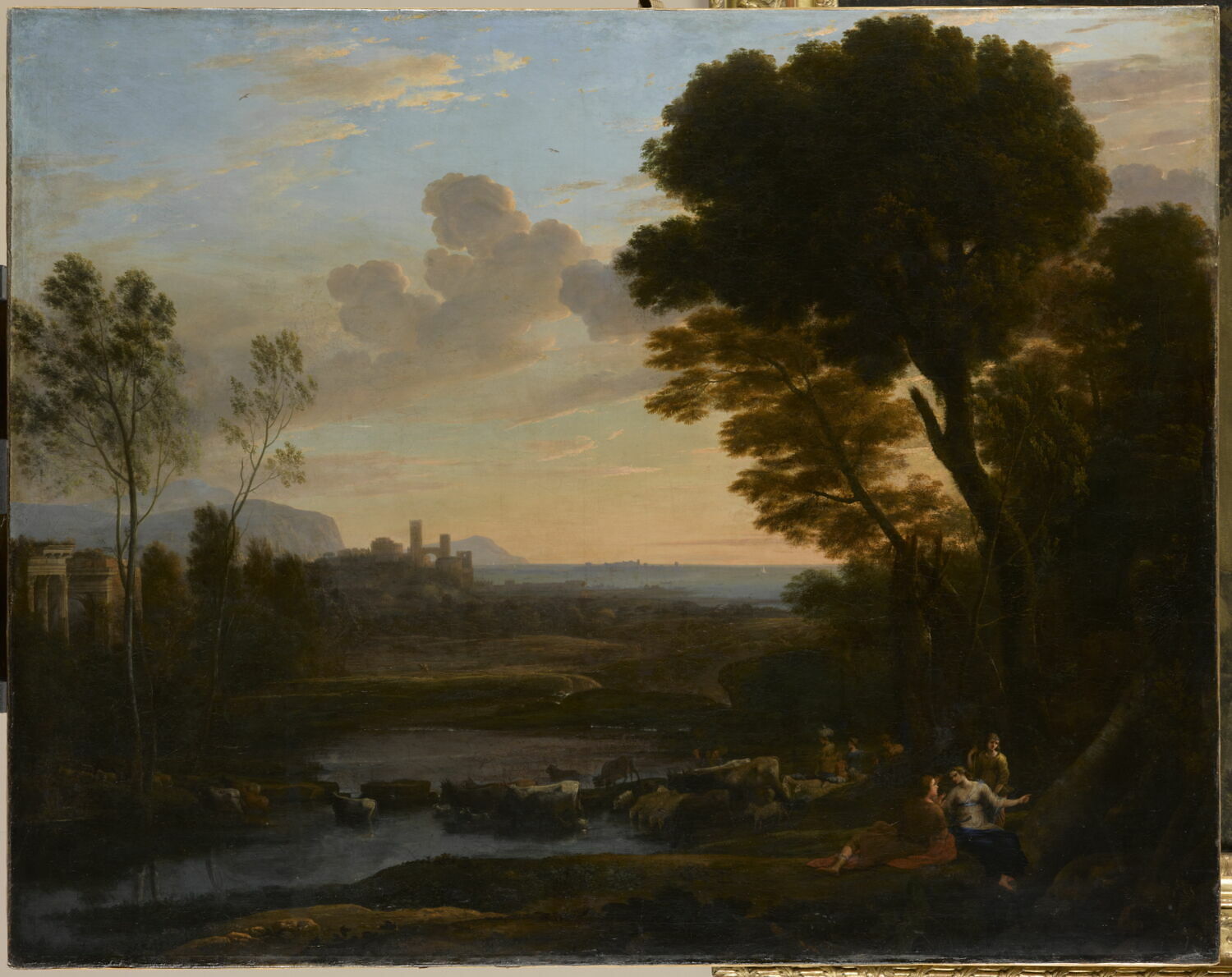 #28
#28Landscape with Paris and Oenone
Landscape with Paris and Oenone, by Claude Lorrain, is among the paintings in the Louvre to see to understand the density of the museum. Its interest comes from the way in which the subject, technique and collection history meet in an immediately recognizable image. The Louvre notice associates the work with the Department of Paintings; the technique indicated is oil on canvas and the dating chosen is Date of creation/manufacturing: 2nd quarter of the 17th century (1648). It belongs to the major landmarks of the visit, those which allow us to understand a school, a period or an entire room. This entry refers directly to the Louvre notice in order to keep the image, the title and the institutional data in the same place.
Image and link: Louvre Museum.
See the Louvre instructions →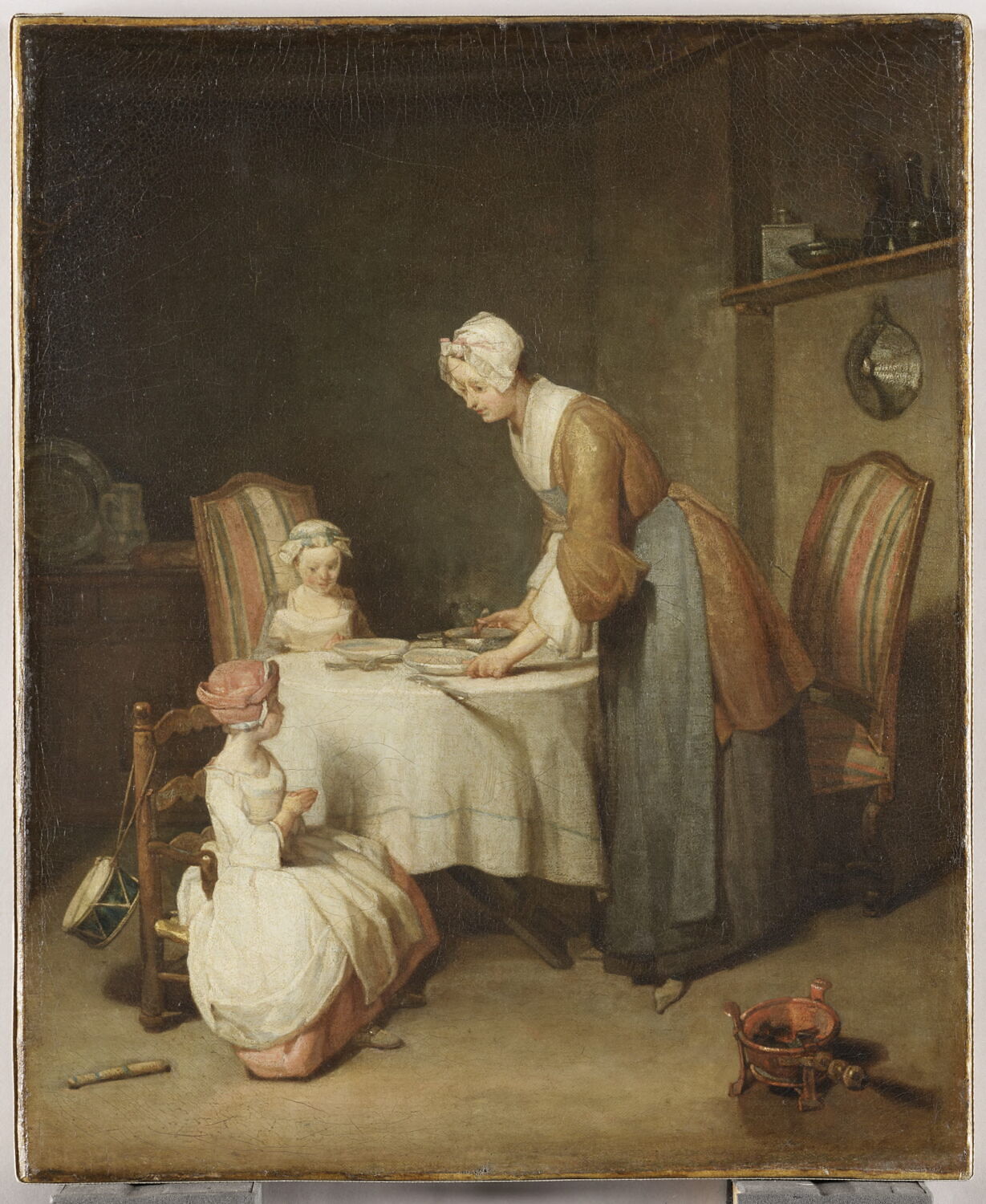 #29
#29The Benedictine
The Bénédicité, by Jean-Baptiste-Siméon Chardin, is among the paintings in the Louvre to see to understand the density of the museum. The strength of the work comes from an apparently close scene, where light, objects and eyes construct a silent presence. The Louvre notice associates the work with the Department of Paintings; the technique indicated is oil on canvas and the dating chosen is Date of creation/manufacturing: 2nd quarter of the 18th century (1725 - 1750). It belongs to the major landmarks of the visit, those which allow us to understand a school, a period or an entire room. This entry refers directly to the Louvre notice in order to keep the image, title and institutional data in the same place.
Image and link: Louvre Museum.
See the Louvre instructions → #30
#30The Ray
La Raie, by Jean-Baptiste-Siméon Chardin, is among the paintings in the Louvre to see to understand the density of the museum. The strength of the work comes from an apparently close scene, where light, objects and eyes construct a silent presence. The Louvre notice associates the work with the Department of Paintings; the technique indicated is oil on canvas and the dating chosen is Date of creation/manufacturing: 2nd quarter of the 18th century (1728). It belongs to the major landmarks of the visit, those which allow us to understand a school, a period or an entire room. The map here uses the existing Alpha Reproduction image and link, without creating a duplicate product.
Image and link: Alpha Reproduction.
See this reproduction →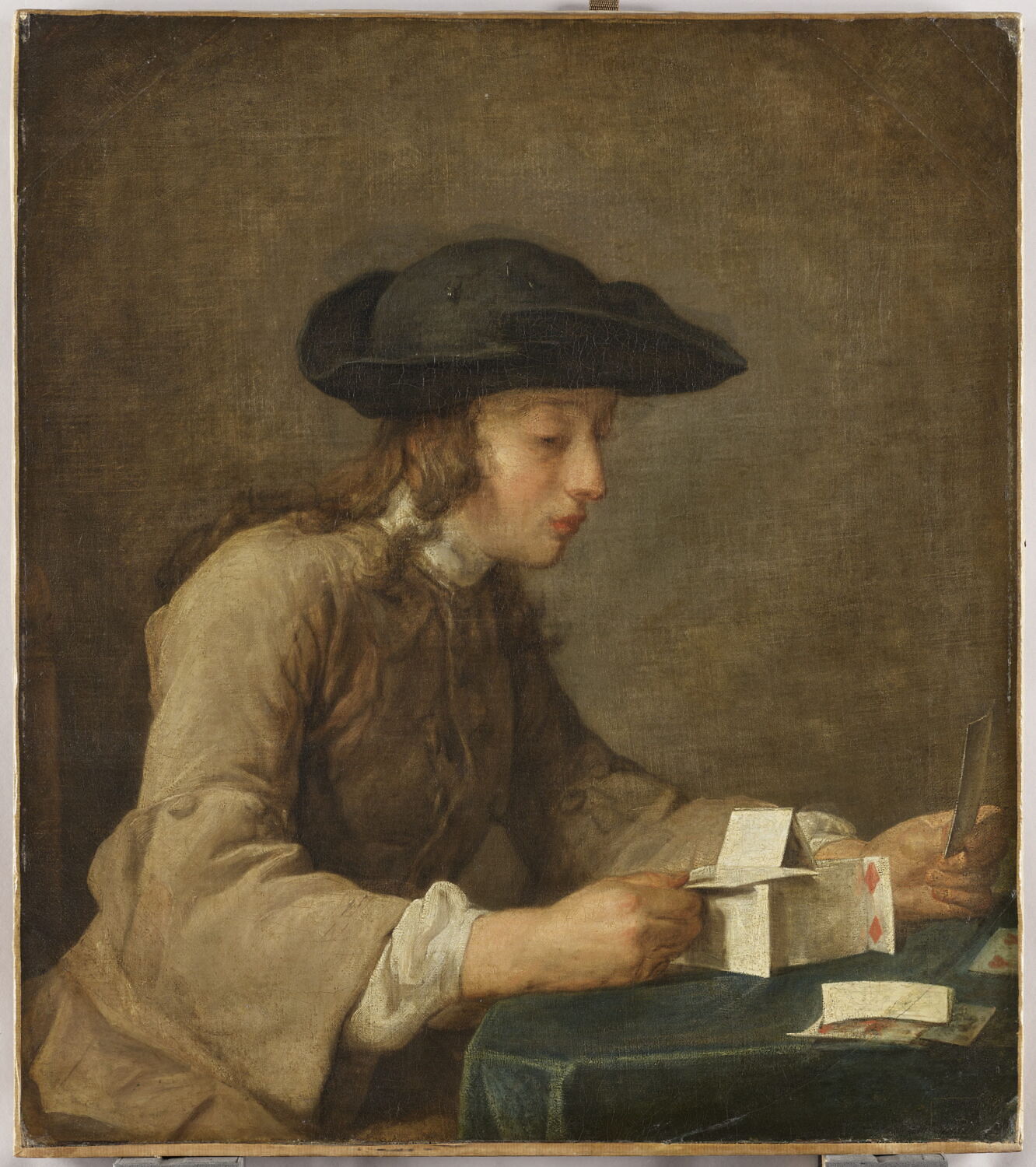 #31
#31The House of Cards
The Château de Cartes, by Jean-Baptiste-Siméon Chardin, is among the paintings in the Louvre to see to understand the density of the museum. The strength of the work comes from an apparently close scene, where light, objects and eyes build a silent presence. The Louvre notice associates the work with the Department of Paintings; the technique indicated is oil on canvas and the dating chosen is Date of creation/manufacturing: 2nd quarter of the 18th century (around 1736). It belongs to the major landmarks of the visit, those which allow us to understand a school, a period or an entire room. This entry refers directly to the Louvre notice in order to keep the image, title and institutional data in the same place.
Image and link: Louvre Museum.
See the Louvre instructions →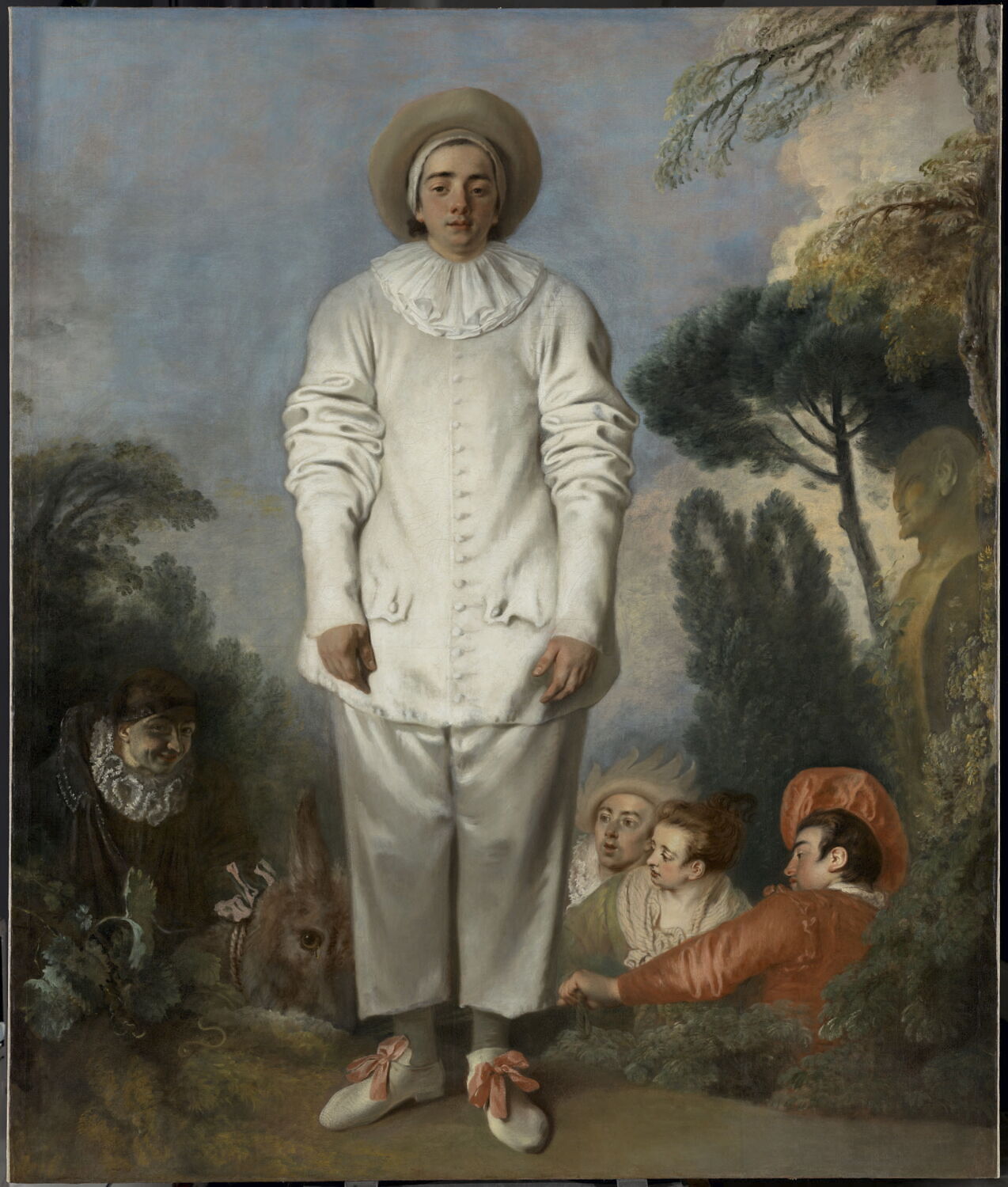 #32
#32Pierrot
Pierrot, by Antoine Watteau, is among the paintings in the Louvre to see to understand the density of the museum. The strength of the work comes from an apparently close scene, where light, objects and eyes construct a silent presence. The Louvre notice associates the work with the Department of Paintings; the technique indicated is oil on canvas and the dating chosen is Date of creation/manufacturing: 1st quarter of the 18th century (around 1718 - 1719). It belongs to the major landmarks of the visit, those which allow us to understand a school, a period or an entire room. This entry refers directly to the Louvre notice in order to keep the image, title and institutional data in the same place.
Image and link: Louvre Museum.
See the Louvre instructions →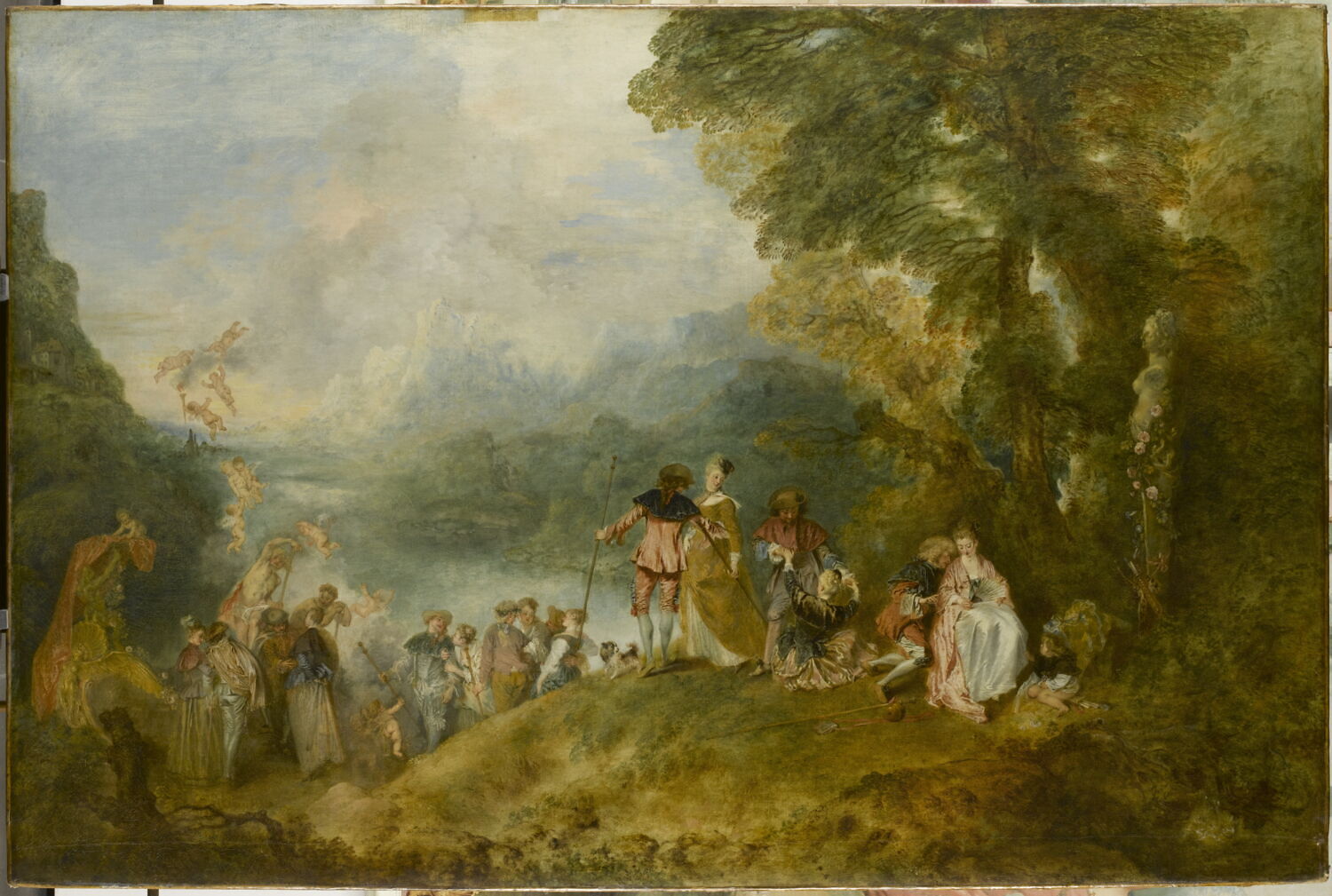 #33
#33Boarding for Cythera
The Embarkation for Cythera, by Antoine Watteau, is among the paintings in the Louvre to see to understand the density of the museum. The strength of the work comes from an apparently close scene, where light, objects and eyes build a silent presence. The Louvre notice associates the work with the Department of Paintings; the technique indicated is oil on canvas and the dating chosen is Date of creation/manufacturing: 1st quarter of the 18th century (1717). It belongs to the major landmarks of the visit, those which allow us to understand a school, a period or an entire room. This entry refers directly to the Louvre notice in order to keep the image, the title and the institutional data in the same place.
Image and link: Louvre Museum.
See the Louvre instructions →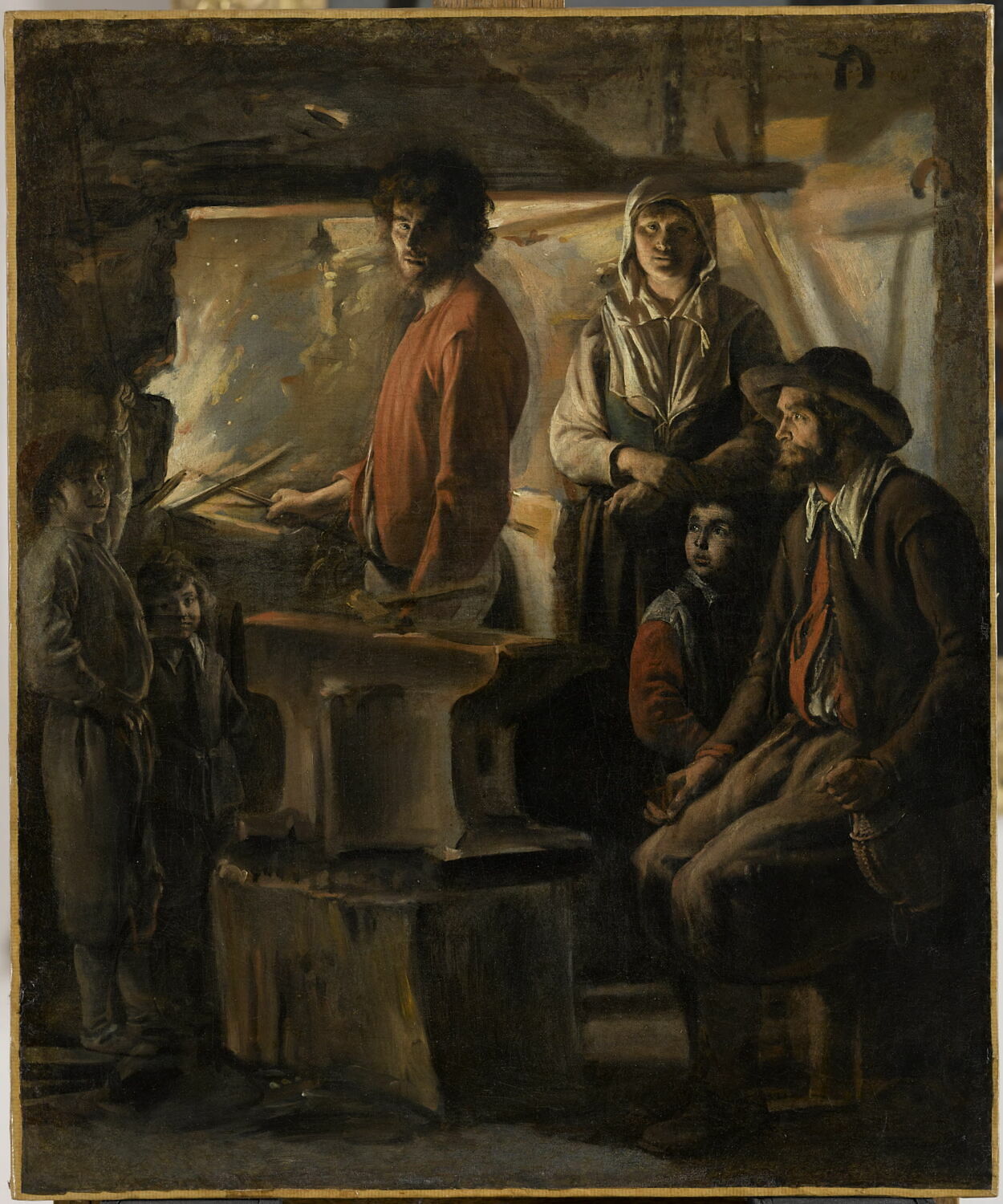 #34
#34The Forge
La Forge, by Louis Le Nain, is among the paintings in the Louvre to see to understand the density of the museum. The strength of the work comes from an apparently close scene, where light, objects and eyes build a silent presence. The Louvre notice associates the work with the Department of Paintings; the technique indicated is oil on canvas (transposition) and the dating chosen is Date of creation/manufacturing: 2nd quarter of the 17th century (around 1640). It belongs to the major landmarks of the visit, those which allow us to understand a school, a period or an entire room. This entry refers directly to the Louvre notice in order to keep the image, title and institutional data in the same place.
Image and link: Louvre Museum.
See the Louvre instructions → #35
#35The Madeleine at the night light
The Madeleine on the Night Light, by Georges de La Tour, is among the paintings in the Louvre to see to understand the density of the museum. The strength of the work comes from an apparently close scene, where light, objects and eyes build a silent presence. The Louvre notice associates the work with the Department of Paintings; the technique indicated is oil on canvas and the dating chosen is Date of creation/manufacturing: 2nd quarter of the 17th century (around 1642 - 1644). It belongs to the major landmarks of the visit, those which allow us to understand a school, a period or an entire room. The map here uses the existing Alpha Reproduction image and link, without creating a duplicate product.
Image and link: Alpha Reproduction.
See this reproduction →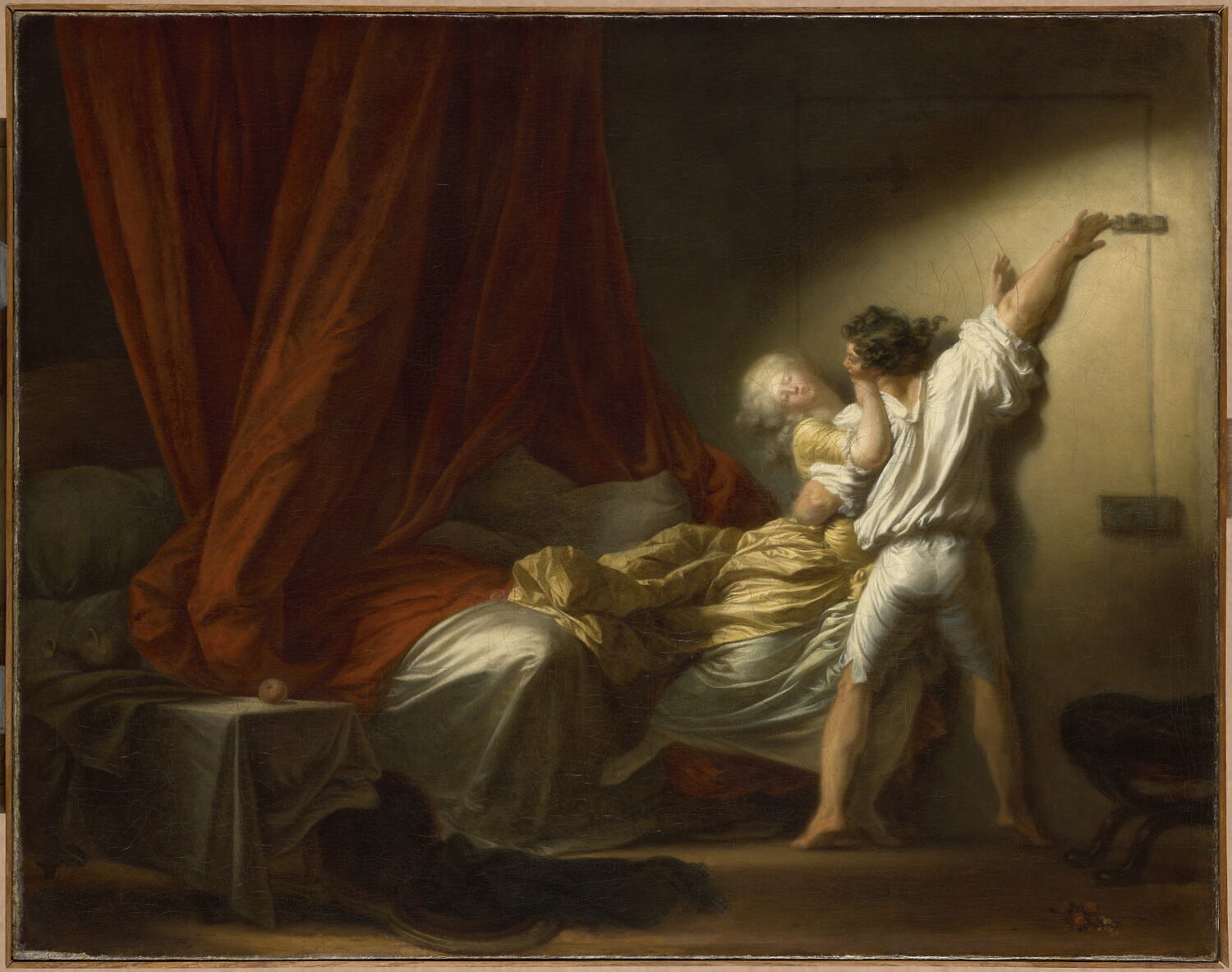 #36
#36The lock
Le Verrou, by Jean-Honoré Fragonard, is among the paintings in the Louvre to see to understand the density of the museum. The strength of the work comes from an apparently close scene, where light, objects and eyes build a silent presence. The Louvre notice associates the work with the Department of Paintings; the technique indicated is oil on canvas and the dating chosen is Date of creation/manufacturing: 3rd third of the 18th century (around 1777 - 1778). It belongs to the major landmarks of the visit, those which allow us to understand a school, a period or an entire room. This entry refers directly to the Louvre notice in order to keep the image, title and institutional data in the same place.
Image and link: Louvre Museum.
See the Louvre instructions →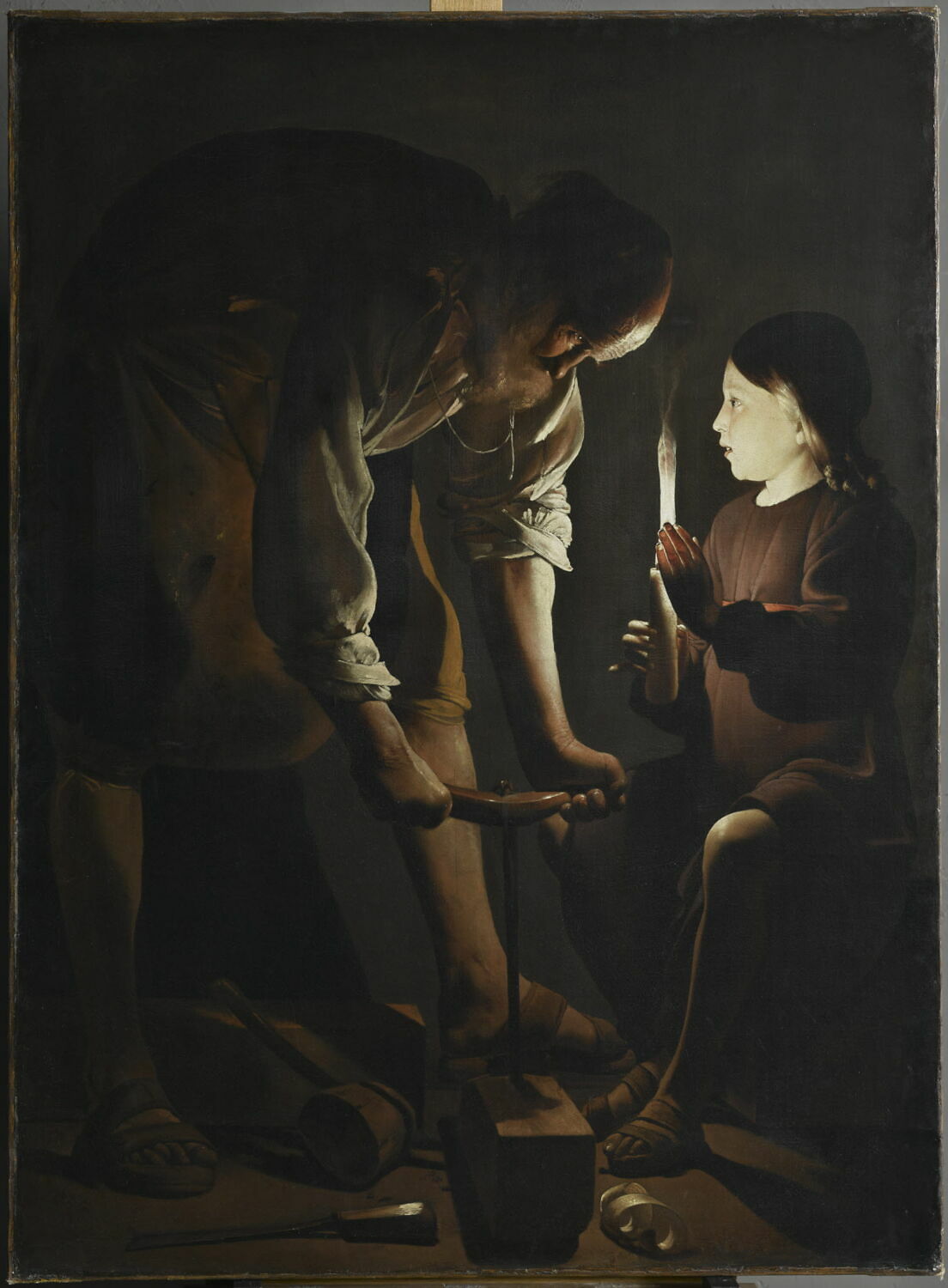 #37
#37Saint Joseph carpenter
Saint Joseph Carpenter, by Georges de La Tour, is among the paintings in the Louvre to see to understand the density of the museum. The strength of the work comes from an apparently close scene, where light, objects and eyes build a silent presence. The Louvre notice associates the work with the Department of Paintings; the technique indicated is oil on canvas and the dating chosen is Date of creation/manufacturing: 2nd quarter of the 17th century (around 1642 - 1644). It belongs to the major landmarks of the visit, those which allow us to understand a school, a period or an entire room. This entry refers directly to the Louvre notice in order to keep the image, title and institutional data in the same place.
Image and link: Louvre Museum.
See the Louvre instructions →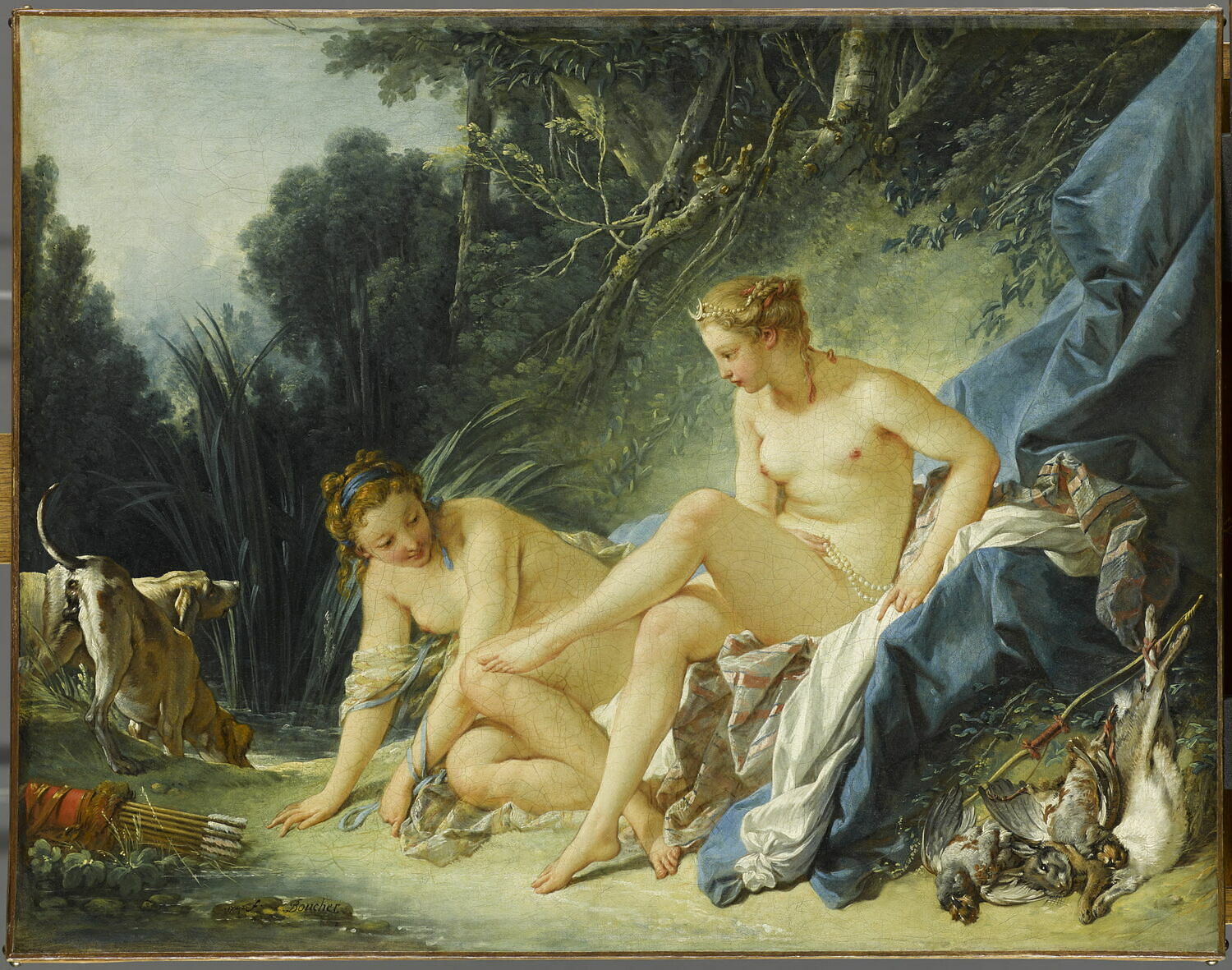 #38
#38Diane coming out of the bath
Diane Leaving the Bath, by François Boucher, is among the paintings in the Louvre to see to understand the density of the museum. Its interest comes from the way in which the subject, technique and collection history meet in an immediately recognizable image. The Louvre notice associates the work with the Department of Paintings; the technique indicated is oil on canvas and the dating chosen is Date of creation/manufacturing: 2nd quarter of the 18th century (1742). It belongs to the major landmarks of the visit, those which allow us to understand a school, a period or an entire room. This entry refers directly to the Louvre notice in order to keep the image, title and institutional data in the same place.
Image and link: Louvre Museum.
See the Louvre instructions →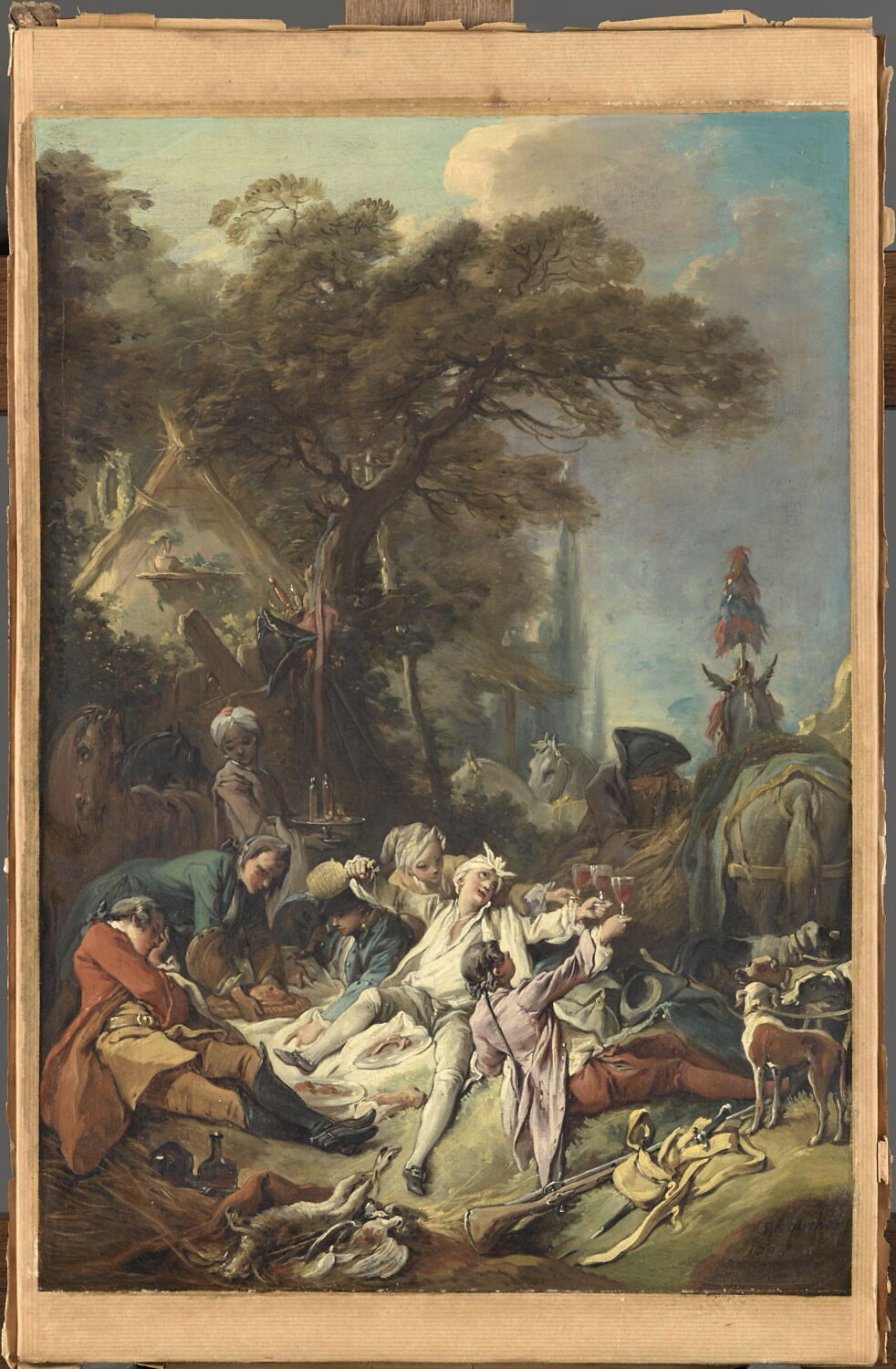 #39
#39Lunch
Le Déjeuner, by François Boucher, is among the paintings in the Louvre to see to understand the density of the museum. Its interest comes from the way in which the subject, technique and collection history meet in an immediately recognizable image. The Louvre notice associates the work with the Department of Paintings; the technique indicated is oil on canvas and the dating chosen is Date of creation/manufacturing: 2nd quarter of the 18th century (1733). It belongs to the major landmarks of the visit, those which allow us to understand a school, a period or an entire room. This entry refers directly to the Louvre notice in order to keep the image, title and institutional data in the same place.
Image and link: Louvre Museum.
See the Louvre instructions →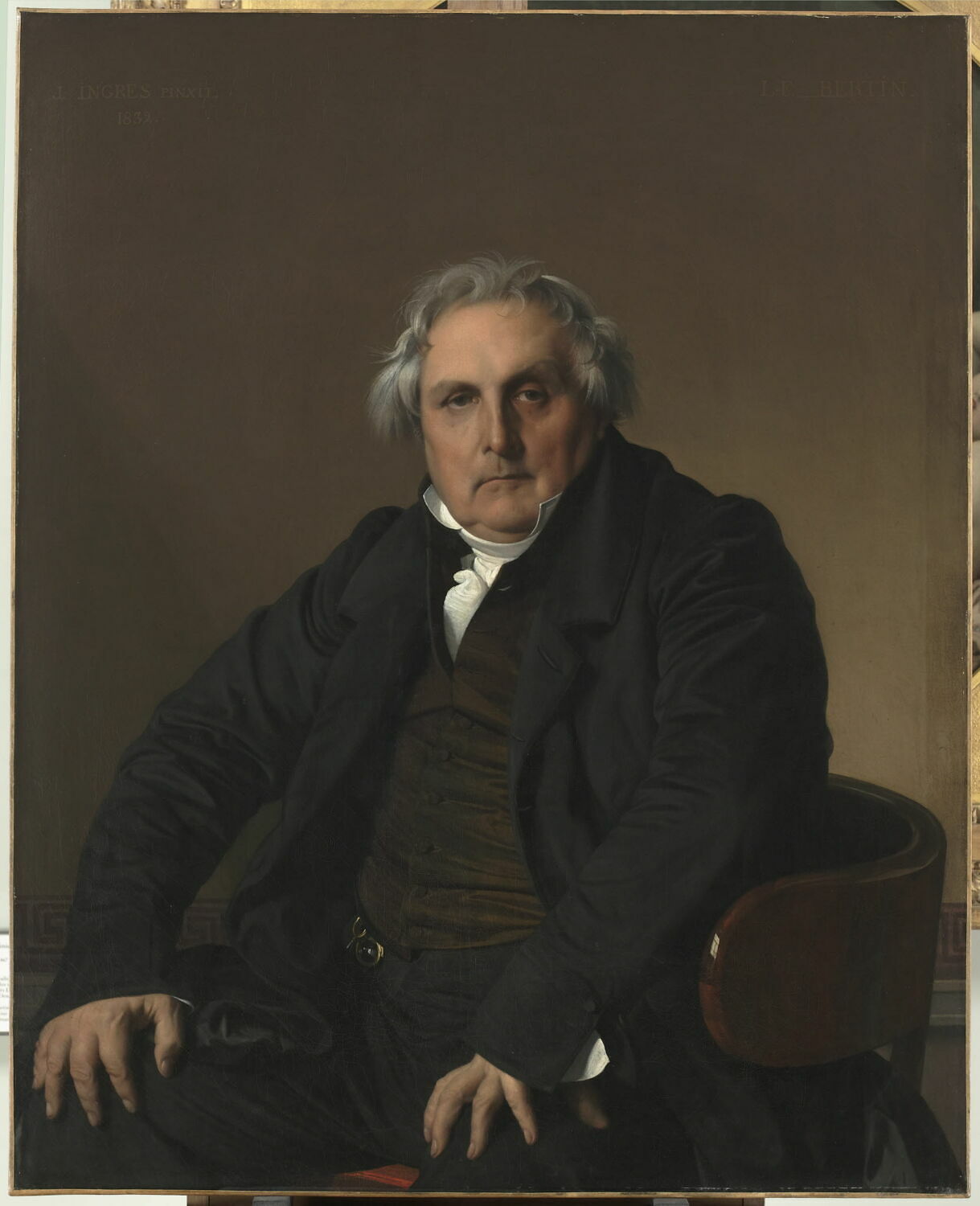 #40
#40Portrait of Mr. Bertin
Portrait of Monsieur Bertin, by Jean-Auguste-Dominique Ingres, is among the paintings in the Louvre to see to understand the density of the museum. The painting shows how the Louvre preserves one of the great French laboratories of history painting and romanticism. The Louvre notice associates the work with the Department of Paintings; the technique indicated is oil on canvas and the dating chosen is Date of creation/manufacturing: 2nd quarter of the 19th century (1832). It belongs to the major landmarks of the visit, those which allow us to understand a school, a period or an entire room. This entry refers directly to the Louvre notice in order to keep the image, title and institutional data in the same place.
Image and link: Louvre Museum.
See the Louvre instructions →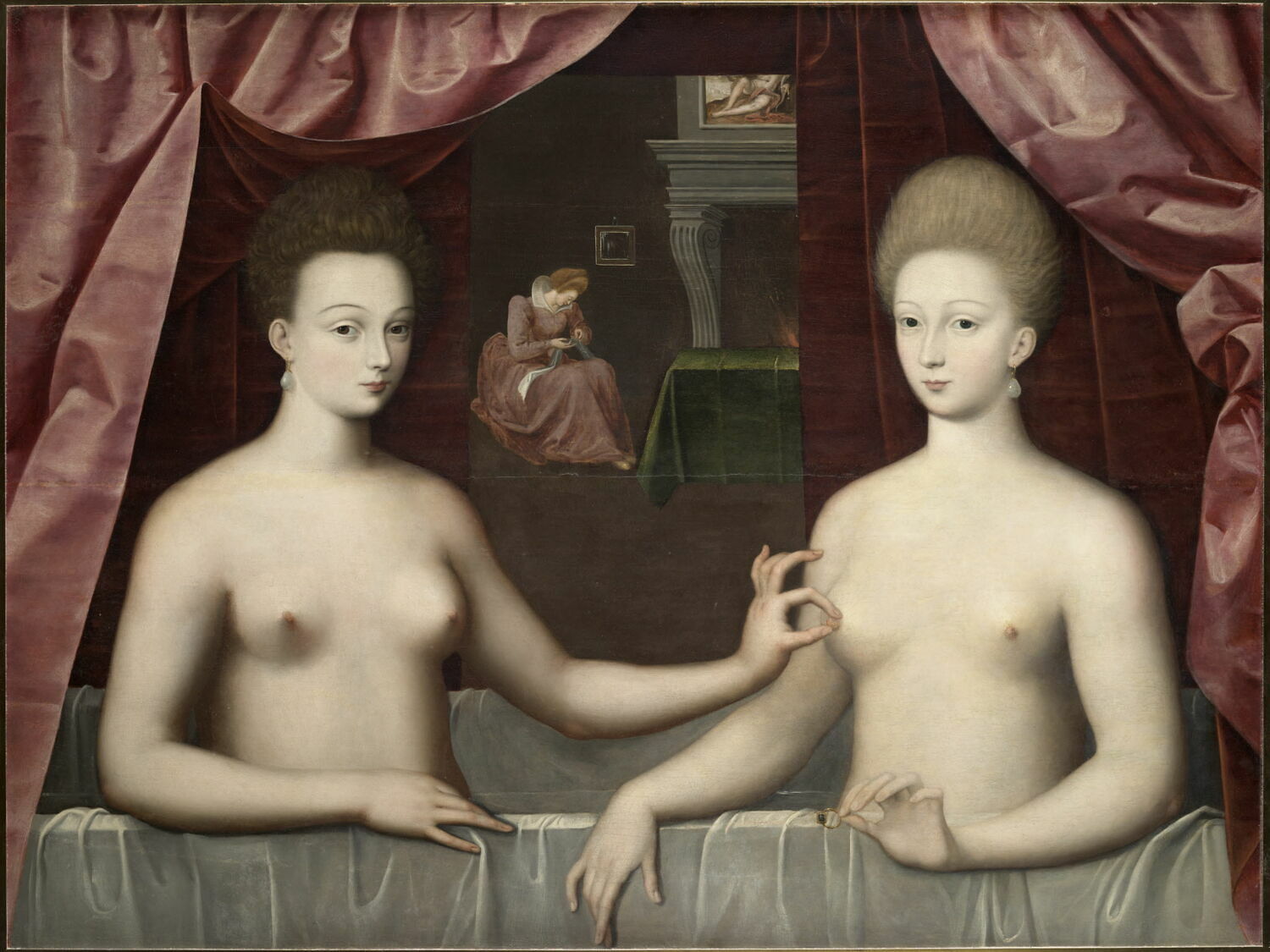 #41
#41Gabrielle d'Estrées and one of her sisters
Gabrielle d'Estrées and one of her sisters, from École de Fontainebleau, are among the paintings in the Louvre to see to understand the density of the museum. Its interest comes from the way in which the subject, technique and collection history meet in an immediately recognizable image. The Louvre notice associates the work with the Department of Paintings; the technique indicated is oil on wood (oak) and the dating chosen is Date of creation/manufacturing: 4th quarter of the 16th century (1575 - 1600). It belongs to the major landmarks of the visit, those which allow us to understand a school, a period or an entire room. This entry refers directly to the Louvre notice in order to keep the image, the title and the institutional data in the same place.
Image and link: Louvre Museum.
See the Louvre instructions →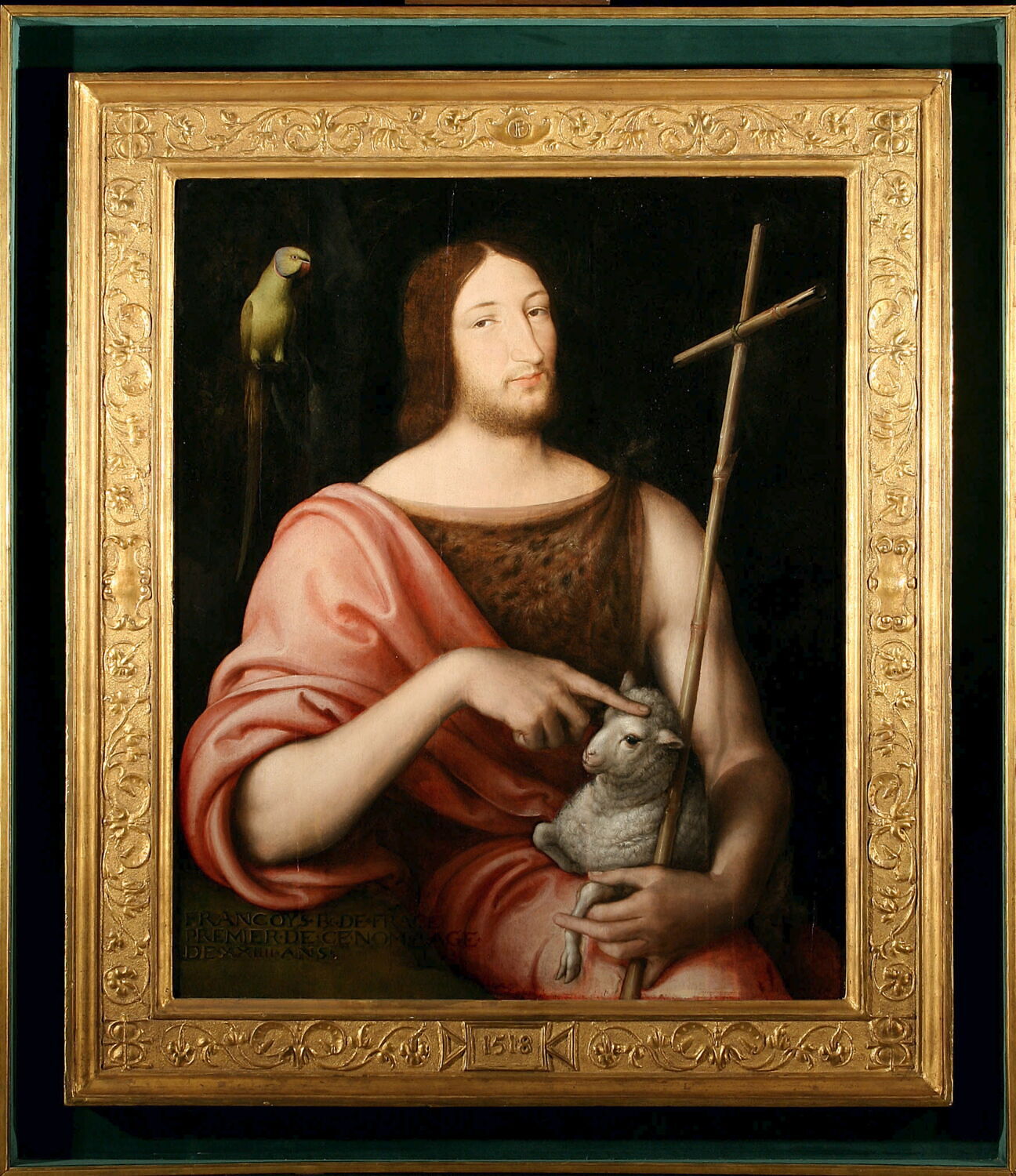 #42
#42Portrait of Francis I
Portrait of François I, by Jean Clouet, is among the paintings in the Louvre to see to understand the density of the museum. Its interest comes from the way in which the subject, technique and collection history meet in an immediately recognizable image. The Louvre notice associates the work with the Department of Paintings; the technique indicated is oil on wood and the dating chosen is Date of creation/manufacturing: 16th century (1500 - 1600). It belongs to the major landmarks of the visit, those which allow us to understand a school, a period or an entire room. This entry refers directly to the Louvre notice in order to keep the image, title and institutional data in the same place.
Image and link: Louvre Museum.
See the Louvre instructions →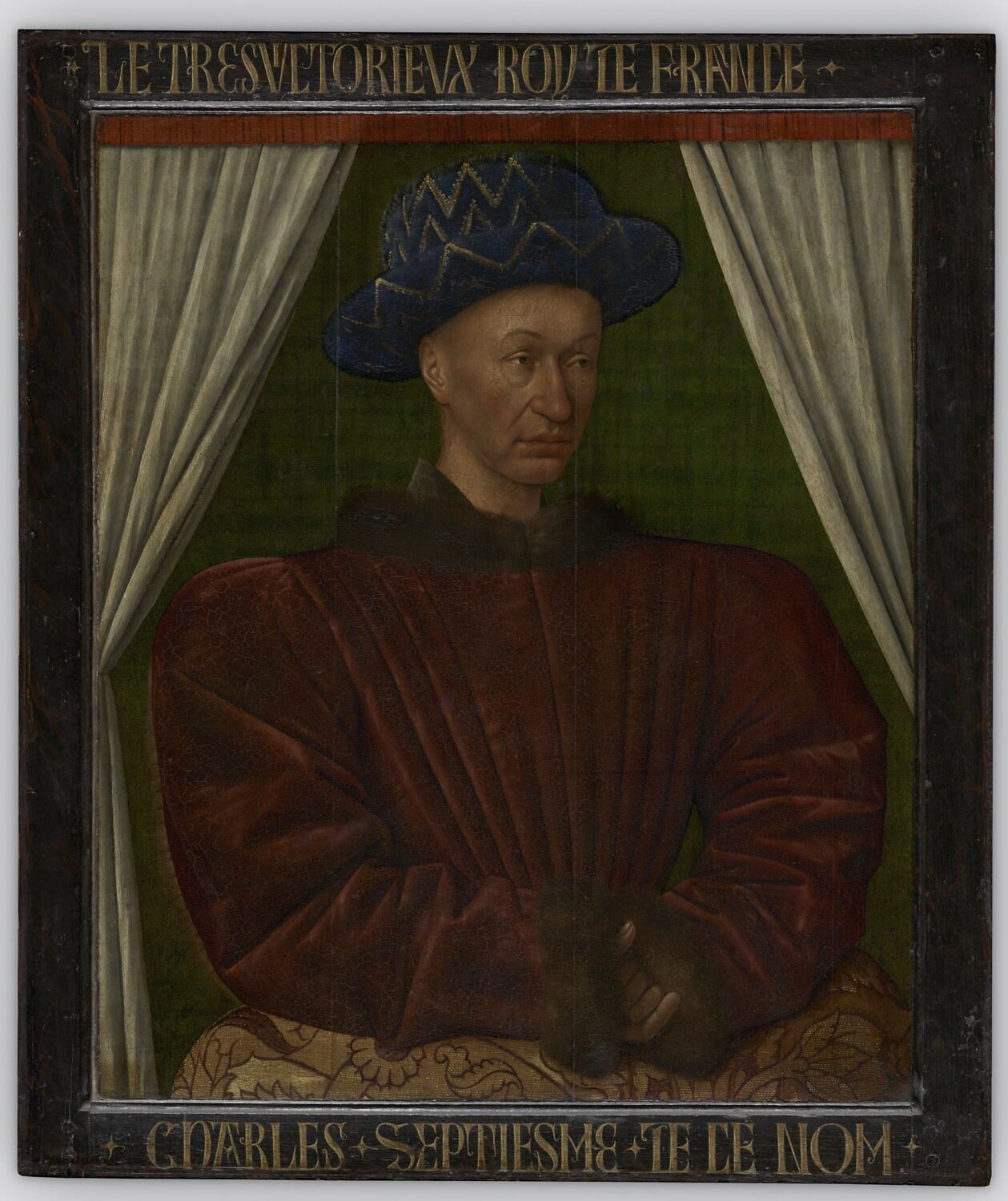 #43
#43Portrait of Charles VII
Portrait of Charles VII, by Jean Fouquet, is among the paintings in the Louvre to see to understand the density of the museum. Its interest comes from the way in which the subject, technique and collection history meet in an immediately recognizable image. The Louvre notice associates the work with the Department of Paintings; the technique indicated is oil on wood (oak) and the dating chosen is Date of creation/manufacturing: Mid-15th century (around 1445 - 1450). It belongs to the major landmarks of the visit, those which allow us to understand a school, a period or an entire room. This entry refers directly to the Louvre notice in order to keep the image, the title and the institutional data in the same place.
Image and link: Louvre Museum.
See the Louvre instructions →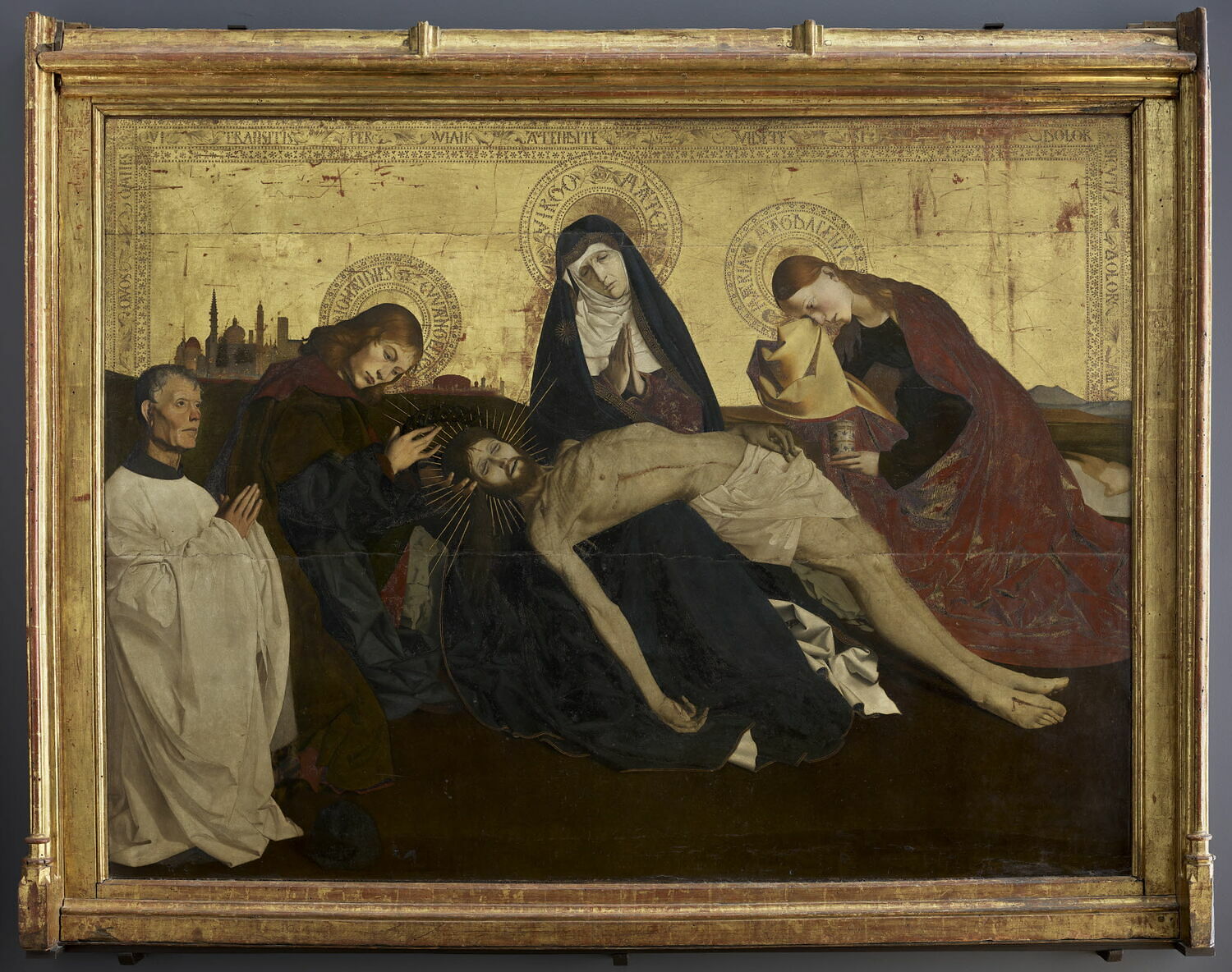 #44
#44The Pietà of Villeneuve-lès-Avignon
The Pietà de Villeneuve-lès-Avignon, by Enguerrand Quarton, is among the paintings in the Louvre to see to understand the density of the museum. Its interest comes from the way in which the subject, technique and collection history meet in an immediately recognizable image. The Louvre notice associates the work with the Department of Paintings; the technique indicated is a gold background on wood (walnut) and the dating chosen is Date of creation/manufacturing: 3rd quarter of the 15th century (1450 - 1475). It belongs to the major landmarks of the visit, those which allow us to understand a school, a period or an entire room. This entry refers directly to the Louvre notice in order to keep the image, the title and the institutional data in the same place.
Image and link: Louvre Museum.
See the Louvre instructions → #45
#45The Flayed Ox
The Flayed Ox, by Rembrandt, is among the paintings in the Louvre to see to understand the density of the museum. It recalls the importance of the schools of the North in the Louvre collections, between portrait, material, detail and narrative invention. The Louvre notice associates the work with the Department of Paintings; the technique indicated is oil on wood (b. - beech-fitted.) (beech) and the dating chosen is Date of creation/manufacture: Mid-17th century (1655). It belongs to the major landmarks of the visit, those which allow us to understand a school, a period or an entire room. The map uses the existing Alpha Reproduction image and link here, without creating a duplicate product.
Image and link: Alpha Reproduction.
See this reproduction →Rembrandt, Rubens, Van Dyck, Bosch, Dürer and Van Eyck open European theaters.
 #46
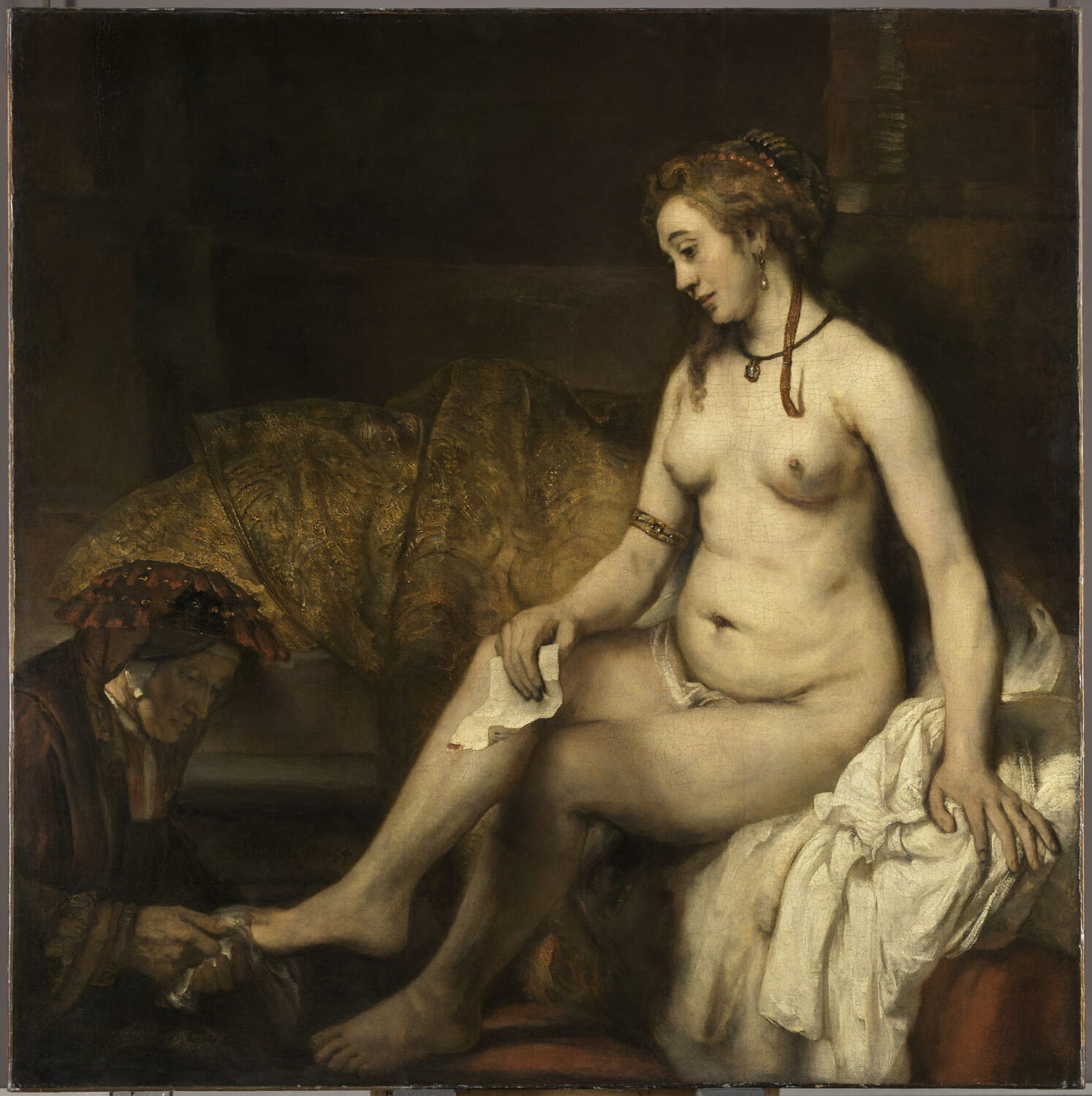
#46Bathsheba in the bath holding David's letter
Bathsheba in the Bath holding the letter from David, by Rembrandt, is among the paintings in the Louvre to see to understand the density of the museum. The painting shows how the Louvre preserves one of the great French laboratories of history painting and romanticism. The Louvre notice associates the work with the Department of Paintings; the technique indicated is oil on canvas and the dating chosen is Date of creation/manufacturing: Mid-17th century (1654). It belongs to the major landmarks of the visit, those which allow us to understand a school, a period or an entire room. This entry refers directly to the Louvre notice in order to keep the image, title and institutional data in the same place.
Image and link: Louvre Museum.
See the Louvre instructions → #47
#47The Pilgrims of Emmaus
The Pilgrims of Emmaus, by Rembrandt, is among the paintings in the Louvre to see to understand the density of the museum. It recalls the importance of the Northern schools in the Louvre collections, between portrait, material, detail and narrative invention. The Louvre notice associates the work with the Department of Paintings; the technique indicated is oil on wood and the dating chosen is Date of creation/manufacturing: 2nd quarter of the 17th century (1648). It belongs to the major landmarks of the visit, those which allow us to understand a school, a period or an entire room. The map here uses the existing Alpha Reproduction image and link, without creating a duplicate product.
Image and link: Alpha Reproduction.
See this reproduction → #48
#48The Philosopher in meditation
The Philosopher in Meditation, by Rembrandt, is among the paintings in the Louvre to see to understand the density of the museum. It recalls the importance of the Northern schools in the Louvre collections, between portrait, material, detail and narrative invention. The Louvre notice associates the work with the Department of Paintings; the technique indicated is oil on wood and the dating chosen is Date of creation/manufacturing: 2nd quarter of the 17th century (1632). It belongs to the major landmarks of the visit, those which allow us to understand a school, a period or an entire room. This entry refers directly to the Louvre notice in order to keep the image, title and institutional data in the same place.
Image and link: Louvre Museum.
See the Louvre instructions → #49
#49Portrait of the artist on the easel
Portrait of the artist on the easel, by Rembrandt, is among the paintings in the Louvre to see to understand the density of the museum. It recalls the importance of the Northern schools in the Louvre collections, between portrait, material, detail and narrative invention. The Louvre notice associates the work with the Department of Paintings; the technique indicated is oil on canvas and the dating chosen is Date of creation/manufacturing: 3rd quarter of the 17th century (1660). It belongs to the major landmarks of the visit, those which allow us to understand a school, a period or an entire room. The map here uses the existing Alpha Reproduction image and link, without creating a duplicate product.
Image and link: Alpha Reproduction.
See this reproduction →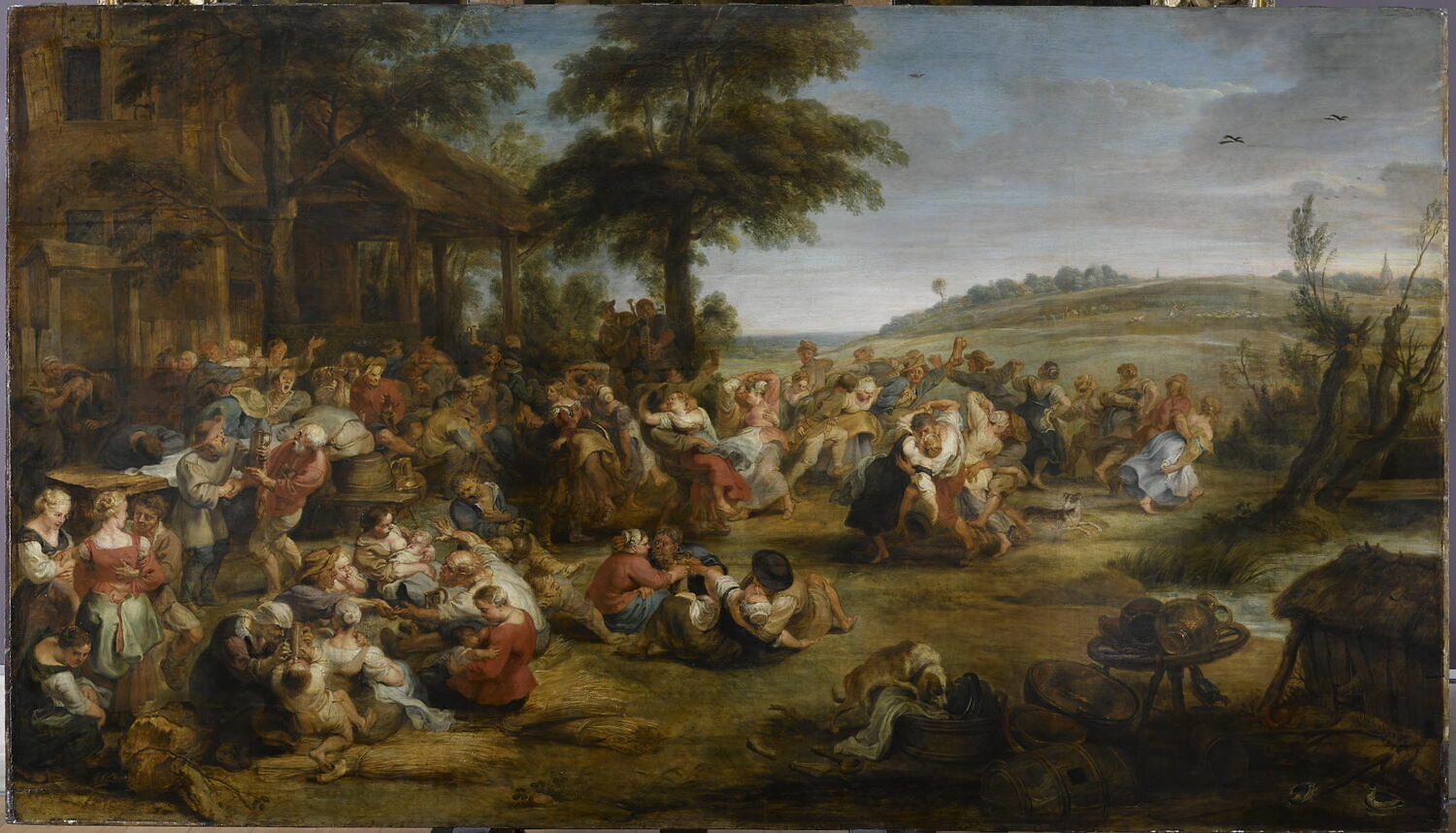 #50
#50The fair
The Fair, by Pierre Paul Rubens, is among the paintings in the Louvre to see to understand the density of the museum. It recalls the importance of the schools of the North in the Louvre collections, between portrait, material, detail and narrative invention. The Louvre notice associates the work with the Department of Paintings; the technique indicated is oil on wood and the dating chosen is Date of creation/manufacturing: 2nd quarter of the 17th century (around 1635 - 1638). It belongs to the major landmarks of the visit, those which allow us to understand a school, a period or an entire room. This entry refers directly to the Louvre notice in order to keep the image, title and institutional data in the same place.
Image and link: Louvre Museum.
See the Louvre instructions →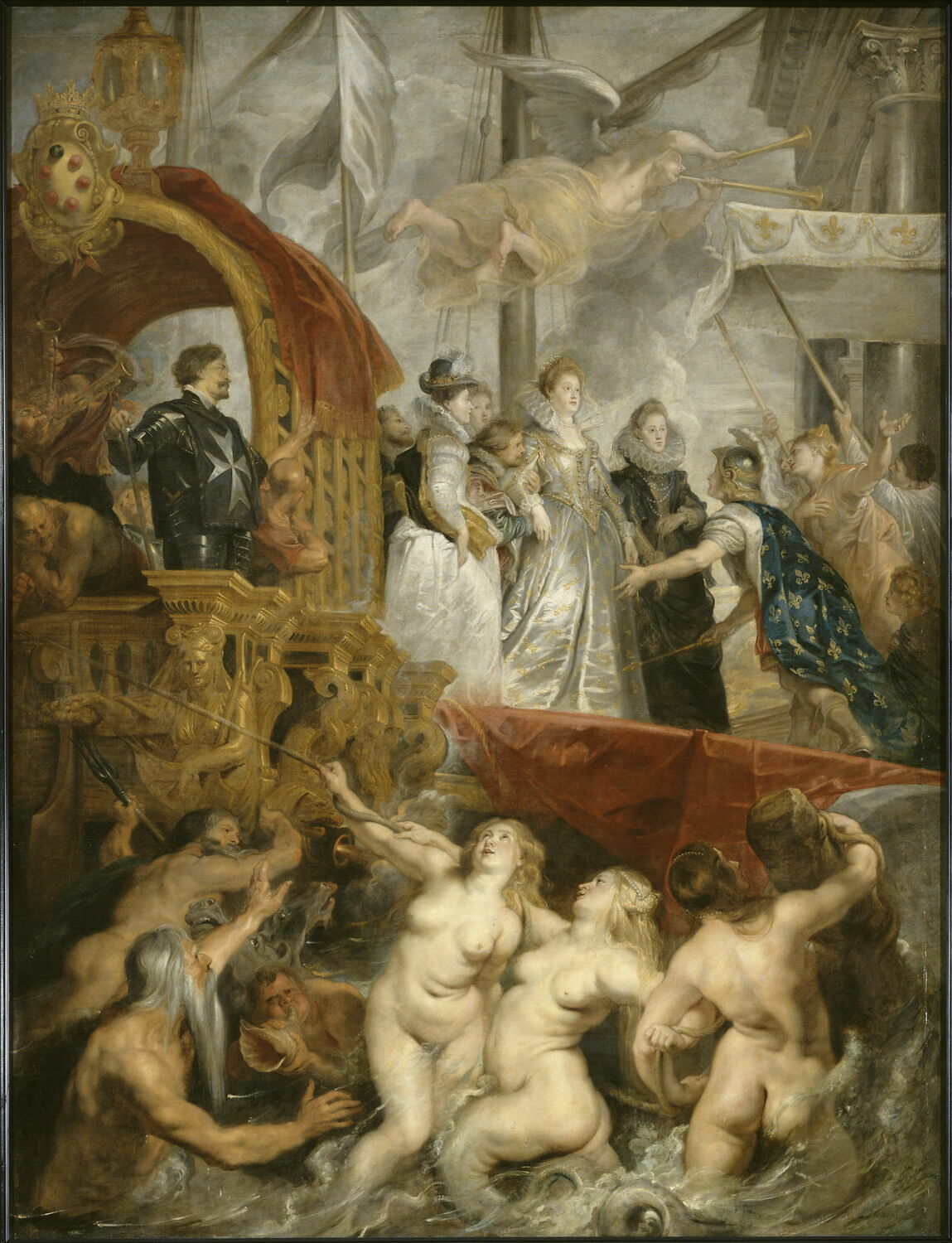 #51
#51The Landing of Marie de Medici in Marseille
The Landing of Marie de Medici in Marseille, by Pierre Paul Rubens, is among the paintings in the Louvre to see to understand the density of the museum. It recalls the importance of the Northern schools in the Louvre collections, between portrait, material, detail and narrative invention. The Louvre notice associates the work with the Department of Paintings; the technique indicated is oil on canvas and the dating chosen is Date of creation/manufacturing: 1st quarter of the 17th century (1600 - 1625). This entry broadens the classification to less media-oriented but essential masterpieces for reading the richness of the collections. This entry refers directly to the Louvre notice in order to keep the image, title and institutional data in the same place.
Image and link: Louvre Museum.
See the Louvre instructions →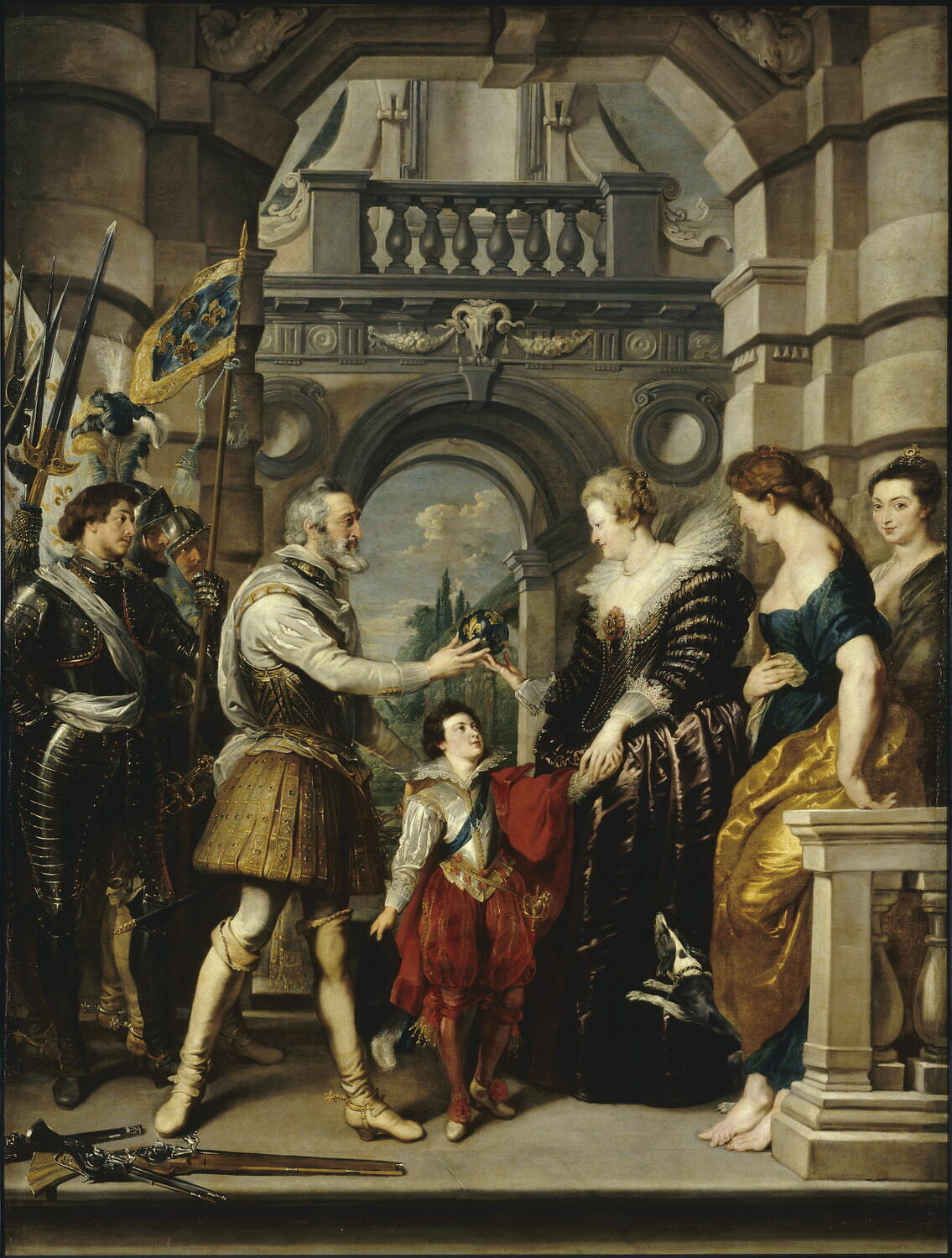 #52
#52The handover of the regency to Marie de Medici
The Handover of the Regency to Marie de Medici, by Pierre Paul Rubens, is among the paintings in the Louvre to see to understand the density of the museum. It recalls the importance of the Northern schools in the Louvre collections, between portrait, material, detail and narrative invention. The Louvre notice associates the work with the Department of Paintings; the technique indicated is oil on canvas and the dating chosen is Date of creation/manufacturing: 1st quarter of the 17th century (1600 - 1625). This entry broadens the classification to less media-oriented but essential masterpieces for reading the richness of the collections. This entry refers directly to the Louvre notice in order to keep the image, title and institutional data in the same place.
Image and link: Louvre Museum.
See the Louvre instructions →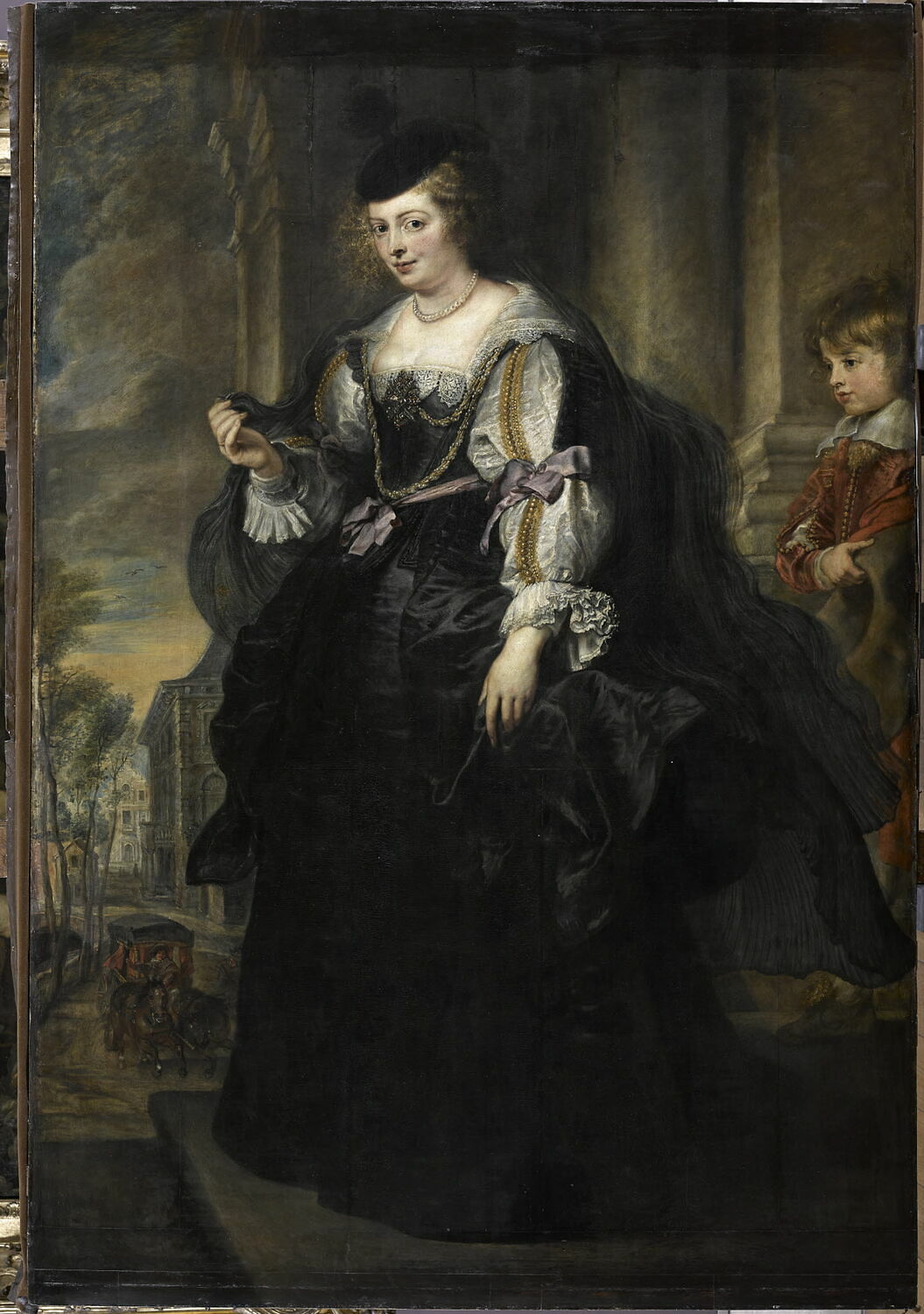 #53
#53Portrait of Helene Fourment
Portrait of Hélène Fourment, by Pierre Paul Rubens, is among the paintings in the Louvre to see to understand the density of the museum. It recalls the importance of the Northern schools in the Louvre collections, between portrait, material, detail and narrative invention. The Louvre notice associates the work with the Department of Paintings; the technique indicated is oil on wood and the dating chosen is Date of creation/manufacturing: 17th century (around 1639). This entry broadens the classification to less media-oriented but essential masterpieces for reading the richness of the collections. This entry refers directly to the Louvre notice in order to keep the image, title and institutional data in the same place.
Image and link: Louvre Museum.
See the Louvre instructions → #54
#54Charles I hunting
Charles I on the Hunt, by Antoine van Dyck, is among the paintings in the Louvre to see to understand the density of the museum. It recalls the importance of the Northern schools in the Louvre collections, between portrait, material, detail and narrative invention. The Louvre notice associates the work with the Department of Paintings; the technique indicated is oil on canvas and the dating chosen is around 1635. This entry broadens the classification to less media-oriented but essential masterpieces for reading the richness of the collections. The map uses the existing Alpha Reproduction image and link here, without creating a product duplicate. The map uses the existing Alpha Reproduction image and link here, without creating a product duplicate. The date, technique and conservation data are cross-referenced with the museum notice when it is available.
Image and link: Alpha Reproduction.
See this reproduction → #55
#55The Newborn
The Newborn, by Georges de La Tour, is among the paintings in the Louvre to see to understand the density of the museum. The strength of the work comes from an apparently close scene, where light, objects and eyes build a silent presence. The Louvre notice associates the work with the Department of Paintings; the technique indicated is oil on canvas and the dating chosen is Date of creation/manufacturing: 2nd quarter of the 17th century (around 1642 - 1644). This entry broadens the classification to less media-oriented but essential masterpieces for reading the richness of the collections. The map uses the existing Alpha Reproduction image and link here, without creating a product duplicate.
Image and link: Alpha Reproduction.
See this reproduction → #56
#56The Fortune Teller
Caravaggio's The Fortune Teller is among the paintings in the Louvre to see to understand the density of the museum. Its interest comes from the way in which the subject, technique and collection history meet in an immediately recognizable image. The Louvre notice associates the work with the Department of Paintings; the technique indicated is oil on canvas (transposition) and the dating chosen is Date of creation/manufacturing: 4th quarter of the 16th century (around 1595 - 1598). This entry expands the classification to less media-oriented but essential masterpieces for reading the richness of the collections. The map uses the existing Alpha Reproduction image and link here, without creating a product duplicate.
Image and link: Alpha Reproduction.
See this reproduction →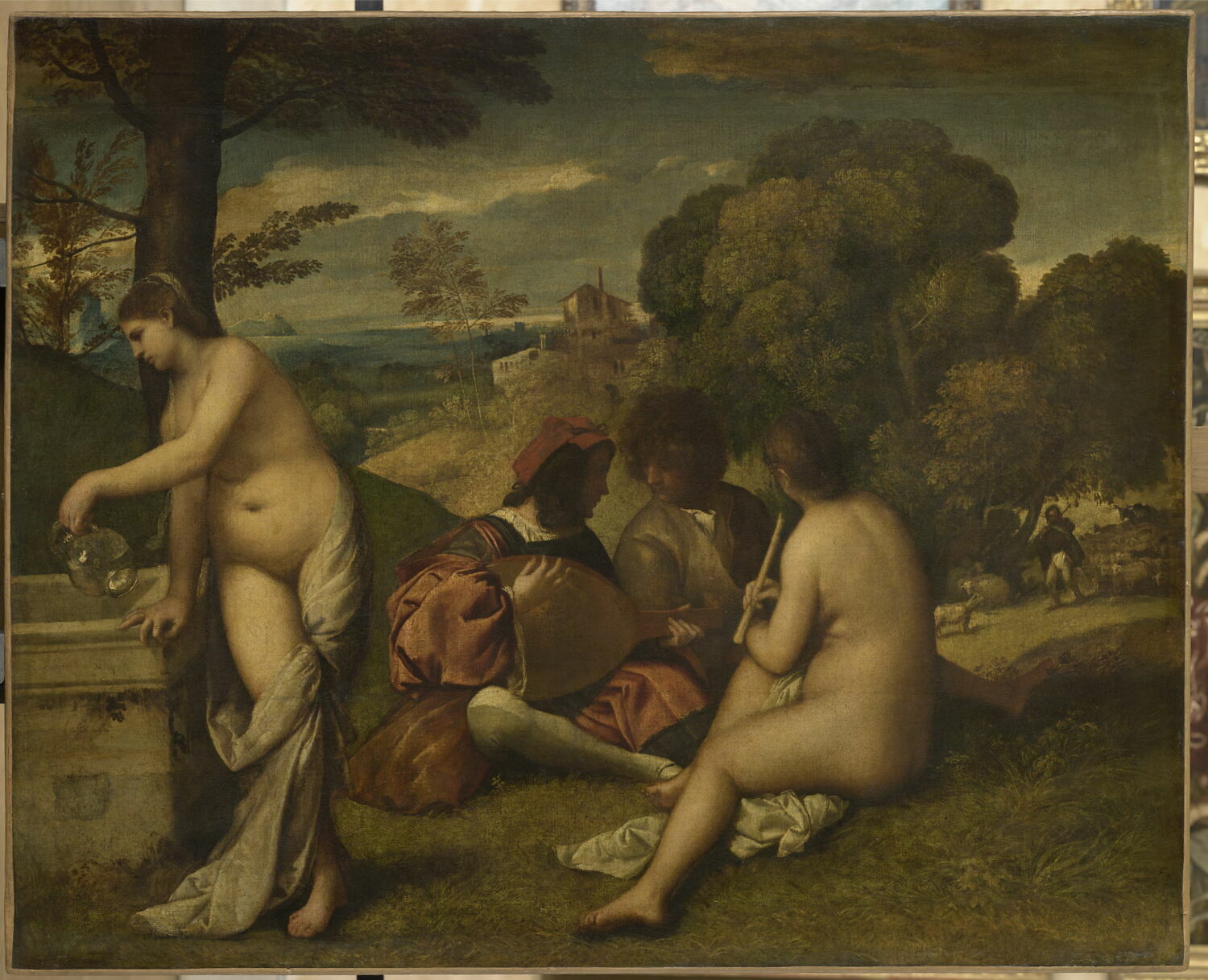 #57
#57The Country Concert
Titian's Country Concert is among the paintings in the Louvre to see to understand the density of the museum. The composition focuses attention on the balance of the figures, the softness of the transitions and the precision of the pictorial gesture. The Louvre notice associates the work with the Department of Paintings; the technique indicated is oil on canvas and the dating chosen is Date of creation/manufacturing: 1st quarter of the 16th century (1500 - 1525). This entry broadens the classification to less media-oriented but essential masterpieces for reading the richness of the collections. This entry refers directly to the Louvre notice in order to keep the image, title and institutional data in the same place.
Image and link: Louvre Museum.
See the Louvre instructions →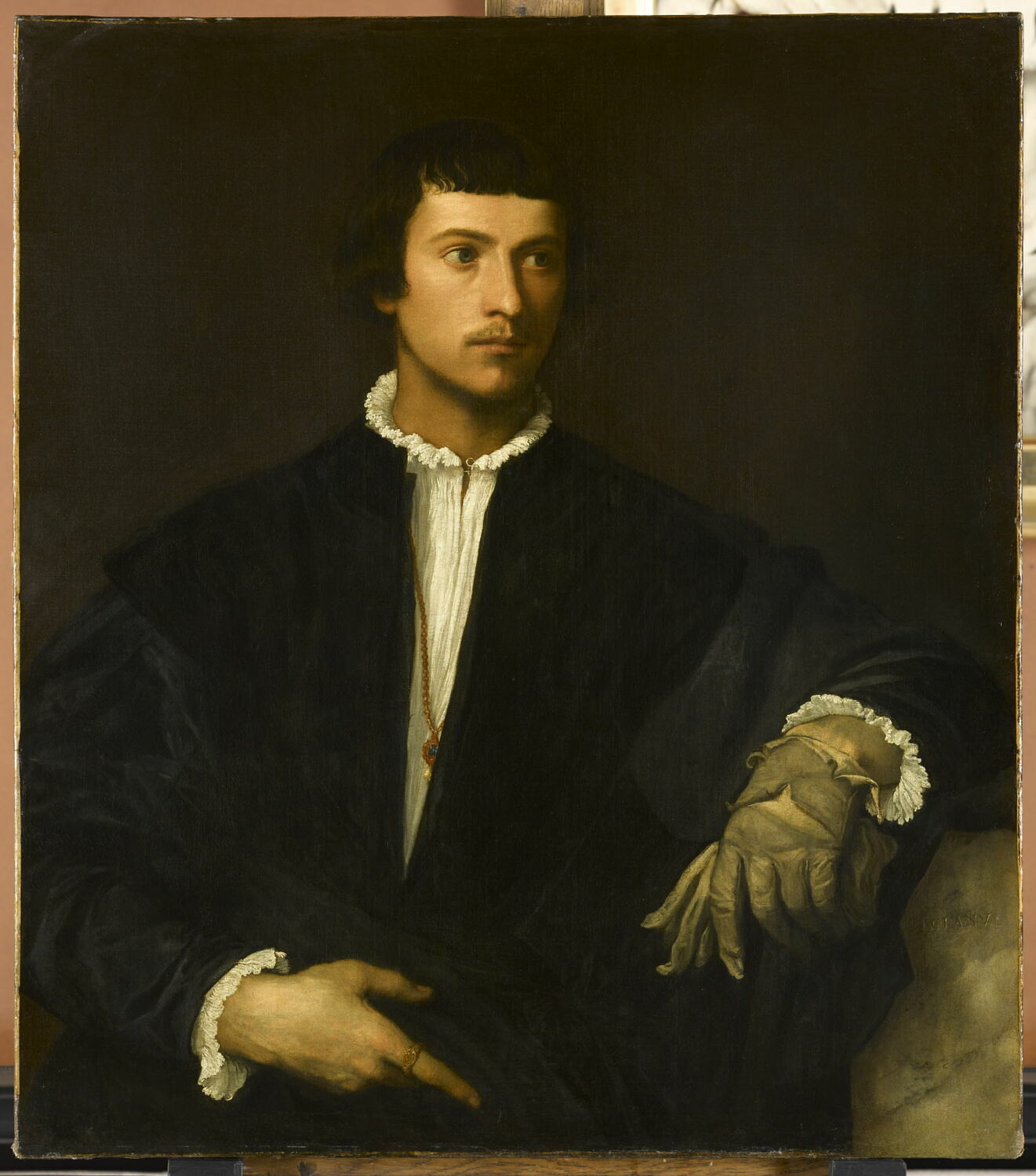 #58
#58The Gloveman
The Man with the Glove, by Titian, is among the paintings in the Louvre to see to understand the density of the museum. The composition focuses attention on the balance of the figures, the softness of the transitions and the precision of the pictorial gesture. The Louvre notice associates the work with the Department of Paintings; the technique indicated is oil on canvas and the dating chosen is Date of creation/manufacturing: 1st quarter of the 16th century (1500 - 1525). This entry broadens the classification to less media-oriented but essential masterpieces for reading the richness of the collections. This entry refers directly to the Louvre notice in order to keep the image, title and institutional data in the same place.
Image and link: Louvre Museum.
See the Louvre instructions →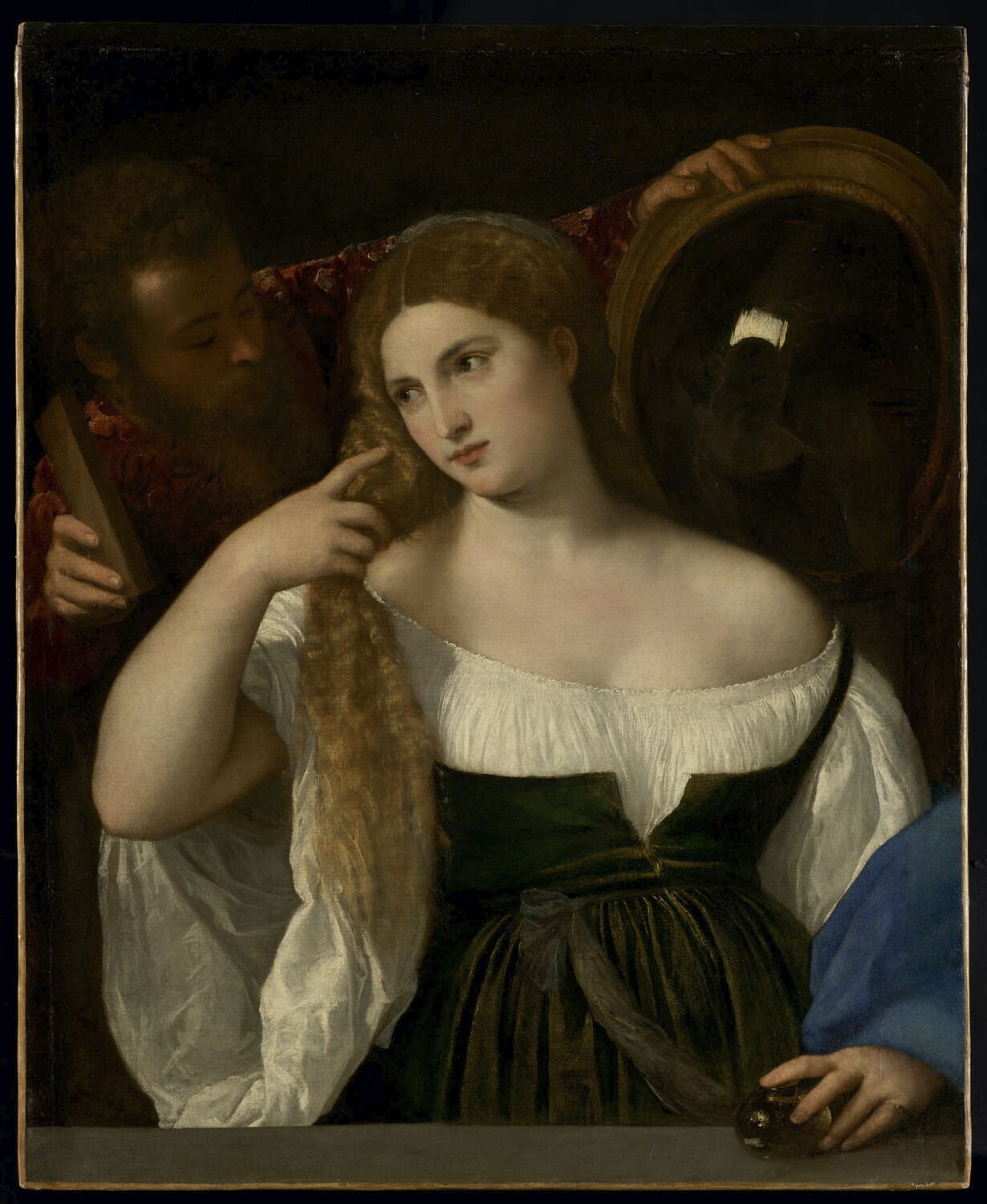 #59
#59The Woman in the Mirror
Titian's Woman in the Mirror is one of the paintings in the Louvre to see to understand the density of the museum. The composition focuses attention on the balance of the figures, the softness of the transitions and the precision of the pictorial gesture. The Louvre notice associates the work with the Department of Paintings; the technique indicated is oil on canvas and the dating chosen is Date of creation/manufacturing: 2nd quarter of the 16th century (1525 - 1550). This entry broadens the classification to less media-oriented but essential masterpieces for reading the richness of the collections. This entry refers directly to the Louvre notice in order to keep the image, title and institutional data in the same place.
Image and link: Louvre Museum.
See the Louvre instructions →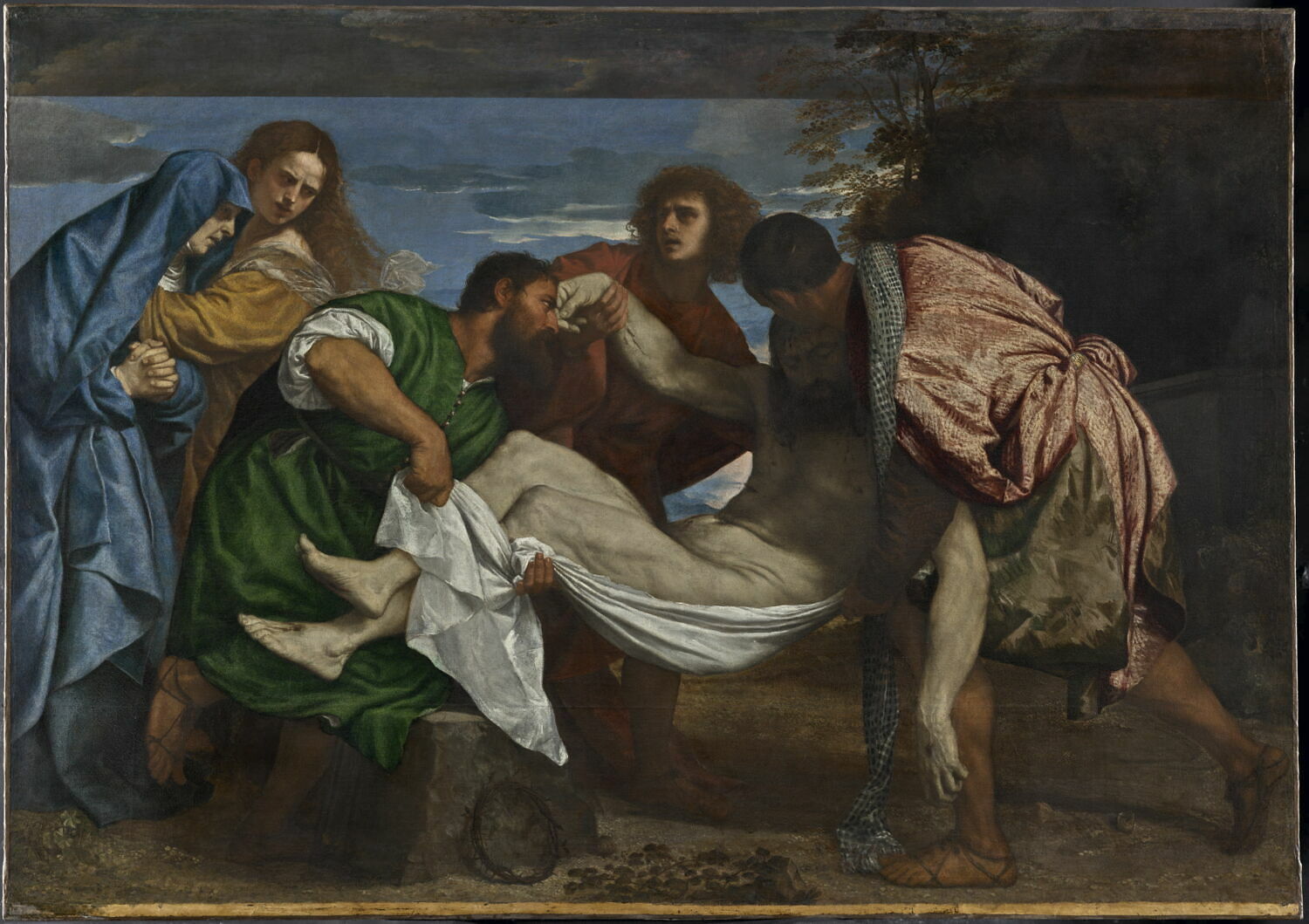 #60
#60The Entombment
Titian's Entombment is among the paintings in the Louvre to see to understand the density of the museum. The composition focuses attention on the balance of the figures, the softness of the transitions and the precision of the pictorial gesture. The Louvre notice associates the work with the Department of Paintings; the technique indicated is oil on canvas and the dating chosen is Date of creation/manufacturing: 1st quarter of the 16th century (1500 - 1525). This entry broadens the classification to less media-oriented but essential masterpieces for reading the richness of the collections. This entry refers directly to the Louvre notice in order to keep the image, title and institutional data in the same place.
Image and link: Louvre Museum.
See the Louvre instructions → #61
#61Saint Francis receiving the stigmata
Saint Francis Receiving the Stigmata, by Giotto, is among the paintings in the Louvre to see to understand the density of the museum. Its interest comes from the way in which the subject, technique and history of collection meet in an immediately recognizable image. The Louvre notice associates the work with the Department of Paintings; the technique indicated is gold background (gable shape at the upper part) on wood (poplar) and the dating chosen is Date of creation/manufacture: 1st quarter of the 14th century (1300 - 1325). This entry expands the classification to less media-oriented but essential masterpieces for reading the richness of the collections. The map uses the existing Alpha Reproduction image and link here, without creating a product duplicate.
Image and link: Alpha Reproduction.
See this reproduction → #62
#62The Battle of San Romano
The Battle of San Romano, by Paolo Uccello, is among the paintings in the Louvre to see to understand the density of the museum. Its interest comes from the way in which the subject, technique and collection history meet in an immediately recognizable image. The Louvre notice associates the work with the Department of Paintings; the technique indicated is tempera (?) on wood and the dating chosen is Date of creation/manufacturing: 3rd quarter of the 15th century (1450 - 1475). This entry expands the classification to less media-oriented but essential masterpieces for reading the richness of the collections. The map uses the existing Alpha Reproduction image and link here, without creating a product duplicate.
Image and link: Alpha Reproduction.
See this reproduction → #63
#63Portrait of Sigismondo Malatesta
Portrait of Sigismondo Malatesta, by Piero della Francesca, is among the paintings in the Louvre to see to understand the density of the museum. Its interest comes from the way in which the subject, technique and collection history meet in an immediately recognizable image. The Louvre notice associates the work with the Department of Paintings; the technique indicated is tempera on wood and the dating chosen is around 1451. This entry broadens the classification to less media-oriented but essential masterpieces for reading the richness of the collections. The map here uses the existing Alpha Reproduction image and link, without creating a product duplicate. The actual visit remains irreplaceable: the scale, material and hanging strongly modify the perception of the painting.
Image and link: Alpha Reproduction.
See this reproduction → #64
#64The Virgin and Child with Saint Anne
The Virgin and Child with Saint Anne, by Leonardo da Vinci, is among the paintings in the Louvre to see to understand the density of the museum. The composition focuses attention on the balance of the figures, the softness of the transitions and the precision of the pictorial gesture. The Louvre notice associates the work with the Department of Paintings; the technique indicated is pen and brown ink on first thought with charcoal and fading. framing lines with pen and brown ink, and with black stone. perforations of the paper corresponding to repetitions of the stylus for transferring certain contours to a new sheet. the paper bears a watermark "at the three mountains", which is found more in Florence. restored in 2003. and the dating chosen is Around 1500/1501. This entry broadens the classification to less media-oriented but essential masterpieces for reading the richness of the collections. The map uses the image here.
Image and link: Alpha Reproduction.
See this reproduction →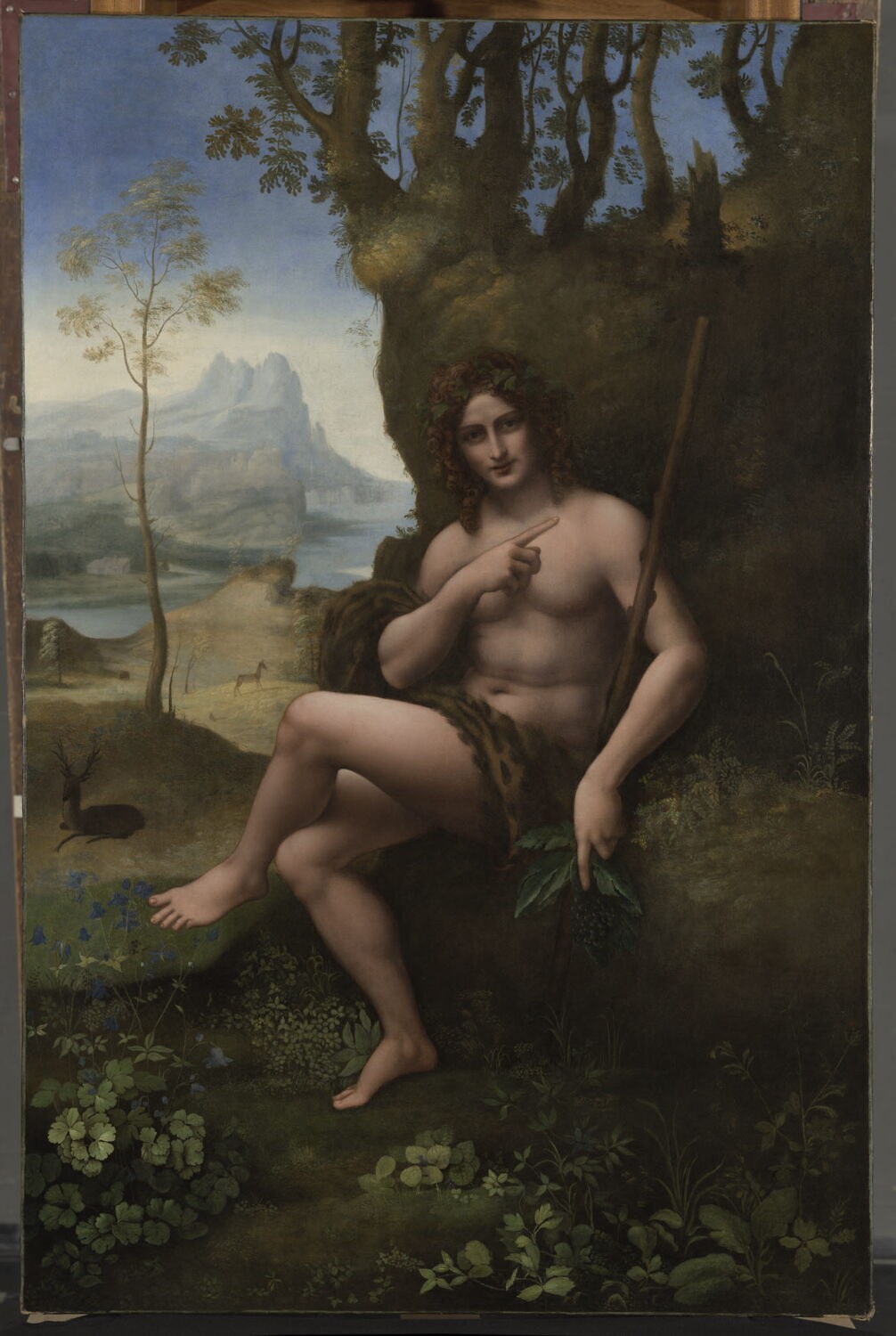 #65
#65Saint John the Baptist
Saint John the Baptist, by Leonardo da Vinci, is among the paintings in the Louvre to see to understand the density of the museum. The composition focuses attention on the balance of the figures, the softness of the transitions and the precision of the pictorial gesture. The Louvre notice associates the work with the Department of Paintings; the technique indicated is oil on canvas (transposition (of wood on canvas)) and the dating chosen is Date of creation/manufacture: 1st quarter of the 16th century (around 1517 - 1520). This entry broadens the classification to less media-oriented but essential masterpieces for reading the richness of the collections. This entry refers directly to the Louvre notice in order to keep the image, title and institutional data in the same place.
Image and link: Louvre Museum.
See the Louvre instructions → #66
#66Bacchus
Bacchus, by Leonardo da Vinci, is among the paintings in the Louvre to see to understand the density of the museum. The composition focuses attention on the balance of the figures, the softness of the transitions and the precision of the pictorial gesture. The Louvre notice associates the work with the Department of Paintings; the technique indicated is oil on wood and the dating chosen is around 1510-1515. This entry broadens the classification to less media-oriented but essential masterpieces for reading the richness of the collections. The map here uses the existing Alpha Reproduction image and link, without creating a product duplicate. This entry expands the classification to less media-oriented but essential masterpieces for reading the richness of the collections. The map uses the existing Alpha Reproduction image and link here, without creating a product duplicate. The date, technique and conservation data are cross-referenced with the museum notice when available.
Image and link: Alpha Reproduction.
See this reproduction → #67
#67Portrait of Baldassare Castiglione
Portrait of Baldassare Castiglione, by Raphael, is among the paintings in the Louvre to see to understand the density of the museum. The composition focuses attention on the balance of the figures, the softness of the transitions and the precision of the pictorial gesture. The Louvre notice associates the work with the Department of Paintings; the technique indicated is oil on canvas and the dating chosen is Date of creation/manufacturing: 1st quarter of the 16th century (around 1514 - 1515). This entry broadens the classification to less media-oriented but essential masterpieces for reading the richness of the collections. The map uses the existing Alpha Reproduction image and link here, without creating a product duplicate.
Image and link: Alpha Reproduction.
See this reproduction → #68
#68Saint Michael slaying the demon
Saint Michael slaying the demon, by Raphael, is among the paintings in the Louvre to see to understand the density of the museum. The composition focuses attention on the balance of the figures, the softness of the transitions and the precision of the pictorial gesture. The Louvre notice associates the work with the Department of Paintings; the technique indicated is oil on canvas and the dating chosen is Date of creation/manufacturing: 2nd quarter of the 16th century (1518). This entry broadens the classification to less media-oriented but essential masterpieces for reading the richness of the collections. The map here uses the existing Alpha Reproduction image and link, without creating a product duplicate. This classification favors paintings, and not drawings, prints, sculptures or art objects.
Image and link: Alpha Reproduction.
See this reproduction → #69
#69The Holy Family of Francis I
The Holy Family of François I, by Raphael, is among the paintings in the Louvre to see to understand the density of the museum. The composition focuses attention on the balance of the figures, the softness of the transitions and the precision of the pictorial gesture. The Louvre notice associates the work with the Department of Paintings; the technique indicated is oil on canvas and the dating chosen is Date of creation/manufacturing: 1st quarter of the 16th century (1518). This entry broadens the classification to less media-oriented but essential masterpieces for reading the richness of the collections. The map uses the existing Alpha Reproduction image and link here, without creating a product duplicate.
Image and link: Alpha Reproduction.
See this reproduction →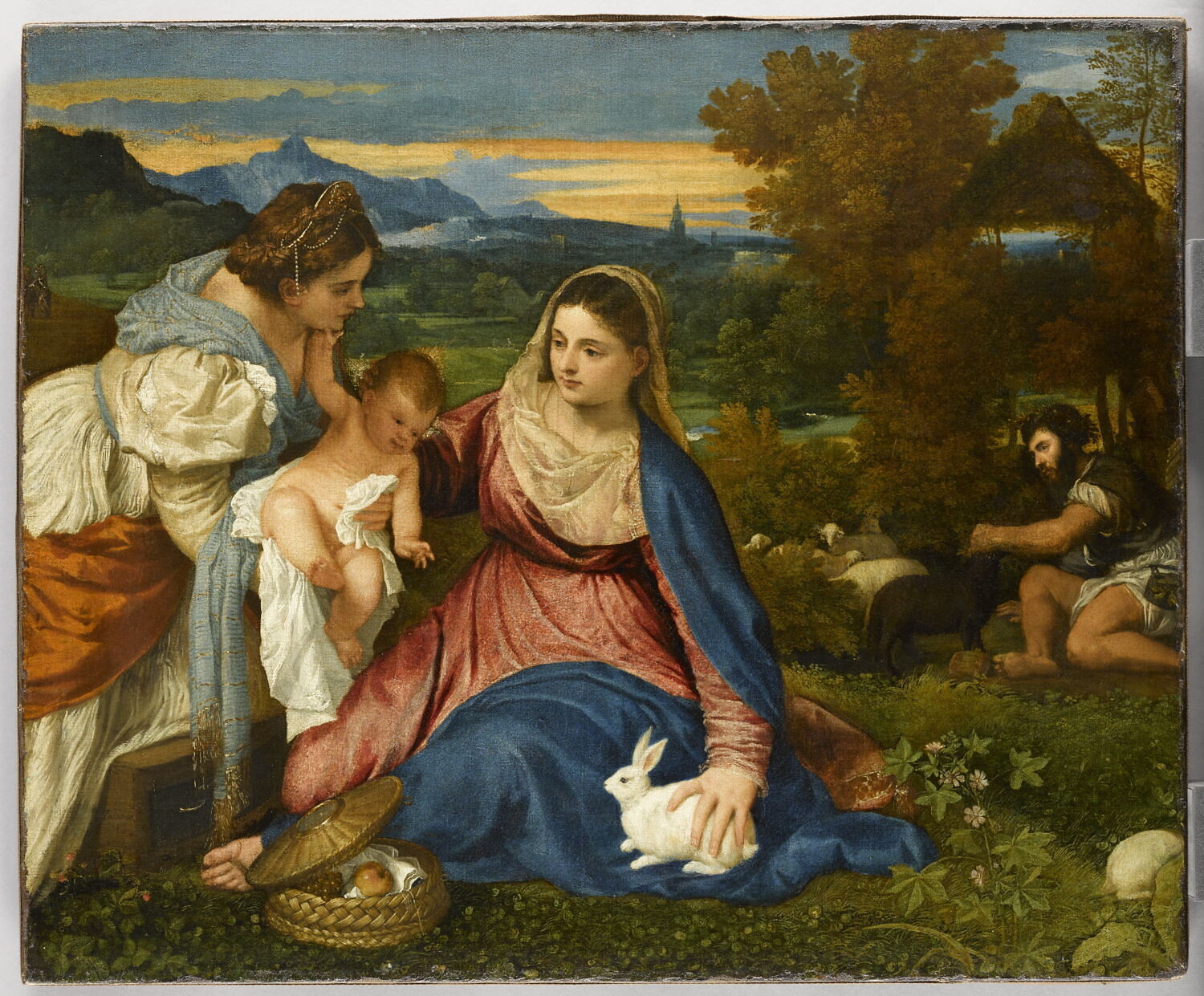 #70
#70The Virgin and the Rabbit
The Virgin and the Rabbit, by Titian, is among the paintings in the Louvre to see to understand the density of the museum. The composition focuses attention on the balance of the figures, the softness of the transitions and the precision of the pictorial gesture. The Louvre notice associates the work with the Department of Paintings; the technique indicated is oil on canvas and the dating chosen is Date of creation/manufacturing: 16th century (1500 - 1600). This entry broadens the classification to less media-oriented but essential masterpieces for reading the richness of the collections. This entry refers directly to the Louvre notice in order to keep the image, title and institutional data in the same place.
Image and link: Louvre Museum.
See the Louvre instructions →Titian, Raphael, Mantegna, Murillo, Ribera, Gros, Delacroix and Ingres close the visit in large format.
 #71
#71Rest during the flight into Egypt
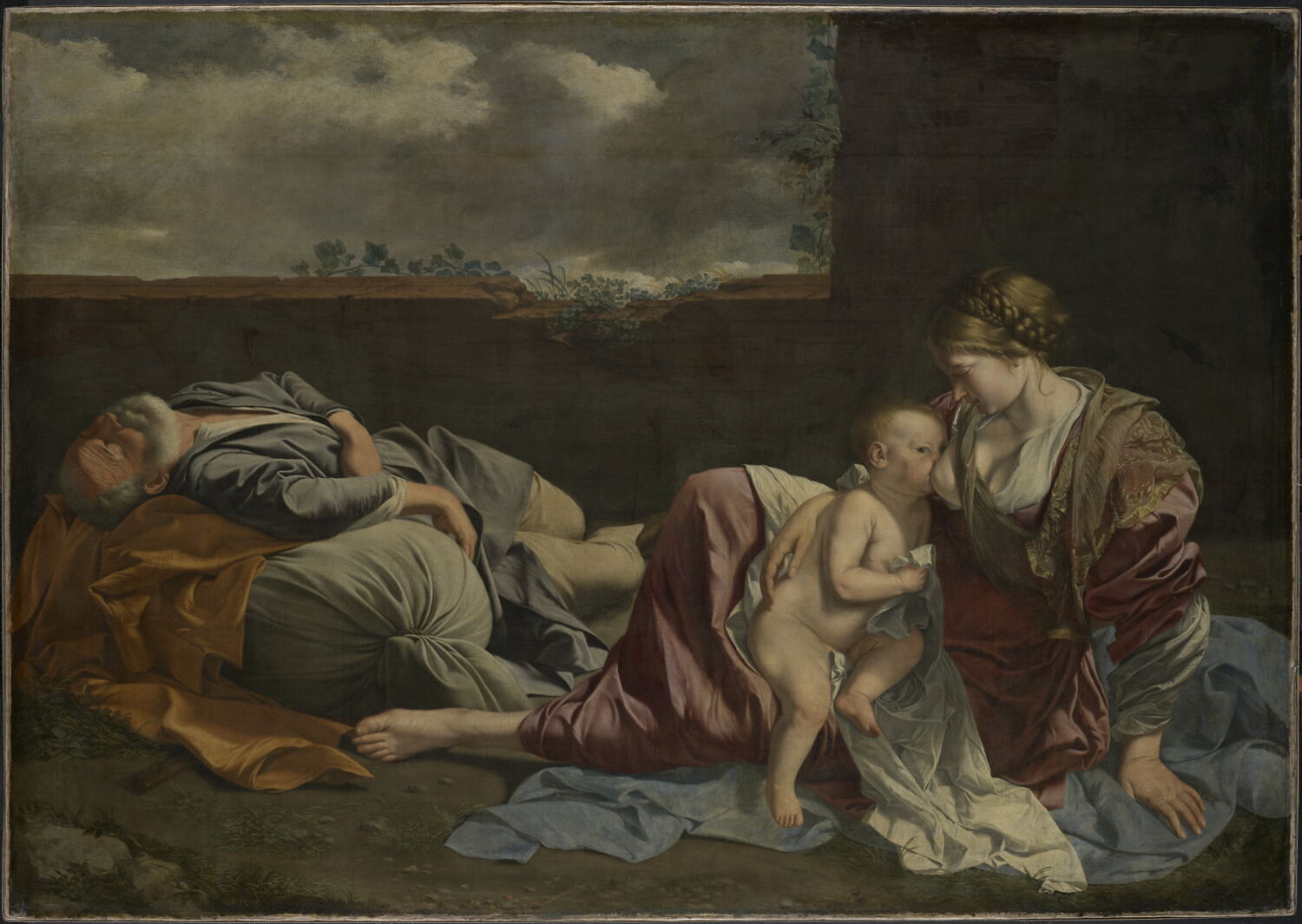
Rest during the Flight into Egypt, by Orazio Gentileschi, is among the paintings in the Louvre to see to understand the density of the museum. Its interest comes from the way in which the subject, technique and history of collection meet in an immediately recognizable image. The Louvre notice associates the work with the Department of Paintings; the technique indicated is oil on canvas and the dating chosen is Date of creation/manufacturing: 2nd quarter of the 17th century (1625 - 1650). This entry broadens the classification to less media-oriented but essential masterpieces for reading the richness of the collections. This entry refers directly to the Louvre notice in order to keep the image, title and institutional data in the same place.
Image and link: Louvre Museum.
See the Louvre instructions → #72
#72The Astronomer
The Astronomer, by Johannes Vermeer, is among the paintings in the Louvre to see to understand the density of the museum. It recalls the importance of the Northern schools in the Louvre collections, between portrait, material, detail and narrative invention. The Louvre notice associates the work with the Department of Paintings; the technique indicated is oil on canvas and the dating chosen is Date of creation/manufacturing: 17th century and 3rd quarter of the 17th century (1668 and 1673). This entry expands the classification to less media-oriented but essential masterpieces for reading the richness of the collections. The map uses the existing Alpha Reproduction image and link here, without creating a product duplicate.
Image and link: Alpha Reproduction.
See this reproduction →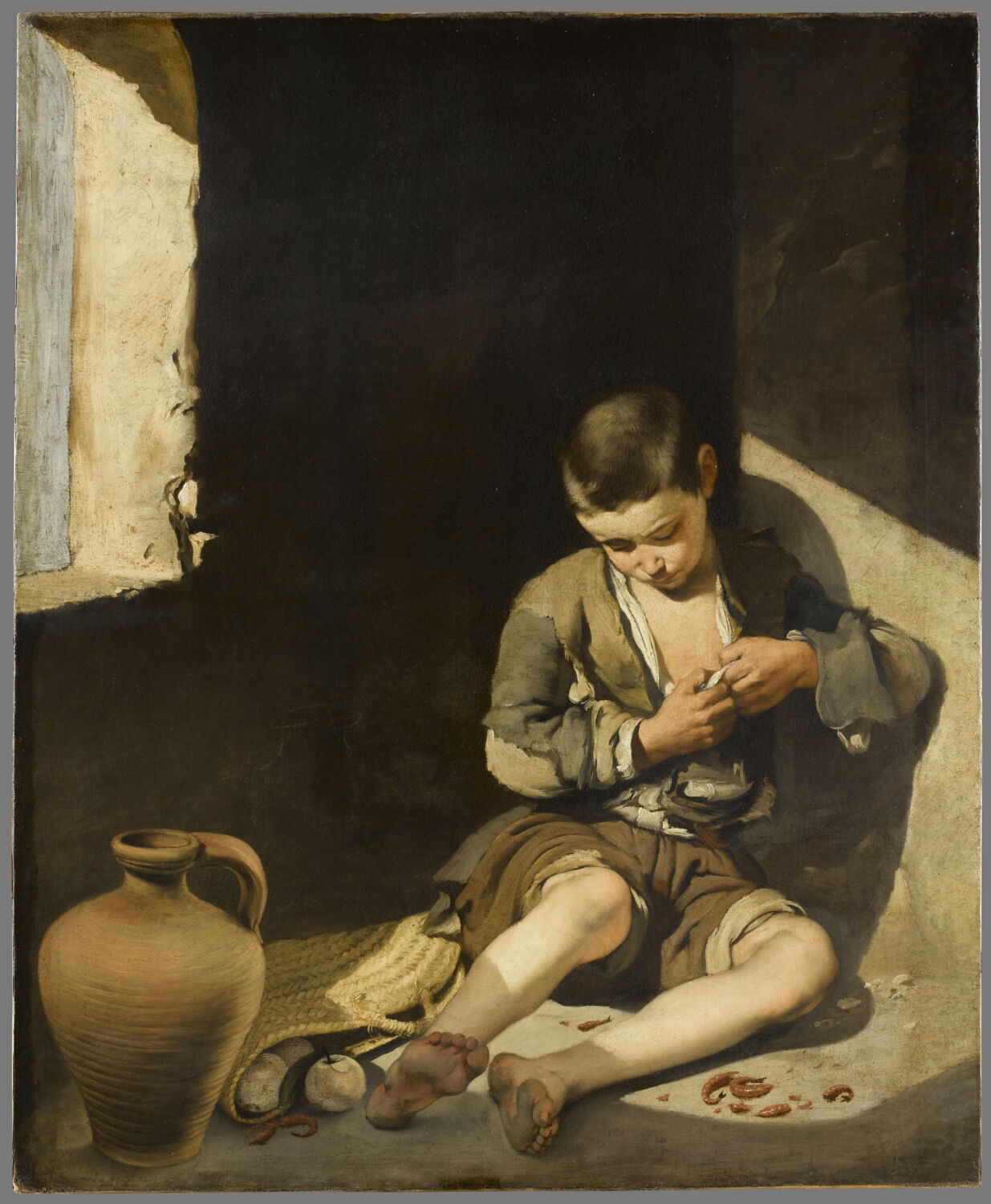 #73
#73The Young Beggar
The Young Beggar, by Bartolomé Esteban Murillo, is among the paintings in the Louvre to see to understand the density of the museum. Its interest comes from the way in which the subject, technique and collection history meet in an immediately recognizable image. The Louvre notice associates the work with the Department of Paintings; the technique indicated is oil on canvas and the dating chosen is Date of creation/manufacturing: 2nd quarter of the 17th century (1647 - 1648). This entry broadens the classification to less media-oriented but essential masterpieces for reading the richness of the collections. This entry refers directly to the Louvre notice in order to keep the image, title and institutional data in the same place.
Image and link: Louvre Museum.
See the Louvre instructions →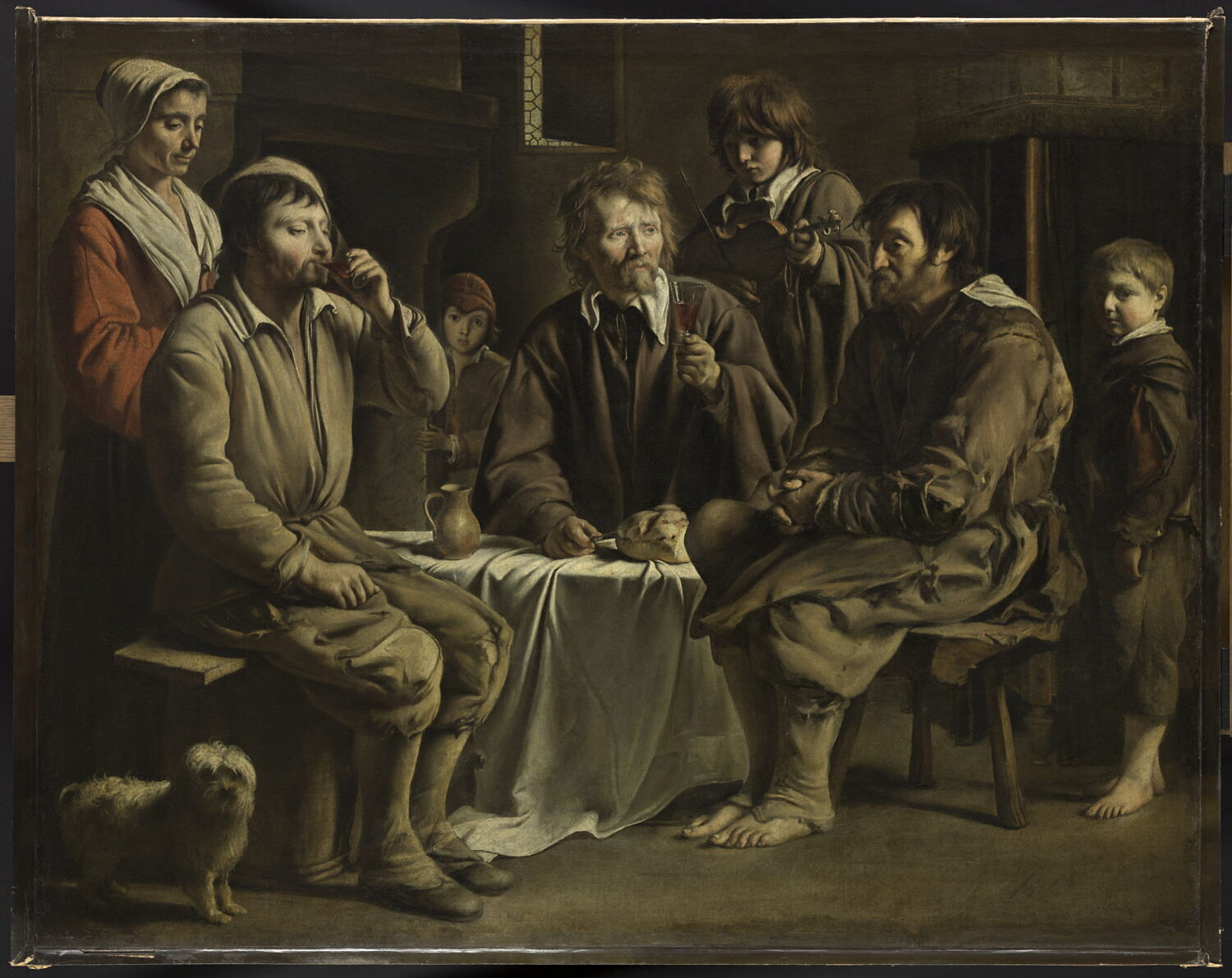 #74
#74Peasant meals
Peasants' Meals, by Louis Le Nain, is among the paintings in the Louvre to see to understand the density of the museum. The strength of the work comes from an apparently close scene, where light, objects and eyes build a silent presence. The Louvre notice associates the work with the Department of Paintings; the technique indicated is oil on canvas and the dating chosen is Date of creation/manufacturing: 2nd quarter of the 17th century (1642). This entry broadens the classification to less media-oriented but essential masterpieces for reading the richness of the collections. This entry refers directly to the Louvre notice in order to keep the image, title and institutional data in the same place.
Image and link: Louvre Museum.
See the Louvre instructions →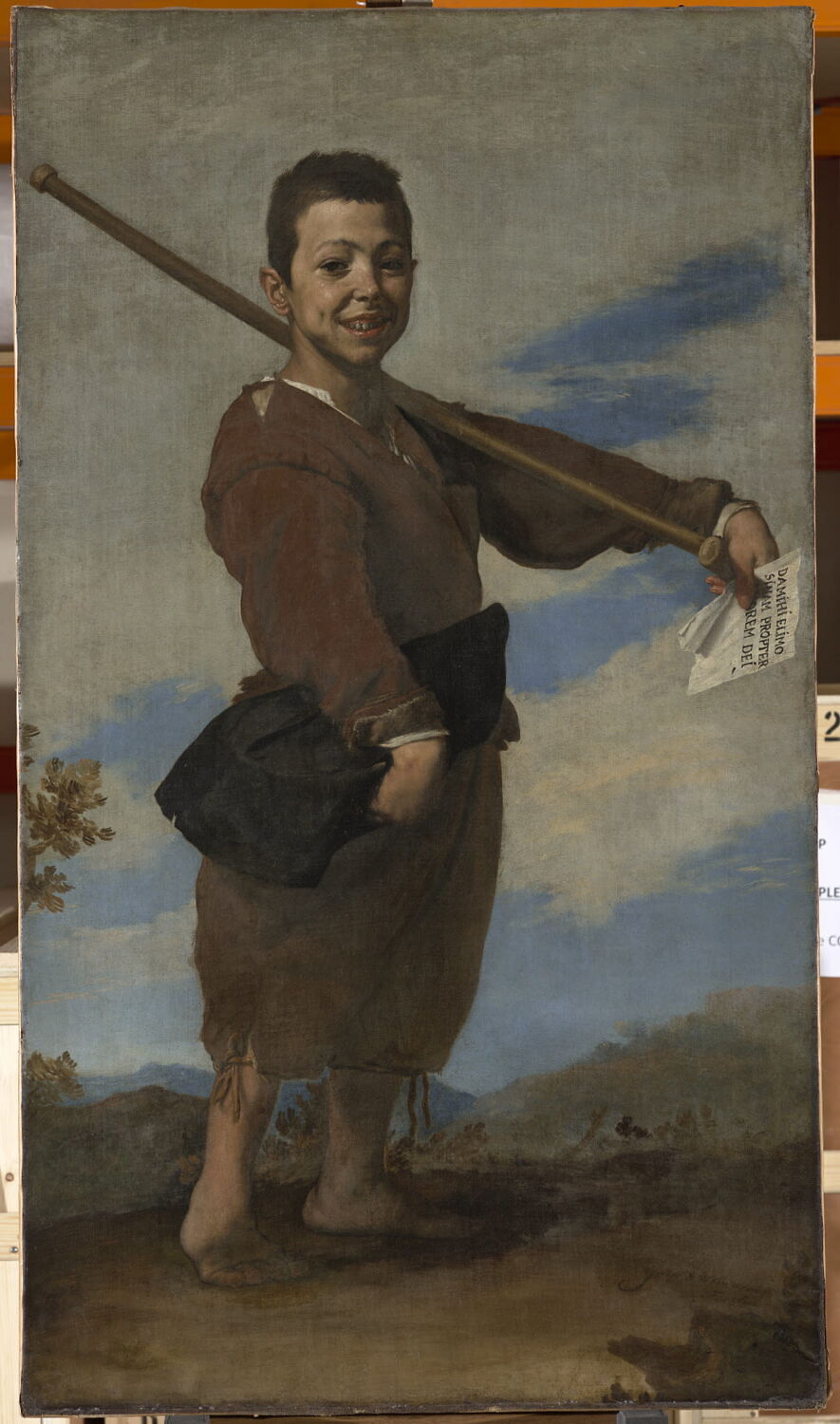 #75
#75The Foot-bot
The Pied-bot, by Jusepe de Ribera, is among the paintings in the Louvre to see to understand the density of the museum. Its interest comes from the way in which the subject, technique and history of collection meet in an immediately recognizable image. The Louvre notice associates the work with the Department of Paintings; the technique indicated is oil on canvas and the dating chosen is Date of creation/manufacturing: 2nd quarter of the 17th century (1642). This entry broadens the classification to less media-oriented but essential masterpieces for reading the richness of the collections. This entry refers directly to the Louvre notice in order to keep the image, title and institutional data in the same place.
Image and link: Louvre Museum.
See the Louvre instructions → #76
#76Chancellor Séguier
Chancellor Séguier, by Charles Le Brun, is among the paintings in the Louvre to see to understand the density of the museum. Its interest comes from the way in which the subject, technique and collection history meet in an immediately recognizable image. The Louvre notice associates the work with the Department of Paintings; the technique indicated is oil on canvas and the dating chosen is Date of creation/manufacturing: 2nd quarter of the 17th century (1660 - 1661). It completes the journey with a work to be seen for its subject, its rarity, its artist or its place in the history of the museum. The map here uses the existing Alpha Reproduction image and link, without creating a duplicate product.
Image and link: Alpha Reproduction.
See this reproduction →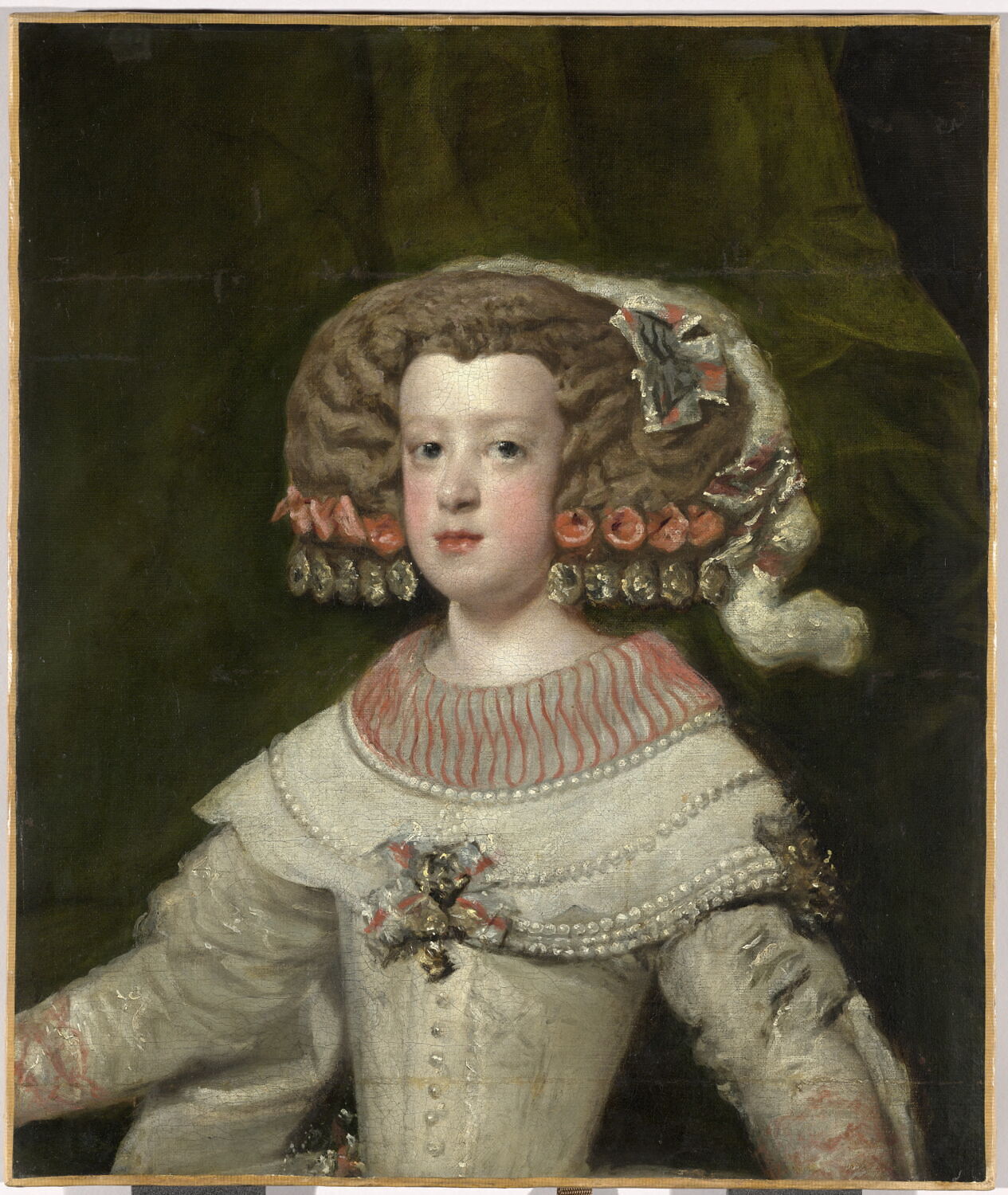 #77
#77Infanta Maria Theresa
The Infanta Maria Theresa, by Diego Velázquez, is among the paintings in the Louvre to see to understand the density of the museum. Its interest comes from the way in which the subject, technique and collection history meet in an immediately recognizable image. The Louvre notice associates the work with the Department of Paintings; the technique indicated is oil on canvas and the dating chosen is Date of creation/manufacture: 2nd quarter of the 17th century (1653 - 1654). It completes the journey with a work to be seen for its subject, its rarity, its artist or its place in the history of the museum. This entry refers directly to the Louvre notice in order to keep the image, title and institutional data in the same place.
Image and link: Louvre Museum.
See the Louvre instructions →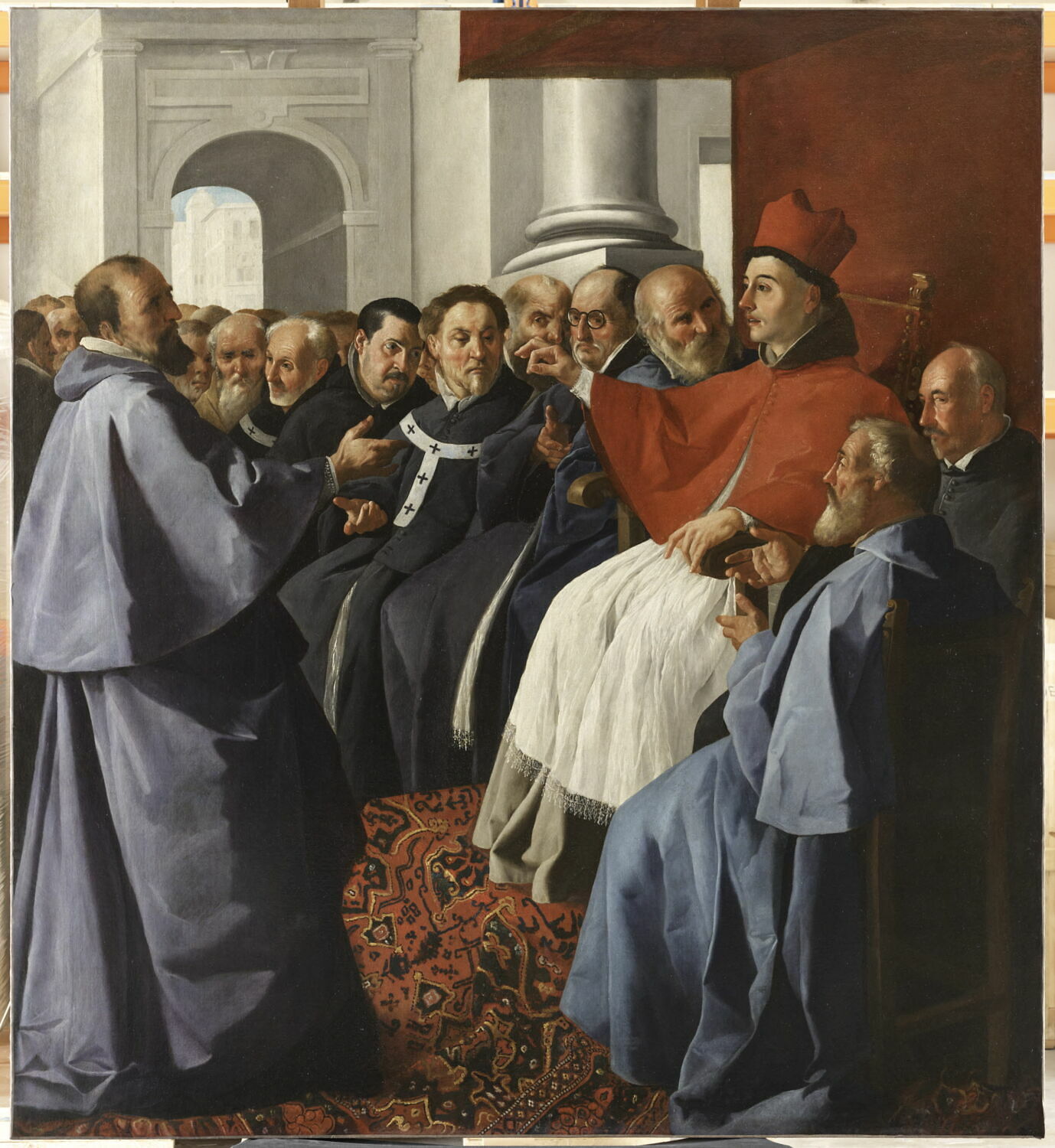 #78
#78Saint Bonaventure at the Council of Lyon
Saint Bonaventure at the Council of Lyon, by Francisco de Zurbaran, is among the paintings in the Louvre to see to understand the density of the museum. Its interest comes from the way in which the subject, technique and collection history meet in an immediately recognizable image. The Louvre notice associates the work with the Department of Paintings; the technique indicated is oil on canvas and the dating chosen is Date of creation/manufacturing: 2nd quarter of the 17th century (around 1629). It completes the route with a work to be seen for its subject, its rarity, its artist or its place in the history of the museum. This entry refers directly to the Louvre notice in order to keep the image, title and institutional data in the same place.
Image and link: Louvre Museum.
See the Louvre instructions →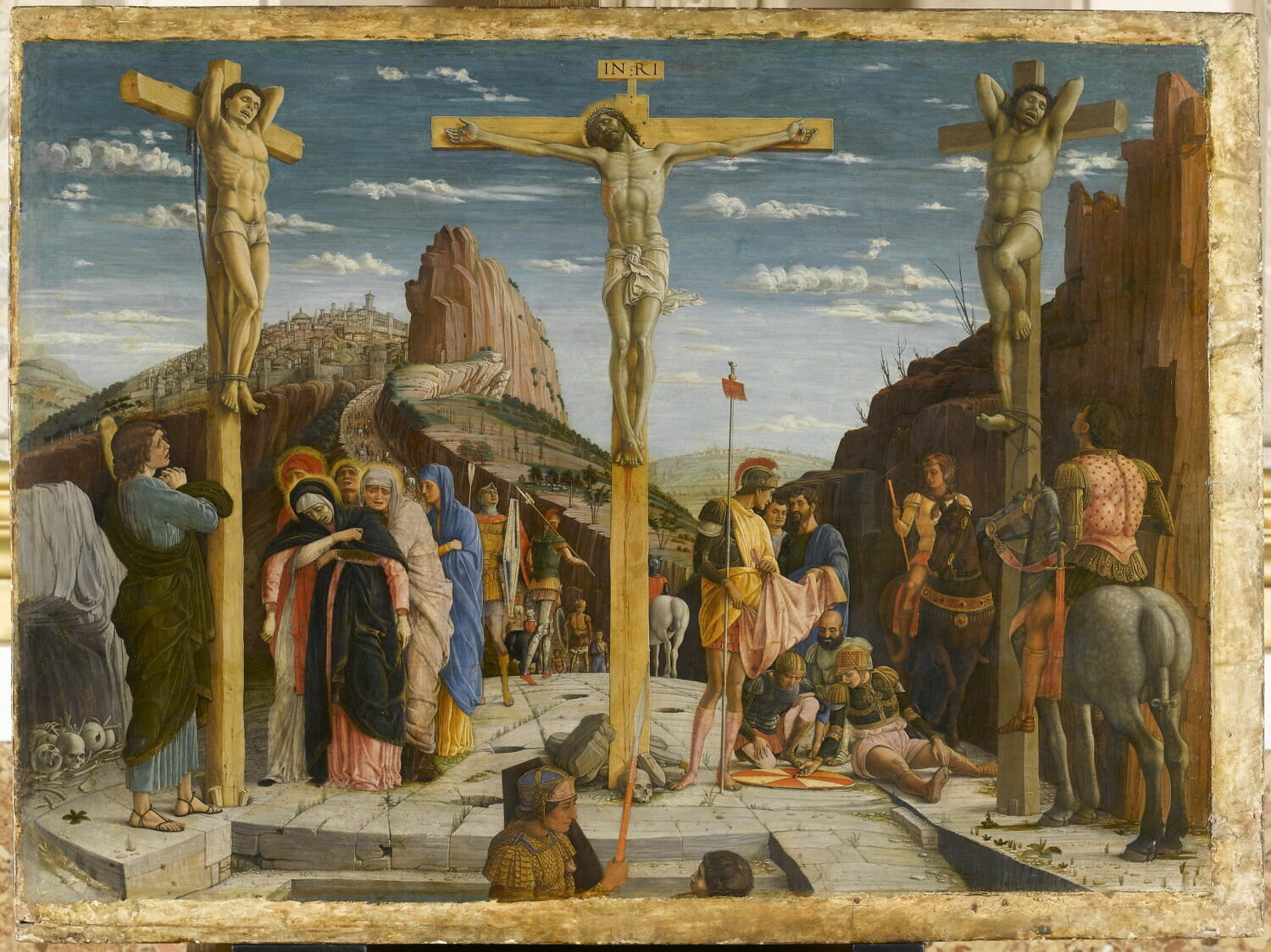 #79
#79The Crucifixion
The Crucifixion, by Andrea Mantegna, is among the paintings in the Louvre to see to understand the density of the museum. The composition focuses attention on the balance of the figures, the softness of the transitions and the precision of the pictorial gesture. The Louvre notice associates the work with the Department of Paintings; the technique indicated is tempera on wood (poplar) and the dating chosen is Date of creation/manufacturing: 3rd quarter of the 15th century (after 1456 - 1459). It completes the route with a work to be seen for its subject, its rarity, its artist or its place in the history of the museum. This entry refers directly to the Louvre notice in order to keep the image, the title and the institutional data in the same place.
Image and link: Louvre Museum.
See the Louvre instructions →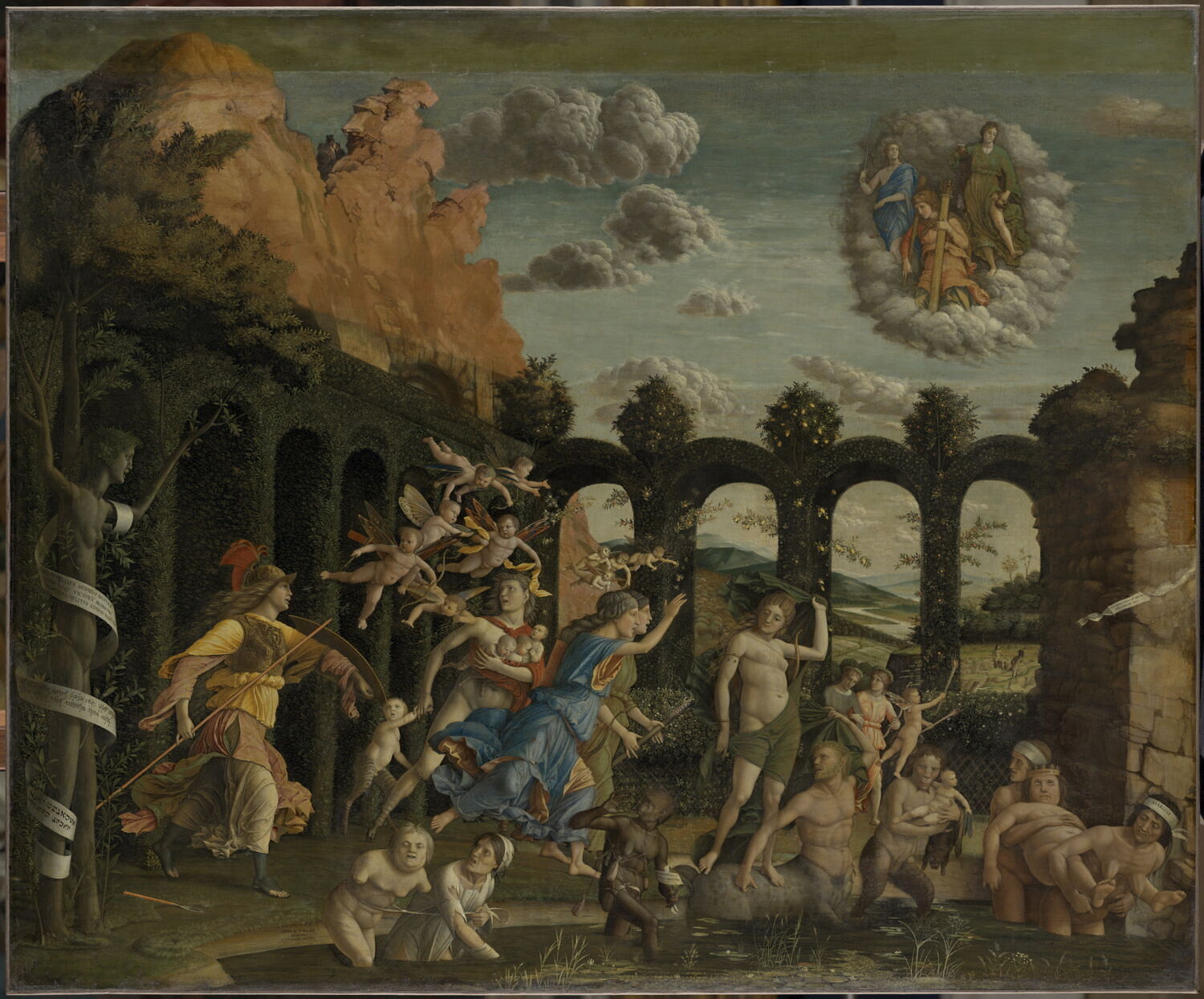 #80
#80Minerva chasing Vices from the garden of Virtue
Minerva chasing Vices from the Garden of Virtue, by Andrea Mantegna, is among the paintings in the Louvre to see to understand the density of the museum. The composition focuses attention on the balance of the figures, the softness of the transitions and the precision of the pictorial gesture. The Louvre notice associates the work with the Department of Paintings; the technique indicated is tempera on canvas and the dating chosen is Date of creation/manufacturing: 4th quarter of the 15th century (1475 - 1500). It completes the route with a work to be seen for its subject, its rarity, its artist or its place in the history of the museum. This entry refers directly to the Louvre notice in order to keep the image, title and institutional data in the same place.
Image and link: Louvre Museum.
See the Louvre instructions → #81
#81The Ship of Fools
The Ship of Fools, by Hieronymus Bosch, is among the paintings in the Louvre to see to understand the density of the museum. It recalls the importance of the Northern schools in the Louvre collections, between portrait, material, detail and narrative invention. The Louvre notice associates the work with the Department of Paintings; the technique indicated is oil on wood (oak) and the dating chosen is Date of creation/manufacturing: 4th quarter of the 15th century (1475 - 1500). It completes the route with a work to be seen for its subject, its rarity, its artist or its place in the history of the museum. The map here uses the existing Alpha Reproduction image and link, without creating a duplicate product.
Image and link: Alpha Reproduction.
See this reproduction →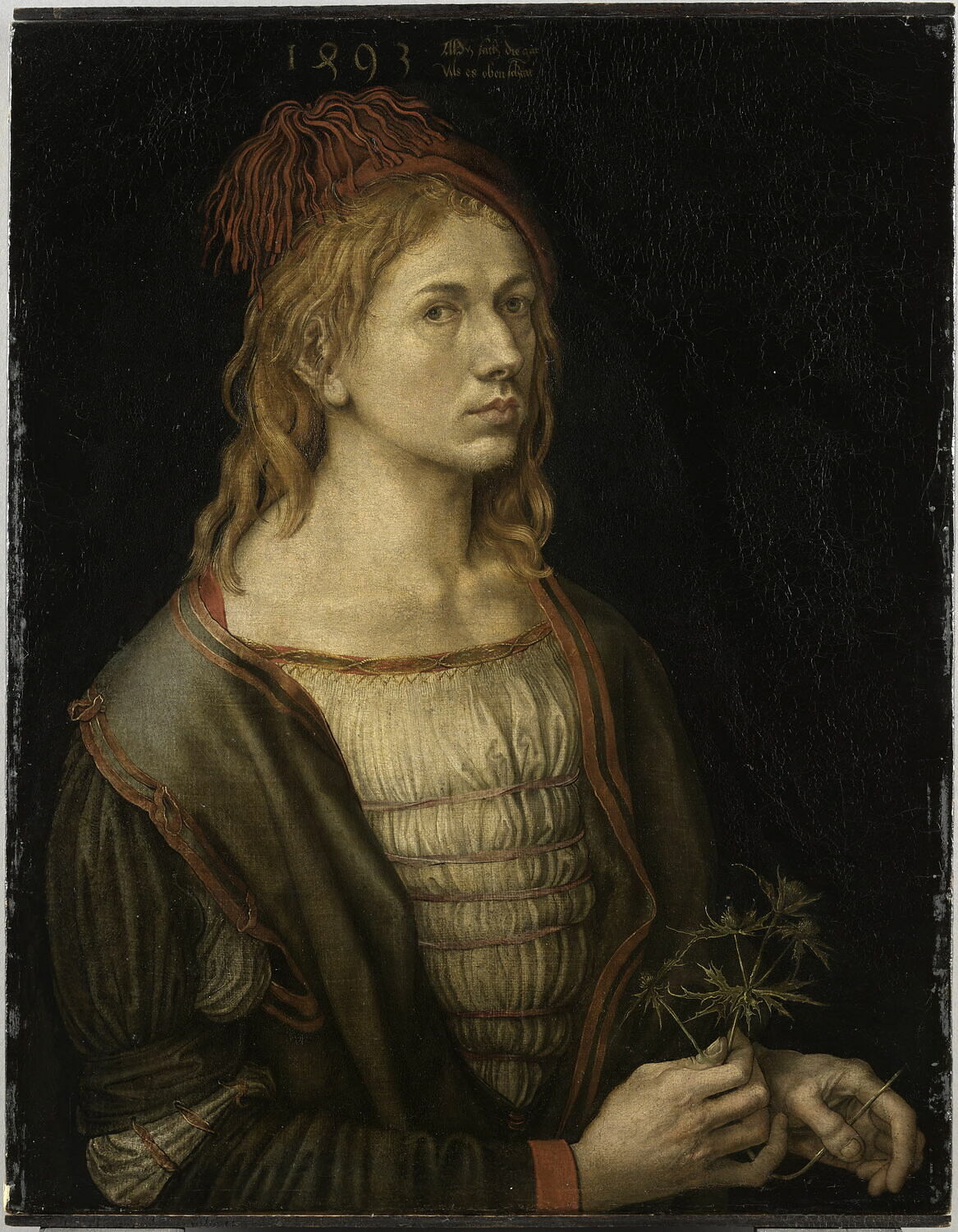 #82
#82Thistle self-portrait
Self-portrait with thistle, by Albrecht Dürer, is among the paintings in the Louvre to see to understand the density of the museum. It recalls the importance of the Northern schools in the Louvre collections, between portrait, material, detail and narrative invention. The Louvre notice associates the work with the Department of Paintings; the technique indicated is parchment glued to canvas and the dating chosen is Date of creation/manufacturing: 4th quarter of the 15th century (1493). It completes the route with a work to be seen for its subject, its rarity, its artist or its place in the history of the museum. This entry refers directly to the Louvre notice in order to keep the image, title and institutional data in the same place.
Image and link: Louvre Museum.
See the Louvre instructions →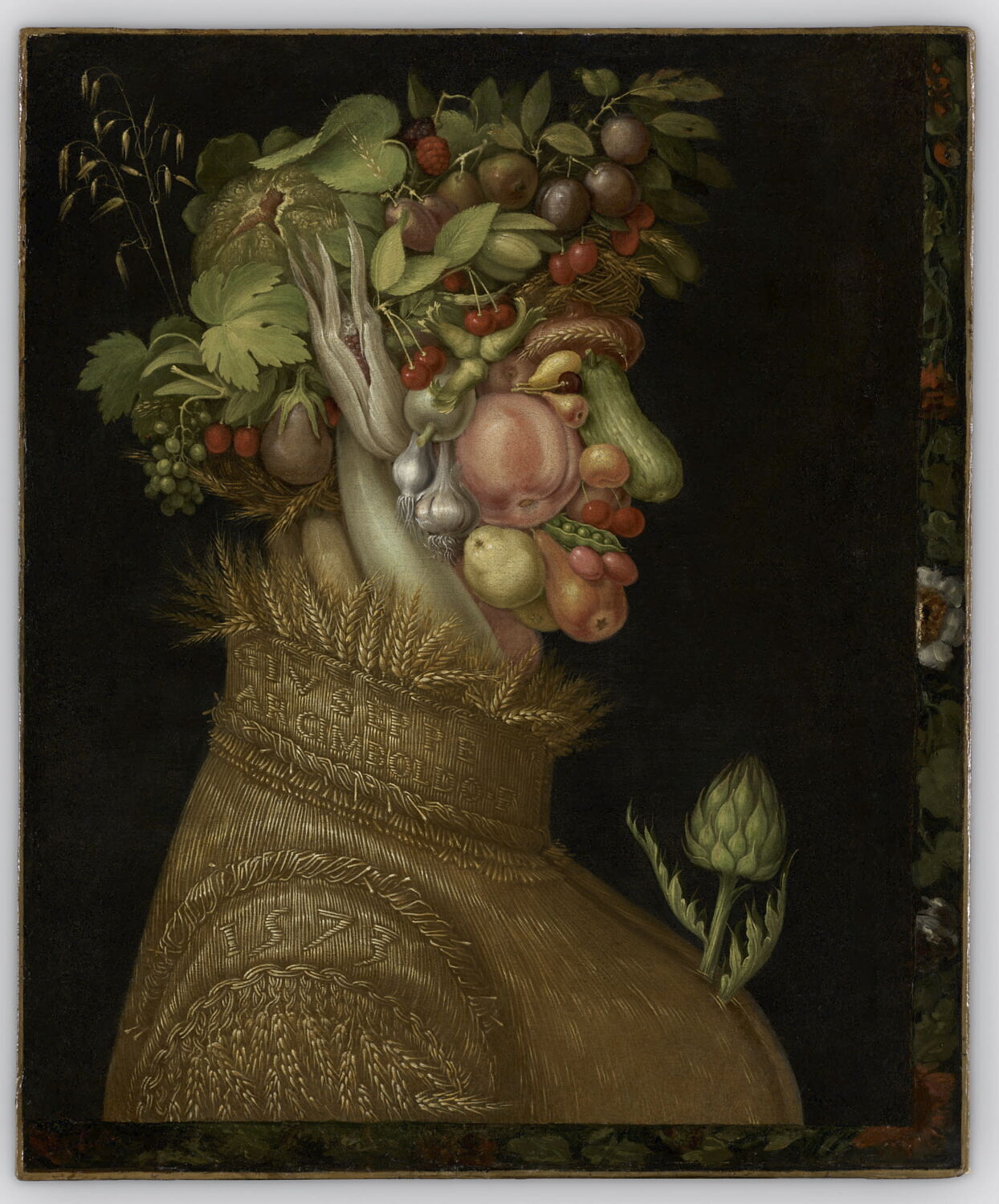 #83
#83Summer
Summer, by Giuseppe Arcimboldo, is among the paintings in the Louvre to see to understand the density of the museum. Its interest comes from the way in which the subject, technique and collection history meet in an immediately recognizable image. The Louvre notice associates the work with the Department of Paintings; the technique indicated is oil on canvas and the dating chosen is Date of creation/manufacturing: 3rd quarter of the 16th century (1573). It completes the route with a work to be seen for its subject, its rarity, its artist or its place in the history of the museum. This entry refers directly to the Louvre notice in order to keep the image, title and institutional data in the same place.
Image and link: Louvre Museum.
See the Louvre instructions →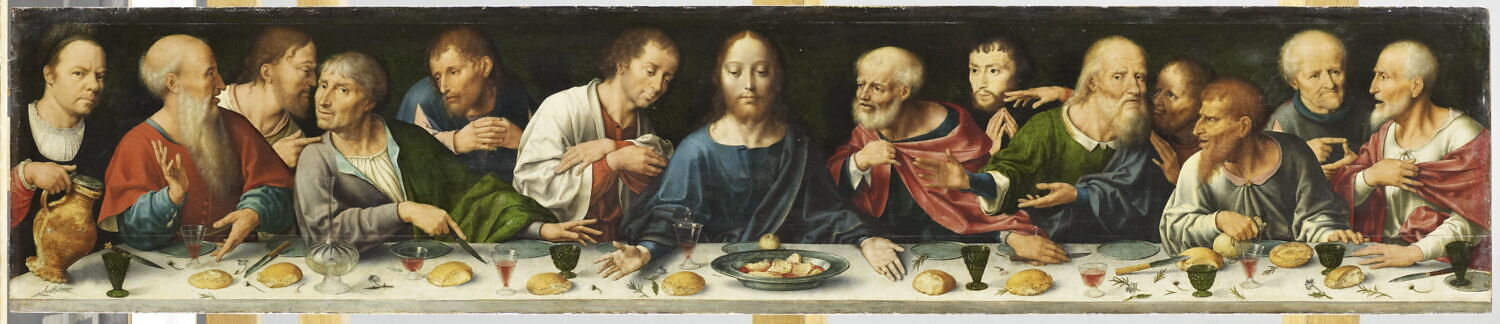 #84
#84Altarpiece of the Lamentation of Christ: The Last Supper
Altarpiece of the Lament of Christ: The Last Supper, by Joos van Cleve, is among the paintings in the Louvre to see to understand the density of the museum. Its interest comes from the way in which the subject, technique and collection history meet in an immediately recognizable image. The Louvre notice associates the work with the Department of Paintings; the technique indicated is oil on wood and the dating chosen is Date of creation/manufacturing: 1st quarter of the 16th century (1520 - 1525). It completes the route with a work to be seen for its subject, its rarity, its artist or its place in the history of the museum. This entry refers directly to the Louvre notice in order to keep the image, title and institutional data in the same place.
Image and link: Louvre Museum.
See the Louvre instructions →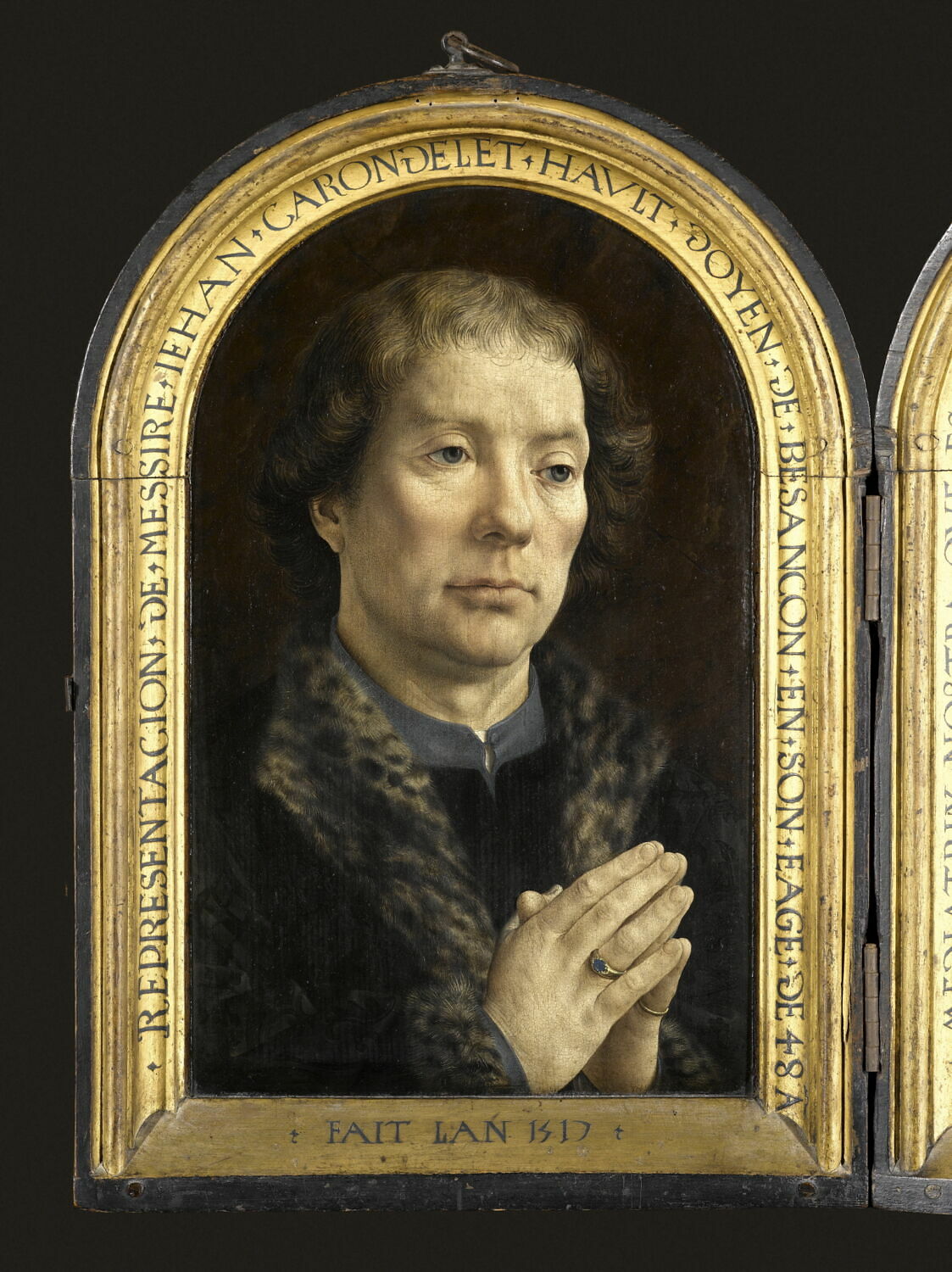 #85
#85The Diptych by Jean Carondelet
The Diptych by Jean Carondelet, by Jan Gossaert, is among the paintings in the Louvre to see to understand the density of the museum. Its interest comes from the way in which the subject, technique and collection history meet in an immediately recognizable image. The Louvre notice associates the work with the Department of Paintings; the technique indicated is oil on wood and the dating chosen is Date of creation/manufacturing: Early 16th century (1517). It completes the route with a work to be seen for its subject, its rarity, its artist or its place in the history of the museum. This entry refers directly to the Louvre notice in order to keep the image, title and institutional data in the same place.
Image and link: Louvre Museum.
See the Louvre instructions →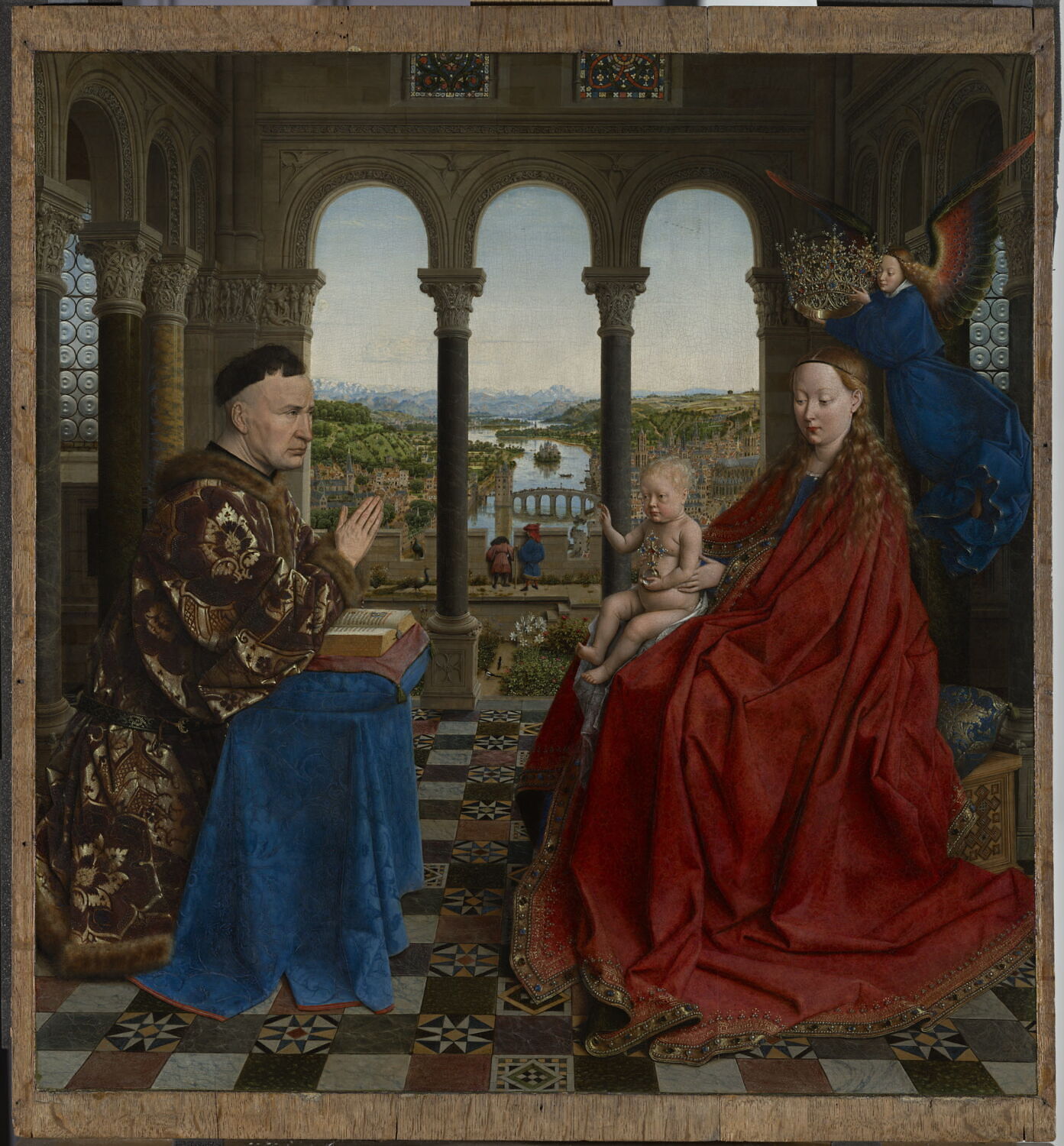 #86
#86The Virgin of Chancellor Rolin
The Virgin of Chancellor Rolin, by Jan van Eyck, is among the paintings in the Louvre to see to understand the density of the museum. The composition focuses attention on the balance of the figures, the softness of the transitions and the precision of the pictorial gesture. The Louvre notice associates the work with the Department of Paintings; the technique indicated is oil on wood (oak) and the dating chosen is Date of creation/manufacturing: 2nd quarter of the 15th century (around 1430 - 1435). It completes the route with a work to be seen for its subject, its rarity, its artist or its place in the history of the museum. This entry refers directly to the Louvre notice in order to keep the image, title and institutional data in the same place.
Image and link: Louvre Museum.
See the Louvre instructions → #87
#87The Visitation with Marie-Jacobie and Marie-Salomé
The Visitation with Marie-Jacobie and Marie-Salomé, by Domenico Ghirlandaio, is among the paintings in the Louvre to see to understand the density of the museum. The composition focuses attention on the balance of the figures, the softness of the transitions and the precision of the pictorial gesture. The Louvre notice associates the work with the Department of Paintings; the technique indicated is tempera on wood (poplar) and the dating chosen is Date of creation/manufacturing: 4th quarter of the 15th century (1491). It completes the route with a work to be seen for its subject, its rarity, its artist or its place in the history of the museum. The map here uses the existing Alpha Reproduction image and link, without creating a duplicate product.
Image and link: Alpha Reproduction.
See this reproduction → #88
#88The Annunciation
The Annunciation, by Rogier van der Weyden, is among the paintings in the Louvre to see to understand the density of the museum. Its interest comes from the way in which the subject, technique and collection history meet in an immediately recognizable image. The Louvre notice associates the work with the Department of Paintings; the technique indicated is oil on wood and the dating chosen is Date of creation/manufacturing: 15th century (1400 - 1500). It completes the route with a work to be seen for its subject, its rarity, its artist or its place in the history of the museum. The map here uses the existing Alpha Reproduction image and link, without creating a product duplicate.
Image and link: Alpha Reproduction.
See this reproduction → #89
#89Portrait of an old man and a young boy
Portrait of an old man and a young boy, by Domenico Ghirlandaio, is among the paintings in the Louvre to see to understand the density of the museum. The composition focuses attention on the balance of the figures, the softness of the transitions and the precision of the pictorial gesture. The Louvre notice associates the work with the Department of Paintings; the technique indicated is wood (poplar) and the dating chosen is Date of creation/manufacturing: 4th quarter of the 15th century (1490). It completes the route with a work to be seen for its subject, its rarity, its artist or its place in the history of the museum. This entry refers directly to the Louvre notice in order to keep the image, the title and the institutional data in the same place.
Image and link: Louvre Museum.
See the Louvre instructions → #90
#90Portrait of Cardinal Richelieu
Portrait of Cardinal Richelieu, by Philippe de Champaigne, is among the paintings in the Louvre to see to understand the density of the museum. Its interest comes from the way in which the subject, technique and collection history meet in an immediately recognizable image. The Louvre notice associates the work with the Department of Paintings; the technique indicated is oil on canvas and the dating chosen is Date of creation/manufacturing: 2nd quarter of the 17th century (around 1635 - 1640). It completes the route with a work to be seen for its subject, its rarity, its artist or its place in the history of the museum. The map here uses the existing Alpha Reproduction image and link, without creating a duplicate product.
Image and link: Alpha Reproduction.
See this reproduction → #91
#91Ex-voto from 1662
Ex-voto from 1662, by Philippe de Champaigne, is among the paintings in the Louvre to see to understand the density of the museum. Its interest comes from the way in which the subject, technique and collection history meet in an immediately recognizable image. The Louvre notice associates the work with the Department of Paintings; the technique indicated is oil on canvas and the dating chosen is Date of creation/manufacturing: 17th century (1662). It completes the journey with a work to be seen for its subject, its rarity, its artist or its place in the history of the museum. The map here uses the existing Alpha Reproduction image and link, without creating a product duplicate.
Image and link: Alpha Reproduction.
See this reproduction →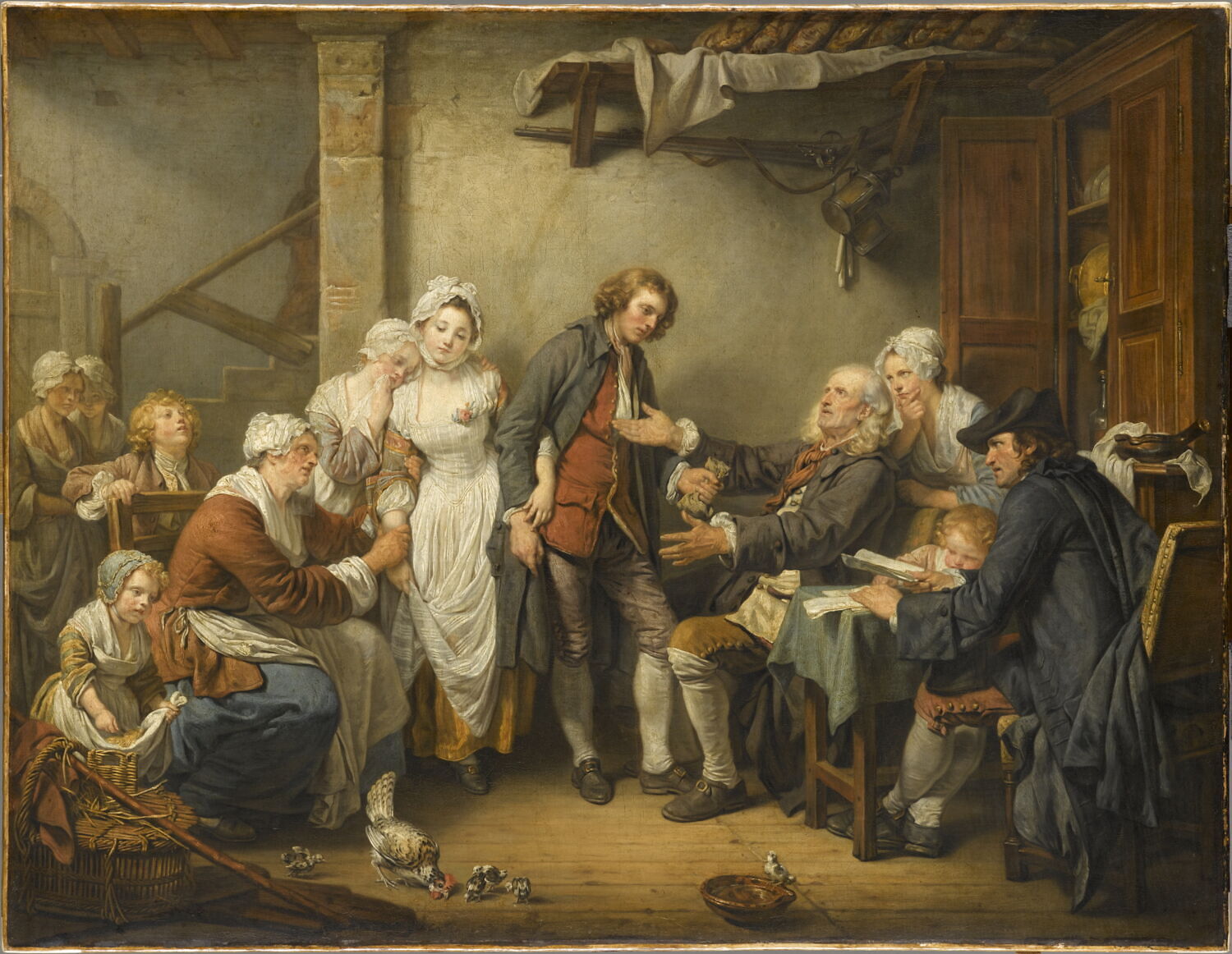 #92
#92The Village Accordee
The Village Accordée, by Jean-Baptiste Greuze, is among the paintings in the Louvre to see to understand the density of the museum. The strength of the work comes from an apparently close scene, where light, objects and eyes build a silent presence. The Louvre notice associates the work with the Department of Paintings; the technique indicated is oil on canvas and the dating chosen is Date of creation/manufacturing: 3rd quarter of the 18th century (1761). It completes the route with a work to be seen for its subject, its rarity, its artist or its place in the history of the museum. This entry refers directly to the Louvre notice in order to keep the image, title and institutional data in the same place.
Image and link: Louvre Museum.
See the Louvre instructions →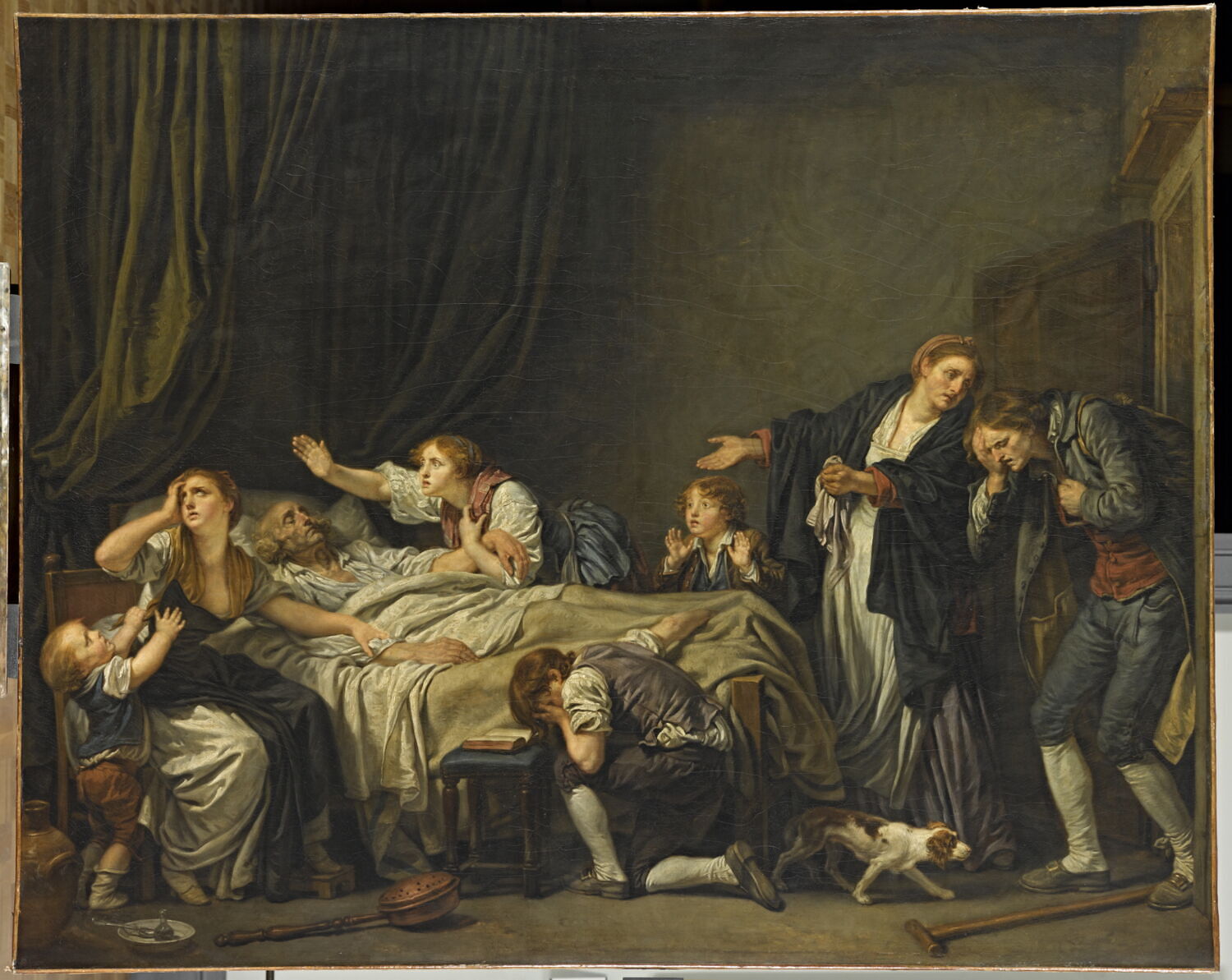 #93
#93The Son punished
The Punished Son, by Jean-Baptiste Greuze, is among the paintings in the Louvre to see to understand the density of the museum. The strength of the work comes from an apparently close scene, where light, objects and eyes construct a silent presence. The Louvre notice associates the work with the Department of Paintings; the technique indicated is oil on canvas and the dating chosen is Date of creation/manufacturing: 3rd third of the 18th century (1778). It completes the route with a work to be seen for its subject, its rarity, its artist or its place in the history of the museum. This entry refers directly to the Louvre notice in order to keep the image, title and institutional data in the same place.
Image and link: Louvre Museum.
See the Louvre instructions → #94
#94The ungrateful Son
The Ungrateful Son, by Jean-Baptiste Greuze, is among the paintings in the Louvre to see to understand the density of the museum. The strength of the work comes from an apparently close scene, where light, objects and eyes construct a silent presence. The Louvre notice associates the work with the Department of Paintings; the technique indicated is oil on canvas and the dating chosen is Date of creation/manufacturing: 3rd third of the 18th century (1777). It completes the route with a work to be seen for its subject, its rarity, its artist or its place in the history of the museum. This entry refers directly to the Louvre notice in order to keep the image, title and institutional data in the same place.
Image and link: Louvre Museum.
See the Louvre instructions →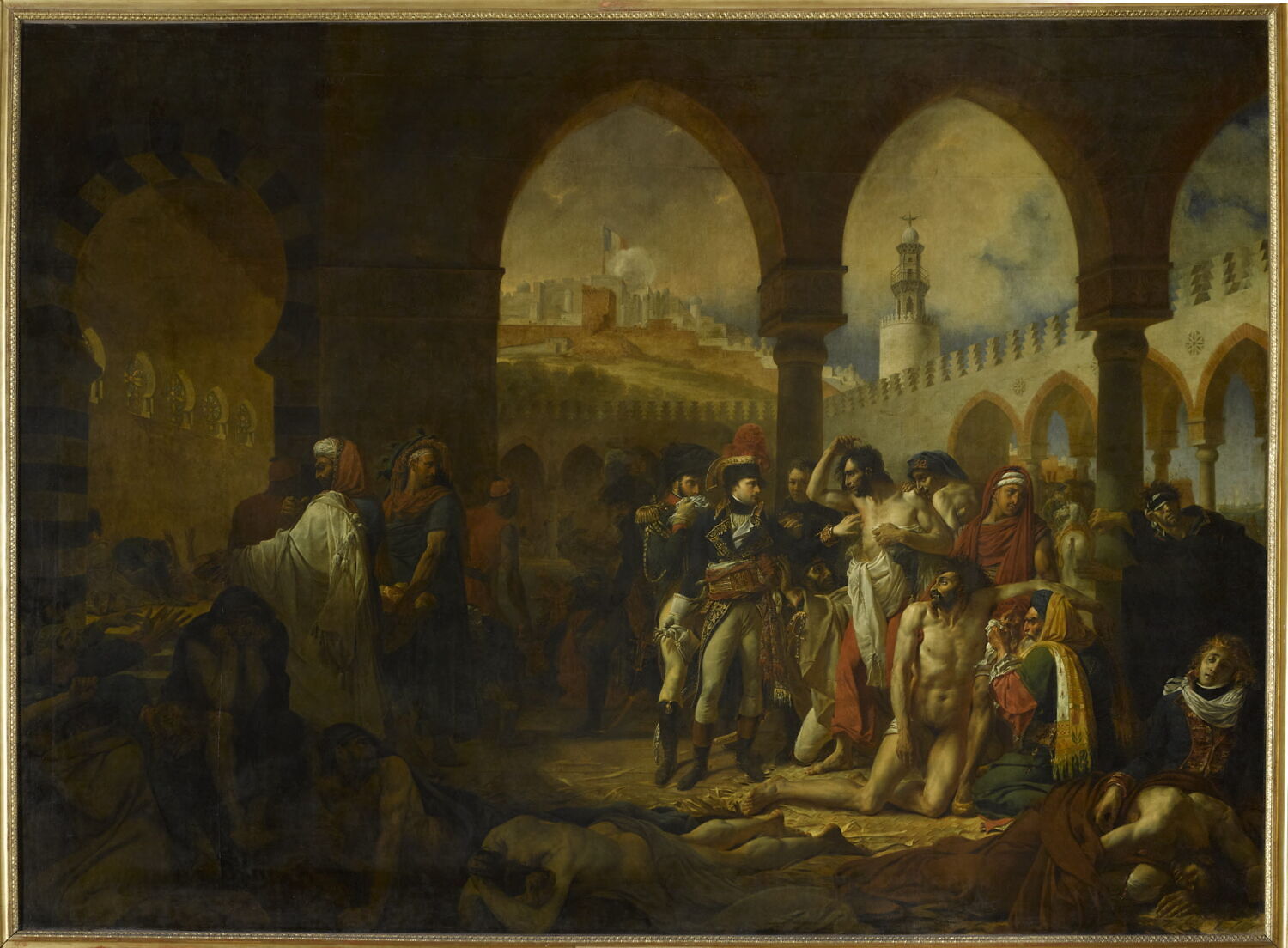 #95
#95Bonaparte visiting the plague victims of Jaffa
Bonaparte visiting the plague victims of Jaffa, by Antoine-Jean Gros, is among the paintings in the Louvre to see to understand the density of the museum. The painting shows how the Louvre preserves one of the great French laboratories of history painting and romanticism. The Louvre notice associates the work with the Department of Paintings; the technique indicated is oil on canvas and the dating chosen is Date of creation/manufacturing: 1st quarter of the 19th century (1804). It completes the route with a work to be seen for its subject, its rarity, its artist or its place in the history of the museum. This entry refers directly to the Louvre notice in order to keep the image, title and institutional data in the same place.
Image and link: Louvre Museum.
See the Louvre instructions →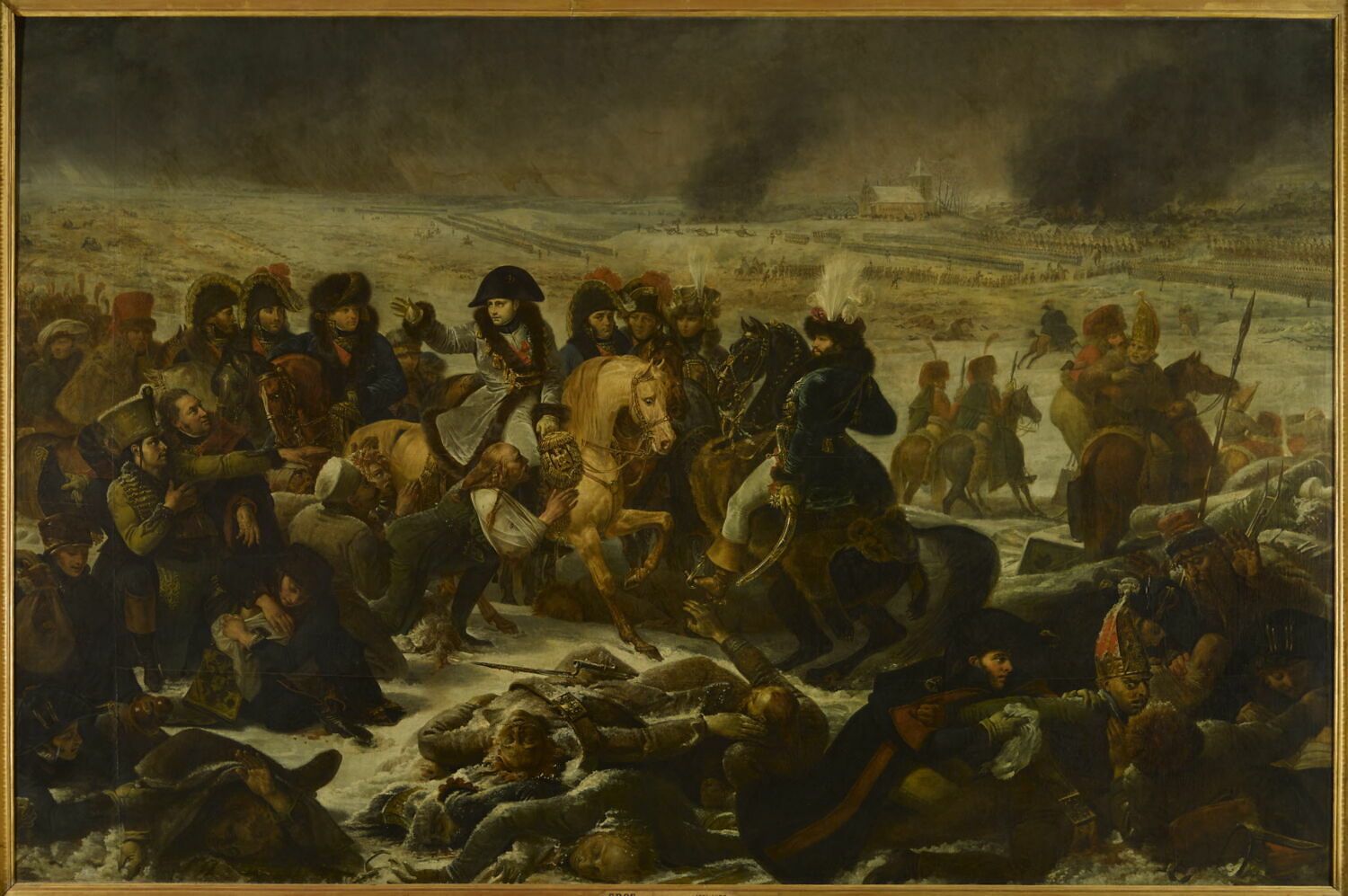 #96
#96Napoleon on the battlefield of Eylau
Napoleon on the battlefield of Eylau, by Antoine-Jean Gros, is among the paintings in the Louvre to see to understand the density of the museum. The painting shows how the Louvre preserves one of the great French laboratories of history painting and romanticism. The Louvre notice associates the work with the Department of Paintings; the technique indicated is oil on canvas and the dating chosen is Date of creation/manufacturing: 1st quarter of the 19th century (1808). It completes the route with a work to be seen for its subject, its rarity, its artist or its place in the history of the museum. This entry refers directly to the Louvre notice in order to keep the image, title and institutional data in the same place.
Image and link: Louvre Museum.
See the Louvre instructions →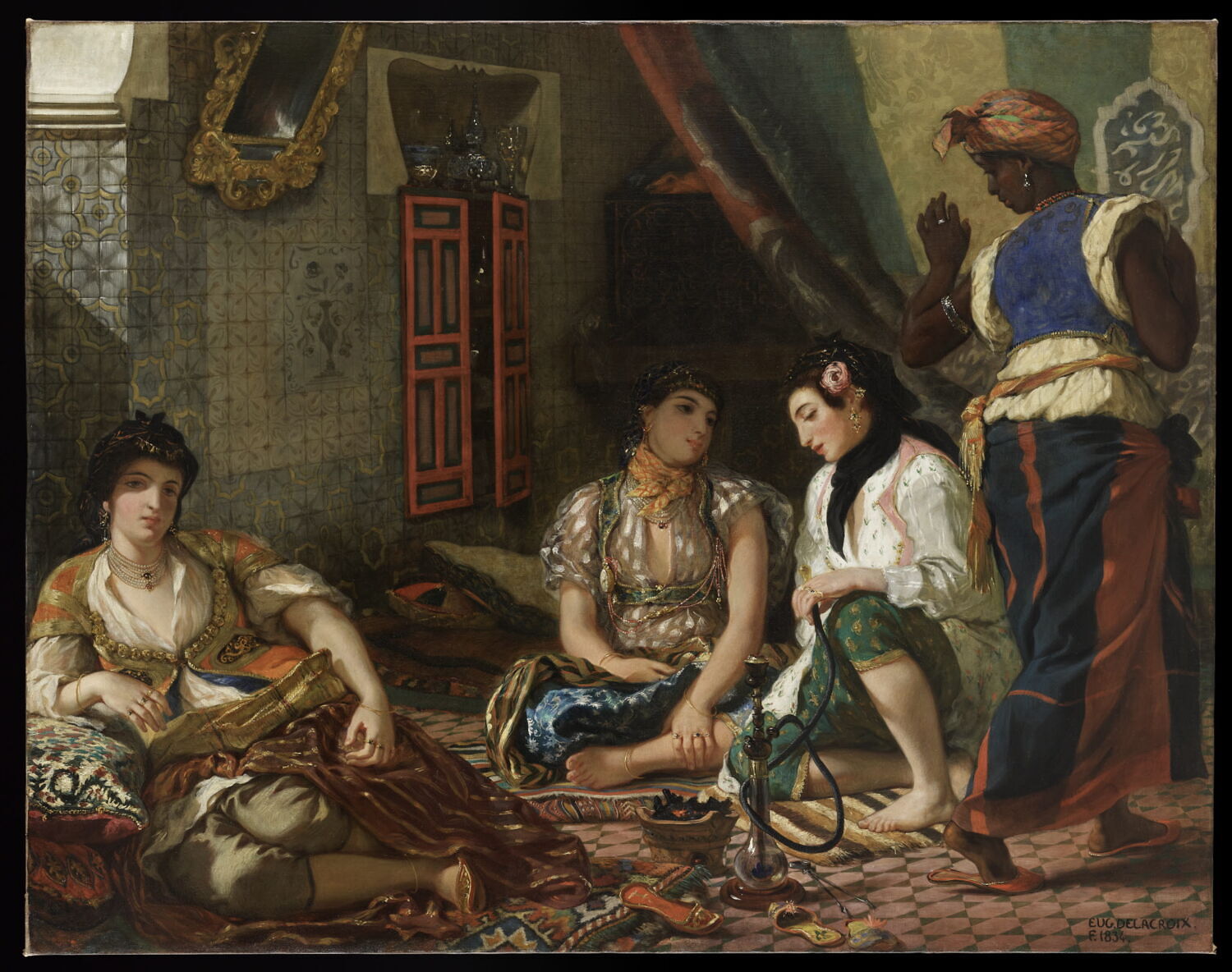 #97
#97Women of Algiers in their apartment
Women of Algiers in their apartment, by Eugène Delacroix, is among the paintings in the Louvre to see to understand the density of the museum. The painting shows how the Louvre preserves one of the great French laboratories of history painting and romanticism. The Louvre notice associates the work with the Department of Paintings; the technique indicated is oil on canvas and the dating chosen is Date of creation/manufacturing: 2nd quarter of the 19th century (1834). It completes the route with a work to be seen for its subject, its rarity, its artist or its place in the history of the museum. This entry refers directly to the Louvre notice in order to keep the image, title and institutional data in the same place.
Image and link: Louvre Museum.
See the Louvre instructions →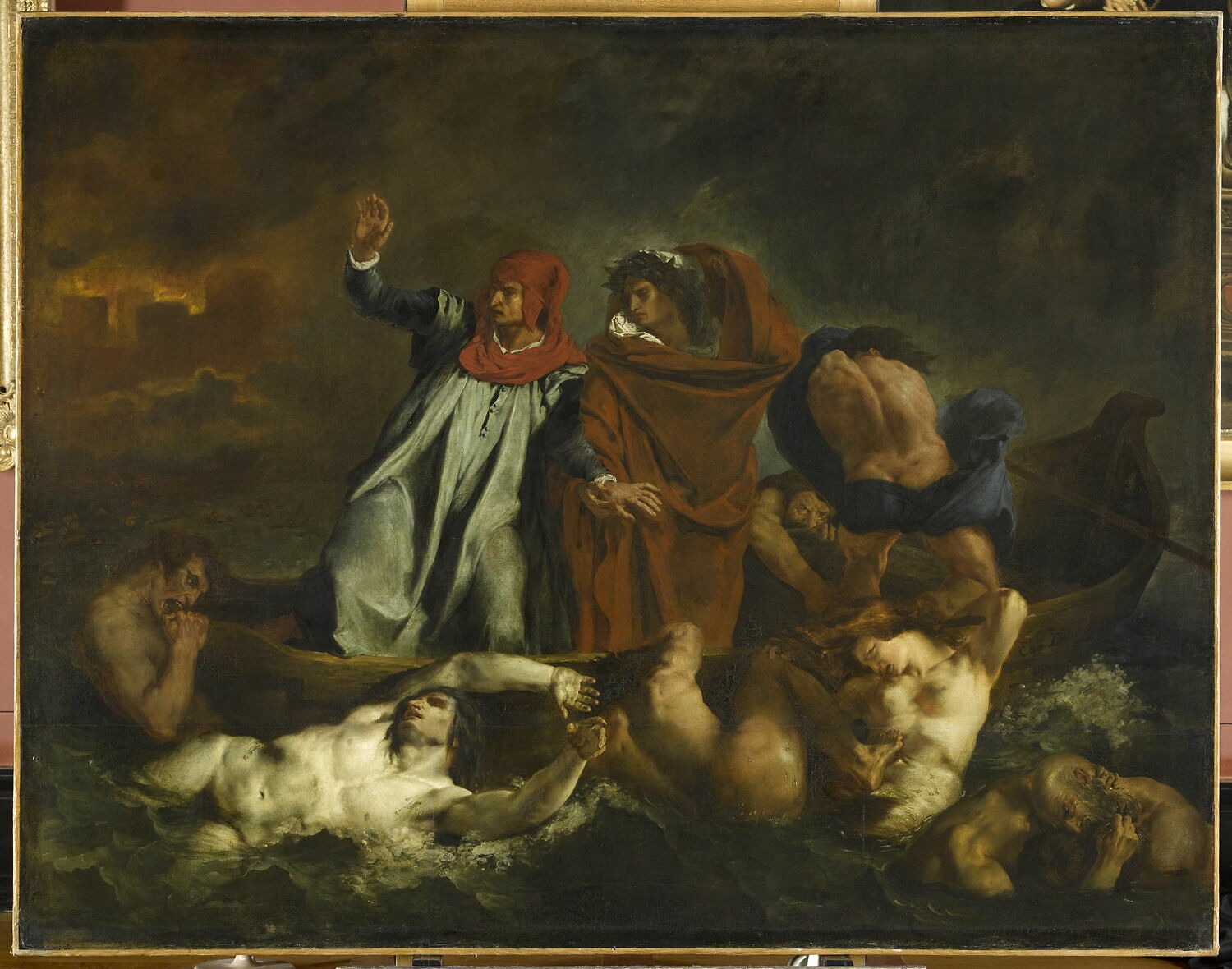 #98
#98Dante and Virgil in the underworld
Dante and Virgil in the Underworld, by Eugène Delacroix, is among the paintings in the Louvre to see to understand the density of the museum. The painting shows how the Louvre preserves one of the great French laboratories of history painting and romanticism. The Louvre notice associates the work with the Department of Paintings; the technique indicated is oil on canvas and the dating chosen is Date of creation/manufacturing: 1st quarter of the 19th century (1822). It completes the route with a work to be seen for its subject, its rarity, its artist or its place in the history of the museum. This entry refers directly to the Louvre notice in order to keep the image, title and institutional data in the same place.
Image and link: Louvre Museum.
See the Louvre instructions →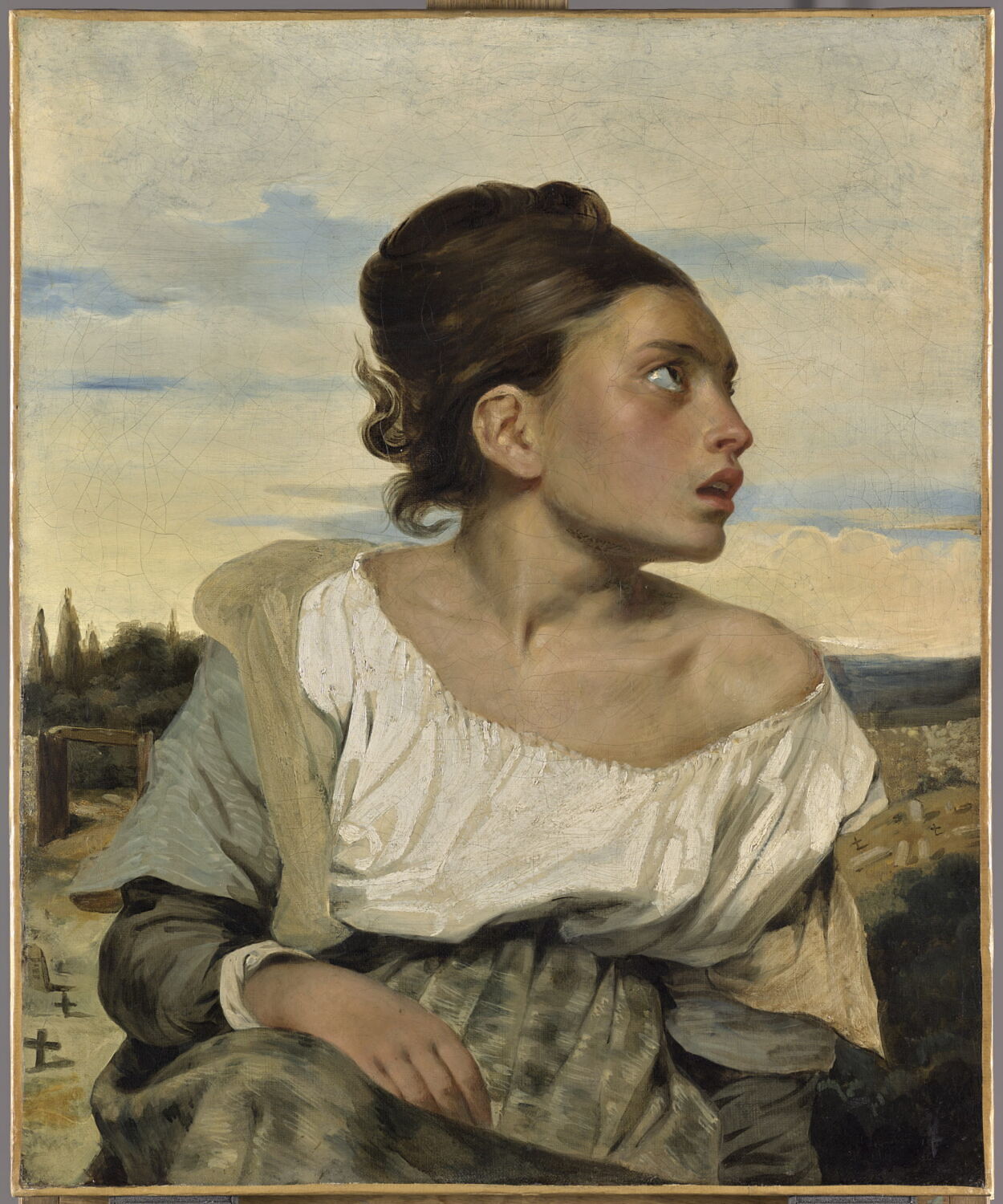 #99
#99Young orphan at the cemetery
Young orphan at the cemetery, by Eugène Delacroix, is among the paintings in the Louvre to see to understand the density of the museum. The painting shows how the Louvre preserves one of the great French laboratories of history painting and romanticism. The Louvre notice associates the work with the Department of Paintings; the technique indicated is oil on canvas and the dating chosen is Date of creation/manufacturing: 1st quarter of the 19th century (1824). It completes the route with a work to be seen for its subject, its rarity, its artist or its place in the history of the museum. This entry refers directly to the Louvre notice in order to keep the image, title and institutional data in the same place.
Image and link: Louvre Museum.
See the Louvre instructions →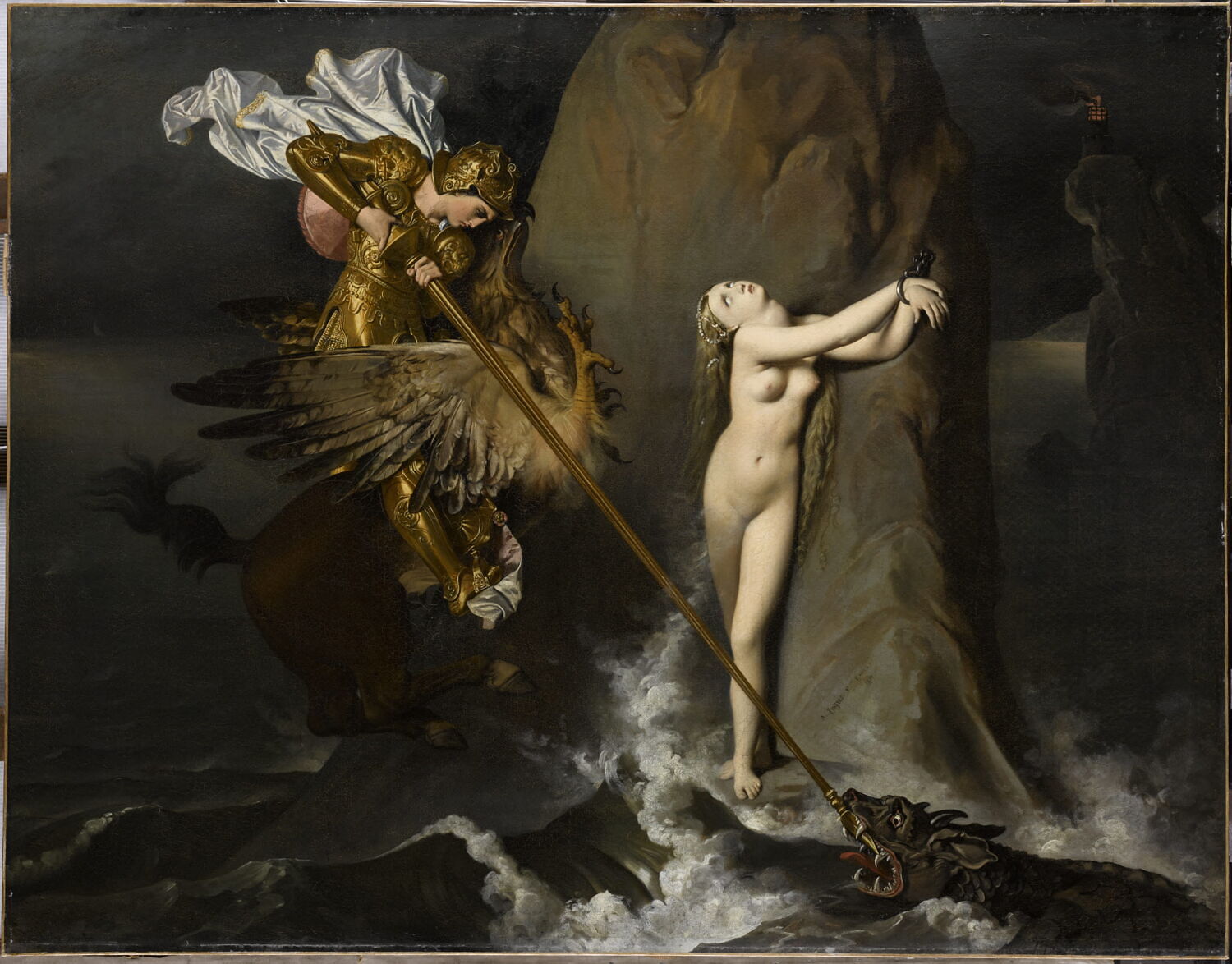 #100
#100Roger delivering Angélique
Roger Delivering Angélique, by Jean-Auguste-Dominique Ingres, is among the paintings in the Louvre to see to understand the density of the museum. The painting shows how the Louvre preserves one of the great French laboratories of history painting and romanticism. The Louvre notice associates the work with the Department of Paintings; the technique indicated is oil on canvas and the dating chosen is Date of creation/manufacturing: 1st quarter of the 19th century (1819). It completes the route with a work to be seen for its subject, its rarity, its artist or its place in the history of the museum. This entry refers directly to the Louvre notice in order to keep the image, title and institutional data in the same place.
Image and link: Louvre Museum.
See the Louvre instructions →Editorial method
Three selection criteria
The ranking is editorial: it combines fame, historical importance and real interest in a visit to the Louvre.
Celebrity
The works which constitute the great visual landmarks of the museum and the history of art.
Visiting
Paintings that are worth the detour in the rooms, through their hanging, their scale or their role in a school.
Accuracy
Images, titles, links and notices have been checked to avoid drawings, copies and works outside the department.
Sources
Louvre notices and Alpha sheets
The notices on the Louvre collections site serve as a reference for long titles, dates, techniques and institutional images.
Frequently asked questions
Read the Louvre ranking
Some guidelines for understanding links, titles and method.
How is this Louvre top 100 ranked?
The order combines fame, historical importance, visibility in the route, quality of the notice and balance between French, Italian, Spanish, Flemish, Dutch and German schools.
Does the classification only contain paintings?
Yes. Drawings, prints, sculptures, photographs and art objects have been excluded. The entries selected are the responsibility of the Louvre Paintings Department.
Why do some cards open Alpha Reproduction?
When an exact Alpha sheet already exists, the article uses its image and link. The other cards directly open the official notice of the Louvre.
Why is there no slideshow?
This version is deliberately static: the 100 works are presented in editorial maps in order to avoid any empty blocks or carousel loading.
Are all the works visible at the Louvre?
The majority are in the rooms of the Louvre; certain notices may indicate a loan, a deposit, a restoration or a temporary non-exhibition. The Louvre sheet remains the reference to check before visiting.
Are the titles in French?
Yes. The titles have been harmonized in French, with the usual formulations when these differ slightly from the long title of the Louvre notice.
0 comments