

16th - 20th centuries · oil paintings
The 100 tables earth and brown tones
One hundred paintings where shadow earth, Siena earth, ocher, red brown, beige and warm black really construct the image - from Velázquez, Rembrandt and Millet to Courbet, Goya and Rothko.

The hidden framework of the paint
Why have the lands shaped so many masterpieces?
Long before "brown" designated a familiar category, painters had a family of natural earths: yellow and red ochres, Siena lands, shadow lands, ferruginous browns. Stable, accessible and compatible with numerous mixtures, they are used to prepare the canvas, construct the shadows, shape the flesh and connect the more vivid colors. Their apparent modesty explains precisely their power: they give material coherence to the entire painting.
Brown is never a single shade, however. A burnt Siena tends towards red; a natural shadow often contains a greenish inflection; ocher turns golden in warm light; a black mixed with red or yellow produces a deep brown. Rembrandt exploits this diversity to bring out the figures of darkness. Velazquez constructs the air with brown grays. Millet builds the air with brown grays. Millet connects the ground, clothing and sky, while Corot and Rousseau show that the landscape often begins with the earth before turning green.
This classification therefore does not retain any dark paint. The earthy range must occupy a significant part of the image, organize the values or determine its visual climate. The hundred works are oil paintings: no drawings, pastels, charcoal, watercolors, gouache, prints, photographs or decorative objects have been added.
Earth does not diminish color: it gives it soil, depth and memory.
Deep brown, often cold or greenish, valuable for transparent shadows and backgrounds.
Warmer and reddish after cooking, it enlivens the skin, wood and light passages.
Yellow or red, stable and covering, it connects light, dust, straw, stone and landscape.
Mixed with white, the earth produces calm halftones that give browns air.
100 paintings where the earth becomes light
Editorial rankingTwenty images that have become universal
The absolute icons of earth tones
Diego Velazquez
The Meninas
In "Les Ménines", the brown scale does not constitute a simple background: it organizes the light, the weight of the shapes and the progression of the gaze. Velazquez modulates blacks, brown grays and earths with a sovereign economy; a few light accents are enough to convey air and distance. Dark values do not close space: they provide passages that lead the gaze towards areas of ocher and light. The dark values do not close the space: they provide passages that lead the gaze towards areas of ocher and light. The dark values do not close the space: they provide passages that lead the gaze towards areas of ocher and light. The earthy range does not close the space: they provide passages that lead the gaze towards areas of ocher and light. The earthy range does not close the space: they provide passages that lead the gaze towards areas of ocher and light. The earthy range does not close the space: they provide passages that lead the gaze towards areas of ocher and light.
See reproduction →
Rembrandt
The Night Watch
In "La Ronde de nuit", the brown scale does not constitute a simple background: it organizes the light, the weight of the shapes and the progression of the gaze. Rembrandt brings out the flesh and fabrics of a field of warm shadow; brown is never a void, but a depth crossed by light. The painter balances warm browns with a few grays or cold tones, which prevents the scale from becoming monotonous. The earthy scale directly contributes to the celebrity of the image: it unifies the scene while letting each luminous accent become memorable.
See reproduction →
Jean-Francois Millet
Gleaners
In "Des gleaners", the brown scale does not constitute a simple background: it organizes the light, the weight of the shapes and the progression of the gaze. Millet combines the ocher of the earth with clothing and the sky so that human work appears linked to the very rhythm of the landscape. The composition is based on a very precise hierarchy of values, from black-brown to illuminated beige. The composition is based on a very precise hierarchy of values, from black-brown to illuminated beige. The earthy range directly contributes to the celebrity of the image: it unifies the scene while letting each luminous accent become memorable.
See reproduction →
Jean-Francois Millet
The Angelus
In "The Angelus", the brown scale does not constitute a simple background: it organizes the light, the weight of the shapes and the progression of the gaze. Millet associates the ocher of the earth with clothing and the sky so that human work appears linked to the very rhythm of the landscape. The transitions between Siena's earth, ocher and shadow give the shapes a continuity that is more material than graphic. The transitions between Siena's earth, ocher and shadow give the shapes a continuity that is more material than graphic. The transitions between Siena's earth, ocher and shadow give the shapes a continuity that is more material than graphic. The transitions between Siena's earth, ocher and shadow give the shapes a continuity that is more material than graphic. The earthy range directly contributes to the celebrity of the image: it unifies the scene while letting each luminous accent become memorable.
See reproduction →
Paul Cezanne
Card Players
In "The Card Players", the brown scale does not constitute a simple background: it organizes the light, the weight of the shapes and the progression of the gaze. Paul Cézanne modulates browns, ochres and beiges by differences in transparency and temperature; the earth color becomes a real visual framework. A few light or colored accents are enough to activate the whole because the earthy base maintains strong cohesion. The earthy color becomes a real visual framework. A few light or colored accents are enough to activate the whole because the earthy base maintains strong cohesion. The earthy scale directly contributes to the celebrity of the image: it unifies the scene while letting each luminous accent become memorable.
See reproduction →
James Abbott McNeill Whistler
Arrangement in gray and black n° 1, portrait of the artist's mother
In "Arrangement in gray and black n° 1, portrait of the artist's mother", the brown scale does not constitute a simple background: it organizes the light, the weight of the shapes and the progression of the gaze. James Abbott McNeill Whistler modulates browns, ochres and beiges by differences in transparency and temperature; terrestrial color becomes a real visual framework. Dark values do not close the space: they provide passages that lead the gaze towards areas of ocher and light. The earthy range becomes a real visual framework. Dark values do not close the space: they provide passages that lead the gaze towards areas of ocher and light. The earthy range does not close the space: they provide passages that lead the gaze towards areas of ocher and light. The earthy range does not close the space: they provide passages that lead the gaze towards areas of ocher and light. The earthy range does not close the space: they provide passages that lead the gaze towards areas of ocher and light. The earthy range does not close the space: they provide passages that lead the gaze towards areas of ocher and light.
See reproduction →
Johannes Vermeer
The Art of Painting
In "The Art of Painting", the brown scale does not constitute a simple background: it organizes the light, the weight of the shapes and the progression of the gaze. Vermeer balances transparent browns with muted yellows and cold grays; the interior thus gains a calm but extremely constructed light. The painter balances warm browns with a few grays or cold tones, which prevents the scale from becoming monotonous. The earthy scale directly contributes to the fame of the image: it unifies the scene while letting each luminous accent become memorable.
See reproduction →
Gustave Courbet
The Origin of the World
In "The Origin of the World", the brown scale does not constitute a simple background: it organizes light, the weight of shapes and the progression of the gaze. Courbet gives earths, warm blacks and beiges physical density; the painted material affirms the weight of bodies and things. The composition is based on a very precise hierarchy of values, from black-brown to illuminated beige. The composition is based on a very precise hierarchy of values, from black-brown to illuminated beige. The composition is based on a very precise hierarchy of values, from black-brown to illuminated beige. The earthy range directly contributes to the celebrity of the image: it unifies the scene while letting each luminous accent become memorable.
See reproduction →
Gustave Caillebotte
Parquet planers
In "Les Raboteurs de parquet", the brown scale does not constitute a simple background: it organizes the light, the weight of the shapes and the progression of the gaze. Gustave Caillebotte modulates browns, ochres and beiges by differences in transparency and temperature; the earth's color becomes a real visual framework. The transitions between Siena earth, ocher and shadow give the shapes a continuity that is more material than graphic. The earth's color becomes a real visual framework. The transitions between Siena earth, ocher and shadow give the shapes a continuity that is more material than graphic. The earth's color becomes a real visual framework. The transitions between Siena earth, ocher and shadow give the shapes a continuity that is more material than graphic. The earthy range directly contributes to the celebrity of the image: it unifies the scene while letting each luminous accent become memorable.
See reproduction →
Rembrandt
The Jewish Bride
In "The Jewish Bride", the brown scale does not constitute a simple background: it organizes the light, the weight of the shapes and the progression of the gaze. Rembrandt brings out the flesh and fabrics of a field of warm shadow; brown is never a void, but a depth crossed by light. A few light or colored accents are enough to activate the whole because the earthy base retains a strong cohesion. A few light or colored accents are enough to activate the whole because the earthy base retains a strong cohesion. A few light or colored accents are enough to activate the whole because the earthy base maintains strong cohesion. The earthy scale directly contributes to the celebrity of the image: it unifies the scene while letting each luminous accent become memorable.
See reproduction →
Paulus Potter
The Taurus
In "Taurus", the brown scale does not constitute a simple background: it organizes the light, the weight of the shapes and the progression of the gaze. Paulus Potter modulates browns, ochres and beiges by differences in transparency and temperature; the earth's color becomes a real visual framework. Dark values do not close the space: they provide passages that lead the gaze towards areas of ocher and light. The earthy range does not close the space: they provide passages that lead the gaze towards areas of ocher and light. The earthy range does not close the space: they provide passages that lead the gaze towards areas of ocher and light. The earthy range does not close the space: they provide passages that lead the gaze towards areas of ocher and light. The earthy range does not close the space: they provide passages that lead the gaze towards areas of ocher and light. The earthy range directly contributes to the celebrity of the image: it unifies the scene while letting each luminous accent become memorable.
See reproduction →
Francisco de Goya
The dog
In "The Dog", the brown scale does not constitute a simple background: it organizes the light, the weight of the shapes and the progression of the gaze. Goya makes brown a space of uncertainty where figures appear suddenly, between harsh light, dust and darkness. The painter balances warm browns with a few grays or cold tones, which prevents the scale from becoming monotonous. The earthy scale directly contributes to the celebrity of the image: it unifies the scene while letting each luminous accent become memorable.
See reproduction →
Edgar Degas
The Dance Class
In "La Classe de danse", the brown scale does not constitute a simple background: it organizes the light, the weight of the shapes and the progression of the gaze. Degas reduces the colors towards ocher, beige and red-brown to restore the artificial light and concrete material of the place. The composition is based on a very precise hierarchy of values, from black brown to illuminated beige. The composition is based on a very precise hierarchy of values, from black brown to illuminated beige. The earthy range directly contributes to the celebrity of the image: it unifies the scene while letting each luminous accent become memorable.
See reproduction →
John william waterhouse
The Magic Circle
In "The Magic Circle", the brown scale does not constitute a simple background: it organizes the light, the weight of the shapes and the progression of the gaze. Waterhouse divides the earth between hair, fabrics, stone and vegetation; the warm scale gives the story an almost incantatory unity. The transitions between Siena's earth, ocher and shadow give the shapes a continuity that is more material than graphic. The transitions between Siena's earth, ocher and shadow give the shapes a continuity that is more material than graphic. The earthy scale directly contributes to the celebrity of the image: it unifies the scene while letting each luminous accent become memorable.
See reproduction →
Pieter Bruegel the Elder
The Triumph of Death
In "The Triumph of Death", the brown scale does not constitute a simple background: it organizes the light, the weight of the shapes and the progression of the gaze. Pieter Bruegel the Elder modulates browns, ochres and beiges by differences in transparency and temperature; the earth color becomes a real visual framework. A few light or colored accents are enough to activate the whole because the earthy base maintains strong cohesion. The earthy color becomes a real visual framework. A few light or colored accents are enough to activate the whole because the earthy base maintains strong cohesion. The earthy range becomes a real visual framework. A few light or colored accents are enough to activate the whole because the earthy base maintains strong cohesion. The earthy scale directly contributes to the celebrity of the image: it unifies the scene while letting each luminous accent become memorable.
See reproduction →
Tom Roberts
Shearing the rams
In "Shearing the rams", the brown scale does not constitute a simple background: it organizes the light, the weight of the shapes and the progression of the gaze. Tom Roberts modulates browns, ochres and beiges by differences in transparency and temperature; the earth's color becomes a real visual framework. Dark values do not close the space: they provide passages that lead the gaze towards areas of ocher and light. The earthy range does not close the space: they provide passages that lead the gaze towards areas of ocher and light. The earthy range does not close the space: they provide passages that lead the gaze towards areas of ocher and light. The earthy range does not close the space: they provide passages that lead the gaze towards areas of ocher and light. The earthy range does not close the space: they provide passages that lead the gaze towards areas of ocher and light. The earthy range does not close the space: they provide passages that lead the gaze towards areas of ocher and light. The earthy range directly contributes to the celebrity of the image: it unifies the scene while letting each luminous accent become memorable.
See reproduction →
Frederick McCubbin
The pioneer
In "The pioneer", the brown scale does not constitute a simple background: it organizes the light, the weight of the shapes and the progression of the gaze. Frederick McCubbin modulates browns, ochres and beiges by differences in transparency and temperature; the earth color becomes a real visual framework. The painter balances warm browns with a few grays or cold tones, which prevents the scale from becoming monotonous. The earthy range directly contributes to the celebrity of the image: it unifies the scene while letting each luminous accent become memorable.
See reproduction →
Gustave Courbet
The Painter's Workshop
In "L'Atelier du Peinture", the brown scale does not constitute a simple background: it organizes the light, the weight of the shapes and the progression of the gaze. Courbet gives earths, warm blacks and beiges a physical density; the painted material affirms the weight of bodies and things. The composition is based on a very precise hierarchy of values, from black-brown to illuminated beige. The composition is based on a very precise hierarchy of values, from black-brown to illuminated beige. The composition is based on a very precise hierarchy of values, from black-brown to illuminated beige. The earthy range directly contributes to the celebrity of the image: it unifies the scene while letting each luminous accent become memorable.
See reproduction →
Edgar Degas
In a café, said L'Absinthe
In "Dans un café", says L'Absinthe", the brown scale does not constitute a simple background: it organizes the light, the weight of the shapes and the progression of the gaze. Degas reduces the colors towards ocher, beige and red-brown to restore the artificial light and concrete material of the place. The transitions between Siena earth, ocher and shadow give the shapes a continuity that is more material than graphic. The transitions between Siena earth, ocher and shadow give the shapes a continuity that is more material than graphic. The transitions between Siena earth, ocher and shadow give the shapes a continuity that is more material than graphic. The transitions between Siena earth, ocher and shadow give the shapes a continuity that is more material than graphic. The earthy range directly contributes to the celebrity of the image: it unifies the scene while letting each luminous accent become memorable.
See reproduction →
Diego Velazquez
The Spinners
In "Les Fileuses", the brown scale does not constitute a simple background: it organizes the light, the weight of the shapes and the progression of the gaze. Velazquez modulates blacks, brown grays and earths with a sovereign economy; a few light accents are enough to convey air and distance. A few light or colored accents are enough to activate the whole because the earthy base maintains strong cohesion. A few light or colored accents are enough to activate the whole because the earthy base maintains strong cohesion. A few light or colored accents are enough to activate the whole because the earthy base maintains strong cohesion. A few light or colored accents are enough to activate the whole because the earthy base maintains strong cohesion. A few light or colored accents are enough to activate the whole because the earthy base maintains strong cohesion. The earthy scale directly contributes to the celebrity of the image: it unifies the scene while letting each luminous accent become memorable.
See reproduction →Soil, dust and work
The worked land: fields, animals and rural gestures

Jean-Francois Millet
The Chailly plain with harrow and plow
In "The Chailly plain with harrow and plow", the brown range does not constitute a simple background: it organizes the light, the weight of the shapes and the progression of the gaze. Millet associates the ocher of the earth with clothing and the sky so that human work appears linked to the very rhythm of the landscape. Dark values do not close the space: they provide passages that lead the gaze towards areas of ocher and light. Here, brown is not a workshop convention: it reflects the ground, dust, wood, wool and fatigue of gestures.
See reproduction →
Jules Bastien-Lepage
The hay
In "Les Foins", the brown scale does not constitute a simple background: it organizes the light, the weight of the shapes and the progression of the gaze. Jules Bastien-Lepage modulates browns, ochres and beiges by differences in transparency and temperature; the earth's color becomes a real visual framework. The painter balances warm browns with a few grays or cold tones, which prevents the range from becoming monotonous. Here, brown is not a workshop convention: it reflects the ground, dust, wood, wool and fatigue of gestures.
See reproduction →Tom Roberts
The artists' camp
In "The artists' camp", the brown scale does not constitute a simple background: it organizes the light, the weight of the shapes and the progression of the gaze. Tom Roberts modulates browns, ochres and beiges by differences in transparency and temperature; the earth's color becomes a real visual framework. The composition is based on a very precise hierarchy of values, from black-brown to illuminated beige. Here, brown is not a real visual framework. The composition is based on a very precise hierarchy of values, from black-brown to lit beige. Here, brown is not a workshop convention: it reflects the ground, dust, wood, wool and fatigue of gestures.
View work in collection →
Walter Withers
Nearing the township
In "Nearing the township", the brown scale does not constitute a simple background: it organizes the light, the weight of the shapes and the progression of the gaze. Walter Withers modulates browns, ochres and beiges by differences in transparency and temperature; the earth's color becomes a real visual framework. The transitions between Siena earth, ocher and shadow give the shapes a continuity that is more material than graphic. Here, brown is not a workshop convention: it reflects the ground, dust, wood, wool and fatigue of gestures.
See reproduction →
Frederick McCubbin
Lost
In "Lost", the brown scale does not constitute a simple background: it organizes the light, the weight of the shapes and the progression of the gaze. Frederick McCubbin modulates browns, ochres and beiges by differences in transparency and temperature; the earth's color becomes a real visual framework. A few light or colored accents are enough to activate the whole because the earthy base maintains strong cohesion. Here, brown is not a workshop convention: it reflects the ground, dust, wood, wool and fatigue of gestures.
See reproduction →
Frederick McCubbin
Summer evening
In "Summer Evening", the brown scale does not constitute a simple background: it organizes the light, the weight of the shapes and the progression of the gaze. Frederick McCubbin modulates browns, ochres and beiges by differences in transparency and temperature; the earth's color becomes a real visual framework. Dark values do not close the space: they provide passages that lead the gaze towards areas of ocher and light. Here, brown is not a workshop convention: it reflects the ground, dust, wood, wool and fatigue of gestures.
See reproduction →
Constant Troyon
Herd crossing the ford
In "Hole Passing the Ford", the brown scale does not constitute a simple background: it organizes the light, the weight of the shapes and the progression of the gaze. Constant Troyon modulates browns, ochres and beiges by differences in transparency and temperature; the earth's color becomes a real visual framework. The painter balances warm browns with a few grays or cold tones, which prevents the range from becoming monotonous. Here, brown is not a workshop convention: it reflects the ground, dust, wood, wool and fatigue of gestures.
See reproduction →
Charles Jacque
Spring
In "Spring", the brown scale does not constitute a simple background: it organizes the light, the weight of the shapes and the progression of the gaze. Charles Jacque modulates browns, ochres and beiges by differences in transparency and temperature; the earth's color becomes a real visual framework. The composition is based on a very precise hierarchy of values, from black-brown to illuminated beige. Here, brown is not a real visual framework. The composition is based on a very precise hierarchy of values, from black-brown to lit beige. Here, brown is not a workshop convention: it reflects the ground, dust, wood, wool and fatigue of gestures.
See reproduction →
Constant Troyon
Cows and veal in the pond
In "Cows and calves in the pond", the brown range does not constitute a simple background: it organizes the light, the weight of the shapes and the progression of the gaze. Constant Troyon modulates browns, ochres and beiges by differences in transparency and temperature; the earth's color becomes a real visual framework. The transitions between Siena earth, ocher and shadow give the shapes a continuity that is more material than graphic. Here, brown is not a real visual framework. The transitions between Siena earth, ocher and shadow give the shapes a continuity that is more material than graphic. Here, brown is not a workshop convention: it reflects the ground, dust, wood, wool and fatigue of gestures.
See reproduction →
Charles-Francois Daubigny
Landscape with cattle by a stream
In "Landscape with cattle at the edge of a stream", the brown scale does not constitute a simple background: it organizes the light, the weight of the shapes and the progression of the gaze. Daubigny circulates the browns between bank, water and foliage, then opens them with lighter skies which give breathing space to the landscape. A few light or colored accents are enough to activate the whole because the earthy base maintains strong cohesion. A few light or colored accents are enough to activate the whole because the earthy base maintains strong cohesion. A few light or colored accents are enough to activate the whole because the earthy base maintains strong cohesion. Here, brown is not a workshop convention: it reflects the soil, dust, wood, wool and fatigue of gestures.
See reproduction →
Jean-Francois Millet
Autumn landscape with a herd of turkeys
In "Autumn Landscape with a Herd of Turkeys", the brown range does not constitute a simple background: it organizes the light, the weight of the shapes and the progression of the gaze. Millet associates the ocher of the earth with clothing and the sky so that human work appears linked to the very rhythm of the landscape. Dark values do not close the space: they provide passages that lead the gaze towards areas of ocher and light. Here, brown is not a workshop convention: it reflects the ground, dust, wood, wool and fatigue of gestures.
See reproduction →
Jean-Francois Millet
The Sheep Park, moonlight
In "The Sheep Park, Moonlight", the brown range does not constitute a simple background: it organizes the light, the weight of the shapes and the progression of the gaze. Millet combines the ocher of the earth with clothing and the sky so that human work appears linked to the very rhythm of the landscape. The painter balances warm browns with a few grays or cold tones, which prevents the range from becoming monotonous. Here, brown is not a workshop convention: it reflects the ground, dust, wood, wool and fatigue of gestures.
See reproduction →
Joaquin Sorolla
Peppers
In "Les Poivrons", the brown range does not constitute a simple background: it organizes the light, the weight of the shapes and the progression of the gaze. Sorolla transforms the ochres of sand, skin and fabrics into moving surfaces where heat always remains linked to light. The composition is based on a very precise hierarchy of values, from black-brown to illuminated beige. Here, brown is not a workshop convention: it reflects the soil, dust, wood, wool and fatigue of gestures.
See reproduction →
Joaquin Sorolla
Sale of melons
In "Sale of Melons", the brown range does not constitute a simple background: it organizes the light, the weight of the shapes and the progression of the gaze. Sorolla transforms the ochres of sand, skin and fabrics into moving surfaces where heat always remains linked to light. The transitions between Siena earth, ocher and shadow give the shapes a continuity that is more material than graphic. The transitions between Siena earth, ocher and shadow give the shapes a continuity that is more material than graphic. Here, brown is not a workshop convention: it reflects the ground, dust, wood, wool and fatigue of gestures.
See reproduction →
Joaquin Sorolla
Garrochista
In "Garrochista", the brown scale does not constitute a simple background: it organizes the light, the weight of the shapes and the progression of the gaze. Sorolla transforms the ochres of sand, skin and fabrics into moving surfaces where heat always remains linked to light. A few light or colored accents are enough to activate the whole because the earthy base maintains strong cohesion. A few light or colored accents are enough to activate the whole because the earthy base maintains strong cohesion. Here, brown is not a workshop convention: it reflects the soil, dust, wood, wool and fatigue of gestures.
See reproduction →
Charles-Francois Daubigny
The Harvest
In "La Moisson", the brown scale does not constitute a simple background: it organizes the light, the weight of the shapes and the progression of the gaze. Daubigny circulates the browns between bank, water and foliage, then opens them with lighter skies which give breathing space. Dark values do not close the space: they provide passages that lead the gaze towards areas of ocher and light. Here, brown is not a workshop convention: it reflects the ground, dust, wood, wool and fatigue of gestures.
See reproduction →
Tom Roberts
The Sunny South
In "The Sunny South", the brown scale does not constitute a simple background: it organizes the light, the weight of the shapes and the progression of the gaze. Tom Roberts modulates browns, ochres and beiges by differences in transparency and temperature; the earth's color becomes a real visual framework. The painter balances warm browns with a few grays or cold tones, which prevents the range from becoming monotonous. Here, brown is not a workshop convention: it reflects the ground, dust, wood, wool and fatigue of gestures.
See reproduction →
Aelbert Cuyp
Landscape with three horsemen
In "Landscape with three riders", the brown scale does not constitute a simple background: it organizes the light, the weight of the shapes and the progression of the gaze. Aelbert Cuyp modulates browns, ochres and beiges by differences in transparency and temperature; the earth's color becomes a real visual framework. The composition is based on a very precise hierarchy of values, from black-brown to illuminated beige. Here, brown is not a real visual framework. The composition is based on a very precise hierarchy of values, from black-brown to illuminated beige. Here, brown is not a workshop convention: it reflects the ground, dust, wood, wool and fatigue of gestures.
See reproduction →
Léon Lhermitte
Harvester Pay
In "La Paye des Moissonneurs", the brown scale does not constitute a simple background: it organizes the light, the weight of the shapes and the progression of the gaze. Léon Lhermitte modulates browns, ochres and beiges by differences in transparency and temperature; the earth's color becomes a real visual framework. The transitions between Siena earth, ocher and shadow give the shapes a continuity that is more material than graphic. Here, brown is not a workshop convention: it reflects the ground, dust, wood, wool and fatigue of gestures.
See reproduction →
Rosa Happiness
Nivernais plowing
In "Labourage Nivernais", the brown range does not constitute a simple background: it organizes the light, the weight of the shapes and the progression of the gaze. Rosa Bonheur modulates browns, ochres and beiges by differences in transparency and temperature; the earth color becomes a real visual framework. A few light or colored accents are enough to activate the whole because the earthy base maintains strong cohesion. Here, brown is not a workshop convention: it reflects the soil, dust, wood, wool and fatigue of gestures.
See reproduction →The warmth of inhabited spaces
Indoor browns, fabrics and faces

Frans Hals
The Merry Drinker
In "Le Joyeux Buveur", the brown scale does not constitute a simple background: it organizes the light, the weight of the shapes and the progression of the gaze. Hals animates blacks and browns with a quick touch; collars, faces and hands emerge without losing the vibration of the gesture. Dark values do not close the space: they provide passages that lead the gaze towards areas of ocher and light. In the interior or portrait, brown tones connect architecture, clothing and skin tone without erasing the singularity of the model.
See reproduction →
Frans Hals
Babbe trunk
In "Malle Babbe", the brown scale does not constitute a simple background: it organizes the light, the weight of the shapes and the progression of the gaze. Hals animates blacks and browns with a quick touch; collars, faces and hands emerge without losing the vibration of the gesture. The painter balances warm browns with a few grays or cold tones, which prevents the range from becoming monotonous. In the interior or portrait, brown tones connect architecture, clothing and skin tone without erasing the singularity of the model.
See reproduction →
Frans Hals
The Laughing Rider
In "The Laughing Rider", the brown range does not constitute a simple background: it organizes the light, the weight of the shapes and the progression of the gaze. Hals animates blacks and browns with a quick touch; collars, faces and hands emerge without losing the vibration of the gesture. The composition is based on a very precise hierarchy of values, from black-brown to lit beige. The composition is based on a very precise hierarchy of values, from black-brown to lit beige. The composition is based on a very precise hierarchy of values, from black-brown to lit beige. In the interior or portrait, brown tones connect architecture, clothing and skin tone without erasing the singularity of the model.
See reproduction →
Johannes Vermeer
The concert
In "Le Concert", the brown scale does not constitute a simple background: it organizes the light, the weight of the shapes and the progression of the gaze. Vermeer balances transparent browns with muted yellows and cold grays; the interior thus gains a calm but extremely constructed light. The transitions between Siena earth, ocher and shadow give the shapes a continuity that is more material than graphic. In the interior or portrait, brown tones connect architecture, clothing and skin tone without erasing the singularity of the model.
See reproduction →
Johannes Vermeer
The Geographer
In "The Geographer", the brown scale does not constitute a simple background: it organizes the light, the weight of the shapes and the progression of the gaze. Vermeer balances transparent browns with muted yellows and cold grays; the interior thus gains a calm but extremely constructed light. A few light or colored accents are enough to activate the whole because the earthy base maintains strong cohesion. In the interior or portrait, brown tones connect architecture, clothing and skin tone without erasing the singularity of the model.
See reproduction →
Johannes Vermeer
The Girl with the Glass of Wine
In "The Girl with a Glass of Wine", the brown range does not constitute a simple background: it organizes the light, the weight of the shapes and the progression of the gaze. Vermeer balances transparent browns with muted yellows and cold grays; the interior thus gains a calm but extremely constructed light. Dark values do not close the space: they provide passages that lead the gaze towards areas of ocher and light. In the interior or portrait, brown tones do not close the space: they provide passages that lead the gaze towards areas of ocher and light. In the interior or portrait, brown tones connect architecture, clothing and skin tone without erasing the singularity of the model.
See reproduction →
Pieter de Hooch
Card players in a rich interior
In "Card Players in a Rich Interior", the brown scale does not constitute a simple background: it organizes the light, the weight of the shapes and the progression of the gaze. De Hooch uses bricks, woodwork and ocher floors as a luminous architecture that orders daily life. The painter balances warm browns with a few grays or cool tones, which prevents the scale from becoming monotonous. In the interior or portrait, brown tones connect architecture, clothing and skin tone without erasing the singularity of the model.
See reproduction →
Pieter de Hooch
A woman and her servant in a courtyard
In "A Woman and Her Servant in a Courtyard", the brown scale does not constitute a simple background: it organizes the light, the weight of the shapes and the progression of the gaze. De Hooch uses bricks, woodwork and ocher floors as a luminous architecture that orders daily life. The composition is based on a very precise hierarchy of values, from black-brown to illuminated beige. The composition is based on a very precise hierarchy of values, from black-brown to lit beige. In the interior or portrait, brown tones connect architecture, clothing and skin tone without erasing the singularity of the model.
See reproduction →
Pieter de Hooch
The courtyard of a house in Delft
In "The Courtyard of a House in Delft", the brown range does not constitute a simple background: it organizes the light, the weight of the shapes and the progression of the gaze. De Hooch uses bricks, woodwork and ocher floors as a luminous architecture that orders daily life. The transitions between Siena earth, ocher and shadow give the shapes a continuity that is more material than graphic. The transitions between Siena earth, ocher and shadow give the shapes a continuity that is more material than graphic. In the interior or portrait, brown tones connect architecture, clothing and skin tone without erasing the singularity of the model.
See reproduction →
Nicolaes Maes
Young woman peeling apples
In "Young Woman Peeling Apples", the brown range does not constitute a simple background: it organizes the light, the weight of the shapes and the progression of the gaze. Nicolaes Maes modulates browns, ochres and beiges by differences in transparency and temperature; the earth color becomes a real visual framework. A few light or colored accents are enough to activate the whole because the earthy base maintains strong cohesion. In the interior or portrait, brown tones connect architecture, clothing and skin tone without erasing the singularity of the model.
See reproduction →
Gerard Dou
The Hydropic Woman
In "The Hydropic Woman", the brown range does not constitute a simple background: it organizes the light, the weight of the shapes and the progression of the gaze. Gerard Dou modulates browns, ochres and beiges by differences in transparency and temperature; the earth's color becomes a real visual framework. Dark values do not close the space: they provide passages that lead the gaze towards areas of ocher and light. In the interior or portrait, brown tones connect architecture, clothing and skin tone without erasing the singularity of the model.
See reproduction →
Gabriel Metsu
Man writing a letter
In "Man Writing a Letter", the brown scale does not constitute a simple background: it organizes the light, the weight of the shapes and the progression of the gaze. Gabriel Metsu modulates browns, ochres and beiges by differences in transparency and temperature; the earth's color becomes a real visual framework. The painter balances warm browns with a few grays or cold tones, which prevents the range from becoming monotonous. In the interior or portrait, brown tones connect architecture, clothing and skin tone without erasing the singularity of the model.
See reproduction →
Gerard ter Borch
Paternal Remonstrance
In "Paternal Remonstrance", the brown scale does not constitute a simple background: it organizes the light, the weight of the shapes and the progression of the gaze. Gerard ter Borch modulates browns, ochres and beiges by differences in transparency and temperature; the earth's color becomes a real visual framework. The composition is based on a very precise hierarchy of values, from black-brown to illuminated beige. The composition is based on a very precise hierarchy of values, from black-brown to illuminated beige. In the interior or portrait, brown tones connect architecture, clothing and skin tone without erasing the singularity of the model.
See reproduction →
Rembrandt
Danae
In "Danaé", the brown scale does not constitute a simple background: it organizes the light, the weight of the shapes and the progression of the gaze. Rembrandt brings out the flesh and fabrics of a field of warm shadow; brown is never a void, but a depth crossed by light. The transitions between Siena land, ocher and shadow give the shapes a continuity more material than graphic. In the interior or portrait, brown tones connect architecture, clothing and skin tone without erasing the singularity of the model.
See reproduction →
Rembrandt
The Syndic of the drapers' guild
In "The Syndic of the Guild of Drapers", the brown scale does not constitute a simple background: it organizes the light, the weight of the shapes and the progression of the gaze. Rembrandt brings out the flesh and fabrics of a field of warm shadow; brown is never a void, but a depth crossed by light. A few light or colored accents are enough to activate the whole because the earthy base retains a strong cohesion. In the interior or portrait, brown tones connect architecture, clothing and skin tone without erasing the singularity of the model.
See reproduction →
Diego Velazquez
Pablo de Valladolid
In "Pablo de Valladolid", the brown scale does not constitute a simple background: it organizes the light, the weight of the shapes and the progression of the gaze. Velazquez modulates blacks, brown grays and earths with a sovereign economy; a few light accents are enough to convey air and distance. Dark values do not close the space: they provide passages that lead the gaze towards areas of ocher and light. In the interior or portrait, brown tones connect architecture, clothing and skin tone without erasing the singularity of the model.
See reproduction →
Francisco de Goya
The Family of Charles IV
In "The Family of Charles IV", the brown scale does not constitute a simple background: it organizes the light, the weight of the shapes and the progression of the gaze. Goya makes brown a space of uncertainty where figures appear suddenly, between harsh light, dust and darkness. The painter balances warm browns with a few grays or cold tones, which prevents the range from becoming monotonous. In the interior or portrait, brown tones connect architecture, clothing and skin tone without erasing the singularity of the model.
See reproduction →
Titian
Self-portrait
In "Self-portrait", the brown scale does not constitute a simple background: it organizes the light, the weight of the shapes and the progression of the gaze. Titian modulates browns, ochres and beiges by differences in transparency and temperature; the earth's color becomes a real visual framework. The composition is based on a very precise hierarchy of values, from black-brown to illuminated beige. The composition is based on a very precise hierarchy of values, from black-brown to illuminated beige. In the interior or portrait, brown tones connect architecture, clothing and skin tone without erasing the singularity of the model.
See reproduction →
Joaquin Sorolla
Doctor Simarro under the microscope
In "Doctor Simarro under the microscope", the brown scale does not constitute a simple background: it organizes the light, the weight of the shapes and the progression of the gaze. Sorolla transforms the ochres of sand, skin and fabrics into moving surfaces where heat always remains linked to light. The transitions between Siena earth, ocher and shadow give the shapes a continuity that is more material than graphic. The transitions between Siena earth, ocher and shadow give the shapes a continuity that is more material than graphic. The transitions between Siena earth, ocher and shadow give the shapes a continuity that is more material than graphic. In the interior or portrait, brown tones connect architecture, clothing and skin tone without erasing the singularity of the model.
See reproduction →
John william waterhouse
Consult the Oracle
In "Consult the Oracle", the brown scale does not constitute a simple background: it organizes the light, the weight of the shapes and the progression of the gaze. Waterhouse divides the earth between hair, fabrics, stone and vegetation; the warm range gives the story an almost incantatory unity. A few light or colored accents are enough to activate the whole because the earthy base maintains a strong cohesion. In the interior or portrait, brown tones connect architecture, clothing and skin tone without erasing the singularity of the model.
See reproduction →The landscape before green
Forests, rocks and shadow landscapes

Jean-Baptiste Camille Corot
The Oak in the valley
In "The Oak in the Valley", the brown scale does not constitute a simple background: it organizes the light, the weight of the shapes and the progression of the gaze. Corot connects the land, the muffled greens and the silver grays in a continuity which maintains the structure of the site while softening its contours. Dark values do not close the space: they provide passages which lead the gaze towards areas of ocher and light. Dark values do not close the space: they provide passages which lead the gaze towards areas of ocher and light. Dark values do not close the space: they provide passages which lead the gaze towards areas of ocher and light. The earth of shadow and ocher build the relief even before green; they give trees, rocks and banks their temporal weight.
See reproduction →
Jan van Goyen
The Meuse at Dordrecht with the Grote Kerk; view taken to the southwest
In "The Meuse at Dordrecht with the Grote Kerk; view taken from the southwest", the brown scale does not constitute a simple background: it organizes the light, the weight of the shapes and the progression of the gaze. Jan van Goyen modulates browns, ochres and beiges by differences in transparency and temperature; the earth's color becomes a real visual framework. The painter balances warm browns with a few grays or cold tones, which prevents the scale from becoming monotonous. Shadow earth and ocher build the relief even before green; they give trees, rocks and banks their temporal weight.
See reproduction →
Constant Troyon
Watercourse under wood
In "Rivers of water under wood", the brown range does not constitute a simple background: it organizes the light, the weight of the shapes and the progression of the gaze. Constant Troyon modulates browns, ochres and beiges by differences in transparency and temperature; the earth's color becomes a real visual framework. The composition is based on a very precise hierarchy of values, from black-brown to illuminated beige. The earth's color becomes a real visual framework. The composition is based on a very precise hierarchy of values, from black-brown to lit beige. The earth's color becomes a real visual framework. The composition is based on a very precise hierarchy of values, from black-brown to illuminated beige. Shadow earth and ocher build the relief even before green; they give trees, rocks and banks their temporal weight.
See reproduction →
Narcissus-Virgil Diaz de la Pena
Autumn: The wood pond
In "Autumn: The Pond of Wood", the brown scale does not constitute a simple background: it organizes the light, the weight of the shapes and the progression of the gaze. Narcisse-Virgile Diaz de la Pena modulates browns, ochres and beiges by differences in transparency and temperature; the earth's color becomes a real visual framework. The transitions between Siena's earth, ocher and shadow give the shapes a continuity that is more material than graphic. The earth's color becomes a real visual framework. The transitions between Siena's earth, ocher and shadow give the shapes a continuity that is more material than graphic. The earth's color becomes a real visual framework. The transitions between Siena's earth, ocher and shadow give the shapes a continuity that is more material than graphic. The earth's earth, ocher and shadow give the shapes a continuity that is more material than graphic. The earth's earth, ocher and shadow give the shapes a continuity that is more material than graphic. The earth's earth, o
See reproduction →
Jean-Baptiste Camille Corot
Fontainebleau forest, abandoned sandstone quarry
In "Fontainebleau Forest, abandoned sandstone quarry", the brown range does not constitute a simple background: it organizes the light, the weight of the shapes and the progression of the gaze. Corot connects the land, the muffled greens and the silver grays in a continuity which maintains the structure of the site while softening its contours. A few light or colored accents are enough to activate the whole because the earthy base maintains a strong cohesion. The earthy earth and ocher build the relief even before the green; they give trees, rocks and banks their temporal weight.
See reproduction →
Theodore Rousseau
Sunset near Arbonne
In "Sunset near Arbonne", the brown scale does not constitute a simple background: it organizes the light, the weight of the shapes and the progression of the gaze. Rousseau constructs the tree and the ground in layers of earth of shadow, ocher and dark green; the forest acquires a monumental presence. Dark values do not close the space: they provide passages that lead the gaze towards areas of ocher and light. Shadow earth and ocher build the relief even before green; they give trees, rocks and banks their temporal weight.
See reproduction →
Jean-Baptiste Camille Corot
Memory of Mortefontaine (Oise)
In "Souvenir de Mortefontaine (Oise)", the brown scale does not constitute a simple background: it organizes the light, the weight of the shapes and the progression of the gaze. Corot connects the earth, the muffled greens and the silver grays in a continuity which maintains the structure of the site while softening its contours. The painter balances the warm browns with a few grays or cold tones, which prevents the range from becoming monotonous. The painter balances the warm browns with a few grays or cold tones, which prevents the range from becoming monotonous. The shadow earth and ocher build the relief even before the green; they give trees, rocks and banks their temporal weight.
See reproduction →
Solomon van Ruysdael
Arrival of the baccalaureate
In "The Arrival of the Bac", the brown range does not constitute a simple background: it organizes the light, the weight of the shapes and the progression of the gaze. Salomon van Ruysdael modulates browns, ochres and beiges by differences in transparency and temperature; the earth's color becomes a real visual framework. The composition is based on a very precise hierarchy of values, from black-brown to illuminated beige. Earth color becomes a real visual framework. The composition is based on a very precise hierarchy of values, from black-brown to illuminated beige. Shadow earth and ocher build the relief even before green; they give trees, rocks and banks their temporal weight.
See reproduction →
Theodore Rousseau
The plain in front of the Pyrenees
In "The plain in front of the Pyrenees", the brown scale does not constitute a simple background: it organizes the light, the weight of the shapes and the progression of the gaze. Rousseau constructs the tree and the ground in layers of earth of shadow, ocher and dark green; the forest acquires a monumental presence. The transitions between land of Siena, ocher and shadow give the shapes a continuity more material than graphic. The earth of Siena, ocher and shadow give the shapes a continuity more material than graphic. The earth of Siena, ocher and shadow give the shapes a continuity more material than graphic. The earth of shadow and ocher build the relief even before the green; they give trees, rocks and banks their temporal weight.
See reproduction →
Charles-Francois Daubigny
The Seine, in the morning
In "The Seine, the Morning", the brown scale does not constitute a simple background: it organizes the light, the weight of the shapes and the progression of the gaze. Daubigny circulates the browns between bank, water and foliage, then opens them with lighter skies which give breathing space to the landscape. A few light or colored accents are enough to activate the whole because the earthy base maintains strong cohesion. The earthy earth and ocher build the relief even before the green; they give trees, rocks and banks their temporal weight.
See reproduction →
Theodore Rousseau
Oak group, Apremont
In "Group of oaks, Apremont", the brown scale does not constitute a simple background: it organizes the light, the weight of the shapes and the progression of the gaze. Rousseau constructs the tree and the ground in layers of earth of shadow, ocher and dark green; the forest acquires a monumental presence. Dark values do not close the space: they provide passages that lead the gaze towards areas of ocher and light. Shadow earth and ocher build the relief even before green; they give trees, rocks and banks their temporal weight.
See reproduction →
Theodore Rousseau
The Forest in winter at sunset
In "The Forest in Winter at Sunset", the brown scale does not constitute a simple background: it organizes the light, the weight of the shapes and the progression of the gaze. Rousseau constructs the tree and the ground in layers of earth of shadow, ocher and dark green; the forest acquires a monumental presence. The painter balances warm browns with a few grays or cold tones, which prevents the scale from becoming monotonous. Shadow earth and ocher build the relief even before green; they give trees, rocks and banks their temporal weight.
See reproduction →
Charles-Francois Daubigny
Alders
In "Aulnes", the brown scale does not constitute a simple background: it organizes the light, the weight of the shapes and the progression of the gaze. Daubigny circulates the browns between bank, water and foliage, then opens them with lighter skies which give breathing space to the landscape. The composition is based on a very precise hierarchy of values, from black brown to lit beige. The composition is based on a very precise hierarchy of values, from black brown to lit beige. Shadow earth and ocher build the relief even before green; they give trees, rocks and banks their temporal weight.
See reproduction →
Jean-Baptiste Camille Corot
Rocks of the Fontainebleau forest
In "Rocks of the Fontainebleau Forest", the brown scale does not constitute a simple background: it organizes the light, the weight of the shapes and the progression of the gaze. Corot connects the earth, the muffled greens and the silver grays in a continuity which maintains the structure of the site while softening its contours. The transitions between Siena land, ocher and shadow give the shapes a continuity that is more material than graphic. The transitions between Siena land, ocher and shadow give the shapes a continuity that is more material than graphic. The transitions between Siena land, ocher and shadow give the shapes a continuity that is more material than graphic. The earth of shadow and ocher give the shapes a continuity that is more material than graphic. The earth of shadow and ocher give the shapes a continuity that is more material than graphic. The earth of shadow and ocher build the relief even before the green; they give trees, rocks and banks their temporal weight.
See reproduction →
Rembrandt
The Stone Bridge
In "The Stone Bridge", the brown scale does not constitute a simple background: it organizes the light, the weight of the shapes and the progression of the gaze. Rembrandt brings out the flesh and fabrics of a field of warm shadow; brown is never a void, but a depth crossed by light. A few light or colored accents are enough to activate the whole because the earthy base retains a strong cohesion. The earthy earth and ocher build the relief even before the green; they give trees, rocks and banks their temporal weight.
See reproduction →
Jean-Baptiste Camille Corot
The Marais d’Arleux
In "Le Marais d'Arleux", the brown scale does not constitute a simple background: it organizes the light, the weight of the shapes and the progression of the gaze. Corot connects the land, the muffled greens and the silver grays in a continuity which maintains the structure of the site while softening its contours. Dark values do not close the space: they provide passages which lead the gaze towards areas of ocher and light. Dark values do not close the space: they provide passages which lead the gaze towards areas of ocher and light. Dark values do not close the space: they provide passages which lead the gaze towards areas of ocher and light. The earth of shadow and ocher build the relief even before green; they give trees, rocks and banks their temporal weight.
See reproduction →
Jules Dupré
The Mare
In "La Mare", the brown scale does not constitute a simple background: it organizes the light, the weight of the shapes and the progression of the gaze. Jules Dupré modulates browns, ochres and beiges by differences in transparency and temperature; the earth's color becomes a real visual framework. The painter balances warm browns with a few grays or cold tones, which prevents the scale from becoming monotonous. Shadow earth and ocher build the relief even before green; they give trees, rocks and banks their temporal weight.
See reproduction →
Theodore Rousseau
The Coal Hut
In "La Hutte des charbonniers", the brown scale does not constitute a simple background: it organizes the light, the weight of the shapes and the progression of the gaze. Rousseau constructs the tree and the ground in layers of earth of shadow, ocher and dark green; the forest acquires a monumental presence. The composition is based on a very precise hierarchy of values, from black-brown to illuminated beige. The forest acquires a monumental presence. The composition is based on a very precise hierarchy of values, from black-brown to lit beige. Shadow earth and ocher build the relief even before green; they give trees, rocks and banks their temporal weight.
See reproduction →
Narcissus-Virgil Diaz de la Pena
The edge of the woods
In "The Edge of the Wood", the brown scale does not constitute a simple background: it organizes the light, the weight of the shapes and the progression of the gaze. Narcisse-Virgile Diaz de la Pena modulates browns, ochres and beiges by differences in transparency and temperature; the earth's color becomes a real visual framework. The transitions between Siena's earth, ocher and shadow give the shapes a continuity that is more material than graphic. The earth's color becomes a real visual framework. The transitions between Siena's earth, ocher and shadow give the shapes a continuity that is more material than graphic. The earth's earth, ocher and shadow give the shapes a continuity that is more material than graphic. The earth's earth, ocher and shadow give the shapes a continuity that is more material than graphic. The earth's earth, ocher and shadow give the shapes a continuity that is more material than graphic. The earth's earth, ocher and shadow give the shapes a
See reproduction →
Jacob van Ruisdael
The Jewish Cemetery
In "The Jewish Cemetery", the brown scale does not constitute a simple background: it organizes the light, the weight of the shapes and the progression of the gaze. Jacob van Ruisdael modulates browns, ochres and beiges by differences in transparency and temperature; the earth's color becomes a real visual framework. A few light or colored accents are enough to activate the whole because the earthy base retains strong cohesion. The earth's color becomes a real visual framework. A few light or colored accents are enough to activate the whole because the earthy base retains strong cohesion. The earth's earth and ocher build the relief even before the green; they give trees, rocks and banks their temporal weight.
See reproduction →From matter to mental climate
Ocher, shadow earth and modern brown
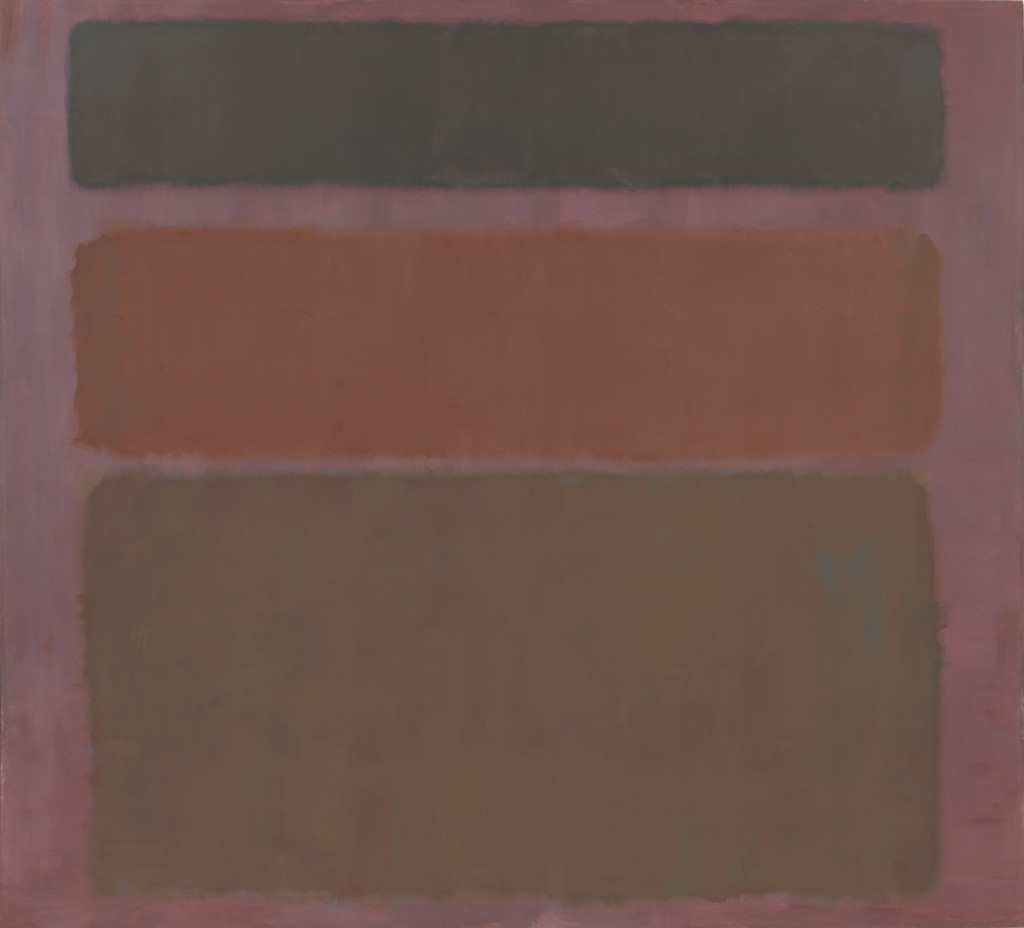
Mark Rothko
No. 16 (Red, Brown, and Black)
In "No. 16 (Red, Brown, and Black)", the brown scale does not constitute a simple background: it organizes the light, the weight of the shapes and the progression of the gaze. Rothko superimposes brown and red fields whose limits diffuse slowly; the earth becomes an experience of depth rather than a local color. Dark values do not close space: they provide passages that lead the gaze towards areas of ocher and light. Dark values do not close space: they provide passages that lead the gaze towards areas of ocher and light. The earth's color gradually leaves imitation to become mental climate, autonomous surface or symbolic matter.
View work in collection →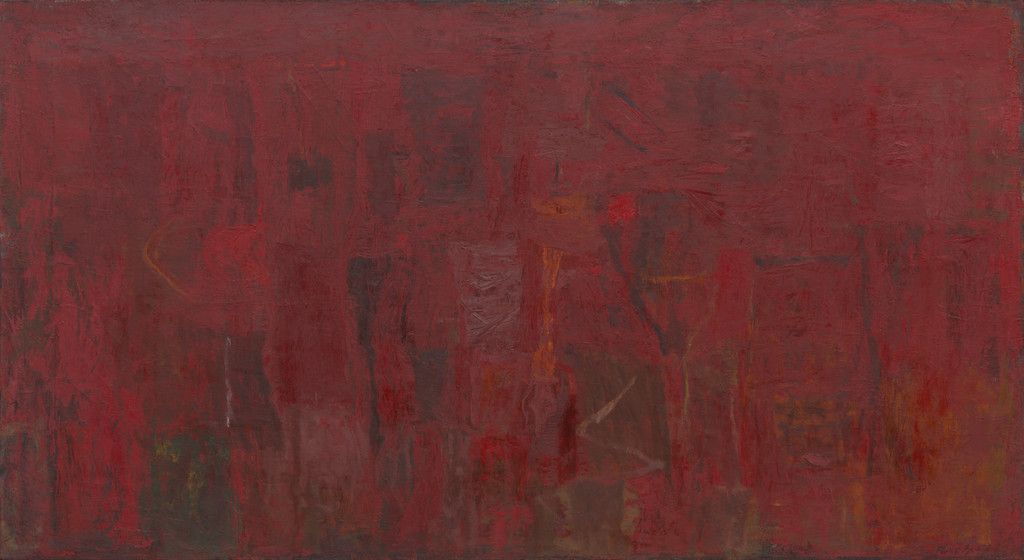
Philip Guston
Red Painting
In "Red Painting", the brown scale does not constitute a simple background: it organizes the light, the weight of the shapes and the progression of the gaze. Philip Guston modulates browns, ochres and beiges by differences in transparency and temperature; the earth's color becomes a real visual framework. The painter balances warm browns with a few grays or cold tones, which prevents the scale from becoming monotonous. The earth's color gradually leaves imitation to become mental climate, autonomous surface or symbolic matter.
View work in collection →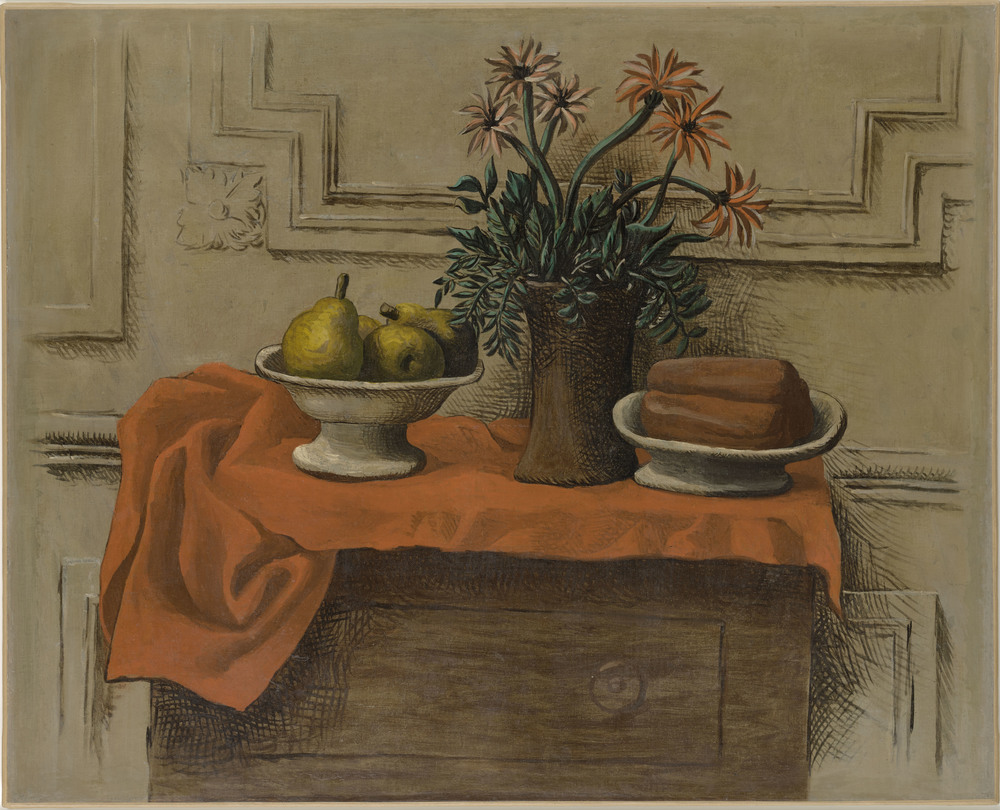
Pablo Picasso
Still life on the dresser
In "Still Life on the Dresser", the brown scale does not constitute a simple background: it organizes the light, the weight of the shapes and the progression of the gaze. Pablo Picasso modulates browns, ochres and beiges by differences in transparency and temperature; the earth's color becomes a real visual framework. The composition is based on a very precise hierarchy of values, from black-brown to illuminated beige. The composition is based on a very precise hierarchy of values, from black-brown to illuminated beige. The earth's color gradually leaves imitation to become mental climate, autonomous surface or symbolic matter.
View work in collection →
Salvador Dali
Phantom Cart
In "Phantom Cart", the brown scale does not constitute a simple background: it organizes the light, the weight of the shapes and the progression of the gaze. Dalí gives the ochres a mineral dryness which makes the space more precise and more disturbing, as if the landscape preserved the trace of a buried memory. The transitions between Siena's land, ocher and shadow give the shapes a continuity that is more material than graphic. The transitions between Siena's land, ocher and shadow give the shapes a continuity that is more material than graphic. The transitions between Siena's land, ocher and shadow give the shapes a continuity that is more material than graphic. The transitions between Siena's land, ocher and shadow give the shapes a continuity that is more material than graphic. The earth's color gradually leaves imitation to become mental climate, autonomous surface or symbolic matter.
View work in collection →
Gustave Moreau
Orpheus
In "Orpheus", the brown scale does not constitute a simple background: it organizes the light, the weight of the shapes and the progression of the gaze. Gustave Moreau modulates browns, ochres and beiges by differences in transparency and temperature; the earth's color becomes a real visual framework. A few light or colored accents are enough to activate the whole because the earthy base retains strong cohesion. The earth's color gradually leaves imitation to become mental climate, autonomous surface or symbolic matter.
See reproduction →
John william waterhouse
Diogenes
In "Diogenes", the brown scale does not constitute a simple background: it organizes the light, the weight of the shapes and the progression of the gaze. Waterhouse divides the land between hair, fabrics, stone and vegetation; the warm scale gives the story an almost incantatory unity. Dark values do not close the space: they provide passages that lead the gaze towards areas of ocher and light. The earth's color gradually leaves imitation to become mental climate, autonomous surface or symbolic matter.
See reproduction →
Pieter Bruegel the Elder
Saint Martin's Wine
In "The Wine of Saint-Martin", the brown scale does not constitute a simple background: it organizes the light, the weight of the shapes and the progression of the gaze. Pieter Bruegel the Elder modulates browns, ochres and beiges by differences in transparency and temperature; the earth's color becomes a real visual framework. The painter balances warm browns with a few grays or cold tones, which prevents the scale from becoming monotonous. The earth's color gradually leaves imitation to become mental climate, autonomous surface or symbolic matter.
See reproduction →
El Greco
The Fable
In "La Fable", the brown scale does not constitute a simple background: it organizes the light, the weight of the shapes and the progression of the gaze. El Greco modulates browns, ochres and beiges by differences in transparency and temperature; the earth's color becomes a real visual framework. The composition is based on a very precise hierarchy of values, from black-brown to illuminated beige. The composition is based on a very precise hierarchy of values, from black-brown to illuminated beige. The earth's color gradually leaves imitation to become mental climate, autonomous surface or symbolic matter.
See reproduction →
El Greco
The Trinity
In "The Trinity", the brown scale does not constitute a simple background: it organizes the light, the weight of the shapes and the progression of the gaze. El Greco modulates browns, ochres and beiges by differences in transparency and temperature; the earth's color becomes a real visual framework. The transitions between Siena's earth, ocher and shadow give the shapes a continuity that is more material than graphic. The earth's color gradually leaves imitation to become mental climate, autonomous surface or symbolic matter.
See reproduction →
Francisco de Goya
The Witches' Sabbath
In "The Witches' Sabbath", the brown scale does not constitute a simple background: it organizes the light, the weight of the shapes and the progression of the gaze. Goya makes brown a space of uncertainty where figures appear suddenly, between harsh light, dust and darkness. A few light or colored accents are enough to activate the whole because the earthy base retains strong cohesion. The earthy color gradually leaves imitation to become mental climate, autonomous surface or symbolic matter.
See reproduction →
Francisco de Goya
Duel at the club
In "Duel au gourdin", the brown scale does not constitute a simple background: it organizes the light, the weight of the shapes and the progression of the gaze. Goya makes brown a space of uncertainty where figures appear suddenly, between harsh light, dust and darkness. Dark values do not close space: they provide passages that lead the gaze towards areas of ocher and light. Dark values do not close space: they provide passages that lead the gaze towards areas of ocher and light. Dark values do not close space: they provide passages that lead the gaze towards areas of ocher and light. Dark values do not close space: they provide passages that lead the gaze towards areas of ocher and light. The earth's color gradually leaves imitation to become mental climate, autonomous surface or symbolic matter.
See reproduction →
Salvador Dali
Autumnal Cannibalism
In "Autumnal Cannibalism", the brown scale does not constitute a simple background: it organizes the light, the weight of the shapes and the progression of the gaze. Dalí gives the ochres a mineral dryness which makes the space more precise and more disturbing, as if the landscape preserved the trace of a buried memory. The painter balances warm browns with a few grays or cold tones, which prevents the scale from becoming monotonous. The painter balances warm browns with a few grays or cold tones, which prevents the scale from becoming monotonous. The earth's color gradually leaves imitation to become mental climate, autonomous surface or symbolic matter.
View work in collection →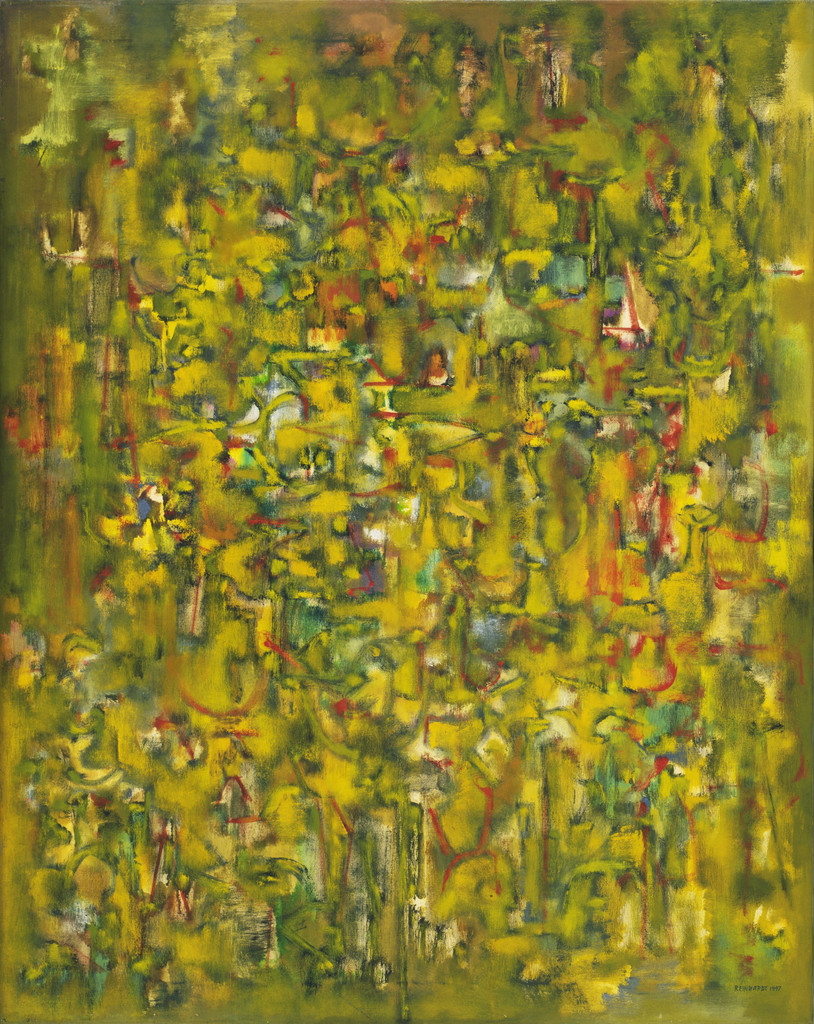
Ad Reinhardt
Number 43 (Abstract Painting, Yellow)
In "Number 43 (Abstract Painting, Yellow)", the brown scale does not constitute a simple background: it organizes the light, the weight of the shapes and the progression of the gaze. Ad Reinhardt modulates browns, ochres and beiges by differences in transparency and temperature; the earth's color becomes a real visual framework. The composition is based on a very precise hierarchy of values, from black-brown to illuminated beige. The earth's color becomes a real visual framework. The composition is based on a very precise hierarchy of values, from black-brown to illuminated beige. The earth's color gradually leaves imitation to become mental climate, autonomous surface or symbolic matter.
View work in collection →
Edward Burne-Jones
The Wheel of Fortune
In "The Wheel of Fortune", the brown scale does not constitute a simple background: it organizes the light, the weight of the shapes and the progression of the gaze. Edward Burne-Jones modulates browns, ochres and beiges by differences in transparency and temperature; the earth's color becomes a real visual framework. The transitions between Siena's earth, ocher and shadow give the shapes a continuity that is more material than graphic. The earth's color gradually leaves imitation to become mental climate, autonomous surface or symbolic matter.
See reproduction →
Caravaggio
Ecce Homo
In "Ecce Homo", the brown scale does not constitute a simple background: it organizes the light, the weight of the shapes and the progression of the gaze. Caravaggio modulates browns, ochres and beiges by differences in transparency and temperature; the earth's color becomes a real visual framework. A few light or colored accents are enough to activate the whole because the earthy base retains strong cohesion. The earth's color gradually leaves imitation to become mental climate, autonomous surface or symbolic matter.
See reproduction →
Francisco de Goya
The Fates
In "Les Parques", the brown scale does not constitute a simple background: it organizes the light, the weight of the shapes and the progression of the gaze. Goya makes brown a space of uncertainty where figures appear suddenly, between harsh light, dust and darkness. Dark values do not close space: they provide passages that lead the gaze towards areas of ocher and light. Dark values do not close space: they provide passages that lead the gaze towards areas of ocher and light. Dark values do not close space: they provide passages that lead the gaze towards areas of ocher and light. The earth's color gradually leaves imitation to become mental climate, autonomous surface or symbolic matter.
See reproduction →
David Teniers the Younger
Archduke Leopold-Guillaume in his gallery
In "Archduke Leopold-Guillaume in his gallery", the brown scale does not constitute a simple background: it organizes the light, the weight of the shapes and the progression of the gaze. David Teniers the Younger modulates browns, ochres and beiges by differences in transparency and temperature; the earth color becomes a real visual framework. The painter balances warm browns with a few grays or cold tones, which prevents the scale from becoming monotonous. The earth color gradually leaves imitation to become mental climate, autonomous surface or symbolic matter.
See reproduction →
Hieronymus Bosch
The Hay Cart
In "The Hay Cart", the brown scale does not constitute a simple background: it organizes the light, the weight of the shapes and the progression of the gaze. Hieronymus Bosch modulates browns, ochres and beiges by differences in transparency and temperature; the earth's color becomes a real visual framework. The composition is based on a very precise hierarchy of values, from black-brown to illuminated beige. The composition is based on a very precise hierarchy of values, from black-brown to illuminated beige. The earth's color gradually leaves imitation to become mental climate, autonomous surface or symbolic matter.
See reproduction →
Francisco de Goya
May 2, 1808
In "May 2, 1808", the brown scale does not constitute a simple background: it organizes light, the weight of shapes and the progression of the gaze. Goya makes brown a space of uncertainty where figures appear suddenly, between harsh light, dust and darkness. The transitions between Siena's earth, ocher and shadow give the shapes a continuity that is more material than graphic. The transitions between Siena's earth, ocher and shadow give the shapes a continuity that is more material than graphic. The earth's color gradually leaves imitation to become mental climate, autonomous surface or symbolic matter.
See reproduction →
Titian
Charles V on horseback in Mühlberg
In "Charles V on Horseback in Mühlberg", the brown scale does not constitute a simple background: it organizes the light, the weight of the shapes and the progression of the gaze. Titian modulates browns, ochres and beiges by differences in transparency and temperature; the earth's color becomes a real visual framework. A few light or colored accents are enough to activate the whole because the earthy base retains strong cohesion. The earth's color gradually leaves imitation to become mental climate, autonomous surface or symbolic matter.
See reproduction →Color matter
Five brown guys who don't tell the same story
The earth family covers a remarkable amplitude, from golden yellow to almost black brown. Cooking transforms natural Siena and natural shade into redder, deeper pigments. Artists complete this range with organic browns, colored blacks and complementary blends. Each solution has its transparency, drying speed and covering power.
In oil, these differences determine the gesture. A fluid earth of shadow can quickly establish masses; a more opaque ocher carries light; a burnt Siena warms a glaze; a brown mixed with black absorbs the contours. Observing earth tones thus amounts to following the material architecture of the painting, often hidden under the most visible colors.
Stable, matte and covering ferruginous earth, used since the oldest pictorial traditions.
Transparent and warm yellow-brown, particularly useful for preparations and glazes.
Cooking makes it redder and deeper; it warms flesh, wood and shadows.
Dark brown, often slightly greenish, appreciated for its transparency and quick drying.
Warmer, dense and reddish, it reinforces backgrounds, shadows and deep contrasts.
Selection method
Earthy harmonies truly verified
Oil only
The hundred original works are oil paintings. Drawings, inks, pastels, watercolors, prints and photographs are excluded.
Brown must structure
The selection combines visual control and measurement of ocher, umber, Siena, beige and red-brown areas; a simple isolated shadow is not enough.
Controlled images and links
Each image has been tested. The Shopify button is used when reproduction exists; otherwise, it leads to the institutional collection.
Frequently asked questions
Look at brown differently
Why talk about "earth tones" rather than just brown?
The word brown brings together very different shades. The historical names of the pigments - ocher, Siena, ombre - specify their temperature, transparency and behavior in the oil.
Is a very dark picture necessarily brown?
No. A painting dominated by black or nocturnal blue can be dark without belonging to an earthy harmony. Brown must really structure a significant part of values and surfaces.
Why are Rembrandt, Millet and the Barbizon School very present?
Rembrandt took the luminous browns to a peak of portraiture and narrative. Millet and the landscapers of Barbizon then gave soil, wood and natural matter a central role.
Are earths natural pigments?
Many come from clays colored by iron and manganese oxides. They can be washed, crushed or heated to change their color and depth.
How are works classified?
The top spots combine international fame, historical significance and the power of earthy harmony. The following chapters develop work, interior, landscape and modernity.
0 comments