

FIGURE · BODY · STORY · FROM 1945 TO TODAY
Contemporary representation: 100 essential paintings
When painting still tells the story of the visible world
After 1945, the figure never disappeared. It has moved: vulnerable body in Bacon and Freud, urban life in Neel and Estes, political memory in Golub and Marshall, recomposed identities in Dumas, Akunyili Crosby or Quarles. These hundred paintings show the diversity of this always open history.
A plural story
The figure after modernity
Contemporary figuration is neither a single school nor a simple return to realism. It brings together artists who use the body, the portrait, the city and the story to respond to media images, social transformations and debates on representation.
A painted figure is never just a recognizable body: it carries a story of the gaze, the power and the place given to each person in the image.
The journey begins with the School of London and post-war realisms, crosses pop, photorealism and political figurations, then opens to current scenes. The works are directly linked to the notices of the institutions which preserve or document them.
Enter the rankingOne hundred landmarks of contemporary figuration
Flesh, portrait and everyday life when abstraction seemed to dominate the artistic scene.
#1
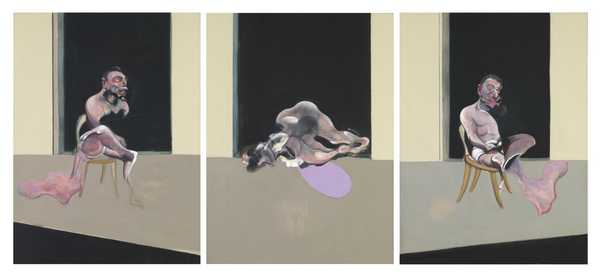
Triptych, August 1972
Painted after the suicide of George Dyer, the triptych makes Bacon's companion appear and then disappear in the shadow of a door; mourning becomes sequence. Bacon encloses the figure in an almost clinical space and transforms the flesh into a place of anguish, desire and mortality.
Documentary image and instructions: Tate. This work is not offered for reproduction by Alpha Reproduction.
See the institution's notice → #2
#2
Figure with meat
The pope borrowed from Velazquez is placed in front of a suspended carcass: spiritual authority and animal flesh respond to each other in the same image of decomposition. Bacon encloses the figure in an almost clinical space and transforms the flesh into a place of anguish, desire and mortality.
Documentary image and instructions: Art Institute of Chicago. This work is not offered for reproduction by Alpha Reproduction.
See the institution's notice →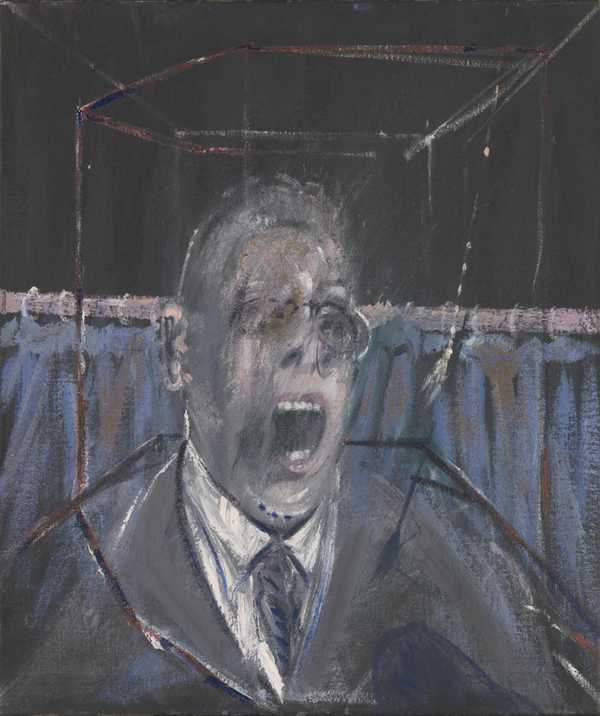 #3
#3
Study for a portrait
In "Study for a Portrait", the figure, the setting and the material are organized as the elements of a situation which remains voluntarily open. Bacon encloses the figure in an almost clinical space and transforms the flesh into a place of anguish, desire and mortality.
Documentary image and instructions: Tate. This work is not offered for reproduction by Alpha Reproduction.
See the institution's notice →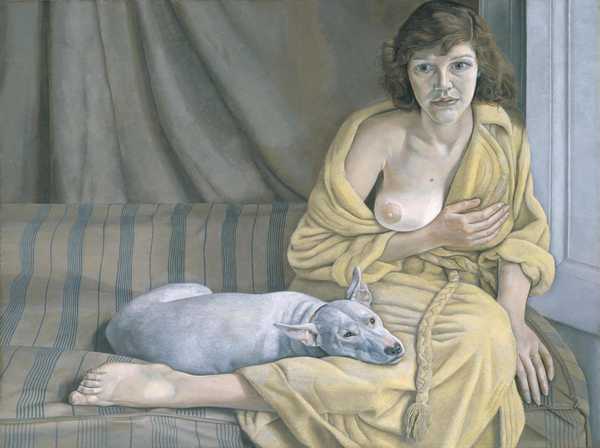 #4
#4
Young woman with a white dog
In "Young Woman with a White Dog", the figure, the decoration and the material are organized as elements of a situation which remains voluntarily open. Freud constructs the presence through long sessions: the thickness of the painting records the fatigue, confidence and resistance of the model.
Documentary image and instructions: Tate. This work is not offered for reproduction by Alpha Reproduction.
See the institution's notice →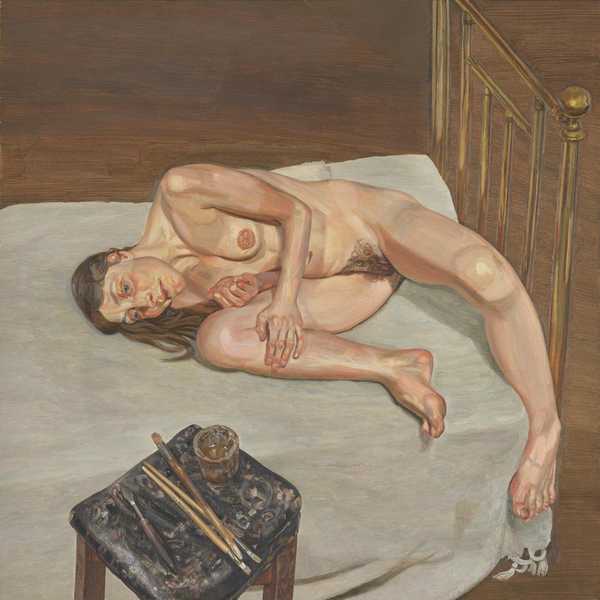 #5
#5
Nude portrait
In "Naked Portrait", the figure, the decoration and the material are organized as the elements of a situation which remains voluntarily open. Freud constructs the presence through long sessions: the thickness of the painting records the fatigue, confidence and resistance of the model.
Documentary image and instructions: Tate. This work is not offered for reproduction by Alpha Reproduction.
See the institution's notice →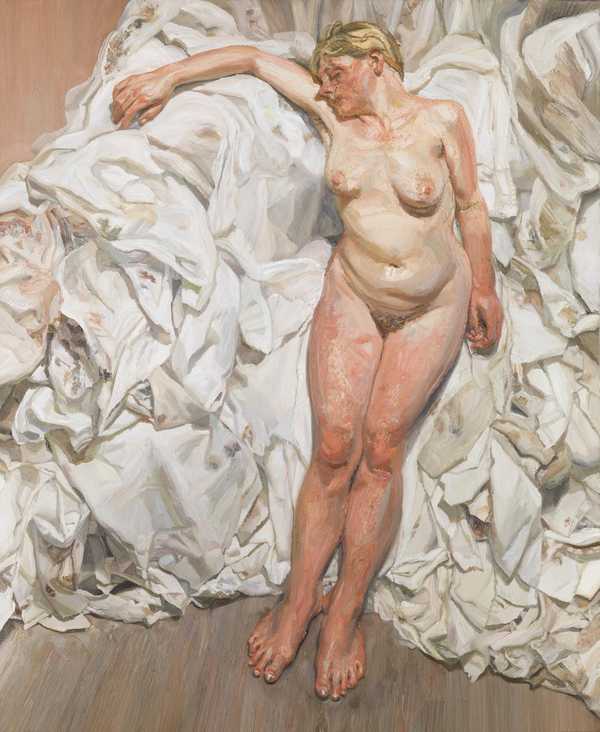 #6
#6
Standing near the rags
In "Standing Near the Rags", the figure, the decoration and the material are organized as the elements of a situation which remains voluntarily open. Freud constructs the presence through long sessions: the thickness of the painting records the fatigue, confidence and resistance of the model.
Documentary image and instructions: Tate. This work is not offered for reproduction by Alpha Reproduction.
See the institution's notice →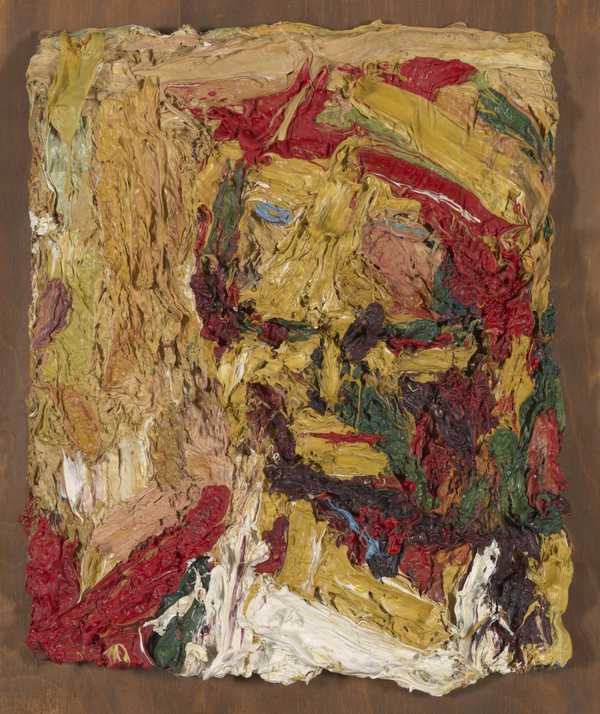 #7
#7
EOWI Head
In "Tête d'EOW I", the figure, the decor and the material are organized as the elements of a situation which remains voluntarily open. Auerbach constantly takes up and scratches the surface; the portrait or the city are born from a physical accumulation rather than a smooth resemblance.
Documentary image and instructions: Tate. This work is not offered for reproduction by Alpha Reproduction.
See the institution's notice →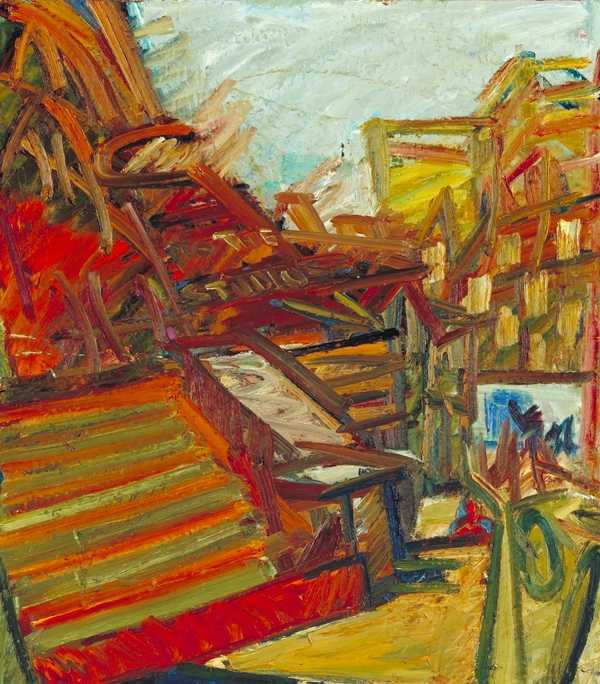 #8
#8
Towards the workshops
In "Towards the workshops", the figure, the decor and the material are organized as the elements of a situation which remains voluntarily open. Auerbach constantly takes up and scratches the surface; the portrait or the city are born from a physical accumulation rather than a smooth resemblance.
Documentary image and instructions: Tate. This work is not offered for reproduction by Alpha Reproduction.
See the institution's notice →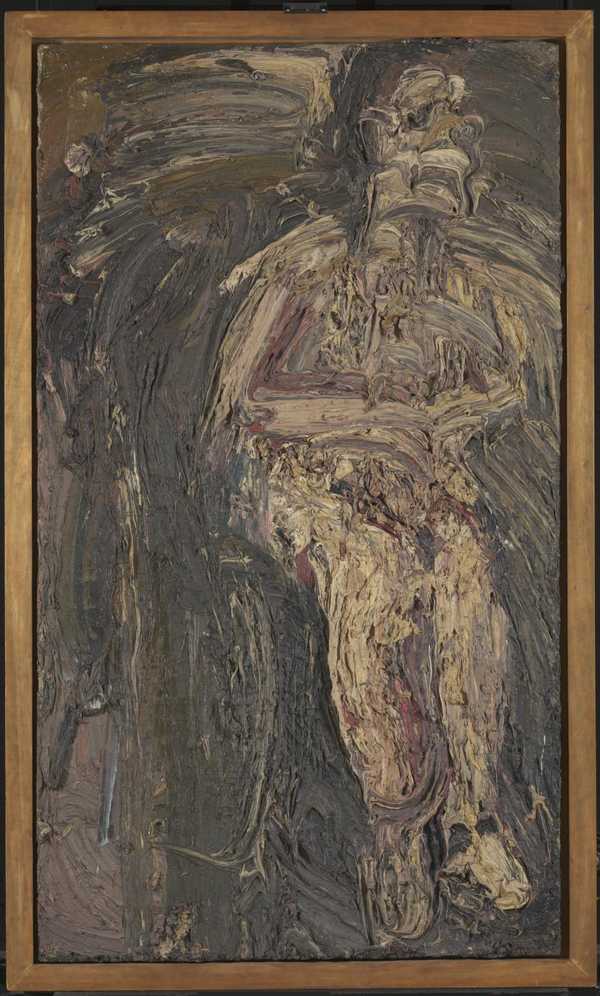 #9
#9
Man in wheelchair
In "Man in a Wheelchair", the figure, the decor and the material are organized as elements of a situation which remains voluntarily open. Kossoff paints London as a living, heavy and unstable material, where bodies and architecture seem to be subject to the same thrust.
Documentary image and instructions: Tate. This work is not offered for reproduction by Alpha Reproduction.
See the institution's notice →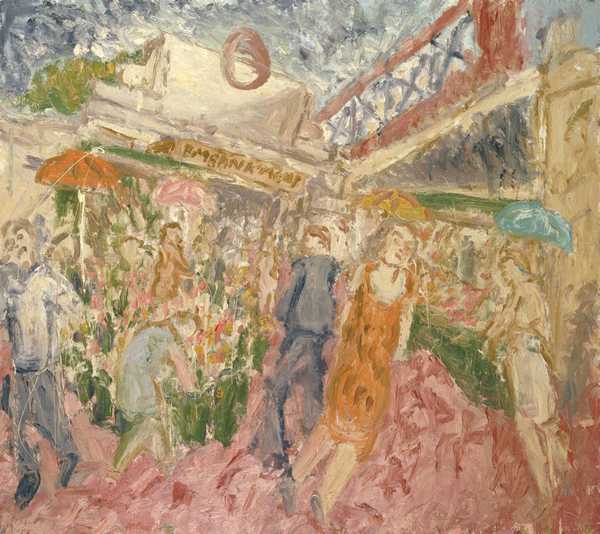 #10
#10
Flower and fruit stalls, Embankment 1995
In "The Stalls of Flowers and Fruits, Embankment 1995", the figure, the decor and the material are organized as the elements of a situation which remains voluntarily open. Kossoff paints London as a living, heavy and unstable, where bodies and architecture seem subject to the same thrust.
Documentary image and instructions: Tate. This work is not offered for reproduction by Alpha Reproduction.
See the institution's notice →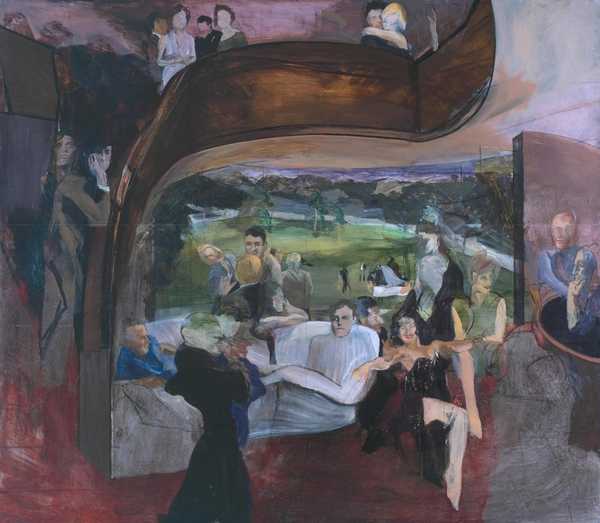 #11
#11
The Deer Park
In "The Deer Park", the figure, the setting and the material are organized as elements of a situation which remains voluntarily open. Andrews transforms an observed scene into a reflection on group belonging, vulnerability and distance between beings.
Documentary image and instructions: Tate. This work is not offered for reproduction by Alpha Reproduction.
See the institution's notice →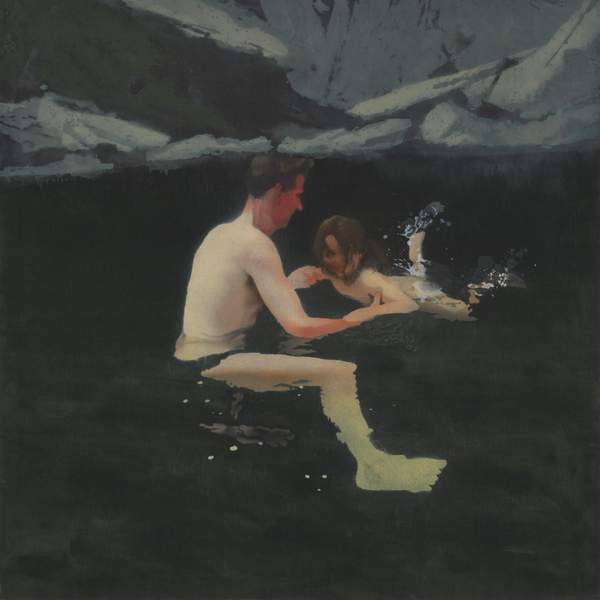 #12
#12
Melanie and I swimming
In "Melanie and I Swimming", the figure, the setting and the material are organized as elements of a situation which remains voluntarily open. Andrews transforms an observed scene into a reflection on group belonging, vulnerability and the distance between beings.
Documentary image and instructions: Tate. This work is not offered for reproduction by Alpha Reproduction.
See the institution's notice →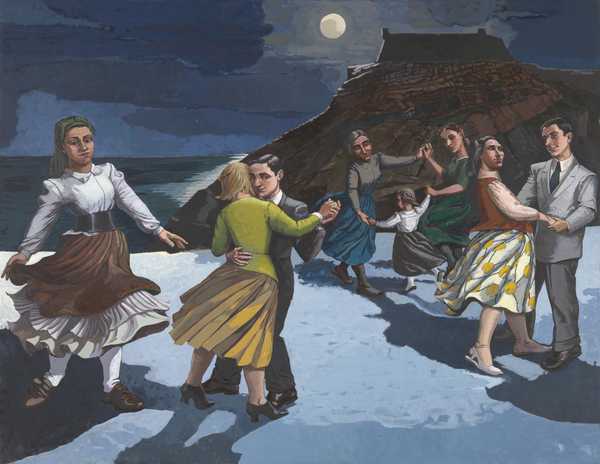 #13
#13
The dance
In "La Danse", the figure, the setting and the material are organized as the elements of a situation which remains voluntarily open. Rego mixes intimate story, tale and power relations; his figures seem to play a drama of which only they know the rules.
Documentary image and instructions: Tate. This work is not offered for reproduction by Alpha Reproduction.
See the institution's notice →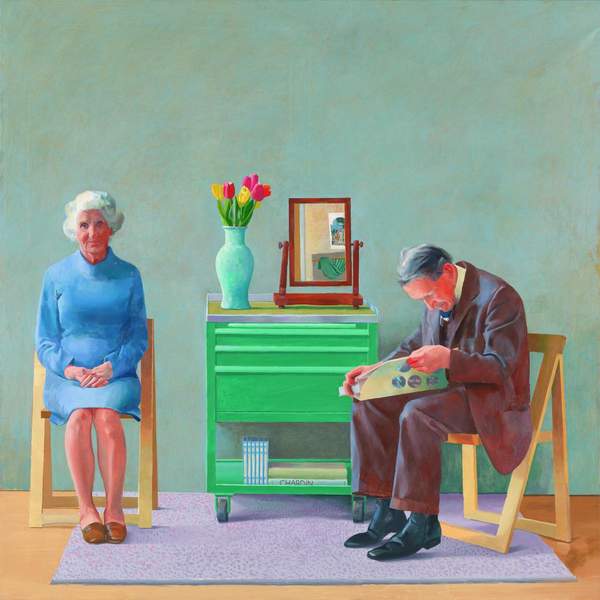 #14
#14
My parents
The father reads attentively while the mother looks at the painter; in the mirror appears a reproduction of Piero della Francesca, a discreet link between family and art history. Hockney simplifies the space and hardens the contours for show that the modern gaze is already shaped by photography, cinema and desire.
Documentary image and instructions: Tate. This work is not offered for reproduction by Alpha Reproduction.
See the institution's notice →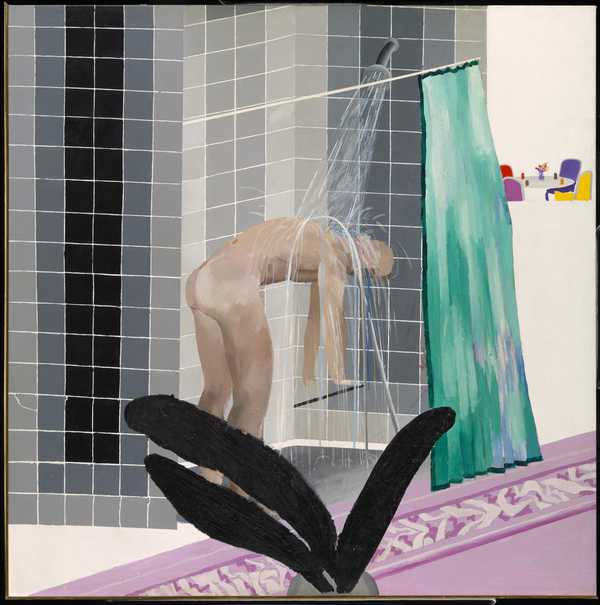 #15
#15
Man in the shower in Beverly Hills
In "Man in the Shower in Beverly Hills", the figure, setting and material are organized as elements of a situation that remains deliberately open. Hockney simplifies the space and hardens the contours to show that the modern gaze is already shaped by photography, cinema and desire.
Documentary image and instructions: Tate. This work is not offered for reproduction by Alpha Reproduction.
See the institution's notice → #16
#16
American collectors (Fred and Marcia Weisman)
American Collectors (Fred and Marcia Weisman) shows a light-skinned man in a suit and glasses standing in profile and a light-skinned woman with chin-length gray hair and wearing a full-length bright-pink dress stand in a courtyard with various sculptures. Between them is a large stone on a plinth, behind them a green abstracted sealed figure, and off to the right a totem pole. Hockney simplifies the space and hardens the contours to show that the modern look already is shaped by photography, cinema and desire.
Documentary image and instructions: Art Institute of Chicago. This work is not offered for reproduction by Alpha Reproduction.
See the institution's notice →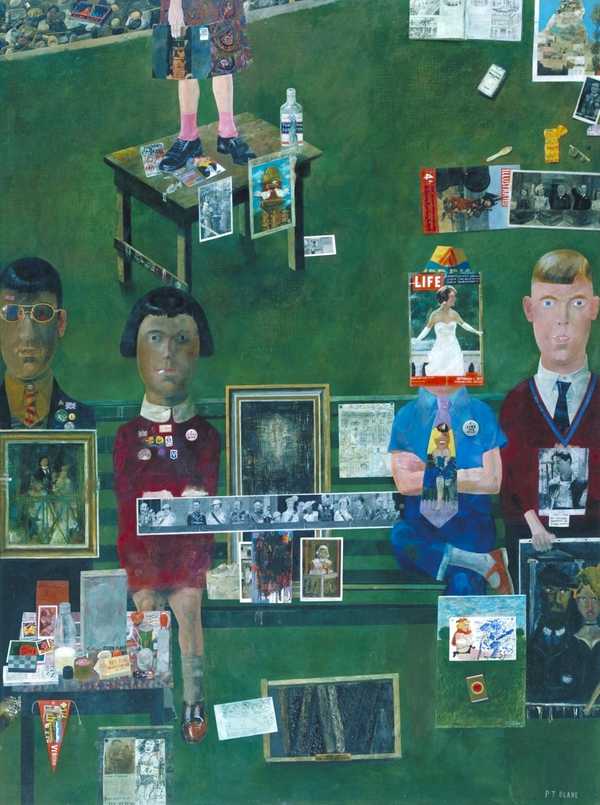 #17
#17
On the balcony
The apparent collage is entirely painted: children, magazine, flag and reproduction of Manet deliberately blur popular culture and museum. Blake treats popular images, badges and collectibles as serious attributes of a contemporary identity.
Documentary image and instructions: Tate. This work is not offered for reproduction by Alpha Reproduction.
See the institution's notice → #18
#18
Self-portrait with badges
In "Self-portrait with badges", the figure, the decoration and the material are organized as elements of a situation which remains voluntarily open. Blake treats popular images, badges and collectibles as serious attributes of a contemporary identity.
Documentary image and instructions: Tate. This work is not offered for reproduction by Alpha Reproduction.
See the institution's notice → #19
#19
Gasthof zur Muldentalsperre
Two costumed silhouettes guard an isolated building, taken from an old photograph; the atmosphere hesitates between family memory, travel and story scene. Finger painted from photographs but dissolves their certainty: the image becomes memory, threshold and mental landscape.
Documentary image and instructions: Art Institute of Chicago. This work is not offered for reproduction by Alpha Reproduction.
See the institution's notice →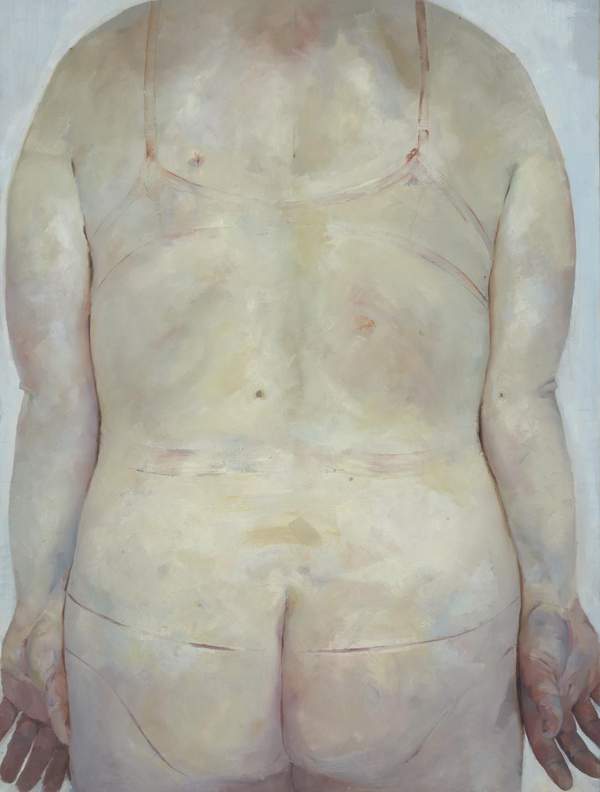 #20
#20
Trace
The body seen from behind bears the marks of underwear that are too tight; Saville reverses the conventions of the nude by showing pressure, weight and vulnerability. Saville enlarges the body to the point of making the flesh a pictorial landscape which contradicts the standards of beauty and mastery.
Documentary image and instructions: Tate. This work is not offered for reproduction by Alpha Reproduction.
See the institution's notice →The model becomes a historical, psychological and political presence.
 #21
#21
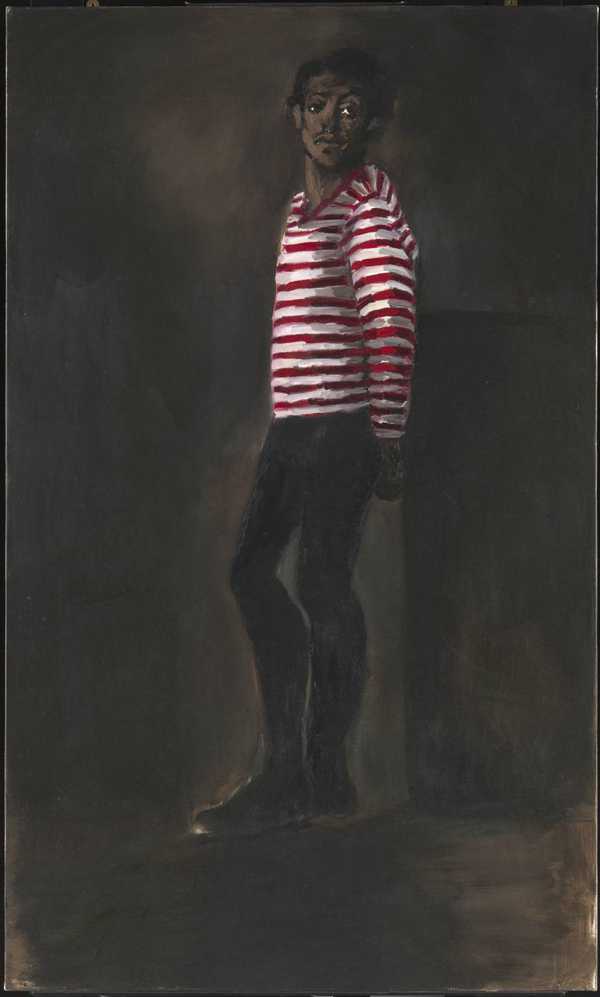
Saturday, 10 p.m
In "Saturday, 10 p.m.", the figure, the setting and the material are organized as the elements of a situation which remains voluntarily open. Its characters are imaginary; their autonomy removes the black portrait from the obligation to tell an assigned biography or identity.
Documentary image and instructions: Tate. This work is not offered for reproduction by Alpha Reproduction.
See the institution's notice →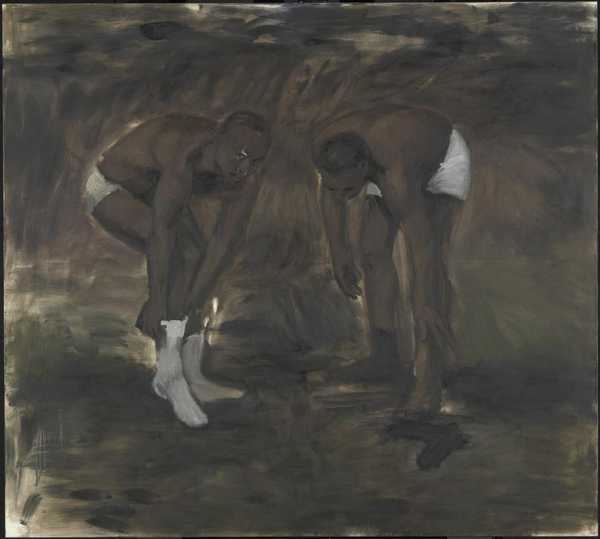 #22
#22
Generosity
In "Generosity", the figure, the setting and the material are organized as the elements of a situation which remains voluntarily open. Its characters are imaginary; their autonomy removes the black portrait from the obligation to tell an assigned biography or identity.
Documentary image and instructions: Tate. This work is not offered for reproduction by Alpha Reproduction.
See the institution's notice → #23
#23
Little Penguin
In "Little Penguin", the figure, the setting and the material are organized as the elements of a situation which remains voluntarily open. Its characters are imaginary; their autonomy removes the black portrait from the obligation to tell an assigned biography or identity.
Documentary image and instructions: Tate. This work is not offered for reproduction by Alpha Reproduction.
See the institution's notice →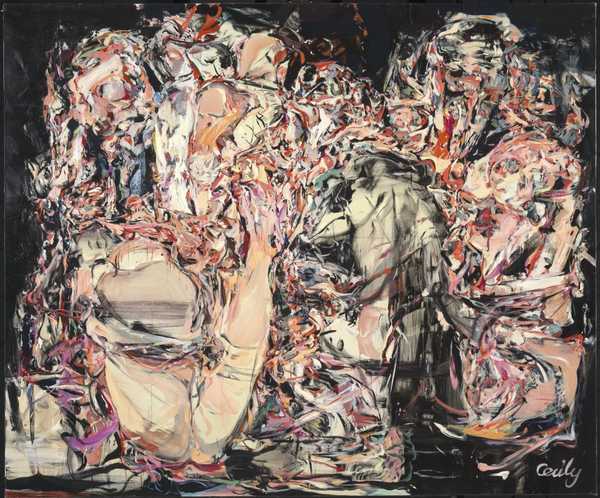 #24
#24
Trouble in paradise
In "Trouble in Paradise", the figure, the setting and the material are organized as the elements of a situation which remains voluntarily open. Brown keeps the image on the verge of dissolution: bodies appear and disappear in a subject that cites art history as much as desire.
Documentary image and instructions: Tate. This work is not offered for reproduction by Alpha Reproduction.
See the institution's notice →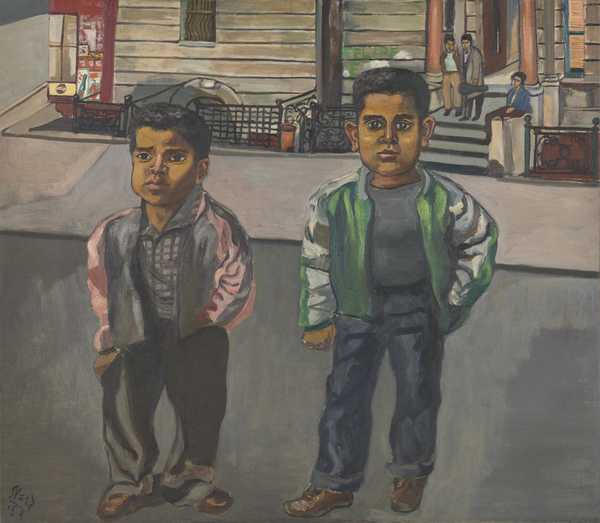 #25
#25
Puerto Rican boys from 108th Street
Two boys occupy the space with an assurance that American painting rarely gave to Puerto Rican children in Neel's neighborhood. Neel refuses idealization: posture, hands and gaze reveal the social position of the model as much as its psychological singularity.
Documentary image and instructions: Tate. This work is not offered for reproduction by Alpha Reproduction.
See the institution's notice → #26
#26
Andy Warhol
Warhol, shirtless after the 1968 attack, exposes the scars of the operation; the celebrity portrait becomes an image of fragility. Neel refuses idealization: posture, hands and gaze reveal the social position of the model as much as its psychological singularity.
Documentary image and instructions: Whitney Museum of American Art. This work is not offered for reproduction by Alpha Reproduction.
See the institution's notice →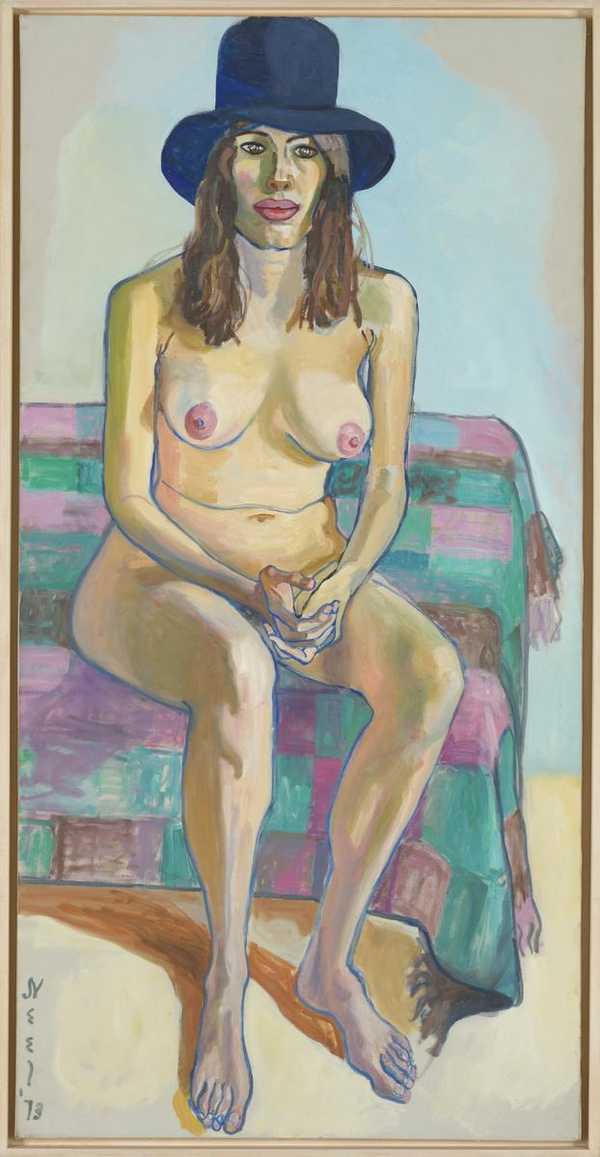 #27
#27
Kitty Pearson
In "Kitty Pearson", the figure, the setting and the material are organized as the elements of a situation which remains voluntarily open. Neel refuses idealization: posture, hands and gaze reveal the social position of the model as much as its psychological singularity.
Documentary image and instructions: Tate. This work is not offered for reproduction by Alpha Reproduction.
See the institution's notice →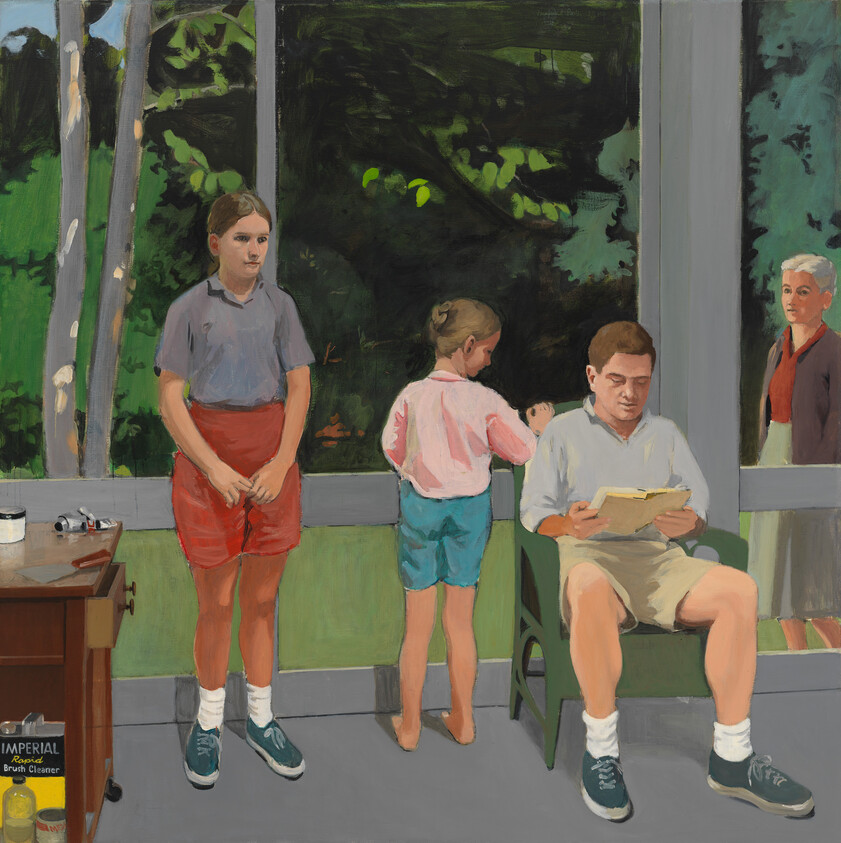 #28
#28
The mosquito net veranda
The Screen Porch shows a man sits reading while two children stand on a porch looking towards the garden and an older woman watches. Porter opposes triumphant abstraction with a painting of everyday life where light and family relationships are enough to structure the scene.
Documentary image and instructions: Whitney Museum of American Art. This work is not offered for reproduction by Alpha Reproduction.
See the institution's notice → #29
#29
The Garden Path
The Garden Road shows young girl stands with her blue bicycle on a shaded dirt path toward a distant farmhouse. Porter opposes triumphant abstraction with a painting of everyday life where light and family relationships are enough to structure the scene.
Documentary image and instructions: Whitney Museum of American Art. This work is not offered for reproduction by Alpha Reproduction.
See the institution's notice →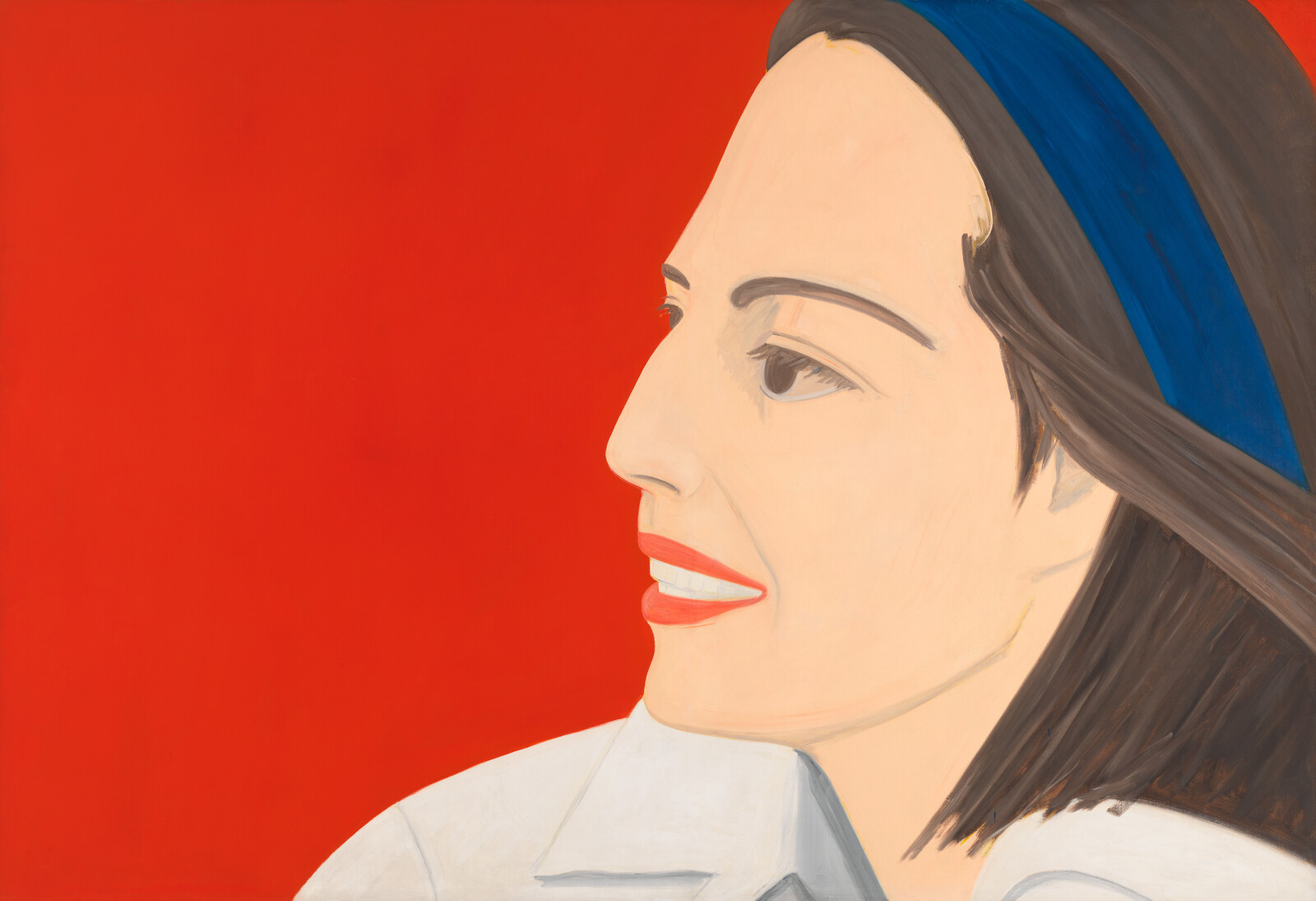 #30
#30
The red smile
Ada's face is framed so closely that her red smile almost becomes a standalone sign; the intimacy of the model meets the scale of advertising. Katz reduces volumes, cuts framing and spreads color; the portrait acquires the immediate presence of a poster without losing its privacy.
Documentary image and instructions: Whitney Museum of American Art. This work is not offered for reproduction by Alpha Reproduction.
See the institution's notice → #31
#31
Black suit (Ada)
In "Black Costume (Ada)", the figure, the decoration and the material are organized like the elements of a situation which remains voluntarily open. Katz reduces volumes, cuts framing and displays color; the portrait acquires the immediate presence of a poster without losing its intimacy.
Documentary image and instructions: Art Institute of Chicago. This work is not offered for reproduction by Alpha Reproduction.
See the institution's notice → #32
#32
Vincent and Tony
In "Vincent and Tony", the figure, the decor and the material are organized as the elements of a situation which remains voluntarily open. Katz reduces volumes, cuts framing and displays color; the portrait acquires the immediate presence of a poster without losing its intimacy.
Documentary image and instructions: Art Institute of Chicago. This work is not offered for reproduction by Alpha Reproduction.
See the institution's notice → #33
#33
Couple in bed
Couple in Bed shows two figures, one red, one yellow, lying under white sheets with limbs sticking out. With his heavy objects and hooded figures, Guston transforms autobiography into political and moral satire.
Documentary image and instructions: Art Institute of Chicago. This work is not offered for reproduction by Alpha Reproduction.
See the institution's notice → #34
#34
Bad weather
In "Mauvais Temps", the figure, the setting and the material are organized as the elements of a situation which remains voluntarily open. With its heavy objects and hooded figures, Guston transforms autobiography into political and moral satire.
Documentary image and instructions: Art Institute of Chicago. This work is not offered for reproduction by Alpha Reproduction.
See the institution's notice →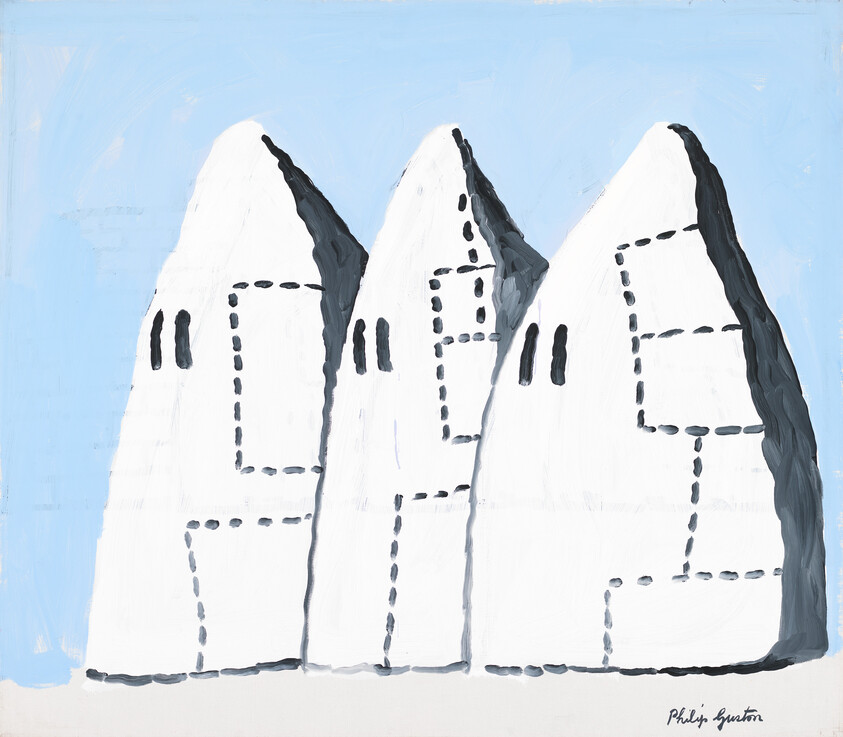 #35
#35
Close-up
Close-Up shows three white ghost-like figures with small black eyes and dashed rectangular patterns against a pale blue background. With its heavy objects and hooded figures, Guston transforms autobiography into political and moral satire.
Documentary image and instructions: Whitney Museum of American Art. This work is not offered for reproduction by Alpha Reproduction.
See the institution's notice → #36
#36
Pajama party
In "Pajama Party", the figure, the decor and the material are organized as elements of a situation which remains voluntarily open. Fischl depicts the discomforts of the American middle class, especially what plays out between gaze, secrecy and transgression.
Documentary image and instructions: Art Institute of Chicago. This work is not offered for reproduction by Alpha Reproduction.
See the institution's notice → #37
#37
A visit to /A visit to /The Island
Two scenes oppose the island frequented by the privileged and that assigned to Caribbean workers; the montage reveals the social border hidden behind leisure. Fischl depicts the discomforts of the American middle class, especially what plays out between gaze, secrecy and transgression.
Documentary image and instructions: Whitney Museum of American Art. This work is not offered for reproduction by Alpha Reproduction.
See the institution's notice → #38
#38
Interrogation II
Life-size figures encircle an exposed body; the absence of decoration prevents the viewer from transforming torture into a distant event. Golub paints power as a bodily relationship: uniforms, gestures and looks make political violence impossible to keep at bay.
Documentary image and instructions: Art Institute of Chicago. This work is not offered for reproduction by Alpha Reproduction.
See the institution's notice →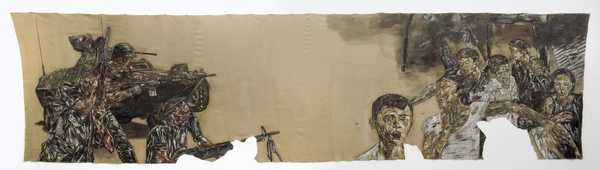 #39
#39
Vietnam II
The very large canvas presents soldiers and civilians in a brutal face-to-face encounter, recalling that the image of war is also a scene of power addressed to the public. Golub paints power as a bodily relationship: uniforms, gestures and looks make political violence impossible to keep at bay.
Documentary image and instructions: Tate. This work is not offered for reproduction by Alpha Reproduction.
See the institution's notice →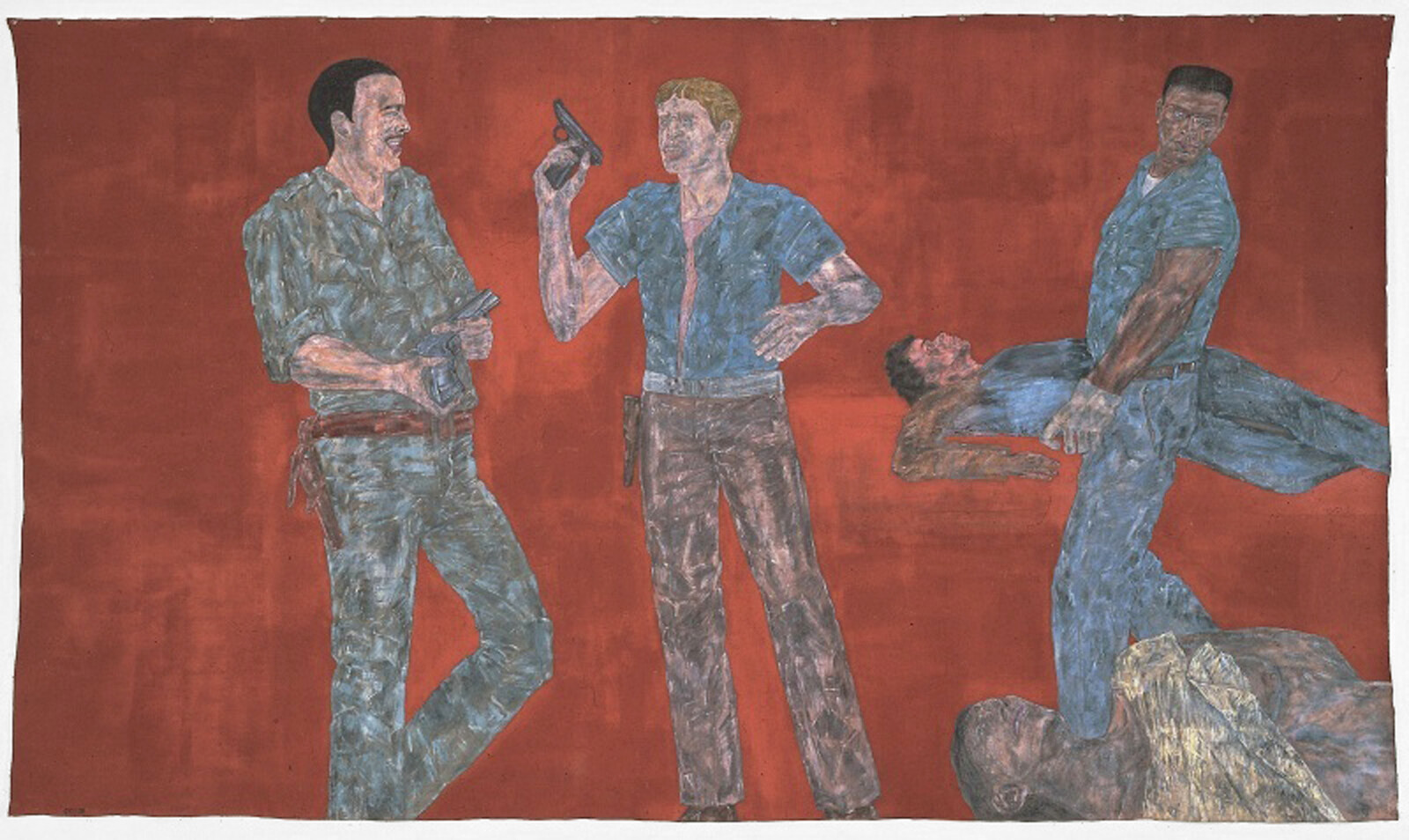 #40
#40
White Squadron I
Members of a paramilitary squadron advance as if they were overflowing the canvas; their proximity transforms the spectator into a witness directly exposed to intimidation. Golub paints power as a bodily relationship: uniforms, gestures and looks make political violence impossible to keep at bay.
Documentary image and instructions: Whitney Museum of American Art. This work is not offered for reproduction by Alpha Reproduction.
See the institution's notice →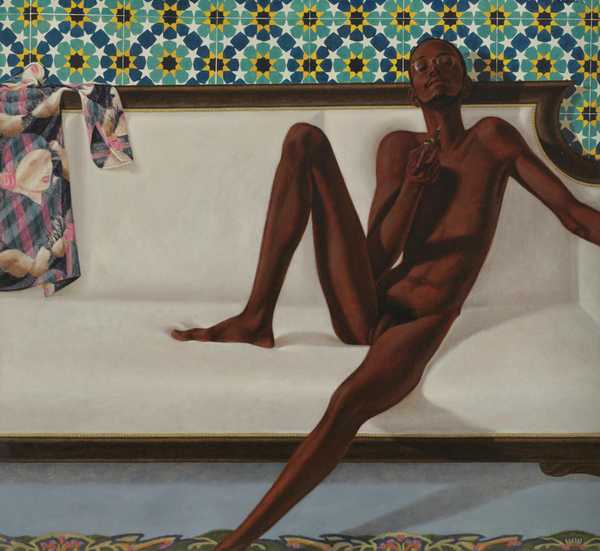 #41
#41
Family Jules: NNN (No Naked Niggahs)
The title diverts a racist formula from the art world, while the pose of the model precisely refuses the objectification that this formula imposes. Hendricks gives his black models a monumental scale and absolute mastery of their appearance, far from the stereotypes of the official portrait.
Documentary image and instructions: Tate. This work is not offered for reproduction by Alpha Reproduction.
See the institution's notice → #42
#42
Steve
The white coat, glasses and vertical silhouette give the model the authority of a fashion icon as much as a ceremonial portrait. Hendricks gives his black models a monumental scale and absolute mastery of their appearance, far from the stereotypes of the official portrait.
Documentary image and instructions: Whitney Museum of American Art. This work is not offered for reproduction by Alpha Reproduction.
See the institution's notice →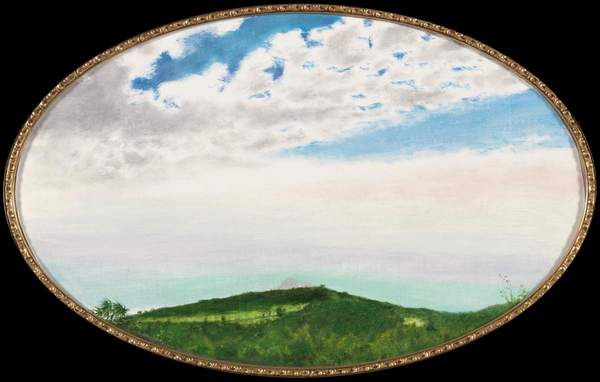 #43
#43
Cold day on the mountain
In "Cold Day on the Mountain", the figure, the setting and the material are organized as elements of a situation which remains voluntarily open. Hendricks gives his black models a monumental scale and absolute mastery their appearance, far from the stereotypes of the official portrait.
Documentary image and instructions: Tate. This work is not offered for reproduction by Alpha Reproduction.
See the institution's notice →Painting confronts collective violence and contemporary mythologies.
 #44
#44
Many residences
Three gardeners maintain the lawns of a social housing complex under a banner promising happiness; the scene reveals the gap between public utopia and lived reality. Marshall reinscribes black lives into genres histories of great painting, from the pastoral scene to the historical painting.
Documentary image and instructions: Art Institute of Chicago. This work is not offered for reproduction by Alpha Reproduction.
See the institution's notice →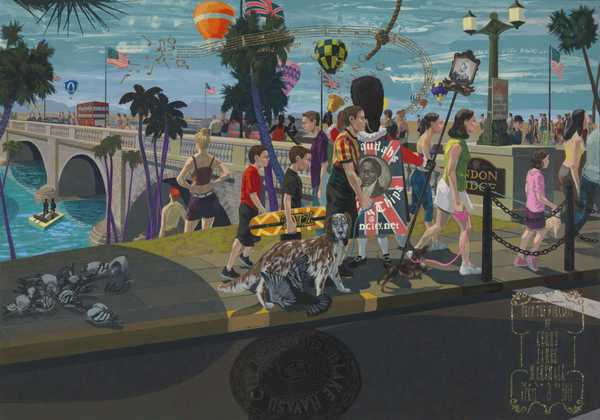 #45
#45
Untitled (London Bridge)
In "Untitled (London Bridge)", the figure, the setting and the material are organized as the elements of a situation which remains voluntarily open. Marshall reinscribes black lives in the historical genres of great painting, from the pastoral scene to the historical picture.
Documentary image and instructions: Tate. This work is not offered for reproduction by Alpha Reproduction.
See the institution's notice →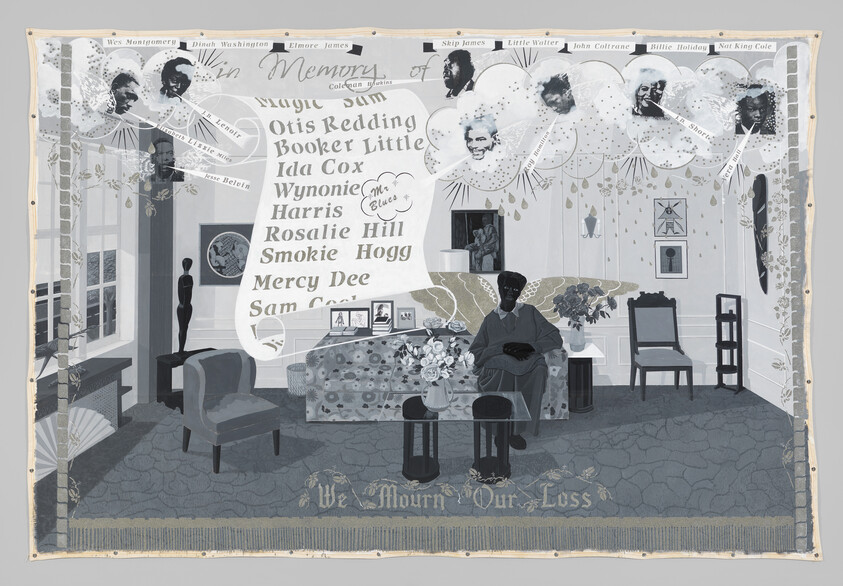 #46
#46
Memory IV
Around a domestic angel, Marshall organizes names and portraits related to the civil rights movement; the private memorial becomes a history painting. Marshall reinscribes black lives into the historical genres of great painting, from the pastoral scene to the historical painting.
Documentary image and instructions: Whitney Museum of American Art. This work is not offered for reproduction by Alpha Reproduction.
See the institution's notice →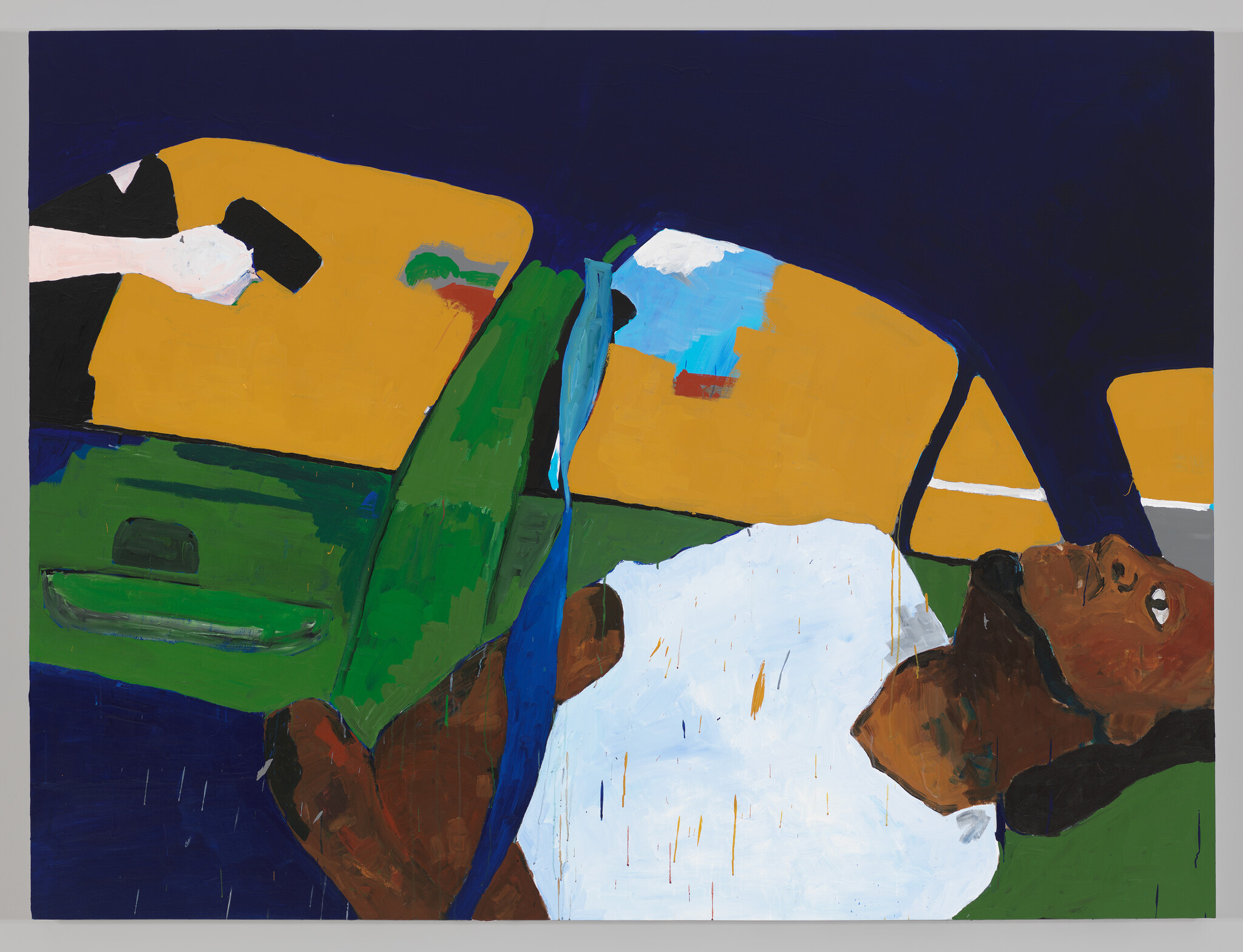 #47
#47
THE TIMES THAY AINT A CHANGING, FAST ENOUGH!
Painted after the death of Philando Castile, the work transforms a scene of police violence into an accusation against the slow pace of change. Taylor paints with a nervous economy that connects an individual's portrait to the social and political history that surrounds him.
Documentary image and instructions: Whitney Museum of American Art. This work is not offered for reproduction by Alpha Reproduction.
See the institution's notice →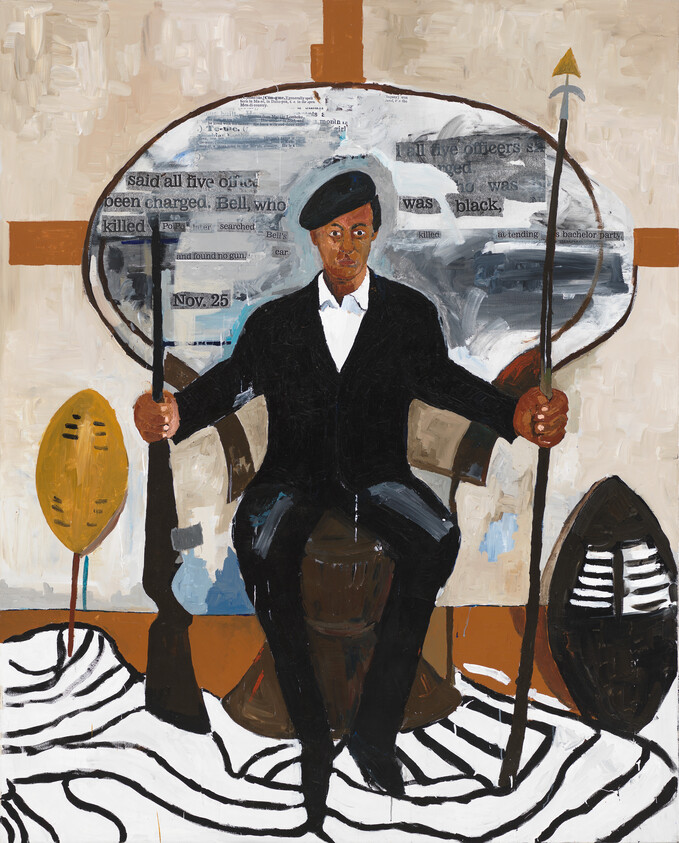 #48
#48
Huey Newton
Huey Newton shows a man in a beret sits on a throne holding two spears against a newspaper collage backdrop. Taylor paints with a nervous economy that connects an individual's portrait to the social and political history that surrounds him.
Documentary image and instructions: Whitney Museum of American Art. This work is not offered for reproduction by Alpha Reproduction.
See the institution's notice →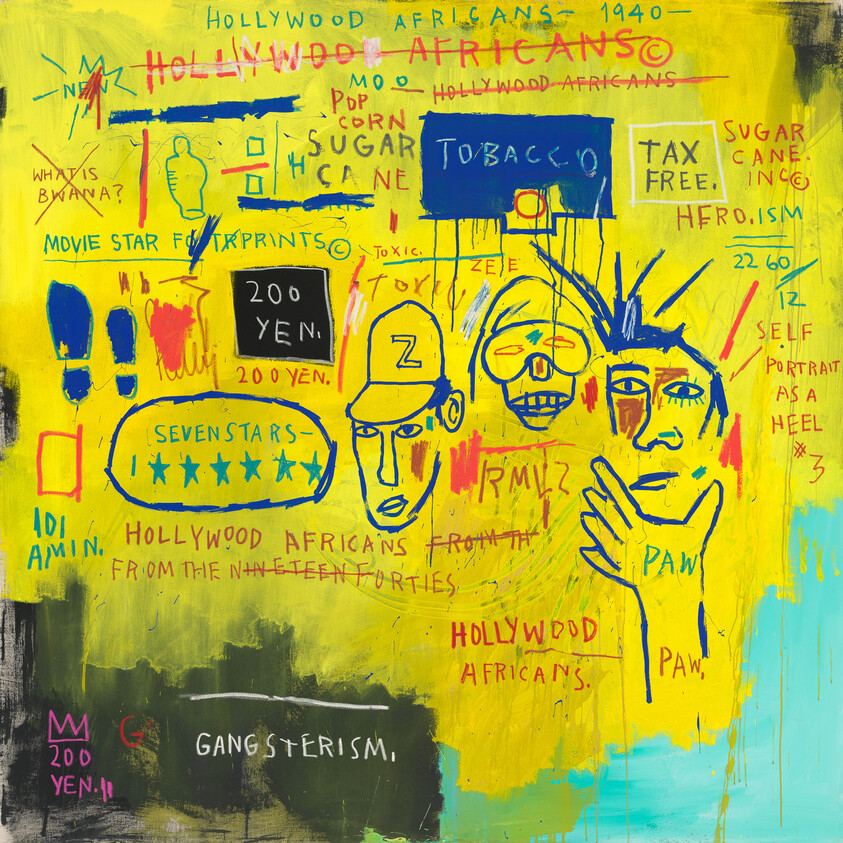 #49
#49
Hollywood Africans
Basquiat lists the names of his friends and racial stereotypes as accounting data; Hollywood becomes a machine for manufacturing and limiting black identities. Basquiat superimposes names, signs and schematic bodies in order to expose the cultural fabrication of fame, race and value.
Documentary image and instructions: Whitney Museum of American Art. This work is not offered for reproduction by Alpha Reproduction.
See the institution's notice →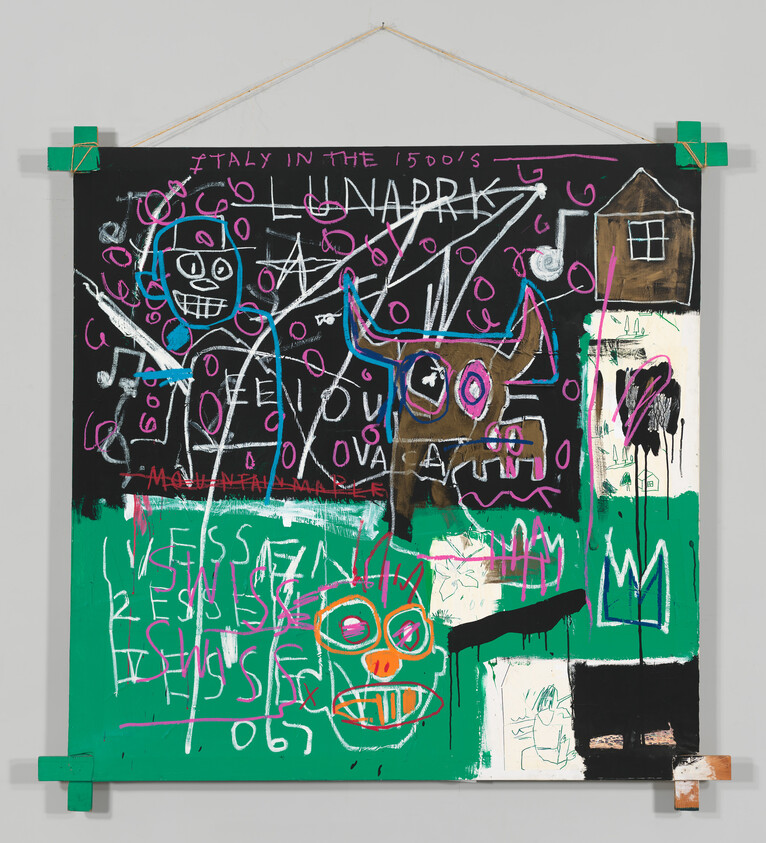 #50
#50
"LNAPRK"
Letters, bars and body fragments occupy a support found like traces of an urban wall; writing and painting become the same gesture of speaking. Basquiat superimposes names, signs and schematic bodies in order to expose the cultural fabrication of fame, race and value.
Documentary image and instructions: Whitney Museum of American Art. This work is not offered for reproduction by Alpha Reproduction.
See the institution's notice →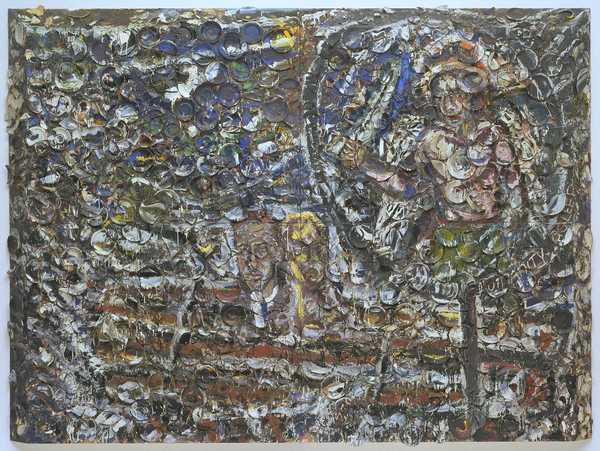 #51
#51
Sleeping Humanity
In "Sleeping Humanity", the figure, the decoration and the material are organized as the elements of a situation which remains voluntarily open. The rugged support refuses the transparent image: the figure must struggle with the breaks, the relief and the materiality of the painting.
Documentary image and instructions: Tate. This work is not offered for reproduction by Alpha Reproduction.
See the institution's notice → #52
#52
Painting for Eli
In "Painting for Eli", the figure, the decor and the material are organized as the elements of a situation which remains voluntarily open. Room juxtaposes images which cannot be resolved into a single story; the viewer must measure the contradictions of the media gaze.
Documentary image and instructions: Art Institute of Chicago. This work is not offered for reproduction by Alpha Reproduction.
See the institution's notice →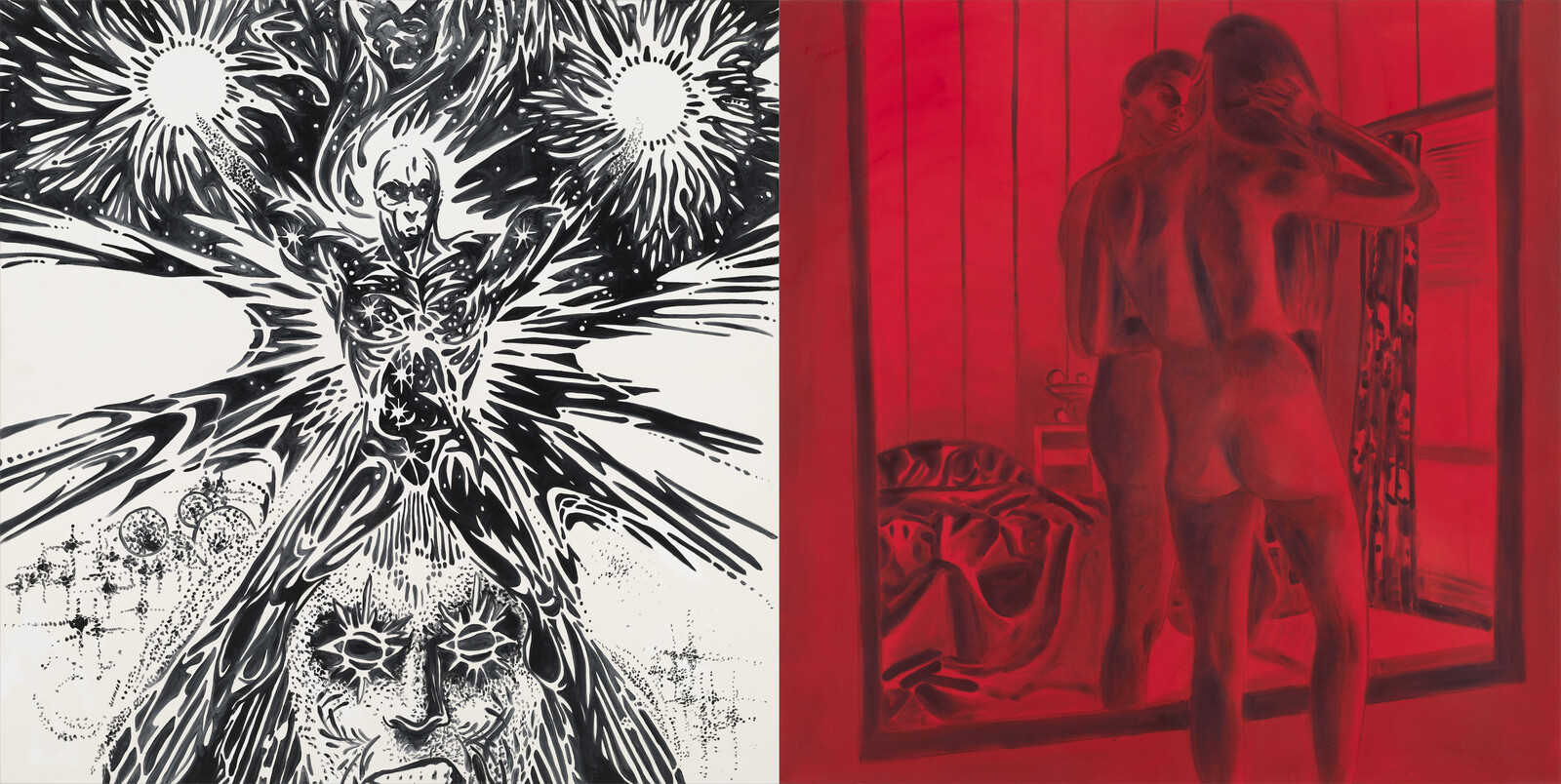 #53
#53
The Brilliant Man
Splinter Man shows a black-and-white exploding figure stands beside a red scene of a nude person viewing their reflection. Room juxtaposes images that cannot be resolved into a single story; the viewer must measure the contradictions of the media gaze.
Documentary image and instructions: Whitney Museum of American Art. This work is not offered for reproduction by Alpha Reproduction.
See the institution's notice →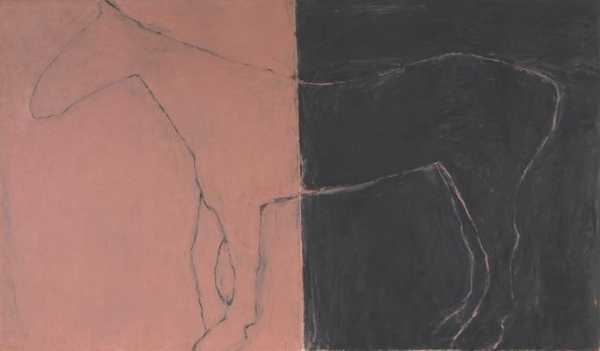 #54
#54
United States
The horse, barely more than an outline, crosses a field of paint shared by a vertical line; the animal becomes a measure of emptiness and energy. Rothenberg first reduces the horse then the body to a sign, while retaining the physical energy of the gesture and the surface.
Documentary image and instructions: Tate. This work is not offered for reproduction by Alpha Reproduction.
See the institution's notice →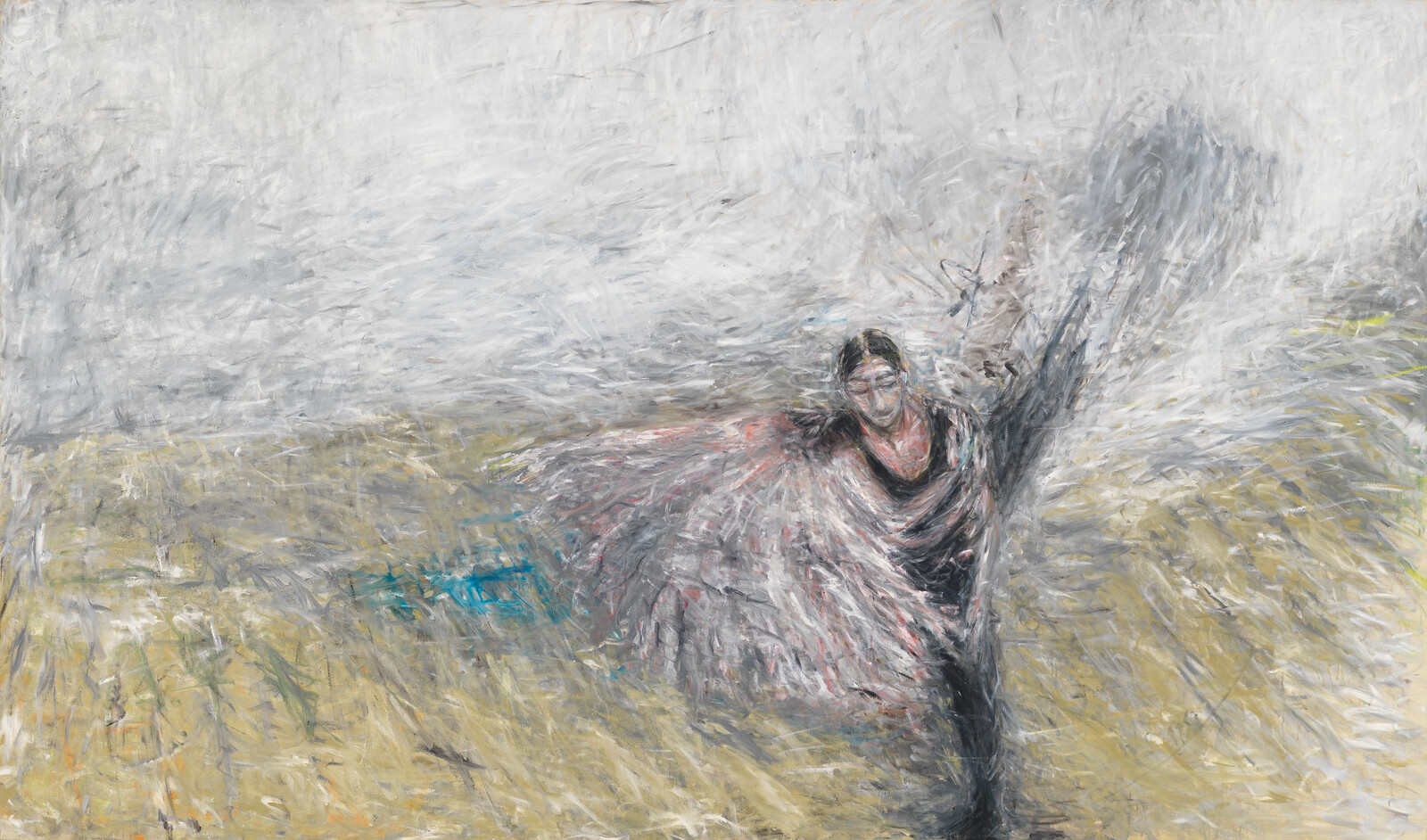 #55
#55
Hold the ground
Holding the Floor shows a lone figure with outstretched arms appears to dance or struggle against strong wind in a field. Rothenberg first reduces the horse then the body to a sign, while retaining the physical energy of the gesture and the surface.
Documentary image and instructions: Whitney Museum of American Art. This work is not offered for reproduction by Alpha Reproduction.
See the institution's notice → #56
#56
Back on Earth
Back on Earth shows abstract painting with defined sections of green, blue, black, and white on an irregularly shaped canvas. Murray bursts the rectangle: the painting becomes an animated object where domestic forms seem to twist under the pressure of the story.
Documentary image and instructions: Art Institute of Chicago. This work is not offered for reproduction by Alpha Reproduction.
See the institution's notice →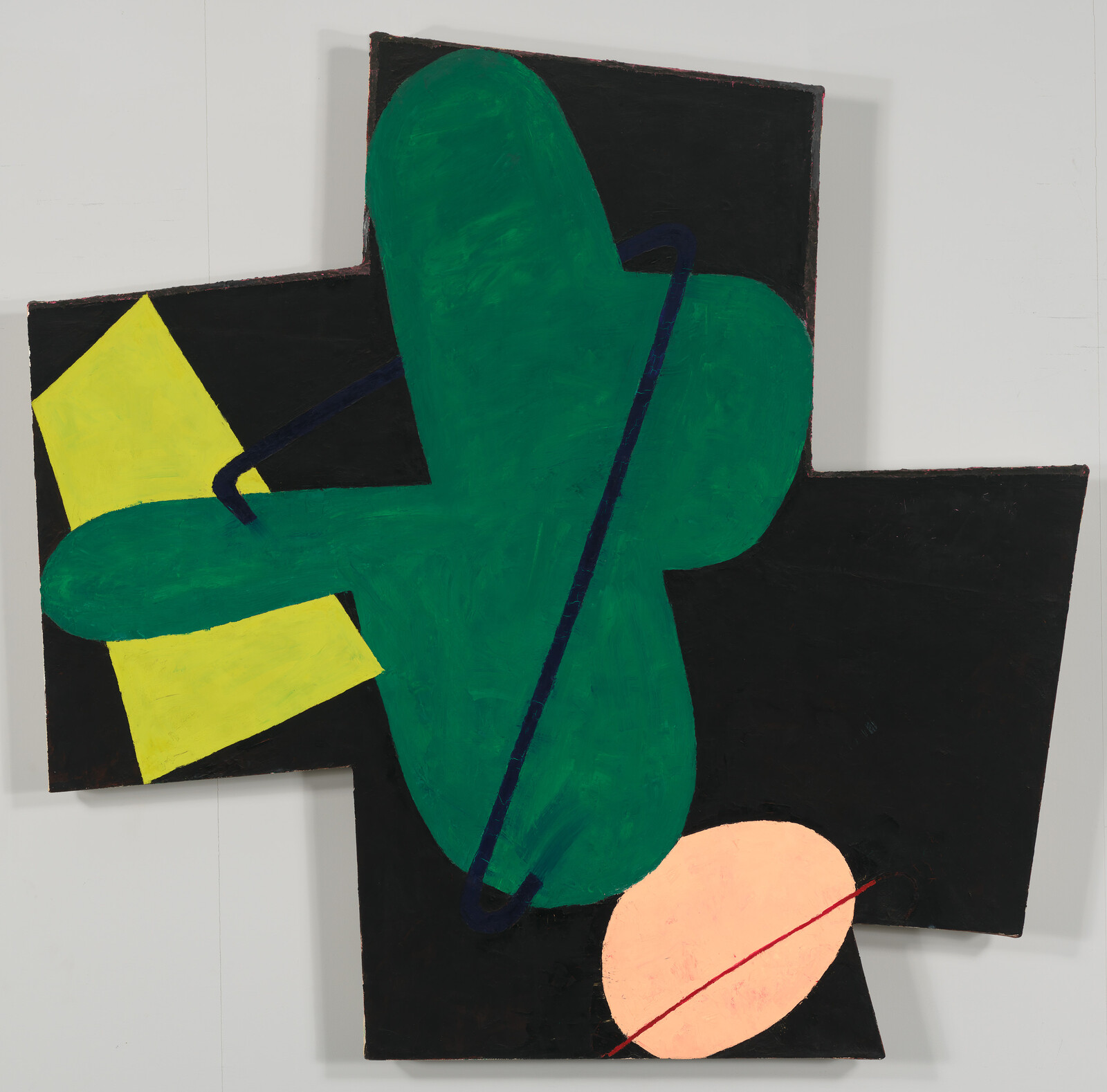 #57
#57
Druid
Druid shows a large green abstract shape overlaps black panels with a yellow rectangle and pink circle. Murray bursts the rectangle: the painting becomes an animated object where domestic forms seem to twist under the pressure of the story.
Documentary image and instructions: Whitney Museum of American Art. This work is not offered for reproduction by Alpha Reproduction.
See the institution's notice →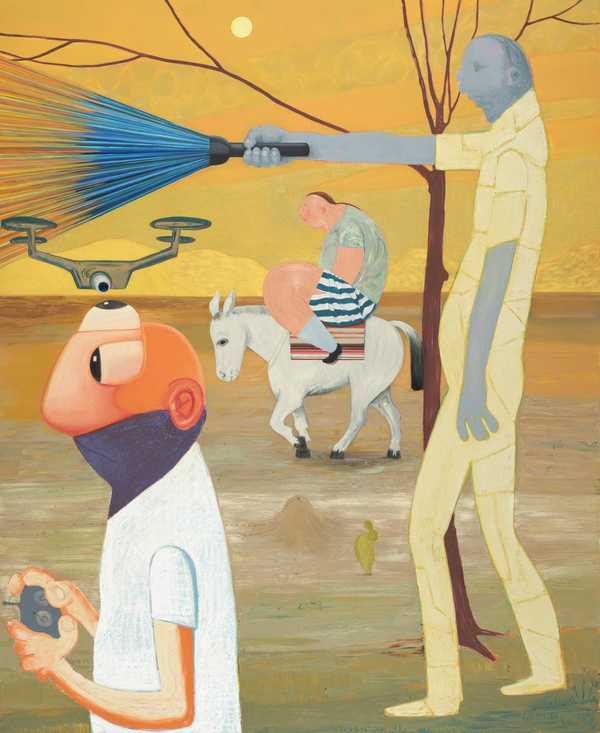 #58
#58
The Path to Darkness
A procession of figures advances in an uncertain landscape; the humor of social types never erases the idea of a community led towards darkness. Eisenman combines humor, melancholy and scholarly references to describe contemporary communities, solitudes and identities.
Documentary image and instructions: Tate. This work is not offered for reproduction by Alpha Reproduction.
See the institution's notice →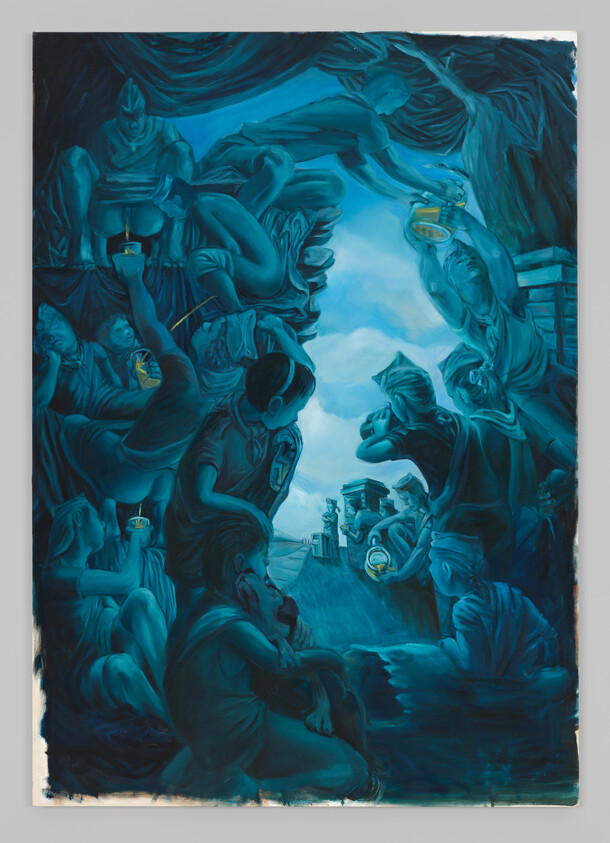 #59
#59
Lemonade stand
Lemonade Stand shows figures in blue tones hold small lanterns while peering toward a bright opening with distant structures. Eisenman combines humor, melancholy and scholarly references to describe contemporary communities, solitudes and identities.
Documentary image and instructions: Whitney Museum of American Art. This work is not offered for reproduction by Alpha Reproduction.
See the institution's notice → #60
#60
The Drawing Class
The workshop room allows Eisenman to replay one of the founding subjects of the academy, but with decidedly contemporary bodies and behaviors. Eisenman combines humor, melancholy and scholarly references to describe contemporary communities, solitudes and identities.
Documentary image and instructions: Art Institute of Chicago. This work is not offered for reproduction by Alpha Reproduction.
See the institution's notice →Genres, diasporas and affiliations shift the conventions of portraiture.
 #61
#61
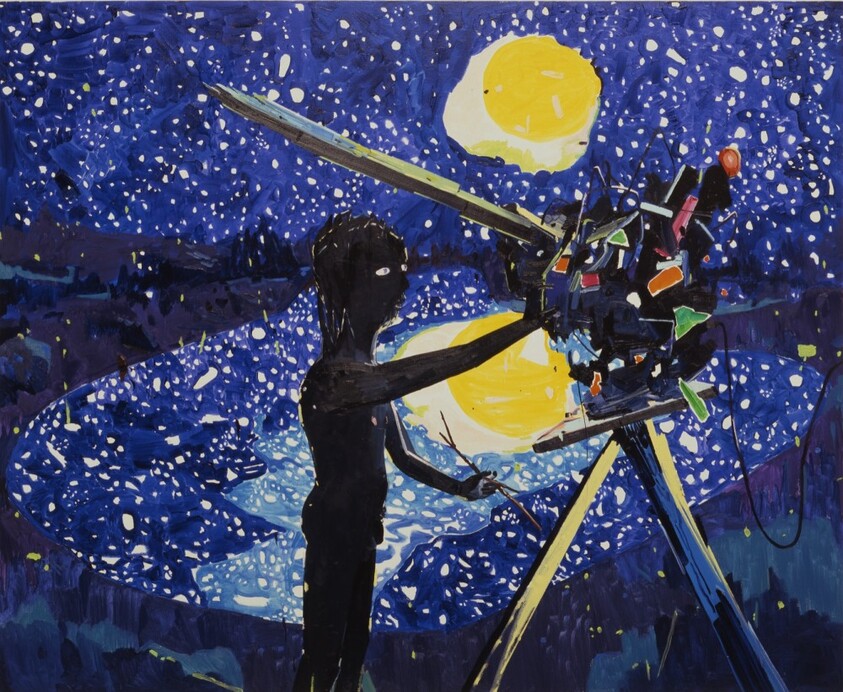
The Hen and the Egg
Chicken and Egg shows a silhouetted figure adjusts a complex telescope against a starry night sky with two large moons. Schutz invents an impossible situation then makes it credible through color and material, between grotesque, anxiety and comedy.
Documentary image and instructions: Whitney Museum of American Art. This work is not offered for reproduction by Alpha Reproduction.
See the institution's notice → #62
#62
Bonsai
In "Bonsai", the figure, the setting and the material are organized as the elements of a situation which remains voluntarily open. Yuskavage uses the virtuosity of the academic nude to complicate the relationship between fantasy, vulnerability and the male gaze.
Documentary image and instructions: Art Institute of Chicago. This work is not offered for reproduction by Alpha Reproduction.
See the institution's notice → #63
#63
Angel
In "Ange", the figure, the setting and the material are organized as the elements of a situation which remains voluntarily open. Yuskavage uses the virtuosity of the academic nude to complicate the relationship between fantasy, vulnerability and the male gaze.
Documentary image and instructions: Art Institute of Chicago. This work is not offered for reproduction by Alpha Reproduction.
See the institution's notice →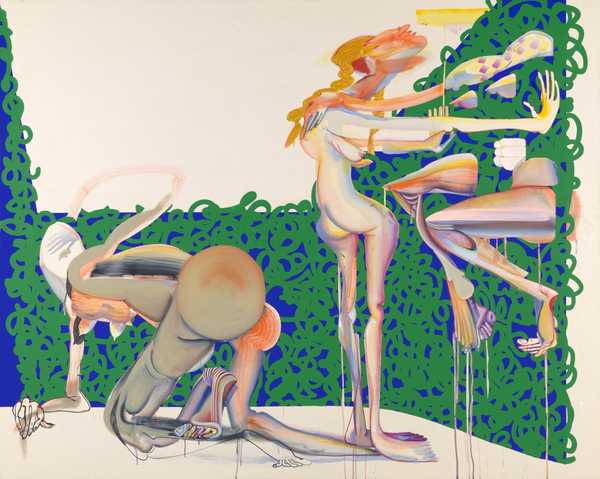 #64
#64
Casual cruelty
Limbs intersect, intersect and change scale through decorative planes; anatomy becomes the image of an identity difficult to contain. Quarles passes bodies through incompatible planes; this instability reflects identities that refuse fixed categories.
Documentary image and instructions: Tate. This work is not offered for reproduction by Alpha Reproduction.
See the institution's notice → #65
#65
We knew so little then /I know even less now...
In "We knew so little then/I know even less now...", the figure, the setting and the material are organized as the elements of a situation which remains voluntarily open. Quarles passes bodies through incompatible plans; this instability reflects identities which refuse fixed categories.
Documentary image and instructions: Art Institute of Chicago. This work is not offered for reproduction by Alpha Reproduction.
See the institution's notice → #66
#66
Barack
Barack shows close-up view of the face of a medium brown-skinned man cupping his chin in his hand, his eyes closed. The brushstrokes are visible and his features are somewhat exaggerated and disproportionate. He is set against a light green background. Casteel constructs his portraits from real encounters and gives the model a social presence as strong as color.
Documentary image and instructions: Art Institute of Chicago. This work is not offered for reproduction by Alpha Reproduction.
See the institution's notice →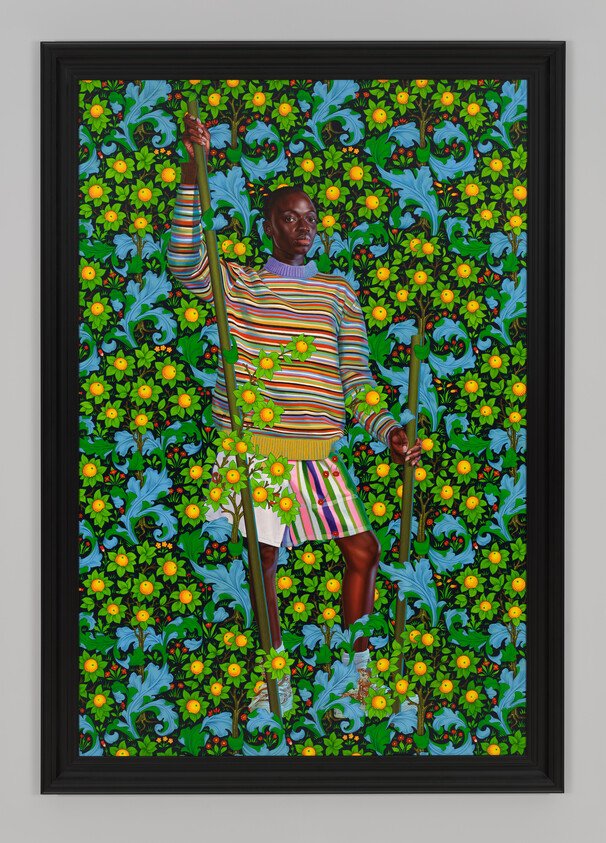 #67
#67
Portrait of Soukeyna Diouf
Portrait of Soukeyna Diouf shows a person in colorful striped clothes stands holding two long poles against a bright floral background. Wiley takes up the heroic pose of the European portrait but entrusts its visual power to contemporary black models.
Documentary image and instructions: Whitney Museum of American Art. This work is not offered for reproduction by Alpha Reproduction.
See the institution's notice →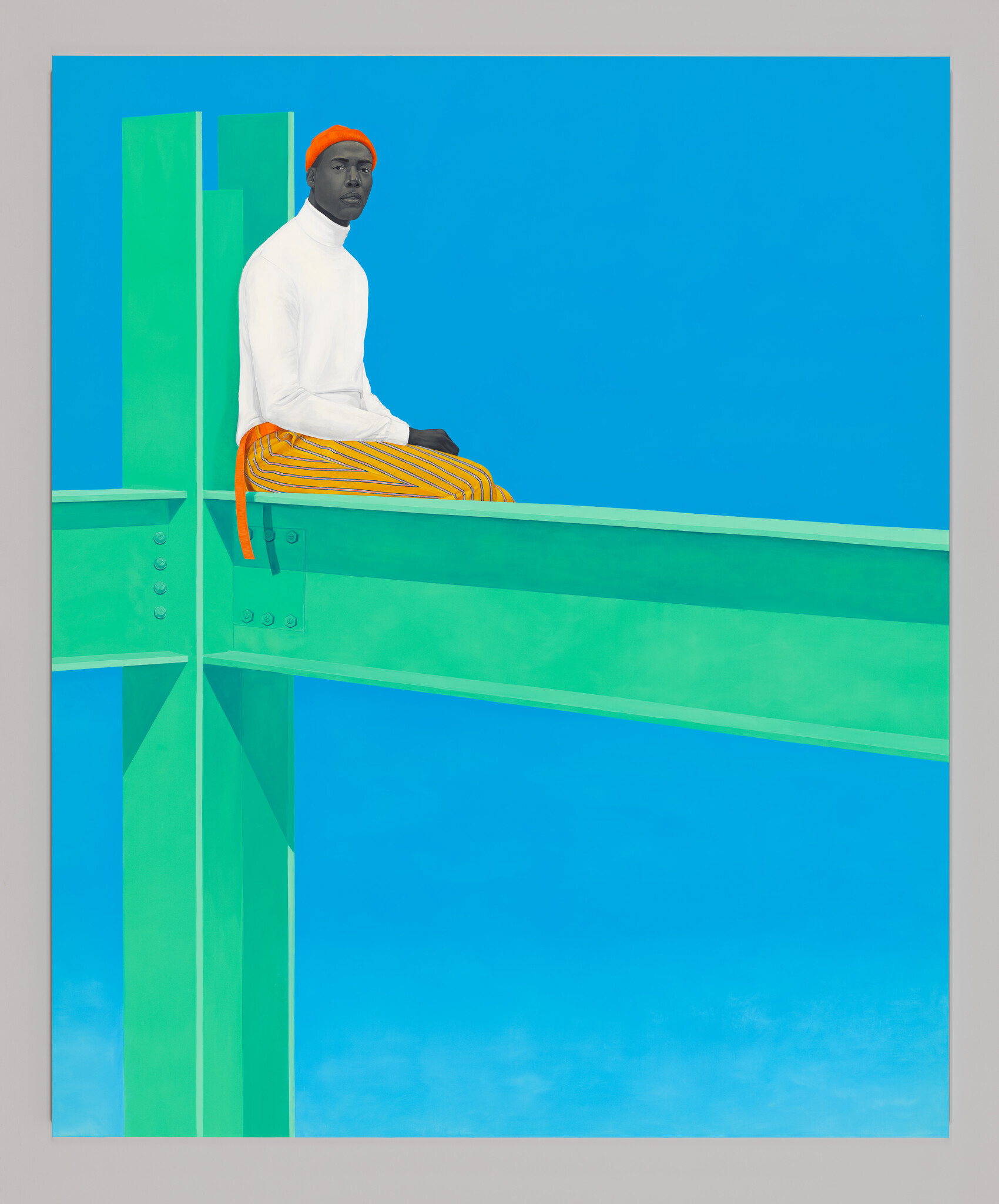 #68
#68
If you gave in to the air, you might ride it
If You Surrendered to the Air, You Could Ride It shows a man in an orange hat and striped pants sits calmly on a green steel beam. Sherald suspends realism with his gray skin tones and focuses attention on the subject's outfit, pose and autonomy.
Documentary image and instructions: Whitney Museum of American Art. This work is not offered for reproduction by Alpha Reproduction.
See the institution's notice → #69
#69
A certain form of happiness
In "A Certain Form of Happiness", the figure, the decor and the material are organized as the elements of a situation which remains voluntarily open. Sherald suspends realism with her gray skin tones and focuses attention on the subject's outfit, pose and autonomy.
Documentary image and instructions: Art Institute of Chicago. This work is not offered for reproduction by Alpha Reproduction.
See the institution's notice →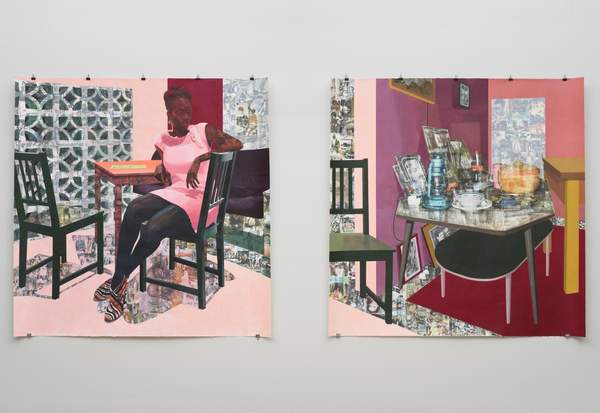 #70
#70
Predecessors
The family portrait is crossed by transferred images of Nigerian history and domestic culture, as if several generations really shared the same room. Akunyili Crosby superimposes painting and transfers photographic to make diasporic lives visible, made of several places and memories.
Documentary image and instructions: Tate. This work is not offered for reproduction by Alpha Reproduction.
See the institution's notice →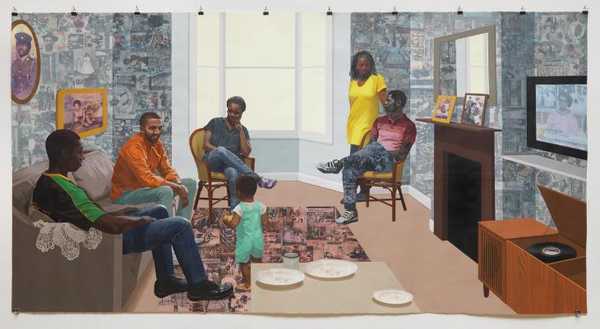 #71
#71
Stay, flourish
In "Abide, flourish", the figure, the decor and the material are organized as the elements of a situation which remains voluntarily open. Akunyili Crosby superimposes painting and photographic transfers to make diasporic lives visible, made up of several places and memories.
Documentary image and instructions: Tate. This work is not offered for reproduction by Alpha Reproduction.
See the institution's notice →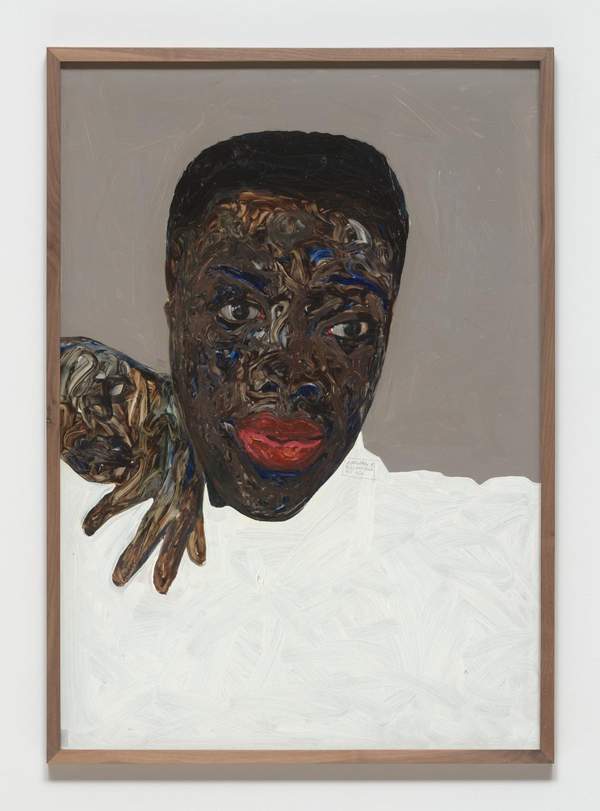 #72
#72
Empty look
The frontal face and the skin modeled on the finger contradict the title: this silent gaze, on the contrary, imposes a direct encounter. Boafo models the skin directly with the fingers; this tactile surface gives its models a sovereign presence.
Documentary image and instructions: Tate. This work is not offered for reproduction by Alpha Reproduction.
See the institution's notice →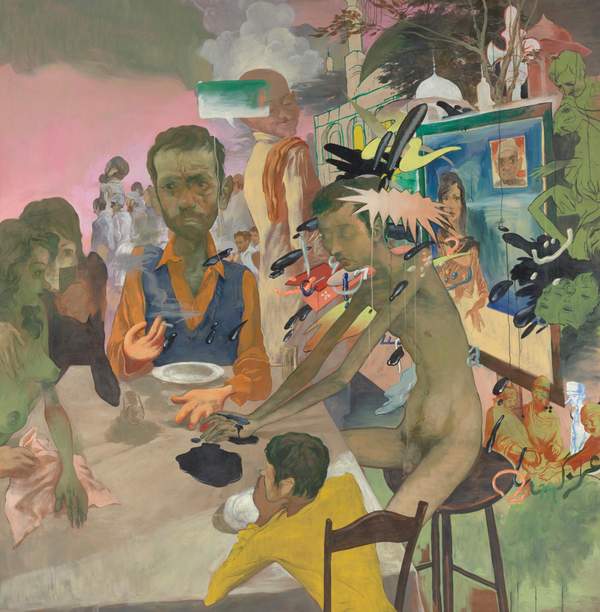 #73
#73
9 p.m., news
The green light of a screen brings men together in front of the news; the intimate space is crossed by politics, exile and collective worry. Toor uses a nocturnal palette and a fluid touch to paint queer intimacy, exile and urban sociability.
Documentary image and instructions: Tate. This work is not offered for reproduction by Alpha Reproduction.
See the institution's notice →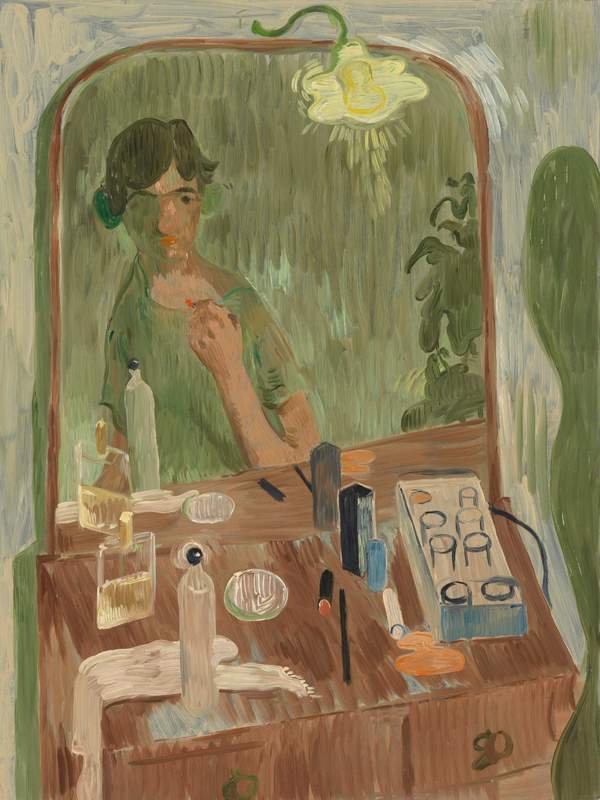 #74
#74
The hairdresser
In "The Hairdresser", the figure, the decor and the material are organized as the elements of a situation which remains voluntarily open. Toor uses a nocturnal palette and a fluid touch to paint queer intimacy, exile and urban sociability.
Documentary image and instructions: Tate. This work is not offered for reproduction by Alpha Reproduction.
See the institution's notice →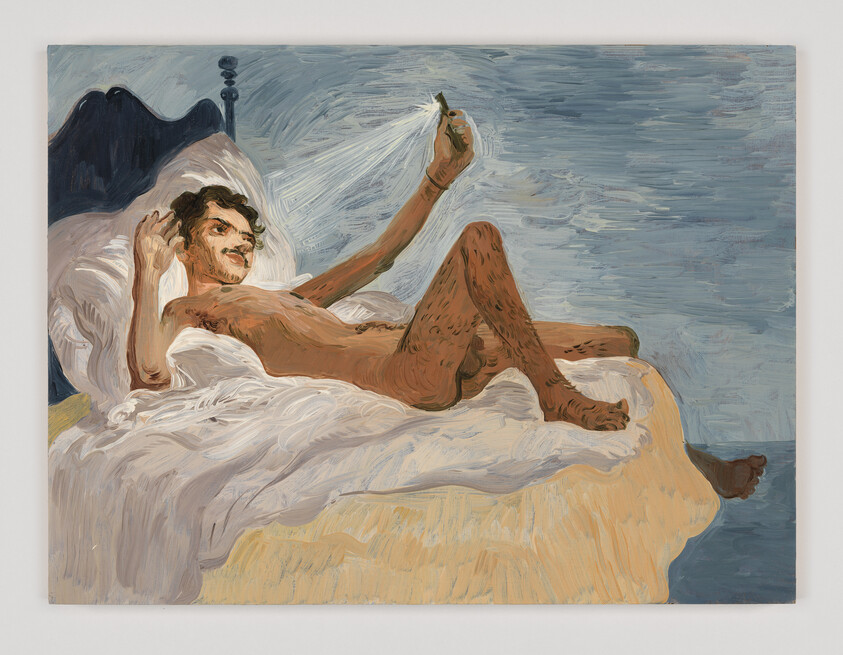 #75
#75
Boy in the bedroom
Bedroom Boy shows naked man lying on a bed, holding a small lit lighter that sparks above him. Toor uses a nocturnal palette and a fluid touch to paint queer intimacy, exile and urban sociability.
Documentary image and instructions: Whitney Museum of American Art. This work is not offered for reproduction by Alpha Reproduction.
See the institution's notice →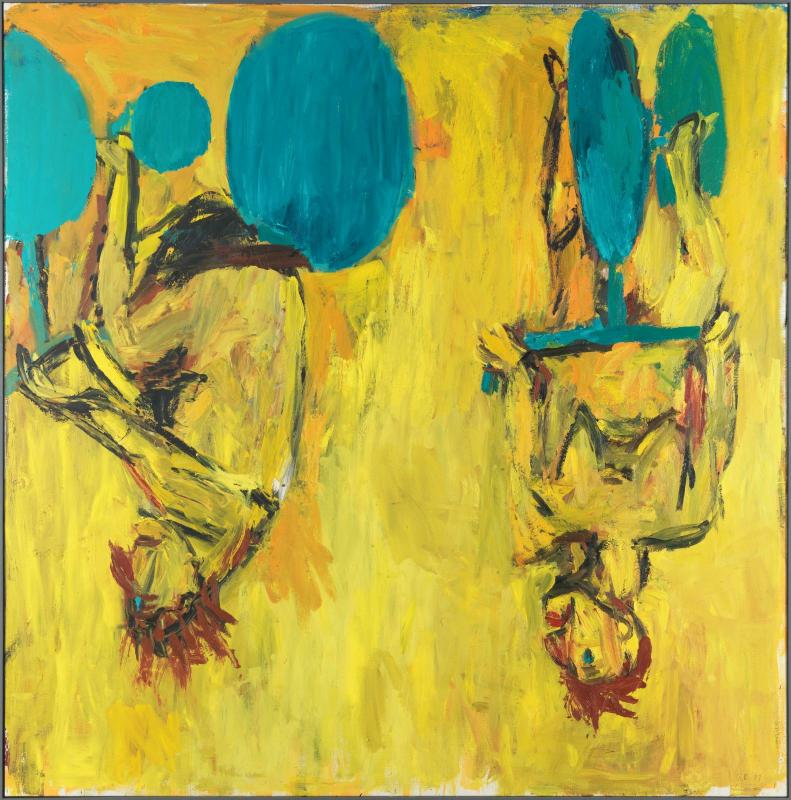 #76
#76
The Daughters of Olmo II (Die Mädchen von Olmo II)
Inspired by cyclists observed in Italy, the two figures are turned around: their visual fall prevents the motif from being reduced to a picturesque scene. By reversing his figures, Baselitz detaches the motif from the anecdote and forces it to look at painting, its violence and its historical quotes.
Documentary image and instructions: Pompidou Center. This work is not offered for reproduction by Alpha Reproduction.
See the institution's notice →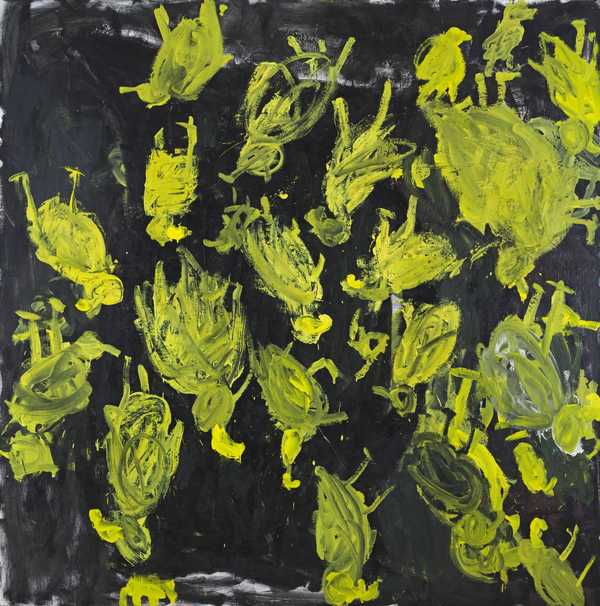 #77
#77
Where is the yellow milk jug, Madame Oiseau?
In "Where is the yellow milk jug, Madame Oiseau?", the figure, the decoration and the material are organized like the elements of a situation which remains voluntarily open. By reversing his figures, Baselitz detaches the motif from the anecdote and forces you to look at the painting, its violence and its historical quotes.
Documentary image and instructions: Tate. This work is not offered for reproduction by Alpha Reproduction.
See the institution's notice → #78
#78
The Order of Angels
Angel names are inscribed on a scorched earth crossed by shifty lines; cosmology and devastated landscape become inseparable. Kiefer transforms myths, ruins and poor materials into an investigation into German memory and the catastrophes of history.
Documentary image and instructions: Art Institute of Chicago. This work is not offered for reproduction by Alpha Reproduction.
See the institution's notice →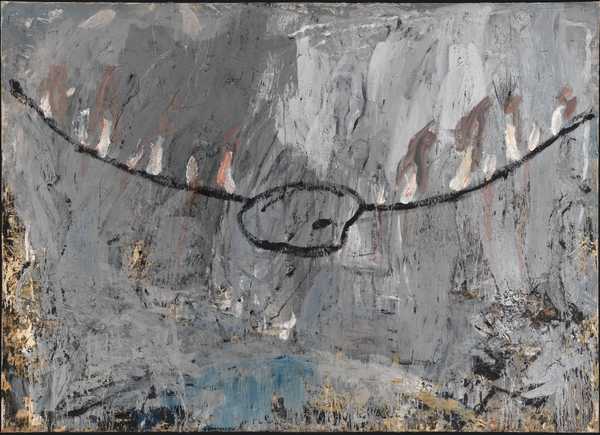 #79
#79
Palette
The palette, the painter's emblem, hangs above a charred landscape; creating after the disaster becomes the real subject. Kiefer transforms myths, ruins and poor materials into an investigation into German memory and the catastrophes of history.
Documentary image and instructions: Tate. This work is not offered for reproduction by Alpha Reproduction.
See the institution's notice →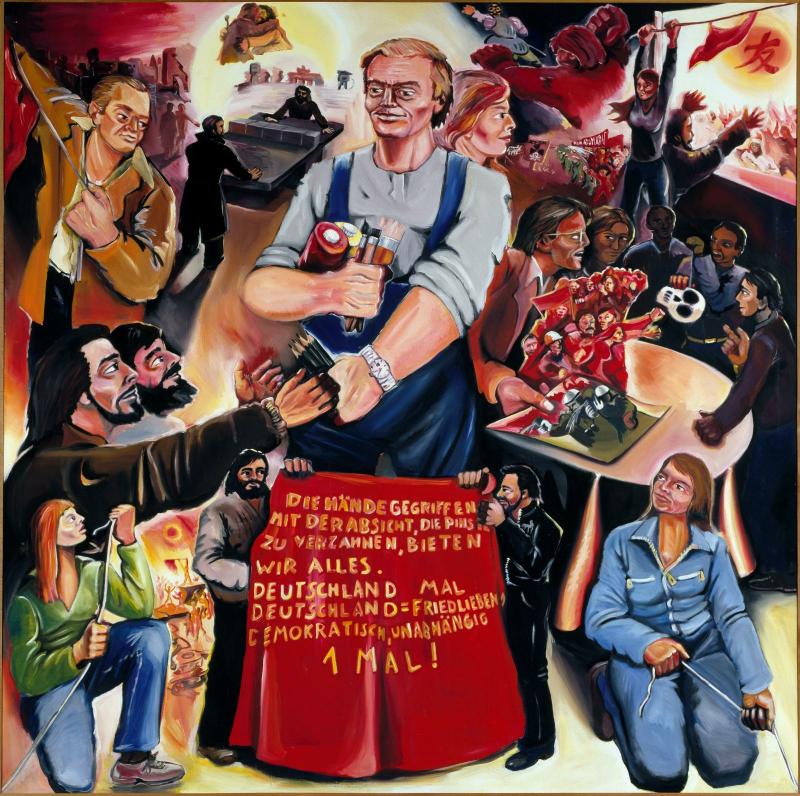 #80
#80
Everything comes from the will of the people (Alles geht vom Volke aus)
In "Everything comes from the will of the people (Alles geht vom Volke aus)", the figure, the decor and the material are organized as the elements of a situation which remains voluntarily open. Immendorff conceives the canvas as a scene politics saturated with symbols, characters and debates about divided Germany.
Documentary image and instructions: Pompidou Center. This work is not offered for reproduction by Alpha Reproduction.
See the institution's notice →Materials, symbols and photographic precision renew the visible world.
 #81
#81
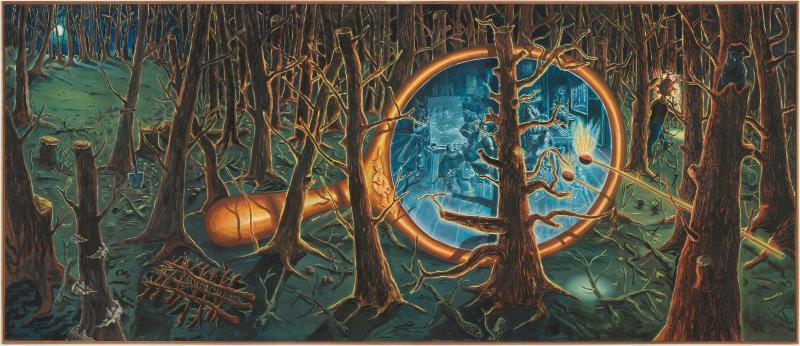
The Forest of the World (Weltenwald)
The title gives the forest motif a political and mythical significance: the natural space becomes the dense place where ideologies and national stories are lost. Immendorff sees the canvas as a political scene saturated with symbols, characters and debates about divided Germany.
Documentary image and instructions: Pompidou Center. This work is not offered for reproduction by Alpha Reproduction.
See the institution's notice →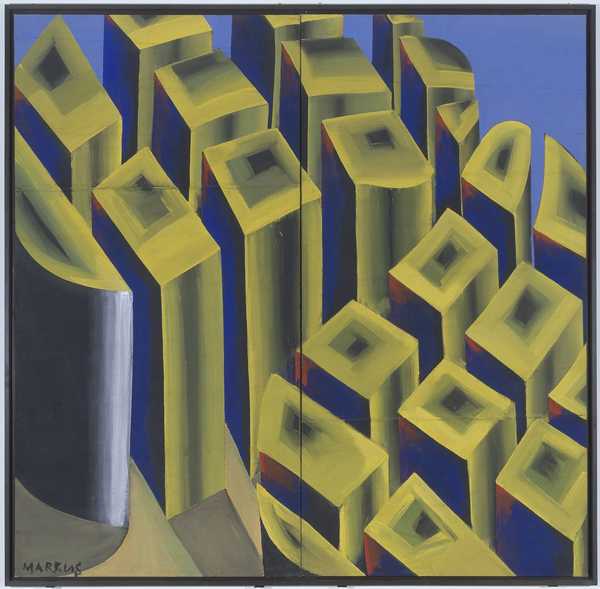 #82
#82
The Big Step
In "The Great Step", the figure, the decoration and the material are organized as the elements of a situation which remains voluntarily open. Lüpertz treats German history with fragmentary emblems whose monumentality remains deliberately ambiguous.
Documentary image and instructions: Tate. This work is not offered for reproduction by Alpha Reproduction.
See the institution's notice → #83
#83
Albino
Albino shows soft pale tones depict a close up of African mandz head. Dumas starts from found images but the liquid paint destabilizes their authority and restores moral disturbance to the face.
Documentary image and instructions: Art Institute of Chicago. This work is not offered for reproduction by Alpha Reproduction.
See the institution's notice →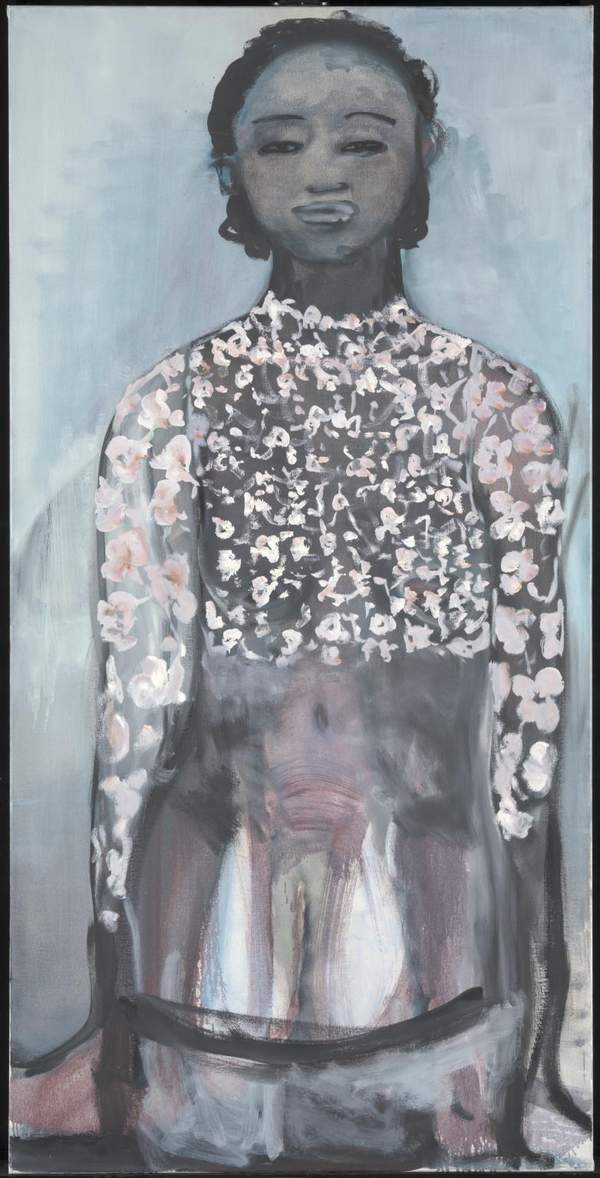 #84
#84
Ivory black
The title names a pigment but the painting presents a face: Dumas thus slides the chromatic classification towards the racial categories imposed on bodies. Dumas starts from found images but the liquid paint destabilizes their authority and restores moral disturbance to the face.
Documentary image and instructions: Tate. This work is not offered for reproduction by Alpha Reproduction.
See the institution's notice →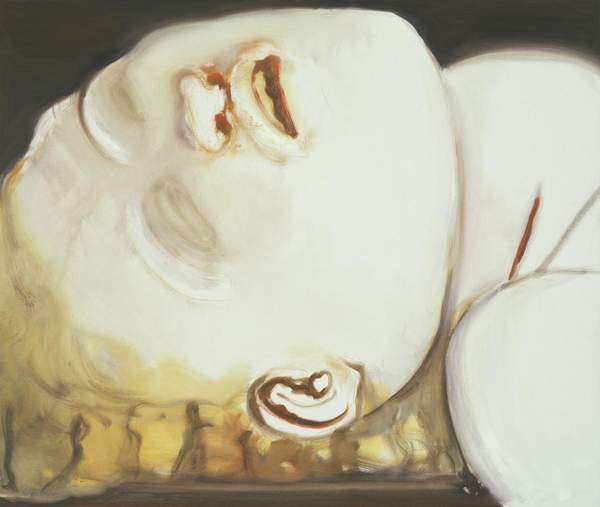 #85
#85
Lucy
In "Lucy", the figure, the decoration and the material are organized as the elements of a situation which remains voluntarily open. Dumas starts from found images but the liquid paint destabilizes their authority and restores moral disturbance to the face.
Documentary image and instructions: Tate. This work is not offered for reproduction by Alpha Reproduction.
See the institution's notice → #86
#86
One at a time
In "One at a Time", the figure, the setting and the material are organized as the elements of a situation which remains voluntarily open. Borremans uses the lighting of the old masters to construct enigmatic scenes where obedience, spectacle and unease merge.
Documentary image and instructions: Art Institute of Chicago. This work is not offered for reproduction by Alpha Reproduction.
See the institution's notice → #87
#87
Hospital
The figure and medical space are filtered by bodily sensation; painting reflects less a place than a state of dependence and exposure. Lassnig paints the body as it is felt from the inside rather than as it appears in the mirror.
Documentary image and instructions: Art Institute of Chicago. This work is not offered for reproduction by Alpha Reproduction.
See the institution's notice →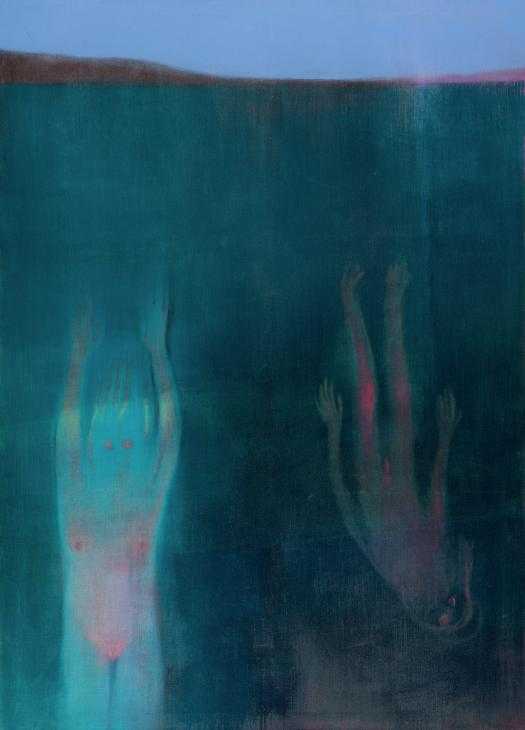 #88
#88
The Beautiful Blue
In "Le Beau Bleu", the figure, the decor and the material are organized as the elements of a situation which remains voluntarily open. Cahn sometimes reduces the figure to a frontal appearance in order to link physical vulnerability, violence and gaze.
Documentary image and instructions: Tate. This work is not offered for reproduction by Alpha Reproduction.
See the institution's notice → #89
#89
Man-woman figure and the pomegranate
The double figure and the pomegranate combine identity, fertility and calligraphic sign without clearly separating body and writing. El-Salahi combines Arabic calligraphy, modernism and body forms to develop a deeply personal Sudanese language.
Documentary image and instructions: Art Institute of Chicago. This work is not offered for reproduction by Alpha Reproduction.
See the institution's notice →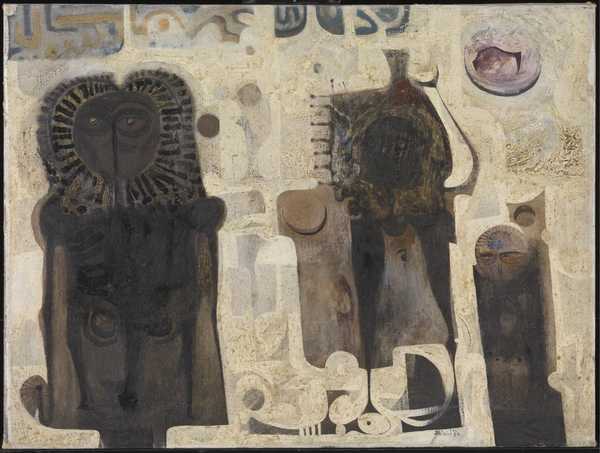 #90
#90
They always appear
In "They Always Appear", the figure, the setting and the material are organized as elements of a situation which remains voluntarily open. El-Salahi combines Arabic calligraphy, modernism and body forms to develop a deeply personal Sudanese language.
Documentary image and instructions: Tate. This work is not offered for reproduction by Alpha Reproduction.
See the institution's notice →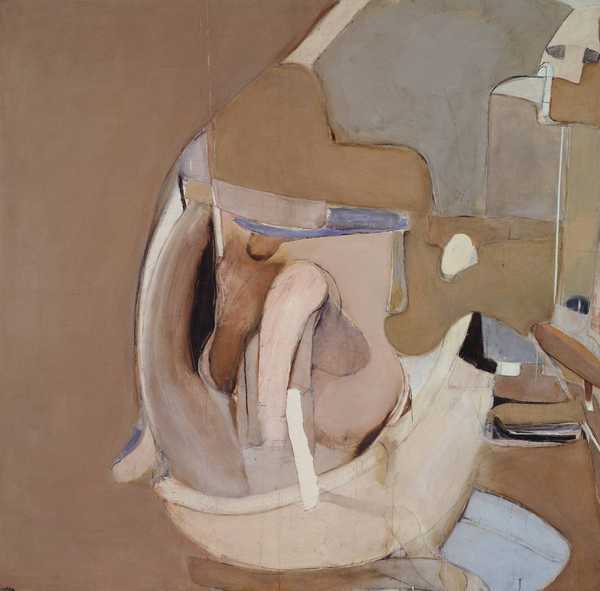 #91
#91
Woman in a Bath II
In "Woman in a Bath II", the figure, the setting and the material are organized like the elements of a situation which remains voluntarily open. Whiteley stretches the body and space into sensual arabesques, halfway between observation and graphic energy.
Documentary image and instructions: Tate. This work is not offered for reproduction by Alpha Reproduction.
See the institution's notice →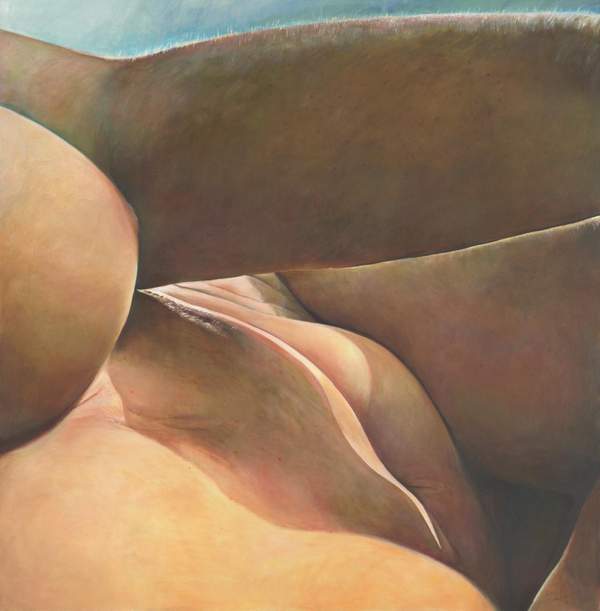 #92
#92
Secret spaces
The shortcut to the female body comes from the perspective of the artist herself; proximity and fragmentation replace the pose offered to the viewer. Semmel paints the body from his own point of view and thus moves the story of the nude out of the traditional male gaze.
Documentary image and instructions: Tate. This work is not offered for reproduction by Alpha Reproduction.
See the institution's notice →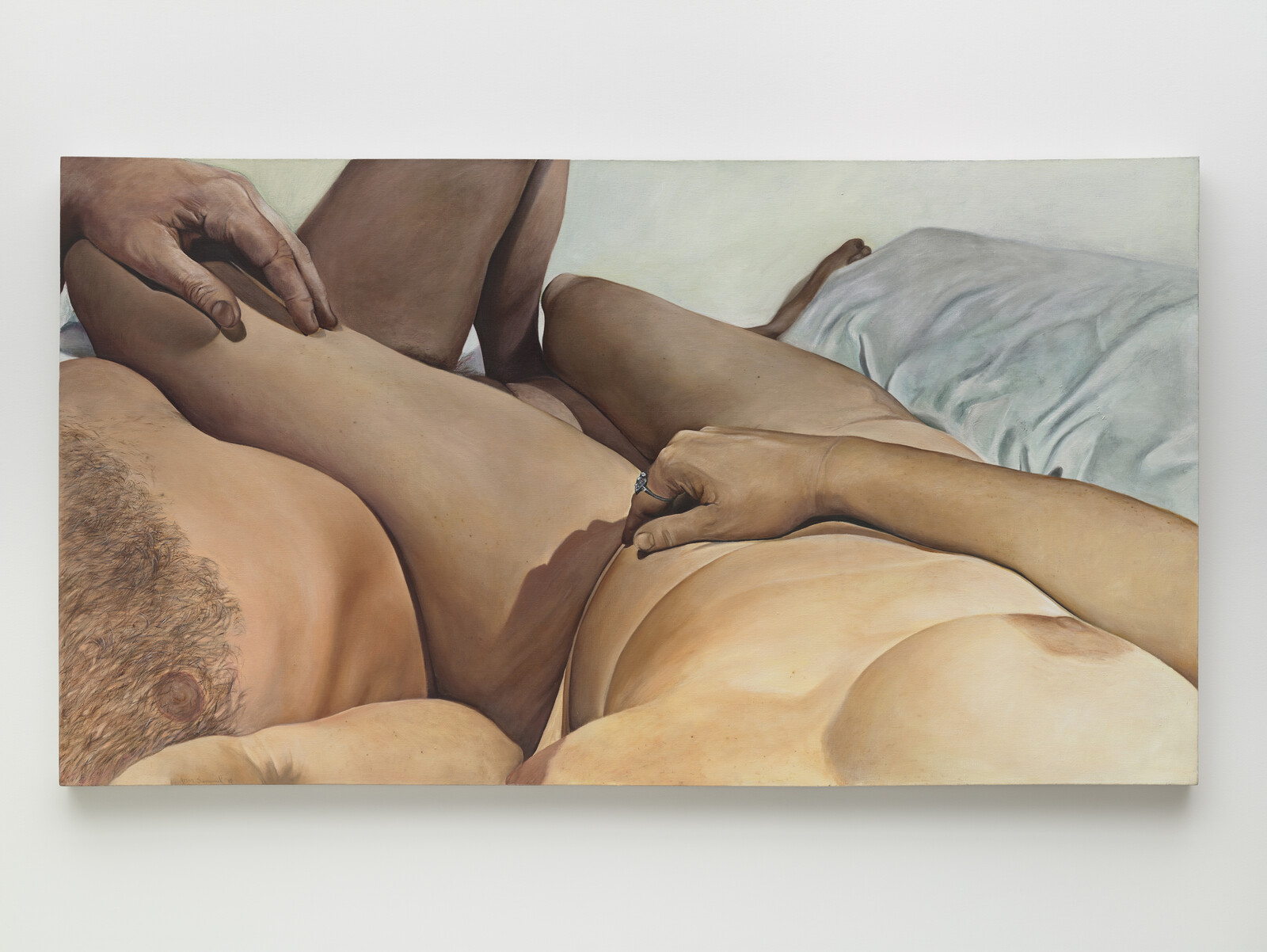 #93
#93
Touch
Touch shows two nude people lying closely together on a bed with hands remaining on their bodies. Semmel paints the body from his own point of view and thus moves the story of the nude out of the traditional male gaze.
Documentary image and instructions: Whitney Museum of American Art. This work is not offered for reproduction by Alpha Reproduction.
See the institution's notice →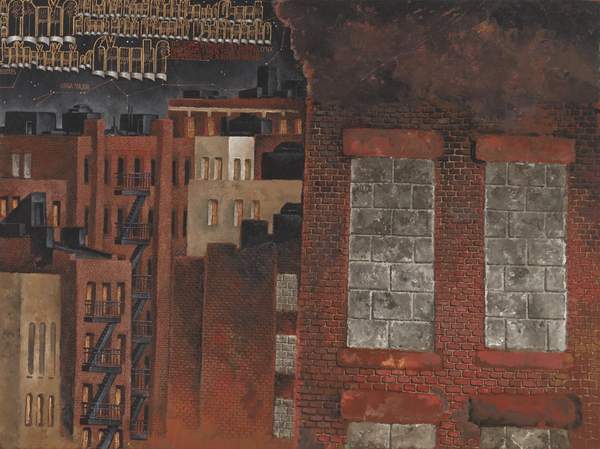 #94
#94
Nighttime at Ridge Street and Stanton
Bricks, signs and walled windows become an almost heraldic facade; the night city preserves the memory of a threatened neighborhood. Wong transforms Lower East Side architecture into a theater of desire, confinement and community memory.
Documentary image and instructions: Tate. This work is not offered for reproduction by Alpha Reproduction.
See the institution's notice →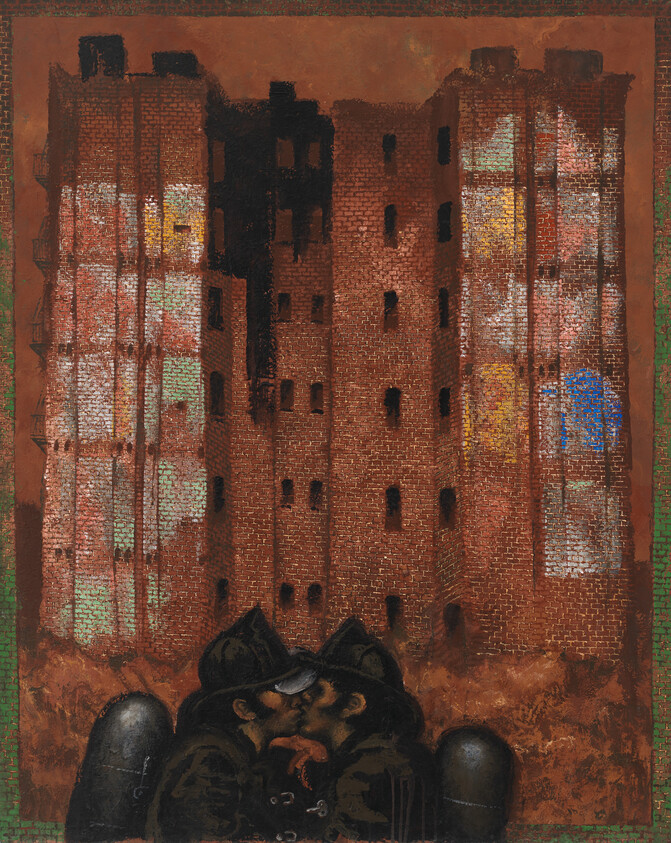 #95
#95
Big Heat
Two firefighters kiss in a nighttime setting saturated with bricks and signs; Wong transforms the heroic imagery of the craft into a scene of desire and tenderness. Wong transforms Lower East Side architecture into a theater of desire, confinement and community memory.
Documentary image and instructions: Whitney Museum of American Art. This work is not offered for reproduction by Alpha Reproduction.
See the institution's notice →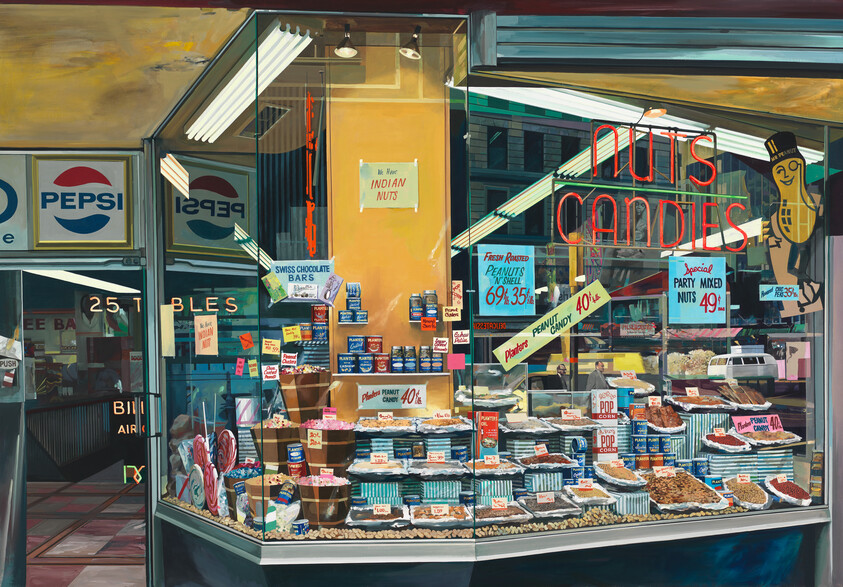 #96
#96
The Confectionery
Showcases, cars and inscriptions overlap in the reflections; the real street becomes a continuous surface that the eye cannot resolve with a single glance. Estes recomposes several photographs and perspectives; its reflections describe less an objective city than a space impossible to unravel.
Documentary image and instructions: Whitney Museum of American Art. This work is not offered for reproduction by Alpha Reproduction.
See the institution's notice → #97
#97
Michigan Avenue with views of the Art Institute
In "Michigan Avenue with a View of the Art Institute", the figure, decor and material are organized as elements of a situation that remains voluntarily open. Estes recomposes several photographs and perspectives; his reflections describe less an objective city than a space impossible to unravel.
Documentary image and instructions: Art Institute of Chicago. This work is not offered for reproduction by Alpha Reproduction.
See the institution's notice →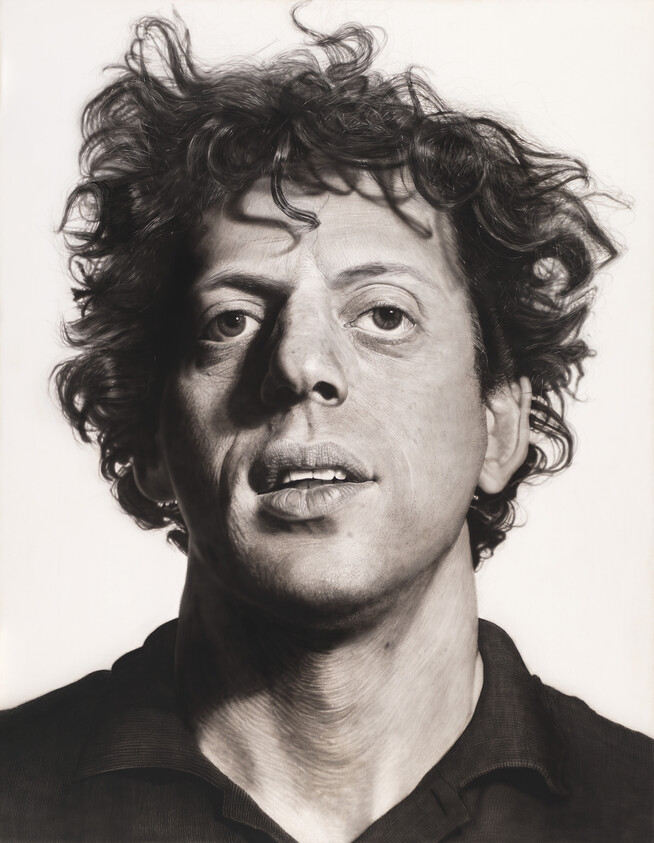 #98
#98
Phil
Philip Glass' face fills the canvas like a photograph of disproportionate identity; pores and asymmetries nevertheless destroy any illusion of neutrality. Close enlarges photographic information to the point of making the face oscillate between human presence, grid and optical event.
Documentary image and instructions: Whitney Museum of American Art. This work is not offered for reproduction by Alpha Reproduction.
See the institution's notice →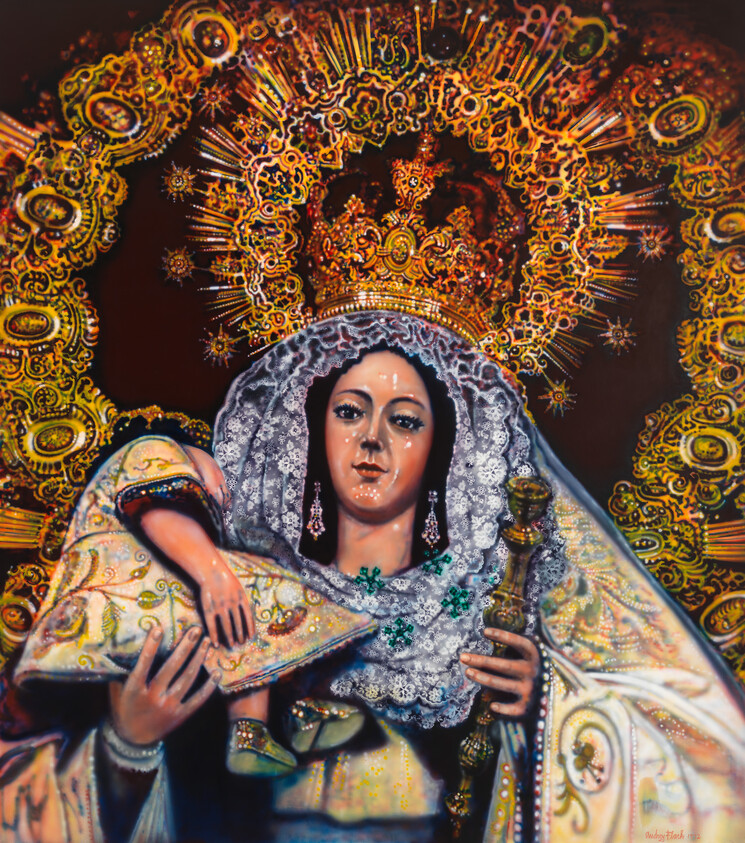 #99
#99
Madonna
Flack combines an image of the Virgin with everyday objects and photographic clarity that transforms devotion into meditation on the reproduced images. Flack combines photographic precision and symbols of vanity: the brilliance of objects leads to memory, loss and time.
Documentary image and instructions: Whitney Museum of American Art. This work is not offered for reproduction by Alpha Reproduction.
See the institution's notice →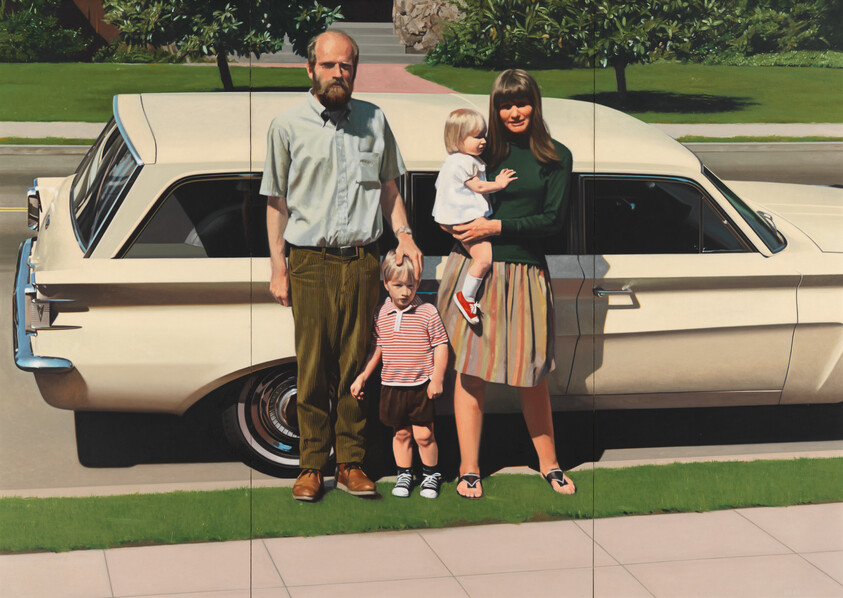 #100
#100
Pontiac 61
The family car and the Californian facade form a scene without event; this apparent neutrality becomes the precise portrait of a class and an era. Bechtle paints Californian banality without emphasis and transforms car, facade and light into post-war social memory.
Documentary image and instructions: Whitney Museum of American Art. This work is not offered for reproduction by Alpha Reproduction.
See the institution's notice →Sources and links
Collections and notices of works
Each image and each button opens the exact file of the institution. These contemporary works are presented for documentary purposes and are not offered for reproduction by Alpha Reproduction.
London
Tate - art collectionSchool of London, British figuration and international scenes.Tate - Francis BaconNotice of the Triptych, August 1972.Tate - Paula RegoNotice of The Dance.Frequently asked questions
Questions about contemporary figuration
Some benchmarks to understand the period, its currents and the documentary use of images.
What do we call contemporary figuration?
The expression refers to figurative practices developed after 1945 and until today. It includes portraiture, the social scene, urban realism and deliberately distorted images, without constituting a single movement.
Why do Bacon, Freud and Neel open the course?
They kept the body and portrait at the center of their painting during the decades when abstraction dominated much of the modernist narrative.
Does photorealism belong to this story?
Yes, when he transforms a photograph into a pictorial construction. Estes, Close, Flack and Bechtle show that precision can question the city, identity, memory and consumer images.
Are these paintings available for reproduction?
No. The hundred works are presented for documentary purposes. The images and buttons refer only to the notices of the corresponding museums.
0 comments