

Van Gogh and Gauguin at the Yellow House • Art & decoration guide
Van Gogh and Gauguin at the Yellow House: a guide that looks beneath the varnish
Place Lamartine, two temperaments, and proof that a shared studio can shatter a painter like an overripe fruit.
Van Gogh and Gauguin at the Yellow House remains the most commented episode in modern art history: two painters locked in the same house, painting while measuring each other up, and ending up parting ways in injury. We start with a date, an address, and a street corner in Arles that bore more nervous tension than most Parisian ateliers. We explore the subject in depth: the places, the ruptures, the artists, the symbols, the works to examine closely, and what it all changes when a reproduction enters a living room. Promised: we stay cultured, but we keep our feet out of the dusty museum.
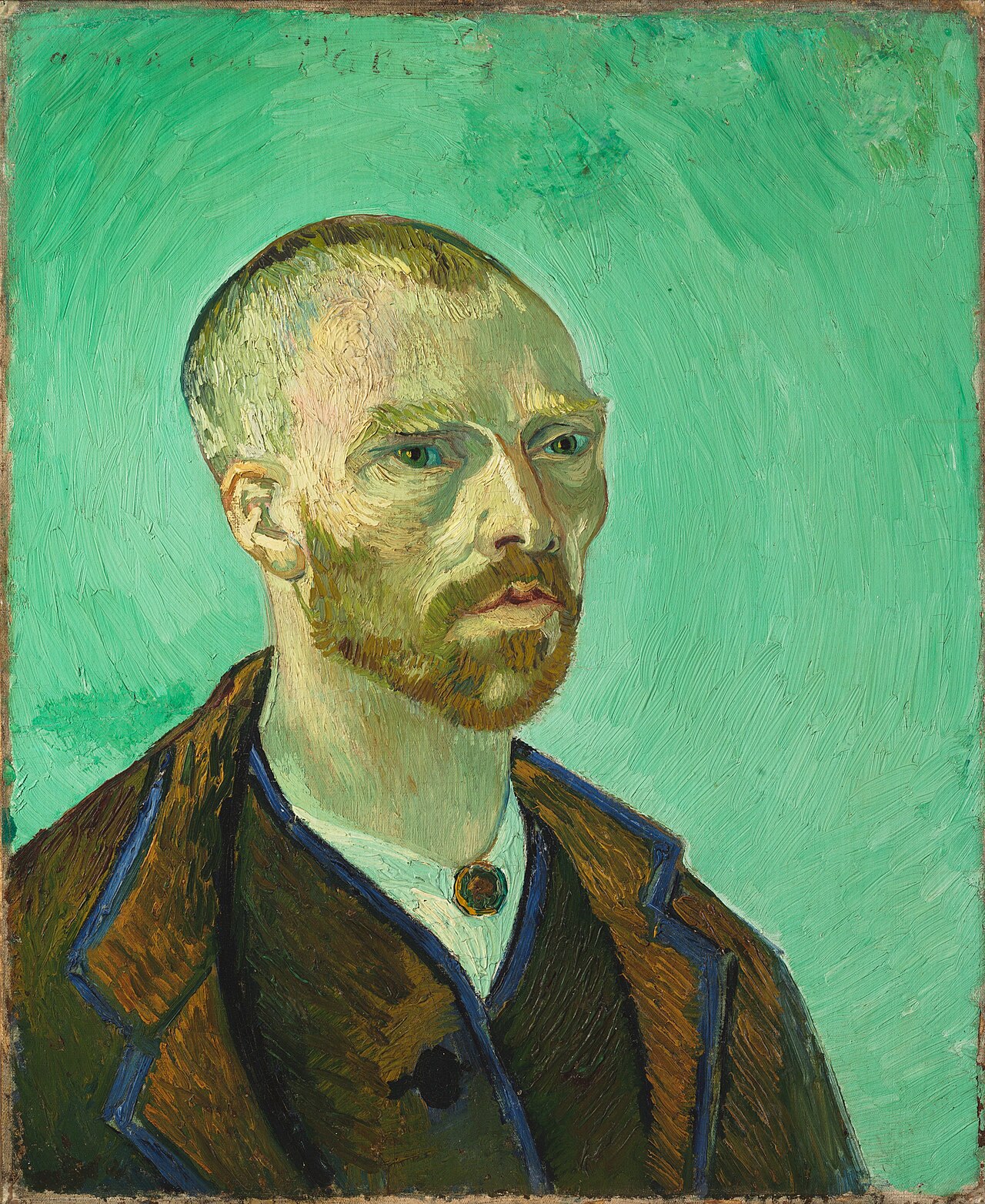 Free image
Van Gogh and Gauguin at the Yellow House told like a true story: context, mild scandals, visual obsessions, key works, decor tips, and solid sources, with enough humor to avoid the anesthetized museum label vibe.
Reading method
Historical and artistic context
We move like we would in front of a work: context first, details next, then the effect in the room. The goal is not to look knowledgeable in front of the frame, but to see more accurately, which is significantly more stylish.
Context before prestige
We place Van Gogh and Gauguin at the Yellow House in its era, its studios, its exhibitions, and its small revolts. A work without context is sometimes just a very beautiful person who forgot their story.
Signs that betray the style
We identify composition, palette, texture. These clues often say more than grand speeches, especially when they carry gold or nervous brushstrokes.
The work in a real room
We end with the useful question: does this image breathe in your home, or does it just pose like a poster that has read two books?
Historical context
Where does Van Gogh and Gauguin at the Yellow House come from, and why isn't it just a pretty label?
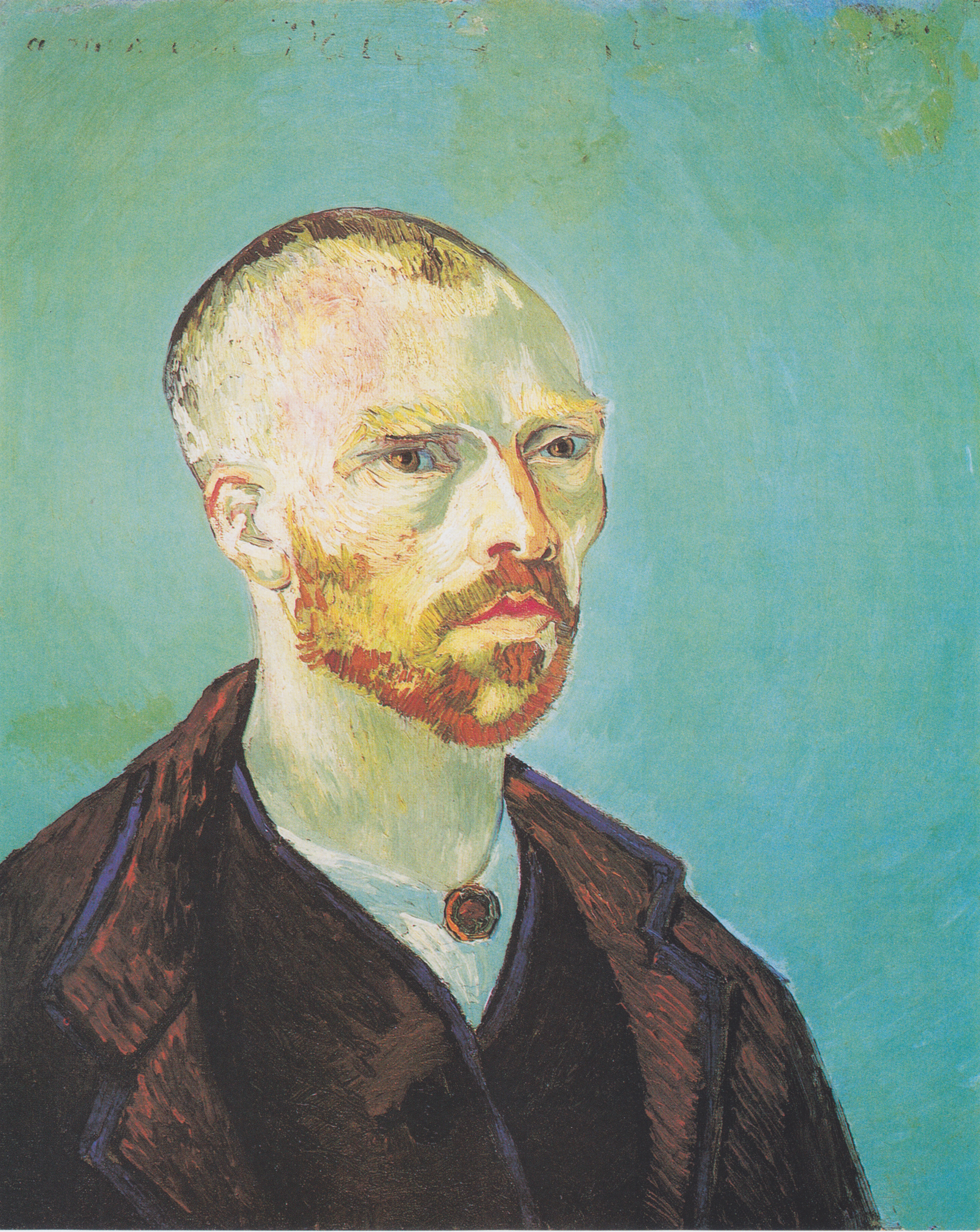
This evocative name does not refer to an official movement signed in marble, but rather to the electric friction of two geniuses under the sun of Arles in 1888. Van Gogh dreamed of a shared studio, a kind of artistic monastery where painting would reign, and he painted the famous yellow facade to symbolize this luminous hope. Gauguin, more skeptical and mystical, lived there for two intense months where heated discussions replaced sleep. It is therefore not just a decorative label, because it embodies a precise moment when pure color became a violent emotional language, far from the polished Parisian salons.
Beyond the historical anecdote, this style invites us to think of interior space as a living canvas, saturated with emotions and contrasts. Imagine walls that do not just reflect light, but capture it with bold chrome yellows and deep cobalt blues, creating an almost vibrant atmosphere. The very material seems to work, with visible impastos that remind us that the artist's hand has touched the surface. Adopting this spirit at home means refusing aseptic neutrality and embracing a decoration that tells a story, that of an intense and sometimes tumultuous artistic life.
Artistic style
Why does Van Gogh and Gauguin at the Yellow House still fascinate?
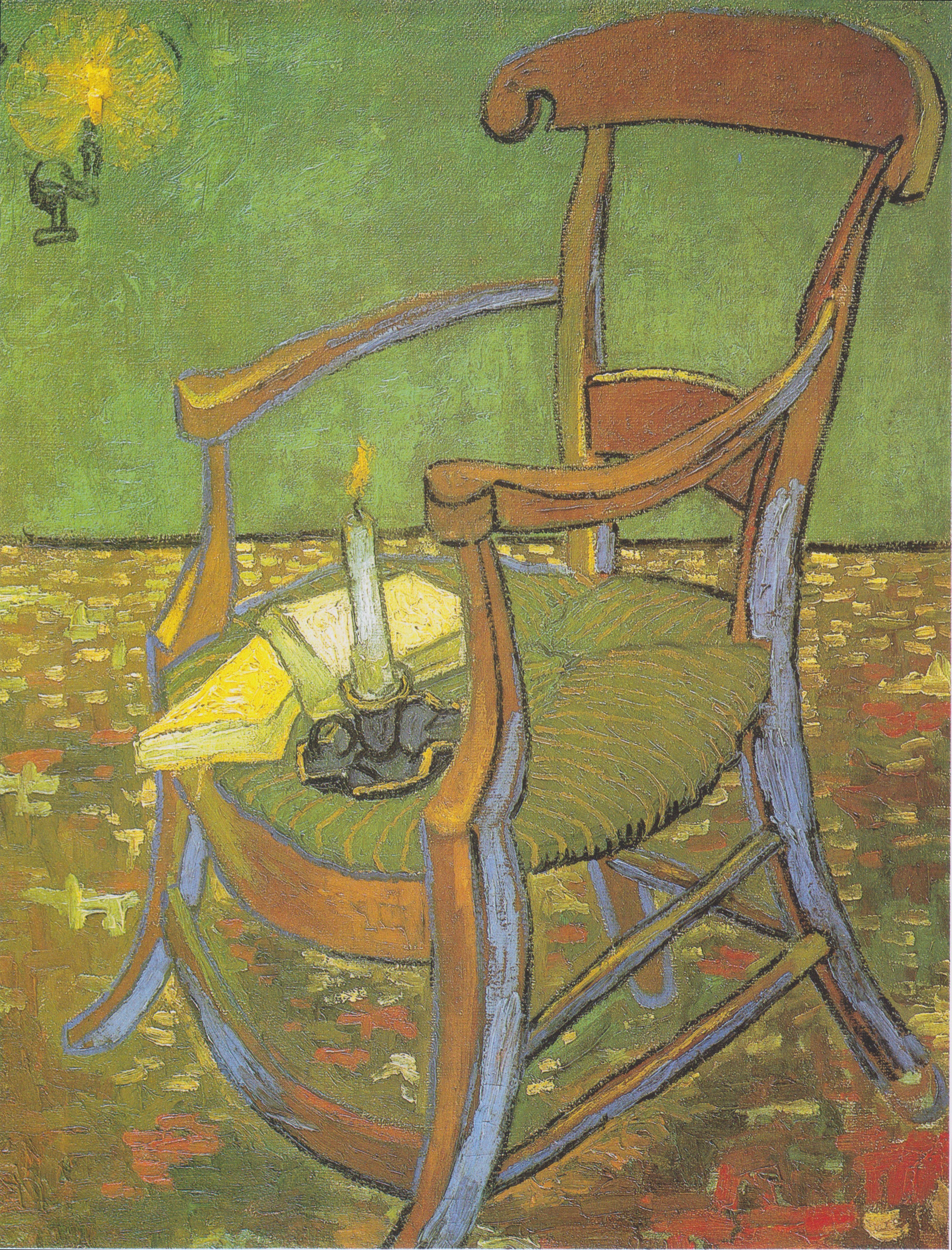
This enduring fascination stems first from the electric tension that reigned between the two giants under the sun of Arles. Imagine the Yellow House, with its sulfur-colored walls and red tile floor, becoming the theater of a unique aesthetic collision in 1888. Van Gogh sought a fraternal community, while Gauguin imposed his symbolist and hieratic vision, turning every meal into a passionate debate about brushstroke and color. This brief cohabitation, punctuated by the creation of Gauguin's Armchair and Van Gogh's Chair, crystallizes a moment when modern art nearly tilted toward collectivism before shattering on the Dutchman's severed ear.
Beyond the biographical drama, this style captivates because it offers a living lesson in decoration through pure emotion. The explosive palette, mixing cobalt blue with chrome yellow, does not just adorn a wall; it changes the very perception of space and ambient light. Today, integrating this chromatic audacity at home means accepting that pictorial matter, with its rough impastos and outlined contours, dialogues with our daily life. It is this ability to transform an ordinary interior into a vibrant, almost palpable atmosphere that makes the legacy of the Yellow House timeless and desperately relevant for anyone who dares to live with images.

Starry Night
A reproduction related to Van Gogh and Gauguin at the Yellow House, useful for comparing atmosphere, palette, and wall presence.

Cafe Terrace at Night
Another scene from Arles, close by the city, the nocturnal color, and that Southern light that refuses to stay calm.

The Vision after the Sermon
A reproduction related to Van Gogh and Gauguin at the Yellow House, useful for comparing atmosphere, palette, and wall presence.
Art & details
The visual signs that betray the style

In the Yellow House, composition follows no academic rules but embraces the fever of the gaze. Van Gogh piles up brushstrokes as if stacking sunbricks, creating a texture so thick you feel you could sink a finger into it. Conversely, Gauguin flattens forms with an almost insolent audacity, transforming a simple vase of sunflowers into a mystical icon outlined in black. This struggle between the vibrant touch and rigid cloisonnism reads on the walls like a musical score where every color note sings off-key to resonate just right. The atmosphere that results is not that of a bourgeois salon, but of a laboratory where the very air seems saturated with pure pigments.
The palette chosen by the two temporary tenants acts as an immediate emotional barometer. Where Vincent floods the room with chrome yellows and cobalt blues to simulate a constant inner light, Paul prefers muted ochres and emerald greens that recall the Breton forests. This divergence creates a hesitant visual rhythm, sometimes frantic, sometimes meditative, forcing the viewer to shift posture before each canvas. Imagine a ray of sunlight hitting an empty chair painted with such vigor that it casts a shadow more real than the furniture itself. It is in these concrete details, this brutal management of space and light, that the style betrays itself without ever needing words.
Art & details
Works to look at as if they might answer back

In front of The Bedroom at Arles, you can almost hear the floor creak under your feet, so much does the perspective seem to pull us toward that empty bed. Van Gogh piled on paint with such fury that the material becomes palpable, as if you could sink your fingers into it to touch the solitude of the place. The yellows of the wall and the blues of the sheet clash in a deafening silence, creating an atmosphere where every object, from the straw chair to the hanging picture, seems to hold its breath before speaking to us. It's less a frozen scene than a suspended moment, ready to tip into reality as soon as we look away.
Gauguin, in turn, responds with The Yellow Christ, where the divine figure floats in a Breton landscape of supernatural, flat colors. Here, light comes not from the sun but from an inner source that makes the wood of the cross and the robes of the kneeling peasant women vibrate. The composition is so deliberate that the figures seem aware of being observed, their gazes meeting ours with an almost awkward intensity. Between Vincent's tormented touch and Paul's mystical flat areas, the Yellow House becomes a theater where paintings are not content to be seen but demand to be heard like urgent confidences.
Art & details
Symbols, details, and little visual quirks

In the Yellow House, every brushstroke tells a little intimate war between two oversized egos. Van Gogh, obsessed with chrome yellow that yellows even his dreams, impastoes the canvas until the material becomes a tangible, almost aggressive relief under the Arles light. Conversely, Gauguin seeks mystical flat areas, smoothing his surfaces like a monk copying sacred manuscripts in silence. You can easily imagine Vincent, hands stained, yelling in front of an empty chair painted with such fury it seems ready to stand up, while Paul, more calculating, arranges his exotic symbols with the precision of a mental chessboard where every pawn has a specific occult meaning.
The visual details of this explosive cohabitation reveal fascinating quirks that transcend mere decoration. Observe how the southern light is captured: in one, it vibrates and dances in celestial whirlpools; in the other, it freezes into zones of deep shadow, creating an atmosphere of suspended mystery. Their palettes clash like glasses in a rough bar, Vincent's cobalt blue answering Gauguin's veronese green in a deliberate dissonance. Even everyday objects, like a simple pot of onions or a coffee cup, become dramatic actors, charged with a psychological tension that transforms the ordinary interior into a theater stage where every prop whispers unconfessable secrets.
Works to know
Works to look at before hanging the reproduction
To compare before buying a Van Gogh and Gauguin reproduction, the most useful are to look at the dedicated self-portraits, The Chair, The Armchair, Les Alyscamps, and the yellow palette that runs through the entire Arlesian cohabitation.
- The Bedroom at ArlesAnother work from Arles, useful for comparing the atmosphere of the South, the yellows, the blues, and Van Gogh's decorative presence.
- Starry NightA reproduction related to Van Gogh and Gauguin at the Yellow House, useful for comparing atmosphere, palette, and wall presence.
- Cafe Terrace at NightAnother scene from Arles, close by the city, the nocturnal color, and that Southern light that refuses to stay calm.
- The Vision after the SermonA reproduction related to Van Gogh and Gauguin at the Yellow House, useful for comparing atmosphere, palette, and wall presence.
- Where Do We Come From? What Are We? Where Are We Going?A reproduction related to Van Gogh and Gauguin at the Yellow House, useful for comparing atmosphere, palette, and wall presence.
Art & details
Neighbors, allies, and turbulent cousins

Vincent and Paul shared the Yellow House like one shares an erupting volcano, with devouring passion and dangerous sparks. Their rooms, separated by a simple corridor, echoed with furious debates about pure color and symbolism, turning every meal into an improvised artistic manifesto. Gauguin, with his aristocratic sailor demeanor, tried to impose rigorous discipline on Vincent, whose creative energy overflowed like sap from an overwatered tree. This intense cohabitation produced masterpieces born of friction, where one's chrome yellow answered the other's vermilion red, creating a visual symphony as brilliant as it was unstable.
Their ephemeral alliance resembled that of turbulent cousins reunited for a memorable summer, before the storm ended the party. In the shared studio, canvases piled up like evidence of a race against time, each brushstroke affirming a radically different but temporarily complicit worldview. The Southern light, so dear to Vincent, became under Gauguin's gaze a mystical tool, capable of transfiguring the banal reality of Arles into biblical or exotic scenes. Even today, the imaginary walls of this house seem to vibrate with that unique tension between fervent friendship and brilliant rivalry.
Art & details
What museums confirm when shortcuts go too fast

Museums, silent guardians of historical truth, remind us that the cohabitation in Arles was far more than a mere picturesque anecdote. By observing the exhibited canvases closely, we realize that the chrome yellow of the Yellow House was not just a decorative choice, but a desperate attempt to create a luminous studio of the South. Curators emphasize that Gauguin, wary of this solar exuberance, preferred muted tones and cerebral compositions, creating a striking contrast with his host's vibrant sunflowers. This visual friction, far from being a detail, explains why their artistic union exploded as quickly as a match in a dry straw field.
When biographical shortcuts oversimplify history, cultural institutions restore the complexity of facts through the very material of the works. Technical analyses reveal that Van Gogh applied paint in thick, almost sculptural layers, while Gauguin favored outlined flat areas, rejecting this tumultuous texture. This technical divergence perfectly illustrates their fundamental incompatibility: one sought to capture the fleeting moment through gesture, the other wanted to freeze eternity through symbol. Thus, visiting these rooms allows us to understand that their shared failure was in fact a major aesthetic success, offering the world two distinct but complementary visions of nascent modernity.
Art & details
Hanging an artist cohabitation without overcrowding the wall

Choosing a reproduction of the tumultuous Arles nights requires some diplomacy with your plaster. Imagine installing a whirlwind of purple and yellow brushstrokes, worthy of Van Gogh's bedroom, on a living room wall already saturated with floral wallpaper: the result might leave your guests dizzy before the aperitif. The key lies in respecting visual breathing; leave at least sixty centimeters of empty space around the frame so that the thick oil texture can express itself without stifling the room. A canvas too large in a narrow hallway turns Gauguin into an intrusive neighbor, while a moderate format, like a memory of their shared studio, invites peaceful contemplation rather than a nervous breakdown.
Balance also depends on the dialogue between ambient light and the chosen palette. If your interior bathes in a Nordic, cool light, a reproduction with burnt ochres and deep reds, reminiscent of Gauguin's portraits, will bring the missing warmth without shouting. Conversely, in a room already flooded with Mediterranean sun, favor night blues and emerald greens to soothe the atmosphere rather than adding fuel to the fire. Observe the texture: a textured canvas print captures the creative fury of these two geniuses better than a glossy paper that would smooth out their anger. Finally, ensure that the frame, perhaps in raw wood or gold leaf, serves as a decompression chamber between artistic chaos and your well-deserved domestic tranquility.
Interior decoration
Pitfalls to avoid before hanging a studio quarrel
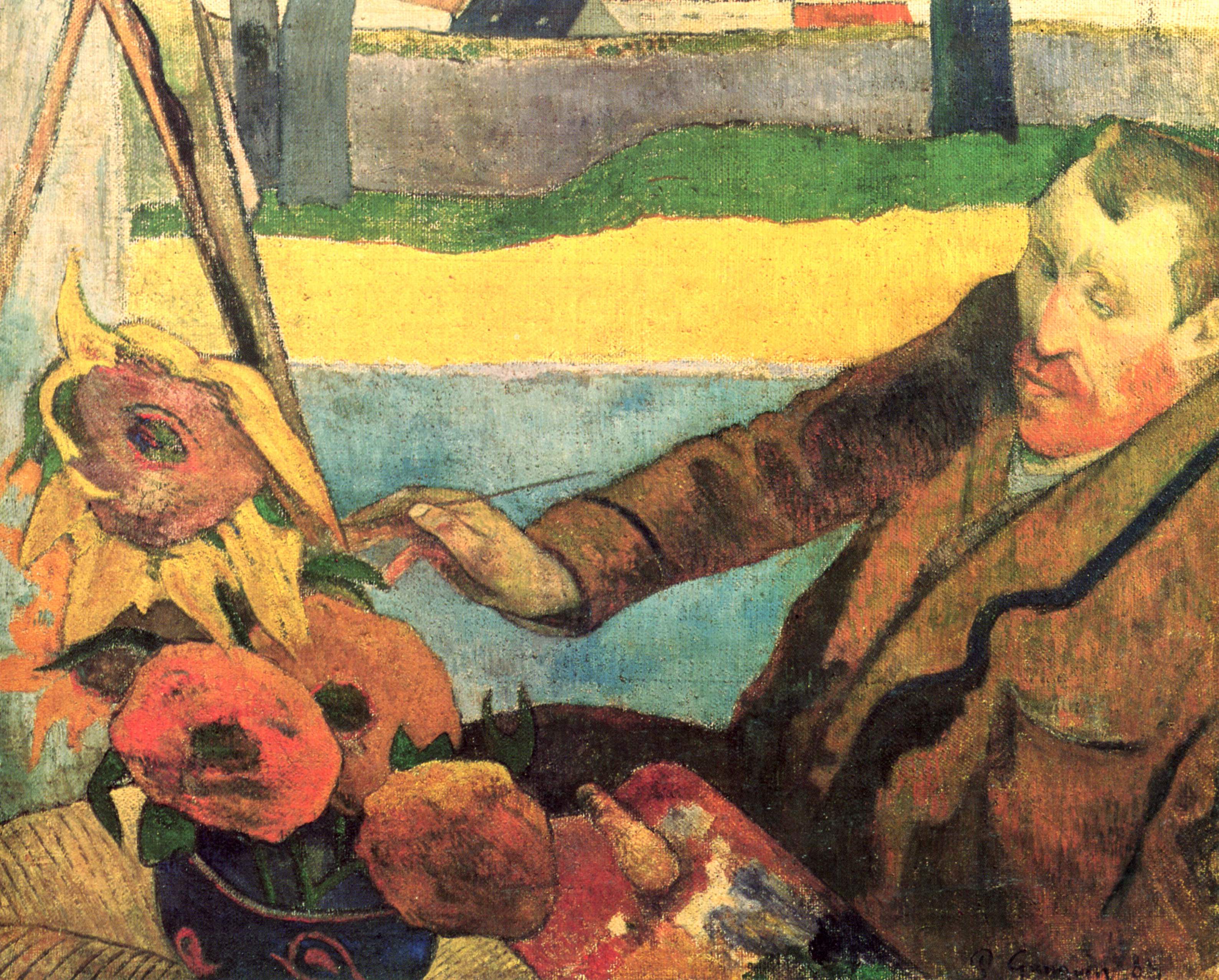
Avoid at all costs hanging a reproduction of the Yellow House facing a mirror, because the violence of the chrome yellows and Prussian blues would create an optical whirlpool worthy of an Arlesian nervous breakdown. Vincent did not paint these walls for them to double in a banal reflection, but for them to absorb the southern light like a sponge soaked in sun. Furthermore, do not make the mistake of placing the painting in a room lit by cold neon lights; this clinical light would murder the vibrant warmth of the ocher facade and transform the intimate atmosphere into an aseptic waiting room, thus betraying the vital urgency the artist wanted to convey.
Also refrain from hanging the work too high, like an inaccessible relic, when Gauguin and Vincent dreamed of a living studio where art breathed at eye level. An overly massive gilded frame would suffocate the expressive brutality of the knife strokes, recalling more a bourgeois salon than a creator's room in ferment. Finally, never associate it with dark velvet curtains that would swallow the clarity; instead, favor an off-white wall or a raw texture that lets the pictorial material breathe. The fatal mistake would be to treat this painting as a mere decorative object, forgetting it was the theater of a tragic friendship and an aesthetic revolution.
| Room | Suggestion | Decorative effect |
|---|---|---|
| Living room | A work related to Van Gogh and Gauguin at the Yellow House with a strong composition | Cultured focal point, warm, and easy to comment on without reciting a label. |
| Bedroom | A soft palette or a more intimate scene | Calm atmosphere, visual presence without unnecessary agitation. |
| Office | A structured, colorful, or graphically sharp image | Creative energy and a little reminder that the wall can also work. |
| Entryway | A vertical format or an immediately readable work | Clear, elegant first impression, and decidedly less shy than an empty white. |

Where Do We Come From? What Are We? Where Are We Going?
A reproduction related to Van Gogh and Gauguin at the Yellow House, useful for comparing atmosphere, palette, and wall presence.

At the Moulin Rouge
A reproduction related to Van Gogh and Gauguin at the Yellow House, useful for comparing atmosphere, palette, and wall presence.
To continue the visit
Sources, collections, and paths truly related to the subject
A few useful references to verify information, compare free images, and extend the reading without heading into a museum that didn't ask for anything.
Related articles to read next
Verified collections
Useful blog hubs
Useful sources on this subject
FAQ
Frequently asked questions about the Arles cohabitation
The Studio of the South: methods and routines
Van Gogh and Gauguin at the Yellow House deserves an in-depth article because this style engages both an era, a way of painting, and a very concrete way of living with images.
How to quickly recognize this style?
Observe especially composition, palette, texture, light, and atmosphere, then how the composition organizes the gaze. If the work holds your attention longer than expected, it's probably not an accident.
Which artists should we know?
You need to cross-reference the central artists of the movement with museums and reliable sources to avoid overly hasty attributions.
Does this style suit modern decoration?
Yes, as long as you choose the right format, a palette consistent with the room, and a work whose presence remains pleasant on a daily basis.
Should we choose the most famous work?
Not necessarily. The most famous work can be perfect, but the right choice depends above all on the room, the format, the palette, and the desired atmosphere.
Where to verify the information?
Start with museum notices, Wikipedia/Wikidata for general orientation, then Wikimedia Commons when a free image is needed.
The first weeks at the Yellow House
Van Gogh and Gauguin at the Yellow House benefits from being approached as a true story: a context, artists, visual choices, obsessions, works, and a decorative presence. A good reproduction does not just fill an empty rectangle: it establishes an ambiance, a visual culture, and sometimes a little extra spirit. That's no small feat for a wall that, until then, mainly served as wallpaper with admirable patience.
0 comments