

Self-taught paintings · private visions · public stories
Art Brut 100 essential paintings
One hundred images born far from academies, but never far from the world. From the mediumistic architectures of Augustin Lesage to the silhouettes of Bill Traylor, painting becomes a diary, refuge, prophecy and sometimes a cosmic domestic scene.

Painting without instructions
Jean Dubuffet coined the expression "Art Brut" in the 1940s to designate creations produced outside established cultural circuits. The formula has since opened up a larger territory: that of self-taught people, of visionaries and artists kept apart for a long time, whose works nevertheless ended up entering the museum.
This journey remains deliberately pictorial. Oils, gouaches, watercolors, temperas, enamels and acrylics interact on canvas, paper, cardboard or panel. The material may be poor; imagination clearly travels first class.
Each notice places the image in a trajectory: miner who became a mediumistic painter, servant transforming flowers into apparitions, former soldier telling American history, or octogenarian recording Montgomery's life on recovered cardboard boxes.
The 100 paintings
One work per rank · entire imageI · Founding visions
When painting becomes a world
Augustin Lesage
Symbolic composition on the spiritual world
"Symbolic composition on the spiritual world", painted by Augustin Lesage, follows an inner logic. On the threshold of this work, Augustin Lesage first worked as a miner in Pas-de-Calais. The artist combines creation and sessions spiritualists, while working without preparatory sketch. In "Symbolic Composition on the Spiritual World", dated 1923, oil on canvas carries a scene that rejects academic hierarchy.
See the museum notice →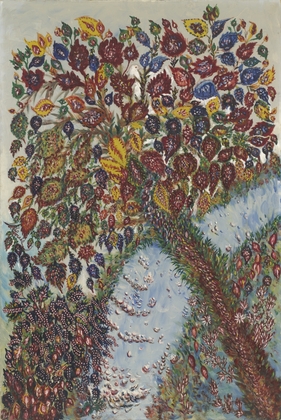
Séraphine Louis
Tree or Paradise
"Tree or Paradise", painted by Séraphine Louis, transforms each shoot into architecture. At the threshold of this work, Séraphine Louis works as a servant in Senlis. The artist paints mainly at night, while enlarging leaves and fruits and flowers. In "Tree or Paradise", dated 1925, oil and industrial painting on canvas carries a scene that elevates the botanical motif into vision.
See the work and its source →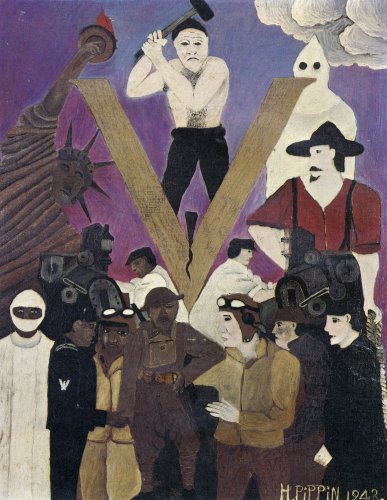
Horace Pippin
Mr. Prejudice
"Mr. Prejudice", painted by Horace Pippin, advances through tensions and silences. This image is also understandable because Horace Pippin returns injured from the Great War; the artist exhibited publicly from the 1930s and observed with it gravity domestic life. With oil on canvas or panel, "Mr. Prejudice" established a composition in 1943 which carries a story crossed by violence.
See the work and its source →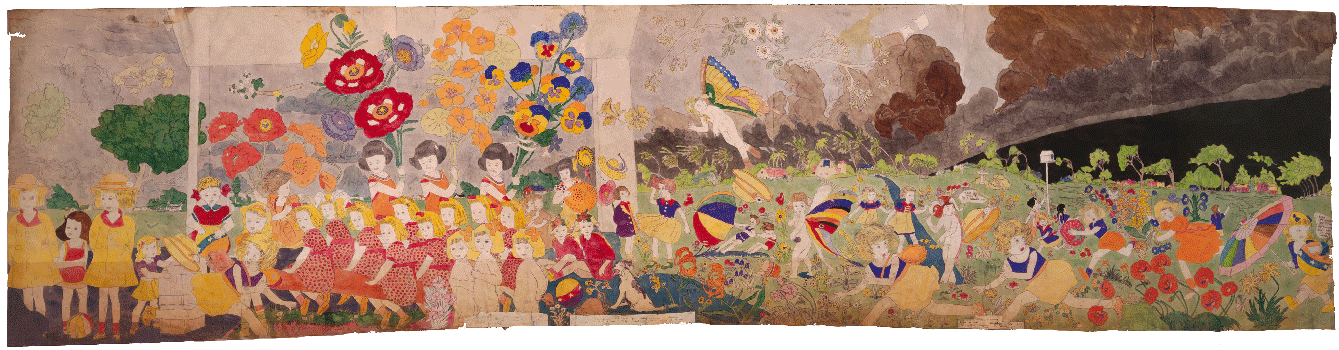
Henry Darger
Storm brewing. This is not strawberry the little girl is carrying (The storm is brewing. What the little girl is holding in her hand is not a strawberry)
"Storm brewing. This is not strawberry the little girl is carrying (The storm is brewing. What the little girl holds in her hand is not a strawberry)", painted by Henry Darger, carries a story crossed by violence. Biography from Henry Darger emerges here: the artist works as a hospital employee discreetly, directs the Vivian Girls and unites watercolor with decals. "Storm brewing. This is not strawberry the little girl is carrying (The storm is prepare. What the little girl holds in her hand is not a strawberry) belongs to 1930-1972; its material, decal, watercolor and collage on paper, supports an image which refuses the great heroic spectacle.
See the museum notice →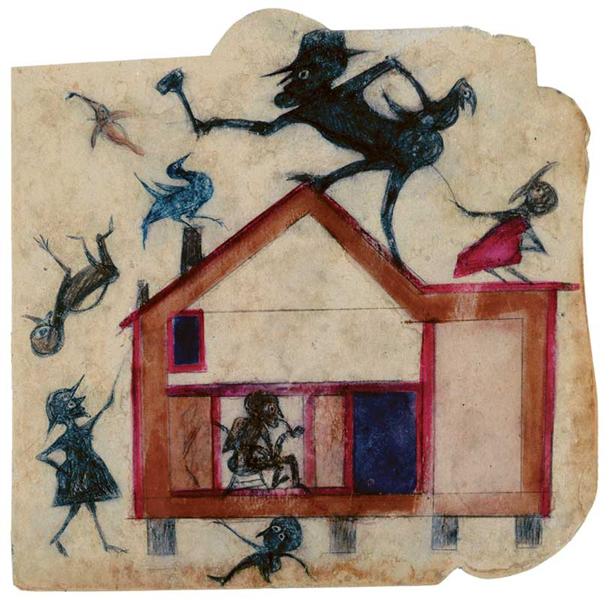
Bill Traylor
Untitled (Exciting Event)
"Untitled (Exciting Event)", painted by Bill Traylor, rejects the academic hierarchy. Bill Traylor's biography emerges here: the artist was born into slavery in Alabama, worked on the sidewalks of Montgomery and reduced the bodies to silhouettes. "Untitled (Exciting Event)" belongs to 1947; its material, pencil and poster paint on cardboard, supports an image that reveals an entirely personal order.
See the work and its source →
Baya Mahieddine
Bird landscape, 1966, gouache on paper
"Bird landscape, 1966, gouache on paper", painted by Baya Mahieddine, charges the animal silhouette with tension. At the threshold of this work, Baya Mahieddine was revealed at a very young age in colonial Algeria. The artist paints women, birds and instruments, while making gouache shine. In "Landscape with Birds, 1966, gouache on paper", dated 1966, gouache on paper bears a scene which imposes the animal as an emblem.
See the work and its source →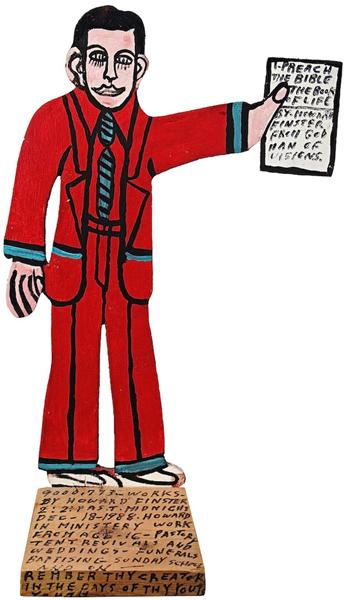
Howard Finster
Howard and The Book of Life
"Howard and The Book of Life", painted by Howard Finster, carries a story crossed by violence. Howard Finster's trajectory crosses the stage: the artist preaches as a Baptist pastor in Georgia, receives the call in 1976 painting and mixing texts, portraits and visions. The work of 1988 can be read in "Howard and The Book of Life": the material is enamel and acrylic on wood or canvas, and the image refuses the great heroic spectacle.
See the work and its source →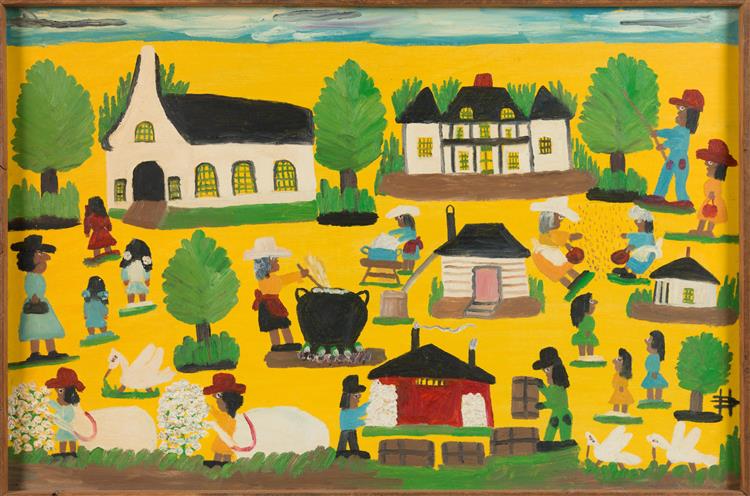
Clementine Hunter
Plantation Life
"Plantation Life", painted by Clementine Hunter, reconstructs the place rather than copying it. Clementine Hunter's journey illuminates the image: the artist works for a long time at Melrose Plantation, uses available media and paints work, parties and ceremonies. In 1986, "Plantation Life" took advantage of oil on canvas or panel: the image gives the facades a lived memory.
See the work and its source →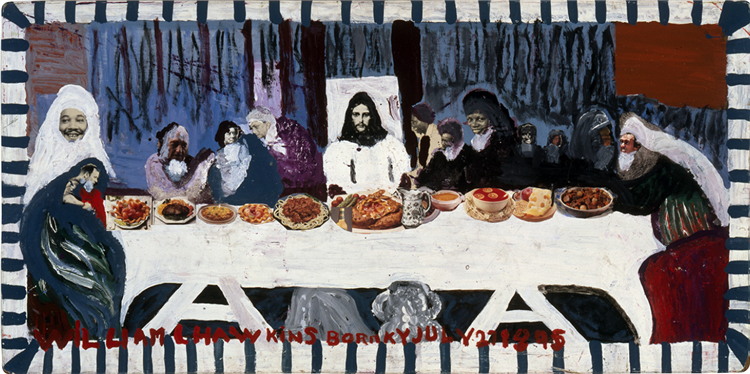
William L. Hawkins
Last Supper #6
"Last Supper #6", painted by William L. Hawkins, inscribes social time in each posture. This painting joins the moment when William L. Hawkins worked as a driver in Columbus; the artist draws inspiration from illustrated newspapers then animals and monuments grow. In "Last Supper #6", the technique - enamel, oil and collage on panel - gives its density to the work of 1986; the eye sees how it gives daily chronic value.
See the work and its source →
Fleury-Joseph Crépin
Composition n°6
"Composition n°6", painted by Fleury-Joseph Crépin, follows an inner logic. The story of Fleury-Joseph Crépin remains decisive: the artist first works as a plumber-zincworker, orders imaginary temples and repeats points and symmetries. For "Composition n°6", the material - oil on canvas - reinforced in 1939 a composition which refused the academic hierarchy.
See the museum notice →
Nikifor Krynicki
View of Krakow
"View of Krakow", painted by Nikifor Krynicki, reconstructs the place rather than copying it. Nikifor Krynicki lives and paints in Krynica; the artist paints thousands of small images and observes train stations, villas and churches. Dated Undated, " View of Krakow uses watercolor and gouache on paper or cardboard; at second glance, the composition gives the facades a lived memory.
See the work and its source →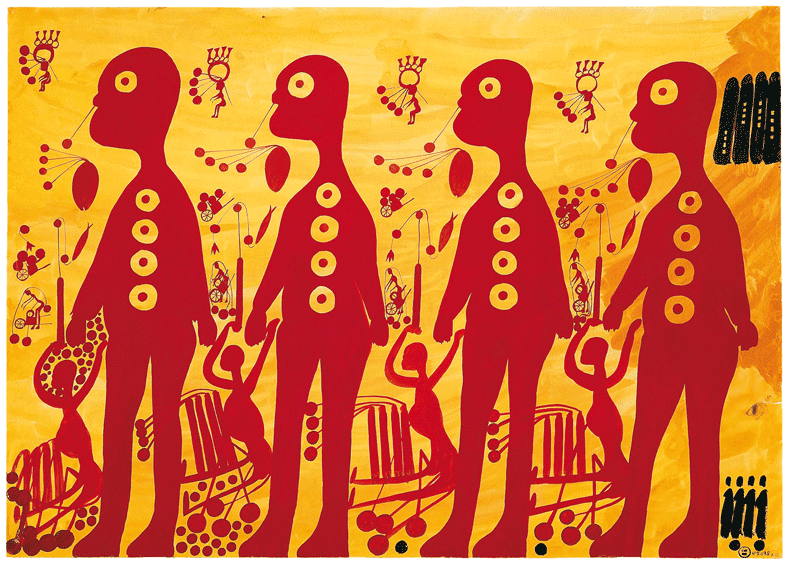
Carlo Zinelli
Untitled (1961, variation 1)
"Untitled (1961, variation 1)", painted by Carlo Zinelli, reveals an entirely personal order. This image is also understandable because Carlo Zinelli was interned in Verona after the war; the artist paints for long sessions daily and organizes friezes without perspective. With gouache on paper, "Untitled (1961, variation 1)" established a composition in 1961 which follows an inner logic.
See the museum notice →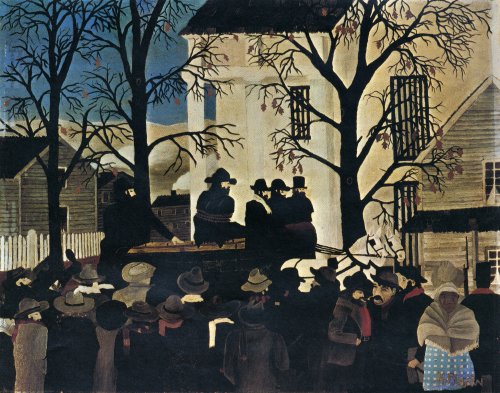
Horace Pippin
John Brown Going To His Hanging
"John Brown Going To His Hanging", painted by Horace Pippin, carries a story crossed by violence. This painting joins the moment when Horace Pippin learns to paint again despite an injury; the artist publicly exposes from from the 1930s then seriously observed domestic life. In "John Brown Going To His Hanging", the technique - oil on canvas or panel - gives its density to the work of 1942; the eye sees how she refuses the great spectacle heroic.
See the work and its source →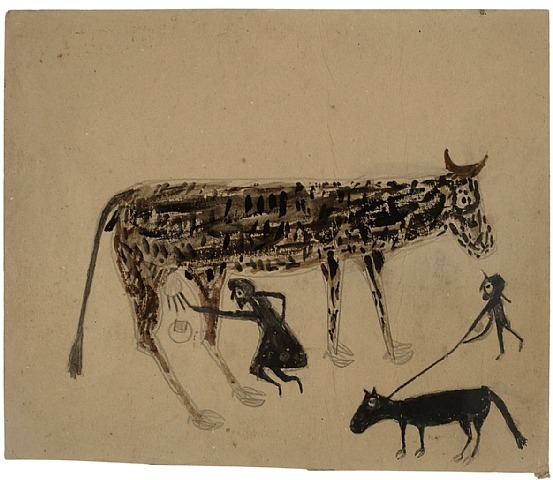
Bill Traylor
Untitled (Milking)
"Untitled (Milking)", painted by Bill Traylor, changes gestures into collective memory. Bill Traylor's journey illuminates the image: the artist begins to create after the age of eighty, works on the sidewalks of Montgomery and reduces bodies with silhouettes. In 1939, "Untitled (Milking)" took advantage of pencil and poster painting on cardboard: the image inscribes social time in each posture.
See the work and its source →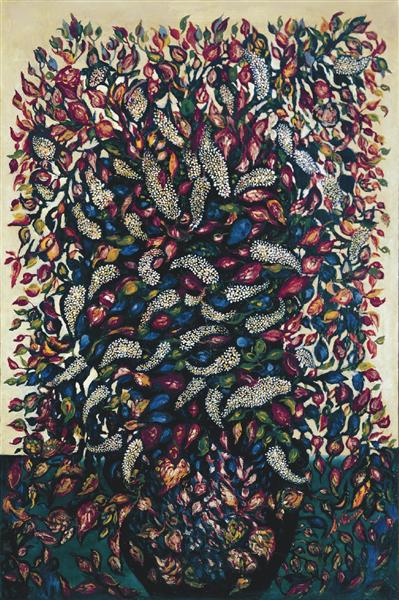
Séraphine Louis
Flowers and fruits
"Flowers and fruits", painted by Séraphine Louis, elevates the botanical motif into vision. The story of Séraphine Louis remains decisive: the artist is noticed by Wilhelm Uhde, paints especially at night and enlarges leaves, fruits and flowers. For "Flowers and fruits", the material - oil and industrial paint on canvas - reinforced in 1920 a composition which allowed vegetation to invade the entire field.
See the work and its source →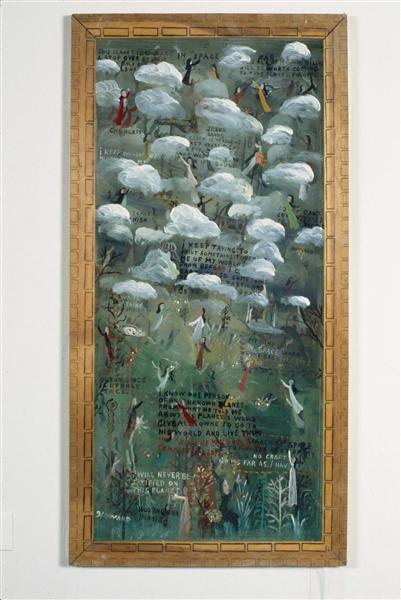
Howard Finster
This Planet is Only a Stopover
"This Planet is Only a Stopover", painted by Howard Finster, follows an inner logic. In these years, Howard Finster built the Paradise Garden environment. In 1976, the artist received the call to paint, while mixing texts and portraits and visions. Made in enamel and acrylic on wood or canvas in Undated, "This Planet is Only a Stopover" refuses the academic hierarchy.
See the work and its source →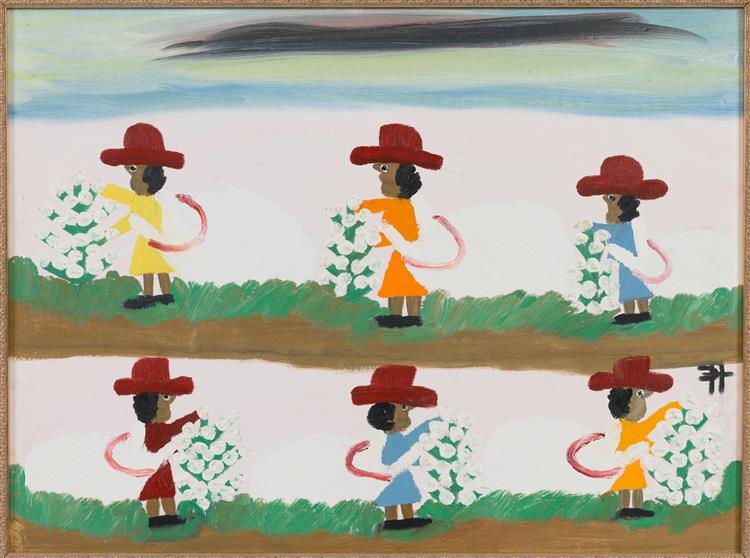
Clementine Hunter
Picking Cotton
"Picking Cotton", painted by Clementine Hunter, changes gestures into collective memory. Behind the image, Clementine Hunter began painting around 1940. As the work progressed, the artist used the available supports and painted work, festivals and ceremonies. In 1969, the scene of "Picking Cotton", painted in oil on canvas or panel, inscribed social time in each posture.
See the work and its source →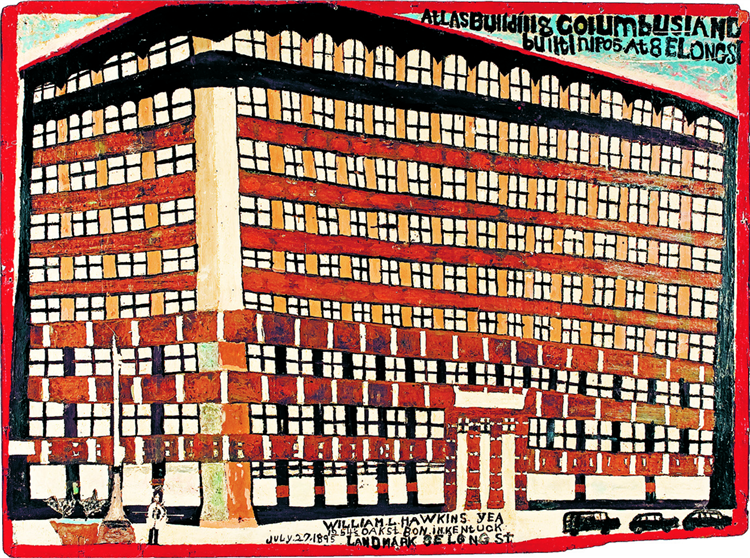
William L. Hawkins
Atlas Building
"Atlas Building", painted by William L. Hawkins, gives the facades a lived memory. The context is biographical: William L. Hawkins paints on recovered panels; the artist draws inspiration from illustrated newspapers and grows animals and monuments. "Atlas Building" dates from 1979; thanks to enamel, oil and collage on panel, it transforms architecture into a mental portrait.
See the work and its source →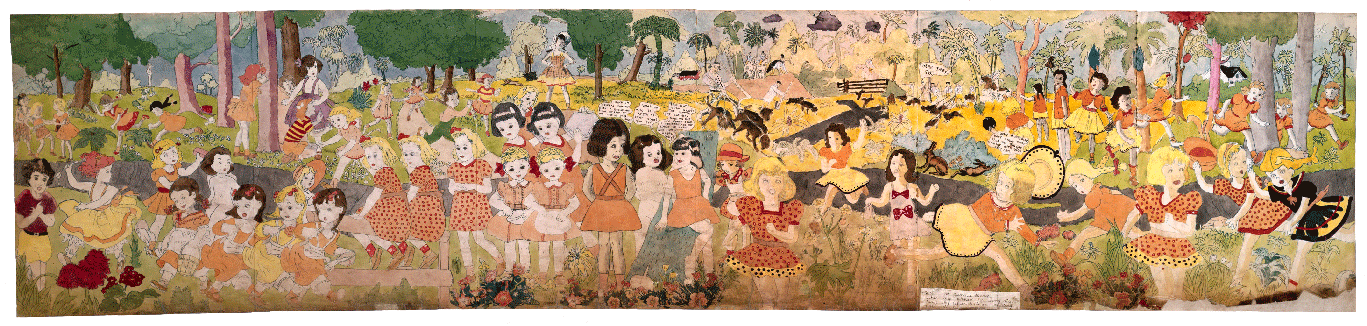
Henry Darger
216 At Jennie Richee. Then are chased for long distance by Glandelinian soldiery with dogs (216 A Jennie Richee. Then chased for a long distance by Glandelinean soldiers and their dogs)
"216 At Jennie Richee. Then are chased for long distance by Glandelinian soldiery with dogs (216 A Jennie Richee. Then chased for a long distance by Glandelinean soldiers and their dogs)", painted by Henry Darger, bears a history crossed by violence. Henry Darger's journey illuminates the image: for decades the artist developed an immense story, directed the Vivian Girls and united watercolor with decals. In 1930-1972, "216 At Jennie Richee. Then are chased for long distance by Glandelinian soldiery with dogs (216 A Jennie Richee. Then chased for a long distance by Glandelinean soldiers and their dogs)' takes advantage of decals, watercolors and collage on paper: the image rejects the great heroic spectacle.
See the museum notice →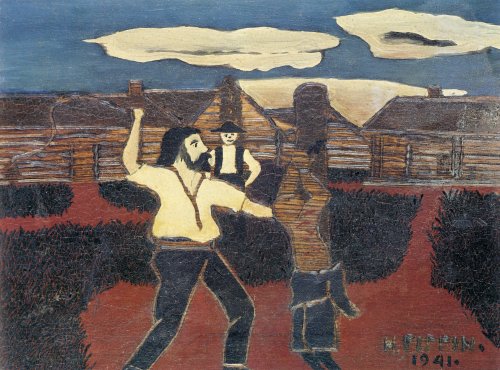
Horace Pippin
The Whipping
"The Whipping", painted by Horace Pippin, rejects the great heroic spectacle. The context is biographical: Horace Pippin exhibited publicly from the 1930s; the artist exhibited publicly from the 1930s and observed with it gravity domestic life. "The Whipping" dates from 1941; thanks to oil on canvas or panel, it advances through tensions and silences.
See the work and its source →II · Figures and memories
Lives told from the inside
Baya Mahieddine
Untitled (91.6 x 97 cm, variation 1)
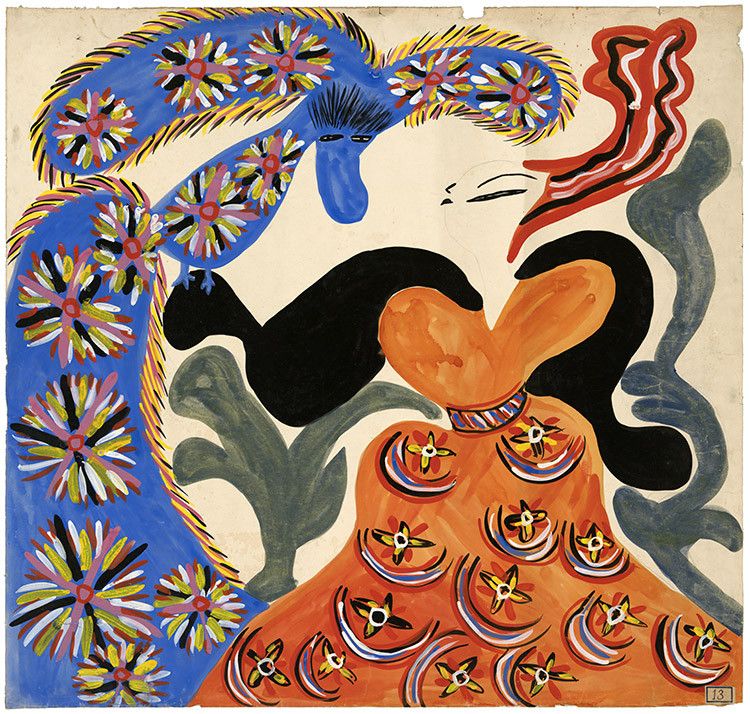
"Untitled (91.6 x 97 cm, variation 1)", painted by Baya Mahieddine, reveals an entirely personal order. The story of Baya Mahieddine remains decisive: the artist exhibited in Paris in 1947, painted women, birds and instruments and made radiate gouache. For "Untitled (91.6 x 97 cm, variation 1)", the material - graphite and gouache on paper - reinforces in Undated a composition which follows an interior logic.
See the museum notice →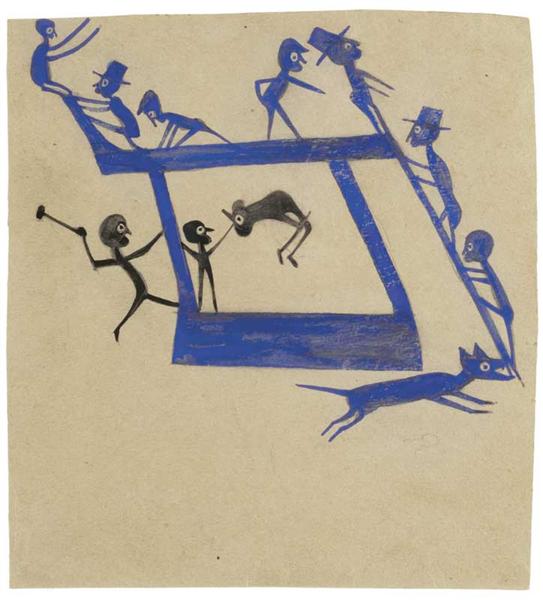
Bill Traylor
Untitled (Figures, Construction)
"Untitled (Figures, Construction)", painted by Bill Traylor, follows an inner logic. Behind the image, Bill Traylor works on the sidewalks of Montgomery. Throughout the work, the artist works on the sidewalks of Montgomery and reduces bodies to silhouettes. In 1940, the scene of "Untitled (Figures, Construction)", painted in pencil and poster painting on cardboard, refused the academic hierarchy.
See the work and its source →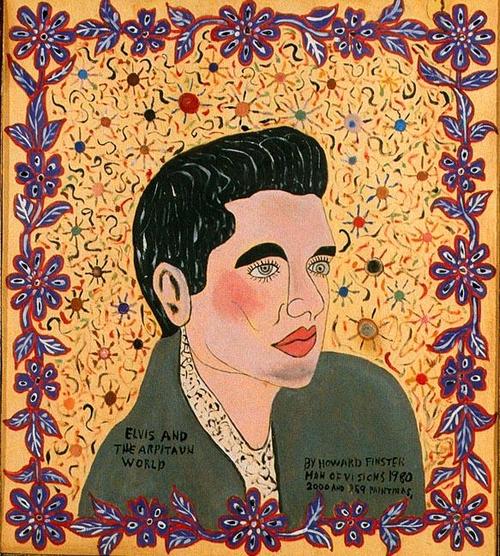
Howard Finster
Elvis And The Arpitaun World
"Elvis And The Arpitaun World", painted by Howard Finster, makes the face a narrative focus. The scene takes on another relief when Howard Finster received the call to paint in 1976; the artist received the call to paint in 1976 and mixed it up texts, portraits and visions. The 1980 landmark places "Elvis And The Arpitaun World"; with enamel and acrylic on wood or canvas, the image combines presence and symbol in the portrait.
See the work and its source →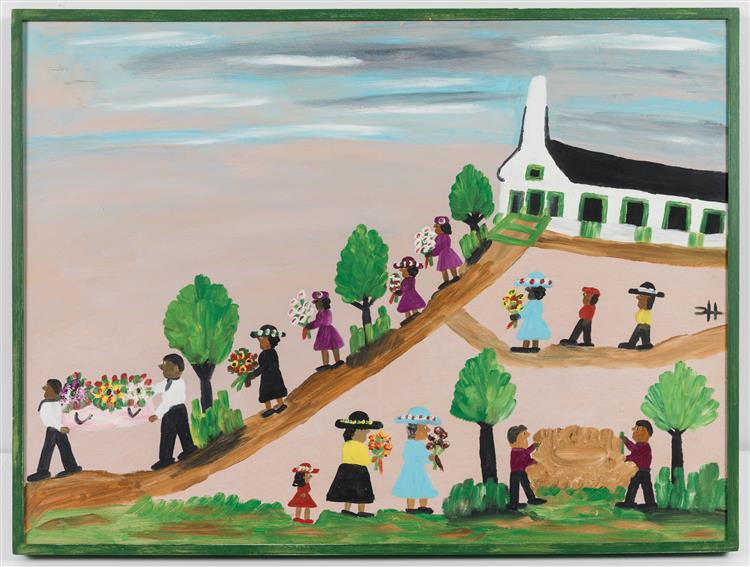
Clementine Hunter
Funeral
"Funeral", painted by Clementine Hunter, inscribes social time in each posture. To understand the image, you need to know that Clementine Hunter uses the available supports; the artist uses the available supports and paints work, parties and ceremonies. Dated 1969, "Funeral", made in oil on canvas or panel, gives daily chronicle value.
See the work and its source →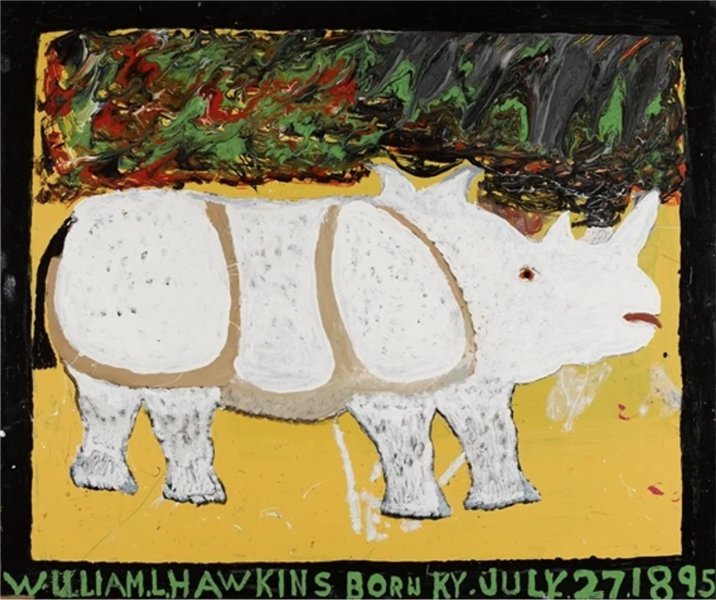
William L. Hawkins
Rhinoceros (White Rhino)
"Rhinoceros (White Rhino)", painted by William L. Hawkins, imposes the animal as an emblem. The biography of William L. Hawkins emerges here: the artist is inspired by illustrated newspapers, is inspired by illustrated newspapers and grows animals and monuments. "Rhinoceros (White Rhino)" belongs to 1985; its material, enamel, oil and collage on panel, supports an image which refuses the overly wise bestiary.
See the work and its source →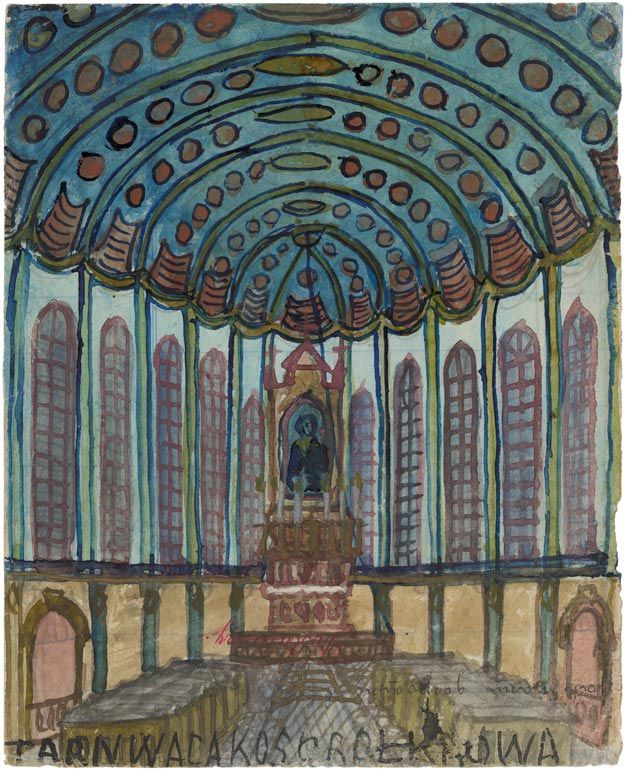
Nikifor Krynicki
Untitled (19.6 x 15.7 cm)
"Untitled (19.6 x 15.7 cm)", painted by Nikifor Krynicki, refuses the academic hierarchy. At this stage, Nikifor Krynicki works on recovered paper and cardboard. At the same time, the artist paints thousands of small images and observe stations, villas and churches. The material of "Untitled (19.6 x 15.7 cm)", gouache and watercolor on cardboard, accompanies in Undated an image which reveals an entirely personal order.
See the museum notice →
Augustin Lesage
Great works are only developed through meditation and silence
"Great works are only developed in meditation and silence", painted by Augustin Lesage, reveals an entirely personal order. The story of Augustin Lesage remains decisive: the artist began painting after 1911, combines creation and spiritualist sessions and works without preparatory sketches. For "Great works are only developed in meditation and silence", the material - oil on canvas - reinforced in 1923-1925 a composition which follows an inner logic.
See the museum notice →
Fleury-Joseph Crépin
Composition n°151
"Composition n°151", painted by Fleury-Joseph Crépin, follows an inner logic. At the time, Fleury-Joseph Crépin began his paintings at the end of the 1930s. This journey explains why the artist ordered imaginary temples and repeat points and symmetries. "Composition n°151", work from 1941, uses oil on canvas. Its composition refuses academic hierarchy.
See the museum notice →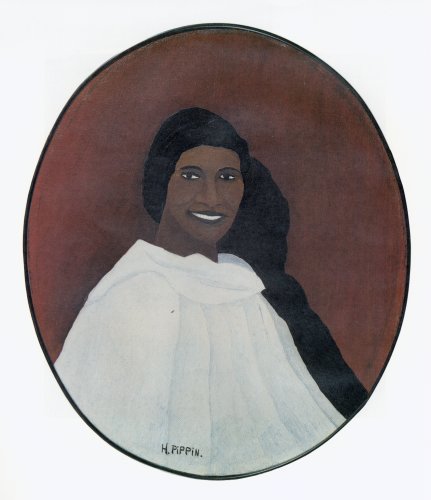
Horace Pippin
Marian anderson II
"Marian Anderson II", painted by Horace Pippin, makes the face a narrative focus. Horace Pippin's biography emerges here: the artist tells African-American history, exhibits publicly from the 1930s and observes with it gravity domestic life. "Marian Anderson II" belongs to 1941; its material, oil on canvas or panel, supports an image which combines presence and symbol in the portrait.
See the work and its source →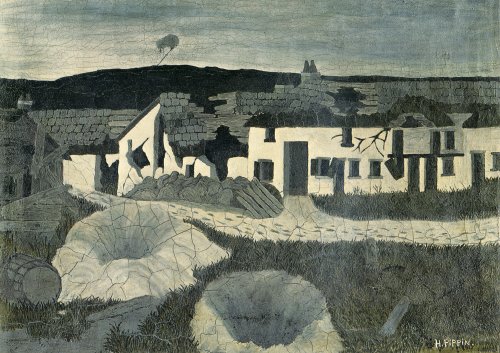
Horace Pippin
Shell Holes And Observation Balloon, Champagne Sector
"Shell Holes And Observation Balloon, Champagne Sector", painted by Horace Pippin, advances through tensions and silences. Horace Pippin's journey illuminates the image: the artist seriously observes domestic life, publicly exhibits starting in the 1930s and uniting personal memory and national history. In 1931, "Shell Holes And Observation Balloon, Champagne Sector" took advantage of oil on canvas or panel: the image carries a story crossed by violence.
See the work and its source →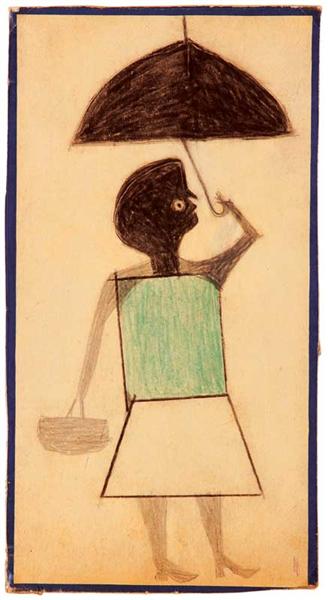
Bill Traylor
Untitled (Woman)
"Untitled (Woman)", painted by Bill Traylor, presents the figure directly. To understand the image, you need to know that Bill Traylor uses recovered cardboard boxes; the artist works on the sidewalks of Montgomery and reduces the bodies to silhouettes. Dated 1939, "Untitled (Woman)", made in pencil and poster painting on cardboard, makes the face a narrative focus.
See the work and its source →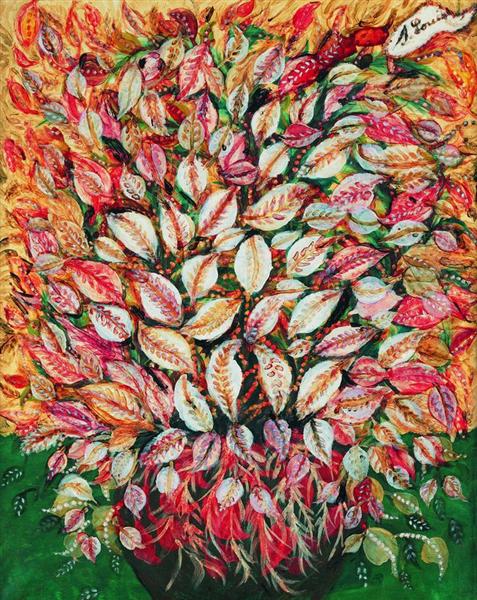
Séraphine Louis
Leaves (1928)
"Feuilles (1928)", painted by Séraphine Louis, transforms each shoot into architecture. At the time, Séraphine Louis painted mainly at night. This tour explains why the artist paints mainly at night and enlarges leaves, fruits and flowers. "Leaves (1928)", work from 1928, uses oil and industrial painting on canvas. Its composition elevates the botanical motif into vision.
See the work and its source →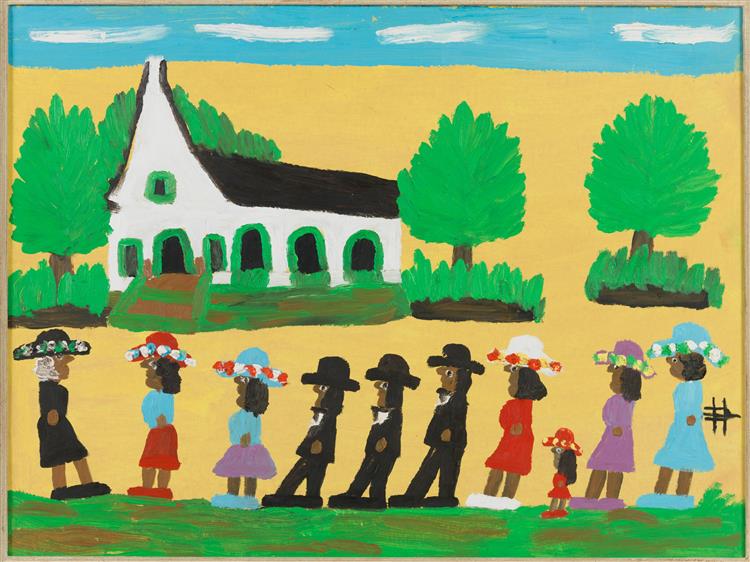
Clementine Hunter
Going to Church
"Going to Church", painted by Clementine Hunter, inscribes social time in each posture. Clementine Hunter recounts the Creole daily life of Louisiana; the artist uses available media and paints work, parties and ceremonies. Dated 1986, "Going to Church" uses oil on canvas or panel; at second glance, the composition gives the daily value of chronicle.
See the work and its source →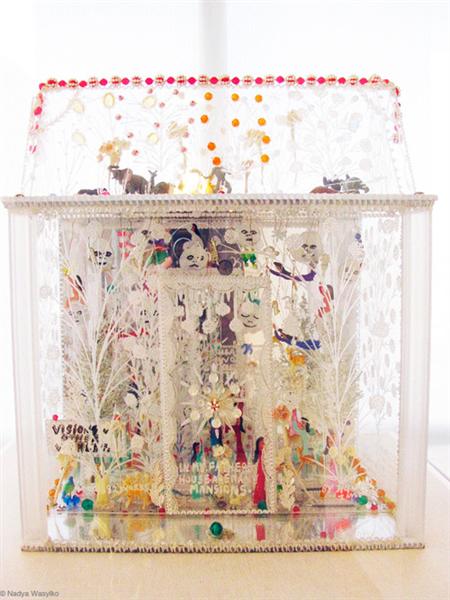
Howard Finster
In My Father's House Are Many Mansions, #4,392
"In My Father's House Are Many Mansions, #4,392", painted by Howard Finster, transforms architecture into a mental portrait. This image is also understandable because Howard Finster numbers a rich production; the artist received in 1976 the call to paint mixes texts, portraits and visions. With enamel and acrylic on wood or canvas, "In My Father's House Are Many Mansions, #4,392" established a composition in 1985 which reconstructed the place rather than copying it.
See the work and its source →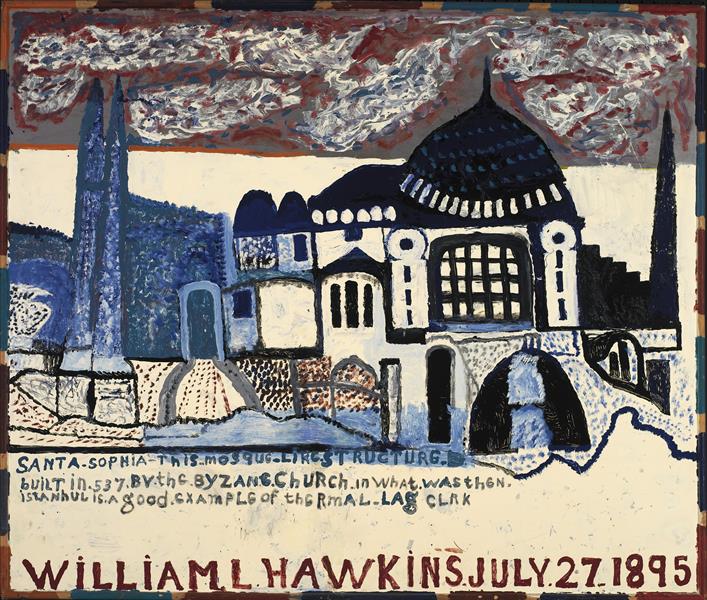
William L. Hawkins
Santa Sophia Mosque
"Santa Sophia Mosque", painted by William L. Hawkins, reconstructs the place rather than copying it. William L. Hawkins' journey illuminates the image: the artist uses enamel and industrial painting, draws inspiration from illustrated newspapers and animals and monuments grow. In 1980, "Santa Sophia Mosque" took advantage of enamel, oil and collage on panels: the image gives the facades a lived memory.
See the work and its source →
Augustin Lesage
Untitled (1912-1913, variation 1)
"Untitled (1912-1913, variation 1)", painted by Augustin Lesage, reveals an entirely personal order. At the time, Augustin Lesage associated creation and spiritualist sessions. This journey explains why the artist combines creation and sessions spiritualists and works without preparatory sketch. "Untitled (1912-1913, variation 1)", work from 1912-1913, uses oil on canvas. Its composition follows an inner logic.
See the museum notice →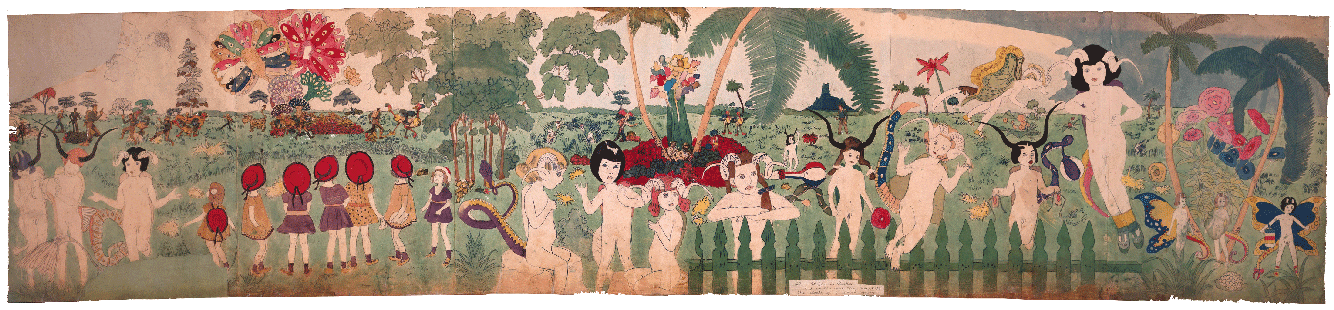
Henry Darger
167 At Jennie Richee. Out in the open they view the clouds of a storm coming (A jennie Rifchee. Discovered they see the clouds announcing a storm)
"167 At Jennie Richee. Out in the open they view the clouds of a storm coming (A jennie Rifchee. Discovered they see the clouds announcing a storm coming)", painted by Henry Darger, carries a story crossed by violence. Behind the image, Henry Darger directs the Vivian Girls. Throughout the work, the artist stages the Vivian Girls and unites watercolor with decals. In 1930-1972, the scene from "167 At Jennie Richee. Out in the open they view the clouds of a storm coming (To Jennie Rifchee. Discovered they see the clouds announcing a storm)", painted in decal, watercolor and collage on paper, refuses the great heroic spectacle.
See the museum notice →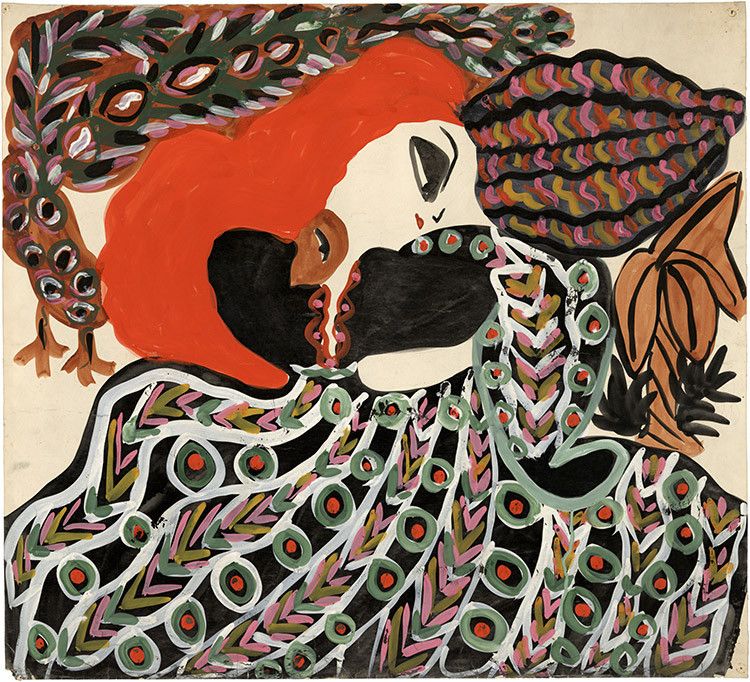
Baya Mahieddine
Untitled (1948, variation 2)
"Untitled (1948, variation 2)", painted by Baya Mahieddine, refuses the academic hierarchy. At the time, Baya Mahieddine painted women, birds and instruments. This journey explains why the artist paints women, birds and instruments and makes gouache shine. "Untitled (1948, variation 2)", a work from 1948, uses graphite and gouache on paper. Its composition reveals an entirely personal order.
See the museum notice →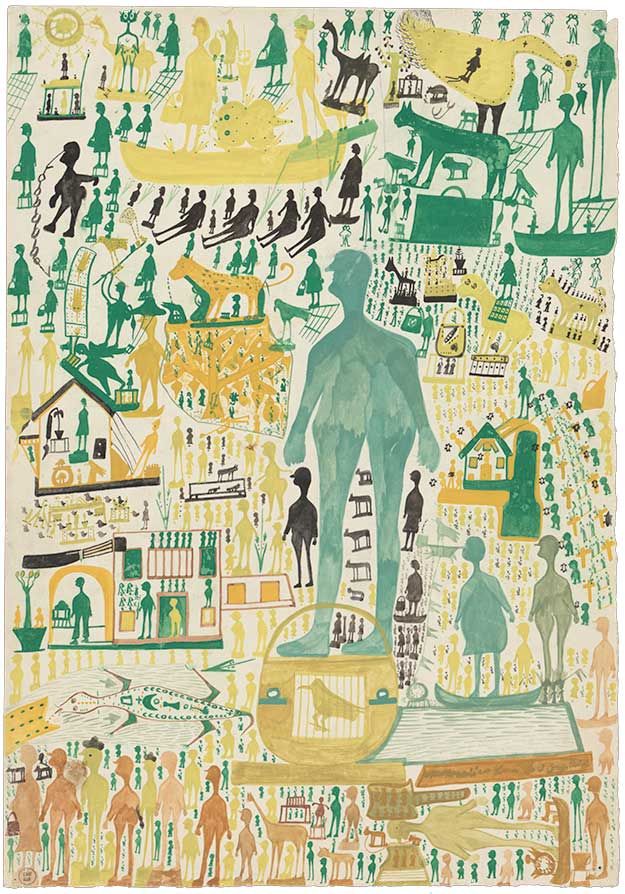
Carlo Zinelli
Untitled (1960, variation 2)
"Untitled (1960, variation 2)", painted by Carlo Zinelli, reveals an entirely personal order. This painting ties in with the moment when Carlo Zinelli joined the San Giacomo studio in 1957; the artist paints for long sessions daily then organizes friezes without perspective. In "Untitled (1960, variation 2)", the technique - gouache on paper - gives its density to the work of 1960; the eye sees how it follows an inner logic.
See the museum notice →
Nikifor Krynicki
Self Portait
"Self Portait", painted by Nikifor Krynicki, follows an inner logic. The painting belongs to a phase where Nikifor Krynicki paints thousands of small images; the artist paints thousands of small images and observes stations, villas and churches. In Undated, the artist retains watercolor and gouache on paper or cardboard for "Self Portait", and the painting refuses the academic hierarchy.
See the work and its source →III · Bestiaries and signs
The wildlife that the textbooks had forgotten
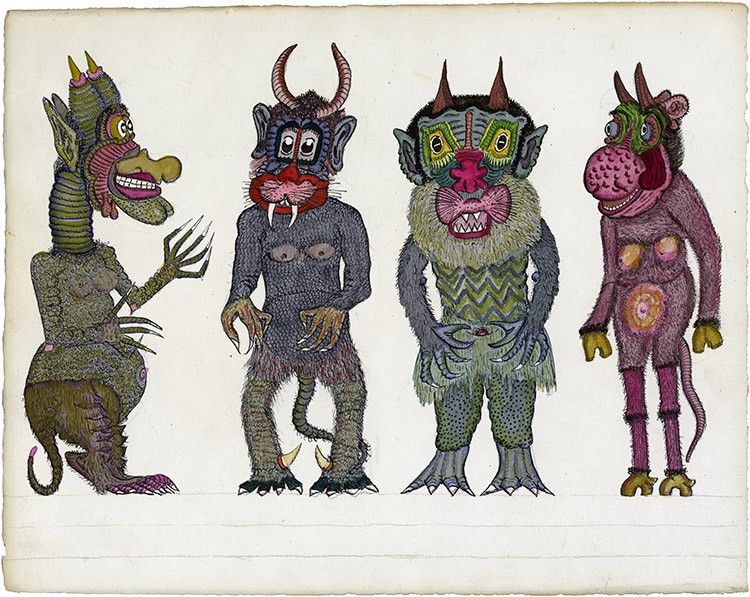
Josep Baqué
4 creatures
"4 Creatures", painted by Josep Baqué, refuses the overly wise bestiary. To understand the image, you should know that Josep Baqué works as a municipal guard in Barcelona; the artist classifies his creatures by family and invents a zoology without model. Dated 1932-1967, "4 creatures", made of graphite, ink and gouache on paper, charges the animal silhouette with tension.
See the museum notice →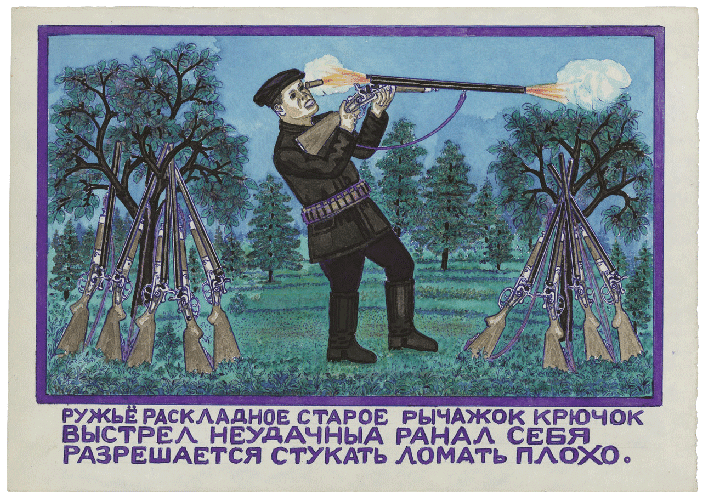
Aleksander Pavlovich Lobanov
Untitled (1960-2003, variation 1)
"Untitled (1960-2003, variation 1)", painted by Aleksander Pavlovich Lobanov, reveals an entirely personal order. This image is also understandable because Aleksander Pavlovich Lobanov lives in a psychiatric institution for a long time; the artist surrounds his figures with rifles and builds protective frames. With watercolor, ballpoint pen, colored pencil and felt-tip pen on paper, "Untitled (1960-2003, variation 1)" established in 1960-2003 a composition which follows logic interior.
See the museum notice →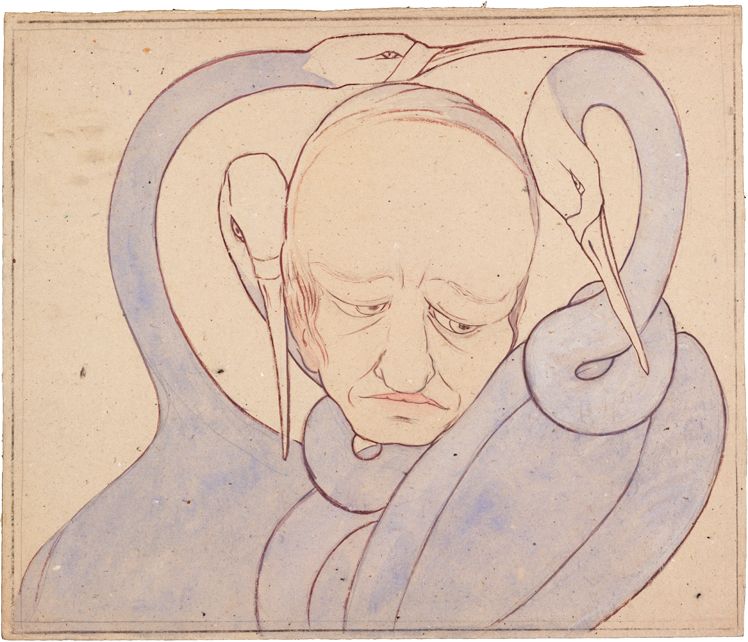
Marguerite Burnat-Provins
Asclibour entrained
"Asclibour entroué", painted by Marguerite Burnat-Provins, follows an inner logic. At the time, Marguerite Burnat-Provins divided her activity between painting and writing. This journey explains why the artist notes his visions with precision and uses watercolor as an apparition. "Asclibour entroué", a work from 1929, uses watercolor and graphite on cardboard. His composition refuses academic hierarchy.
See the museum notice →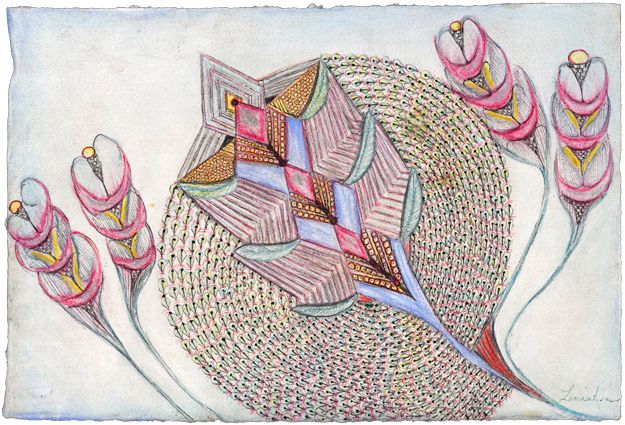
Anna Zemanková
Untitled (20 x 30 cm)
"Untitled (20 x 30 cm)", painted by Anna Zemânková, refuses the academic hierarchy. Anna Zemânková's trajectory crosses the stage: the artist begins his work at dawn, superimposes tempera, pastel and embossing and makes them grow floral shapes. Undated's work can be read in "Untitled (20 x 30 cm)": the material is ballpoint pen, colored pencil, ink, paint and embossing on paper, and the image reveals an entirely personal order.
See the museum notice →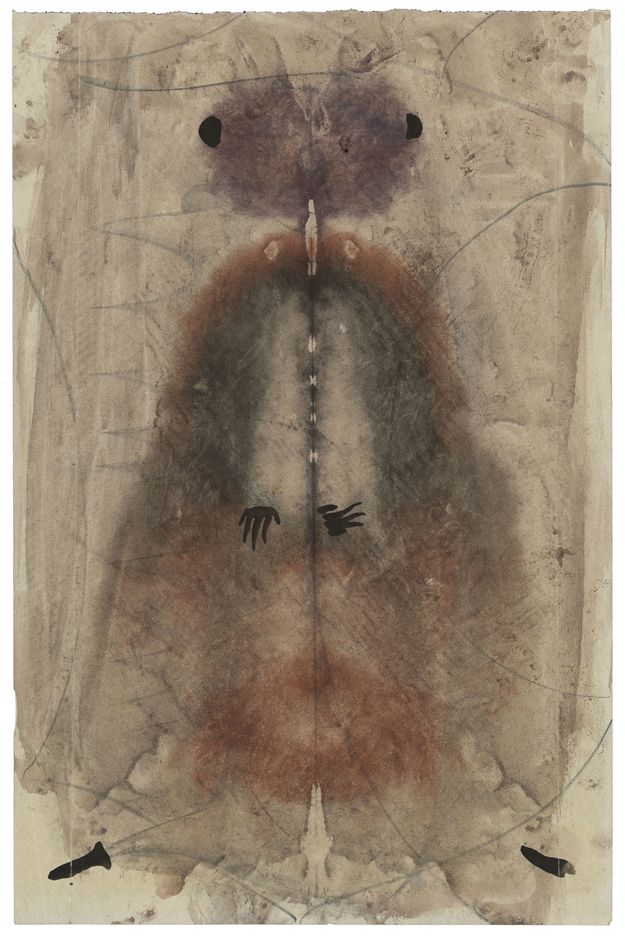
Eugen Gabritschevsky
Untitled (31 x 20 cm)
"Untitled (31 x 20 cm)", painted by Eugen Gabritschevsky, reveals an entirely personal order. The story of Eugen Gabritschevsky remains decisive: the artist is first and foremost a biologist and geneticist, sometimes folding paper before painting and transforms the stain into an organism. For "Untitled (31 x 20 cm)", the material - gouache on folded paper - reinforces in Undated a composition which follows an interior logic.
See the museum notice →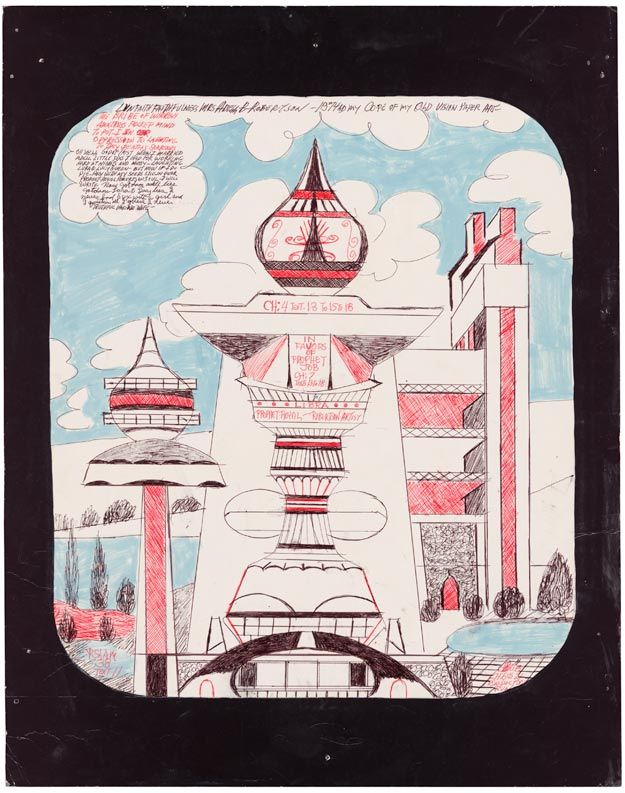
Royal Robertson
UNFAITH FAITHFULNESS MRS ADELL-B-ROBERTSON
"UNFAITH FAITHFULNESS MRS ADELL-B-ROBERTSON", painted by Royal Robertson, follows an inner logic. On the threshold of this work, Royal Robertson works as a sign painter in Louisiana. The artist mixes prophecies and ships spatial, while using acrylic as a signal. In "UNFAITH FAITHFULNESS MRS ADELL-B-ROBERTSON", dated Undated, ballpoint pen, felt-tip pen and black acrylic paint on paper carries a scene that rejects hierarchy academic.
See the museum notice →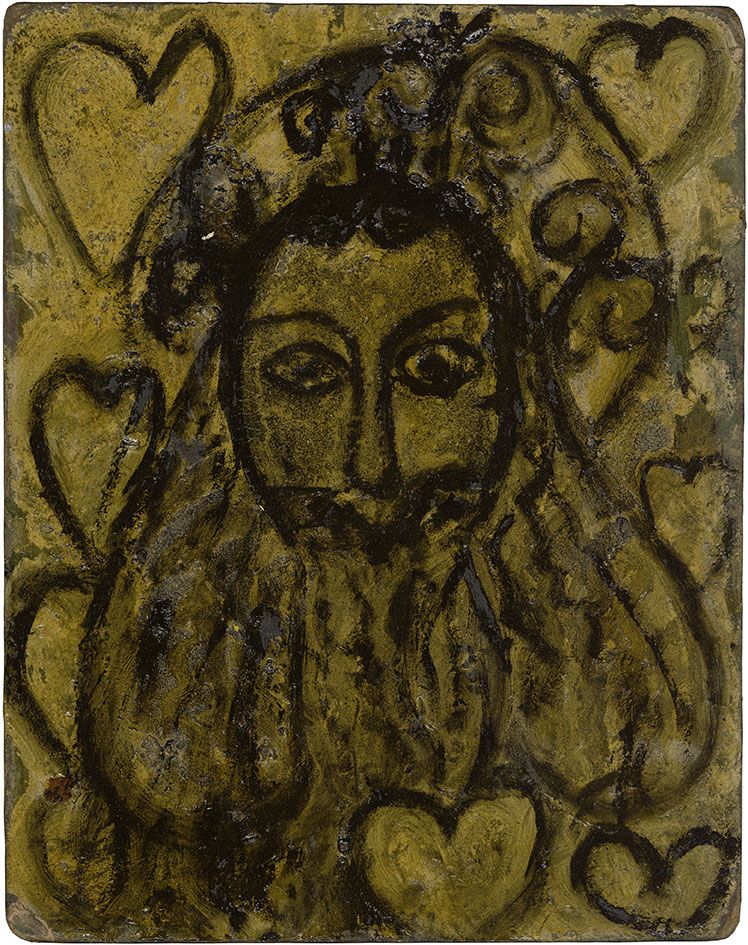
Maria Wnek
Untitled (1990-1996)
"Untitled (1990-1996)", painted by Maria Wnek, refuses the academic hierarchy. The painting belongs to a phase where Maria Wnek works as a servant in Poland; the artist covers panels of religious visions and unites figures sacred and concerned. In 1990-1996, the artist retained painting on pavatex for "Untitled (1990-1996)", and the painting revealed an entirely personal order.
See the museum notice →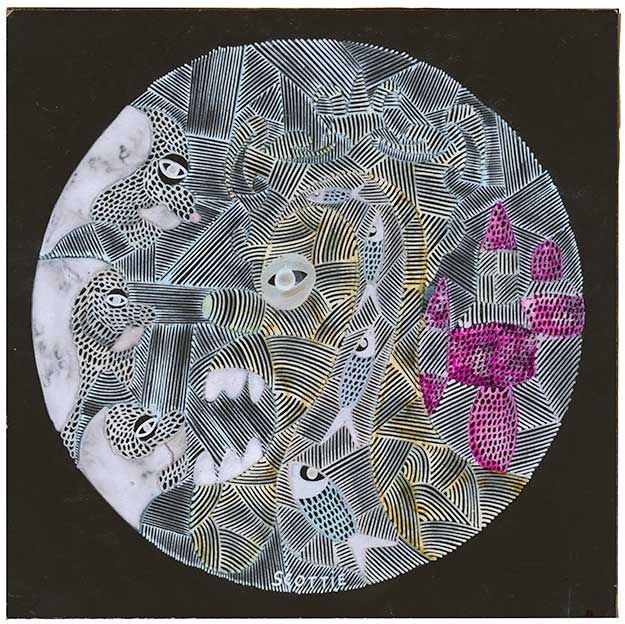
Scottie Wilson
Untitled (1950-1951)
"Untitled (1950-1951)", painted by Scottie Wilson, reveals an entirely personal order. Scottie Wilson's trajectory crosses the stage: the artist first works as a peddler in Canada, pits good and bad faces against each other and works directly with colored ink. The work of 1950-1951 can be read in "Untitled (1950-1951)": the material is colored ink on cardboard, and the image follows an inner logic.
See the museum notice →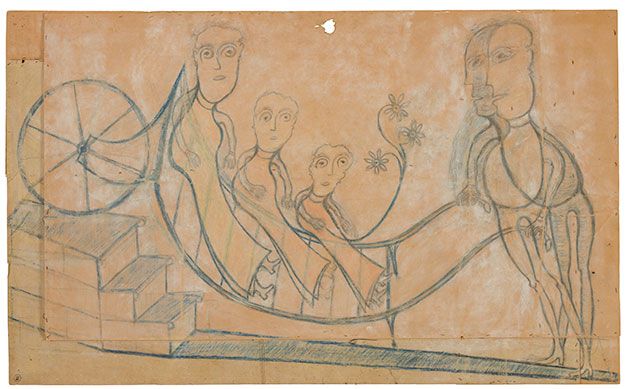
Heinrich Anton Muller
Untitled (1917-1922)
"Untitled (1917-1922)", painted by Heinrich Anton Müller, follows an inner logic. At this stage, Heinrich Anton Müller works as a self-taught winemaker and inventor. At the same time, the artist imagines impossible machines and brings out unstable silhouettes. The material of "Untitled (1917-1922)", painting and chalk on tinted paper, accompanied in 1917-1922 an image which refused academic hierarchy.
See the museum notice →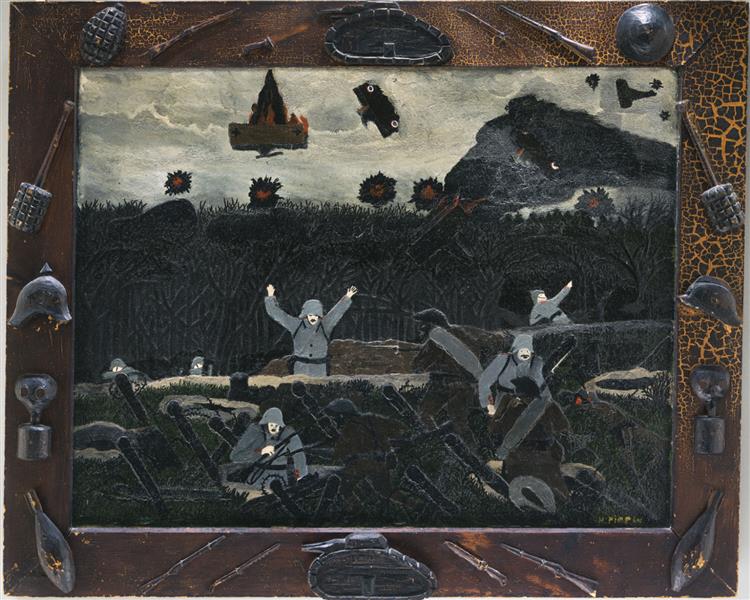
Horace Pippin
The Ending of the War, Starting Home
"The Ending of the War, Starting Home", painted by Horace Pippin, rejects the great heroic spectacle. Behind the image, Horace Pippin unites personal memory and national history. Throughout the work, the artist publicly exhibits from from the 1930s and seriously observed domestic life. In 1933, the scene of "The Ending of the War, Starting Home", painted in oil on canvas or panel, moved forward through tension and silence.
See the work and its source →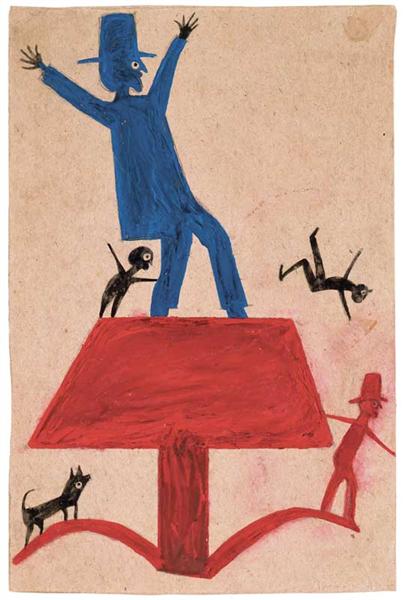
Bill Traylor
Untitled (Blue Man on Red Object)
"Untitled (Blue Man on Red Object)", painted by Bill Traylor, reveals an entirely personal order. Bill Traylor reduces bodies to silhouettes; the artist works on the sidewalks of Montgomery and records the black life of the South segregated. Dated 1939, "Untitled (Blue Man on Red Object)" uses pencil and poster paint on cardboard; at second glance, the composition follows an inner logic.
See the work and its source →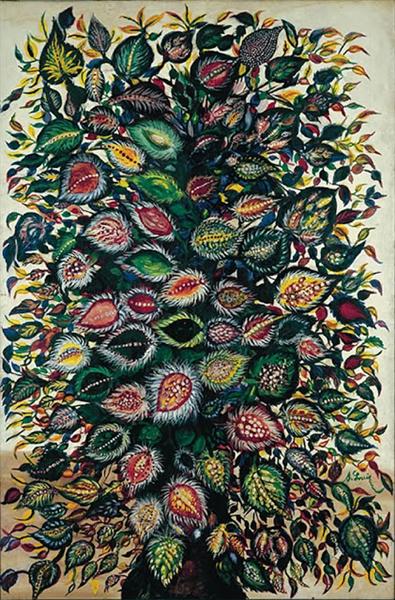
Séraphine Louis
Leaves (1929)
"Feuilles (1929)", painted by Séraphine Louis, lets vegetation invade the entire field. Séraphine Louis' trajectory crosses the stage: the artist prepares mixtures of personal colors, paints especially at night and enlarges leaves, fruits and flowers. The work of 1929 can be read in "Feuilles (1929)": the material is oil and industrial paint on canvas, and the image transforms each shoot into architecture.
See the work and its source →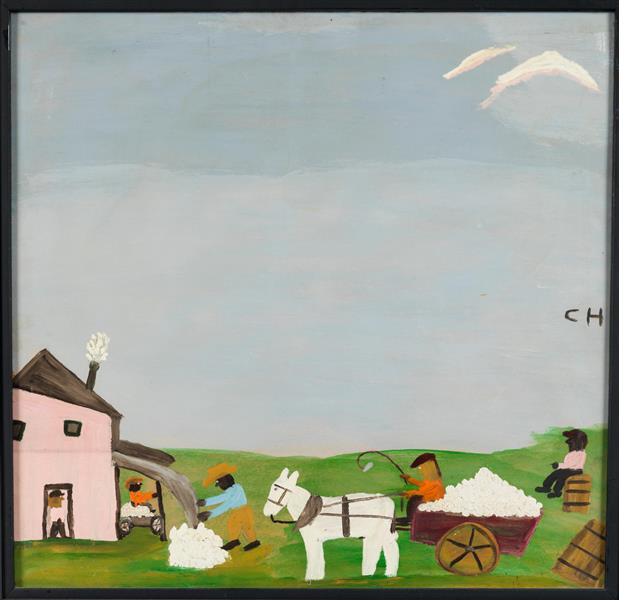
Clementine Hunter
Cotton Mill
"Cotton Mill", painted by Clementine Hunter, changes gestures into collective memory. At this stage, Clementine Hunter paints work, parties and ceremonies. At the same time, the artist uses the available media and preserves it memory of a rural world. The material of "Cotton Mill", oil on canvas or panel, accompanied in 1953 an image which inscribes social time in each posture.
See the work and its source →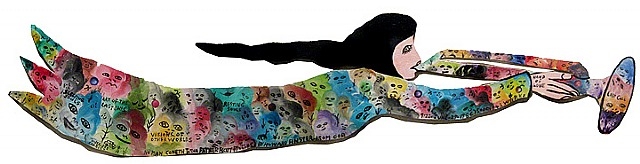
Howard Finster
Angel Gabriel
"Angel Gabriel", painted by Howard Finster, mixes presence and symbol in portraiture. This painting joins the moment when Howard Finster mixes texts, portraits and visions; in 1976 the artist received the call to paint and then made each image a colorful sermon. In "Angel Gabriel", the technique - enamel and acrylic on wood or canvas - gives its density to the work of 1986; the eye sees how she presents the figure directly.
See the work and its source →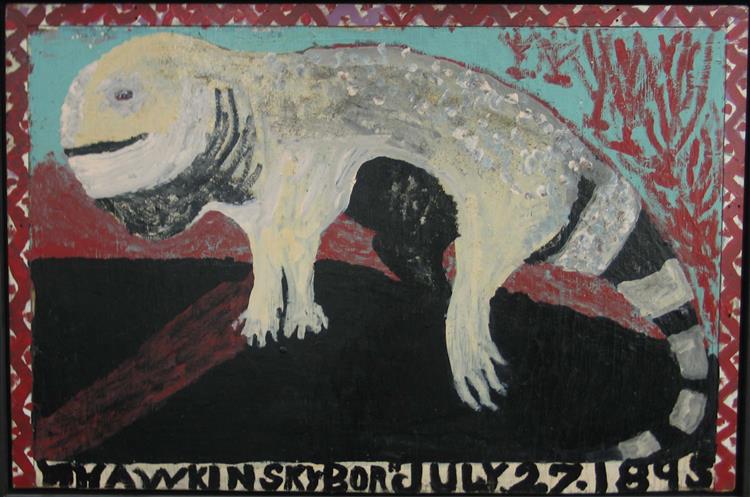
William L. Hawkins
Iguana
"Iguana", painted by William L. Hawkins, follows an inner logic. Behind the image, William L. Hawkins magnifies animals and monuments. Throughout the work, the artist draws inspiration from illustrated newspapers and transforms current events into icons. In 1981, the scene of "Iguana", painted in enamel, oil and collage on panel, refuses the academic hierarchy.
See the work and its source →
Augustin Lesage
Untitled (1932-1935, variation 2)
"Untitled (1932-1935, variation 2)", painted by Augustin Lesage, refuses the academic hierarchy. Augustin Lesage's trajectory crosses the stage: the artist constructs his paintings by symmetry, combines creation and spiritualist sessions and works without preparatory sketch. The work of 1932-1935 can be read in "Untitled (1932-1935, variation 2)": the material is oil on canvas, and the image reveals an entirely personal order.
See the museum notice →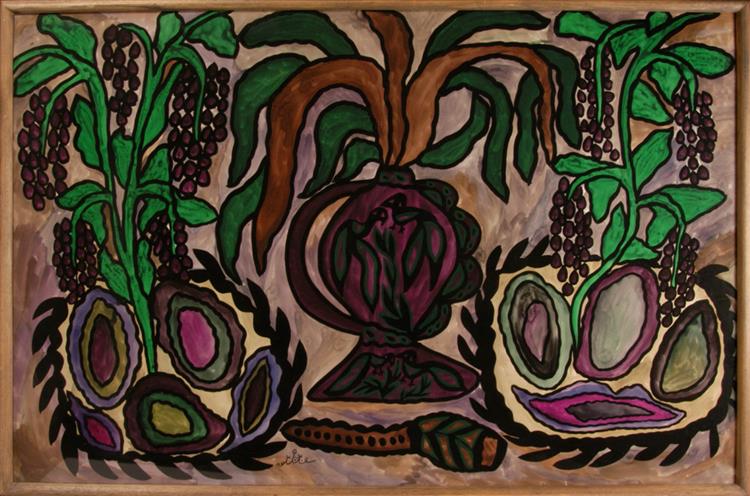
Baya Mahieddine
Fish and zither vase
"Vase of Fish and Zither", painted by Baya Mahieddine, reveals an entirely personal order. Baya Mahieddine's trajectory crosses the stage: the artist dismisses the Western perspective, paints women, birds and instruments and makes gouache shine. The work of 1966 can be read in "Vase with fish and zither": the material is gouache on paper, and the image follows an inner logic.
See the work and its source →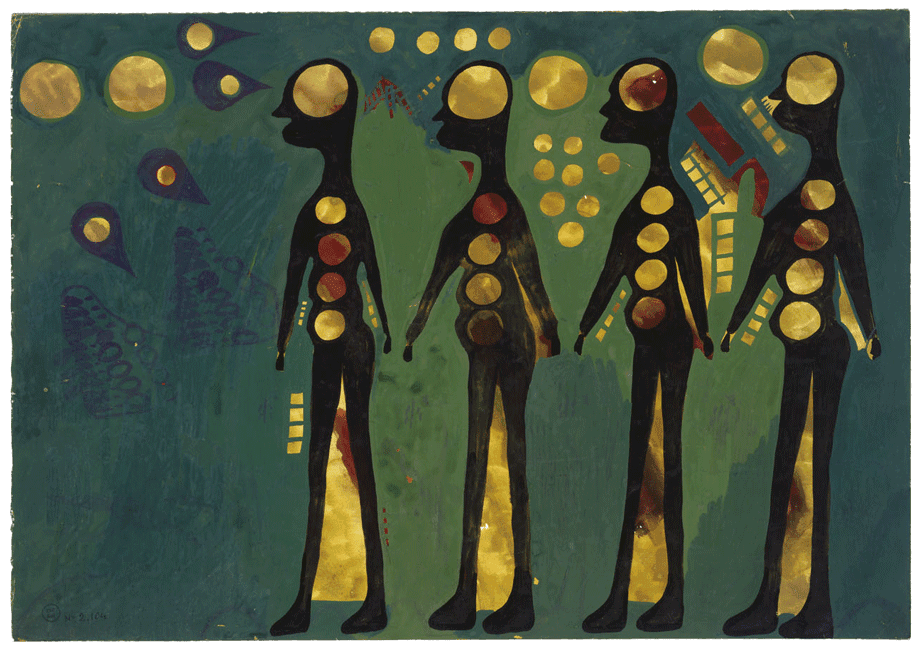
Carlo Zinelli
Untitled (1962, variation 3)
"Untitled (1962, variation 3)", painted by Carlo Zinelli, follows an inner logic. The context is biographical: Carlo Zinelli paints during long daily sessions; the artist paints during long daily sessions and organizes friezes without perspective. "Untitled (1962, variation 3)" dates from 1962; thanks to gouache on paper, she refuses the academic hierarchy.
See the museum notice →
Nikifor Krynicki
Villa in Krynica
"Villa in Krynica", painted by Nikifor Krynicki, reconstructs the place rather than copying it. On the threshold of this work, Nikifor Krynicki readily represents himself as an artist. The artist paints thousands of small images, while observe stations, villas and churches. In "Villa in Krynica", dated Undated, watercolor and gouache on paper or cardboard carry a scene which entrusts the facades with a lived memory.
See the work and its source →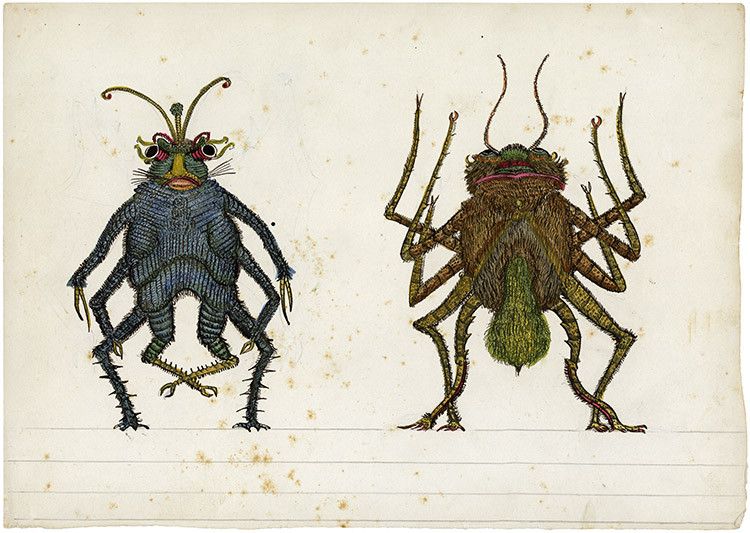
Josep Baqué
2 creatures (1932-1967, variation 1)
"2 Creatures (1932-1967, variation 1)", painted by Josep Baqué, charges the animal silhouette with tension. Josep Baqué draws a secret bestiary; the artist classifies his creatures by family and invents a zoology without a model. Dated 1932-1967, "2 Creatures (1932-1967, variation 1)" uses graphite, ink and gouache on paper; at second glance, the composition imposes the animal as an emblem.
See the museum notice →IV · Houses, streets and ceremonies
Everyday life takes up the entire web
Aleksander Pavlovich Lobanov
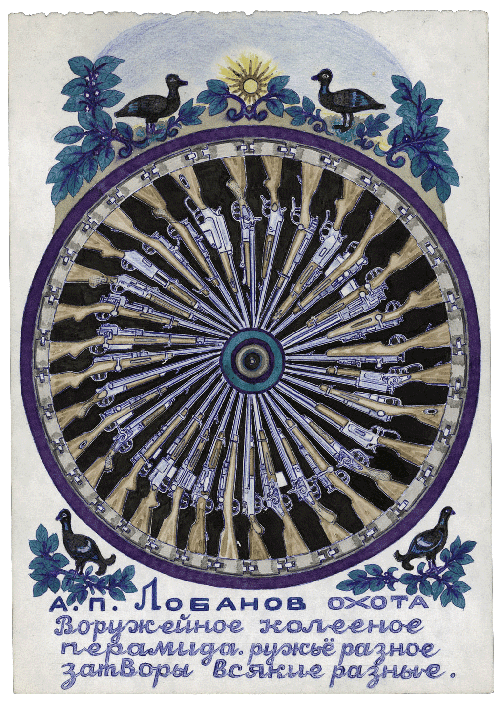
Untitled (1960-2003, variation 2)
"Untitled (1960-2003, variation 2)", painted by Aleksander Pavlovich Lobanov, follows an inner logic. This painting joins the moment when Aleksander Pavlovich Lobanov represents himself as a heroic guardian; the artist surrounds his rifle figures then built protective frames. In "Untitled (1960-2003, variation 2)", the technique - watercolor, ballpoint pen, colored pencil and felt-tip pen on paper - gives its density to the work of 1960-2003; the eye sees how she refuses the academic hierarchy.
See the museum notice →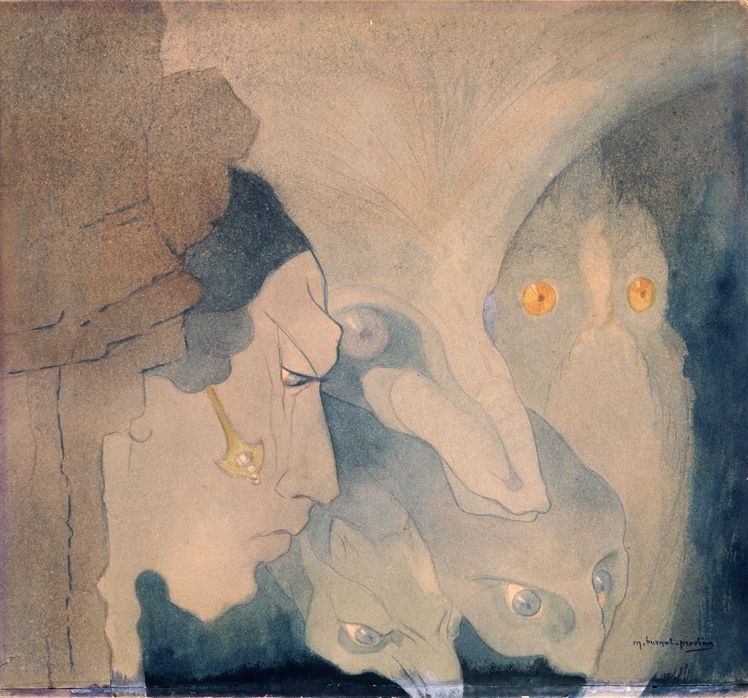
Marguerite Burnat-Provins
Beings of the Abyss, Oram Caris Bluterba Sobra
"Beings of the Abyss, Oram Caris Bluterba Sobra", painted by Marguerite Burnat-Provins, refuses the overly wise bestiary. Marguerite Burnat-Provins' trajectory crosses the stage: the artist begins My City after 1914, notes her visions accurately and uses watercolor as an apparition. The work of 1921 can be read in "Beings of the Abyss, Oram Caris Bluterba Sobra": the material is watercolor and graphite on cardboard, and the image charges the silhouette animal tension.
See the museum notice →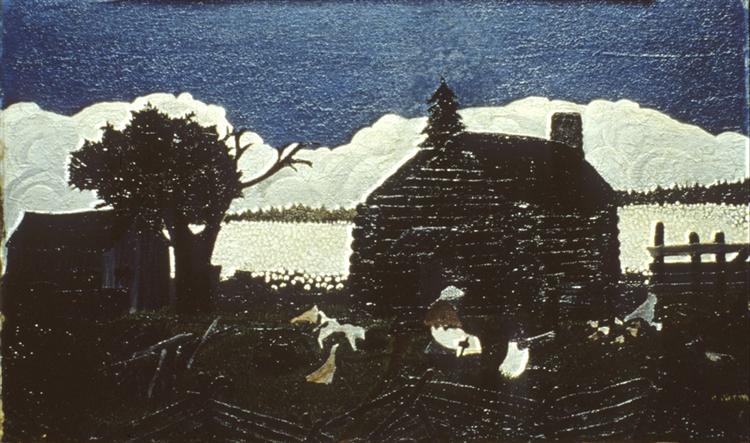
Horace Pippin
Cabin in the Cotton
"Cabin in the Cotton", painted by Horace Pippin, inscribes social time in each posture. To understand the image, you need to know that Horace Pippin returns injured from the Great War; the artist tells African-American history and observe domestic life with gravity. Dated 1935, "Cabin in the Cotton", made in oil on canvas or panel, gives daily chronicle value.
See the work and its source →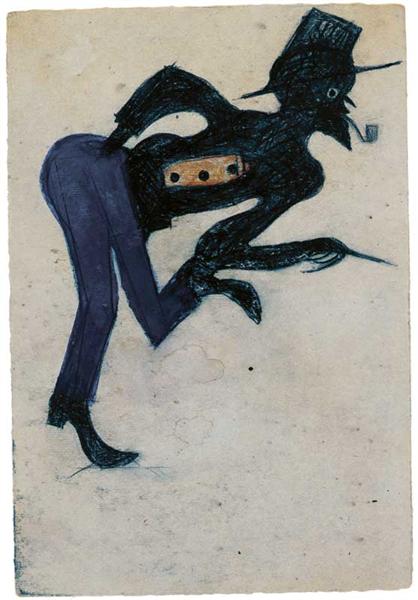
Bill Traylor
Untitled (Man in Blue Pants)
"Untitled (Man in Blue Pants)", painted by Bill Traylor, follows an inner logic. At this stage, Bill Traylor records the black life of the segregated South. At the same time, the artist works on the sidewalks of Montgomery and reduces them bodies with silhouettes. The material of "Untitled (Man in Blue Pants)", pencil and poster painting on cardboard, accompanied in 1939 an image which refused academic hierarchy.
See the work and its source →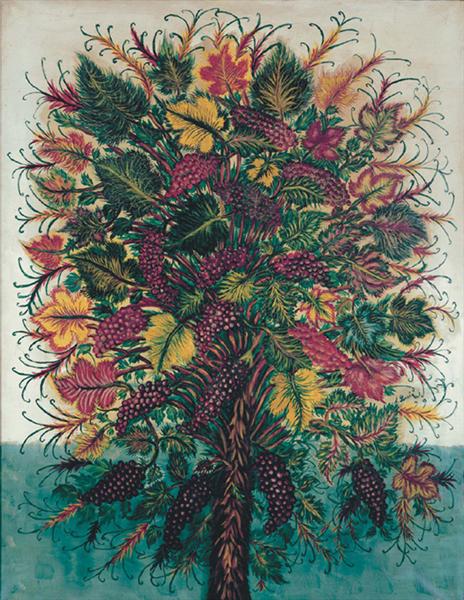
Séraphine Louis
Grape Clusters
"Les Grappes de Raisin", painted by Séraphine Louis, transforms each shoot into architecture. In these years, Séraphine Louis enlarged leaves, fruits and flowers. The artist paints mainly at night, while making vegetation one sacred vision. Made in oil and industrial painting on canvas in 1930, "Les Grappes de Raisin" elevates the botanical motif into vision.
See the work and its source →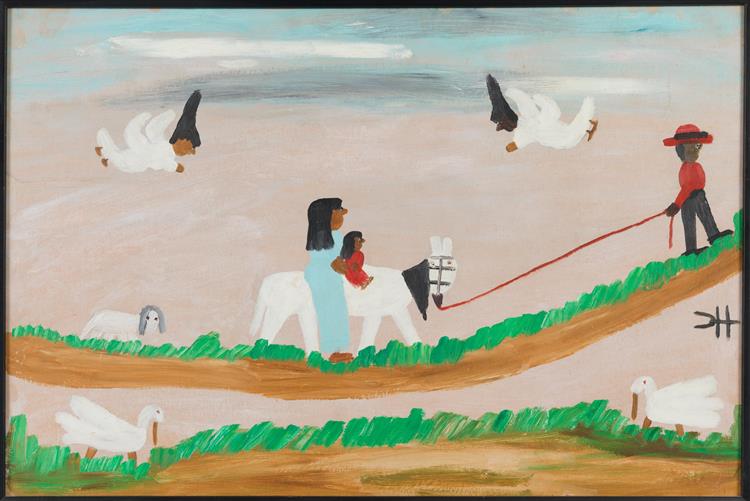
Clementine Hunter
Flight into Egypt
"Flight into Egypt", painted by Clementine Hunter, reveals an entirely personal order. The painting belongs to a phase where Clementine Hunter preserves the memory of a rural world; the artist uses available media and paints work, festivals and ceremonies. In 1965, the artist retained oil on canvas or panel for "Flight into Egypt", and the painting followed an inner logic.
See the work and its source →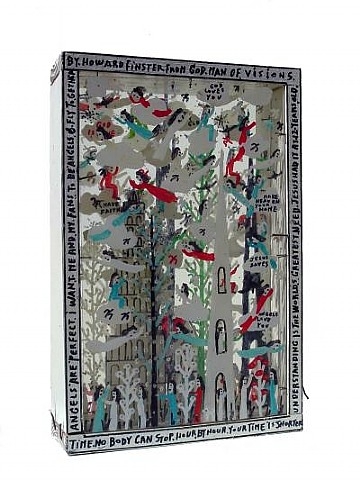
Howard Finster
God Loves You
"God Loves You", painted by Howard Finster, follows an inner logic. The context is biographical: Howard Finster makes each image a colorful sermon; in 1976 the artist received the call to paint and mixed texts, portraits and visions. "God Loves You" dates from 1989; thanks to enamel and acrylic on wood or canvas, she refuses the academic hierarchy.
See the work and its source →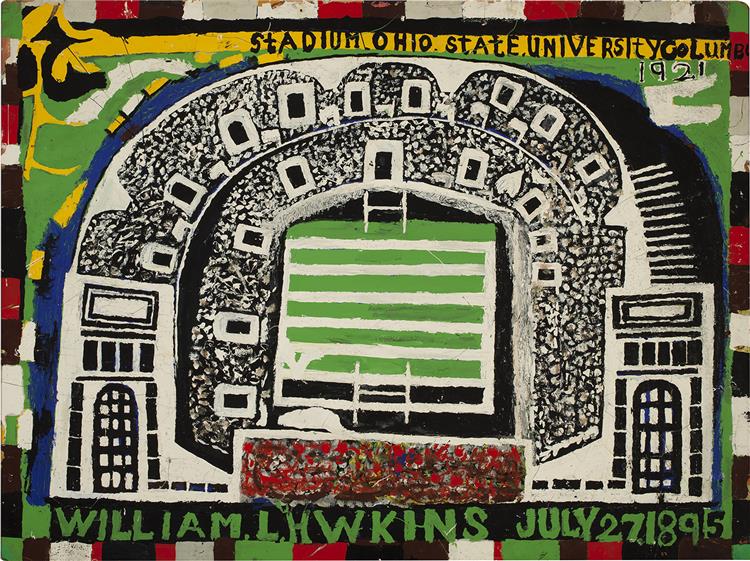
William L. Hawkins
Ohio State University Stadium
"Ohio State University Stadium", painted by William L. Hawkins, reconstructs the place rather than copying it. To understand the image, you need to know that William L. Hawkins transforms current events into icons; the artist draws inspiration from newspapers illustrated and magnifies animals and monuments. Dated 1983, "Ohio State University Stadium", made of enamel, oil and collage on panel, gives the facades a lived memory.
See the work and its source →
Nikifor Krynicki
Nikifor Matejko Malarz
"Nikifor Matejko Malarz", painted by Nikifor Krynicki, reveals an entirely personal order. Nikifor Krynicki's story remains decisive: the artist observes train stations, villas and churches, paints thousands of small images and makes watercolor a daily chronicle. For "Nikifor Matejko Malarz", the material - watercolor and gouache on paper or cardboard - reinforces in Undated a composition which follows an interior logic.
See the work and its source →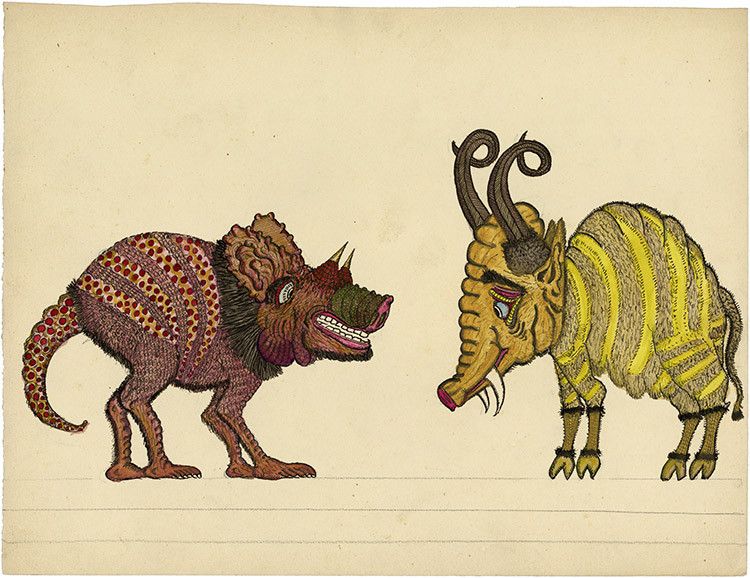
Josep Baqué
2 creatures (1932-1967, variation 2)
"2 creatures (1932-1967, variation 2)", painted by Josep Baqué, imposes the animal as an emblem. At this stage, Josep Baqué classifies his creatures by families. At the same time, the artist classifies his creatures by families and invents one zoology without a model. The material of "2 creatures (1932-1967, variation 2)", graphite, ink and gouache on paper, accompanied in 1932-1967 an image which refused the overly wise bestiary.
See the museum notice →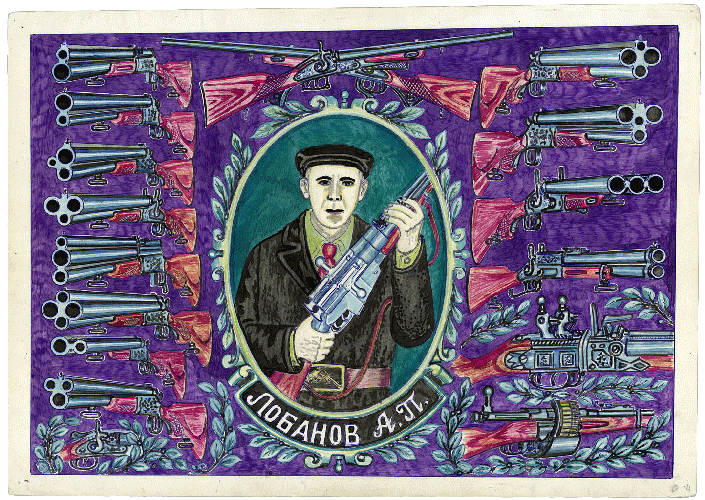
Aleksander Pavlovich Lobanov
Untitled (1960-2003, variation 3)
"Untitled (1960-2003, variation 3)", painted by Aleksander Pavlovich Lobanov, refuses the academic hierarchy. The context is biographical: Aleksander Pavlovich Lobanov surrounds his figures with rifles; the artist surrounds his figures with rifles and builds protective frames. "Untitled (1960-2003, variation 3)" dates from 1960-2003; thanks to watercolor, ballpoint pen, colored pencil and felt-tip pen on paper, it reveals an entirely personal order.
See the museum notice →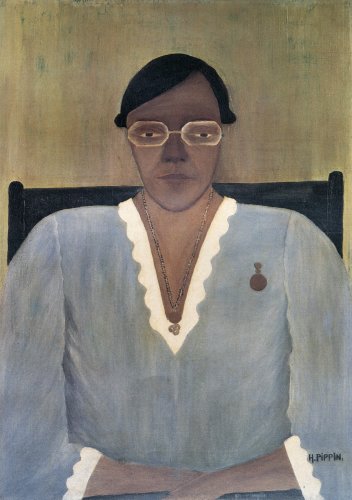
Horace Pippin
The Artist's Wife
"The Artist's Wife", painted by Horace Pippin, combines presence and symbol in portraiture. Horace Pippin learns to paint again despite an injury; the artist tells African-American history and seriously observes domestic life. Dated 1936, "The Artist's Wife" uses oil on canvas or panel; at second glance, the composition presents the figure directly.
See the work and its source →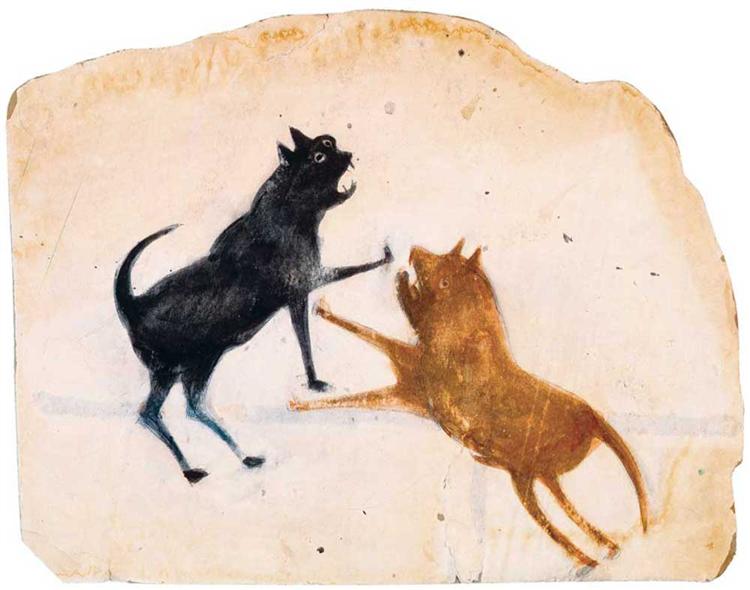
Bill Traylor
Untitled (Two Dogs Fighting)
"Untitled (Two Dogs Fighting)", painted by Bill Traylor, imposes the animal as an emblem. The painting belongs to a phase where Bill Traylor was born into slavery in Alabama; the artist uses recovered cardboard boxes and reduces the bodies to silhouettes. In 1939, the artist retained pencil and poster paint on cardboard for "Untitled (Two Dogs Fighting)", and the painting refused the overly wise bestiary.
See the work and its source →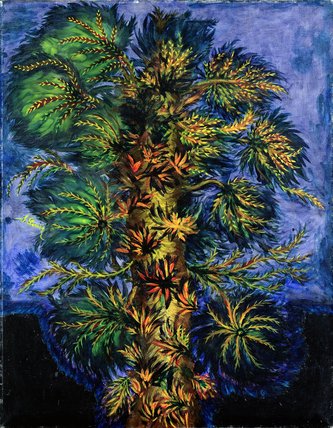
Séraphine Louis
Tree
"Tree", painted by Séraphine Louis, transforms each shoot into architecture. The scene takes on another relief when Séraphine Louis makes vegetation a sacred vision; the artist paints especially at night and enlarges leaves, fruits and flowers. The 1930 landmark places "Tree"; with oil and industrial painting on canvas, the image elevates the botanical motif into vision.
See the work and its source →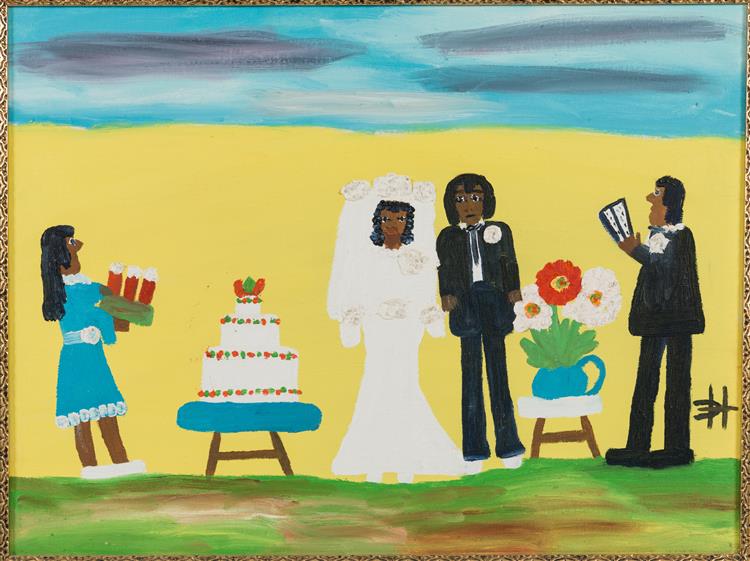
Clementine Hunter
The Wedding
"The Wedding", painted by Clementine Hunter, inscribes social time in each posture. At the threshold of this work, Clementine Hunter worked for a long time at Melrose Plantation. The artist recounts the Creole daily life of Louisiana, while painted work, parties and ceremonies. In "The Wedding", dated 1975, oil on canvas or panel bears a scene which gives everyday chronicle value.
See the work and its source →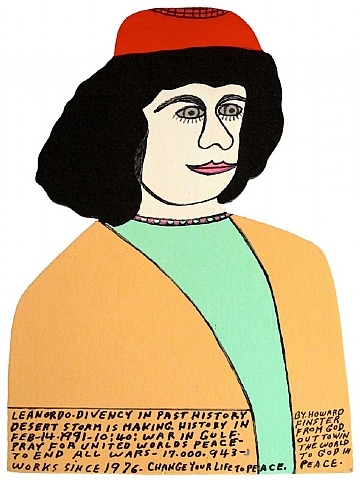
Howard Finster
Leonardo da Vinci
"Leonardo da Vinci", painted by Howard Finster, follows an inner logic. Howard Finster's biography emerges here: the artist preaches as a Baptist pastor in Georgia, numbers an abundant production and mixes texts and portraits and visions. "Leonardo da Vinci" belongs to 1991; its material, enamel and acrylic on wood or canvas, supports an image that rejects academic hierarchy.
See the work and its source →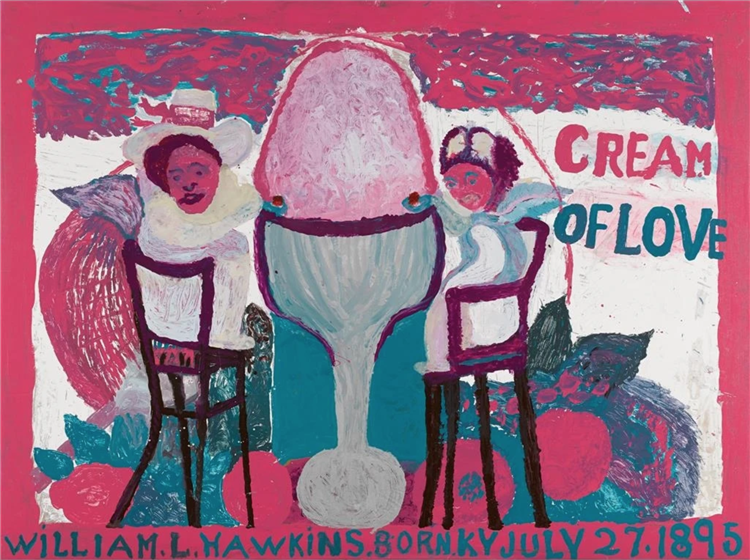
William L. Hawkins
Cream of Love
"Cream of Love", painted by William L. Hawkins, rejects the academic hierarchy. William L. Hawkins works as a driver in Columbus; the artist uses enamel and industrial paint and magnifies animals and monuments. Dated 1985, "Cream of Love uses enamel, oil and panel collage; at second glance, the composition reveals an entirely personal order.
See the work and its source →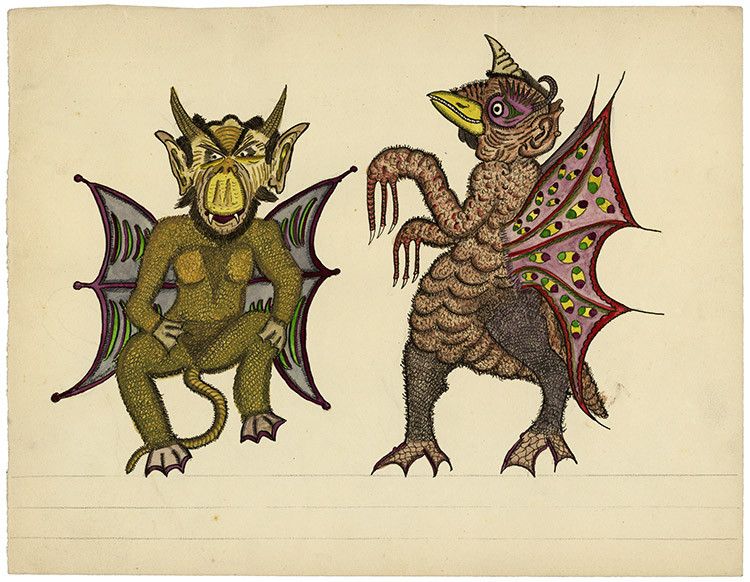
Josep Baqué
2 creatures (1932-1967, variation 3)
"2 Creatures (1932-1967, variation 3)", painted by Josep Baqué, charges the animal silhouette with tension. The painting belongs to a phase where Josep Baqué adds gouache to ink; the artist classifies his creatures by family and invents a zoology without a model. In 1932-1967, the artist retained graphite, ink and gouache on paper for "2 creatures (1932-1967, variation 3)", and the painting imposed the animal as an emblem.
See the museum notice →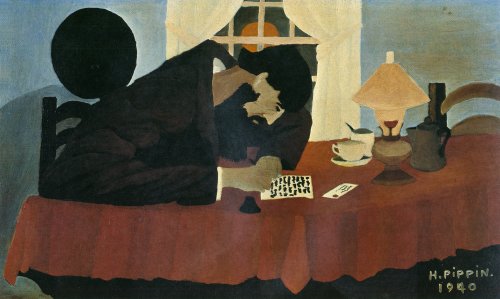
Horace Pippin
Amish Letter Writer
"Amish Letter Writer", painted by Horace Pippin, follows an inner logic. At this stage, Horace Pippin exhibited publicly from the 1930s. At the same time, the artist told African-American history and observed with it gravity domestic life. The material from "Amish Letter Writer", oil on canvas or panel, accompanied in 1940 an image which refused academic hierarchy.
See the work and its source →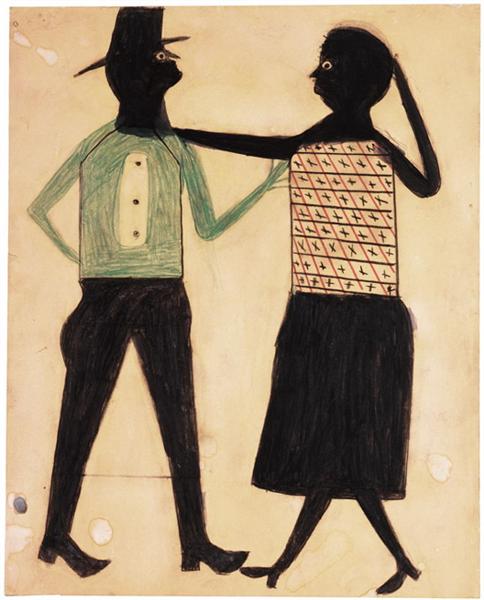
Bill Traylor
Untitled (1939)
"Untitled (1939)", painted by Bill Traylor, refuses the academic hierarchy. On the threshold of this work, Bill Traylor begins to create after the age of eighty. The artist uses recovered cardboard, while reducing the bodies to silhouettes. In "Untitled (1939)", dated 1939, pencil and poster painting on cardboard bears a scene that reveals an entirely personal order.
See the work and its source →V · Free materials
Paint with what life leaves at hand
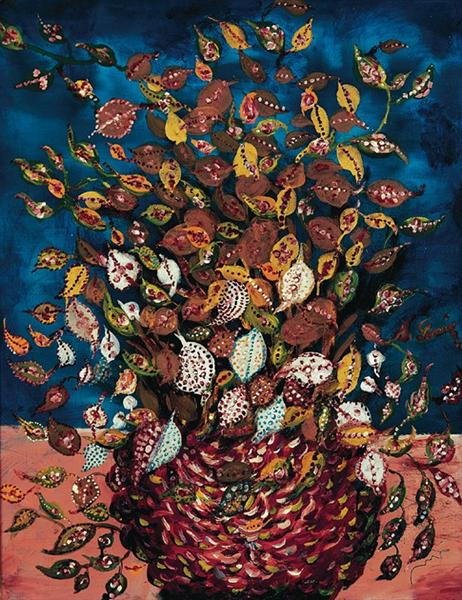
Séraphine Louis
The Bouquet of Leaves
"Le Bouquet de Feuilles", painted by Séraphine Louis, elevates the botanical motif into vision. This image is also understandable because Séraphine Louis works as a servant in Senlis; the artist prepares mixtures of personal colors and enlarges leaves, fruits and flowers. With oil and industrial paint on canvas, "Le Bouquet de Feuilles" fixes in Undated a composition which lets vegetation invade the entire field.
See the work and its source →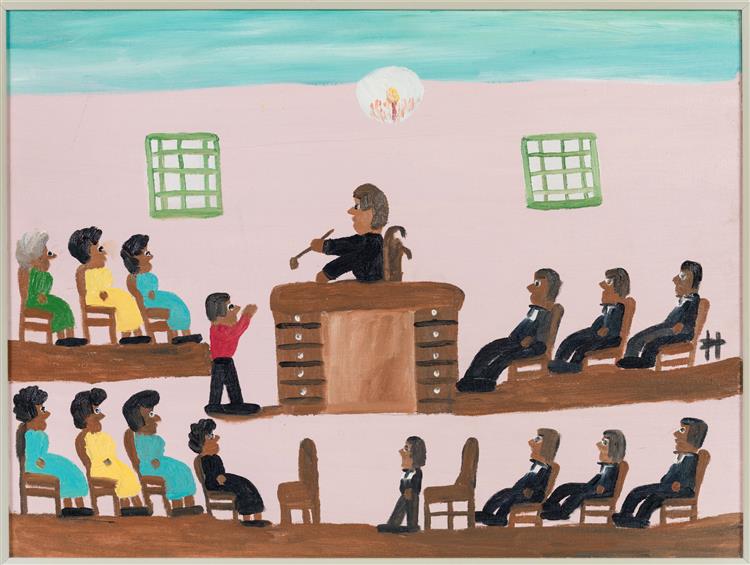
Clementine Hunter
Courtroom
"Courtroom", painted by Clementine Hunter, follows an inner logic. Clementine Hunter's story remains decisive: the artist began painting around 1940, recounts the Creole daily life of Louisiana and paints work, parties and ceremonies. For "Courtroom", the material - oil on canvas or panel - reinforced in 1980 a composition which refused the academic hierarchy.
See the work and its source →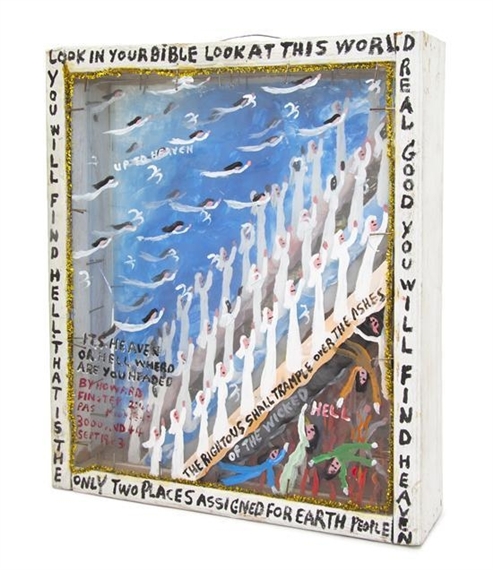
Howard Finster
Up to Heaven
"Up to Heaven", painted by Howard Finster, rejects academic hierarchy. Howard Finster's journey illuminates the image: the artist builds the Paradise Garden environment, numbers an abundant production and mixes texts, portraits and visions. In Undated, "Up to Heaven" takes advantage of enamel and acrylic on wood or canvas: the image reveals an entirely personal order.
See the work and its source →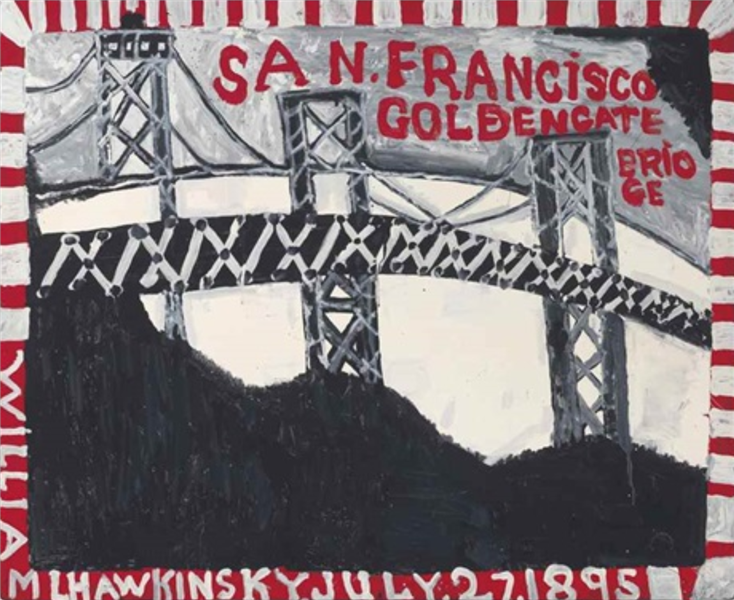
William L. Hawkins
San Francisco Golden Gate Bridge
"San Francisco Golden Gate Bridge", painted by William L. Hawkins, reveals an entirely personal order. At this stage, William L. Hawkins paints on reclaimed panels. At the same time, the artist uses enamel and paint industrial and grows animals and monuments. The material of "San Francisco Golden Gate Bridge", enamel, oil and collage on panel, accompanied in 1986 an image which followed an interior logic.
See the work and its source →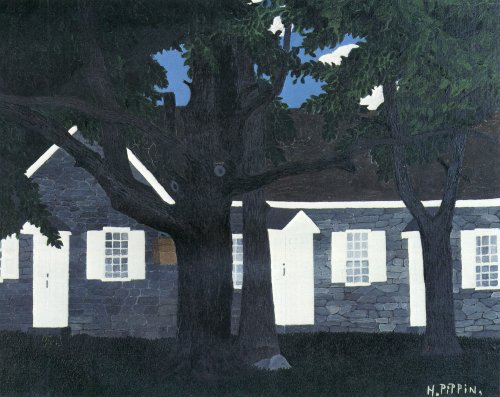
Horace Pippin
Birmingham Meeting House III
"Birmingham Meeting House III", painted by Horace Pippin, transforms architecture into a mental portrait. The painting belongs to a phase where Horace Pippin tells African-American history; the artist tells African-American history and observe domestic life with gravity. In 1941, the artist retained oil on canvas or panel for "Birmingham Meeting House III", and the painting reconstructed the place rather than copying it.
See the work and its source →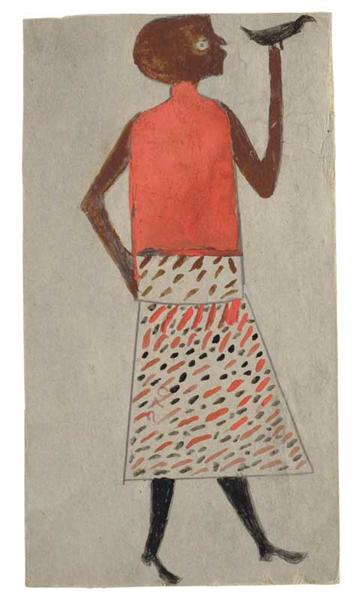
Bill Traylor
Untitled (Woman with Bird)
"Untitled (Woman with Bird)", painted by Bill Traylor, makes the face a narrative focus. Bill Traylor's story remains decisive: the artist works on the sidewalks of Montgomery, uses recovered cardboard boxes and reduces the bodies to silhouettes. For "Untitled (Woman with Bird)", the material - pencil and poster painting on cardboard - reinforced in 1940 a composition which combines presence and symbol in portraiture.
See the work and its source →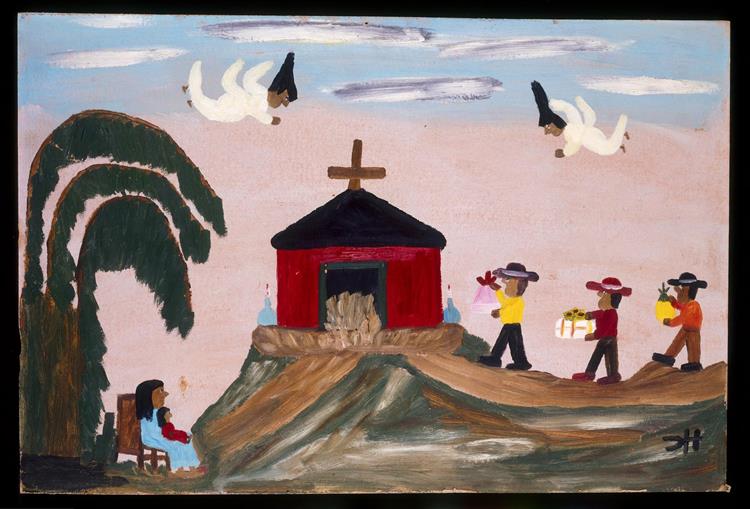
Clementine Hunter
Baby Jesus and Three Wise Men
"Baby Jesus and Three Wise Men", painted by Clementine Hunter, combines presence and symbol in the portrait. At the time, Clementine Hunter used available media. This journey explains why the artist tells the story of the Creole daily life from Louisiana and painted work, parties and ceremonies. "Baby Jesus and Three Wise Men", a 1960 work, uses oil on canvas or panel. Its composition presents the figure directly.
See the work and its source →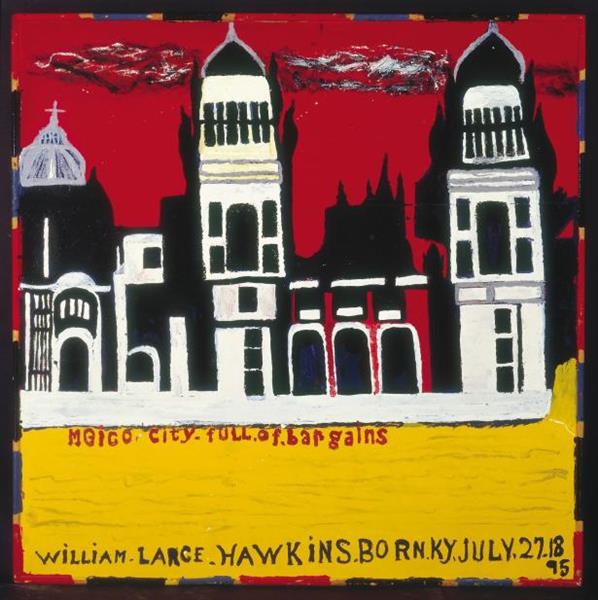
William L. Hawkins
Mexico City Full of Bargains
"Mexico City Full of Bargains", painted by William L. Hawkins, transforms architecture into a mental portrait. The painting belongs to a phase where William L. Hawkins draws inspiration from illustrated newspapers; the artist uses enamel and paint industrial and grows animals and monuments. In 1989, the artist retained enamel, oil and collage on panel for "Mexico City Full of Bargains", and the painting reconstructed the place rather than copying it.
See the work and its source →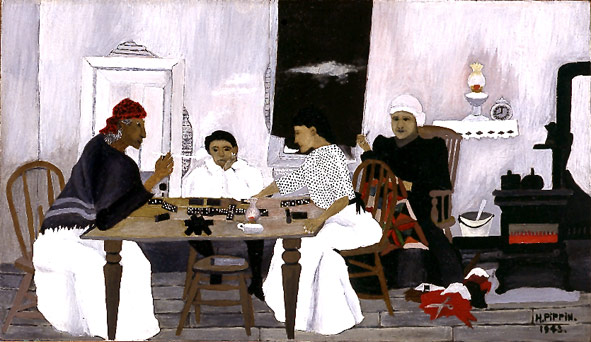
Horace Pippin
Domino Players
"Domino Players", painted by Horace Pippin, changes gestures into collective memory. At the threshold of this work, Horace Pippin seriously observes domestic life. The artist tells African-American history, while uniting memory personal and national history. In "Domino Players", dated 1943, oil on canvas or panel carries a scene which inscribes social time in each posture.
See the work and its source →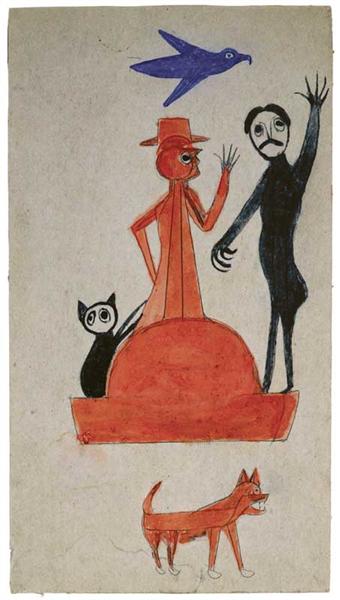
Bill Traylor
Untitled (Figure Construction with Waving Man)
"Untitled (Figure Construction with Waving Man)", painted by Bill Traylor, reveals an entirely personal order. At the time, Bill Traylor used reclaimed cardboard. This journey explains why the artist uses reclaimed cardboard and reduces the bodies to silhouettes. "Untitled (Figure Construction with Waving Man)", a 1947 work, uses pencil and poster paint on cardboard. Its composition follows an inner logic.
See the work and its source →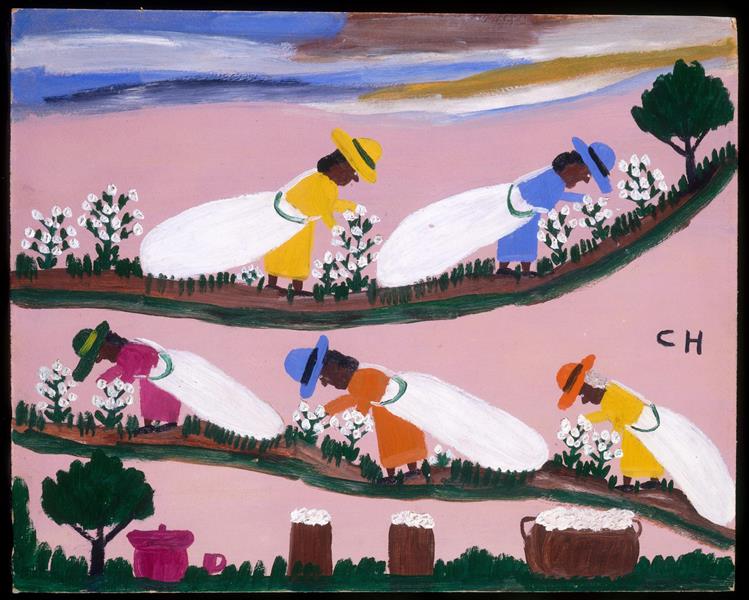
Clementine Hunter
Cotton Pickin'
"Cotton Pickin'", painted by Clementine Hunter, gives the daily chronicle value. Clementine Hunter's trajectory crosses the stage: the artist recounts the Creole daily life of Louisiana, recounts the Creole daily life of Louisiana and painted work, parties and ceremonies. The work of 1948 can be read in "Cotton Pickin'": the material is oil on canvas or panel, and the image changes the gestures into collective memory.
See the work and its source →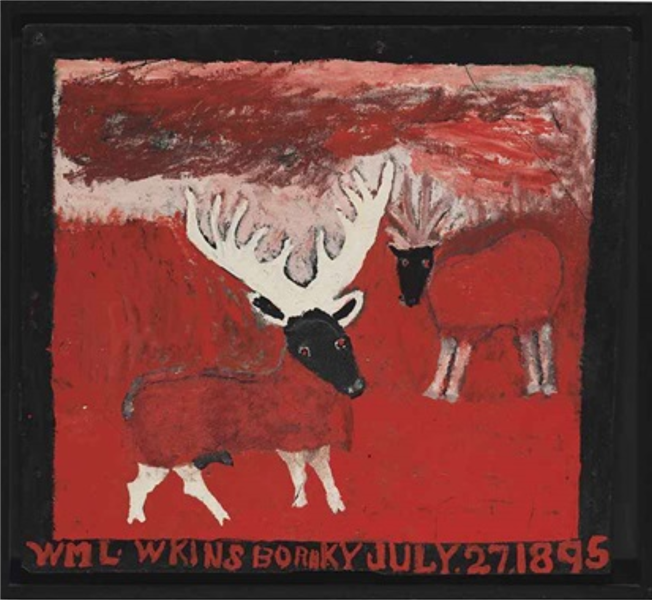
William L. Hawkins
Two Deer in a Fiery Forest
"Two Deer in a Fiery Forest", painted by William L. Hawkins, rejects the overly wise bestiary. On the threshold of this work, William L. Hawkins uses enamel and industrial paint. The artist uses enamel and industrial paint, while magnifies animals and monuments. In "Two Deer in a Fiery Forest", dated Undated, enamel, oil and collage on panel carries a scene that charges the animal silhouette with tension.
See the work and its source →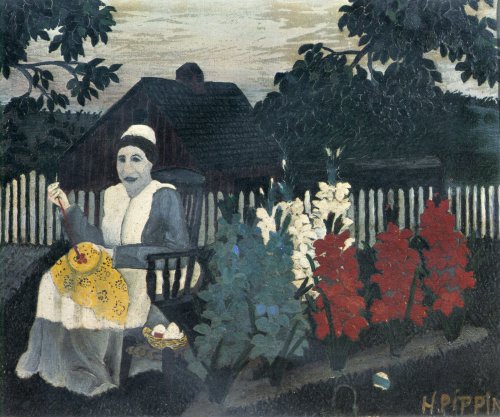
Horace Pippin
Victory Garden
"Victory Garden", painted by Horace Pippin, elevates the botanical motif into vision. The story of Horace Pippin remains decisive: the artist unites personal memory and national history, tells African-American history and observes with it gravity domestic life. For "Victory Garden", the material - oil on canvas or panel - reinforced in 1943 a composition which allowed vegetation to invade the entire field.
See the work and its source →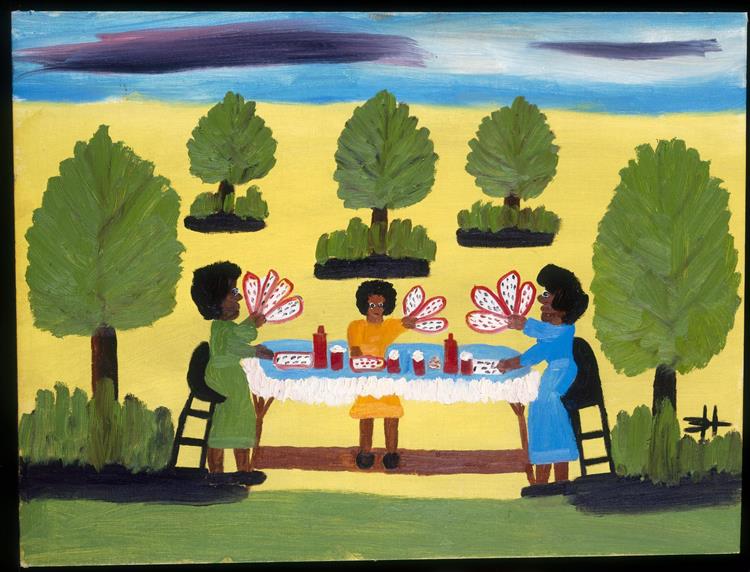
Clementine Hunter
Playing Cards
"Playing Cards", painted by Clementine Hunter, gives the daily chronicle value. In these years, Clementine Hunter painted work, parties and ceremonies. The artist recounts the Creole daily life of Louisiana, while preserving the memory of a rural world. Made in oil on canvas or panel in 1970, "Playing Cards" changes gestures into collective memory.
See the work and its source →
Horace Pippin
Holy Mountain I
"Holy Mountain I", painted by Horace Pippin, refuses academic hierarchy. At the time, Horace Pippin returned injured from the Great War. This journey explains why the artist seriously observes domestic life and unites memory personal and national history. "Holy Mountain I", a 1944 work, uses oil on canvas or panel. Its composition reveals an entirely personal order.
See the work and its source →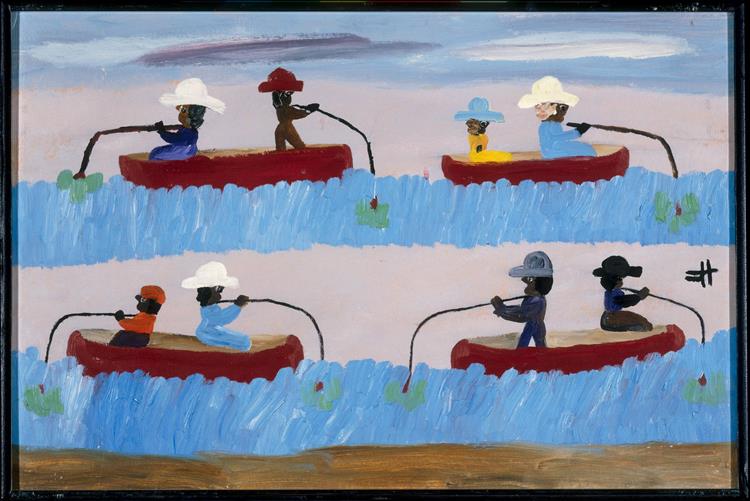
Clementine Hunter
Fishing
"Fishing", painted by Clementine Hunter, reveals an entirely personal order. The scene takes on another relief when Clementine Hunter preserves the memory of a rural world; the artist recounts the Creole daily life of Louisiana and paints work, parties and ceremonies. The 1966 landmark places "Fishing"; with oil on canvas or panel, the image follows an inner logic.
See the work and its source →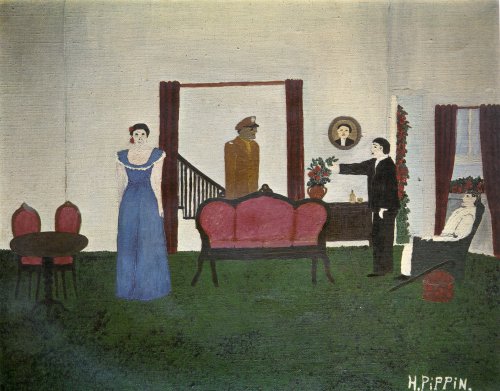
Horace Pippin
Deep Are The Roots
"Deep Are The Roots", painted by Horace Pippin, follows an inner logic. Horace Pippin's trajectory crosses the stage: the artist relearns to paint despite an injury, seriously observes domestic life and unites memory personal and national history. The work of 1945 can be read in "Deep Are The Roots": the material is oil on canvas or panel, and the image rejects the academic hierarchy.
See the work and its source →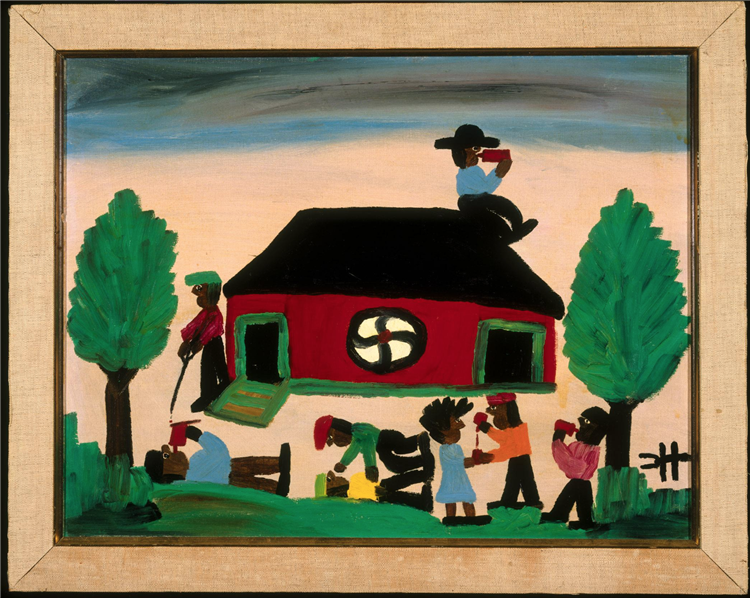
Clementine Hunter
Saturday Night
"Saturday Night", painted by Clementine Hunter, rejects the academic hierarchy. This image is also understandable because Clementine Hunter works for a long time at Melrose Plantation; the artist paints work, parties and ceremonies and preserves the memory of a rural world. With oil on canvas or panel, "Saturday Night" established a composition in 1965 which revealed an entirely personal order.
See the work and its source →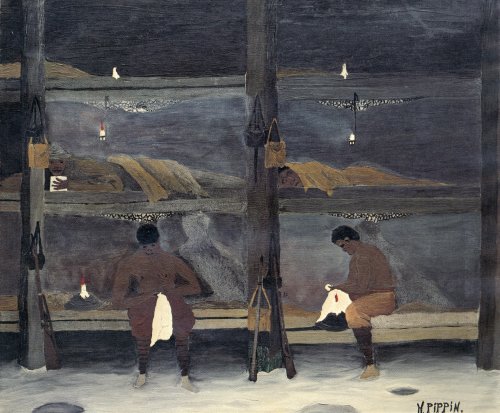
Horace Pippin
The Barracks
"The Barracks", painted by Horace Pippin, advances through tensions and silences. In these years, Horace Pippin exhibited publicly from the 1930s. The artist observed domestic life with gravity, while uniting personal memory and national history. Made in oil on canvas or panel in 1945, "The Barracks" carries a story crossed by violence.
See the work and its source →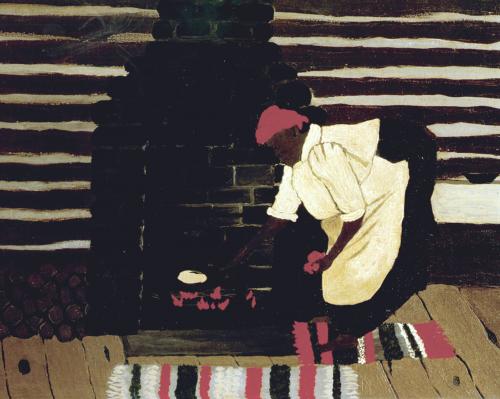
Horace Pippin
The Hoe Cake
"The Hoe Cake", painted by Horace Pippin, gives the daily chronicle value. The scene takes on another relief when Horace Pippin tells African-American history; the artist seriously observes domestic life and unites memory personal and national history. The 1946 landmark places "The Hoe Cake"; with oil on canvas or panel, the image changes gestures into collective memory.
See the work and its source →What these paintings move
Art Brut does not constitute a style recognizable by a palette or a touch. It first designates a position regarding creation: working because the image must exist, sometimes without an audience, without a market and without critical vocabulary to accompany it.
The works collected here also show that "outside institutions" does not mean outside history. Bill Traylor carries the memory of slavery and segregation; Horace Pippin confronts world war and African-American history; Baya Mahieddine invents a feminine space in Algiers that asks no one's permission.
The museum often arrives later. It preserves, documents and makes visible, but the first decision always belongs to the painter: put down a color, start again tomorrow, and let the official world catch up.
0 comments