


100 works - American painting
American Painting: 100 Famous Paintings from Whistler to Hopper
One hundred distinct images to explore Hopper's realism, American impressionism, regionalism, precisionism and solitary modernity.
From the tones of Whistler to the neon lights of Hopper, American painting is constructed between cosmopolitan portraits, immensity of the territory, urban energy and the search for a modern voice.
A modernity between two horizons
How American painting invents its own images
American artists travel, study in Europe and watch the avant-gardes, but they shift these exchanges to specific subjects: the scale of the territory, the vertical city, social tensions, spectacle and modern solitude.
Between the panorama and the lit window, American art makes space a way of telling the individual's story.Enter the tables
The 100 paintings in pictures
Portraits, national symbols and images that have become collective open Whistler's journey to Hopper.
#1
American Gothic
With "American Gothic", Grant Wood gives memorable form to one of the central questions of American painting. Grant Wood gives the Midwest an almost iconic clarity. Faces, hills and architecture condense the tensions between rural memory, national identity and irony. Modernity appears in facades, signs, windows and empty intervals. Urban geometry becomes a means of organizing time as well as space. Urban geometry becomes a means of organizing time as much as space. The associated sheet allows you to observe how Grant Wood organizes the pattern, material and depth without reducing the image to a simple illustration. The associated sheet allows you to observe how Grant Wood organizes the pattern, material and depth without reducing the image to a simple illustration. The associated sheet allows you to observe how Grant Wood organizes the pattern, material and depth without reducing the image to a simple illustration. The image and link come directly from the Alpha Reproduction store. This ability to unite a concrete situation and an open structure explains its place in the journey: the work remains immediately readable without exhausting its meaning.
Image: Alpha Reproduction · Image and link from the Alpha Reproduction catalog.
See this reproduction → #2
#2
Night Birds
"The Night Birds" shows how Edward Hopper transforms a specific pattern into an experience of light, space and duration. Hopper reduces the scene to a few shots, figures and light sources. This economy gives ordinary places a silent wait where the story remains deliberately incomplete. The composition is understood by its internal relationships: the lines lead the eye, the colors prioritize the shots and the voids prevent the image from closing on a single reading. The associated sheet allows you to observe how Edward Hopper organizes the pattern, the material and the voids prevent the image from closing on a single reading. The associated sheet allows you to observe how Edward Hopper organizes the pattern, the material and the depth without reducing the image to a simple illustration. The associated sheet allows you to observe how Edward Hopper organizes the pattern, the material and the depth without reducing the image to a simple illustration. The image and the link come directly from the Alpha Reproduction store. The painting belongs to his time, but he goes beyond it by making the look an active experience rather than a simple recognition of the subject.
Image: Alpha Reproduction · Image and link from the Alpha Reproduction catalog.
See this reproduction → #3
#3
Arrangement in gray and black no. 1: Whistler's mother
In "Arrangement in Gray and Black No. 1: Whistler's Mother", James McNeill Whistler constructs a tension between direct observation and very conscious organization of the surface. Whistler replaces the story with tonal chords. Portraits and nocturnals become arrangements where color, mist and rhythm count as much as the subject represented. The portrait must be read in its device: posture, clothing, furniture and distance of gaze reveal as much a social position as a singular person. The portrait must be read in its device: posture, clothing, furniture and distance of gaze reveal as much a social position as a singular person. The associated sheet allows you to observe how James McNeill Whistler organizes the motif, the material and the depth without reducing the image to a simple illustration. The picture and the link comes directly from the Alpha Reproduction store. The work deserves to be compared to the other pieces in the corpus: the same tensions between territory, identity and modernity constantly change form.
Image: Alpha Reproduction · Image and link from the Alpha Reproduction catalog.
See this reproduction → #4
#4
The Gulf Stream
The strength of "The Gulf Stream" comes from a balance between physical presence, framing and economy of the story. Homer constructs a painting of ordeal and autonomy: sea, climate, war and childhood are observed with an economy that leaves gestures with all their strength. The landscape acts as a force rather than a setting. Horizon, climate and distance measure human vulnerability while constructing an image of American space. The associated sheet allows us to observe how Winslow Homer organizes the motif, material and depth without reducing the image to a simple illustration. The associated sheet allows us to observe how Winslow Homer organizes the motif, the material and the depth without reducing the image to a simple illustration. The image, climate and distance measure human vulnerability while constructing an image of American space. The associated sheet allows us to observe how Winslow Homer organizes the motif, the material and the depth without reducing the image to a simple illustration. The image and the link come directly from the Alpha Reproduction store. This tension between precision and reserve gives it its lasting strength and allows us to understand why image continues to structure our vision of American art.
Image: Alpha Reproduction · Image and link from the Alpha Reproduction catalog.
See this reproduction → #5
#5
Mrs
Beneath its apparent evidence, "Madame X" precisely regulates the relationship between the spectator and the scene represented. Sargent captures social presence through the speed of the brush, the brilliance of the fabrics and the security of the poses. His travels broaden the portrait to a cosmopolitan experience of light. The portrait must be read in its device: posture, clothing, furniture and distance of gaze reveal as much a social position as a singular person. The portrait must be read in its device: posture, clothing, furniture and distance of gaze reveal as much a social position as a singular person. The associated sheet allows you to observe how John Singer Sargent organizes the pattern, material and depth without reducing the image to a simple illustration. The associated sheet allows you to observe how John Singer Sargent organizes the pattern, material and depth without reducing the image to a simple illustration. The associated sheet allows you to observe how John Singer Sargent organizes the pattern, material and depth without reducing the image to a simple illustration. The image and link come directly from the Alpha store Reproduction. This ability to unite a concrete situation and an open structure explains its place in the journey: the work remains immediately readable without exhausting its meaning.
Image: Alpha Reproduction · Image and link from the Alpha Reproduction catalog.
See this reproduction →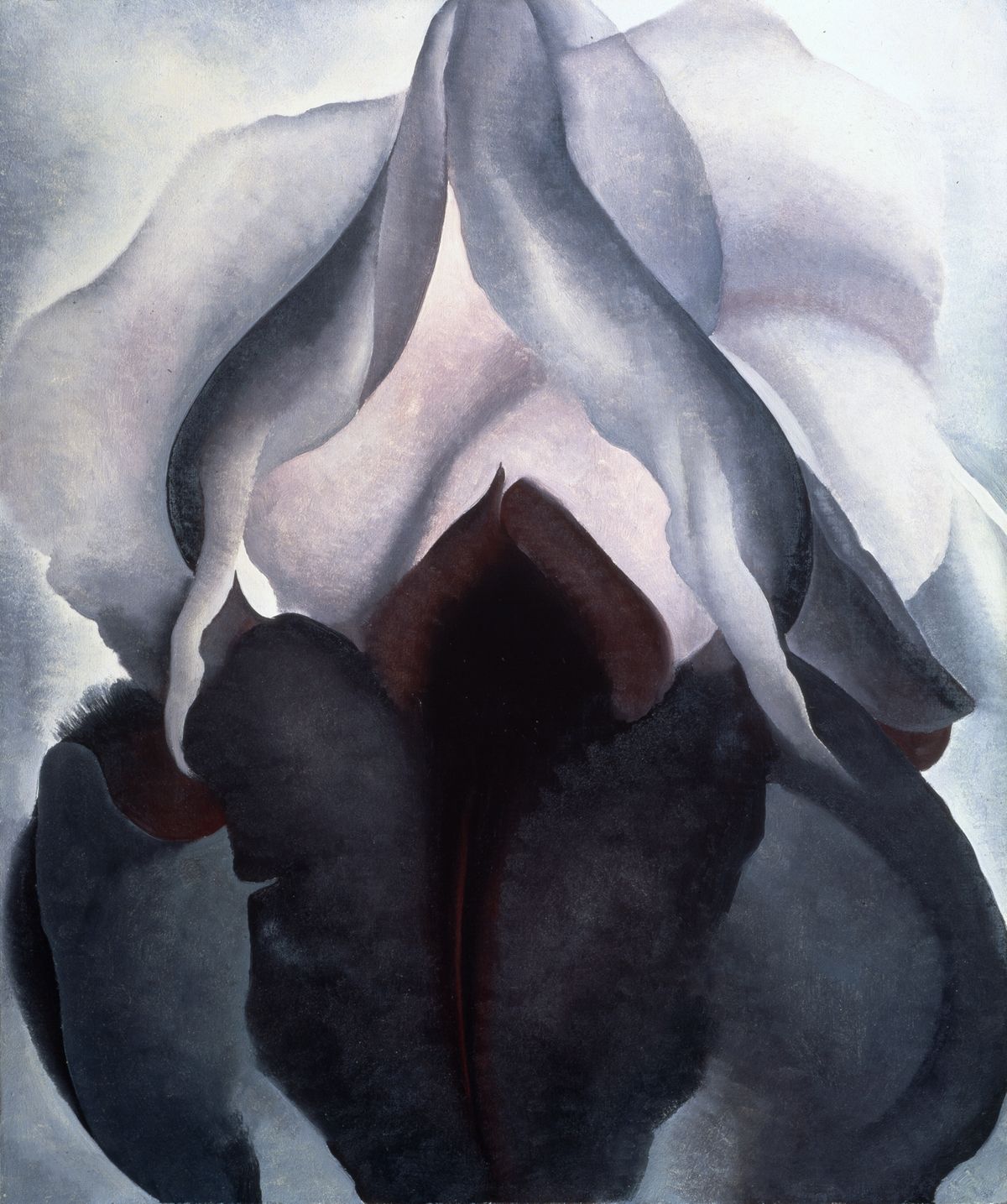 #6
#6
Black iris
With "Black Iris", Georgia O'Keeffe gives a memorable form to one of the central questions of American painting. O'Keeffe enlarges flowers, bones, cities and clouds until the motif is an autonomous field. Simplification does not erase reality: it intensifies its presence. The composition is understood by its internal relationships: the lines lead the eye, the colors prioritize the planes and the voids prevent the image from closing on a single reading. Dated 1926, the work is documented as a painting in the collection of Metropolitan Museum of Art (The Met). The work is documented as a painting in the collection of Metropolitan Museum of Art (The Met). The work is documented as a painting in the collection of Metropolitan Museum of Art (The Met). The image is presented for documentary purposes and refers to the notice of Metropolitan Museum of Art (The Met). Alpha Reproduction does not offer a reproduction of this work by Georgia O'Keeffe; the conditions of use are the responsibility of the institution and the rights holders. The painting belongs to his time, but he goes beyond it by making the look an active experience rather than a simple recognition of the subject.
Image: Metropolitan Museum of Art (The Met) · Documentary image; no reproduction offered by Alpha Reproduction.
See the museum notice →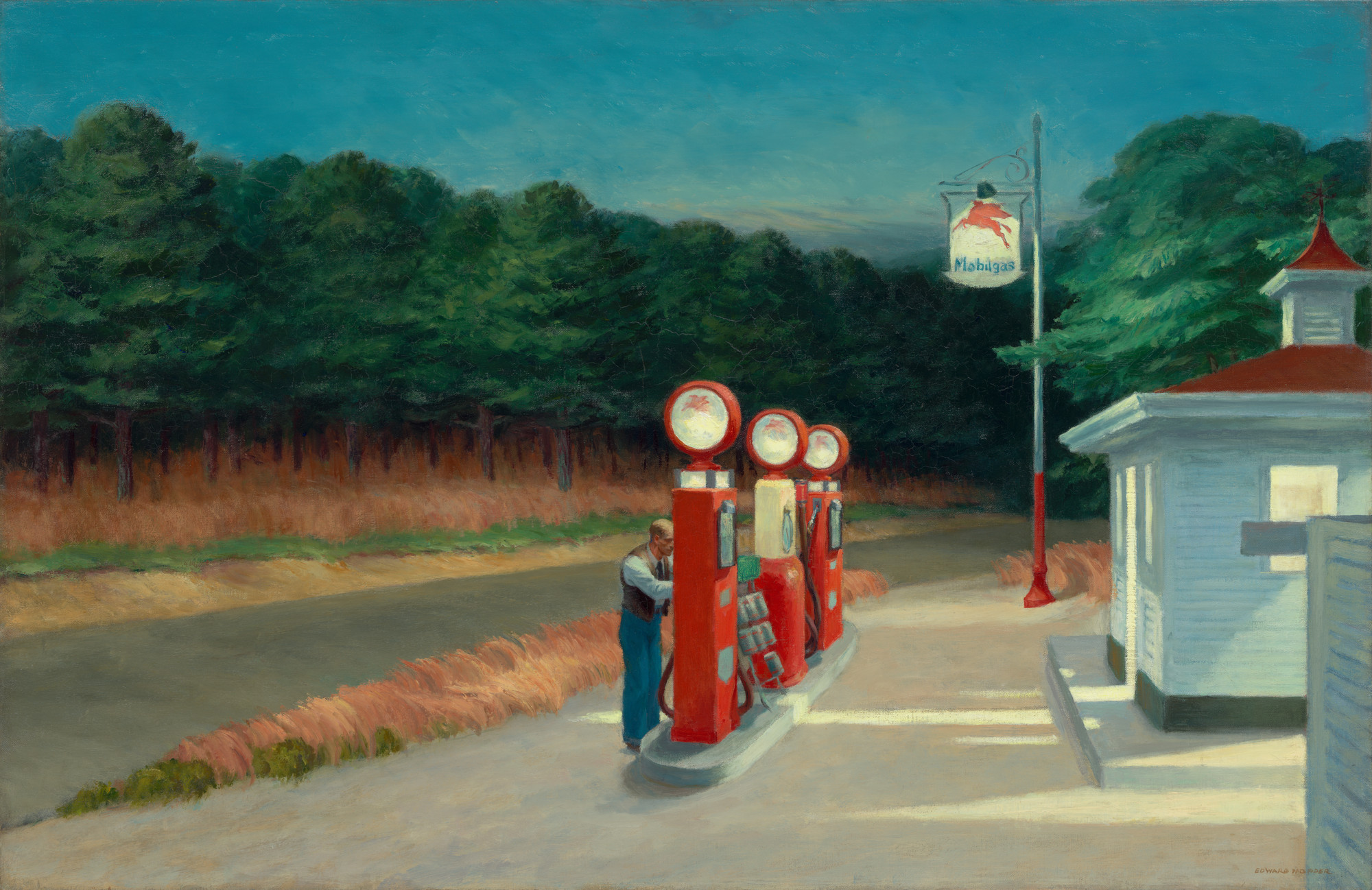 #7
#7
Gas station
"Gas Station" shows how Edward Hopper transforms a specific pattern into an experience of light, space and duration. Hopper reduces the scene to a few shots, figures and light sources. This economy gives ordinary places a silent wait where the story remains deliberately incomplete. Modernity appears in facades, signs, display cases and empty intervals. Urban geometry becomes a means of organizing time as much as space. Dated 1940, the work is documented as oil on canvas in the collection of Museum of Modern Art, New York. The image is documented as oil on canvas in the collection of Museum of Modern Art, New York. The work is documented as oil on canvas in the collection of Museum of Modern Art, New York. The work is documented as oil on canvas in the collection of Museum of Modern Art, New York. The image is presented for documentary purposes and refers to the notice from Museum of Modern Art, New York. Alpha Reproduction does not offer reproduction of this work by Edward Hopper; the conditions of use are the responsibility of the institution and the rights holders. The work deserves to be compared to the other pieces in the corpus: the same tensions between territory, identity and modernity constantly change form.
Image: Museum of Modern Art, New York · Documentary image; no reproduction offered by Alpha Reproduction.
See the museum notice → #8
#8
The Clinic of Doctor Gross
In "The Clinic of Doctor Gross", Thomas Eakins constructs a tension between direct observation and very conscious organization of the surface. Eakins subjects the body and the profession to observation without idealization. Anatomy, effort, workshop light and concentration give his scenes an almost experimental precision. The portrait must be read in its device: posture, clothing, furniture and distance of gaze reveal as much a social position as a singular person. The portrait must be read in its device: posture, clothing, furniture and distance of gaze reveal as much a social position as a singular person. The associated sheet allows you to observe how Thomas Eakins organizes the pattern, the material and the depth without reducing the image to a simple illustration. The associated sheet allows you to observe how Thomas Eakins organizes the pattern, the material and the depth without reducing the image to a simple illustration. The image and the link come directly from the alpha Reproduction Shop. This tension between precision and reserve gives it its lasting strength and allows us to understand why image continues to structure our vision of American art.
Image: Alpha Reproduction · Image and link from the Alpha Reproduction catalog.
See this reproduction → #9
#9
The Child's Bath
The strength of "The Child's Bath" comes from a balance between physical presence, framing and economy of the story. Cassatt renews the scenes of modern life through mobile framing and acute attention to relationships. Family gestures retain their intimacy without becoming anecdotal. The portrait must be read in its device: posture, clothing, furniture and distance of gaze reveal as much a social position as a singular person. The associated sheet allows you to observe how Mary Cassatt organizes the motif, the material and the depth without reducing the image to a simple illustration. The associated sheet allows you to observe how Mary Cassatt organizes the motif, the material and the depth without reducing the image to a simple illustration. The image and the link come directly from the Alpha Reproduction store. This ability to unite a concrete situation and an open structure explains its place in the journey: the work remains immediately readable without exhausting its meaning.
Image: Alpha Reproduction · Image and link from the Alpha Reproduction catalog.
See this reproduction → #10
#10
Daughters of the Revolution
Beneath its apparent evidence, "Daughters of the Revolution" precisely regulates the relationship between the spectator and the scene represented. Grant Wood gives the Midwest an almost emblematic clarity. Faces, hills and architecture condense the tensions between rural memory, national identity and irony. The portrait must be read in its device: posture, clothing, furniture and distance of gaze reveal as much a social position as a singular person. The associated sheet allows you to observe how Grant Wood organizes the pattern, material and depth without reducing the image to a simple illustration. The associated sheet allows you to observe how Grant Wood organizes the pattern, material and depth without reducing the image to a simple illustration. The image and link come directly from the Alpha Reproduction store. THE tableau belongs to his time, but he goes beyond it by making the look an active experience rather than a simple recognition of the subject.
Image: Alpha Reproduction · Image and link from the Alpha Reproduction catalog.
See this reproduction → #11
#11
Nocturne in black and gold: the rocket that falls
With "Nocturne in Black and Gold: The Falling Rocket", James McNeill Whistler gives memorable form to one of the central questions of American painting. Whistler replaces the story with tonal chords. Portraits and nocturnes become arrangements where color, mist and rhythm count as much as the subject represented. The composition is understood by its internal relationships: the lines lead the eye, the colors prioritize the planes and the voids prevent the image from closing on a single reading. The composition is understood by its internal relationships: the lines lead the eye, the colors prioritize the planes and the voids prevent the image from closing on a single reading. The associated sheet allows you to observe how James McNeill Whistler organizes the pattern, the material and the depth without reducing the image to a simple one illustration. The image and link come directly from the Alpha Reproduction store. The work deserves to be compared to the other pieces in the corpus: the same tensions between territory, identity and modernity constantly change form.
Image: Alpha Reproduction · Image and link from the Alpha Reproduction catalog.
See this reproduction → #12
#12
The wind picks up
"The Wind Rises" shows how Winslow Homer transforms a specific pattern into an experience of light, space and duration. Homer constructs a painting of trial and autonomy: sea, climate, war and childhood are observed with an economy that leaves gestures with all their strength. The landscape acts as a force rather than a setting. Horizon, climate and distance measure human vulnerability while constructing an image of American space. The associated sheet allows you to observe how Winslow Homer organizes the pattern, material and depth without reducing the image to a simple illustration. The associated sheet allows you to observe how Winslow Homer organizes the pattern, material and depth without reducing the image to a simple illustration. The image, climate and distance measure human vulnerability while constructing an image of American space. Horizon, climate and distance measure human vulnerability while constructing an image of American space. Horizon, climate and distance measure human vulnerability while constructing an image of American space. Horizon, climate and distance measure human vulnerability while constructing an image of American space. Horizon, climate and distance measure human vulnerability while constructing an image of American space. The associated sheet allows you to observe how Winslow Homer organizes the pattern, material and depth without reducing the image to a simple illustration. The image and link come directly from the Alpha Reproduction store. This tension between precision and reserve gives it its lasting strength and allows us to understand why the image continues to structure our vision of American art.
Image: Alpha Reproduction · Image and link from the Alpha Reproduction catalog.
See this reproduction → #13
#13
Carnation, lily, lily, rose
In "Eyelet, Lily, Lily, Rose", John Singer Sargent constructs a tension between direct observation and very conscious organization of the surface. Sargent captures the social presence through the speed of the brush, the brilliance of the fabrics and the safety of the poses. His travels broaden the portrait to a cosmopolitan experience of light. The composition is understood by its internal relationships: the lines lead the eye, the colors prioritize the planes and the voids prevent the image from closing on a single reading. The composition is understood by its internal relationships: the lines lead the eye, the colors prioritize the planes and the voids prevent the image from closing on a single reading. The associated sheet allows us to observe how John Singer Sargent organizes the pattern, the material and the depth without reducing the image to a simple illustration. The image and the link comes directly from the Alpha Reproduction store. This ability to unite a concrete situation and an open structure explains its place in the journey: the work remains immediately readable without exhausting its meaning.
Image: Alpha Reproduction · Image and link from the Alpha Reproduction catalog.
See this reproduction →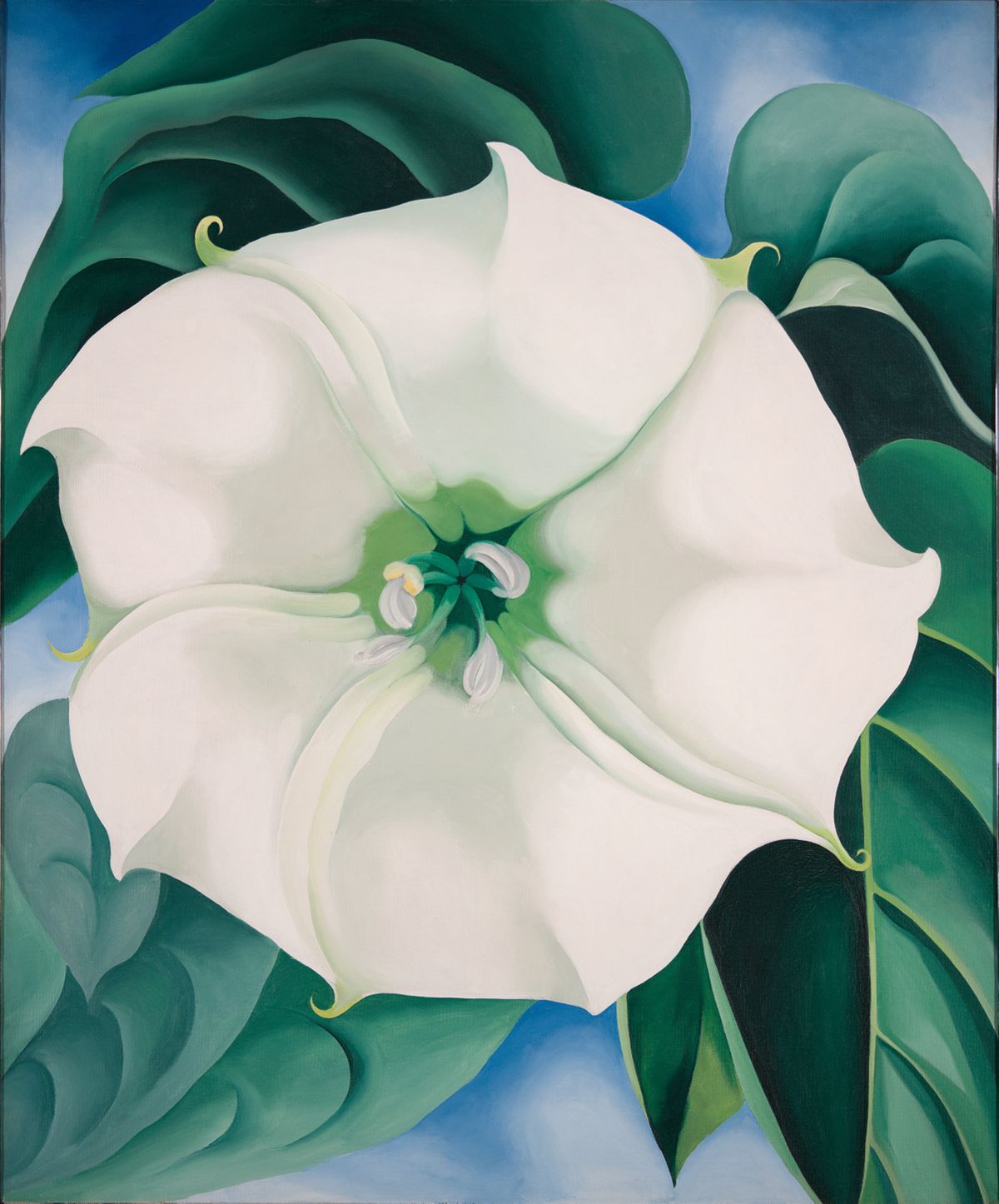 #14
#14
Datura
The strength of "Datura" comes from a balance between physical presence, framing and economy of the story. O'Keeffe enlarges flowers, bones, cities and clouds until the motif is an autonomous field. Simplification does not erase reality: it intensifies its presence. The composition is understood by its internal relationships: the lines lead the eye, the colors prioritize the planes and the voids prevent the image from closing on a single reading. Dated 1932, the work is documented as a painting in the collection of Crystal Bridges Museum of American Art. The work is documented as a painting in the collection of Crystal Bridges Museum of American Art. The work is documented as a painting in the collection of Crystal Bridges Museum of American Art. The image is presented for documentary purposes and refers to the notice from Crystal Bridges Museum of American Art. Alpha Reproduction does not does not offer a reproduction of this work by Georgia O'Keeffe; the conditions of use are the responsibility of the institution and the rights holders. The painting belongs to his time, but he goes beyond it by making the look an active experience rather than a simple recognition of the subject.
Image: Crystal Bridges Museum of American Art · Documentary image; no reproduction offered by Alpha Reproduction.
See the museum notice →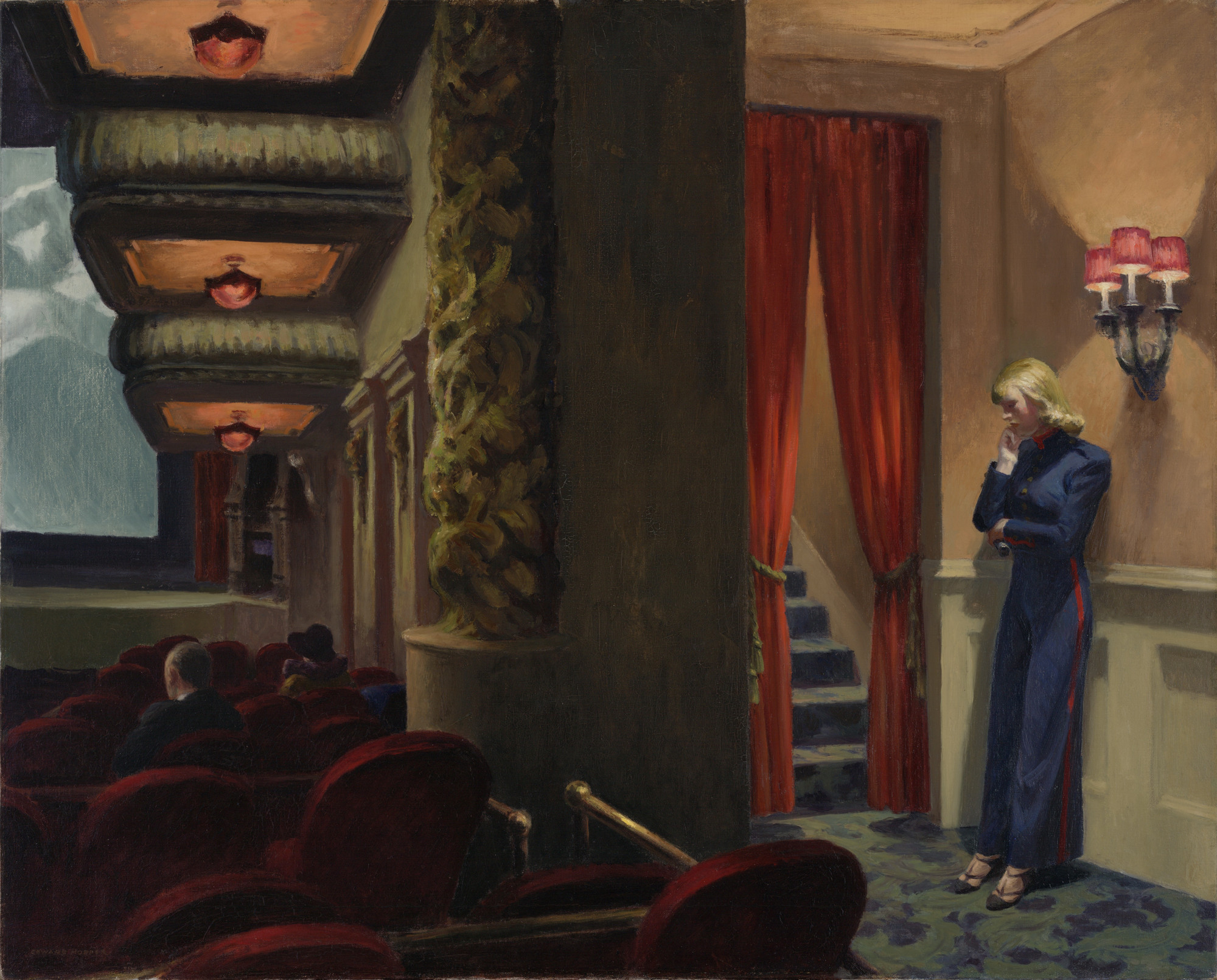 #15
#15
Cinema in New York
Beneath its apparent evidence, "Cinema in New York" precisely regulates the relationship between the spectator and the scene represented. Hopper reduces the scene to a few shots, figures and sources of light. This economy gives ordinary places a silent wait where the story remains deliberately incomplete. Modernity appears in facades, signs, display cases and empty intervals. Urban geometry becomes a means of organizing time as well as space. Dated 1939, the work is documented as oil on canvas in the collection of Museum of Modern Art, New York. The image is documented as oil on canvas in the collection of Museum of Modern Art, New York. The work is documented as oil on canvas in the collection of Museum of Modern Art, New York. The work is documented as oil on canvas in the collection of Museum of Modern Art, New York. The work is documented as oil on canvas in the collection of Museum of Modern Art, New York. The image is presented for documentary purposes and refers to the notice from Museum of Modern Art, New York. Alpha Reproduction does not offer reproduction of this work by Edward Hopper; the conditions of use are the responsibility of the institution and the rights holders. The work deserves to be compared to the other pieces in the corpus: the same tensions between territory, identity and modernity constantly change form.
Image: Museum of Modern Art, New York · Documentary image; no reproduction offered by Alpha Reproduction.
See the museum notice → #16
#16
Little Girl in a blue armchair
With "Little Girl in a Blue Armchair", Mary Cassatt gives a memorable form to one of the central questions of American painting. Cassatt renews scenes of modern life through mobile framing and acute attention to relationships. Family gestures retain their intimacy without becoming anecdotal. The portrait must be read in its device: posture, clothing, furniture and distance from view reveal as much a social position as a singular person. The associated sheet allows you to observe how Mary Cassatt organizes the pattern, material and depth without reducing the image to a simple illustration. The associated sheet allows you to observe how Mary Cassatt organizes the pattern, material and depth without reducing the image to a simple illustration. The associated sheet allows you to observe how Mary Cassatt organizes the pattern, material and depth without reducing the image to a simple illustration. The image and link come directly from the store Alpha Reproduction. This tension between precision and reserve gives it its lasting strength and allows us to understand why image continues to structure our vision of American art.
Image: Alpha Reproduction · Image and link from the Alpha Reproduction catalog.
See this reproduction → #17
#17
The Rocky Mountains, Lander Peak
"The Rocky Mountains, Lander Peak" shows how Albert Bierstadt transforms a specific pattern into an experience of light, space and duration. Bierstadt transforms the West into panoramic vision. Theatrical light and monumental scale give the territory the power of a promise as much as that of a myth. The landscape acts as a force rather than a setting. Horizon, climate and distance measure human vulnerability while constructing an image of American space. Horizon, climate and distance measure human vulnerability while constructing an image of American space. The associated sheet allows us to observe how Albert Bierstadt organizes pattern, material and depth without reducing the image to a simple illustration. The associated sheet allows us to observe how Albert Bierstadt organizes the motif, material and depth without reducing the image to a simple illustration. The image and link come directly from the Alpha Reproduction store. This ability to unite a concrete situation and an open structure explains its place in the journey: the work remains immediately readable without exhausting its meaning.
Image: Alpha Reproduction · Image and link from the Alpha Reproduction catalog.
See this reproduction → #18
#18
The Agnew Clinic
In "The Agnew Clinic", Thomas Eakins constructs a tension between direct observation and very conscious organization of the surface. Eakins subjects the body and the profession to observation without idealization. Anatomy, effort, workshop light and concentration give his scenes an almost experimental precision. The scene concentrates the action without embellishing it. The bodies, looks and distribution of light give the viewer a place uncomfortably close to the event. The associated sheet allows you to observe how Thomas Eakins organizes the pattern, material and depth without reducing the image to a simple illustration. The associated sheet allows you to observe how Thomas Eakins organizes the pattern, the material and the depth. alpha Reproduction Shop. The painting belongs to his time, but he goes beyond it by making the look an active experience rather than a simple recognition of the subject.
Image: Alpha Reproduction · Image and link from the Alpha Reproduction catalog.
See this reproduction → #19
#19
The Rainy Avenue
The strength of "The Avenue in the Rain" comes from a balance between physical presence, framing and economy of the story. Hassam adapts impressionism to Boston, New York and the coasts of New England. Reflections, flags, snow and traffic give a luminous pulsation to the American city. Modernity appears in facades, signs, windows and empty intervals. Urban geometry becomes a way to organize time as well as space. Urban geometry becomes a means of organizing time as much as space. The associated sheet allows you to observe how Childe Hassam organizes pattern, material and depth without reducing the image to a simple illustration. The associated sheet allows you to observe how Childe Hassam organizes pattern, material and depth without reducing the image to a simple illustration. The associated sheet allows you to observe how Childe Hassam organizes pattern, material and depth without reducing the image to a simple illustration. The image and link come directly from the Alpha store Reproduction. The work deserves to be compared to the other pieces in the corpus: the same tensions between territory, identity and modernity constantly change form.
Image: Alpha Reproduction · Image and link from the Alpha Reproduction catalog.
See this reproduction → #20
#20
I saw the number 5 in gold
Beneath its apparent evidence, "I saw the number 5 in gold" precisely regulates the relationship between the spectator and the scene represented. Demuth combines industrial observation, typography and geometry. Precisionism transforms modern streets, buildings and signs into luminous and syncopated constructions. Modernity appears in facades, signs, windows and empty intervals. Urban geometry becomes a means of organizing time as well as space. Urban geometry becomes a means of organizing time as much as space. Urban geometry becomes a means of organizing time as much as space. Urban geometry becomes a means of organizing time as much as space. Urban geometry becomes a means of organizing time as much as space. The associated sheet allows you to observe how Charles Demuth organizes pattern, material and depth without reducing the image to a simple illustration. The associated sheet allows you to observe how Charles Demuth organizes pattern, material and depth without reducing the image to a simple illustration. The associated sheet allows you to observe how Charles Demuth organizes pattern, material and depth without reducing the image to a simple illustration. The image and link come directly from the Alpha store Reproduction. This tension between precision and reserve gives it its lasting strength and allows us to understand why the image continues to structure our vision of American art.
Image: Alpha Reproduction · Image and link from the Alpha Reproduction catalog.
See this reproduction → #21
#21
Dempsey and Firpo
With "Dempsey and Firpo", George Bellows gives a memorable form to one of the central questions of American painting. Bellows paints the city like an arena. Bodies, crowds and architecture are carried away by energetic material which makes the violence of the spectacle physically perceptible. The composition is understood by its internal relationships: the lines lead the eye, the colors prioritize the planes and the voids prevent the image from closing on a single reading. The composition is understood by its internal relationships: the lines lead the eye, the colors prioritize the planes and the voids prevent the image from closing on a single reading. The associated sheet allows you to observe how George Bellows organizes the pattern, the material and the depth without reducing the image to a simple illustration. The associated sheet allows you to observe how George Bellows organizes the pattern, the material and the depth without reducing the image to a simple illustration. The associated sheet allows you to observe how George Bellows organizes the pattern, the material and the depth without reducing the image to a simple illustration. The image and the link come directly from the alpha Reproduction Shop. This ability to unite a concrete situation and an open structure explains its place in the journey: the work remains immediately readable without exhausting its meaning.
Image: Alpha Reproduction · Image and link from the Alpha Reproduction catalog.
See this reproduction → #22
#22
Race to the woods
"Race to the Woods" shows how Frederic Remington transforms a specific pattern into an experience of light, space and duration. Remington depicts speed, risk and the wide open spaces of the West. Horses, riders and open nights compose a mythology whose simplifications must also be questioned. The scene concentrates the action without embellishing it. The bodies, looks and distribution of light give the viewer a place uncomfortably close to the event. The associated sheet allows you to observe how Frederic Remington organizes the pattern, material and depth without reducing the image to a simple illustration. The associated sheet allows you to observe how Frederic Remington organizes the pattern, the material and the depth without reducing the image to a simple illustration. The image and the link come directly from the Alpha Reproduction store. The painting belongs to his time, but he goes beyond it by making the look an active experience rather than a simple recognition of the subject.
Image: Alpha Reproduction · Image and link from the Alpha Reproduction catalog.
See this reproduction → #23
#23
Edward Darley's Daughters Drinks
In "The Daughters of Edward Darley Boit", John Singer Sargent constructs a tension between direct observation and very conscious organization of the surface. Sargent captures the social presence through the speed of the brush, the brilliance of the fabrics and the safety of the poses. His travels broaden the portrait to a cosmopolitan experience of light. The portrait must be read in its device: posture, clothing, furniture and distance of gaze reveal as much a social position as a singular person. The portrait must be read in its device: posture, clothing, furniture and distance of gaze reveal as much a social position as a singular person. The portrait must be read in its device: posture, clothing, furniture and distance of gaze reveal as much a social position as a singular person. The associated sheet allows you to observe how John Singer Sargent organizes the pattern, the material and the depth without reducing the image to a simple illustration. The image and the link come from directly from the Alpha Reproduction store. The work deserves to be compared to the other pieces in the corpus: the same tensions between territory, identity and modernity constantly change form.
Image: Alpha Reproduction · Image and link from the Alpha Reproduction catalog.
See this reproduction →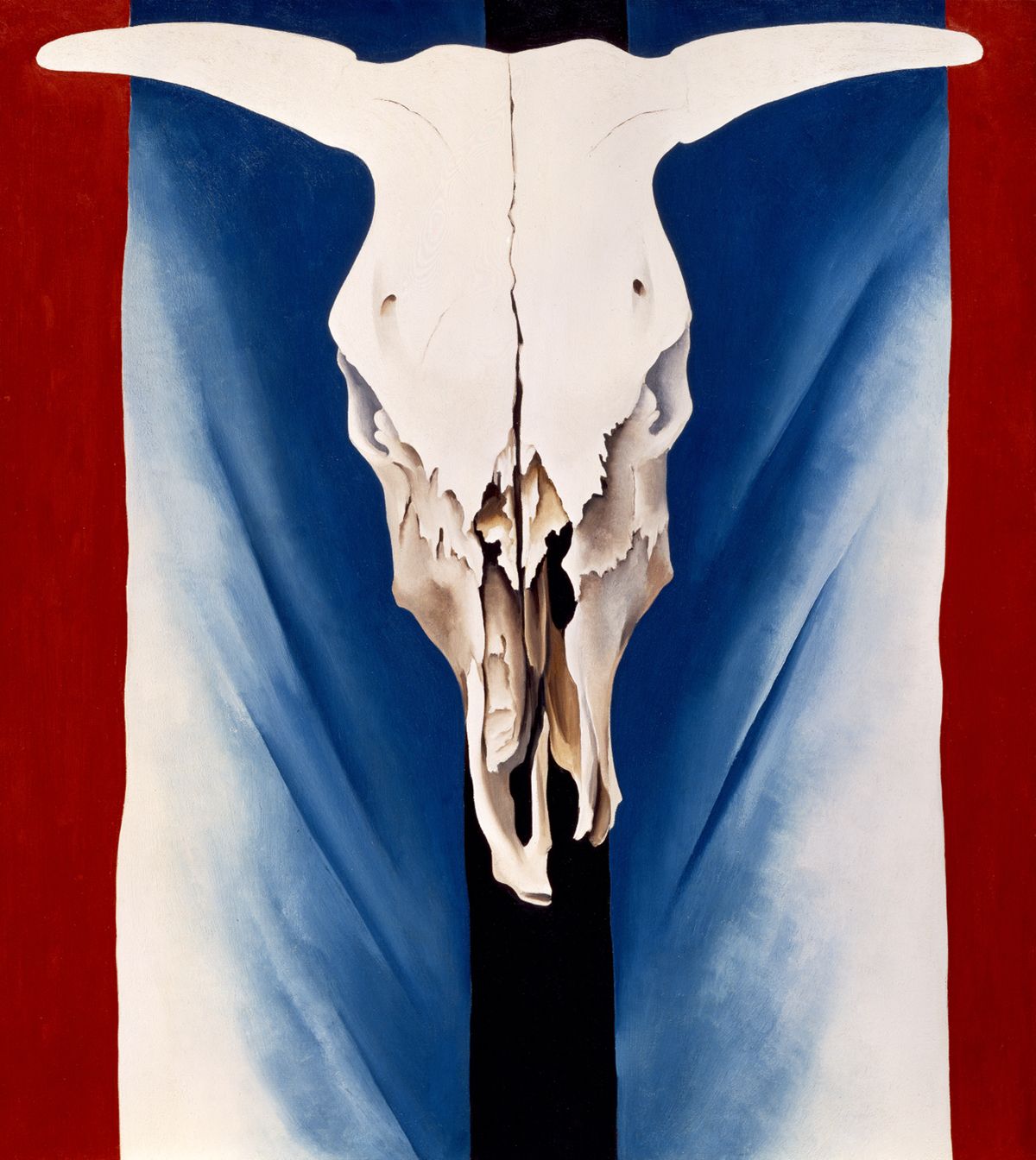 #24
#24
Cow skull, red, white and blue
The strength of "Cow Skull, Red, White and Blue" comes from a balance between physical presence, framing and economy of the story. O'Keeffe enlarges flowers, bones, cities and clouds until the motif is an autonomous field. Simplification does not erase reality: it intensifies its presence. The composition is understood by its internal relationships: the lines lead the eye, the colors prioritize the planes and the voids prevent the image from closing on a single reading. Dated 1931, the work is documented as a painting in the collection of Metropolitan Museum of Art (The Met). The image is presented for documentary purposes and refers to the notice from Metropolitan Museum of Art (The Met). The image is presented for documentary purposes and refers to the notice from Metropolitan Museum of Art (The Met) Met). Alpha Reproduction does not offer reproductions of this work by Georgia O'Keeffe; the conditions of use are the responsibility of the institution and the rights holders. This tension between precision and reserve gives it its lasting strength and allows us to understand why the image continues to structure our vision of American art.
Image: Metropolitan Museum of Art (The Met) · Documentary image; no reproduction offered by Alpha Reproduction.
See the museum notice → #25
#25
Early on a Sunday morning
Beneath its apparent evidence, "Early on a Sunday Morning" precisely regulates the relationship between the spectator and the scene represented. Hopper reduces the scene to a few shots, figures and sources of light. This economy gives ordinary places a silent wait where the story remains deliberately incomplete. Modernity appears in facades, signs, windows and empty intervals. Urban geometry becomes a means of organizing time as well as space. Urban geometry becomes a means of organizing time as much as space. Urban geometry becomes a means of organizing time as much as space. Urban geometry becomes a means of organizing time as much as space. Urban geometry becomes a means of organizing time as much as space. Urban geometry becomes a means of organizing time as much as space. The associated sheet allows you to observe how Edward Hopper organizes pattern, material and depth without reducing the image to a simple illustration. The associated sheet allows you to observe how Edward Hopper organizes pattern, material and depth without reducing the image to a simple illustration. The image and link come directly from the store Alpha Reproduction. This ability to unite a concrete situation and an open structure explains its place in the journey: the work remains immediately readable without exhausting its meaning.
Image: Alpha Reproduction · Image and link from the Alpha Reproduction catalog.
See this reproduction →The sea, the West, Yosemite and the coasts of New England give scale to the American narrative.
 #26
#26
Symphony in White No. 1: The Girl in White
With "Symphony in White No. 1: The Girl in White", James McNeill Whistler gives memorable form to one of the central questions of American painting. Whistler replaces the story with tonal chords. Portraits and nocturnals become arrangements where color, mist and rhythm count as much as the subject represented. The portrait must be read in its device: posture, clothing, furniture and distance of gaze reveal as much a social position as a singular person. The associated sheet allows us to observe how James McNeill Whistler organizes the motif, the material and the depth without reducing the image to a simple illustration. The image and the link come directly from the Alpha Reproduction store. The painting belongs to his time, but he goes beyond it by making the look an active experience rather than a simple recognition of the subject.
Image: Alpha Reproduction · Image and link from the Alpha Reproduction catalog.
See this reproduction → #27
#27
Symphony in White No. 2: The Little White Girl
"Symphony in White No. 2: The Little White Girl" shows how James McNeill Whistler transforms a specific motif into an experience of light, space and duration. Whistler replaces the story with tonal chords. Portraits and nocturnals become arrangements where color, mist and rhythm count as much as the subject represented. The portrait must be read in its device: posture, clothing, furniture and distance of gaze reveal as much a social position as a singular person. The associated sheet allows you to observe how James McNeill Whistler organizes the motif, the material and the depth without reducing the image to a simple illustration. The image and the link come directly from the Alpha Reproduction store. The work deserves to be compared to the other pieces in the corpus: the same tensions between territory, identity and modernity constantly change form.
Image: Alpha Reproduction · Image and link from the Alpha Reproduction catalog.
See this reproduction → #28
#28
Symphony in White No. 3
In "Symphony in White No. 3", James McNeill Whistler constructs a tension between direct observation and very conscious organization of the surface. Whistler replaces the story with tonal chords. Portraits and nocturnals become arrangements where color, mist and rhythm count as much as the subject represented. The composition is understood by its internal relationships: the lines lead the eye, the colors prioritize the planes and the voids prevent the image from closing on a single reading. The associated sheet allows us to observe how James McNeill Whistler organizes the pattern, the material and the voids prevent the image from closing on a single reading. The associated sheet allows us to observe how James McNeill Whistler organizes the pattern, the material and the depth without reducing the image to a simple illustration. The image and the link comes directly from the Alpha Reproduction store. This tension between precision and reserve gives it its lasting strength and allows us to understand why image continues to structure our vision of American art.
Image: Alpha Reproduction · Image and link from the Alpha Reproduction catalog.
See this reproduction → #29
#29
Nocturne in blue and gold: the old Battersea Bridge
The strength of "Nocturne in Blue and Gold: Battersea's Old Bridge" comes from a balance between physical presence, framing and economy of the story. Whistler replaces the story with tonal chords. Portraits and nocturnes become arrangements where color, mist and rhythm count as much as the subject represented. The composition is understood by its internal relationships: the lines lead the eye, the colors prioritize the planes and the voids prevent the image from closing on a single reading. The associated sheet allows us to observe how James McNeill Whistler organizes the pattern, the material and the voids prevent the image from closing on a single reading. The associated sheet allows us to observe how James McNeill Whistler organizes the pattern, the material and the depth without reducing the image to a simple illustration. The image and the link come directly from the Alpha Reproduction store. This ability to unite a concrete situation and an open structure explains its place in the journey: the work remains immediately readable without exhausting its meaning.
Image: Alpha Reproduction · Image and link from the Alpha Reproduction catalog.
See this reproduction → #30
#30
Nocturne in blue and silver: Chelsea
Beneath its apparent obviousness, "Nocturne in Blue and Silver: Chelsea" precisely regulates the relationship between the spectator and the scene represented. Whistler replaces the story with tonal chords. Portraits and nocturnes become arrangements where color, mist and rhythm count as much as the subject represented. The composition is understood by its internal relationships: the lines lead the eye, the colors prioritize the planes and the voids prevent the image from closing on a single reading. The associated sheet allows us to observe how James McNeill Whistler organizes the pattern, the material and the voids prevent the image from closing on a single reading. The associated sheet allows us to observe how James McNeill Whistler organizes the pattern, the material and the depth without reducing the image to a simple illustration. The image and the link come directly from the Alpha Reproduction store. The painting belongs to his time, but he goes beyond it by making the look an active experience rather than a simple recognition of the subject.
Image: Alpha Reproduction · Image and link from the Alpha Reproduction catalog.
See this reproduction → #31
#31
Arrangement in gray and black no. 2: Thomas Carlyle
With "Arrangement in Gray and Black No. 2: Thomas Carlyle", James McNeill Whistler gives memorable form to one of the central questions of American painting. Whistler replaces the story with tonal chords. Portraits and nocturnals become arrangements where color, mist and rhythm count as much as the subject represented. The composition is understood by its internal relationships: the lines lead the eye, the colors prioritize the planes and the voids prevent the image from closing on a single reading. The composition is understood by its internal relationships: the lines lead the eye, the colors prioritize the planes and the voids prevent the image from closing on a single reading. The associated sheet allows you to observe how James McNeill Whistler organizes the pattern, the material and the depth without reducing the image to a simple one illustration. The image and link come directly from the Alpha Reproduction store. The work deserves to be compared to the other pieces in the corpus: the same tensions between territory, identity and modernity constantly change form.
Image: Alpha Reproduction · Image and link from the Alpha Reproduction catalog.
See this reproduction → #32
#32
Purple and pink: Lange Leizen from Six Marques
"Violet and Pink: The Lange Leizen of the Six Brands" shows how James McNeill Whistler transforms a precise pattern into an experience of light, space and duration. Whistler replaces the story with tonal chords. Portraits and nocturnals become arrangements where color, mist and rhythm count as much as the subject represented. The composition is understood by its internal relationships: the lines lead the eye, the colors prioritize the planes and the voids prevent the image from closing on a single reading. The composition is understood by its internal relationships: the lines lead the eye, the colors prioritize the planes and the voids prevent the image from closing on a single reading. The associated sheet allows you to observe how James McNeill Whistler organizes the pattern, the material and the depth without reducing the image to a simple one illustration. The image and link come directly from the Alpha Reproduction store. This tension between precision and reserve gives it its lasting strength and allows us to understand why image continues to structure our vision of American art.
Image: Alpha Reproduction · Image and link from the Alpha Reproduction catalog.
See this reproduction → #33
#33
Flesh and black color arrangement: portrait of Théodore Duret
In "Flesh and Black Color Arrangement: Portrait of Theodore Duret", James McNeill Whistler constructs a tension between direct observation and highly conscious organization of the surface. Whistler replaces the story with tonal chords. Portraits and nocturnals become arrangements where color, mist and rhythm count as much as the subject represented. The landscape acts as a force rather than a setting. Horizon, climate and distance measure human vulnerability while constructing an image of American space. Horizon, climate and distance measure human vulnerability while constructing an image of American space. Horizon, climate and distance measure human vulnerability while constructing an image of American space. Horizon, climate and distance measure human vulnerability while constructing an image of American space. Horizon, climate and distance measure human vulnerability while constructing an image of American space. The associated sheet allows us to observe how James McNeill Whistler organizes pattern, material and depth without reducing the image to a simple one illustration. The image and link come directly from the Alpha Reproduction store. This ability to unite a concrete situation and an open structure explains its place in the journey: the work remains immediately readable without exhausting its meaning.
Image: Alpha Reproduction · Image and link from the Alpha Reproduction catalog.
See this reproduction → #34
#34
Fog alert
The strength of "Fog Alert" comes from a balance between physical presence, framing and economy of the story. Homer constructs a painting of ordeal and autonomy: sea, climate, war and childhood are observed with an economy that leaves gestures with all their strength. The landscape acts as a force rather than a setting. Horizon, climate and distance measure human vulnerability while constructing an image of American space. The associated sheet allows us to observe how Winslow Homer organizes the pattern, material and depth without reducing the image to a simple illustration. The image, climate and distance measure human vulnerability while constructing an image of American space. The associated sheet allows us to observe how Winslow Homer organizes the pattern, material and depth without reducing the image to a simple illustration. The image and link come directly from the Alpha Reproduction store. The painting belongs to his time, but he goes beyond it by making the look an active experience rather than a simple recognition of the subject.
Image: Alpha Reproduction · Image and link from the Alpha Reproduction catalog.
See this reproduction → #35
#35
The Fox Hunt
Beneath its apparent evidence, "The Fox Hunt" precisely regulates the relationship between the spectator and the scene represented. Homer constructs a painting of ordeal and autonomy: sea, climate, war and childhood are observed with an economy which leaves gestures with all their strength. The composition is understood by its internal relationships: the lines lead the eye, the colors prioritize the planes and the voids prevent the image from closing on a single reading. The associated sheet allows you to observe how Winslow Homer organizes the pattern, the material and the voids prevent the image from closing on a single reading. The associated sheet allows you to observe how Winslow Homer organizes the pattern, the material and the depth without reducing the image to a simple illustration. The associated sheet allows you to observe how Winslow Homer organizes the pattern, the material and the depth without reducing the image to a simple illustration. The image and the link come directly from the store Alpha Reproduction. The work deserves to be compared to the other pieces in the corpus: the same tensions between territory, identity and modernity constantly change form.
Image: Alpha Reproduction · Image and link from the Alpha Reproduction catalog.
See this reproduction → #36
#36
The Lifeline
With "The Line of Life", Winslow Homer gives a memorable form to one of the central questions of American painting. Homer constructs a painting of ordeal and autonomy: sea, climate, war and childhood are observed with an economy that leaves gestures with all their strength. The composition is understood by its internal relationships: the lines lead the eye, the colors prioritize the planes and the voids prevent the image from closing on a single reading. The associated sheet allows you to observe how Winslow Homer organizes the pattern, the material and the depth without reducing the image to a simple illustration. The associated sheet allows you to observe how Winslow Homer organizes the pattern, the material and the voids prevent the image from closing on a single reading. The associated sheet allows you to observe how Winslow Homer organizes the pattern, the material and the depth without reducing the image to a simple illustration. The associated sheet allows you to observe how Winslow Homer organizes the pattern, the material and the depth without reducing the image to a simple illustration. The image and the link come directly from the Alpha store Reproduction. This tension between precision and reserve gives it its lasting strength and allows us to understand why the image continues to structure our vision of American art.
Image: Alpha Reproduction · Image and link from the Alpha Reproduction catalog.
See this reproduction → #37
#37
Eight bells
"Eight Bells" shows how Winslow Homer transforms a precise pattern into an experience of light, space and duration. Homer constructs a painting of ordeal and autonomy: sea, climate, war and childhood are observed with an economy that leaves gestures with all their strength. The composition is understood by its internal relationships: the lines lead the eye, the colors prioritize the planes and the voids prevent the image from closing on a single reading. The associated sheet allows you to observe how Winslow Homer organizes the pattern, the material and the depth without reducing the image to a simple illustration. The associated sheet allows you to observe how Winslow Homer organizes the pattern, the material and the depth without reducing the image to a simple illustration. The associated sheet allows you to observe how Winslow Homer organizes the pattern, the material and the depth without reducing the image to a single reading. The associated sheet allows you to observe how Winslow Homer organizes the pattern, the material and the depth without reducing the image to a simple illustration. The image and the link come directly from the Alpha store Reproduction. This ability to unite a concrete situation and an open structure explains its place in the journey: the work remains immediately readable without exhausting its meaning.
Image: Alpha Reproduction · Image and link from the Alpha Reproduction catalog.
See this reproduction → #38
#38
The Herring Net
In "The Herring Net", Winslow Homer constructs a tension between direct observation and very conscious organization of the surface. Homer constructs a painting of ordeal and autonomy: sea, climate, war and childhood are observed with an economy that leaves gestures with all their strength. The landscape acts as a force rather than a setting. Horizon, climate and distance measure human vulnerability while constructing an image of American space. The horizon, climate and distance measure human vulnerability while constructing an image of American space. The associated sheet allows you to observe how Winslow Homer organizes pattern, material and depth without reducing the image to a simple illustration. The associated sheet allows you to observe how Winslow Homer organizes pattern, material and depth without reducing the image to a simple illustration. The associated sheet allows you to observe how Winslow Homer organizes the pattern, material and depth without reducing the image to a simple illustration. The image and link come directly from the Alpha store Reproduction. The painting belongs to his time, but it goes beyond it by making the look an active experience rather than a simple recognition of the subject.
Image: Alpha Reproduction · Image and link from the Alpha Reproduction catalog.
See this reproduction → #39
#39
Prisoners returning from the front
The strength of "Prisoners Returning from the Front" comes from a balance between physical presence, framing and economy of the story. Homer constructs a painting of ordeal and autonomy: sea, climate, war and childhood are observed with an economy that leaves gestures with all their strength. The scene concentrates the action without embellishing it. The bodies, looks and distribution of light give the viewer a place uncomfortably close to the event. The associated sheet allows you to observe how Winslow Homer organizes the pattern, material and depth without reducing the image to a simple illustration. The image and link come directly from the Alpha Reproduction store. The work deserves to be compared to the other pieces of the corpus: the same tensions between territory, identity and modernity constantly change form.
Image: Alpha Reproduction · Image and link from the Alpha Reproduction catalog.
See this reproduction → #40
#40
The Whip Game
Beneath its apparent evidence, "The Whip Game" precisely regulates the relationship between the spectator and the scene represented. Homer constructs a painting of ordeal and autonomy: sea, climate, war and childhood are observed with an economy which leaves gestures with all their strength. The composition is understood by its internal relationships: the lines lead the eye, the colors prioritize the planes and the voids prevent the image from closing on a single reading. The associated sheet allows you to observe how Winslow Homer organizes the pattern, the material and the gaps prevent the image from closing on a single reading. The associated sheet allows you to observe how Winslow Homer organizes the pattern, the material and the depth without reducing the image to a simple illustration. The associated sheet allows you to observe how Winslow Homer organizes the pattern, the material and the depth without reducing the image to a simple illustration. The associated sheet allows you to observe how Winslow Homer organizes the pattern, the material and the depth without reducing the image to a simple illustration. The image and the link come directly from the Alpha store Reproduction. This tension between precision and reserve gives it its lasting strength and allows us to understand why the image continues to structure our vision of American art.
Image: Alpha Reproduction · Image and link from the Alpha Reproduction catalog.
See this reproduction → #41
#41
Northeast wind
With "North-East Wind", Winslow Homer gives a memorable form to one of the central questions of American painting. Homer constructs a painting of ordeal and autonomy: sea, climate, war and childhood are observed with an economy that leaves gestures with all their strength. The landscape acts as a force rather than a setting. Horizon, climate and distance measure human vulnerability while constructing an image of American space. The horizon, climate and distance measure human vulnerability while constructing an image of American space. The associated sheet allows you to observe how Winslow Homer organizes the pattern, material and depth without reducing the image to a simple illustration. The associated sheet allows you to observe how Winslow Homer organizes the pattern, material and depth without reducing the image to a simple illustration. The associated sheet allows you to observe how Winslow Homer organizes the pattern, material and depth without reducing the image to a simple illustration. The associated sheet allows you to observe how Winslow Homer organizes the pattern, material and depth without reducing the image to a simple illustration. The image and link come directly from the Alpha Reproduction store. This ability to unite a concrete situation and an open structure explains its place in the journey: the work remains immediately readable without exhausting its meaning.
Image: Alpha Reproduction · Image and link from the Alpha Reproduction catalog.
See this reproduction → #42
#42
Driftwood
"Floatwood" shows how Winslow Homer transforms a specific pattern into an experience of light, space and duration. Homer constructs a painting of ordeal and autonomy: sea, climate, war and childhood are observed with an economy that leaves gestures with all their strength. The composition is understood by its internal relationships: the lines lead the eye, the colors prioritize the planes and the voids prevent the image from closing on a single reading. The associated sheet allows you to observe how Winslow Homer organizes the pattern, the material and the gaps prevent the image from closing on a single reading. The associated sheet allows you to observe how Winslow Homer organizes the pattern, the material and the depth without reducing the image to a simple illustration. The associated sheet allows you to observe how Winslow Homer organizes the pattern, the material and the depth without reducing the image to a simple illustration. The associated sheet allows you to observe how Winslow Homer organizes the pattern, the material and the depth without reducing the image to a simple illustration. The image and the link come directly from the Alpha store Reproduction. The painting belongs to his time, but it goes beyond it by making the look an active experience rather than a simple recognition of the subject.
Image: Alpha Reproduction · Image and link from the Alpha Reproduction catalog.
See this reproduction → #43
#43
Summer shower
In "Summer Rush", Winslow Homer constructs a tension between direct observation and very conscious organization of the surface. Homer constructs a painting of ordeal and autonomy: sea, climate, war and childhood are observed with an economy that leaves gestures with all their strength. The composition is understood by its internal relationships: the lines lead the eye, the colors prioritize the planes and the voids prevent the image from closing on a single reading. The associated sheet allows you to observe how Winslow Homer organizes the pattern, the material and the depth without reducing the image to a simple illustration. The associated sheet allows you to observe how Winslow Homer organizes the pattern, the material and the voids prevent the image from closing on a single reading. The associated sheet allows you to observe how Winslow Homer organizes the pattern, the material and the depth without reducing the image to a simple illustration. The associated sheet allows you to observe how Winslow Homer organizes the pattern, the material and the depth without reducing the image to a simple illustration. The image and the link come directly from the store Alpha Reproduction. The work deserves to be compared to the other pieces in the corpus: the same tensions between territory, identity and modernity constantly change form.
Image: Alpha Reproduction · Image and link from the Alpha Reproduction catalog.
See this reproduction → #44
#44
Max Schmitt in a skiff
The strength of "Max Schmitt in a Skiff" comes from a balance between physical presence, framing and economy of the story. Eakins subjects the body and the profession to observation without idealization. Anatomy, effort, workshop light and concentration give his scenes an almost experimental precision. The composition is understood by its internal relationships: the lines lead the eye, the colors prioritize the planes and the voids prevent the image from closing on a single reading. The composition is understood by its internal relationships: the lines lead the eye, the colors prioritize the planes and the voids prevent the image from closing on a single reading. The associated sheet allows you to observe how Thomas Eakins organizes the pattern, the material and the depth without reducing the image to a simple illustration. The associated sheet allows you to observe how Thomas Eakins organizes the pattern, the material and the depth without reducing the image to a simple illustration. The associated sheet allows you to observe how Thomas Eakins organizes the pattern, the material and the depth without reducing the image to a simple illustration. The image and the link come directly from the alpha Reproduction Shop. This tension between precision and reserve gives it its lasting strength and allows us to understand why image continues to structure our vision of American art.
Image: Alpha Reproduction · Image and link from the Alpha Reproduction catalog.
See this reproduction → #45
#45
The Concert Singer
Beneath its apparent evidence, "The Concert Singer" precisely regulates the relationship between the spectator and the scene represented. Eakins subjects the body and the profession to observation without idealization. Anatomy, effort, studio light and concentration give his scenes an almost experimental precision. The composition is understood by its internal relationships: the lines lead the eye, the colors prioritize the planes and the voids prevent the image from closing on a single reading. The composition is understood by its internal relationships: the lines lead the eye, the colors prioritize the planes and the voids prevent the image from closing on a single reading. The associated sheet allows us to observe how Thomas Eakins organizes the pattern, the material and the depth without reducing the image to a simple illustration. The associated sheet allows us to observe how Thomas Eakins organizes the pattern, the material and the depth without reducing the image to a simple illustration. The image and the link come from directly from the Alpha Reproduction store. This ability to unite a concrete situation and an open structure explains its place in the journey: the work remains immediately readable without exhausting its meaning.
Image: Alpha Reproduction · Image and link from the Alpha Reproduction catalog.
See this reproduction → #46
#46
The Thinker: portrait of Louis N. Kenton
With "The Thinker: Portrait of Louis N. Kenton", Thomas Eakins gives memorable form to one of the central questions of American painting. Eakins subjects the body and profession to observation without idealization. Anatomy, effort, studio light and concentration give his scenes an almost experimental precision. The landscape acts as a force rather than a setting. Horizon, climate and distance measure human vulnerability while constructing an image of American space. The landscape acts as a force rather than a setting. Horizon, climate and distance measure human vulnerability while constructing an image of American space. The associated sheet allows us to observe how Thomas Eakins organizes pattern, material and depth without reducing the image to a simple illustration. The image and the link come from directly from the Alpha Reproduction store. The painting belongs to his time, but he goes beyond it by making the look an active experience rather than a simple recognition of the subject.
Image: Alpha Reproduction · Image and link from the Alpha Reproduction catalog.
See this reproduction → #47
#47
Chess Players
"The Chess Players" shows how Thomas Eakins transforms a precise pattern into an experience of light, space and duration. Eakins subjects the body and profession to observation without idealization. Anatomy, effort, workshop light and concentration give his scenes an almost experimental precision. The composition is understood by its internal relationships: the lines lead the eye, the colors prioritize the planes and the voids prevent the image from closing on a single reading. The composition is understood by its internal relationships: the lines lead the eye, the colors prioritize the planes and the voids prevent the image from closing on a single reading. The associated sheet allows you to observe how Thomas Eakins organizes the pattern, the material and the depth without reducing the image to a simple illustration. The associated sheet allows you to observe how Thomas Eakins organizes the pattern, the material and the depth without reducing the image to a simple illustration. The image and the link come from directly from the Alpha Reproduction store. The work deserves to be compared to the other pieces in the corpus: the same tensions between territory, identity and modernity constantly change form.
Image: Alpha Reproduction · Image and link from the Alpha Reproduction catalog.
See this reproduction → #48
#48
The Rowing Machines: the Schreiber brothers
In "The Rowers: The Schreiber Brothers", Thomas Eakins constructs a tension between direct observation and very conscious organization of the surface. Eakins subjects the body and the profession to observation without idealization. Anatomy, effort, workshop light and concentration give his scenes an almost experimental precision. The composition is understood by its internal relationships: the lines lead the eye, the colors prioritize the planes and the voids prevent the image from closing on a single reading. The composition is understood by its internal relationships: the lines lead the eye, the colors prioritize the planes and the voids prevent the image from closing on a single reading. The associated sheet allows you to observe how Thomas Eakins organizes the pattern, the material and the depth without reducing the image to a simple illustration. The image and the link come directly from the Alpha Reproduction store. This tension between precision and reserve gives it its lasting strength and allows us to understand why image continues to structure our vision of American art.
Image: Alpha Reproduction · Image and link from the Alpha Reproduction catalog.
See this reproduction → #49
#49
Self-portrait
The strength of "Self-Portrait" comes from a balance between physical presence, framing and economy of the story. Eakins subjects the body and the profession to observation without idealization. Anatomy, effort, workshop light and concentration give his scenes an almost experimental precision. The landscape acts as a force rather than a setting. Horizon, climate and distance measure human vulnerability while constructing an image of American space. Horizon, climate and distance measure human vulnerability while constructing an image of American space. Horizon, climate and distance measure human vulnerability while constructing an image of American space. The associated sheet allows you to observe how Thomas Eakins organizes pattern, material and depth without reducing the image to a simple illustration. The associated sheet allows you to observe how Thomas Eakins organizes pattern, material and depth without reducing the image to a simple illustration. The associated sheet allows you to observe how Thomas Eakins organizes the motif, material and depth without reducing the image to a simple illustration. The associated sheet allows you to observe how Thomas Eakins organizes the motif, material and depth without reducing the image to a simple illustration. The associated sheet allows you to observe how Thomas Eakins organizes the motif This ability to unite a concrete situation and an open structure explains its place in the journey: the work remains immediately readable without exhausting its meaning.
Image: Alpha Reproduction · Image and link from the Alpha Reproduction catalog.
See this reproduction → #50
#50
In the dressing room
Beneath its apparent evidence, "Dans la loge" precisely regulates the relationship between the spectator and the scene represented. Cassatt renews the scenes of modern life through mobile framing and acute attention to relationships. Family gestures retain their intimacy without becoming anecdotal. The composition is understood by its internal relationships: the lines lead the eye, the colors prioritize the shots and the voids prevent the image from closing on a single reading. The associated sheet allows us to observe how Mary Cassatt organizes the pattern, the material and the depth without reducing the image to a simple illustration. The associated sheet allows us to observe how Mary Cassatt organizes the pattern, the material and the voids prevent the image from closing on a single reading. The associated sheet allows us to observe how Mary Cassatt organizes the pattern, the material and the depth without reducing the image to a simple illustration. The image and the link come directly from the alpha Reproduction Shop. The painting belongs to his time, but he goes beyond it by making the look an active experience rather than a simple recognition of the subject.
Image: Alpha Reproduction · Image and link from the Alpha Reproduction catalog.
See this reproduction →Theaters, avenues, fights, workshops and interiors show a society in motion and under observation.
 #51
#51
The boat trip
With "The Boat Ride", Mary Cassatt gives a memorable form to one of the central questions of American painting. Cassatt renews scenes of modern life through moving framing and acute attention to relationships. Family gestures retain their intimacy without becoming anecdotal. The landscape acts as a force rather than a setting. The landscape acts as a force rather than a setting. Horizon, climate and distance measure human vulnerability while constructing an image of American space. Horizon, climate and distance measure human vulnerability while constructing an image of American space. The associated sheet allows us to observe how Mary Cassatt organizes pattern, material and depth without reducing the image to a simple illustration. The associated sheet allows us to observe how Mary Cassatt organizes the pattern, material and depth without reducing the image to a simple illustration. The associated sheet allows us to observe how Mary Cassatt organizes the pattern, material and depth without reducing the image to a simple illustration. The associated sheet allows us to observe how Mary Cassatt organizes the pattern, material and depth without reducing the image to a simple illustration. The image and link come directly from the store Alpha Reproduction. The work deserves to be compared to the other pieces in the corpus: the same tensions between territory, identity and modernity constantly change form.
Image: Alpha Reproduction · Image and link from the Alpha Reproduction catalog.
See this reproduction → #52
#52
The Cup of Tea
"The Cup of Tea" shows how Mary Cassatt transforms a specific pattern into an experience of light, space and duration. Cassatt renews the scenes of modern life through mobile framing and acute attention to relationships. Family gestures retain their intimacy without becoming anecdotal. The composition is understood by its internal relationships: the lines lead the eye, the colors prioritize the planes and the voids prevent the image from closing on a single reading. The associated sheet allows us to observe how Mary Cassatt organizes the pattern, the material and the voids prevent the image from closing on a single reading. The associated sheet allows us to observe how Mary Cassatt organizes the pattern, the material and the depth without reducing the image to a simple illustration. The associated sheet allows us to observe how Mary Cassatt organizes the pattern, the material and the depth without reducing the image to a simple illustration. The image and the link come directly from the alpha Reproduction Shop. This tension between precision and reserve gives it its lasting strength and allows us to understand why image continues to structure our vision of American art.
Image: Alpha Reproduction · Image and link from the Alpha Reproduction catalog.
See this reproduction → #53
#53
Woman with a pearl necklace in a dressing room
In "Woman with a Pearl Necklace in a Lodge", Mary Cassatt constructs a tension between direct observation and very conscious organization of the surface. Cassatt renews the scenes of modern life through mobile framing and acute attention to relationships. Family gestures retain their intimacy without becoming anecdotal. The portrait must be read in its device: posture, clothing, furniture and distance from view reveal as much a social position as a singular person. The associated sheet allows you to observe how Mary Cassatt organizes the motif, the material and the depth without reducing the image to a simple illustration. The associated sheet allows you to observe how Mary Cassatt organizes the motif, the material and the depth without reducing the image to a simple illustration. The image and the link come directly from the Alpha Reproduction store. This ability to unite a concrete situation and an open structure explains its place in the journey: the work remains immediately readable without exhausting its meaning.
Image: Alpha Reproduction · Image and link from the Alpha Reproduction catalog.
See this reproduction → #54
#54
The Child's Toilet
The strength of "The Child's Toilet" comes from a balance between physical presence, framing and economy of the story. Cassatt renews the scenes of modern life through mobile framing and acute attention to relationships. Family gestures retain their intimacy without becoming anecdotal. The portrait must be read in its device: posture, clothing, furniture and distance of gaze reveal as much a social position as a singular person. The associated sheet allows you to observe how Mary Cassatt organizes the motif, the material and the depth without reducing the image to a simple illustration. The associated sheet allows you to observe how Mary Cassatt organizes the motif, the material and the depth without reducing the image to a simple illustration. The image and link come directly from the Alpha Reproduction store. THE tableau belongs to his time, but he goes beyond it by making the look an active experience rather than a simple recognition of the subject.
Image: Alpha Reproduction · Image and link from the Alpha Reproduction catalog.
See this reproduction → #55
#55
Children playing on the beach
Beneath its apparent evidence, "Children Playing on the Beach" precisely regulates the relationship between the spectator and the scene depicted. Cassatt renews the scenes of modern life through mobile framing and acute attention to relationships. Family gestures retain their intimacy without becoming anecdotal. The portrait must be read in its device: posture, clothing, furniture and distance from view reveal as much a social position as a singular person. The associated sheet allows you to observe how Mary Cassatt organizes the motif, the material and the depth without reducing the image to a simple illustration. The associated sheet allows you to observe how Mary Cassatt organizes the pattern, the material and the depth without reducing the image to a simple illustration. The associated sheet allows you to observe how Mary Cassatt organizes the pattern, the material and the depth without reducing the image to a simple illustration. The image and the link come directly from the Alpha store Reproduction. The work deserves to be compared to the other pieces in the corpus: the same tensions between territory, identity and modernity constantly change form.
Image: Alpha Reproduction · Image and link from the Alpha Reproduction catalog.
See this reproduction → #56
#56
Lydia crocheting in the garden in Marly
With "Lydia crocheting in the garden at Marly", Mary Cassatt gives a memorable form to one of the central questions of American painting. Cassatt renews scenes of modern life through moving framing and acute attention to relationships. Family gestures retain their intimacy without becoming anecdotal. The composition is understood by its internal relationships: the lines lead the eye, the colors prioritize the planes and the voids prevent the image from closing on a single reading. The associated sheet allows us to observe how Mary Cassatt organizes the pattern, the material and the depth without reducing the image to a simple illustration. The image and the link come directly from the Alpha Reproduction store. This tension between precision and reserve gives it its lasting strength and allows us to understand why image continues to structure our vision of American art.
Image: Alpha Reproduction · Image and link from the Alpha Reproduction catalog.
See this reproduction → #57
#57
Lady at her tea table
"Lady at Her Tea Table" shows how Mary Cassatt transforms a specific pattern into an experience of light, space and duration. Cassatt renews scenes of modern life through mobile framing and acute attention to relationships. Family gestures retain their intimacy without becoming anecdotal. The portrait must be read in its device: posture, clothing, furniture and distance from view reveal as much a social position as a singular person. The associated sheet allows you to observe how Mary Cassatt organizes the pattern, material and depth without reducing the image to a simple illustration. The associated sheet allows you to observe how Mary Cassatt organizes the pattern, material and depth without reducing the image to a simple illustration. The associated sheet allows you to observe how Mary Cassatt organizes the pattern, material and depth without reducing the image to a simple illustration. The image and link come directly from the Alpha store Reproduction. This ability to unite a concrete situation and an open structure explains its place in the journey: the work remains immediately readable without exhausting its meaning.
Image: Alpha Reproduction · Image and link from the Alpha Reproduction catalog.
See this reproduction → #58
#58
The Jaleo
In "The Jaleo", John Singer Sargent constructs a tension between direct observation and very conscious organization of the surface. Sargent captures the social presence through the speed of the brush, the brilliance of the fabrics and the safety of the poses. His travels broaden the portrait to a cosmopolitan experience of light. The composition is understood by its internal relationships: the lines lead the eye, the colors prioritize the planes and the voids prevent the image from closing on a single reading. The composition is understood by its internal relationships: the lines lead the eye, the colors prioritize the planes and the voids prevent the image from closing on a single reading. The associated sheet allows us to observe how John Singer Sargent organizes the pattern, the material and the depth without reducing the image to a simple illustration. The associated sheet allows us to observe how John Singer Sargent organizes the pattern, the material and the depth without reducing the image to a simple illustration. The image and the link come from directly from the Alpha Reproduction store. The painting belongs to his time, but he goes beyond it by making the look an active experience rather than a simple recognition of the subject.
Image: Alpha Reproduction · Image and link from the Alpha Reproduction catalog.
See this reproduction → #59
#59
Doctor Pozzi at home
The strength of "Doctor Pozzi at home" comes from a balance between physical presence, framing and economy of the story. Sargent captures the social presence through the speed of the brush, the brilliance of the fabrics and the safety of the poses. His travels broaden the portrait to a cosmopolitan experience of light. The portrait must be read in its device: posture, clothing, furniture and distance of gaze reveal as much a social position as a singular person. The portrait must be read in its device: posture, clothing, furniture and distance of gaze reveal as much a social position as a singular person. The portrait must be read in its device: posture, clothing, furniture and distance of gaze reveal as much a social position as a singular person. The associated sheet allows you to observe how John Singer Sargent organizes the pattern, material and depth without reducing the image to a simple illustration. The associated sheet allows you to observe how John Singer Sargent organizes the pattern, material and depth without reducing the image to a simple illustration. The associated sheet allows you to observe how John Singer Sargent organizes the pattern, material and depth without reducing the image to a simple illustration. The image and link come directly Reproduction. The work deserves to be compared to the other pieces in the corpus: the same tensions between territory, identity and modernity constantly change form.
Image: Alpha Reproduction · Image and link from the Alpha Reproduction catalog.
See this reproduction → #60
#60
Gassed
Beneath its apparent evidence, "Gazés" precisely regulates the relationship between the spectator and the scene represented. Sargent captures the social presence through the speed of the brush, the brilliance of the fabrics and the safety of the poses. His travels broaden the portrait to a cosmopolitan experience of light. The scene concentrates the action without embellishing it. The bodies, looks and distribution of light give the viewer a place uncomfortably close to the event. The associated sheet allows you to observe how John Singer Sargent organizes the pattern, material and depth without reducing the image to a simple illustration. The associated sheet allows you to observe how John Singer Sargent organizes the pattern, material and depth without reducing the image to a simple illustration. The associated sheet allows you to observe how John Singer Sargent organizes the pattern, material and depth without reducing the image to a simple illustration. The image and link come directly from the Alpha store Reproduction. This tension between precision and reserve gives it its lasting strength and allows us to understand why the image continues to structure our vision of American art.
Image: Alpha Reproduction · Image and link from the Alpha Reproduction catalog.
See this reproduction → #61
#61
The Wyndham Sisters
With "The Wyndham Sisters", John Singer Sargent gives memorable form to one of the central questions of American painting. Sargent captures social presence through the speed of the brush, the brilliance of the fabrics and the safety of the poses. His travels broaden the portrait to a cosmopolitan experience of light. The portrait must be read in its device: posture, clothing, furniture and distance of gaze reveal as much a social position as a singular person. The portrait must be read in its device: posture, clothing, furniture and distance of gaze reveal as much a social position as a singular person. The portrait must be read in its device: posture, clothing, furniture and distance of gaze reveal as much a social position as a singular person. The associated sheet allows you to observe how John Singer Sargent organizes the pattern, material and depth without reducing the image to a simple illustration. The associated sheet allows you to observe how John Singer Sargent organizes the pattern, material and depth without reducing the image to a simple illustration. The associated sheet allows you to observe how John Singer Sargent organizes the pattern, material and depth without reducing the image to a simple illustration. The image and link come directly from the store Alpha Reproduction. This ability to unite a concrete situation and an open structure explains its place in the journey: the work remains immediately readable without exhausting its meaning.
Image: Alpha Reproduction · Image and link from the Alpha Reproduction catalog.
See this reproduction → #62
#62
Luxembourg Gardens at dusk
"Jardins du Luxembourg au twilight" shows how John Singer Sargent transforms a precise motif into an experience of light, space and duration. Sargent captures the social presence through the speed of the brush, the brilliance of the fabrics and the security of the poses. His travels broaden the portrait to a cosmopolitan experience of light. The composition is understood by its internal relationships: the lines lead the eye, the colors prioritize the planes and the voids prevent the image from closing on a single reading. The composition is understood by its internal relationships: the lines lead the eye, the colors prioritize the planes and the voids prevent the image from closing on a single reading. The associated sheet allows us to observe how John Singer Sargent organizes the pattern, the material and the depth without reducing the image to a simple illustration. The image and the link come directly from the Alpha Reproduction store. The painting belongs to his time, but he goes beyond it by making the look an active experience rather than a simple recognition of the subject.
Image: Alpha Reproduction · Image and link from the Alpha Reproduction catalog.
See this reproduction → #63
#63
Venetian women at the Rezzonico Palace
In "Venetian Women at the Rezzonico Palace", John Singer Sargent constructs a tension between direct observation and very conscious organization of the surface. Sargent captures the social presence through the speed of the brush, the brilliance of the fabrics and the safety of the poses. His travels broaden the portrait to a cosmopolitan experience of light. The portrait must be read in its device: posture, clothing, furniture and distance from sight reveal as much a social position as a singular person. The portrait must be read in its device: posture, clothing, furniture and distance of gaze reveal as much a social position as a singular person. The portrait must be read in its device: posture, clothing, furniture and distance of gaze reveal as much a social position as a singular person. The associated sheet allows you to observe how John Singer Sargent organizes the motif, the material and the depth without reducing the image to a simple illustration. The image and the link come directly from the Alpha Reproduction store. The work deserves to be compared to the other pieces in the corpus: the same tensions between territory, identity and modernity constantly change form.
Image: Alpha Reproduction · Image and link from the Alpha Reproduction catalog.
See this reproduction → #64
#64
Low tide at the port of Cancale
The force of "Low Tide at the Port of Cancale" comes from a balance between physical presence, framing and economy of the story. Sargent captures the social presence through the speed of the brush, the brilliance of the fabrics and the safety of the poses. His travels broaden the portrait to a cosmopolitan experience of light. The landscape acts as a force rather than a setting. Horizon, climate and distance measure human vulnerability while constructing an image of American space. The landscape acts as a force rather than a setting. Horizon, climate and distance measure human vulnerability while constructing an image of American space. The landscape acts as a force rather than a setting. Horizon, climate and distance measure human vulnerability while constructing an image of American space. The associated sheet allows us to observe how John Singer Sargent organizes the pattern, material and depth without reducing the image to a simple illustration. The associated sheet allows us to observe how John Singer Sargent organizes the pattern, material and depth without reducing the image to a simple illustration. The associated sheet allows us to observe how John Singer Sargent organizes the pattern, material and depth without reducing the image to a simple illustration. The image and link come directly from the Alpha Reproduction. This tension between precision and reserve gives it its lasting strength and allows us to understand why image continues to structure our vision of American art.
Image: Alpha Reproduction · Image and link from the Alpha Reproduction catalog.
See this reproduction → #65
#65
Elizabeth Winthrop Chanler
Beneath its apparent evidence, "Elizabeth Winthrop Chanler" precisely regulates the relationship between the spectator and the scene represented. Sargent captures the social presence through the speed of the brush, the brilliance of the fabrics and the security of the poses. His travels broaden the portrait to a cosmopolitan experience of light. The composition is understood by its internal relationships: the lines lead the eye, the colors prioritize the planes and the voids prevent the image from closing on a single reading. The composition is understood by its internal relationships: the lines lead the eye, the colors prioritize the planes and the voids prevent the image from closing on a single reading. The associated sheet allows us to observe how John Singer Sargent organizes the pattern, the material and the depth without reducing the image to a simple illustration. The image and the link come directly from the Alpha Reproduction store. This ability to unite a concrete situation and an open structure explains its place in the journey: the work remains immediately readable without exhausting its meaning.
Image: Alpha Reproduction · Image and link from the Alpha Reproduction catalog.
See this reproduction → #66
#66
Lady of the Rose
With "Lady with the Rose", John Singer Sargent gives a memorable form to one of the central questions of American painting. Sargent captures social presence through the speed of the brush, the brilliance of the fabrics and the safety of the poses. His travels broaden the portrait to a cosmopolitan experience of light. The portrait must be read in its device: posture, clothing, furniture and distance from sight reveal as much a social position as a singular person. The portrait must be read in its device: posture, clothing, furniture and distance of gaze reveal as much a social position as a singular person. The portrait must be read in its device: posture, clothing, furniture and distance of gaze reveal as much a social position as a singular person. The associated sheet allows you to observe how John Singer Sargent organizes the pattern, material and depth without reducing the image to a simple illustration. The associated sheet allows you to observe how John Singer Sargent organizes the pattern, material and depth without reducing the image to a simple illustration. The associated sheet allows you to observe how John Singer Sargent organizes the pattern, material and depth without reducing the image to a simple illustration. The image and link come directly from the Alpha store Reproduction. The painting belongs to his time, but it goes beyond it by making the look an active experience rather than a simple recognition of the subject.
Image: Alpha Reproduction · Image and link from the Alpha Reproduction catalog.
See this reproduction → #67
#67
Allies Day, May 1917
"Allies Day, May 1917" shows how Childe Hassam transforms a specific pattern into an experience of light, space and duration. Hassam adapts impressionism to Boston, New York and the coasts of New England. Reflections, flags, snow and traffic give a luminous pulsation to the American city. The composition is understood by its internal relationships: the lines lead the eye, the colors prioritize the planes and the voids prevent the image from closing on a single reading. The associated sheet allows you to observe how Childe Hassam organizes the pattern, the material and the voids prevent the image from closing on a single reading. The associated sheet allows you to observe how Childe Hassam organizes the pattern, the material and the depth without reducing the image to a simple illustration. The image and the link come from directly from the Alpha Reproduction store. The work deserves to be compared to the other pieces in the corpus: the same tensions between territory, identity and modernity constantly change form.
Image: Alpha Reproduction · Image and link from the Alpha Reproduction catalog.
See this reproduction → #68
#68
Boston Common at dusk
In "Boston Common at Twilight", Childe Hassam constructs a tension between direct observation and very conscious organization of the surface. Hassam adapts impressionism to Boston, New York and the coasts of New England. Reflections, flags, snow and traffic give a luminous pulsation to the American city. Modernity appears in facades, signs, windows and empty intervals. Urban geometry becomes a means of organizing time as much as space. Urban geometry becomes a means of organizing time as much as space. Urban geometry becomes a means of organizing time as much as space. The associated sheet allows you to observe how Childe Hassam organizes pattern, material and depth without reducing the image to a simple illustration. The image and link come directly from the Alpha Reproduction store. This tension between precision and reserve gives it its lasting strength and allows us to understand why image continues to structure our vision of American art.
Image: Alpha Reproduction · Image and link from the Alpha Reproduction catalog.
See this reproduction → #69
#69
Washington Arch, Spring
The strength of "Washington Ark, Spring" comes from a balance between physical presence, framing and economy of the story. Hassam adapts impressionism to Boston, New York and the coasts of New England. Reflections, flags, snow and traffic give a luminous pulsation to the American city. The composition is understood by its internal relationships: the lines lead the eye, the colors prioritize the planes and the voids prevent the image from closing on a single reading. The associated sheet allows you to observe how Childe Hassam organizes the pattern, the material and the voids prevent the image from closing on a single reading. The associated sheet allows you to observe how Childe Hassam organizes the pattern, the material and the voids prevent the image from closing on a single reading. The associated sheet allows you to observe how Childe Hassam organizes the pattern, the material and the depth without reducing the image to a simple illustration. The image and the link come directly from the alpha Reproduction Shop. This ability to unite a concrete situation and an open structure explains its place in the journey: the work remains immediately readable without exhausting its meaning.
Image: Alpha Reproduction · Image and link from the Alpha Reproduction catalog.
See this reproduction → #70
#70
Rainy day, Boston
Beneath its apparent evidence, "Rainy Day, Boston" precisely regulates the relationship between the spectator and the scene represented. Hassam adapts impressionism to Boston, New York and the coasts of New England. Reflections, flags, snow and traffic give a luminous pulsation to the American city. Modernity appears in facades, signs, windows and empty intervals. Urban geometry becomes a means of organizing time as much as space. Urban geometry becomes a means of organizing time as well as space. The associated sheet allows you to observe how Childe Hassam organizes pattern, material and depth without reducing the image to a simple illustration. The associated sheet allows you to observe how Childe Hassam organizes pattern, material and depth without reducing the image to a simple illustration. The image and link come directly from the store Alpha Reproduction. The painting belongs to his time, but it goes beyond it by making the look an active experience rather than a simple recognition of the subject.
Image: Alpha Reproduction · Image and link from the Alpha Reproduction catalog.
See this reproduction → #71
#71
The South Cornices, Appledore
With "The Southern Cornices, Appledore", Childe Hassam gives a memorable form to one of the central questions of American painting. Hassam adapts impressionism to Boston, New York and the coasts of New England. Reflections, flags, snow and traffic give a luminous pulsation to the American city. The composition is understood by its internal relationships: the lines lead the eye, the colors prioritize the planes and the voids prevent the image from closing on a single reading. The associated sheet allows you to observe how Childe Hassam organizes the pattern, the material and the depth without reducing the image to a simple illustration. The associated sheet allows you to observe how Childe Hassam organizes the pattern, the material and the voids prevent the image from closing on a single reading. The associated sheet allows you to observe how Childe Hassam organizes the pattern, the material and the depth without reducing the image to a simple illustration. The image and the link come from directly from the Alpha Reproduction store. The work deserves to be compared to the other pieces in the corpus: the same tensions between territory, identity and modernity constantly change form.
Image: Alpha Reproduction · Image and link from the Alpha Reproduction catalog.
See this reproduction → #72
#72
The Gloucester Church
"The Church of Gloucester" shows how Childe Hassam transforms a specific pattern into an experience of light, space and duration. Hassam adapts impressionism to Boston, New York and the coasts of New England. Reflections, flags, snow and traffic give a luminous pulsation to the American city. The composition is understood by its internal relationships: the lines lead the eye, the colors prioritize the planes and the voids prevent the image from closing on a single reading. The associated sheet allows you to observe how Childe Hassam organizes the pattern, the material and the voids prevent the image from closing on a single reading. The associated sheet allows you to observe how Childe Hassam organizes the pattern, the material and the depth without reducing the image to a simple illustration. The image and the link come from directly from the Alpha Reproduction store. This tension between precision and reserve gives it its lasting strength and allows us to understand why image continues to structure our vision of American art.
Image: Alpha Reproduction · Image and link from the Alpha Reproduction catalog.
See this reproduction → #73
#73
Port of Gloucester
In "Port of Gloucester", Childe Hassam constructs a tension between direct observation and very conscious organization of the surface. Hassam adapts impressionism to Boston, New York and the coasts of New England. Reflections, flags, snow and traffic give a luminous pulsation to the American city. The landscape acts as a force rather than a setting. Horizon, climate and distance measure human vulnerability while constructing an image of American space. The landscape acts as a force rather than a setting. Horizon, climate and distance measure human vulnerability while constructing an image of American space. The associated sheet allows us to observe how Childe Hassam organizes pattern, material and depth without reducing the image to a simple illustration. The associated sheet allows us to observe how Childe Hassam organizes pattern, material and depth without reducing the image to a simple illustration. The associated sheet allows us to observe how Childe Hassam organizes pattern, material and depth without reducing the image to a simple illustration. The image and link come directly from the alpha Reproduction Shop. This ability to unite a concrete situation and an open structure explains its place in the journey: the work remains immediately readable without exhausting its meaning.
Image: Alpha Reproduction · Image and link from the Alpha Reproduction catalog.
See this reproduction → #74
#74
Fight at Sharkey's
The strength of "Fight at Sharkey" comes from a balance between physical presence, framing and economy of the story. Bellows paints the city like an arena. The bodies, the crowd and the architecture are driven by energetic material which makes the violence of the spectacle physically perceptible. The scene concentrates the action without embellishing it. The bodies, looks and distribution of light give the viewer a place uncomfortably close to the event. The associated sheet allows you to observe how George Bellows organizes the pattern, material and depth without reducing the image to a simple illustration. The associated sheet allows you to observe how George Bellows organizes the pattern, material and depth without reducing the image to a simple illustration. The image and link come directly from the Alpha Reproduction store. THE tableau belongs to his time, but he goes beyond it by making the look an active experience rather than a simple recognition of the subject.
Image: Alpha Reproduction · Image and link from the Alpha Reproduction catalog.
See this reproduction → #75
#75
Two members of this club
Beneath its apparent evidence, "Two Members of This Club" precisely regulates the relationship between the spectator and the scene depicted. Bellows paints the city like an arena. The bodies, the crowd and the architecture are carried away by an energetic material which makes the violence of the spectacle physically perceptible. The composition is understood by its internal relationships: the lines lead the eye, the colors prioritize the planes and the voids prevent the image from closing on a single reading. The composition is understood by its internal relationships: the lines lead the eye, the colors prioritize the planes and the voids prevent the image from closing on a single reading. The associated sheet allows you to observe how George Bellows organizes the pattern, the material and the depth without reducing the image to a simple illustration. The associated sheet allows you to observe how George Bellows organizes the pattern, the material and the depth without reducing the image to a simple illustration. The image and the link come directly from the Alpha Reproduction store. The work deserves to be compared to the other pieces in the corpus: the same tensions between territory, identity and modernity constantly change form.
Image: Alpha Reproduction · Image and link from the Alpha Reproduction catalog.
See this reproduction →From precisionism to O'Keeffe and Hopper, the image is stripped down to make everyday life more intense and stranger.
 #76
#76
In the Sierra Nevada, California
With "In the Sierra Nevada, California", Albert Bierstadt gives memorable form to one of the central questions of American painting. Bierstadt transforms the West into panoramic vision. Theatrical light and monumental scale give the territory the power of a promise as much as that of a myth. The landscape acts as a force rather than a setting. Horizon, climate and distance measure human vulnerability while constructing an image of American space. Horizon, climate and distance measure human vulnerability while constructing an image of American space. The associated sheet allows us to observe how Albert Bierstadt organizes pattern, material and depth without reducing the image to a simple illustration. The associated sheet allows us to observe how Albert Bierstadt organizes the motif, material and depth without reducing the image to a simple illustration. The image and link come directly from the Alpha Reproduction store. This tension between precision and reserve gives it its lasting strength and allows us to understand why image continues to structure our vision of American art.
Image: Alpha Reproduction · Image and link from the Alpha Reproduction catalog.
See this reproduction → #77
#77
The Last of the Bison
"The Last of the Bison" shows how Albert Bierstadt transforms a specific motif into an experience of light, space and duration. Bierstadt transforms the West into panoramic vision. Theatrical light and monumental scale give the territory the power of a promise as much as that of a myth. The landscape acts as a force rather than a setting. Horizon, climate and distance measure human vulnerability while constructing an image of American space. Horizon, climate and distance measure human vulnerability while constructing an image of American space. The associated sheet allows you to observe how Albert Bierstadt organizes the pattern, material and depth without reducing the image to a simple illustration. The associated sheet allows you to observe how Albert Bierstadt organizes the pattern, material and depth without reducing the image to a simple illustration. The image and link come directly from the store Alpha Reproduction. This ability to unite a concrete situation and an open structure explains its place in the journey: the work remains immediately readable without exhausting its meaning.
Image: Alpha Reproduction · Image and link from the Alpha Reproduction catalog.
See this reproduction → #78
#78
Thunderstorm in the Rocky Mountains
In "Storm in the Rocky Mountains", Albert Bierstadt constructs a tension between direct observation and very conscious organization of the surface. Bierstadt transforms the West into panoramic vision. Theatrical light and monumental scale give the territory the power of a promise as much as that of a myth. The landscape acts as a force rather than a setting. Horizon, climate and distance measure human vulnerability while constructing an image of American space. The associated sheet allows us to observe how Albert Bierstadt organizes pattern, material and depth without reducing the image to a simple illustration. The image and the link come from directly from the Alpha Reproduction store. The painting belongs to his time, but he goes beyond it by making the look an active experience rather than a simple recognition of the subject.
Image: Alpha Reproduction · Image and link from the Alpha Reproduction catalog.
See this reproduction → #79
#79
Sunset in Yosemite Valley
The strength of "Sunset in the Yosemite Valley" comes from a balance between physical presence, framing and economy of the story. Bierstadt transforms the West into panoramic vision. Theatrical light and monumental scale give the territory the power of a promise as much as that of a myth. The landscape acts as a force rather than a setting. Horizon, climate and distance measure human vulnerability while constructing an image of American space. The associated sheet allows us to observe how Albert Bierstadt organizes the motif, material and depth without reducing the image to a simple illustration. The associated sheet allows us to observe how Albert Bierstadt organizes the motif, the material and the depth without reducing the image to a simple illustration. The image and the link come directly from the alpha Reproduction Shop. The work deserves to be compared to the other pieces in the corpus: the same tensions between territory, identity and modernity constantly change form.
Image: Alpha Reproduction · Image and link from the Alpha Reproduction catalog.
See this reproduction → #80
#80
Lake Tahoe
Beneath its apparent evidence, "Lake Tahoe" precisely regulates the relationship between the spectator and the scene represented. Bierstadt transforms the West into a panoramic vision. Theatrical light and monumental scale give the territory the power of a promise as much as that of a myth. The landscape acts as a force rather than a setting. Horizon, climate and distance measure human vulnerability while constructing an image of American space. The associated sheet allows us to observe how Albert Bierstadt organizes the motif, material and depth without reducing the image to a simple illustration. The associated sheet allows us to observe how Albert Bierstadt organizes the motif, material and depth without reducing the image to a simple illustration. The associated sheet allows us to observe how Albert Bierstadt organizes the motif, the material and the depth without reducing the image to a simple illustration. The image and the link come directly from the Alpha store Reproduction. This tension between precision and reserve gives it its lasting strength and allows us to understand why the image continues to structure our vision of American art.
Image: Alpha Reproduction · Image and link from the Alpha Reproduction catalog.
See this reproduction → #81
#81
Merced River, Yosemite Valley
With "Merced River, Yosemite Valley", Albert Bierstadt gives memorable form to one of the central questions of American painting. Bierstadt transforms the West into panoramic vision. Theatrical light and monumental scale give the territory the power of a promise as much as that of a myth. The landscape acts as a force rather than a setting. Horizon, climate and distance measure human vulnerability while constructing an image of American space. Horizon, climate and distance measure human vulnerability while constructing an image of American space. The associated sheet allows us to observe how Albert Bierstadt organizes pattern, material and depth without reducing the image to a simple illustration. The associated sheet allows us to observe how Albert Bierstadt organizes the motif, material and depth without reducing the image to a simple illustration. The image and link come directly from the Alpha Reproduction store. This ability to unite a concrete situation and an open structure explains its place in the journey: the work remains immediately readable without exhausting its meaning.
Image: Alpha Reproduction · Image and link from the Alpha Reproduction catalog.
See this reproduction → #82
#82
The Gates of Yosemite
"The Gates of Yosemite" shows how Albert Bierstadt transforms a specific motif into an experience of light, space and duration. Bierstadt transforms the West into panoramic vision. Theatrical light and monumental scale give the territory the power of a promise as much as that of a myth. The landscape acts as a force rather than a setting. Horizon, climate and distance measure human vulnerability while constructing an image of American space. Horizon, climate and distance measure human vulnerability while constructing an image of American space. The associated sheet allows you to observe how Albert Bierstadt organizes pattern, material and depth without reducing the image to a simple illustration. The associated sheet allows you to observe how Albert Bierstadt organizes the pattern, material and depth without reducing the image to a simple illustration. The image and link come directly from the store Alpha Reproduction. The painting belongs to his time, but it goes beyond it by making the look an active experience rather than a simple recognition of the subject.
Image: Alpha Reproduction · Image and link from the Alpha Reproduction catalog.
See this reproduction → #83
#83
Sunrise in the Sierras
In "Sunrise in the Sierras", Albert Bierstadt constructs a tension between direct observation and very conscious organization of the surface. Bierstadt transforms the West into panoramic vision. Theatrical light and monumental scale give the territory the power of a promise as much as that of a myth. The landscape acts as a force rather than a setting. Horizon, climate and distance measure human vulnerability while constructing an image of American space. The associated sheet allows us to observe how Albert Bierstadt organizes pattern, material and depth without reducing the image to a simple illustration. The image and the link come from directly from the Alpha Reproduction store. The work deserves to be compared to the other pieces in the corpus: the same tensions between territory, identity and modernity constantly change form.
Image: Alpha Reproduction · Image and link from the Alpha Reproduction catalog.
See this reproduction → #84
#84
Bison Trail: The Impending Storm
The strength of "Bison Trail: The Impending Storm" comes from a balance between physical presence, framing and economy of narrative. Bierstadt transforms the West into panoramic vision. Theatrical light and monumental scale give the territory the power of a promise as much as that of a myth. The landscape acts as a force rather than a setting. Horizon, climate and distance measure human vulnerability while constructing an image of American space. The associated sheet allows us to observe how Albert Bierstadt organizes the motif, material and depth without reducing the image to a simple illustration. The associated sheet allows us to observe how Albert Bierstadt organizes the motif, the material and the depth without reducing the image to a simple illustration. The image and link come directly from the store Alpha Reproduction. This tension between precision and reserve gives it its lasting strength and allows us to understand why image continues to structure our vision of American art.
Image: Alpha Reproduction · Image and link from the Alpha Reproduction catalog.
See this reproduction → #85
#85
Help a friend
Beneath its apparent evidence, "Helping a Comrade" precisely regulates the relationship between the spectator and the scene represented. Remington depicts speed, risk and the wide open spaces of the West. Horses, riders and open nights compose a mythology whose simplifications must also be questioned. The composition is understood by its internal relationships: the lines lead the eye, the colors prioritize the planes and the voids prevent the image from closing on a single reading. The associated sheet allows us to observe how Frederic Remington organizes the pattern, the material and the depth without reducing the image to a simple illustration. The associated sheet allows us to observe how Frederic Remington organizes the pattern, the material and the voids prevent the image from closing on a single reading. The associated sheet allows us to observe how Frederic Remington organizes the pattern, the material and the depth without reducing the image to a simple illustration. The image and the link come from directly from the Alpha Reproduction store. This ability to unite a concrete situation and an open structure explains its place in the journey: the work remains immediately readable without exhausting its meaning.
Image: Alpha Reproduction · Image and link from the Alpha Reproduction catalog.
See this reproduction → #86
#86
Waterpoint fight
With "Fight for the Waterhole", Frederic Remington gives memorable form to one of the central questions of American painting. Remington depicts speed, risk and the wide open spaces of the West. Horses, riders and open nights compose a mythology whose simplifications must also be questioned. The scene concentrates the action without embellishing it. The bodies, looks and distribution of light give the viewer a place uncomfortably close to the event. The associated sheet allows you to observe how Frederic Remington organizes the pattern, material and depth without reducing the image to a simple illustration. The image and the link come from directly from the Alpha Reproduction store. The painting belongs to his time, but he goes beyond it by making the look an active experience rather than a simple recognition of the subject.
Image: Alpha Reproduction · Image and link from the Alpha Reproduction catalog.
See this reproduction → #87
#87
The Cowboy's Fall
"The Fall of the Cowboy" shows how Frederic Remington transforms a specific motif into an experience of light, space and duration. Remington depicts speed, risk and the wide open spaces of the West. Horses, riders and open nights compose a mythology whose simplifications must also be questioned. The scene concentrates the action without embellishing it. The bodies, looks and distribution of light give the viewer a place uncomfortably close to the event. The associated sheet allows you to observe how Frederic Remington organizes the pattern, material and depth without reducing the image to a simple illustration. The associated sheet allows you to observe how Frederic Remington organizes the pattern, the material and the depth without reducing the image to a simple illustration. The image and the link come directly from the Alpha Reproduction store. The work deserves to be compared to the other pieces in the corpus: the same tensions between territory, identity and modernity constantly change form.
Image: Alpha Reproduction · Image and link from the Alpha Reproduction catalog.
See this reproduction → #88
#88
Change of ownership
In "Change of Owner", Frederic Remington constructs a tension between direct observation and very conscious organization of the surface. Remington depicts speed, risk and the wide open spaces of the West. Horses, riders and open nights compose a mythology whose simplifications must also be questioned. The composition is understood by its internal relationships: the lines lead the eye, the colors prioritize the planes and the voids prevent the image from closing on a single reading. The associated sheet allows you to observe how Frederic Remington organizes the pattern, the material and the depth without reducing the image to a simple illustration. The picture and the link comes directly from the Alpha Reproduction store. This tension between precision and reserve gives it its lasting strength and allows us to understand why image continues to structure our vision of American art.
Image: Alpha Reproduction · Image and link from the Alpha Reproduction catalog.
See this reproduction → #89
#89
Moonlight, wolf
The strength of "Moonlight, Wolf" comes from a balance between physical presence, framing and economy of the story. Remington depicts speed, risk and the wide open spaces of the West. Horses, riders and open nights compose a mythology whose simplifications must also be questioned. The composition is understood by its internal relationships: the lines lead the eye, the colors prioritize the planes and the voids prevent the image from closing on a single reading. The associated sheet allows you to observe how Frederic Remington organizes the pattern, the material and the voids prevent the image from closing on a single reading. The associated sheet allows you to observe how Frederic Remington organizes the pattern, the material and the voids prevent the image from closing on a single reading. The associated sheet allows you to observe how Frederic Remington organizes the pattern, the material and the depth without reducing the image to a simple illustration. The associated sheet allows you to observe how Frederic Remington organizes the pattern, the material and the depth without reducing the image to a simple illustration. The image and the link come directly from the alpha Reproduction Shop. This ability to unite a concrete situation and an open structure explains its place in the journey: the work remains immediately readable without exhausting its meaning.
Image: Alpha Reproduction · Image and link from the Alpha Reproduction catalog.
See this reproduction → #90
#90
In the southern plains
Beneath its apparent evidence, "In the Southern Plains" precisely regulates the relationship between the spectator and the scene represented. Remington depicts speed, risk and the wide open spaces of the West. Horses, riders and open nights compose a mythology whose simplifications must also be questioned. The composition is understood by its internal relationships: the lines lead the eye, the colors prioritize the planes and the voids prevent the image from closing on a single reading. The associated sheet allows you to observe how Frederic Remington organizes the pattern, the material and the depth without reducing the image to a simple illustration. The image and the link come directly from the Alpha Reproduction store. The painting belongs to his time, but he goes beyond it by making the look an active experience rather than a simple recognition of the subject.
Image: Alpha Reproduction · Image and link from the Alpha Reproduction catalog.
See this reproduction → #91
#91
Stone City, Iowa
With "Stone City, Iowa", Grant Wood gives a memorable form to one of the central questions of American painting. Grant Wood gives the Midwest an almost iconic clarity. Faces, hills and architecture condense the tensions between rural memory, national identity and irony. The composition is understood by its internal relationships: the lines lead the eye, the colors prioritize the planes and the voids prevent the image from closing on a single reading. The associated sheet allows you to observe how Grant Wood organizes the pattern, material and depth without reducing the image to a simple illustration. The associated sheet allows you to observe how Grant Wood organizes the pattern, material and depth without reducing the image to a simple illustration. The associated sheet allows you to observe how Grant Wood organizes the pattern, material and depth without reducing the image to a single reading. The associated sheet allows you to observe how Grant Wood organizes the pattern, material and depth without reducing the image to a simple illustration. The image and link come directly from the Alpha store Reproduction. The work deserves to be compared to the other pieces in the corpus: the same tensions between territory, identity and modernity constantly change form.
Image: Alpha Reproduction · Image and link from the Alpha Reproduction catalog.
See this reproduction → #92
#92
Paul Revere's Night Ride
"Paul Revere's Night Ride" shows how Grant Wood transforms a precise pattern into an experience of light, space and duration. Grant Wood gives the Midwest an almost iconic clarity. Faces, hills and architecture condense the tensions between rural memory, national identity and irony. The composition is understood by its internal relationships: the lines lead the eye, the colors prioritize the planes and the voids prevent the image from closing on a single reading. The associated sheet allows you to observe how Grant Wood organizes the pattern, the material and the depth without reducing the image to a simple illustration. The associated sheet allows you to observe how Grant Wood organizes the pattern, the material and the depth without reducing the image to a simple illustration. The image and the link come directly from the Alpha Reproduction store. This tension between precision and reserve gives it its lasting strength and allows us to understand why image continues to structure our vision of American art.
Image: Alpha Reproduction · Image and link from the Alpha Reproduction catalog.
See this reproduction → #93
#93
Woman with plants
In "Woman with Plants", Grant Wood constructs a tension between direct observation and very conscious organization of the surface. Grant Wood gives the Midwest an almost emblematic clarity. Faces, hills and architecture condense the tensions between rural memory, national identity and irony. The portrait must be read in its device: posture, clothing, furniture and distance of gaze reveal as much a social position as a singular person. The associated sheet allows you to observe how Grant Wood organizes the pattern, material and depth without reducing the image to a simple illustration. The associated sheet allows you to observe how Grant Wood organizes the pattern, material and depth without reducing the image to a simple illustration. The associated sheet allows you to observe how Grant Wood organizes the pattern, material and depth without reducing the image to a simple illustration. The image and link come directly from the Alpha Reproduction store. This ability to unite a concrete situation and an open structure explains its place in the journey: the work remains immediately readable without exhausting its meaning.
Image: Alpha Reproduction · Image and link from the Alpha Reproduction catalog.
See this reproduction → #94
#94
Buildings, Lancaster
The strength of "Buildings, Lancaster" comes from a balance between physical presence, framing and economy of the story. Demuth combines industrial observation, typography and geometry. Precisionism transforms modern streets, buildings and signs into luminous and syncopated constructions. Modernity appears in facades, signs, windows and empty intervals. Urban geometry becomes a means of organizing time as well as space. Urban geometry becomes a means of organizing time as well as space. The associated sheet allows you to observe how Charles Demuth organizes the pattern, material and depth without reducing the image to a simple illustration. The associated sheet allows you to observe how Charles Demuth organizes the pattern, material and depth without reducing the image to a simple illustration. The image and link come directly from the Alpha Reproduction store. The painting belongs to his time, but he goes beyond it by making the look an active experience rather than a simple recognition of the subject.
Image: Alpha Reproduction · Image and link from the Alpha Reproduction catalog.
See this reproduction → #95
#95
House on the edge of the railway line
Beneath its apparent evidence, "House by the Railroad" precisely regulates the relationship between the spectator and the scene represented. Hopper reduces the scene to a few shots, figures and sources of light. This economy gives ordinary places a silent wait where the story remains deliberately incomplete. Modernity appears in facades, signs, display cases and empty intervals. Urban geometry becomes a means of organizing time as well as space. Urban geometry becomes a means of organizing time as much as space. Urban geometry becomes a means of organizing time as much as space. Urban geometry becomes a means of organizing time as much as space. Urban geometry becomes a means of organizing time as much as space. Urban geometry becomes a means of organizing time as much as space. Urban geometry becomes a means of organizing time as much as space. The associated sheet allows you to observe how Edward Hopper organizes pattern, material and depth without reducing the image to a simple illustration. The associated sheet allows you to observe how Edward Hopper organizes pattern, material and depth without reducing the image to a simple illustration. The image and link come directly from the alpha Reproduction Shop. The work deserves to be compared to the other pieces in the corpus: the same tensions between territory, identity and modernity constantly change form.
Image: Alpha Reproduction · Image and link from the Alpha Reproduction catalog.
See this reproduction →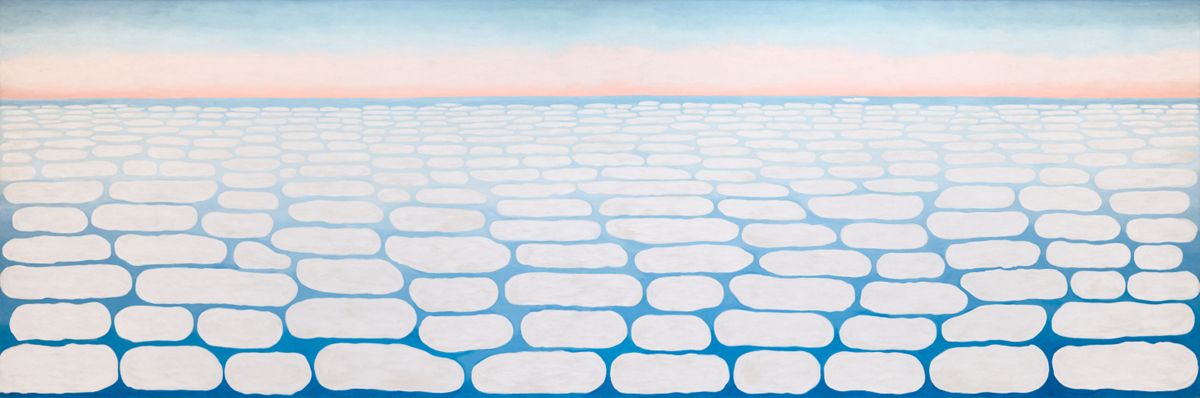 #96
#96
Sky above the clouds IV
With "Heaven Above the Clouds IV", Georgia O'Keeffe gives memorable form to one of the central questions of American painting. O'Keeffe enlarges flowers, bones, cities and clouds until the motif is an autonomous field. Simplification does not erase reality: it intensifies its presence. The composition is understood by its internal relationships: the lines lead the eye, the colors prioritize the planes and the voids prevent the image from closing on a single reading. Dated 1965, the work is documented as a painting in the collection of Art Institute of Chicago. The image is presented for documentary purposes and refers to the notice from Art Institute of Chicago. Alpha Reproduction does not offer a reproduction of this work by Georgia O'Keeffe; the conditions of use are the responsibility of the institution and the rights holders. This tension between precision and reserve gives it its lasting strength and allows us to understand why the image continues to structure our vision of American art.
Image: Art Institute of Chicago · Documentary image; no reproduction offered by Alpha Reproduction.
See the museum notice →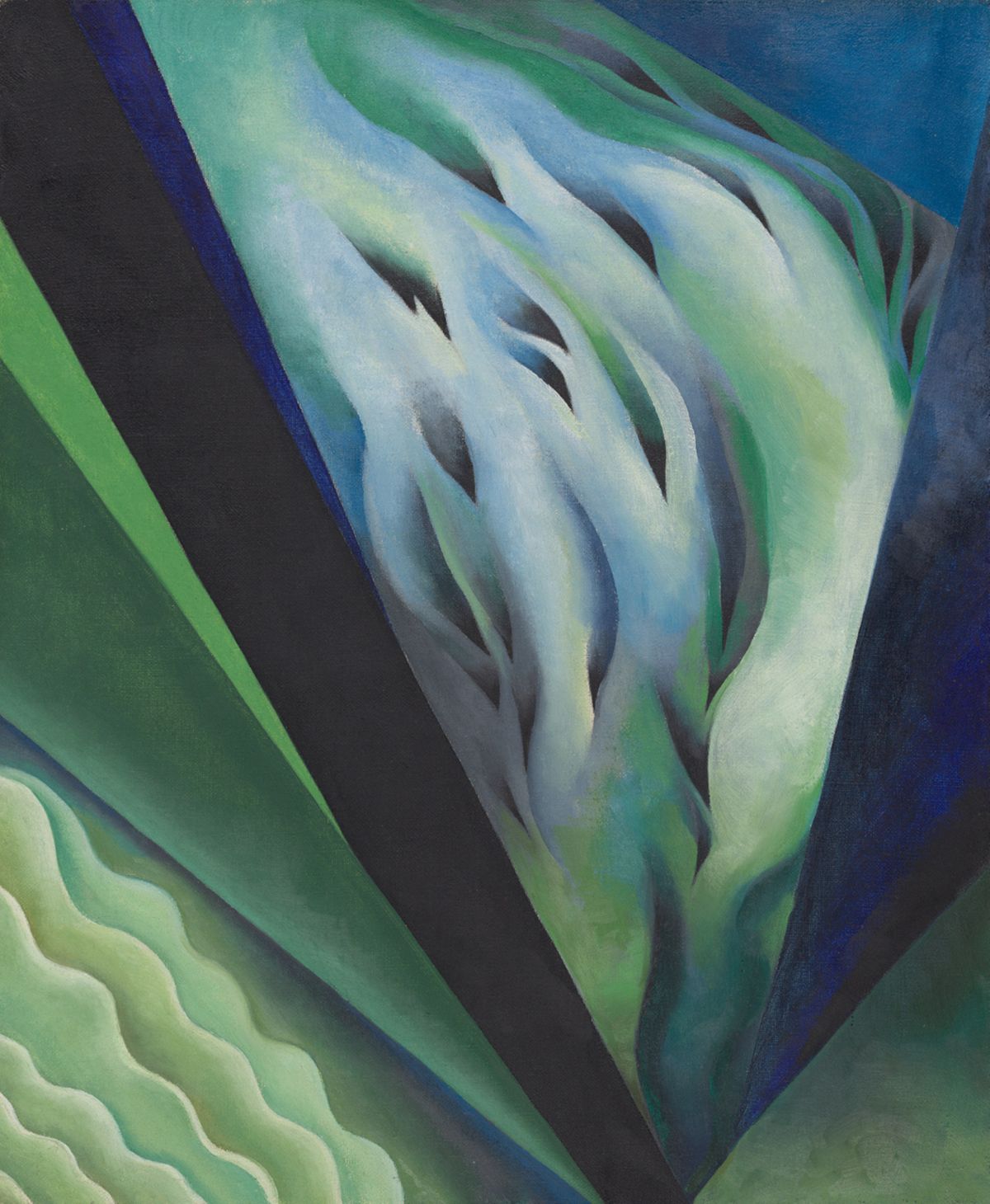 #97
#97
Blue and green music
"Blue and Green Music" shows how Georgia O'Keeffe transforms a specific pattern into an experience of light, space and duration. O'Keeffe enlarges flowers, bones, cities and clouds until the pattern becomes an autonomous field. Simplification does not erase reality: it intensifies its presence. The composition is understood by its internal relationships: the lines lead the eye, the colors prioritize the planes and the voids prevent the image from closing on a single reading. Dated 1919 -1921, the work is documented as a painting in the collection of Art Institute of Chicago. The work is documented as a painting in the collection of Art Institute of Chicago. The image is presented for documentary purposes and refers to the notice from Art Institute of Chicago. Alpha Reproduction does not offer reproduction of this work by Georgia O'Keeffe; the conditions of use are the responsibility of the institution and the rights holders. This ability to unite a concrete situation and an open structure explains its place in the journey: the work remains immediately readable without exhausting its meaning.
Image: Art Institute of Chicago · Documentary image; no reproduction offered by Alpha Reproduction.
See the museum notice →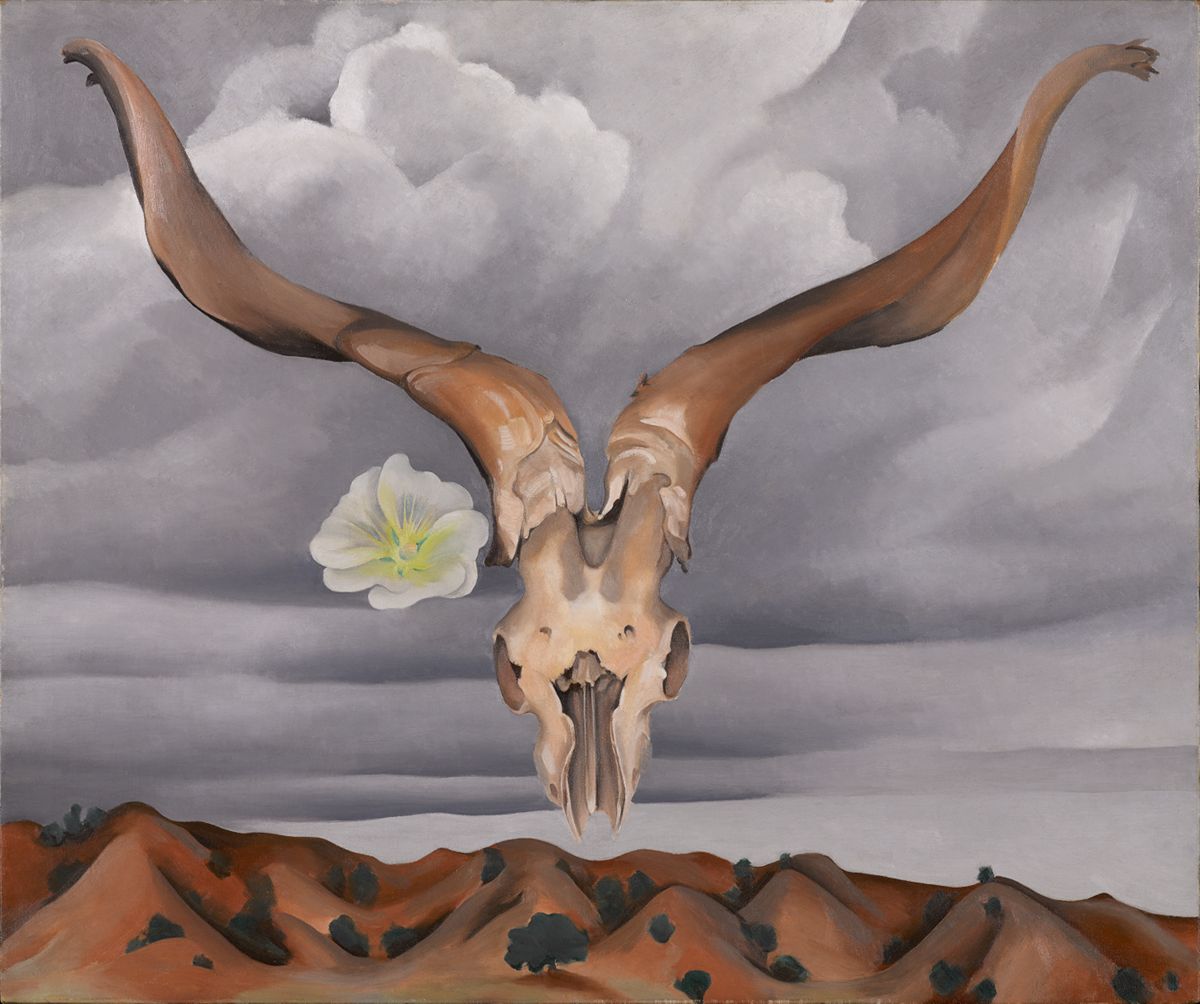 #98
#98
Ram's head, white hollyhock and hills
In "Ram's Head, White Hollyhock and Hills", Georgia O'Keeffe constructs a tension between direct observation and very conscious organization of the surface. O'Keeffe enlarges flowers, bones, cities and clouds until the motif is an autonomous field. Simplification does not erase reality: it intensifies its presence. The composition is understood by its internal relationships: the lines lead the eye, the colors prioritize the planes and the voids prevent the image from closing on a single reading. Dated 1935, the work is documented as a painting in the collection of Brooklyn Museum of Art. The work is documented as a painting in the collection of Brooklyn Museum of Art. The image is presented for documentary purposes and refers to the notice Brooklyn Museum of Art. Alpha Reproduction does not offer reproductions of this work by Georgia O'Keeffe; the conditions of use are the responsibility of the institution and the rights holders. The painting belongs to his time, but it goes beyond it by making the look an active experience rather than a simple recognition of the subject.
Image: Brooklyn Museum of Art · Documentary image; no reproduction offered by Alpha Reproduction.
See the museum notice →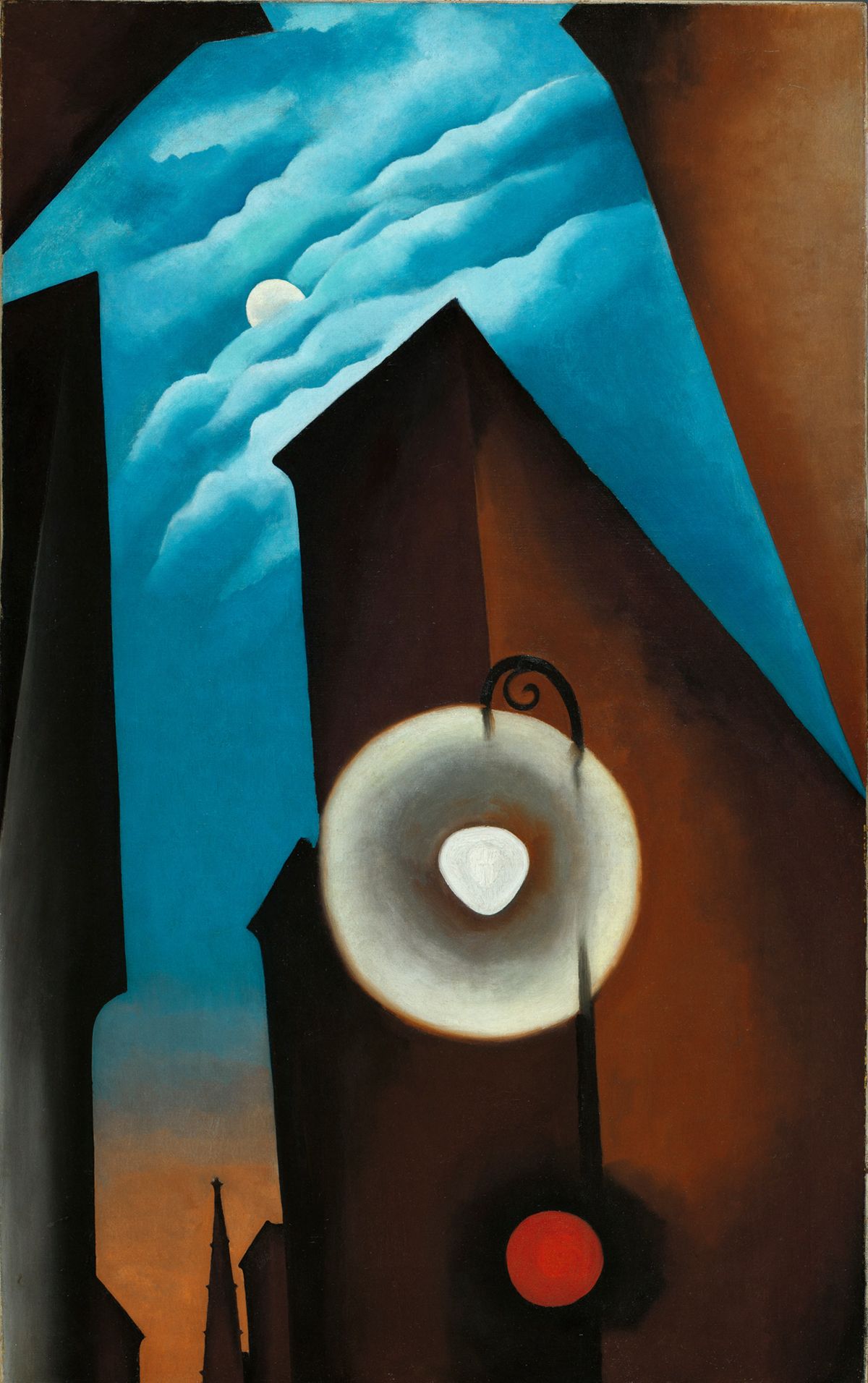 #99
#99
New York street with moon
The strength of "New York Street with Moon" comes from a balance between physical presence, framing and economy of the story. O'Keeffe enlarges flowers, bones, cities and clouds until the motif is an autonomous field. Simplification does not erase reality: it intensifies its presence. Modernity appears in facades, signs, windows and empty intervals. Urban geometry becomes a means of organizing time as much as space. Dated 1925, the work is documented as a painting in the collection of Museo Nacional Thyssen-Bornemisza. The image is presented for documentary purposes and refers to the notice by Museo Nacional Thyssen-Bornemisza. reproduction of this work by Georgia O'Keeffe; the conditions of use are the responsibility of the institution and the rights holders. The work deserves to be compared to the other pieces in the corpus: the same tensions between territory, identity and modernity constantly change form.
Image: Museo Nacional Thyssen-Bornemisza · Documentary image; no reproduction offered by Alpha Reproduction.
See the museum notice →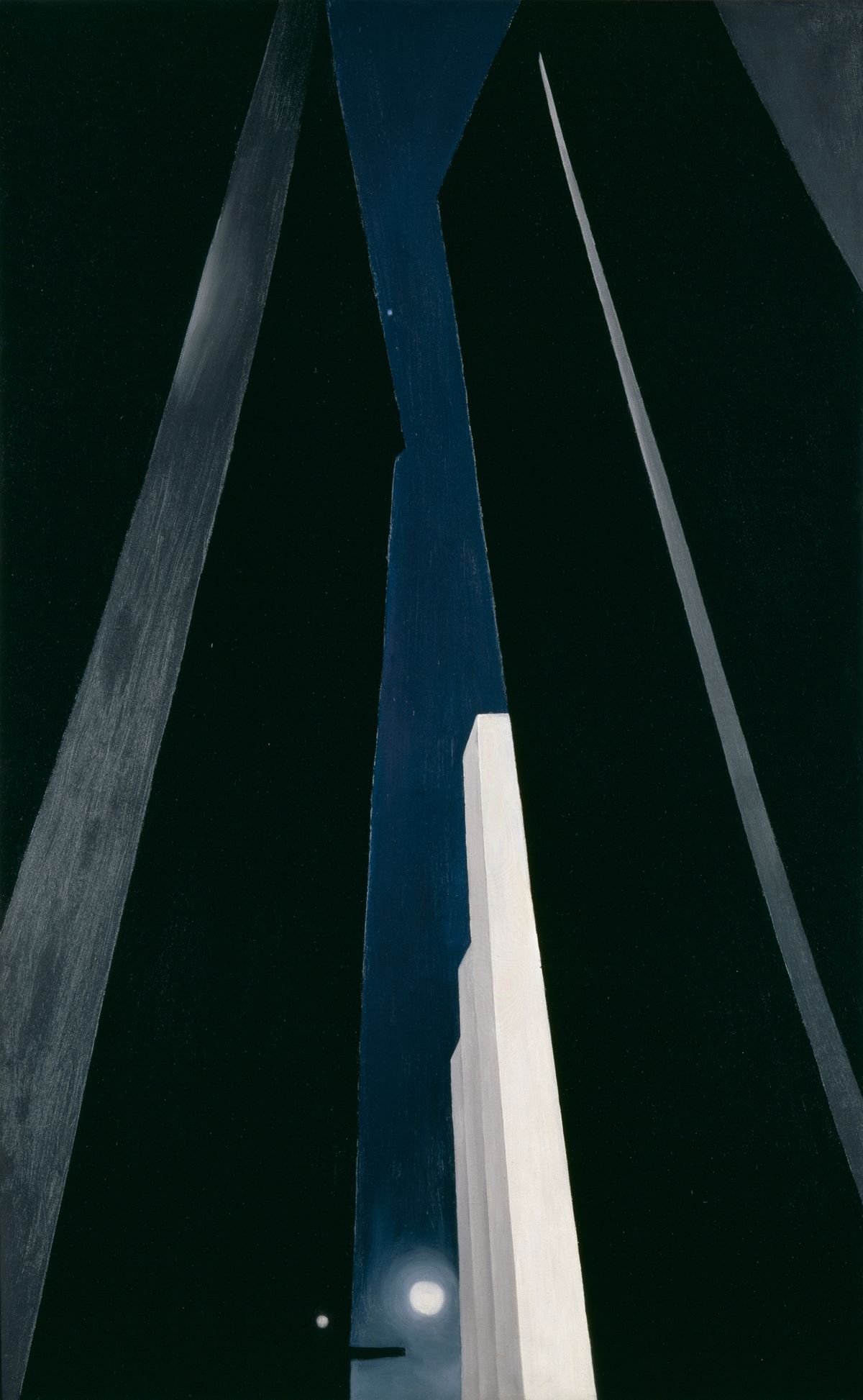 #100
#100
Night in town
Beneath its apparent evidence, "Nuit en ville" precisely regulates the relationship between the spectator and the scene represented. O'Keeffe enlarges flowers, bones, cities and clouds until the motif is made an autonomous field. Simplification does not erase reality: it intensifies its presence. The composition is understood by its internal relationships: the lines lead the eye, the colors prioritize the planes and the voids prevent the image from closing on a single reading. Dated 1926, the work is documented as a painting in the collection of Minneapolis Institute of Arts. The work is documented as a painting in the collection of Minneapolis Institute of Arts. The work is documented as a painting in the collection of Minneapolis Institute of Arts. The work is documented as a painting in the collection of Minneapolis Institute of Arts. The work is documented as a painting in the collection of Minneapolis Institute of Arts. The work is documented as a painting in the collection of Minneapolis Institute of Arts. The work is documented as a painting in the collection of Minneapolis Institute of Arts. The work is documented as a painting in the collection of Minneapolis Institute of Arts. The work is documented as a painting in the collection of Minneapolis Institute of Arts. The work is documented as a painting in the collection of Minneapolis Institute of Reproduction does not offer a reproduction of this work by Georgia O'Keeffe; the conditions of use are the responsibility of the institution and the rights holders. This tension between precision and reserve gives it its lasting strength and allows us to understand why the image continues to structure our vision of American art.
Image: Minneapolis Institute of Arts · Documentary image; no reproduction offered by Alpha Reproduction.
See the museum notice →What the journey reveals
Three tensions of American art
The painters gathered here constantly shift the relationships between individual, territory and modernity.
Represent yourself
From Whistler to Grant Wood, portraiture became a social, aesthetic and national construction.
Occupy space
Homer, Bierstadt and Remington confront the figures with the sea, climate and expanse.
Inhabit the light
O'Keeffe and Hopper simplify reality to the point of making light an almost mental presence.
One story, five landmarks
From aesthetics to Hopper
Whistler transforms his mother's portrait into a tonal manifesto.
Eakins exposes the modern precision of The Clinic of Doctor Gross.
Cassatt presents his great compositions inspired by Japan in Chicago.
New York largely confronts the American public with the European avant-gardes.
Hopper completes Night Birds, icon of urban solitude.
America Deep
From the European model to an internal geography
At the end of the 19th century, American artists circulated intensely between the United States and Europe. Whistler, Cassatt and Sargent are not imitators: they transform debates about color, portraiture and modern life.
Homer and Eakins give realism two complementary directions. One confronts figures with the sea, climate and war; the other studies the body, work and profession with a rigor that refuses idealization.
The territory quickly becomes an issue of identity. The panoramas of Bierstadt create a sublime West, while Remington establishes a mythology of movement, the horse and the border that must be looked at with its power of seduction and its historical limits.
Cities change the scale of the gaze. Hassam transforms avenues, crowds and flags into colorful vibrations. Bellows, on the contrary, shows the physical density, the struggles and the tensions of the metropolis.
After World War I, Demuth, Grant Wood and O'Keeffe looked for forms of sharpness. Industry, Midwest, flower or skyscraper become condensed signs rather than exhaustive descriptions.
Hopper brings together several legacies without resolving them. Its realism is precise, but its scenes remain incomplete. Light measures the distances between beings and makes everyday life a space of mental projection.
Four reading keys
How to look at American painting
Comparing framing, scale and light allows you to go beyond motion labels.
Measure the territory
A panorama, a coast or a simple facade define the place given to the human figure.
Choose a distance
The social portrait, the family scene and the urban window never place the viewer in the same place.
Follow the gesture
From Sargent to Bellows, the speed of the brush constructs the subject as much as its contours.
Observe waiting
At O'Keeffe and Hopper, light simplifies space and transforms silence into an event.
Works and institutions
Continue after the hundredth painting
Each image opens either the corresponding file in the Alpha Reproduction store, or an institutional notice when no reproduction is offered.
Frequently asked questions
American painting, movements and images
The essential benchmarks for understanding the corpus and using its links correctly.
Which artists structure modern American painting?
Whistler, Homer, Eakins, Cassatt and Sargent defined several paths at the end of the 19th century. Hassam and Bellows observe the modern city, Bierstadt and Remington construct the territorial imagination, then O'Keeffe, Demuth, Grant Wood and Hopper renew the American image in the 20th century.
Why start with Whistler?
Whistler transforms portrait and landscape into tonal arrangements. Its aesthetics connect America to European debates while opening a modern way of thinking about painting as an autonomous organization of shapes and colors.
What place does landscape hold in American art?
The landscape is used to measure the territory, but also to create myths. Bierstadt monumentalizes the West, Homer confronts figures with the sea, Hassam observes the coasts and O'Keeffe simplifies the desert and the sky.
Why does Mary Cassatt belong to this journey?
Born in the United States and active in France, Cassatt fully participated in Impressionism. She renews theater scenes, portraits and family relationships through framing that has lastingly transformed American painting.
What does American precisionism mean?
Precisionism simplifies urban and industrial forms into net volumes. In Charles Demuth, typographic signs, architecture and geometric rhythms give a very constructed image of modernity.
Why does Hopper close the course?
Hopper condenses previous research: realistic observation, geometry, light and suspended narrative. Its homes, streets, cinemas and gas stations transform the ordinary into mental space.
Are all 100 works available for reproduction?
No. Ninety works refer to the Alpha Reproduction store. The eight works by Georgia O'Keeffe and two additional works by Edward Hopper are presented for documentary purposes and refer to museum catalogs.
Are the images of O'Keeffe and Hopper royalty free?
No. They can remain protected as well as their photographs. They are used here for information; any reuse must respect the conditions of institutions and rights holders.
0 comments