


100 works - Mexican painting
Mexican painting: 100 works by Kahlo, Rivera and muralism
One hundred distinct images to explore the self-portrait, revolution, landscape and great walls of modern Mexico.
From the intimacy built by Frida Kahlo to the frescoes of Rivera, Orozco and Siqueiros, Mexican painting transforms history, the body and the territory into public language.
After the revolution
How Mexican painting becomes modern
At the beginning of the 20th century, Mexican artists encountered European avant-gardes, local traditions and political transformations. They invent images capable of speaking about both the individual and a collective history.
From small self-portraits to public walls, Mexican modernity changes scale without losing its symbolic force.Enter the works
The 100 works in pictures
Self-portraits, families and popular figures show how the modern image constructs a plural Mexican identity.
#1
The Two Fridas
With "The Two Fridas", Frida Kahlo condenses an essential question of modern Mexican painting. Kahlo transforms self-portraiture, body memory and signs of Mexican identity into constructions of almost emblematic precision. Clothing, plants, animals and objects always extend the figure. The face must be looked at with its environment: posture, hairstyle, clothing and background construct a situated identity, crossed by family, social and political memory. Dated 1939, the work is documented as oil on canvas, 173.5 x 173 cm. The associated source allows us to verify its title, attribution and conservation context. The image and the link comes from the corresponding file in the Alpha Reproduction store. The button allows you to consult the proposed reproduction and its formats. This articulation between concrete experience and visual structure explains the place of the work in the journey: it remains immediately readable without exhausting its meaning.
Image: Alpha Reproduction · Image and link from the Alpha Reproduction catalog.
See this reproduction → #2
#2
Man, controller of the Universe
"Man, Controller of the Universe" shows how Diego Rivera transforms a particular experience into a collective image. Rivera links the cubism learned in Europe to a public conception of the image. Frescoes, portraits and still lifes organize color into readable masses, capable of carrying a social and political history. The composition distributes bodies as collective forces. Diagonals, gestures and contrasts give the conflict an immediate presence while leaving its historical interpretation open. Dated 1934, the work is documented as oil or pictorial technique on support. The associated source allows us to verify the title, attribution and context of conservation. The image and link come from the corresponding file in the Alpha Reproduction store. The button allows you to consult the proposed reproduction and its formats. The work belongs to its context, but it goes beyond it by making the look an active experience rather than a simple recognition of the subject.
Image: Alpha Reproduction · Image and link from the Alpha Reproduction catalog.
See this reproduction → #3
#3
Self-portrait with a necklace of thorns
In "Self-portrait with a necklace of thorns", Frida Kahlo organizes a precise tension between body, symbol and space. Kahlo transforms the self-portrait, the memory of the body and the signs of Mexican identity into constructions of almost emblematic precision. Clothing, plants, animals and objects always extend the figure. The face must be looked at with its environment: posture, hairstyle, clothing and background construct a situated identity, crossed by family, social and political memory. Dated 1940, the work constructs a situated identity, crossed by family, social and political memory. Dated 1940, the work is documented as a painting - technique to be verified with the institution. The associated source makes it possible to verify its title, attribution and conservation context. The image and link come from the corresponding file in the Alpha Reproduction store. The button allows you to consult the proposed reproduction and its formats. Compared to the other pieces in the corpus, it shows how identity, territory and history constantly change form in Mexican art.
Image: Alpha Reproduction · Image and link from the Alpha Reproduction catalog.
See this reproduction →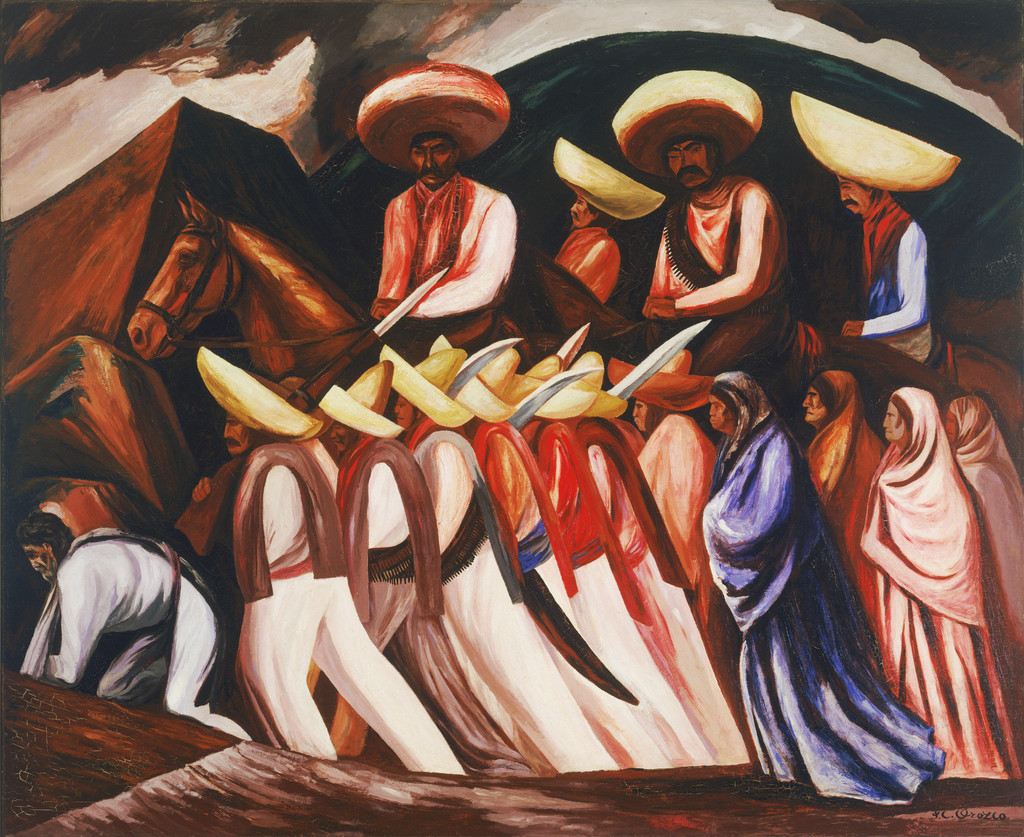 #4
#4
The Zapatistas
The strength of "The Zapatistas" lies in the balance between physical presence and surface construction. Orozco refuses the easy celebration of the revolution. Its figures, blacks and reds give the collective drama a critical gravity where historical violence remains visible without becoming a heroic spectacle. The surface remains the true place of the work: lines, colors and scale relationships lead the gaze without enclosing the image in a single narration. Dated 1931, the work is documented as oil on canvas. The associated source allows us to verify the title, attribution and context of conservation. The visual refers directly to the Museum of Modern Art notice (MoMA). This work is not offered for reproduction by Alpha Reproduction and remains subject to the conditions of the institution and the rights holders. This tension between clarity and complexity gives it its lasting strength and allows us to understand the singular modernity of the Mexican image.
Image: Museum of Modern Art (MoMA) · Documentary image; conditions of use to be checked with MoMA.
See the museum notice → #5
#5
The Broken Column
Beneath its apparent evidence, "The Broken Column" places the viewer in front of an image with multiple readings. Kahlo transforms the self-portrait, the memory of the body and the signs of Mexican identity into constructions of almost emblematic precision. Clothing, plants, animals and objects always extend the figure. The surface remains the true place of the work: lines, colors and scale ratios lead the gaze without enclosing the image in a single narration. Dated 1944, the work is documented as oil on canvas, 43 x 33 cm. The associated source allows us to verify the title, attribution and conservation context. The image and link come from the corresponding sheet in the Alpha Reproduction store. The button allows you to consult the proposed reproduction and its formats. This articulation between concrete experience and visual structure explains the place of the work in the journey: it remains immediately readable without exhausting its meaning.
Image: Alpha Reproduction · Image and link from the Alpha Reproduction catalog.
See this reproduction →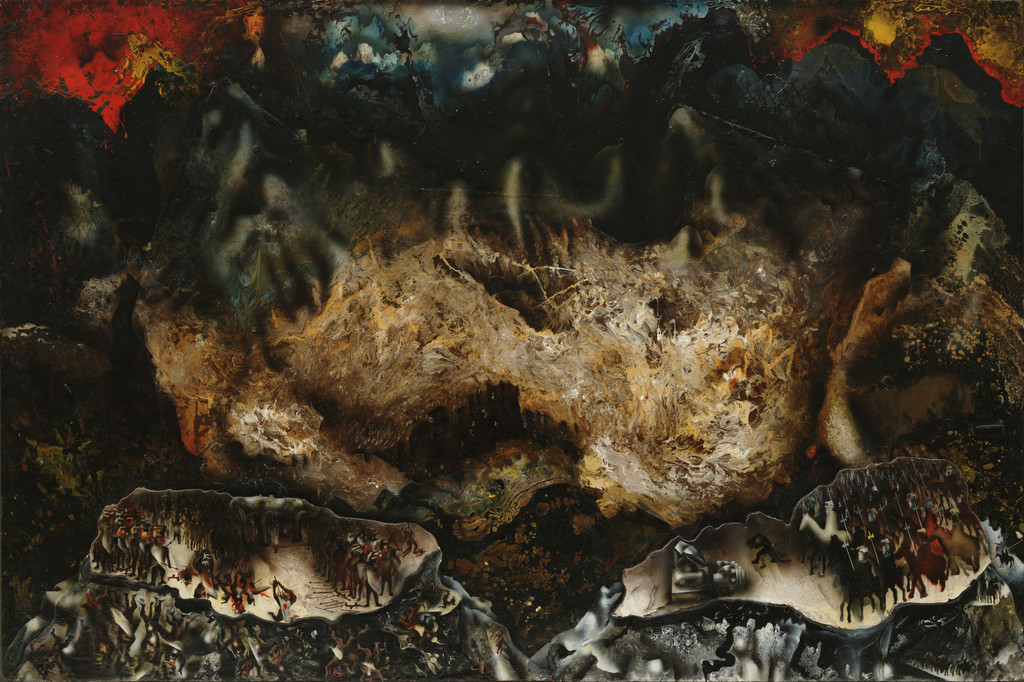 #6
#6
Collective suicide
With "Collective Suicide", David Alfaro Siqueiros condenses an essential question in modern Mexican painting. Siqueiros seeks a monumental, dynamic image directly engaged in his time. Diagonals, shortcuts and industrial materials place the viewer at the heart of the action. The composition distributes bodies as collective forces. Diagonals, gestures and contrasts give the conflict an immediate presence while leaving its historical interpretation open. Dated 1936, the work gives immediate presence to the conflict while leaving its historical interpretation open. Diagonals, gestures and contrasts give the conflict an immediate presence while leaving its historical interpretation open. Dated 1936, the work is documented as lacquer on wood with applied sections. The associated source allows us to verify its title, attribution and conservation context. The visual refers directly to the Museum of Modern Art (MoMA) notice. This work is not offered for reproduction by Alpha Reproduction and remains subject to the conditions of the institution and the rights holders. The work belongs to its context, but it goes beyond it by making the look an active experience rather than a simple recognition of the subject.
Image: Museum of Modern Art (MoMA) · Documentary image; conditions of use to be checked with MoMA.
See the museum notice → #7
#7
Henry Ford Hospital (The Flying Bed)
"Henry Ford Hospital (The Flying Bed)" shows how Frida Kahlo transforms a particular experience into a collective image. Kahlo transforms self-portraiture, body memory and signs of Mexican identity into constructions of almost iconic precision. Clothing, plants, animals and objects always extend the figure. The surface remains the true place of the work: lines, colors and scale relationships lead the gaze without enclosing the image in a single narration. Dated 1932, the work is documented as a painting - technique to be verified with the institution. The associated source makes it possible to verify the title, attribution and context of conservation. The image and link come from the corresponding file in the Alpha Reproduction store. The button allows you to consult the proposed reproduction and its formats. Compared to the other pieces in the corpus, it shows how identity, territory and history constantly change form in Mexican art.
Image: Alpha Reproduction · Image and link from the Alpha Reproduction catalog.
See this reproduction → #8
#8
Our Gods, right panel
In "Our Gods, Right Panel", Saturnino Herran organizes a precise tension between body, symbol and space. Herran builds a modernity attentive to the faces, gestures and traditions of Mexico. Its flexible design and colorful chords avoid reducing the figures to simple folkloric types. The composition distributes bodies as collective forces. Diagonals, gestures and contrasts give the conflict an immediate presence while leaving its historical interpretation open. Dated 1918, the work is documented as oil or pictorial technique on support. The associated source allows us to verify its title, attribution and conservation context. The image and the link comes from the corresponding file in the Alpha Reproduction store. The button allows you to consult the proposed reproduction and its formats. This tension between clarity and complexity gives it its lasting strength and allows us to understand the singular modernity of the Mexican image.
Image: Alpha Reproduction · Image and link from the Alpha Reproduction catalog.
See this reproduction → #9
#9
Self-portrait on the border between Mexico and the United States
The strength of "Self-portrait on the border between Mexico and the United States" lies in the balance between physical presence and surface construction. Kahlo transforms self-portraiture, body memory and signs of Mexican identity into constructions of almost emblematic precision. Clothing, plants, animals and objects always extend the figure. The face must be looked at with its environment: posture, hairstyle, clothing and background construct a situated identity, crossed by family, social and political memory. Dated 1932, the work is documented as a painting - technique to be verified with the institution. The associated source allows you to check the title, attribution and conservation context. The image and link come from the corresponding file in the Alpha Reproduction store. The button allows you to consult the proposed reproduction and its formats. This articulation between concrete experience and visual structure explains the place of the work in the journey: it remains immediately readable without exhausting its meaning.
Image: Alpha Reproduction · Image and link from the Alpha Reproduction catalog.
See this reproduction → #10
#10
Late afternoon by the sea
Beneath its apparent evidence, "Late Afternoon by the Sea" places the viewer in front of an image with multiple readings. Clausell adapts impressionist research to Mexican light, coasts and landscapes. The moving touch makes the climate an active presence rather than a simple background. The landscape does not only serve as a setting: vegetation, relief and light become a way of thinking about the territory, its uses and the stories attached to it. Dated around 1905, the work is not only used as a setting: vegetation, relief and light become a way of thinking about the territory, its uses and the stories attached to it. Dated around 1905, the work is documented as an oil or pictorial technique on support. The associated source allows us to verify its title, attribution and conservation context. The associated source allows us to verify its title, attribution and conservation context. The image and link come from from the corresponding file in the Alpha Reproduction store. The button allows you to consult the proposed reproduction and its formats. The work belongs to its context, but it goes beyond it by making the look an active experience rather than a simple recognition of the subject.
Image: Alpha Reproduction · Image and link from the Alpha Reproduction catalog.
See this reproduction → #11
#11
The wounded deer
With "The Wounded Deer", Frida Kahlo condenses an essential question in modern Mexican painting. Kahlo transforms the self-portrait, the memory of the body and the signs of Mexican identity into constructions of almost emblematic precision. Clothing, plants, animals and objects always extend the figure. The surface remains the true place of the work: lines, colors and scale ratios lead the eye without enclosing the image in a single narration. Dated 1946, the work is documented as oil on masonite, 22.4 x 30 cm. The associated source allows us to verify the title, attribution and conservation context. The image and link come from the corresponding sheet in the Alpha Reproduction store. The button allows you to consult the proposed reproduction and its formats. Compared to the other pieces in the corpus, it shows how identity, territory and history constantly change form in Mexican art.
Image: Alpha Reproduction · Image and link from the Alpha Reproduction catalog.
See this reproduction → #12
#12
Fireplace
"Chimney" shows how Diego Rivera transforms a particular experience into a collective image. Rivera connects cubism learned in Europe to a public conception of the image. Frescoes, portraits and still lifes organize color into readable masses, capable of carrying a social and political history. Ordinary objects are subject to a very constructed organization. Plans, contours and colors transform the table or interior into a laboratory of rhythm and volume. Dated 1913, the work is subject to a very constructed organization. Plans, contours and colors transform the table or interior into a laboratory of rhythm and volume. Dated 1913, the work is documented as an oil or pictorial technique on support. Dated 1913, the work is documented as an oil or pictorial technique on support. Dated 1913, the work is documented as an oil or pictorial technique on support. Dated 1913, the work is documented as an oil or pictorial technique on support. Dated 1913, the work is documented as an oil or pictorial technique on support. Dated 1913, the work is documented as an oil or pictorial technique on support. Dated 1913, the work is documented as an oil or pictorial technique on support. Dated the corresponding sheet in the Alpha Reproduction store. The button allows you to consult the proposed reproduction and its formats. This tension between clarity and complexity gives it its lasting strength and allows us to understand the singular modernity of the Mexican image.
Image: Alpha Reproduction · Image and link from the Alpha Reproduction catalog.
See this reproduction → #13
#13
What water gave me
In "What Water Gave Me", Frida Kahlo organizes a precise tension between body, symbol and space. Kahlo transforms the self-portrait, the memory of the body and the signs of Mexican identity into constructions of almost emblematic precision. Clothing, plants, animals and objects always extend the figure. The surface remains the true place of the work: lines, colors and scale ratios lead the gaze without enclosing the image in a single narration. Dated 1938, the work is documented as oil on canvas, 91.44 x 70.5 cm. The associated source allows us to verify the title, attribution and conservation context. The image and link come from the corresponding sheet in the Alpha Reproduction store. The button allows you to consult the proposed reproduction and its formats. This articulation between concrete experience and visual structure explains the place of the work in the journey: it remains immediately readable without exhausting its meaning.
Image: Alpha Reproduction · Image and link from the Alpha Reproduction catalog.
See this reproduction →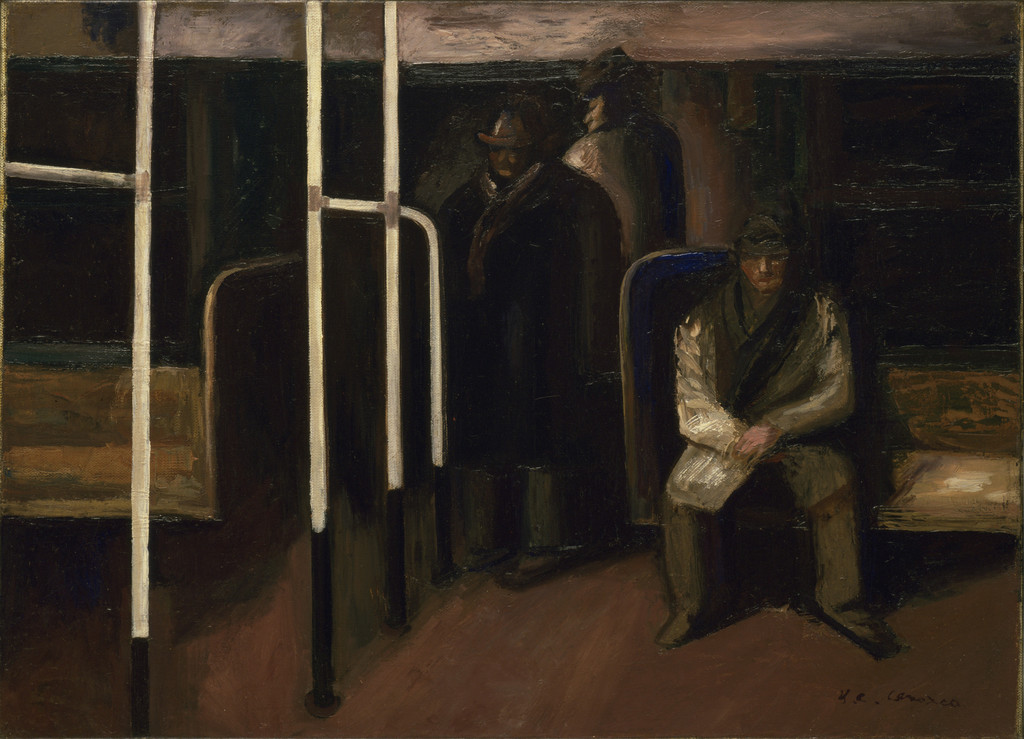 #14
#14
The Metro
The strength of "Le Métro" lies in the balance between physical presence and surface construction. Orozco refuses the easy celebration of the revolution. Its figures, blacks and reds give the collective drama a critical gravity where historical violence remains visible without becoming a heroic spectacle. The surface remains the true place of the work: lines, colors and scale relationships lead the eye without enclosing the image in a single narration. Dated 1928, the work is documented as oil on canvas. The associated source allows us to verify its title, attribution and conservation context. The associated source allows us to verify its title, attribution and conservation context. The visual refers directly to the Museum of Modern Art (MoMA) notice. This work is not offered for reproduction by Alpha Reproduction and remains subject to the conditions of the institution and the rights holders. The work belongs to its context, but it goes beyond it by making the look an active experience rather than a simple recognition of the subject.
Image: Museum of Modern Art (MoMA) · Documentary image; conditions of use to be checked with MoMA.
See the museum notice → #15
#15
The Suicide of Dorothy Hale
Beneath its apparent evidence, "The Suicide of Dorothy Hale" places the viewer in front of an image with multiple readings. Kahlo transforms the self-portrait, the memory of the body and the signs of Mexican identity into constructions of almost emblematic precision. Clothing, plants, animals and objects always extend the figure. The composition distributes the bodies as collective forces. Diagonals, gestures and contrasts give the conflict an immediate presence while leaving its historical interpretation open. Dated 1938, the work is documented as oil on masonite, 60.4 x 48.6 cm. The associated source allows us to verify its title, attribution and conservation context. The image and link come from the corresponding file in the Alpha Reproduction store. The button allows you to consult the proposed reproduction and its formats. Compared to the other pieces in the corpus, it shows how identity, territory and history constantly change form in Mexican art.
Image: Alpha Reproduction · Image and link from the Alpha Reproduction catalog.
See this reproduction →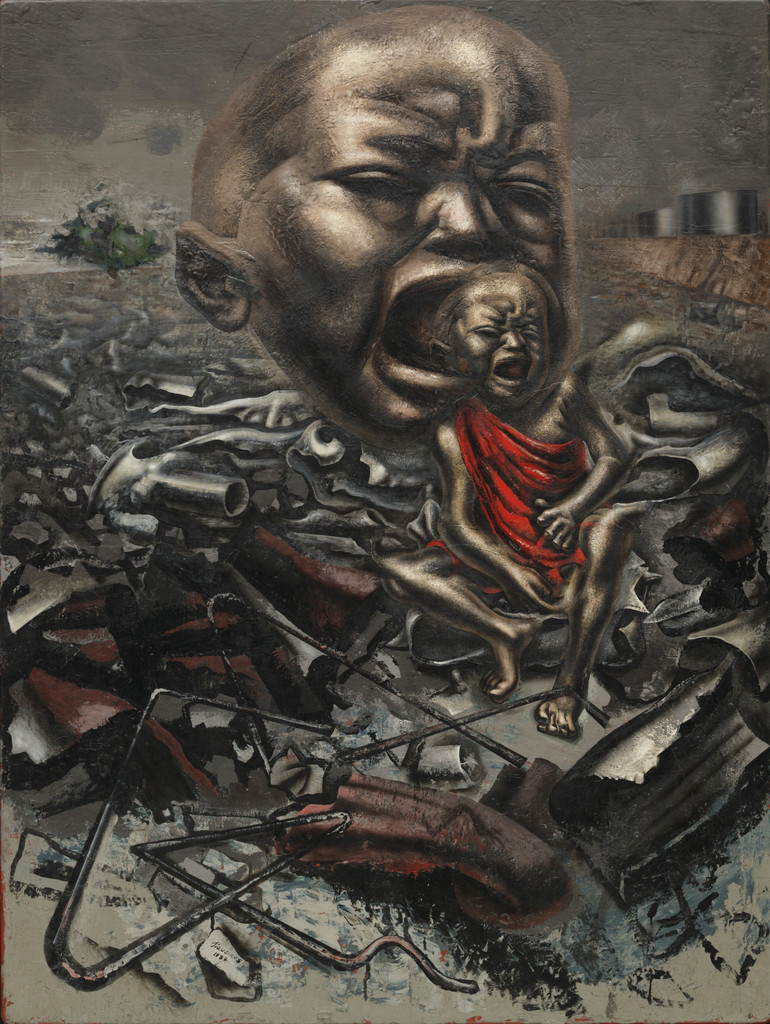 #16
#16
Echo of a scream
With "Echo of a Cry", David Alfaro Siqueiros condenses an essential question in modern Mexican painting. Siqueiros seeks a monumental, dynamic image directly engaged in his time. Diagonals, shortcuts and industrial materials place the viewer at the heart of the action. The composition distributes bodies as collective forces. Diagonals, gestures and contrasts give the conflict an immediate presence while leaving its historical interpretation open. Dated 1937, the work is documented as enamel on wood. The associated source allows us to verify its title, attribution and conservation context. The visual refers directly to the notice from Museum of Modern Art (MoMA). This work is not offered for reproduction by Alpha Reproduction and remains subject to the conditions of the institution and the rights holders. This tension between clarity and complexity gives it its lasting strength and allows us to understand the singular modernity of the Mexican image.
Image: Museum of Modern Art (MoMA) · Documentary image; conditions of use to be checked with MoMA.
See the museum notice → #17
#17
My birth
"My Birth" shows how Frida Kahlo transforms a particular experience into a collective image. Kahlo transforms self-portraiture, body memory and signs of Mexican identity into constructions of almost iconic precision. Clothing, plants, animals and objects always extend the figure. The surface remains the true place of the work: lines, colors and scale ratios lead the gaze without enclosing the image in a single narration. Dated 1932, the work is documented as oil on metal, 30.5 x 35 cm. The associated source allows us to verify its title, attribution and conservation context. The image and link come from the corresponding sheet in the Alpha Reproduction store. The button allows you to consult the proposed reproduction and its formats. This articulation between concrete experience and visual structure explains the place of the work in the journey: it remains immediately readable without exhausting its meaning.
Image: Alpha Reproduction · Image and link from the Alpha Reproduction catalog.
See this reproduction → #18
#18
Bougainvilliers
In "Bougainvilliers", Saturnino Herran organizes a precise tension between body, symbol and space. Herran builds a modernity attentive to the faces, gestures and traditions of Mexico. Its flexible design and colorful accords avoid reducing the figures to simple folkloric types. The landscape does not only serve as a setting: vegetation, relief and light become a way of thinking about the territory, its uses and the stories attached to it. Dated around 1915, the work is documented as an oil or pictorial technique on support. The associated source makes it possible to verify the title, attribution and context of conservation. The associated source allows you to verify the title, attribution and context of conservation. The image and link come from the sheet correspondent in the Alpha Reproduction store. The button allows you to consult the proposed reproduction and its formats. The work belongs to its context, but it goes beyond it by making the look an active experience rather than a simple recognition of the subject.
Image: Alpha Reproduction · Image and link from the Alpha Reproduction catalog.
See this reproduction → #19
#19
Self-portrait with cut hair
The strength of "Self-portrait with Cut Hair" lies in the balance between physical presence and surface construction. Kahlo transforms the self-portrait, body memory and signs of Mexican identity into constructions of almost emblematic precision. Clothing, plants, animals and objects always extend the figure. The face must be looked at with its environment: posture, hairstyle, clothing and background construct a situated identity, crossed by family, social and political memory. Dated 1940, the work constructs a situated identity, crossed by family, social and political memory. Dated 1940, the work constructs a situated identity, crossed by family, social and political memory. Dated 1940, the work is documented as oil on canvas, 40 x 28 cm. The associated source allows us to verify its title, attribution and conservation context. The image and link come from the corresponding file in the Alpha Reproduction store. The button allows you to consult the proposed reproduction and its formats. Compared to the other pieces in the corpus, it shows how identity, territory and history constantly change form in Mexican art.
Image: Alpha Reproduction · Image and link from the Alpha Reproduction catalog.
See this reproduction → #20
#20
Landscape with forest and river
Beneath its apparent evidence, "Landscape with Forest and River" places the viewer in front of an image with multiple readings. Clausell adapts impressionist research to Mexican light, coasts and landscapes. The moving touch makes the climate an active presence rather than a simple background. The landscape does not only serve as a setting: vegetation, relief and light become a way of thinking about the territory, its uses and the stories attached to it. Dated around 1905, the work is not only used as a setting: vegetation, relief and light become a way of thinking about the territory, its uses and the stories attached to it. Dated around 1905, the work is documented as an oil or pictorial technique on support. The associated source allows us to verify its title, attribution and conservation context. The associated source allows us to verify its title, attribution and conservation context. The image and link come from there corresponding sheet in the Alpha Reproduction store. The button allows you to consult the proposed reproduction and its formats. This tension between clarity and complexity gives it its lasting strength and allows us to understand the singular modernity of the Mexican image.
Image: Alpha Reproduction · Image and link from the Alpha Reproduction catalog.
See this reproduction → #21
#21
Self-portrait - The Frame
With "Self-Portrait - The Frame", Frida Kahlo condenses an essential question of modern Mexican painting. Kahlo transforms the self-portrait, body memory and signs of Mexican identity into constructions of almost emblematic precision. Clothing, plants, animals and objects always extend the figure. The face must be looked at with its environment: posture, hairstyle, clothing and background construct a situated identity, crossed by family, social and political memory. Dated 1938, the work is documented as a painting - technique to be verified with the institution. Dated 1938, the work is documented as a painting - technique to be verified with the institution. The associated source makes it possible to verify its title, attribution and conservation context. The image and link come from the corresponding file in the Alpha Reproduction store. The button allows you to consult the proposed reproduction and its formats. This articulation between concrete experience and visual structure explains the place of the work in the journey: it remains immediately readable without exhausting its meaning.
Image: Alpha Reproduction · Image and link from the Alpha Reproduction catalog.
See this reproduction → #22
#22
Composition with clock
"Composition with Clock" shows how Diego Rivera transforms a particular experience into a collective image. Rivera links cubism learned in Europe to a public conception of the image. Frescoes, portraits and still lifes organize color into readable masses, capable of carrying a social and political history. Ordinary objects are subject to a very constructed organization. Plans, contours and colors transform the table or interior into a laboratory of rhythm and volume. Dated 1915, the work is documented as an oil or pictorial technique on support. Dated 1915, the work is documented as an oil or pictorial technique on support. Dated 1915, the work is documented as an oil or pictorial technique on support. Dated 1915, the work is documented as an oil or pictorial technique on support. Dated 1915, the work is documented as an oil or pictorial technique on support. The associated source makes it possible to verify the title, attribution and context of conservation. The image and the link come from the corresponding file in the Alpha Reproduction store. The button allows you to consult the proposed reproduction and its formats. The work belongs to its context, but it goes beyond it by making the look an active experience rather than a simple recognition of the subject.
Image: Alpha Reproduction · Image and link from the Alpha Reproduction catalog.
See this reproduction → #23
#23
Frieda and Diego Rivera
In "Frieda and Diego Rivera", Frida Kahlo organizes a precise tension between body, symbol and space. Kahlo transforms the self-portrait, the memory of the body and the signs of Mexican identity into constructions of almost emblematic precision. Clothing, plants, animals and objects always extend the figure. The surface remains the true place of the work: lines, colors and scale relationships lead the gaze without enclosing the image in a single narration. Dated 1931, the work is documented as oil on canvas, 100 x 79 cm. The associated source allows us to verify the title, attribution and conservation context. The image and link come from the corresponding sheet in the Alpha Reproduction store. The button allows you to consult the proposed reproduction and its formats. Compared to the other pieces in the corpus, it shows how identity, territory and history constantly change form in Mexican art.
Image: Alpha Reproduction · Image and link from the Alpha Reproduction catalog.
See this reproduction →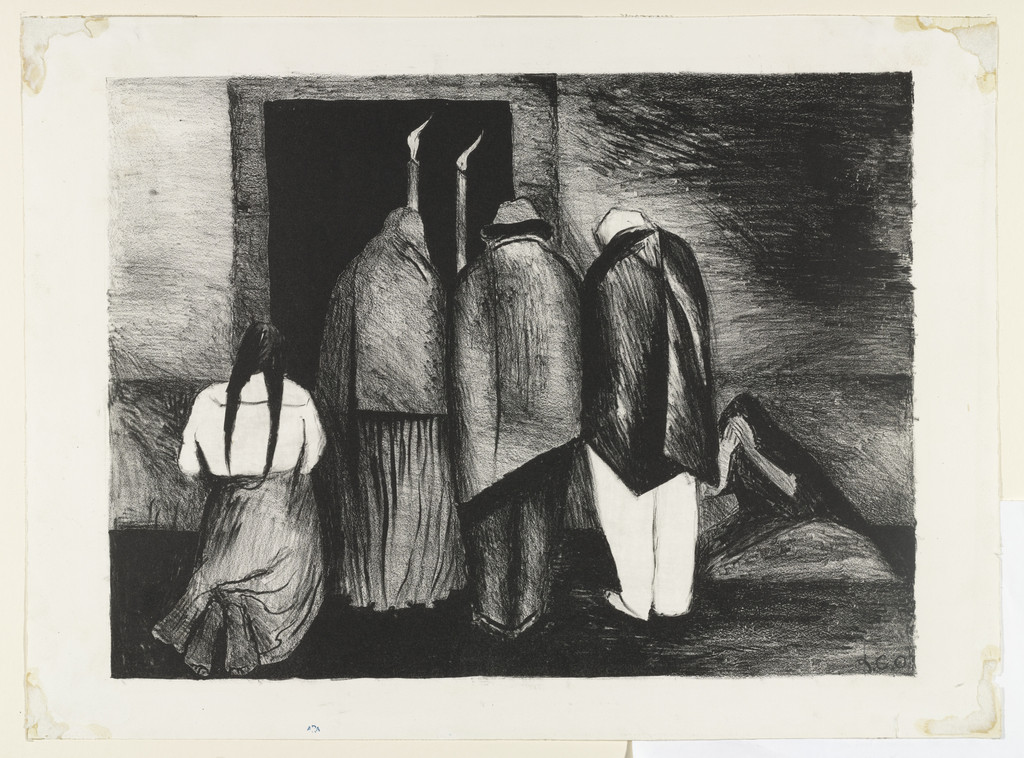 #24
#24
The Requiem
The strength of "The Requiem" lies in the balance between physical presence and surface construction. Orozco refuses the easy celebration of the revolution. Its figures, blacks and reds give the collective drama a critical gravity where historical violence remains visible without becoming a heroic spectacle. The surface remains the true place of the work: lines, colors and scale relationships lead the eye without enclosing the image in a single narration. Dated 1928, the work is documented as lithograph. The associated source allows us to verify the title, attribution and conservation context. The visual refers directly to the Museum of Modern Art (MoMA) notice. This work is not offered for reproduction by Alpha Reproduction and remains subject to the conditions of the institution and the rights holders. This tension between clarity and complexity gives it its lasting strength and allows us to understand the singular modernity of the Mexican image.
Image: Museum of Modern Art (MoMA) · Documentary image; conditions of use to be checked with MoMA.
See the museum notice → #25
#25
My grandparents, my parents and me (Family tree)
Beneath its apparent evidence, "My grandparents, my parents and me (Family tree)" places the viewer in front of an image with multiple readings. Kahlo transforms the self-portrait, the memory of the body and the signs of Mexican identity into constructions of almost emblematic precision. Clothing, plants, animals and objects always extend the figure. The surface remains the true place of the work: lines, colors and scale relationships lead the gaze without enclosing the image in a single narration. Dated 1936, the work is documented as oil and tempera on zinc, 30.7 x 34.5 cm. The associated source allows us to verify its title, attribution and conservation context. The image and link come from the corresponding file in the Alpha Reproduction store. The button allows you to consult the proposed reproduction and its formats. This articulation between concrete experience and visual structure explains the place of the work in the journey: it remains immediately readable without exhausting its meaning.
Image: Alpha Reproduction · Image and link from the Alpha Reproduction catalog.
See this reproduction →Rivera, Orozco and Siqueiros transform social history into compositions intended for collective space.
 #26
#26
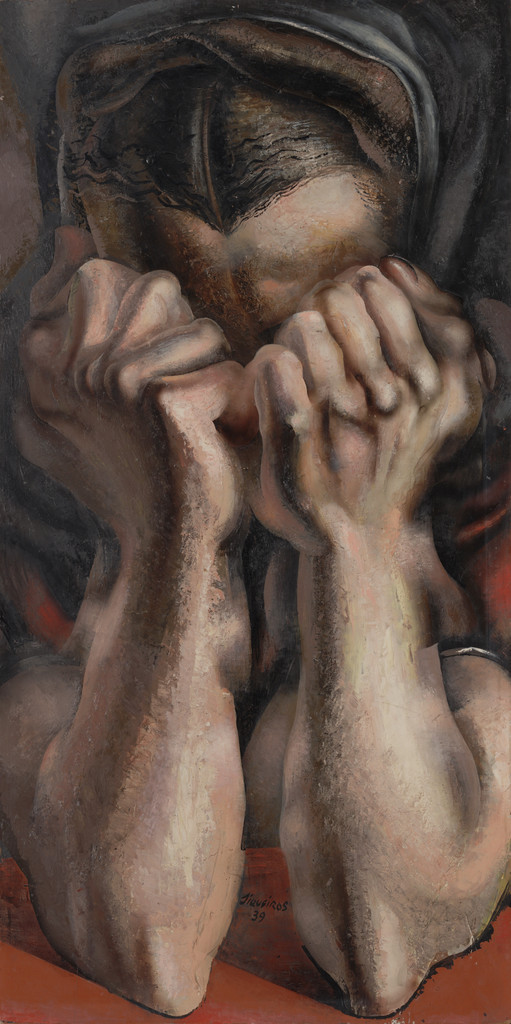
The sob
With "The Sanglot", David Alfaro Siqueiros condenses an essential question in modern Mexican painting. Siqueiros seeks a monumental, dynamic image directly engaged in his time. Diagonals, shortcuts and industrial materials place the viewer at the heart of the action. The composition distributes bodies as collective forces. Diagonals, gestures and contrasts give the conflict an immediate presence while leaving its historical interpretation open. Dated 1939, the work is documented as enamel on board. The associated source allows us to verify its title, attribution and conservation context. The associated source allows us to verify the title, attribution and conservation context. The visual refers directly to the notice from Museum of Modern Art (MoMA). This work is not offered for reproduction by Alpha Reproduction and remains subject to the conditions of the institution and the rights holders. The work belongs to its context, but it goes beyond it by making the look an active experience rather than a simple recognition of the subject.
Image: Museum of Modern Art (MoMA) · Documentary image; conditions of use to be checked with MoMA.
See the museum notice → #27
#27
Fulang-Chang and me
"Fulang-Chang and I" shows how Frida Kahlo transforms a particular experience into a collective image. Kahlo transforms self-portraiture, body memory and signs of Mexican identity into constructions of almost iconic precision. Clothing, plants, animals and objects always extend the figure. The surface remains the true place of the work: lines, colors and scale ratios lead the gaze without enclosing the image in a single narration. Dated 1937, the work is documented as oil on masonite, 40 x 28 cm. The associated source allows us to verify the title, attribution and conservation context. The image and link come from from the corresponding file in the Alpha Reproduction store. The button allows you to consult the proposed reproduction and its formats. Compared to the other pieces in the corpus, it shows how identity, territory and history constantly change form in Mexican art.
Image: Alpha Reproduction · Image and link from the Alpha Reproduction catalog.
See this reproduction → #28
#28
The Brother of San Miguel
In "The Brother of San Miguel", Saturnino Herran organizes a precise tension between body, symbol and space. Herran builds a modernity attentive to the faces, gestures and traditions of Mexico. Its flexible drawing and colorful chords avoid reducing the figures to simple folkloric types. The surface remains the true place of the work: lines, colors and scale ratios lead the gaze without enclosing the image in a single narration. Dated around 1917, the work is documented as an oil or pictorial technique on support. The associated source allows us to verify the title, attribution and context of conservation. The image and the link come from the sheet correspondent in the Alpha Reproduction store. The button allows you to consult the proposed reproduction and its formats. This tension between clarity and complexity gives it its lasting strength and allows us to understand the singular modernity of the Mexican image.
Image: Alpha Reproduction · Image and link from the Alpha Reproduction catalog.
See this reproduction → #29
#29
A few little injections (Passionately in love)
The strength of "A Few Little Stings (Passionately in Love)" lies in the balance between physical presence and surface construction. Kahlo transforms the self-portrait, the memory of the body and the signs of Mexican identity into constructions of almost emblematic precision. Clothing, plants, animals and objects always extend the figure. The surface remains the true place of the work: lines, colors and scale relationships lead the gaze without enclosing the image in a single narration. Dated 1935, the work is documented as a painting - technique to be verified with the institution. The associated source makes it possible to verify the title, attribution and conservation context. The image and link come from the corresponding file in the Alpha Reproduction store. The button allows you to consult the proposed reproduction and its formats. This articulation between concrete experience and visual structure explains the place of the work in the journey: it remains immediately readable without exhausting its meaning.
Image: Alpha Reproduction · Image and link from the Alpha Reproduction catalog.
See this reproduction → #30
#30
Spring emerging in autumn
Beneath its apparent evidence, "Spring Emerging in Autumn" places the viewer in front of an image with multiple readings. Clausell adapts impressionist research to Mexican light, coasts and landscapes. The moving touch makes the climate an active presence rather than a simple background. The landscape does not only serve as a setting: vegetation, relief and light become a way of thinking about the territory, its uses and the stories attached to it. Dated around 1910, the work is not only used as a setting: vegetation, relief and light become a way of thinking about the territory, its uses and the stories attached to it. Dated around 1910, the work is documented as an oil or pictorial technique on support. The associated source allows us to verify its title, attribution and conservation context. The associated source allows us to verify its title, attribution and conservation context. The image and link come from there corresponding sheet in the Alpha Reproduction store. The button allows you to consult the proposed reproduction and its formats. The work belongs to its context, but it goes beyond it by making the look an active experience rather than a simple recognition of the subject.
Image: Alpha Reproduction · Image and link from the Alpha Reproduction catalog.
See this reproduction → #31
#31
Without hope
With "Without Hope", Frida Kahlo condenses an essential question of modern Mexican painting. Kahlo transforms the self-portrait, the memory of the body and the signs of Mexican identity into constructions of almost emblematic precision. Clothing, plants, animals and objects always extend the figure. The surface remains the true place of the work: lines, colors and scale ratios lead the gaze without enclosing the image in a single narration. Dated 1945, the work is documented as oil on canvas mounted on masonite, 28 x 36 cm. The associated source allows us to verify the title, attribution and conservation context. The image and the link come from the corresponding file in the Alpha Reproduction store. The button allows you to consult the proposed reproduction and its formats. Compared to the other pieces in the corpus, it shows how identity, territory and history constantly change form in Mexican art.
Image: Alpha Reproduction · Image and link from the Alpha Reproduction catalog.
See this reproduction → #32
#32
Man and Machine
"Man and Machine" shows how Diego Rivera transforms a particular experience into a collective image. Rivera links cubism learned in Europe to a public conception of the image. Frescoes, portraits and still lifes organize color into readable masses, capable of carrying a social and political history. The composition distributes bodies as collective forces. Diagonals, gestures and contrasts give the conflict an immediate presence while leaving its historical interpretation open. Dated 1932, the work is documented as oil or pictorial technique on support. The associated source makes it possible to verify the title, attribution and context of conservation. The image and link come from the corresponding file in the Alpha Reproduction store. The button allows you to consult the proposed reproduction and its formats. This tension between clarity and complexity gives it its lasting strength and allows us to understand the singular modernity of the Mexican image.
Image: Alpha Reproduction · Image and link from the Alpha Reproduction catalog.
See this reproduction → #33
#33
Tree of Hope, stand firm
In "Tree of Hope, Stay Firm", Frida Kahlo organizes a precise tension between body, symbol and space. Kahlo transforms the self-portrait, the memory of the body and the signs of Mexican identity into constructions of almost emblematic precision. Clothing, plants, animals and objects always extend the figure. The surface remains the true place of the work: lines, colors and scale ratios lead the gaze without enclosing the image in a single narration. Dated 1946, the work is documented as oil on masonite, 55.9 x 40.6 cm. The associated source allows us to verify the title, attribution and conservation context. The image and the link come from the corresponding file in the Alpha Reproduction store. The button allows you to consult the proposed reproduction and its formats. This articulation between concrete experience and visual structure explains the place of the work in the journey: it remains immediately readable without exhausting its meaning.
Image: Alpha Reproduction · Image and link from the Alpha Reproduction catalog.
See this reproduction →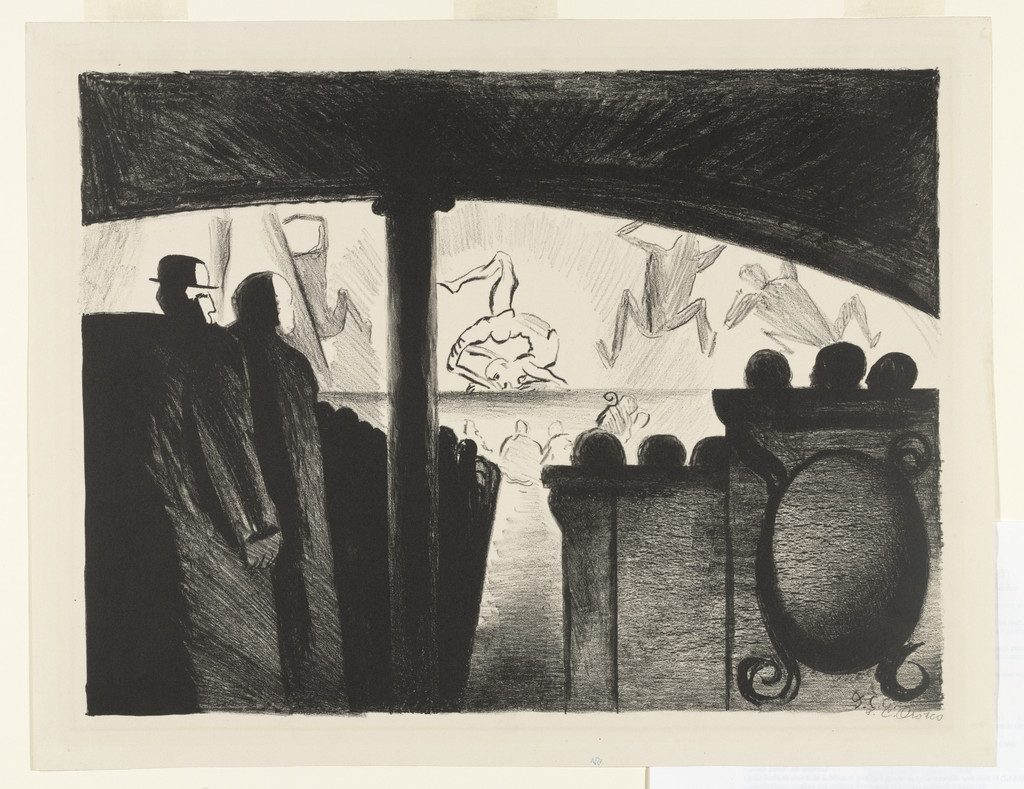 #34
#34
Vaudeville to Harlem
The strength of "Vaudeville in Harlem" lies in the balance between physical presence and surface construction. Orozco refuses the easy celebration of the revolution. Its figures, blacks and reds give the collective drama a critical gravity where historical violence remains visible without becoming a heroic spectacle. The surface remains the true place of the work: lines, colors and scale relationships lead the gaze without enclosing the image in a single narration. Dated 1928, the work is documented as lithograph. The associated source allows us to verify the title, attribution and context of conservation. The visual refers directly to the Museum of Modern Art notice (MoMA). This work is not offered for reproduction by Alpha Reproduction and remains subject to the conditions of the institution and the rights holders. The work belongs to its context, but it goes beyond it by making the look an active experience rather than a simple recognition of the subject.
Image: Museum of Modern Art (MoMA) · Documentary image; conditions of use to be checked with MoMA.
See the museum notice → #35
#35
Diego and me
Beneath its apparent evidence, "Diego and I" places the viewer in front of an image with multiple readings. Kahlo transforms the self-portrait, body memory and signs of Mexican identity into constructions of almost emblematic precision. Clothing, plants, animals and objects always extend the figure. The face must be looked at with its environment: posture, hairstyle, clothing and background construct a situated identity, crossed by family, social and political memory. Dated 1949, the work is documented as oil on canvas mounted on masonite, 29.5 x 22.4 cm. The associated source allows us to verify the title, attribution and context of conservation. The image and link come from the corresponding file in the Alpha Reproduction store. The button allows you to consult the proposed reproduction and its formats. Compared to the other pieces in the corpus, it shows how identity, territory and history constantly change form in Mexican art.
Image: Alpha Reproduction · Image and link from the Alpha Reproduction catalog.
See this reproduction →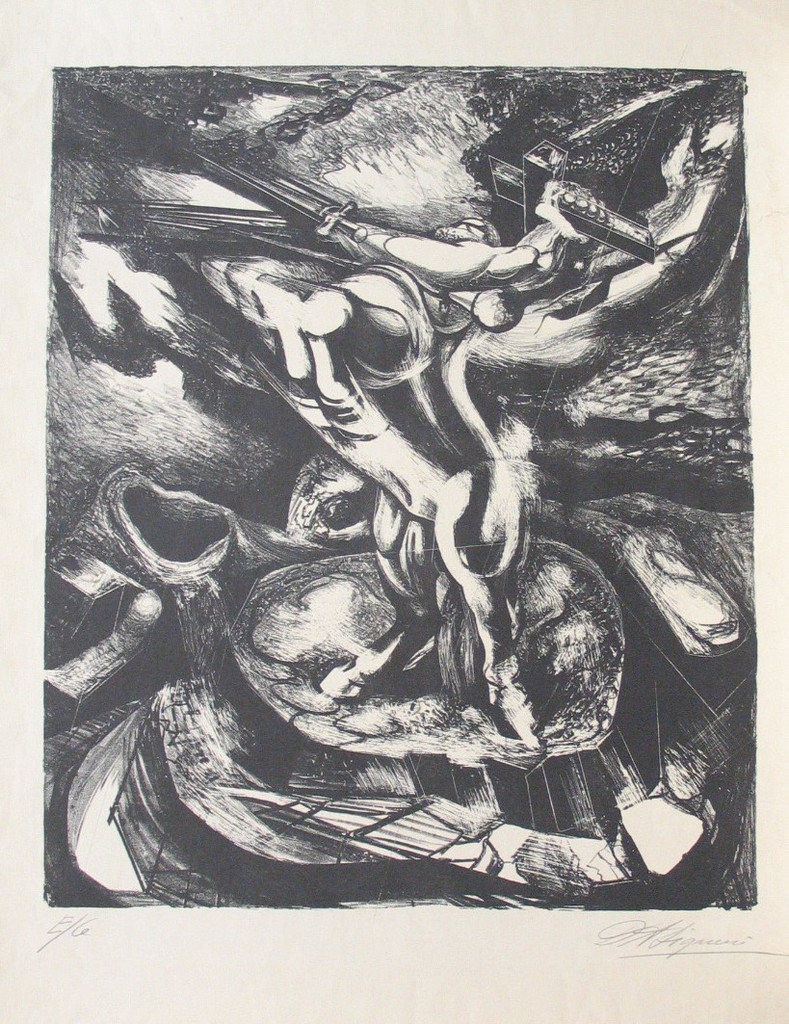 #36
#36
The Centaur of Conquest
With "The Centaur of Conquest", David Alfaro Siqueiros condenses an essential question in modern Mexican painting. Siqueiros seeks a monumental, dynamic image directly engaged in his time. Diagonals, shortcuts and industrial materials place the viewer at the heart of the action. The surface remains the true place of the work: lines, colors and scale relationships lead the eye without enclosing the image in a single narration. Dated 1944, the work is documented as lithograph. The associated source allows us to verify the title, attribution and conservation context. The visual refers directly to the Museum of Modern Art notice (MoMA). This work is not offered for reproduction by Alpha Reproduction and remains subject to the conditions of the institution and the rights holders. This tension between clarity and complexity gives it its lasting strength and allows us to understand the singular modernity of the Mexican image.
Image: Museum of Modern Art (MoMA) · Documentary image; conditions of use to be checked with MoMA.
See the museum notice → #37
#37
The loving embrace of the Universe, the Earth (Mexico), myself, Diego and Señor Xolotl
"The loving embrace of the Universe, the Earth (Mexico), myself, Diego and Señor Xolotl" shows how Frida Kahlo transforms a particular experience into a collective image. Kahlo transforms self-portrait, body memory and signs of Mexican identity into constructions of almost iconic precision. Clothing, plants, animals and objects always extend the figure. The composition distributes bodies as collective forces. Diagonals, gestures and contrasts give the conflict an immediate presence while leaving its historical interpretation open. Dated 1949, the work is documented as oil on canvas, 70 x 60.5 cm. The source associate allows you to check the title, attribution and conservation context. The image and link come from the corresponding file in the Alpha Reproduction store. The button allows you to consult the proposed reproduction and its formats. This articulation between concrete experience and visual structure explains the place of the work in the journey: it remains immediately readable without exhausting its meaning.
Image: Alpha Reproduction · Image and link from the Alpha Reproduction catalog.
See this reproduction → #38
#38
The Cockfighter
In "The Cockfighter", Saturnino Herran organizes a precise tension between body, symbol and space. Herran builds a modernity attentive to the faces, gestures and traditions of Mexico. Its flexible drawing and colorful chords avoid reducing the figures to simple folkloric types. The surface remains the true place of the work: lines, colors and scale ratios lead the gaze without enclosing the image in a single narration. Dated around 1912, the work is documented as an oil or pictorial technique on support. The associated source allows you to verify the title, attribution and context of conservation. The image and the link come from the sheet correspondent in the Alpha Reproduction store. The button allows you to consult the proposed reproduction and its formats. The work belongs to its context, but it goes beyond it by making the look an active experience rather than a simple recognition of the subject.
Image: Alpha Reproduction · Image and link from the Alpha Reproduction catalog.
See this reproduction → #39
#39
Roots
The strength of "Roots" lies in the balance between physical presence and surface construction. Kahlo transforms the self-portrait, body memory and signs of Mexican identity into constructions of almost emblematic precision. Clothing, plants, animals and objects always extend the figure. The surface remains the true place of the work: lines, colors and scale relationships lead the gaze without enclosing the image in a single narration. Dated 1943, the work is documented as a painting - a technique to be verified with the institution. Dated 1943, the work is documented as a painting - a technique to be verified with the institution. Dated 1943, the work is documented as a painting - technique to be verified with the institution. Dated 1943, the work is documented as a painting - technique to be verified with the institution. Dated 1943, the work is documented as a painting - technique to be verified with the institution. The associated source makes it possible to verify the title, attribution and conservation context. The image and the link come from the corresponding file in the Alpha Reproduction store. The button allows you to consult the proposed reproduction and its formats. Compared to the other pieces in the corpus, it shows how identity, territory and history constantly change form in Mexican art.
Image: Alpha Reproduction · Image and link from the Alpha Reproduction catalog.
See this reproduction → #40
#40
The creation
Beneath its apparent evidence, "La Création" places the viewer in front of an image with multiple readings. Rivera links the cubism learned in Europe to a public conception of the image. Frescoes, portraits and still lifes organize color into readable masses, capable of carrying a social and political history. The composition distributes bodies as collective forces. Diagonals, gestures and contrasts give the conflict an immediate presence while leaving its historical interpretation open. Dated 1922 -1923, the work is documented as oil or pictorial technique on support. The work is documented as oil or pictorial technique on support. Dated 1922 -1923, the work is documented as oil or pictorial technique on support. The associated source makes it possible to verify its title, attribution and conservation context. The image and link come from the corresponding file in the Alpha Reproduction store. The button allows you to consult the proposed reproduction and its formats. This tension between clarity and complexity gives it its lasting strength and allows us to understand the singular modernity of the Mexican image.
Image: Alpha Reproduction · Image and link from the Alpha Reproduction catalog.
See this reproduction → #41
#41
Self-portrait as Tehuana (Diego in my thoughts)
With "Self-portrait as Tehuana (Diego in My Thoughts)", Frida Kahlo condenses an essential question of modern Mexican painting. Kahlo transforms self-portraiture, body memory and signs of Mexican identity into constructions of almost iconic precision. Clothing, plants, animals and objects always extend the figure. The face must be looked at with its environment: posture, hairstyle, clothing and background construct a situated identity, crossed by family, social and political memory. Dated 1940-1943, the work is documented as a painting - technique to be verified with the institution. The associated source allows you to verify it title, attribution and conservation context. The image and link come from the corresponding file in the Alpha Reproduction store. The button allows you to consult the proposed reproduction and its formats. This articulation between concrete experience and visual structure explains the place of the work in the journey: it remains immediately readable without exhausting its meaning.
Image: Alpha Reproduction · Image and link from the Alpha Reproduction catalog.
See this reproduction →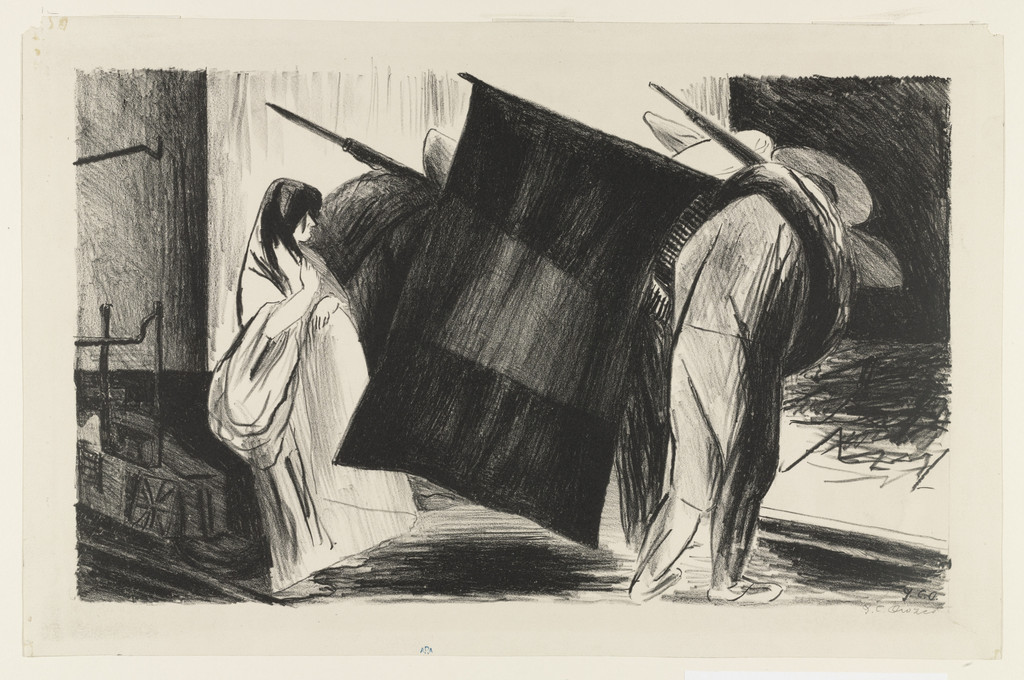 #42
#42
The flag
"The Flag" shows how José Clemente Orozco transforms a particular experience into a collective image. Orozco refuses the easy celebration of the revolution. Its figures, blacks and reds give the collective drama a critical gravity where historical violence remains visible without becoming a heroic spectacle. The composition distributes bodies as collective forces. Diagonals, gestures and contrasts give the conflict an immediate presence while leaving its historical interpretation open. Dated 1928, the work is documented as lithograph. The associated source allows us to verify its title, attribution and conservation context. The visual refers directly in the notice of Museum of Modern Art (MoMA). This work is not offered for reproduction by Alpha Reproduction and remains subject to the conditions of the institution and the rights holders. The work belongs to its context, but it goes beyond it by making the look an active experience rather than a simple recognition of the subject.
Image: Museum of Modern Art (MoMA) · Documentary image; conditions of use to be checked with MoMA.
See the museum notice → #43
#43
Self-portrait dedicated to Leon Trotsky (Between the curtains)
In "Self-portrait dedicated to Leon Trotsky (Between the curtains)", Frida Kahlo organizes a precise tension between body, symbol and space. Kahlo transforms the self-portrait, the memory of the body and the signs of Mexican identity into constructions of almost emblematic precision. Clothing, plants, animals and objects always extend the figure. The face must be looked at with its environment: posture, hairstyle, clothing and background construct a situated identity, crossed by family, social and political memory. Dated 1937, the work is documented as a painting - technique to be verified with the institution. The associated source allows you to verify the title, attribution and conservation context. The image and link come from the corresponding file in the Alpha Reproduction store. The button allows you to consult the proposed reproduction and its formats. Compared to the other pieces in the corpus, it shows how identity, territory and history constantly change form in Mexican art.
Image: Alpha Reproduction · Image and link from the Alpha Reproduction catalog.
See this reproduction →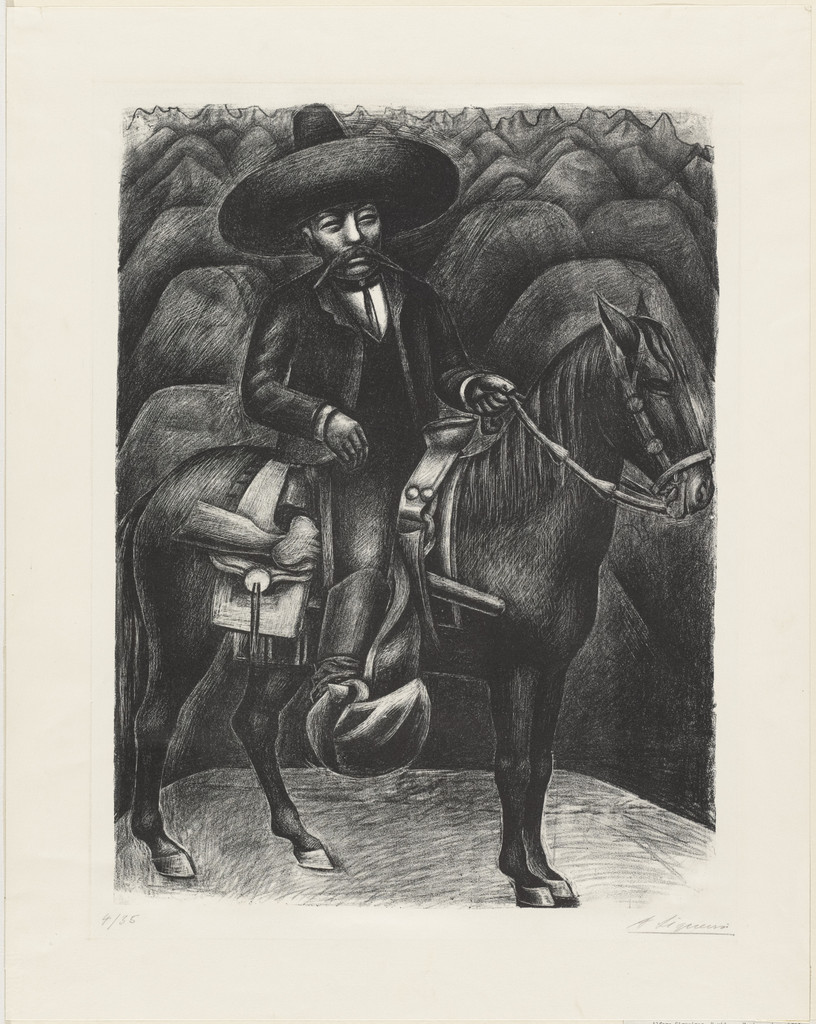 #44
#44
Zapata
The strength of "Zapata" lies in the balance between physical presence and surface construction. Siqueiros seeks a monumental, dynamic image directly engaged in his time. Diagonals, shortcuts and industrial materials place the viewer at the heart of the action. The composition distributes bodies as collective forces. Diagonals, gestures and contrasts give the conflict an immediate presence while leaving its historical interpretation open. Dated 1931, the work is documented as lithograph. The associated source allows us to verify its title, attribution and conservation context. The visual refers directly to the Museum of Modern notice Art (MoMA). This work is not offered for reproduction by Alpha Reproduction and remains subject to the conditions of the institution and the rights holders. This tension between clarity and complexity gives it its lasting strength and allows us to understand the singular modernity of the Mexican image.
Image: Museum of Modern Art (MoMA) · Documentary image; conditions of use to be checked with MoMA.
See the museum notice → #45
#45
The Dream (The Bed)
Beneath its apparent evidence, "The Dream (The Bed)" places the viewer in front of an image with multiple readings. Kahlo transforms the self-portrait, the memory of the body and the signs of Mexican identity into constructions of almost emblematic precision. Clothing, plants, animals and objects always extend the figure. The surface remains the true place of the work: lines, colors and scale ratios lead the gaze without enclosing the image in a single narration. Dated 1940, the work is documented as oil on canvas, 74 x 98.5 cm. The associated source allows us to verify the title, attribution and conservation context. The image and link come from the corresponding sheet in the Alpha Reproduction store. The button allows you to consult the proposed reproduction and its formats. This articulation between concrete experience and visual structure explains the place of the work in the journey: it remains immediately readable without exhausting its meaning.
Image: Alpha Reproduction · Image and link from the Alpha Reproduction catalog.
See this reproduction → #46
#46
The Offering
With "The Offering", Saturnino Herran condenses an essential question of modern Mexican painting. Herran builds a modernity attentive to the faces, gestures and traditions of Mexico. Its flexible drawing and colorful accords avoid reducing the figures to simple folkloric types. The surface remains the true place of the work: lines, colors and scale ratios lead the eye without enclosing the image in a single narration. Dated 1913, the work is documented as an oil or pictorial technique on support. The associated source allows us to verify the title, attribution and context of conservation. The associated source allows us to verify the title, attribution and context of conservation. The image and the link come from the corresponding sheet in the Alpha Reproduction store. The button allows you to consult the proposed reproduction and its formats. The work belongs to its context, but it goes beyond it by making the look an active experience rather than a simple recognition of the subject.
Image: Alpha Reproduction · Image and link from the Alpha Reproduction catalog.
See this reproduction → #47
#47
My nanny and me
"My Nanny and I" shows how Frida Kahlo transforms a particular experience into a collective image. Kahlo transforms self-portraiture, body memory and signs of Mexican identity into constructions of almost iconic precision. Clothing, plants, animals and objects always extend the figure. The surface remains the true place of the work: lines, colors and scale ratios lead the gaze without enclosing the image in a single narration. Dated 1937, the work is documented as oil on metal, 30.5 x 36.83 cm. The associated source allows us to verify the title, attribution and conservation context. The image and link come from from the corresponding file in the Alpha Reproduction store. The button allows you to consult the proposed reproduction and its formats. Compared to the other pieces in the corpus, it shows how identity, territory and history constantly change form in Mexican art.
Image: Alpha Reproduction · Image and link from the Alpha Reproduction catalog.
See this reproduction → #48
#48
The Café Terrace
In "The Café Terrace", Diego Rivera organizes a precise tension between body, symbol and space. Rivera links the cubism learned in Europe to a public conception of the image. Frescoes, portraits and still lifes organize color into readable masses, capable of carrying a social and political history. Ordinary objects are subject to a very constructed organization. Plans, contours and colors transform the table or interior into a laboratory of rhythm and volume. Dated 1915, the work is documented as an oil or pictorial technique on support. Dated 1915, the work is documented as an oil or pictorial technique on support. Dated 1915, the work is documented as an oil or pictorial technique on support. Dated 1915, the work is documented as an oil or pictorial technique on support. Dated 1915, the work is documented as an oil or pictorial technique on support. Dated 1915, the work is documented as an oil or pictorial technique on support. The associated source allows you to verify the title, attribution and context of conservation. The image and link come from from the corresponding file in the Alpha Reproduction store. The button allows you to consult the proposed reproduction and its formats. This tension between clarity and complexity gives it its lasting strength and allows us to understand the singular modernity of the Mexican image.
Image: Alpha Reproduction · Image and link from the Alpha Reproduction catalog.
See this reproduction → #49
#49
Memory (The Heart)
The strength of "Souvenir (The Heart)" lies in the balance between physical presence and surface construction. Kahlo transforms the self-portrait, body memory and signs of Mexican identity into constructions of almost emblematic precision. Clothing, plants, animals and objects always extend the figure. The surface remains the true place of the work: lines, colors and scale ratios lead the gaze without enclosing the image in a single narration. Dated 1937, the work is documented as oil on metal, 40 x 28 cm. The associated source allows us to verify the title, attribution and conservation context. The image and link come from the corresponding sheet in the Alpha Reproduction store. The button allows you to consult the proposed reproduction and its formats. This articulation between concrete experience and visual structure explains the place of the work in the journey: it remains immediately readable without exhausting its meaning.
Image: Alpha Reproduction · Image and link from the Alpha Reproduction catalog.
See this reproduction →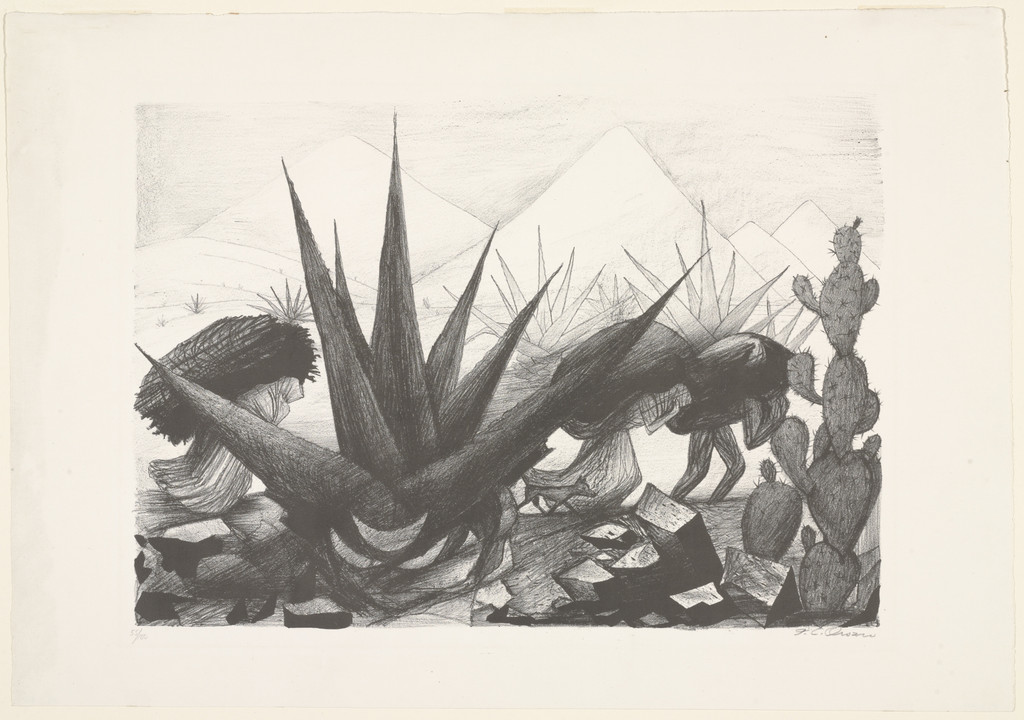 #50
#50
Mexican farmers at work
Beneath its apparent evidence, "Mexican Peasants at Work" places the viewer in front of an image with multiple readings. Orozco refuses the easy celebration of the revolution. Its figures, blacks and reds give the collective drama a critical gravity where historical violence remains visible without becoming a heroic spectacle. The composition distributes bodies as collective forces. Diagonals, gestures and contrasts give the conflict an immediate presence while leaving its historical interpretation open. Dated 1929, the work is documented as lithograph. The associated source allows us to verify its title, attribution and conservation context. The visual refers directly to the Museum of Modern Art (MoMA) notice. This work is not offered for reproduction by Alpha Reproduction and remains subject to the conditions of the institution and the rights holders. The work belongs to its context, but it goes beyond it by making the look an active experience rather than a simple recognition of the subject.
Image: Museum of Modern Art (MoMA) · Documentary image; conditions of use to be checked with MoMA.
See the museum notice →Landscapes, popular scenes and everyday objects connect rural Mexico to the experiences of modernity.
 #51
#51
The Bus
With "The Bus", Frida Kahlo condenses an essential question of modern Mexican painting. Kahlo transforms the self-portrait, the memory of the body and the signs of Mexican identity into constructions of almost emblematic precision. Clothing, plants, animals and objects always extend the figure. The surface remains the true place of the work: lines, colors and scale ratios lead the eye without enclosing the image in a single narration. Dated 1929, the work is documented as oil on canvas, 26 x 55.5 cm. The associated source allows you to verify the title, attribution and conservation context. The image and link come from the sheet correspondent in the Alpha Reproduction store. The button allows you to consult the proposed reproduction and its formats. Compared to other pieces in the corpus, it shows how identity, territory and history constantly change form in Mexican art.
Image: Alpha Reproduction · Image and link from the Alpha Reproduction catalog.
See this reproduction → #52
#52
Peacekeeper
"Guardian of Peace" shows how David Alfaro Siqueiros transforms a particular experience into a collective image. Siqueiros seeks a monumental, dynamic image directly engaged in his time. Diagonals, shortcuts and industrial materials place the viewer at the heart of the action. The surface remains the true place of the work: lines, colors and scale relationships lead the gaze without enclosing the image in a single narration. Dated 1945, the work is documented as lithograph. The associated source allows us to verify its title, attribution and conservation context. The visual refers directly to the Museum of Modern Art (MoMA) notice. This work is not offered for reproduction by Alpha Reproduction and remains subject to the conditions of the institution and the rights holders. This tension between clarity and complexity gives it its lasting strength and allows us to understand the singular modernity of the Mexican image.
Image: Museum of Modern Art (MoMA) · Documentary image; conditions of use to be checked with MoMA.
See the museum notice → #53
#53
Me and my parrots
In "Me and My Parrots", Frida Kahlo organizes a precise tension between body, symbol and space. Kahlo transforms the self-portrait, the memory of the body and the signs of Mexican identity into constructions of almost emblematic precision. Clothing, plants, animals and objects always extend the figure. The surface remains the true place of the work: lines, colors and scale ratios lead the gaze without enclosing the image in a single narration. Dated 1941, the work is documented as oil on canvas, 82 x 62.8 cm. The associated source allows us to verify the title, attribution and conservation context. The image and link come from the corresponding sheet in the Alpha Reproduction store. The button allows you to consult the proposed reproduction and its formats. This articulation between concrete experience and visual structure explains the place of the work in the journey: it remains immediately readable without exhausting its meaning.
Image: Alpha Reproduction · Image and link from the Alpha Reproduction catalog.
See this reproduction → #54
#54
Mango Creole
The strength of "The Mango Creole" lies in the balance between physical presence and surface construction. Herran builds a modernity attentive to the faces, gestures and traditions of Mexico. Its flexible drawing and colorful accords avoid reducing the figures to simple folkloric types. The surface remains the true place of the work: lines, colors and scale ratios lead the eye without enclosing the image in a single narration. Dated around 1915, the work is documented as an oil or pictorial technique on support. Dated around 1915, the work is documented as an oil or pictorial technique on support. The associated source allows you to verify the title, attribution and context of conservation. The image and link come from the sheet correspondent in the Alpha Reproduction store. The button allows you to consult the proposed reproduction and its formats. The work belongs to its context, but it goes beyond it by making the look an active experience rather than a simple recognition of the subject.
Image: Alpha Reproduction · Image and link from the Alpha Reproduction catalog.
See this reproduction → #55
#55
Self-portrait with a monkey - 1940
Beneath its apparent evidence, "Self-portrait with a monkey - 1940" places the viewer in front of an image with multiple readings. Kahlo transforms the self-portrait, body memory and signs of Mexican identity into constructions of almost emblematic precision. Clothing, plants, animals and objects always extend the figure. The face must be looked at with its environment: posture, hairstyle, clothing and background construct a situated identity, crossed by family, social and political memory. Dated 1940, the work is documented as oil on masonite, 40.6 x 30.5 cm. The associated source makes it possible to verify the title, attribution and context of conservation. The image and link come from the corresponding file in the Alpha Reproduction store. The button allows you to consult the proposed reproduction and its formats. Compared to the other pieces in the corpus, it shows how identity, territory and history constantly change form in Mexican art.
Image: Alpha Reproduction · Image and link from the Alpha Reproduction catalog.
See this reproduction → #56
#56
The Bock
With "Le Bock", Diego Rivera condenses an essential question of modern Mexican painting. Rivera links cubism learned in Europe to a public conception of the image. Frescoes, portraits and still lifes organize color into readable masses, capable of carrying a social and political history. Ordinary objects are subject to a very constructed organization. Plans, contours and colors transform the table or interior into a laboratory of rhythm and volume. Dated 1913, the work is subject to a very constructed organization. Plans, contours and colors transform the table or the interior into a laboratory of rhythm and volume. Dated 1913, the work is documented as an oil or pictorial technique on support. Dated 1913, the work is documented as an oil or pictorial technique on support. Dated 1913, the work is documented as an oil or pictorial technique on support. Dated 1913, the work is documented as an oil or pictorial technique on support. Dated 1913, the work is documented as an oil or pictorial technique on support. Dated 1913, the work is documented as an oil or pictorial technique on support. Dated 1913, the work is documented as an oil or the corresponding sheet in the Alpha Reproduction store. The button allows you to consult the proposed reproduction and its formats. This tension between clarity and complexity gives it its lasting strength and allows us to understand the singular modernity of the Mexican image.
Image: Alpha Reproduction · Image and link from the Alpha Reproduction catalog.
See this reproduction → #57
#57
Marxism will give health to the sick
"Marxism will give health to the sick" shows how Frida Kahlo transforms a particular experience into a collective image. Kahlo transforms self-portraiture, body memory and signs of Mexican identity into constructions of almost emblematic precision. Clothing, plants, animals and objects always extend the figure. The surface remains the true place of the work: lines, colors and scale relationships lead the gaze without enclosing the image in a single narration. Dated 1954, the work is documented as oil on masonite, 76 x 61 cm. The associated source allows us to verify its title, attribution and conservation context. The image and the link comes from the corresponding file in the Alpha Reproduction store. The button allows you to consult the proposed reproduction and its formats. This articulation between concrete experience and visual structure explains the place of the work in the journey: it remains immediately readable without exhausting its meaning.
Image: Alpha Reproduction · Image and link from the Alpha Reproduction catalog.
See this reproduction →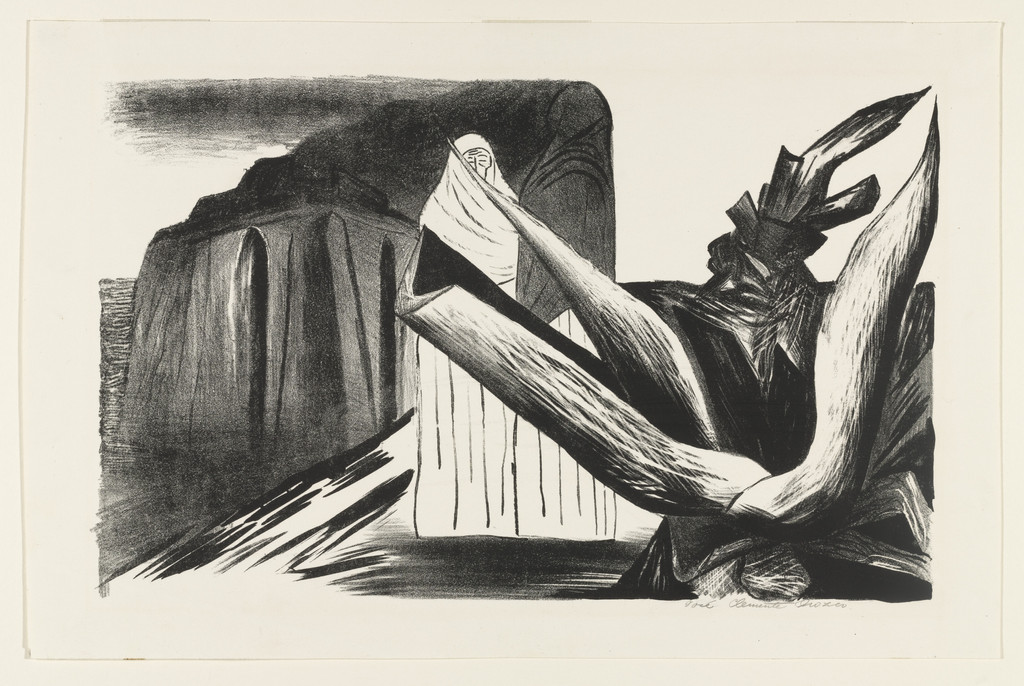 #58
#58
The Maguey
In "Le Maguey", José Clemente Orozco organizes a precise tension between body, symbol and space. Orozco refuses the easy celebration of the revolution. Its figures, blacks and reds give the collective drama a critical gravity where historical violence remains visible without becoming a heroic spectacle. The landscape does not only serve as a setting: vegetation, relief and light become a way of thinking about the territory, its uses and the stories attached to it. Dated 1929, the work is documented as lithograph. The associated source makes it possible to verify its title, attribution and conservation context. The visual refers directly to the Museum of Modern Art notice (MoMA). This work is not offered for reproduction by Alpha Reproduction and remains subject to the conditions of the institution and the rights holders. The work belongs to its context, but it goes beyond it by making the look an active experience rather than a simple recognition of the subject.
Image: Museum of Modern Art (MoMA) · Documentary image; conditions of use to be checked with MoMA.
See the museum notice → #59
#59
Viva la Vida, watermelons
The strength of "Viva la Vida, watermelons" lies in the balance between physical presence and surface construction. Kahlo transforms the self-portrait, the memory of the body and the signs of Mexican identity into constructions of almost emblematic precision. Clothing, plants, animals and objects always extend the figure. The surface remains the true place of the work: lines, colors and scale relationships lead the gaze without enclosing the image in a single narration. Dated 1954, the work is documented as a painting - a technique to be verified with the institution. The associated source makes it possible to verify the title, attribution and context of conservation. The image and link come from the corresponding file in the Alpha Reproduction store. The button allows you to consult the proposed reproduction and its formats. Compared to the other pieces in the corpus, it shows how identity, territory and history constantly change form in Mexican art.
Image: Alpha Reproduction · Image and link from the Alpha Reproduction catalog.
See this reproduction →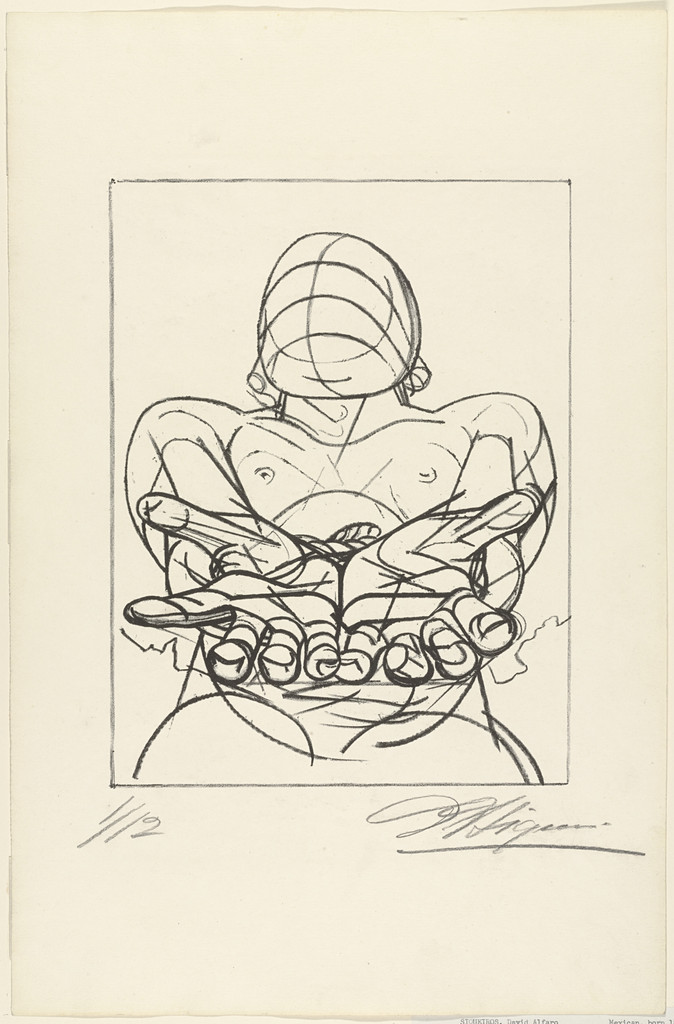 #60
#60
Our image
Beneath its apparent evidence, "Our Image" places the viewer in front of an image with multiple readings. Siqueiros seeks a monumental, dynamic image directly engaged in his time. Diagonals, shortcuts and industrial materials place the viewer at the heart of the action. The surface remains the true place of the work: lines, colors and scale ratios lead the eye without enclosing the image in a single narration. Dated 1947, the work is documented as lithograph. The associated source allows us to verify its title, attribution and conservation context. The visual refers directly to the notice from Museum of Modern Art (MoMA). This work is not not offered for reproduction by Alpha Reproduction and remains subject to the conditions of the institution and the rights holders. This tension between clarity and complexity gives it its lasting strength and allows us to understand the singular modernity of the Mexican image.
Image: Museum of Modern Art (MoMA) · Documentary image; conditions of use to be checked with MoMA.
See the museum notice → #61
#61
Self-portrait with velvet dress
With "Self-portrait with a Velvet Dress", Frida Kahlo condenses an essential question of modern Mexican painting. Kahlo transforms self-portraiture, body memory and signs of Mexican identity into constructions of almost emblematic precision. Clothing, plants, animals and objects always extend the figure. The face must be looked at with its environment: posture, hairstyle, clothing and background construct a situated identity, crossed by family, social and political memory. Dated 1926, the work constructs a situated identity, crossed by family, social and political memory. Dated 1926, the work is documented as oil on canvas, 79 x 58 cm. The associated source allows us to verify the title, attribution and context of conservation. The image and link come from the corresponding file in the Alpha Reproduction store. The button allows you to consult the proposed reproduction and its formats. This articulation between concrete experience and visual structure explains the place of the work in the journey: it remains immediately readable without exhausting its meaning.
Image: Alpha Reproduction · Image and link from the Alpha Reproduction catalog.
See this reproduction → #62
#62
The Legend of Volcanoes
"The Legend of Volcanoes" shows how Saturnino Herran transforms a particular experience into a collective image. Herran builds a modernity attentive to the faces, gestures and traditions of Mexico. Its flexible design and colorful accords avoid reducing the figures to simple folkloric types. The landscape does not only serve as a setting: vegetation, relief and light become a way of thinking about the territory, its uses and the stories attached to it. Dated around 1910, the work is documented as an oil or pictorial technique on support. Dated around 1910, the work is documented as an oil or pictorial technique on support. The associated source makes it possible to verify its title, attribution and conservation context. The image and the link come from the corresponding file in the Alpha Reproduction store. The button allows you to consult the proposed reproduction and its formats. The work belongs to its context, but it goes beyond it by making the look an active experience rather than a simple recognition of the subject.
Image: Alpha Reproduction · Image and link from the Alpha Reproduction catalog.
See this reproduction → #63
#63
Portrait of Alicia Galant
In "Portrait of Alicia Galant", Frida Kahlo organizes a precise tension between body, symbol and space. Kahlo transforms the self-portrait, the memory of the body and the signs of Mexican identity into constructions of almost emblematic precision. Clothing, plants, animals and objects always extend the figure. The face must be looked at with its environment: posture, hairstyle, clothing and background construct a situated identity, crossed by family, social and political memory. Dated 1927, the work is documented as oil on canvas, 107 x 93 cm. The associated source allows us to verify its title, attribution and conservation context. The image and the link come from the corresponding file in the Alpha Reproduction store. The button allows you to consult the proposed reproduction and its formats. Compared to the other pieces in the corpus, it shows how identity, territory and history constantly change form in Mexican art.
Image: Alpha Reproduction · Image and link from the Alpha Reproduction catalog.
See this reproduction → #64
#64
The Sugar Bowl and the Candles
The strength of "The Sugar Bowl and the Candles" lies in the balance between physical presence and surface construction. Rivera links the cubism learned in Europe to a public conception of the image. Frescoes, portraits and still lifes organize color into readable masses, capable of carrying a social and political history. The composition distributes bodies as collective forces. Diagonals, gestures and contrasts give the conflict an immediate presence while leaving its historical interpretation open. Dated 1917, the work is documented as oil or pictorial technique on support. The associated source allows us to verify the title, attribution and context of conservation. The image and link come from the corresponding file in the Alpha Reproduction store. The button allows you to consult the proposed reproduction and its formats. This tension between clarity and complexity gives it its lasting strength and allows us to understand the singular modernity of the Mexican image.
Image: Alpha Reproduction · Image and link from the Alpha Reproduction catalog.
See this reproduction → #65
#65
Portrait of Miguel N. Lira
Beneath its apparent evidence, "Portrait of Miguel N. Lira" places the viewer in front of an image with multiple readings. Kahlo transforms the self-portrait, body memory and signs of Mexican identity into constructions of almost emblematic precision. Clothing, plants, animals and objects always extend the figure. The face must be looked at with its environment: posture, hairstyle, clothing and background construct a situated identity, crossed by family, social and political memory. Dated 1927, the work is documented as a painting - technique to be verified with the institution. Dated 1927, the work is documented as a painting - technique to be verified with the institution. The associated source makes it possible to verify its title, attribution and conservation context. The image and link come from the corresponding file in the Alpha Reproduction store. The button allows you to consult the proposed reproduction and its formats. This articulation between concrete experience and visual structure explains the place of the work in the journey: it remains immediately readable without exhausting its meaning.
Image: Alpha Reproduction · Image and link from the Alpha Reproduction catalog.
See this reproduction →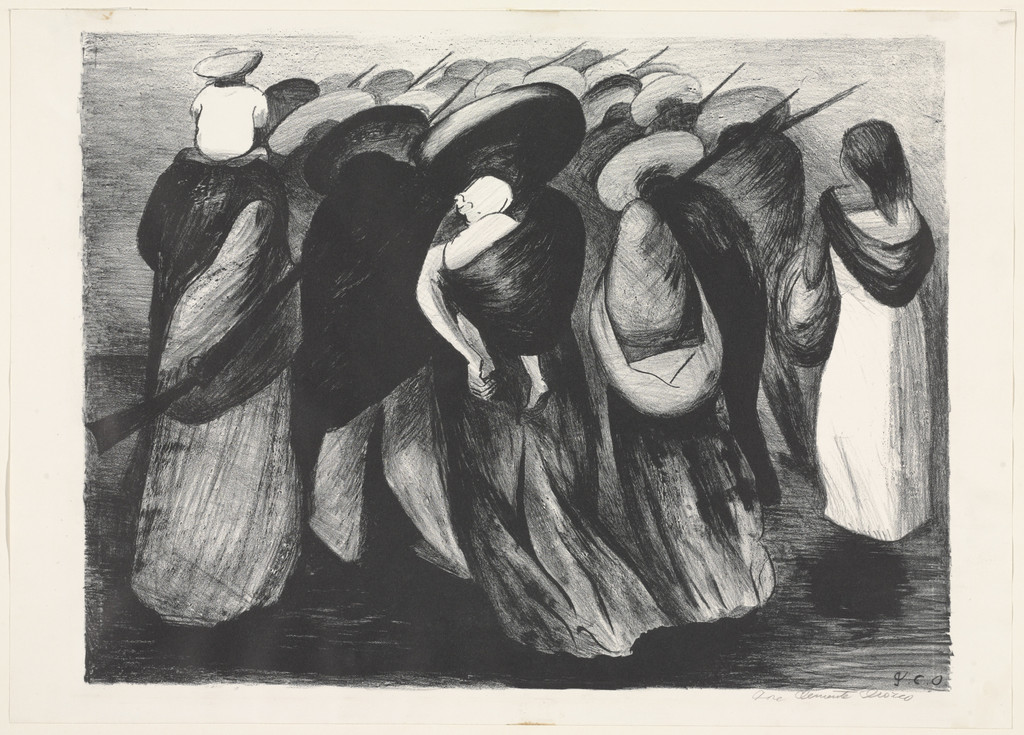 #66
#66
The Rearguard
With "The Rearguard", José Clemente Orozco condenses an essential question of modern Mexican painting. Orozco refuses the easy celebration of the revolution. Its figures, blacks and reds give the collective drama a critical gravity where historical violence remains visible without becoming a heroic spectacle. The composition distributes bodies as collective forces. Diagonals, gestures and contrasts give the conflict an immediate presence while leaving its historical interpretation open. Dated 1929, the work is documented as lithograph. The associated source allows us to verify its title, attribution and conservation context. The visual refers directly to the Museum of Modern Art (MoMA) notice. This work is not offered for reproduction by Alpha Reproduction and remains subject to the conditions of the institution and the rights holders. The work belongs to its context, but it goes beyond it by making the look an active experience rather than a simple recognition of the subject.
Image: Museum of Modern Art (MoMA) · Documentary image; conditions of use to be checked with MoMA.
See the museum notice → #67
#67
Portrait of Alejandro Gomez Arias
"Portrait of Alejandro Gomez Arias" shows how Frida Kahlo transforms a particular experience into a collective image. Kahlo transforms self-portraiture, body memory and signs of Mexican identity into constructions of almost iconic precision. Clothing, plants, animals and objects always extend the figure. The face must be looked at with its environment: posture, hairstyle, clothing and background construct a situated identity, crossed by family, social and political memory. Dated 1928, the work is documented as oil on wood, 61.5 x 41 cm. The associated source allows us to verify the title, attribution and context of conservation. The image and link come from the corresponding file in the Alpha Reproduction store. The button allows you to consult the proposed reproduction and its formats. Compared to the other pieces in the corpus, it shows how identity, territory and history constantly change form in Mexican art.
Image: Alpha Reproduction · Image and link from the Alpha Reproduction catalog.
See this reproduction →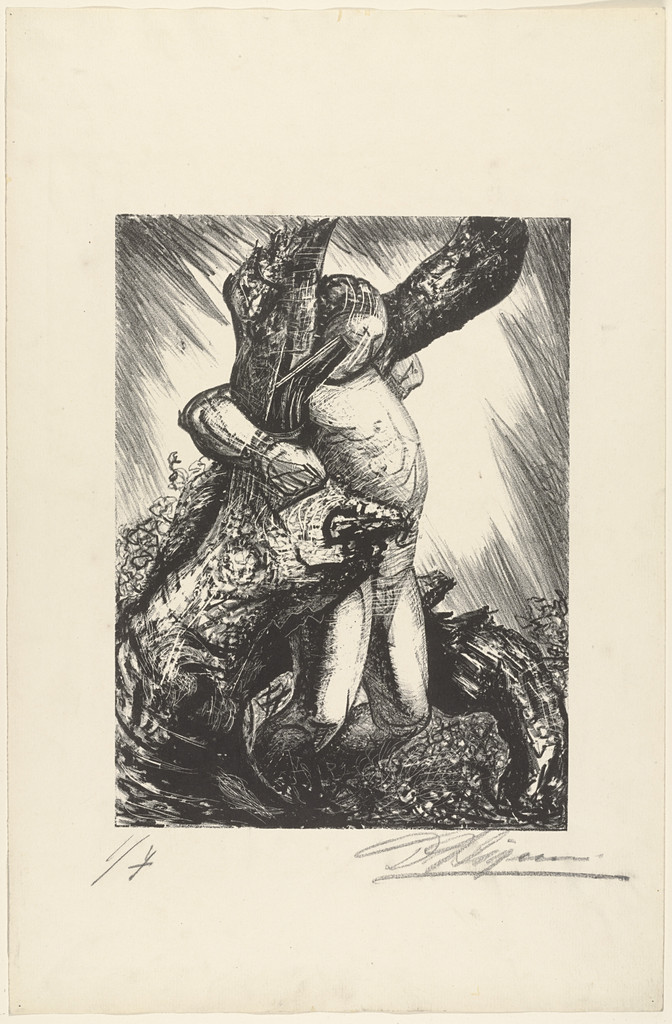 #68
#68
Latin America
In "Latin America", David Alfaro Siqueiros organizes a precise tension between body, symbol and space. Siqueiros seeks a monumental, dynamic image directly engaged in his time. Diagonals, shortcuts and industrial materials place the viewer at the heart of the action. The surface remains the true place of the work: lines, colors and scale relationships lead the eye without enclosing the image in a single narration. Dated 1947, the work is documented as lithograph. The associated source allows us to verify the title, attribution and conservation context. The visual refers directly to the notice from Museum of Modern Art (MoMA). This work not offered for reproduction by Alpha Reproduction and remains subject to the conditions of the institution and rights holders. This tension between clarity and complexity gives it its lasting strength and allows us to understand the singular modernity of the Mexican image.
Image: Museum of Modern Art (MoMA) · Documentary image; conditions of use to be checked with MoMA.
See the museum notice → #69
#69
Portrait of Cristina, my sister
The strength of "Portrait of Cristina, My Sister" lies in the balance between physical presence and surface construction. Kahlo transforms self-portraiture, body memory and signs of Mexican identity into constructions of almost emblematic precision. Clothing, plants, animals and objects always extend the figure. The face must be looked at with its environment: posture, hairstyle, clothing and background construct a situated identity, crossed by family, social and political memory. Dated 1928, the work is documented as oil on wood, 99 x 81.5 cm. The associated source allows us to verify its title, attribution and conservation context. The image and link come from the corresponding file in the Alpha Reproduction store. The button allows you to consult the proposed reproduction and its formats. This articulation between concrete experience and visual structure explains the place of the work in the journey: it remains immediately readable without exhausting its meaning.
Image: Alpha Reproduction · Image and link from the Alpha Reproduction catalog.
See this reproduction → #70
#70
The Last Song
Beneath its apparent evidence, "The Last Song" places the viewer in front of an image with multiple readings. Herran builds a modernity attentive to the faces, gestures and traditions of Mexico. Its flexible drawing and colorful chords avoid reducing the figures to simple folkloric types. The surface remains the true place of the work: lines, colors and scale ratios lead the eye without enclosing the image in a single narration. Dated around 1914, the work is documented as an oil or pictorial technique on support. Dated around 1914, the work is documented as an oil or pictorial technique on support. The associated source allows you to verify the title, attribution and conservation context. The associated source allows you to verify the title, attribution and conservation context. The image and link come from the sheet correspondent in the Alpha Reproduction store. The button allows you to consult the proposed reproduction and its formats. The work belongs to its context, but it goes beyond it by making the look an active experience rather than a simple recognition of the subject.
Image: Alpha Reproduction · Image and link from the Alpha Reproduction catalog.
See this reproduction → #71
#71
Diego and Frida
With "Diego and Frida", Frida Kahlo condenses an essential question of modern Mexican painting. Kahlo transforms self-portraits, body memory and signs of Mexican identity into constructions of almost emblematic precision. Clothing, plants, animals and objects always extend the figure. The face must be looked at with its environment: posture, hairstyle, clothing and background construct a situated identity, crossed by family, social and political memory. Dated 1929-1944, the work is documented as a painting - a technique to be verified with the institution. Dated 1929-1944, the work is documented as a painting - technique to be verified with the institution. The associated source allows you to verify the title, attribution and context conservation. The image and link come from the corresponding file in the Alpha Reproduction store. The button allows you to consult the proposed reproduction and its formats. Compared to the other pieces in the corpus, it shows how identity, territory and history constantly change form in Mexican art.
Image: Alpha Reproduction · Image and link from the Alpha Reproduction catalog.
See this reproduction → #72
#72
Montserrat
"Montserrat" shows how Diego Rivera transforms a particular experience into a collective image. Rivera connects cubism learned in Europe to a public conception of the image. Frescoes, portraits and still lifes organize color into readable masses, capable of carrying a social and political history. The surface remains the true place of the work: lines, colors and scale relationships lead the gaze without enclosing the image in a single narration. Dated 1914, the work remains the true place of the work: lines, colors and scale relationships lead the gaze without enclosing the image in a single narration. Dated 1914, the work is documented as an oil or pictorial technique on support. The associated source allows you to verify the title, attribution and conservation context. The associated source allows you to verify the title, attribution and conservation context. The image and link come from the sheet correspondent in the Alpha Reproduction store. The button allows you to consult the proposed reproduction and its formats. This tension between clarity and complexity gives it its lasting strength and allows us to understand the singular modernity of the Mexican image.
Image: Alpha Reproduction · Image and link from the Alpha Reproduction catalog.
See this reproduction → #73
#73
Portrait of Virginia (Little Girl)
In "Portrait of Virginia (Little Girl)", Frida Kahlo organizes a precise tension between body, symbol and space. Kahlo transforms the self-portrait, the memory of the body and the signs of Mexican identity into constructions of almost emblematic precision. Clothing, plants, animals and objects always extend the figure. The face must be looked at with its environment: posture, hairstyle, clothing and background construct a situated identity, crossed by family, social and political memory. Dated 1929, the work constructs a situated identity, crossed by family, social and political memory. Dated 1929, the work is documented as oil on masonite, 84 x 68 cm. The associated source makes it possible to verify its title, attribution and conservation context. The image and link come from the corresponding file in the Alpha Reproduction store. The button allows you to consult the proposed reproduction and its formats. This articulation between concrete experience and visual structure explains the place of the work in the journey: it remains immediately readable without exhausting its meaning.
Image: Alpha Reproduction · Image and link from the Alpha Reproduction catalog.
See this reproduction →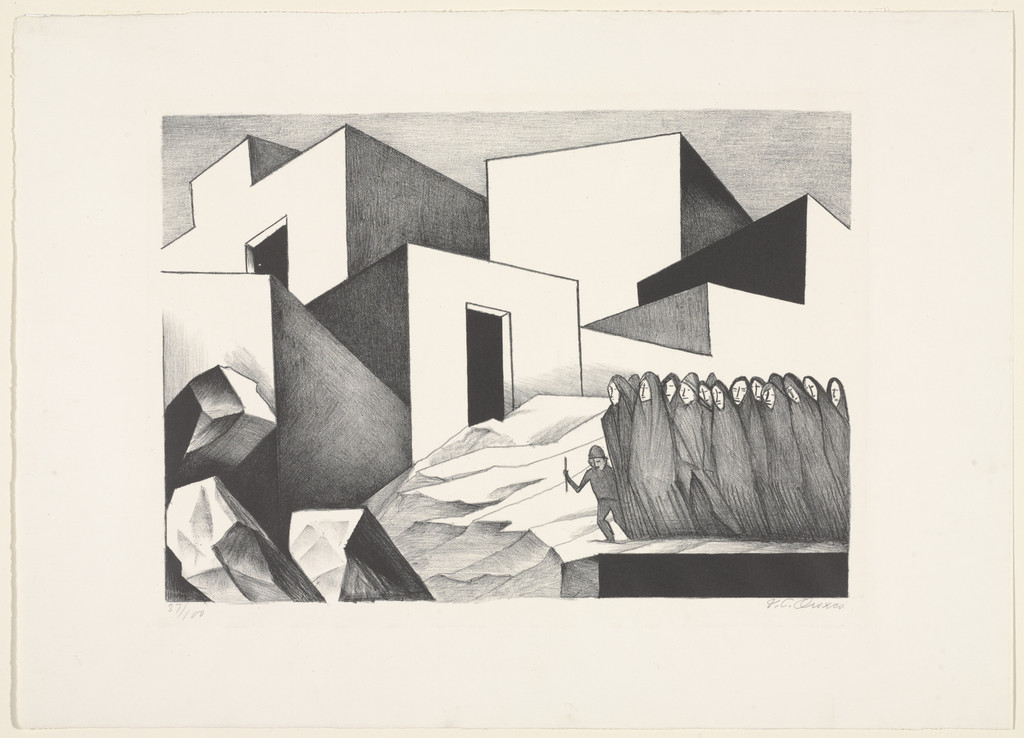 #74
#74
Mexican village
The strength of "Mexican Village" lies in the balance between physical presence and surface construction. Orozco refuses the easy celebration of the revolution. Its figures, blacks and reds give the collective drama a critical gravity where historical violence remains visible without becoming a heroic spectacle. The landscape does not only serve as a setting: vegetation, relief and light become a way of thinking about the territory, its uses and the stories attached to it. Dated 1929, the work is documented as lithograph. The associated source makes it possible to verify its title, attribution and conservation context. The visual refers directly to the Museum of notice Modern Art (MoMA). This work is not offered for reproduction by Alpha Reproduction and remains subject to the conditions of the institution and the rights holders. The work belongs to its context, but it goes beyond it by making the look an active experience rather than a simple recognition of the subject.
Image: Museum of Modern Art (MoMA) · Documentary image; conditions of use to be checked with MoMA.
See the museum notice → #75
#75
Self-portrait - Time flies
Beneath its apparent evidence, "Self-portrait - Time flies" places the viewer in front of an image with multiple readings. Kahlo transforms the self-portrait, body memory and signs of Mexican identity into constructions of almost emblematic precision. Clothing, plants, animals and objects always extend the figure. The face must be looked at with its environment: posture, hairstyle, clothing and background construct a situated identity, crossed by family, social and political memory. Dated 1929, the work is documented as oil on masonite, 77.5 x 61 cm. The associated source allows us to verify its title, attribution and context conservation. The image and link come from the corresponding file in the Alpha Reproduction store. The button allows you to consult the proposed reproduction and its formats. Compared to the other pieces in the corpus, it shows how identity, territory and history constantly change form in Mexican art.
Image: Alpha Reproduction · Image and link from the Alpha Reproduction catalog.
See this reproduction →The latest works narrow the journey around the symbol, the wound, the material and the inner gaze.
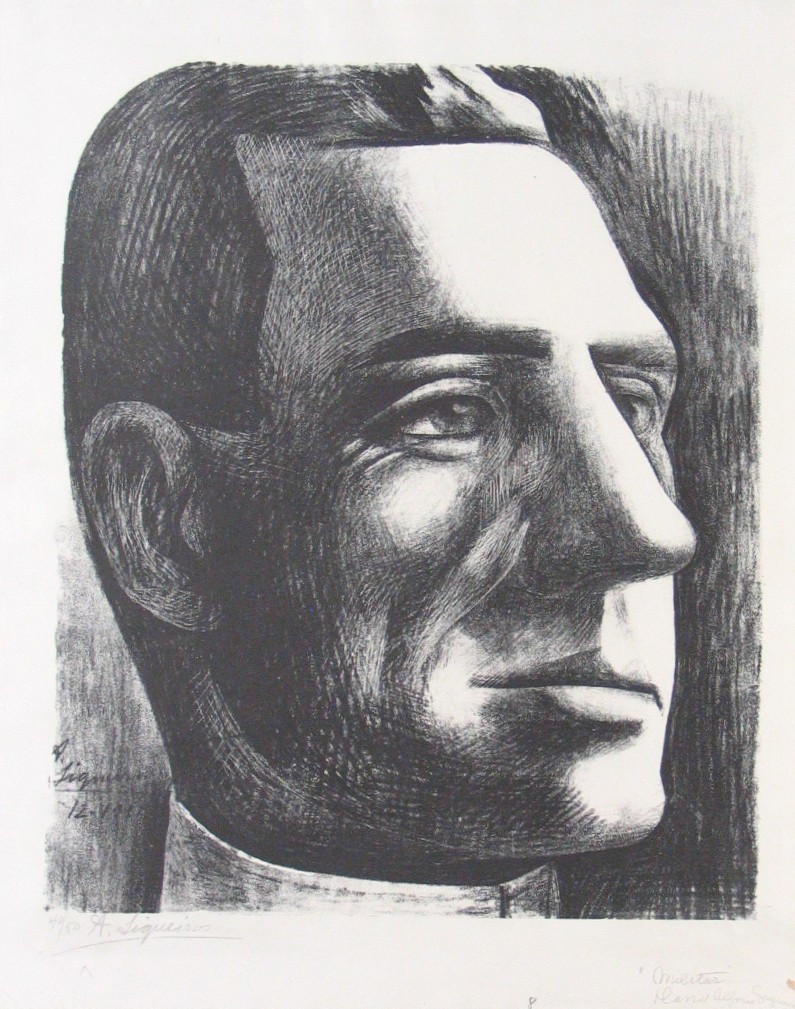 #76
#76
Soldier
With "Soldier", David Alfaro Siqueiros condenses an essential question in modern Mexican painting. Siqueiros seeks a monumental, dynamic image directly engaged in his time. Diagonals, shortcuts and industrial materials place the viewer at the heart of the action. The composition distributes bodies as collective forces. Diagonals, gestures and contrasts give the conflict an immediate presence while leaving its historical interpretation open. Dated 1937, the work is documented as lithograph. The associated source allows us to verify its title, attribution and conservation context. The visual refers directly to the Museum notice of Modern Art (MoMA). This work is not offered for reproduction by Alpha Reproduction and remains subject to the conditions of the institution and the rights holders. This tension between clarity and complexity gives it its lasting strength and allows us to understand the singular modernity of the Mexican image.
Image: Museum of Modern Art (MoMA) · Documentary image; conditions of use to be checked with MoMA.
See the museum notice → #77
#77
Two women
"Two Women" shows how Frida Kahlo transforms a particular experience into a collective image. Kahlo transforms self-portraiture, body memory and signs of Mexican identity into constructions of almost iconic precision. Clothing, plants, animals and objects always extend the figure. The face must be looked at with its environment: posture, hairstyle, clothing and background construct a situated identity, crossed by family, social and political memory. Dated 1929, the work is documented as a painting - technique to be verified with the institution. Dated 1929, the work is documented as a painting - technique to be verified with the institution. Dated 1929, the work is documented as a painting - technique to be verified with the institution. The associated source makes it possible to verify the title, attribution and context of conservation. The image and link come from the corresponding file in the Alpha Reproduction store. The button allows you to consult the proposed reproduction and its formats. This articulation between concrete experience and visual structure explains the place of the work in the journey: it remains immediately readable without exhausting its meaning.
Image: Alpha Reproduction · Image and link from the Alpha Reproduction catalog.
See this reproduction → #78
#78
Portrait of Don Artemio del Valle-Arizpe
In "Portrait of Don Artemio del Valle-Arizpe", Saturnino Herran organizes a precise tension between body, symbol and space. Herran builds a modernity attentive to the faces, gestures and traditions of Mexico. Its flexible design and colorful accords avoid reducing figures to simple folkloric types. The face must be looked at with its environment: posture, hairstyle, clothing and background construct a situated identity, crossed by family, social and political memory. Dated around 1917, the work is documented as an oil or pictorial technique on support. Dated around 1917, the work is documented as an oil or pictorial technique on support. The associated source makes it possible to verify its title, attribution and conservation context. The image and link come from the corresponding file in the Alpha Reproduction store. The button allows you to consult the proposed reproduction and its formats. The work belongs to its context, but it goes beyond it by making the look an active experience rather than a simple recognition of the subject.
Image: Alpha Reproduction · Image and link from the Alpha Reproduction catalog.
See this reproduction → #79
#79
Portrait of a woman in white
The strength of "Portrait of a Woman in White" lies in the balance between physical presence and surface construction. Kahlo transforms self-portraiture, body memory and signs of Mexican identity into constructions of almost iconic precision. Clothing, plants, animals and objects always extend the figure. The face must be looked at with its environment: posture, hairstyle, clothing and background construct a situated identity, crossed by family, social and political memory. Dated 1930, the work constructs a situated identity, crossed by family, social and political memory. Dated 1930, the work is documented as oil on canvas, 119 x 81 cm. The associated source makes it possible to verify its title, attribution and conservation context. The image and link come from the corresponding file in the Alpha Reproduction store. The button allows you to consult the proposed reproduction and its formats. Compared to the other pieces in the corpus, it shows how identity, territory and history constantly change form in Mexican art.
Image: Alpha Reproduction · Image and link from the Alpha Reproduction catalog.
See this reproduction → #80
#80
Cubist still life I
Beneath its apparent evidence, "Cubist Still Life I" places the viewer in front of an image with multiple readings. Rivera links the cubism learned in Europe to a public conception of the image. Frescoes, portraits and still lifes organize color into readable masses, capable of carrying a social and political history. Ordinary objects are subject to a very constructed organization. Plans, contours and colors transform the table or interior into a laboratory of rhythm and volume. Dated 1913, the work is subject to a very constructed organization. Plans, contours and colors transform the table or the interior into a laboratory of rhythm and volume. Dated 1913, the work is subject to a very constructed organization. Plans, contours and colors transform the table or the interior into a laboratory of rhythm and volume. Dated 1913, the work is subject to a very constructed organization. Plans, contours and colors transform the table or the interior into a laboratory of rhythm and volume. Dated 1913, the work is documented as an oil or pictorial technique on support. Dated 1913, the work is documented as an oil or pictorial technique on support. Dated 1913, the work is documented as an oil or pictorial link come from the corresponding file in the Alpha Reproduction store. The button allows you to consult the proposed reproduction and its formats. This tension between clarity and complexity gives it its lasting strength and allows us to understand the singular modernity of the Mexican image.
Image: Alpha Reproduction · Image and link from the Alpha Reproduction catalog.
See this reproduction → #81
#81
Self-portrait - 1930
With "Self-portrait - 1930", Frida Kahlo condenses an essential question of modern Mexican painting. Kahlo transforms self-portraiture, body memory and signs of Mexican identity into constructions of almost emblematic precision. Clothing, plants, animals and objects always extend the figure. The face must be looked at with its environment: posture, hairstyle, clothing and background construct a situated identity, crossed by family, social and political memory. Dated 1930, the work is documented as oil on canvas, 65 x 54 cm. The associated source allows us to verify its title, attribution and conservation context. The image and the link comes from the corresponding file in the Alpha Reproduction store. The button allows you to consult the proposed reproduction and its formats. This articulation between concrete experience and visual structure explains the place of the work in the journey: it remains immediately readable without exhausting its meaning.
Image: Alpha Reproduction · Image and link from the Alpha Reproduction catalog.
See this reproduction →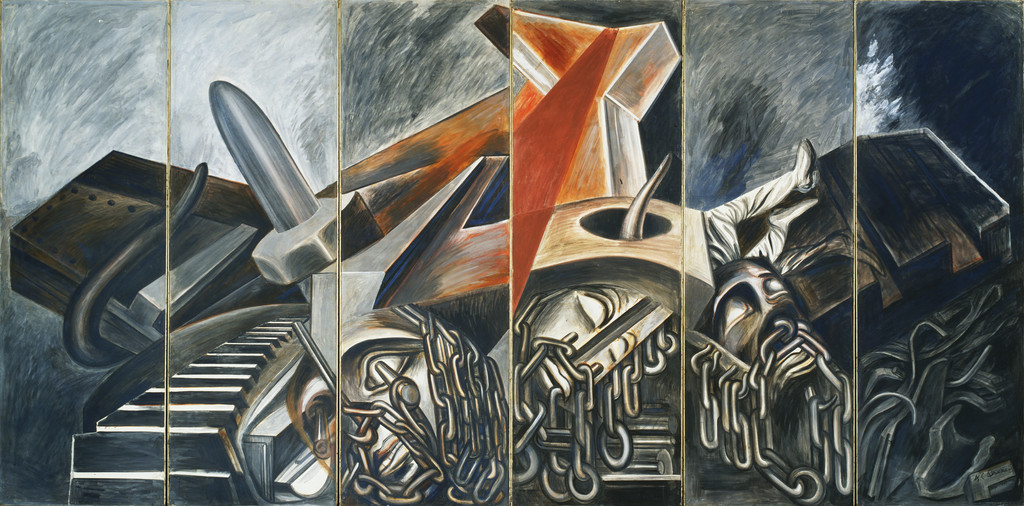 #82
#82
Dive bomber and assault tank
"Bomber in a dive and tank" shows how José Clemente Orozco transforms a particular experience into a collective image. Orozco refuses the easy celebration of the revolution. Its figures, blacks and reds give the collective drama a critical gravity where historical violence remains visible without becoming a heroic spectacle. The surface remains the true place of the work: lines, colors and scale relationships lead the gaze without enclosing the image in a single narration. Dated 1940, the work remains the true place of the work: lines, colors and scale relationships lead the gaze without enclosing the image in a single narration. Dated 1940, the work remains the true place of the work: lines, colors and scale relationships lead the gaze without enclosing the image in a single narration. Dated 1940, the work remains the true place of the work: lines, colors and scale relationships lead the gaze without enclosing the image in a single narration. Dated 1940, the work is documented as a fresco, six panels. The associated source allows us to verify its title, attribution and conservation context. The visual refers directly to the notice from Museum of Modern Art (MoMA). This work is not offered for reproduction by Alpha Reproduction and remains subject to the conditions of the institution and the rights holders. The work belongs to its context, but it goes beyond it by making the look an active experience rather than a simple recognition of the subject.
Image: Museum of Modern Art (MoMA) · Documentary image; conditions of use to be checked with MoMA.
See the museum notice → #83
#83
Portrait of Dr Leo Eloesser
In "Portrait of Dr. Leo Eloesser", Frida Kahlo organizes a precise tension between body, symbol and space. Kahlo transforms the self-portrait, the memory of the body and the signs of Mexican identity into constructions of almost emblematic precision. Clothing, plants, animals and objects always extend the figure. The face must be looked at with its environment: posture, hairstyle, clothing and background construct a situated identity, crossed by family, social and political memory. Dated 1931, the work is documented as oil on masonite, 85.1 x 59.7 cm. The associated source makes it possible to verify its title, attribution and conservation context. The image and link come from the corresponding file in the Alpha Reproduction store. The button allows you to consult the proposed reproduction and its formats. Compared to the other pieces in the corpus, it shows how identity, territory and history constantly change form in Mexican art.
Image: Alpha Reproduction · Image and link from the Alpha Reproduction catalog.
See this reproduction →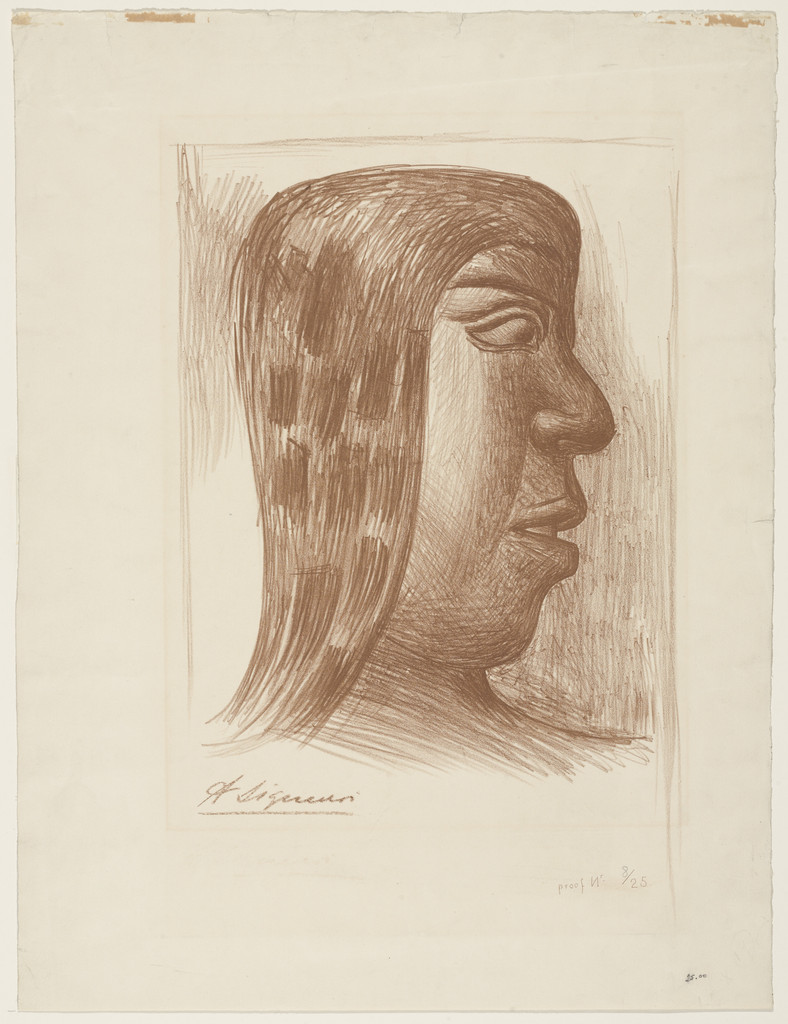 #84
#84
Indian head
The strength of "Tête d’Indien" lies in the balance between physical presence and surface construction. Siqueiros seeks a monumental, dynamic image directly engaged in his time. Diagonals, shortcuts and industrial materials place the viewer at the heart of the action. The surface remains the true place of the work: lines, colors and scale ratios lead the eye without enclosing the image in a single narration. Dated s. d., the work is documented as lithograph. The associated source allows us to verify its title, attribution and conservation context. The visual refers directly to the notice from Museum of Modern Art (MoMA). This work is not not offered for reproduction by Alpha Reproduction and remains subject to the conditions of the institution and the rights holders. This tension between clarity and complexity gives it its lasting strength and allows us to understand the singular modernity of the Mexican image.
Image: Museum of Modern Art (MoMA) · Documentary image; conditions of use to be checked with MoMA.
See the museum notice → #85
#85
Portrait of Eva Frederick
Beneath its apparent evidence, "Portrait of Eva Frederick" places the viewer in front of an image with multiple readings. Kahlo transforms the self-portrait, body memory and signs of Mexican identity into constructions of almost emblematic precision. Clothing, plants, animals and objects always extend the figure. The face must be looked at with its environment: posture, hairstyle, clothing and background construct a situated identity, crossed by family, social and political memory. Dated 1931, the work is documented as oil on canvas, 87 x 44 cm. The associated source allows us to verify its title, attribution and conservation context. The image and link come from the corresponding file in the Alpha Reproduction store. The button allows you to consult the proposed reproduction and its formats. This articulation between concrete experience and visual structure explains the place of the work in the journey: it remains immediately readable without exhausting its meaning.
Image: Alpha Reproduction · Image and link from the Alpha Reproduction catalog.
See this reproduction → #86
#86
Tehuana
With "Tehuana", Saturnino Herran condenses an essential question of modern Mexican painting. Herran builds a modernity attentive to the faces, gestures and traditions of Mexico. Its flexible design and colorful accords avoid reducing figures to simple folkloric types. The face must be looked at with its environment: posture, hairstyle, clothing and background construct a situated identity, crossed by family, social and political memory. Dated 1914, the work is documented as an oil or pictorial technique on support. The associated source makes it possible to verify its title, attribution and conservation context. The associated source allows us to verify its title, attribution and context. corresponding sheet in the Alpha Reproduction store. The button allows you to consult the proposed reproduction and its formats. The work belongs to its context, but it goes beyond it by making the look an active experience rather than a simple recognition of the subject.
Image: Alpha Reproduction · Image and link from the Alpha Reproduction catalog.
See this reproduction → #87
#87
Portrait of Luther Burbank
"Portrait of Luther Burbank" shows how Frida Kahlo transforms a particular experience into a collective image. Kahlo transforms self-portraiture, body memory and signs of Mexican identity into constructions of almost iconic precision. Clothing, plants, animals and objects always extend the figure. The face must be looked at with its environment: posture, hairstyle, clothing and background construct a situated identity, crossed by family, social and political memory. Dated 1931, the work is documented as oil on masonite, 87 x 62 cm. The associated source makes it possible to verify its title, attribution and conservation context. The image and link come from the corresponding file in the Alpha Reproduction store. The button allows you to consult the proposed reproduction and its formats. Compared to the other pieces in the corpus, it shows how identity, territory and history constantly change form in Mexican art.
Image: Alpha Reproduction · Image and link from the Alpha Reproduction catalog.
See this reproduction → #88
#88
Cubist still life II
In "Cubist Still Life II", Diego Rivera organizes a precise tension between body, symbol and space. Rivera links cubism learned in Europe to a public conception of the image. Frescoes, portraits and still lifes organize color into readable masses, capable of carrying a social and political history. Ordinary objects are subject to a very constructed organization. Plans, contours and colors transform the table or interior into a laboratory of rhythm and volume. Dated 1915, the work is documented as an oil or pictorial technique on support. Dated 1915, the work is documented as an oil or pictorial technique on support. Dated 1915, the work is documented as an oil or pictorial technique on support. Dated 1915, the work is documented as an oil or pictorial technique on support. Dated 1915, the work is documented as an oil or pictorial technique on support. Dated 1915, the work is documented as an oil or pictorial technique on support. Dated 1915, the work is documented as an oil or pictorial technique on support. The associated source makes it possible to verify the title, attribution and context of conservation. The image and the link come from the corresponding file in the Alpha Reproduction store. The button allows you to consult the proposed reproduction and its formats. This tension between clarity and complexity gives it its lasting strength and allows us to understand the singular modernity of the Mexican image.
Image: Alpha Reproduction · Image and link from the Alpha Reproduction catalog.
See this reproduction → #89
#89
My dress hangs there
The strength of "My Dress Hangs There" lies in the balance between physical presence and surface construction. Kahlo transforms the self-portrait, body memory and signs of Mexican identity into constructions of almost iconic precision. Clothing, plants, animals and objects always extend the figure. The surface remains the true place of the work: lines, colors and scale ratios lead the gaze without enclosing the image in a single narration. Dated 1933, the work is documented as oil and collage on masonite, 45.7 x 49.5 cm. The associated source allows us to verify the title, attribution and conservation context. The image and the link comes from the corresponding file in the Alpha Reproduction store. The button allows you to consult the proposed reproduction and its formats. This articulation between concrete experience and visual structure explains the place of the work in the journey: it remains immediately readable without exhausting its meaning.
Image: Alpha Reproduction · Image and link from the Alpha Reproduction catalog.
See this reproduction → #90
#90
The work
Beneath its apparent evidence, "Le Travail" places the viewer in front of an image with multiple readings. Herran constructs a modernity attentive to the faces, gestures and traditions of Mexico. Its flexible drawing and colorful chords avoid reducing the figures to simple folkloric types. The composition distributes bodies as collective forces. Diagonals, gestures and contrasts give the conflict an immediate presence while leaving its historical interpretation open. Dated around 1910, the work is documented as oil or pictorial technique on support. The associated source allows us to verify its title, attribution and conservation context. The image and the link come from the corresponding file in the Alpha Reproduction store. The button allows you to consult the proposed reproduction and its formats. The work belongs to its context, but it goes beyond it by making the look an active experience rather than a simple recognition of the subject.
Image: Alpha Reproduction · Image and link from the Alpha Reproduction catalog.
See this reproduction → #91
#91
Self-portrait with necklace
With "Self-Portrait with a Necklace", Frida Kahlo condenses an essential question of modern Mexican painting. Kahlo transforms self-portraiture, body memory and signs of Mexican identity into constructions of almost emblematic precision. Clothing, plants, animals and objects always extend the figure. The face must be looked at with its environment: posture, hairstyle, clothing and background construct a situated identity, crossed by family, social and political memory. Dated 1933, the work is documented as oil on metal, 34.5 x 29.5 cm. The associated source makes it possible to verify its title, attribution and conservation context. The image and link come from the corresponding file in the Alpha Reproduction store. The button allows you to consult the proposed reproduction and its formats. Compared to the other pieces in the corpus, it shows how identity, territory and history constantly change form in Mexican art.
Image: Alpha Reproduction · Image and link from the Alpha Reproduction catalog.
See this reproduction → #92
#92
No. 9, Spanish Still Life
"No. 9, Spanish Still Life" shows how Diego Rivera transforms a particular experience into a collective image. Rivera links cubism learned in Europe to a public conception of the image. Frescoes, portraits and still lifes organize color into readable masses, capable of carrying a social and political history. Ordinary objects are subject to a very constructed organization. Plans, contours and colors transform the table or interior into a laboratory of rhythm and volume. Dated 1915, the work is documented as an oil or pictorial technique on support. Dated 1915, the work is documented as an oil or pictorial technique on support. Dated 1915, the work is documented as an oil or pictorial technique on support. Dated 1915, the work is documented as an oil or pictorial technique on support. Dated 1915, the work is documented as an oil or pictorial technique on support. Dated 1915, the work is documented as an oil or pictorial technique on support. The associated source makes it possible to verify the title, attribution and context of conservation. The image and the link come from the corresponding file in the Alpha Reproduction store. The button allows you to consult the proposed reproduction and its formats. This tension between clarity and complexity gives it its lasting strength and allows us to understand the singular modernity of the Mexican image.
Image: Alpha Reproduction · Image and link from the Alpha Reproduction catalog.
See this reproduction → #93
#93
Very ugly self-portrait
In "Very Ugly Self-Portrait", Frida Kahlo organizes a precise tension between body, symbol and space. Kahlo transforms the self-portrait, the memory of the body and the signs of Mexican identity into constructions of almost emblematic precision. Clothing, plants, animals and objects always extend the figure. The face must be looked at with its environment: posture, hairstyle, clothing and background construct a situated identity, crossed by family, social and political memory. Dated 1933, the work is documented as a fresco mounted on masonite, 27.4 x 22.2 cm. The associated source makes it possible to verify its title, attribution and conservation context. The image and link come from the corresponding file in the Alpha Reproduction store. The button allows you to consult the proposed reproduction and its formats. This articulation between concrete experience and visual structure explains the place of the work in the journey: it remains immediately readable without exhausting its meaning.
Image: Alpha Reproduction · Image and link from the Alpha Reproduction catalog.
See this reproduction → #94
#94
Old woman
The strength of "Old Woman" lies in the balance between physical presence and surface construction. Herran builds a modernity attentive to the faces, gestures and traditions of Mexico. Its flexible design and colorful accords avoid reducing the figures to simple folkloric types. The face must be looked at with its environment: posture, hairstyle, clothing and background construct a situated identity, crossed by family, social and political memory. Dated around 1910, the work is documented as an oil or pictorial technique on support. Dated around 1910, the work is documented as an oil or pictorial technique on support. Dated around 1910, the work is documented as an oil or pictorial technique on support. The associated source allows us to verify its title, attribution and conservation context. The associated source allows us to verify its title, attribution and conservation context. The image and link come from from the corresponding file in the Alpha Reproduction store. The button allows you to consult the proposed reproduction and its formats. The work belongs to its context, but it goes beyond it by making the look an active experience rather than a simple recognition of the subject.
Image: Alpha Reproduction · Image and link from the Alpha Reproduction catalog.
See this reproduction → #95
#95
Self-portrait with curly hair
Beneath its apparent evidence, "Self-portrait with curly hair" places the viewer in front of an image with multiple readings. Kahlo transforms the self-portrait, body memory and signs of Mexican identity into constructions of almost emblematic precision. Clothing, plants, animals and objects always extend the figure. The face must be looked at with its environment: posture, hairstyle, clothing and background construct a situated identity, crossed by family, social and political memory. Dated 1935, the work is documented as oil on tin, 19.3 x 14.7 cm. The associated source allows us to verify the title, attribution and context of conservation. The image and link come from the corresponding file in the Alpha Reproduction store. The button allows you to consult the proposed reproduction and its formats. Compared to the other pieces in the corpus, it shows how identity, territory and history constantly change form in Mexican art.
Image: Alpha Reproduction · Image and link from the Alpha Reproduction catalog.
See this reproduction → #96
#96
Portrait of Ramon Gomez de la Serna
With "Portrait of Ramon Gomez de la Serna", Diego Rivera condenses an essential question of modern Mexican painting. Rivera links cubism learned in Europe to a public conception of the image. Frescoes, portraits and still lifes organize color into readable masses, capable of carrying a social and political history. The face must be looked at with its environment: posture, hairstyle, clothing and background construct a situated identity, crossed by family, social and political memory. Dated 1915, the work is documented as an oil or pictorial technique on support. The associated source makes it possible to verify its title, attribution and conservation context. The image and link come from the corresponding file in the Alpha Reproduction store. The button allows you to consult the proposed reproduction and its formats. This tension between clarity and complexity gives it its lasting strength and allows us to understand the singular modernity of the Mexican image.
Image: Alpha Reproduction · Image and link from the Alpha Reproduction catalog.
See this reproduction → #97
#97
Me and my doll
"Me and my doll" shows how Frida Kahlo transforms a particular experience into a collective image. Kahlo transforms self-portraiture, body memory and signs of Mexican identity into constructions of almost iconic precision. Clothing, plants, animals and objects always extend the figure. The surface remains the true place of the work: lines, colors and scale ratios lead the gaze without enclosing the image in a single narration. Dated 1937, the work is documented as oil on sheet metal, 40 x 31 cm. The associated source allows us to verify the title, attribution and conservation context. The image and link come from the corresponding sheet in the Alpha Reproduction store. The button allows you to consult the proposed reproduction and its formats. This articulation between concrete experience and visual structure explains the place of the work in the journey: it remains immediately readable without exhausting its meaning.
Image: Alpha Reproduction · Image and link from the Alpha Reproduction catalog.
See this reproduction → #98
#98
Portrait of Diego Rivera
In "Portrait of Diego Rivera", Frida Kahlo organizes a precise tension between body, symbol and space. Kahlo transforms the self-portrait, the memory of the body and the signs of Mexican identity into constructions of almost emblematic precision. Clothing, plants, animals and objects always extend the figure. The face must be looked at with its environment: posture, hairstyle, clothing and background construct a situated identity, crossed by family, social and political memory. Dated 1937, the work is documented as oil on wood, 46 x 32 cm. The associated source makes it possible to verify its title, attribution and conservation context. The image and the link come from the corresponding file in the Alpha Reproduction store. The button allows you to consult the proposed reproduction and its formats. The work belongs to its context, but it goes beyond it by making the look an active experience rather than a simple recognition of the subject.
Image: Alpha Reproduction · Image and link from the Alpha Reproduction catalog.
See this reproduction → #99
#99
The Late Dimas
The strength of "The Late Dimas" lies in the balance between physical presence and surface construction. Kahlo transforms the self-portrait, the memory of the body and the signs of Mexican identity into constructions of almost emblematic precision. Clothing, plants, animals and objects always extend the figure. The surface remains the true place of the work: lines, colors and scale ratios lead the gaze without enclosing the image in a single narration. Dated 1937, the work is documented as oil on masonite, 48 x 31 cm. The associated source allows us to verify its title, attribution and conservation context. The image and link come from the corresponding sheet in the Alpha Reproduction store. The button allows you to consult the proposed reproduction and its formats. Compared to the other pieces in the corpus, it shows how identity, territory and history constantly change form in Mexican art.
Image: Alpha Reproduction · Image and link from the Alpha Reproduction catalog.
See this reproduction → #100
#100
Four residents of Mexico City
Beneath its apparent evidence, "Four Residents of Mexico" places the viewer in front of an image with multiple readings. Kahlo transforms the self-portrait, the memory of the body and the signs of Mexican identity into constructions of almost emblematic precision. Clothing, plants, animals and objects always extend the figure. The surface remains the true place of the work: lines, colors and scale relationships lead the eye without enclosing the image in a single narration. Dated 1938, the work is documented as a painting - a technique to be verified with the institution. The associated source makes it possible to verify the title, attribution and context of conservation. The image and link come from the corresponding file in the Alpha Reproduction store. The button allows you to consult the proposed reproduction and its formats. This tension between clarity and complexity gives it its lasting strength and allows us to understand the singular modernity of the Mexican image.
Image: Alpha Reproduction · Image and link from the Alpha Reproduction catalog.
See this reproduction →What the journey reveals
Three tensions of Mexican art
The artists gathered here constantly shift the relationships between personal memory, national narrative and public space.
Represent yourself
Kahlo makes the face a space where the body, family and history remain simultaneously present.
Painting for everyone
Rivera, Orozco and Siqueiros give the images an architectural scale and collective function.
Live in the territory
Herran and Clausell show that Mexican modernity is also built in gestures, landscapes and light.
One story, five landmarks
From national modernity to the public wall
The conflict lastingly transforms subjects, institutions and the social role attributed to artists.
Rivera created one of the founding works of his return to Mexico at the Anfiteatro Bolivar.
The major cycles of the Secretaria de Educacion Püblica give new visibility to work and history.
Rivera creates transportable frescoes at MoMA that adapt the wall to the exhibition spaces.
Dive bomber and tank transforms six moving panels into a critical vision of modern warfare.
Mexico in depth
From intimate image to collective architecture
Modern Mexican painting does not follow a single direction. Before the great muralist moment, Herran and Clausell were already looking for forms capable of linking local experience to international languages.
Rivera returns from Europe with an in-depth knowledge of Cubism and Italian fresco. He puts this training at the service of narrative compositions where history, work and traditions become readable on a building scale.
Orozco looks at the revolution with more doubt. Its crowds, its soldiers and its victims do not compose a triumphant narrative: they keep open the question of violence and its repetitions.
Siqueiros radicalizes the spectator's position. Its shortcuts, diagonals and industrial materials seek less contemplation than physical involvement in an image conceived as action.
Kahlo works on another scale, but his paintings are not separated from this story. Wounded body, identity, costume and politics become elements of a personal iconography capable of producing collective scope.
Together, these works show a modernity made of back and forth between the small format and the wall, the individual and the people, the intimate experience and the stories of the territory.
Four reading keys
How to look at Mexican painting
Comparing scale, symbol, movement and material allows you to go beyond labels.
From the painting to the wall
A self-portrait and a fresco do not place the viewer in the same place or in the same duration.
Read the attributes
Plants, clothing, tools and machines often condense personal or political memory.
Follow the diagonals
In Siqueiros and Orozco, composition transforms historical violence into physical tension.
Observe the support
Fresco, oil, lacquer and lithography give each image a different circulation and presence.
Works and institutions
Continue after the hundredth work
The images open the corresponding store file or the institutional notice specific to the work.
Frequently asked questions
Mexican painting, artists and muralism
The essential benchmarks for understanding the works and their sources.
What is Mexican Muralism?
Mexican muralism originated after the Revolution and used extensive public paintings to make history, work and social conflicts visible to all. Rivera, Orozco and Siqueiros developed three very different languages.
Why does Frida Kahlo take center stage?
Kahlo makes the body, self-portrait and memory complex pictorial spaces. His work dialogues with Mexican culture and politics without merging with the monumental programs of the muralists.
How does Rivera differ from Orozco and Siqueiros?
Rivera often favors readable and narrative compositions. Orozco takes a more tragic look at the revolution, while Siqueiros seeks movement, spectacular shortcuts and industrial materials.
What place does Cubism hold in Rivera's work?
Before the great Mexican walls, Rivera participated in Cubist research in Paris. His still lifes and portraits fragment the plans; this experience then nourishes the clear construction of his monumental compositions.
Why include Saturnino Herran?
Herran precedes the great muralist moment but participates in the definition of a Mexican modernity attentive to popular figures, traditions and the synthesis between academic drawing and national identity.
What does Joaquin Clausell represent in this journey?
Clausell transposes impressionism into Mexican landscapes. His works remind us that national modernity is not limited to muralism or self-portraiture, but also involves light and territory.
Why do some works refer to MoMA?
The store's catalog provides images and links to 80 works. For Orozco and Siqueiros, 20 notices from the Museum of Modern Art complete the journey with institutional sources specific to each work.
Have the titles been translated into French?
Yes. The usual titles are presented in French when the translation is established or sufficiently clear. The original titles remain kept in the documentary data to facilitate verification of the notices.
0 comments