

Top 20 · De Stijl
Mondrian, Van Doesburg and geometric order
Painting, architecture, furniture, typography and magazines to rebuild the modern world.
Founded in the Netherlands around the magazine launched by Theo van Doesburg in 1917, De Stijl is not limited to the red, yellow and blue squares that have now become familiar. Its artists and architects seek a universal language capable of going beyond the imitation of nature and individual expression. Horizontal, vertical, colorful planes, asymmetry and open spaces must organize a new relationship between work, habitat and society. This classification distinguishes the historical core, the creators who developed neoplasticism and the international collaborators who made the journal a European platform. The importance of the works, theoretical strength, invention technique, the influence on design and architecture as well as the real contribution to De Stijl's networks determine the order chosen.

Painting, space, object, city and communication.
A journal, a network, several disciplines
Is De Stijl a style or a movement?
The Dutch word means "style", but De Stijl first designates a magazine and then the moving network that it brings together. Van Doesburg is the director, Mondrian sets out his theory of neoplasticism, while Bart van der Leck, Vilmos Huszár, Georges Vantongerloo, JJP Oud, Robert van 't Hoff, Jan Wils and Gerrit Rietveld confront painting, sculpture, furniture and architecture. The poet Antony Kok also participates in the initial core. Disagreements are numerous: some leave the group early, Mondrian refuses the diagonal adopted by Van Doesburg and architects do not all conceive the role of color in the same way. This diversity explains why it is better to speak of a collective laboratory than of a uniform recipe.
Horizontal, vertical and primary colors
Less simple geometry than it looks
Neoplasticism deliberately reduces its means: straight lines, right angles, red, yellow, blue, black, white and gray. However, the composition is based neither on central symmetry nor on a regular grid. In Mondrian, the width of the bands, the uneven whites and the position of a small colored plane produce active tension. Van der Leck retains traces of observed figures and scenes; Vantongerloo thinks about volume ratios; Van Doesburg introduces the oblique to free the surface from orthogonal stability. De Stijl's order is therefore relational: each element finds its strength in the gap that separates it from the others.
From the web to the home and the city
The ambition for a total work of art
De Stijl wants to transform the living environment. Rietveld built the red and blue chair and then the Schroder house as independent assemblages of plans. Oud and Van Eesteren apply the group's debates to housing and town planning; Piet Zwart organizes the printed page like architecture; the Aubette de Strasbourg brings together Van Doesburg, Sophie Taeuber-Arp and Jean Arp in a leisure environment designed from floor to ceiling. Through the magazine, tours and exhibitions, the discussions reach El Lissitzky, Sophie Taeuber-Arp and Jean Arp in a leisure environment designed from floor to ceiling. Through the magazine, tours and exhibitions, the exchanges reach El Lissitzky, Sophie Taeuber-Arp and Jean Arp in a leisure environment designed from floor to ceiling. Through the magazine, tours and exhibitions, the exchanges reach El Lissitzky, Schwitters, Moholy-Nagy, Hans Richter, Kiesler and Kassák. De Stijl thus marks the Bauhaus, modern graphics, international architecture and a large part of the abstraction built after 1945.
The Top 5
The five figures that define De Stijl's language
Mondrian, Van Doesburg, Rietveld, Van der Leck and Huszár establish the essential tensions of movement: pure painting, theory, color, architecture, design and visual communication.
#1
Piet Mondrian
Piet Mondrian gradually transforms landscape and cubism into a vocabulary of horizontals, verticals and colorful planes. His compositions are not simple decorative motifs: they seek a dynamic balance where every interval counts. "Composition with red, blue and yellow" and "Broadway Boogie-Woogie" show how this rigor remains open to rhythm.
See the Piet Mondrian collection #2
#2
Theo van Doesburg
Founder and host of the magazine De Stijl, Theo van Doesburg gives the group his polemical voice and his European network. He applies color to the constructed space, disseminates his ideas near the Bauhaus and introduces the diagonal with elementarism. "Counter-composition V" and the decorations of the Aubette reveal a geometry that is less immobile than expansive.
See the Theo van Doesburg collection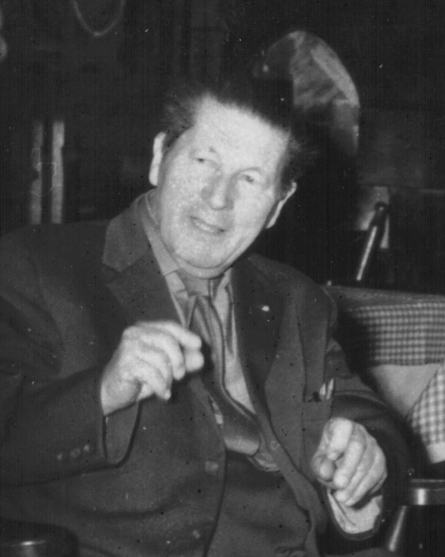 #3
#3
Gerrit Rietveld
Gerrit Rietveld gives concrete volume to De Stijl's principles. The "Red and Blue Chair" dissociates planes and uprights like a composition projected into space, while the Schroder house makes partitions, colors and uses mobile. Its design proves that geometric order could become a daily experience.
Read Gerrit Rietveld's biography on Wikipedia #4
#4
Bart van der Leck
Bart van der Leck arrives in De Stijl with a language already based on primary colors and the simplification of figures. However, he retains a more visible link with the real world than Mondrian. His miners, horsemen and port scenes become colored signs spaced out on white, which gives his abstraction a particular narrative tension.
Read Bart van der Leck's biography on Wikipedia #5
#5
Vilmos Huszar
Vilmos Huszár designed the famous first cover of the magazine and participated in the visual identity of the movement. Painter, graphic designer and decorator, he also experimented with mechanical spectacle and advertising. His "Mechanical Dance" shows that De Stijl’s geometry could animate a body, a stage and even a commercial communication.
Read Vilmos Huszar's biography on WikipediaChapter I · Ranks 6 to 10
From sculpture to the city, geometry becomes an environment
Vantongerloo, Oud, Van Eesteren, Domela and Piet Zwart shift abstraction towards volume, housing, urban planning, relief, photography and the printed page.
 #6
#6
George Vantongerloo
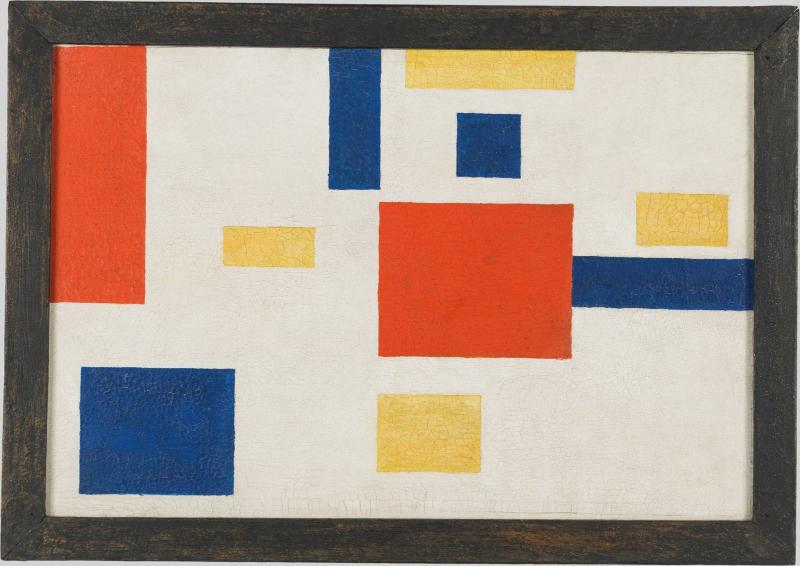
Georges Vantongerloo brings to De Stijl a decisive reflection on sculpture and mathematics. Its white or colored volumes organize space by measured relationships rather than by traditional mass. He will then extend this research towards almost cosmic curves and structures, beyond the initial orthogonality.
Read the biography of Georges Vantongerloo on Wikipedia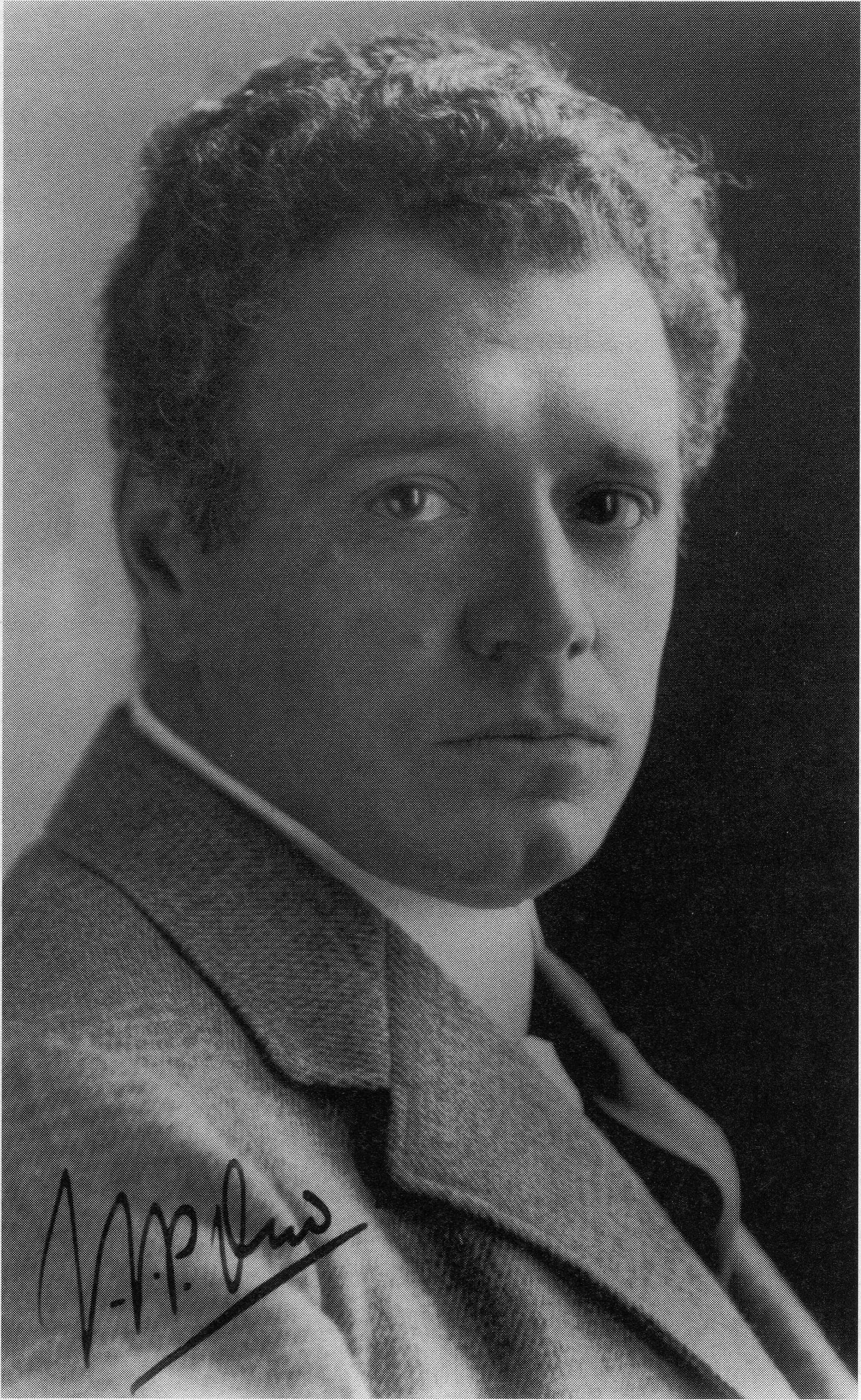 #7
#7
JJP Oud
JJP Oud seeks to reconcile De Stijl's collective ideal with the constraints of housing and construction. His collaborations with Van Doesburg in Rotterdam make color an active architectural element. The "Café De Unie" remains the most vivid image of this meeting, even if Oud then moves away from the most radical positions of the group.
Read JJP Oud's biography on Wikipedia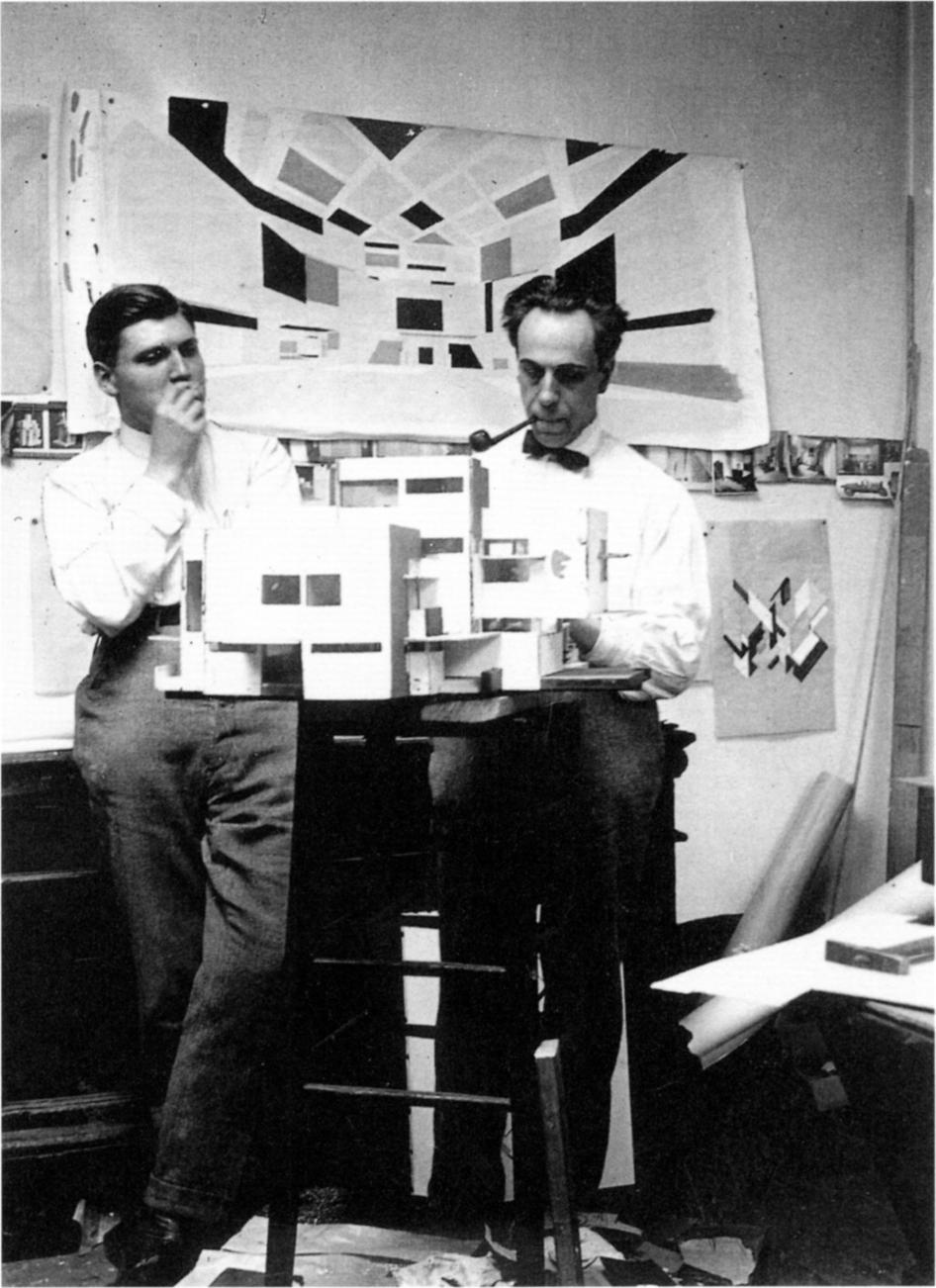 #8
#8
Cornelis van Eesteren
Cornelis van Eesteren collaborated closely with Van Doesburg on the counter-constructions of 1923, where plans seemed to float around an absent center. He then transposes this relational thinking to urban planning. His plan to extend Amsterdam reveals a less spectacular modernity, but essential for articulating housing, traffic, green spaces and urban growth.
Read the biography of Cornelis van Eesteren on Wikipedia #9
#9
Caesar Domela
César Domela joined De Stijl in 1924 after meeting Mondrian and Van Doesburg. He adopted the neoplastic structure while quickly introducing obliques, curves and industrial materials. His reliefs do not copy Mondrian: they put light, metal and depth at the service of a more tactile abstraction.
Read the biography of César Domela on Wikipedia #10
#10
Piet Zwart
Piet Zwart describes himself as a "typotect", a sign of his desire to build the page rather than simply decorate it. Close to De Stijl without locking himself into his austerity, he combines photography, large characters, empty and diagonal spaces. His industrial catalogs have profoundly renewed modern graphics.
Read Piet Zwart's biography on WikipediaChapter II · Ranks 11 to 20
Neoplasticism, international journals and networks
From Jean Gorin to Lajos Kassâk, De Stijl's ideas circulate between Paris, Strasbourg, Berlin, Weimar, Vienna, Budapest and New York, in contact with Dadaism, constructivism and Bauhaus.
 #11
#11
Jean Gorin
Jean Gorin discovered Mondrian's principles in the mid-1920s and became one of their most demanding interpreters in France. He quickly goes beyond the painting to construct reliefs and architectural projects. Its geometry maintains rational austerity, but above all seeks to engage the gaze in several directions.
Read the biography of Jean Gorin on Wikipedia #12
#12
Nelly van Doesburg
Pianist and dancer, Nelly van Doesburg participates in Dada events organized with Theo and Schwitters. After 1931, she played a major role in the conservation, exhibition and international circulation of the work of Van Doesburg and De Stijl. His contribution reminds us that the history of a movement also depends on its mediators.
Read Nelly van Doesburg's biography on Wikipedia #13
#13
Sophie Taeuber-Arp
Sophie Taeuber-Arp shares with De Stijl the desire to abolish the border between fine and applied arts. At Aubette, she designed abstract spaces with Jean Arp and Van Doesburg intended to be experienced in movement. However, his textile and painted compositions give geometry a very personal rhythmic flexibility.
See the Sophie Taeuber-Arp collection #14
#14
Jean Arp
Jean Arp does not adopt Mondrian's strict orthogonal vocabulary, but his dialogue with the magazine and especially his participation in Aubette place him in De Stijl's network. Its biomorphic reliefs oppose organic growth to the right angle. This difference makes Strasbourg collaboration particularly fruitful.
Read Jean Arp's biography on Wikipedia #15
#15
El Lissitzky
El Lissitzky is one of Van Doesburg's main constructivist interlocutors. His Prouns shift painting towards an architectural space, while his books and exhibitions physically organize reading and looking. Published in De Stijl, he helps the magazine become a truly European platform.
See the El Lissitzky collection #16
#16
Kurt Schwitters
Kurt Schwitters joined Van Doesburg and Nelly during the Dutch Dada tour of 1923 and participated in the magazine's constructivist exchanges. His principle Merz assembles rejects, words, sounds and interior architecture. More irregular than De Stijl, he nevertheless shares his ambition to recast all areas of creation.
See the Kurt Schwitters collection #17
#17
Laszlo Moholy-Nagy
Laszló Moholy-Nagy belongs to the international network that Van Doesburg connects with De Stijl and the Bauhaus. Its "Space-light Modulator" replaces the stable object with changing projections. Photograms, books and teaching make it an essential conduit between geometric abstraction and technological culture.
See the Laszló Moholy-Nagy collection #18
#18
Hans Richter
Hans Richter published in De Stijl as the magazine opened to the European avant-gardes. With "Rhythmus 21", black and white rectangles appear, advance and withdraw like a lasting neoplastic composition. His cinema shows that geometric order could also become montage, pulsation and movement.
Read Hans Richter's biography on Wikipedia #19
#19
Frederick Kiesler
In 1925 Frederick Kiesler presented his "City in Space", a project supported by Van Doesburg and published in De Stijl's environment. Its suspended structures challenge the traditional architectural box. He will extend this research with exhibition devices and the endless house, more organic but still relational.
Read Frederick Kiesler's biography on Wikipedia #20
#20
Lajos Kassak
Lajos Kassák runs with the MA magazine another major center of the European avant-garde. Its "image architectures" combine planes, circles, diagonals and typography in a logic close to De Stijl's debates. The editorial exchanges with Van Doesburg illustrate a modernity constructed by magazines as much as by workshops.
Read the biography of Lajos Kassak on WikipediaSources and routes
Extend the discovery of De Stijl
Explore Alpha Reproduction
De Stijl made geometry a social project
This movement has lastingly changed the way we look at a canvas, a chair, a facade, a poster or an urban plan. Mondrian pushes the pictorial balance to extreme precision; Van Doesburg organizes the exchanges and introduces the diagonal movement; Rietveld proves that abstraction can become habitable. Around them, painters, architects, designers, typographers, filmmakers and publishers transform a Dutch magazine into an international language.
To choose a reproduction, observe the type of rhythm sought: the vibrant stability of Mondrian, the oblique of Van Doesburg, the spaced color of Van der Leck, the constructions of Vantongerloo or the technological light of Moholy-Nagy. The admissible collections and biographies linked to each notice allow you to continue the exploration while respecting the singularity of each route.
0 comments