

18th - 20th centuries · oil paintings
The 100 tables pastel colors
One hundred paintings where powder pinks, pale blues, mauves, creams and water greens really build light - from Morisot, Monet and Renoir to Sorolla, Matisse and Frankenthaler.

A light before being a style
What do you call a pastel palette in painting?
A pastel color is not just a light color. It results from a balance between brightness, moderate saturation and color neighborhoods. A powder pink often contains white, sometimes a hint of blue or earth; a sea green hesitates between blue, yellow and gray; a luminous mauve can be born from a very diluted purple rather than a pure pigment. The eye then perceives a present but non-aggressive color, capable of letting the intermediate values breathe.
There's nothing uniform about this softness. At Morisot, the touch lets the white vibrate between the skin, the linen and the air. Monet disperses pale tones in snow, mist or reflections. Sorolla transforms white dresses and sand into mosaics of lilac, turquoise and salmon. In the 20th century, Matisse, Pollock and Frankenthaler showed that a softened color could also construct a radical space, without depending on a graceful subject.
The title therefore designates here the chromatic appearance of the paintings, not the pastel technique. The hundred works are oil paintings. No pastel drawings, pencil, charcoal, watercolor, gouache, prints, photographs or decorative images have been integrated. The selection requires that the clear scale organize a substantial part of the image and not be limited to an isolated detail.
Chromatic softness does not eliminate contrast: it shifts it towards fine differences in temperature, light and material.
It connects skin tones, fabrics and light while avoiding the saturation of a bold red.
Mixed with white or gray, it moves away from planes and gives air to the sky, water or shadows.
Halfway between blue and yellow, it softens vegetation and refreshes skin tones.
It colors snow, shadows and whites without weighing them down with a neutral gray.
100 paintings where softness becomes structure
Editorial rankingImages that have become universal
Pastel palette icons
Berthe Morisot
The Cradle
In "The Cradle", the light scale does not serve as an ornament: it determines the light and the way the gaze passes through the scene. Morisot makes the whites breathe with bluish grays, cold pinks and very diluted greens; the canvas appears luminous without ever becoming uniform. The clearest values advance without crushing the halftones, while a few more sustained notes maintain the depth. The light palette here is inseparable from the fame of the work: it immediately regulates its light, its atmosphere and its visual memory.
See reproduction →
Claude Monet
The Magpie
In "The Pie", the light scale does not serve as an ornament: it determines the light and the way the gaze passes through the scene. Monet replaces the closed outline with passages of light: mist blue, atmospheric pink and cream change on contact with each other. The gaze passes from one colored area to another by echoes rather than by contours, which gives the whole a particularly supple continuity. The light palette here is inseparable from the celebrity of the work: it immediately regulates its light, its atmosphere and its visual memory.
See reproduction →
Joaquin Sorolla
The Horse Bath
In "The Horse's Bath", the light scale does not serve as an ornament: it determines the light and the way the gaze passes through the scene. Sorolla reserves an infinite number of lilac, turquoise and salmon reflections for white; Mediterranean clarity becomes a colorful material. The composition retains a firm framework, but the attenuated transitions prevent the shapes from appearing cut out or decorative. The light palette here is inseparable from the celebrity of the work: it immediately regulates its light, its atmosphere and its visual memory.
See reproduction →
Pierre-Auguste Renoir
Young girls at the piano
In "Young Girls at the Piano", the light scale does not serve as an ornament: it determines the light and the way the gaze passes through the stage. Renoir softens the skin tones with neighborhoods of pink, blue and ivory, then lets a few warmer accents give relief to the figures. The whites are never neutral: mixed with blue, pink or ocher, they become the main light engine of the image. The whites are never neutral: mixed with blue, pink or ocher, they become the main light engine of the image. The whites are never neutral: mixed with blue, pink or ocher, they become the main light engine of the image. The light palette is here inseparable from the celebrity of the work: it immediately regulates its light, its atmosphere and its visual memory.
See reproduction →
Claude Monet
Woman with parasol facing right
In "Woman with Umbrella Facing Right", the light scale does not serve as an ornament: it determines the light and the way the gaze passes through the scene. Monet replaces the closed outline with passages of light: mist blue, atmospheric pink and cream change on contact with each other. The balance arises from the contrast between a widely folded scale and a few accents which prevent the scene from dissolving. The balance arises from the contrast between a widely folded scale and a few accents which prevent the scene from dissolving. The light palette here is inseparable from the celebrity of the work: it immediately regulates its light, its atmosphere and its visual memory.
See reproduction →
Joaquin Sorolla
The Pink Bathrobe
In "The Pink Bathrobe", the light scale does not serve as an ornament: it determines the light and the way the gaze passes through the scene. Sorolla reserves an infinite number of lilac, turquoise and salmon reflections for white; Mediterranean clarity becomes a colorful material. The clearest values advance without crushing the halftones, while a few more sustained notes maintain the depth. The light palette here is inseparable from the fame of the work: it immediately regulates its light, its atmosphere and its visual memory.
See reproduction →
Berthe Morisot
Summer day
In "Summer Day", the light scale does not serve as an ornament: it determines the light and the way the gaze passes through the scene. Morisot makes the whites breathe with bluish grays, cold pinks and very diluted greens; the canvas appears luminous without ever becoming uniform. The gaze passes from one colored area to another by echoes rather than by contours, which gives the whole a particularly supple continuity. The light palette here is inseparable from the celebrity of the work: it immediately regulates its light, its atmosphere and its visual memory.
See reproduction →
Claude Monet
Print, rising sun
In "Impression, Rising Sun", the light scale does not serve as an ornament: it determines the light and the way the gaze passes through the scene. Monet replaces the closed outline with passages of light: mist blue, atmospheric pink and cream change on contact with each other. The composition retains a firm framework, but the attenuated transitions prevent the shapes from appearing cut out or decorative. The composition retains a firm framework, but the attenuated transitions prevent the shapes from appearing cut out or decorative. The light palette here is inseparable from the celebrity of the work: it immediately regulates its light, its atmosphere and its visual memory.
See reproduction →
Pierre Puvis de Chavannes
Young Girls by the sea
In "Young Girls by the Sea", the light scale does not serve as an ornament: it determines the light and the way the gaze passes through the stage. Puvis deliberately reduces the colors and simplifies the volumes; this dullness gives the scene a silent, almost wall-mounted distance. The whites are never neutral: mixed with blue, pink or ocher, they become the main light engine of the image. The whites are never neutral: mixed with blue, pink or ocher, they become the main light engine of the image. The light palette is here inseparable from the celebrity of the work: it immediately regulates its light, its atmosphere and its visual memory.
See reproduction →
Alexandre Cabanel
The Birth of Venus
In "The Birth of Venus", the light scale does not serve as an ornament: it determines the light and the way the gaze passes through the scene. Alexandre Cabanel modulates light colors by small temperature differences; attenuated pinks, blues, creams or greens organize the space without losing their material presence. The balance arises from the contrast between a widely folded scale and a few accents which prevent the scene from dissolving. The light palette here is inseparable from the celebrity of the work: it immediately regulates its light, its atmosphere and its visual memory.
See reproduction →
Henri de Toulouse-Lautrec
The bed
In "The Bed", the light scale does not serve as an ornament: it determines the light and the way the gaze passes through the stage. Henri de Toulouse-Lautrec modulates light colors by small temperature differences; attenuated pinks, blues, creams or greens organize the space without losing their material presence. The lighter values advance without crushing the halftones, while a few more sustained notes maintain the depth. The light palette here is inseparable from the fame of the work: it immediately regulates its light, its atmosphere and its visual memory.
See reproduction →
Claude Monet
Regattas in Argenteuil
In "Regates in Argenteuil", the light scale does not serve as an ornament: it determines the light and the way the gaze passes through the scene. Monet replaces the closed contour with passages of light: mist blue, atmospheric pink and cream change on contact with each other. The gaze passes from one colored area to another by echoes rather than by contours, which gives the whole a particularly supple continuity. The look passes from one colored area to another by echoes rather than by contours, which gives the whole a particularly supple continuity. The light palette here is inseparable from the celebrity of the work: it immediately regulates its light, its atmosphere and its visual memory.
See reproduction →
JMW Turner
The Fighting Temeraire Tugged to Her Last Berth to be Broken Up, 1838
In "The Fighting Temeraire Tugged to Her Last Berth to be Broken Up, 1838", the light scale does not serve as an ornament: it determines the light and the way the gaze passes through the scene. Turner dissolves shapes in layers of cream, mauve and blue-gray light; color describes objects less than their appearance. The composition retains a firm framework, but the attenuated transitions prevent the shapes from appearing cut out or decorative. The composition here retains a firm framework, but the attenuated transitions prevent the shapes from appearing cut out or decorative. The light palette here is inseparable from the celebrity of the work: it immediately regulates its light, its atmosphere and its visual memory.
See reproduction →
Georges Seurat
The Circus
In "The Circus", the light scale does not serve as an ornament: it determines the light and the way the gaze passes through the scene. Seurat adjusts the tones by optical contrasts; the small light touches compose a calm surface whose precision does not cancel out the vibration. The whites are never neutral: mixed with blue, pink or ocher, they become the main light engine of the image. The whites are never neutral: mixed with blue, pink or ocher, they become the main light engine of the image. The whites are never neutral: mixed with blue, pink or ocher, they become the main light engine of the image. The light palette is here inseparable from the celebrity of the work: it immediately regulates its light, its atmosphere and its visual memory.
See reproduction →
Joaquin Sorolla
Walk by the sea
In "Walk by the Sea", the light scale does not serve as an ornament: it determines the light and the way the gaze passes through the stage. Sorolla reserves an infinite number of lilac, turquoise and salmon reflections for white; Mediterranean clarity becomes a colorful material. The balance is born from the contrast between a widely folded scale and a few accents which prevent the scene from dissolving. The light palette here is inseparable from the celebrity of the work: it immediately regulates its light, its atmosphere and its visual memory.
See reproduction →
Henri Matisse
Luxury, calm and voluptuousness
In "Luxury, Calm and Voluptuousness", the light scale does not serve as an ornament: it determines the light and the way the gaze passes through the stage. Matisse maintains the freshness of the light tones while contrasting them with a few frank accents; the softness remains structured, never cutesy. The clearest values advance without crushing the halftones, while a few more sustained notes maintain the depth. The light palette here is inseparable from the fame of the work: it immediately regulates its light, its atmosphere and its visual memory.
See reproduction →
James Abbott McNeill Whistler
Symphony in gray and green: the ocean
In "Symphony in Gray and Green: The Ocean", the light scale does not serve as an ornament: it determines the light and the way the gaze passes through the stage. Whistler thinks of painting as a musical harmony: the differences in gray, blue and green count more than the precise description of the place. The look passes from one colored area to another by echoes rather than by contours, which gives the whole a particularly flexible continuity. The look passes from one colored area to another by echoes rather than by contours, which gives the whole a particularly flexible continuity. The light palette here is inseparable from the celebrity of the work: it immediately regulates its light, its atmosphere and its visual memory.
See reproduction →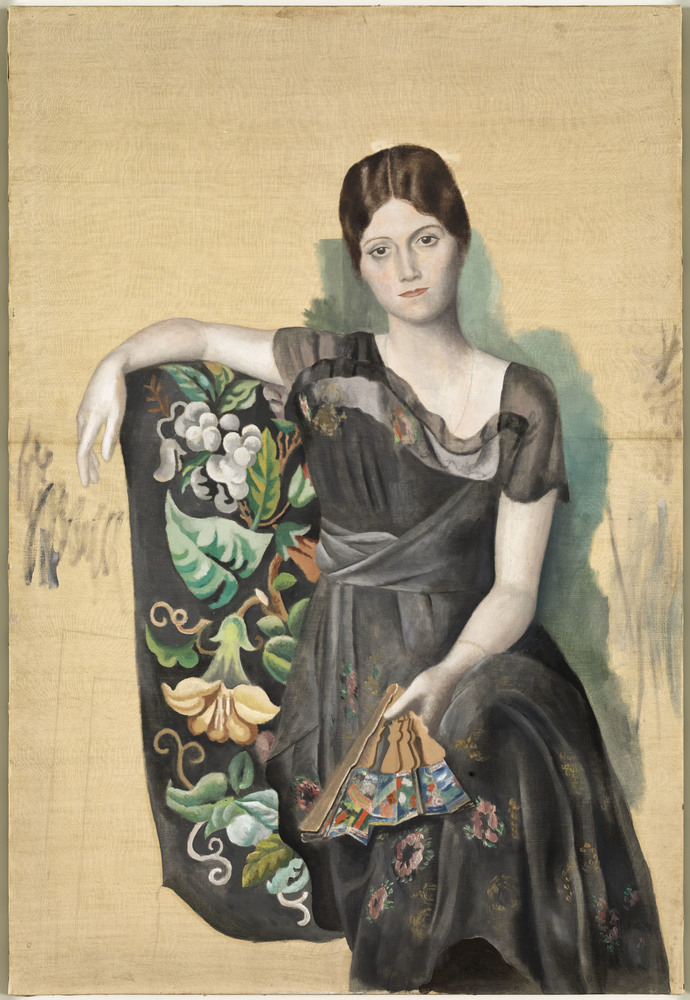
Pablo Picasso
Portrait of Olga in an armchair
In "Portrait of Olga in an Armchair", the light scale does not serve as an ornament: it determines the light and the way the gaze passes through the stage. Pablo Picasso modulates light colors by small temperature differences; attenuated pinks, blues, creams or greens organize the space without losing their material presence. The composition retains a firm framework, but attenuated transitions prevent the shapes from appearing cut out or decorative. The composition retains a firm framework, but the attenuated transitions prevent the shapes from appearing cut out or decorative. The light palette here is inseparable from the celebrity of the work: it immediately regulates its light, its atmosphere and its visual memory.
View work in collection →
John william waterhouse
Daytime dreams
In "Day Dreams", the light scale does not serve as an ornament: it determines the light and the way the gaze passes through the scene. Waterhouse circulates faded roses, water greens and pearly whites between fabrics, skin and vegetation to suspend the story. The whites are never neutral: mixed with blue, pink or ocher, they become the main light engine of the image. The whites are never neutral: mixed with blue, pink or ocher, they become the main light engine of the image. The whites are never neutral: mixed with blue, pink or ocher, they become the main light engine of the image. The light palette is here inseparable from the celebrity of the work: it immediately regulates its light, its atmosphere and its visual memory.
See reproduction →
Alfred Sisley
The Flood in Port Marly
In "The Flood at Port-Marly", the light scale does not serve as an ornament: it determines the light and the way the gaze passes through the stage. Sisley distributes the pale tones between sky, water, snow and architecture so that the space is constructed through atmosphere rather than through drawing. The balance arises from the contrast between a widely folded scale and a few accents which prevent the scene from dissolving. The light palette is born from the contrast between a widely folded scale and a few accents which prevent the scene from dissolving. The light palette here is inseparable from the celebrity of the work: it immediately regulates its light, its atmosphere and its visual memory.
See reproduction →Figures and intimate spaces
Powder roses, light flesh and interiors

Edvard Munch
Woman in blue dress
In "Woman in the Blue Dress", the light scale does not serve as an ornament: it determines the light and the way the gaze passes through the scene. Munch uses pallor as a psychological tension: cold blue or bleached pink isolate the figure as much as they unify the landscape. The clearest values advance without crushing the halftones, while a few more sustained notes maintain the depth. The lighter values advance without crushing the halftones, while a few more sustained notes maintain the depth. The lighter values advance without crushing the halftones, while a few more sustained notes maintain the depth. The lighter values advance without crushing the halftones, while a few more sustained notes maintain the depth. The powdery tones bring the skin, fabric and decor together without confusing them; they give the human presence a softness crossed by precise accents.
See reproduction →
Henri de Toulouse-Lautrec
Portrait of Mr. Paul Sescau (Portrait of Mr. Paul Sescau)
In "Portrait of Mr. Paul Sescau (Portrait of Mr. Paul Sescau)", the light scale does not serve as an ornament: it determines the light and the way the gaze passes through the scene. Henri de Toulouse-Lautrec modulates light colors by small temperature differences; attenuated pinks, blues, creams or greens organize the space without losing their material presence. The look passes from one colored area to another by echoes rather than by contours, which gives the whole a particularly supple continuity. The look moves from one colored area to another by echoes rather than by contours, which gives the whole a particularly supple continuity. Powder tones bring the skin, fabric and decor together without confusing them; they give the human presence a softness crossed by precise accents.
See reproduction →
Joaquin Sorolla
Instant
In "Instantané", the light scale does not serve as an ornament: it determines the light and the way the gaze passes through the scene. Sorolla reserves an infinite number of lilac, turquoise and salmon reflections for white; Mediterranean clarity becomes a colorful material. The composition retains a firm framework, but the attenuated transitions prevent the shapes from appearing cut out or decorative. Powdery tones bring the skin, fabric and decor together without confusing them; they give the human presence a softness crossed by precise accents.
See reproduction →
Joaquin Sorolla
Before the bath
In "Before the Bath", the light scale does not serve as an ornament: it determines the light and the way the gaze passes through the scene. Sorolla reserves an infinite number of lilac, turquoise and salmon reflections for white; Mediterranean clarity becomes a colorful material. White is never neutral: mixed with blue, pink or ocher, it becomes the main light engine of the image. Powdery tones bring the skin, fabric and decor together without confusing them; They give the human presence a softness crossed by precise accents.
See reproduction →
Joaquin Sorolla
Getting out of the bath
In "The Exit from the Bath", the light scale does not serve as an ornament: it determines the light and the way the gaze passes through the scene. Sorolla reserves for white an infinity of lilac, turquoise and salmon reflections; Mediterranean clarity becomes a colorful material. The balance arises from the contrast between a widely folded scale and a few accents which prevent the scene from dissolving. Powdery tones bring the skin, fabric and decor together without confusing them; they give the human presence a softness crossed by precise accents.
See reproduction →
Pierre-Auguste Renoir
Dancing in the city
In "Dancing in the City", the light scale does not serve as an ornament: it determines the light and the way the gaze passes through the stage. Renoir softens the skin tones with neighborhoods of pink, blue and ivory, then lets a few warmer accents give relief to the figures. The lighter values advance without crushing the halftones, while a few more sustained notes maintain the depth. The lighter values advance without crushing the halftones, while a few more sustained notes maintain the depth. The lighter values advance without crushing the halftones, while a few more sustained notes maintain the depth. The lighter values advance without crushing the halftones, while a few more sustained notes maintain the depth. The lighter values advance without crushing the halftones, while a few more sustained notes maintain the depth. The powdery tones bring the skin, fabric and decor together without confusing them; they give the human presence a softness crossed by precise accents.
See reproduction →
Berthe Morisot
Young woman in ball gown
In "Young Woman in Ballroom", the light scale does not serve as an ornament: it determines the light and the way the gaze passes through the scene. Morisot makes the whites breathe with bluish grays, cold pinks and very diluted greens; the canvas appears luminous without ever becoming uniform. The gaze passes from one colored area to another by echoes rather than by contours, which gives the whole a particularly supple continuity. The powdery tones bring the skin, fabric and decor together without confusing them; they give the human presence a softness crossed by precise accents.
See reproduction →
John william waterhouse
Lady on a balcony, Capri
In "Lady on a Balcony, Capri", the light scale does not serve as an ornament: it determines the light and the way the gaze passes through the scene. Waterhouse circulates faded roses, water greens and pearly whites between fabrics, skin and vegetation to suspend the story. The composition maintains a firm framework, but the attenuated transitions prevent the shapes from appearing cut out or decorative. The powdery tones bring the skin, fabric and decor together without confusing them; they give the human presence a softness crossed by precise accents.
See reproduction →
John william waterhouse
Saint Eulalia
In "Sainte Eulalie", the light scale does not serve as an ornament: it determines the light and the way the gaze passes through the scene. Waterhouse circulates faded roses, water greens and pearly whites between fabrics, skin and vegetation to suspend the story. The whites are never neutral: mixed with blue, pink or ocher, they become the main light engine of the image. The whites are never neutral: mixed with blue, pink or ocher, they become the main light engine of the image. The whites are never neutral: mixed with blue, pink or ocher, they become the main light engine of the image. The whites are never neutral: mixed with blue, pink or ocher, they become the main light engine of the image. The whites are never neutral: mixed with blue, pink or ocher, they become the main light engine of the image. The whites are never neutral: mixed with blue, pink or ocher, they become the main light engine of the image. The powdery tones bring the skin, fabric and decor together without confusing them; they give the human presence a softness crossed by precise accents.
See reproduction →
John william waterhouse
Flora
In "Flore", the light scale does not serve as an ornament: it determines the light and the way the gaze passes through the scene. Waterhouse circulates faded roses, water greens and pearly whites between fabrics, skin and vegetation to suspend the story. The balance arises from the contrast between a widely folded scale and a few accents which prevent the scene from dissolving. Powder tones bring the skin, fabric and decor together without confusing them; they give the human presence a softness crossed by precise accents.
See reproduction →
John william waterhouse
Miranda, first version
In "Miranda, First Version", the light scale does not serve as an ornament: it determines the light and the way the gaze passes through the scene. Waterhouse circulates faded roses, water greens and pearly whites between fabrics, skin and vegetation to suspend the story. The clearest values advance without crushing the halftones, while a few more sustained notes maintain the depth. The lighter values advance without crushing the halftones, while a few more sustained notes maintain the depth. The lighter values advance without crushing the halftones, while a few more sustained notes maintain the depth. The lighter values advance without crushing the halftones, while a few more sustained notes maintain the depth. The powdery tones bring the skin, fabric and decor together without confusing them; they give the human presence a softness crossed by precise accents.
See reproduction →
John william waterhouse
The white feathered fan
In "The White Feathered Fan", the light scale does not serve as an ornament: it determines the light and the way the gaze passes through the scene. Waterhouse circulates faded roses, water greens and pearly whites between fabrics, skin and vegetation to suspend the story. The gaze passes from one colored area to another in echoes rather than contours, which gives the whole a particularly supple continuity. Powder tones bring the skin, fabric and decor together without confusing them; they give the human presence a softness crossed by precise accents.
See reproduction →
John william waterhouse
At rest
In "At Rest", the light scale does not serve as an ornament: it determines the light and the way the gaze passes through the scene. Waterhouse circulates faded roses, water greens and pearly whites between fabrics, skin and vegetation to suspend the story. The composition maintains a firm framework, but the attenuated transitions prevent the shapes from appearing cut out or decorative. The powdery tones bring the skin, fabric and decor together without confusing them; they give the human presence a softness crossed by precise accents.
See reproduction →
John william waterhouse
In Capri
In "À Capri", the light scale does not serve as an ornament: it determines the light and the way the gaze passes through the scene. Waterhouse circulates faded roses, water greens and pearly whites between fabrics, skin and vegetation to suspend the story. The whites are never neutral: mixed with blue, pink or ocher, they become the main light engine of the image. The whites are never neutral: mixed with blue, pink or ocher, they become the main light engine of the image. The whites are never neutral: mixed with blue, pink or ocher, they become the main light engine of the image. The whites are never neutral: mixed with blue, pink or ocher, they become the main light engine of the image. The whites are never neutral: mixed with blue, pink or ocher, they become the main light engine of the image. The whites are never neutral: mixed with blue, pink or ocher, they become the main light engine of the image. The powdery tones bring the skin, fabric and decor together without confusing them; they give the human presence a softness crossed by precise
See reproduction →
Joaquin Sorolla
My wife and my children
In "My Wife and My Children", the light scale does not serve as an ornament: it determines the light and the way the gaze passes through the stage. Sorolla reserves an infinite number of lilac, turquoise and salmon reflections for white; Mediterranean clarity becomes a colorful material. The balance is born from the contrast between a widely folded scale and a few accents which prevent the scene from dissolving. Powdery tones bring the skin, fabric and decor together without confusing them; they give the human presence a softness crossed by precise accents.
See reproduction →
Joaquin Sorolla
Maria in La Granja
In "María à La Granja", the light scale does not serve as an ornament: it determines the light and the way the gaze passes through the scene. Sorolla reserves an infinite number of lilac, turquoise and salmon reflections for white; Mediterranean clarity becomes a colorful material. The clearest values advance without crushing the halftones, while a few more sustained notes maintain the depth. Powdery tones bring the skin, fabric and decor together without confusing them; they give the human presence a softness crossed by precise accents.
See reproduction →
Joaquin Sorolla
Joaquin Sorolla Garcia in white
In "Joaquîn Sorolla Garcia in White", the light scale does not serve as an ornament: it determines the light and the way the gaze passes through the scene. Sorolla reserves for white an infinity of lilac, turquoise and salmon reflections; Mediterranean clarity becomes a colored material. The look passes from one colored area to another by echoes rather than by contours, which gives the whole a particularly supple continuity. Powdery tones bring the skin, fabric and decor together without confusing them; they give the human presence a softness crossed by precise accents.
See reproduction →
Henri Matisse
Renée, Green Harmony
In "Renée, Harmonie verte", the light scale does not serve as an ornament: it determines the light and the way the gaze passes through the scene. Matisse maintains the freshness of the light tones while contrasting them with a few frank accents; the softness remains structured, never cutesy. The composition maintains a firm framework, but the attenuated transitions prevent the shapes from appearing cut out or decorative. Powdery tones bring the skin, fabric and decor together without confusing them; they give the human presence a softness crossed by precise accents.
See reproduction →
Edgar Degas
The Dance Class
In "The Dance Class", the light scale does not serve as an ornament: it determines the light and the way the gaze passes through the stage. Edgar Degas modulates light colors by small temperature differences; attenuated pinks, blues, creams or greens organize the space without losing their material presence. Whites are never neutral: mixed with blue, pink or ocher, they become the main light engine of the image. Whites are never neutral: mixed with blue, pink or ocher, they become the main light engine of the image. Whites are never neutral: mixed with blue, pink or ocher, they become the main light engine of the image. The whites are never neutral: mixed with blue, pink or ocher, they become the main light engine of the image. The whites are never neutral: mixed with blue, pink or ocher, they become the main light engine of the image. The whites are never neutral: mixed with blue, pink or ocher, they become the main light engine of the image. Powder tones bring the skin, fabric and decor together without confusing them; they give the human
See reproduction →
William Bouguereau
The Birth of Venus
In "The Birth of Venus", the light scale does not serve as an ornament: it determines the light and the way the gaze passes through the scene. William Bouguereau modulates light colors by small temperature differences; attenuated pinks, blues, creams or greens organize the space without losing their material presence. The balance arises from the contrast between a widely folded scale and a few accents which prevent the scene from dissolving. Powder tones bring the skin, fabric and decor together without confusing them; they give the human presence a softness crossed by precise accents.
See reproduction →Air, snow and distance
Pale blues, mauves and colored grays

James Abbott McNeill Whistler
Harmony in blue and silver: Trouville
In "Harmony in Blue and Silver: Trouville", the light scale does not serve as an ornament: it determines the light and the way the gaze passes through the stage. Whistler thinks of painting as a musical harmony: the differences in gray, blue and green count more than the precise description of the place. The clearest values advance without crushing the halftones, while a few more sustained notes maintain depth. The lighter values advance without crushing the halftones, while a few more sustained notes maintain the depth. The lighter values advance without crushing the halftones, while a few more sustained notes maintain the depth. The lighter values advance without crushing the halftones, while a few more sustained notes maintain the depth. The bleached blue and colored gray widen the distances: air, mist, snow and water become the true structures of the composition.
See reproduction →
Claude Monet
Gondolas in Venice
In "Gondolas in Venice", the light scale does not serve as an ornament: it determines the light and the way the gaze passes through the scene. Monet replaces the closed outline with passages of light: mist blue, atmospheric pink and cream change on contact with each other. The gaze passes from one colored area to another by echoes rather than by contours, which gives the whole a particularly supple continuity. The look passes from one colored area to another by echoes rather than by contours, which gives the whole a particularly supple continuity. The bleached blue and the colored gray widen the distances: air, mist, snow and water become the true structures of the composition.
See reproduction →
Claude Monet
Parliament, sunset
In "Parliament, Sunset", the light scale does not serve as an ornament: it determines the light and the way the gaze passes through the scene. Monet replaces the closed outline with passages of light: mist blue, atmospheric pink and cream change on contact with each other. The composition maintains a firm framework, but the attenuated transitions prevent the shapes from appearing cut or decorative. The composition maintains a firm framework, but the attenuated transitions prevent the shapes from appearing cut or decorative. The composition retains a firm framework, but the attenuated transitions prevent the shapes from appearing cut or decorative. The composition retains a firm framework, but the attenuated transitions prevent the shapes from appearing cut out or decorative. The composition retains a firm framework, but the attenuated transitions prevent the shapes from appearing cut out or decorative. The composition retains a firm framework, but the attenuated transitions prevent the shapes from appearing cut out or decorative. The composition retains a firm framework, but the attenuated transitions prevent the shapes from appearing cut out or decorative. The composition retains a firm framework, but the attenuated transitions prevent the shapes from appearing cut out or decorative. The composition
See reproduction →
Caspar david friedrich
The Monk by the sea
In "The Monk by the Sea", the light scale does not serve as an ornament: it determines the light and the way the gaze passes through the scene. Friedrich reduces the palette to enlarge the silence: pearl gray, cold blue and mineral beige establish a meditative distance. The whites are never neutral: mixed with blue, pink or ocher, they become the main light engine of the image. The whites are never neutral: mixed with blue, pink or ocher, they become the main light engine of the image. The whites are never neutral: mixed with blue, pink or ocher, they become the main light engine of the image. The whites are never neutral: mixed with blue, pink or ocher, they become the main light engine of the image. The bleached blue and the colored gray widen the distances: air, mist, snow and water become the true structures of the composition.
See reproduction →
Caspar david friedrich
The Sea of Ice
In "The Sea of Ice", the light scale does not serve as an ornament: it determines the light and the way the gaze passes through the scene. Friedrich reduces the palette to enlarge the silence: pearl gray, cold blue and mineral beige establish a meditative distance. The balance arises from the contrast between a widely folded scale and a few accents which prevent the scene from dissolving. The bleached blue and the colored gray broaden the distances: air, mist, snow and water become the true structures of the composition.
See reproduction →
Alfred Sisley
Snow effect in Louveciennes
In "Snow Effect in Louveciennes", the light scale does not serve as an ornament: it determines the light and the way the gaze passes through the scene. Sisley distributes the pale tones between sky, water, snow and architecture so that the space is constructed by atmosphere rather than by drawing. The clearest values advance without crushing halftones, while a few more sustained notes maintain depth. The lighter values advance without crushing halftones, while a few more sustained notes maintain depth. The bleached blue and colored gray widen the distances: air, mist, snow and water become the true structures of the composition.
See reproduction →
Alfred Sisley
Place du Chenil in Marly, snow effect
In "La Place du Chenil à Marly, snow effect", the light scale does not serve as an ornament: it determines the light and the way the gaze passes through the scene. Sisley distributes the pale tones between sky, water, snow and architecture so that the space is constructed by atmosphere rather than by drawing. The gaze passes from one colored area to another by echoes rather than by contours, which gives the whole a particularly supple continuity. The look passes from one colored area to another by echoes rather than by contours, which gives the whole a particularly supple continuity. The look passes from one colored area to another by echoes rather than by contours, which gives the whole a particularly supple continuity. The bleached blue and the colored gray widen the distances: air, mist, snow and water become the true structures of the composition.
See reproduction →
Edvard Munch
Woman in blue in front of blue water
In "Woman in Blue in Front of Blue Water", the light scale does not serve as an ornament: it determines the light and the way the gaze passes through the scene. Munch uses pallor as a psychological tension: cold blue or bleached pink insulate the figure as much as they unify the landscape. The composition maintains a firm framework, but the attenuated transitions prevent the shapes from appearing cut or decorative. The composition retains a firm framework, but the attenuated transitions prevent the shapes from appearing cut or decorative. The composition retains a firm framework, but the attenuated transitions prevent the shapes from appearing cut or decorative. The composition retains a firm framework, but the attenuated transitions prevent the shapes from appearing cut or decorative. The composition retains a firm framework, but the attenuated transitions prevent the shapes from appearing cut or decorative. The composition retains a firm framework, but the attenuated transitions prevent the shapes from appearing cut or decorative. The composition retains a firm framework, but the attenuated transitions prevent the shapes from appearing cut or decorative. The composition retains a firm framework, but the attenuated transitions prevent the shapes from appearing cut or decorative.
See reproduction →
JMW Turner
The Charbonniers in the moonlight
In "Les Charbonniers au clair de lune", the light scale does not serve as an ornament: it determines the light and the way the gaze passes through the scene. Turner dissolves shapes in layers of cream, mauve and blue-gray light; color describes objects less than their appearance. Whites are never neutral: mixed with blue, pink or ocher, they become the main light engine of the image. Whites are never neutral: mixed with blue, pink or ocher, they become the main light engine of the image. Whites are never neutral: mixed with blue, pink or ocher, they become the main light engine of the image. White is never neutral: mixed with blue, pink or ocher, they become the main light engine of the image. White is never neutral: mixed with blue, pink or ocher, they become the main light engine of the image. White is never neutral: mixed with blue, pink or ocher, they become the main light engine of the image. White is never neutral: mixed with blue, pink or ocher, they become the main light engine of
See reproduction →
Pierre Puvis de Chavannes
The Poor Fisherman
In "The Poor Fisherman", the light scale does not serve as an ornament: it determines the light and the way the gaze passes through the scene. Puvis deliberately reduces the colors and simplifies the volumes; this dullness gives the scene a silent, almost wall-mounted distance. The balance arises from the contrast between a widely folded scale and a few accents which prevent the scene from dissolving. The bleached blue and the colored gray broaden the distances: air, mist, snow and water become the true structures of the composition.
See reproduction →
Claude Monet
Saint-lazare Station
In "La Gare Saint-Lazare", the light scale does not serve as an ornament: it determines the light and the way the gaze passes through the scene. Monet replaces the closed outline with passages of light: mist blue, atmospheric pink and cream change on contact with each other. The clearest values advance without crushing the halftones, while a few more sustained notes maintain depth. The lighter values advance without crushing the halftones, while a few more sustained notes maintain the depth. The lighter values advance without crushing the halftones, while a few more sustained notes maintain the depth. The bleached blue and colored gray widen the distances: air, mist, snow and water become the true structures of the composition.
See reproduction →
Vincent van Gogh
Seascape near Saintes-Maries-de-la-Mer
In "Marine landscape near Saintes-Maries-de-la-Mer", the light range does not serve as an ornament: it determines the light and the way the gaze passes through the scene. Vincent van Gogh modulates light colors by small temperature differences; attenuated pinks, blues, creams or greens organize the space without losing their material presence. The gaze passes from one colored area to another by echoes rather than by contours, which gives the whole a particularly supple continuity. The gaze passes from one colored area to another by echoes rather than by contours, which gives the whole a particularly supple continuity. The look passes from one colored area to another by echoes rather than by contours, which gives the whole a particularly supple continuity. The look passes from one colored area to another by echoes rather than by contours, which gives the whole a particularly supple continuity. The bleached blue and colored gray widen the distances: air, mist, snow and water become the true structures of the composition.
See reproduction →
Joaquin Sorolla
The Sierra Nevada in winter
In "The Sierra Nevada in Winter", the light scale does not serve as an ornament: it determines the light and the way the gaze passes through the scene. Sorolla reserves an infinite number of lilac, turquoise and salmon reflections for white; Mediterranean clarity becomes a colorful material. The composition retains a firm framework, but the attenuated transitions prevent the shapes from appearing cut out or decorative. The bleached blue and colored gray broaden the distances: air, mist, snow and colored gray widen the distances: air, mist, snow and colored gray widen the distances: air, mist, snow and colored gray widen the distances: air, mist, snow and water become the true structures of the composition.
See reproduction →
Claude Monet
The Argenteuil Bridge
In "Le Pont d'Argenteuil", the light scale does not serve as an ornament: it determines the light and the way the gaze passes through the scene. Monet replaces the closed outline with passages of light: mist blue, atmospheric pink and cream change on contact with each other. The whites are never neutral: mixed with blue, pink or ocher, they become the main light engine of the image. The whites are never neutral: mixed with blue, pink or ocher, they become the main light engine of the image. The whites are never neutral: mixed with blue, pink or ocher, they become the main light engine of the image. The whites are never neutral: mixed with blue, pink or ocher, they become the main light engine of the image. The bleached blue and the colored gray widen the distances: air, mist, snow and water become the true structures of the composition.
See reproduction →
Joaquin Sorolla
The Three Sails
In "The Three Veils", the light scale does not serve as an ornament: it determines the light and the way the gaze passes through the scene. Sorolla reserves for white an infinity of lilac, turquoise and salmon reflections; Mediterranean clarity becomes a colorful material. The balance arises from the contrast between a widely folded scale and a few accents which prevent the scene from dissolving. The bleached blue and the colored gray broaden the distances: air, mist, snow and water become the true structures of the composition.
See reproduction →
Joaquin Sorolla
Imminent storm, Valencia
In "Imminent Storm, Valencia", the light scale does not serve as an ornament: it determines the light and the way the gaze passes through the scene. Sorolla reserves for white an infinity of lilac, turquoise and salmon reflections; Mediterranean clarity becomes a colored material. The clearest values advance without crushing the halftones, while a few more sustained notes maintain the depth. The bleached blue and the colored gray widen the distances: air, mist, snow and water become the true structures of the composition.
See reproduction →
Jean-Baptiste Camille Corot
The Narni Bridge
In "The Bridge of Narni", the light scale does not serve as an ornament: it determines the light and the way the gaze passes through the scene. Corot balances the framework of the landscape with a silver scale where greens, browns and blues seem to pass through the same veil. The gaze passes from one colored area to another by echoes rather than by contours, which gives the whole a particularly supple continuity. The look passes from one colored area to another by echoes rather than by contours, which gives the whole a particularly flexible continuity. The bleached blue and the colored gray widen the distances: air, mist, snow and water become the true structures of the composition.
See reproduction →
Jean-Baptiste Camille Corot
Chartres Cathedral
In "Chartres Cathedral", the light scale does not serve as an ornament: it determines the light and the way the gaze passes through the scene. Corot balances the framework of the landscape with a silver scale where greens, browns and blues seem to be crossed by the same veil. The composition retains a firm framework, but the attenuated transitions prevent the shapes from appearing cut or decorative. The composition retains a firm framework, but the attenuated transitions prevent the shapes from appearing cut out or decorative. The composition retains a firm framework, but the attenuated transitions prevent the shapes from appearing cut out or decorative. The composition retains a firm framework, but the attenuated transitions prevent the shapes from appearing cut out or decorative. The bleached blue and colored gray widen the distances: air, mist, snow and water become the true structures of the composition.
See reproduction →
Camille Pissarro
White jelly
In "White Jelly", the light scale does not serve as an ornament: it determines the light and the way the gaze passes through the scene. Camille Pissarro modulates light colors by small temperature differences; attenuated pinks, blues, creams or greens organize the space without losing their material presence. Whites are never neutral: mixed with blue, pink or ocher, they become the main light engine of the image. Whites are never neutral: mixed with blue, pink or ocher, they become the main light engine of the image. Whites are never neutral: mixed with blue, pink or ocher, they become the main light engine of the image. Whites are never neutral: mixed with blue, pink or ocher, they become the main light engine of the image. Whipped blue and colored gray widen the distances: air, mist, snow and water become the true structures of the composition.
See reproduction →
Arthur Streeton
'The purple noon's transparent might'
In "'The purple noon's transparent might'", the light scale does not serve as an ornament: it determines the light and the way the gaze passes through the stage. Streeton translates Australian warmth into bleached blues, pink ochres and silver greens that give air to great distances. The balance arises from the contrast between a widely folded scale and a few accents that prevent the scene from dissolving. The bleached blue and the colored gray widen the distances: air, mist, snow and water become the true structures of the composition.
See reproduction →Paint diffused light
Gardens, beaches and milky landscapes

Arthur Streeton
Near Heidelberg
In "Near Heidelberg", the light scale does not serve as an ornament: it determines the light and the way the gaze passes through the stage. Streeton translates Australian warmth into bleached blues, pink ochres and silver greens that give air to great distances. The clearest values advance without crushing the halftones, while a few more sustained notes maintain the depth. In this landscape, the pastel color reflects a diffuse light which connects the planes and avoids too harsh contrasts.
See reproduction →
Charles Conder
Rickett's Point
In "Rickett's Point", the light scale does not serve as an ornament: it determines the light and the way the gaze passes through the scene. Charles Conder modulates light colors by small temperature differences; attenuated pinks, blues, creams or greens organize the space without losing their material presence. The gaze passes from one colored area to another by echoes rather than by contours, which gives the whole a particularly flexible continuity. In this landscape, pastel color reflects diffused light which connects the planes and avoids too harsh contrasts.
See reproduction →
Tom Roberts
Slumbering sea, Mentone
In "Slumbering sea, Mentone", the light scale does not serve as an ornament: it determines the light and the way the gaze passes through the scene. Tom Roberts modulates light colors by small temperature differences; attenuated pinks, blues, creams or greens organize the space without losing their material presence. The composition maintains a firm framework, but attenuated transitions prevent shapes from appearing cut out or decorative. In this landscape, pastel color reflects a diffuse light which connects the planes and avoids too harsh contrasts.
See reproduction →
Joaquin Sorolla
Ladies on the beach
In "Ladies on the Beach", the light scale does not serve as an ornament: it determines the light and the way the gaze passes through the scene. Sorolla reserves an infinite number of lilac, turquoise and salmon reflections for white; Mediterranean clarity becomes a colored material. Whites are never neutral: mixed with blue, pink or ocher, they become the main light engine of the image. In this landscape, pastel color reflects a diffuse light which connects the shots and avoids harsh contrasts.
See reproduction →
Joaquin Sorolla
Ladies' walk on Biarritz beach
In "Promenade des dames sur la plage de Biarritz", the light scale does not serve as an ornament: it determines the light and the way the gaze passes through the stage. Sorolla reserves an infinite number of lilac, turquoise and salmon reflections for white; Mediterranean clarity becomes a colorful material. The balance arises from the contrast between a widely folded scale and a few accents which prevent the scene from dissolving. In this landscape, pastel color reflects a diffuse light which connects the shots and avoids harsh contrasts.
See reproduction →
Alfred Sisley
The Church of Moret after the rain
In "The Church of Moret After the Rain", the light scale does not serve as an ornament: it determines the light and the way the gaze passes through the scene. Sisley distributes the pale tones between sky, water, snow and architecture so that the space is constructed by atmosphere rather than by drawing. The clearest values advance without crushing halftones, while a few more sustained notes maintain depth. In this landscape, the pastel color reflects a diffuse light which connects the planes and avoids too harsh contrasts.
See reproduction →
Charles-Francois Daubigny
The Harvest
In "The Harvest", the light scale does not serve as an ornament: it determines the light and the way the gaze passes through the scene. Daubigny lets the sky and water absorb the contours; the colored grays and softened greens give the pattern fluid continuity. The look passes from one colored area to another by echoes rather than by contours, which gives the whole a particularly supple continuity. In this landscape, the pastel color reflects a diffuse light which connects the planes and avoids too harsh contrasts.
See reproduction →
Charles-Francois Daubigny
The banks of the Oise
In "Les Bords de l'Oise", the light scale does not serve as an ornament: it determines the light and the way the gaze passes through the scene. Daubigny lets the sky and water absorb the contours; colored grays and softened greens give the pattern fluid continuity. The composition maintains a firm framework, but the attenuated transitions prevent the shapes from appearing cut out or decorative. In this landscape, pastel color reflects a diffuse light which connects the planes and avoids harsh contrasts.
See reproduction →
Alfred Sisley
View of the village
In "View of the Village", the light scale does not serve as an ornament: it determines the light and the way the gaze passes through the scene. Sisley distributes pale tones between sky, water, snow and architecture so that the space is constructed through atmosphere rather than through drawing. Whites are never neutral: mixed with blue, pink or ocher, they become the main light engine of the image. In this landscape, pastel color reflects a diffuse light which connects the shots and avoids harsh contrasts.
See reproduction →
Alfred Sisley
The plain of Veneux-Nadon
In "The Plain of Veneux-Nadon", the light scale does not serve as an ornament: it determines the light and the way the gaze passes through the scene. Sisley distributes the pale tones between sky, water, snow and architecture so that the space is constructed by atmosphere rather than by drawing. The balance arises from the contrast between a widely folded scale and a few accents which prevent the scene from dissolving. In this landscape, pastel color reflects a diffuse light which connects the shots and avoids too harsh contrasts.
See reproduction →
Jean-Baptiste Camille Corot
Boat fishing near willows
In "Boat fishing near willows", the light scale does not serve as an ornament: it determines the light and the way the gaze passes through the scene. Corot balances the framework of the landscape with a silver scale where greens, browns and blues seem to be crossed by the same veil. The clearest values advance without crushing the halftones, while a few more sustained notes maintain the depth. In this landscape, the pastel color reflects a diffuse light which connects the planes and avoids too harsh contrasts.
See reproduction →
Charles-Francois Daubigny
The barges
In "The Barges", the light scale does not serve as an ornament: it determines the light and the way the gaze passes through the scene. Daubigny lets the sky and water absorb the contours; the colored grays and softened greens give the pattern fluid continuity. The look passes from one colored area to another by echoes rather than by contours, which gives the whole a particularly supple continuity. In this landscape, the pastel color reflects a diffuse light which connects the planes and avoids too harsh contrasts.
See reproduction →
Joaquin Sorolla
Children on the beach
In "Children on the Beach", the light scale does not serve as an ornament: it determines the light and the way the gaze passes through the scene. Sorolla reserves an infinite number of lilac, turquoise and salmon reflections for white; Mediterranean clarity becomes a colorful material. The composition retains a firm framework, but the attenuated transitions prevent the shapes from appearing cut out or decorative. In this landscape, pastel color reflects a diffuse light which connects the planes and avoids harsh contrasts.
See reproduction →
Alfred Sisley
The Mantes Road
In "La Route de Mantes", the light scale does not serve as an ornament: it determines the light and the way the gaze passes through the scene. Sisley distributes pale tones between sky, water, snow and architecture so that space is constructed through atmosphere rather than through drawing. Whites are never neutral: mixed with blue, pink or ocher, they become the main light engine of the image. In this landscape, pastel color reflects a diffuse light which connects the shots and avoids harsh contrasts.
See reproduction →
Alfred Sisley
The Regattas in Molesey
In "The Regattas at Molesey", the light scale does not serve as an ornament: it determines the light and the way the gaze passes through the stage. Sisley distributes the pale tones between sky, water, snow and architecture so that the space is constructed through atmosphere rather than through drawing. The balance arises from the contrast between a widely folded scale and a few accents which prevent the scene from dissolving. In this landscape, pastel color reflects a diffuse light which connects the shots and avoids too harsh contrasts.
See reproduction →
Joaquin Sorolla
Valencia beach in the morning light
In "Valencia Beach in the Morning Light", the light scale does not serve as an ornament: it determines the light and the way the gaze passes through the scene. Sorolla reserves an infinite number of lilac, turquoise and salmon reflections for white; Mediterranean clarity becomes a colored material. The clearest values advance without crushing the halftones, while a few more sustained notes maintain the depth. In this landscape, pastel color reflects a diffuse light which connects the planes and avoids harsh contrasts.
See reproduction →
Rupert Bunny
Sea idyll
In "Sea idyll", the light scale does not serve as an ornament: it determines the light and the way the gaze passes through the scene. Rupert Bunny modulates light colors by small temperature differences; attenuated pinks, blues, creams or greens organize the space without losing their material presence. The gaze passes from one colored area to another by echoes rather than by contours, which gives the whole a particularly supple continuity. In this landscape, pastel color reflects diffused light which connects the planes and avoids too harsh contrasts.
See reproduction →
August Macke
Garden on the shores of Lake Thun
In "Garden by Lake Thun", the light scale does not serve as an ornament: it determines the light and the way the gaze passes through the scene. August Macke modulates light colors by small temperature differences; attenuated pinks, blues, creams or greens organize the space without losing their material presence. The composition maintains a firm framework, but attenuated transitions prevent shapes from appearing cut out or decorative. In this landscape, pastel color reflects a diffuse light which connects the planes and avoids too harsh contrasts.
See reproduction →
Joaquin Sorolla
Garden of Maison Sorolla in 1920
In "Jardin de la Maison Sorolla in 1920", the light range does not serve as an ornament: it determines the light and the way the gaze passes through the scene. Sorolla reserves an infinite number of lilac, turquoise and salmon reflections for white; Mediterranean clarity becomes a colored material. Whites are never neutral: mixed with blue, pink or ocher, they become the main light engine of the image. In this landscape, pastel color reflects a diffuse light which connects the shots and avoids harsh contrasts.
See reproduction →
Jean-Baptiste Camille Corot
Avignon, view of Villeneuve-lès-Avignon
In "Avignon, view of Villeneuve-lès-Avignon", the light scale does not serve as an ornament: it determines the light and the way the gaze passes through the scene. Corot balances the framework of the landscape with a silver scale where greens, browns and blues seem to be crossed by the same veil. The balance arises from the contrast between a widely folded scale and a few accents which prevent the scene from dissolving. In this landscape, pastel color reflects a diffuse light which connects the shots and avoids too harsh contrasts.
See reproduction →The color released from the pattern
Modern gentleness: divisionism and abstraction

Edvard Munch
The Sun
In "The Sun", the light scale does not serve as an ornament: it determines the light and the way the gaze passes through the scene. Munch uses pallor as a psychological tension: cold blue or bleached pink isolate the figure as much as they unify the landscape. The clearest values advance without crushing the halftones, while a few more sustained notes maintain the depth. The clearest values advance without crushing the halftones, while a few more sustained notes maintain the depth. Chromatic softness is no longer just atmospheric: it becomes a method for dividing the touch, opening the surface or releasing the color of the subject.
See reproduction →
Paul Signac
The Port of Saint-Tropez
In "Le Port de Saint-Tropez", the light scale does not serve as an ornament: it determines the light and the way the gaze passes through the scene. Signac juxtaposes light touches rather than mixing pigments; at a distance, pinks, blues and yellows blend into an iridescent light. The gaze passes from one colored area to another by echoes rather than by contours, which gives the whole a particularly supple continuity. The gaze passes from one colored area to another by echoes rather than by contours, which gives the whole thing a particularly supple continuity. The chromatic softness is no longer just atmospheric: it becomes a method for dividing the key, opening the surface or releasing the color of the subject.
See reproduction →
Paul Signac
The Château des Papes in Avignon
In "Le Château des Papes à Avignon", the light range does not serve as an ornament: it determines the light and the way the gaze passes through the scene. Signac juxtaposes light touches rather than mixing pigments; at a distance, pinks, blues and yellows blend into an iridescent light. The composition maintains a firm framework, but the attenuated transitions prevent the shapes from appearing cut or decorative. The chromatic softness is no longer just atmospheric: it becomes a method of dividing the key, opening the surface or releasing the color of the subject.
See reproduction →
Claude Monet
Woman with umbrella turned left
In "Woman with Umbrella Facing Left", the light scale does not serve as an ornament: it determines the light and the way the gaze passes through the scene. Monet replaces the closed outline with passages of light: mist blue, atmospheric pink and cream change on contact with each other. Whites are never neutral: mixed with blue, pink or ocher, they become the main light engine of the image. Whites are never neutral: mixed with blue, pink or ocher, they become the main light engine of the image. Chromatic softness is no longer just atmospheric: it becomes a method for dividing the touch, opening the surface or releasing the color of the subject.
See reproduction →
Edvard Munch
Red rocks
In "Red Rocks", the light scale does not serve as an ornament: it determines the light and the way the gaze passes through the scene. Munch uses pallor as a psychological tension: cold blue or bleached pink isolate the figure as much as they unify the landscape. The balance arises from the contrast between a widely folded scale and a few accents which prevent the scene from dissolving. Chromatic softness is no longer just atmospheric: it becomes a method of dividing the touch, opening the surface or releasing the color of the subject.
See reproduction →
Henri Matisse
Window open, Collioure
In "Open Window, Collioure", the light scale does not serve as an ornament: it determines the light and the way the gaze passes through the scene. Matisse maintains the freshness of the light tones while contrasting them with a few frank accents; the softness remains structured, never cutesy. The clearest values advance without crushing the halftones, while a few more sustained notes maintain the depth. Chromatic softness is no longer just atmospheric: it becomes a method for dividing the touch, opening the surface or releasing the color of the subject.
See reproduction →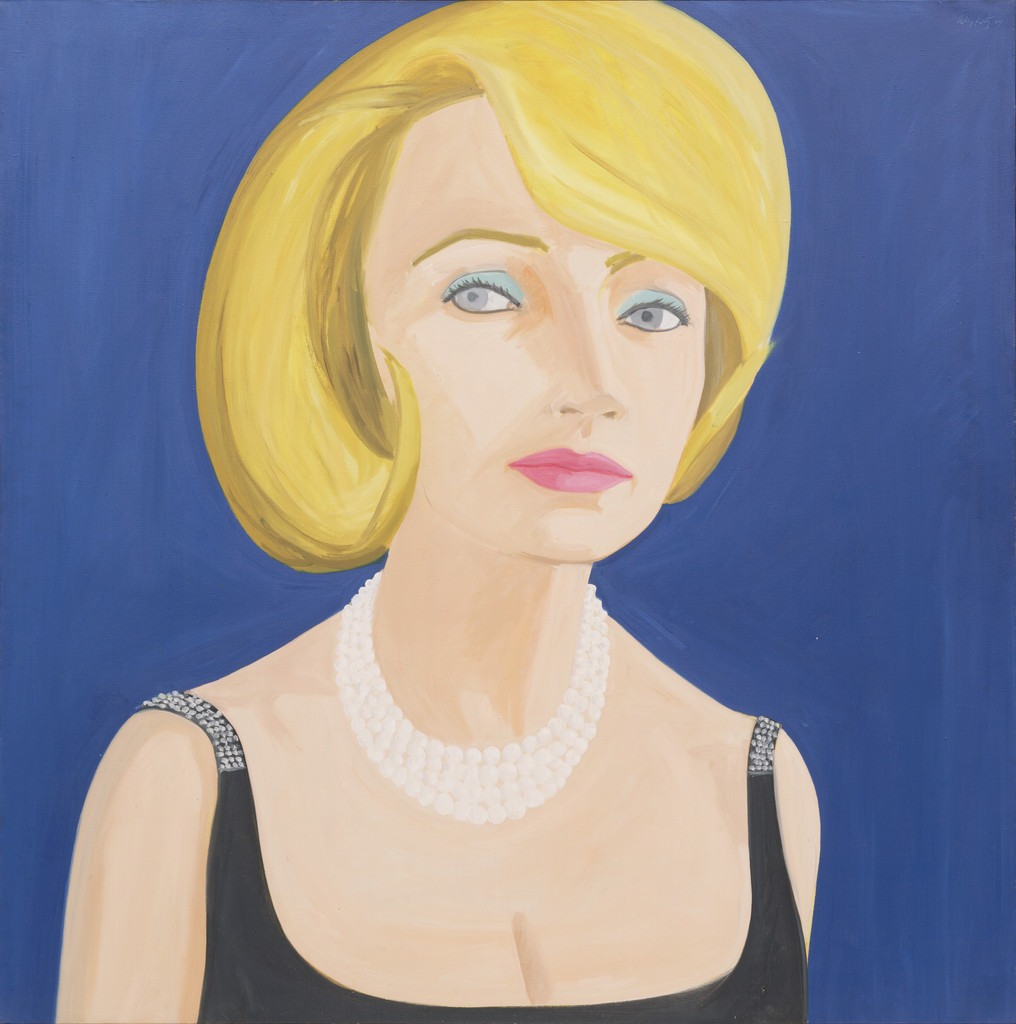
Alex Katz
Lita
In "Lita", the light scale does not serve as an ornament: it determines the light and the way the gaze passes through the scene. Alex Katz modulates light colors by small temperature differences; attenuated pinks, blues, creams or greens organize the space without losing their material presence. The gaze passes from one colored area to another by echoes rather than by contours, which gives the whole a particularly supple continuity. The gaze passes from one colored area to another by echoes rather than by contours, which gives the whole a particularly supple continuity. Chromatic softness is no longer just atmospheric: it becomes a method for dividing the touch, opening the surface or releasing the color of the subject.
View work in collection →
Edvard Munch
Spring landscape
In "Spring Landscape", the light scale does not serve as an ornament: it determines the light and the way the gaze passes through the scene. Munch uses pallor as a psychological tension: cold blue or bleached pink isolate the figure as much as they unify the landscape. The composition maintains a firm framework, but the attenuated transitions prevent the shapes from appearing cut or decorative. The composition retains a firm framework, but the attenuated transitions prevent the shapes from appearing cut or decorative. The composition retains a firm framework, but the attenuated transitions prevent the shapes from appearing cut or decorative. The chromatic softness is no longer just atmospheric: it becomes a method of dividing the touch, opening the surface or releasing the color of the subject.
See reproduction →
Georges Seurat
The Poseuses
In "Les Poseuses", the light scale does not serve as an ornament: it determines the light and the way the gaze passes through the scene. Seurat adjusts the tones by optical contrasts; the small light touches compose a calm surface whose precision does not cancel the vibration. The whites are never neutral: mixed with blue, pink or ocher, they become the main light engine of the image. The whites are never neutral: mixed with blue, pink or ocher, they become the main light engine of the image. Chromatic softness is no longer just atmospheric: it becomes a method for dividing the key, opening the surface or releasing the color of the subject.
See reproduction →
Edvard Munch
Winter landscape with house and red sky
In "Winter Landscape with House and Red Sky", the light scale does not serve as an ornament: it determines the light and the way the gaze passes through the scene. Munch uses pallor as a psychological tension: cold blue or bleached pink isolate the figure as much as they unify the landscape. The balance arises from the contrast between a widely folded scale and a few accents which prevent the scene from dissolving. Chromatic softness is no longer just atmospheric: it becomes a method of dividing the touch, opening the surface or releasing the color of the subject.
See reproduction →
Edvard Munch
Woman in a green meadow
In "Woman in a Green Prairie", the light scale does not serve as an ornament: it determines the light and the way the gaze passes through the scene. Munch uses pallor as a psychological tension: cold blue or bleached pink isolate the figure as much as they unify the landscape. The clearest values advance without crushing the halftones, while a few more sustained notes maintain the depth. The clearest values advance without crushing the halftones, while a few more sustained notes maintain the depth. The chromatic softness is no longer just atmospheric: it becomes a method for dividing the touch, opening the surface or releasing the color of the subject.
See reproduction →
Jackson Pollock
Shimmering Substance
In "Shimmering Substance", the light scale does not serve as an ornament: it determines the light and the way the gaze passes through the scene. Pollock superimposes clear passages whose intervals remain visible; pastel color becomes rhythm, depth and memory of the gesture. The gaze passes from one colored area to another by echoes rather than by contours, which gives the whole a particularly flexible continuity. Chromatic softness is no longer just atmospheric: it becomes a method for dividing the touch, opening the surface or releasing the color of the subject.
See reproduction →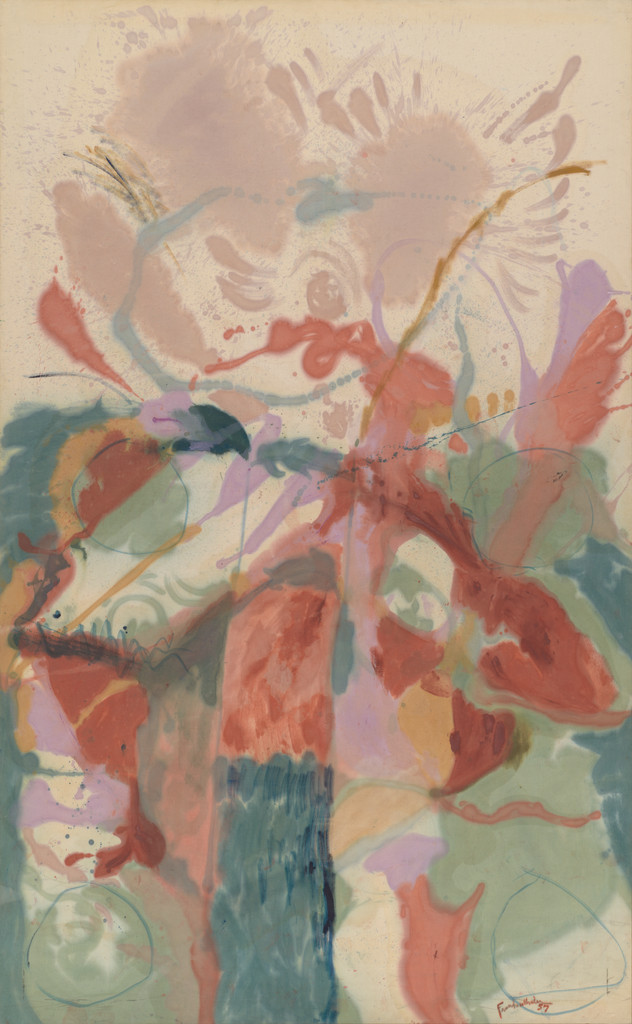
Helen Frankenthaler
Jacob's Ladder
In "Jacob's Ladder", the light scale does not serve as an ornament: it determines the light and the way the gaze passes through the scene. Frankenthaler lets the very fluid color penetrate the canvas; roses and blues retain the transparency of a stain while constructing space. The composition maintains a firm framework, but the attenuated transitions prevent the shapes from appearing cut or decorative. The composition retains a firm framework, but the attenuated transitions prevent the shapes from appearing cut out or decorative. The chromatic softness is no longer just atmospheric: it becomes a method for dividing the touch, opening the surface or releasing the color of the subject.
View work in collection →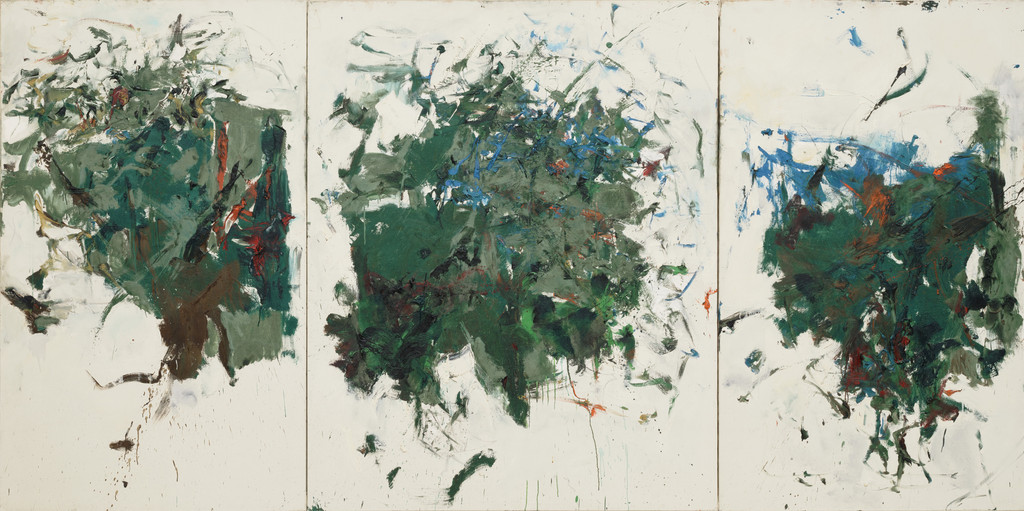
Joan Mitchell
Untitled
In "Untitled", the light scale does not serve as an ornament: it determines the light and the way the gaze passes through the scene. Mitchell alternates dense gestures and light reserves; softened tones do not suppress energy, they give it breathing. Whites are never neutral: mixed with blue, pink or ocher, they become the main light engine of the image. The whites are never only neutral: mixed with blue, pink or ocher, they become the main light engine of the image. Chromatic softness is no longer just atmospheric: it becomes a method for dividing the touch, opening the surface or releasing the color of the subject.
View work in collection →
Jackson Pollock
Easter and the Totem
In "Easter and the Totem", the light scale does not serve as an ornament: it determines the light and the way the gaze passes through the scene. Pollock superimposes clear passages whose intervals remain visible; pastel color becomes rhythm, depth and memory of the gesture. The balance arises from the contrast between a widely folded scale and a few accents which prevent the scene from dissolving. Chromatic softness is no longer just atmospheric: it becomes a method for dividing the touch, opening the surface or releasing the color of the subject.
See reproduction →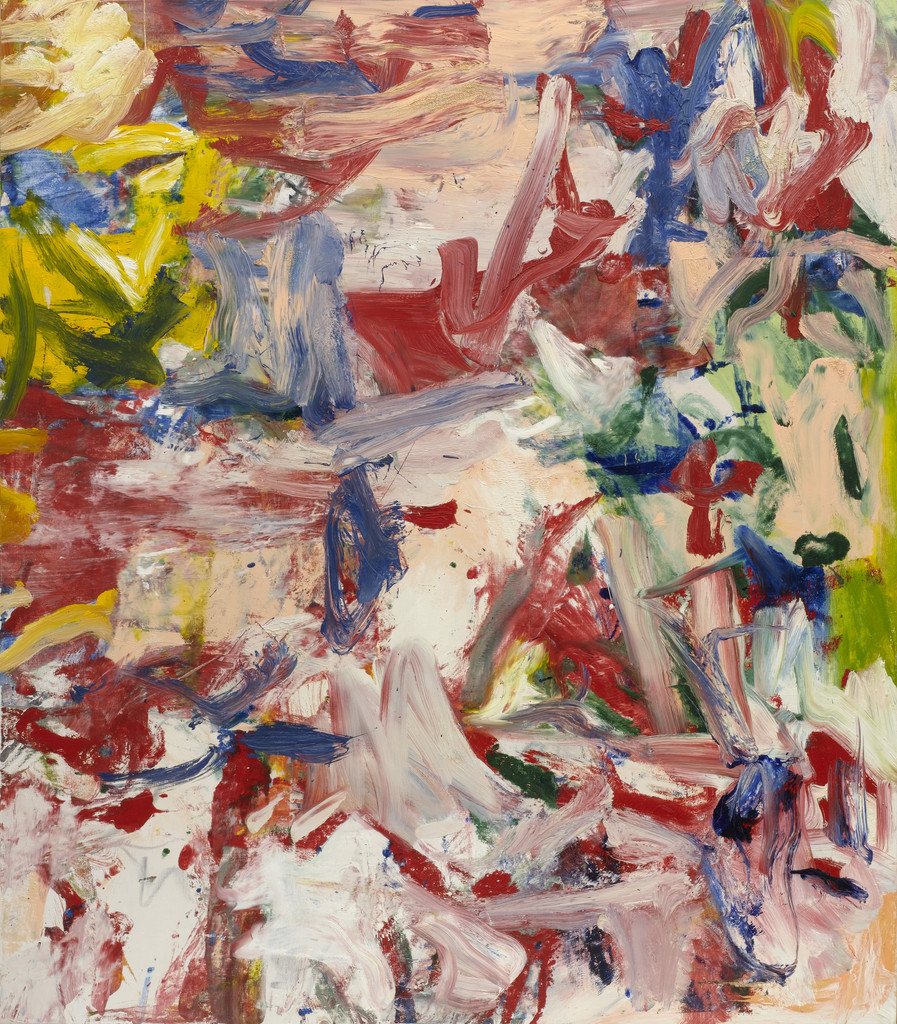
Willem de Kooning
Untitled XIX
In "Untitled XIX", the light scale does not serve as an ornament: it determines the light and the way the gaze passes through the scene. Willem de Kooning modulates light colors by small temperature differences; attenuated pinks, blues, creams or greens organize the space without losing their material presence. The lightest values advance without crushing the halftones, while a few more sustained notes maintain the depth. Chromatic softness is no longer just atmospheric: it becomes a method for dividing the touch, opening the surface or releasing the color of the subject.
View work in collection →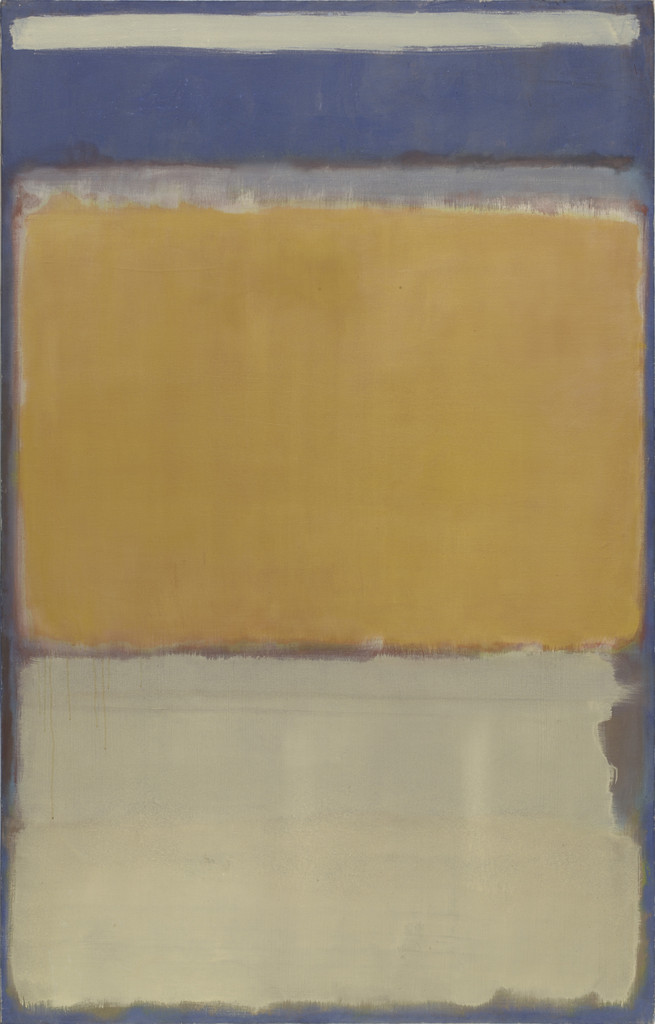
Mark Rothko
No. 10
In "No. 10", the light scale does not serve as an ornament: it determines the light and the way the gaze passes through the scene. Mark Rothko modulates light colors by small temperature differences; attenuated pinks, blues, creams or greens organize the space without losing their material presence. The gaze passes from one colored area to another by echoes rather than by contours, which gives the whole a particularly supple continuity. The gaze passes from one colored area to another by echoes rather than by contours, which gives the whole a particularly supple continuity. Chromatic softness is no longer just atmospheric: it becomes a method for dividing the touch, opening the surface or releasing the color of the subject.
View work in collection →
Wassily Kandinsky
Sky blue
In "Blue Sky", the light scale does not serve as an ornament: it determines the light and the way the gaze passes through the scene. Kandinsky distributes light tones like sounds: blue, green and pink establish distances that darker signs punctuate. The composition maintains a firm framework, but the attenuated transitions prevent the shapes from appearing cut or decorative. The composition retains a firm framework, but the attenuated transitions prevent the shapes from appearing cut out or decorative. The chromatic softness is no longer just atmospheric: it becomes a method of dividing the touch, opening the surface or releasing the color of the subject.
See reproduction →
Wassily Kandinsky
Two green dots
In "Two Green Dots", the light scale does not serve as an ornament: it determines the light and the way the gaze passes through the scene. Kandinsky distributes light tones like sounds: blue, green and pink establish distances that darker signs punctuate. Whites are never neutral: mixed with blue, pink or ocher, they become the main light engine of the image. Whites are never neutral: mixed with blue, pink or ocher, they become the main light engine of the image. Chromatic softness is no longer just atmospheric: it becomes a method for dividing the touch, opening the surface or releasing the color of the subject.
See reproduction →
Piet Mondrian
Composition No. VI (Blue facade)
In "Composition No VI (Blue Facade)", the light scale does not serve as an ornament: it determines the light and the way the gaze passes through the scene. Piet Mondrian modulates light colors by small temperature differences; attenuated pinks, blues, creams or greens organize the space without losing their material presence. The balance arises from the contrast between a widely folded scale and a few accents which prevent the scene from dissolving. Chromatic softness is no longer just atmospheric: it becomes a method for dividing the touch, opening the surface or releasing the color of the subject.
See reproduction →Matter and light
How do painters make a pastel color?
In oil, lightening does not always consist of mechanically adding white. The painter can superimpose a transparent glaze on a clear preparation, juxtapose small complementary touches or reduce a color with earth. Each of these methods modifies the depth: mixing with white makes the shade more opaque; the glaze retains internal light; the split touch makes the color vibrate in the eye.
The 19th century particularly exploited these possibilities. Shadows cease to be brown or black and become blue, pink or purple. The Impressionists observed these gaps in snow, dresses and reflections; Whistler organizes them into harmonies; modern painters extend them to the entire surface. The pastel palette thus tells a story of light as much as an aesthetic preference.
Historical, covering and slightly warm; it gives body to old skin tones and lights.
Colder and more transparent, it is suitable for sails, subtle blends and delicate lights.
Transparent, they produce luminous roses when placed on or mixed with a light base.
Overseas, cobalt or ceruleum change temperature and depth depending on the white that accompanies them.
A hint of ocher, earth or complementary reduces the green without taking away all its freshness.
Selection method
A controlled corpus, not a simple impression
Oil painting only
The original hundred are painted in oil. Works executed in pastel, pencil, ink, watercolor or graphic techniques are excluded.
Really softened palette
The selection combines visual control and measurement of brightness, saturation and proportion of moderately colored light areas.
Verified images and links
Each image has been tested individually. The Shopify button is used when reproduction exists; otherwise, it leads to the institutional collection.
Frequently asked questions
See pastel colors differently
Are these paintings made in pastel?
No. "Pastel colors" describes the visual palette here. The hundred works are oil paintings; drawings and paintings executed with pastel sticks are deliberately absent.
Does pastel paint have to be very light?
It must have a clear and moderately saturated range large enough to structure the image. Some dark or bright accents remain necessary to give relief and avoid a uniform surface.
Why is impressionism very present?
The Impressionists replaced much of the brown or black shadows with colored blues, pinks, and purples. Their research on light directly corresponds to this story of the softened palette.
Why include abstract painters?
Pollock, Frankenthaler, Mitchell or Rothko show that chromatic softness can become an autonomous structure. It depends neither on a vaporous landscape nor on a decorative subject.
How are works classified?
The first places combine fame, historical role and strength of the pastel palette. The following chapters broaden the perspective with figures, cold scales, landscapes and modern experiments.
0 comments